

A lehenga can have a beautiful flare and still look wrong if the choli sits at the wrong height. Why Lehenga Blouse Fit Should Be Checked Before the Skirt Hem comes down to one practical fact: the blouse establishes the position of the waist, while the waist position determines how much of the skirt reaches the floor. Checking the choli first helps you set the final length, preserve the intended silhouette and avoid paying for the same alteration twice.
The order matters for ready-made, semi-stitched and made-to-measure lehengas. A fitted choli changes how the skirt rests around the natural waist, and even a difference of 2 to 3 centimetres can make a floor-length hem drag or leave the ankles unnecessarily exposed. A careful fitting session therefore begins above the waist and moves downward.
Why Lehenga Blouse Fit Should Be Checked Before the Skirt Hem
Lehenga blouse fit should be checked first because the choli fixes the garment's upper waistline and controls the skirt's final drop. If the blouse is too loose, too short or positioned too high, a skirt hem measured before correction won't match the wearer's actual proportions.
The choli also affects posture. A tight bust or armhole can pull the blouse upward, while a loose neckline can make the wearer repeatedly adjust the garment downward. Both movements alter the waistline by the time the skirt is pinned. Hemming under those conditions produces an inaccurate result.
Consider a skirt with a 42-inch finished length measured from the intended waistband. If the waistband rises by 1 inch because the choli is too short or the wearer needs a higher waist position, the skirt will effectively hang 1 inch lower relative to the floor. That small difference is enough to catch under a shoe or gather around the feet.
What changes when the choli is corrected?
Correcting the choli can change the bust line, waist height, back coverage, shoulder slope and position of the waistband. Those measurements are connected to skirt length, dupatta placement and the balance between the blouse and lehenga flare.
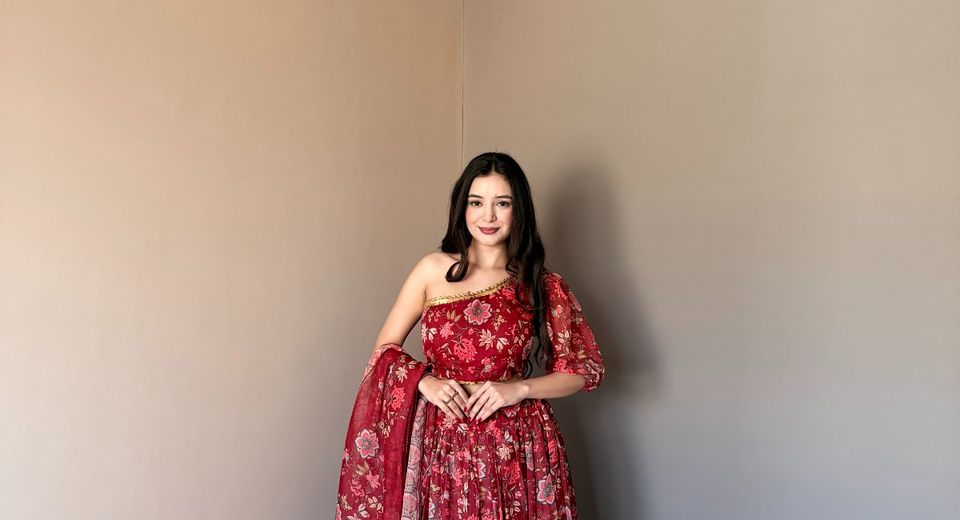
An asymmetrical design requires an especially careful check because the neckline and shoulder line carry the garment unevenly. Red Floral Organza Lehenga Set with One Shoulder Blouse illustrates why a neckline that feels secure must be assessed before the skirt is shortened. The wearer should raise both arms, sit down and turn sideways without the blouse shifting.
Which blouse measurements need attention first?
The bust, underbust, waist, shoulder, armhole and blouse length should be checked before any skirt hem is pinned. These measurements determine whether the choli remains stable during walking, sitting, dancing and reaching.

- Bust: Measure around the fullest part without pulling the tape tight. The blouse should follow the body without flattening the bust or creating horizontal strain lines.
- Underbust and waist: These measurements control support and determine where the skirt waistband will sit. A waist measurement taken over bulky clothing can be inaccurate by 2 to 4 centimetres.
- Shoulder: The shoulder seam should end near the shoulder bone. A seam that falls outward can make sleeves pull, while a seam that sits inward can restrict arm movement.
- Armhole: The armhole should allow a full arm lift without cutting into the underarm. A narrow armhole often makes a blouse ride upward, changing the skirt's position.
- Blouse length: The lower edge should meet the intended waistband without exposing more midriff when the wearer moves. The correct length depends on the skirt rise and the wearer's preferred coverage.
- Back and neckline: The back opening, hooks, zip or tie should close without gaping. A deep neckline should remain in place when the wearer bends slightly or turns.
Use the same undergarments and similar footwear planned for the event during the fitting. A padded bra can alter the bust measurement, while high-waisted shapewear can raise the waistline. Measuring without those items may lead to a choli that fits in the trial room but fails on the event day.
How should a ready-made or fully stitched choli be tested?
A ready-made or fully stitched choli should be tested through normal movement, not judged only while standing still. The blouse is suitable when it remains secure during arm lifts, sitting, walking and gentle torso rotation without persistent pulling or gaping.
A five-movement fitting test
- Lift both arms: Raise the arms to shoulder height and then above the head. The blouse may move slightly, but the neckline should not climb substantially and the underarm should not pinch.
- Sit on a chair: Sitting reveals whether the waist edge cuts into the body and whether the back closure strains. Bridal and wedding outfits often require long periods of sitting, so this step should not be skipped.
- Walk for two minutes: Walk at a normal pace and take several longer steps. A stable choli should not need repeated downward tugging.
- Turn sideways and bend lightly: This checks back coverage and neckline security. Avoid deep bending in heavily embellished garments, but a small forward movement is useful.
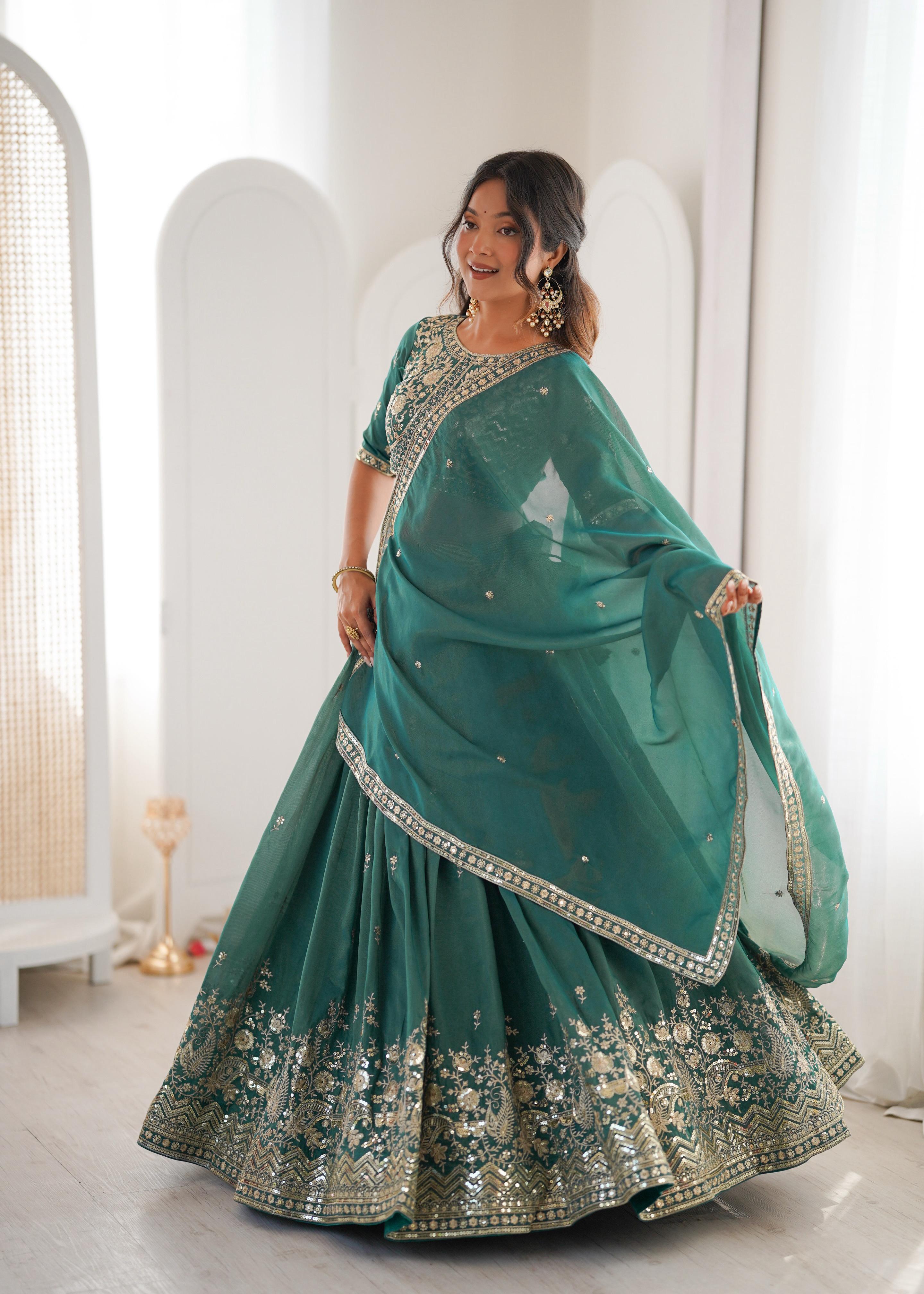
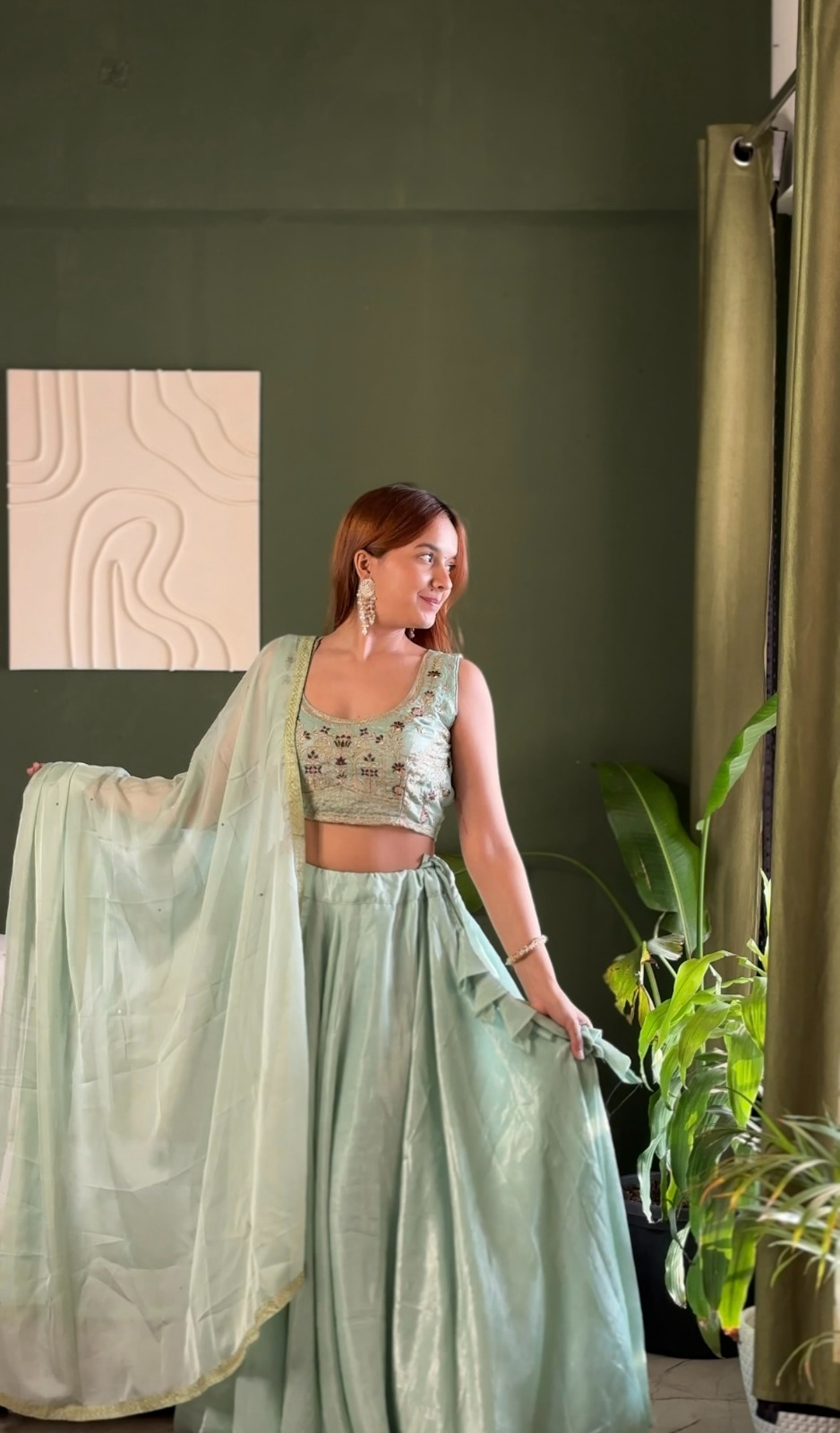
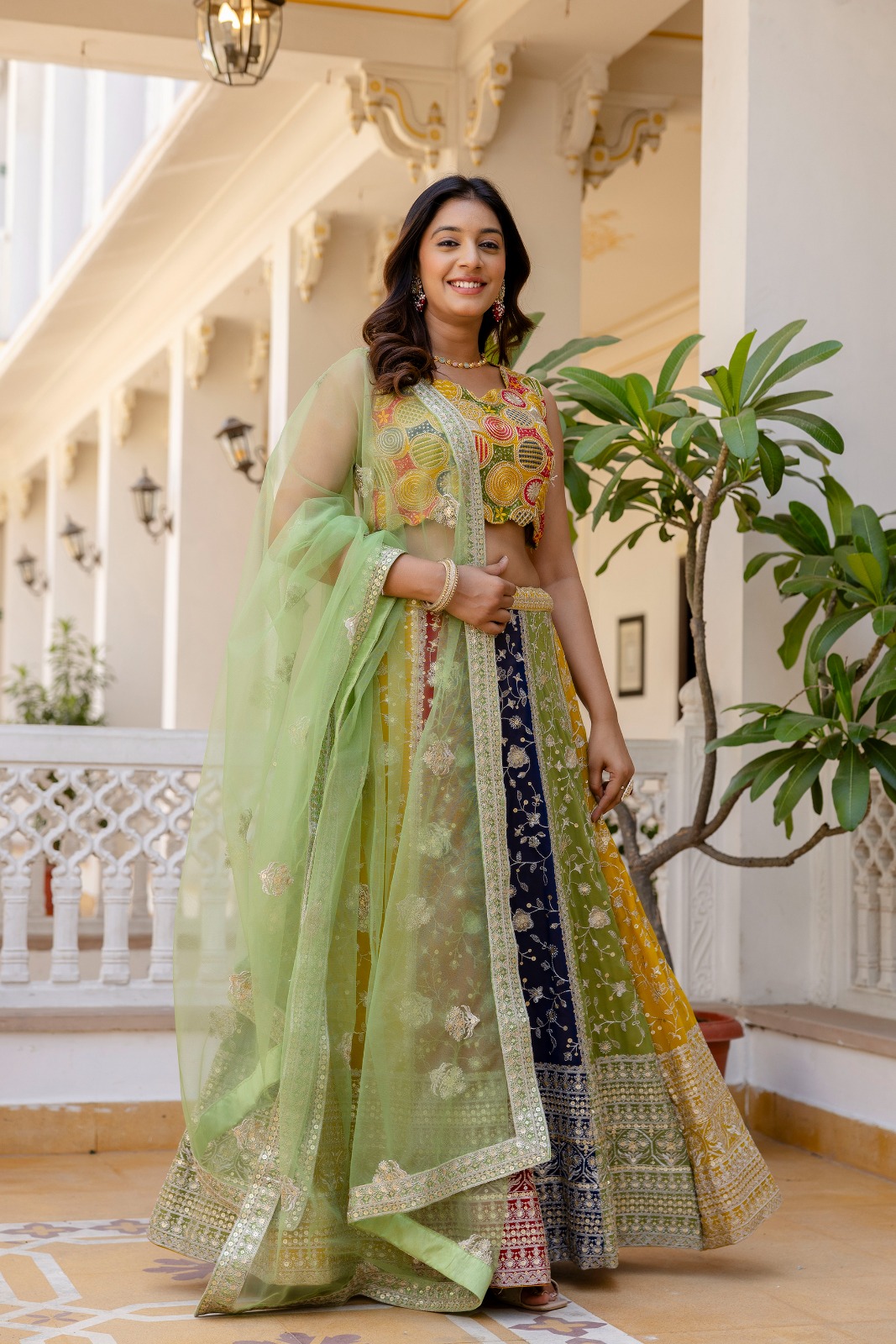
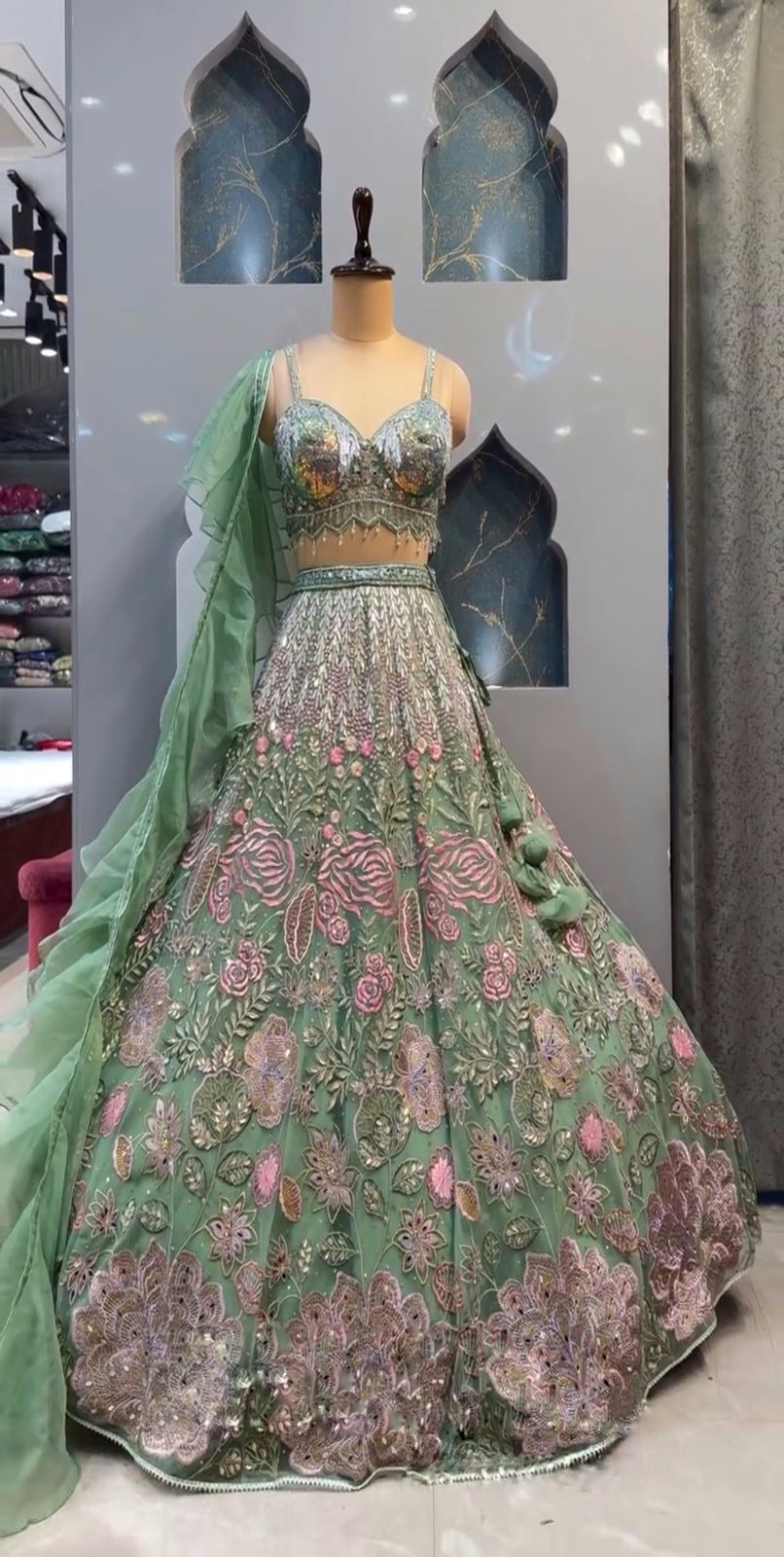
- Place a dupatta over the shoulder: Dupatta weight can pull one side of the blouse. Mint Embroidered Lehenga Set with Net Dupatta for Women and Pastel Floral Georgette Lehenga Set with Ruffle Blouse both show why the complete styling arrangement should be assessed rather than the blouse alone.
During fully stitched choli shopping, compare the garment's finished measurements with your body measurements instead of relying only on a small, medium or large label. A finished bust measurement usually includes a small amount of ease, but the appropriate amount depends on the fabric, lining, closure and design. Satin with little stretch needs more accuracy than a flexible knit, while a structured silk blouse may need room for movement at the armhole.
How does the choli affect the skirt length and waist position?
The choli affects skirt length by establishing where the waistband rests on the body. A higher waistband shortens the visible torso and increases the distance from waist to floor, while a lower waistband does the opposite.
Ask the wearer to identify the preferred waistband position before measuring. The natural waist is usually the narrowest point of the torso, but many contemporary lehengas sit slightly above or below it. The chosen position should be marked with a narrow ribbon or a few temporary pins.
After the blouse is fitted, wear the skirt with the correct underskirt, lining and footwear. Place the waistband at the marked position, smooth the fabric evenly around the body and measure from the waistband edge to the floor at several points. Do not measure only at the centre front because the body may tilt, the flare may shift or the skirt may have a train.
- Measure at the centre front, centre back and both side seams.
- Repeat the measurement after walking several steps.
- Keep the measuring tape perpendicular to the floor rather than following the body's curve.
- Account for the height of the shoes that will be worn at the event.
- Mark the desired distance from the floor while the wearer stands naturally.
Heavily flared skirts may settle differently after a few minutes because multiple layers and embellishment distribute their weight. Designer Threadwork Silk Lehenga Choli Set with Dupatta and Magenta Satin Embroidered Lehenga Set Online are examples of styles where lining, embroidery and fabric weight deserve attention before a final hem is approved.
What is different about bridal, wedding and girls' lehenga fitting?
Bridal and wedding lehengas need a second fitting in the actual footwear and undergarments because long wear, layered fabric and movement place more stress on the choli and hem. Girls' lehengas need additional allowance for comfort and growth, but the blouse must still stay secure during active movement.
For bridal fitting, schedule the first trial at least 4 to 6 weeks before the event when possible. Complete the blouse structure before the final skirt hem, then repeat a shorter check 7 to 10 days before the wedding if body measurements or footwear have changed. Heavy zari, sequins or threadwork can make a small fit problem feel more severe after several hours.
Wedding guests should also consider the event schedule. A sangeet or dance-heavy celebration calls for an armhole that permits movement and a waistband that doesn't dig into the body while sitting. A reception outfit may allow a more structured blouse if the wearer expects less physical activity.
Children's proportions change quickly, so a girls' lehenga should not be fitted as tightly as an adult bridal choli. Leave practical ease at the waist and armhole, but avoid a neckline so loose that it slips during play. A small internal adjustment seam is more useful than an oversized blouse that requires constant pinning.
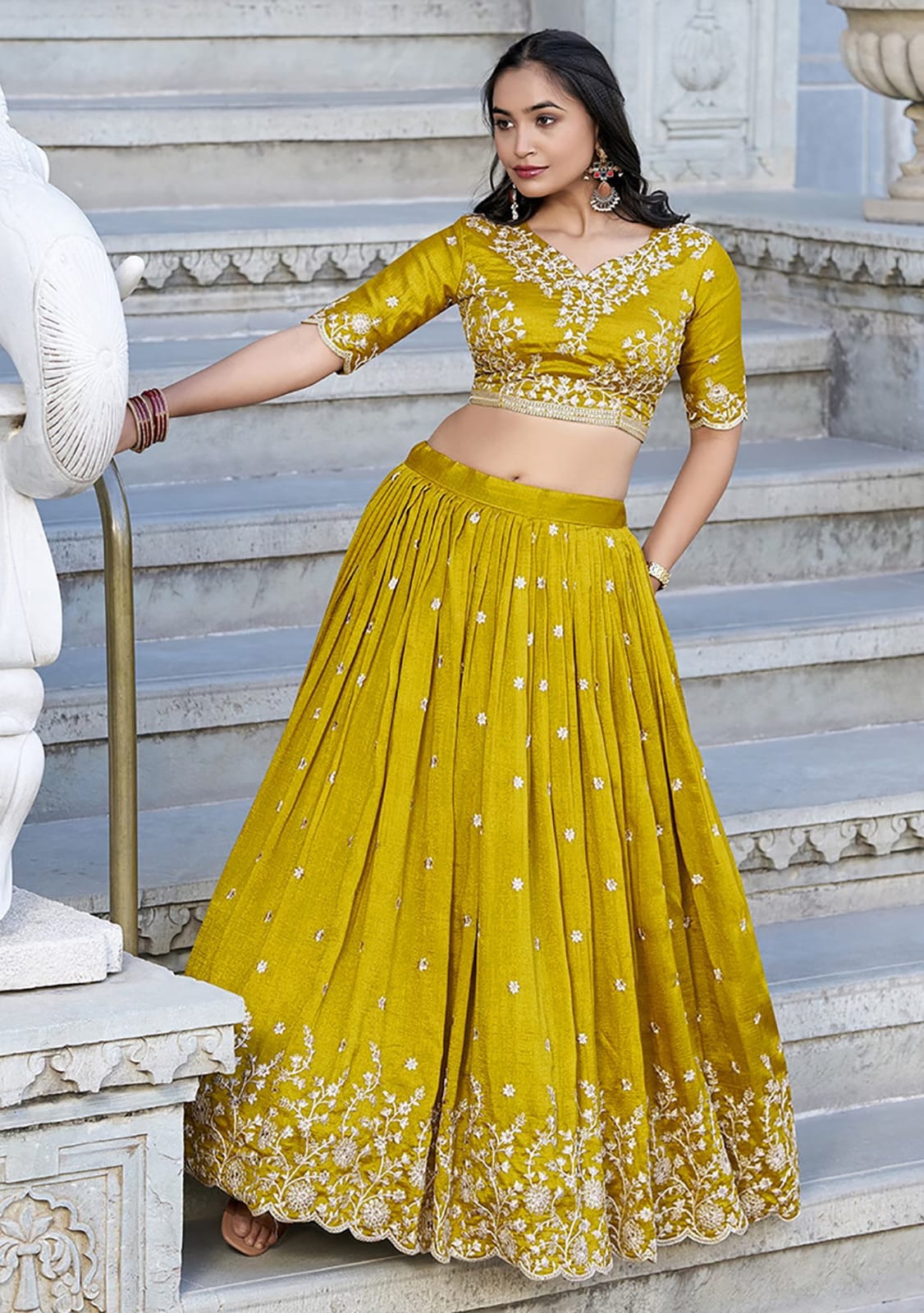
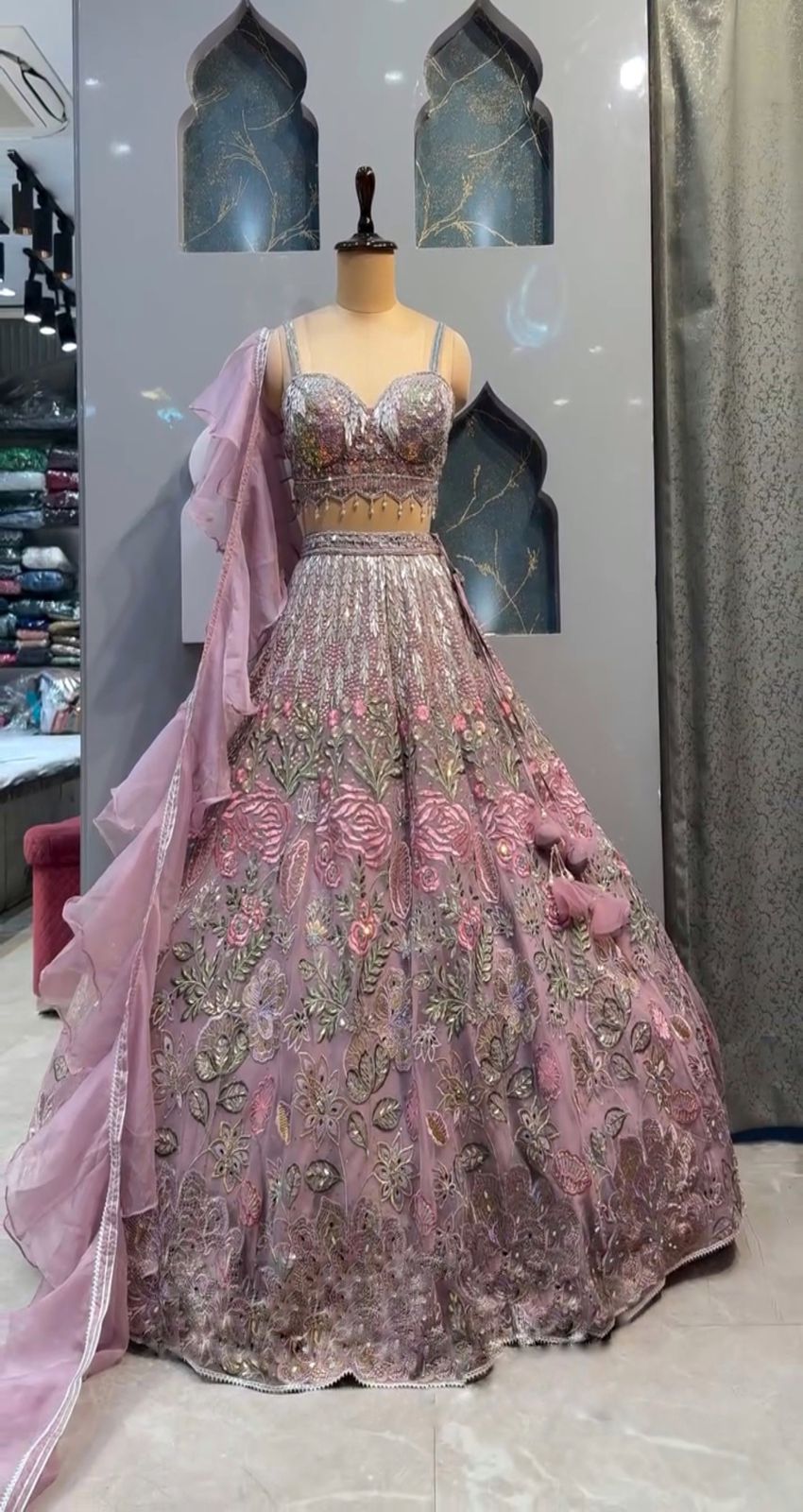
Pastel Grey Embroidered Butterfly Net Lehenga Set and Lime Floral Embroidered Butterfly Net Lehenga Set demonstrate another consideration: lighter net layers can reveal an uneven hem more readily than a dense skirt. A stable blouse and carefully marked waistband are essential when the lower layers are sheer or delicate.
When should the final hem be pinned and altered?
The final hem should be pinned only after the blouse, waistband position, footwear and complete layers have been settled. A temporary pinning session should come before permanent cutting, especially when the lehenga has a border, scalloped edge, train or multiple lining layers.
Stand on a level floor wearing the exact shoes intended for the event. Ask a second person to inspect the hem from the front, back and both sides. The hem should clear the floor consistently, although a design with a deliberate train or high-low edge will follow a different measurement plan.
For a standard walking lehenga, a small floor clearance is usually safer than allowing the edge to drag. The correct amount depends on the shoe, fabric and event setting, but a tailor should test walking rather than apply a universal number. Outdoor wedding venues, staircases and crowded dance floors need more practical clearance than a controlled indoor portrait session.
don't cut through a decorative border until the wearer has walked, sat and turned in the garment. A border may need to be raised evenly, folded inward or preserved with a facing. Satin, organza, net and silk can also react differently after pressing, so the alteration should be made with the fabric's structure in mind.
How do semi-stitched and readymade lehengas change the fitting process?
Semi-stitched lehengas allow more control over the waist and side seams, while readymade lehengas depend more heavily on the supplied measurements and available alteration allowance. Both types still require the choli to be stabilised before the skirt is shortened.
A Semi Stitched Lehengas Collection can be useful when the wearer needs adjustment at the waist, bust or side seams. Ask the tailor to mark the finished blouse length and skirt waistband together, rather than treating the two pieces as unrelated garments. Extra seam allowance should be preserved until the complete outfit has passed the movement test.
Ready Made Lehenga options are convenient when time is limited, but convenience doesn't eliminate the need for checking. Inspect the closure, lining, waistband elastic or hooks, and the amount of fabric available at the side seams. A tailor can often correct a waist or length issue, but a poorly placed armhole or insufficient bust allowance may be difficult to reconstruct.
Pastel Floral Georgette Lehenga Set with Ruffle Blouse may require attention to the ruffle's added volume around the shoulder and neckline. Dusty Pink Satin Embroidered Lehenga Set Online may need a careful check for drag lines because satin reflects tension clearly. Fit decisions should respond to construction, not only to colour or embellishment.
What should you record before approving the alteration?
Record the finished blouse measurements, waistband position, shoe height, desired floor clearance and alteration date before approving the final hem. Written measurements reduce confusion when a garment returns for a second trial or when more than one tailor handles the work.
- Blouse bust, waist and finished length.
- Shoulder width and armhole depth.
- Waistband position measured from the floor.
- Skirt length at the centre front, centre back and side seams.
- Shoe heel height and shoe style.
- Whether the wearer will use a can-can, underskirt, shapewear or additional lining.
- Any planned change to the dupatta drape or blouse closure.
Keep the outfit on a hanger for 24 hours after steaming or pressing before making a final judgement, particularly when the skirt contains layered net, organza or silk. The fabric may relax slightly, and a fresh measurement can reveal whether the edge has settled unevenly.
The fitting sequence is simple: secure the blouse, mark the waistband, wear the complete layers, test movement, measure from the floor and then alter the skirt. Following that order protects comfort and proportion whether you're choosing bridal wear, a designer wedding set, a festive readymade outfit or a lehenga for a younger wearer.
Common Questions About Lehenga Blouse Fit and Skirt Hemming
Common Questions About Lehenga Blouse Fit and Skirt Hemming
Why should the blouse be fitted before hemming a lehenga?
The blouse determines where the waistband sits, and the waistband determines the skirt's distance from the floor. Hemming before the choli is stable can create a skirt that drags or looks too short after the blouse is corrected.
How much ease should a lehenga blouse have?
The blouse should have enough ease for breathing, sitting and arm movement without gaping at the neckline or back. The required amount depends on the fabric, lining, closure and bust shape, so finished garment measurements are more useful than a standard size label.
How do I check the fit of a fully stitched choli?
Raise both arms, sit on a chair, walk, turn sideways and place the dupatta over one shoulder. A suitable fully stitched choli stays secure without pinching the armhole, pulling across the bust or requiring repeated adjustment.
Should I wear my wedding shoes during a lehenga fitting?
Yes, the final fitting should use the shoes planned for the event or shoes with the same heel height. Even a 1-inch difference changes the skirt's floor clearance and can cause dragging or an unnecessarily short hem.
Can a readymade lehenga be altered if the blouse fits but the skirt is long?
A readymade lehenga can often be shortened when the hem, border and lining allow alteration. The tailor should first confirm the waistband position and preserve any decorative border before cutting the skirt.
How early should a bridal lehenga be fitted?
Begin the first bridal fitting about 4 to 6 weeks before the wedding and repeat a shorter check 7 to 10 days before the event if possible. The later check should use the final footwear, undergarments and any planned shapewear.




