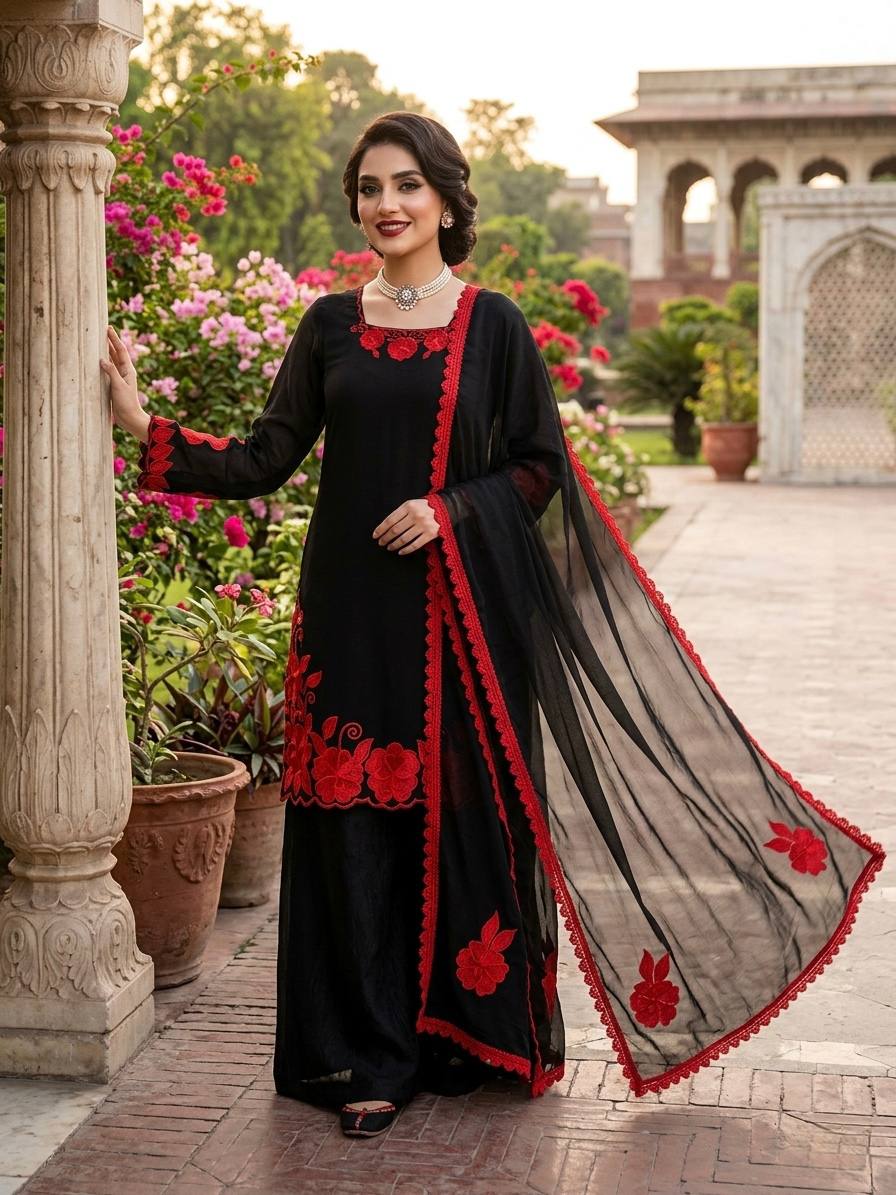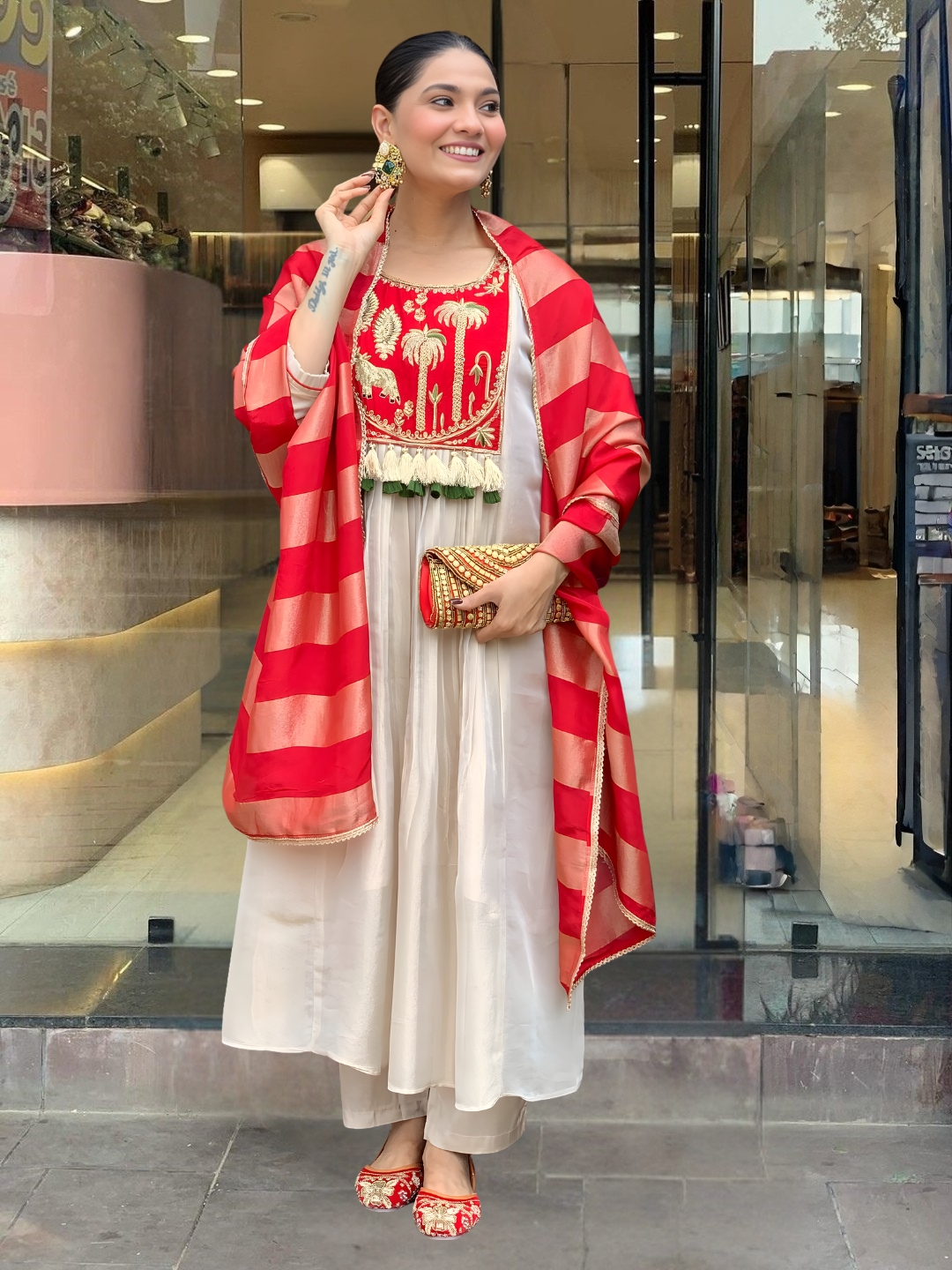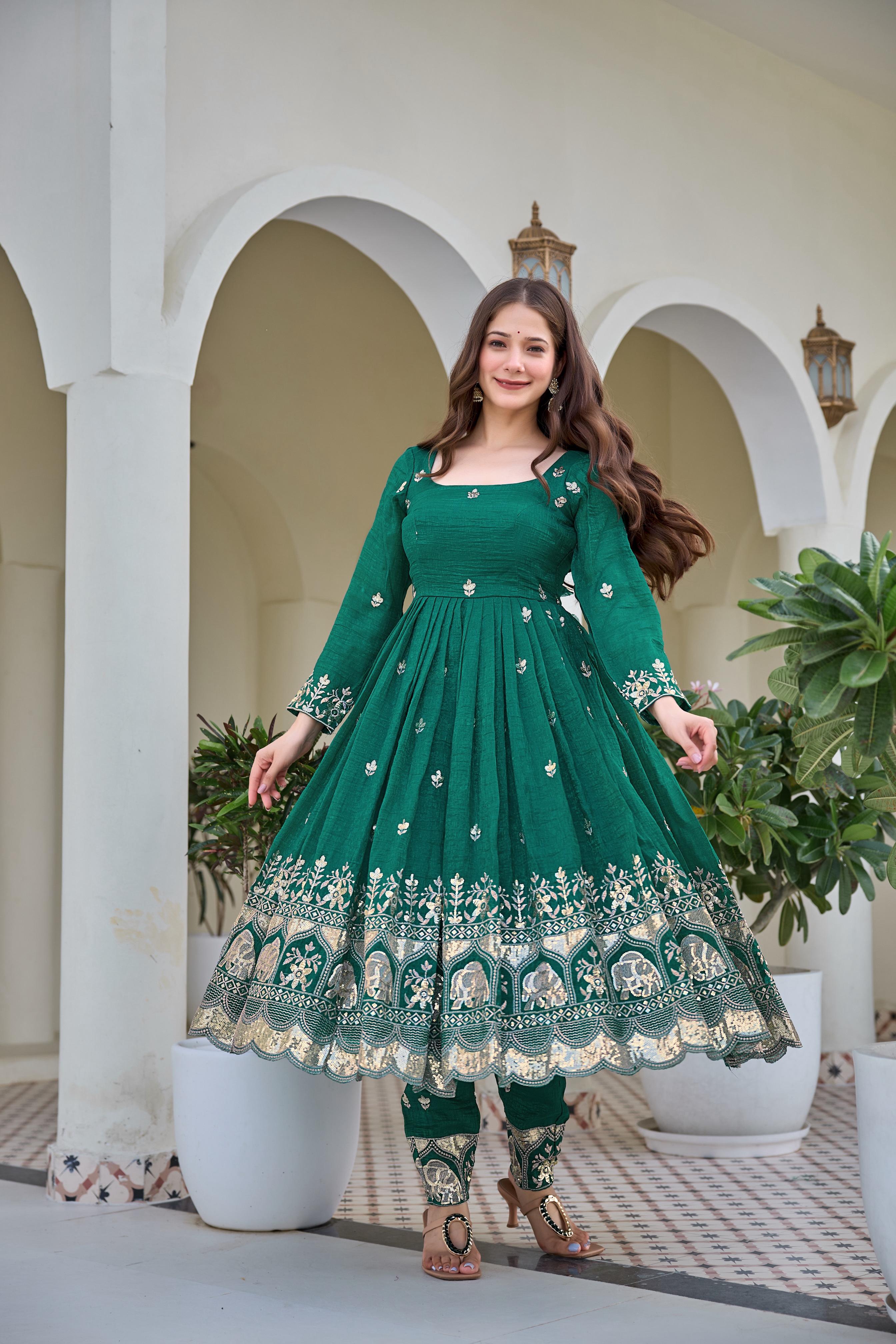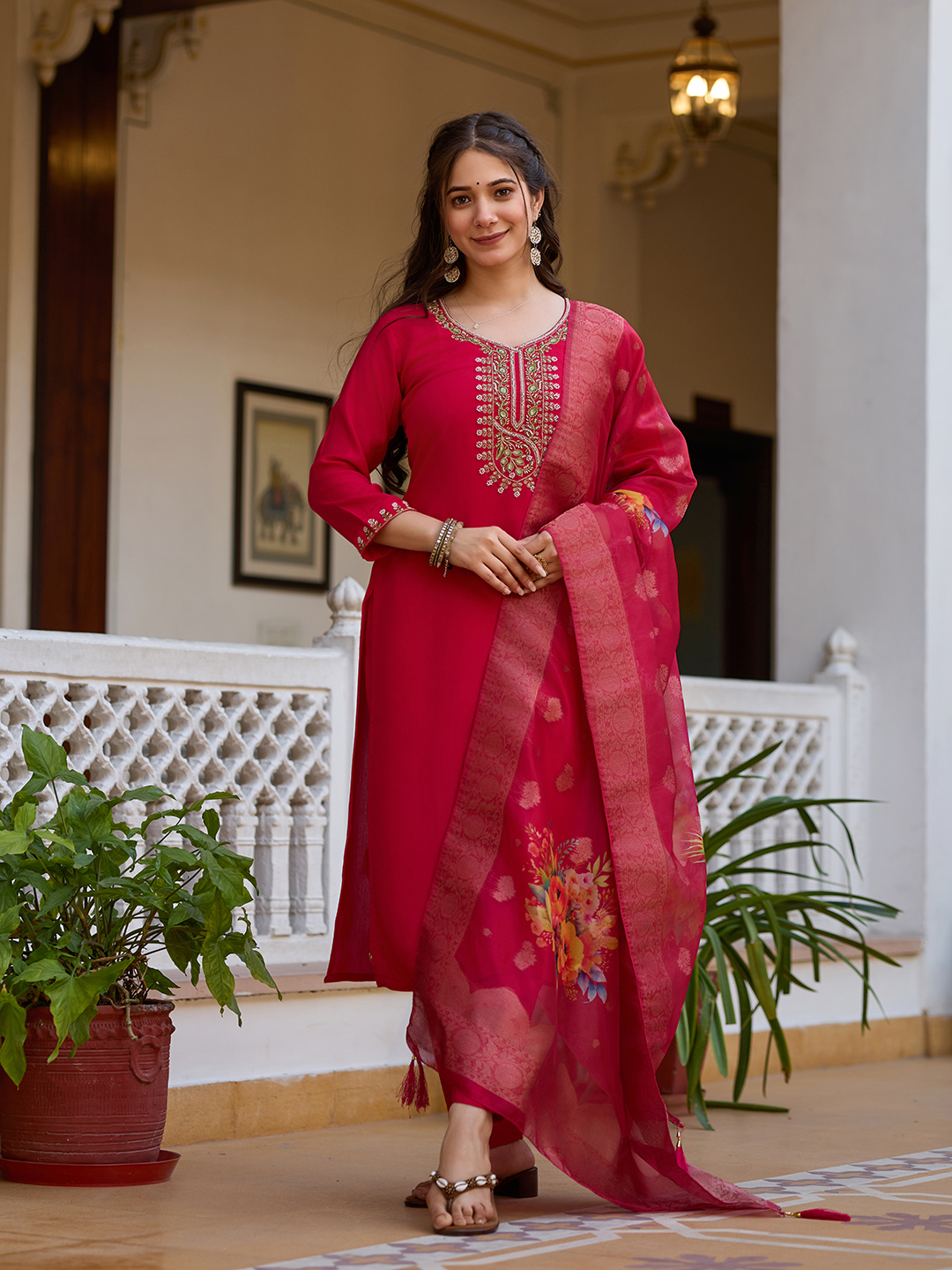
Who invented saree in India? No single person, ruler or community can be credited with inventing the saree. The saree developed gradually from ancient Indian practices of wrapping, pleating and draping unstitched cloth, then changed through regional weaving, trade, religion, court culture and everyday use.
The most accurate history separates evidence from popular legend. Archaeological finds, early sculptures, literary references and surviving textile traditions show that South Asian clothing has long included wrapped garments. However, no surviving source identifies one inventor or proves that the modern saree existed in exactly its present form thousands of years ago.
Who invented saree in India? The short historical answer
No single inventor created the saree; the garment emerged over centuries from unstitched cloth worn across the Indian subcontinent.
That answer matters because the saree isn't one fixed design. A six-yard cotton saree worn for daily work, a nine-yard Nauvari saree in Maharashtra, a Kanjeevaram silk saree draped for a wedding and a Bengali saree with broad pleats are related garments with distinct histories.
Ancient Indian clothing often used rectangular lengths of fabric rather than tailored pieces. A long cloth could be wrapped around the waist, passed between the legs, placed over one shoulder or used to cover the torso. The method depended on climate, occupation, local custom, social rules and the fabric's width and weight.
The word "saree" is generally connected with Sanskrit and Prakrit terms associated with a strip or garment of cloth, although the exact linguistic route is debated. Names such as sari, saree and regional terms including lugda, madisar and mekhela-chador reflect the diversity of draped clothing across India.
What does archaeology reveal about the saree's origin?
Archaeology suggests that wrapped textiles are ancient in South Asia, but archaeology can't prove that one specific contemporary saree style existed in the Indus Valley Civilisation.
Terracotta figurines and carved figures from early South Asian cultures show garments that appear wrapped, belted or draped. These objects are valuable clues, but they rarely preserve the original fabric, exact garment length or complete method of wearing. A sculpture may also represent an artistic convention rather than ordinary clothing.
References to cloth in Vedic and later Sanskrit literature demonstrate the importance of textiles, garments and draping in ancient Indian society. Terms such as vastra describe clothing or cloth, while other words refer to lower garments, upper coverings and decorated fabric. These references should not automatically be translated as proof of the current six-yard saree.
Ancient textile evidence is also incomplete because plant fibres such as cotton, linen-like fibres and silk deteriorate in cooler, humid conditions. Metal ornaments, pottery and stone survive far more well than everyday fabric. The absence of an integral ancient saree is therefore not proof that draped cloth was absent.
The strongest historical conclusion is simple: draped, unstitched clothing is ancient, while the saree as a recognisable up-to-date garment is the result of a long process of regional development.
How did the saree become the garment recognised today?
The saree became recognisable through the combination of an unstitched length of cloth, regional draping techniques, specialised weaving and changing ideas about modesty and presentation.
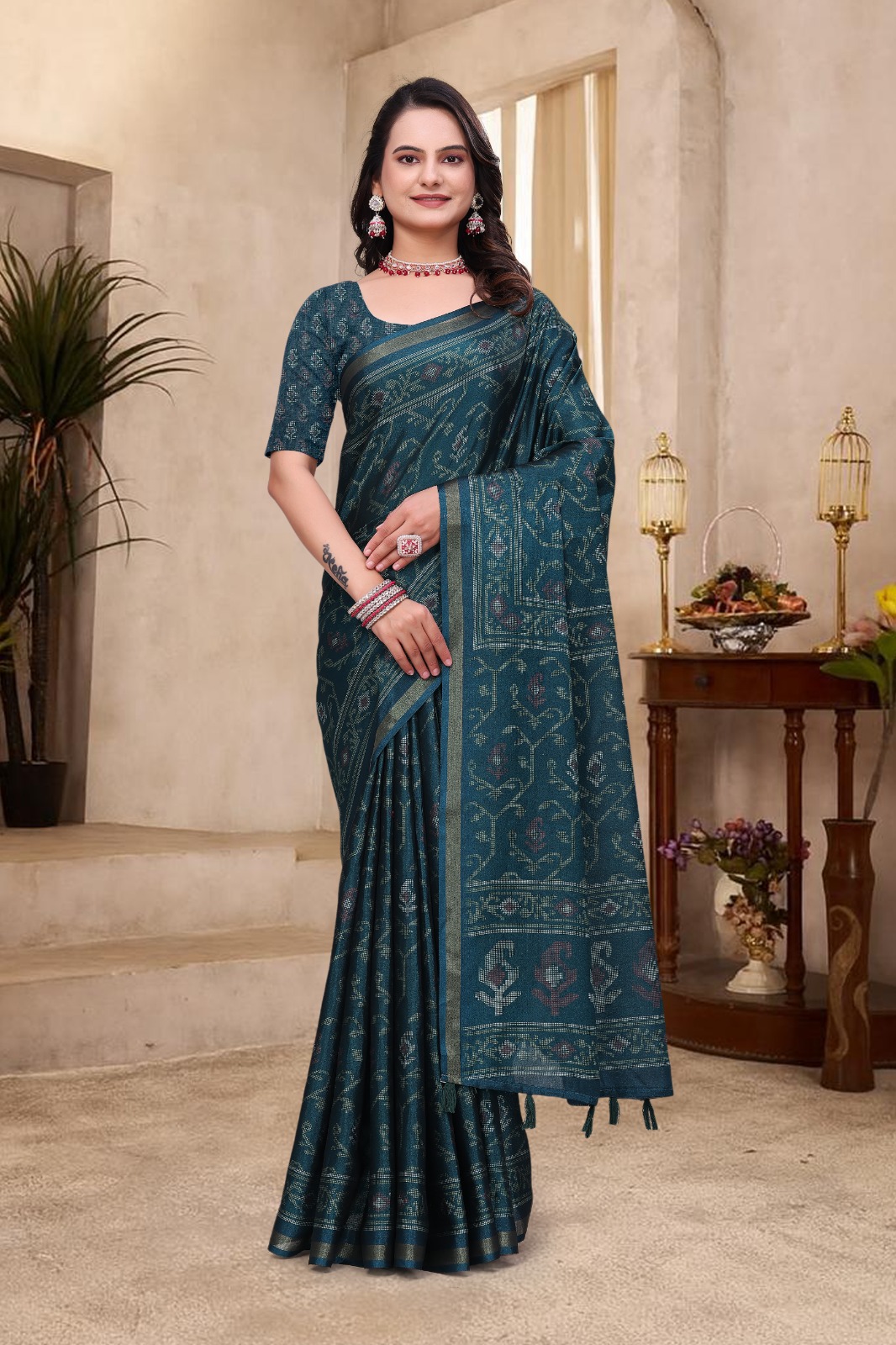
Before industrial garment production, an unstitched textile had practical advantages. The same cloth could be adjusted for movement, body shape, work and weather. A cotton saree could be washed repeatedly, while silk, zari and patterned weaves could signal ceremony, community or wealth.
Stitched garments changed the saree's styling
The saree is traditionally paired with a blouse and petticoat in many contemporary forms, but these stitched layers became especially standardised during the nineteenth and twentieth centuries.
Colonial-era social expectations, missionary criticism, urban dress codes and access to sewing influenced how women covered the upper body. Regional practices had already varied widely, so the up-to-date blouse can't be treated as an unchanged ancient requirement. The petticoat also provides a practical foundation for tucking and securing the saree.
In the late nineteenth century, public figures and reformers helped popularise more structured saree presentation in urban India. Socialite and educator Jnanadanandini Devi is often associated with the spread of a more manageable pallu style inspired partly by Parsi draping, although no single person transformed every regional practice.
Trade and technology expanded saree variety
Indian weaving centres developed distinctive combinations of fibre, colour, border, motif and finishing technique. Cotton supported breathable daily clothing, while silk and metallic zari became closely associated with festive and ceremonial garments.
Handlooms, spinning methods, dyeing knowledge and trade routes allowed regional identities to become visible through clothing. Chanderi developed a reputation for light fabrics and delicate patterning; Banarasi silk became associated with rich brocade and zari; Kanjeevaram became known for lustrous silk and strong contrast borders.
Why are regional saree drapes so different?
Regional saree drapes differ because communities adapted one long cloth to local movement, climate, ritual practice, work and aesthetic preferences.
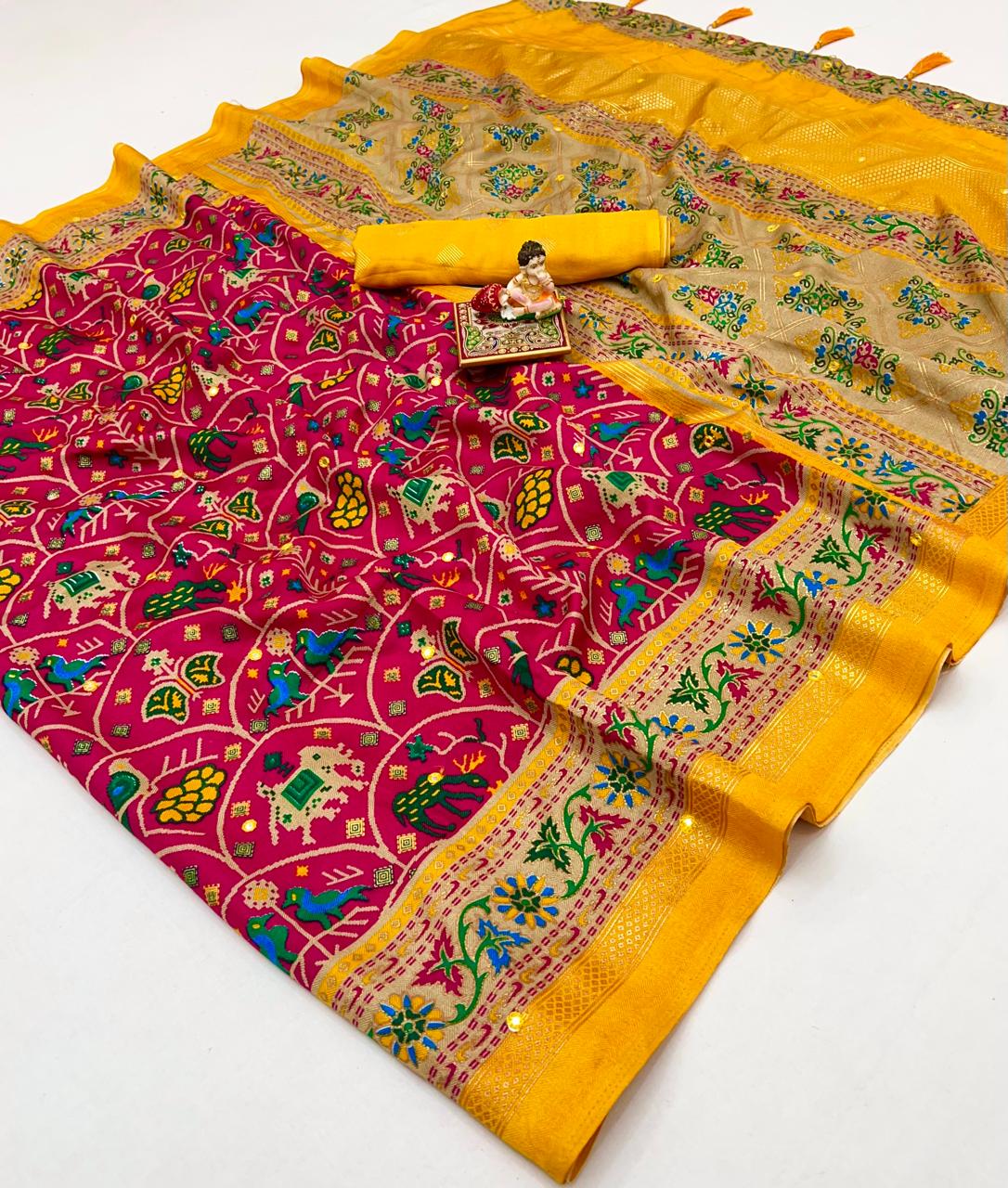
A Bengali drape commonly uses broad front pleats and a pallu carried over the shoulder. The Gujarati seedha pallu brings the decorated end across the front of the torso. The Maharashtrian Nauvari saree divides the cloth between the legs for a trouser-like lower drape that supports active movement.
The Kerala kasavu saree is recognised for its restrained ivory-and-gold appearance, while the Assamese mekhela-chador uses two coordinated lower and upper pieces rather than one continuous saree. The Kodagu style places the pleats at the back, creating a distinctly different silhouette.
The Tamil Madisar drape is associated with particular Brahmin communities and ceremonies, while the Kanjeevaram saree is strongly connected with Tamil Nadu's silk-weaving heritage. These examples show why asking who invented saree in India has a more useful answer when followed by another question: which community shaped which drape?
Regional variation also explains why a saree can't be judged only by its length. A nine-yard saree behaves differently from a six-yard saree, and a crisp handloom cotton saree requires different pleating from a fluid silk or tissue weave.
How do fabric and weave preserve saree history?
Fabric and weave preserve saree history by recording local materials, technical knowledge, trade connections and changing ceremonial preferences.
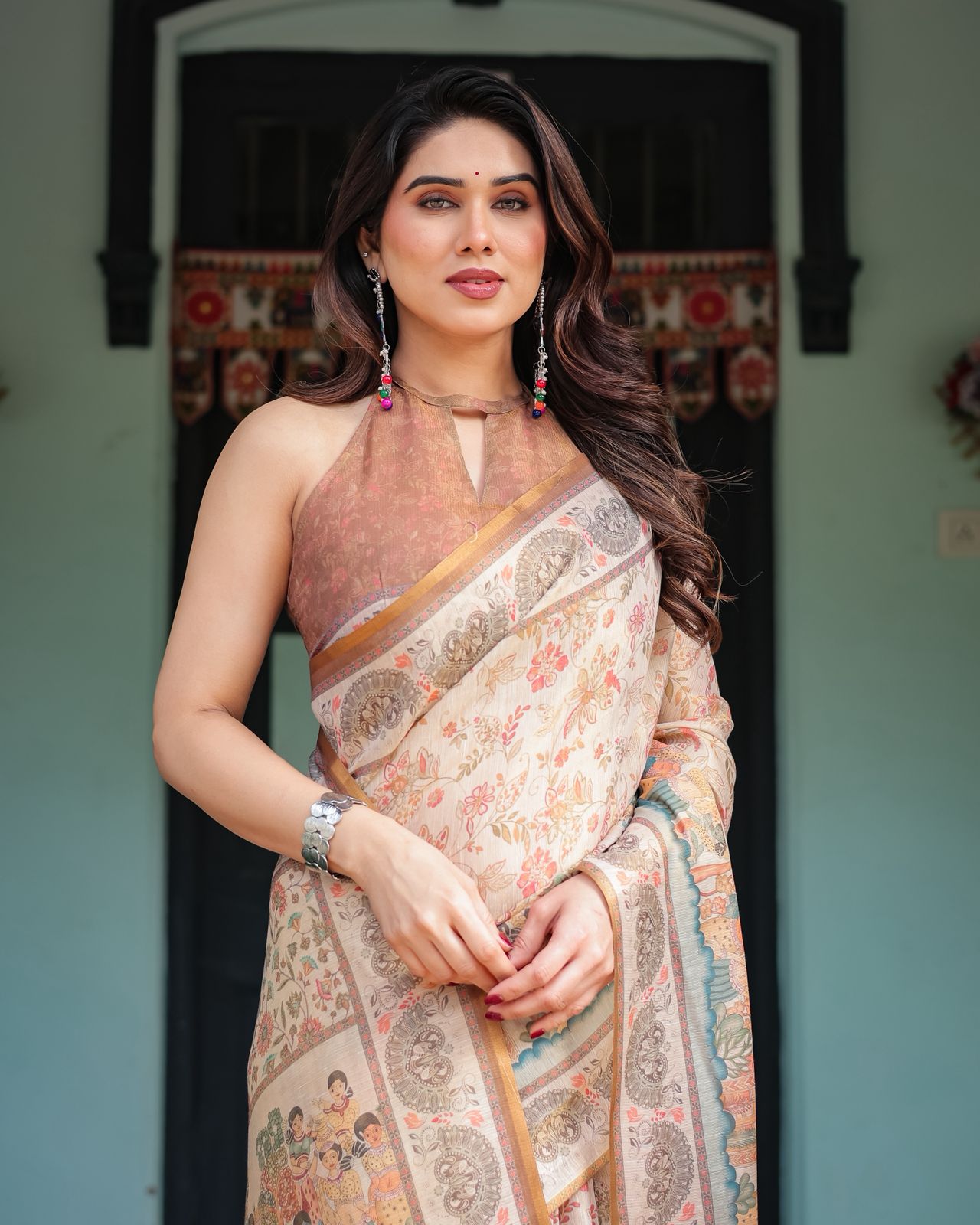
Cotton became central to everyday Indian clothing because it's breathable and comparatively easy to wash. A cotton saree with a small print can suit regular use, while a more structured handloom cotton with zari may move into festive dressing. Linen-cotton blends offer a different balance of texture, airflow and crease behaviour.
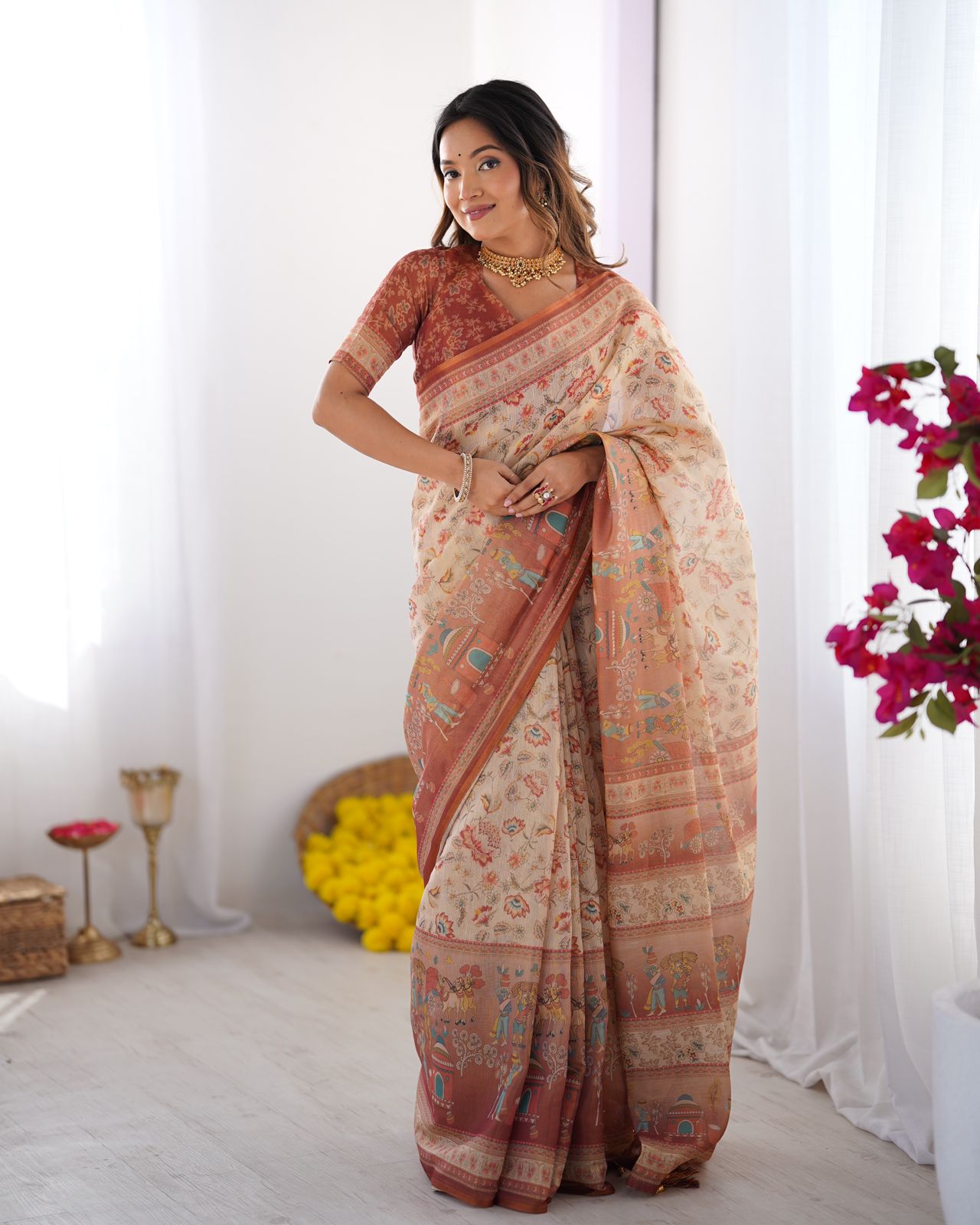
Chanderi illustrates how a regional textile identity can combine lightness, transparency and ornament. Green Maroon Chanderi Printed Saree Online India is an useful example of how a Chanderi-inspired appearance can bring colour and print into a lighter saree wardrobe without making every festive outfit heavy.
Tissue handloom cotton adds a subtle surface glow through its construction and woven detail. Pastel Floral Tissue Handloom Cotton Saree with Zari Weaves and Blue Tissue Handloom Cotton Saree with Zari Floral Print demonstrate how zari can be used as a controlled accent rather than covering the entire textile.
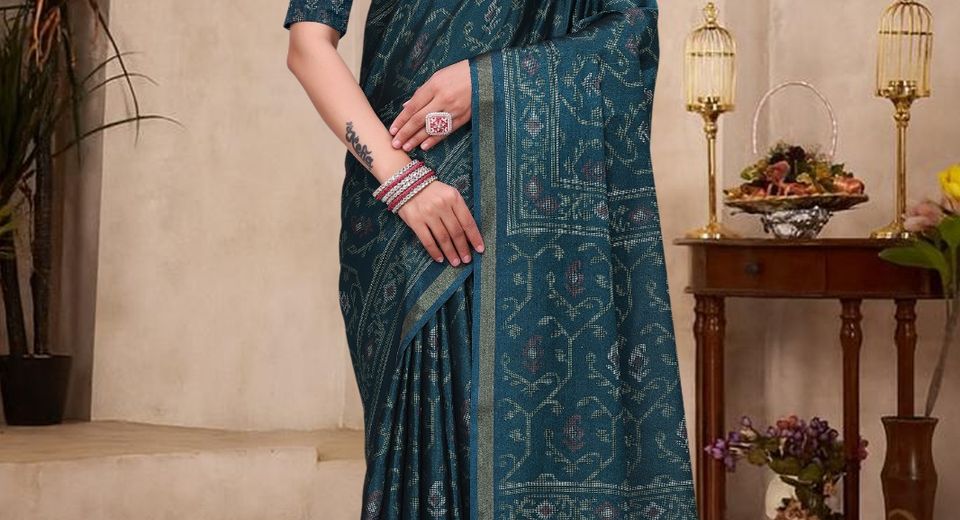
Banarasi silk represents another historical direction: dense pattern, luxurious silk and metallic zari shaped by the weaving culture of Varanasi. Red Blue Printed Banarasi Silk Saree Online India shows how the Banarasi name now appears in both traditional and more interpretive designs, so shoppers should check the product's fibre and weave details rather than rely on the label alone.
What can the saree's history teach an up-to-date buyer?
The saree's history teaches a modern buyer to evaluate fabric, construction, drape and care instead of choosing only by colour or trend.
Match the textile to the way you'll wear it
Choose breathable cotton or cotton blends for long daytime use, especially in warm and humid weather. Teal Green Cotton Saree for Women Online India and Purple Floral Cotton Saree for Women Online India illustrate how colour and print can create everyday variety without depending on heavy embellishment.
Choose a lighter drape when you need easy movement or extended wear. Off White Striped Linen Cotton Saree Online India can suit a relaxed daytime wardrobe, but linen-rich fabrics may crease visibly, so careful folding and a light steam before wearing are useful.
Read the product description carefully
Check whether the listing specifies cotton, silk, tissue, linen-cotton, handloom construction, zari, blouse-piece inclusion and approximate length. "Silk" can describe a fibre, while "silk-like" may describe appearance; those terms are not interchangeable.
Price can provide context but can't independently prove authenticity. Comparing options in Sarees from Rs 1000 to Rs 1500 may help establish a practical budget, while Sarees Under 20% Off and Sarees Under 10% Off can be useful for planned purchases. Large discount labels such as Sarees Flat 60% Off and Sarees Flat 50% Off still require a check of fabric, measurements, return terms and care instructions.
Consider the drape before buying accessories
A broad zari border may need fewer accessories because the saree already supplies visual weight. A small floral cotton print can support a statement blouse, oxidised silver jewellery or a narrow belt without looking overloaded.
For a Haldi ceremony, washable cotton or cotton blends are usually more practical than delicate, heavily metallic fabrics. For a wedding, Banarasi silk, Kanjeevaram silk or a zari-rich handloom can provide formality, but the wearer should test the pleats and pallu weight before the event.
How should an Indian saree be cared for today?
Care depends on fibre, dye, embellishment and weave, so every saree should be cleaned according to its specific material rather than one universal rule.
Air a cotton saree in shade after wearing and wash it according to the care label; strong sunlight can fade dark dyes over time. Fold cotton sarees along changing lines every few months to reduce permanent creasing in one place.
Store silk, zari and tissue sarees in breathable cotton or muslin rather than sealed plastic for long periods. Keep zari away from moisture, perfume and direct contact with damp skin, and refold valuable textiles periodically to reduce stress on the same folds.
don't rub printed, metallic or delicate surfaces aggressively. A professional cleaner familiar with silk and zari is safer for expensive ceremonial sarees than an improvised chemical treatment. A cool iron or steamer should be tested on an inconspicuous area first, with a pressing cloth used when the care label permits ironing.
Why does the question still matter?
The question who invented saree in India matters because a single-inventor story can erase the many communities that made the garment possible.
Weavers developed yarns, looms, borders and motifs. Wearers refined drapes for farming, travel, prayer, childbirth, work and ceremonies. Traders moved fibres and techniques between regions, while families passed down ways of pleating and securing the cloth. Designers and contemporary wearers continue to adapt the saree with belts, pre-stitched formats, jackets and new blouse shapes.
The saree is therefore best understood as a living textile system rather than a frozen invention. Its history begins with ancient practices of wrapping cloth, expands through India's regional weaving cultures and continues every time someone chooses a drape for a particular body, place, season or celebration.
Who invented saree in India has no single-name answer, but the evidence offers something more meaningful: the saree is a collective creation shaped by generations of Indian textile knowledge.
Frequently Asked Questions
Who invented saree in India?
No single person invented the saree in India. The garment evolved over centuries from ancient practices of wrapping and draping unstitched cloth, with regional communities shaping its fabrics, pleats and wearing methods.
How old is the saree in India?
Wrapped clothing in South Asia is ancient, with archaeological and artistic evidence reaching back thousands of years. The modern saree, including its common blouse-and-petticoat styling, developed gradually and should not be projected unchanged into the distant past.
Did the Indus Valley Civilisation wear sarees?
Indus Valley figures suggest that wrapped garments were used, but the evidence cannot prove that people wore the modern six-yard saree. Sculptures and figurines do not preserve the original cloth, exact length or complete draping method.
What is the oldest saree drape in India?
No single drape can be confirmed as the oldest saree drape. Regional styles developed independently over time, and ancient evidence usually shows wrapped clothing without enough detail to reconstruct one definitive technique.
When did the blouse become part of saree dressing?
The blouse became more standardised in many parts of India during the nineteenth and twentieth centuries. Colonial social expectations, urban dress codes, sewing access and regional reform movements all influenced contemporary blouse-and-saree styling.
What is the difference between a Banarasi silk saree and a Kanjeevaram saree?
Banarasi silk is associated with Varanasi and often features brocade and zari work, while Kanjeevaram is associated with Tamil Nadu's silk-weaving tradition and is known for lustrous silk, strong borders and contrasting design elements. Both are ceremonial textiles, but their weaving traditions, textures and visual structures differ.