Key takeaways
- The modern saree blouse does not have one confirmed inventor, because regional upper-body garments existed before the contemporary blouse became widespread.
- Jnanadanandini Devi is widely credited with popularising the blouse, petticoat and more secure saree drape among Bengali women in the 19th century.
- Colonial-era modesty expectations, Victorian tailoring and changing urban lifestyles influenced the fitted blouse's spread across India.
- Saree blouse traditions differ by region, including the choli of western India, the ravikkai of Tamil Nadu and the jacket-like upper garments of eastern India.
- Readymade, silk, designer and cotton blouses solve different dressing needs, so fabric, lining, closure and fit matter as much as neckline design.
Who invented saree blouse is a question with a more complicated answer than a single name and date. The modern fitted blouse was not created by one documented inventor. Instead, it developed from regional Indian upper garments, changing ideas of modesty, colonial-era tailoring and the practical needs of women who wore the saree in new urban settings. Jnanadanandini Devi is widely associated with popularising the blouse, petticoat and a more secure saree drape in 19th-century Bengal.
The distinction matters because the saree is much older than the up-to-date blouse. Women across the subcontinent historically wore regional drapes with or without an upper garment, depending on community, climate, occupation, status and local custom. A stitched blouse became a widely recognised companion to the saree only through a gradual process, rather than a sudden invention.
The short answer to who invented saree blouse
No single person can be confirmed as the inventor of the saree blouse, but Jnanadanandini Devi is commonly credited with popularising the contemporary blouse-and-petticoat combination in 19th-century Bengal.
Jnanadanandini Devi, a member of the Tagore family in colonial Bengal, is often described in fashion histories as an important figure in the blouse's public acceptance. Accounts connect her with adapting the saree for movement through public and social spaces while wearing a blouse and petticoat underneath. The blouse also made the saree easier to manage when paired with a pallu worn over the shoulder in a style that became associated with educated, urban Bengali women.
Popularisation isn't the same as invention. India already had stitched bodices and upper garments, including the choli in western regions and ravikkai in parts of southern India. Different communities also used jackets, breast bands, tunics and other forms of upper-body clothing. The current blouse emerged when several existing traditions met newer tailoring practices and social expectations.
Historical evidence is uneven because clothing was often described by region, caste, occupation or community rather than recorded through one standard national term. Paintings, photographs, dress manuals and written accounts show that blouse-like garments existed in multiple forms. Those sources don't establish one universally accepted inventor.
What women wore before the up-to-date blouse became common
Before the up-to-date saree blouse became widespread, Indian women used several kinds of upper-body clothing, and some communities wore the saree without a stitched blouse.
The choli was a fitted or semi-fitted upper garment worn with draped clothing in Rajasthan, Gujarat, Maharashtra and neighbouring regions. Cholis could be short, long-sleeved, back-opening or decorated according to local practice. The term still describes many contemporary blouse silhouettes, but the historical choli was not identical to every up-to-date saree blouse.
In Tamil regions, the ravikkai served as a traditional stitched upper garment worn with sarees and other draped clothing. Ravikkai designs varied in sleeve length, neckline, fastening and degree of structure. A present-day blouse with a close-fitting sleeve and rounded neckline may resemble a ravikkai, but up-to-date tailoring has introduced new linings, hooks, padding and construction methods.
Kerala's clothing history also demonstrates why a single origin story is unreliable. Upper garments, breast cloths and jackets vary across communities and periods. The use of a blouse could signal neither one adaptable rule nor one fixed idea of respectability. Climate, labour, ritual, local authority and social position all determine dress.
In many parts of India, the saree was secured through pleating and wrapping rather than through a standardised stitched top. A pallu could cover the torso, and the fabric itself could be arranged in several ways. The absence of a blouse in an old image doesn't prove that blouses were unknown; it shows that clothing conventions were not uniform.
How the 19th century changed saree dressing
The 19th century helped spread the fitted blouse because public travel, education, photography, employment and colonial social codes changed how many urban women dressed.
Victorian clothing norms placed greater emphasis on covering the upper body, especially in schools, railway carriages, formal gatherings and colonial institutions. Indian women did not simply copy European clothing, but tailors and households adapted familiar garments to meet new social situations. The blouse offered coverage while allowing the saree to remain the central garment.
Jnanadanandini Devi's influence is significant in this context. The blouse, petticoat and shoulder-draped pallu created a stable version of saree dressing that worked well with movement and public presentation. The combination also made it easier to wear the saree with a more defined waist and a tucked lower edge.
Urban tailoring helped turn regional upper garments into repeatable patterns. A tailor could measure the bust, shoulder, armhole and sleeve, then reproduce a fitted top in cotton, silk or other available fabric. Commercial sewing and later factory production made similar garments accessible beyond one household or neighbourhood.
Photographs from the late 19th and early 20th centuries show that blouse shapes were already changing. High necklines, elbow-length sleeves, puff sleeves, front openings and decorative borders appeared alongside plainer garments. These changes remind us that the blouse was shaped by fashion as well as by modesty.
Why regional blouse names and shapes still matter
Regional blouse traditions matter because the word "blouse" can hide different histories of cut, fabric and draping.
Western India
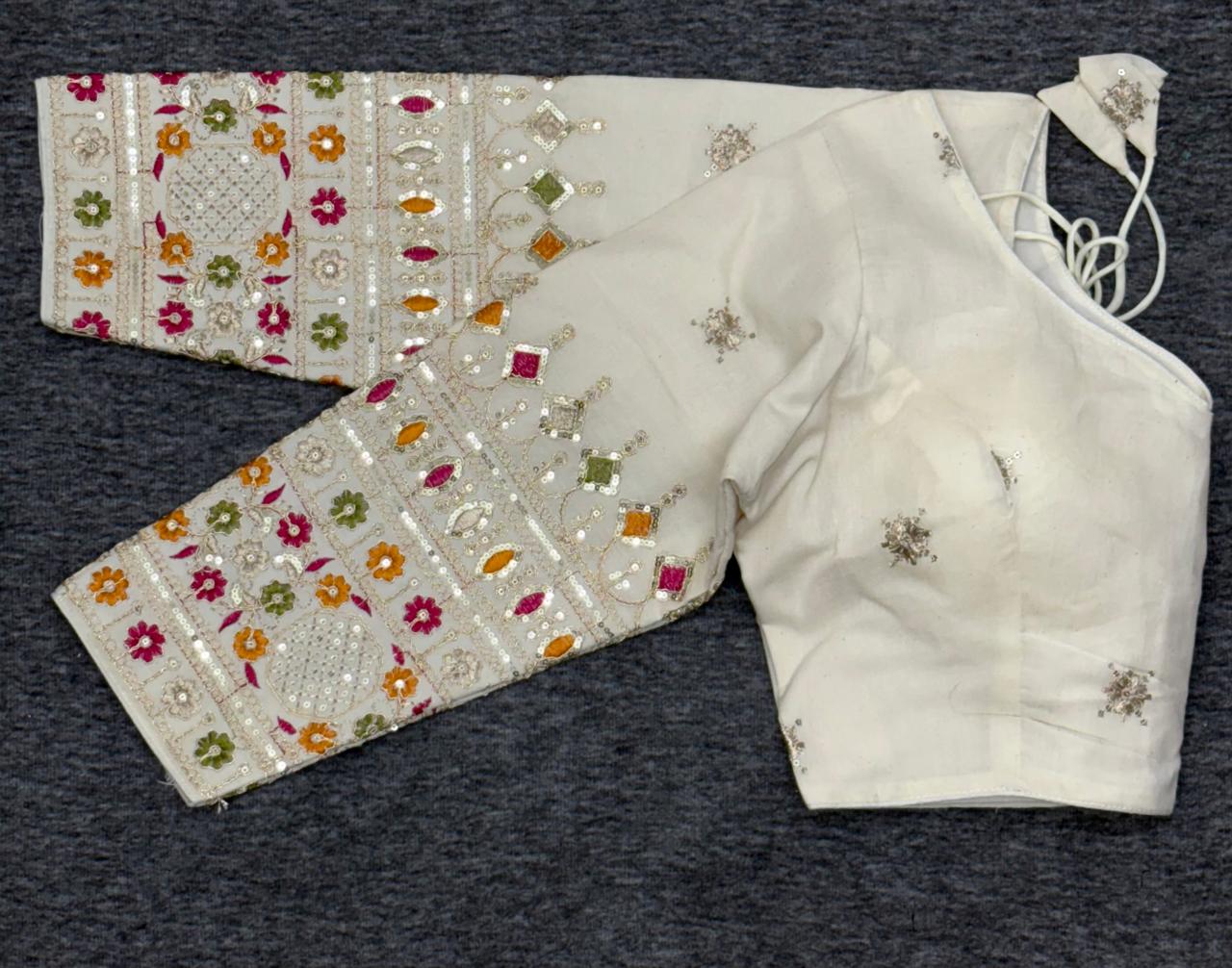
Western Indian cholis often use close-fitting construction, strong sleeve definition and decorative details. Mirror work, embroidery, tie closures and shaped panels are associated with several regional traditions, although contemporary designers frequently reinterpret them for sarees and lehengas.
Southern India
Southern Indian ravikkai traditions commonly emphasise a fitted torso, practical sleeves and fabric coordination with silk sarees. Kanjeevaram sarees are often paired with blouses cut from matching silk or contrast fabric, sometimes with zari borders placed at the sleeve edge or neckline.
Eastern India
Bengali saree dressing helped popularise the blouse-and-petticoat arrangement in contemporary urban fashion. Cotton sarees, handloom textures and full or elbow-length sleeves remain important references, while contemporary Bengali-inspired blouses may include square necklines, ties or structured backs.
Central and northern India
Upper garments worn with draped clothing in northern and central regions included cholis, kanchalis, angias and jacket-like forms. Current saree blouses borrow from these shapes through sleeveless cuts, long sleeves, high necks and corset-inspired panels without belonging neatly to one historical category.
How silk and cotton changed the blouse
Silk and cotton influence blouse design differently because they have different weights, surface textures, breathability and methods of responding to heat.
Banarasi silk and Kanjeevaram silk usually need a blouse construction that can support a heavier saree and coordinate with woven motifs. Zari borders may be used on sleeves, necklines or the lower edge, but heavy embellishment can make a blouse uncomfortable if the lining is stiff or the armhole is too tight. A silk blouse should be aired after use and stored folded in breathable cotton rather than sealed in plastic for long periods.
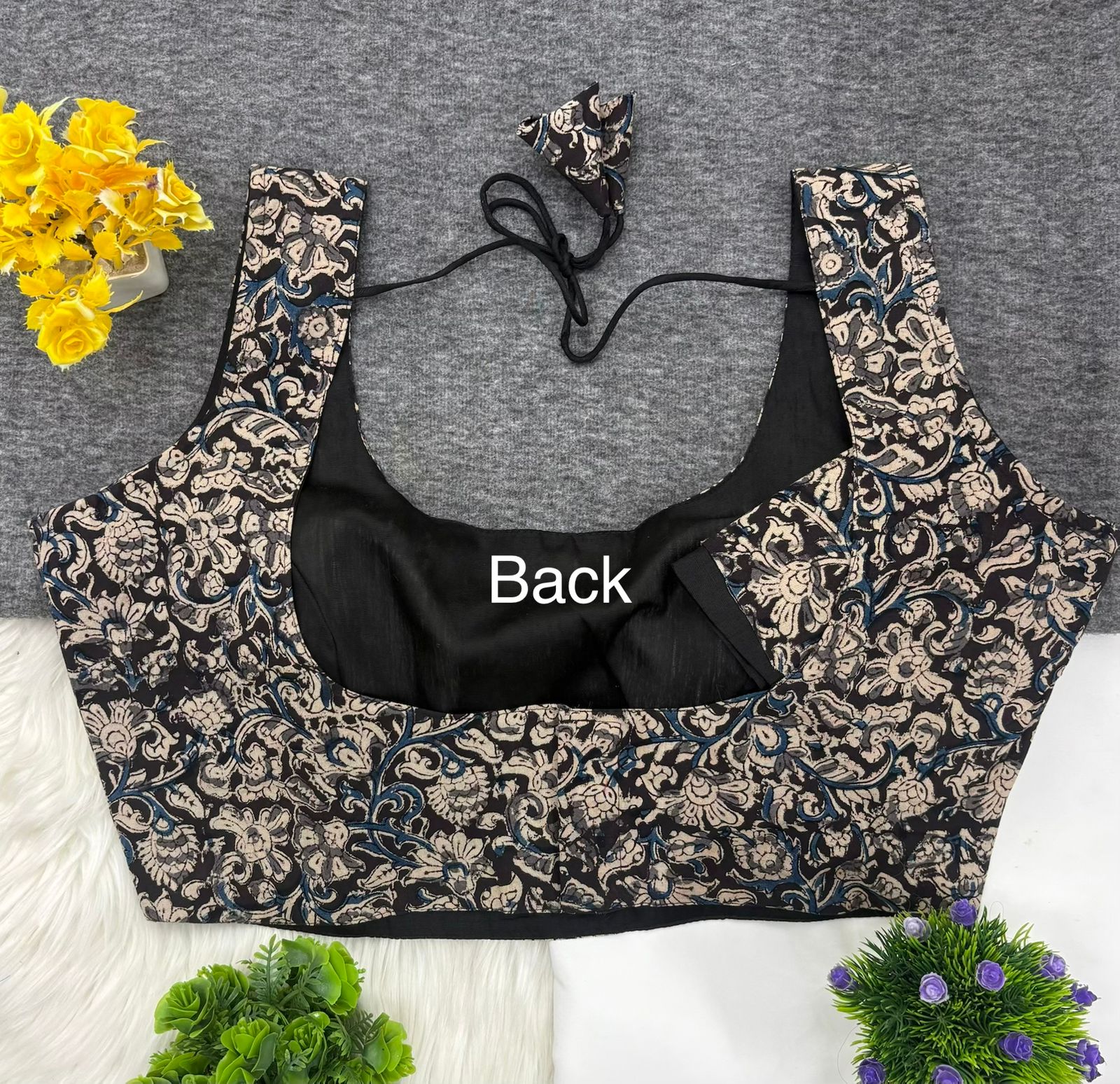
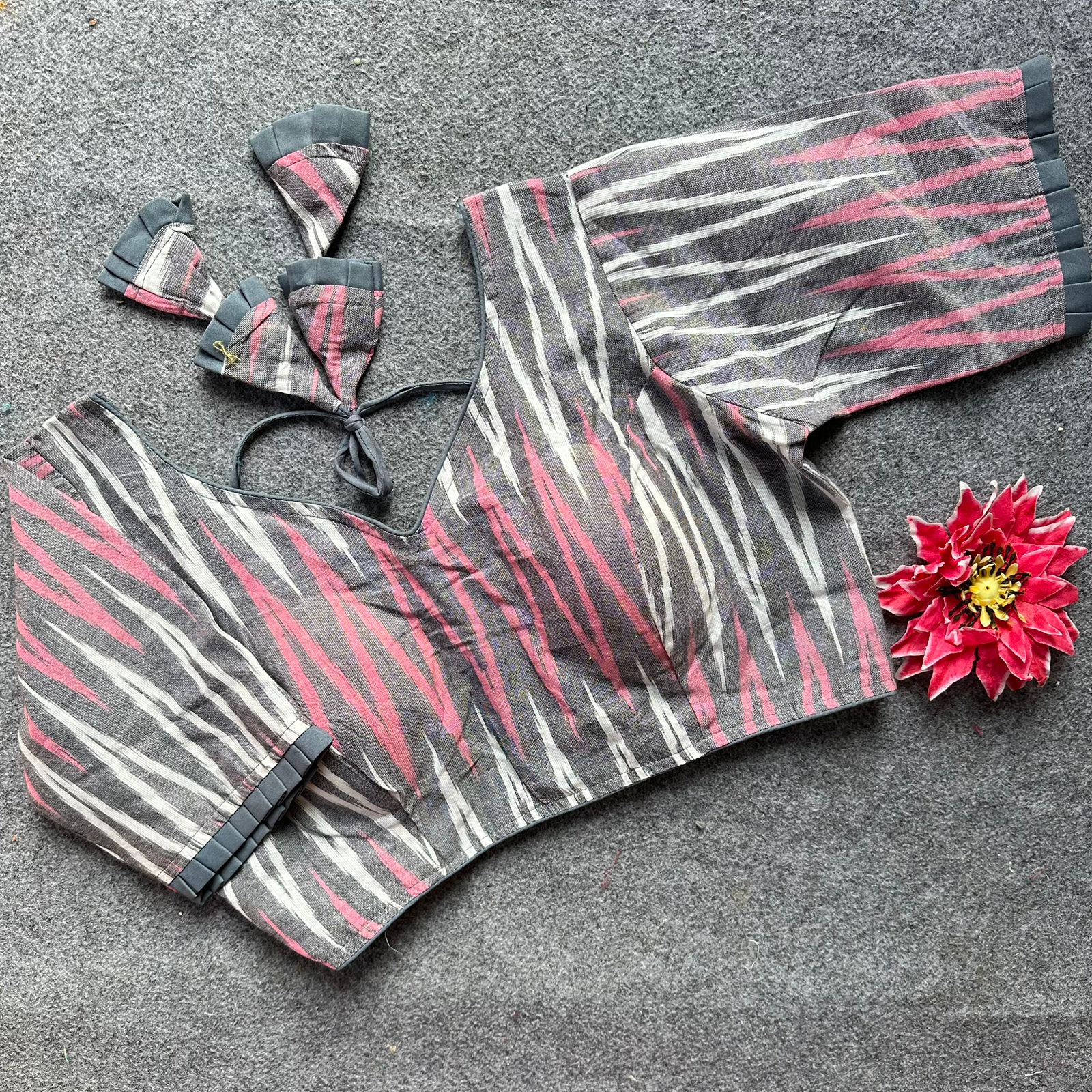
Cotton blouses suit humid weather and frequent daytime wear because cotton absorbs moisture and allows more air movement than many synthetic linings. A Pure Kalamkari Cotton Padded Blouse for Women illustrates how printed cotton can combine a time-honoured surface with contemporary support. Padding is useful when a wearer wants a smoother outline, but padding should not replace accurate bust and underbust measurements.
Chanderi sarees are lightweight and slightly sheer, so a blouse in cotton silk, silk or a coordinated opaque fabric can provide visual balance. A very heavy blouse may overpower Chanderi's delicate fall. A blouse made from breathable cotton can work well for daily sarees, but colour bleeding should be checked before the first wash.
A Blue Zari Work Cotton Saree for Wedding shows why fabric matching requires more than choosing the same colour. Zari adds shine, while cotton adds a grounded texture. A blouse can repeat the blue, pick up the zari with a restrained metallic border or create contrast through a jewel tone. The best choice depends on the saree's weight, the wedding venue and the number of hours the garment will be worn.
From tailored garments to readymade and designer blouses
Readymade blouses became more useful as women needed quick, repeatable dressing options without visiting a tailor for every saree.
A readymade blouse is practical when the shoulder width, bust measurement and armhole already match the wearer's body. Adjustable hooks, elastic panels and side openings can improve flexibility, but a garment that fits the bust may still fail at the shoulder or sleeve. Measure the fullest bust, underbust, shoulder width and upper arm before choosing a size.
Designer readymade blouses typically add a stronger visual idea through unusual sleeves, sculpted necklines, embroidery, appliqué or engineered fabric placement. "Designer" doesn't automatically mean better fit. A simple cotton blouse with correct armhole depth can be more comfortable and flattering than a heavily embellished blouse with restricted movement.
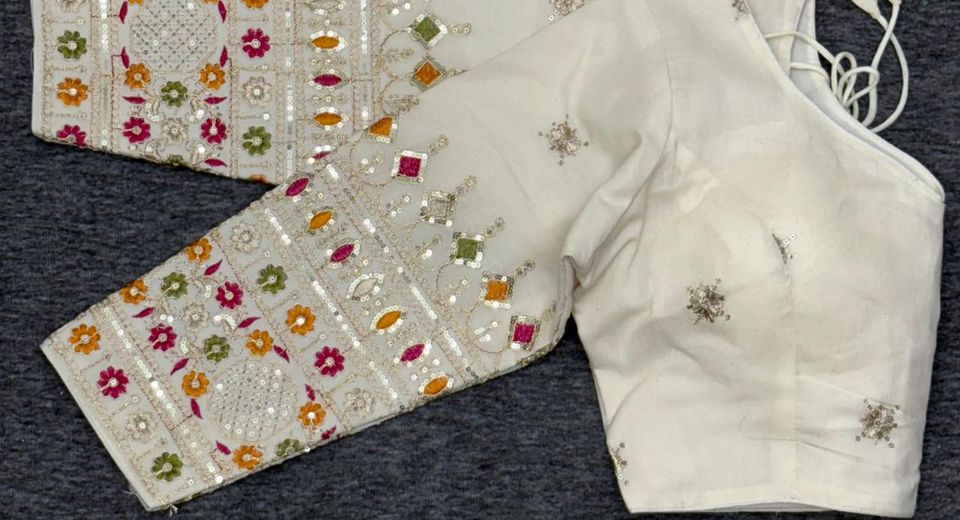
A Classic Festive Wear Blouse for Stylish Saree Look represents the versatile middle ground between a plain daily blouse and a highly specialised couture piece. A blouse in this category can work with several sarees if its neckline, sleeve length and colour are not overly tied to one outfit.
Current blouses also borrow from western tailoring through princess seams, structured cups, concealed zips and shaped waist panels. Those details can improve fit, but they require careful alteration. A seamstress should preserve the saree's drape by avoiding a hem that rides up or a neckline that pulls when the pallu is pinned.
How to identify a historically appropriate blouse today
A historically informed blouse doesn't need to be a costume; it needs a recognisable connection to a regional cut, fabric or finishing detail.
For a Bengali-inspired look, choose a cotton saree with a fitted blouse, elbow-length sleeves and a modest round or square neckline. For a southern silk look, coordinate a silk blouse with the saree border and consider sleeve-edge zari. For a western Indian influence, use a choli-like cut with shaped panels, ties or embroidery, while keeping the construction comfortable for saree pleats.
Colour is another useful historical and styling tool. A tonal blouse allows the weave to lead, while contrast can make a border more visible. Metallic zari works best when repeated in one or two small details rather than applied across every surface.
Neckline choice should follow the saree's scale and the wearer's movement needs. A high neck provides coverage and suits structured silk. A boat neck broadens the visual shoulder line. A V-neck lengthens the neckline but may need a secure inner facing. Sleeveless styles can work in warm weather, although a saree blouse should still have a stable armhole that doesn't expose the side seam.
What the blouse's history tells us about Indian fashion
The history of the saree blouse shows that Indian fashion changes through adaptation rather than simple replacement.
Regional garments continued to exist while new blouse patterns circulated through cities, magazines, cinema, photographs and tailoring shops. A woman could wear a ravikkai-inspired blouse with a Kanjeevaram saree, a choli-shaped blouse with a cotton drape or a structured designer blouse with a handloom textile. These combinations are not historically "pure," but they reflect how clothing traditions remain alive.
The story also challenges the idea that tradition means one fixed silhouette. Saree dressing has always responded to material, climate, mobility and social setting. The contemporary readymade blouse is part of that continuing history because it translates tailoring into a faster and more standardised format.
So, who invented saree blouse? The most accurate answer is that no single inventor can be named. Jnanadanandini Devi played a major role in popularising the modern Bengali blouse-and-petticoat arrangement, while older regional upper garments and 19th-century social change supplied the broader foundations. Understanding that layered history makes it easier to choose a blouse for its fabric, fit and cultural reference instead of treating one modern design as the only heritage option.
Frequently Asked Questions
Who invented saree blouse in India?
No single inventor of the saree blouse is documented. Jnanadanandini Devi is widely credited with popularising the blouse, petticoat and shoulder-draped saree style in 19th-century Bengal, while regional garments such as the choli and ravikkai existed earlier.
Did women wear blouses with sarees in ancient India?
Some Indian communities used stitched or wrapped upper garments in earlier periods, but blouse use was not uniform across India. Many women also wore regional saree drapes without a standard fitted blouse, depending on local custom, climate and social context.
What is the difference between a saree blouse and a choli?
A saree blouse is generally designed to accompany a saree, while a choli is a broader regional category of fitted upper garment traditionally worn with draped skirts or garments. Modern fashion often uses choli-inspired cuts for sarees, so the terms can overlap.
Is a readymade blouse better than a tailored blouse?
A readymade blouse is better for speed and predictable sizing when the shoulder, bust, armhole and sleeve measurements fit correctly. A tailored blouse is better when the body has substantial measurement differences or when a complex neckline, padded cup or special sleeve requires precise alteration.
Which blouse fabric is best for a silk saree?
Silk or silk-blend fabric is usually the most cohesive choice for a heavy silk saree because it matches the saree's weight and sheen. Cotton silk can provide a lighter option, while a very thin cotton blouse may look unbalanced with heavy zari unless the styling intentionally uses contrast.
How should a cotton saree blouse be washed?
A cotton saree blouse should be washed according to its dye, print, lining and embellishment, with cold water and mild detergent being safer for most coloured garments. Kalamkari-style prints and zari details should be tested for colourfastness, dried away from harsh direct sunlight and stored only after they are completely dry.