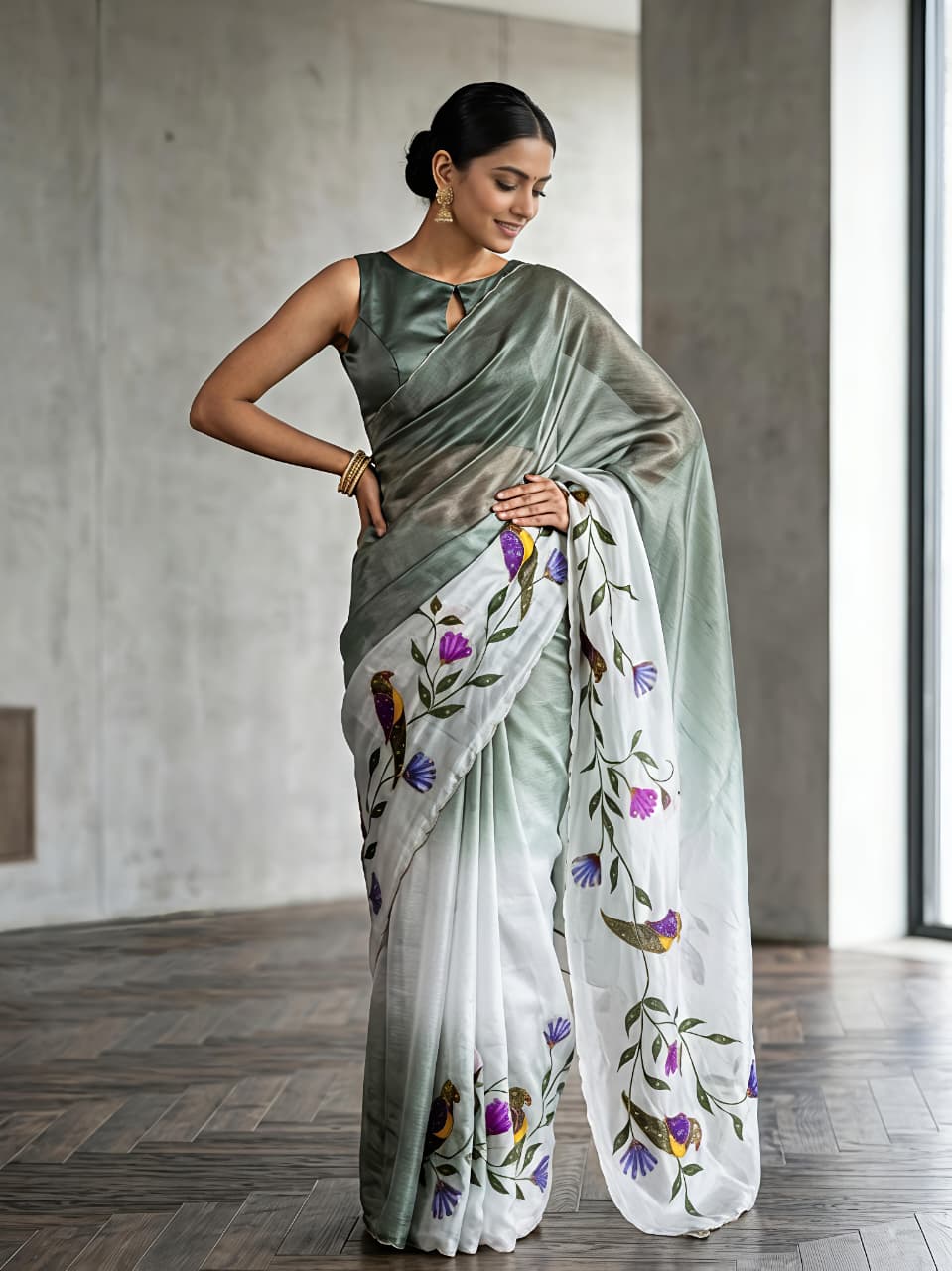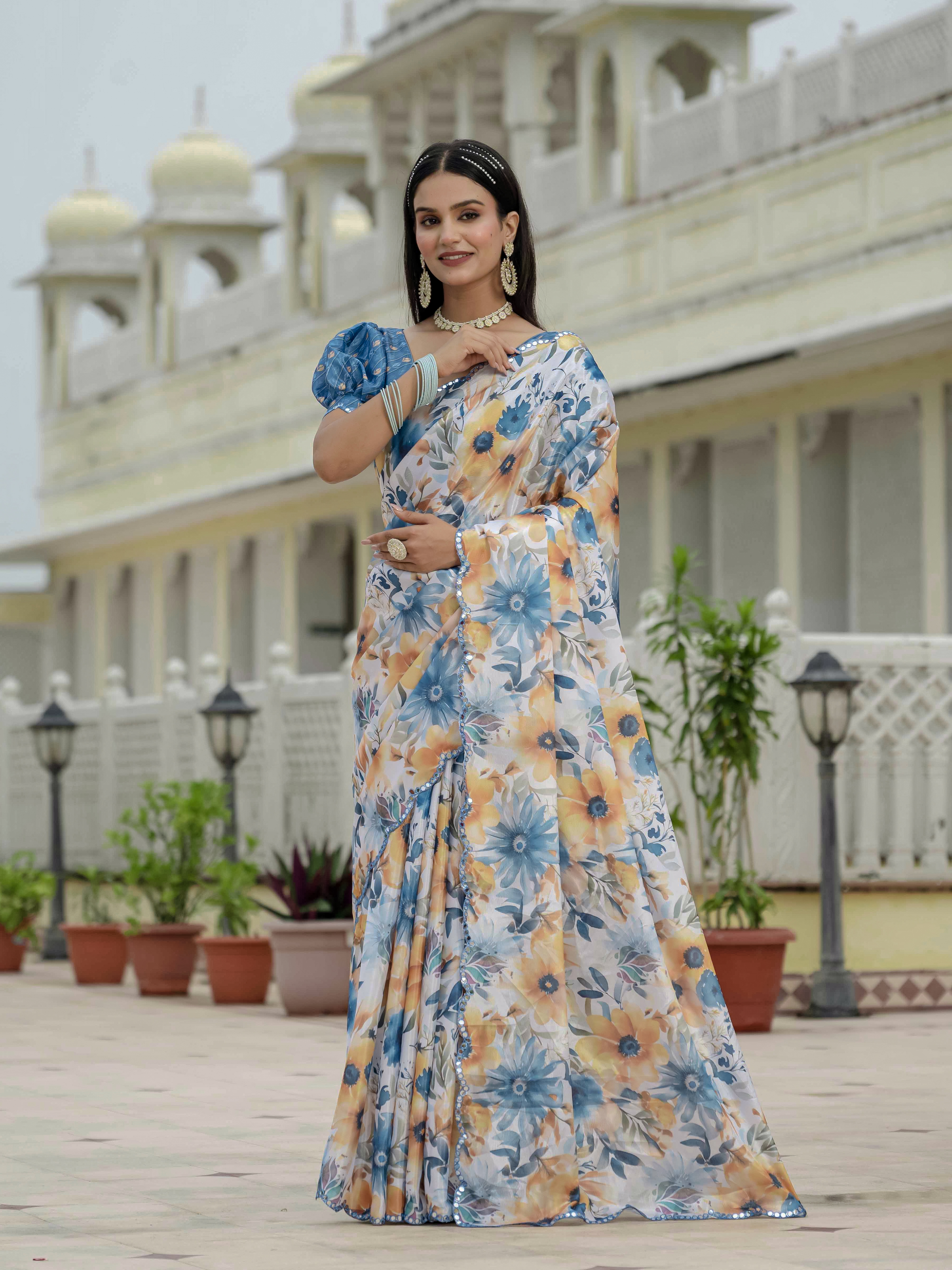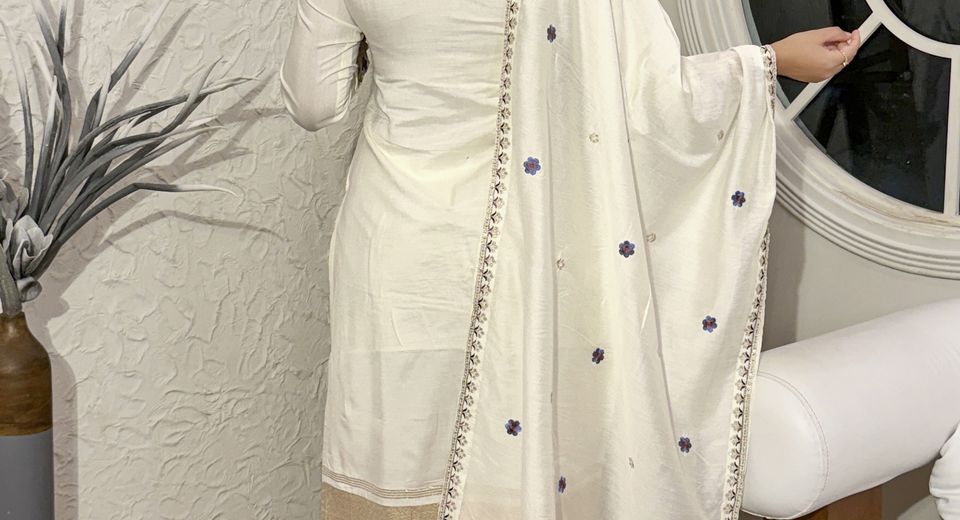
Who invented salwar kameez is a question with no single historical name as its answer. The outfit developed gradually from loose trousers and long tunics worn across Central and West Asia, then took distinctive shape in the Indian subcontinent through Persianate courts, Mughal-era exchange, regional tailoring, and Punjabi dress traditions. Understanding that layered history explains why a salwar suit can look formal, practical, festive, or contemporary without losing its identity.
The modern ensemble usually contains three parts: a salwar or another form of trousers, a kameez or kurta, and a dupatta. Those pieces have changed in cut, fabric, embroidery, and proportion over time. A readymade salwar suit sold today therefore represents not one invention, but a long process of cultural adaptation.
Who invented salwar kameez, and why is there no single inventor?
No single person invented salwar kameez because the outfit evolved from older garments across several regions and centuries. Clothing historians generally connect its components to Central Asian, Persian, Arab, and South Asian dress traditions rather than to one named designer or ruler.
The word salwar is usually linked to Persian and related Central Asian vocabulary for trousers. The word kameez is associated with the Arabic qamis, a long shirt or tunic, although languages across the region reshaped both pronunciation and meaning. These linguistic links don't prove that one community make the complete three-piece outfit. They show that the garment go to a wider history of movement, trade, migration, and linguistic exchange.
Loose trousers were valuable in regions where people rode horses, travelled long distances, or needed freedom of movement. Long tunics offered coverage and could be made in cotton, wool, silk, or blended textiles according to climate and status. When these practical forms travelled into South Asia, local makers altered them for regional weather, weaving traditions, modesty preferences, and social occasions.
How did Central Asian and Persian clothing influence the outfit?
Central Asian and Persian clothing traditions supplied important influences for the loose trouser and long-tunic silhouette that later became associated with salwar kameez. The influence arrived through migration, military networks, commerce, court culture, and the movement of skilled textile workers.
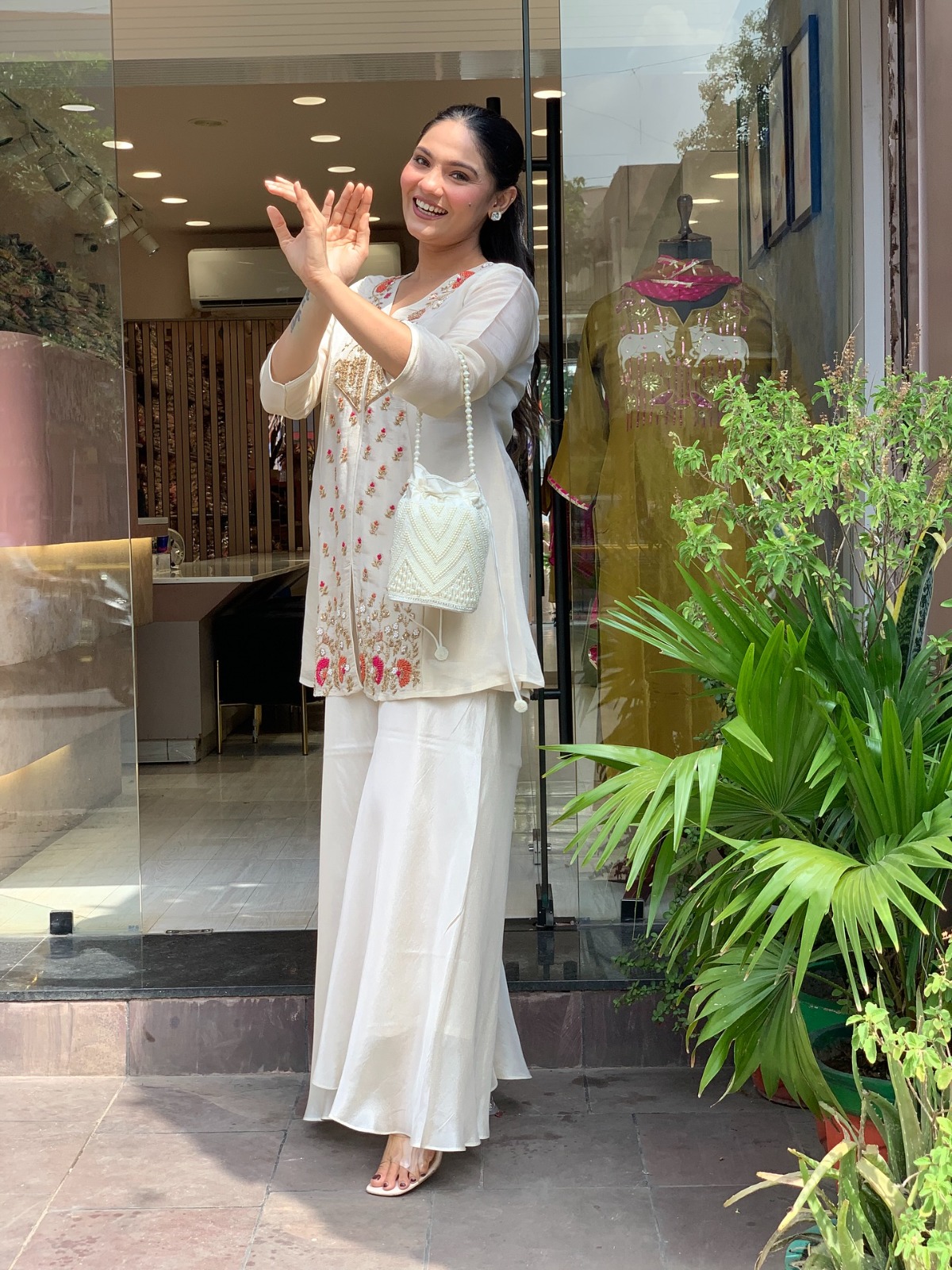
Pre-current Central Asian clothing often prioritised layered garments, roomy sleeves, wrapped textiles, and trousers that made riding easier. Persianate court culture added refined tailoring, decorative borders, luxurious textiles, and coordinated layers. These features did not enter South Asia as a complete up-to-date salwar suit; they were absorbed and reinterpreted alongside existing Indian garments such as the sari, ghagra, choli, and various regional tunics.
Persian influence became especially visible in elite environments where clothing communicated rank. Fine silk, brocade, metallic thread, and carefully finished seams could signal access to a court or wealthy household. Over time, techniques such as zari decoration and sophisticated surface embroidery became part of South Asian formalwear, although each region gave those techniques its own visual language.
Did the Mughals invent the salwar kameez?
The Mughals did not invent the salwar kameez, but Mughal-era courts helped spread and elevate Persianate clothing styles in the Indian subcontinent. The Mughal Empire, established in the sixteenth century, connected South Asian court culture with Central Asian and Persian traditions through rulers, administrators, artists, artisans, and travelling communities.
Mughal clothing included many forms of robe, tunic, trouser, sash, and headwear. Court dress was not identical to the everyday salwar suit worn today, but the period strengthened the prestige of tailored separates and layered ensembles. Court workshops also supported textile production and decorative arts, helping techniques and silhouettes circulate beyond royal settings.
The Mughal connection is therefore best described as a major stage in the outfit's history rather than a moment of invention. A contemporary kameez may have a straight cut, an Anarkali flare, a short kurti shape, or an asymmetrical hem that would not match a historical court garment. Its relationship with Mughal dress is one of influence and adaptation, not direct duplication.
When did salwar kameez become strongly associated with Punjab?
Salwar kameez became especially associated with Punjab through regional use, tailoring traditions, migration, and its practical suitability for daily life. Punjab includes areas that are now divided between India and Pakistan, so the outfit's history crosses up-to-date national borders.
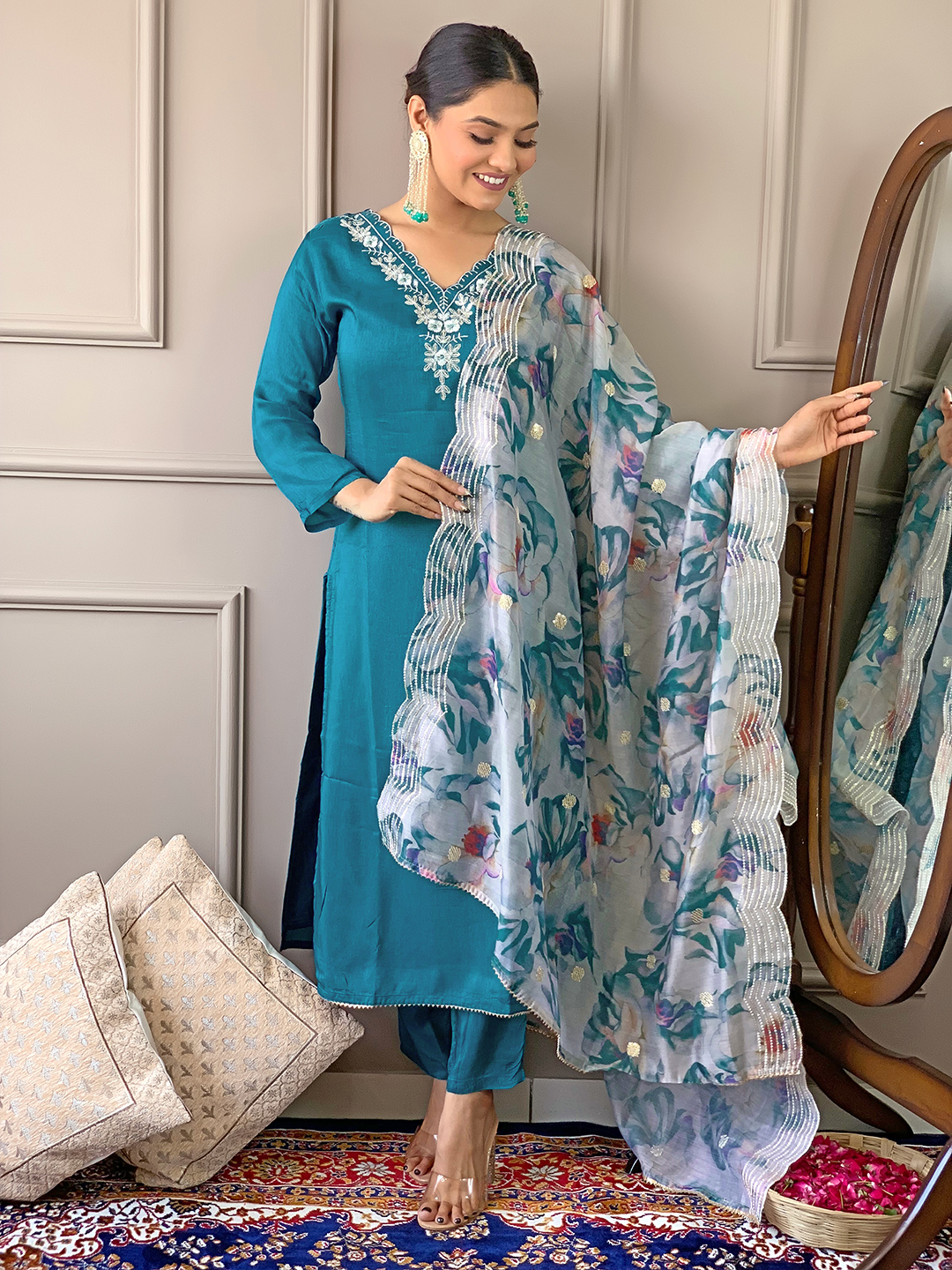
The Punjabi salwar traditionally has a generous shape with gathers or pleats that narrow towards the ankle. The kameez may be relatively short compared with a floor-length Anarkali, and the dupatta often adds colour, movement, and coverage. This combination allowed mobility for work, travel, and household life while remaining adaptable for festive dressing.
Punjabi communities also carried the outfit to other parts of India and to global diaspora communities during the twentieth century. Partition in 1947 caused enormous displacement, and families carried clothing habits, embroidery practices, recipes, languages, and memories with them. Salwar kameez consequently became familiar far beyond its regional roots.
Punjabi identity is important to the story, but it should not erase the outfit's wider history. Sindhi, Kashmiri, Uttar Pradeshi, Hyderabadi, Bengali, Afghan, Pakistani, and other communities have developed their own versions. Differences may appear in trouser width, tunic length, neckline, sleeve shape, embroidery, and the way the dupatta is worn.
How did regional tailoring create different salwar suit styles?
Regional tailoring created the variety of salwar suits by changing the proportions, fabrics, decoration, and trouser shapes of the basic tunic-and-trouser combination. A few familiar silhouettes illustrate how adaptation works.
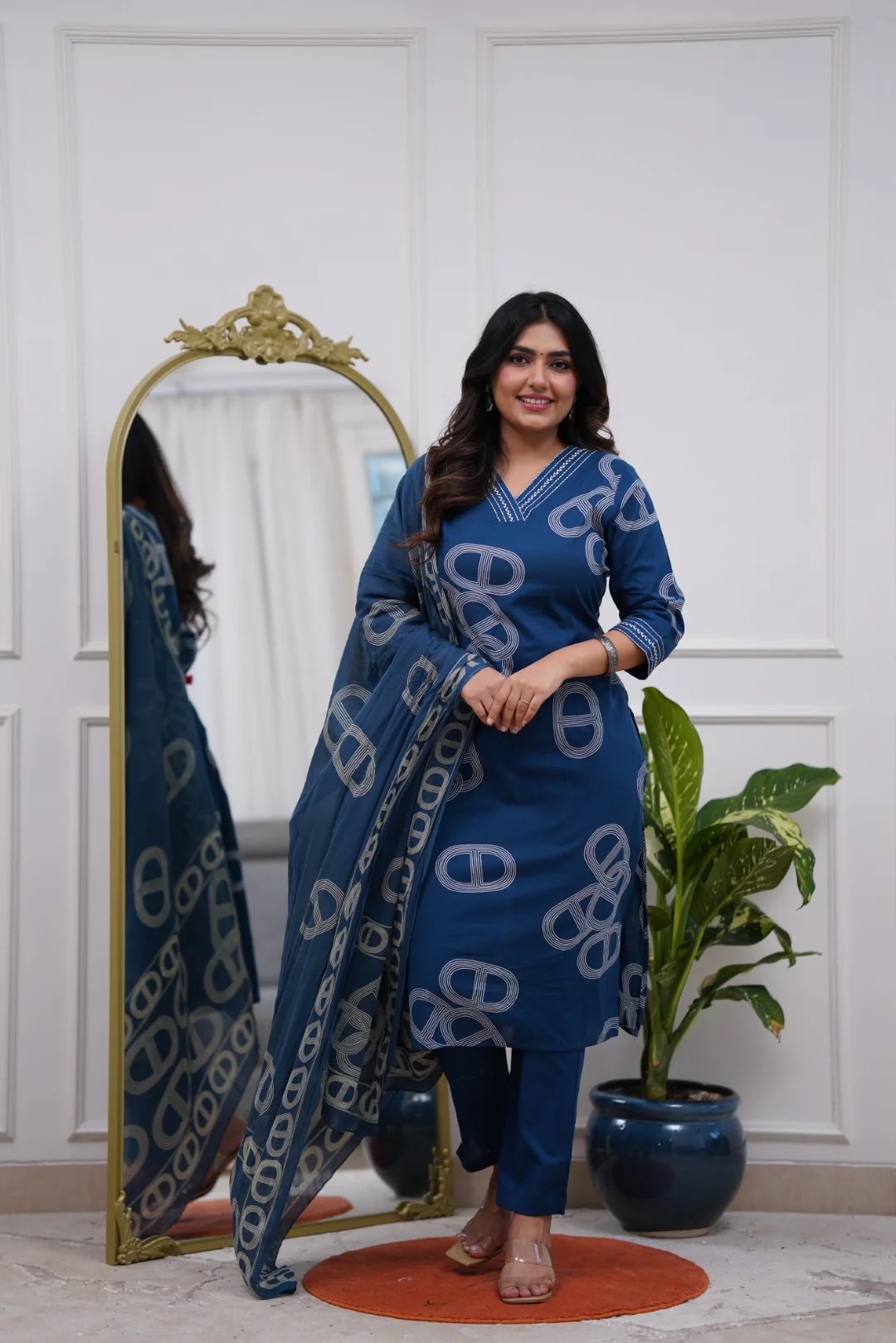
Punjabi salwar and kameez
The Punjabi salwar usually has a roomy, gathered leg and a narrower ankle, while the kameez may be short or medium length. Cotton, printed fabrics, phulkari-inspired embroidery, and bright colour combinations are strongly associated with many Punjabi interpretations, although contemporary versions use nearly every textile.
Churidar and straight trousers
A churidar is a close-fitting trouser that forms folds around the ankle, while straight trousers fall in a cleaner vertical line. Churidar styling became popular with longer kurtas and Anarkali silhouettes, whereas straight trousers are common in office-friendly and minimalist suit sets.
Patiala salwar
A Patiala salwar uses abundant fabric and multiple folds to create a fuller, draped trouser shape. The style is associated with Patiala in Punjab and is often paired with a shorter kurti, allowing the pleats to remain visible.
Anarkali and palazzo adaptations
An Anarkali combines a fitted upper section with a flared lower tunic, while palazzo suits replace a traditional narrow or gathered salwar with wide-leg trousers. These forms show that salwar kameez is a flexible category rather than one fixed pattern.
Fabric changes also alter the character of a suit. Chanderi gives a light, slightly sheer hand and a dressy surface; silk creates richer drape and visual depth; viscose can provide fluid movement; organza is often used for a crisp, translucent dupatta. A Green Chanderi Embroidered Salwar Suit with Organza Dupatta demonstrates how fabric choice can make a familiar silhouette feel ceremonial without requiring heavy construction.
How did salwar kameez become an up-to-date everyday garment?
Salwar kameez became a modern everyday garment because it combines coverage, movement, regional identity, and easy variation in one coordinated outfit. Urbanisation, women's education and employment, mass tailoring, cinema, television, and ready-to-wear retail all helped the style move between home, workplace, travel, and celebration.
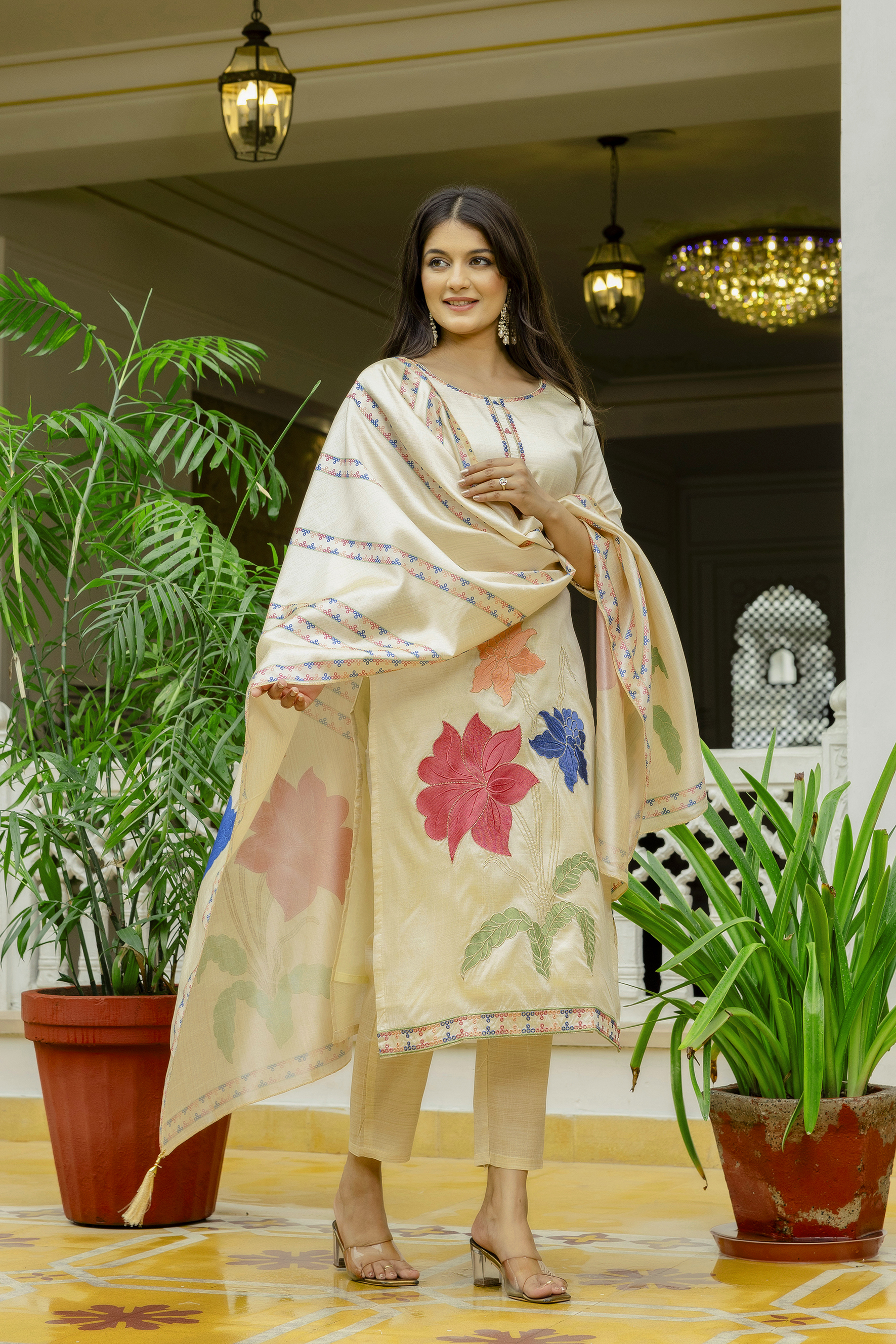
During the twentieth century, the kameez became available in many lengths and cuts. Cotton versions suited hot climates and frequent washing, while rayon, viscose, silk, Chanderi, and blended fabrics offered options for parties and ceremonies. Printed dress materials allowed customers to choose fabric and have a suit stitched, while readymade sets reduced the waiting time associated with tailoring.
Contemporary design also separates the outfit from strict historical categories. A cream straight suit may use minimal threadwork, a festive set may add a heavily worked dupatta, and a three-piece suit may pair a long kameez with cigarette trousers rather than a classic gathered salwar. An Embroidered Salwar Suit Set for Women can sit comfortably beside a more specifically regional Punjabi or Anarkali interpretation.
Colour remains one of the simplest ways to change the message of a suit. Yellow often suits a Haldi ceremony or daytime celebration, navy can appear polished for an evening gathering, and camel or cream works well for understated festive dressing. A Yellow Threadwork Readymade Salwar Suit and a Navy Blue Threadwork Readymade Salwar Suit show how the same broad garment category can move between bright daytime energy and deeper evening formality.
What should you check when choosing a salwar suit today?
The best salwar suit choice depends on fabric behaviour, garment measurements, occasion, climate, and care requirements rather than on decoration alone. Checking those five factors prevents many common buying mistakes.
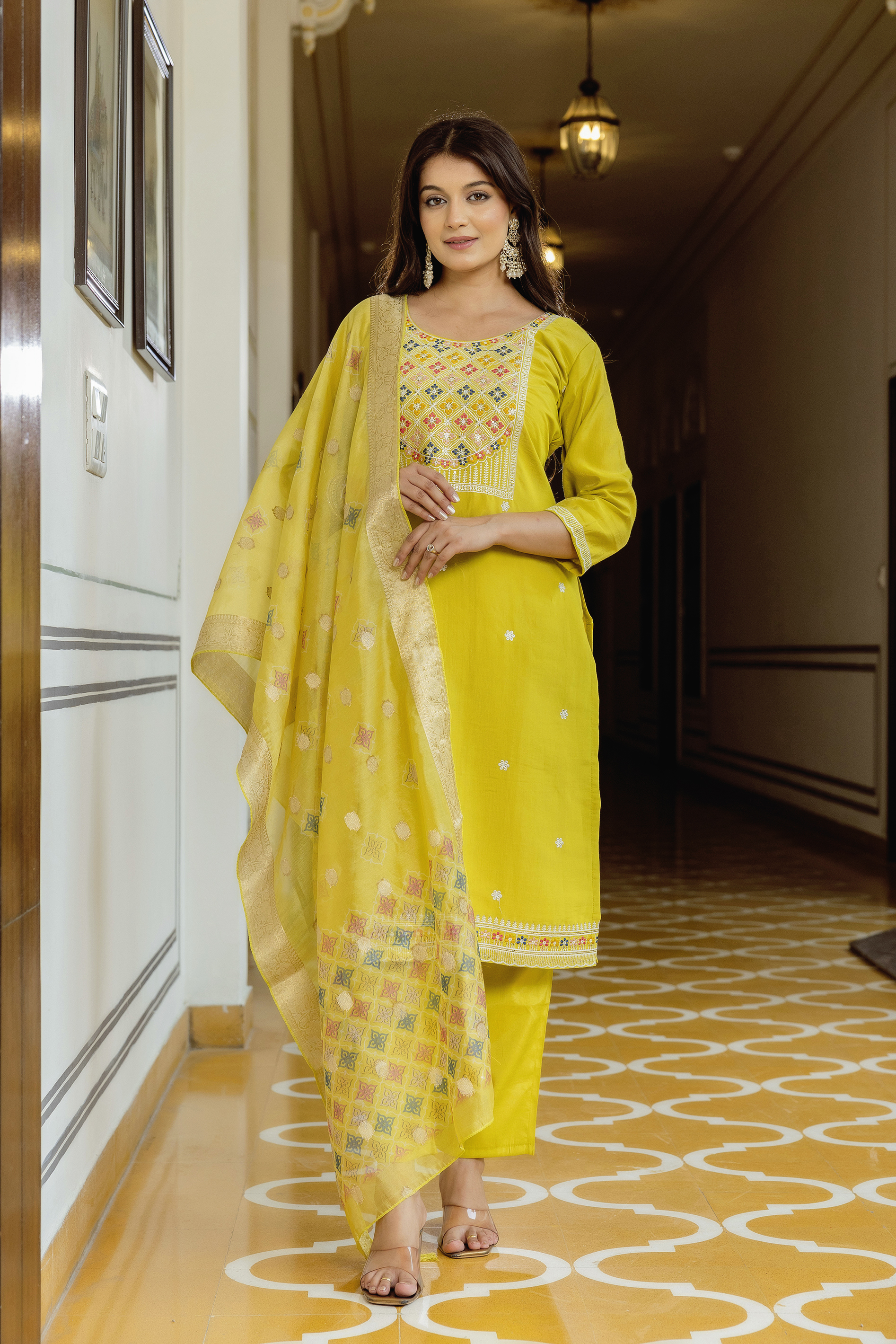
- Check the fabric against the weather. Cotton and breathable blends are practical for heat and repeated wear. Chanderi, silk, and organza can look more formal but may need gentler handling.
- Measure the kameez and trouser separately. Bust, shoulder, sleeve, hip, rise, and trouser length all affect comfort. A correct bust measurement can't compensate for a restrictive armhole or short rise.
- Assess the dupatta's weight. A heavily embellished dupatta can pull at the neckline and require careful pinning. A lighter organza or cotton dupatta may be easier for commuting and long events.
- Match the silhouette to movement. Patiala and palazzo trousers need room at the hip and thigh. Straight trousers need accurate waist and ankle measurements. Anarkali panels need enough flare to sit smoothly while walking.
- Read the care label before buying. Chanderi and silk may require dry cleaning or gentle hand washing, while colourfast cotton can usually tolerate more frequent laundering. Embroidery should be turned inside out and protected from snagging.
For a softer neutral palette, an Elegant Camel Shade Salwar Suit Set or SilkGlow Cream Salwar suit can work for daytime gatherings, family visits, and understated festive dressing. For a more decorative look, Designer Yellow Salwar Suit with Dupatta and Cream Threadwork Viscose Chanderi Readymade Salwar Suit illustrate how threadwork and surface texture can provide occasion value without changing the fundamental structure of the outfit.
Shoppers comparing silhouettes can also look through Ladies Dress Anarkali Salwar Suits when a flared shape is preferred, Dress Materials when custom stitching is important, and the Salwar Suits with 30% Off or Salwar Suits Flat 40% Off collections when price comparison is part of the decision. A broader Bestsellers Suits Collection - VARNAVI can be useful for observing which colours, cuts, and fabric combinations are currently popular.
Why does the history of salwar kameez still matter?
The history of salwar kameez matters because clothing can carry several cultural influences without belonging exclusively to one inventor, empire, or modern nation. The outfit records movement across Central Asia, Persia, the Mughal world, Punjab, and many South Asian regions.
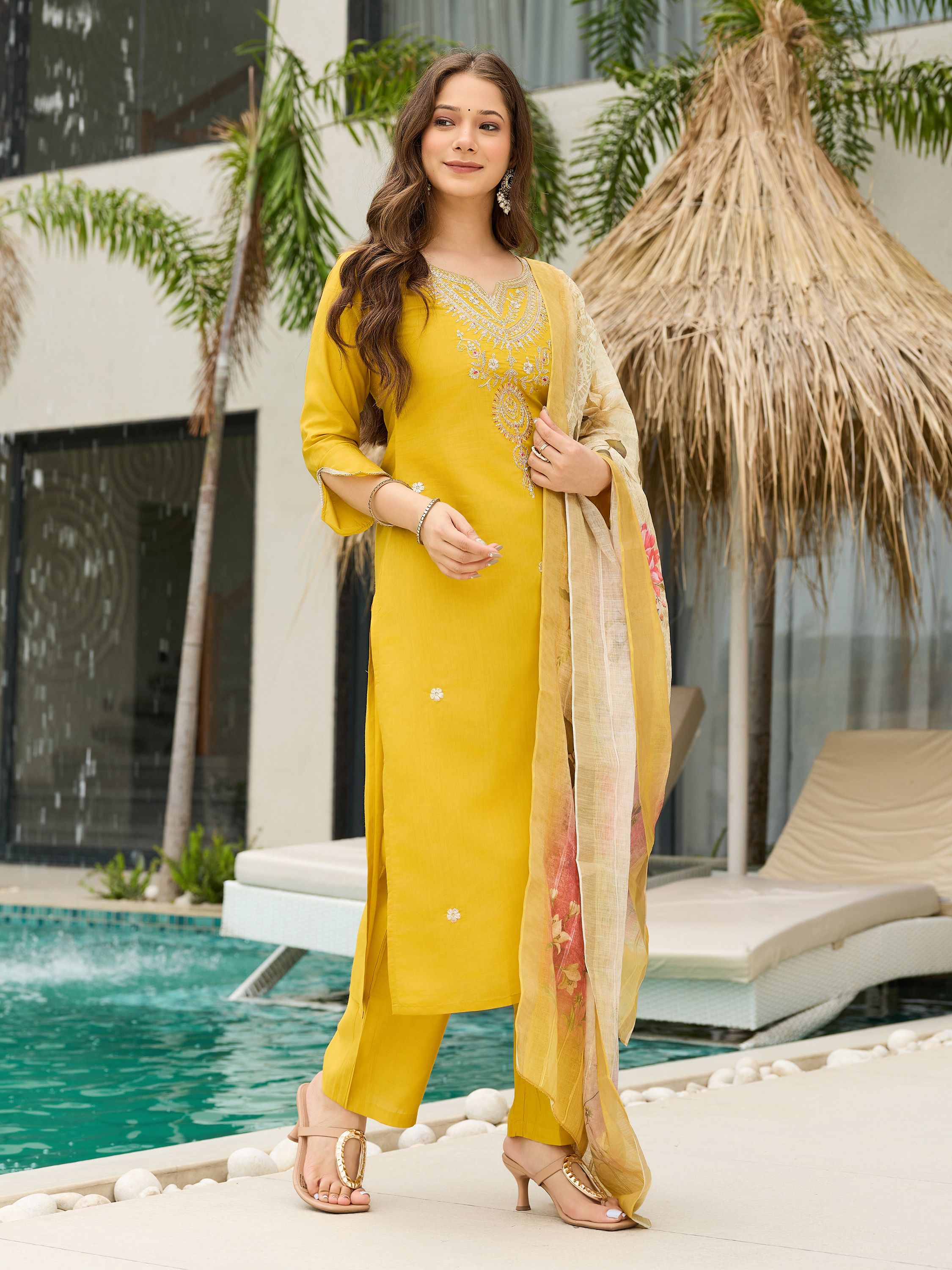
Knowing that history also makes it easier to appreciate regional differences. A Patiala salwar, an Anarkali suit, a churidar set, and a straight kurta with trousers are not interchangeable historical objects, even when retailers group them under salwar suits. Each silhouette reflects decisions about mobility, modesty, textile availability, tailoring, and changing ideas of style.
The most accurate answer to who invented salwar kameez is therefore collective: no single inventor can be named. Central Asian and Persian dress traditions contributed important forms and vocabulary; Mughal-era exchange helped popularise related silhouettes and techniques; Punjabi and other South Asian communities transformed those influences into the varied salwar suits worn today.
Questions About the Origins and Evolution of Salwar Kameez
Who invented salwar kameez?
No single person invented salwar kameez. The outfit developed over centuries from Central Asian, Persian, Arab, and South Asian clothing traditions, with later regional adaptations giving it familiar forms.
Did the Mughals introduce salwar kameez to India?
The Mughals helped spread Persianate and Central Asian clothing influences in the Indian subcontinent, but they did not invent the complete modern salwar kameez. The garment evolved through court culture, migration, local tailoring, and regional use.
Is salwar kameez originally Punjabi?
Salwar kameez became strongly associated with Punjab, especially through the Punjabi salwar's gathered shape and the region's cultural influence. However, its wider roots include Central Asian, Persian, Mughal, and other South Asian traditions.
What is the difference between a salwar and a churidar?
A salwar generally has a looser, often gathered shape, while a churidar is closely fitted and forms folds around the ankle. Both can be paired with a kameez, kurta, or Anarkali.
Why is the garment called salwar kameez?
The name describes its two principal parts: salwar refers to the trousers, and kameez refers to the long tunic or shirt. The terms are connected to Persian, Arabic, and regional South Asian language histories.
Which fabric is suitable for an everyday salwar suit?
Cotton and breathable blends are usually practical for everyday wear because they are comfortable in warm weather and easier to launder. Chanderi, silk, viscose, and organza are better selected according to the event, lining, drape, and care instructions.