Who invented lehenga in India is a fascinating question, but the historical answer isn't one person's name. The lehenga developed gradually from stitched skirt traditions, Persianate court clothing, Mughal-era fashion and regional Indian dress cultures. The modern three-piece lehenga choli combines a skirt, a fitted or semi-fitted choli and a dupatta, yet each part has a longer and more complicated story.
Understanding that history makes shopping more meaningful. A bridal lehenga, a lightweight Navratri outfit and a ready-made festive set may share the same basic silhouette while differing greatly in fabric, construction, ornament and regional identity. The history also explains why terms such as ghagra, lehenga, lehenga choli and chaniya choli are sometimes used interchangeably and sometimes refer to distinct garments.
Who invented lehenga in India? The short historical answer
No single inventor can be credited with creating the lehenga in India. The garment emerged through centuries of cultural exchange, especially between Persianate court traditions, Mughal clothing practices and established Indian skirt-and-drape garments.
South Asian women had worn wrapped, draped and stitched lower garments long before the word "lehenga" became common. Regional skirts, petticoats and ghagra-like garments existed in different forms, with variations in waistband, flare, length, textile and method of wearing. Clothing history rarely follows a single invention date because garments change through repeated adaptation rather than appearing fully formed.
The word lehenga is generally associated with the long, flared skirt worn with a blouse and veil or dupatta. In North India, ghagra and lehenga can describe similar outfits, although "ghagra" often points more strongly to a traditional regional skirt, while "lehenga" is frequently used for embellished formalwear. Chaniya choli remains especially associated with Gujarat and the Navratri dance tradition.
Persian and Central Asian influences became particularly important in medieval North Indian courts. The Delhi Sultanate and later Mughal periods brought new preferences for layered clothing, fitted bodices, luxurious textiles, surface ornament and coordinated ensembles. Those influences did not replace Indian dress traditions; Indian craftspeople and communities reinterpreted them using local weaving, dyeing, embroidery and draping practices.
How Mughal and Rajput clothing shaped the lehenga
Mughal and Rajput clothing cultures helped popularise the lehenga's layered, formal and heavily ornamented appearance, but neither culture can be named as its sole inventor.
Mughal court dress valued textiles such as silk, brocade and fine cotton, along with gold and silver threadwork, floral motifs and carefully coordinated layers. The Mughal preference for elegant volume and rich surface decoration influenced many forms of North Indian ceremonial clothing. Zari, metallic thread traditionally made with precious or imitation metal, became especially important in formal textiles and remains central to many wedding lehengas.
Rajput courts and communities developed their own strong visual language through vivid colour, substantial flare, odhani or dupatta drapes and regional embroidery. Rajasthan, Gujarat and parts of North India preserved skirt-based outfits that were practical for local life but also suitable for celebrations. Mirror work, bandhani, gota patti, tie-dye, appliqué and colourful thread embroidery gave regional garments identities that can't be reduced to a single Mughal source.
The exchange worked in both directions. Court fashions influenced elite clothing, while local artisans adapted court-inspired silhouettes for community celebrations and everyday wear. An up-to-date lehenga therefore carries several histories at once: a stitched skirt tradition, a blouse-and-drape arrangement, Persianate design influence and regional Indian craft practice.
Why is the lehenga associated with North India?
The lehenga is strongly associated with North and Western India because Rajasthan, Gujarat, Uttar Pradesh, Haryana and neighbouring regions preserved prominent skirt-and-choli traditions.
Regional names and details differ. A Gujarati chaniya choli is closely linked with Garba and Dandiya during Navratri. A Rajasthani ghagra may feature a broad flare, gota work or bandhani styling. A wedding lehenga from contemporary bridal fashion may borrow from Banarasi brocade, Lucknowi embroidery, Punjabi colour palettes or Mughal floral design without belonging exclusively to any one historical community.
How the traditional ghagra became the contemporary lehenga choli
The current lehenga choli developed when regional skirt, blouse and dupatta traditions were combined with changing tailoring, textile production and occasion-wear design.
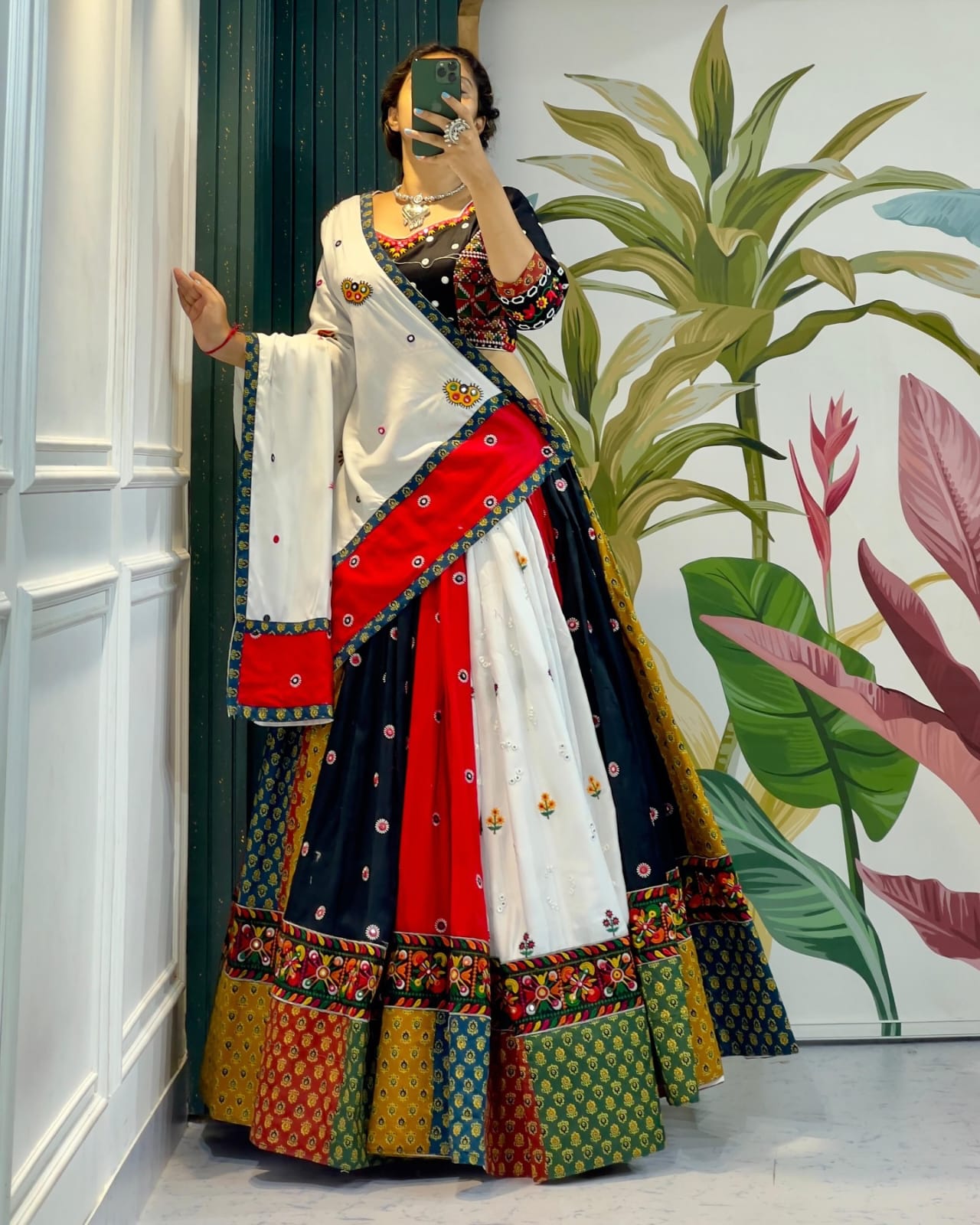
Traditional ghagras were often cut with multiple panels or gathered sections to create movement and volume. The number of panels, called kali in some tailoring contexts, could affect both the fall and the amount of fabric required. A wide flare used more cloth and produced a more dramatic silhouette, while a narrower skirt was easier to wear for travel, dancing or daily activities.
The choli also changed over time. Traditional regional blouses could be short, close-fitting and shaped for movement. Contemporary cholis may use princess seams, padded cups, structured interlining, back hooks, adjustable tie-ups or a longer crop length. These construction choices matter when comparing a fully stitched choli shopping option with a semi-stitched set that still requires tailoring.
The dupatta provides another link between older draped clothing and current coordinated fashion. A dupatta may be worn over one shoulder, across both shoulders, around the arms or over the head. Heavier bridal dupattas often need secure pins and a supportive blouse, while a lightweight net or chiffon dupatta can be styled more freely for a reception or festive evening.
Industrial sewing, ready-to-wear sizing and online shopping have made the lehenga more accessible. Readymade sets reduce tailoring time, whereas a semi-stitched lehenga allows more adjustment at the waist, blouse and hem. The choice is practical rather than simply fashionable: a ready-made outfit suits a predictable size, while a semi-stitched design can be altered more precisely.
Regional craft traditions that still define lehengas
Regional Indian crafts give lehengas their strongest visual identities today. The silhouette alone doesn't tell you whether a set reflects Gujarat, Rajasthan, Banaras, Lucknow or contemporary designer fashion.
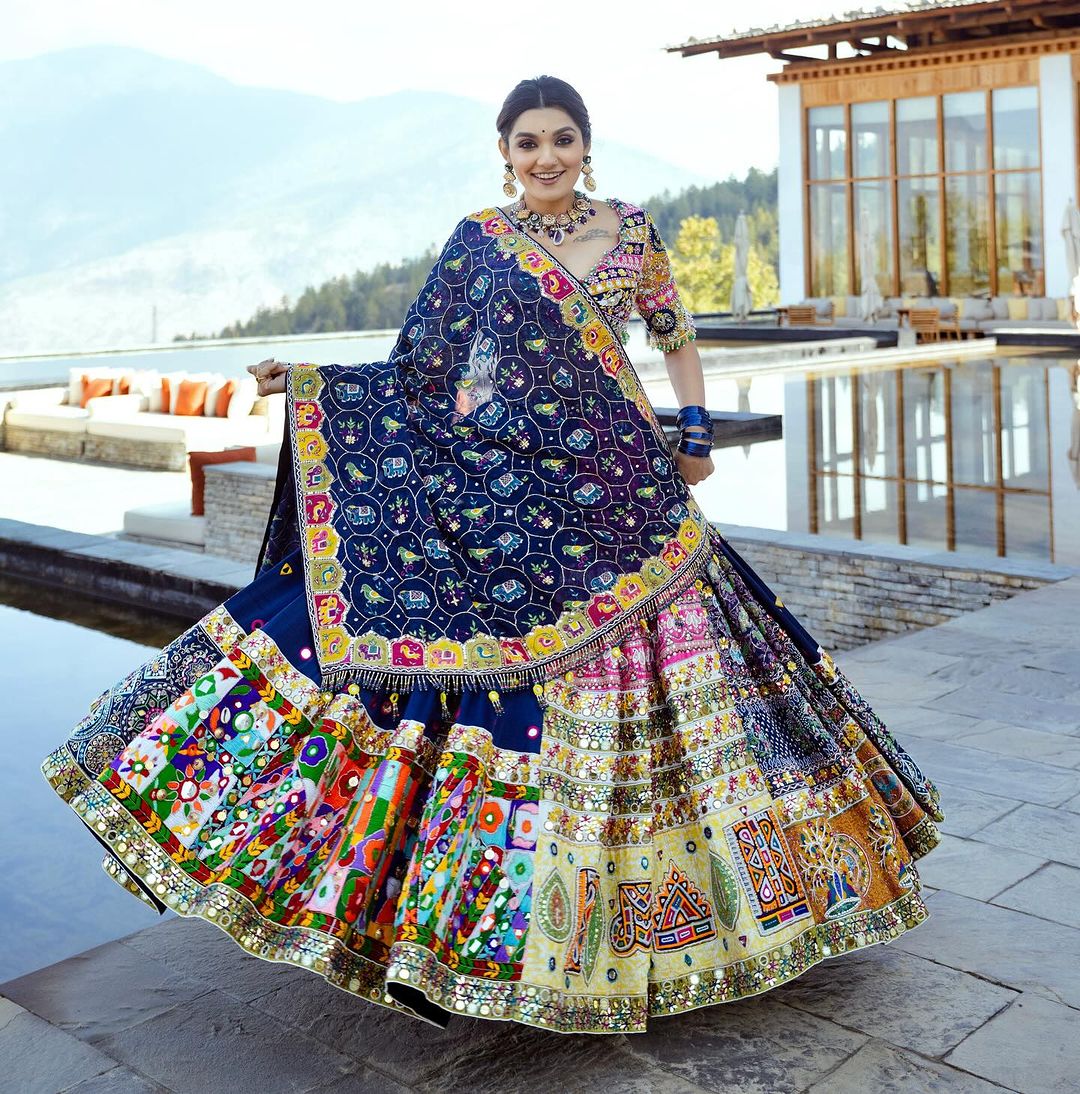
Mirror work, also called shisha embroidery, is closely associated with Gujarat and Rajasthan and is especially suitable for festive dancing because small reflective elements catch movement and light. A design such as Multicolor Mirror Work Muslin Cotton Lehenga Choli Set illustrates how a contemporary outfit can reference that celebratory vocabulary through colour and surface detail.
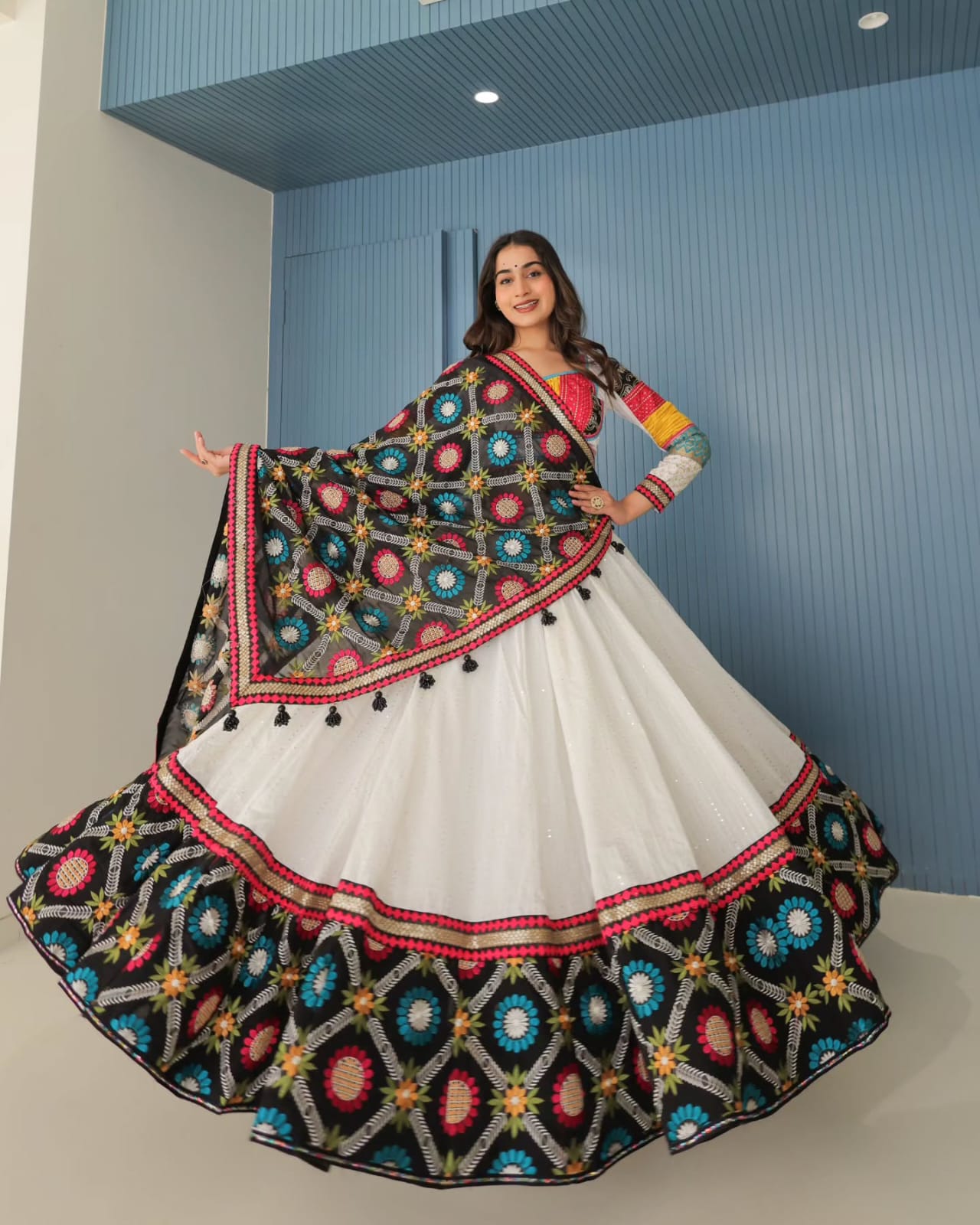
Navratri clothing often prioritises movement, colour and durability. Exclusive Blue Traditional Navratri Lehenga Choli and Vibrant Multicolor Navratri Lehenga Choli Set suit the visual energy associated with Garba and Dandiya more directly than a heavy bridal skirt. A buyer should check the lining, waistband security and hem finish when the outfit will be worn for several hours of dancing.
Silk-based formalwear creates a different impression. Banarasi silk and other brocade traditions are valued for woven motifs and zari, while embroidered silk sets rely on stitched surface decoration. Designer Threadwork Silk Lehenga Choli Set with Dupatta demonstrates why "designer" should be assessed through construction and textile details rather than used as a synonym for expensive.
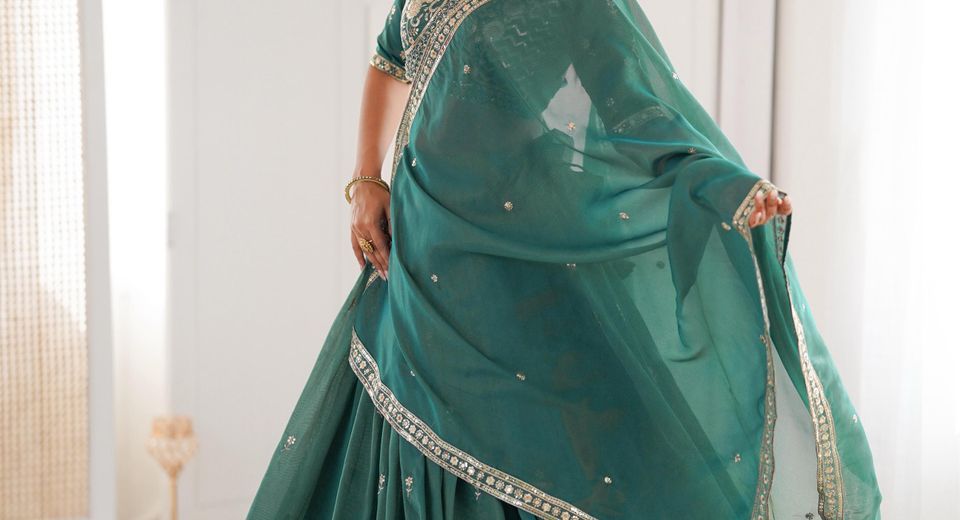
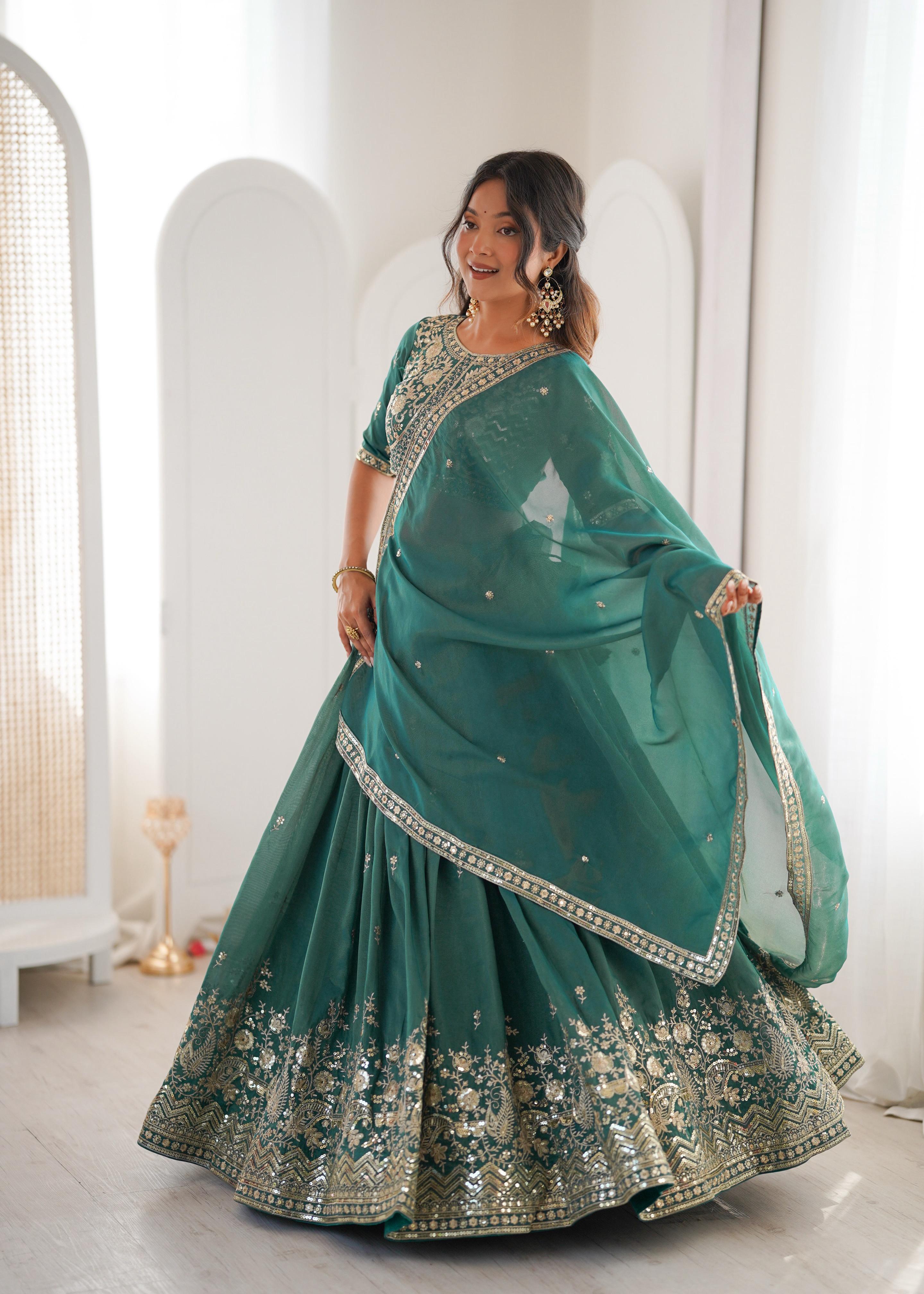
Chinon silk, satin, net and muslin cotton each behave differently. Chinon silk usually creates a fluid, soft fall; satin reflects light and can highlight embroidery; net creates a light, transparent dupatta or overlay; muslin cotton is more breathable for warm-weather celebrations. Green Chinon Silk Sequins Embroidered Lehenga Set and Magenta Satin Embroidered Lehenga Set Online show how fibre and finish can change the mood of a similar skirt-and-choli format.
Using lehenga history to choose the right outfit
The best lehenga choice depends on the event, movement required, climate, fit method and amount of alteration available.
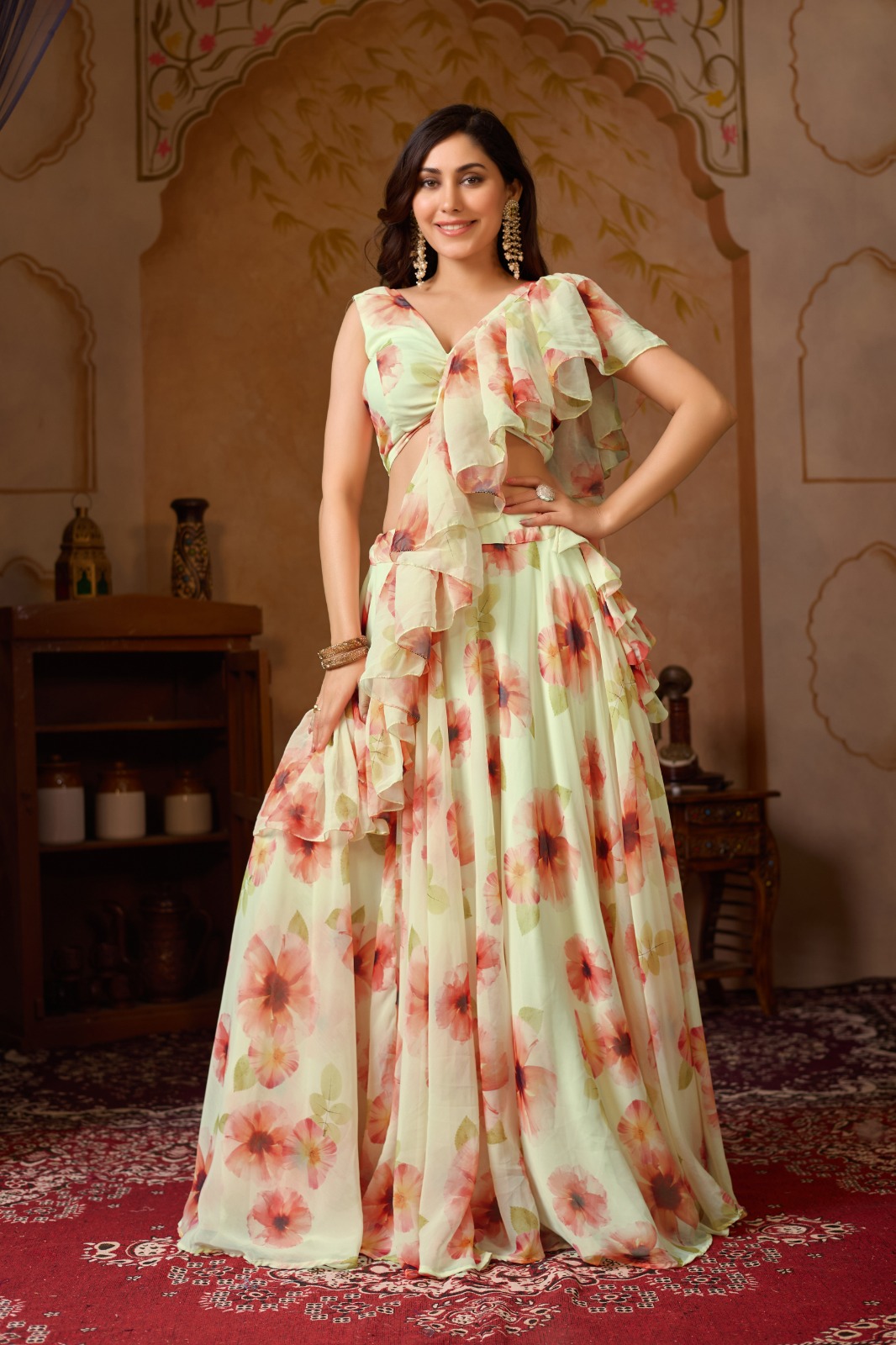
For weddings and bridal events
Bridal and wedding lehengas need a stable waistband, a comfortable blouse fit and a hem that clears the floor by roughly 1 to 2 centimetres when worn with the intended footwear.
Heavier zari, sequins, beads and layered linings add visual richness but also increase weight. For a ceremony lasting several hours, test the blouse while sitting, raising the arms and walking up stairs. A bridal-style skirt may require a can-can or stiff lining for volume, but a lighter reception outfit can be more comfortable without extensive underlayers.
For a softer wedding guest look, Mint Embroidered Lehenga Set with Net Dupatta for Women offers the kind of pastel-and-net combination often chosen for daytime functions. Colour should be considered alongside lighting: pale mint, blush and ivory can appear washed out in bright daylight unless embroidery or contrast details provide definition.
For Mehendi and Haldi ceremonies
Mehendi and Haldi ceremonies favour lighter, movement-friendly lehengas with practical colours and washable or manageable surfaces.
Yellow Lehengas and Mehendi Lehengas are useful starting points because they organise shopping by occasion and colour mood, but the product details still matter. Turmeric, henna paste, oil and outdoor dust can mark delicate fabrics, so avoid wearing an irreplaceable heavily embellished skirt when the ceremony involves hands-on rituals. Green Lehengas can work particularly well for Mehendi because green complements henna tones without relying on a bridal red palette.
For online and ready-made shopping
Online buyers should measure the natural waist, fullest hip, shoulder width and bust while wearing a thin base layer, then compare those measurements with the garment chart.
Ready Made Lehenga options are quickest when the listed blouse and skirt measurements closely match the wearer. Semi Stitched Lehengas Collection options are safer when the waist, blouse depth or sleeve design needs tailoring. Buyers should also confirm whether the lehenga includes a lining, whether the blouse is attached or separate, and whether the dupatta has a finished border.
A digital print set such as White Digital Print Festive Lehenga Choli Set may be easier to maintain than dense metallic embroidery, but "easy care" should never be assumed without reading the care label. A printed or embellished garment should be stored clean and dry, with tissue paper between heavily decorated surfaces to reduce snagging.
What the lehenga's history tells us about modern fashion
The lehenga remains popular because it can absorb new materials, tailoring methods and styling preferences without losing its recognisable three-part structure.
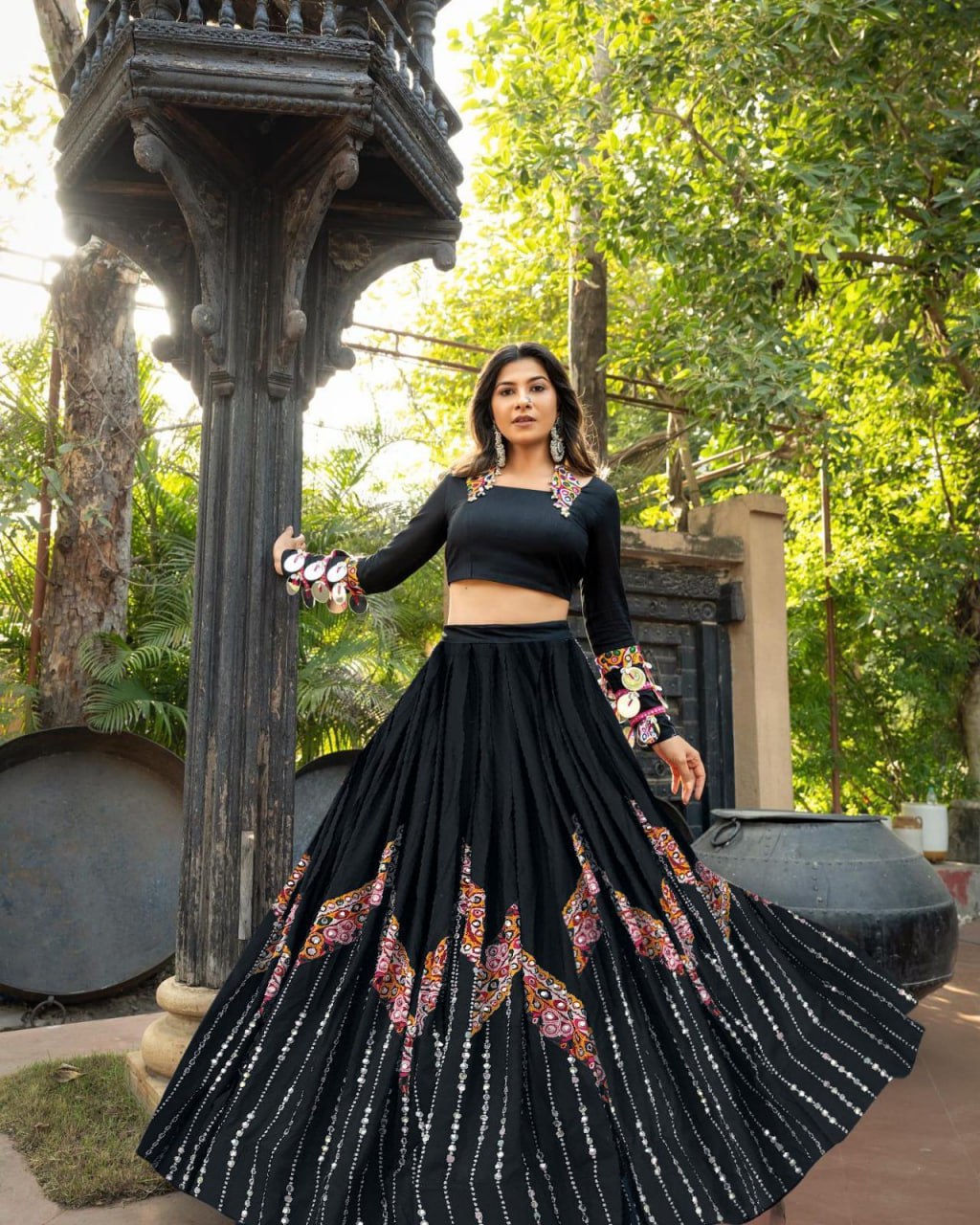
Contemporary designers may shorten the choli, add a belt, replace the dupatta with a cape, create a jacket layer or use separates that can be worn independently. These changes don't erase the garment's history; they show the same process of adaptation that shaped the lehenga across centuries.
The most true answer to who invented lehenga in India is therefore collective rather than personal. Persianate courts contributed influential silhouettes and textile preferences, Mughal culture strengthened the association with layered luxury, Rajput and regional communities preserved and transformed skirt-and-choli traditions, and Indian artisans gave the garment its embroidery, weaving and colour vocabulary.
When you buy a lehenga today, you're choosing more than a festive outfit. You are choosing how much flare, structure, craft, regional reference and personal comfort you want to carry forward. That perspective makes it easier to distinguish a Navratri chaniya choli from a bridal lehenga, a breathable cotton set from a formal silk one and a convenient readymade purchase from a more adjustable semi-stitched design.
Questions Readers Ask About the Origin and Evolution of the Lehenga
Who invented lehenga in India?
No single person invented the lehenga in India. The garment evolved through the interaction of Indian skirt-and-choli traditions with Persianate and Mughal court influences, followed by regional adaptations in places such as Rajasthan and Gujarat.
Is the lehenga originally Mughal?
The lehenga is not exclusively Mughal in origin. Mughal and Persianate clothing influenced its formal layered appearance, luxurious textiles and ornament, while Indian communities already had established stitched skirt, blouse and drape traditions.
What is the difference between a ghagra and a lehenga?
A ghagra and a lehenga are both flared Indian skirts, and the terms often overlap in everyday shopping. Ghagra commonly refers to a regional traditional skirt, while lehenga frequently describes a coordinated formal set with a choli and dupatta.
What is the difference between a ready-made and semi-stitched lehenga?
A ready-made lehenga arrives stitched to specified measurements, while a semi-stitched lehenga leaves some areas for a tailor to adjust. Ready-made sets save time when measurements match, and semi-stitched sets offer more flexibility for waist, blouse and length alterations.
Which lehenga is suitable for a Haldi or Mehendi ceremony?
A lightweight, comfortable lehenga in yellow, green or another bright colour usually suits a Haldi or Mehendi ceremony. Cotton, muslin or lighter synthetic blends can be more practical than heavily embellished silk because these events may involve turmeric, henna, outdoor dust and active movement.
How should a lehenga be chosen for dancing during Navratri?
A Navratri lehenga should allow easy movement and have a secure waistband, comfortable blouse and well-finished hem. Mirror work, bright colours and breathable fabrics suit the festive setting, but very heavy embroidery or loose embellishments can become uncomfortable during prolonged Garba or Dandiya.