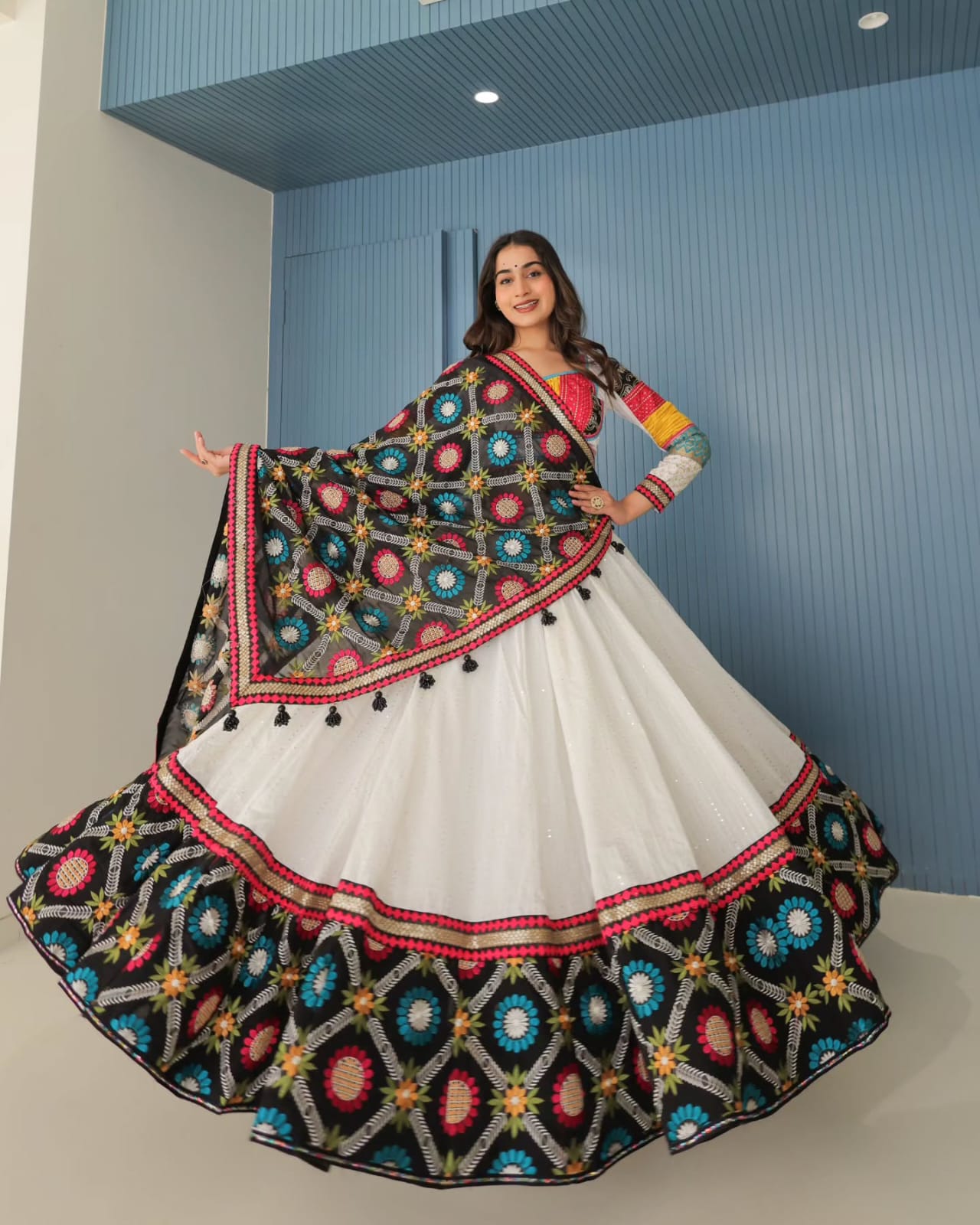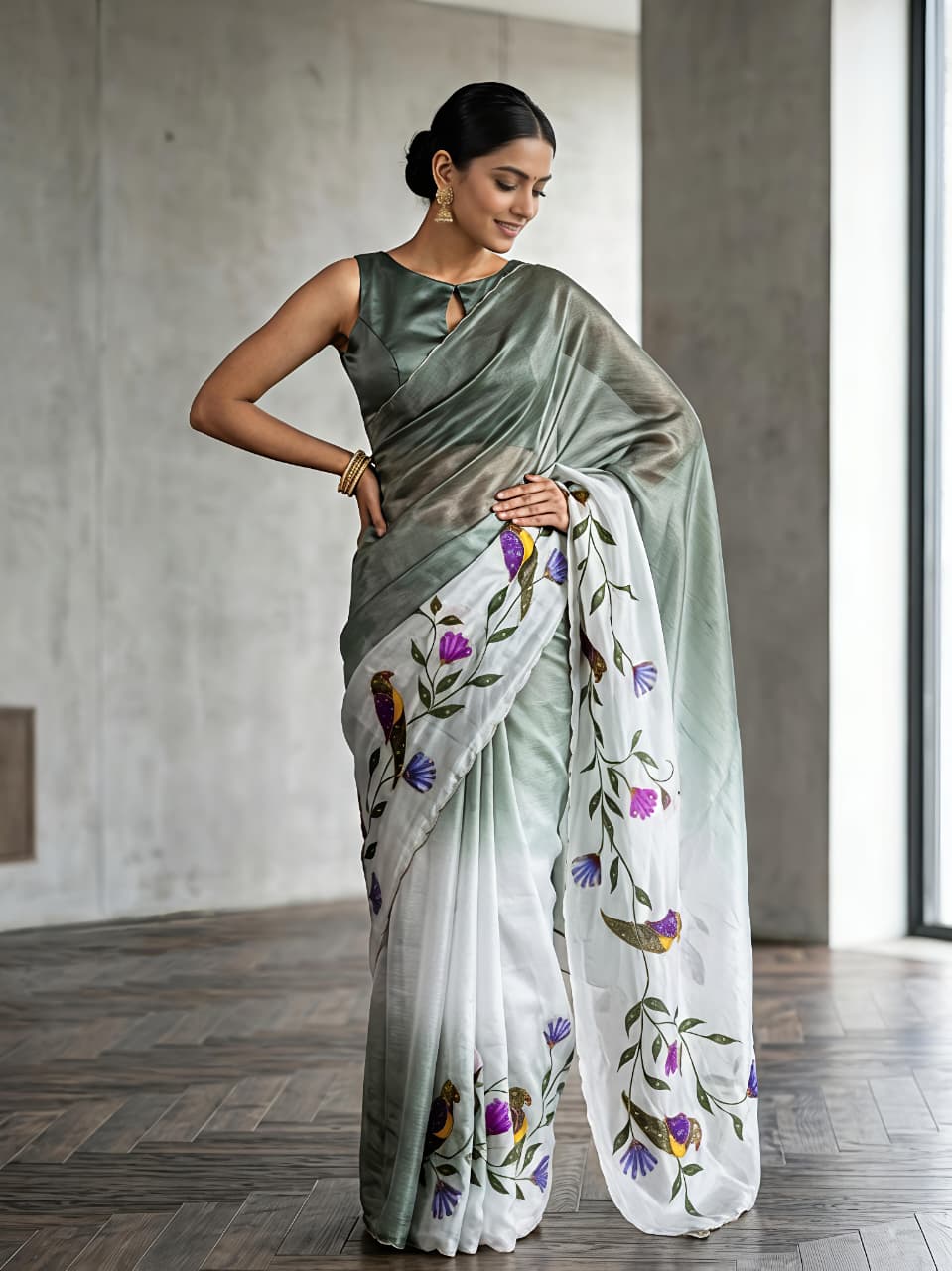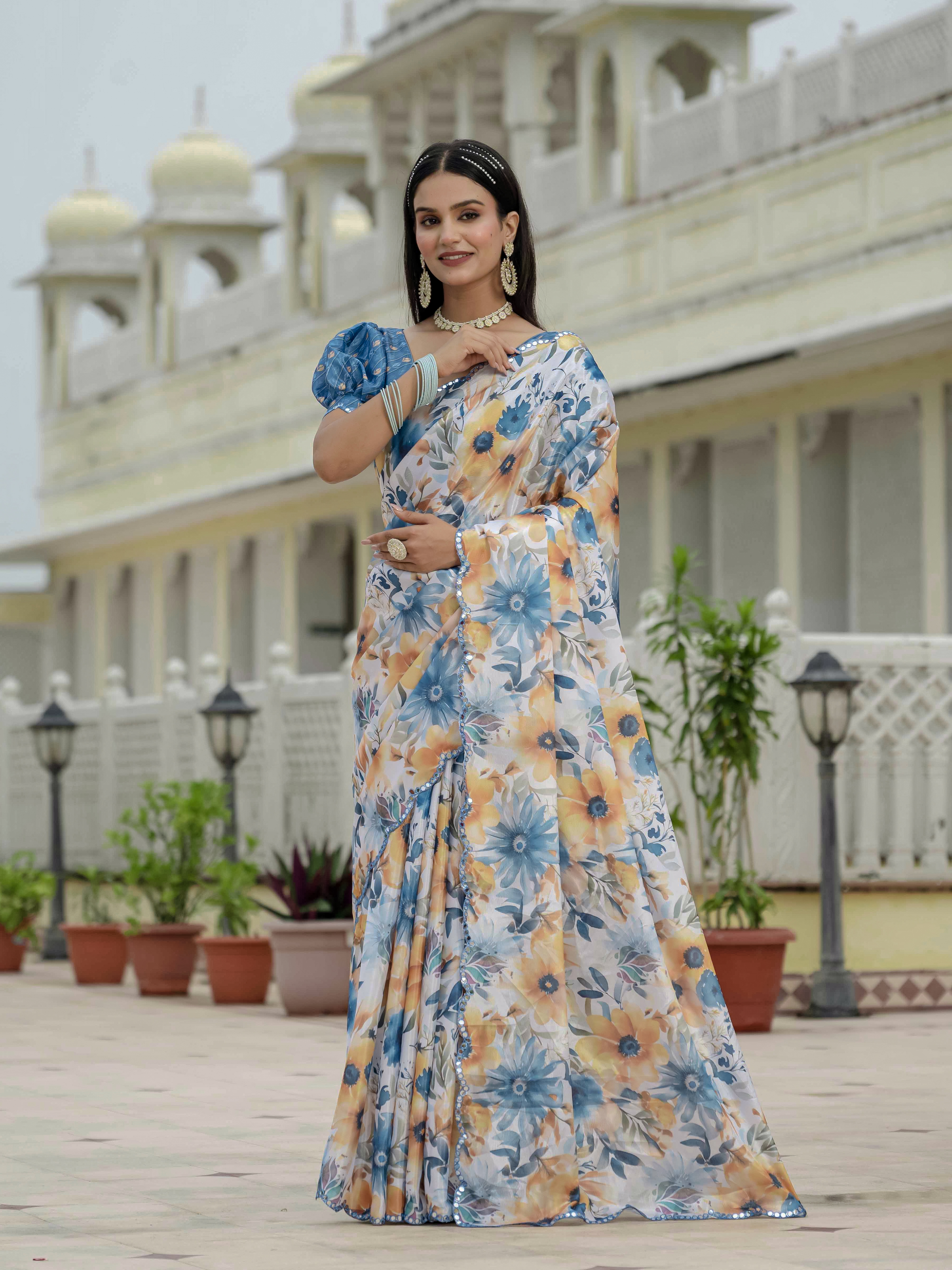
Who invented lehenga is a question with no single name attached to it. The lehenga developed gradually from long Indian skirt traditions, medieval courtly influences, regional dressing practices and later bridal fashion. Understanding that history explains why a lehenga may appear as a heavily embroidered bridal outfit, a light festive skirt, a ready-made choli set or a simple ghagra worn for a regional celebration.
The modern lehenga usually consists of three coordinated pieces: a flared skirt, a choli or blouse, and a dupatta. The silhouette looks unified today, but the garment emerged through centuries of changes in fabric, tailoring, ornamentation and social use. An useful historical answer is that no individual invented the lehenga; communities, artisans and royal workshops shaped it over time.
Who invented lehenga, and what is the most accurate answer?
No single person invented the lehenga because the garment evolved through overlapping Indian skirt traditions and medieval influences rather than appearing as one documented invention.
Long wrapped and stitched skirts existed in the Indian subcontinent before the up-to-date lehenga took its familiar form. Women in different regions wore lower garments made from draped or stitched lengths of cloth, with variations shaped by climate, occupation, community and local weaving. These garments did not all look like today's lehenga choli, but they provided the basic idea of a voluminous lower skirt paired with an upper garment.
From approximately the medieval period onward, contact between Indian kingdoms, Central Asian ruling groups and Persianate court cultures introduced new preferences in tailoring, layered clothing, textiles and surface decoration. Court dress encouraged shaped bodices, fuller skirts, luxurious brocades and coordinated veils. Indian craftspeople adapted those influences rather than copying them unchanged.
The word "lehenga" is commonly associated with the long skirt worn with a choli and dupatta, while related terms such as ghagra, ghagri and chaniya remain important in different regions. Language and clothing changed together, so historical labels can't always be mapped neatly onto one fixed design.
How did Mughal and Rajput traditions shape the lehenga?
Mughal and Rajput courts helped popularise the lehenga's association with rich textiles, structured styling, layered ornament and ceremonial dress, but neither tradition can be credited with inventing the garment alone.
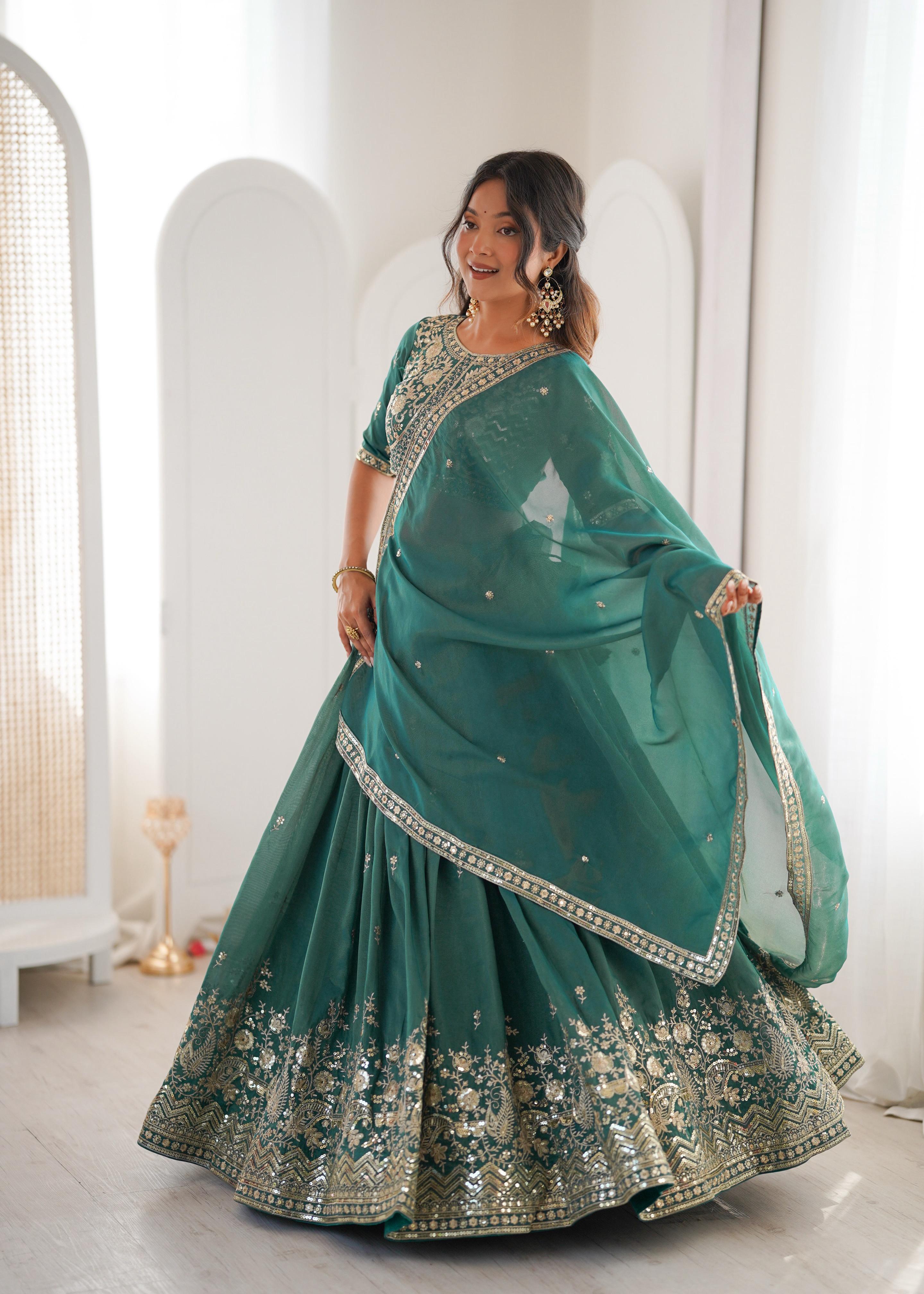
Mughal-era ateliers supported highly skilled textile and embroidery work. Silk, brocade, velvet, metallic thread, zari and patterned fabrics became strongly connected with elite clothing. The influence was visible in the preference for coordinated ensembles, elegant drape and intricate decoration. Courtly aesthetics also encouraged the use of a dupatta as a deliberate styling element rather than merely an extra piece of cloth.
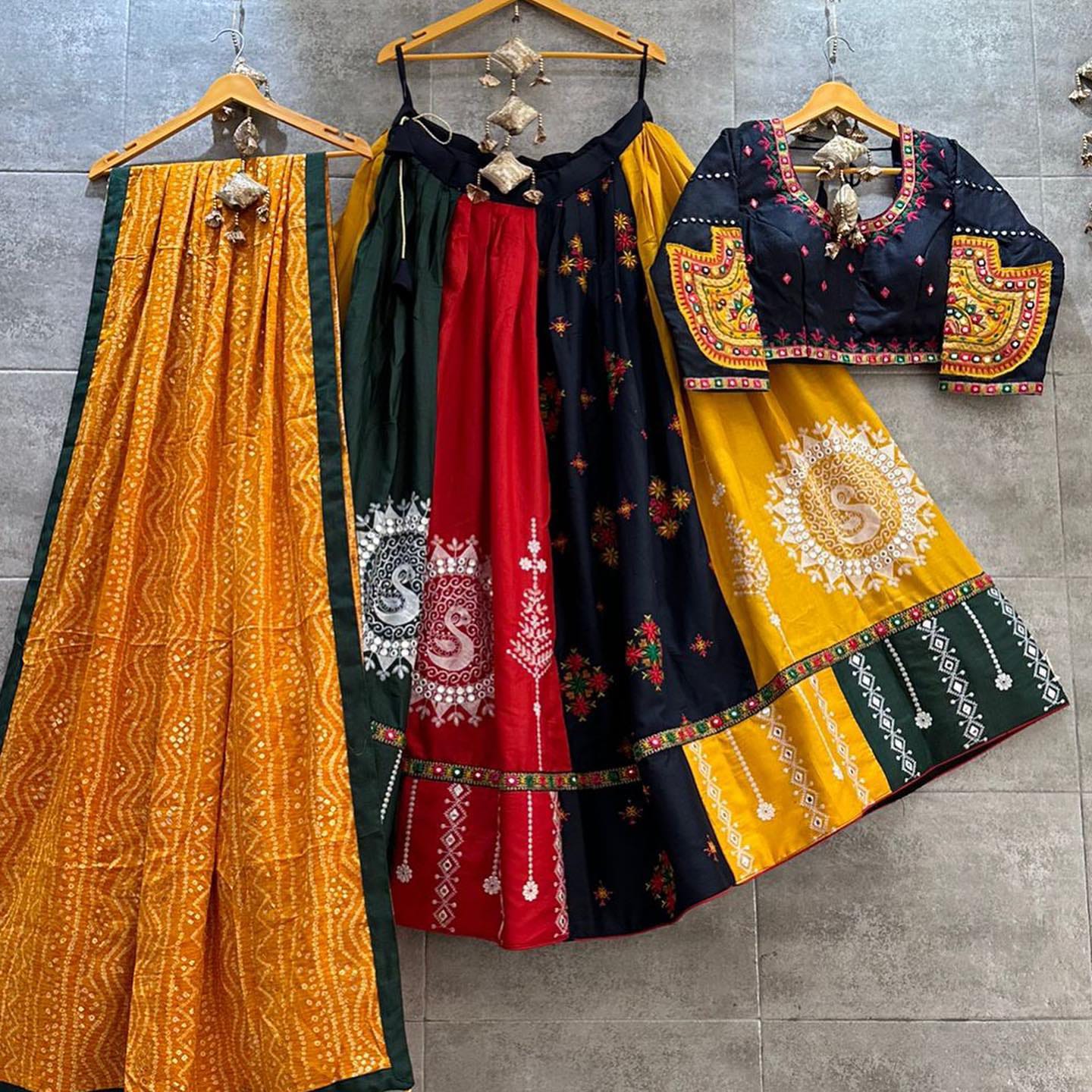
Rajput dress traditions contributed their own distinctive relationship with colour, volume, odhani draping and ceremonial clothing. In Rajasthan and adjoining regions, the ghagra-choli ensemble developed in forms suited to local customs and movement. Bright skirts, contrasting blouses, mirror work, gota patti, bandhani and embroidered borders gave regional versions a visual identity that remains recognisable today.
These histories overlapped through trade, marriage alliances, migration and artisanal exchange. A formal lehenga could therefore promising a Persianate-style textile with an Indian cut, regional embroidery and a locally preferred drape. That mixture is one reason a single origin story would be misleading.
What is the difference between a lehenga, ghagra and chaniya?
A lehenga, ghagra and chaniya are related flared-skirt garments, but the names often reflect region, construction, styling and cultural use.
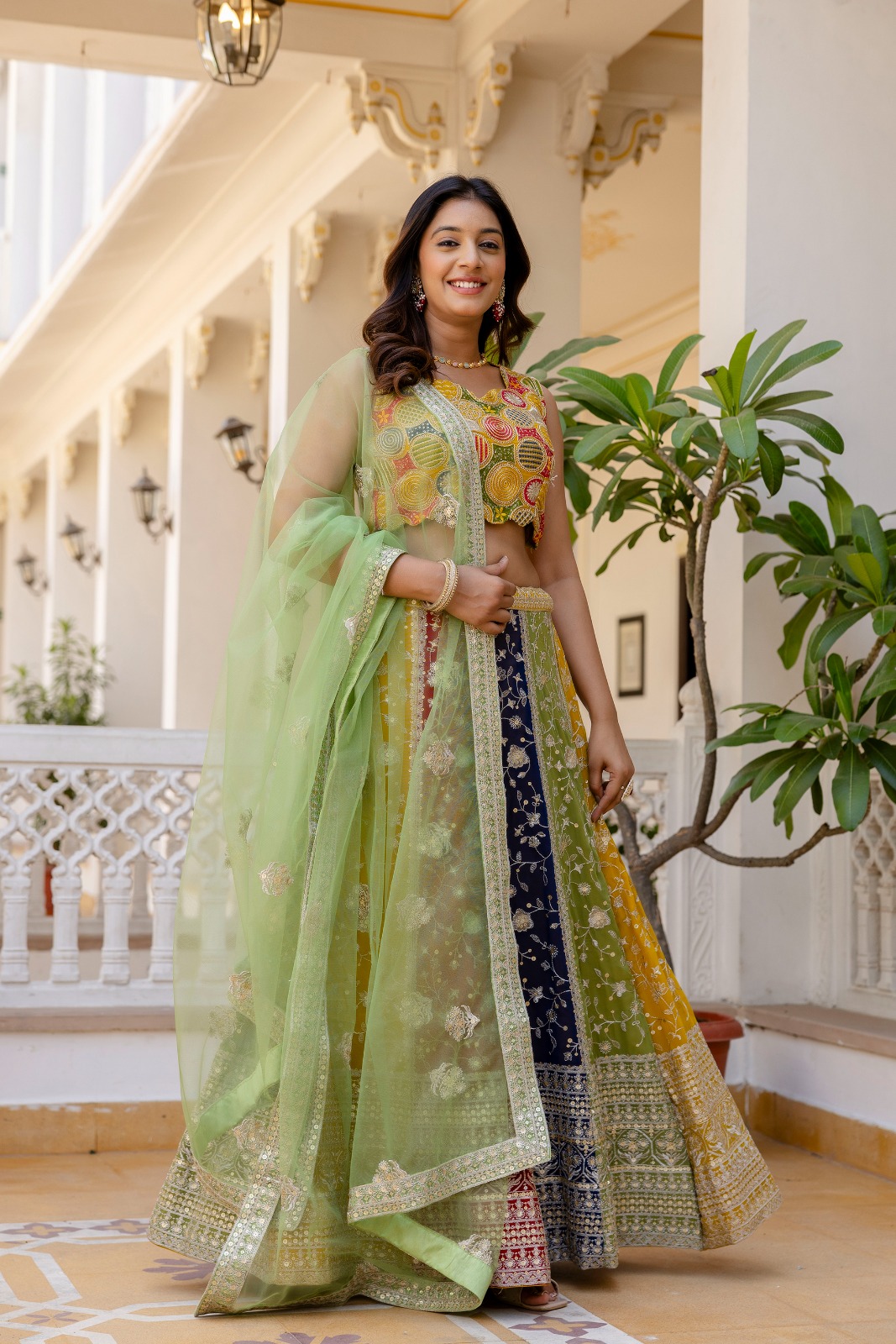
"Ghagra" is widely used for a full-length or ankle-length skirt, especially in North and West Indian contexts. "Chaniya" is strongly associated with Gujarat and the Navratri chaniya choli tradition. "Lehenga" is now the most common national and commercial term for a coordinated skirt, blouse and dupatta ensemble, particularly for weddings and formal celebrations.
The distinctions are not absolute. A Gujarati chaniya may be described as a lehenga in a national fashion catalogue, while a heavily embroidered wedding lehenga may be called a ghagra in everyday speech. Regional vocabulary also depends on whether a speaker is discussing traditional dress, a particular festival or contemporary shopping.
Construction provides another practical distinction. Classic skirts may use panels, gathers or a drawstring waist, while current lehengas often include a fitted waistband, hooks, side zip, lining, can-can or layered net for added volume. A contemporary designer lehenga can preserve the visual language of a ghagra while using contemporary tailoring and lightweight synthetic or blended materials.
How did the lehenga become bridal and wedding wear?
The lehenga became prominent bridal and wedding wear because its wide silhouette offered a dramatic canvas for precious textiles, embroidery, colour symbolism and coordinated family or regional styling.
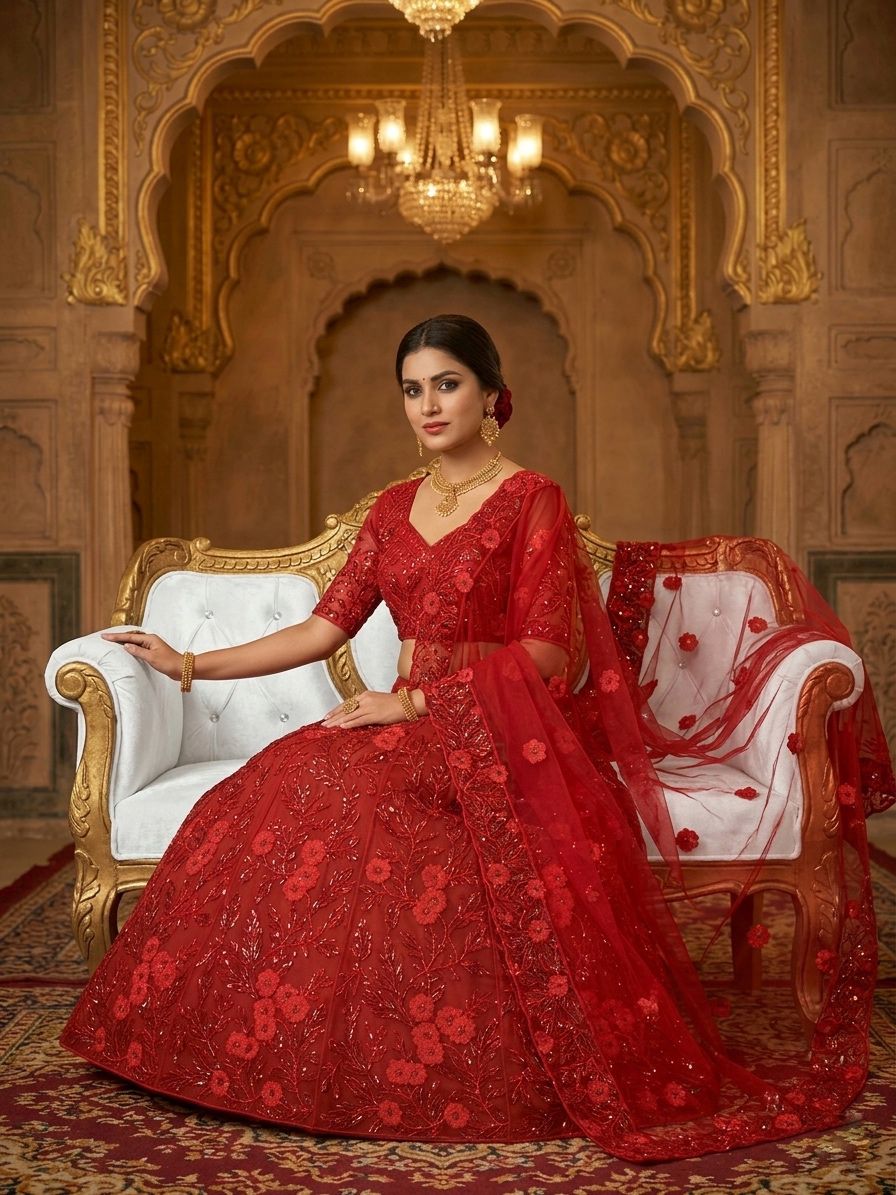
Historically, expensive clothing signalled ceremony and status through fabric and labour. A formal skirt could display brocade, silk, metallic zari, hand embroidery, appliqué, mirror work or elaborate borders. The dupatta added another surface for decoration and created a graceful drape during wedding rituals and photographs.
Up-to-date bridal fashion intensified this role during the twentieth and twenty-first centuries. Fashion houses, specialist bridal ateliers, cinema, celebrity styling and organised wedding photography turned the lehenga into a highly visible statement garment. Red remains important in many bridal traditions, but maroon, pink, orange, gold, ivory, green and pastel combinations are now common across ceremonies.
Different wedding events also encouraged lighter variations. A bridal skirt may use dense embroidery and multiple layers, while a Haldi ceremony outfit benefits from breathable fabric, manageable weight and easy movement. Mehendi Lehengas often favour green, yellow, pink or multicoloured surfaces, while reception styles may use satin, sequins or restrained metallic work.
For example, a buyer looking for a bright ceremony outfit could compare the Green Lehengas and Yellow Lehengas collections by colour and event rather than treating every lehenga as bridal wear. A formal embroidered set such as Designer Threadwork Silk Lehenga Choli Set with Dupatta communicates a more structured, evening-ready mood than a lightweight festive skirt.
Which fabrics and techniques define different lehenga styles?
Fabric and surface technique determine a lehenga's weight, movement, shine, volume and suitability for a particular event.
Silk and silk-blend textiles hold embroidery and structured pleats well, making them common for formal and bridal designs. Georgette falls softly and is comfortable for dancing or long ceremonies, although its drape produces less architectural volume unless supported by lining or layers. Net creates an airy overlay and can carry sequins, threadwork or appliqué. Satin reflects light and gives a smooth, fluid finish, while cotton-based textiles are generally easier to wear in hot daytime settings.
Zari uses metallic thread to create shining motifs, borders and woven or embroidered details. Thread embroidery gives a softer, more matte effect and may create floral, paisley or geometric patterns. Sequins add concentrated sparkle but can catch on jewellery or rough surfaces, so the quality of attachment and the garment lining matter.
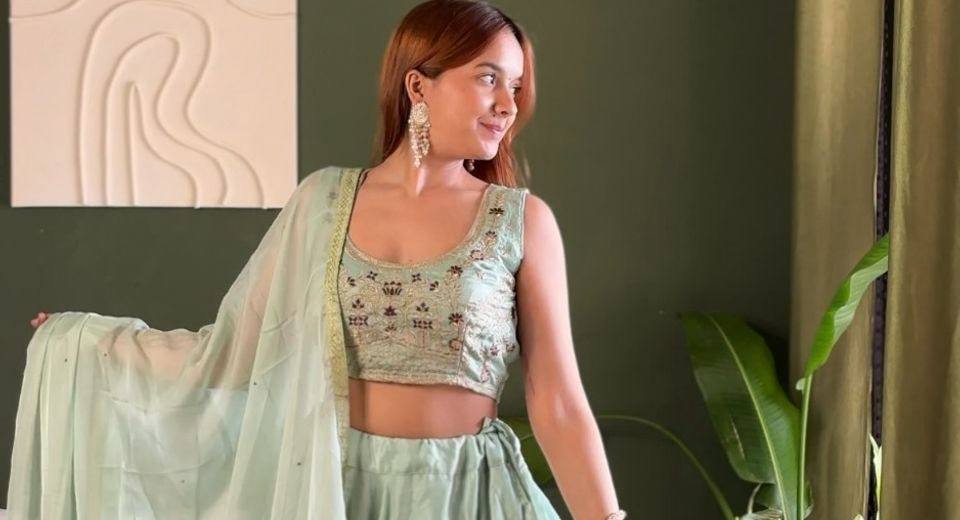
Blooming Georgette Sequins and Thread Embroidered Lehenga Set with Georgette Dupatta illustrates how sequins and threadwork can share one surface without relying entirely on metallic shine. Mint Embroidered Lehenga Set with Net Dupatta for Women uses a lighter colour story and an overlay that suits daytime festivities, pastel wedding functions or a spring celebration.
Volume also comes from construction, not just fabric. A can-can layer, stiff net, multiple panels or a carefully pressed hem can make a skirt stand away from the body. A soft georgette skirt will usually create a more fluid silhouette. Buyers should therefore read the fabric and lining details, check the waist measurement and consider whether the venue requires sitting on the floor, climbing stairs or dancing.
How do ready-made and semi-stitched lehengas differ?
A ready-made lehenga arrives in a finished size, while a semi-stitched lehenga gives a partly constructed garment that requires final tailoring for the wearer.
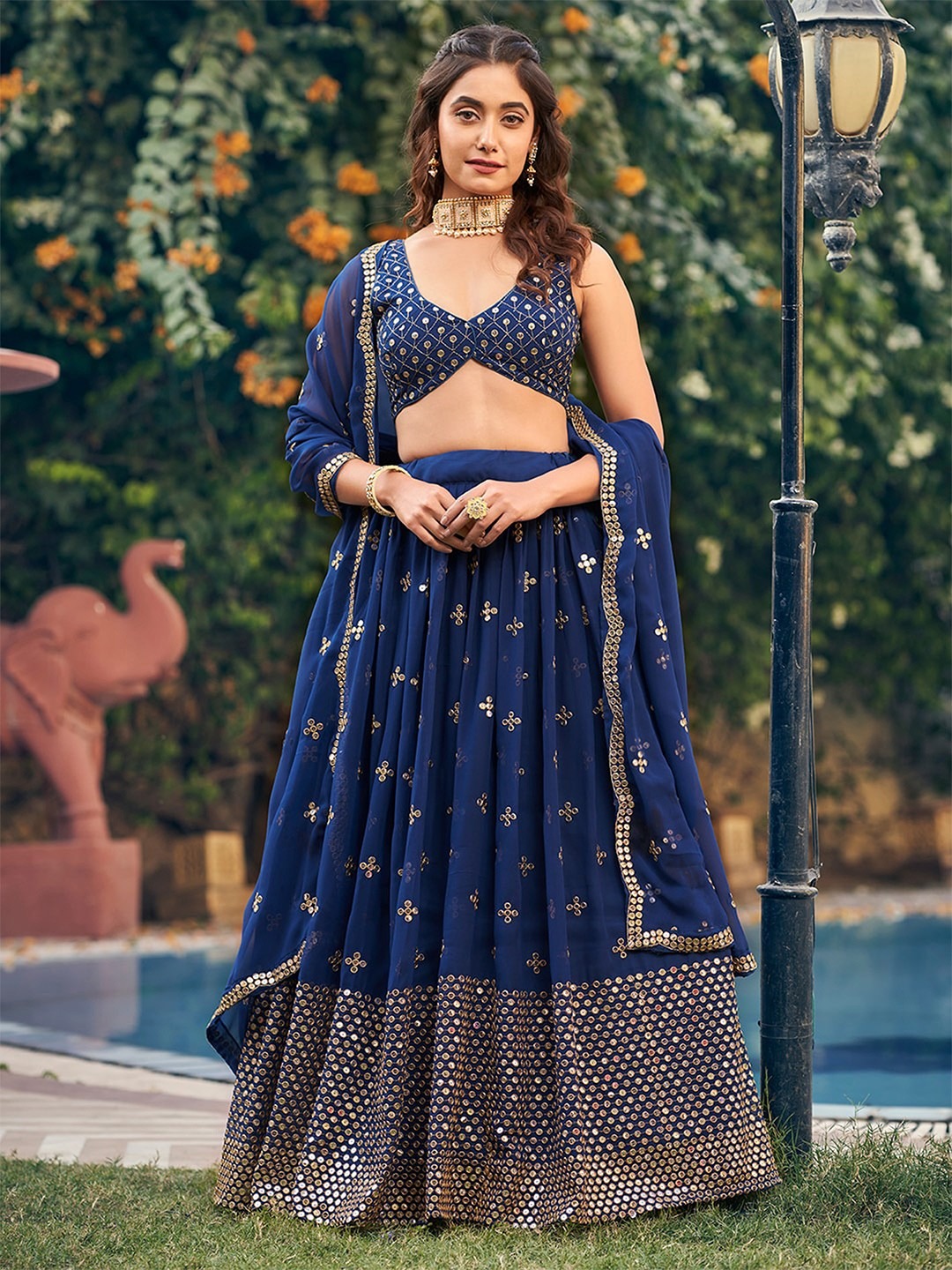
Ready Made Lehenga options are useful when the wearer needs a faster shopping process and the listed measurements are close to the body measurements. A finished choli may include hooks, a zip, padding or adjustable tie-ups, but the buyer should still check bust, under-bust, waist and length specifications. "Fully stitched choli shopping" is especially convenient when a wedding date is near because the blouse doesn't require extensive construction.
A Semi Stitched Lehengas Collection usually leaves extra fabric or an open construction area so a tailor can adjust the waist, blouse fit and sometimes the length. Semi-stitched clothing isn't automatically one-size-fits-all. A tailor still needs enough seam allowance, and significant changes in shoulder width, armhole depth or blouse length may not be possible without altering the design.
Online shopping becomes more reliable when the buyer measures a well-fitting blouse and skirt rather than guessing from a usual size. Note the garment measurements, not only the body-size label. Allow room for sitting and movement, especially when the skirt has a fitted waistband or a heavy lining.
Pastel Floral Georgette Lehenga Set with Ruffle Blouse demonstrates how a contemporary blouse detail can change the overall proportion of a heritage skirt. Lime Floral Embroidered Butterfly Net Lehenga Set offers another example of a lighter, statement-led direction suited to festive dressing rather than necessarily to a time-honoured red bridal look.
How should a buyer choose a lehenga for a wedding or celebration?
A suitable lehenga depends on the event timing, expected movement, climate, fit method, embellishment and care requirements more than on colour alone.
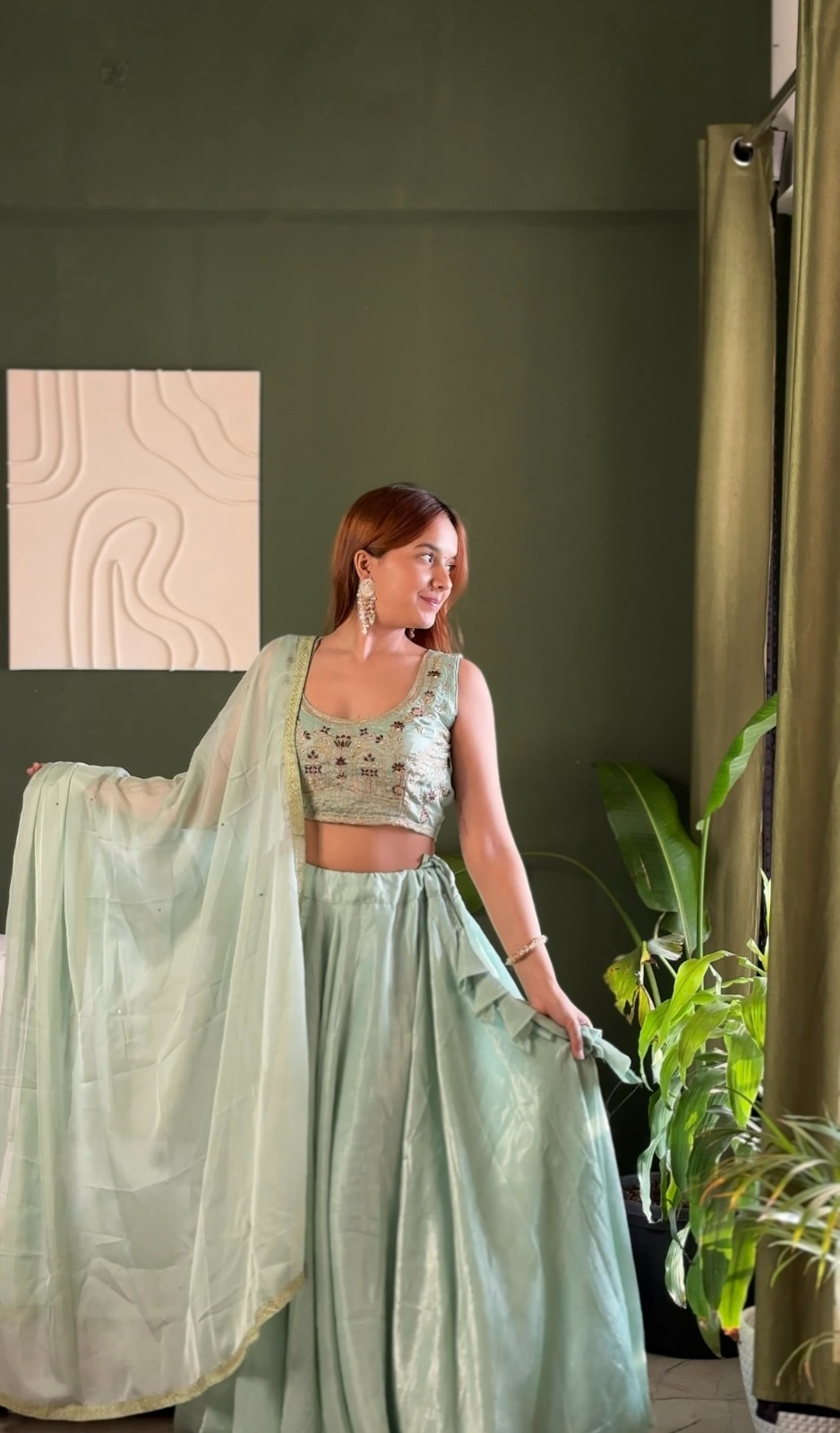
For a daytime function, georgette, net overlays, lighter embroidery and breathable linings are usually more comfortable than multiple heavy layers. For an evening reception, satin, silk, sequins and metallic details can work well under artificial lighting. A Haldi ceremony calls for practical movement and easy cleaning, while a bridal ceremony may justify more weight if the wearer won't need to walk or dance for long periods.
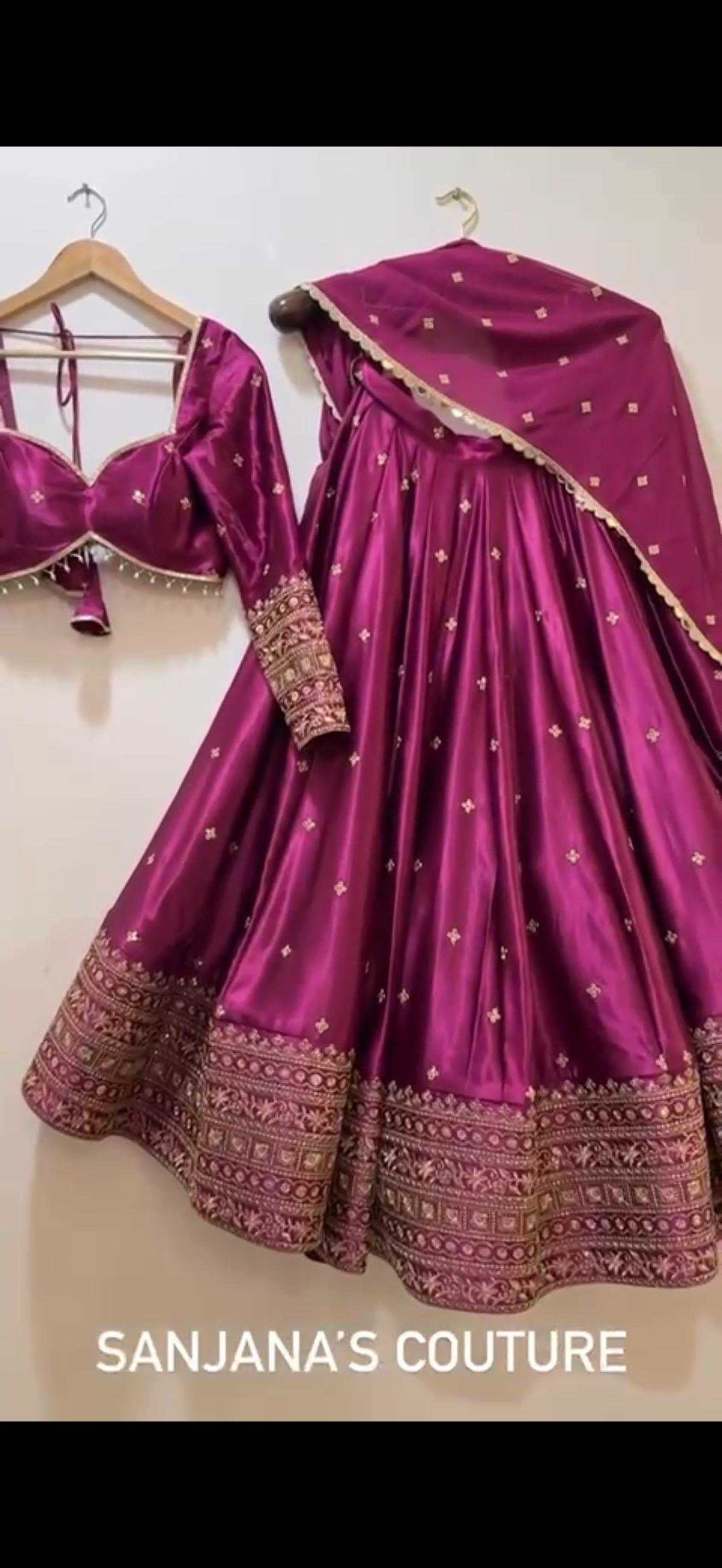
Colour should support the ceremony and the wearer's styling plan. Green Lehengas can complement Mehendi décor, while Yellow Lehengas suit Haldi and daytime festive settings. A pink or mint outfit may work for an engagement, bridesmaid role or daytime wedding. Dusty Pink Satin Embroidered Lehenga Set Online and Magenta Satin Embroidered Lehenga Set Online show how satin can shift from muted elegance to a stronger jewel-toned statement.
Check the dupatta before purchase. A very embellished dupatta may need secure pins, a belt or discreet loops, while a lighter net dupatta is easier to pleat and carry. Check whether the blouse is padded, whether sleeves are included, whether the skirt has lining and whether alterations could affect the embroidery placement.
Finally, consider storage and care. Fold embellished sections with tissue paper, keep sequins away from rough hooks, avoid compressing a flared skirt for long periods and follow the stated cleaning method. Dry cleaning is often safer for zari, sequins, satin and dense embroidery than repeated home washing.
Why does the lehenga remain relevant today?
The lehenga remains relevant because it combines a recognisable classic silhouette with flexible fabrics, regional techniques, up-to-date tailoring and styling options for many kinds of celebrations.
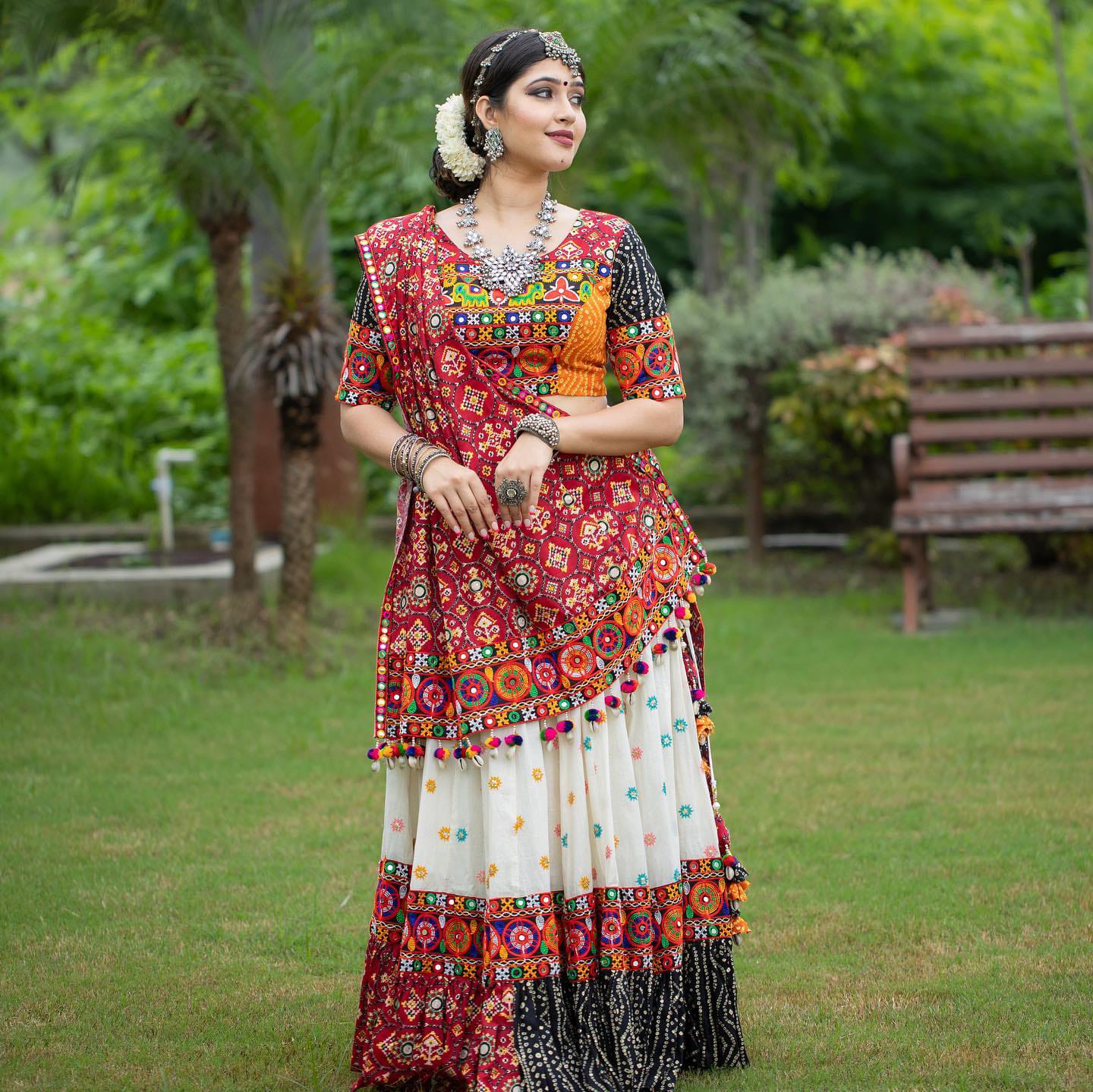
Contemporary designers can shorten or lengthen the skirt, replace a traditional blouse with a corset or ruffle blouse, add pockets, use detachable sleeves or create a lighter version for travel. A product such as Varnika Sequin Georgette Lehenga shows how sparkle and fluid fabric can create a party-ready outfit without reproducing a heavily layered bridal silhouette.
The lehenga also supports different levels of formality. A bride may choose dense embroidery and a long trail, a bridesmaid may prefer a pastel georgette set, and a young girl may need a lighter skirt with a secure waistband and manageable dupatta. The same basic three-piece structure can therefore serve bridal, designer, festive, wedding and girls' wear categories.
The most honest answer to who invented lehenga is consequently a cultural one: generations of Indian wearers, weavers, embroiderers, dyers, tailors and designers developed the garment together. Its history isn't reduced by the absence of one inventor. The absence of a single inventor shows how clothing can grow through shared craftsmanship and continuous adaptation.
Common questions about the lehenga's origin and modern use
Who invented lehenga first?
No documented individual invented the lehenga first. The garment developed from older Indian skirt traditions alongside medieval courtly influences, regional dress and evolving tailoring practices.
Did the Mughals invent the lehenga?
The Mughals did not invent the lehenga, but Mughal court culture influenced its association with plush textiles, coordinated ensembles, layered dressing and ornate surface work. Indian artisans and regional communities adapted those influences into varied local forms.
Is a lehenga the same as a ghagra?
A lehenga and ghagra are closely related flared skirts, and the words are sometimes used interchangeably. "Ghagra" often has stronger regional usage, while "lehenga" is widely used for a three-piece formal ensemble consisting of skirt, choli and dupatta.
What is the difference between a ready-made and semi-stitched lehenga?
A ready-made lehenga is finished in a specific size, while a semi-stitched lehenga is designed for final tailoring. Ready-made sets save time when measurements match, whereas semi-stitched sets can offer more fitting flexibility but still require a capable tailor.
Which lehenga is suitable for a Haldi ceremony?
A lightweight, comfortable lehenga in yellow, green, pink or another bright colour is usually suitable for a Haldi ceremony. Choose manageable embellishment, secure fastenings and fabric that allows sitting, walking and participation in the ritual.
How should an embroidered lehenga be stored?
Store an embroidered lehenga folded with clean tissue paper between embellished layers and keep it in a breathable garment bag. Avoid prolonged compression, direct moisture and rough jewellery that can catch zari, sequins or delicate net.
Questions Readers Ask About Lehenga Origins, Styles and Shopping
Who invented lehenga first?
No documented individual invented the lehenga first. The garment developed from older Indian skirt traditions alongside medieval courtly influences, regional dress and evolving tailoring practices.
Did the Mughals invent the lehenga?
The Mughals did not invent the lehenga, but Mughal court culture influenced its association with luxurious textiles, coordinated ensembles, layered dressing and ornate surface work. Indian artisans and regional communities adapted those influences into varied local forms.
Is a lehenga the same as a ghagra?
A lehenga and ghagra are closely related flared skirts, and the words are sometimes used interchangeably. "Ghagra" often has stronger regional usage, while "lehenga" is widely used for a three-piece formal ensemble consisting of skirt, choli and dupatta.
What is the difference between a ready-made and semi-stitched lehenga?
A ready-made lehenga is finished in a specific size, while a semi-stitched lehenga is designed for final tailoring. Ready-made sets save time when measurements match, whereas semi-stitched sets can offer more fitting flexibility but still require a capable tailor.
Which lehenga is suitable for a Haldi ceremony?
A lightweight, comfortable lehenga in yellow, green, pink or another bright colour is usually suitable for a Haldi ceremony. Choose manageable embellishment, secure fastenings and fabric that allows sitting, walking and participation in the ritual.
How should an embroidered lehenga be stored?
Store an embroidered lehenga folded with clean tissue paper between embellished layers and keep it in a breathable garment bag. Avoid prolonged compression, direct moisture and rough jewellery that can catch zari, sequins or delicate net.