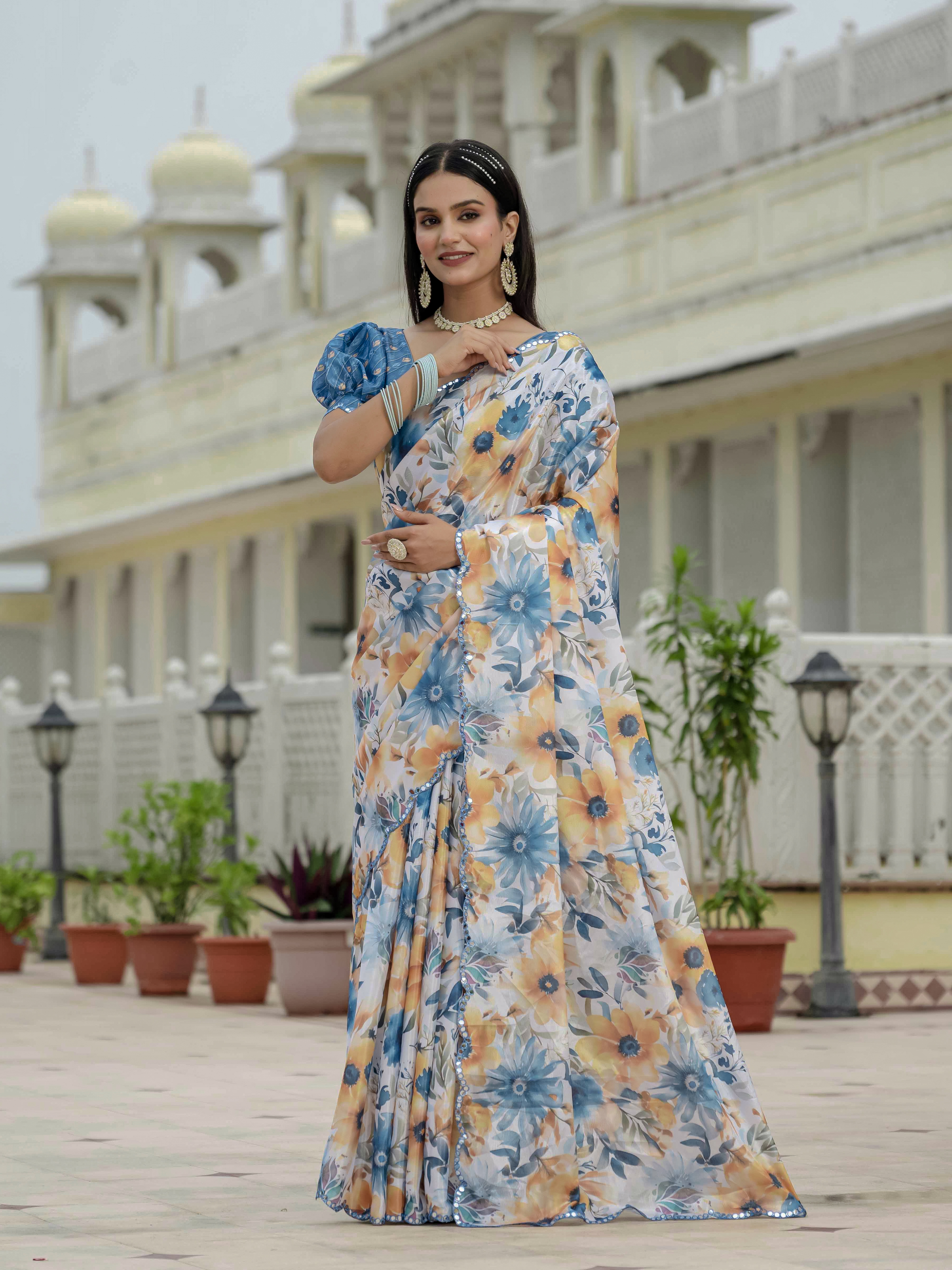
Who invented blouse? No single person can claim credit for creating the garment worn with a saree today. The modern Indian blouse developed gradually from older upper garments such as the kanchuki and choli, nineteenth-century tailoring practices, changing ideas of public dress, and regional Indian fashion traditions.
That history matters when choosing a blouse today. A readymade blouse isn't simply a substitute for a tailor-made piece: its neckline, sleeve, lining, padding, closure and fabric all reflect decisions that evolved over many centuries. Understanding that evolution also explains why a Banarasi silk blouse, a cotton blouse and a contemporary designer saree blouse can look so different while serving the same basic purpose.
Who invented blouse in India?
No individual invented the Indian blouse; the garment emerged through several older Indian upper-body garments and later social and tailoring changes.
Ancient Indian clothing was not governed by one universal national style. Draped textiles, wrapped breast bands, tunics and stitched upper garments appeared in different regions and periods. Sculptures, paintings and literary references indicate that Indian women used garments covering or supporting the upper body long before the contemporary saree blouse existed. The exact cut and name varied according to community, climate, occupation and custom.
The word "blouse" itself has a different history from the Indian garment. English borrowed the term from French usage, where blouse referred to a loose work shirt or smock. During the nineteenth century, blouse became a broader European fashion term for a woman's upper garment. British colonial contact helped circulate the word in India, but Indians already had their own traditions of upper-body clothing.
Calling one person the inventor therefore oversimplifies two connected stories. The first story concerns indigenous garments such as choli and kanchuki. The second concerns the current stitched blouse worn under or with the saree, which gained wider acceptance through social change, urban tailoring and new forms of public dress.
Which Indian garments came before the up-to-date saree blouse?
Choli, kanchuki, stanapatta and regional bodices are among the Indian garments that preceded or influenced the current saree blouse.
Choli and kanchuki
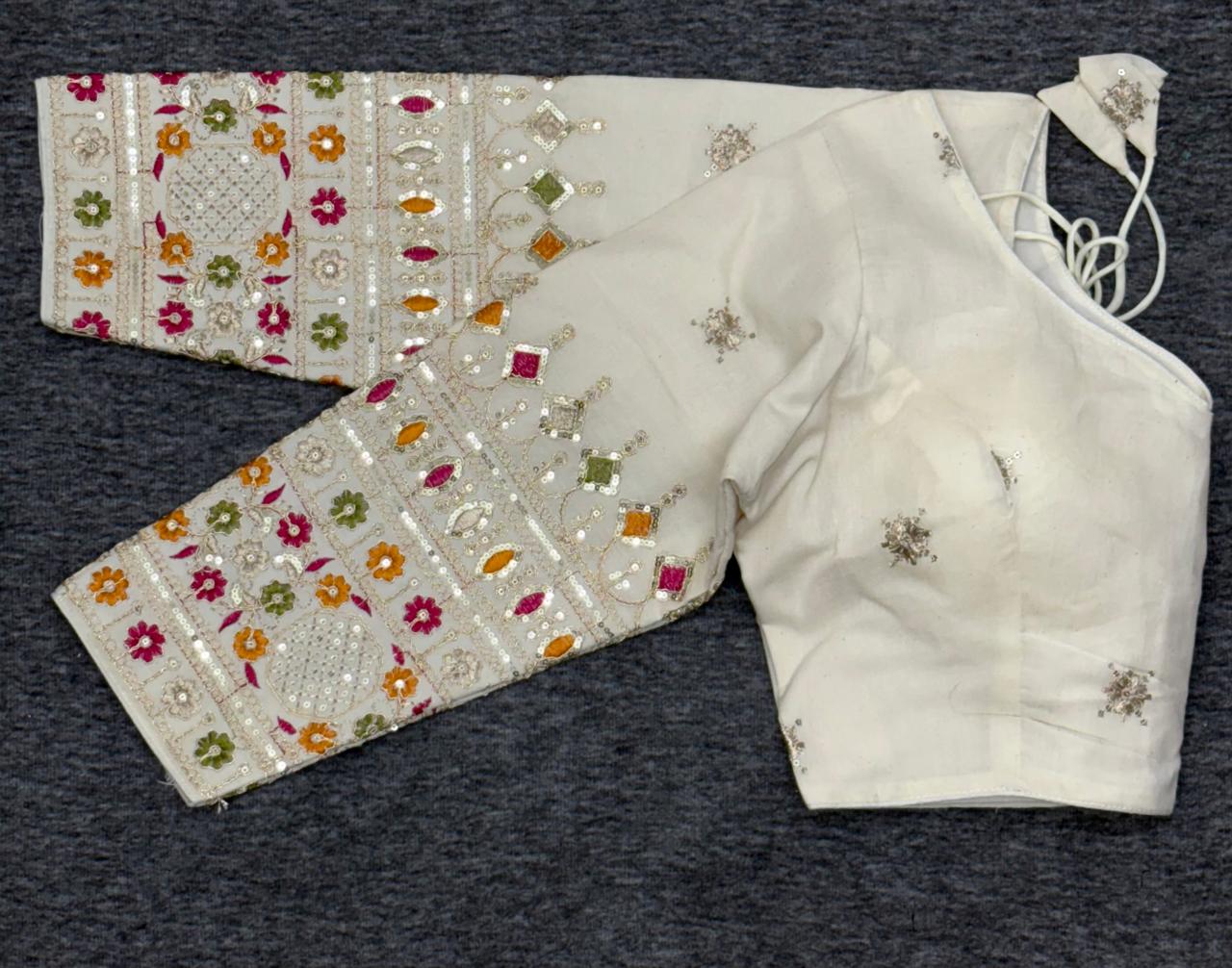
Choli is a long-established term for a fitted upper garment, especially associated with western, central and northern parts of the Indian subcontinent. Traditional cholis could be short, close-fitting and practical, with construction shaped by local textile traditions. A kanchuki, mentioned in historical and literary contexts, could refer to an upper garment or bodice, although meanings changed across time and region.
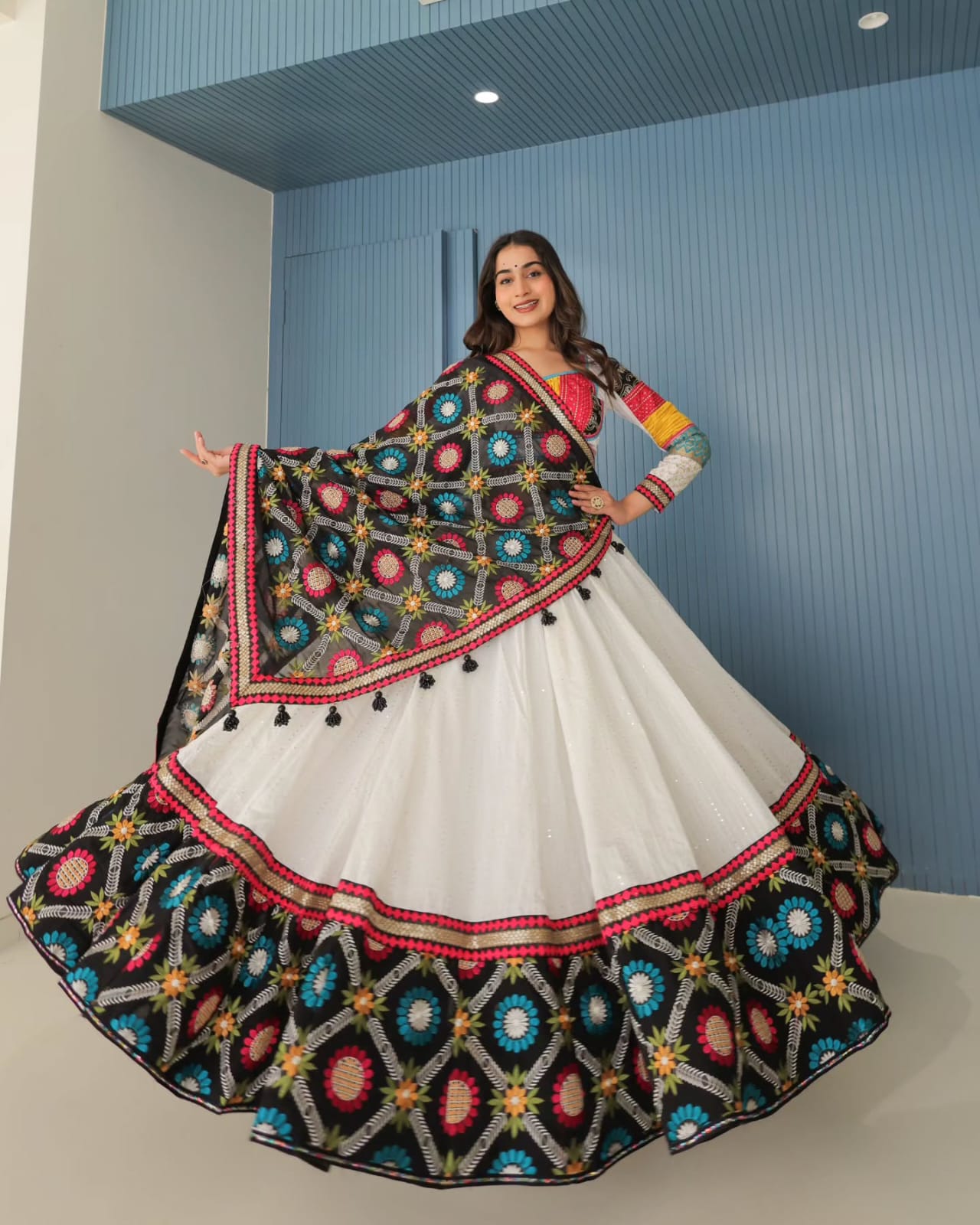
These garments were not identical to the blouse used with a contemporary saree. A classic choli might be worn with a ghagra, skirt or regional drape rather than a saree. The distinction is useful because contemporary fashion often treats choli, blouse and crop top as interchangeable terms even though their histories and styling contexts differ.
Wrapped and stitched upper garments
Some earlier Indian clothing rely on wrapping rather than tailoring. Breast bands, shawls and draped cloth could provide support or coverage without the seams associated with a latest blouse. Other communities used stitched bodices, jackets or tunics. Indian dress history therefore contains both draped and go solutions for covering the upper body.
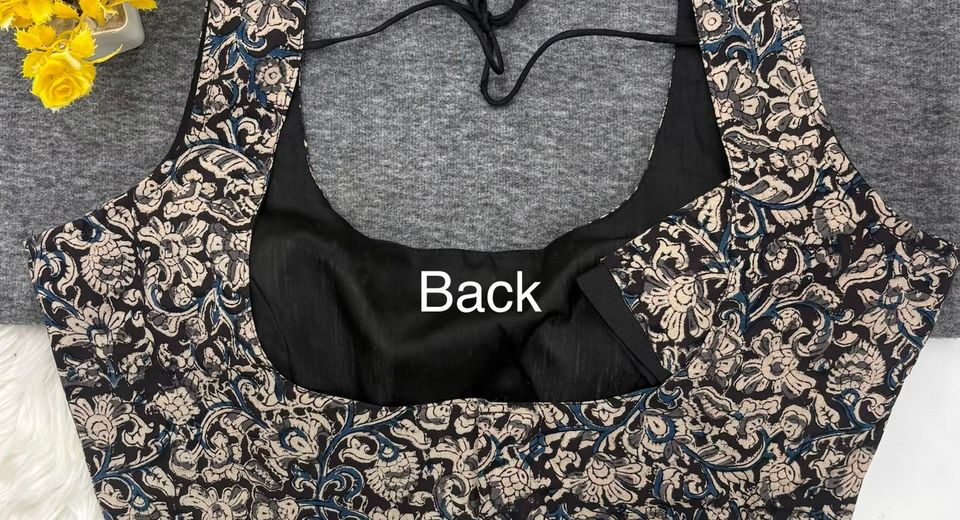
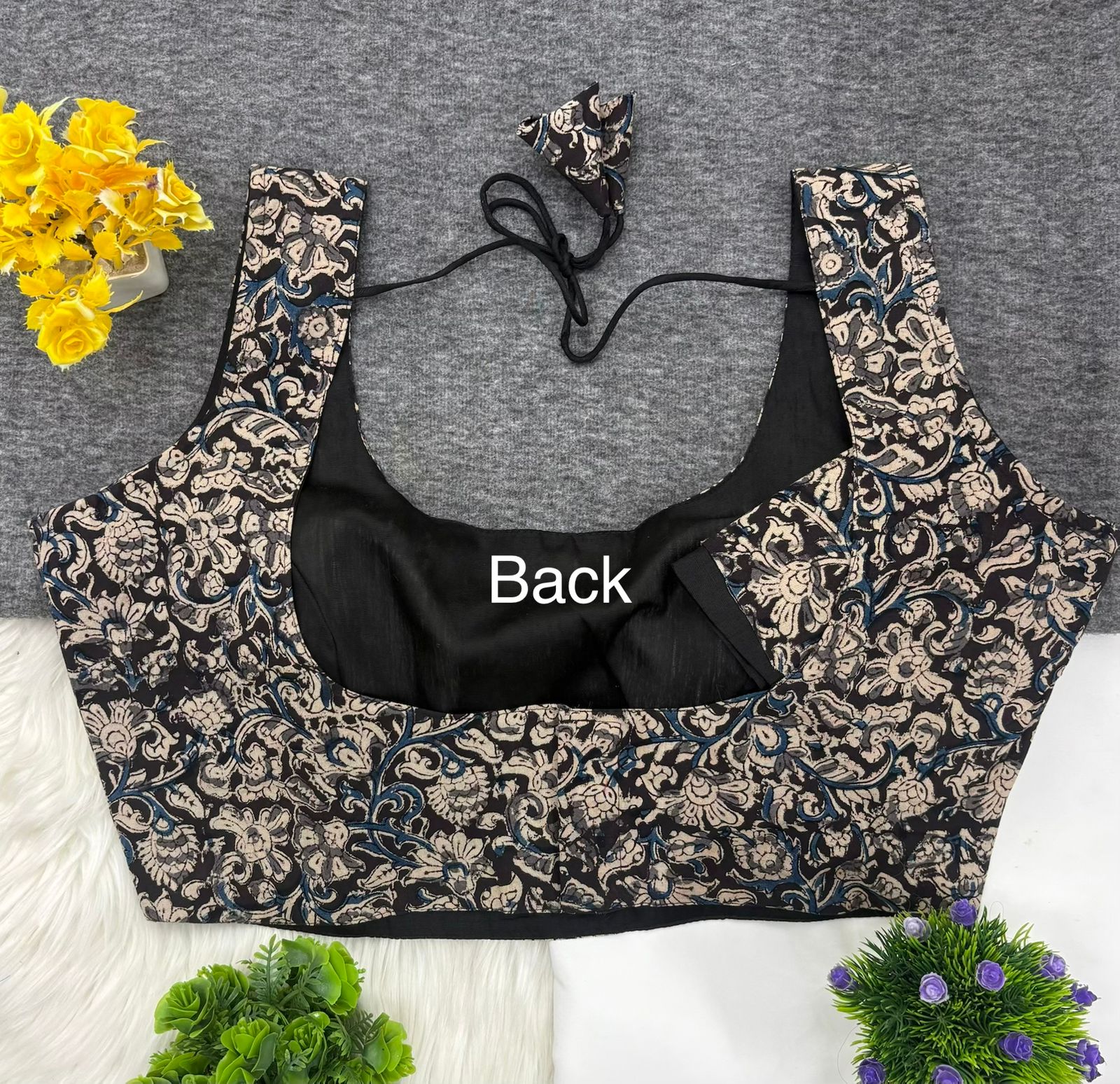
Regional climate also influenced construction. Cotton suited hot and humid conditions, while silk and layered textiles served ceremonial purposes. A Pure Kalamkari Cotton Padded Blouse for Women demonstrates how a contemporary blouse can combine a breathable cotton surface with structured support, even though padded construction belongs to a much later design vocabulary.
Did Jnanadanandini Devi invent the blouse?
Jnanadanandini Devi did not invent the blouse, but she is widely credited with helping popularise the stitched blouse and petticoat combination with the saree in nineteenth-century Bengal.
Jnanadanandini Devi, the wife of Satyendranath Tagore, is associated with an important change in Bengali women's public dress during the late nineteenth century. Accounts describe her adopting and adapting a more structured way of wearing the saree, including a blouse and petticoat, after encountering Parsi and colonial-era dress practices in Bombay. The style made the saree easier to wear in public settings and with the pallu arranged over the shoulder.
Her role is best described as influential rather than inventive in the narrow sense. Stitched upper garments already existed in India, and blouse-like forms were not created from nothing in Bengal. Jnanadanandini Devi helped make a particular saree ensemble socially visible and practical for women moving through formal, urban and colonial institutions.
The change also reflected social pressure. In parts of nineteenth-century India, women's clothing became a subject of debate when women entered schools, travelled, attended public gatherings or interacted with people outside the household. A blouse and petticoat added structure beneath the saree and could make the drape feel more secure in these settings. Clothing was therefore shaped by mobility and social expectations as much as by aesthetics.
How did the blouse become part of everyday saree dressing?
The blouse became widely associated with everyday saree dressing through urban tailoring, changing public norms, cinema, education and the growth of textile markets.
By the late nineteenth and early twentieth centuries, stitched clothing became increasingly accessible in towns and cities. Tailors could cut bodices to individual measurements, add fastenings and adjust sleeves or necklines. The blouse also worked as a practical foundation for the saree: it gave the drape a stable upper line, supported the bust and allowed the pallu to be pinned or arranged in different ways.
Regional practice remained important. Some communities traditionally wore sarees without a blouse, used a different upper garment or followed a distinctive drape. The present-day expectation that every saree requires a blouse is widespread but not historically universal. Indian fashion continues to preserve these regional variations through handloom traditions, ceremonial dress and community-specific styling.
Film and popular media later helped standardise certain silhouettes while also making experimentation visible. Sleeveless cuts, deep backs, high necks, elbow-length sleeves, contrast borders and embellished fabrics moved between cinema, weddings and everyday wardrobes. A blouse could now signal a decade, a region, a social setting or a personal style preference.
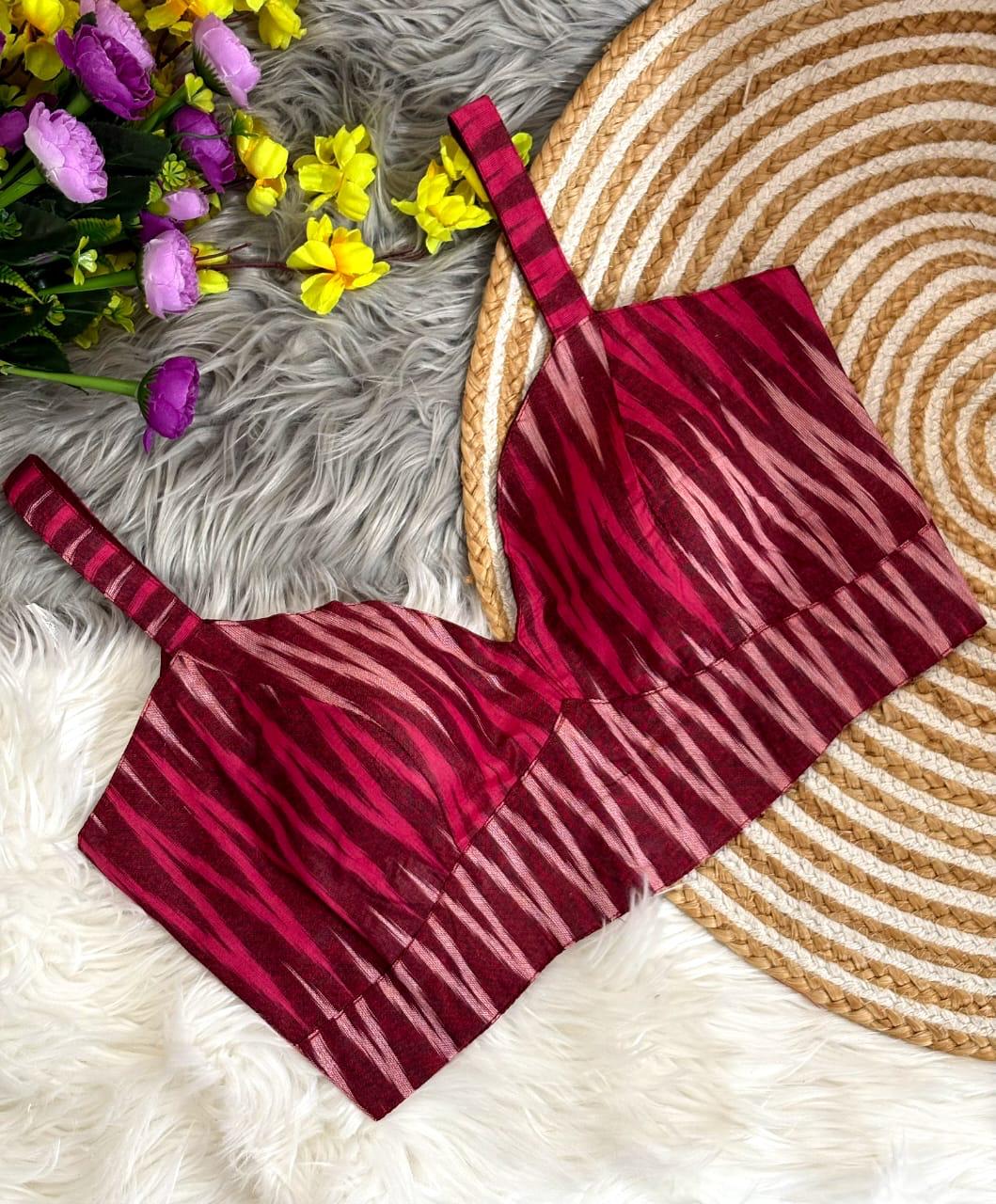
Contemporary products illustrate that range. Ikkat Cotton Padded Blouse for Women Sleeveless uses a sleeveless format suited to a contemporary saree wardrobe, while Kalamkari Cotton V Neck Collar Blouse for Women combines a familiar Indian print language with a more defined neckline. Neither design represents the whole history of the blouse; each shows how older textile identities are being reinterpreted through current construction.
Why do blouse fabrics and construction matter?
Fabric and construction determine how a blouse fits, supports the body, handles heat and changes the fall of a saree.
Cotton for breathable everyday wear
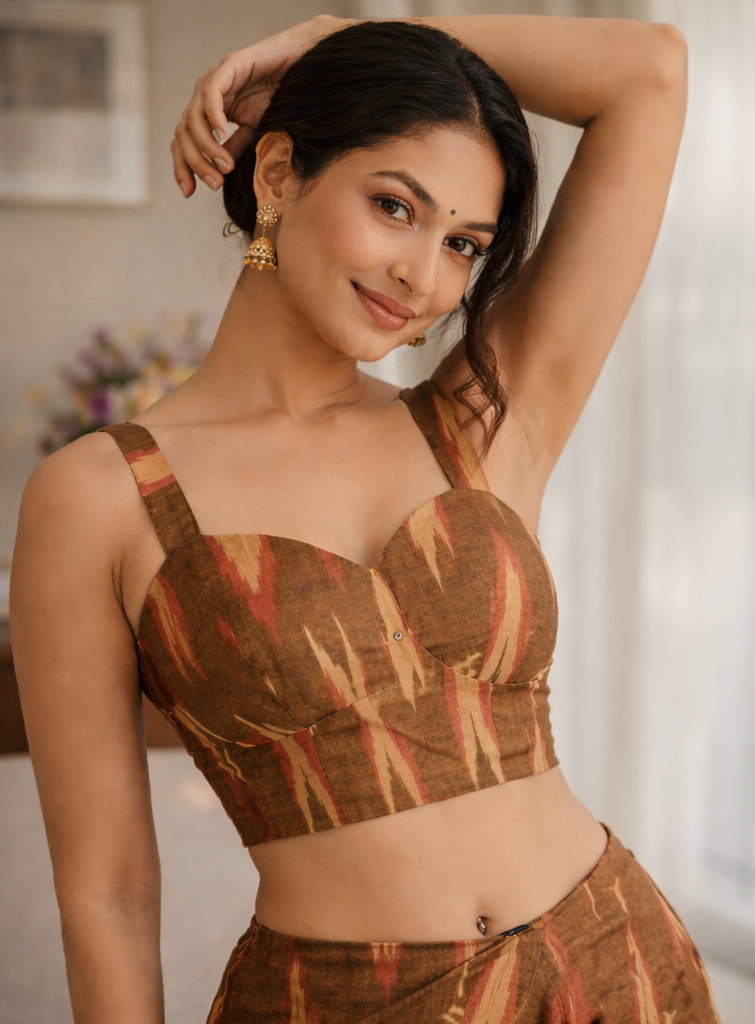
Cotton is often practical for daytime use because it absorbs moisture and usually feels less insulating than heavily embellished synthetic or silk fabrics. Cotton also responds well to block prints, ikat patterns and other surface designs. A Brown Ikat Cotton Padded Blouse Sleeveless Stylish can work with plain sarees when the blouse is intended to provide the main visual contrast.
Cotton may shrink or lose shape if washed carelessly, especially when the fabric has not been pre-shrunk. Checking the care label, using mild detergent and drying garments away from harsh direct sunlight can help preserve colour and structure. A blouse with padding or a firm neckline should not be twisted aggressively after washing.
Silk and ceremonial dressing
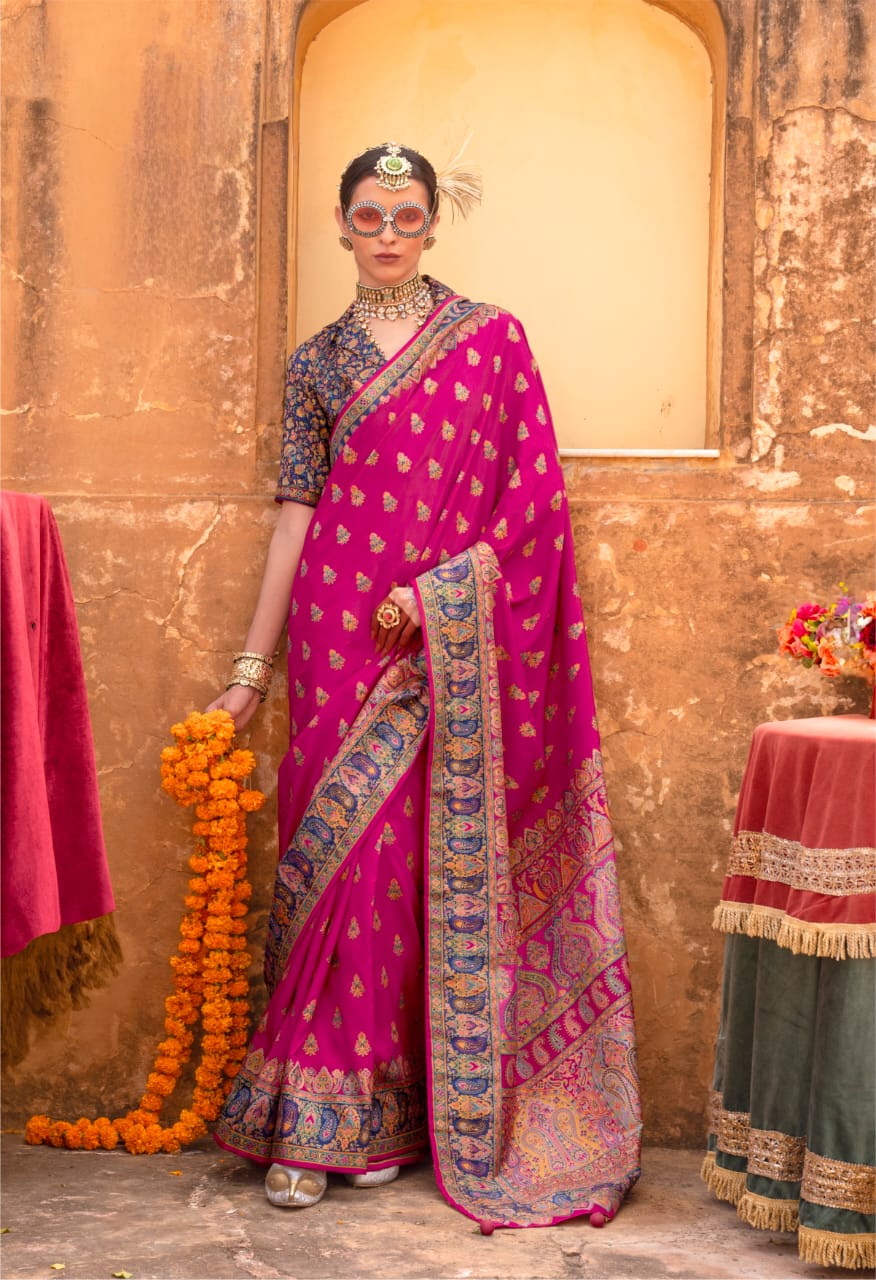
Silk creates a richer surface and is commonly selected for festive, wedding and evening sarees. Banarasi silk, Kanjeevaram-associated silk styling and zari borders often benefit from a blouse that repeats one colour or metallic accent from the saree rather than competing with every motif.
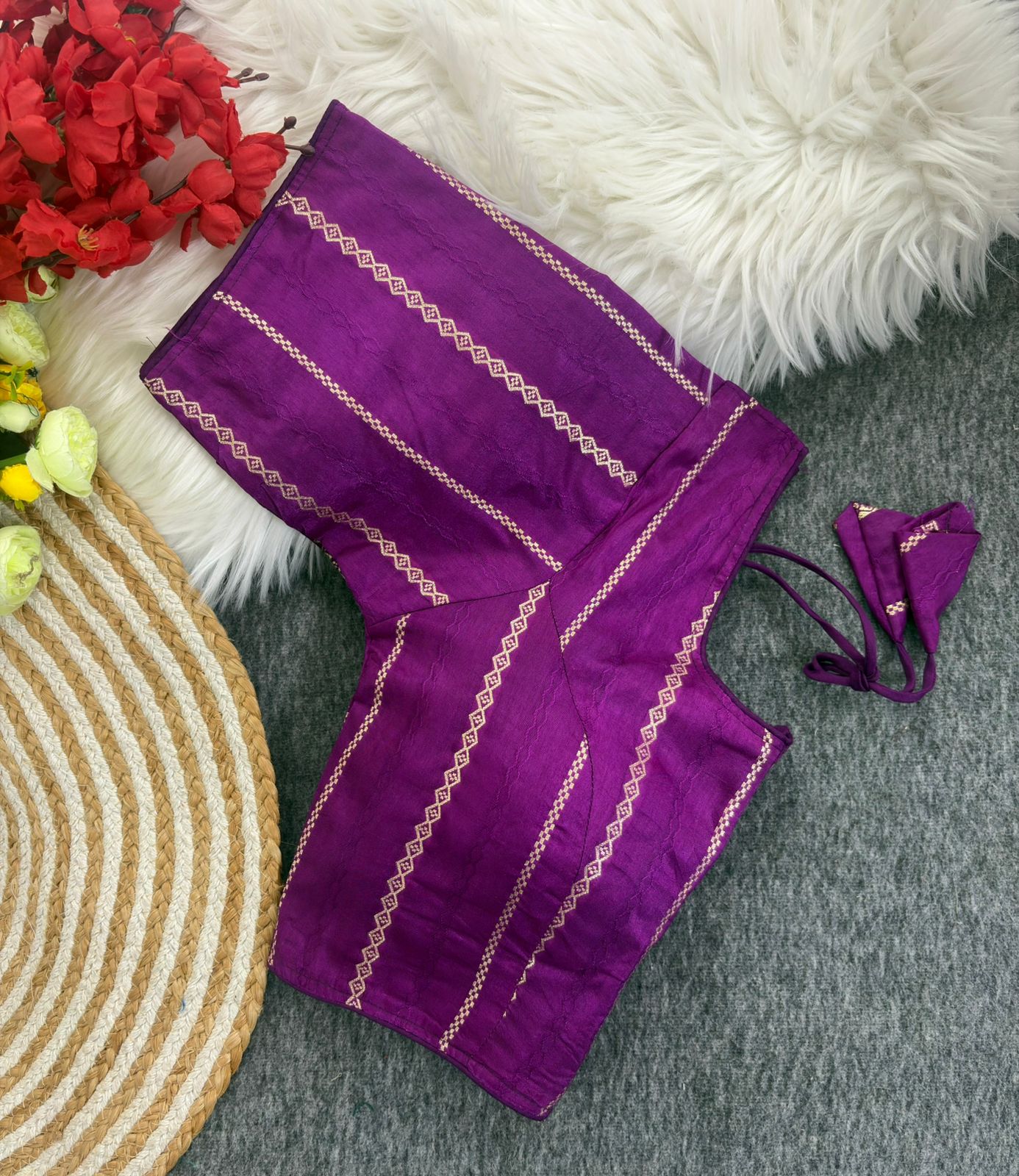
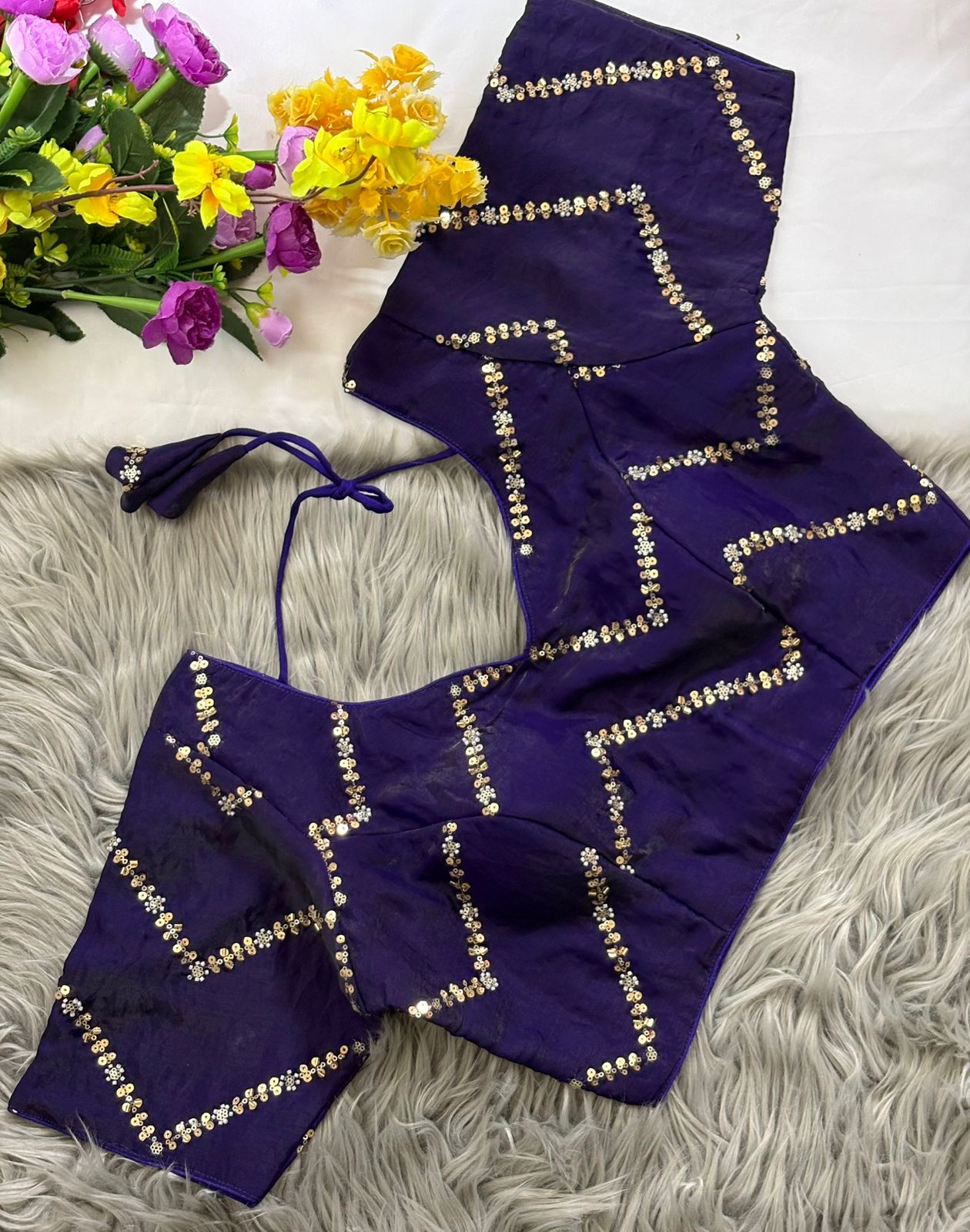
A Banarasi Silk Golden Jari Padded Blouse for Women is suited to a formal wardrobe because golden zari can echo the metallic work found in many festive sarees. A Fendy Silk Zigzag Moti Work Readymade Blouse adds a surface texture associated with celebration, where the blouse may function as a jewellery-like focal point.
Padding, lining and closures
Padding is a construction choice, not a universal requirement for a good blouse. Light padding can reduce the need for a separate bra cup, create a smoother outline and help the blouse hold its shape, but the correct result depends on pad thickness, placement and personal comfort.
Lining affects comfort and durability. A smooth lining can reduce friction, while a poorly finished seam may become irritating during long wear. Hook-and-eye closures are common because they allow a close fit, whereas zippers and elastic sections can change how easily a readymade blouse adjusts across the torso.
How do readymade blouses reflect the blouse's up-to-date evolution?
Readymade blouses reflect the current evolution of the garment by combining standardised sizing with design details once created individually by a tailor.
Heritage tailoring began with body measurements, paper patterns and repeated fittings. Readymade production instead works with a set of size ranges and pre-decided proportions. The advantage is speed: a wearer can coordinate a saree for a function without waiting several days for stitching. The limitation is that shoulder width, bust fullness, armhole depth and torso length don't always match a standard size.
Before buying a readymade blouse, measure the fullest part of the bust, the underbust if the design is fitted, the shoulder width and the preferred sleeve length. Compare those measurements with the garment's size chart rather than relying only on a usual S, M or L label. A padded blouse may require particular attention to bust and underbust measurements because the internal structure can make the fit less forgiving.
Readymade doesn't mean visually basic. Neckline shaping, woven motifs, contrast piping, zari, beads and sleeve design can make a standard-size blouse look highly considered. Designer readymade styles often borrow the drama of couture through embellishment while retaining the convenience of a finished garment.
The Classic Festive Wear Blouse for Stylish Saree Look shows how a blouse can be designed as a versatile wardrobe anchor rather than as an one-time wedding accessory. The Cream Ikat Cotton Padded Blouse Sleeveless Trendy offers another styling direction: a neutral base and woven pattern can bridge festive cotton sarees, handloom drapes and contemporary designer saree looks.
How should a blouse be matched with a saree?
A blouse should be matched with a saree by balancing colour, visual weight, occasion, fabric behaviour and the amount of detail already present in the drape.
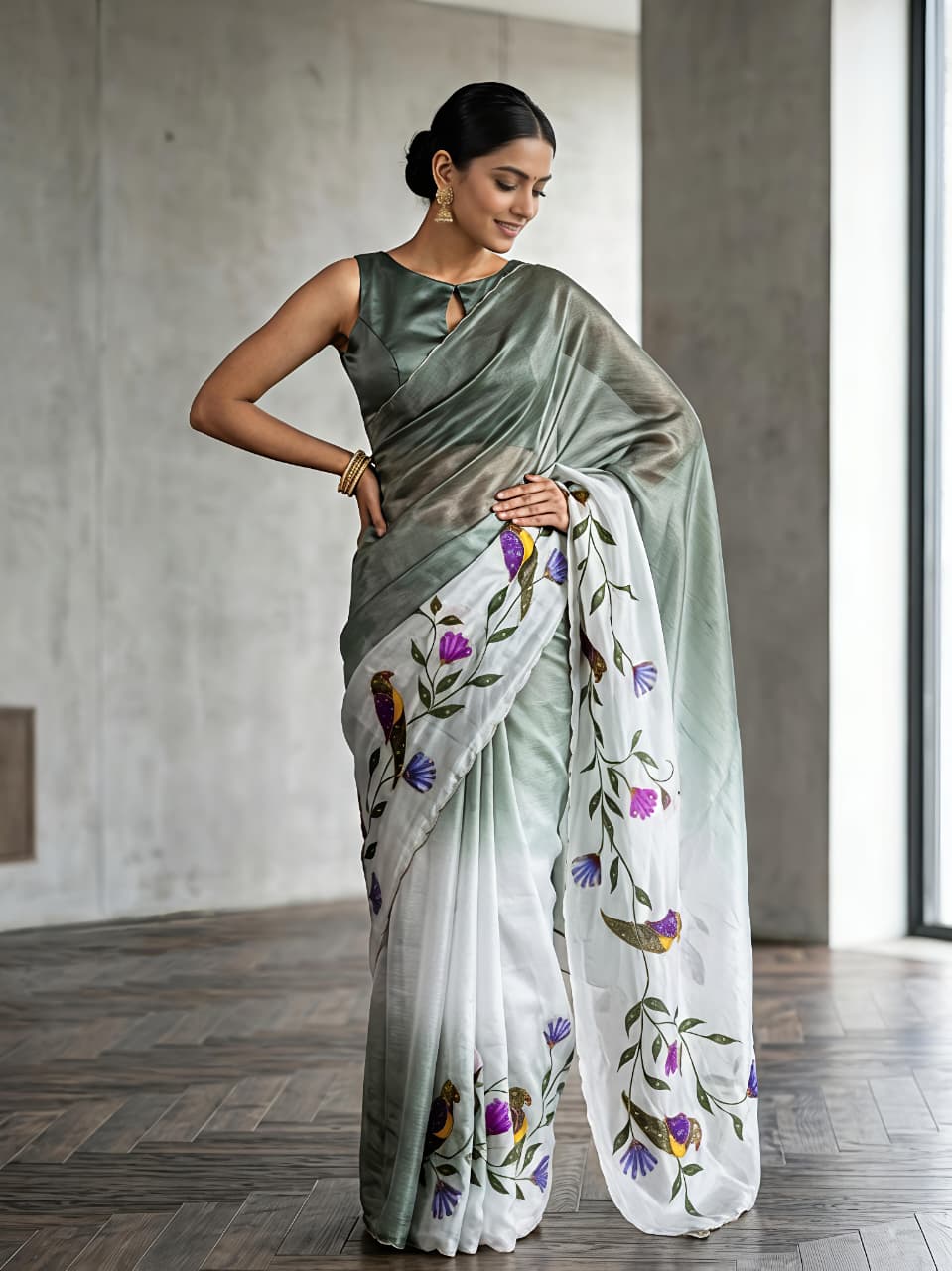
A heavily zari-worked saree generally benefits from a controlled blouse colour or a restrained repetition of the border shade. A plain saree can support a stronger print, woven texture or embellished blouse. Banarasi silk with zari may look balanced with a structured silk blouse, while a lightweight Chanderi saree can pair well with cotton, silk-blend or minimally embellished construction that doesn't overwhelm its translucent texture.
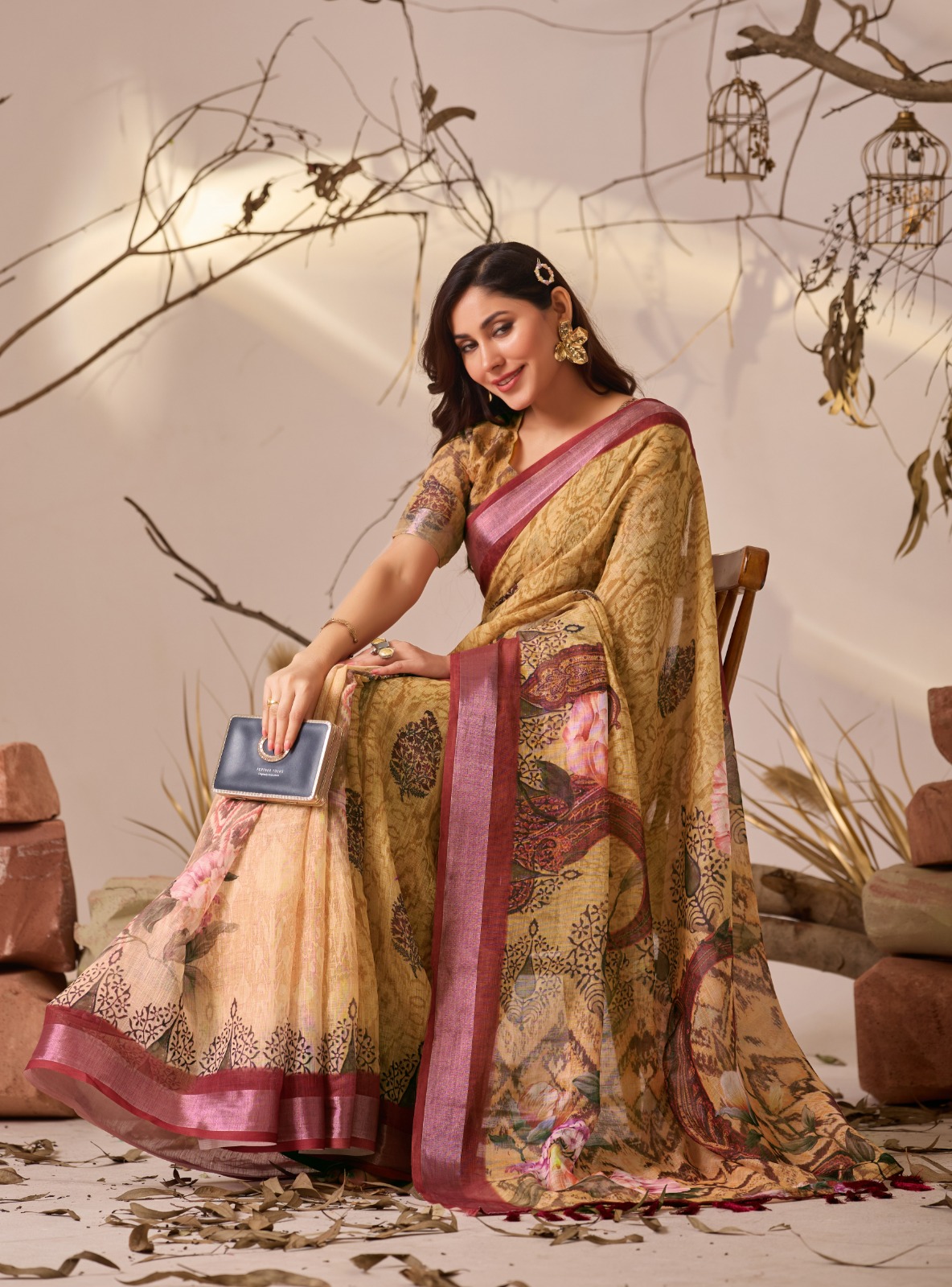
Neckline and sleeve length also alter the proportion of the outfit. A V-neck can visually lengthen the upper body, a high neck can create a more formal line, and sleeveless cuts place greater emphasis on the shoulder and armhole finish. A collar neckline introduces a sharper, tailored effect that can make a printed cotton blouse suitable for a more polished daytime ensemble.
Colour matching doesn't require an exact identical shade. Complementary or tonal combinations can look more deliberate than a nearly matching colour that falls slightly wrong under artificial light. Before a wedding or Haldi ceremony, test the blouse with the actual saree, jewellery and lighting conditions because yellow light can make gold, cream and beige appear significantly warmer.
What does the future of the Indian blouse look like?
The future of the Indian blouse will combine regional textile identity with better fit, practical construction and flexible styling.
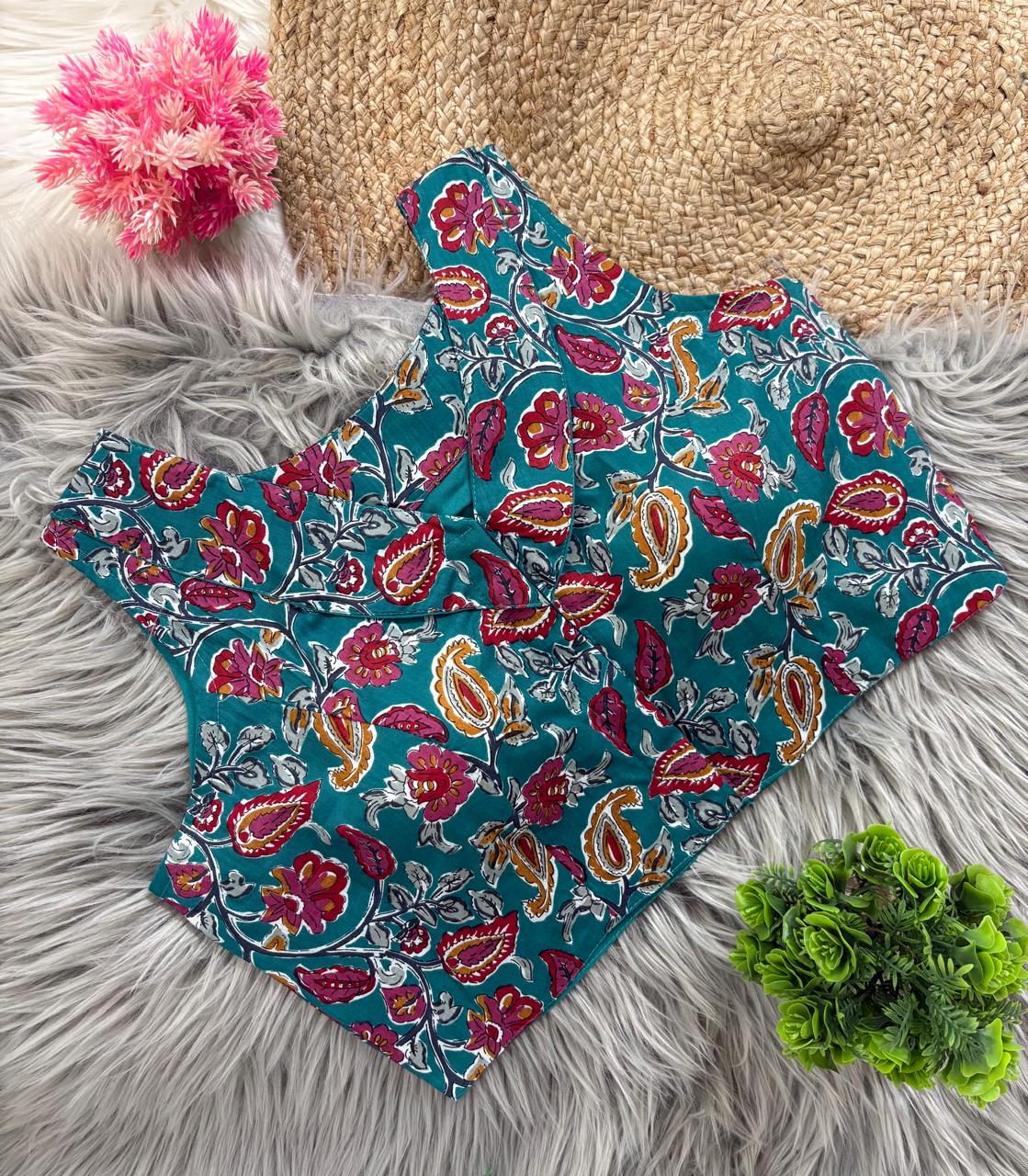
Consumers increasingly expect one blouse to work with more than one saree. Neutral shades, reversible styling, adjustable fastenings and carefully chosen prints can extend wardrobe use. At the same time, handloom and craft vocabulary remains important: Kalamkari, ikat, zari, Banarasi silk and Kanjeevaram-inspired colour stories continue to connect contemporary garments with Indian textile history.
Better size information will matter as much as decoration. Clear garment measurements, fabric composition, lining details and care instructions help buyers make decisions before ordering. For a readymade blouse, the most useful product description isn't simply "designer" or "premium"; it explains the closure, padding, stretch, sleeve length and likely fit.
The historical answer to who invented blouse is therefore layered. Ancient Indian upper garments supplied important precedents, colonial-era contact changed the vocabulary and public styling of the saree, Jnanadanandini Devi helped popularise a particular ensemble in Bengal, and modern textile production made many silhouettes available at scale. The blouse remains a small garment with a remarkably large cultural history.
Questions Readers Ask About the Indian Saree Blouse
Who invented blouse in India?
No single person invented the blouse in India. The modern saree blouse developed from older garments such as the choli and kanchuki, while nineteenth-century tailoring and changing public dress practices shaped its current form.
Did Jnanadanandini Devi invent the saree blouse?
Jnanadanandini Devi did not invent the saree blouse, but she helped popularise a blouse-and-petticoat saree style in nineteenth-century Bengal. Her contribution was cultural and practical rather than the creation of the first stitched upper garment.
What is the difference between a choli and a blouse?
A choli is a traditional fitted upper garment associated with several regional Indian dress systems, while a blouse commonly refers to the stitched upper garment worn with a saree. The terms overlap in modern fashion, but their historical and styling contexts are not identical.
Are readymade blouses better than tailor-made blouses?
Readymade blouses offer speed, predictable design and immediate availability, while tailor-made blouses allow closer control over measurements and personal preferences. The better choice depends on the accuracy of the size chart, the garment's construction and the wearer's body proportions.
Which fabric is best for a saree blouse?
Cotton is practical for breathable daytime wear, while silk and zari-rich fabrics suit festive and formal sarees. The best fabric also depends on the saree's weight, the climate, the required structure and how long the blouse will be worn.
How do I choose a padded readymade blouse size?
Choose a padded readymade blouse by comparing bust, underbust and shoulder measurements with the garment's size chart. Padding and firm lining can reduce flexibility, so a usual clothing size should not replace direct measurement.