

Which state is famous for Sambalpuri textiles? Odisha is the answer, particularly the western districts around Sambalpur, Bargarh, Sonepur and Boudh. Sambalpuri textiles are recognised for Bandha, Odisha's resist-dyeing tradition, in which yarns are tied and dyed before weaving so that the colours form precise motifs on the finished cloth.
The word "Sambalpuri" describes more than a saree style. It refers to a regional handloom tradition shaped by skilled weavers, cotton and silk yarns, symbolic designs and a demanding process that can take several days before the loom is ready. Understanding the technique helps shoppers distinguish a genuine Sambalpuri textile from an ikat-inspired print.
Which state is famous for Sambalpuri textiles and why?
Odisha is the state famous for Sambalpuri textiles, with Sambalpur serving as the tradition's best-known cultural centre. Western Odisha's weaving communities developed and preserved the Bandha method across generations, producing sarees, dress materials, scarves and household textiles.
Sambalpur gives the textile its widely recognised name, but production is distributed across several handloom centres. Bargarh has a strong weaving presence, while Sonepur, also called Subarnapur, has its own important textile traditions. Boudh and nearby villages also contribute to the regional handloom economy.
The craft gained wider recognition during the twentieth century as Sambalpuri sarees travelled beyond Odisha. Government handloom initiatives, cooperatives and geographical indication protection strengthened the identity of Sambalpuri Bandha products. The regional name now signals a textile tradition rather than merely a place of sale.
Geographical indication status is useful because it connects a product name with a defined regional origin and established craft characteristics. GI protection doesn't mean every saree has identical quality, fibre or complexity. Buyers still need to read the product description and verify whether a saree is handloom, powerloom or printed.
How is the technique behind which state is famous for Sambalpuri textiles performed?
Sambalpuri Bandha is made by resist-dyeing sections of yarn before the yarns are woven into cloth. The weaver calculates where each tied section should fall on the warp or weft, binds the yarn tightly, applies dye, removes or changes the ties and repeats the sequence for additional colours.
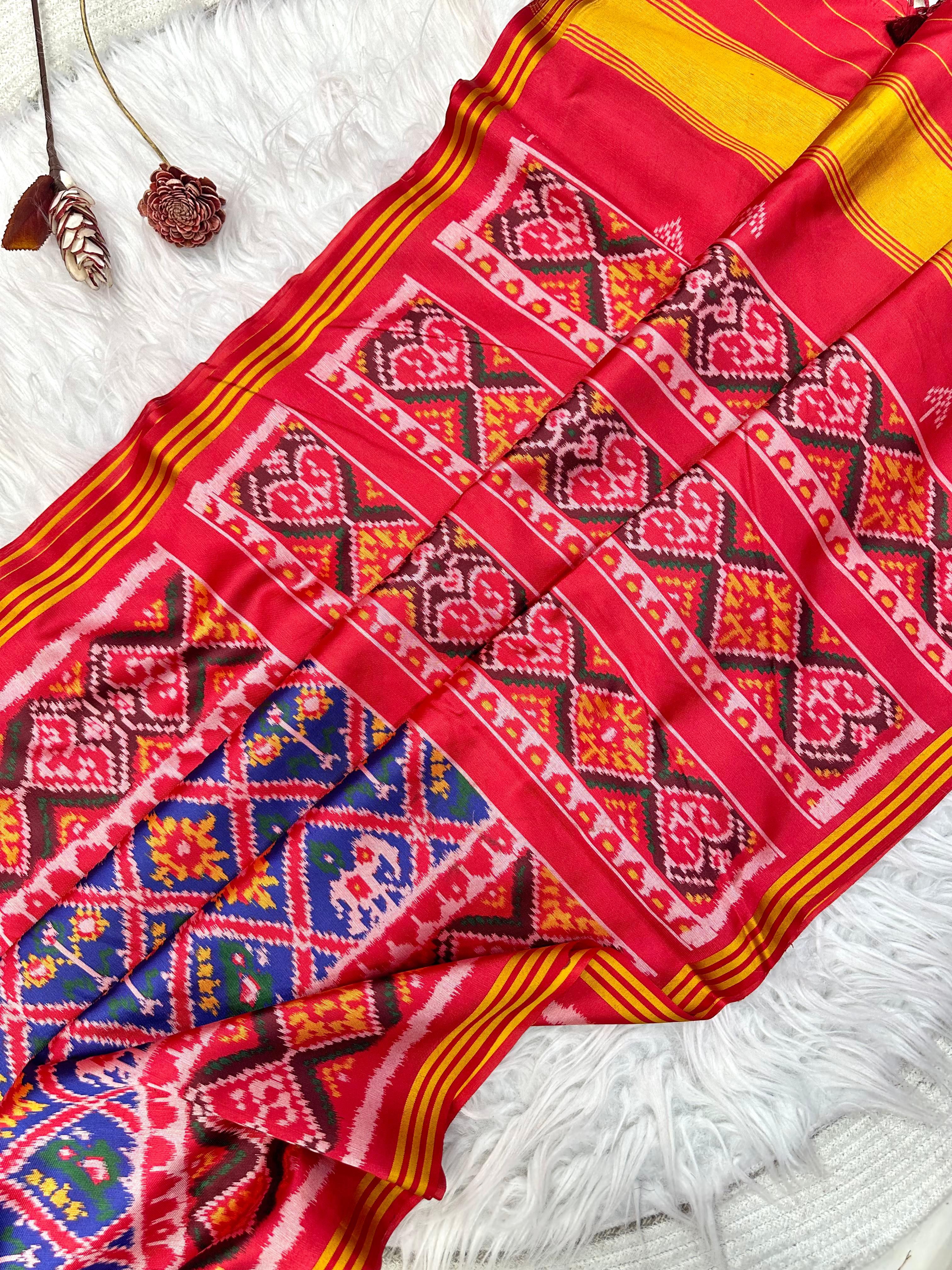
Bandha resembles other ikat techniques because the pattern is created on yarn rather than painted or printed on completed fabric. The important distinction is regional vocabulary and design language: Odisha's Sambalpuri weaving carries its own motifs, colour combinations and cultural history.
Warp ikat dyes the lengthwise yarns, weft ikat dyes the crosswise yarns, and double ikat dyes both sets. Sambalpuri sarees may use carefully aligned resist-dyed yarns to form motifs across the body and pallu. Slight softness or irregularity in alignment can occur in handloom work and should not automatically be treated as a defect.
The process requires planning before weaving begins. A mistake in the tie-dye layout can shift a motif, break a border or produce an uneven repeat across the saree. That pre-loom preparation explains why an intricate Sambalpuri design can't be reproduced as quickly as a surface print.
Why can Sambalpuri motifs have slightly blurred edges?
Sambalpuri motifs can show gently feathered or stepped edges because dyed warp and weft threads meet within a handwoven structure. The effect comes from yarn alignment and resist-dyeing, not from poor printing.
Machine-made ikat prints often place a flat image on the surface of fabric, so the reverse side may look much paler or entirely different. A woven Sambalpuri textile carries pattern through the yarn structure, although the reverse may not be perfectly identical when the design uses different yarn arrangements.
Which motifs and colours define Sambalpuri textiles from Odisha?
Traditional Sambalpuri textiles commonly feature shankha, chakra, phula and animal or floral forms. Shankha represents the conch, chakra refers to the wheel and phula means flower; these motifs connect the textile to Odisha's religious, natural and decorative vocabulary.
Shankha and chakra are especially associated with the visual language of Odisha, where conch and wheel imagery also appears in temple art and religious symbolism. Birds, fish, elephants, flowers, creepers and geometric bands add regional character. A saree may combine several motifs instead of displaying one large central emblem.
Red, black, white, maroon, yellow, orange and green appear frequently in Sambalpuri palettes, although contemporary weavers use a much wider range. Deep red with black and white creates a particularly recognisable traditional effect, while indigo, purple, mustard and softer pastel shades suit modern wardrobes.
The pallu often receives the most concentrated decoration. Borders may use repeated geometric forms, floral rows or animal motifs, while the body can remain relatively restrained. A buyer should inspect whether the border, pallu and body share a coherent woven rhythm rather than judging authenticity by colour alone.
Motifs can also communicate more than decoration. Conch and wheel forms recall religious symbolism, flowers suggest the natural environment and fish or birds connect the textile with local visual culture. Contemporary weavers may simplify these motifs, enlarge them or rearrange them for urban wardrobes without removing their regional identity.
How do Sambalpuri textiles compare with other Odisha traditions?
Sambalpuri textiles are primarily associated with Bandha ikat, whereas Bomkai sarees are known for distinctive supplementary-weft ornamentation and richly decorated borders and pallus. Both belong to Odisha's handloom landscape, but they're not interchangeable names.
Bomkai designs may include elaborate extra-weft motifs that appear embroidered into the woven surface. Sambalpuri Bandha depends more visibly on resist-dyed yarn alignment. Some contemporary sarees combine techniques or borrow motifs, so a description should specify whether the product is woven ikat, printed or a mixed construction.
Odisha also produces Khandua textiles, often linked with fine silk, temple-inspired motifs and the Nuapatna weaving centre. Berhampuri silk from southern Odisha has a separate identity, as do handlooms from other districts. Regional names matter because they indicate a particular technique and community history, not simply a colour palette.
Banarasi silk, Kanjeevaram and Chanderi are equally important Indian textile traditions, but they use different structures and regional design languages. Banarasi silk is associated with brocade and zari weaving, Kanjeevaram with South Indian silk and contrasting borders, and Chanderi with a light, translucent hand. Comparing these traditions makes the specificity of Sambalpuri Bandha easier to appreciate.
How can shoppers verify which state is famous for Sambalpuri textiles?
A shopper can verify a Sambalpuri textile by checking the stated region, weaving technique, fibre composition, reverse side and seller documentation. No single visual test proves authenticity, but several checks together provide stronger evidence.
- Read the technique details: look for terms such as handloom, Bandha, ikat, cotton, silk or tussar, and check whether the listing explicitly says printed.
- Inspect both sides: a woven motif generally remains visible on the reverse, although contrast and alignment can vary; a surface print often looks markedly weaker on the back.
- Study the edges: handwoven ikat commonly has tiny stepped transitions or soft irregularities where dyed yarns meet. Just right flat printed outlines may indicate a surface design.
- Check the feel: cotton Sambalpuri handloom usually has body and breathability, while silk versions feel smoother and may show a more luminous surface. Fabric weight alone doesn't prove authenticity.
- Ask for documentation: a handloom mark, cooperative detail, weaver information or clear fibre composition is more reliable than a claim such as "ethnic print."
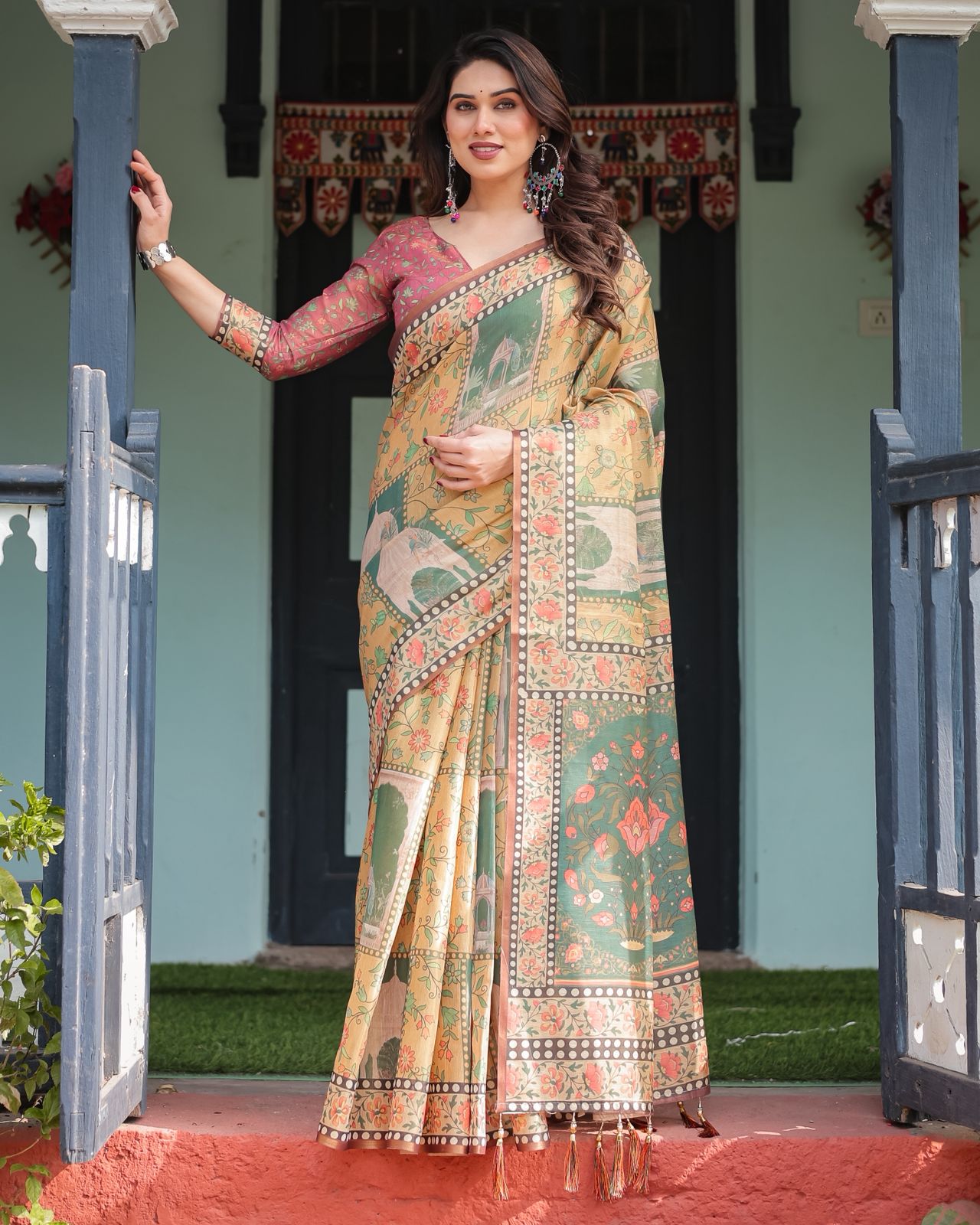
Contemporary designers also use "ikat-inspired" as a legitimate description for printed or digitally created patterns. Vibrant Multicolor Linen Saree with Ikat Inspired Prints can offer the visual rhythm of ikat without being a Sambalpuri handloom. Honest labelling allows shoppers to choose according to budget and craft preference.
Price should be assessed alongside technique. A handloom cotton saree with a simple design may cost less than a silk saree with dense double-ikat alignment, while a printed linen saree may cost less because the pattern is applied after weaving. Low price doesn't automatically mean poor quality, and high price doesn't automatically prove handloom origin.
How can Sambalpuri textiles work in a current saree wardrobe?
Sambalpuri sarees work well in contemporary wardrobes because their geometric borders and controlled motifs pair with plain and textured blouses. A simple blouse in black, ivory, maroon or a shade taken from the pallu keeps the woven pattern central.
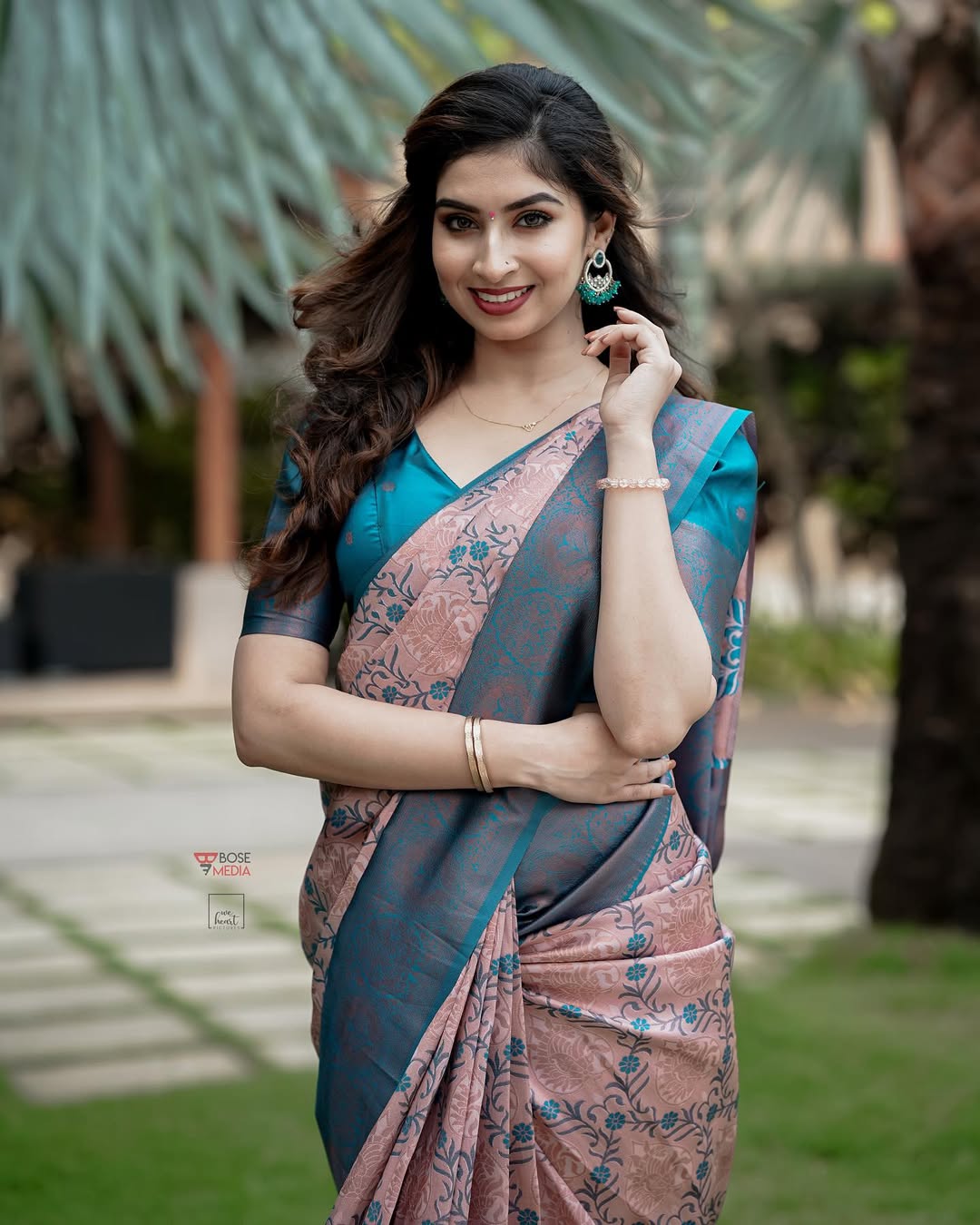
For office dressing, choose a cotton Sambalpuri saree with a medium-width border and a neatly pressed blouse. A compact shoulder bag, small studs and low-heeled sandals prevent the outfit from becoming visually crowded. For a cultural event, silver jewellery, a fabric potli and a more heavily patterned pallu can reinforce the handloom character.
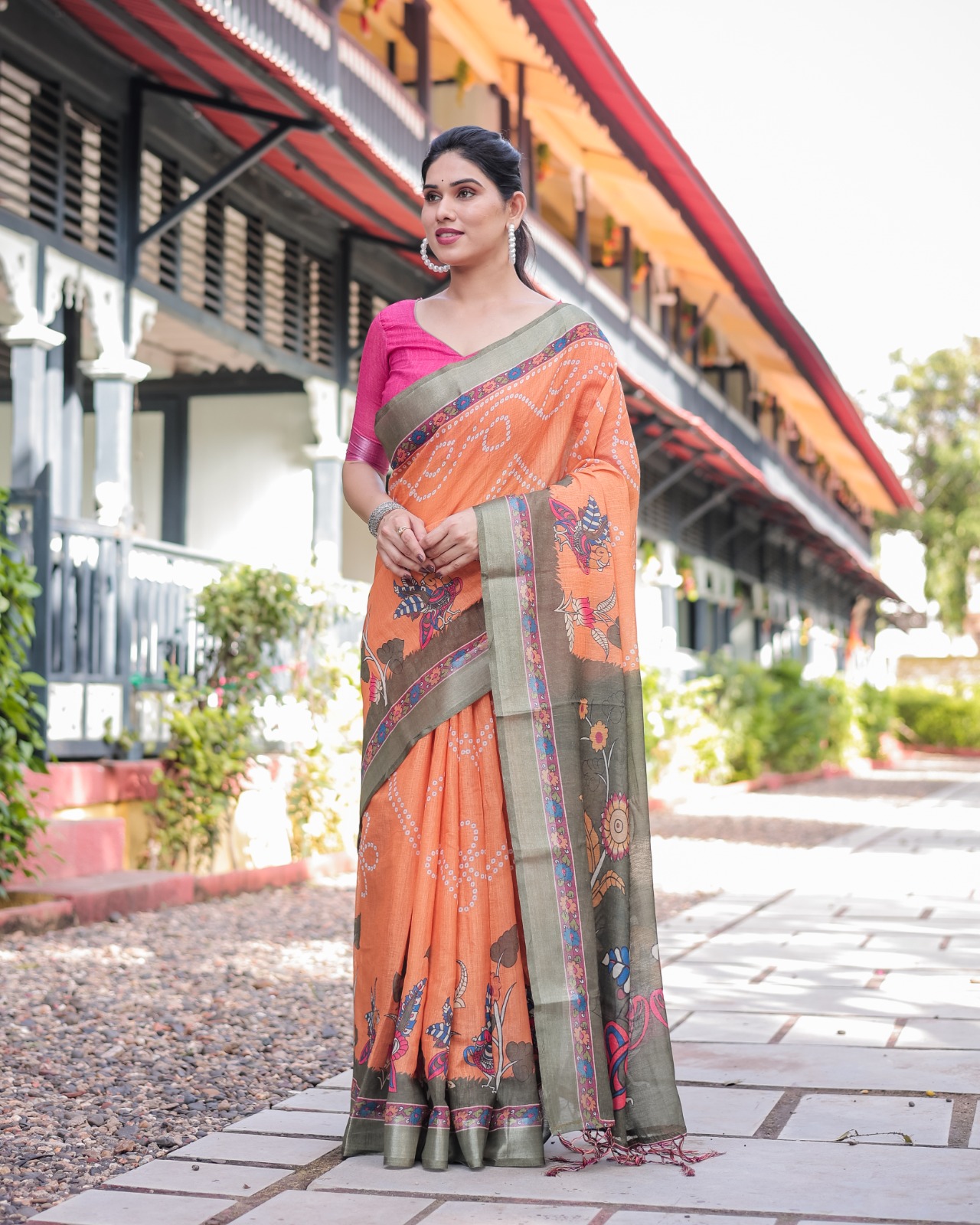
Prints and handloom textures can also sit together if their scale is managed. Orange Bandhani Kalamkari Linen Cotton Saree introduces tie-dye and Kalamkari references, while a Sambalpuri saree introduces ikat structure; wearing one as the main garment and borrowing only a restrained accessory from the other avoids competing patterns.
Neutral handlooms provide another styling route. Premium Beige Cotton Handloom Saree with Maroon Ethnic Border and Heritage Printed Pallu can be paired with a maroon blouse and traditional earrings for a similar craft-led mood, even though its printed pallu is different from woven Bandha.
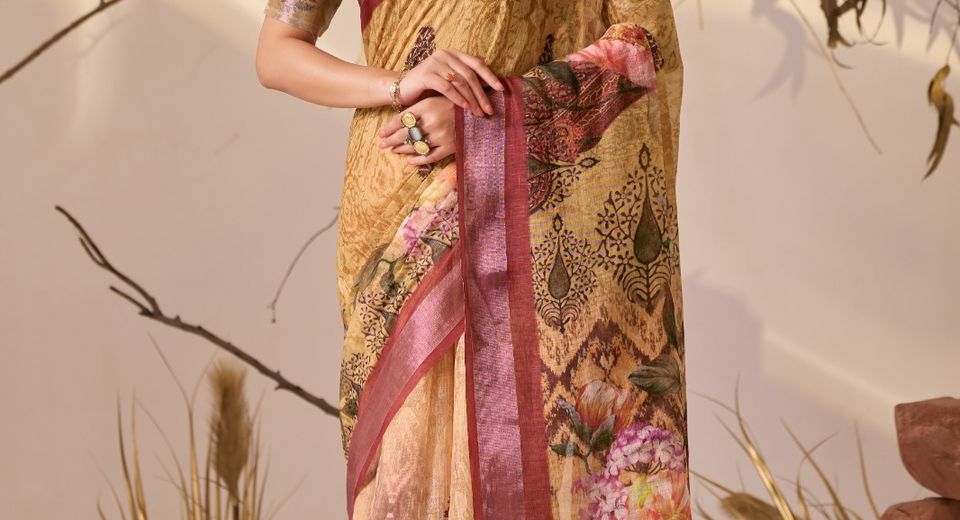
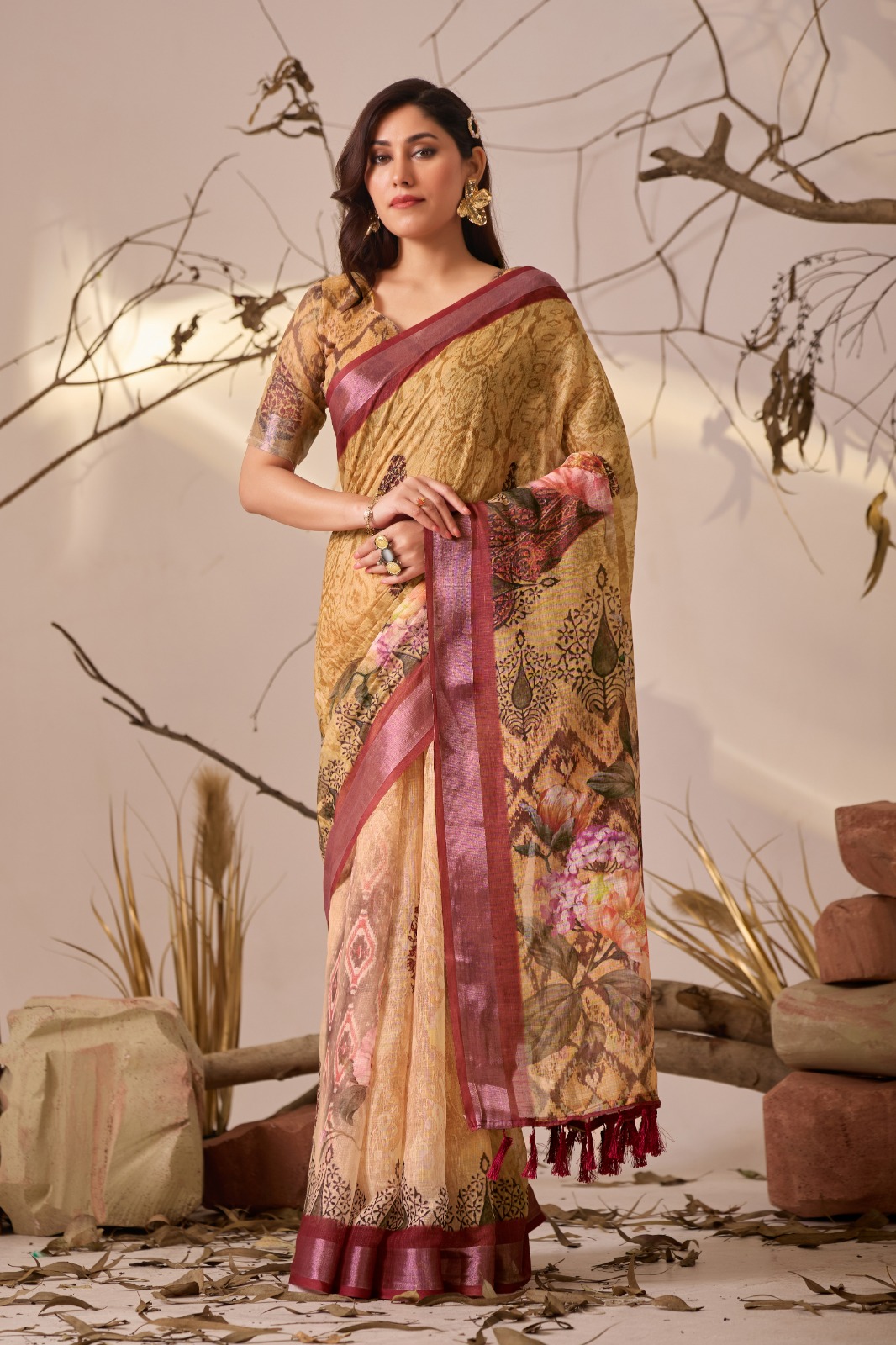
For lighter gatherings, Peach Linen Cotton Floral Print Saree with Blouse for Women or Traditional Beige Multicolor Printed Saree demonstrates how breathable fabrics and regional-looking motifs can work without claiming to be Sambalpuri. The distinction between inspiration and technique should remain clear in both styling and product descriptions.
Colour matching is easier when the blouse repeats one secondary shade rather than the dominant body colour. A maroon blouse can echo a border, while an ivory blouse can soften a dense black-and-red pallu. Metallic accessories should also be selected with care: silver often complements cotton Bandha, whereas restrained zari details can suit silk versions.
How should you care for Sambalpuri textiles from Odisha?
Sambalpuri textiles should be cleaned according to their fibre and dye stability, with gentle washing, shade drying and careful storage. Cotton, silk and blended sarees don't all require the same treatment.
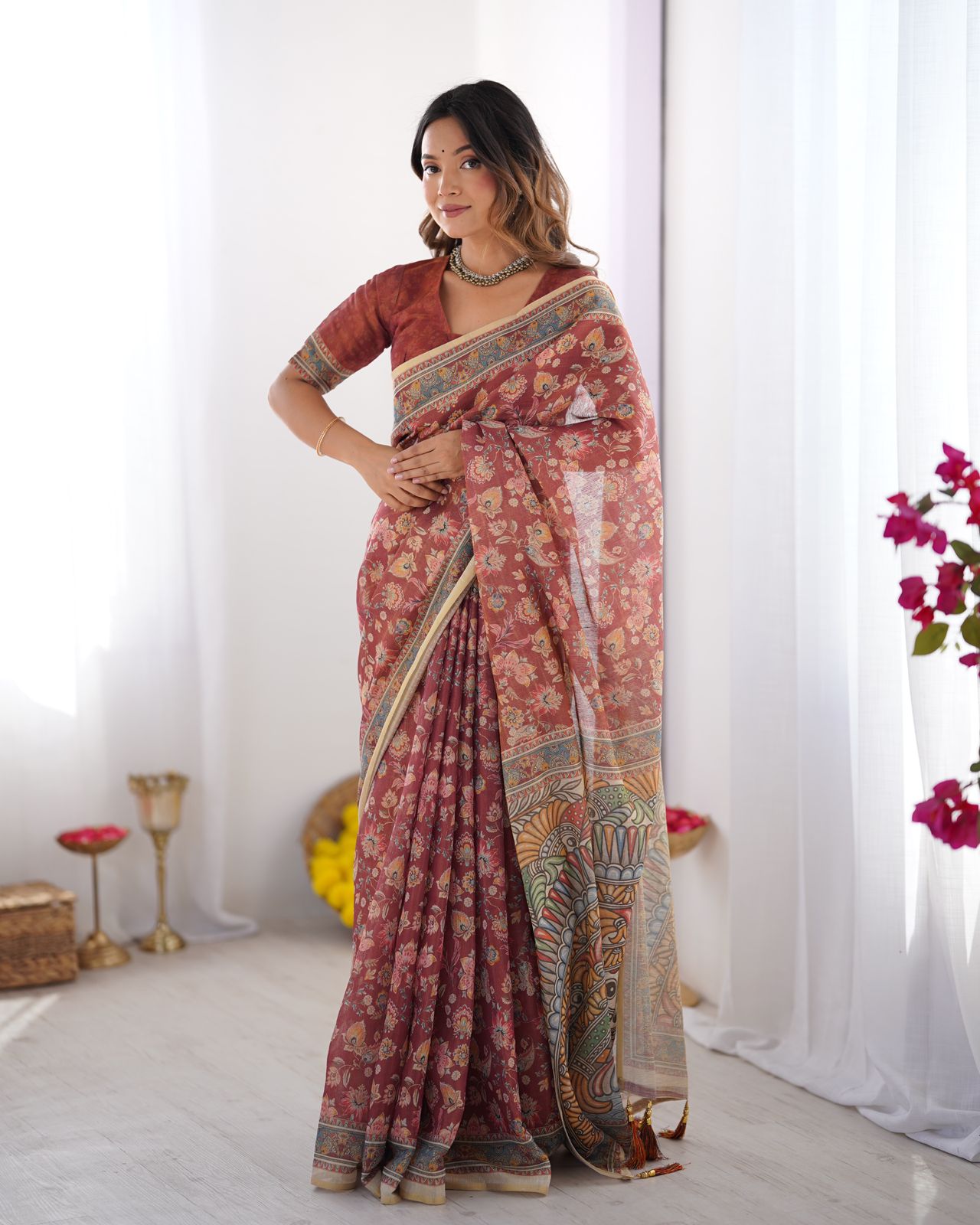
Air a saree after wearing it before folding it for storage. Keep the saree away from direct sunlight for long periods because strong ultraviolet exposure can fade natural and synthetic dyes. Fold the saree along different lines every few months to reduce permanent creasing, and place acid-free paper or clean cotton between heavily contrasting sections if colour transfer is a concern.
For cotton Sambalpuri sarees, use a mild detergent and cool or lukewarm water only after checking the care label. Avoid chlorine bleach, hard scrubbing and long soaking. Test for colour bleeding on a hidden edge before the first wash, especially when the saree contains deep red, black, indigo or purple dye.
Silk Sambalpuri sarees are generally safer with professional dry cleaning, particularly when zari, tassels or contrasting colours are present. Store silk in a breathable cotton cover rather than sealed plastic. Zari sections should not be exposed repeatedly to moisture, perfume or abrasive jewellery.
Iron Sambalpuri textiles on the reverse at a low or medium temperature, using a thin cotton cloth as a barrier. Excessive heat can flatten texture, create shine or damage delicate silk fibres. Never iron a damp silk saree directly.
What does the answer to which state is famous for Sambalpuri textiles mean for buyers?
The answer points to Odisha's living weaving culture, not merely to a popular saree label. A Sambalpuri textile carries the evidence of regional skill through Bandha resist-dyeing, symbolic motifs, handloom structure and the work of weaving communities in western Odisha.
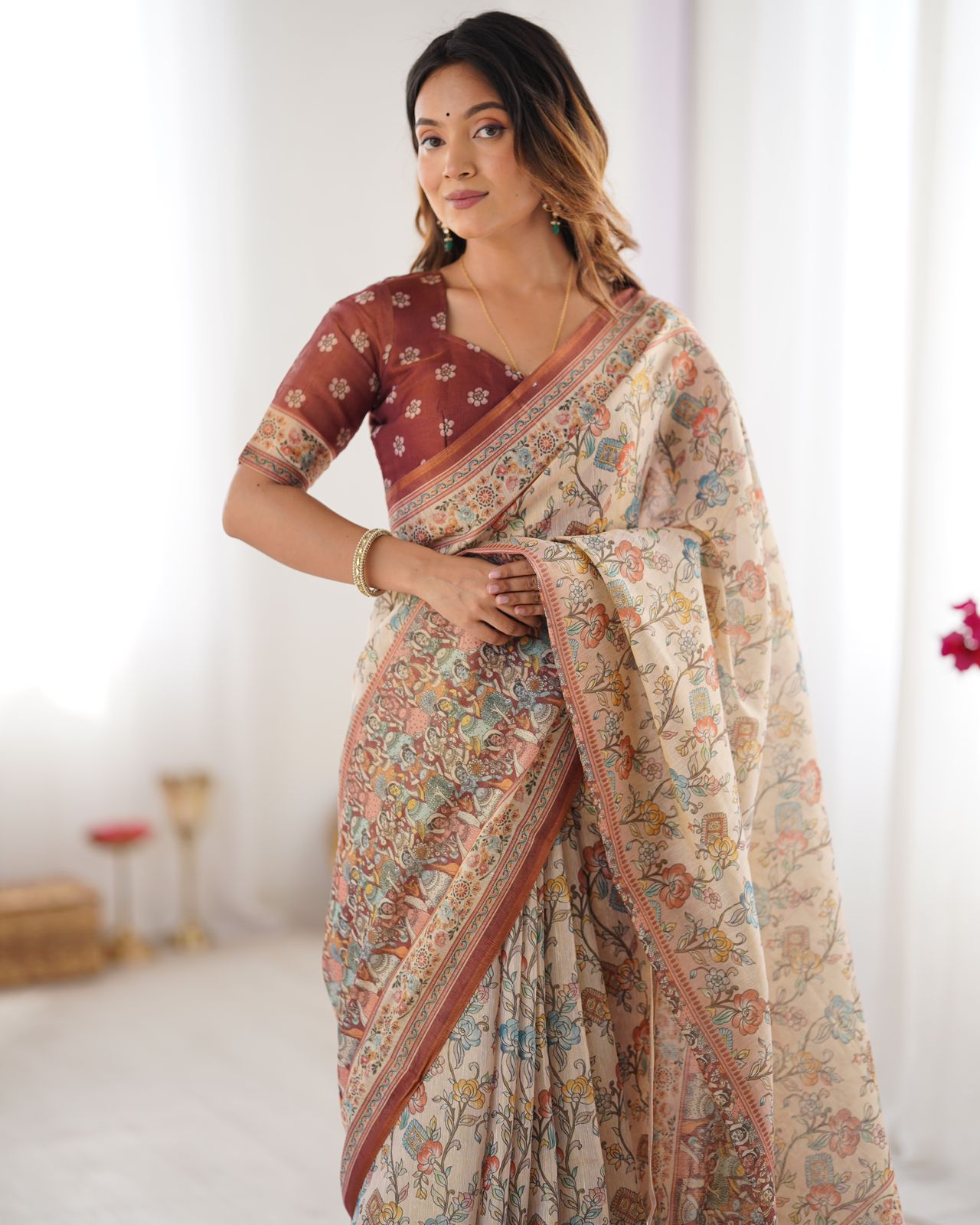
Buyers can support the tradition by choosing transparent descriptions, asking whether a design is woven or printed and paying attention to fibre and care instructions. A printed ikat-inspired saree remains an useful wardrobe choice, but it should not be presented as equivalent to a handwoven Sambalpuri Bandha saree.
Understanding the difference also makes comparison fairer. A shopper who wants breathable everyday clothing may choose cotton, someone seeking a festive drape may prefer silk, and another buyer may select linen with an ikat-inspired print. Each choice becomes more informed when technique, origin and material are clearly named.
Common Questions About Odisha’s Sambalpuri Textiles
Which state is famous for Sambalpuri textiles?
Odisha is famous for Sambalpuri textiles, especially the western Odisha region around Sambalpur, Bargarh, Sonepur and Boudh. The textiles are known for Bandha resist-dyeing and distinctive regional motifs.
What is the Bandha technique used in Sambalpuri sarees?
Bandha is a resist-dyeing technique in which sections of yarn are tied before dyeing and then woven into cloth. The prepared warp and weft yarns create the pattern within the textile rather than printing the design on its surface.
How can you tell whether a Sambalpuri saree is handwoven or printed?
Check the technique description, reverse side, motif edges and seller documentation. A handwoven Bandha saree usually carries the design through its yarn structure, while a printed saree generally has a weaker or absent motif on the reverse.
What are common Sambalpuri saree motifs?
Common motifs include shankha, chakra, phula, flowers, birds, fish, elephants and geometric forms. Shankha means conch, chakra means wheel and phula means flower, linking the designs with Odisha's religious and natural imagery.
Are Sambalpuri textiles the same as Bomkai sarees?
No, Sambalpuri textiles are primarily associated with Bandha ikat, while Bomkai sarees are known for distinctive supplementary-weft decoration and ornate borders. Both are important Odisha handloom traditions, but their techniques and design identities differ.
How should a Sambalpuri saree be washed and stored?
Wash cotton Sambalpuri sarees gently in cool or lukewarm water only after testing colour fastness, and avoid bleach, harsh scrubbing and prolonged soaking. Store silk versions in breathable cotton covers, away from sunlight, perfume, moisture and sealed plastic.





