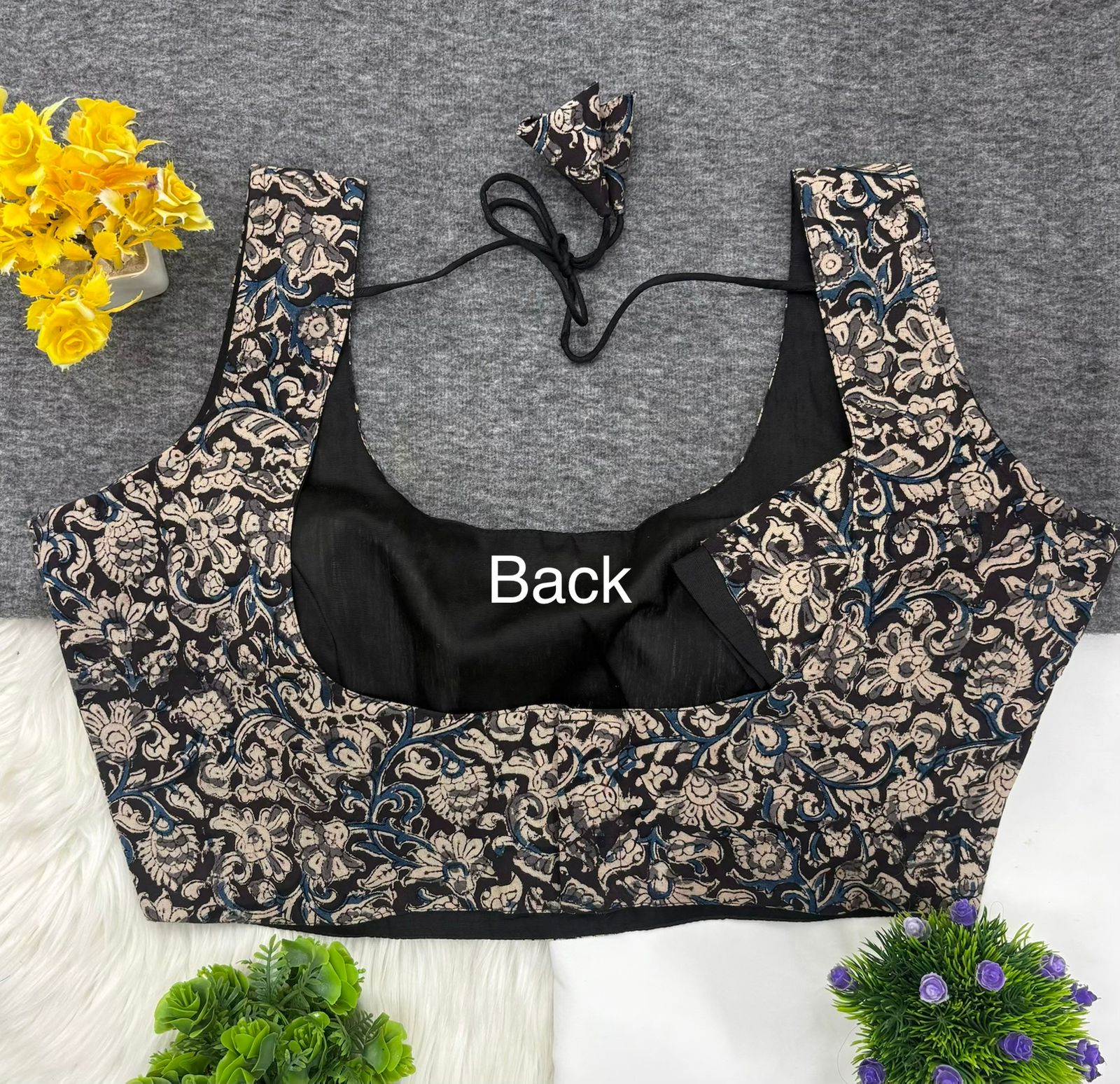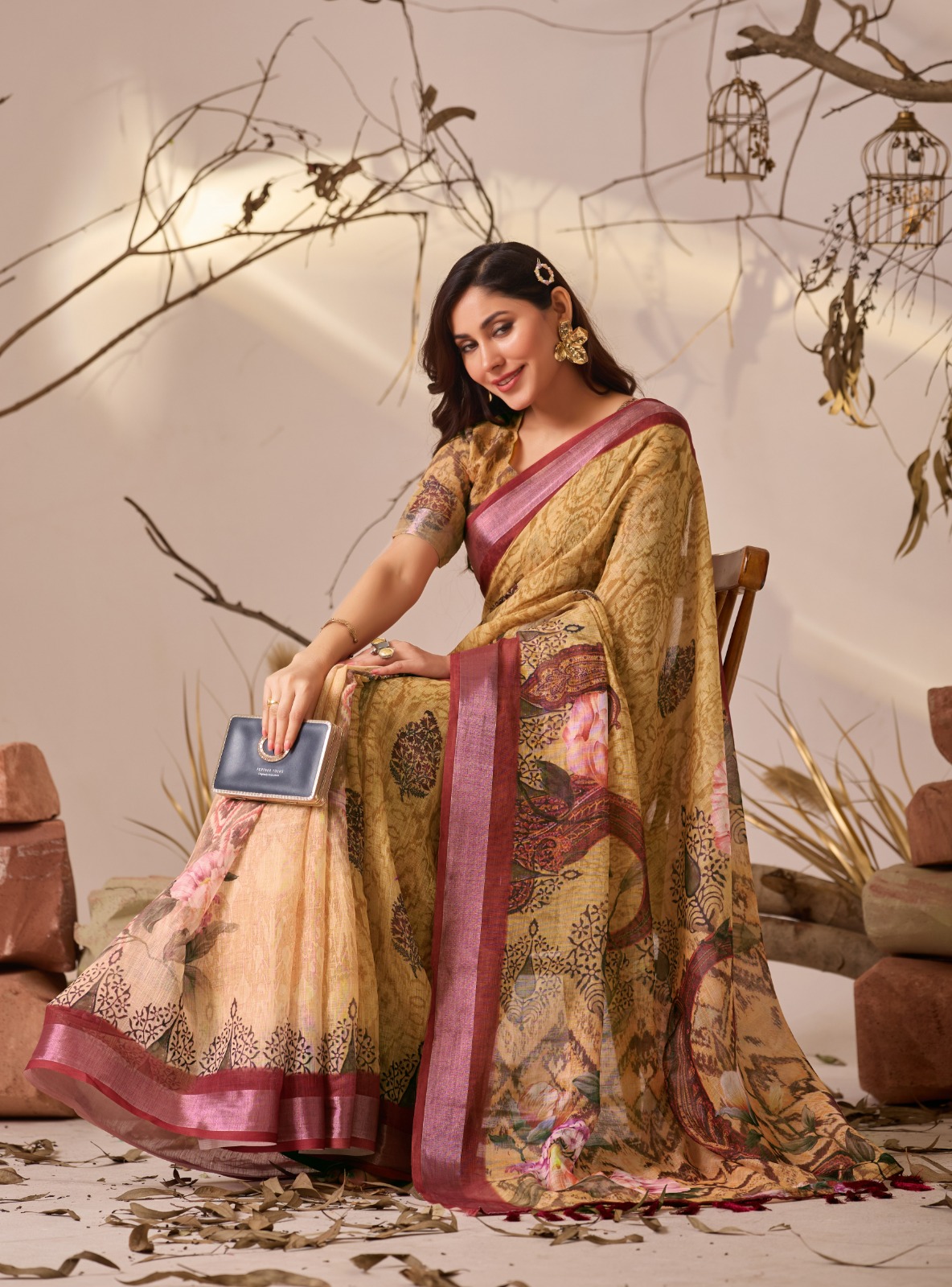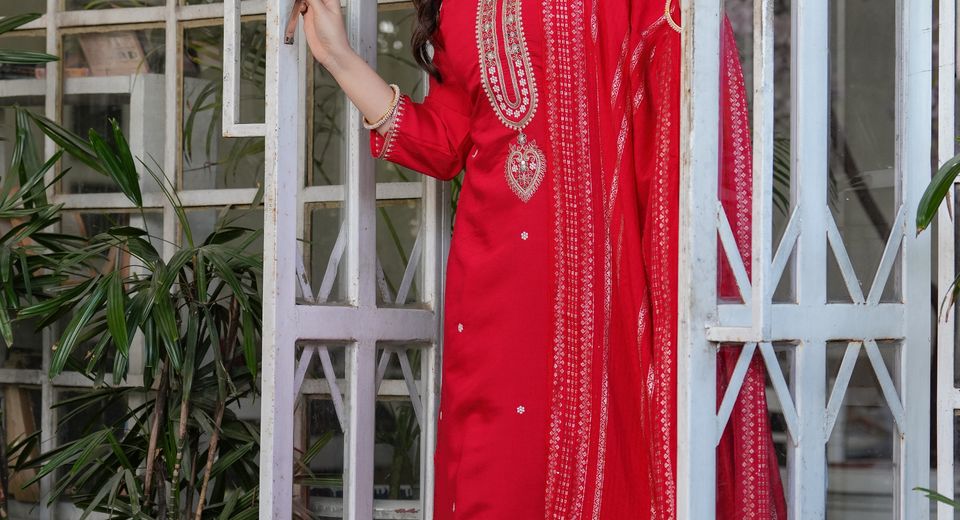
Punjab is the state most famous for salwar suits, especially the roomy Patiala salwar worn with a short or medium-length kameez and a dupatta. The answer to "which state is famous for salwar suits" is therefore usually Punjab, but the story is larger than one silhouette. Salwar kameez has travelled across North India, adapted to local climates and crafts, and become a practical wardrobe choice for work, festivals and family celebrations.
Understanding the regional differences helps you choose a suit with more confidence. A Patiala salwar creates generous folds and movement, while a straight suit gives a cleaner line, an Anarkali adds volume through the skirt, and a Chanderi suit relies on lightness and subtle sheen. The garment's state association tells you where its most recognisable form developed; it doesn't limit how salwar suits can be worn today.
Which state is famous for salwar suits?
Punjab is the Indian state most strongly associated with salwar suits because Punjabi dress made the salwar kameez a visible everyday and celebratory outfit. Punjab's Patiala salwar, Punjabi phulkari embroidery and lively use of colour gave the ensemble a recognisable identity that spread well beyond the region.
The Punjabi suit traditionally combines a kameez with a salwar and dupatta. The salwar is cut wide at the upper leg and gathered into a narrower ankle opening, producing folds that are more pronounced than those of a straight trouser or churidar. A Patiala version uses especially generous fabric, which creates the characteristic pleated, draped volume around the hips and knees.
Punjab's answer to which state is famous for salwar suits also reflects social history. The outfit offered ease of movement for daily life, could be made in cotton for hot weather, and accommodated decorative needlework for weddings and festivals. Migration, cinema and Punjabi music later made Punjabi suit styling familiar throughout India and among the Indian diaspora.
Why did the Patiala salwar become Punjab's signature?
The Patiala salwar became Punjab's signature because its deep pleats, low crotch and gathered ankle provide exceptional ease while retaining a dramatic drape. The style is linked to Patiala in Punjab and is commonly paired with a shorter kameez than the one worn with a conventional salwar.
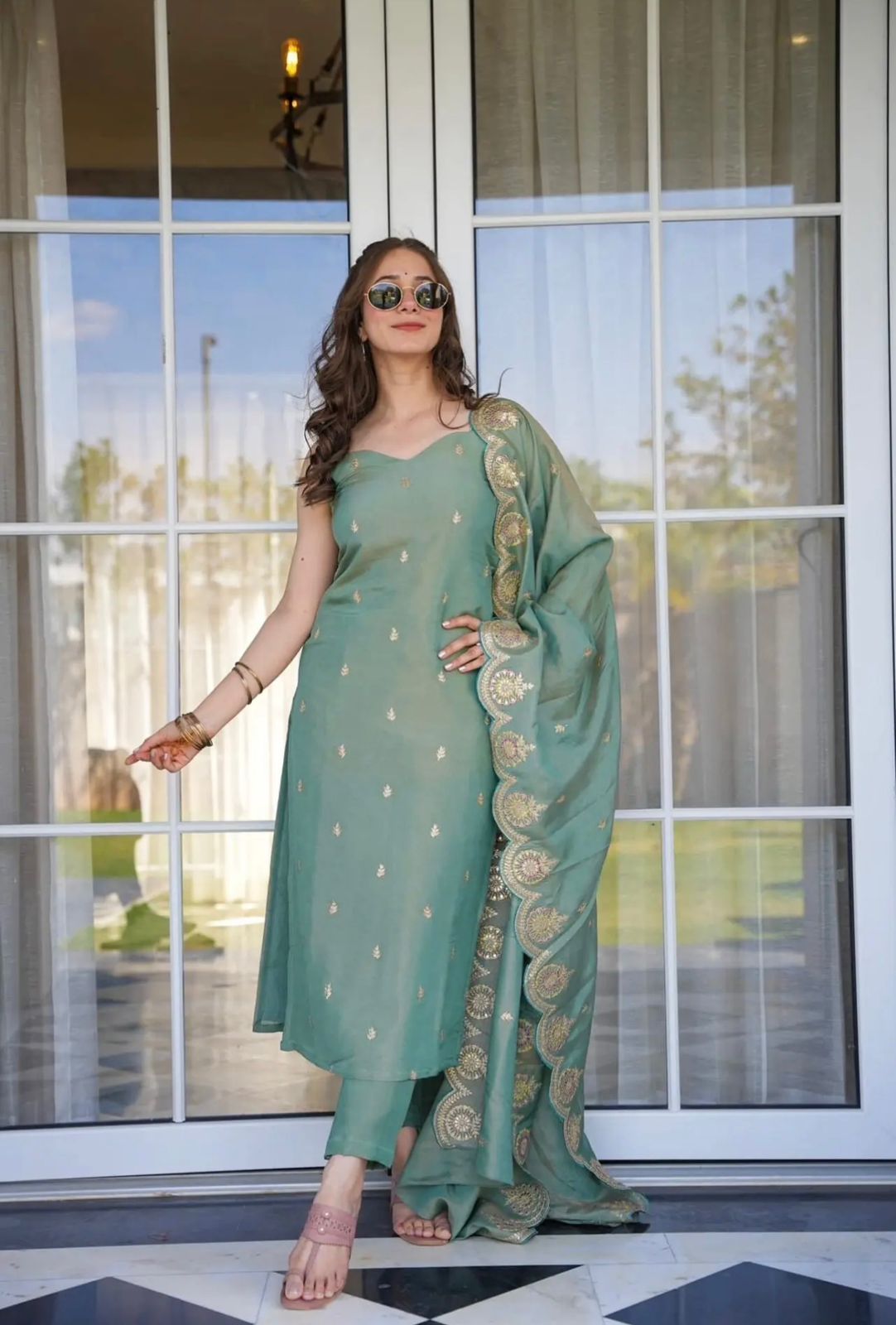
A traditional Patiala requires substantially more cloth than a narrow salwar because the garment is built around multiple pleats. The exact amount varies with fabric width, wearer's measurements and the desired fullness, but the visual result depends on enough material to form soft, repeated folds rather than a lightly gathered trouser.
A short kameez balances the volume of the salwar, while a longer kameez creates a more covered, contemporary proportion. A phulkari dupatta can add another Punjabi reference through colourful silk-thread embroidery, although printed cotton, woven fabrics and minimalist solids are equally suitable for modern wardrobes.
Fit matters more than decoration in a Patiala suit. The waistband should sit securely without compressing the waist, the crotch should allow a full stride, and the ankle gathers should not pull uncomfortably when the wearer sits. These checks are useful when comparing a time-honoured Punjabi silhouette with a readymade suit.
How do Punjabi salwar suits differ from other Indian suit styles?
Punjabi salwar suits differ through their generous lower-volume silhouette, energetic colour combinations and strong connection with Patiala styling and phulkari embroidery. Other Indian suit traditions may use the same basic kameez-and-dupatta structure but change the trouser shape, fabric, surface work or regional motif.
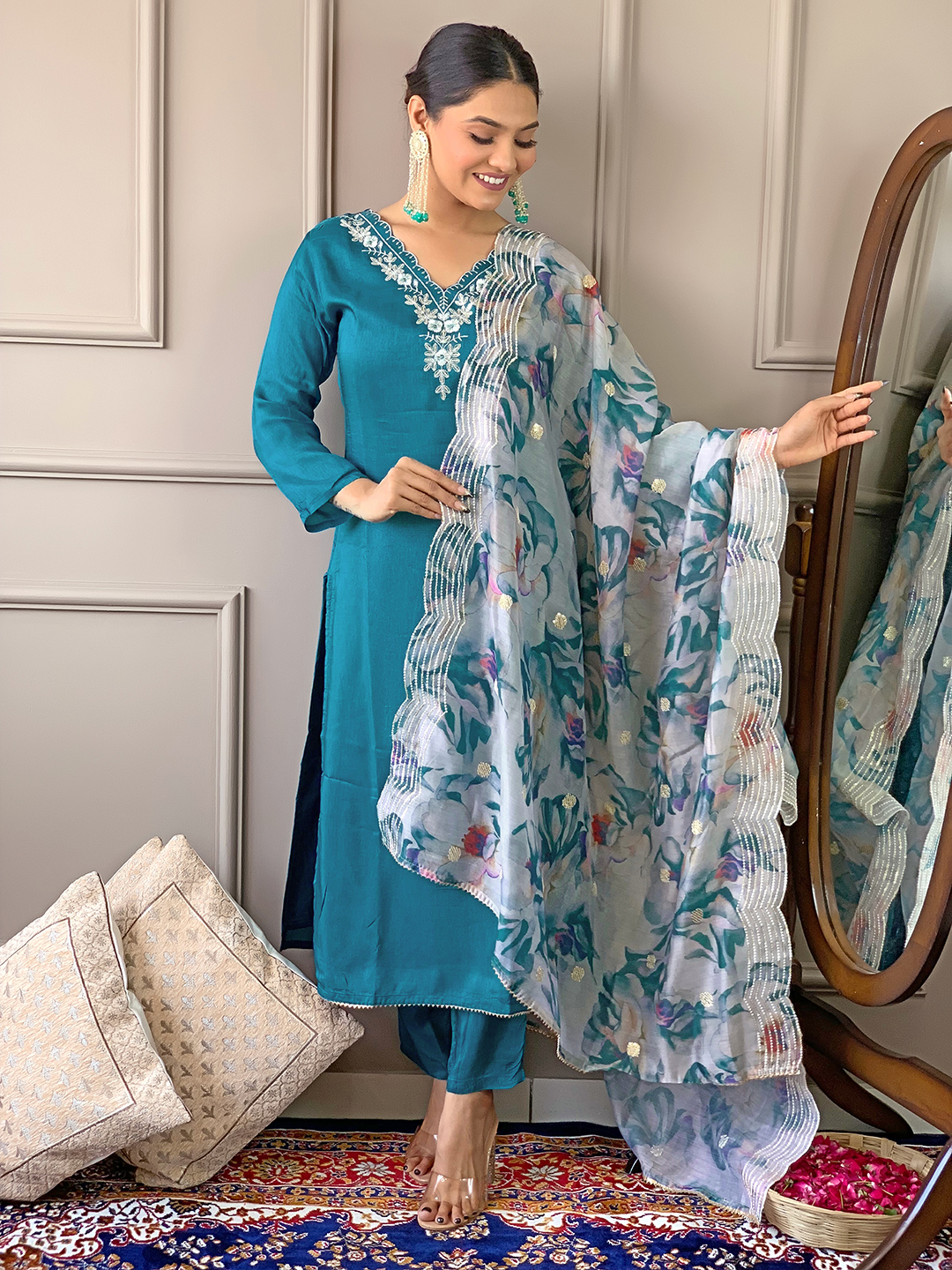
- Punjabi and Patiala suits: These usually emphasise a full, pleated salwar, a shorter kameez and a lively dupatta. Bright pink, mustard, green, royal blue and red are common visual choices, though neutral versions work well for everyday wear.
- Churidar suits: A churidar tapers closely from the knee to the ankle and forms small folds below the knee. The silhouette looks more fitted than a Patiala salwar and is often used with Anarkali kameez designs.
- Straight suits: A straight suit falls in a relatively even line from the shoulder to the hem and is usually paired with straight pants, cigarette pants or a narrow salwar. The shape is practical for office dressing because it creates less fabric volume.
- Anarkali suits: An Anarkali kameez flares from the bodice, sometimes from below the bust and sometimes from the waist. The lower garment may be a churidar, palazzo or narrow trouser rather than a heritage salwar.
- Sharara and gharara suits: These use wide-legged or paneled lower garments, often with a visible flare from the knee or thigh. They are more associated with festive and wedding dressing than with the everyday Punjabi salwar.
The distinction is useful when shopping because the phrase "salwar suit" may describe several lower-garment shapes. Checking whether a set includes a Patiala salwar, straight pant, churidar, palazzo or sharara prevents an unexpected fit once the outfit arrives.
Which other states are known for distinctive salwar suit traditions?
Punjab is the clearest answer to which state is famous for salwar suits, but Gujarat, Maharashtra and Odisha also contribute distinctive regional interpretations through textile techniques, motifs and colour traditions.
Gujarat and bandhej or bandhani
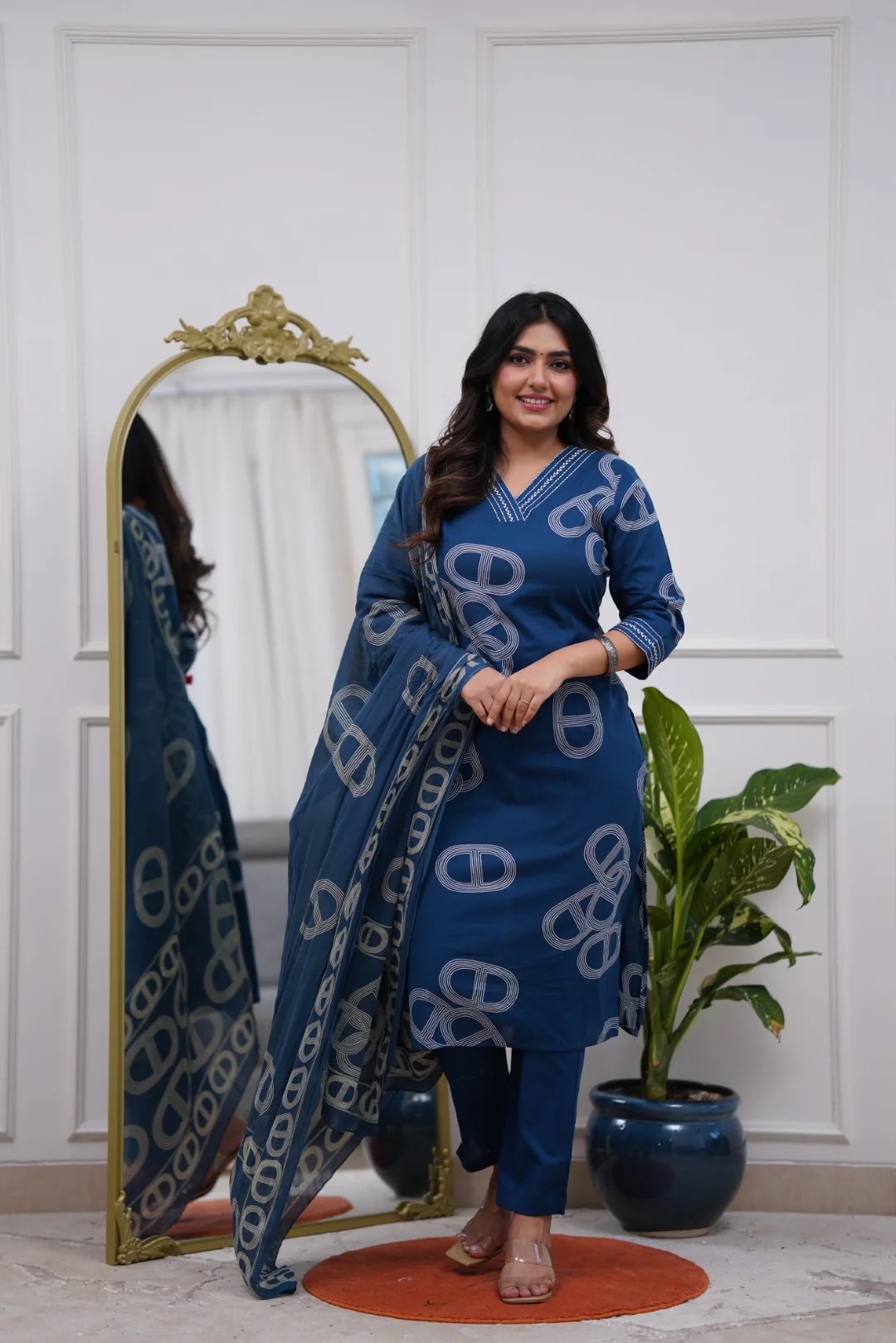
Gujarat is known for bandhej and bandhani, resist-dyeing traditions that create dotted or clustered patterns through tied sections of cloth. A Gujarati-inspired salwar suit can bring those motifs into a kameez, dupatta or both, making the outfit particularly suitable for Navratri, festive gatherings and daytime celebrations.
Maharashtra contributes the visual language of Paithani, recognised for rich jewel tones, silk weaving and peacock or floral motifs. A salwar suit inspired by Paithani doesn't reproduce a saree construction; instead, it borrows the colour contrast, border vocabulary or woven-look detailing for a more mobile outfit.
Odisha and Sambalpuri weaving
Odisha is strongly associated with Sambalpuri textiles, which use ikat processes and regional motifs such as shankha, chakra, flowers and geometric forms. Sambalpuri-inspired salwar suits can be a thoughtful alternative to heavily embellished festive wear because the design interest comes from the weave and motif placement.
These regional references appear in collections such as Maharashtra Paithani Inspired Salwar Suits, Gujarat Bandhej Salwar Suits, Odisha Sambalpuri Salwar Suits, Punjab Patiala Salwar Suits and Ahmedabad Bandhani Salwar Suits. Each name signals a design direction, but the actual garment details-fabric composition, lining, sleeve length and trouser shape-should still be checked separately.
How should you choose a salwar suit by fabric and occasion?
Choose the fabric according to weather, movement and the amount of structure needed, then choose embellishment according to the occasion. Cotton and cotton blends suit frequent daytime wear, Chanderi gives a light festive finish, viscose offers fluid drape, and heavier embroidered fabrics work better when the event and climate allow extra weight.
For daily wear and warm weather
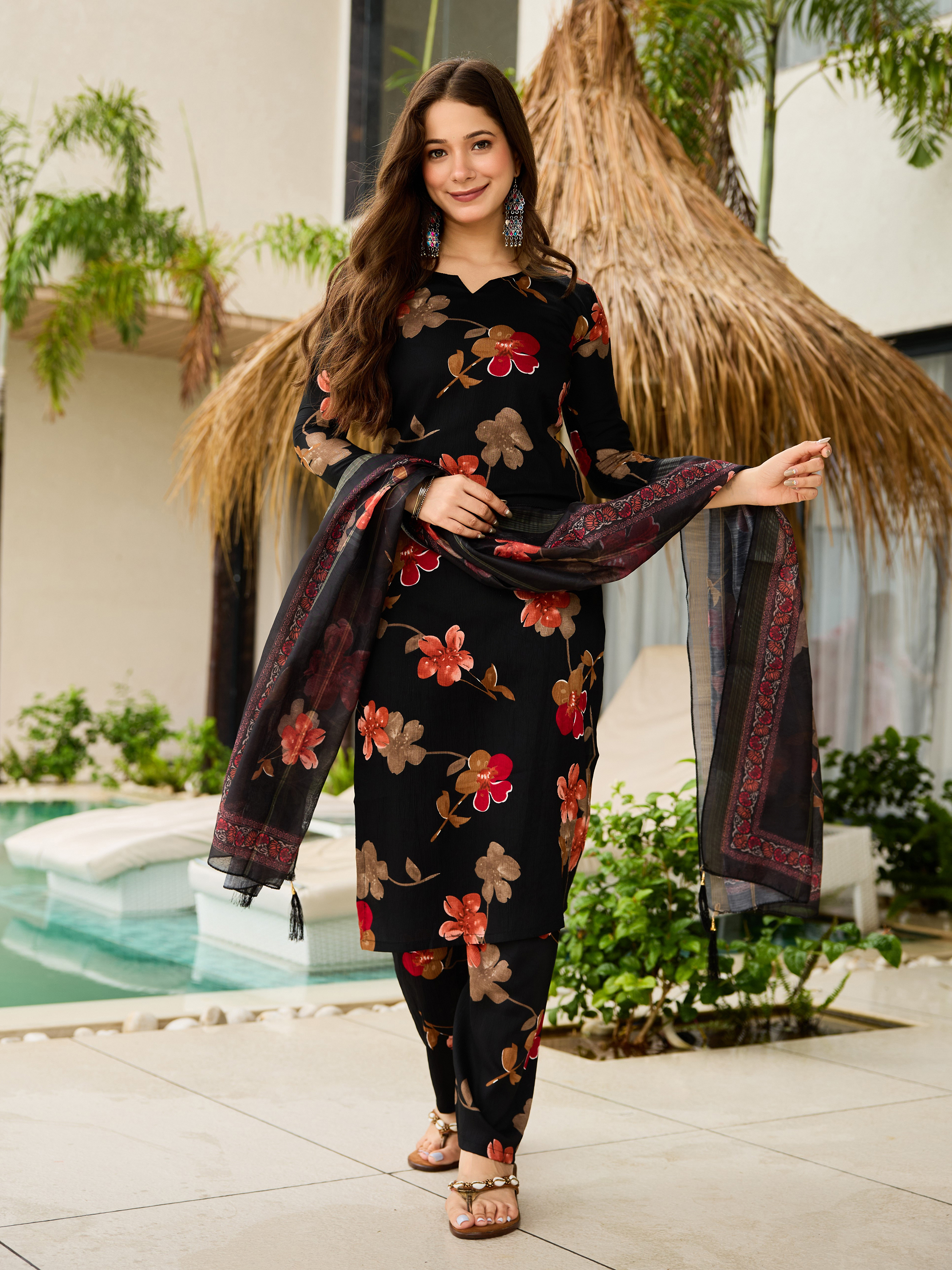
Cotton, cotton blends and breathable woven fabrics are dependable for commuting, errands and long family days. Look for a comfortable armhole, enough room across the seat, and a dupatta that's not so heavily decorated that it becomes difficult to manage.
Woven Chanderi Cotton Readymade Salwar Suit is an example of how a lightweight woven fabric can make a classic set feel polished without depending on dense embroidery. A straight cut or moderately relaxed salwar is usually easier to wear repeatedly than an extremely full Patiala.
For festive daytime events
Chanderi, silk blends and threadwork bring occasion presence without automatically making the garment suitable only for night functions. Cream Threadwork Viscose Chanderi Readymade Salwar Suit demonstrates why a pale base and restrained surface work can suit pujas, daytime receptions and intimate celebrations.
A Pista Royale Salwar Suit can be styled with pearl, gold-toned or neutral accessories because pista green sits comfortably between pastel and jewel colour families. A light dupatta and low-profile footwear preserve the ease associated with salwar dressing.
For weddings and evening functions
Dense embroidery, zari accents, richer colours and a more structured dupatta generally suit evening celebrations. Embroidered Salwar Suit Set for Women can be read as a formal three-piece starting point, while Navy Blue Embroidered Salwar Suit, Yellow Threadwork Readymade Salwar Suit and Designer Yellow Salwar Suit with Dupatta show how colour and surface work can change the mood of a similar garment category.
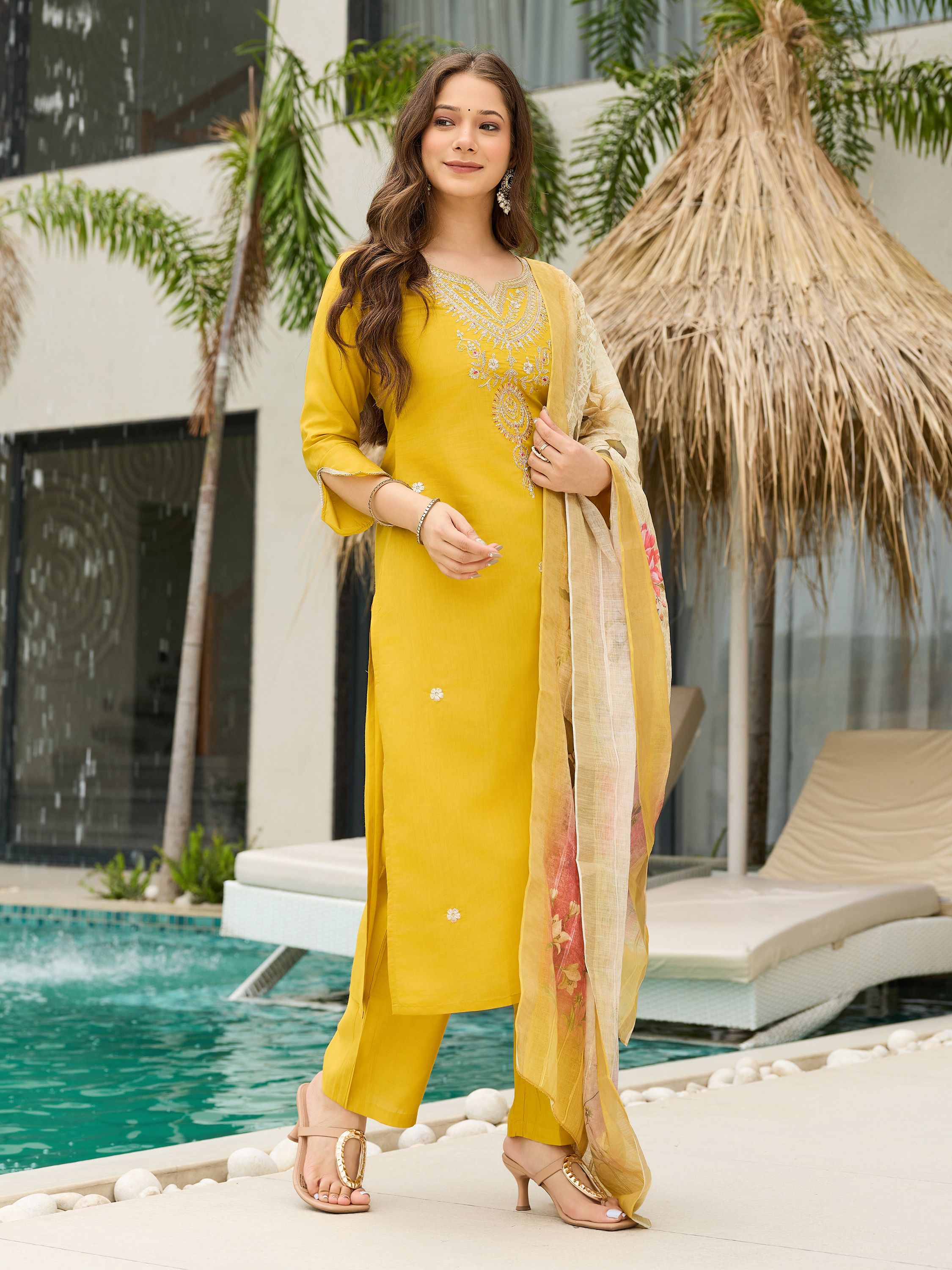
Yellow Readymade Chanderi Embroidered Salwar Suit is especially relevant for a Haldi ceremony or a daytime festive event, where yellow carries cultural resonance and Chanderi keeps the outfit visually light. Avoid choosing only by colour; check whether the embroidery is concentrated at the neckline, hem, sleeves or dupatta because placement affects perceived formality.
What should you check before buying a readymade salwar suit?
Check the measurement chart, fabric composition, garment length, closure details and included pieces before buying a readymade salwar suit. Those five checks reveal more about likely comfort and usefulness than the product photograph alone.
- Measure the body, not a familiar size label: Compare bust, waist and hip measurements with the seller's chart. Indian size labels are not fully standardised, and a person who wears medium in one cut may need large in a fitted kameez or a different size in a relaxed Patiala set.
- Confirm the lower-garment shape: Read whether the set contains a Patiala salwar, straight pant, palazzo, churidar or another cut. The phrase "salwar suit" doesn't guarantee the full, pleated Punjabi silhouette.
- Inspect fabric information: "Chanderi" may describe a silk, cotton or blended base, so look for the stated composition. Viscose can drape fluidly, while cotton generally feels more breathable and may crease more visibly.
- Check lining and transparency: Pale Chanderi and lightweight woven fabrics may need a lining or an appropriate inner layer. A lined kameez can feel more structured, but lining may also reduce airflow in hot weather.
- Review the dupatta dimensions: A very short dupatta changes styling options, while a wide, embellished dupatta adds ceremony but also weight. Confirm whether the dupatta is included rather than assuming every three-piece-looking photograph represents a complete set.
- Look at care instructions: Embroidery, zari, bandhani-style dyeing and delicate Chanderi can require gentle washing or dry cleaning. Follow the garment label, and store embellished pieces folded with soft tissue between heavily worked surfaces.
How can you style a Punjabi salwar suit without losing its identity?
Keep one recognisable Punjabi element-such as a Patiala silhouette, phulkari-inspired embroidery, a contrasting dupatta or bold colour pairing-while simplifying the remaining accessories. The result feels rooted without becoming visually overloaded.
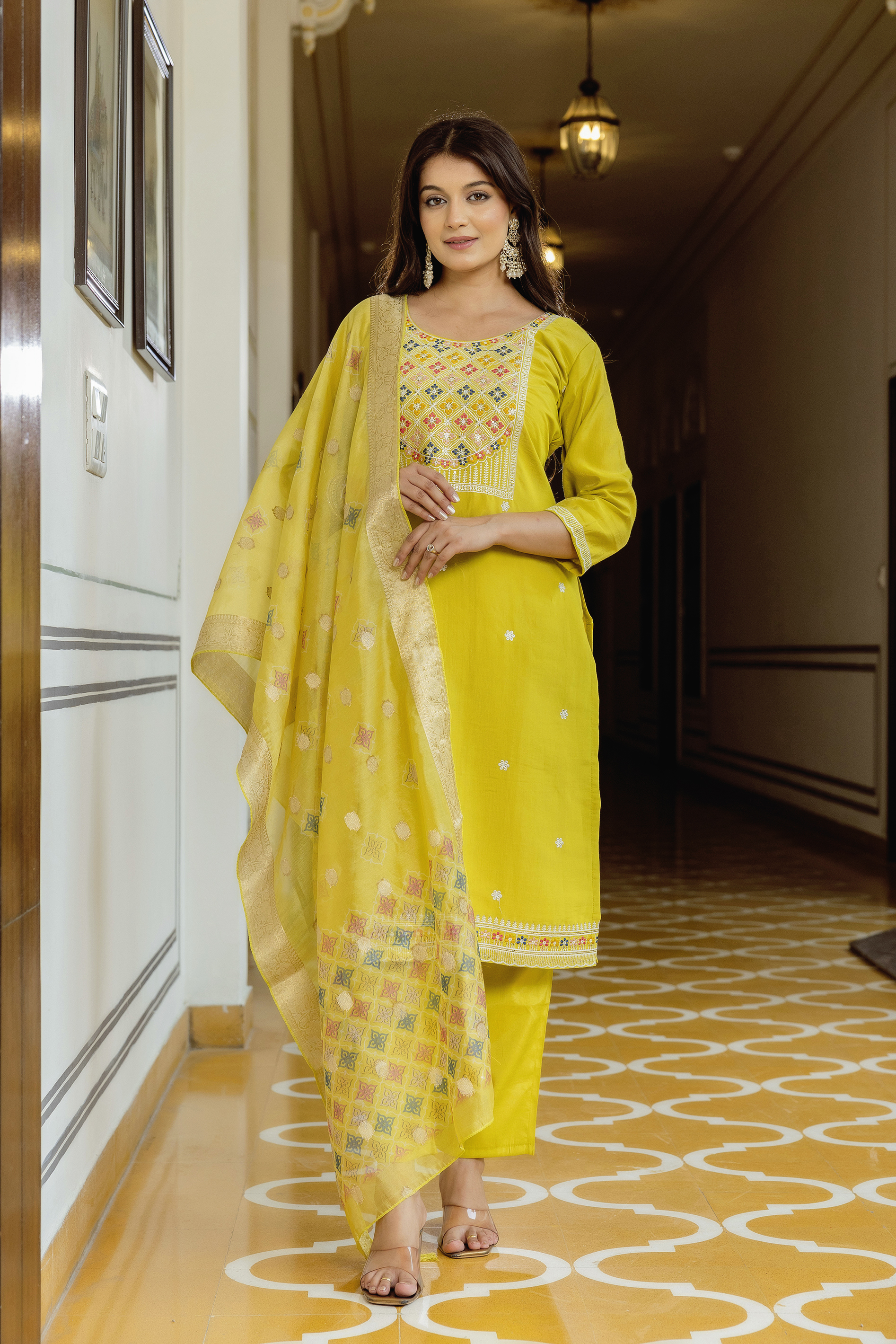
With a full Patiala salwar, choose a shorter kameez or a neatly tucked styling approach only when the garment is designed for it. With a straight suit, a longer kameez and streamlined dupatta create a more contemporary proportion. Juttis, small hoops, a paranda-inspired hair detail or a structured potli can reinforce the Punjabi mood without requiring heavy jewellery.
Colour blocking is one of the easiest ways to make a salwar suit look intentional. Pair a mustard kameez with a deep green or magenta dupatta, balance a bright yellow suit with ivory accessories, or let navy embroidery remain the focal point against minimal jewellery. For a Haldi ceremony, breathable fabric and secure footwear matter as much as the colour because turmeric, movement and warm weather can quickly make a heavily layered outfit impractical.
A salwar suit remains valuable precisely because regional identity and daily comfort can coexist. Punjab may provide the most recognisable answer to which state is famous for salwar suits, but Gujarat's bandhani, Odisha's Sambalpuri vocabulary, Maharashtra's Paithani influence and the many up-to-date trouser shapes show how adaptable the garment has become.
Questions Readers Ask About Punjab’s Salwar Suit Tradition
Which state is famous for salwar suits in India?
Punjab is the state most famous for salwar suits, particularly the Patiala salwar and Punjabi salwar kameez. Punjab's association comes from the garment's everyday use, distinctive pleats, colourful styling and connection with phulkari embroidery.
What makes a Patiala salwar different from a regular salwar?
A Patiala salwar uses much more fabric and forms deeper, more numerous pleats around the hips and legs. It is usually gathered at the ankle and commonly paired with a shorter kameez than a conventional salwar.
Is every Punjabi suit a Patiala suit?
No, every Punjabi suit is not a Patiala suit. Punjabi suits may use a regular salwar, straight pants, churidar or palazzo, while a Patiala specifically refers to the fuller, heavily pleated lower garment.
Which fabric is comfortable for a salwar suit in summer?
Cotton and lightweight cotton blends are generally comfortable for summer because they allow airflow and handle regular wear well. Lightweight Chanderi can also work for festive dressing, although the lining and exact fibre composition should be checked.
How are Gujarati and Punjabi salwar suits different?
Punjabi salwar suits are especially known for Patiala volume, lively colour combinations and Punjabi embroidery references. Gujarati-inspired suits more often highlight bandhej or bandhani-style dotted resist patterns, festive colour contrasts and regional textile motifs.
What should I check when buying a readymade salwar suit online?
Check the garment measurements, fabric composition, lower-garment shape, lining, dupatta dimensions and care instructions. Confirming whether the set contains a Patiala salwar, straight pant, churidar or palazzo is particularly important because the term salwar suit covers several silhouettes.