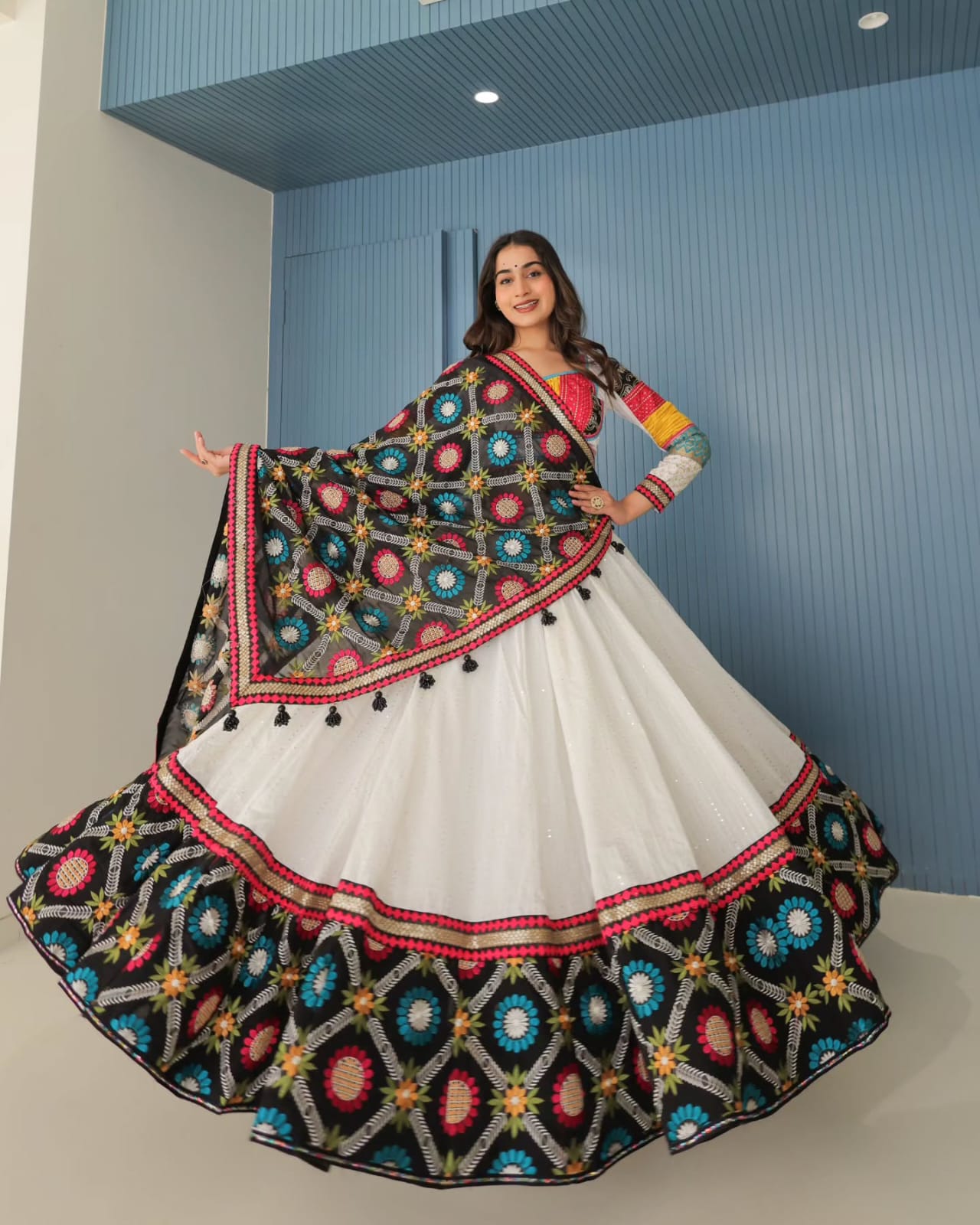
Which state is famous for Phulkari suits? Punjab is the clear answer. Phulkari is the celebrated embroidery tradition of Punjab, recognised for its gleaming silk thread, geometric flowers, strong colour contrasts, and distinctive stitch coverage. A Phulkari salwar suit may include embroidered panels, a worked dupatta, or smaller motifs placed across a kurta.
Phulkari is more than a colourful surface pattern. The craft records Punjab's domestic textile history, regional taste, family skill, and ceremonial customs. Understanding that background helps shoppers distinguish Phulkari-inspired design from a generic floral print and choose a salwar suit according to its fabric, embroidery density, and intended occasion.
Punjab provides the answer
Punjab is the Indian state most closely associated with Phulkari suits and Phulkari embroidery. The craft developed across the Punjab region, including areas that now lie in both India and Pakistan, and became part of household textile-making and Punjabi ceremonial dress.
Traditional Phulkari was commonly worked on handspun cotton fabric called khaddar using untwisted silk floss known as pat. The embroiderer counted the threads of the base cloth and used a darning stitch from the reverse, creating small horizontal and vertical units that formed larger motifs on the front. The technique explains why traditional Phulkari designs often appear regular, angular, and richly reflective rather than softly painterly.
Punjab's Phulkari heritage includes several named forms. Bagh embroidery covers most or all of the ground with dense thread work, while Chope traditionally features a more restrained red-and-yellow design and has strong associations with wedding customs. Sainchi Phulkari may depict village life, animals, tools, or people, making the embroidery more narrative.
Variations differ by community, locality, materials, and period, so not every Punjabi embroidered suit should be labelled a traditional Bagh or Chope. The answer to which state is famous for Phulkari suits remains Punjab even when modern garments use georgette, crepe, silk blends, or synthetic threads.
Punjab's textile history explains why
Punjab became associated with Phulkari suits through women's household embroidery, ceremonial textiles, and garments made for family milestones. Mothers, grandmothers, and other women in the household traditionally embroidered fabric for personal use, gifting, weddings, and religious or community occasions.
Older Phulkari textiles were not necessarily made as ready-made suits. Shawls, head coverings, wraps, and large embroidered cloths carried the work, and the embroidery could express affection, prosperity, auspicious wishes, or pride in the maker's skill. A textile prepared for a wedding could hold emotional and family value beyond the cost of its yarn and cloth.
Partition in 1947 disrupted communities, workshops, and the movement of textiles across the Punjab region. Phulkari nevertheless continued through family practice, museums, craft organisations, commercial production, and fashion design. Modern Punjabi clothing has introduced the visible language of Phulkari to new audiences, although commercial embroidery doesn't always reproduce the older counted-thread method.
Punjabi salwar kameez also influenced how Phulkari is worn today. A traditional kameez with salwar or Patiala-style trousers gives a natural setting for an embroidered yoke, sleeve, hem, or dupatta. A contemporary straight suit, palazzo set, sharara set, or anarkali can use smaller Phulkari-inspired motifs without copying the proportions of a historic textile.
Recognising the embroidery
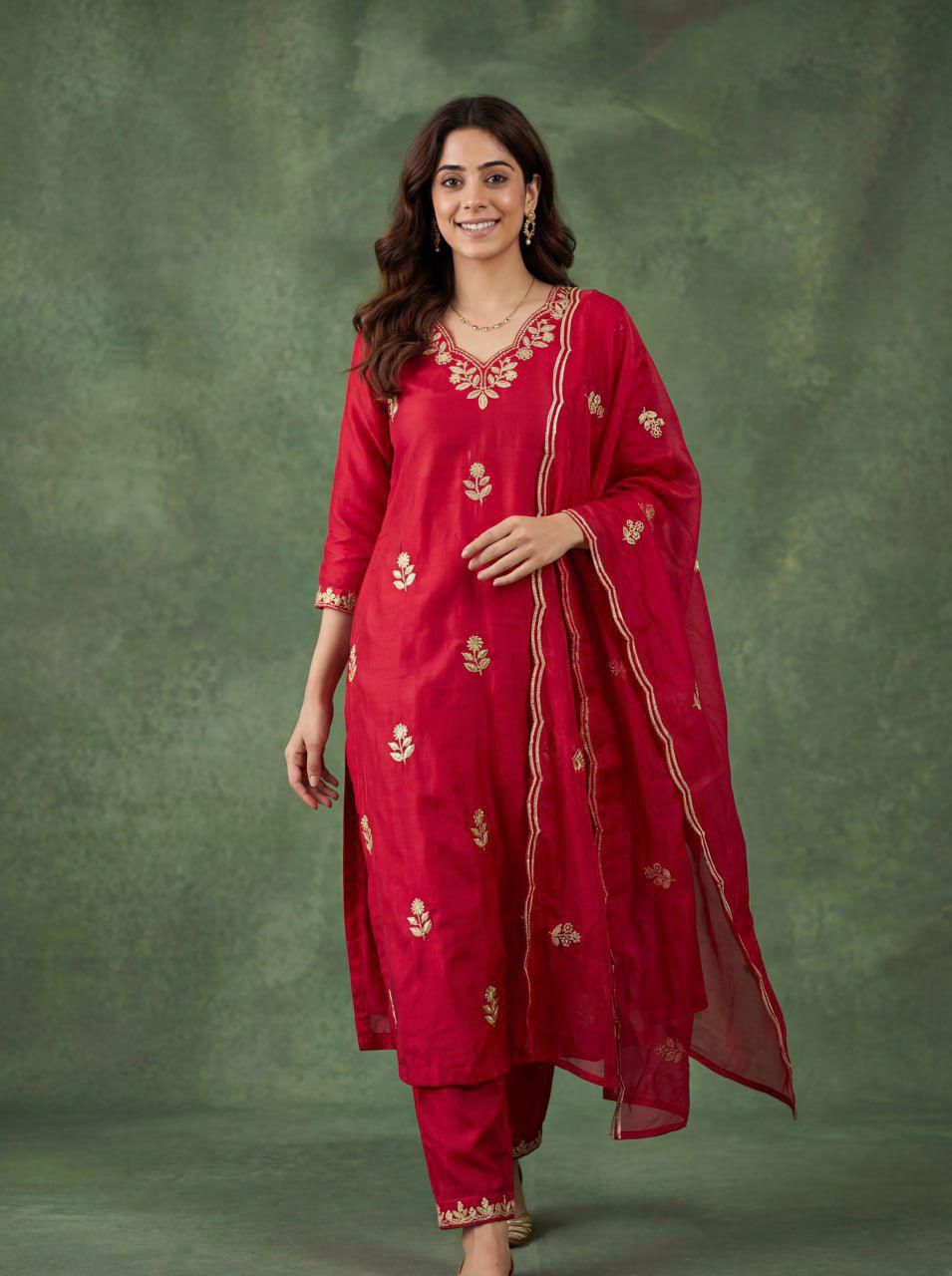
Traditional Phulkari usually shows counted-thread construction, silk floss, geometric motifs, and embroidery worked from the reverse of the cloth. The front often has a luminous surface because the flat silk thread catches light across repeated stitch units.
Look at the stitch structure
Traditional Phulkari uses a darning stitch that creates patterns through controlled thread placement rather than through outline drawing alone. Close-up inspection may reveal tiny, orderly units that build diamonds, stepped forms, flowers, leaves, birds, or other motifs. The back of a hand-worked piece can show careful thread management and small stitch movements.
Modern Phulkari suits may use cotton thread, rayon, polyester, silk blends, sequins, beads, or machine embroidery. Modern materials don't automatically make a garment inferior, but a buyer should not confuse machine-made Phulkari-inspired work with a hand-counted heirloom textile. Product descriptions should state whether embroidery is hand worked, machine made, or a combination.
Read the colour vocabulary
Strong red, orange, pink, magenta, yellow, green, white, and gold combinations appear frequently in Punjabi embroidery, although contemporary designers also use ivory, pastel, navy, and jewel tones. Gold zari may be added for a festive finish, but zari is an additional embellishment and isn't the defining material of traditional Phulkari.
Floral motifs are common, yet "flower work" doesn't mean every floral print qualifies as Phulkari. A printed rose on rayon lacks the counted embroidery structure, raised thread surface, and stitch-based geometry associated with the craft. A suit with small embroidered flowers may be Punjabi-inspired without being a traditional Phulkari garment.
Comparing modern salwar styles
Modern Phulkari suit styles should be compared by embroidery placement, fabric weight, silhouette, and the role of the dupatta. These details affect comfort, visual balance, price, and whether a suit works for a daytime gathering or a formal celebration.
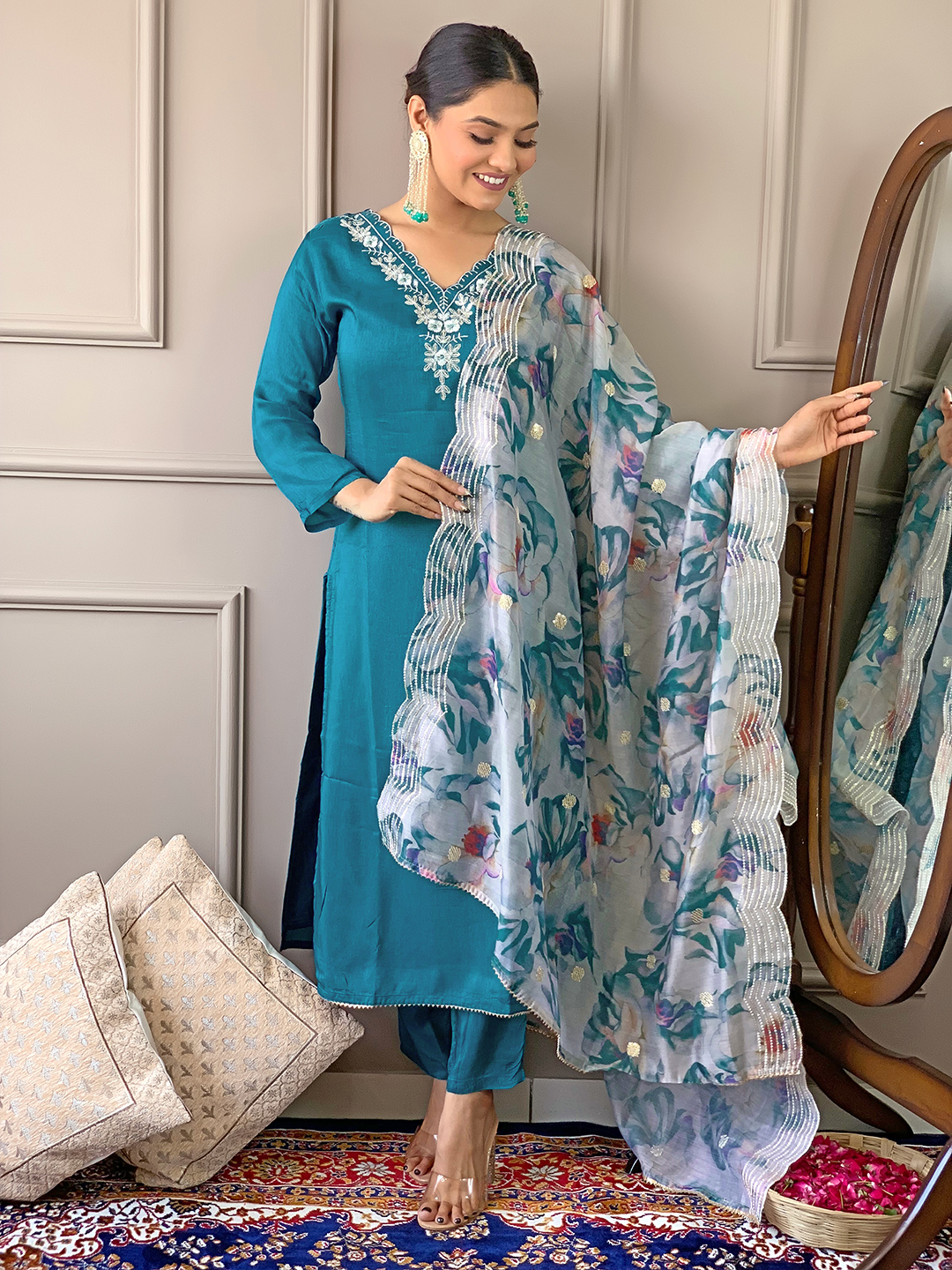
- Embroidered kurta: A concentrated yoke or chest panel gives a traditional cue without making the garment heavy. A full embroidered front creates greater impact but may feel warmer and stiffer.
- Phulkari dupatta: A richly worked dupatta can transform a plain kurta and offers flexibility because it can be worn with more than one outfit. Check the border weight and finishing around all four edges.
- Patiala silhouette: A short or medium-length kameez with pleated Patiala trousers creates a recognisably Punjabi look. The volume of the trousers pairs well with a relatively controlled kurta.
- Straight suit: A straight kurta with trousers or a salwar gives embroidery a clean frame and works well for office-friendly festive dressing when motif density is moderate.
- Palazzo or sharara set: Wide-leg bottoms create movement and a dressier outline. A lighter embroidered kurta prevents the overall outfit from becoming visually crowded.
Pista Royale Salwar Suit can illustrate how a classic salwar-based silhouette can be kept polished through colour and proportion. Silk Festive Kurta Pant Set with Zari Jacquard Dupatta demonstrates a different festive direction, where woven zari and a structured pant set provide surface interest without requiring traditional Phulkari technique.
Royal MirrorGlow Georgette Flair Suit and Pink Sharara Suit Set with Mirror Work Dupatta show how georgette, flare, sharara volume, and mirror work can create a celebratory outfit with Punjabi-inspired brightness. Mirror work isn't Phulkari embroidery, so buyers should describe such garments accurately while still recognising that regional Indian fashion often brings techniques together.
Maharashtra Paithani Inspired Salwar Suits, Gujarat Bandhej Salwar Suits, Odisha Sambalpuri Salwar Suits, Punjab Patiala Salwar Suits, and Ahmedabad Bandhani Salwar Suits demonstrate why regional references should be named precisely. Phulkari belongs to Punjab, while Paithani, Bandhej, Sambalpuri, Patiala, and Bandhani identify different textile or dress traditions and should not be treated as interchangeable labels.
Styling Punjab-inspired outfits
A Punjabi embroidered suit looks most coherent when accessory scale matches embroidery density and the outfit keeps one clear regional reference. A heavily worked dupatta needs simpler jewellery, while a lightly embroidered kurta can support bolder earrings or a traditional paranda.
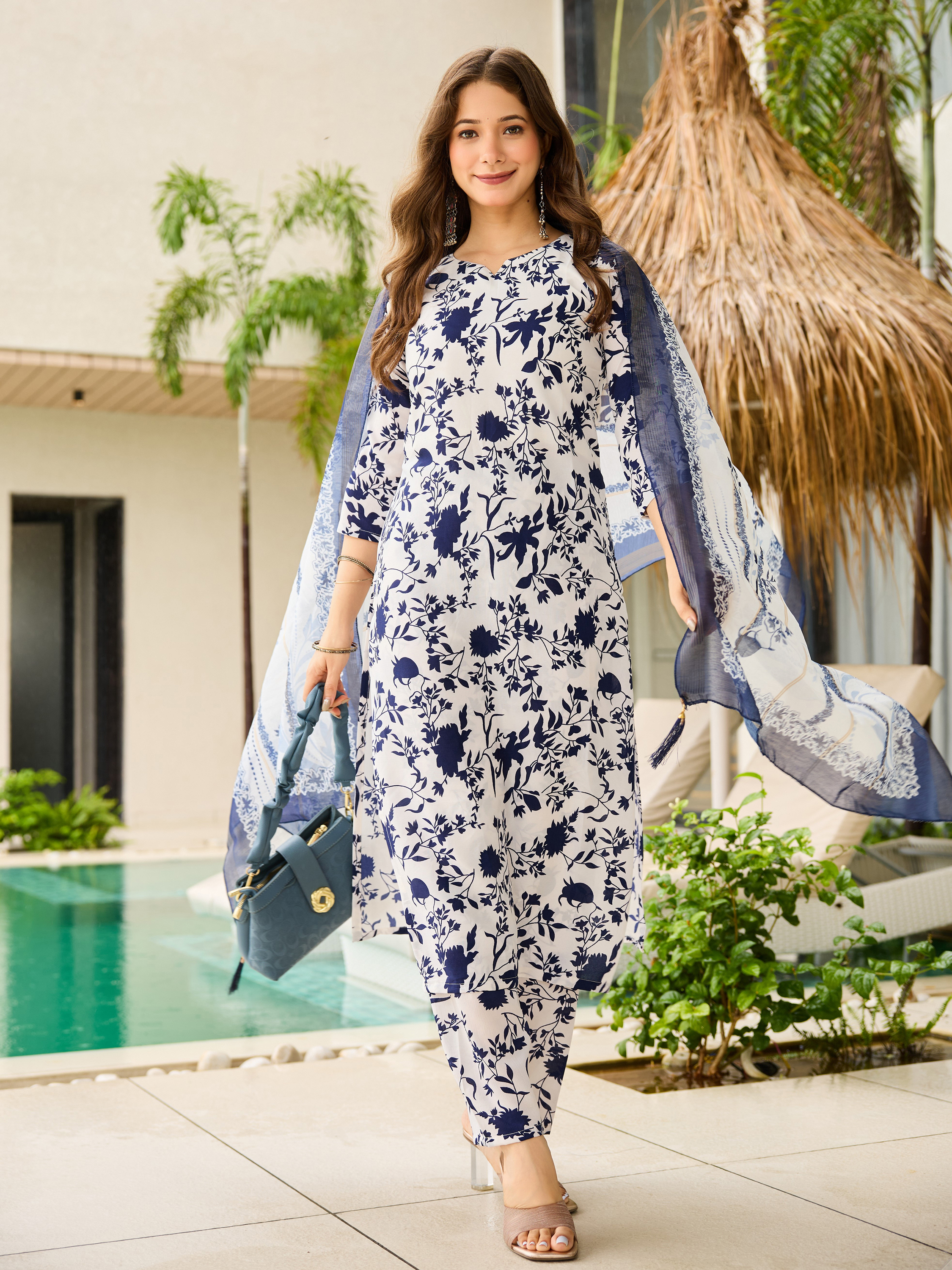
For a daytime family gathering, pair a moderately embroidered straight kurta with cigarette pants or a salwar, juttis, small jhumkas, and a cotton or lightweight dupatta. A palette of mustard with magenta, coral with green, or ivory with multicoloured thread preserves the lively contrast associated with Punjab without requiring every garment to be heavily embellished.
For a wedding-related event, a concentrated embroidered kurta with a statement dupatta gives better movement than dense work across every panel. A Patiala salwar creates a distinctly Punjabi outline, while a sharara or palazzo creates a more contemporary festive silhouette. Keep the blouse, jewellery, footwear, and dupatta border from competing for attention.
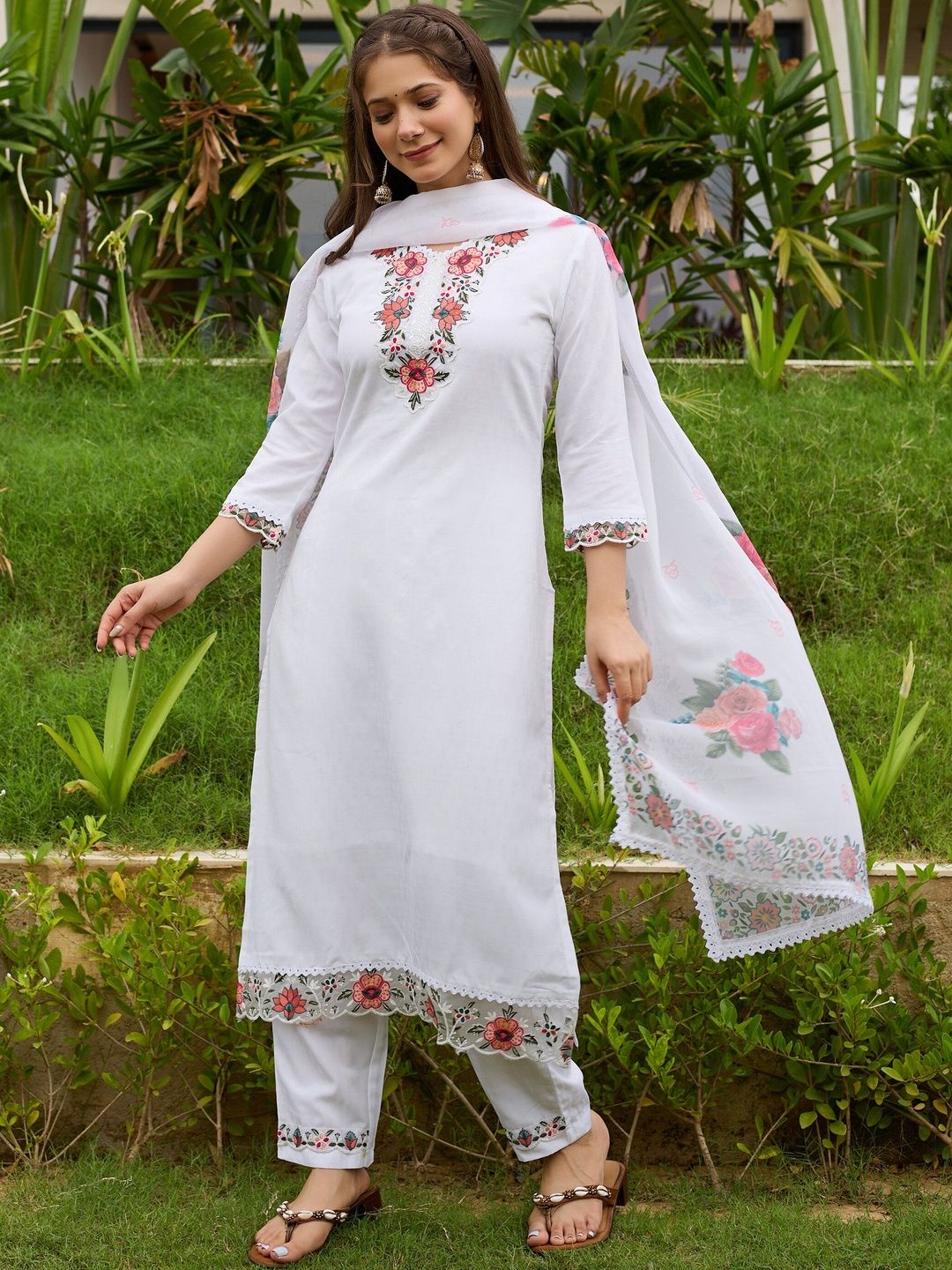
Embroidered Salwar Suit Set for Women is an useful reference for a coordinated three-piece approach, where the kurta, bottom, and dupatta are designed to read as one outfit. Multicolor Embroidered Crepe Maxi Suit Set for Festive Wear brings another styling lesson: a long, flowing silhouette can carry multiple colours, but accessories should repeat one or two threads rather than introduce several unrelated shades.
Red Embroidered Georgette Plazo Set for Women can be styled with gold or antique-finish jewellery for an evening event, while Elegant Pista Festive Wear Kurta Pant Set brings a softer colour direction for daytime festivities. Neither colour alone makes a suit Phulkari; the embroidery method, motif structure, and garment description still matter.
Choosing fabric and construction
A suitable Phulkari suit depends on fabric breathability, embroidery weight, lining, seam finishing, and the season of wear. Cotton and cotton blends generally suit daytime use, while georgette, crepe, silk blends, and jacquard create a more formal appearance but may need additional lining or careful draping.
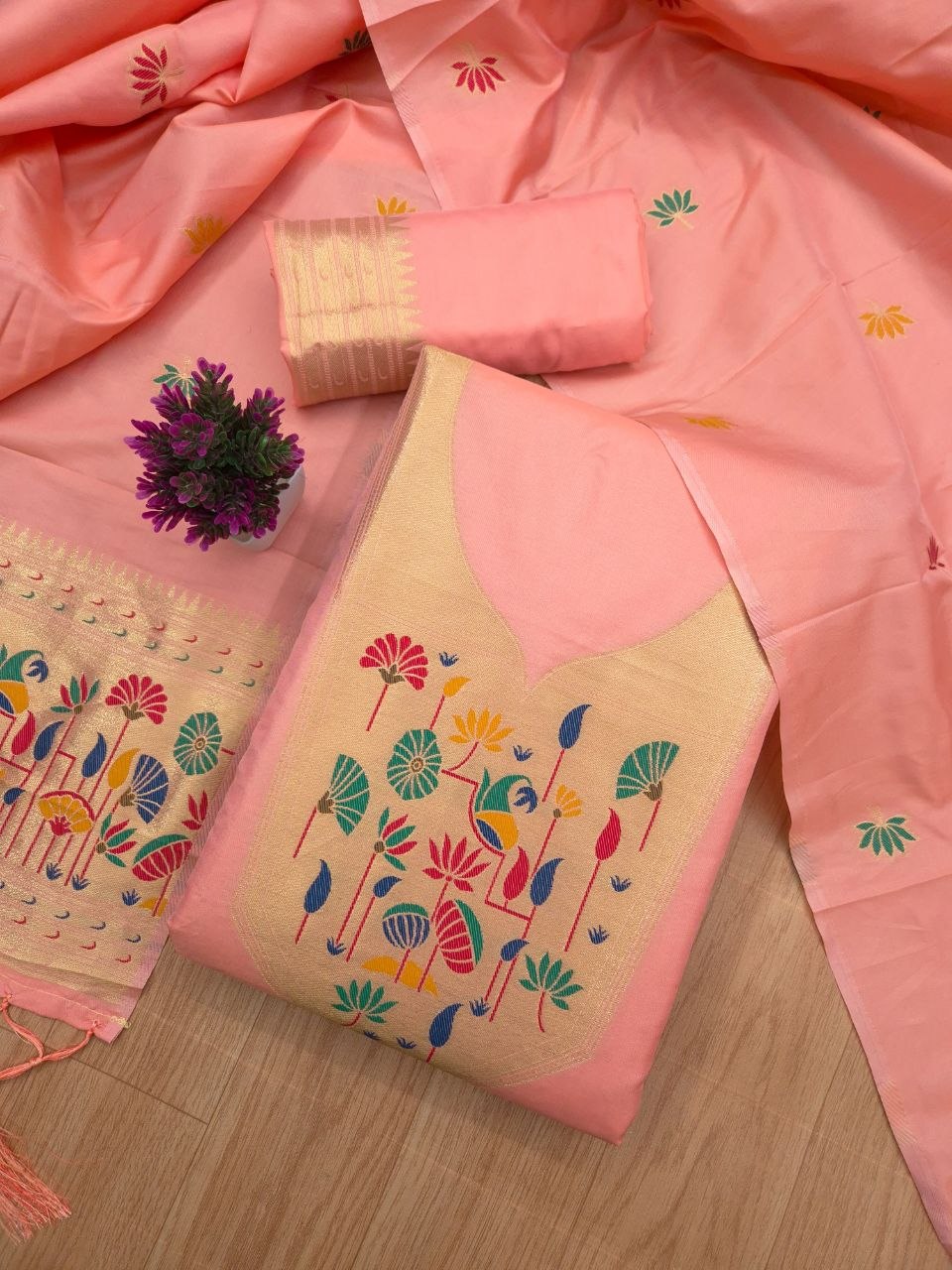
Check whether the embroidery makes the fabric stiff around the neckline, armhole, or sleeve. Dense work can restrict movement if the garment has little ease, especially in a fitted armhole. A practical salwar suit should allow approximately 2.5 to 5 centimetres of wearing ease around the bust, depending on the cut and personal preference.
Inspect the reverse side when product images allow it. Loose threads should be trimmed rather than left long enough to catch on jewellery. Borders should lie flat, motifs should be positioned symmetrically when the design requires symmetry, and the dupatta should have secure edge finishing. These checks matter more than the number of decorative elements.
Phulkari suits are often priced according to embroidery technique, coverage, fabric, labour time, and whether embellishments such as zari, sequins, beads, or mirrors are included. A machine-embroidered suit can be an affordable everyday choice, while a hand-worked piece requires more time and usually commands a higher price. Price alone can't prove authenticity.
Care for embroidered garments
Phulkari suits should be cleaned according to the base fabric and embroidery method, with gentle handling preferred for most embellished garments. Dry cleaning is generally safer for dense embroidery, unstable dyes, silk blends, zari, mirrors, and garments with structured lining.
For a washable cotton suit with colourfast embroidery, use cold water, mild detergent, and a short soak of no more than five minutes. Avoid vigorous rubbing across embroidered panels. Press excess water between clean towels, reshape the garment, and dry it inside out away from direct sunlight.
Iron Phulkari embroidery from the reverse side on a low or medium setting with a pressing cloth between the iron and the fabric. Direct heat can flatten silk floss, loosen adhesive embellishments, mark synthetic fibres, or tarnish metallic decoration. Store a fully dry suit folded with clean, unbleached tissue paper between heavily embroidered sections.
don't hang a very heavy Phulkari dupatta for long periods because its weight can distort the fabric and stretch the edge. Refold stored garments every few months, keep them away from damp walls and perfume, and check for insects before seasonal storage. Proper care preserves both the colour and the dimensional surface of the embroidery.
Common Questions About Punjab’s Phulkari Salwar Suits
Which state is famous for Phulkari suits?
Punjab is famous for Phulkari suits. Phulkari is a traditional embroidery practice associated with the Punjab region and is known for colourful silk-thread motifs, geometric forms, and richly worked dupattas.
Is every embroidered Punjabi suit a Phulkari suit?
No. A Punjabi suit may use machine embroidery, mirror work, zari, sequins, prints, or other techniques without being Phulkari. Traditional Phulkari is identified by its stitch-based motifs and distinctive thread work, although modern garments may be Phulkari-inspired.
What fabric is traditionally used for Phulkari?
Traditional Phulkari is commonly associated with handspun cotton khaddar embroidered with untwisted silk floss called pat. Modern Phulkari suits may use cotton blends, georgette, crepe, silk blends, or synthetic fabrics.
What is the difference between Phulkari and Bagh embroidery?
Bagh is a dense form of Phulkari in which embroidery covers most or nearly all of the base fabric. Phulkari is the broader craft tradition, while Bagh describes a particular high-coverage style within that tradition.
How should a Phulkari suit be washed?
A heavily embroidered Phulkari suit should usually be dry cleaned, especially when it includes zari, mirrors, beads, silk blends, or unstable dyes. A washable cotton suit can be cleaned in cold water with mild detergent and minimal rubbing after checking the care label.
How can someone style a Phulkari suit for a wedding?
Style a Phulkari suit with juttis, restrained jewellery, and a dupatta that complements rather than competes with the embroidery. A Patiala salwar creates a traditional Punjabi outline, while a sharara or palazzo creates a more contemporary festive look.