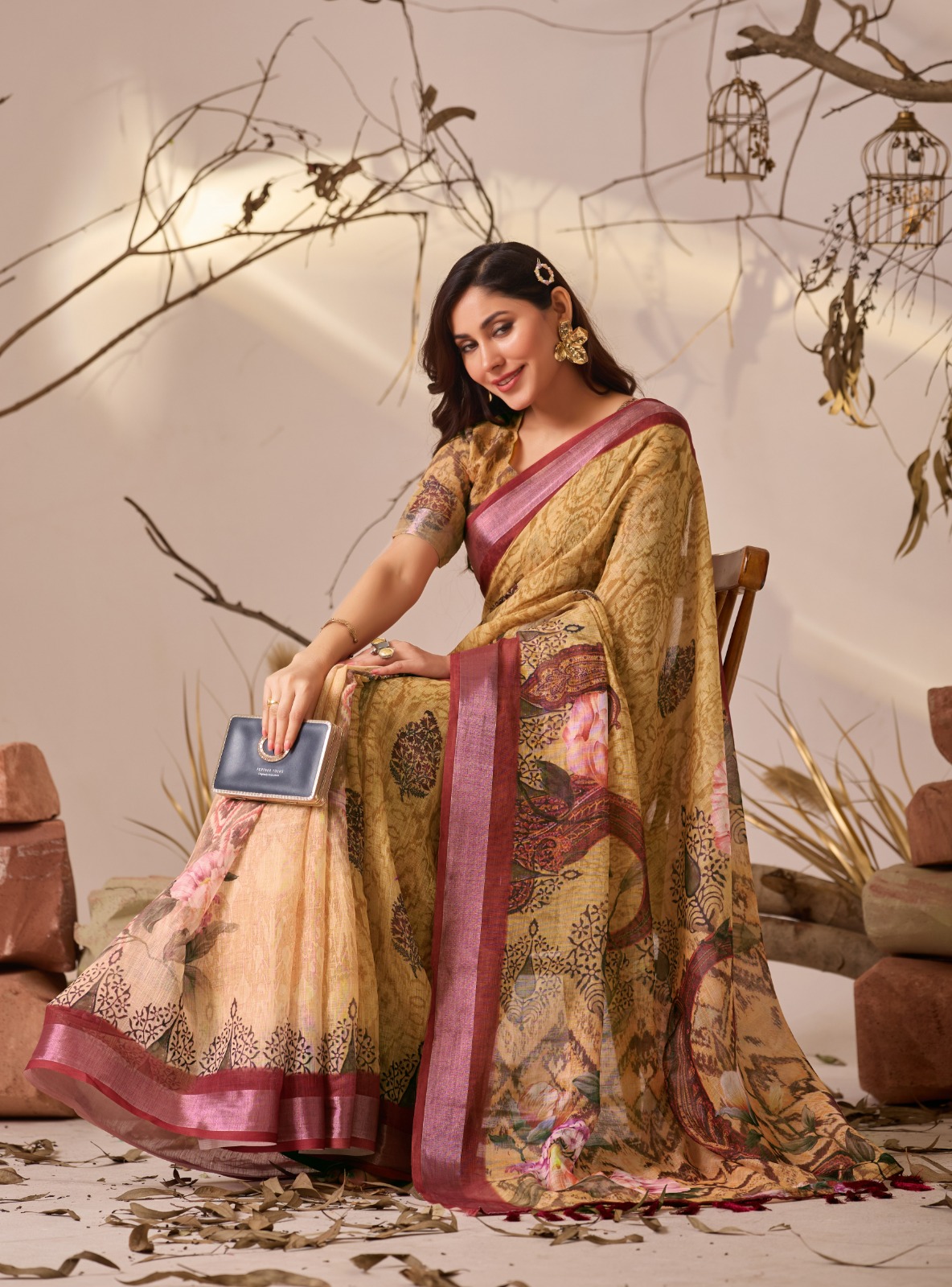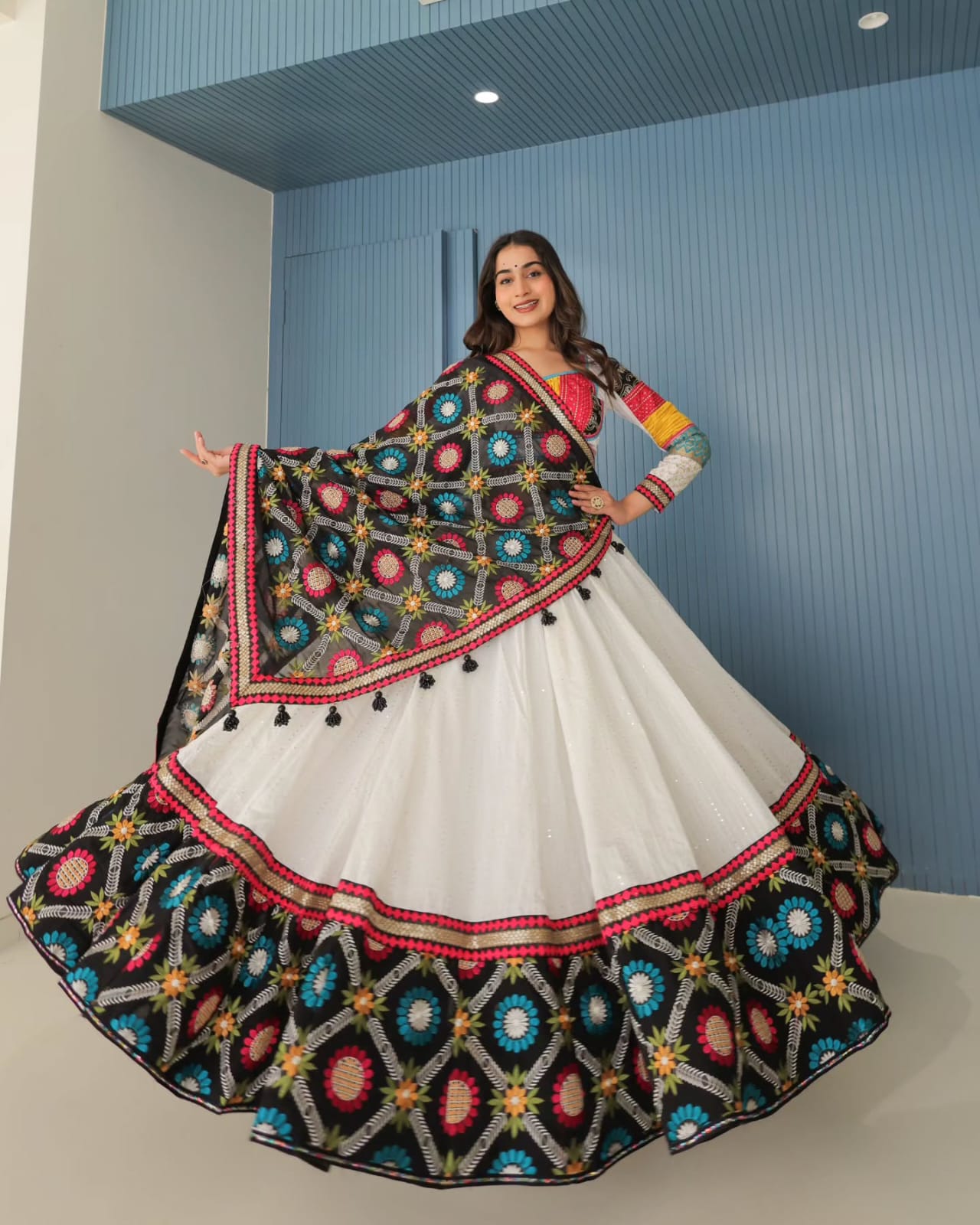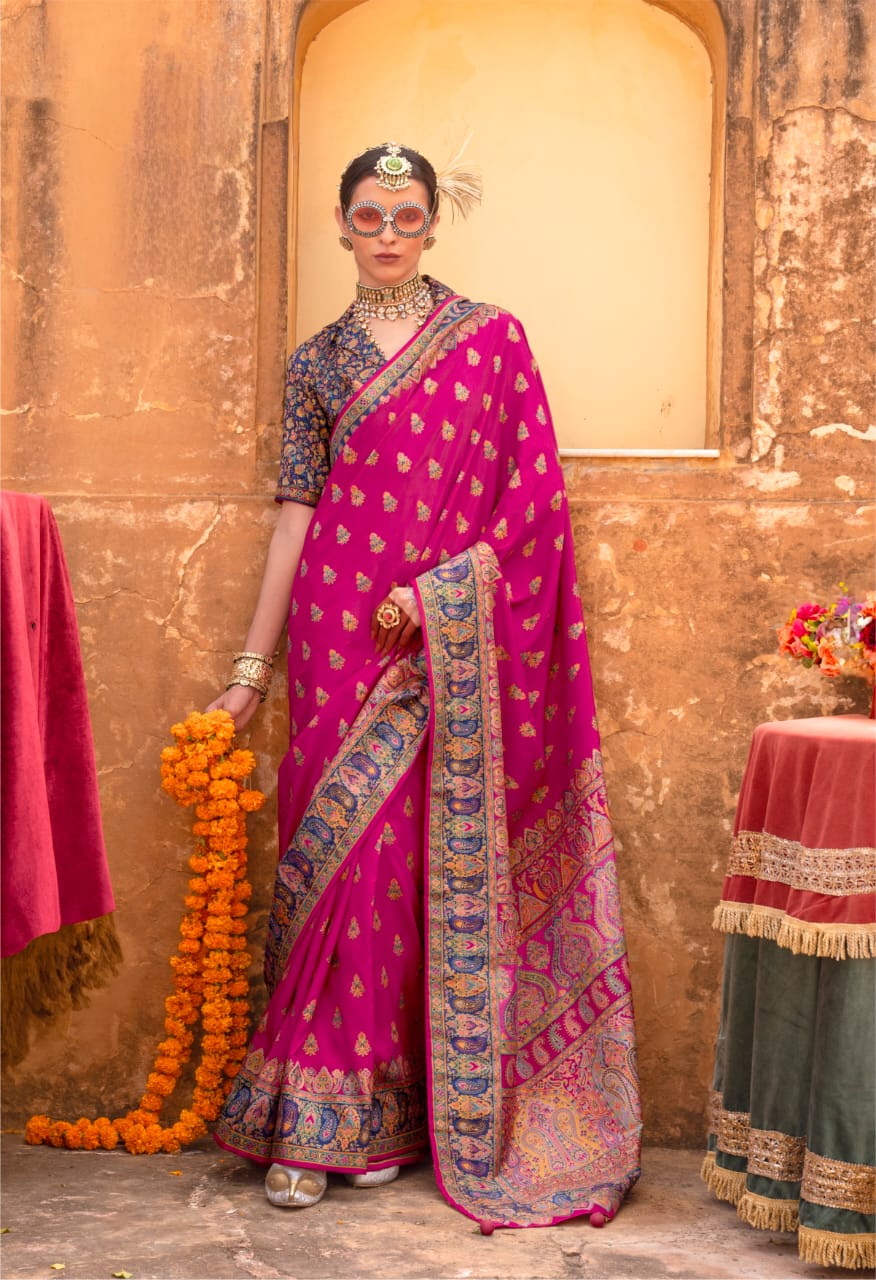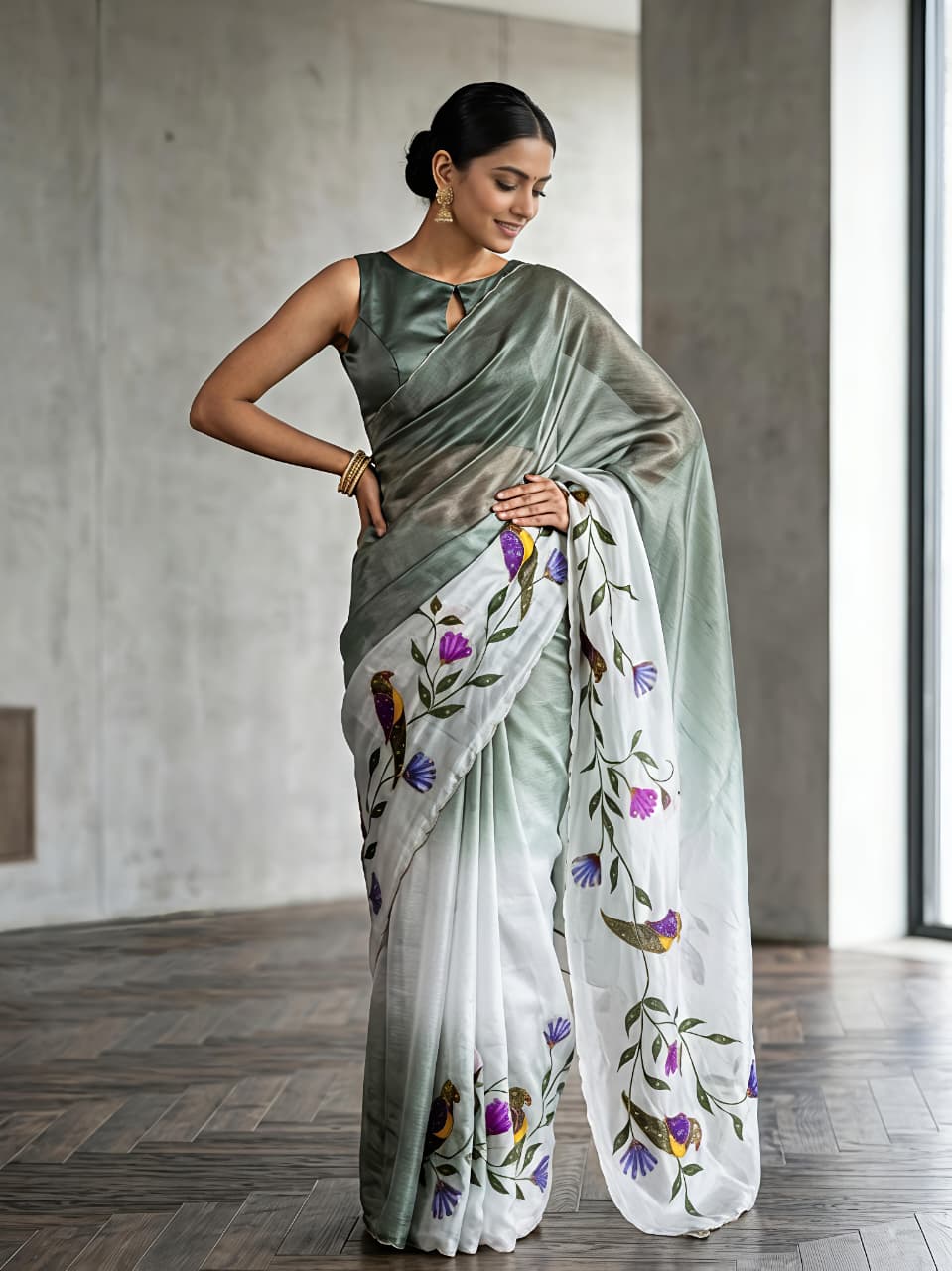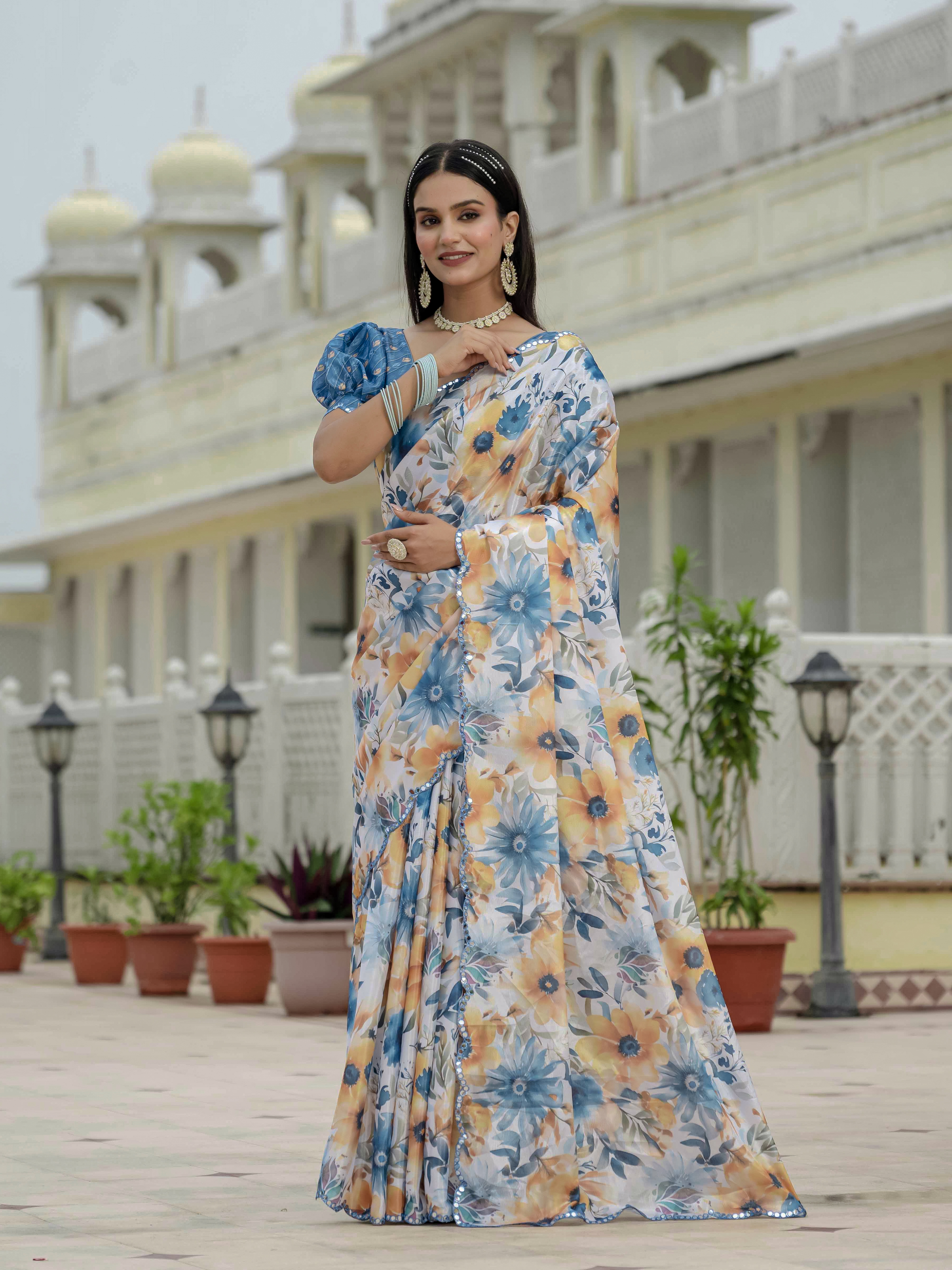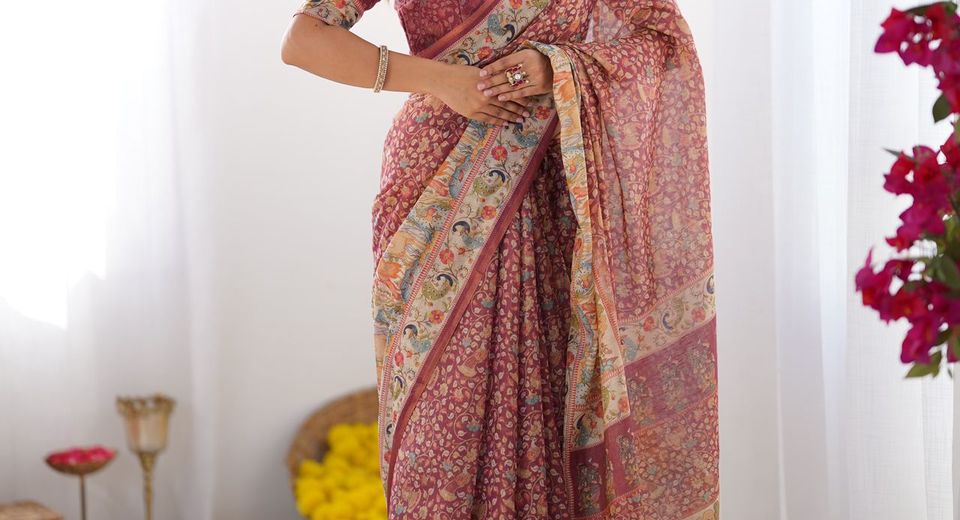
Andhra Pradesh is the state most famously associated with Kalamkari, a textile art made with hand-drawn or block-printed designs and natural dyes. If you're searching for which state is famous for Kalamkari, the clearest answer is Andhra Pradesh, especially the weaving and craft centres of Machilipatnam and Srikalahasti. Telangana also has a historical connection to the wider Kalamkari tradition, but Andhra Pradesh remains the name most strongly linked with its recognised regional styles.
Kalamkari isn't simply a floral print placed on cotton. Traditional Kalamkari involves preparing fabric, drawing or stamping a design, applying resist or mordant, and washing the cloth repeatedly so that colours develop in sequence. The finished textile may show temple stories, mythological scenes, vines, peacocks, elephants, paisleys or dense floral borders. Understanding the geography behind the art makes it easier to distinguish a hand-crafted Kalamkari textile from a commercially printed fabric that only borrows the visual language.
Which state is famous for Kalamkari?
Andhra Pradesh is the state famous for Kalamkari, with Machilipatnam and Srikalahasti representing its two best-known traditions. Machilipatnam is associated primarily with block-printed Kalamkari, while Srikalahasti is celebrated for hand-drawn narrative work created with a bamboo or date-palm pen.
The word Kalamkari comes from the Persian-influenced terms for pen and workmanship, commonly explained as kalam, meaning pen, and kari, meaning work. The name reflects the use of a pen-like tool, although not every Kalamkari textile is drawn entirely by hand. Block printing became especially important in the Machilipatnam tradition, where carved wooden blocks helped artisans repeat borders, floral panels and larger compositions with consistency.
Andhra Pradesh's long relationship with temple culture, cotton weaving and coastal trade helped Kalamkari develop into both a ritual art and a commercial textile. Kalamkari hangings were used in temples and storytelling performances, while printed cloth travelled through trading networks to markets in India and overseas. Modern sarees retain the old visual vocabulary but often use lighter layouts suited to everyday wear.
How do Machilipatnam and Srikalahasti Kalamkari differ?
Machilipatnam Kalamkari is generally block-printed, whereas Srikalahasti Kalamkari is generally hand-drawn and narrative-led. Both traditions use related processes involving mordants, dyes and repeated washing, but the drawing method and design structure create visibly different results.
Machilipatnam block printing
Machilipatnam Kalamkari is also called Pedana Kalamkari because Pedana, near Machilipatnam in the Krishna district, became an important centre for the craft. Artisans carve wooden blocks for repeated motifs, dip the blocks into dye or mordant, and stamp them onto prepared cotton. Separate blocks may be used for outlines, red areas, black details and patterned fills.
Block printing gives Machilipatnam textiles a controlled rhythm. Borders often repeat at regular intervals, and floral or paisley motifs can be arranged in balanced rows. The visual effect is particularly effective on sarees because a repeated border remains clear along the pleats and pallu. A block-printed design may still include hand finishing, outlining or colour correction, so "block printed" doesn't automatically mean factory-made.
Srikalahasti hand-drawn work
Srikalahasti Kalamkari is known for freehand drawing with a kalam and for compositions based on Hindu epics, temple architecture and devotional storytelling. The artisan may sketch figures, animals, trees and ornamental borders directly onto cloth before applying dyes in carefully controlled stages.
Srikalahasti work often feels more illustrative than repetitive. A panel may show scenes from the Ramayana or Mahabharata, episodes connected with Krishna, or a procession of musicians and animals. Fine lines, expressive faces and dense narrative detail are useful clues, although simplified contemporary designs may use only a small figurative panel or a temple-inspired border.
What makes traditional Kalamkari different from a regular printed fabric?
Traditional Kalamkari differs from an ordinary printed fabric through its layered preparation, mordant-based colour process, hand-drawn or carved-block design work, and repeated washing. A surface print can imitate Kalamkari motifs, but it doesn't necessarily reproduce the labour or chemistry of the traditional method.
The first stage traditionally involves scouring and bleaching cotton to remove oils and impurities. Artisans may use milk treatment, myrobalan fruit or other locally established preparations to help the cloth accept colour. Myrobalan is important because it contains tannins that interact with iron and other mordants during the dyeing process.
Black traditionally comes from an iron-based mordant made using iron filings, jaggery and water, although recipes and production methods vary. Red is commonly developed from madder or an alizarin source after applying a mordant. Indigo produces blue, while yellow may come from pomegranate rind, turmeric or other plant materials. Natural-dye Kalamkari requires careful sequencing because one colour can affect the next.
After drawing and dye application, artisans wash the cloth in running water or rinse it repeatedly to remove excess dye and treatment materials. Sun-drying helps develop the colours, but excessive exposure can eventually fade any naturally dyed textile. Traditional work can therefore show small variations in line, colour density and motif placement rather than the absolute uniformity of a digital print.
Which motifs and colours identify Andhra Pradesh Kalamkari?
Floral vines, paisleys, peacocks, elephants, parrots, temple borders and mythological figures are among the motifs most associated with Andhra Pradesh Kalamkari. Deep red, black, indigo, mustard yellow and earthy brown form the classic palette, although contemporary Kalamkari also uses pink, purple, teal and softer tones.
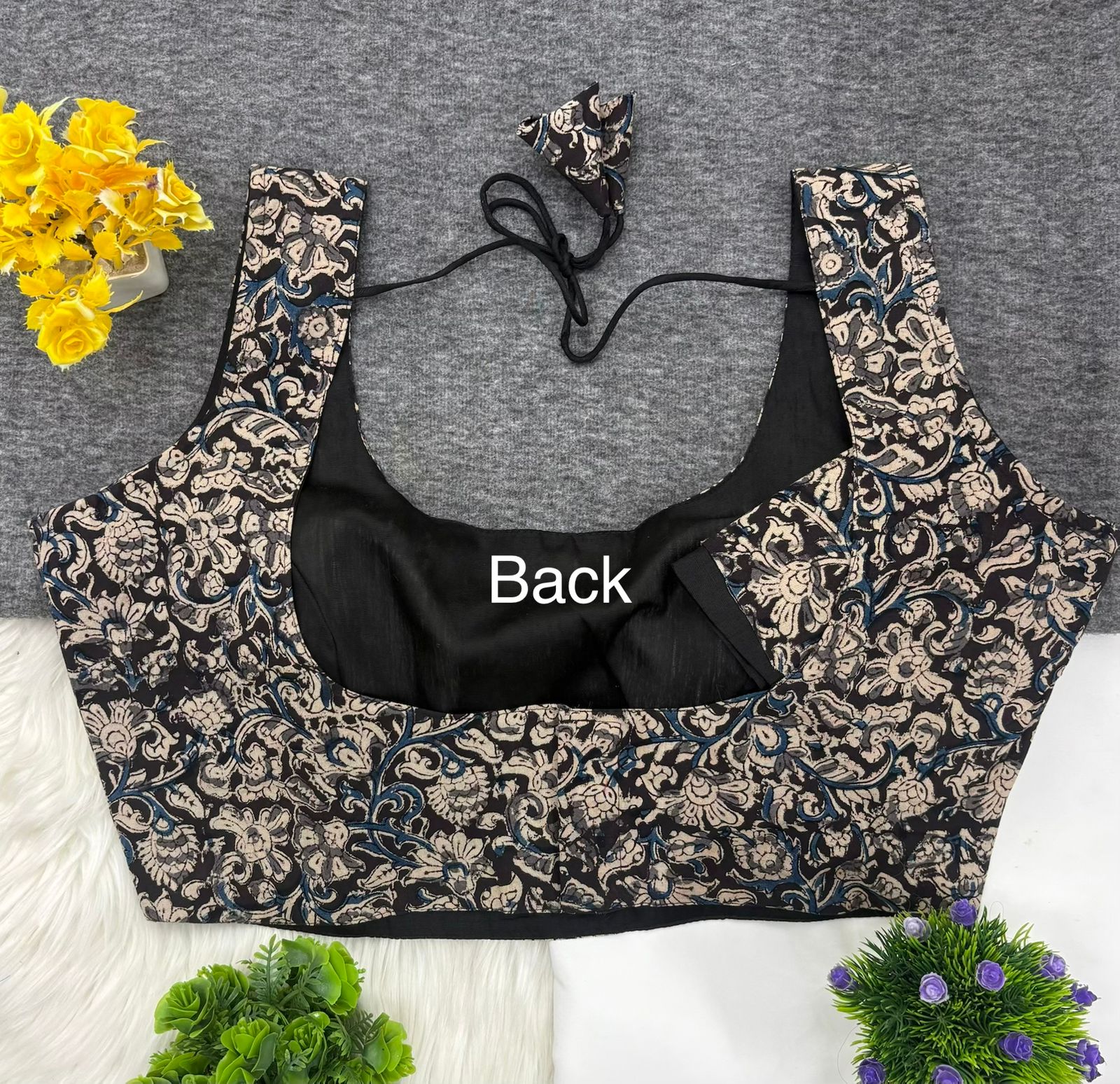
Traditional motifs carry both decorative and cultural meaning. A peacock can suggest beauty and auspiciousness, while a flowering vine creates continuity across the fabric. Elephants and horses may evoke strength, procession and royal imagery. Figures from the Ramayana, Mahabharata and Puranic stories connect Kalamkari to the visual culture of temple walls, painted scrolls and performance traditions.
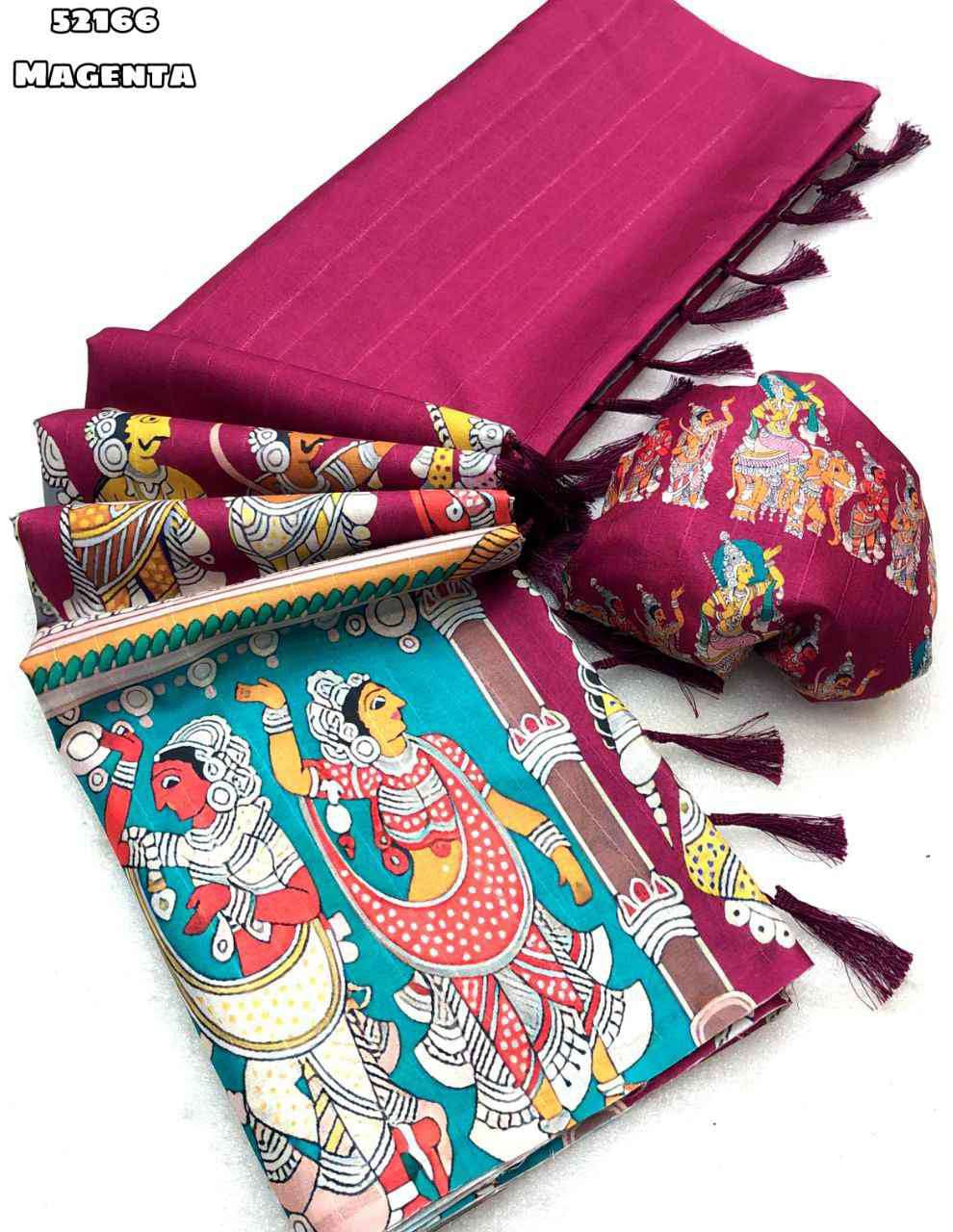
Colour placement also matters. Strong black outlines create the graphic definition associated with many Kalamkari textiles. Red backgrounds can make cream or mustard motifs appear more prominent, while indigo and maroon produce a quieter, more grounded effect. A saree such as Magenta Traditional Kalamkari Art Saree with Blouse demonstrates how a saturated contemporary colour can coexist with a heritage-inspired motif arrangement.
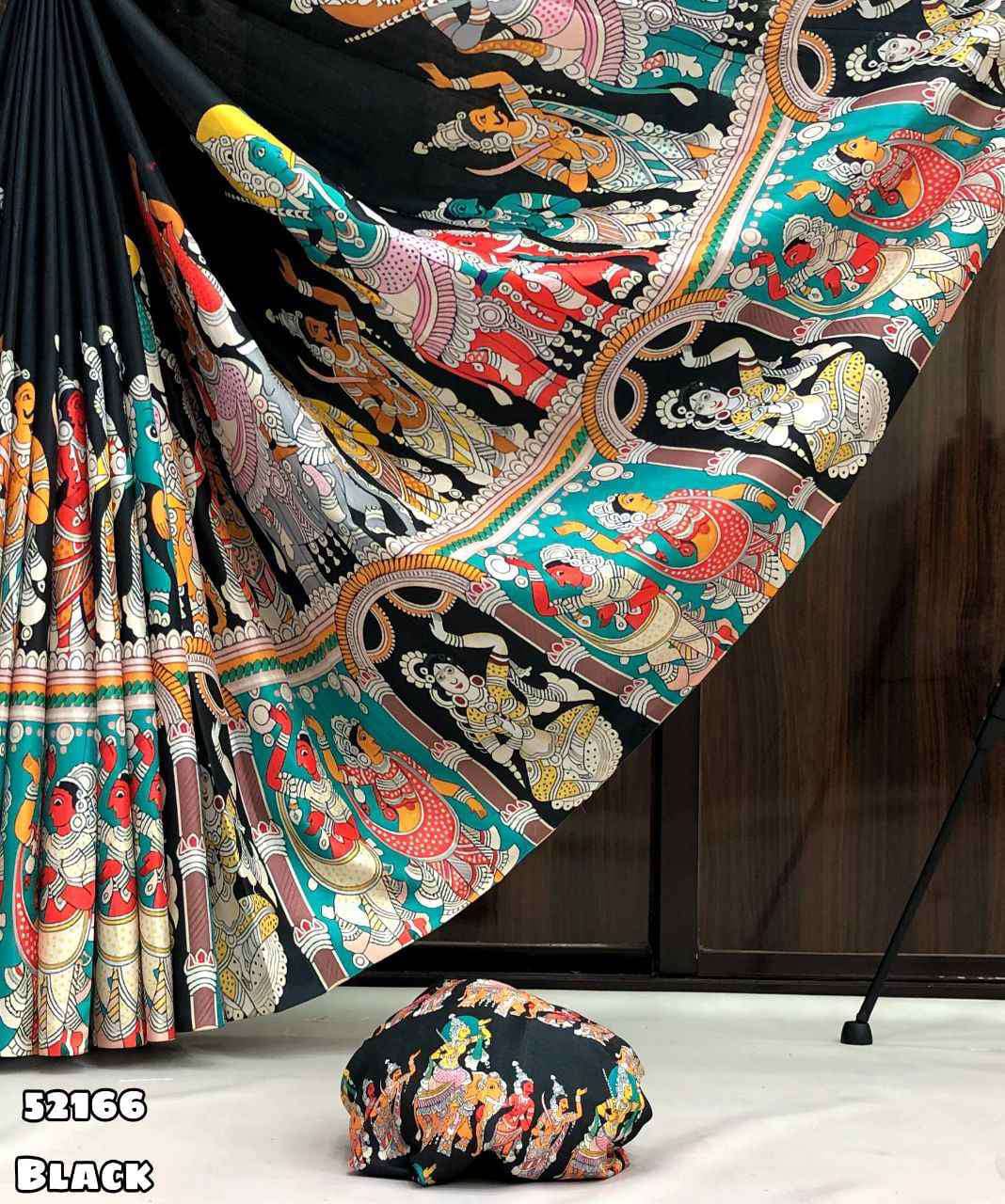
Black Traditional Kalamkari Print Silk Saree uses the contrast between a dark ground and decorative pattern to create a more formal appearance. A black base can make gold jewellery, antique-finish metal and warm-toned makeup stand out, but the saree should be checked under natural light because very dark prints can conceal small design details.
How does Kalamkari appear in sarees and blouses today?
Kalamkari appears in contemporary sarees and blouses through cotton, silk, tussar silk and blended textile bases, with designs ranging from all-over prints to concentrated pallu and border placements. The choice of fabric changes the drape, weight, sheen and occasion suitability more than the motif alone.
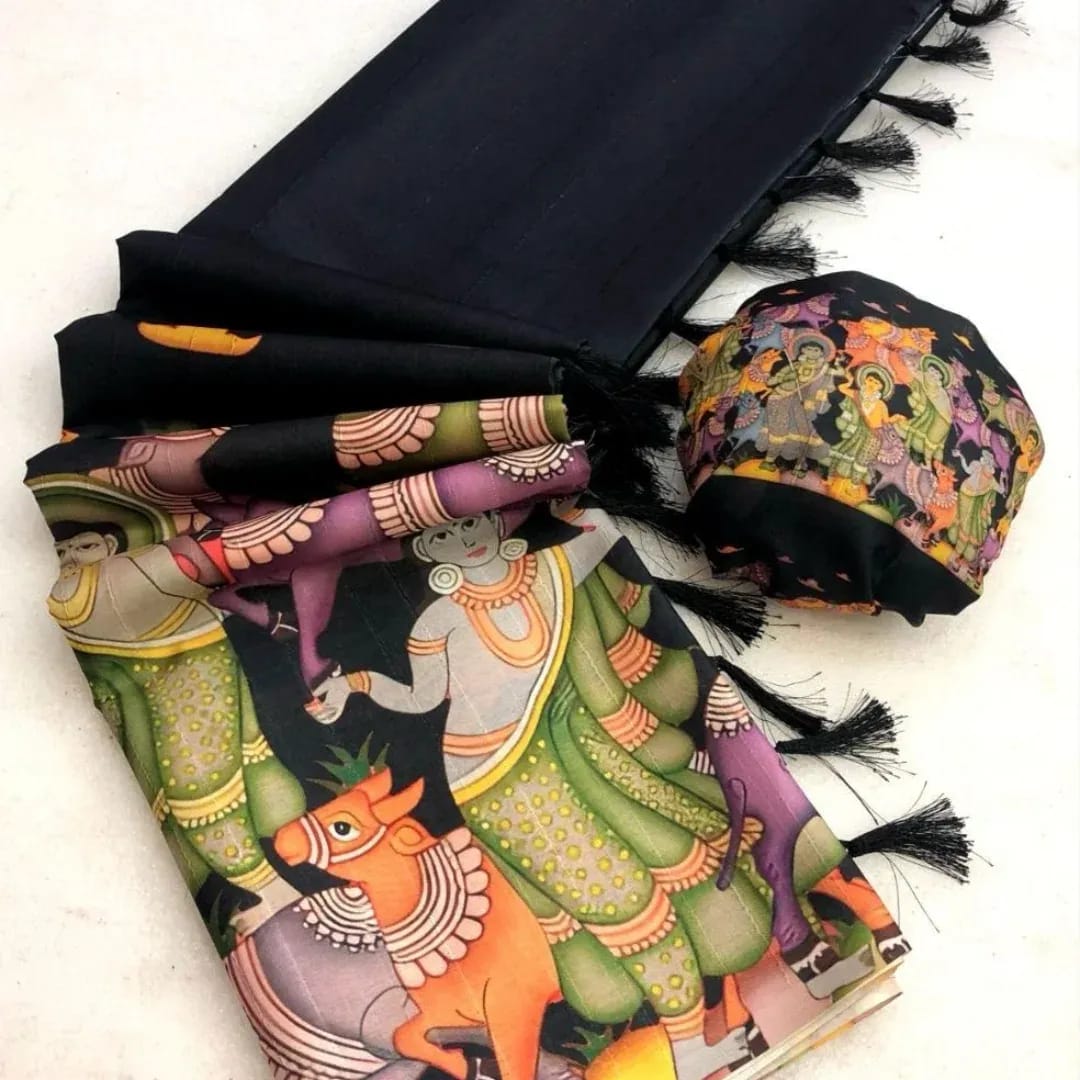
Cotton Kalamkari is usually breathable and practical for daytime wear, summer gatherings and work-friendly ethnic dressing. A structured blouse such as Pure Kalamkari Cotton Padded Blouse for Women can support a saree with a soft drape, while Kalamkari Cotton V Neck Collar Blouse for Women offers a more defined neckline for a contemporary styling direction. Cotton may crease more quickly than silk, so careful folding and low-heat ironing are useful.
Tussar silk adds a lightly textured surface and a muted sheen that can make Kalamkari motifs look more dimensional. Purple Kalamkari Tussar Silk Saree with Printed Blouse suits festive lunches, cultural events and intimate celebrations because the fabric has presence without the high shine of heavily embellished silk. Black Kalamkari Tussar Silk Saree with Blouse creates a stronger evening silhouette and pairs well with oxidised silver or antique gold accessories.
Silk Kalamkari can work for weddings and formal festive events when the border, blouse construction and jewellery are proportionate to the occasion. Tussar Silk Kalamkari Printed Saree with Blouse provides an useful middle ground between a casual cotton saree and a highly ornate wedding drape. For a more handloom-led appearance, Varnavi Royal Kalamkari Maroon Handloom Saree combines a deep maroon colour story with the visual weight expected from a traditional festive textile.
A Kalamkari blouse doesn't have to match the saree motif exactly. A plain maroon, black, cream or indigo blouse can frame a busy Kalamkari pallu, while a printed blouse works best with a quieter saree body. Matching one small colour from the saree, rather than copying every motif, usually produces a cleaner outfit.
How can you check whether a Kalamkari saree is worth buying?
You can assess a Kalamkari saree by checking the fabric composition, print or drawing method, reverse side, colour consistency, motif registration, finishing and care instructions. A higher price is justified only when the material, workmanship and construction support it.
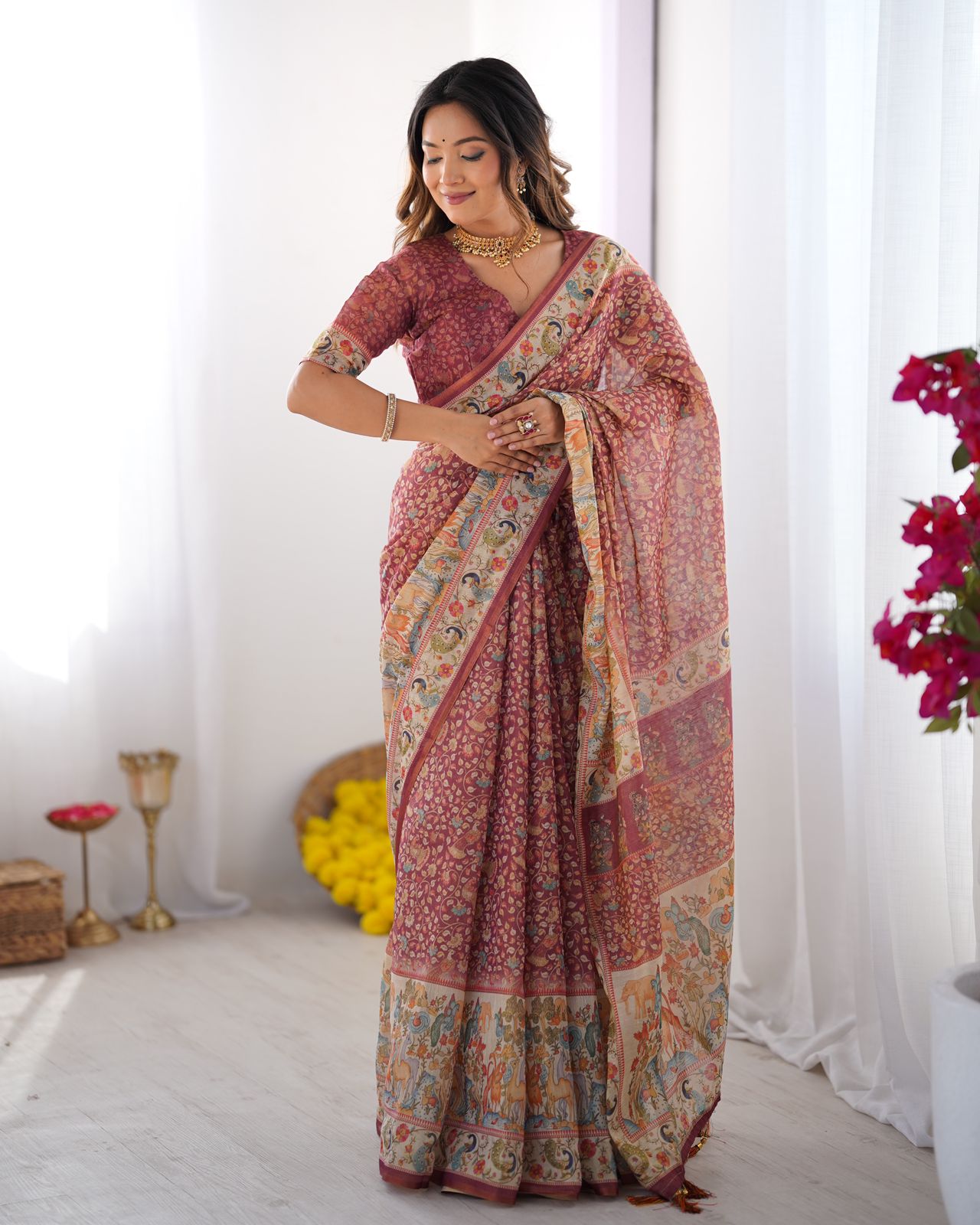
- Read the fibre information: Cotton, silk, tussar silk and polyester behave differently in heat, drape and washing. A saree described as silk should include a clear fibre disclosure rather than relying only on the word "silk" in its design name.
- Inspect the reverse side: Hand-drawn work may show slight colour penetration and small irregularities. A surface print may look extremely sharp on the front but leave little evidence of colour on the reverse. Neither clue is conclusive alone, but the combination is informative.
- Study the border alignment: Repeated blocks should form a reasonably consistent sequence. Minor variation can be expected in hand printing, while severe gaps, blurred edges or abrupt motif changes may indicate weak finishing.
- Look at the outlines: Traditional Kalamkari often uses strong black or dark outlines, but contemporary designs may soften or omit them. A neat outline doesn't prove handwork, and a slightly irregular outline doesn't prove authenticity.
- Ask about care: Natural-dye or hand-crafted textiles may require dry cleaning, gentle hand washing or colour-separate washing. Follow the supplied instructions rather than assuming that every cotton Kalamkari saree is machine washable.
- Compare the price with the process: A simple printed cotton saree generally costs less than a hand-drawn narrative panel or a silk saree with detailed finishing. Price alone can't certify craft, but a very low price deserves a careful check of fabric and production claims.
The phrase "Kalamkari print" often describes a printed textile inspired by Kalamkari aesthetics rather than a fully hand-drawn natural-dye textile. That wording isn't automatically misleading, but buyers should distinguish between a machine-printed fashion saree and a traditional craft piece before comparing prices.
How should Kalamkari clothing be styled and cared for?
Kalamkari clothing looks balanced when one styling element echoes the print and the remaining accessories provide visual space. Care should protect the dyes, surface texture and fabric structure from unnecessary heat, friction and moisture.
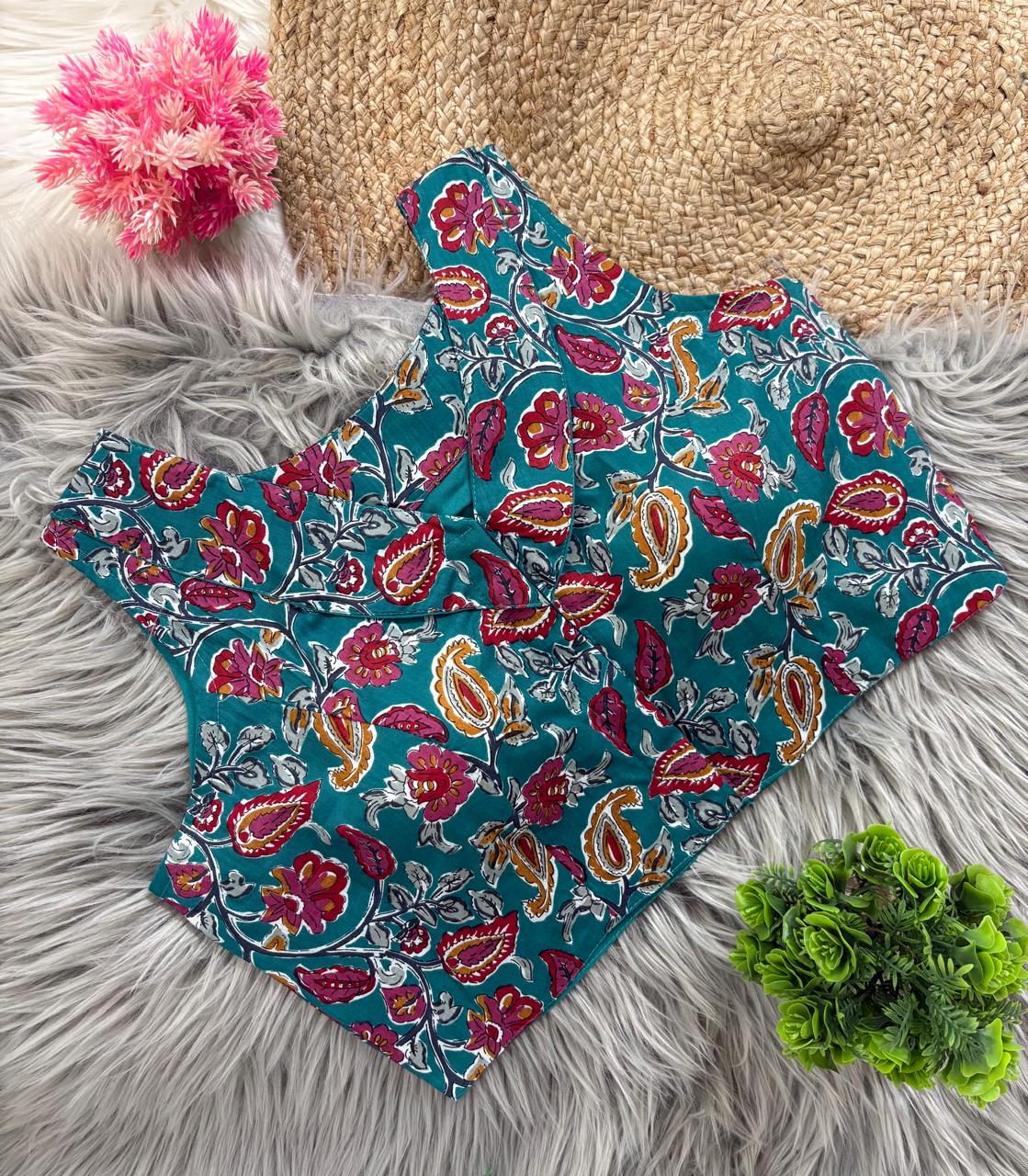
For a cotton Kalamkari saree, try a simple blouse, a narrow belt or a small group of terracotta and wooden bangles. For tussar silk, antique gold earrings, a plain potli and a low bun can reinforce the fabric's textured character without competing with the motifs. A maroon, black or indigo blouse usually complements a dense print more effectively than another large pattern.
Store Kalamkari sarees folded along different lines every few months so permanent creases don't develop in one place. Keep the saree in breathable cotton or muslin rather than sealed plastic for long-term storage. Place neem leaves or an acid-free wardrobe sheet nearby if needed, but avoid direct contact between strong fragrances, moth repellents and the fabric.
Wash Kalamkari garments only according to the stated fibre and dye instructions. Use cold or lukewarm water, mild detergent and shade drying when hand washing is permitted. Do not wring a silk or tussar silk saree, and place a clean cotton cloth between the iron and the printed surface when low-temperature pressing is recommended.
Why does Kalamkari remain important in Indian textile culture?
Kalamkari remains important because it connects drawing, dye chemistry, storytelling, temple culture and wearable textile design within one craft tradition. Andhra Pradesh gave the art its most recognisable regional identity, while present-day designers and weavers continue to adapt its motifs for sarees, blouses, furnishings and contemporary clothing.
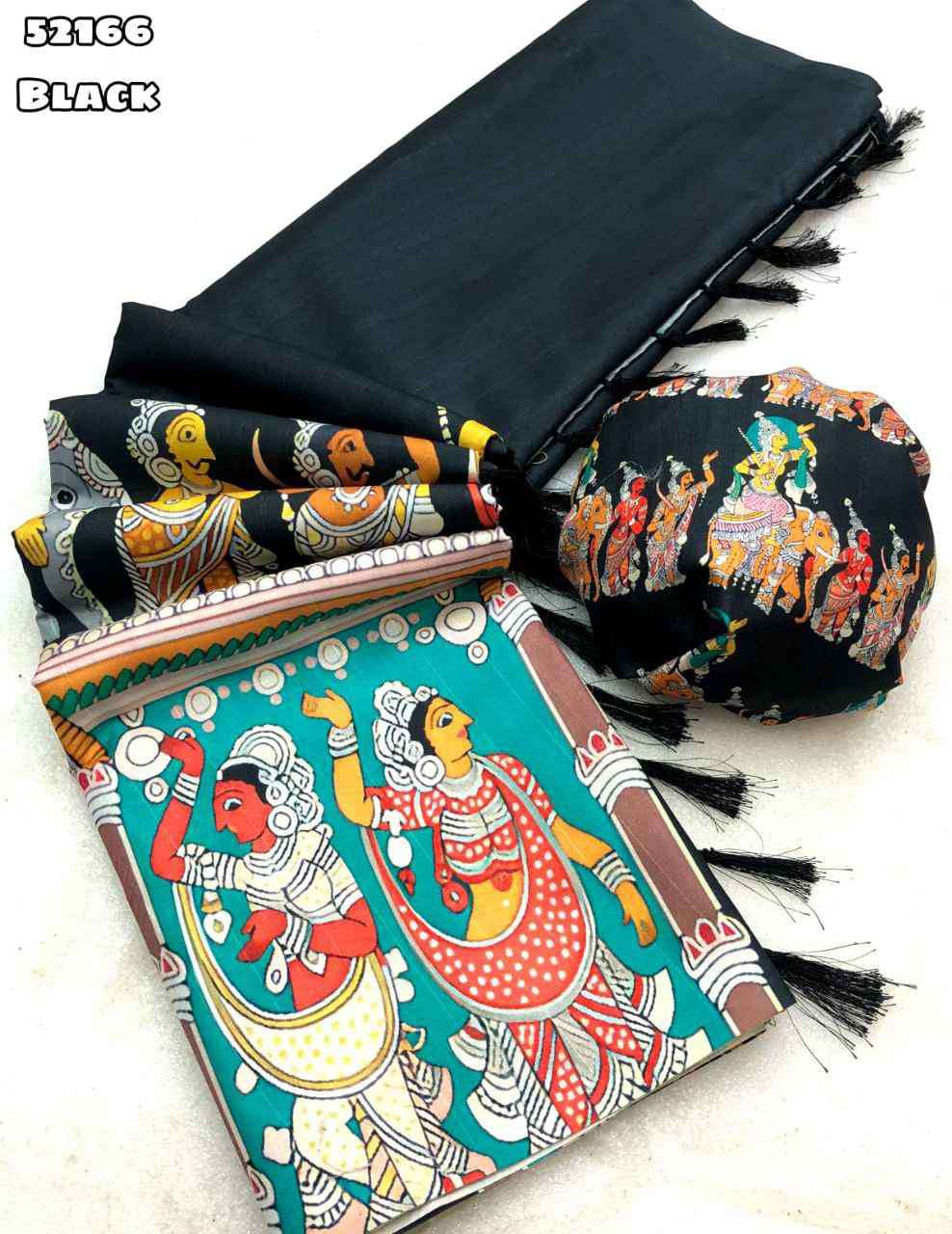
The craft also demonstrates that a textile can carry information as well as decoration. A Srikalahasti panel may communicate a mythological episode, while a Machilipatnam border may preserve a repeated floral vocabulary developed through block carving. The cloth becomes a record of local materials, trade histories, religious imagery and artisan skill.
Knowing which state is famous for Kalamkari adds useful context when you shop, style or care for the textile. Andhra Pradesh is the answer, but the fuller story includes two distinct centres, several dyeing steps and a range of current interpretations. That context helps you value a dramatic silk saree, an everyday cotton blouse and a detailed hand-drawn panel for what each one actually represents.
Common Questions About Andhra Pradesh Kalamkari
Which state is famous for Kalamkari?
Andhra Pradesh is the state most famous for Kalamkari, particularly through the traditions of Machilipatnam and Srikalahasti. Telangana also has historical links to the craft, but Andhra Pradesh is the standard answer in Indian textile references.
What is the difference between Machilipatnam and Srikalahasti Kalamkari?
Machilipatnam Kalamkari is primarily associated with carved-block printing, repeated floral designs and decorative borders. Srikalahasti Kalamkari is primarily hand-drawn with a kalam and is known for narrative scenes from Hindu epics and temple traditions.
Is all Kalamkari made with natural dyes?
No, not all modern Kalamkari textiles use natural dyes. Traditional processes commonly use materials such as iron-based black, madder-based red and indigo, while many contemporary commercial prints use synthetic dyes or screen-printing methods.
How can you tell if a Kalamkari saree is hand printed?
A hand-printed Kalamkari saree may show slight variation in block registration, colour penetration and motif edges, while a machine print is usually highly uniform. These signs are not conclusive, so also check the seller's process description, fibre details and care instructions.
Is Kalamkari suitable for everyday wear?
Cotton Kalamkari is generally suitable for everyday wear because it is breathable and comfortable in warm weather. Silk and tussar silk Kalamkari are better suited to festive or formal use, and all Kalamkari garments should be cared for according to their fibre and dye instructions.
How should a Kalamkari saree be washed?
A Kalamkari saree should be washed according to its specific care label because cotton, silk, tussar silk and natural-dye textiles have different requirements. When hand washing is allowed, cold water, mild detergent, gentle handling and shade drying are safer than hot water, wringing or direct sunlight.