Which state is famous for Ikat? Odisha is the answer most closely associated with India's Ikat heritage, especially through the Bandha technique and Sambalpuri textiles. Telangana, Andhra Pradesh, Gujarat and Rajasthan also preserve important Ikat traditions, so the fuller answer depends on whether you mean cultural recognition, a specific weaving centre or a particular design language.
Ikat identifies a resist-dyeing method in which yarns are tied and dyed before weaving. The preparation determines where colour appears in the finished cloth, creating softly feathered edges, diamonds, stripes, flowers and temple-inspired motifs. The name describes a process rather than one single fabric, which is why Ikat sarees from Odisha can look substantially different from Pochampally Ikat sarees from Telangana.
Which state is famous for Ikat in India?
Odisha is the Indian state most widely recognised for Ikat, particularly for Sambalpuri and Bandha textiles made in districts such as Bargarh, Sonepur, Sambalpur and Nuapatna. Odisha's weavers are known for tying and dyeing both warp and weft yarns to create designs that meet with careful alignment during weaving.
Odisha's fame comes from the combination of technique, regional identity and distinctive motifs. Conch shells, wheels, flowers, fish, elephants and geometric bands frequently appear in Sambalpuri textiles. The traditional red, black, white and yellow palette is especially recognisable, although contemporary weavers use indigo, purple, teal, rust and softer neutrals as well.
Telangana is the other major answer to the question of which state is famous for Ikat. Pochampally, also known as Bhoodan Pochampally, is internationally associated with Ikat weaving and is located in Yadadri Bhuvanagiri district. Pochampally textiles often feature crisp geometric layouts, checks, diamonds and repeated linear structures.
Andhra Pradesh also has a significant Ikat connection, particularly around Chirala and nearby weaving communities. Gujarat is known for Patan Patola, a highly intricate double-Ikat tradition in which both warp and weft are resist-dyed. Rajasthan contributes additional tie-dye and textile knowledge, although its best-known resist traditions are often identified as Bandhani rather than Ikat.
How does Odisha's Bandha Ikat technique work?
Odisha's Bandha Ikat is made by tying sections of yarn, dyeing the exposed portions, repeating the process for additional colours and then weaving the prepared yarns into patterned cloth. The design is planned before the loom is set, so the final motif depends on precise calculations made at the yarn stage.
The process begins with yarn preparation. Cotton, silk or a silk-cotton blend is cleaned, sized and arranged in bundles. A weaver then marks sections according to the intended design and binds selected areas tightly with thread, plastic film or other resist material. Bound portions resist the dye, while uncovered yarn absorbs the colour.
Multiple colours require multiple rounds of tying and dyeing. A red-and-black motif, for example, may need one section to remain protected while another is dyed red, followed by a new tying arrangement before black is applied. Every additional shade increases the planning, labour and risk of uneven alignment.
After dyeing, the yarns are loosened, dried and arranged as warp and weft. The weaver adjusts the threads so that the dyed sections intersect at the exact points. Slight feathering at the edges is natural because dye travels a little beyond the tied boundary. That soft edge is an useful visible clue, not automatically a defect.
What makes double Ikat more difficult?
Double Ikat requires resist-dyeing on both warp and weft yarns, making alignment considerably more demanding than single Ikat. A motif appears only when the coloured sections of the vertical and horizontal yarns meet accurately during weaving.
Patan Patola from Gujarat is one of India's best-known double-Ikat traditions. Odisha and Telangana also produce technically accomplished Ikat, but not every Ikat saree from either state is double Ikat. Buyers should avoid using "double Ikat" as a general synonym for all Ikat textiles.
How are Odisha Ikat and Pochampally Ikat different?
Odisha Ikat usually carries a stronger association with Bandha layouts, symbolic motifs and Sambalpuri cultural identity, while Pochampally Ikat is widely recognised for disciplined geometric patterns and strong colour contrasts. Both traditions can be handwoven, detailed and valuable, but their visual languages are not interchangeable.
- Odisha Bandha: Sambalpuri textiles often show stylised flowers, animals, shells, wheels and broad decorative borders. Silk and cotton versions are common.
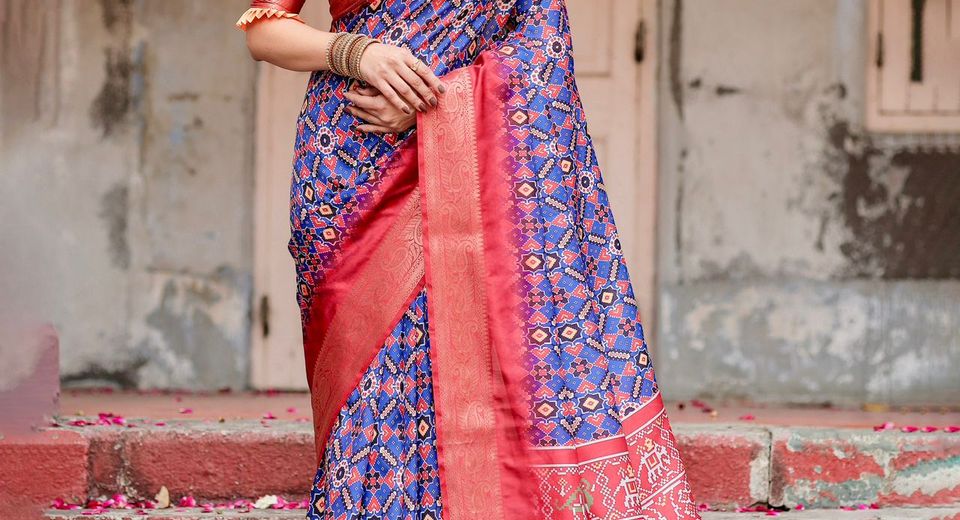
- Pochampally Ikat: Telangana textiles frequently use diamonds, zigzags, checks, stripes and repeated geometric units arranged across the body and pallu.
- Patan Patola: Gujarat's double-Ikat tradition is known for dense, highly controlled motifs, elaborate colour arrangements and extensive handwork.
- Andhra Ikat: Andhra Pradesh contributes regional cotton and silk variations, often balancing geometric patterning with wearable, lighter constructions.
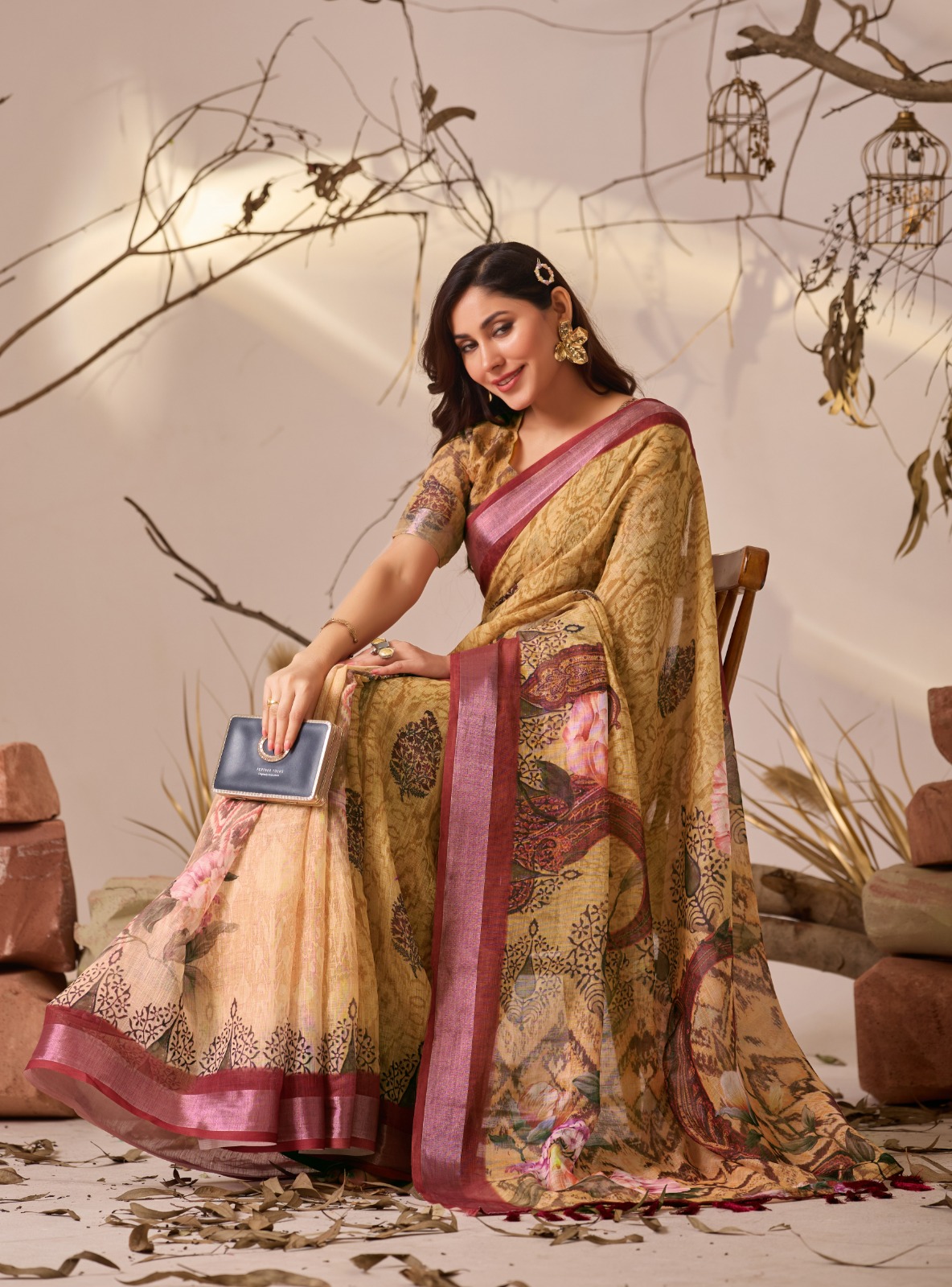
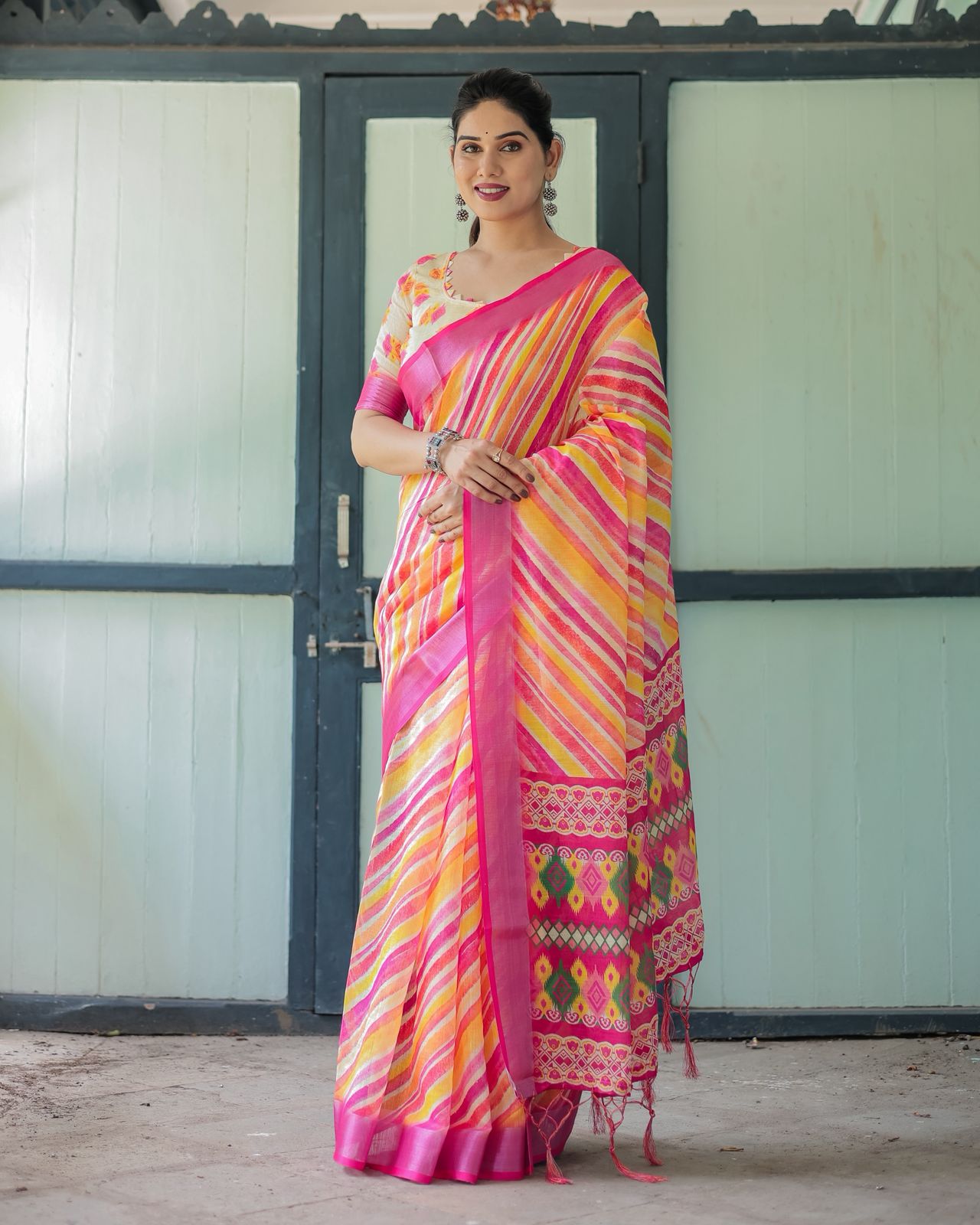
A saree's design can also reflect modern interpretation rather than a single traditional vocabulary. The Vibrant Multicolor Linen Saree with Ikat Inspired Prints, for example, uses the visual energy of Ikat on linen without claiming to be a handwoven Odisha Bandha saree. "Ikat-inspired" and "Ikat-woven" should be read as different descriptions.
What should you look for when buying an Ikat saree?
The most useful checks are the product description, yarn composition, weave information, motif alignment, finishing and care instructions. A photograph alone can't reliably establish whether a saree is handwoven, powerloom-made, digitally printed or hand-block printed.
Read the material description carefully
Banarasi silk, Tussar silk, cotton, linen and polyester behave differently, even when each carries an Ikat pattern. Silk usually has more lustre and drape, cotton offers a crisper and more breathable fall, while linen gives a dry texture and structured silhouette.
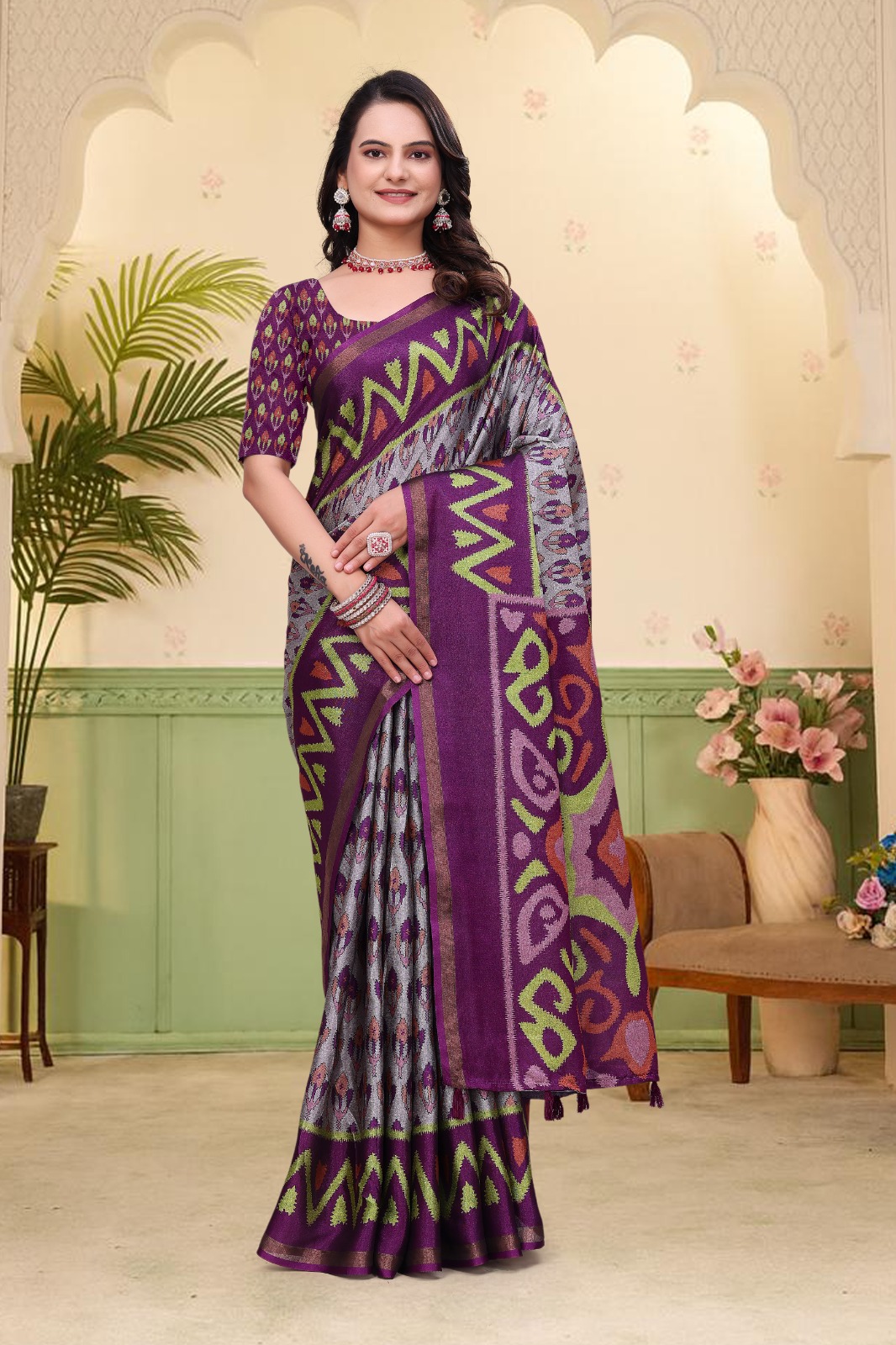
A Royal Purple Tussar Silk Saree with Traditional Ikat Print can deliver the warm, slightly textured character associated with Tussar silk while using a printed Ikat design. A Purple Ikat Tussar Silk Saree Online | Varnavi similarly signals Tussar as the base material, but the word "Ikat" should be checked against the description to determine whether the pattern is woven or printed.
Study the reverse side and the pallu
A woven Ikat pattern generally appears on both sides of the cloth because coloured yarns form the design throughout the structure. A printed design may show a sharper difference between the front and back, although current printing methods can produce convincing reverse-side colour.
Motif alignment can vary slightly in handwoven cloth. Small irregularities in diamonds, borders or colour transitions may indicate human weaving rather than poor quality, provided the fabric has no broken selvedge, severe skips or unstable seams. A perfectly repeated design is more consistent with printing or mechanised production, but consistency alone doesn't prove powerloom manufacture.
Separate zari from metallic-looking print
Zari is a metallic thread used to create decorative highlights, borders or motifs, while a gold-coloured print is surface pigment. A Blue Red Ikat Silk Saree Online with Zari | Varnavi combines Ikat styling with a zari reference, so the product description should state whether the zari is real metallic thread, imitation zari or a printed effect.
Gently inspect zari areas for thread construction rather than relying on brightness. Real zari may be woven into the cloth and can show a raised or thread-based structure. Metallic prints usually sit on the surface and may feel flatter or less dimensional.
How can Ikat sarees be styled for different occasions?
Ikat sarees work for daytime gatherings, office celebrations, festive meals and formal functions when the blouse, jewellery and level of shine are balanced with the fabric. The same geometric pattern can look relaxed in cotton or linen and ceremonial in silk with zari.
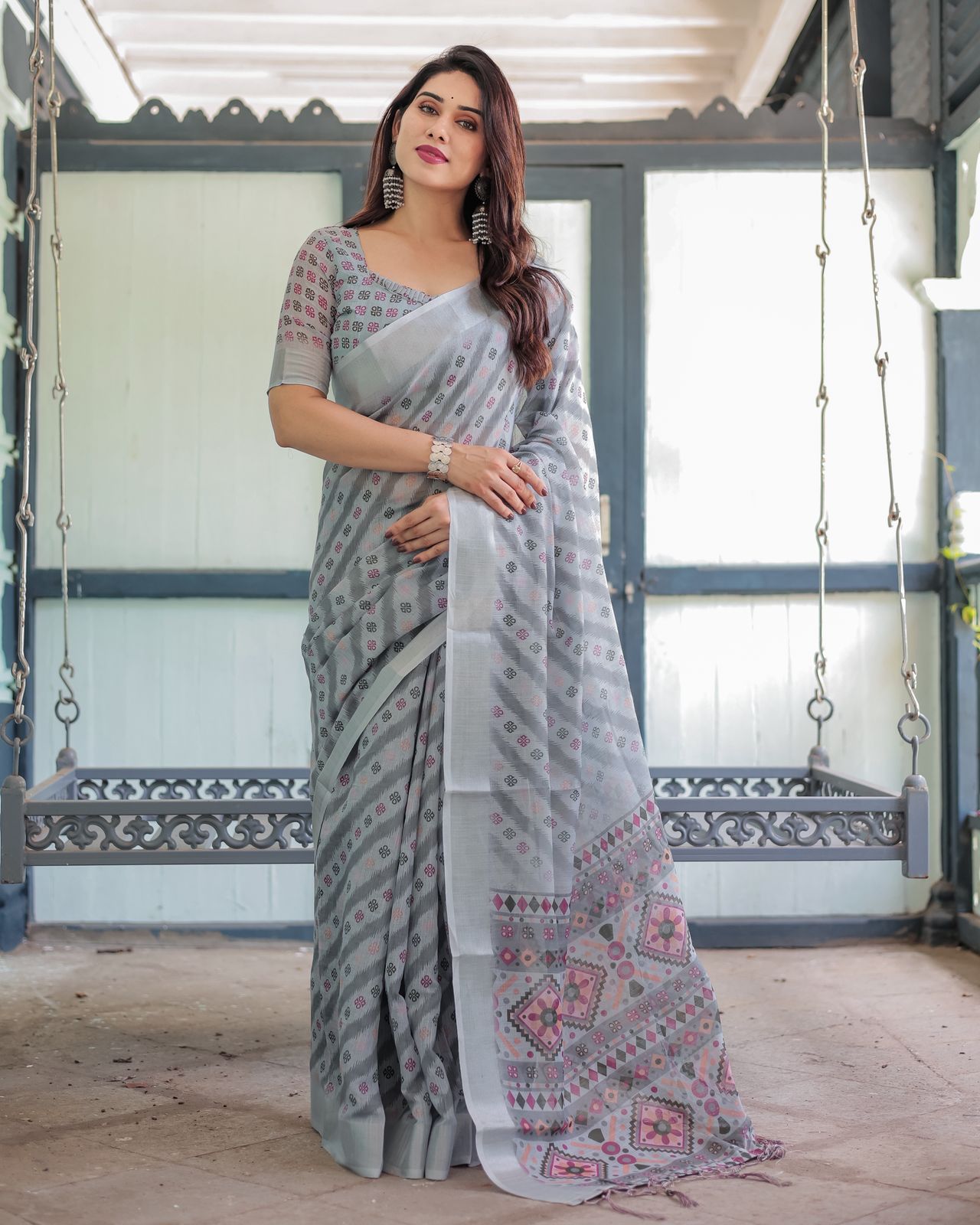
A Grey Ikat Print Linen Saree with Elegant Design suits a daytime event when paired with a solid blouse in charcoal, ivory, rust or deep blue. Keep jewellery restrained with silver studs, a watch or oxidised earrings, because linen already supplies visual texture.
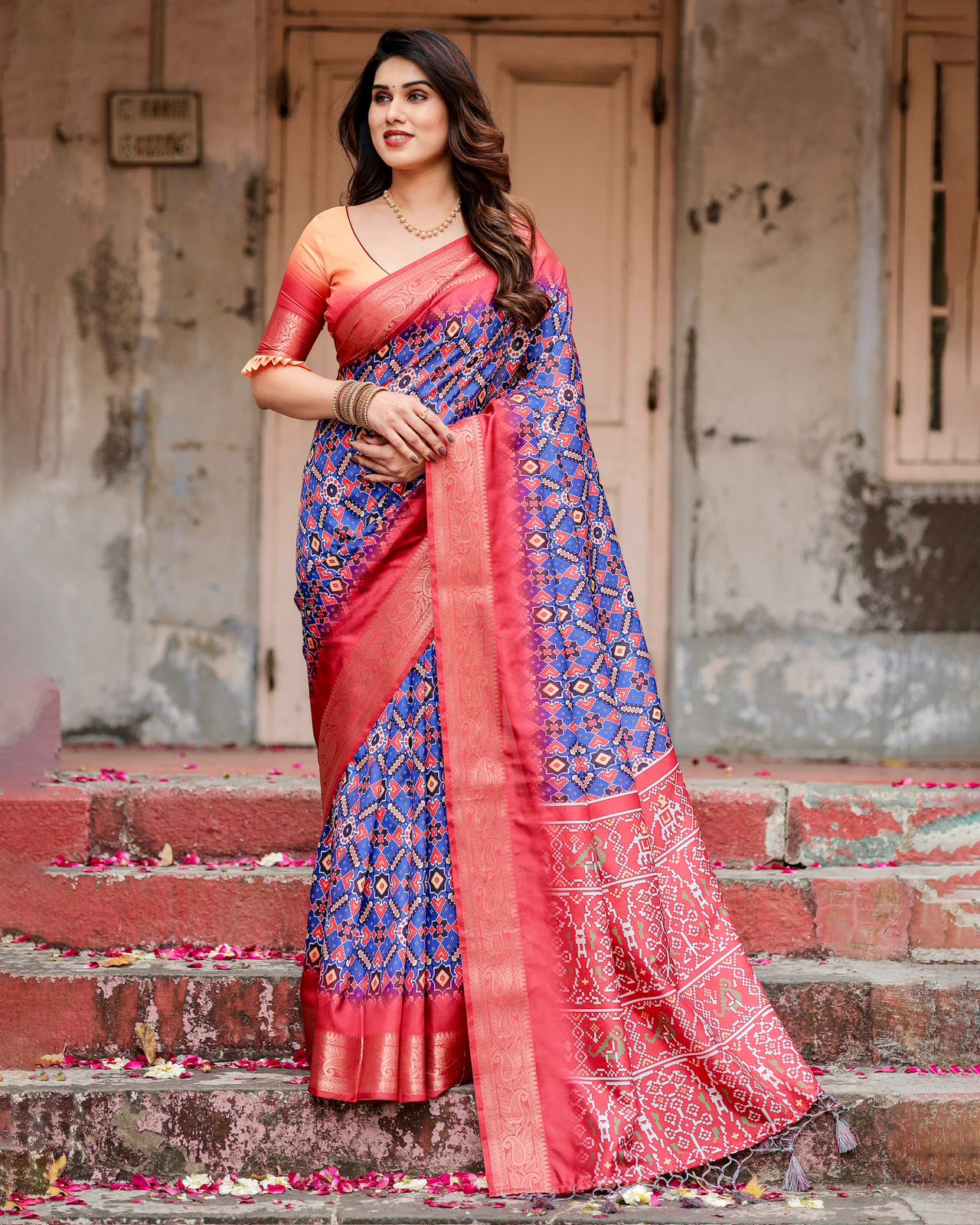
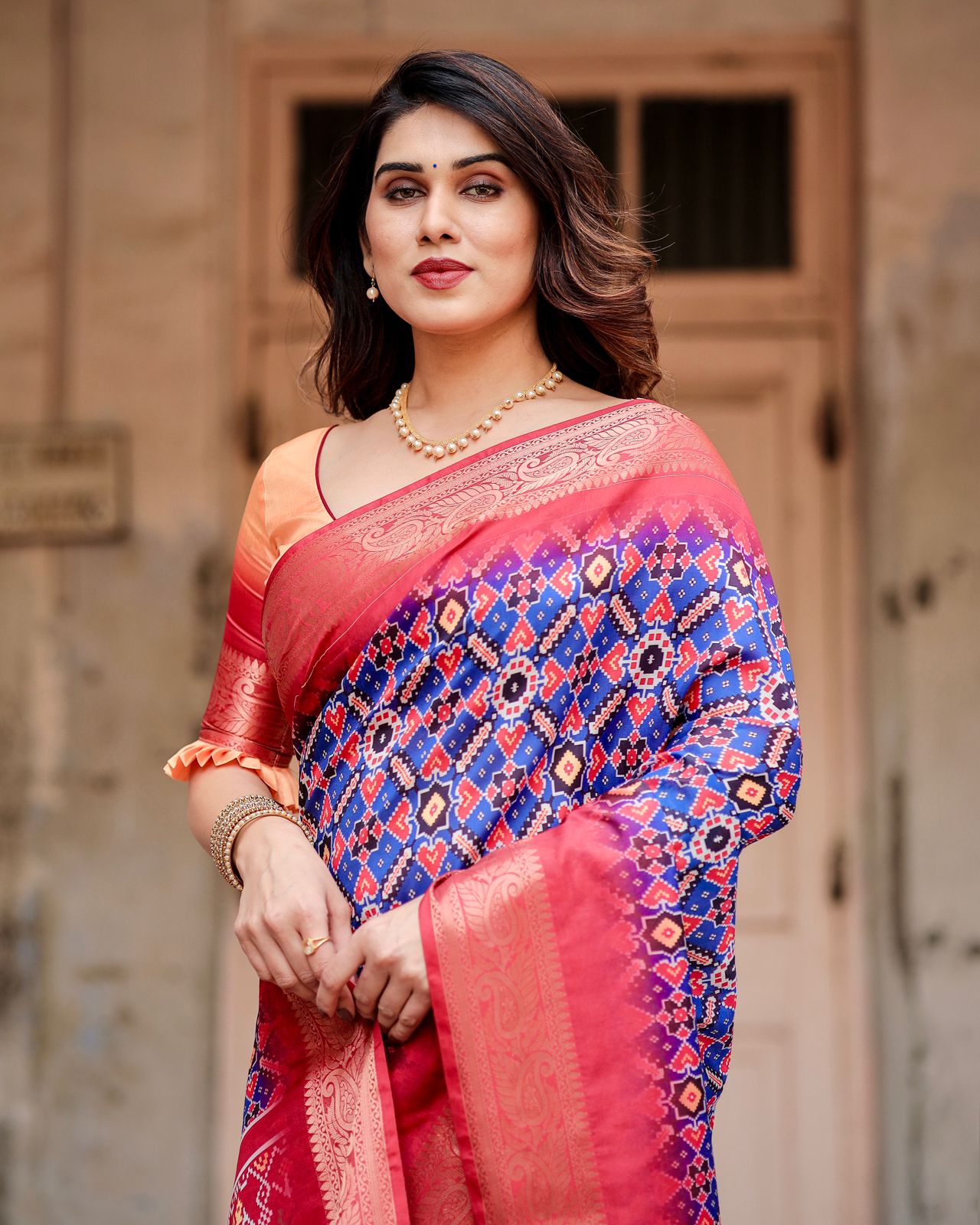
A Royal Blue Printed Silk Saree creates a dressier effect with a fitted blouse in the same blue, antique gold or a controlled contrast such as red. A low bun, a narrow belt or a structured potli can sharpen the silhouette without competing with the pattern.
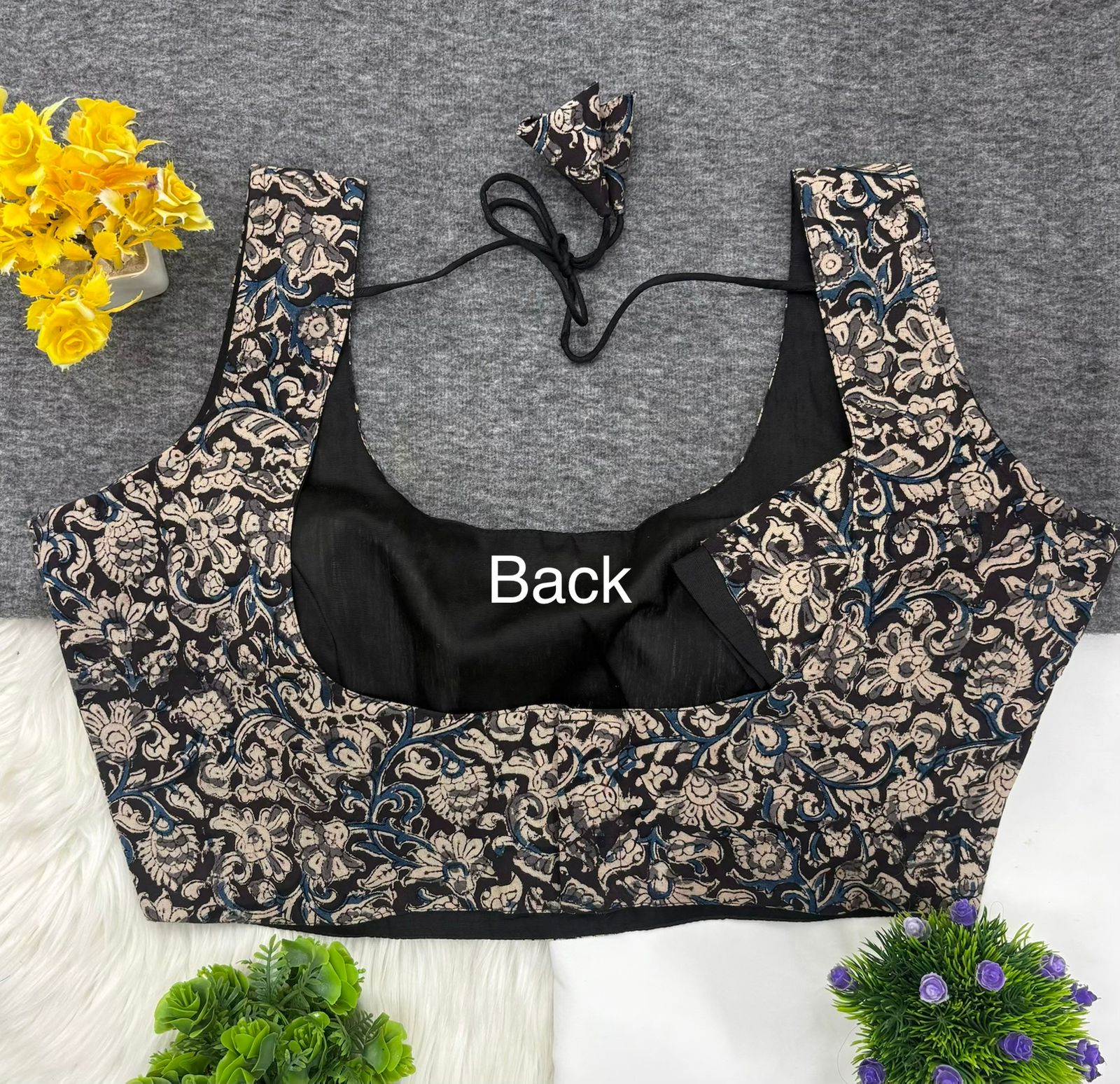
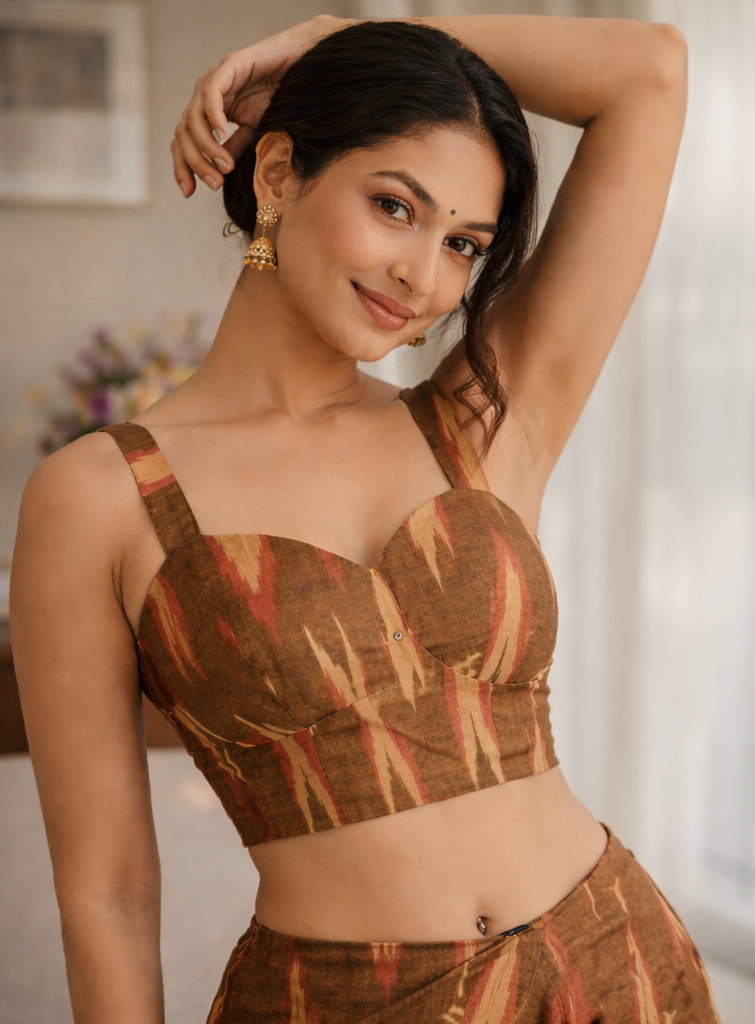
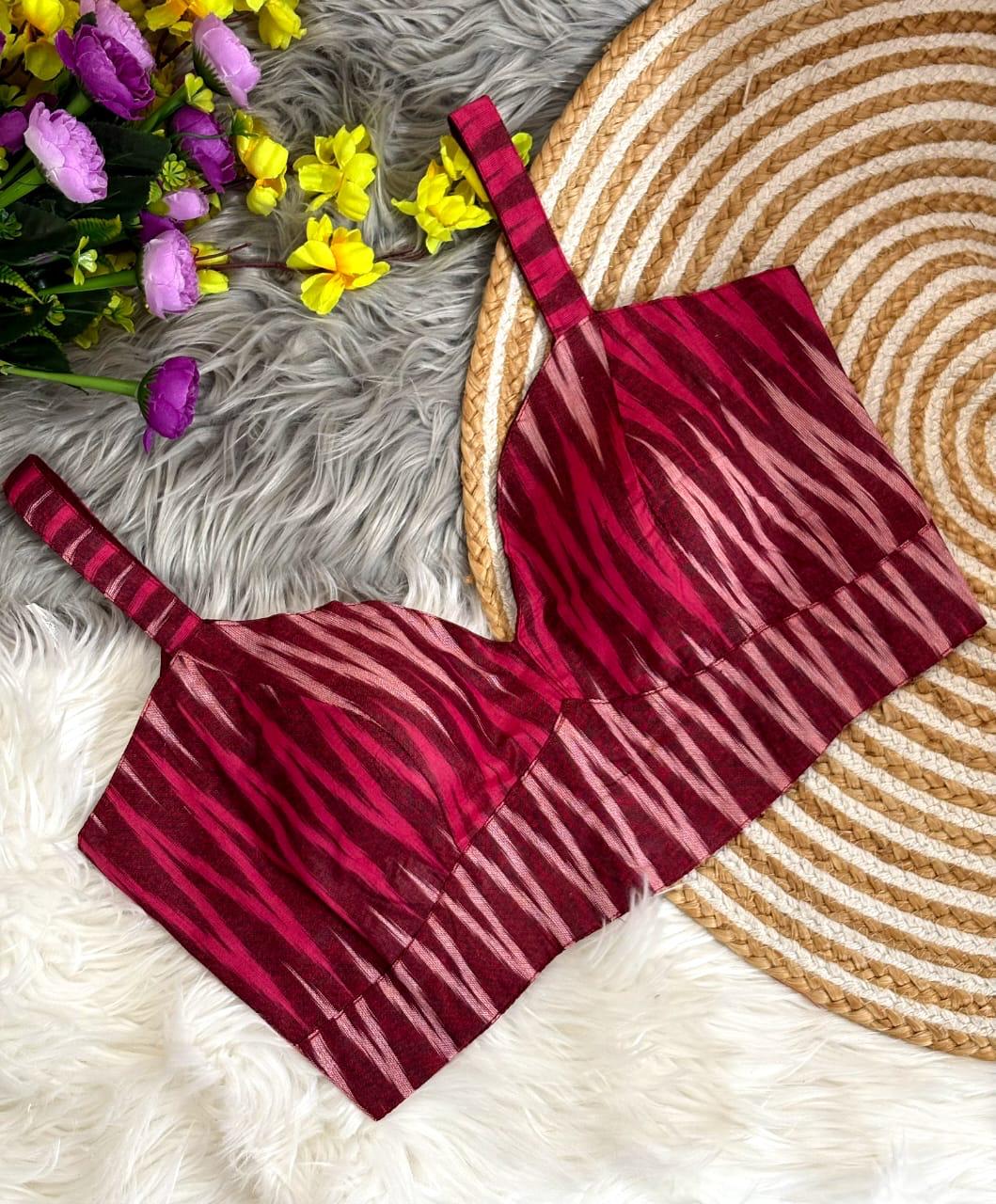
For a lighter festive look, a Cream Ikat Cotton Padded Blouse Sleeveless Trendy can work beneath a colourful saree when the blouse's pale base picks up a secondary motif colour. A Brown Ikat Cotton Padded Blouse Sleeveless Stylish brings a warmer alternative for rust, mustard, maroon and cream sarees.
Print-heavy Ikat sarees generally benefit from a plain blouse, while a simple Ikat saree can support a blouse with a modest woven border. Avoid combining a dense Ikat body, a heavily embroidered blouse and large multicoloured jewellery unless the event specifically calls for maximal styling.
How should an Ikat saree be washed and stored?
An Ikat saree should be cleaned according to its fibre and dye stability, with professional dry cleaning preferred for many silk and zari versions. Cotton and linen may tolerate gentler home care, but colour bleeding should be tested on an inconspicuous area before washing.
- Read the care label before the first wash, especially for Tussar silk, zari and blended fabrics.
- Keep the saree away from bleach, optical brighteners and strong detergent.
- Use cold water only when the care instructions permit hand washing.
- don't wring, twist or leave dyed fabric soaking for a long period.
- Dry the saree inside out and away from direct, intense sunlight.
- Fold silk and zari sarees along different lines every few months to reduce permanent creasing.
- Store clean textiles in breathable cotton or muslin rather than sealed plastic for long periods.
Direct perfume, deodorant and hair products can tarnish zari and mark silk. Allow sprays to dry before draping. Refold rarely worn sarees every two to three months, and keep moisture absorbers nearby without placing chemical sachets directly against the fabric.
Why does Ikat remain important in Indian textile culture?
Ikat remains important because the design is encoded into yarn before weaving, preserving technical knowledge that's difficult to reproduce through ordinary surface decoration. The process connects mathematics, dye chemistry, loom control and regional storytelling in one textile.
Odisha's Bandha tradition also demonstrates how a saree can carry community identity. Motifs and colours are not merely decorative choices; they can refer to local beliefs, natural forms, ritual objects and established visual memory. Sambalpuri textiles became especially prominent as markers of Odisha's cultural presence beyond the weaving districts.
Contemporary Ikat has expanded into linen sarees, silk blends, blouses, dupattas and home textiles. Expansion can support weavers and make the vocabulary accessible, but accurate product language matters. A printed Ikat-inspired saree can be attractive and useful without being described as handwoven Bandha.
Understanding the difference helps buyers spend thoughtfully. Someone seeking a breathable everyday saree may prefer cotton or linen with an Ikat print. Someone valuing handloom technique should look for explicit information about yarn resist-dyeing, weaving location, fibre, certification and artisan or cooperative details.
Which state is famous for Ikat, and what is the short answer?
Odisha is the short answer because its Bandha and Sambalpuri traditions have made the state especially famous for Ikat in India. Telangana's Pochampally is equally important for geometric Ikat, while Gujarat's Patan Patola represents one of the country's most demanding double-Ikat traditions.
The most precise identification therefore combines state, weaving centre, technique and material. "Odisha Bandha silk," "Pochampally Ikat cotton" and "Patan double Ikat" communicate more information than the word "Ikat" alone.
Questions Readers Ask About Odisha and Indian Ikat
Which state is famous for Ikat sarees?
Odisha is the state most commonly associated with Ikat sarees, especially Sambalpuri and Bandha textiles. Telangana is also a major Ikat centre through Pochampally, so both states are important to India's Ikat heritage.
Is Ikat from Odisha or Telangana?
Ikat comes from both Odisha and Telangana, but the two regions have distinct traditions. Odisha is known for Bandha and Sambalpuri motifs, while Telangana's Pochampally is strongly associated with geometric Ikat designs.
What is the difference between Ikat and Bandhani?
Ikat resist-dyes yarns before weaving, whereas Bandhani ties and dyes sections of already woven cloth. Both techniques create resist patterns, but the stage at which the resist is applied is different.
How can you tell if an Ikat saree is handwoven?
Look for explicit handloom or handwoven information, slightly organic motif alignment, a consistent selvedge and details about yarn resist-dyeing. A photograph alone cannot prove handloom production, so product documentation and trusted certification are important.
Is Pochampally the same as Odisha Ikat?
Pochampally is a Telangana Ikat tradition, not the same as Odisha's Bandha tradition. Pochampally commonly emphasises geometric layouts, while Odisha Ikat is widely recognised for Sambalpuri motifs and regional symbolic designs.
Can an Ikat saree be machine washable?
Machine washing is not automatically safe for every Ikat saree. Silk, zari and unstable dyes generally need professional cleaning, while some cotton or linen sarees may allow gentle cold washing when the care label specifically permits it.