If you're asking which state is famous for Chikankari suits, the answer is Uttar Pradesh, with Lucknow as the craft's most recognised centre. Lucknow Chikankari is a delicate hand-embroidery tradition worked on fabrics such as cotton, muslin, silk and georgette. The embroidery may look light from a distance, but its character comes from carefully placed stitches, floral layouts and the controlled tension of the thread.
Knowing the place behind the craft makes a salwar suit easier to understand and buy. A genuine-looking Chikankari design isn't defined only by white thread or pastel colour. Stitch quality, motif spacing, fabric choice, finishing and the balance between handwork and machine embroidery all affect the garment's value and appearance.
Which state is famous for Chikankari suits?
Uttar Pradesh is the state most famously associated with Chikankari suits, and Lucknow is the embroidery tradition's leading cultural hub. Lucknow's Chikankari received a Geographical Indication tag in 2008, recognising the regional identity of the craft.
Chikankari is also practised in and around other parts of Uttar Pradesh, including areas connected to Lucknow's artisan and trading networks. However, Lucknow remains the name most closely attached to the craft in Indian fashion, just as Kanjeevaram is linked with Tamil Nadu and Banarasi silk is linked with Varanasi in Uttar Pradesh.
The exact early history of Chikankari is discussed through several accounts. Popular histories connect the craft with Mughal court culture and Persian-influenced needlework, while local traditions describe its development through Lucknow's artisan communities. The safest conclusion is that modern Lucknow Chikankari emerged from a long exchange between regional skills, courtly taste, textile trade and household embroidery.
Chikankari suits became especially popular because the embroidery can make a garment graceful without relying on heavy metallic ornament. The result suits warm weather, daytime celebrations, modest workwear and festive dressing when paired with richer fabrics or accessories.
What makes Lucknow Chikankari different from ordinary embroidery?
Lucknow Chikankari is distinguished by its fine threadwork, characteristic stitches and floral or nature-inspired compositions rather than by a single colour or fabric.
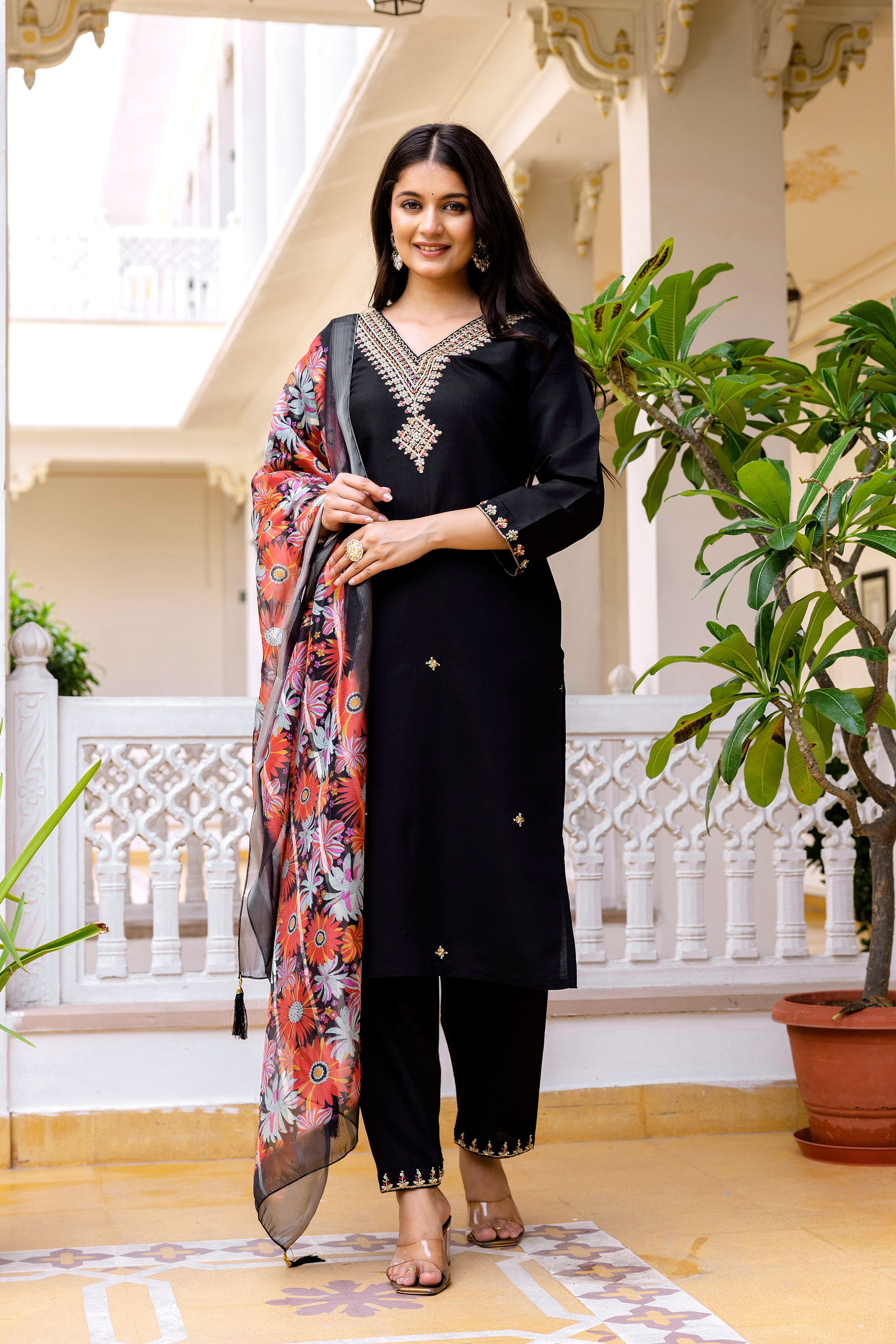
Traditional Chikankari begins with a design drawn or printed on fabric. Artisans then place different stitches along the outline, within petals, across leaves or in the open spaces of the motif. After the embroidery is complete, the temporary design marks are washed away. This process helps explain why spacing and back-side finishing are useful clues when examining a garment.
Signature stitches to recognise
Several stitches commonly appear in Chikankari, although the exact combination varies from one piece to another. Tepchi is a running stitch used for fine lines and outlines. Bakhiya, often called shadow work, creates a soft reverse-side effect beneath motifs. Jaali forms open, net-like patterns by carefully manipulating the fabric threads without cutting them.
Phanda creates small knot-like dots that can represent flower centres or decorative accents. Murri is a tiny rice-shaped stitch, while keel kangan adds a curved, bud-like detail. Hool is a small eyelet-style stitch often used at the centre of flowers. A thoughtfully worked suit may combine several of these stitches instead of repeating one flat machine pattern throughout.
Handwork and machine work
Hand-embroidered Chikankari usually has small variations in stitch length, motif density and thread tension. Those variations are not automatically defects; they can indicate that different sections were worked by hand. Machine embroidery generally produces more uniform outlines, faster production and a lower price, but it may lack the layered texture of handwork.
Not every machine-embroidered suit is poorly made, and not every hand-embroidered suit is worth its price. Buyers should compare the fabric, embroidery density, seam finishing and care requirements rather than treating the word "Chikankari" as a complete quality guarantee.
Which fabrics work best for Chikankari salwar suits?
Cotton, mulmul, voile, Chanderi, georgette, chiffon and silk blends are among the most useful fabrics for Chikankari-inspired salwar suits, with the best choice depending on climate, embroidery weight and occasion.
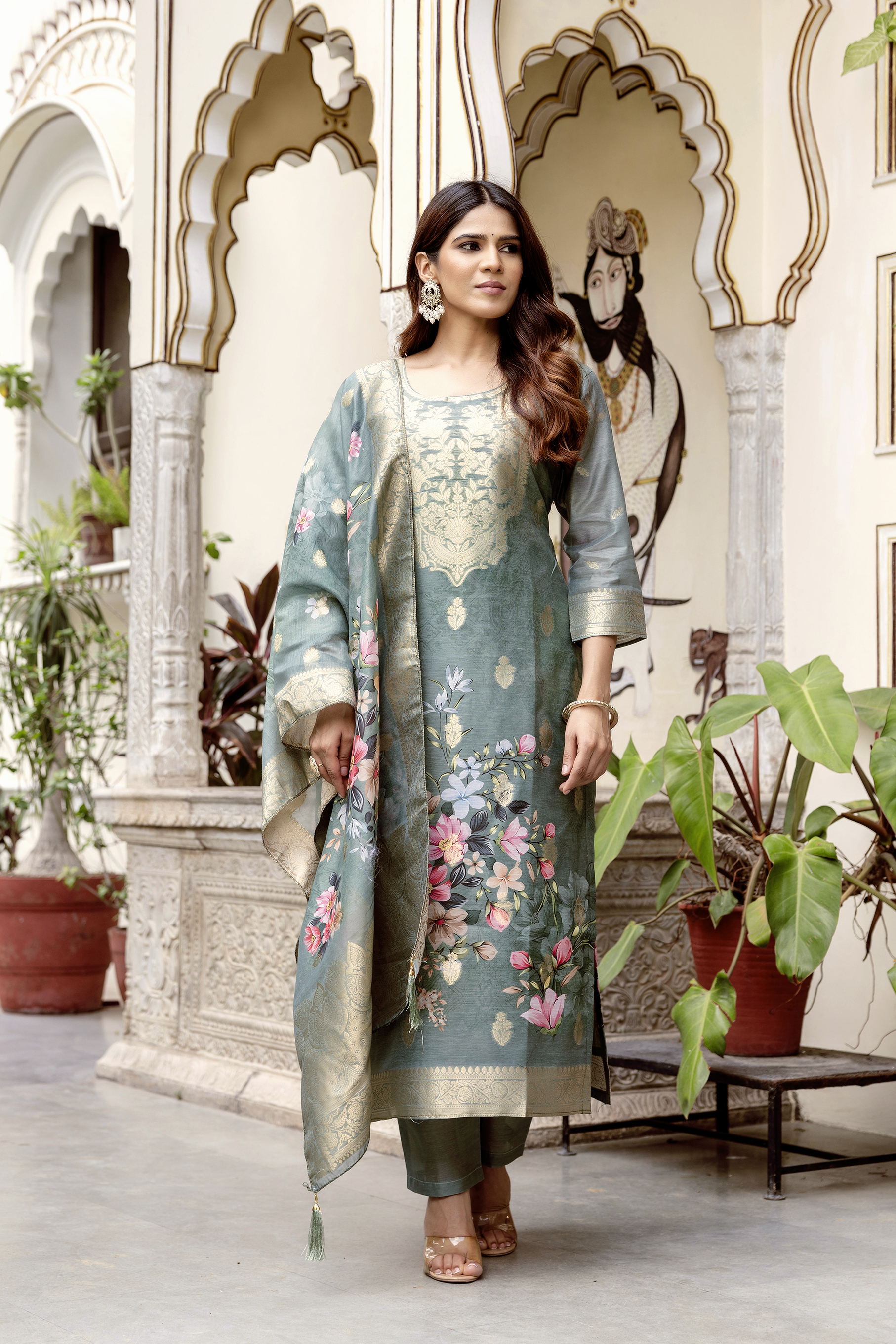
Cotton and mulmul allow the open quality of white or tonal threadwork to remain visible. These fabrics are comfortable for summer, but a very lightweight cotton may need a lining or inner slip if the embroidery creates transparency. Chanderi offers a crisp, lightly luminous surface that works well for dressier kurta sets. The Cream Chanderi Embroidered Kurta Set with Dupatta illustrates how a restrained base can let embroidery remain the main visual feature.
Viscose Chanderi gives a softer fall while retaining some of the fabric's festive sheen. The Mustard Viscose Chanderi Kurta Set with Sequence Embroidery shows a useful variation: sequins are not traditional Chikankari stitches, but they can add evening sparkle to a suit inspired by the same delicate embroidered aesthetic.
Silk and silk-like fabrics suit weddings, receptions and formal dinners because they hold shape and reflect light. The Elegant Beige Vichitra Silk Embroidered Kurta Set for Women demonstrates how a neutral silk surface can support a more polished interpretation of embroidery. Georgette and crepe drape beautifully for longer silhouettes, although slippery fabrics require careful lining and seam finishing.
Fabric weight should match the embroidery. Dense threadwork on a very thin fabric can pull the surface, while a heavily embellished neckline may become uncomfortable if the garment has no support. Buyers should check whether the dupatta is lined, whether the trouser fabric is included and whether the kurta requires a separate inner layer.
How should you choose a Chikankari suit for the occasion?
A suitable Chikankari suit combines embroidery density, fabric breathability, silhouette and colour with the practical demands of the event.
For daytime and summer gatherings
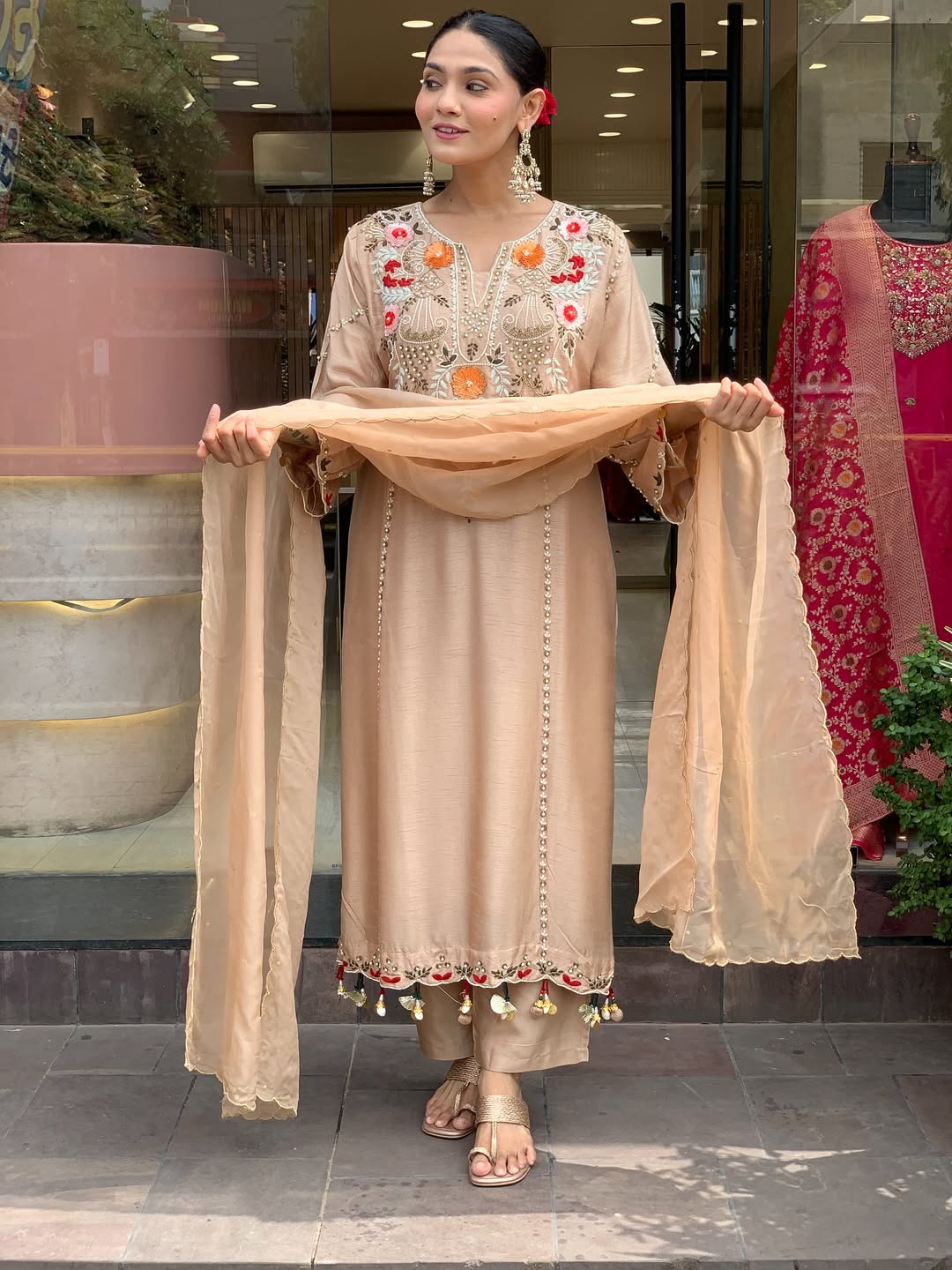
Choose cotton, mulmul or light Chanderi in white, ivory, powder blue, blush, sage or soft yellow for daytime wear. Straight kurtas with cigarette pants or a lightly flared palazzo keep the look comfortable without hiding the embroidery. A white or cream suit works especially well with silver earrings, tan sandals and a printed dupatta.
The Elegant White Chanderi Threadwork Suit with Dupatta is a useful example of a daytime-to-small-function wardrobe piece. White threadwork on a pale base creates a quiet tonal effect, while the Chanderi surface gives the outfit more structure than a very thin cotton suit.
For festive dressing
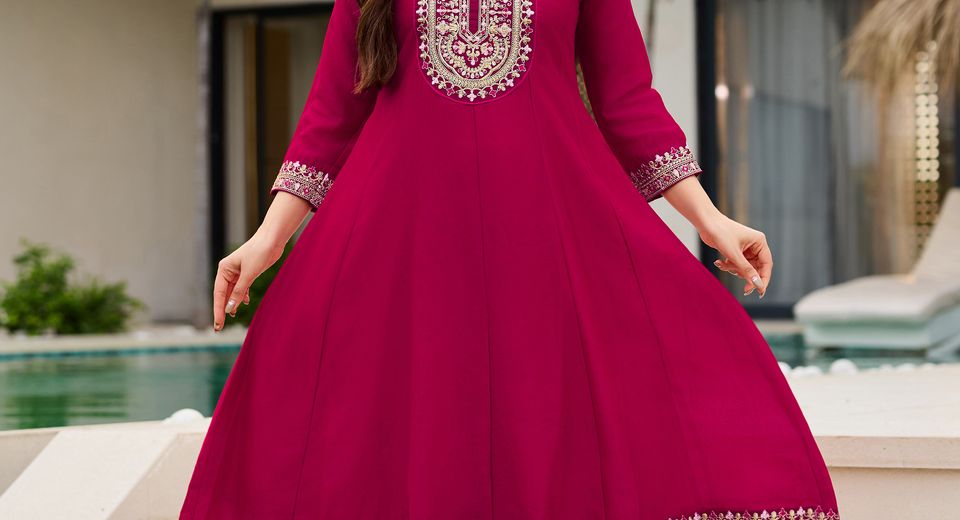
Festive Chikankari suits can use jewel tones, metallic accents, sequins or a more elaborate dupatta while keeping the embroidery visually light. Rani pink, mustard, emerald, deep teal and warm beige work well for family celebrations. The Rani Pink Chanderi Embroidered Kurta Set Dupatta uses colour to make a traditionally delicate embroidery language feel more celebratory.
A brighter suit doesn't require equally bright jewellery. Gold jhumkas, a low bun and neutral footwear can keep a saturated colour balanced. If the neckline already has dense work, skip a heavy necklace and use earrings instead.
For weddings and evening events
For evening wear, look for silk, viscose Chanderi, crepe or georgette, and check whether the garment includes sequence, zari-like accents or a richer border. The Hot Pink Vichitra Embroidered Suit can be styled with metallic heels and a compact potli for a high-colour festive look, while the Multicolor Embroidered Crepe Maxi Suit Set for Festive Wear suits someone who prefers a longer, more fluid silhouette.
Chikankari-inspired dressing doesn't have to mean a traditional white-on-white suit. The important visual idea is the fine, botanical surface detail and the balance between ornament and fabric. A contemporary silhouette can preserve that lightness while using a more dramatic colour palette.
How can Chikankari be compared with other regional salwar-suit traditions?
Chikankari is identified primarily by fine surface embroidery, whereas other regional salwar-suit traditions are often recognised by their weaving, dyeing, printing or silhouette.
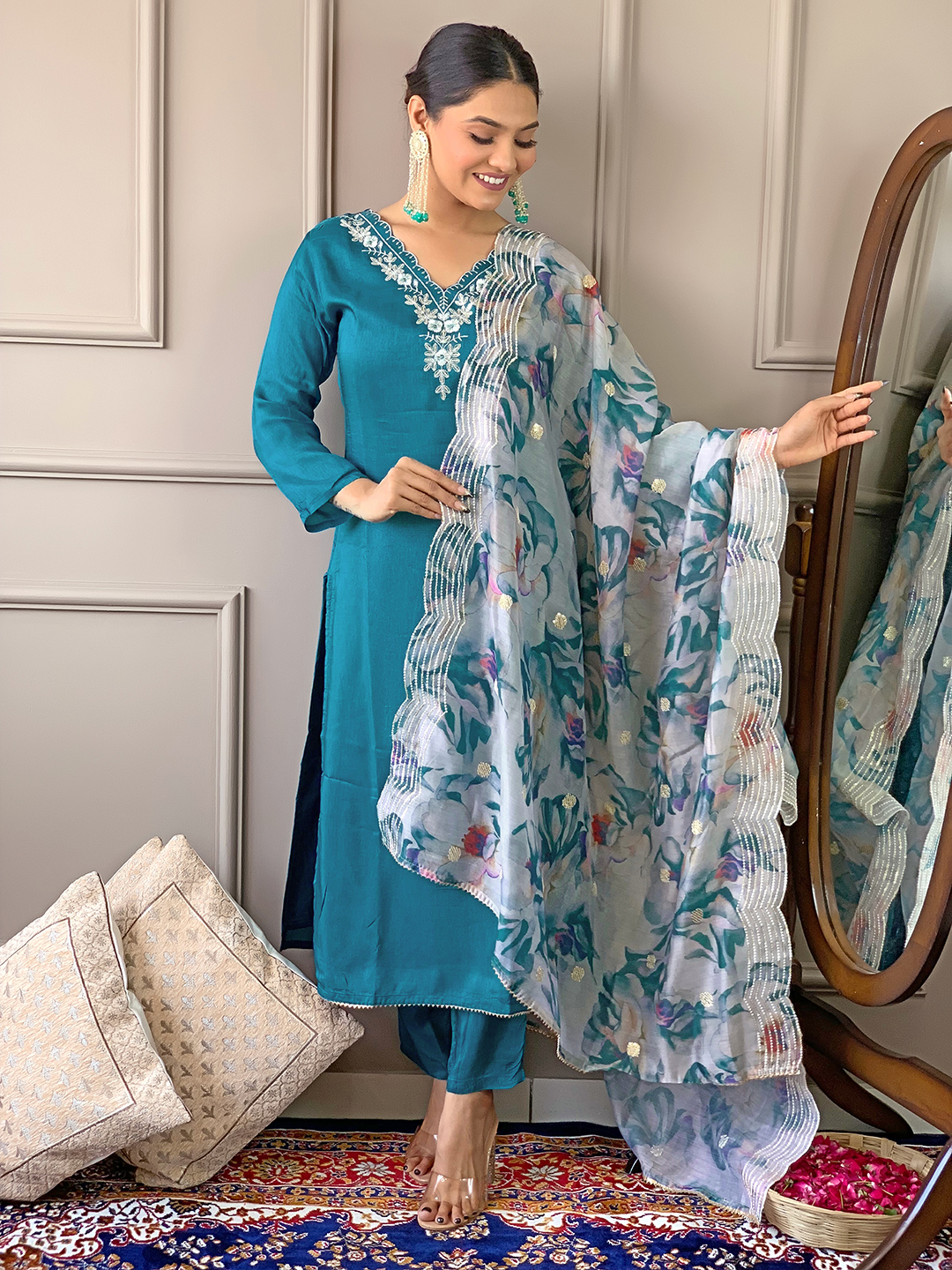
Maharashtra Paithani Inspired Salwar Suits draw from Paithani's association with lustrous silk, peacock motifs and distinctive woven borders. Gujarat Bandhej Salwar Suits and Ahmedabad Bandhani Salwar Suits refer to tie-dye traditions created through tied and resist-dyed points, so their visual energy comes from pattern and colour rather than needlework alone.
Odisha Sambalpuri Salwar Suits are associated with Sambalpuri textile traditions, including woven motifs and regional pattern language. Punjab Patiala Salwar Suits are recognised more strongly by the voluminous Patiala trouser silhouette and Punjabi styling than by one embroidery technique.
These comparisons are helpful when choosing an outfit because they separate the surface treatment from the garment shape. A straight kurta may carry Chikankari, Bandhani-inspired colour or Sambalpuri-inspired motifs. A Patiala salwar can be paired with embroidery, but the Patiala identity comes from its pleated, roomy construction.
The Woven Chanderi Cotton Readymade Salwar Suit is another reminder that weaving and embroidery are different textile approaches. A woven Chanderi suit may have beauty in its yarn arrangement and surface texture even when it doesn't use Chikankari at all.
How should a Chikankari suit be washed and stored?
A Chikankari suit should be washed according to its fabric and embroidery, with gentle handling, limited soaking and shade drying as the safest general practice.
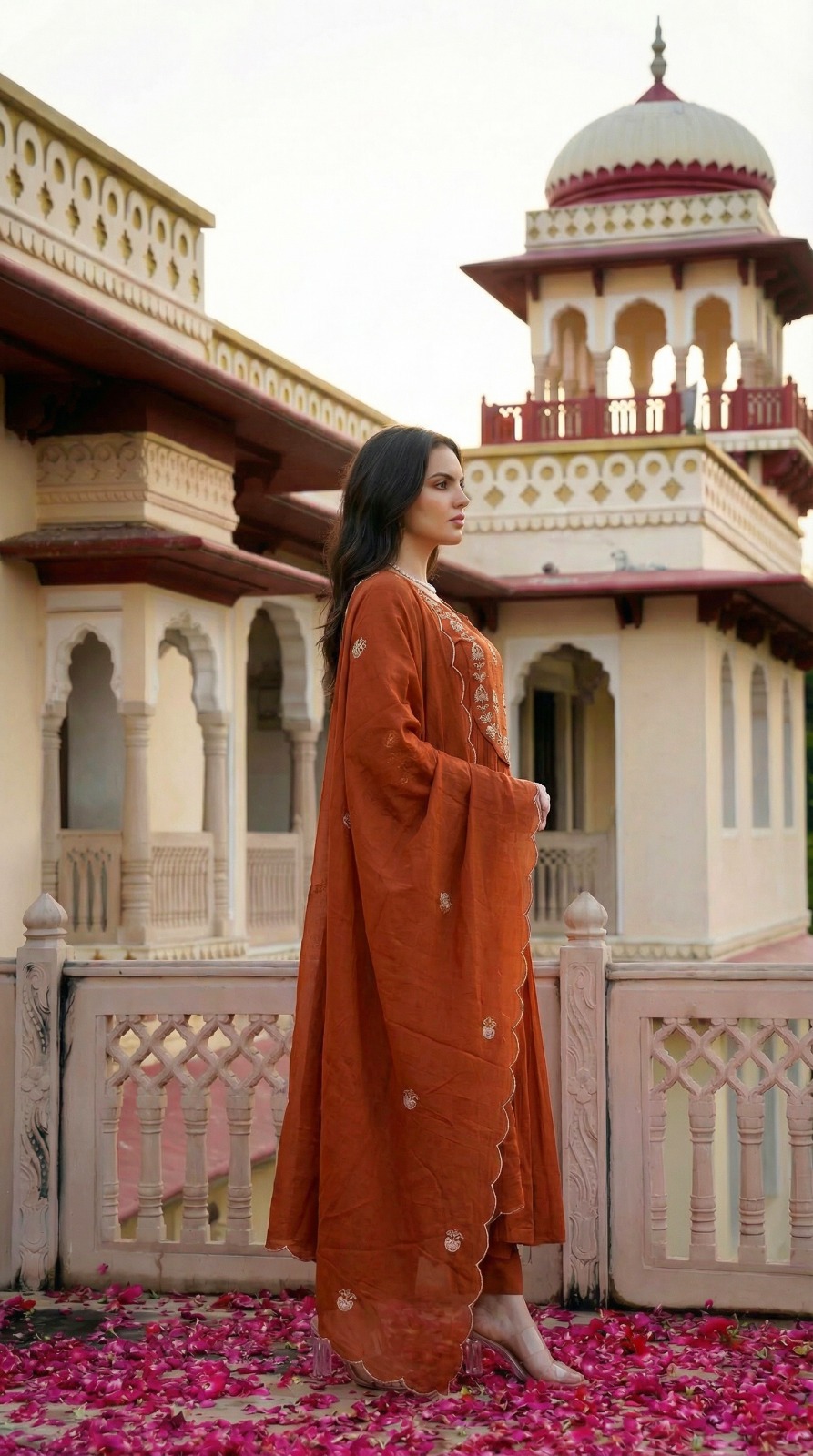
Read the care label before washing, especially when a suit includes silk, sequins, contrast dye or a delicate lining. For cotton or stable blends, hand washing in cool water with a mild detergent is usually safer than vigorous machine washing. Keep soaking time short, around five to ten minutes, because prolonged water exposure can weaken threads, affect colour and distort lightweight fabric.
don't scrub embroidered areas or wring the kurta. Press excess water out through a clean towel, reshape the garment on a flat surface and dry it away from direct midday sunlight. Strong sunlight can fade dyed fabric, while high heat can shrink cotton or flatten textured embroidery.
Dry-clean silk, heavily embellished Chanderi, crepe with elaborate finishing and garments with uncertain colourfastness. A small hidden-area colour test can reveal whether a dark or bright fabric is likely to bleed, but professional cleaning remains safer for expensive pieces.
Iron Chikankari suits from the reverse side on a low or medium setting, placing a thin cotton cloth between the iron and the embroidery. Avoid pressing directly over raised stitches, sequins or decorative knots. Store the garment clean and fully dry, folded with soft tissue around heavily worked areas so the embroidery doesn't catch or flatten.
What should you check before buying a Chikankari suit?
Before buying a Chikankari suit, inspect the embroidery, fabric, measurements, lining, trouser details and care instructions rather than judging the garment from colour alone.
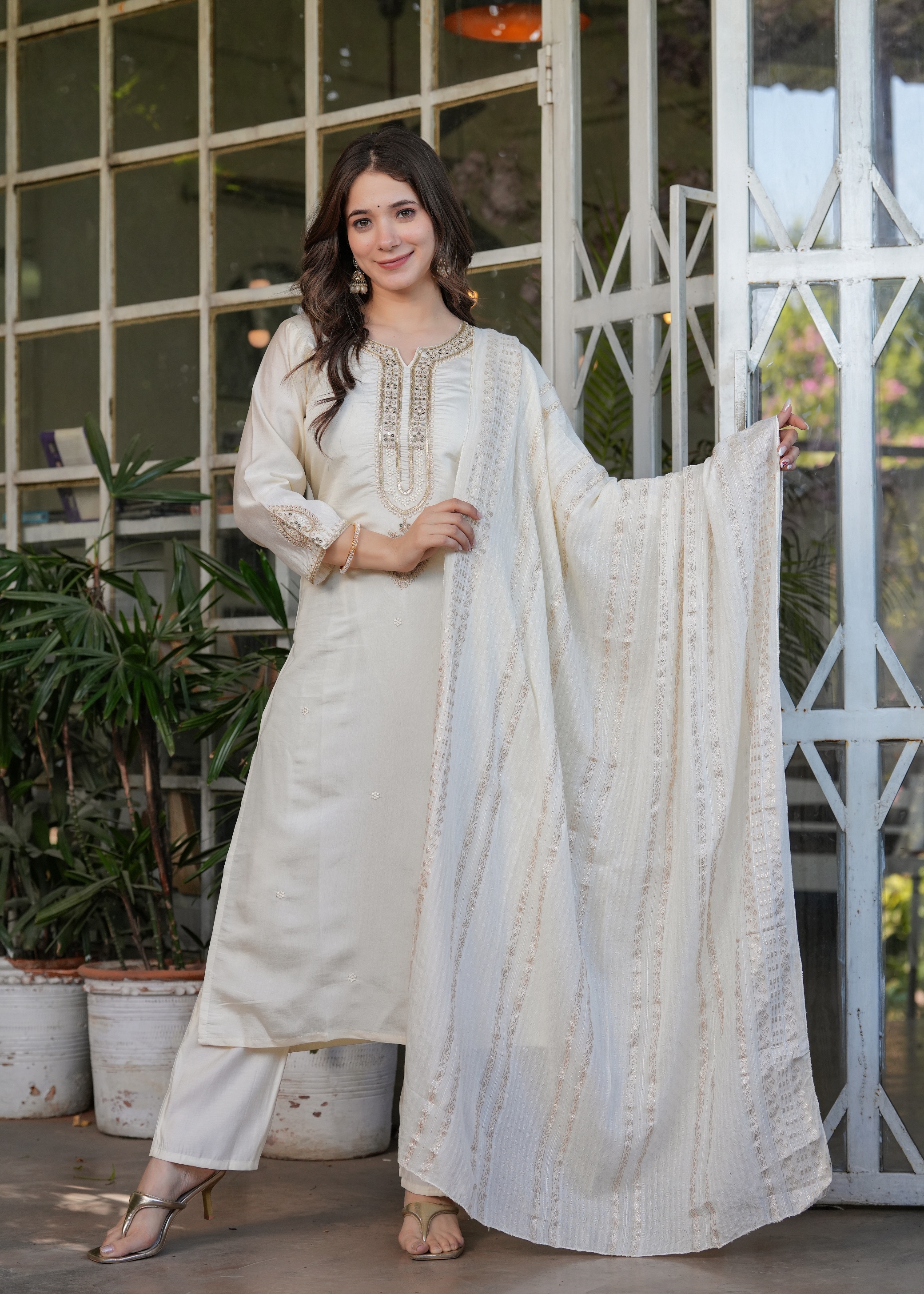
- Identify the embroidery: Look for named stitch details, varied texture and sensible motif placement. Product descriptions should clarify whether the work is hand embroidered, machine embroidered or simply Chikankari-inspired.
- Check the fabric: Confirm whether the garment is cotton, Chanderi, viscose, silk, crepe or a blend. Fabric names affect breathability, fall, transparency and cleaning requirements.
- Read measurements: Compare bust, waist, hip, kurta length, sleeve length and trouser measurements with a garment you already own. Ready-made sizing can differ between straight suits, palazzo sets and maxi silhouettes.
- Examine the dupatta: Check its length, width, border, finishing and whether embroidery appears on the entire surface or only at the ends.
- Look at the reverse side: Dense loose threads, rough knots or unfinished edges may cause snagging and discomfort. A neat reverse is especially important around the neckline and armhole.
- Set a realistic budget: Handwork takes longer and usually costs more than uniform machine embroidery, but price should still correspond to fabric quality, stitch density and finishing.
These checks make the answer to which state is famous for Chikankari suits more useful than a one-line geography fact. Uttar Pradesh identifies the craft's strongest regional association, while construction details determine whether a particular salwar suit is comfortable, durable and worth adding to a wardrobe.
Questions Readers Ask About Lucknow Chikankari Suits
Which state is famous for Chikankari suits?
Uttar Pradesh is the state most famous for Chikankari suits, particularly the city of Lucknow. Lucknow Chikankari is known for delicate thread embroidery, floral motifs and stitches such as tepchi, bakhiya, jaali and phanda.
Is Chikankari from Lucknow or Uttar Pradesh?
Chikankari is a craft tradition centred in Lucknow, which is in Uttar Pradesh. The wider artisan network extends beyond the city, but Lucknow remains the place most strongly associated with the embroidery.
How can you tell whether a Chikankari suit is hand embroidered?
Hand embroidery usually shows slight differences in stitch length, thread tension and motif detail, while machine work tends to look highly uniform. A product description, close-up photographs and a neat but not perfectly mechanical reverse side can provide additional clues.
Which fabric is best for a Chikankari salwar suit?
Cotton and mulmul are practical for warm weather, while Chanderi, silk blends, georgette and crepe suit dressier outfits. The best fabric depends on climate, embroidery weight, transparency, fall and whether the garment can be safely washed at home.
Can Chikankari suits be worn to weddings?
Chikankari suits can work for weddings when they use richer fabrics, saturated colours, sequins, metallic accents or an elaborate dupatta. Viscose Chanderi, silk, crepe and georgette generally create a more formal finish than lightweight everyday cotton.
How should a Chikankari suit be washed?
Hand wash suitable cotton or blended suits gently in cool water with mild detergent, avoid scrubbing and dry them in shade. Silk, heavily embellished garments and pieces with possible colour bleeding should be professionally dry-cleaned.