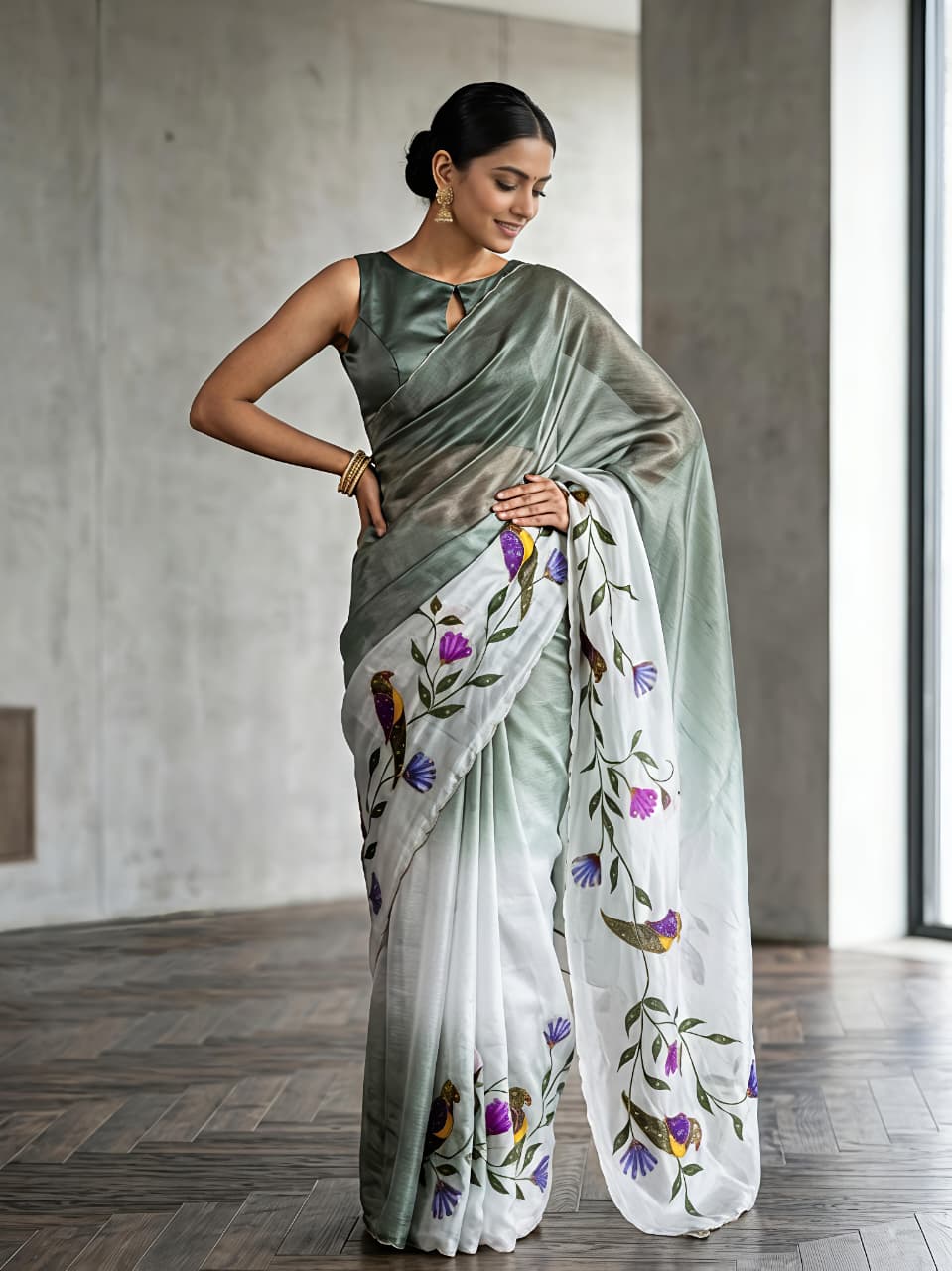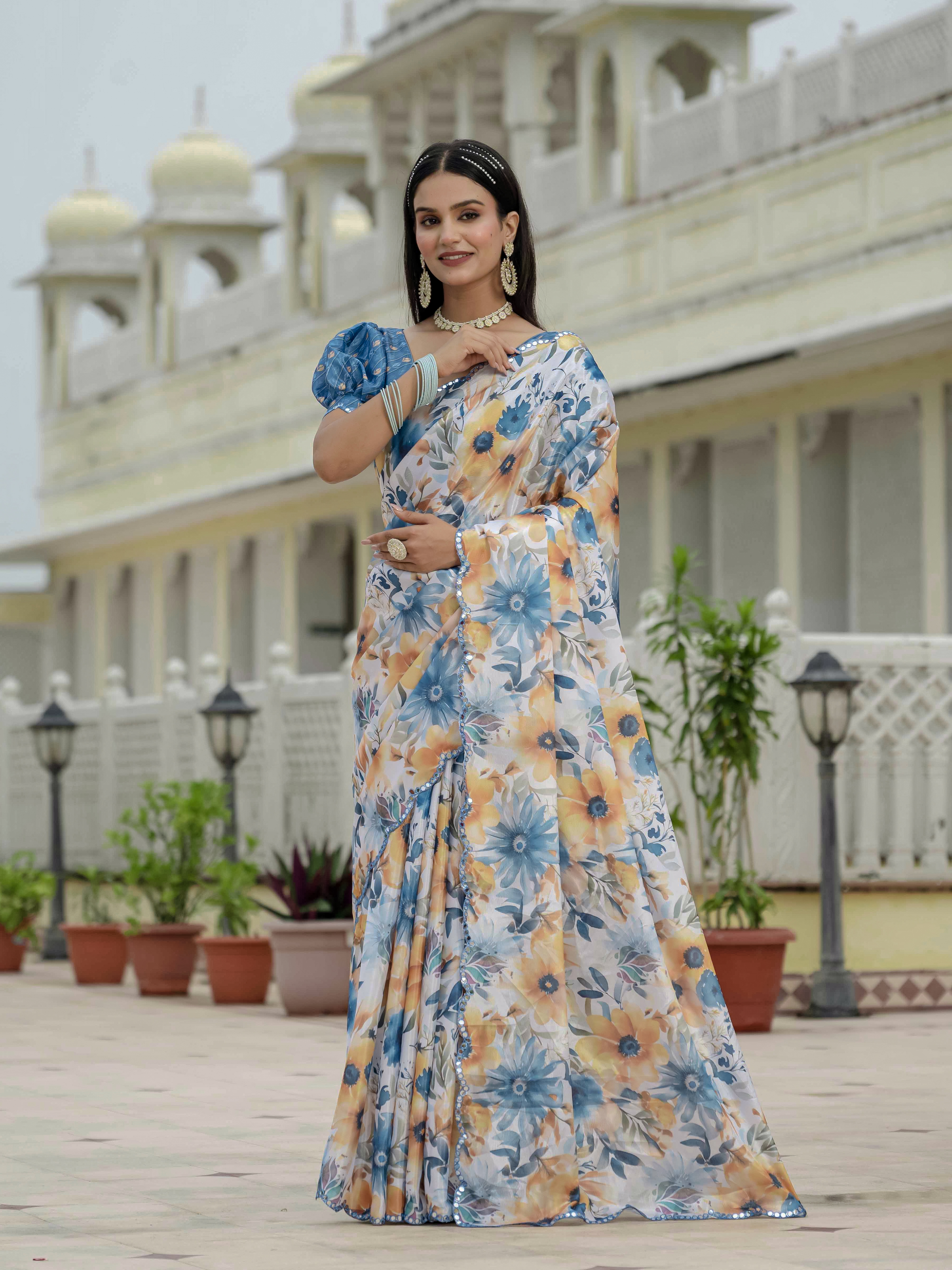
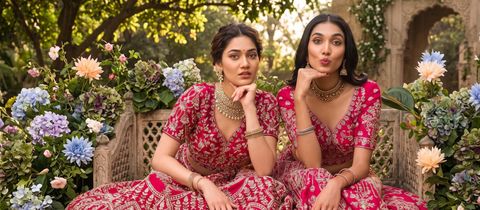
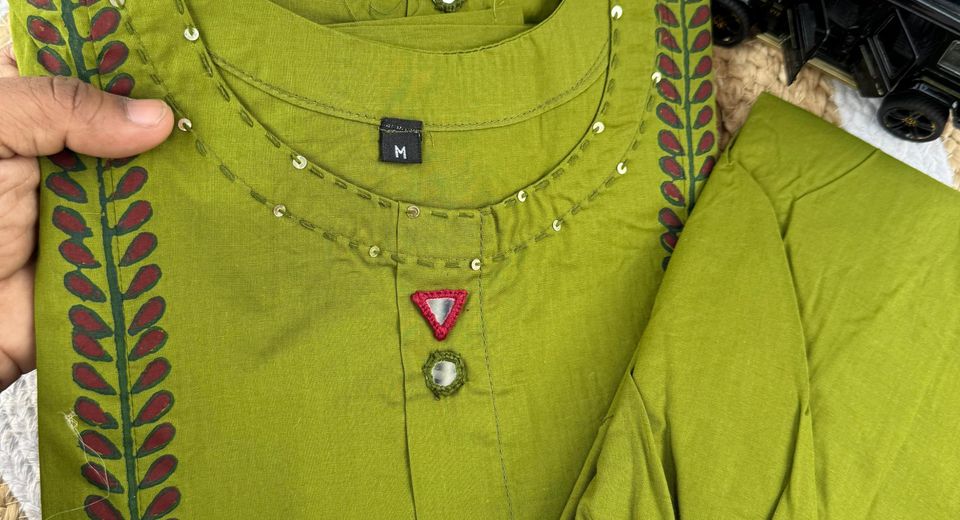
Which state is famous for block print suits? Rajasthan is the clearest answer, with Jaipur, Sanganer and Bagru serving as major centres of printing and textile trade. Rajasthan's salwar suits are recognised for hand-carved wooden blocks, floral jaal patterns, earthy colours, fine outlines and, in some traditions, resist-dyed designs. The craft combines practical cotton fabrics with a visual language that works equally well for everyday kurta sets and festive dressing.
Knowing the difference between Sanganer printing, Bagru printing and machine-made imitation helps you choose a salwar suit with the right appearance, comfort and care needs. The printing method also explains why small variations in alignment, colour and motif are often signs of handwork rather than defects.
Rajasthan is the state most closely associated with block print suits in India. Jaipur and nearby Sanganer are particularly known for delicate floral prints, while Bagru is celebrated for darker natural-dye palettes and resist-printing traditions.
Rajasthan's prominence comes from a long-established textile ecosystem rather than a single design. Wood carvers prepare blocks, printers align repeated motifs, dyers develop colour, washers finish the cloth. Local markets distribute the finished textiles. This specialised chain has allowed block printing to remain part of daily clothing instead of surviving only as a museum craft.
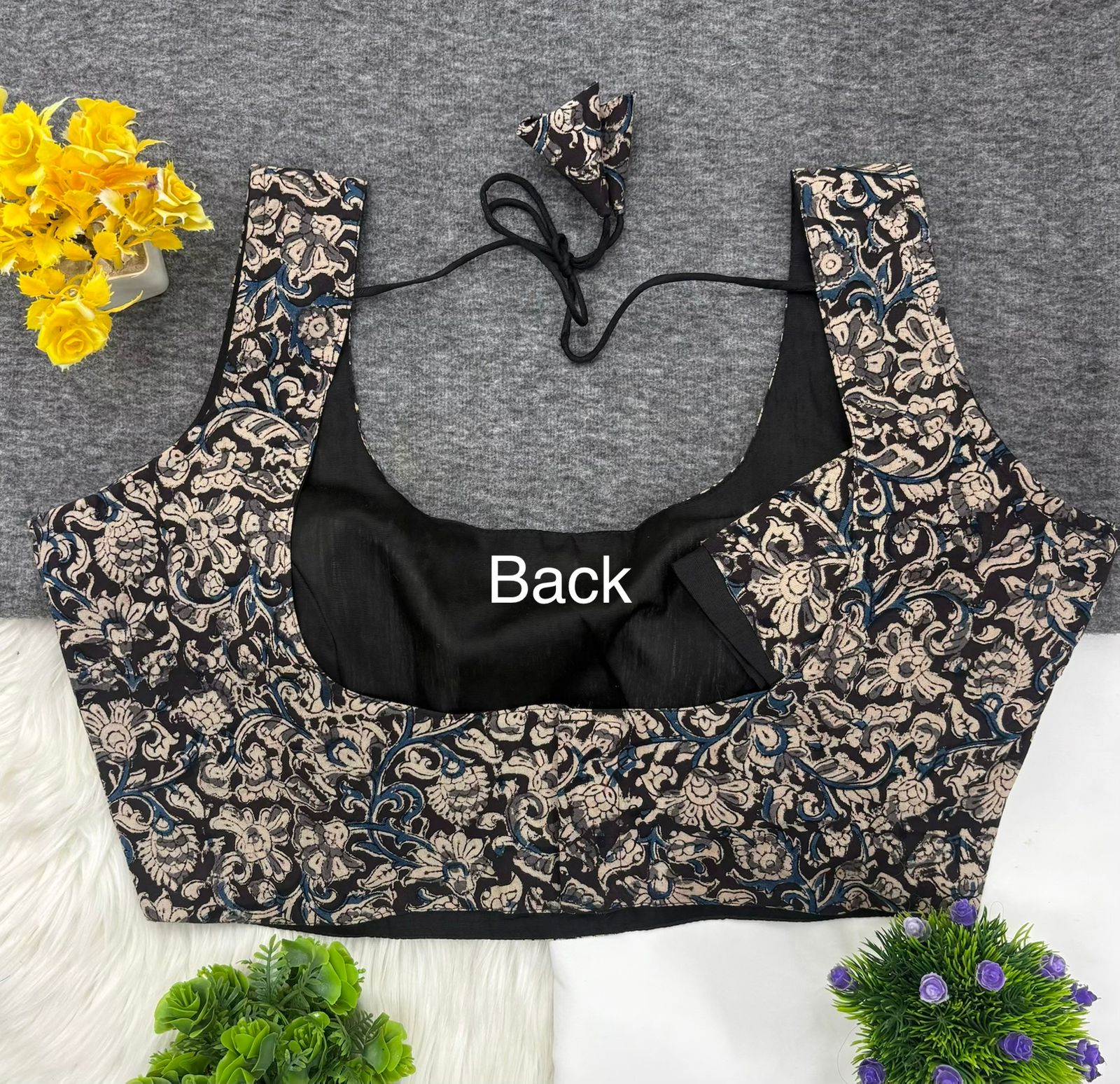
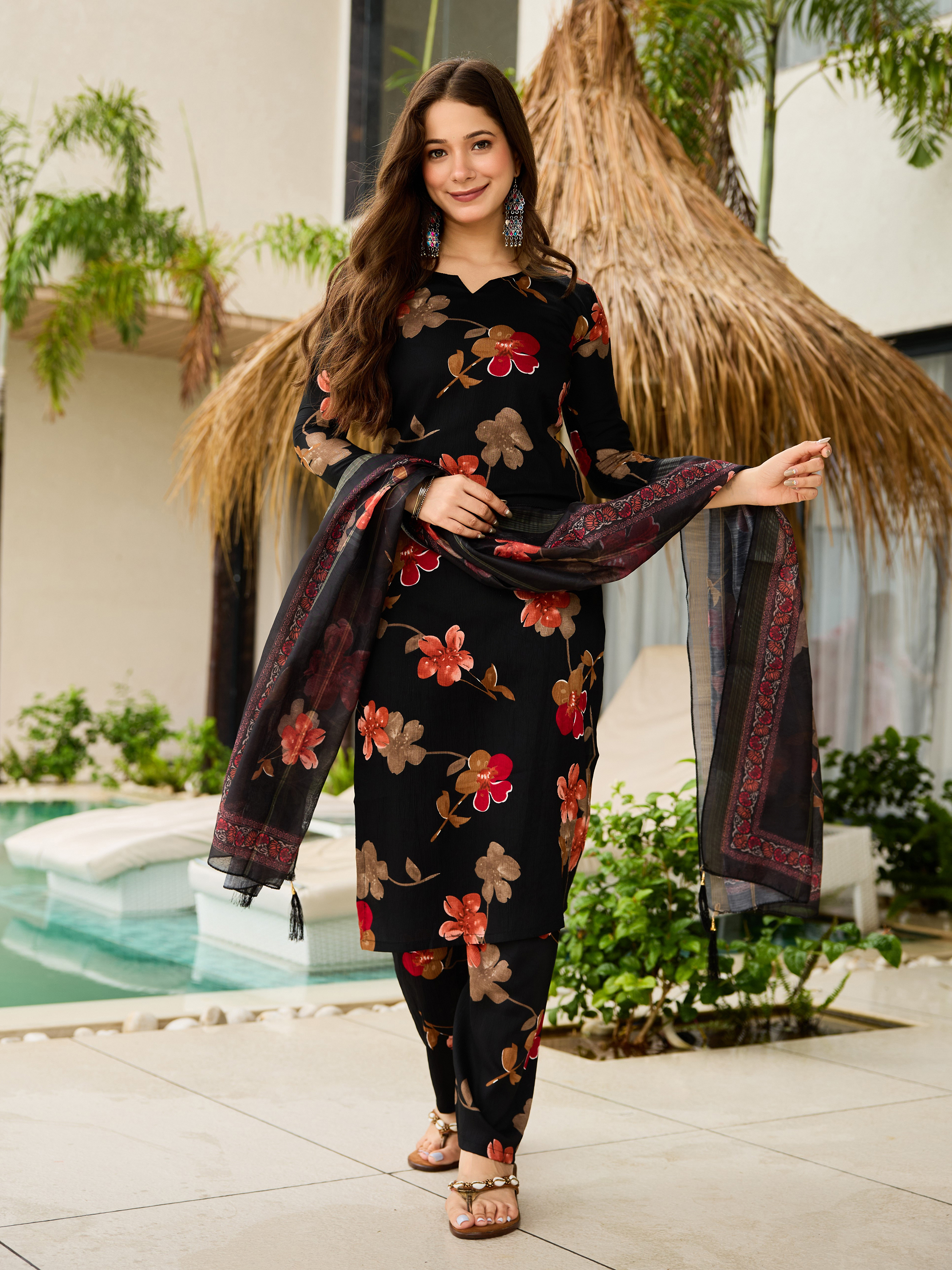
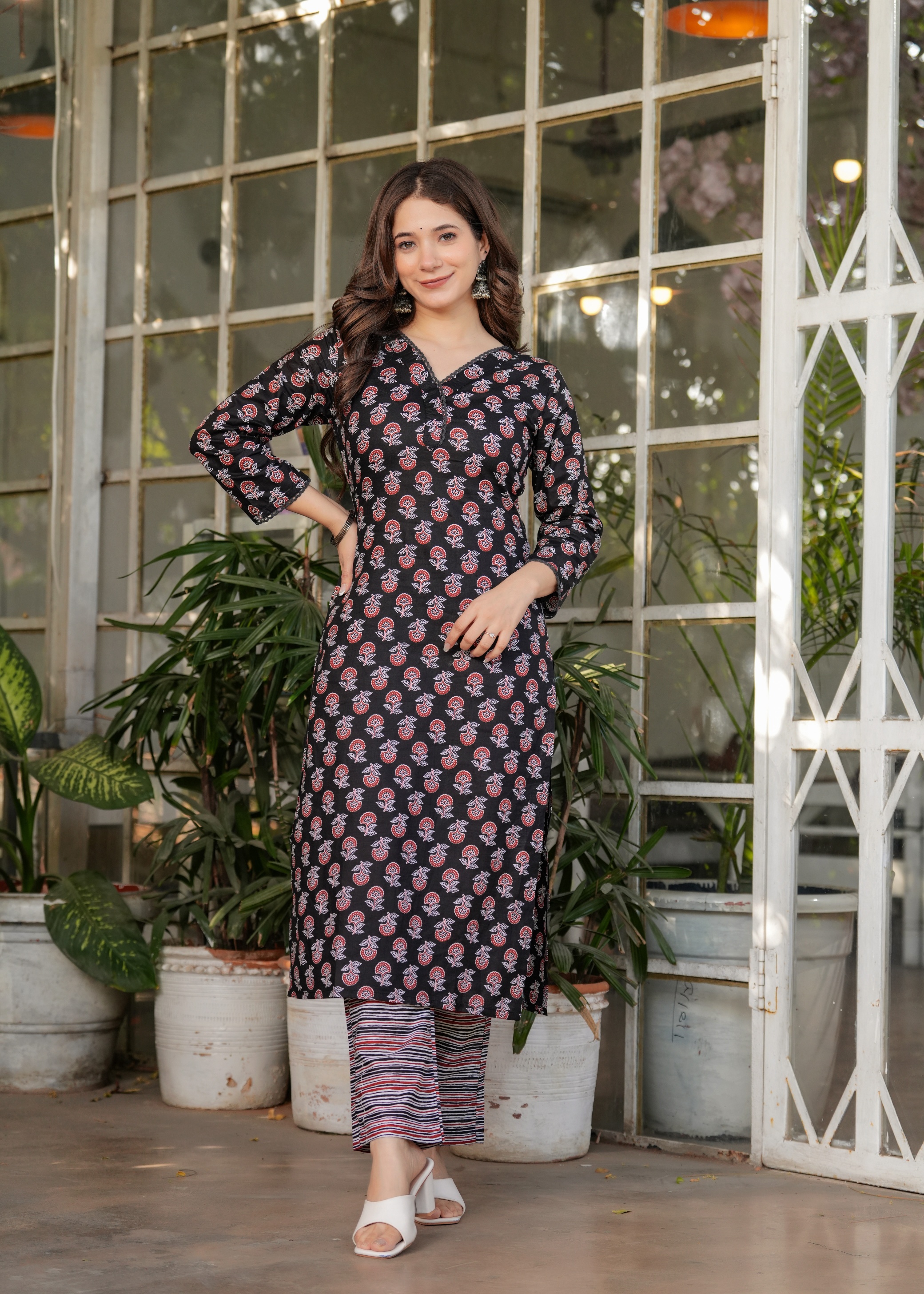
Rajasthan Printed Salwar Suits represent the broadest visual category associated with the state. The category can include floral cotton suits, printed dupattas, geometric layouts and richer fabric interpretations. Black Maroon Cotton Printed Kurta Set with Dupatta shows why the craft remains wearable: a strong colour contrast gives the print definition while cotton keeps the outfit suitable for repeated use.
How Jaipur, Sanganer and Bagru printing differ
Jaipur, Sanganer and Bagru are related printing centres, but their visual results differ because they use different combinations of blocks, dyes, resist methods and colour palettes.
Jaipur and Sanganer floral printing
Sanganer is especially known for fine, delicate floral printing on a lighter ground. Sanganeri designs often use detailed flowers, vines and butis, with clear outlines and a relatively airy arrangement. White or pale backgrounds make the motifs look crisp, although contemporary versions may use pastel, jewel or deep-toned bases.
Jaipur Block Print Salwar Suits in Crepe translate the regional vocabulary into a smoother drape. Crepe can make small motifs appear fluid and can give a kurta set a more polished fall than ordinary cotton. Buyers should check whether the design is hand-block printed or digitally reproduced, because the word "block" in a collection name doesn't always describe the production method.
Bagru and Dabu techniques
Bagru printing is known for earthy indigo, black, rust, mustard and brown combinations, while Dabu printing uses a mud-resist paste to protect selected areas from dye. Artisans commonly apply the resist, dust it with sawdust, dye the fabric, wash away the resist and repeat selected stages to build layered patterns.
Hand Block Printed Salwar Suits in Crepe and Muslin can show the contrast between a smoother crepe surface and the softer, more breathable character of muslin. Dabu-inspired patterns often have a gently irregular edge because resist material and dye move through fabric differently from ink applied by a machine.
What makes a Rajasthani block print suit distinctive?
A Rajasthani block print suit is distinctive because its motifs, repeat structure, dye behaviour and handcrafted irregularities work together. A printed salwar suit may contain one block for an outline, another for a filled colour and a third for a border or buti.
- Wooden blocks: Blocks are generally carved from seasoned wood so that the face remains stable during repeated stamping.
- Motif language: Flowers, leaves, vines, paisleys, jaal layouts and geometric borders are common across Rajasthan's printed textiles.
- Layered colour: Artisans may stamp several colours separately, allowing a design to build gradually across the cloth.
- Visible variation: Slight shifts in alignment, uneven ink density and tiny changes in repeated motifs can occur in hand printing.
- Natural-dye character: Indigo, madder-derived reds, iron-based blacks and vegetable colours can soften or change with washing and sunlight.
Not every printed suit uses natural dyes or a fully hand-operated process. Many contemporary manufacturers combine screen printing, digital printing and block-style motifs to make affordable garments. A genuine hand-block suit should be judged by clear information about the technique, fabric and care instructions rather than by irregularity alone.
Which fabrics work best for block print salwar suits?
Cotton is the most practical fabric for everyday block print salwar suits because it absorbs colour well, allows air circulation and becomes comfortable in warm weather. Crepe, muslin, Chanderi cotton and silk blends serve different styling and occasion needs.
Cotton for daily wear
Cotton suits are suitable for office-friendly dressing, summer errands, college wear and informal gatherings. Olive Green A-Line Cotton Kurti Pant Set for Women illustrates how a simple A-line silhouette can give a printed or surface-detailed outfit an easy, contemporary shape.
Cotton may shrink if it has not been pre-washed or pre-shrunk. A first wash in cool water, followed by drying in shade, reduces the risk of sudden size changes and protects darker pigments from rapid fading.
Chanderi and muslin for lighter occasion dressing
Chanderi adds a light, slightly sheer elegance and usually works well with a more structured lining or an opaque inner layer. Navy Blue Chanderi Silk Kurta Set with Printed Dupatta demonstrates how a printed dupatta can carry the craft element while the kurta retains a refined festive appearance.
Muslin feels soft and breathable, but its delicate weave needs gentler handling than sturdy cotton. Chanderi silk and Chanderi cotton should be stored folded in breathable fabric, away from direct sunlight and rough jewellery that can catch the surface.
Crepe and jacquard for a polished finish
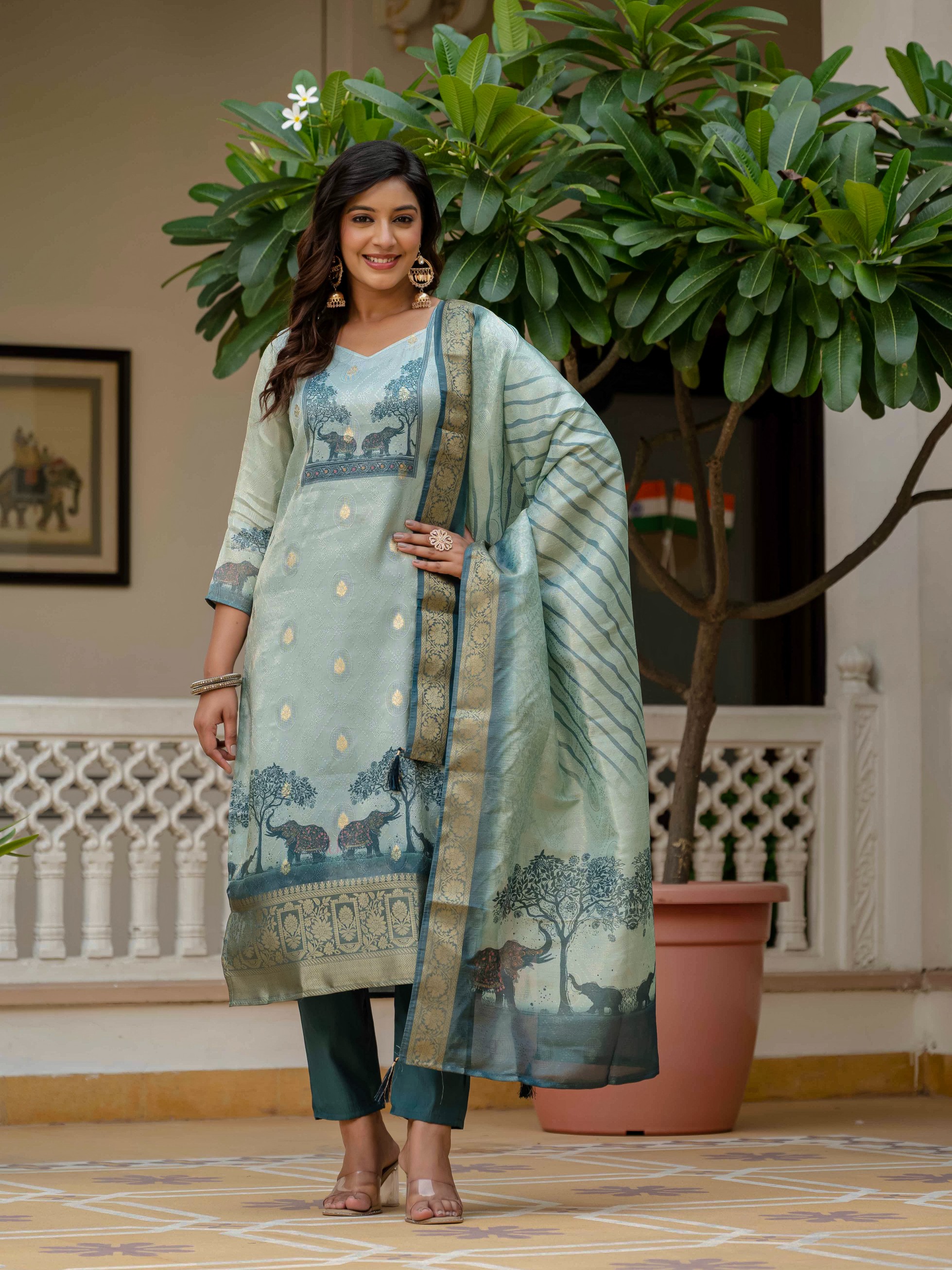
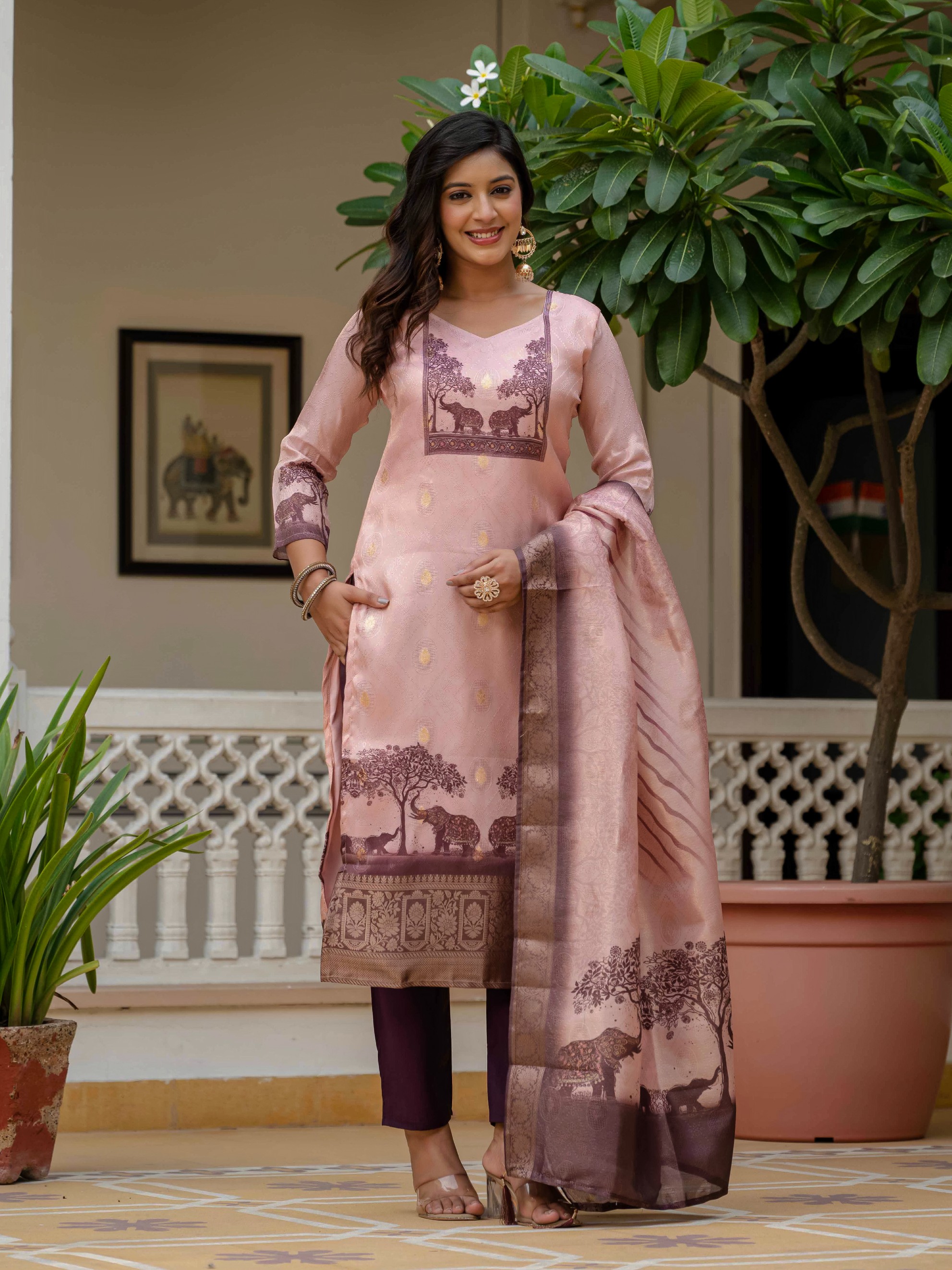
Crepe drapes smoothly and often suits flowing kurtas, while jacquard creates texture through woven patterns rather than printed colour alone. Royal Blue JacquardSilk Heritage Printed Suit Set and Royal Pink JacquardSilk Classic Printed Suit Set show how a printed or heritage-inspired surface can move into evening and celebration dressing.
Jacquard silk garments generally require more cautious care than cotton. Dry cleaning is often safer when the care label recommends it, especially when the suit includes metallic thread, colour contrast or a delicate dupatta.
How to choose a block print suit for the occasion
The right block print suit depends on the event, climate, fabric weight, print scale and amount of surface decoration. A breathable cotton suit suits daytime use, while silk-look textures, richer colours and embellished details create stronger evening presence.
For office wear and everyday use
Choose cotton or cotton-blend fabric, a medium-scale motif and a straight or A-line kurta for practical daily dressing. A matching or lightly contrasting dupatta makes the outfit easier to repeat without looking identical each time. Keep jewellery restrained so that the print remains the main visual detail.
Designer Cotton A-Line Kurti Pant Set with Mirror Work offers an example of how mirror work changes the role of a printed silhouette. Mirror accents are more suited to casual festive days and social gatherings than to conservative workplaces, where small earrings and a plain handbag may be more appropriate.
For festive gatherings
Festive dressing benefits from jewel tones, Chanderi, jacquard, a printed dupatta or measured embroidery. Blue Printed Georgette Designer Gown for Women Festive is a reminder that block-print aesthetics can influence occasion silhouettes beyond the conventional three-piece salwar suit.
For a Haldi ceremony, yellow, marigold, green and pink prints coordinate naturally with the setting, but very delicate pale fabrics may stain easily. For Diwali or an evening family event, navy, royal blue, wine, black and metallic accents offer more visual depth under indoor lighting.
For travel and warm weather
Choose cotton, muslin or a light cotton-silk blend with a washable dupatta and a relaxed trouser or palazzo. Avoid heavy embellishment when the outfit must be folded into luggage, because sequins and raised embroidery can snag neighbouring garments.
How to style a Rajasthani printed salwar suit
A Rajasthani printed salwar suit looks balanced when accessories repeat one colour from the textile instead of competing with every motif. Styling should also respond to the silhouette: an A-line kurta needs a different proportion from a straight kurta with wide palazzos.
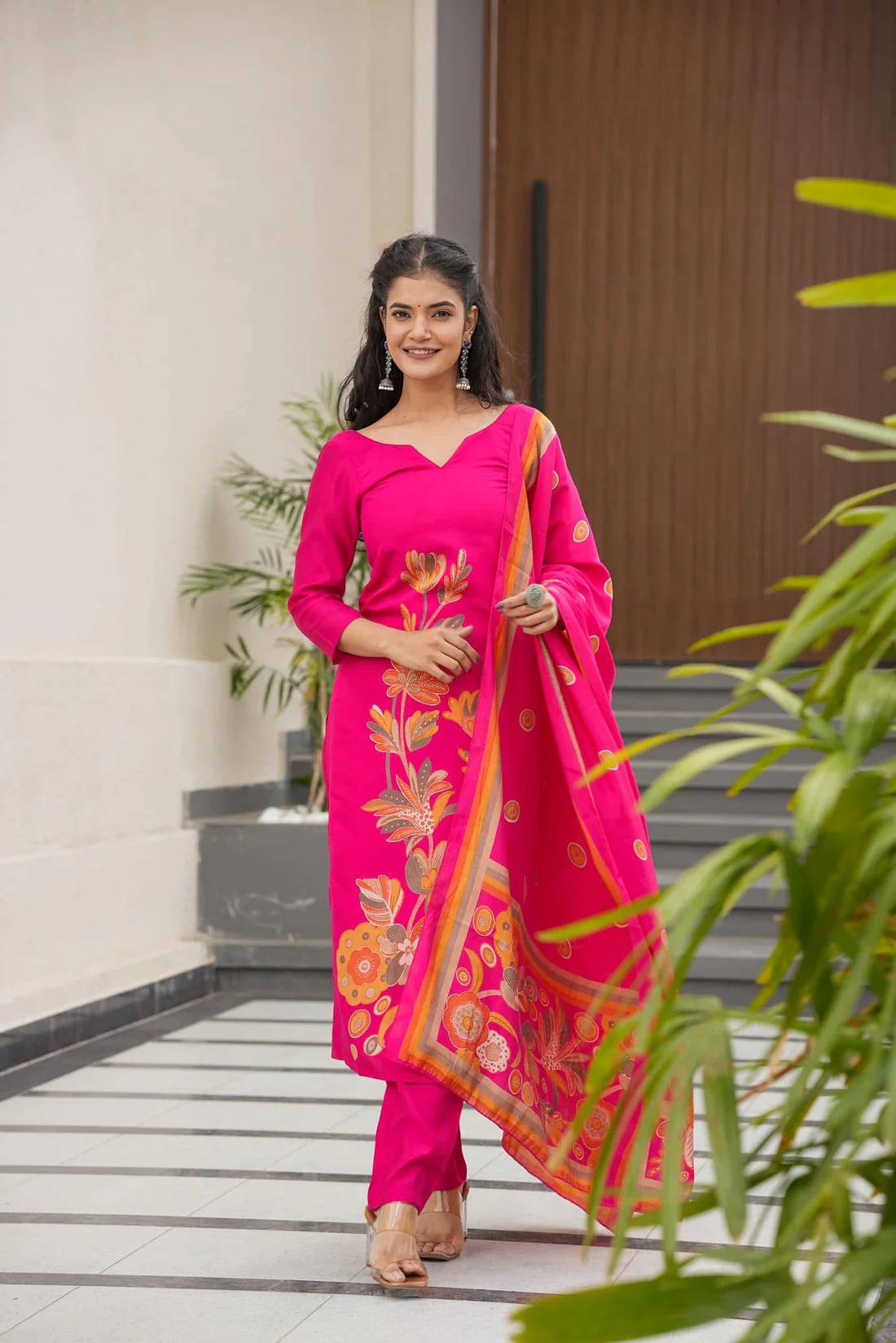
- With an A-line kurta: Pair slim cotton pants or cigarette trousers with juttis, small hoops and a compact shoulder bag.
- With a printed dupatta: Keep the kurta in a quieter solid shade, or repeat only one accent colour in the trousers and jewellery.
- With wide palazzos: Choose a shorter straight kurta or tuck the front edge slightly to keep the print from overwhelming the outfit.
- With Chanderi: Use pearl, silver or delicate zari jewellery and avoid a heavily patterned handbag.
- With Bagru-style earthy colours: Tan leather, oxidised silver, indigo footwear and wooden accessories reinforce the textile's natural palette.
Dupatta placement also changes the perceived shape of a printed suit. A vertical front drape can lengthen the torso, while a relaxed shoulder drape gives more room for the kurta pattern to remain visible. A plain dupatta can calm a heavily printed set, whereas a printed dupatta can add interest to a solid kurta.
How to identify and care for a hand-block printed suit
A hand-block printed suit can often be identified through repeated motifs that show tiny variations in pressure, spacing or colour density. Those signs should appear naturally across the garment rather than as random damage or badly blurred printing.
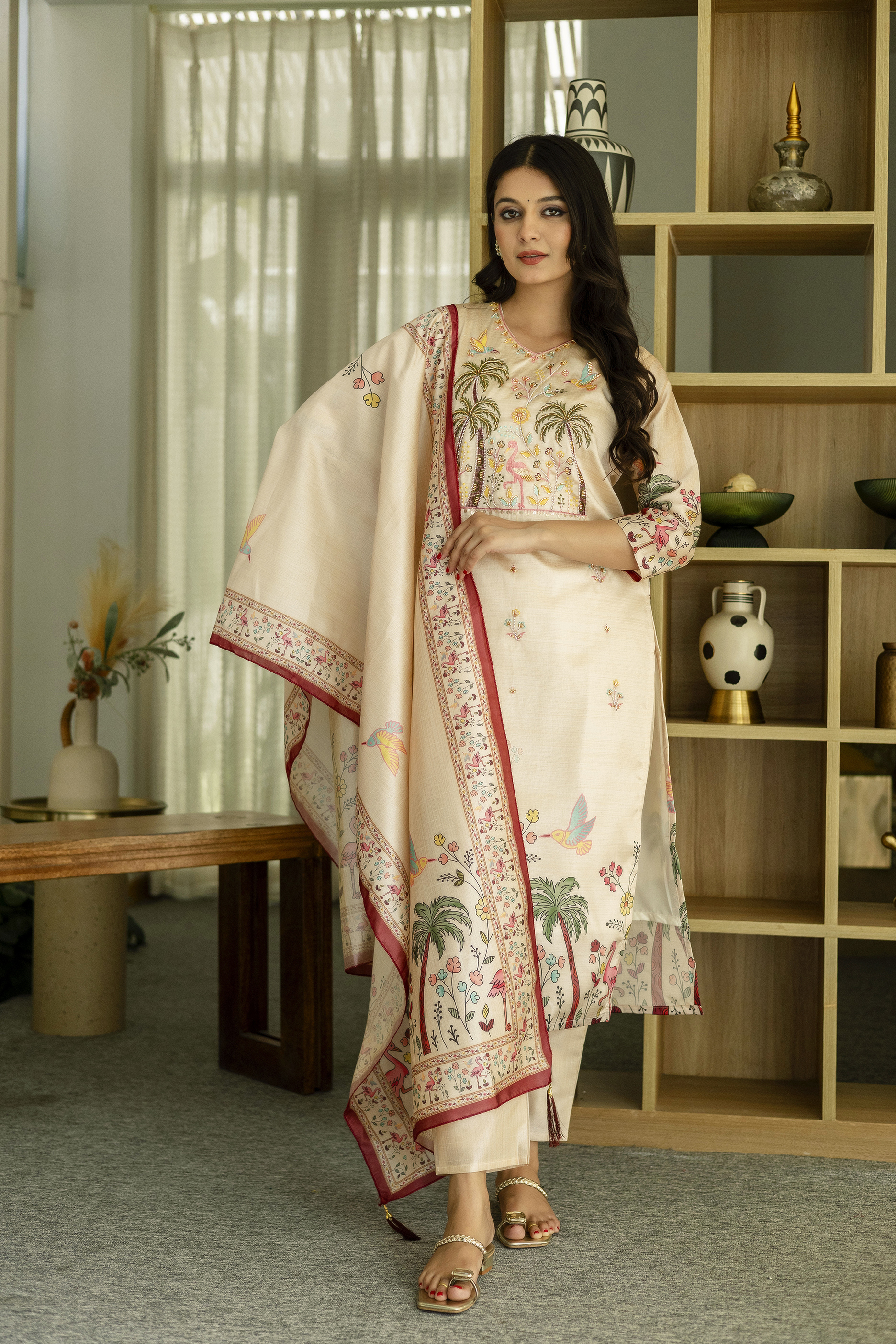
Check the reverse side of a fabric swatch or seam when possible. Hand stamping may leave some colour penetration on the underside, although the degree varies with fabric thickness and dye type. A completely uniform print isn't automatically machine-made. An uneven print isn't automatically handmade, so the seller's technique and material disclosure still matter.
Wash cotton block print suits separately in cold water for the first few washes. Use a mild detergent, avoid chlorine bleach, don't wring aggressively and dry the garment inside out in shade. Direct midday sunlight can fade indigo, black and madder-red pigments faster than shaded drying.
Iron printed cotton on the reverse side at a moderate temperature. Store silk, Chanderi and embellished pieces in breathable cotton covers rather than plastic, and refold valuable garments every few months to reduce permanent fold lines. A care label should take priority over general advice because commercial dyes and blended fabrics behave differently.
How Rajasthan compares with other Indian print traditions
Rajasthan is the strongest answer to the question about block print suits, but other Indian regions have equally important textile-printing traditions. Gujarat is known for Ajrakh, Andhra Pradesh and Telangana are associated with Kalamkari, and West Bengal is recognised for Kantha and several printed and woven textile forms.
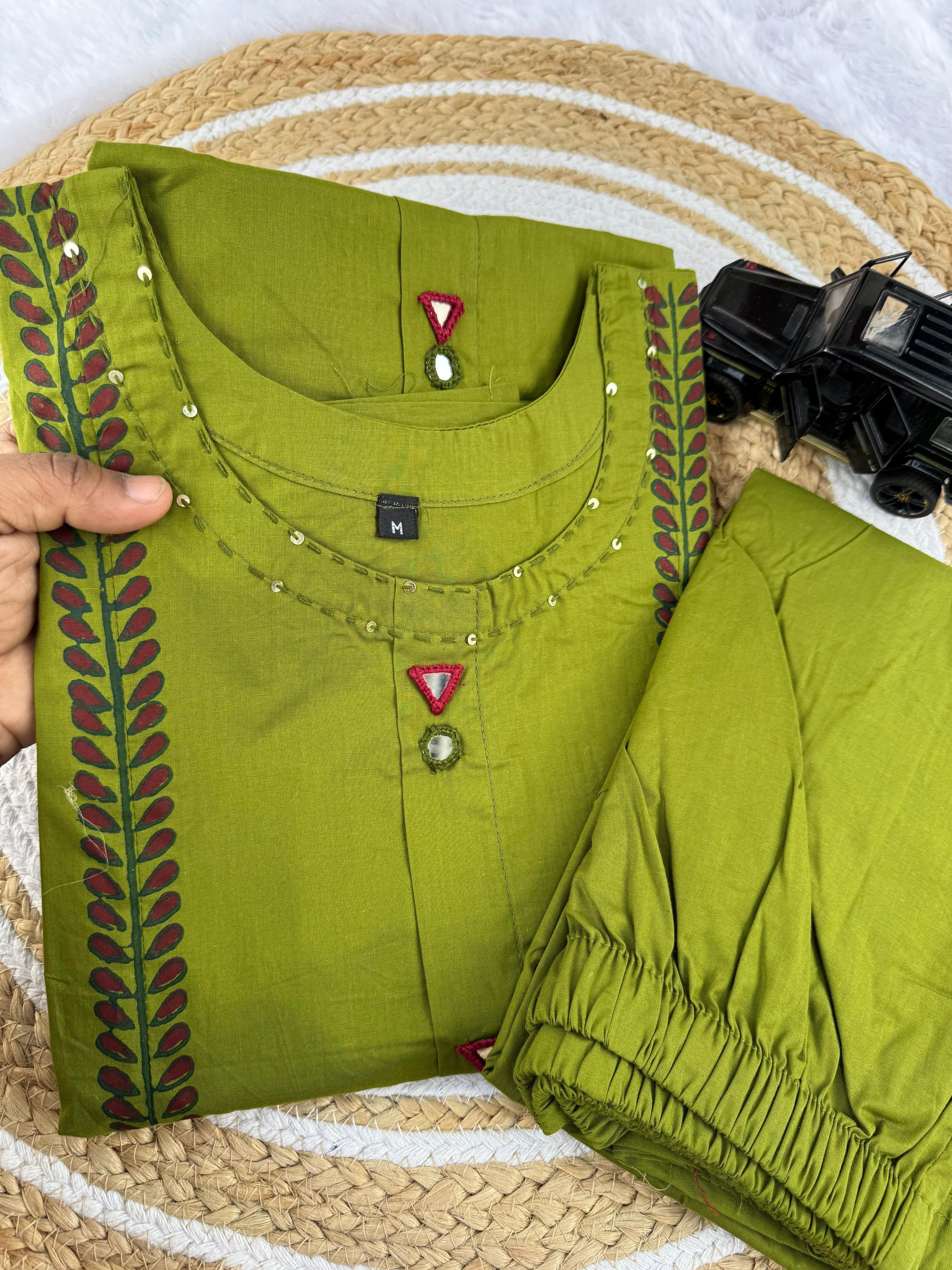
Kalamkari Print Salwar Suits offer a useful comparison because Kalamkari often uses hand-drawn or block-printed mythological, floral and natural motifs on cotton. Kalamkari and Rajasthan block printing may share earthy colours and botanical designs, but their drawing methods, regional histories and visual layouts are different.
Rajasthan's strength in salwar suits comes from the adaptability of its prints. The same regional vocabulary can appear on cotton kurta sets, crepe suits, muslin dupattas, Chanderi ensembles and festive jacquard garments. That flexibility explains why Rajasthani block prints remain relevant to both traditional wardrobes and modern Indian fashion.
Common questions about Rajasthan block print suits
Rajasthan, particularly Jaipur, Sanganer and Bagru, is the state most famous for block print suits. The state's printed salwar suits are known for carved wooden blocks, floral motifs, earthy dyes and resist-printing techniques.
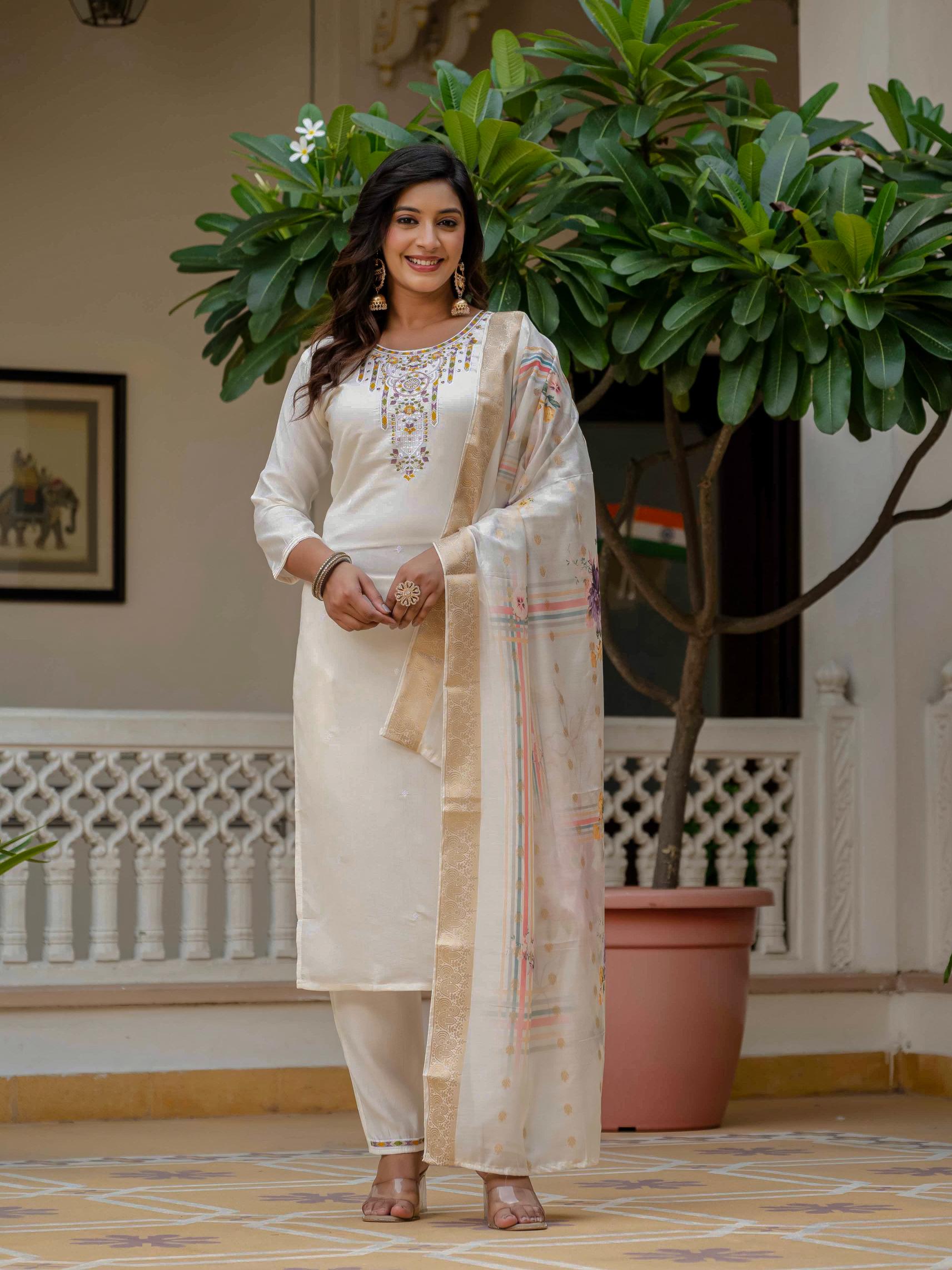
Hand-block printing can be recognised by slight variations in motif alignment, colour density and pressure. Buyers should also verify the fabric, dye method and care instructions because machine prints can imitate the appearance of hand printing.
Common Questions About Rajasthan Block Print Salwar Suits
Which city in Rajasthan is famous for block printing?
Sanganer and Bagru are two of Rajasthan's best-known block-printing centres. Sanganer is associated with fine floral prints, while Bagru is widely known for earthy colours and Dabu resist printing.
Are block print suits suitable for summer?
Cotton and muslin block print suits are suitable for summer because both fabrics are breathable and relatively light. Choose loose silhouettes, unlined cotton where appropriate and dupattas that do not add unnecessary weight.
What is the difference between Bagru and Sanganeri prints?
Bagru prints commonly use earthy black, indigo, rust and mustard palettes, with resist techniques such as Dabu. Sanganeri prints are often finer and more floral, with delicate motifs on lighter or brighter grounds.
Do hand-block printed suits have uneven designs?
Small shifts in alignment and minor differences in colour density are normal in hand-block printing. Large smudges, torn fabric, bleeding colour before washing or badly misaligned borders indicate a quality problem rather than desirable craft variation.
How should a cotton block print suit be washed?
Wash a cotton block print suit separately in cold water with mild detergent, especially for the first few washes. Dry the garment inside out in shade, avoid bleach and iron it from the reverse side at moderate heat.
Can block print suits be worn to festive events?
Block print suits can work for festive events when the fabric, colour and finish suit the setting. Chanderi, jacquard, georgette, mirror work, zari details or a richer printed dupatta can make the outfit more suitable for evening celebrations.