

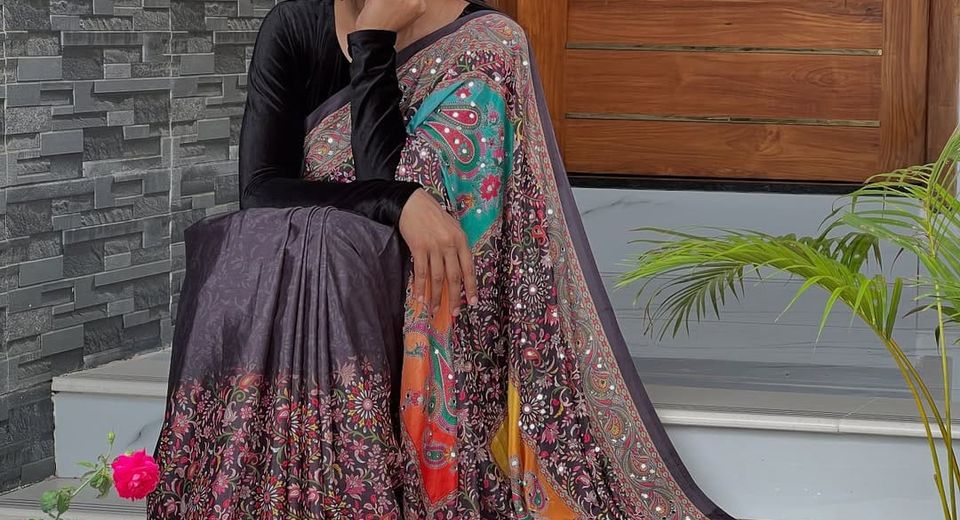
Which state is famous for Bandhej? Gujarat is the most widely recognised answer, especially the regions of Kutch, Jamnagar, Bhuj and Rajkot. Bandhej, also called Bandhani or Bandhej tie-dye, is a resist-dyeing tradition in which tiny sections of fabric are tightly tied before colour is applied. Rajasthan also has a strong Bandhani heritage, but Gujarat remains the state most closely associated with the craft's historical identity, production centres and distinctive patterns.
The word Bandhej comes from the Gujarati term bandh, meaning to tie. A finished Bandhej saree may contain hundreds or thousands of small knots, each creating a point, ring, wave or clustered motif after the thread is removed. The result isn't a printed imitation of tie-dye; the pattern is formed inside the fabric through controlled resistance to colour.
Which state is famous for Bandhej and why does Gujarat lead?
Gujarat is the state most famous for Bandhej because the craft has deep roots in Gujarati textile communities, particularly around Kutch, Jamnagar, Bhuj and Rajkot. Generations of dyers, tie-makers, weavers and traders have developed regional methods and passed them through family workshops.
Jamnagar is especially associated with refined Bandhani work and vibrant colour combinations. Kutch is known for a broader textile culture that includes tie-dye, embroidery, mirror work and distinctive regional decoration. Bhuj is an important reference point for Kutch textiles, although Bandhej is produced across many villages rather than in one single town.
Rajasthan is another major Bandhani state. Jodhpur, Jaipur, Sikar, Bikaner and Udaipur have long used Bandhani textiles for odhnis, turbans, sarees and festive garments. Gujarat and Rajasthan share historical trading routes and related dyeing methods, so their styles can overlap. The clearest short answer is Gujarat first, followed by Rajasthan as another important Bandhani centre.
Which state is famous for Bandhej, and how is Gujarati Bandhej made?
Gujarati Bandhej is made by pinching selected parts of fabric, wrapping thread tightly around the pinched points and dyeing the cloth so the tied areas resist colour. The process creates the small light or contrasting dots that identify the craft.
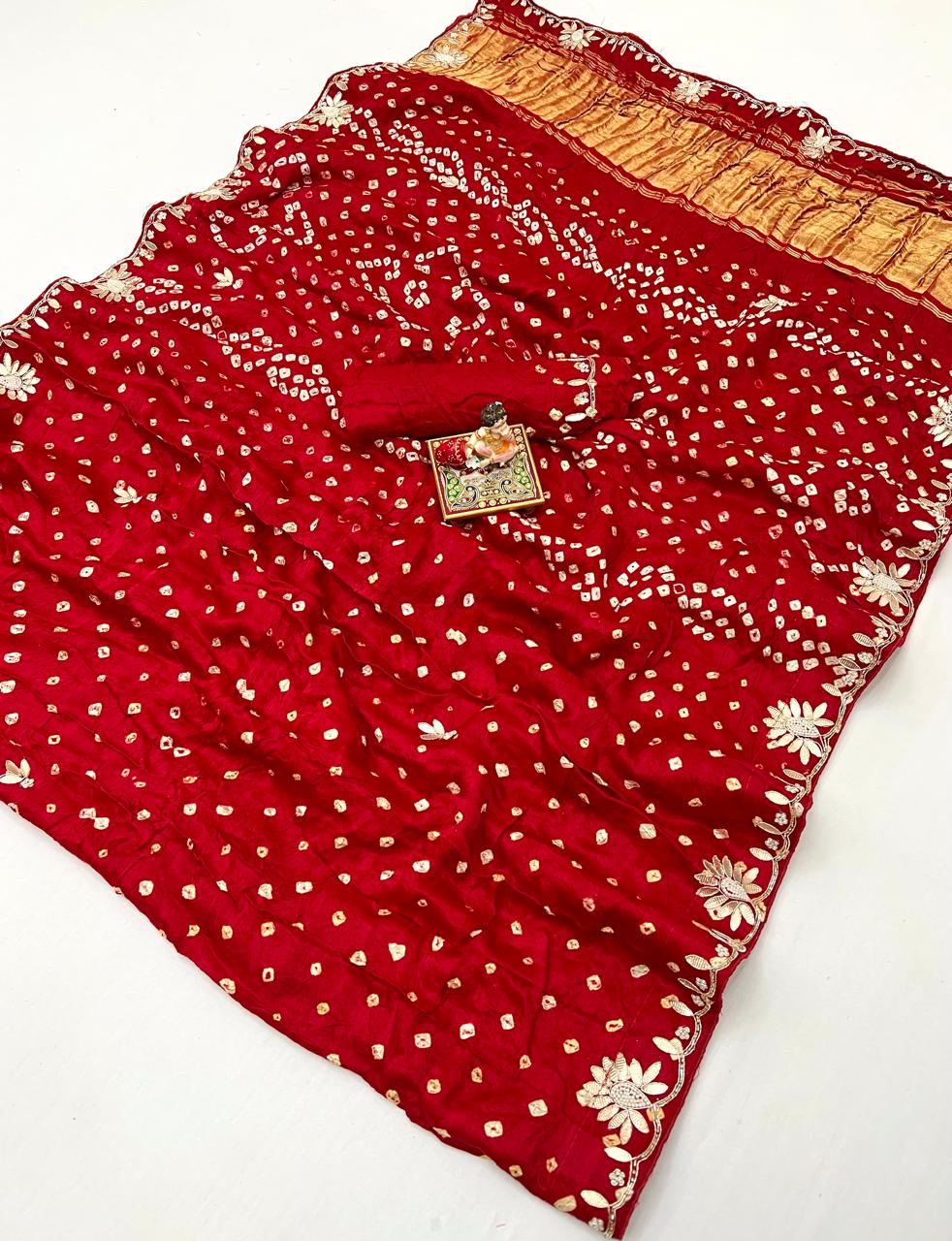
A craftsperson may plan the layout across the saree before beginning, paying particular attention to the border, pallu and central field. Each tiny section of silk, cotton or georgette is lifted and tied according to the intended motif. The size of the pinched area affects the size of the final dot, while the spacing of the ties controls whether the pattern looks dense or open.
Many multi-colour Bandhej pieces require several rounds of tying and dyeing. Yellow or another light shade may be applied first, followed by additional ties before red, green, blue or darker colours are introduced. Earlier colours remain protected beneath later resist points. The sequence matters because a pale shade can't easily be restored after a darker dye has covered it.
- Fabric preparation: Silk, cotton, georgette, crepe or another suitable fabric is cleaned so that dye can penetrate evenly.
- Pattern planning: The design is mapped across the fabric, often with separate layouts for the pallu, border and body.
- Pinching: Small portions of cloth are raised with the fingers or a fine tool.
- Tying: Thread is wrapped tightly around the raised portions to create the resist points.
- Dyeing: The fabric is immersed in one or more dye baths, generally moving from lighter colours to darker colours.
- Drying and opening: After drying, the ties are removed to reveal the protected dots and shapes.
- Finishing: The saree may be washed, pressed and decorated with zari, mirror work, gota patti or embroidery.
Bandhej should not be confused with Leheriya. Leheriya creates diagonal wave stripes by rolling and tying fabric, while Bandhej forms dots, circles, clusters and localised motifs through individual or grouped ties.
Which state is famous for Bandhej motifs and colour symbolism?
Gujarat is the state most famous for Bandhej motifs that combine precise dotted resist patterns, strong colour contrasts and symbolic layouts. Common forms include single dots, clustered dots, circular flowers, mango-like shapes, waves and arrangements resembling stars or scattered grains.
Which state is famous for Bandhej dotted patterns?
Gujarat is particularly recognised for Bandhej dotted patterns, from widely spaced points to dense floral and circular groupings. Small white or contrasting dots are the most recognisable visual feature of a Bandhej textile.
Closely packed dots may form rosettes, floral medallions or circular patterns, while widely spaced dots create a lighter, more contemporary surface. Black Ethnic Mirror Work Bandhej Silk Saree demonstrates how a dark ground can make pale dots and reflective embellishment appear sharper.
Some traditional patterns require considerable precision because the dots must remain evenly placed across a large length of fabric. Handwork may produce small variations in size and spacing, but excessive dye bleeding, weak contrast or completely flat repetition can suggest a printed design rather than tied resist work.
Which state is famous for Bandhej colours?
Gujarat is famous for Bandhej colour combinations featuring red, yellow, green, saffron, blue and white. Colour choices vary according to region, community, festival and the intended use of the garment.
Red is often associated with marriage and auspiciousness, while yellow and saffron frequently appear in festive and ceremonial clothing. Green can suggest renewal or fertility, and white creates a crisp contrast against coloured grounds. Colour symbolism isn't a fixed rule for every Gujarati family, so personal preference and local custom remain important.
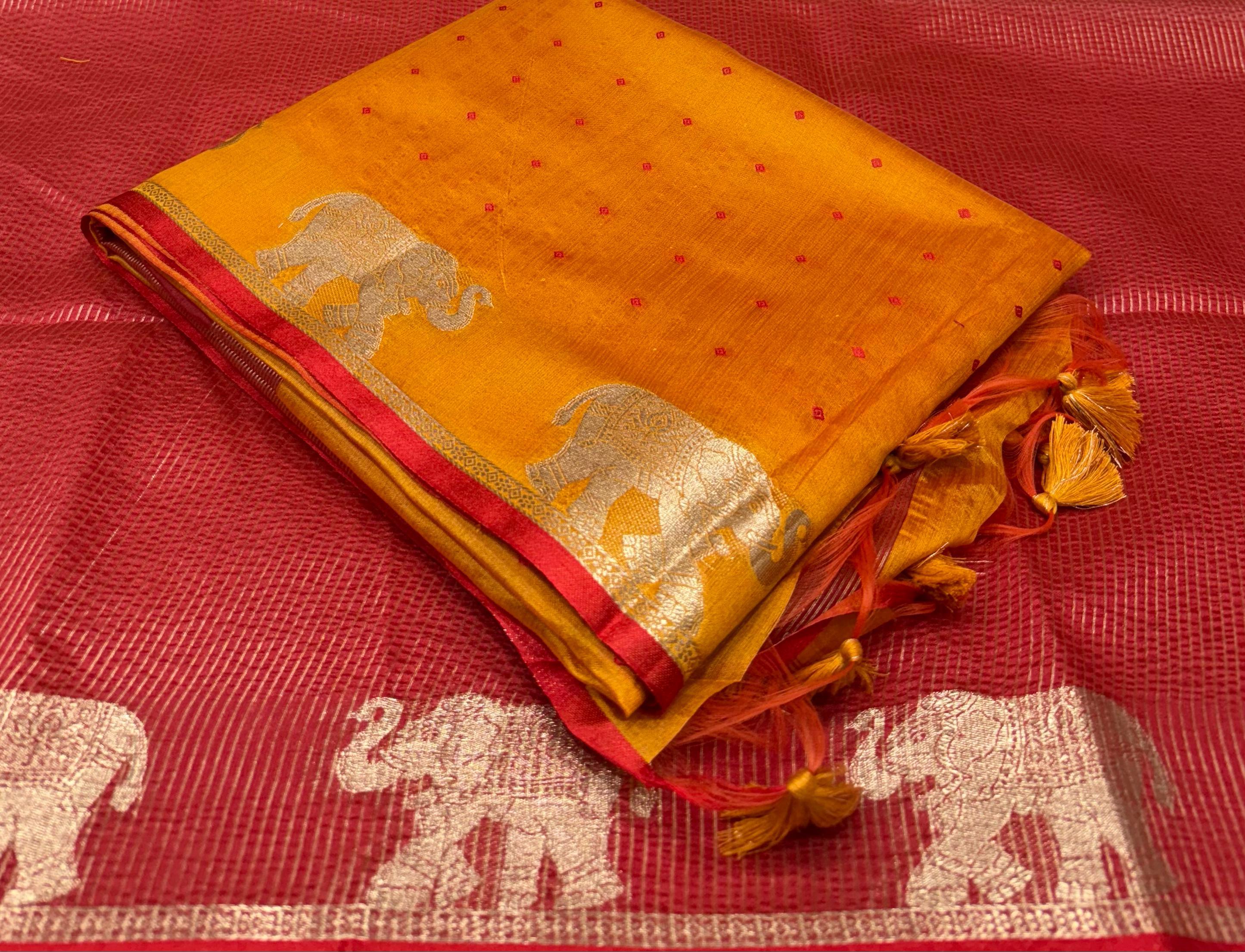
Mustard Yellow Bandhani Silk Saree with Zari Border shows how a warm yellow palette can suit a daytime celebration while zari introduces additional richness for a more formal setting.
Which state is famous for Bandhej fabrics and embellishments?
Gujarat is the state most associated with Bandhej across cotton, silk, georgette, chiffon, crepe and viscose fabrics, while each fabric changes the drape, colour depth and level of formality. Cotton is breathable and relatively structured, whereas silk generally offers a richer surface and more pronounced festive appearance.
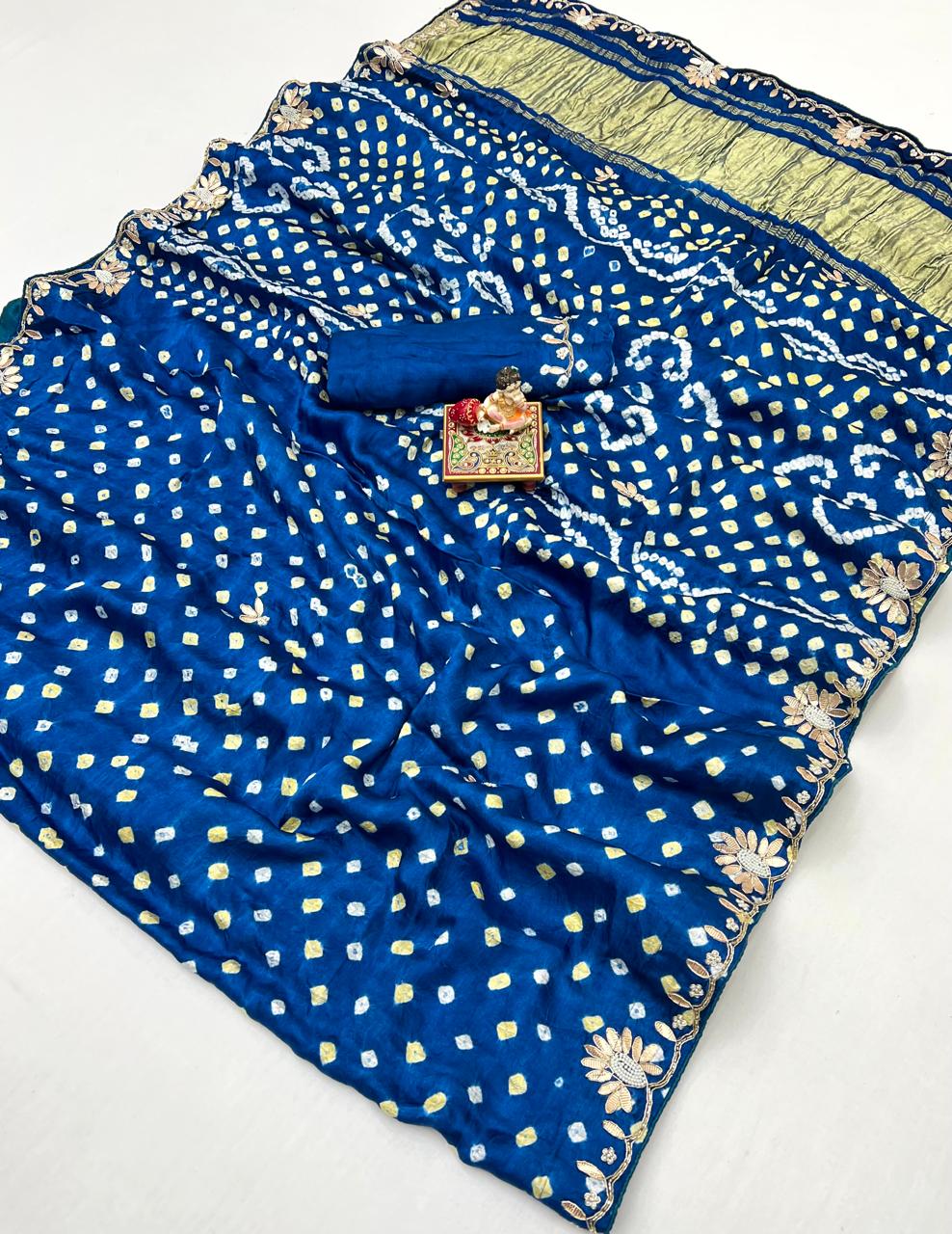
Gajji silk is valued in western Indian textile traditions for its lustrous finish and elegant fall. Georgette creates a softer, fluid saree suited to movement-heavy events. Viscose versions can resemble silk visually, but the fibre composition affects price, care requirements and durability, so a buyer should read the material description carefully.
Bandhej is frequently combined with zari borders, gota patti, embroidery, mirror work and printed accents. Mirror work has a strong association with Gujarati and Kutch textile aesthetics, although contemporary designers use reflective elements in many regional styles.
Purple Bandhej Mirror Work Masakali Saree illustrates how Bandhej dots and mirror embellishment can move beyond a conventional saree format into a flared festive silhouette. Red Bandhani Gajji Silk Saree with Gota Patti Handworks combines a silk base with Bandhani patterning and metallic appliqué for ceremonial dressing.
Light grounds can give Bandhej a more contemporary appearance. Rajwadi Mor White Saree Bandhej Print Georgette Style uses a white base and decorative peacock-inspired styling, while White Printed Saree with Rajwadi Bandhej & Blue Work shows how blue detailing can sharpen a white ground.
Which state is famous for Bandhej, and how can buyers check authenticity?
Gujarat is the state most famous for Bandhej, but the quality of an individual saree depends on its fabric, tying precision, dyeing, finishing and embellishment rather than its state label alone. Buyers should inspect the pattern, reverse side, fibre description, border and care instructions before purchasing.
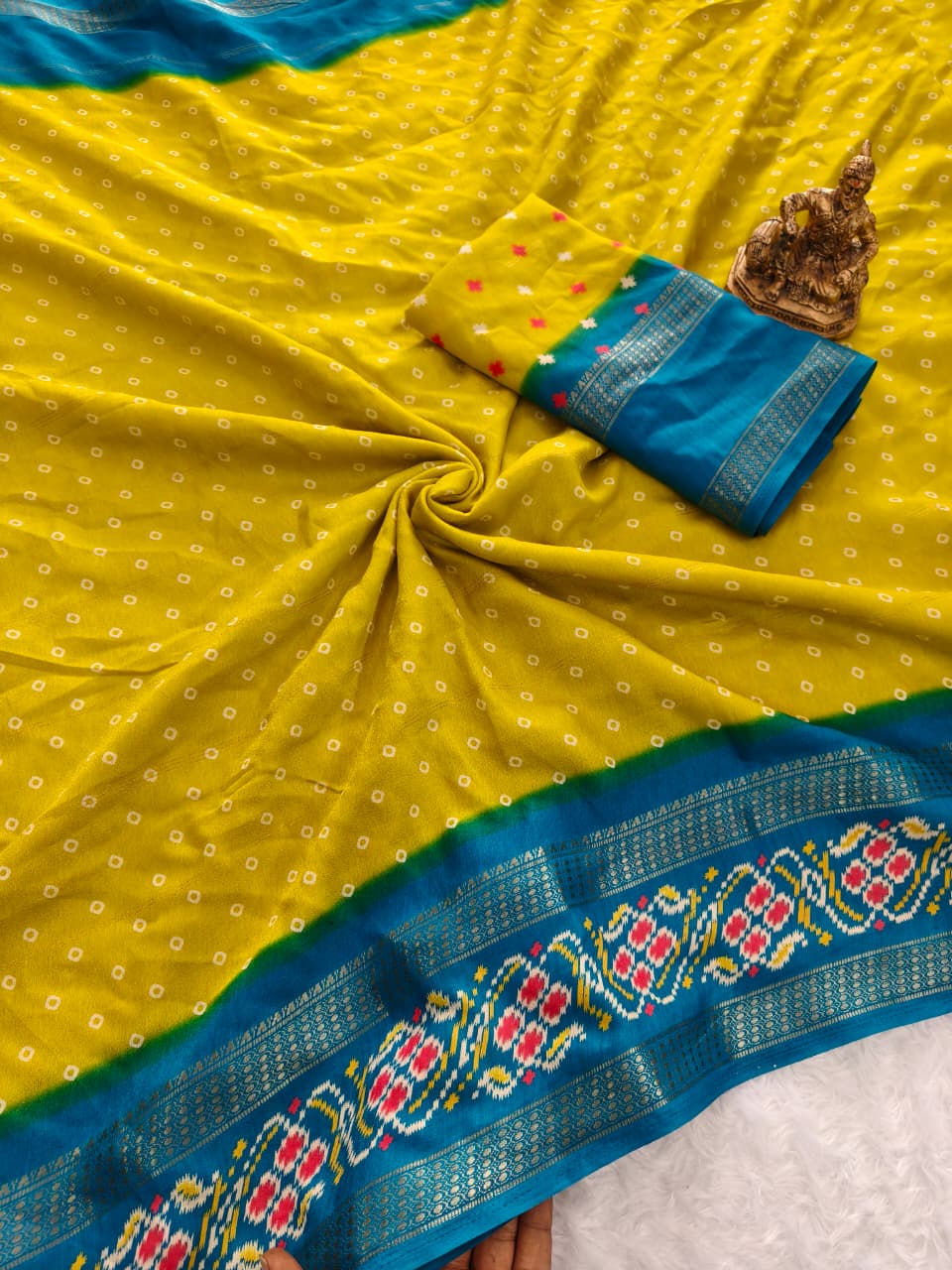
- Examine the dots: Hand-tied dots may show small variations in size and spacing. Mechanically repetitive dots can indicate printing, although variation alone doesn't prove that a textile is handmade.
- Check the reverse side: Embellishment should be securely attached, with no loose threads, sharp exposed edges or heavy knots that distort the fabric.
- Read the fibre description: A silk Bandhani saree differs from a viscose gajji silk saree in fibre content, care, price and drape.
- Assess colour balance: Strong contrast is characteristic, but dye should not appear excessively patchy, chalky or transferred across pale sections.
- Inspect the border and pallu: Borders should lie flat, and the pallu should not pull the saree out of shape when lifted.
- Ask about care: Silk, zari, gota patti and mirror work usually require gentler treatment than washable cotton.
Blue Bandhani Viscose Gajji Silk Saree with Gota Patti shows why material descriptions matter: a viscose-based textile can have an attractive silk-like appearance while requiring different expectations from pure silk.
Printed Bandhej-inspired designs can still be attractive and practical, especially when a buyer wants a lower-maintenance garment. The important point is accurate labelling. A printed saree should not be presented as hand-tied Bandhej if no resist-dyeing work has been used.
Which state is famous for Bandhej styling and occasion wear?
Gujarat is the state most famous for Bandhej styling, and Bandhej sarees work especially well for Navratri gatherings, weddings, festive lunches, family ceremonies and regional cultural events. Styling should balance the saree's pattern density, fabric weight and embellishment.
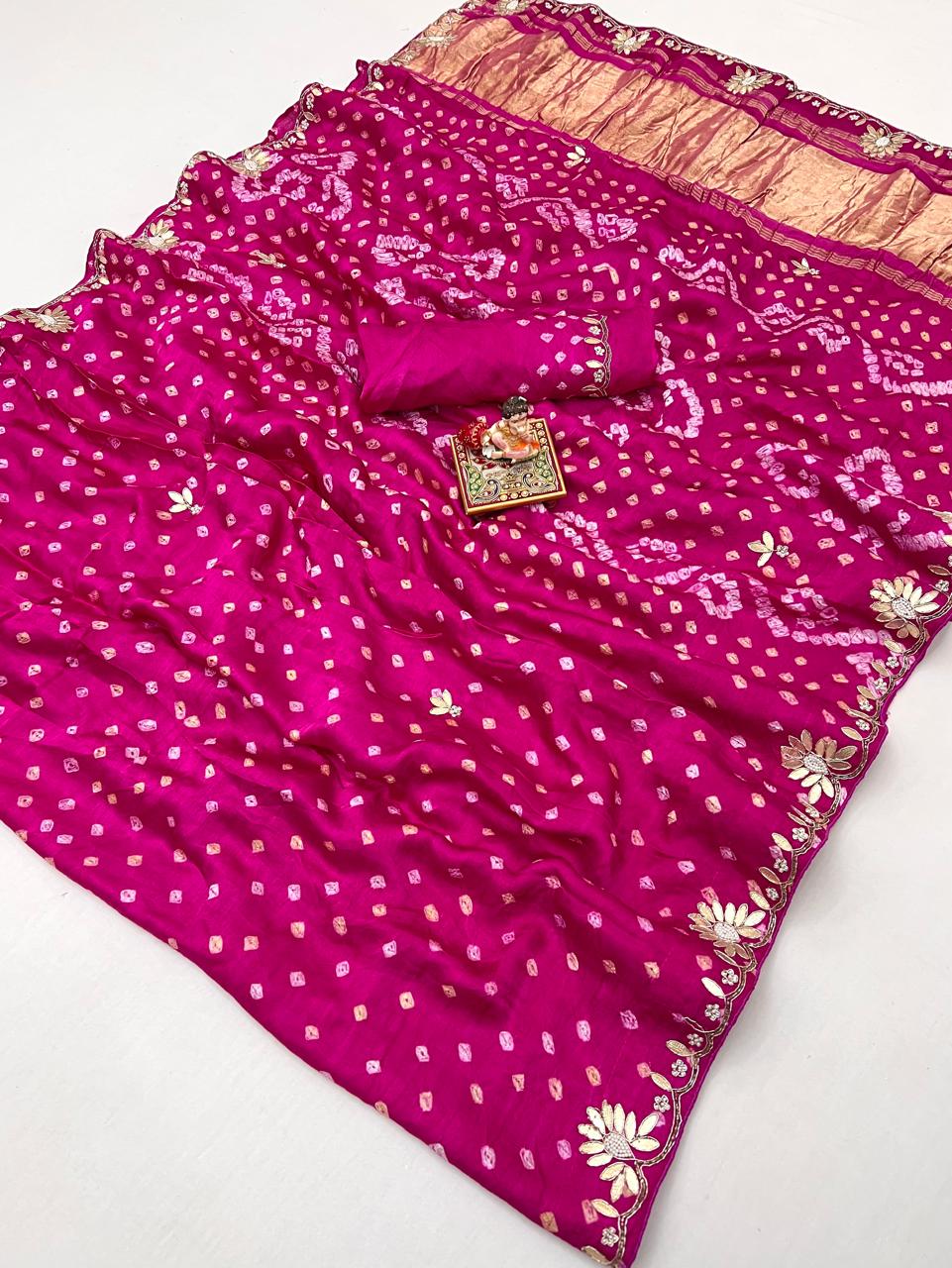
A heavily patterned silk Bandhej saree can be paired with a plain blouse in a contrasting or closely related shade. A georgette saree with a lighter printed pattern can support a more detailed blouse, statement earrings or a structured potli bag without making the outfit look crowded.
Mirror work pairs naturally with oxidised silver jewellery, while zari borders can be echoed with gold-toned earrings, bangles or a small clutch. Gota patti already provides reflective detail, so excessive additional sparkle may compete with the pallu and border.
For a Haldi ceremony, yellow Bandhej with a lightweight blouse and comfortable footwear gives colour and movement without the weight of a heavily embroidered outfit. For a wedding reception, silk Bandhej with zari, a defined waistline and formal jewellery creates a more polished silhouette.
Bandhej also adapts well to contemporary styling. A saree can be worn with a sleeveless blouse, a belt, a cropped jacket or a restrained modern accessory, provided the drape remains comfortable and the saree's pallu isn't hidden completely.
Which state is famous for Bandhej care and long-term storage?
Gujarat is the state most famous for Bandhej, but careful storage determines how well a Bandhej saree retains its colour, folds and embellishments. Silk and embellished sarees should generally be dry-cleaned by a professional familiar with zari, mirror work and gota patti.
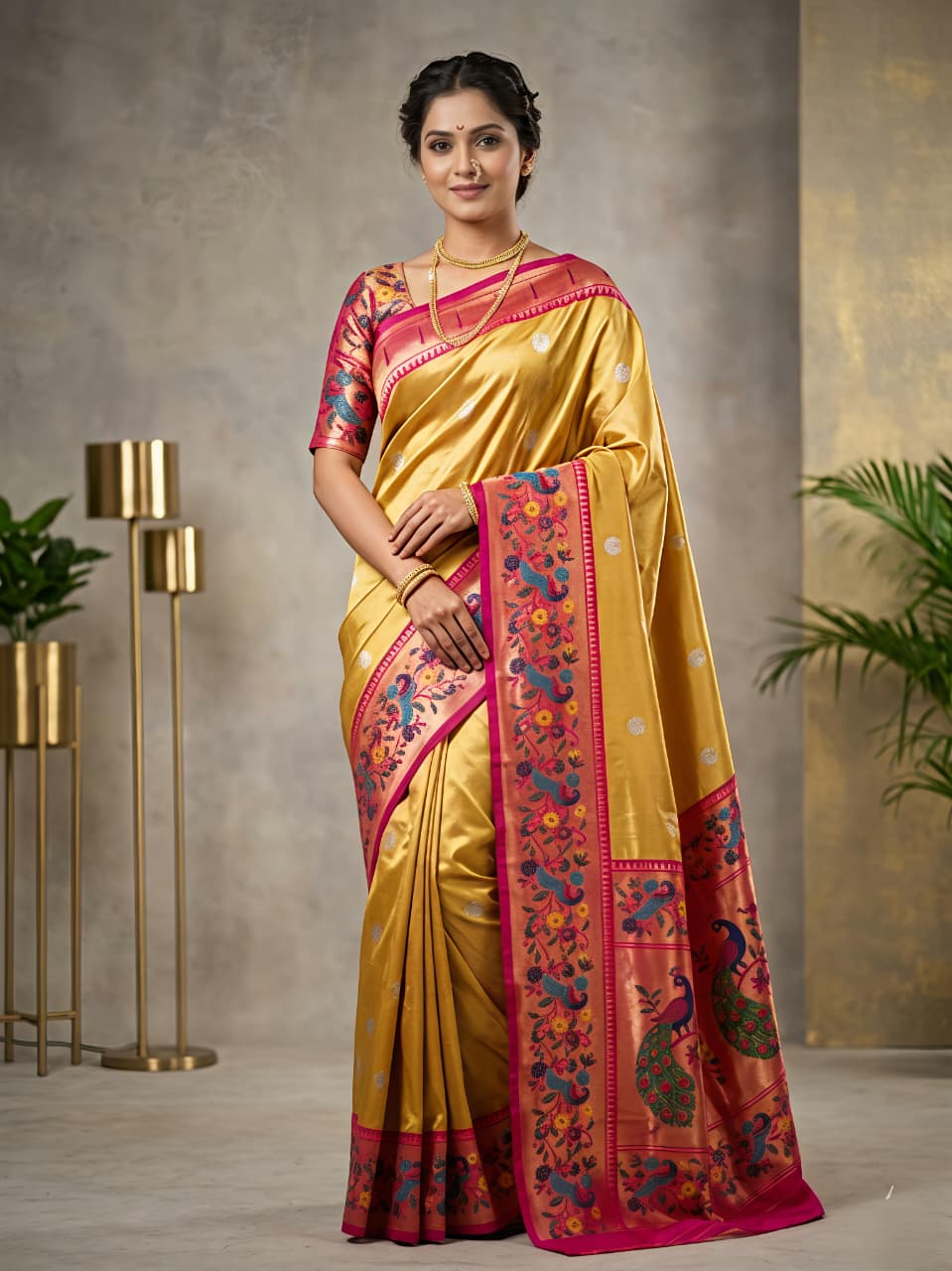
Store a clean saree in a breathable cotton or muslin cover rather than sealed plastic for long periods. Refold the saree every few months so permanent creases don't develop along the same lines. Keep the garment away from direct sunlight, damp walls, perfumes and rough jewellery that may snag delicate fabric.
Never scrub tied dots, mirror work or metallic borders. Home soaking can cause colour transfer, shrinkage, zari dullness or loosening of decorative work. If a care label specifies hand washing for a cotton Bandhej saree, use cool water and a mild detergent only after testing colourfastness on a hidden area.
Gujarat remains the strongest answer to the question of which state is famous for Bandhej because the craft combines regional history, specialised skill and continuing everyday use. Rajasthan deserves equal recognition as a major Bandhani region, but Gujarat's Kutch and Jamnagar traditions make the state the most familiar reference point for Bandhej in India.
Common Questions About Gujarat’s Bandhej Tradition
Which state is famous for Bandhej sarees?
Gujarat is the state most famous for Bandhej sarees, particularly through textile centres and artisan communities in Kutch, Jamnagar, Bhuj and Rajkot. Rajasthan is another major state associated with Bandhani textiles.
Is Bandhej the same as Bandhani?
Bandhej and Bandhani generally refer to the same family of Indian tie-dye techniques. Regional spelling and pronunciation differ, with Bandhej commonly used in Gujarat and Bandhani widely used across Gujarat and Rajasthan.
How is a Bandhej saree made?
A Bandhej saree is made by pinching small portions of fabric, tying them tightly with thread and dyeing the cloth. The tied areas resist the dye and create the characteristic dots, circles and clustered motifs.
How can someone tell whether a Bandhej saree is hand-tied or printed?
A hand-tied Bandhej saree usually shows slight variation in dot size and spacing, while a printed imitation often has extremely flat and mechanically repeated marks. Buyers should also check the product description, reverse side, dye finish and seller's craft information because no single visual clue proves authenticity.
What is the difference between Bandhej and Leheriya?
Bandhej creates dots, circles and clustered motifs through individually tied or grouped sections of fabric. Leheriya creates diagonal wave stripes by rolling, folding and tying the fabric before dyeing.
How should a silk Bandhej saree be washed?
A silk Bandhej saree should usually be dry-cleaned by a professional experienced with silk, zari and embellishment. Direct sunlight, harsh detergent, prolonged soaking and vigorous scrubbing can cause colour bleeding or damage.





