

Which Shoes Work With a Calf Length Ethnic Dress depends on three visible details: where the hem ends, how formal the fabric looks and how much walking the wearer expects to do. A calf-length kurta, gown or anarkali usually finishes between the knee and mid-calf, so footwear remains part of the outfit's visual line rather than disappearing beneath the hem. The right pair can lengthen the legs and support the silhouette; the wrong pair can make a refined outfit look heavy or awkward.
Calf-length ethnic dresses occupy an useful middle ground between a short kurta and a floor-length gown. That length works with juttis, kolhapuris, slim sandals, block heels, wedges and selected pointed-toe styles. The best choice changes with the outfit's volume, embroidery, colour and destination, so matching shoes to the dress alone isn't enough.
Which Shoes Work With a Calf Length Ethnic Dress?
Juttis, slim sandals, low block heels and wedges are the most dependable choices for a calf-length ethnic dress. These styles complement Indian silhouettes without adding visual bulk around the ankle, and each option serves a different practical purpose.
Embroidered juttis suit daytime celebrations, family gatherings and cotton outfits because their flat shape echoes traditional dress. Slim metallic sandals work well with chiffon, chinon and lightweight silk because their narrow straps keep the lower half of the outfit airy. Block heels provide elevation and stability for weddings or evening events, while wedges are useful when the venue includes grass, uneven paving or long periods of standing.
Avoid choosing footwear only because its decoration resembles the dress. A heavily embellished shoe paired with an embroidered gown can create too much detail at the hem. Conversely, a completely plain rubber-soled sandal may look underdressed beside zari, sequins or dense floral embroidery. The strongest pairing usually repeats one quality of the outfit, such as shine, colour, texture or classic craftsmanship, without copying every element.
Start With the Hemline and Overall Shape
The hemline determines how much of the shoe and ankle will be visible, while the dress shape determines how much visual weight the footwear can carry. A straight kurta usually welcomes a neat flat or modest heel, whereas a wide anarkali or flared gown needs a shoe with enough structure to balance its volume.
Straight and lightly flared silhouettes
Low juttis, pointed flats and two- to three-inch block heels suit straight calf-length kurtas because they preserve a clean vertical line. A pointed toe can make the foot appear longer, but a narrow front should not pinch the toes. Rounded juttis feel more relaxed and work especially well with cotton, linen and handloom textures.
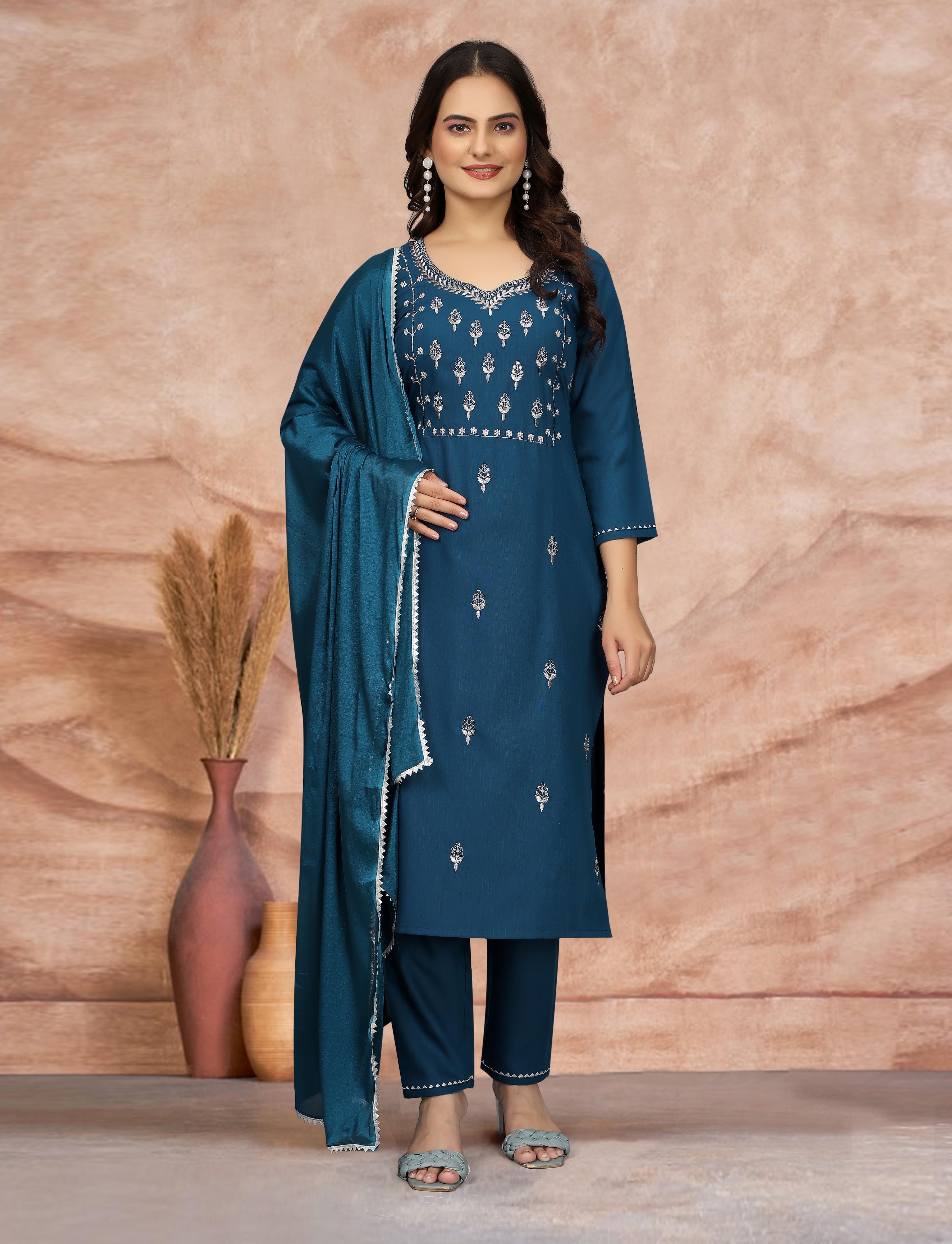
The Vertical Cotton Straight Kurta Set with Dupatta demonstrates why simple footwear often works best with a straight silhouette. Cotton has a grounded, daytime character, so a printed jutti, tan kolhapuri or matte leather sandal feels more harmonious than a glittering stiletto. A small heel can still be used when the wearer wants additional height, provided the shoe remains visually light.
Flared gowns and anarkali-style dresses
Flared calf-length dresses need footwear that prevents the lower half from looking broad or shortened. A pointed-toe block heel, slim wedge or low platform can create a longer line beneath a wide skirt. Very thick ankle straps may visually cut across the leg, particularly when the shoe and skin contrast strongly.
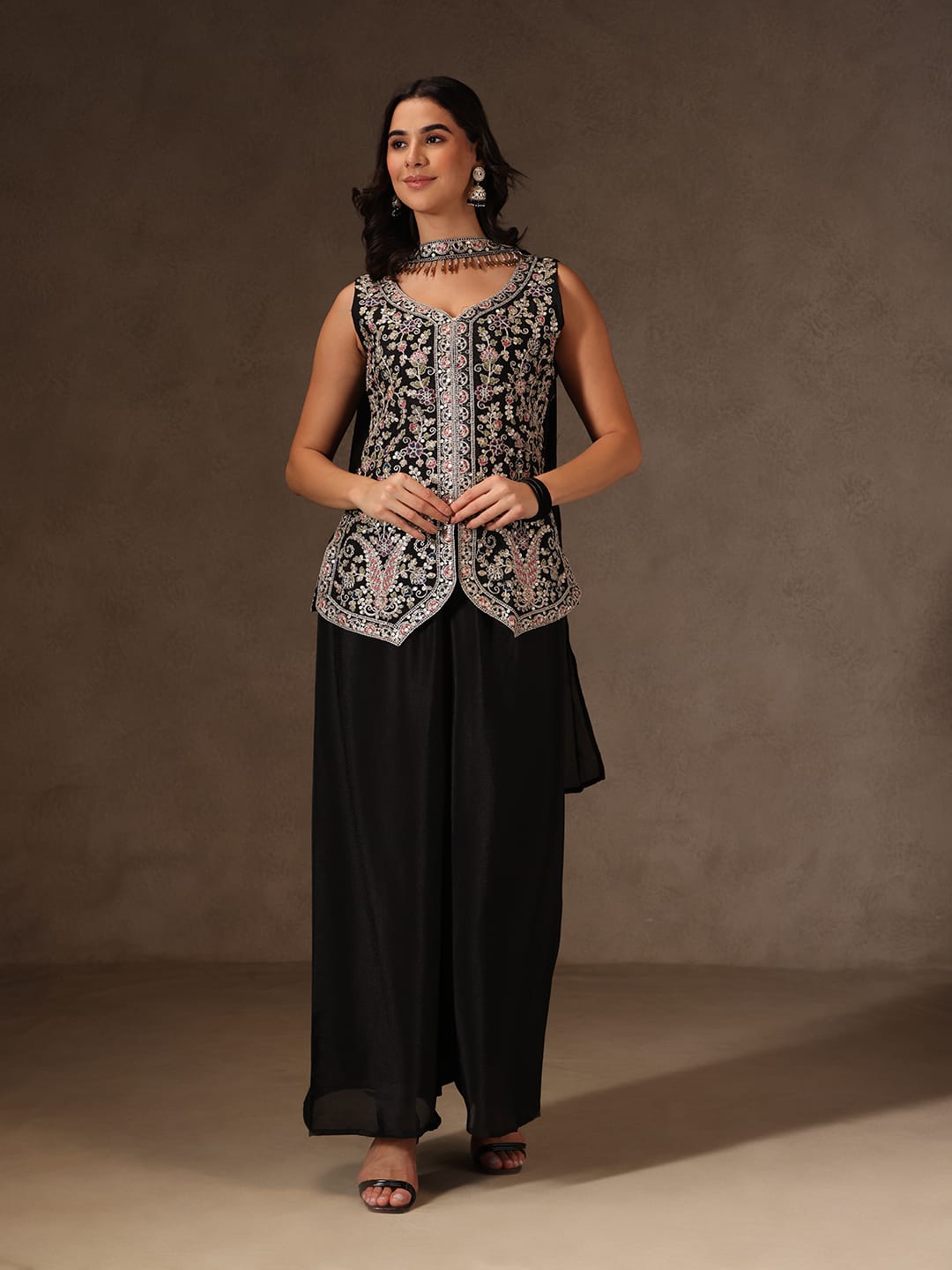
An Elegant Black Ethnic Gown with Floral Embroidery calls for a more polished shoe than a casual cotton kurta. Black pointed pumps, black block heels or metallic sandals can support the gown's formal character. A shoe with a completely plain surface keeps the floral embroidery in focus, while a modest crystal or metallic detail can connect with evening accessories.
The Taupe Beige Vichitra Silk Embroidered Gown Set Online has a softer, luminous colour story. Nude, champagne, antique gold and taupe footwear can extend the neutral palette. A warm tan shoe is also effective for daytime, but a very cool silver may look disconnected unless silver jewellery or a cool-toned border appears elsewhere in the styling.
Match the Shoe to the Fabric and Embellishment
Fabric suggests the shoe's level of formality: cotton and linen generally pair with matte, breathable footwear, while chinon, silk, crepe and dense embroidery can support polished or embellished shoes. Matching surface finish prevents the outfit from appearing visually divided between a casual dress and overly formal footwear.
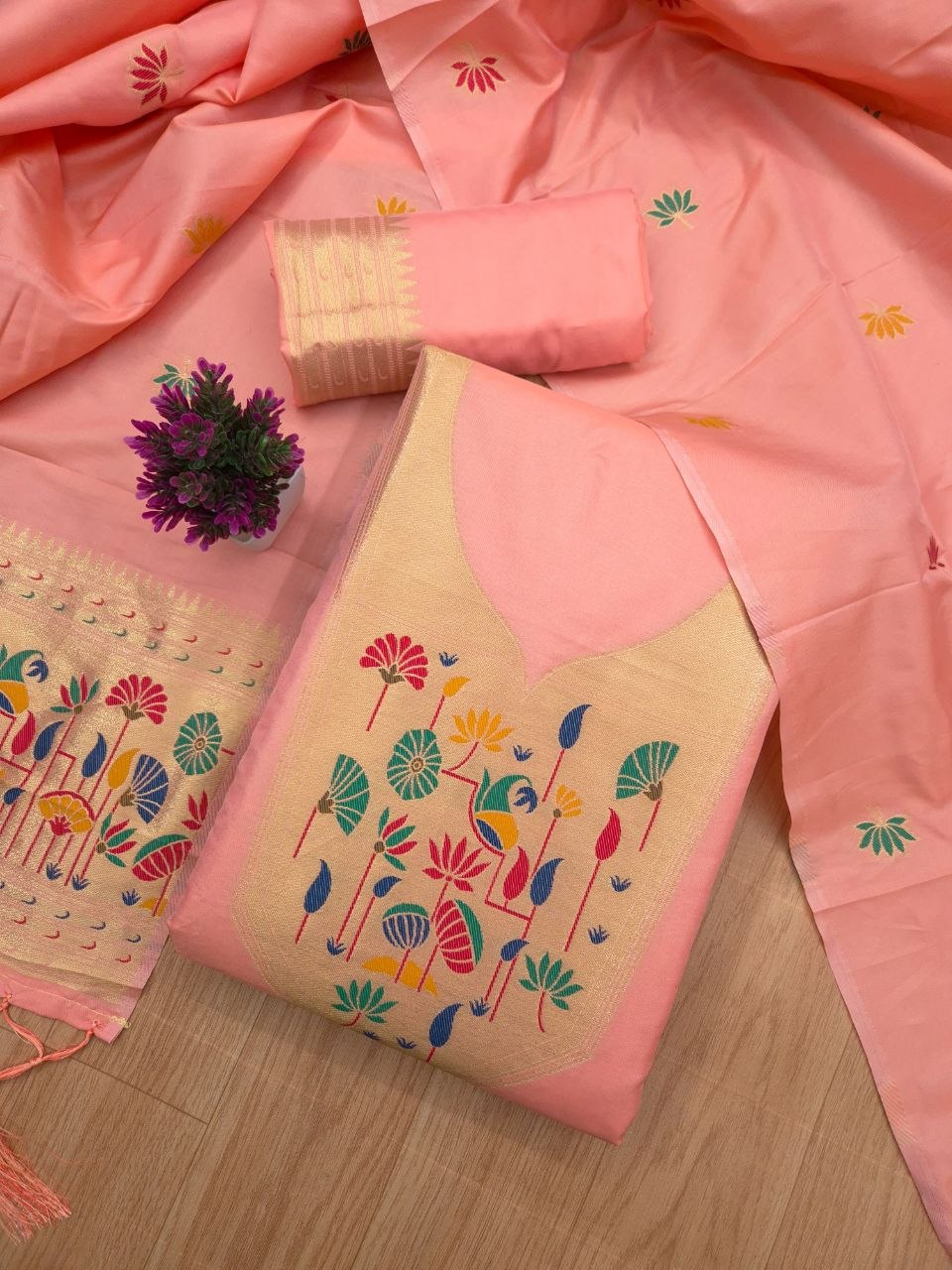
Cotton kurta sets look natural with canvas juttis, leather kolhapuris, embroidered flats and low block heels. The Kanchi Cotton Woven Kurta Pant Dupatta Set can be styled with tan leather sandals, woven flats or a muted textile jutti. These options respect the woven texture and keep the outfit appropriate for daytime visits, work-friendly festive dressing and informal pujas.
Linen cotton has a similarly breathable character but can look more refined when paired with a structured sandal. The Beige Floral Printed Linen Cotton Saree with Blue Border is a saree rather than a dress, yet its blue border illustrates an useful footwear principle: shoes can pick up a secondary colour instead of matching the dominant shade. Blue, tan or muted gold footwear would connect with the border without competing with the beige base.
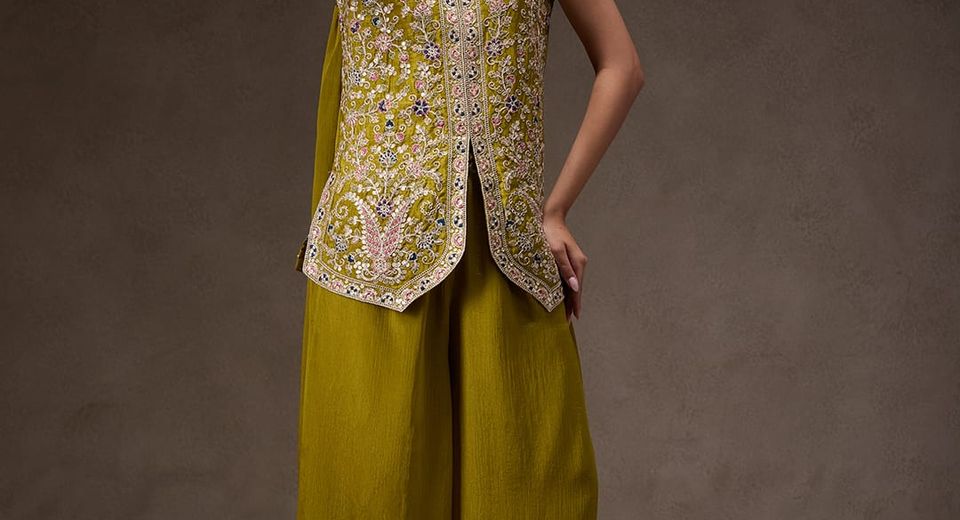
Chinon sharara sets usually benefit from footwear that can handle movement and a little shine. The Olive Green Chinon Sharara Set with Sequin Embroidery works with antique-gold block heels, olive-toned embellished sandals or neutral wedges. Since sequins already reflect light, shoes with a restrained metallic finish are usually more elegant than shoes covered in large stones.
The Black Chinon Sharara Set with Multicolour Embroidery for Women offers more freedom because black provides a neutral foundation. Black heels create a continuous line, while footwear in one embroidery colour can make the outfit feel deliberately coordinated. A multicolour shoe is less necessary; selecting one accent shade produces a clearer result.
Crepe usually falls smoothly and has a dressier appearance than everyday cotton. The Multicolor Embroidered Crepe Maxi Suit Set for Festive Wear can support pointed flats, embellished sandals or a low metallic heel. When an outfit contains several colours, choose shoes in metallic gold, soft beige or the darkest embroidery shade rather than introducing a fourth bright colour.
Choose Footwear by Occasion and Walking Conditions
The venue and the amount of movement should determine the heel height and sole construction. A beautiful shoe isn't a successful styling choice if the wearer can't stand comfortably, climb stairs or walk across the event space.
Daytime, work and family gatherings
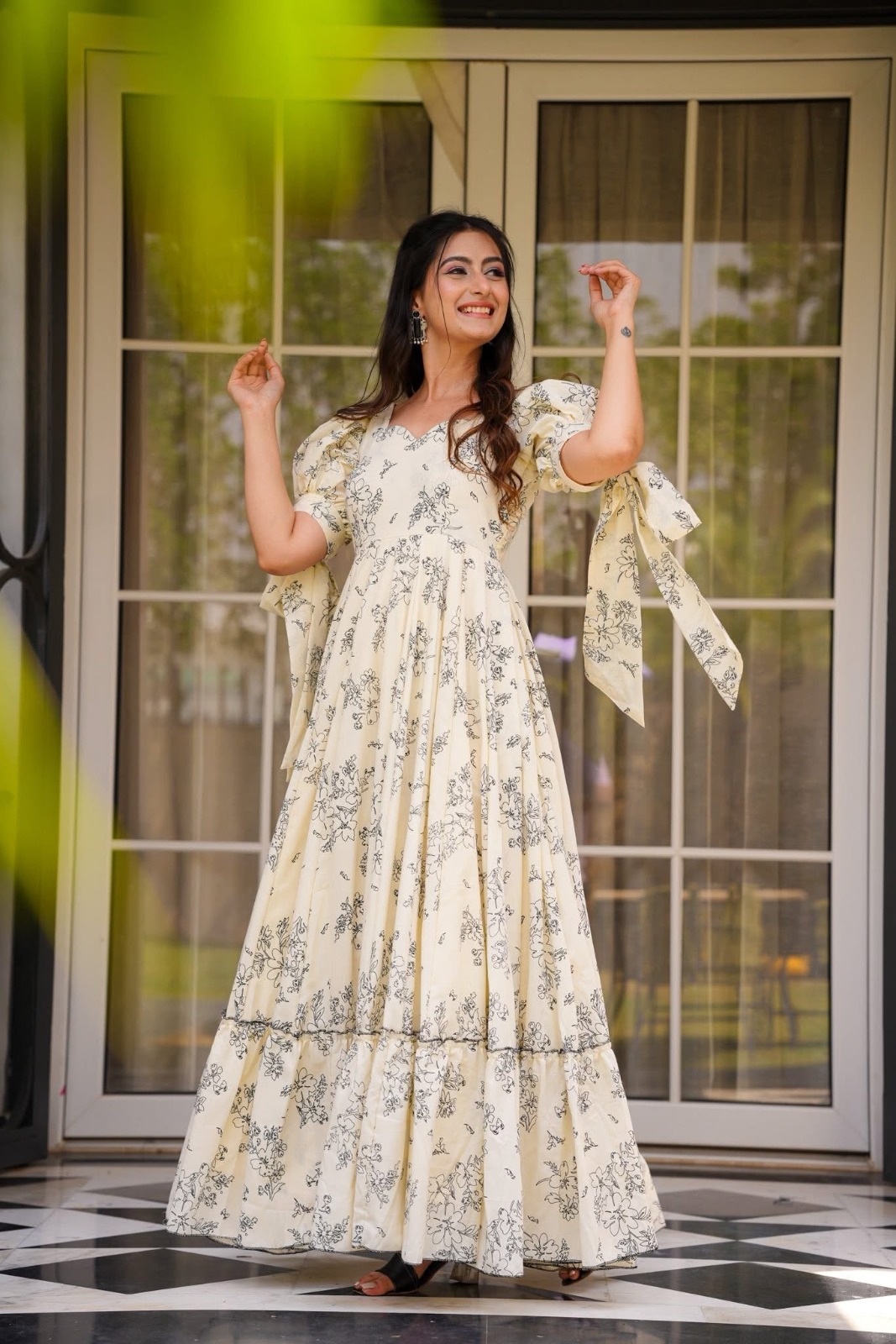
Flat juttis, kolhapuris, braided sandals and one- to two-inch block heels work best for daytime ethnic dressing. These shoes suit cotton, linen cotton and uncomplicated prints, and they remain practical for commuting or moving around a home. Neutral tan, camel, beige, black and antique gold are useful because they coordinate with several outfits.
For office-friendly ethnic wear, select closed or semi-closed shoes with a secure back strap. A pointed flat or low block heel looks more structured than a flip-flop, while a cushioned footbed improves comfort during a full workday. Keep heavy glitter and very high heels for events where the dress code supports them.
Festivals, weddings and evening celebrations
Two- to three-inch block heels, embellished sandals and dressy wedges suit most festive calf-length outfits. Block heels distribute weight more evenly than narrow stilettos, making them safer for long receptions and easier to manage on tiled or outdoor surfaces. Metallic gold, rose gold, champagne and black are dependable evening choices.
For a Haldi ceremony, choose washable or easily cleaned footwear because turmeric, flower petals and outdoor dust can mark delicate surfaces. A low wedge or embellished flat is often more practical than a satin pump. For a wedding reception, the same calf-length dress can appear more formal with a metallic heel, a structured clutch and jewellery that repeats the shoe's finish.
Use Colour to Extend or Balance the Leg Line
Footwear in a skin-adjacent, neutral or dress-matched colour tends to lengthen the visible leg, while high-contrast shoes draw attention to the ankle and hem. Neither effect is wrong; the preferred result depends on the dress's volume and the wearer's styling goal.
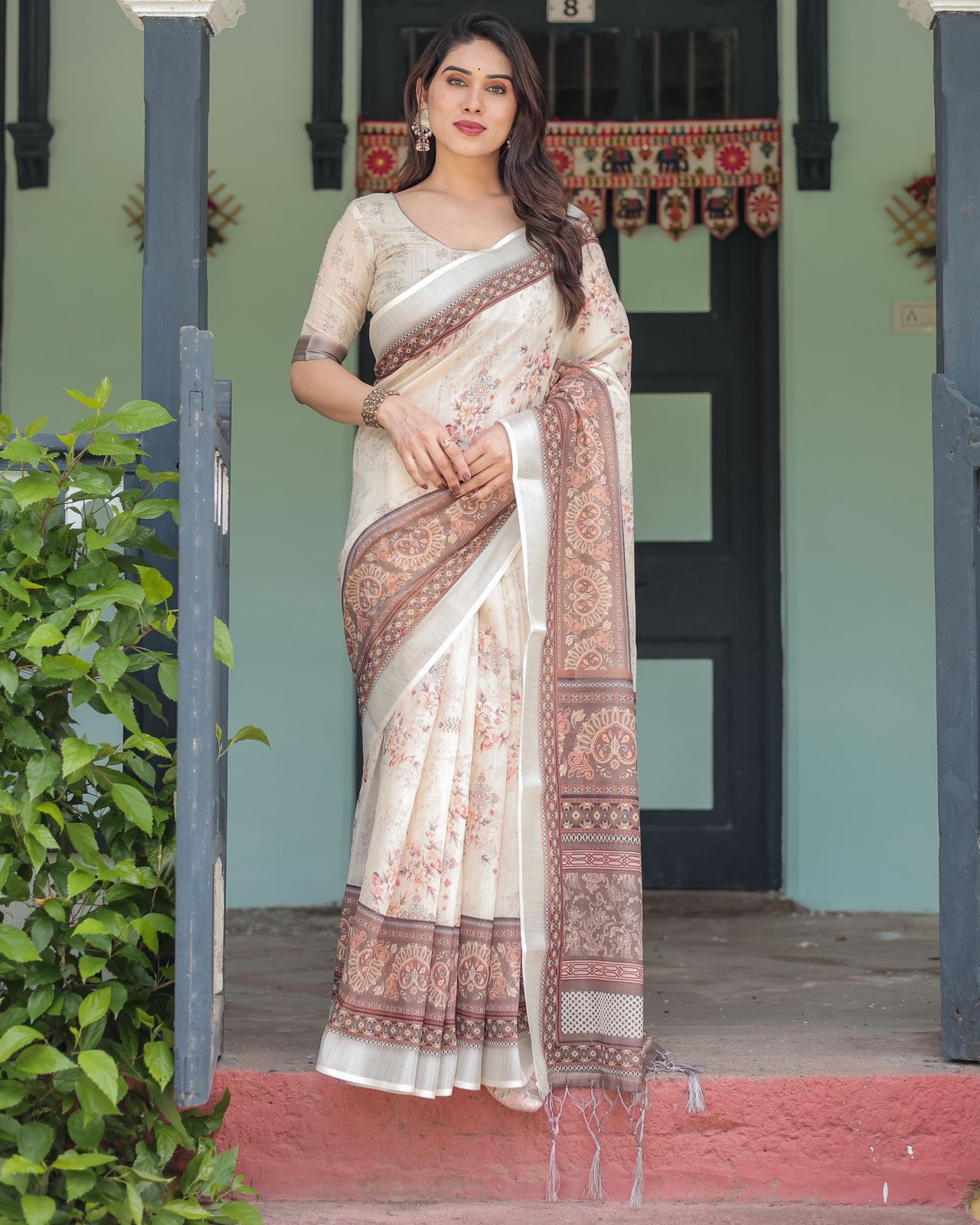
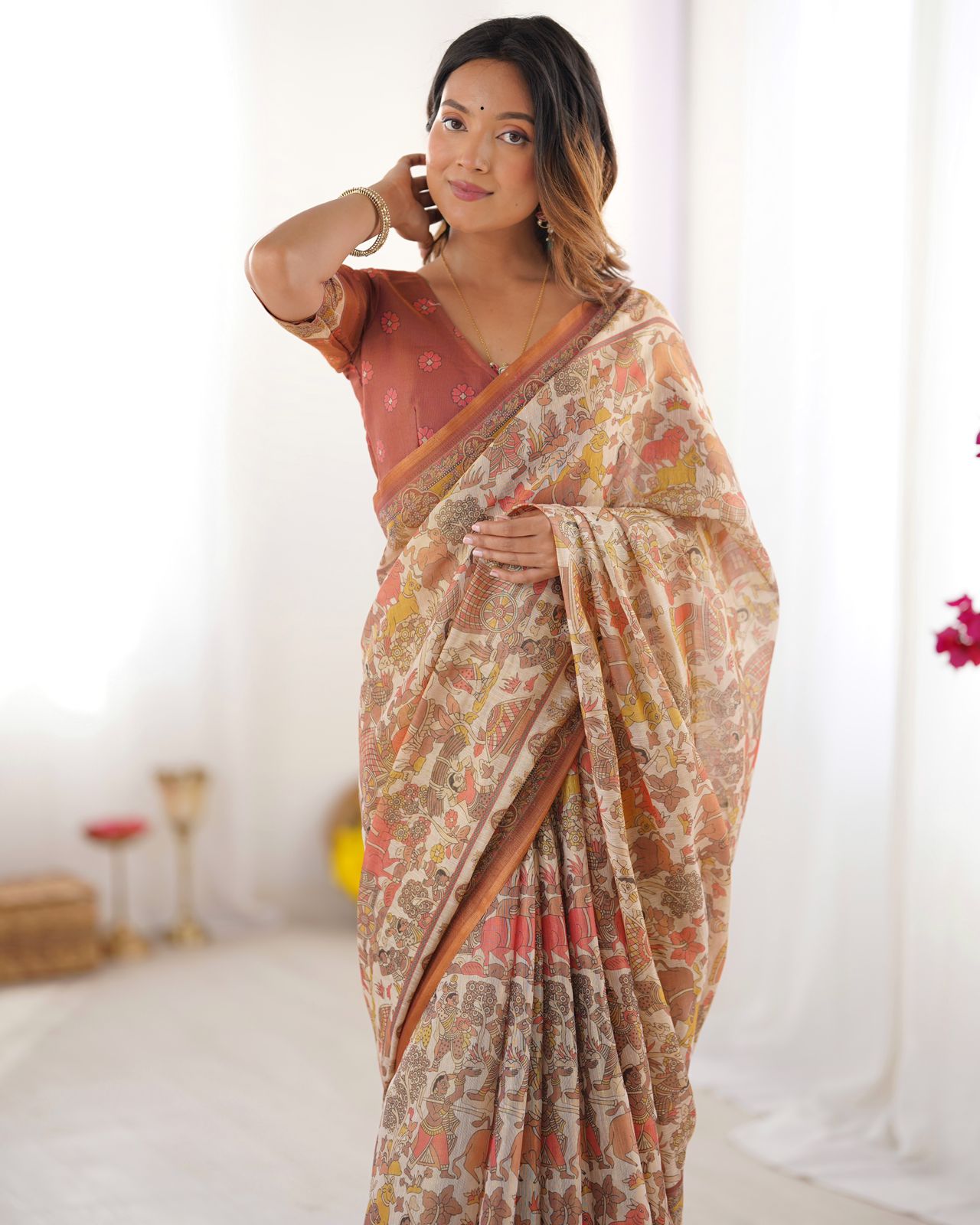
Beige, tan, camel and muted gold shoes blend gently with many skin tones and can make a calf-length hem appear less interrupted. Black shoes create a strong, intentional line with black dresses or dark borders. Jewel-toned footwear works particularly well when the dress has a restrained base and one strong accent, such as emerald with gold embroidery or navy with a blue border.
White footwear can look crisp with ivory, pastel or printed outfits, but stark white may feel too casual beside antique zari or warm-toned silk. Silver shoes suit cool pink, lilac, blue, grey and black palettes. Gold shoes suit mustard, rust, olive, beige, maroon and cream, although the temperature of the gold matters: antique gold feels more heritage, while bright yellow gold reads more festive.
Contrasting footwear can be an useful styling tool for petite wearers who want to make the shoe a deliberate focal point, but the contrast should be repeated somewhere else. A blue shoe with a blue border, or a gold sandal with gold earrings, looks coordinated rather than accidental.
Prioritise Comfort Without Losing Ethnic Character
Comfort improves when the shoe has the correct fit, a stable heel and enough room for the toes. Measure feet when swelling is more likely, and try shoes while wearing the type of footwear or socks planned for the event.
Block heels are generally more stable than stilettos because the heel distributes pressure over a wider base. Wedges provide even more support but can feel heavier under a delicate dress. Flats should not be completely loose: slipping at the heel causes friction, while excessive tightness at the toe can create pain within an hour.
Check the shoe's upper material before buying. Soft leather, fabric and padded synthetic uppers usually adapt better than rigid plastic. A cushioned insole helps on hard floors, but cushioning can't correct a shoe that's too short or narrow. For a wedding, carry blister plasters and consider wearing the shoes indoors for 20 to 30 minutes on clean flooring before the event.
Pay attention to the sole when the dress is calf length. A slightly thicker sole can add height under a voluminous gown, but a very heavy platform may overpower a delicate printed kurta. A flexible sole is better for walking, while a slip-resistant outsole is important for polished floors and outdoor ceremonies.
Simple Pairing Rules That Work Across Wardrobes
The most reliable shoe choice repeats one visual property of the dress and keeps the remaining details controlled. A matte cotton outfit can take a textured jutti; a sequinned chinon outfit can take a restrained metallic sandal; a dark embroidered gown can take a sleek black or champagne heel.
- Pair straight shapes with neat footwear: pointed flats, juttis and low block heels maintain the clean line of a straight kurta.
- Pair wide shapes with a little elevation: wedges and stable heels stop a flared gown from visually shortening the body.
- Match shine thoughtfully: zari, sequins and silk can handle metallic shoes, but excessive sparkle at both the hem and feet may look busy.
- Use one accent colour: select a shoe from the border or embroidery rather than matching every colour in a multicolour outfit.
- Consider the surface: flat soles suit grass and uneven ground, while slim heels are better reserved for stable indoor floors.
- Test the full outfit: walk, sit and climb a few steps before finalising the shoes, because the hem may move differently in motion.
When deciding Which Shoes Work With a Calf Length Ethnic Dress, begin with the dress's silhouette, then assess fabric, colour and venue. A calm, well-proportioned shoe usually looks more polished than an elaborate pair chosen without regard for the hemline.
Practical Footwear Questions for Calf-Length Ethnic Dresses
Can I wear juttis with a calf-length ethnic dress?
Yes, juttis are one of the most versatile choices for a calf-length ethnic dress, especially with cotton, linen, straight kurtas and daytime festive outfits. Choose a pointed or low-profile jutti when you want a longer visual line, and an embroidered pair when the dress has restrained surface detail.
Are heels necessary with a calf-length ethnic gown?
Heels are not necessary, but a low block heel, wedge or pointed flat can balance the volume of a flared ethnic gown. Choose a stable two- to three-inch heel for weddings and avoid narrow ankle straps if the hem already stops at a wide part of the calf.
Which shoes work with a calf length ethnic dress for a wedding?
Metallic sandals, embellished flats, block heels and dressy wedges work well for weddings. Gold and champagne suit warm fabrics such as silk, chinon and zari, while black or silver can create a cleaner finish with dark or cool-toned embroidery.
What shoes should I wear with a cotton kurta dress?
Tan sandals, kolhapuris, fabric juttis and low block heels suit cotton kurta dresses because their matte textures match the fabric's relaxed character. Secure straps and cushioned soles are useful when the outfit will be worn for several hours.
Can I wear sneakers with a calf-length ethnic dress?
Clean, minimal sneakers can work with a casual cotton or printed ethnic dress, particularly for travel or daytime errands. Choose low-profile white, beige or neutral sneakers and avoid pairing sporty shoes with heavily embroidered gowns or formal chinon outfits.
How do I stop calf-length dresses from making me look shorter?
Use pointed footwear, a skin-adjacent neutral, or a shoe that closely matches the dress or border to create a continuous line. Keeping the shoe visually light and avoiding thick contrasting ankle straps can also prevent the hem from making the legs look shorter.




