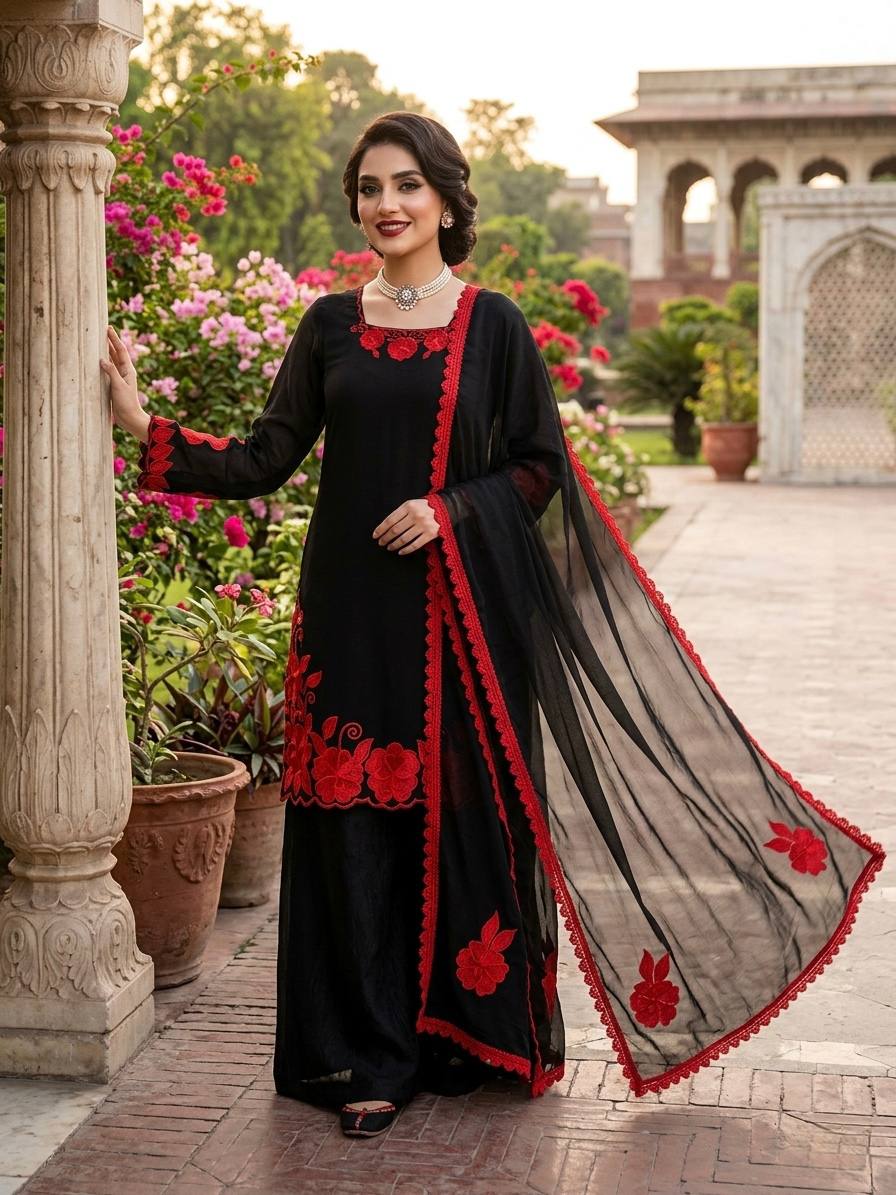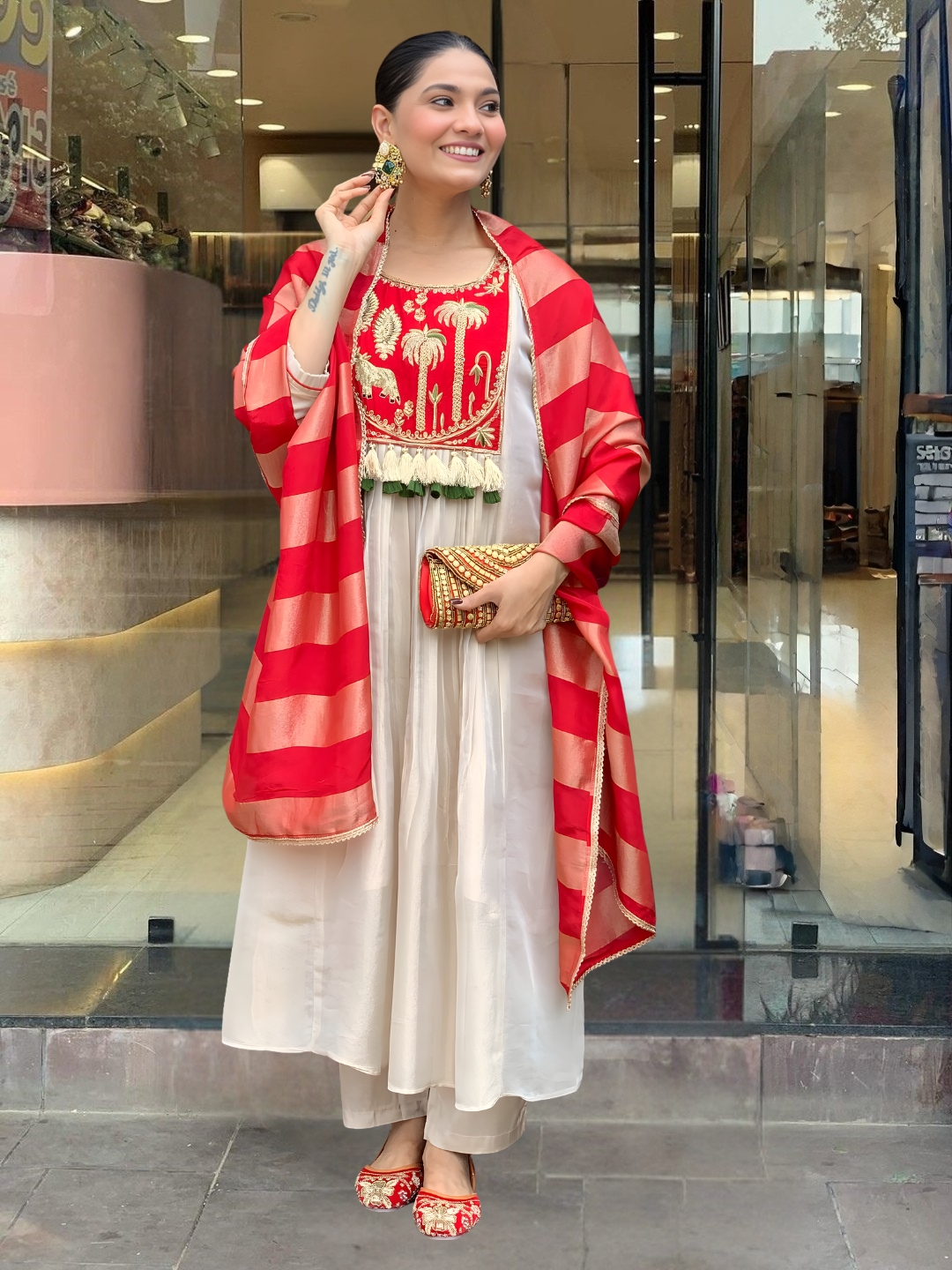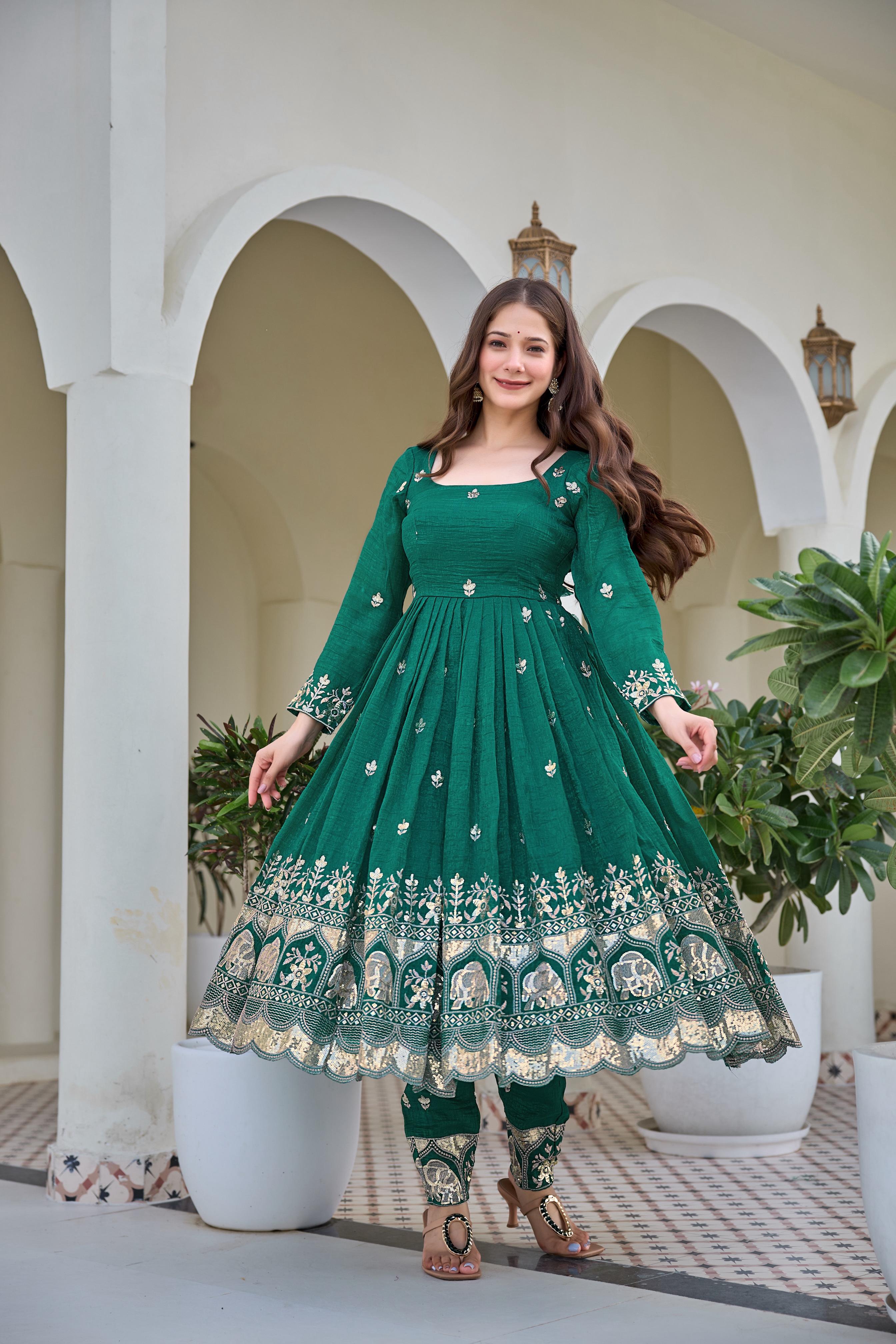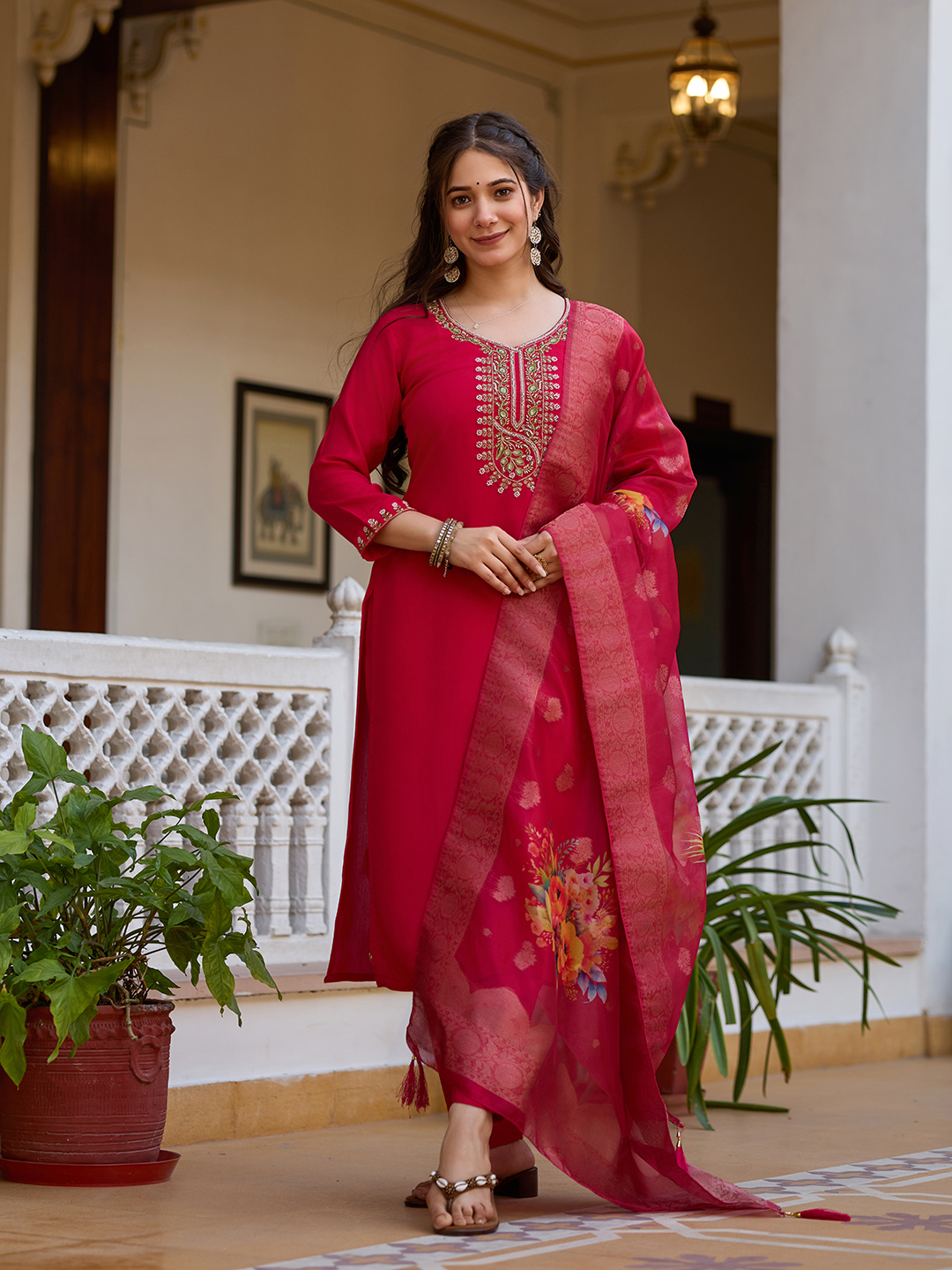
Which saree is easy to drape? For most beginners, a lightweight cotton, linen-cotton or soft tissue saree with a manageable border is the easiest choice. Fabric weight, surface texture, stiffness and pallu width affect draping more than the saree's price or amount of decoration. A saree that weighs around 450-650 grams, has a steady fall and doesn't slip easily is usually simpler to pleat, tuck and pin than a very glossy silk or heavily embellished design.
The right choice also depends on what you find difficult. If pleats collapse, choose a fabric with mild body. If the pallu keeps sliding, choose a textured weave or use a discreet shoulder pin. If six metres of fabric feels overwhelming, practise with a lightweight saree before attempting a heavy Banarasi silk or zari-rich wedding saree. This guide explains how different saree fabrics behave and how to make the draping process more predictable.
Which saree is easy to drape for a first-time wearer?
A lightweight cotton or linen-cotton saree with a narrow-to-medium border is generally the easiest saree for a first-time wearer to drape. These fabrics are light enough to handle, create visible pleats and usually stay more stable at the waist than slippery satin or very smooth silk.
Look for a saree with a clean fall, a clearly finished pallu and a border that helps you identify the lower edge. A small floral print or evenly spaced weave can also guide the direction of the pleats. Avoid starting with a very stiff organza, a nine-yard saree, a heavily sequinned saree or a wide, weighty zari border because each option requires more control.
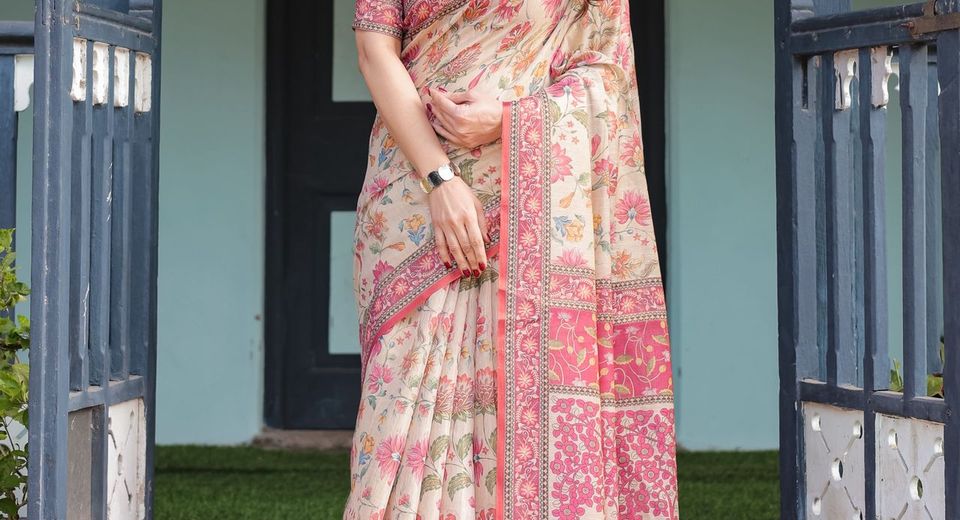
The Lightweight Cream Saree with Designer Floral Pattern is a useful example of a beginner-friendly visual approach. A print gives the saree character without adding the extra weight of dense embroidery, while a lighter body is easier to gather into six to eight front pleats. A saree such as the Pastel Linen Cotton Floral Print Saree with Designer Blouse can also work well when you want a softer everyday drape with a coordinated blouse already considered.
How fabric changes the difficulty of draping
Fabric determines how quickly pleats form, how securely the pallu stays on the shoulder and how much adjustment is needed after walking or sitting. Two sarees can have identical lengths but feel completely different because their fibres, weave density and finish alter the way they fall.
Cotton and handloom cotton
Cotton sarees are easy to control when the weave has moderate softness and the saree isn't excessively starched. Cotton holds a crease well, breathes in warm weather and gives beginners enough grip to arrange pleats without the fabric sliding through their fingers.
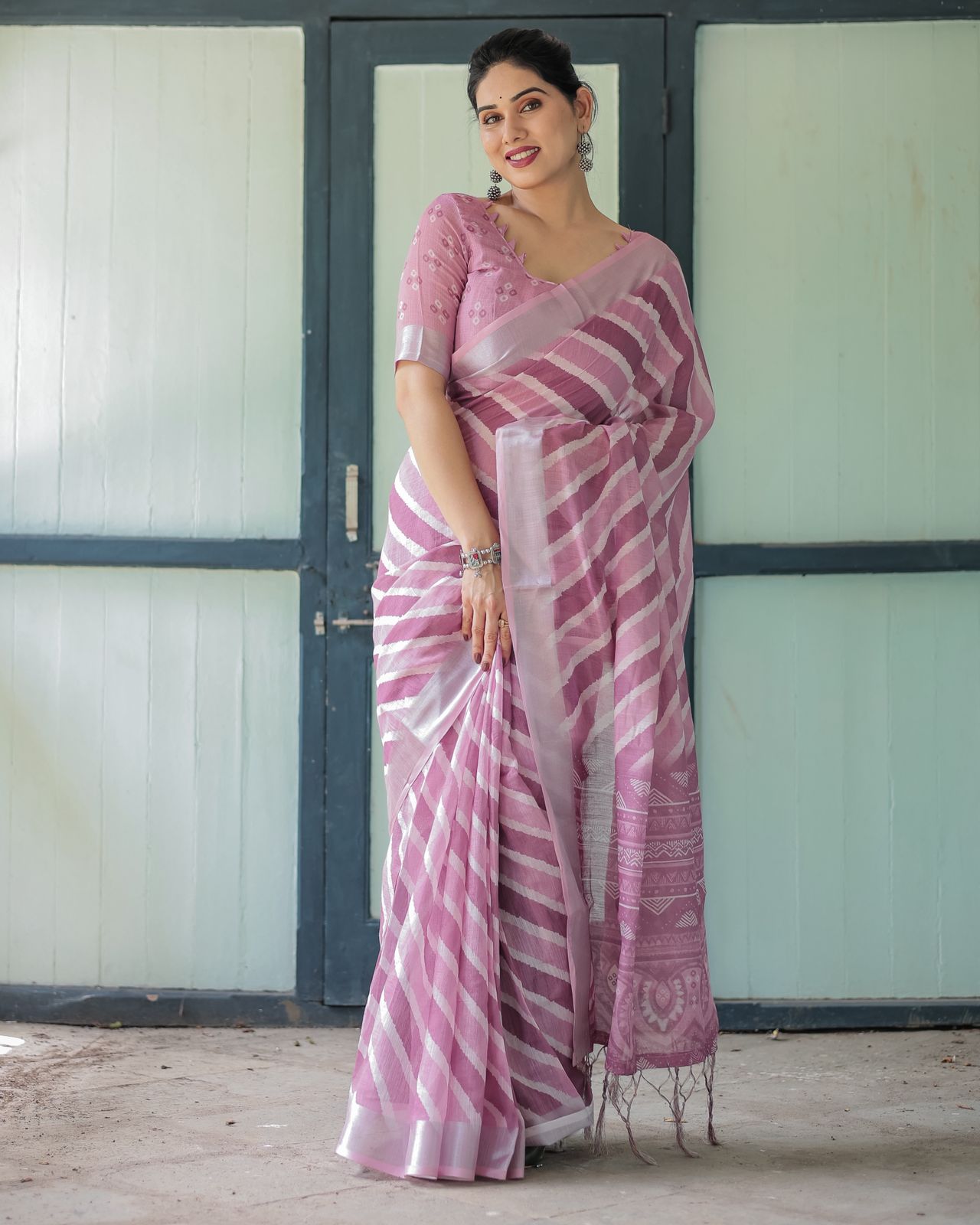
Very crisp handloom cotton can be slightly demanding during the first few wears because the fabric resists rounded folds. Pre-wearing or gently folding the saree can soften its handling. The Pastel Floral Tissue Handloom Cotton Saree with Zari Weaves combines a cotton base with a decorative zari element, so it's best draped with firm waist tucking and a shoulder pin rather than left completely unsecured.
Linen and linen-cotton
Linen-cotton sarees are often easy to drape because they're breathable, relatively light and less slippery than polished silk. Linen produces a relaxed fall and works particularly well for daytime events, office wear and small family gatherings.
Linen can crease visibly, but that's a characteristic of the fibre rather than a sign of poor draping. Press the saree on a low-to-medium heat setting according to its care label, and avoid making extremely tight pleats. The Coral Floral Linen Cotton Saree with Designer Border and Sea Green Floral Linen Cotton Saree with Border show how a defined border can make the lower edge easier to align while keeping the overall drape comfortable.
Tissue and organza
Lightweight tissue sarees are easier to lift but not always easier to pleat because their crisp surface can make folds spring open. Tissue is a good choice when you want volume and a bright, airy appearance, but beginners should use more waist pins and a careful pallu fold.
Keep the front pleats broad and even rather than forcing many thin pleats. A pre-pleated section can be temporarily secured with clips while you tuck the saree. Tissue with zari may feel lighter than silk but can still pull at the shoulder if the pallu border is dense.
Silk and silk blends
Soft silk blends are manageable after some practice, while heavy silk sarees with dense zari usually require more preparation. Banarasi silk, Kanjeevaram and rich jacquard sarees have body and visual richness, but their weight can make the waist tuck bulky and the pallu difficult to keep in place.
The Maroon Lichi Silk Jacquard Saree with Rich Pallu is better suited to a festive drape with deliberate pleat setting than a rushed first attempt. Place the heavier pallu over the shoulder only after securing the lower pleats, and use a strong but comfortable petticoat tie so the fabric doesn't drag downward.
What saree features make draping easier?
A moderate weight, a stable weave, a defined border and a pallu that's not excessively wide make a saree easier to drape. These practical features matter more than whether a saree is labelled casual, designer or festive.
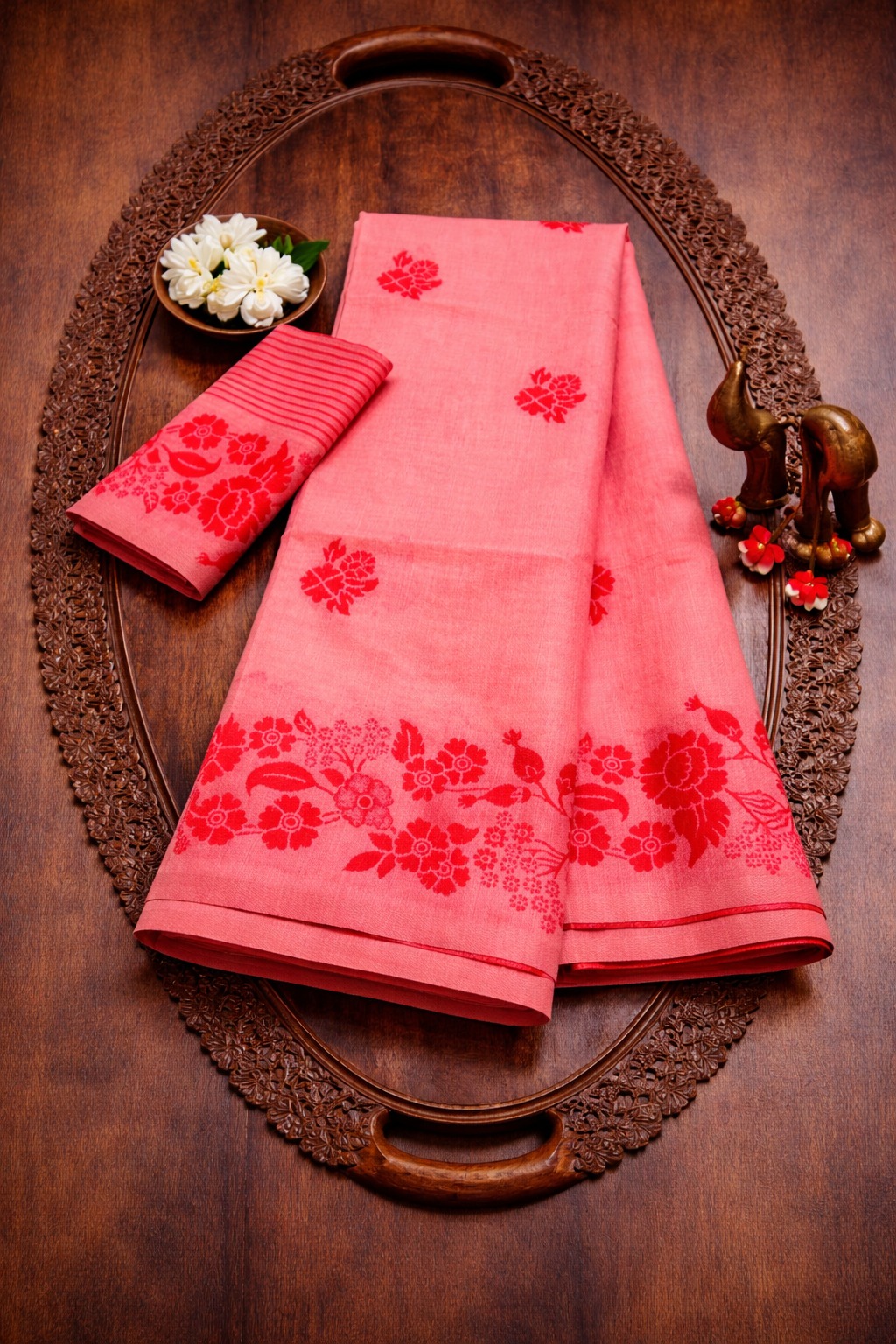
- Weight: A lightweight saree reduces arm fatigue and is easier to spread across the floor before draping. Around 450-650 grams is a useful starting range, although zari, lining and fabric density can change the actual feel.
- Texture: Cotton, linen-cotton and lightly textured weaves offer more grip than satin-like polyester or highly polished silk.
- Border: A narrow or medium border helps you see whether the lower edge is straight. A very broad zari border can add weight and make pleats sit unevenly.
- Pallu: A medium-width pallu is easier to fold and pin than a long, heavily decorated pallu with tassels or dense embroidery.
- Blouse fit: A well-fitted blouse gives the shoulder pin a stable point. A loose sleeve or slippery blouse fabric can make even an easy saree feel insecure.
- Length: A standard six-yard saree is the simplest format for most beginners. Extra-long sarees create more volume at the waist and require additional pleats.
The Soft Ivory Saree with Botanical Floral Print Design illustrates why a restrained print can be useful during practice. The absence of a heavy, raised embellishment makes the saree easier to gather, while the botanical pattern helps you notice whether the front pleats are aligned.
How should you drape an easy saree step by step?
An easy saree should be draped by securing the foundation first, then forming the pleats and arranging the pallu. A firm petticoat, comfortable footwear and two to three safety pins prevent most beginner problems.
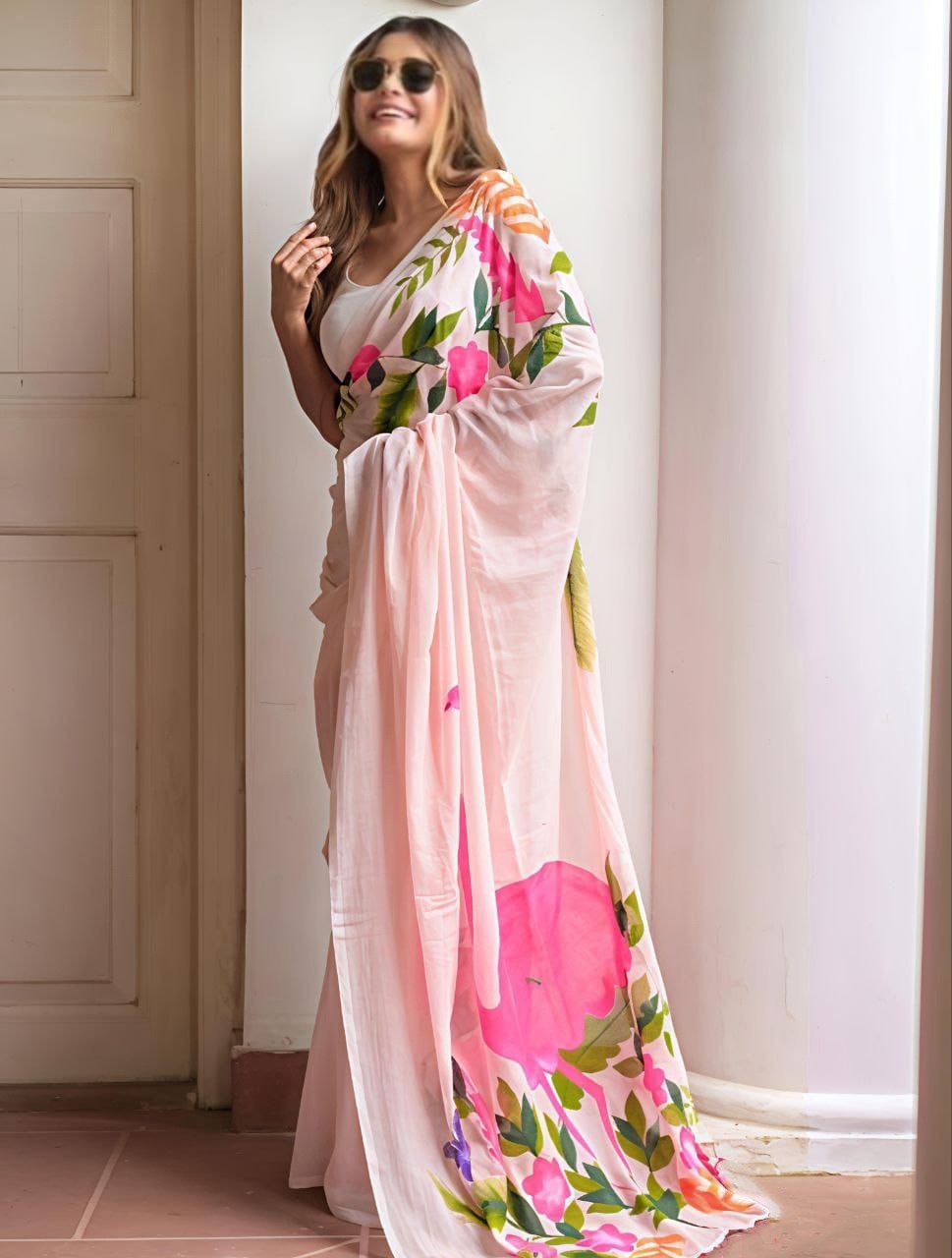
- Wear the right base: Put on the footwear you plan to wear before measuring the length. Tie the petticoat firmly at the natural waist, but leave enough comfort for sitting and breathing.
- Identify the ends: Separate the pallu from the plain end and check the border direction. Keep the saree's lower edge facing the floor throughout the first tuck.
- Make the first wrap: Tuck the plain end into the petticoat and complete one full turn from right to left. Keep the lower edge about one to two centimetres above the floor.
- Set the front pleats: Gather six to eight pleats, each approximately 10-12 centimetres wide. Align the lower edges by holding the pleats against a flat surface before tucking them.
- Secure the pleats: Tuck the pleats slightly to the left of the navel and pin them from the inside. A concealed pin at the waist stops cotton, linen and tissue pleats from spreading while you walk.
- Arrange the pallu: Bring the remaining fabric around the body and over the left shoulder. Fold the pallu into five to seven vertical pleats, then place the border evenly before pinning it to the blouse.
- Check movement: Walk, sit and raise one arm gently. If the saree pulls at the waist, loosen the pleats slightly; if the pallu slides, add a second shoulder pin rather than tightening the entire drape.
Practise the complete sequence once before an event and note where the fabric gathers. A five-minute rehearsal reveals whether the petticoat is too loose, whether the blouse shoulder needs a pin or whether the saree length needs adjustment. Practice becomes especially valuable with a soft silk, zari or jacquard saree.
Which saree is easy to drape for daily wear and small occasions?
Linen-cotton, soft cotton and lightweight printed sarees are usually the easiest options for daily wear and small occasions because they balance comfort, grip and visual polish. These fabrics can move naturally without requiring repeated adjustment after every few steps.
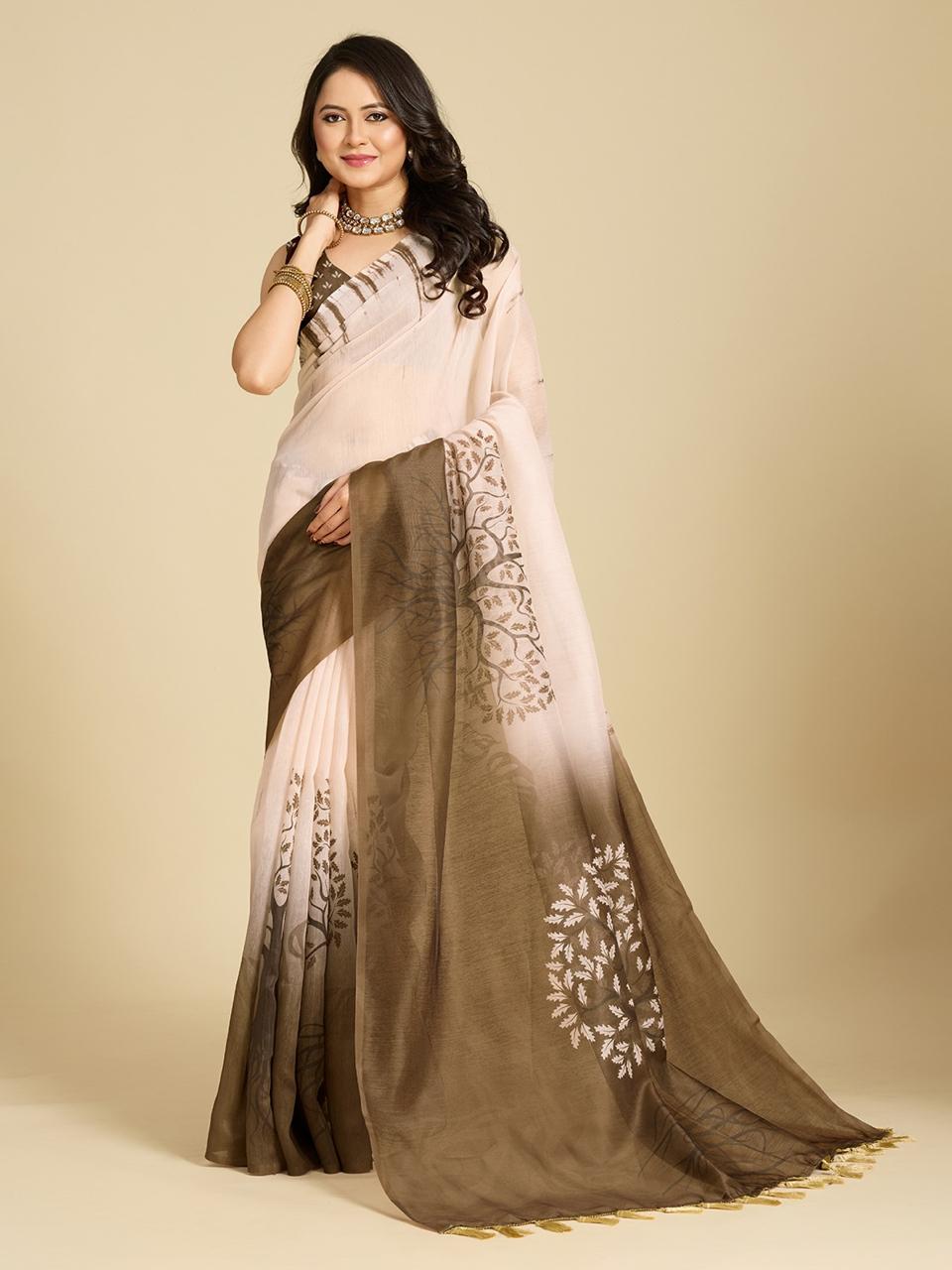
For a workday or daytime lunch, choose a narrow border, moderate print and a blouse with sleeves that don't catch on the pallu. For a Haldi ceremony, a breathable cotton or linen-cotton saree in a cheerful colour is practical because the fabric is easier to manage around movement, seating and photographs. A brighter border can provide occasion appeal without adding the weight of full zari.
The Sea Green Floral Linen Cotton Saree with Border is suited to this kind of relaxed styling, while the Lightweight Cream Saree with Designer Floral Pattern can be paired with a contrasting blouse for a simple festive appearance. Sarees Under 20% Off and Sarees Under 10% Off can be useful places to compare accessible styles, but check the listed fabric and measurements rather than choosing only by discount.
When should you choose a heavier silk or zari saree?
Choose a heavier silk or zari saree when the event calls for a structured, formal look and you've time to secure the drape. Heavy fabric isn't automatically difficult, but it needs better foundation support, more deliberate pleat setting and stronger shoulder anchoring.
Banarasi silk often has a smooth surface and a substantial zari pattern, while Kanjeevaram sarees can have a firm body and contrasting borders. Chanderi may feel light but can still require care because its surface and zari details may allow pleats to shift. Test the saree by making three pleats in your hands: if the folds hold without springing apart or collapsing into a thick bundle, the fabric is likely manageable for your preferred style.
For a wedding reception or traditional celebration, the Maroon Lichi Silk Jacquard Saree with Rich Pallu provides a more formal direction than a printed linen saree. Secure the waist pleats first, keep the pallu border aligned across the shoulder and avoid placing all the fabric weight on a single small pin. A broad blouse shoulder and a second hidden pin can distribute the load.
Price collections such as Sarees Flat 50% Off and Sarees Flat 60% Off may include both light and heavy fabrics. Sale percentage doesn't predict ease of draping, so read the fibre composition, saree length and care instructions before ordering.
How can you keep an easy-to-drape saree neat?
An easy-to-drape saree stays neat when it's stored without deep creases, pressed according to its fibre and secured at points that carry weight. Correct care protects the fall that made the saree comfortable in the first place.
- Wash carefully: Follow the garment label, especially for zari, silk and handloom cotton. Dry-clean silk and heavily embellished sarees when the care instructions require it.
- Fold along the length: Align the border before folding so the zari edge doesn't become sharply distorted. Refold silk and tissue sarees every few months if they remain stored for long periods.
- Use low heat where appropriate: Place a thin cotton cloth between the iron and delicate fabric. Never apply high heat directly to zari or synthetic tissue.
- Remove pins after wearing: Take out safety pins before storage because trapped metal can snag threads and create rust marks in humid conditions.
- Support the pallu: For heavier sarees, use a shoulder pin placed through the blouse and the inner pallu fold rather than piercing a visible zari motif.
The simple saree to drape is ultimately the saree whose fabric, weight and occasion match your experience. Start with soft cotton or linen-cotton, learn how much fabric your pleats need and then move towards tissue, silk and rich zari. A profound choice can make the six-yard drape feel controlled rather than complicated.
Practical Questions About Choosing an Easy-to-Drape Saree
Which saree is easiest to drape for beginners?
A lightweight cotton, linen-cotton or soft tissue saree with a narrow-to-medium border is usually easiest for beginners. These fabrics are manageable, create visible pleats and are less slippery than polished silk or satin.
Is cotton saree easy to drape?
Yes, cotton sarees are generally easy to drape because the fibre provides grip and holds pleat creases well. Very crisp, heavily starched cotton may need gentle softening or a short practice session before an event.
Is linen saree easier to drape than silk saree?
Linen-cotton is usually easier to drape than silk because it is lighter and less slippery. Linen may crease more visibly, while silk often needs extra pins and more careful pleat setting.
How many pleats should a beginner make in a saree?
A beginner can start with six to eight front pleats, each about 10-12 centimetres wide. Fewer, evenly aligned pleats are easier to secure than many narrow pleats that spread or become bulky.
How do I stop my saree pallu from slipping?
Use a well-fitted blouse, place the pallu evenly on the shoulder and add one concealed safety pin through the inner pallu fold and blouse shoulder. A textured cotton or linen-cotton pallu usually slips less than a smooth silk pallu.
Are silk sarees difficult to drape?
Soft silk blends can be manageable, but heavy Banarasi silk, Kanjeevaram and zari-rich jacquard sarees require more preparation. Secure the waist pleats first, use a firm petticoat and distribute the pallu weight with a strong shoulder pin.