Which lehenga outfit works with heirloom gold jewellery depends on more than matching gold with a warm colour. The right combination balances the jewellery's age, weight, finish and motif with the lehenga's fabric, embroidery, neckline and scale. A heavy antique necklace may need a restrained blouse, while delicate inherited bangles can sit comfortably beside floral embroidery and a fuller flare.
Heirloom gold jewellery often carries visible character: a slightly darkened patina, hand-carved details, temple motifs, uncut stones, pearls or a substantial chain. Instead of hiding those details under a heavily embellished outfit, choose a lehenga that gives the jewellery visual room. The result feels connected to family tradition without making the entire look appear dated.
Which lehenga outfit works with heirloom gold jewellery?
A lehenga outfit with a warm or balanced base colour, controlled embellishment and a blouse neckline that frames the jewellery usually works best with heirloom gold jewellery. Olive, cream, muted pink, coral, deep green, red and softly glowing gold tones create a natural partnership with traditional yellow gold.
Colour temperature provides the first useful filter. Yellow gold looks pure against olive, mustard, marigold, rust, coral, warm pink and cream. Green lehengas are particularly effective when the jewellery includes temple-style motifs, ruby-coloured stones or an aged finish. Green Lehengas can therefore suit both a family wedding necklace and a simpler gold chain, depending on the embroidery density.
Cooler colours can also work, but they need deliberate contrast. Mint, powder blue and icy pink prevent yellow gold from looking overly heavy when the lehenga has a light base and fine embroidery. A blue lehenga with antique gold motifs can look regal, whereas a very bright cobalt outfit with dense gold work may compete with a broad heirloom haar.
The most reliable test is to place the jewellery near the blouse fabric in daylight. Indoor yellow lighting can make cream appear gold and can exaggerate the warmth of both fabric and metal. A five-minute daylight check reveals whether the lehenga supports the jewellery or simply repeats its colour without contrast.
How should lehenga colour and embroidery support old gold?
Lehenga colour should echo one secondary tone in the jewellery rather than copy every shade in the piece. If an heirloom necklace contains green enamel, choose olive or emerald accents; if the jewellery has pearls or uncut stones, cream and blush can soften its visual weight.
Warm neutrals for broad necklaces
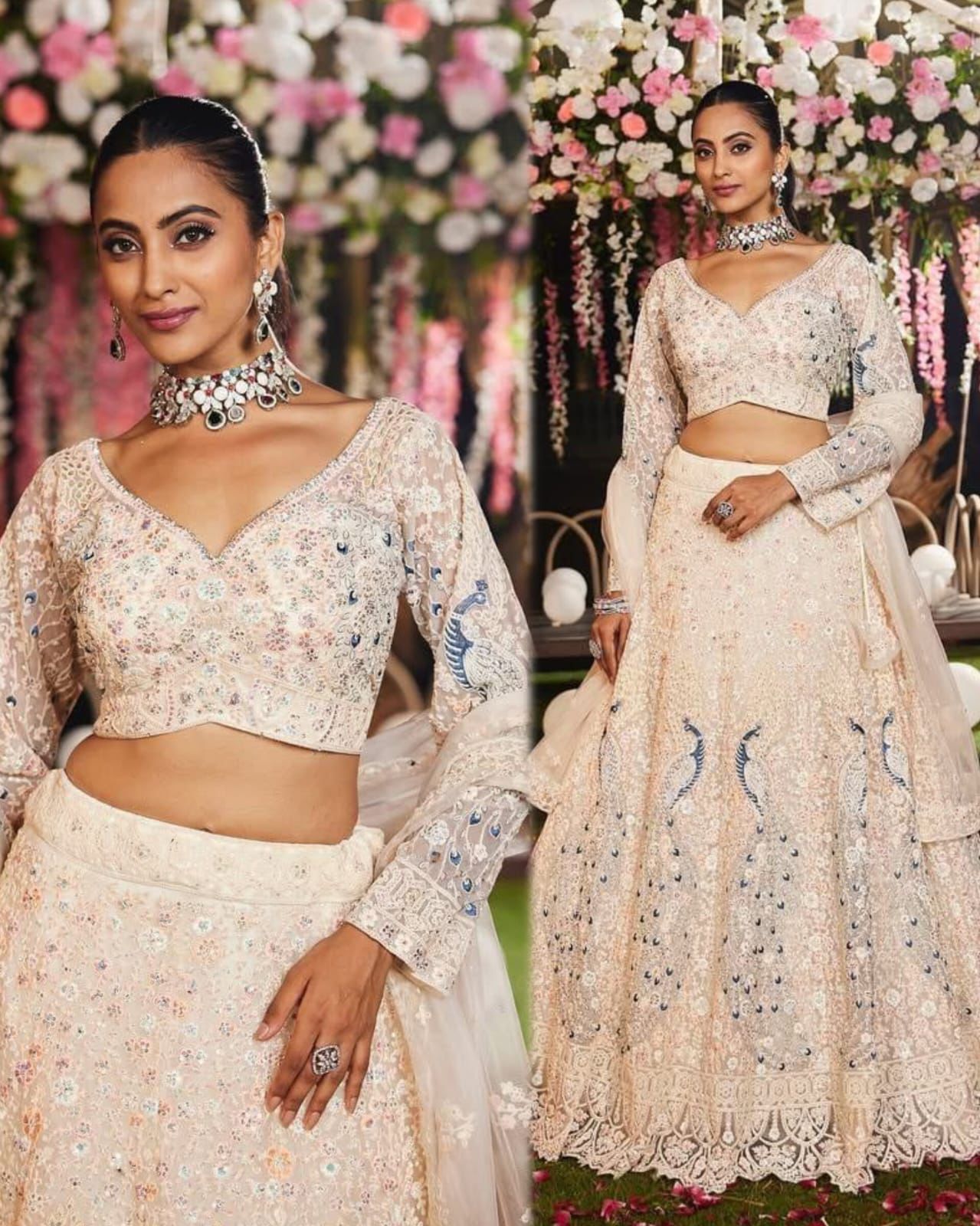
Cream and ivory lehengas create a quiet background for a wide gold necklace, layered chains or a large pendant. The Cream Peacock Embroidered Net Lehenga Set for Women demonstrates why a pale base can be useful: peacock-inspired colour and embroidery add interest without forcing the outfit into the same metallic register as the jewellery.
Warm neutrals are particularly practical for bridal and reception dressing because they allow the same heirloom necklace to remain visible in photographs. Add one stronger colour through the dupatta, blouse piping or bindi rather than introducing several competing jewel tones.
Muted greens and olives for antique finishes
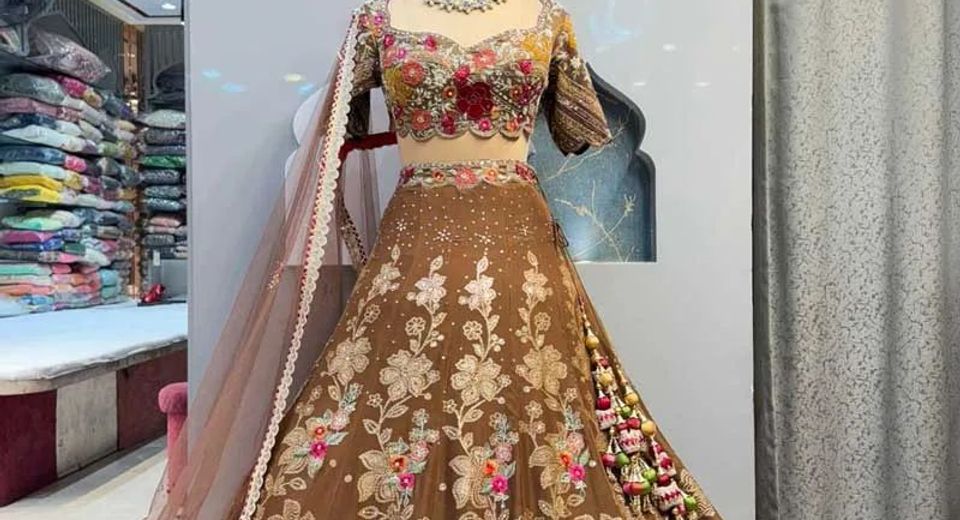
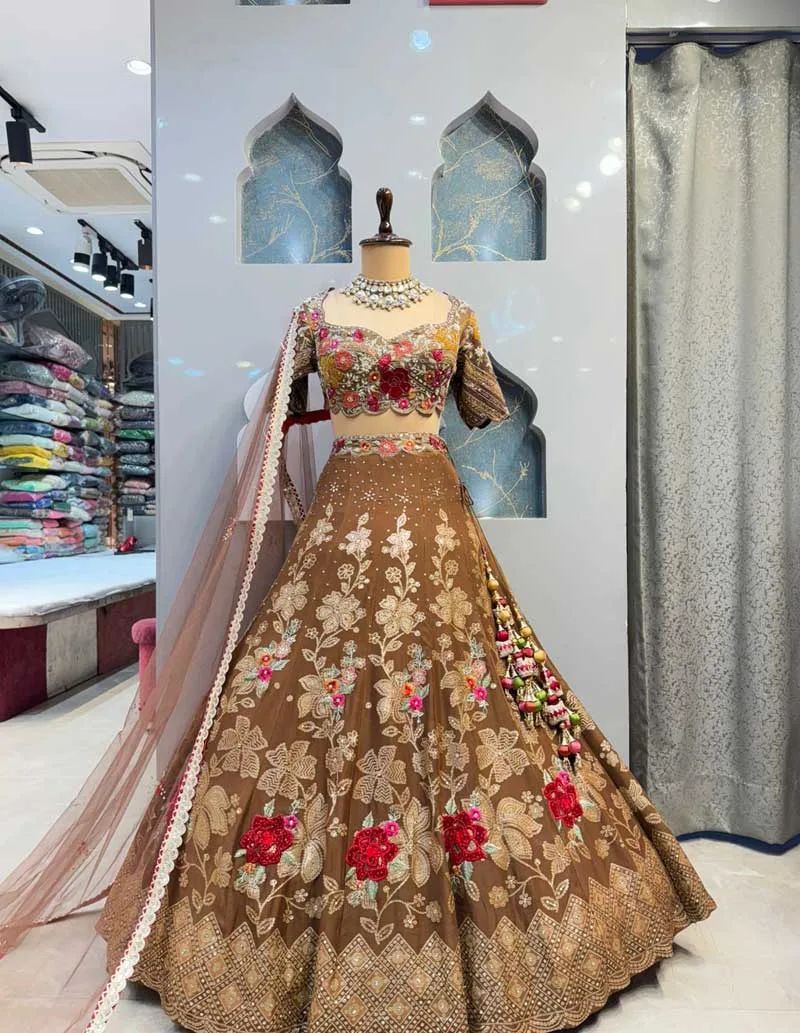
Olive and muted green work well with gold that has a darker patina because both colours have enough depth to make the metal glow. The Olive Gold Floral Embroidered Jimmy Chu Lehenga Set pairs a grounded colour family with floral detail, making that kind of palette suitable for a heritage necklace, long earrings and stacked bangles.
Green doesn't need to mean heavily bridal. A restrained green lehenga with heirloom jhumkas can suit a Haldi ceremony, family puja or daytime wedding function, especially when the blouse has a clean neckline and the dupatta isn't overloaded with sequins. Mehendi Lehengas and Green Lehengas are useful starting points when the celebration calls for colour but the jewellery remains the main sentimental feature.
Pink, coral and blue for lighter heirlooms
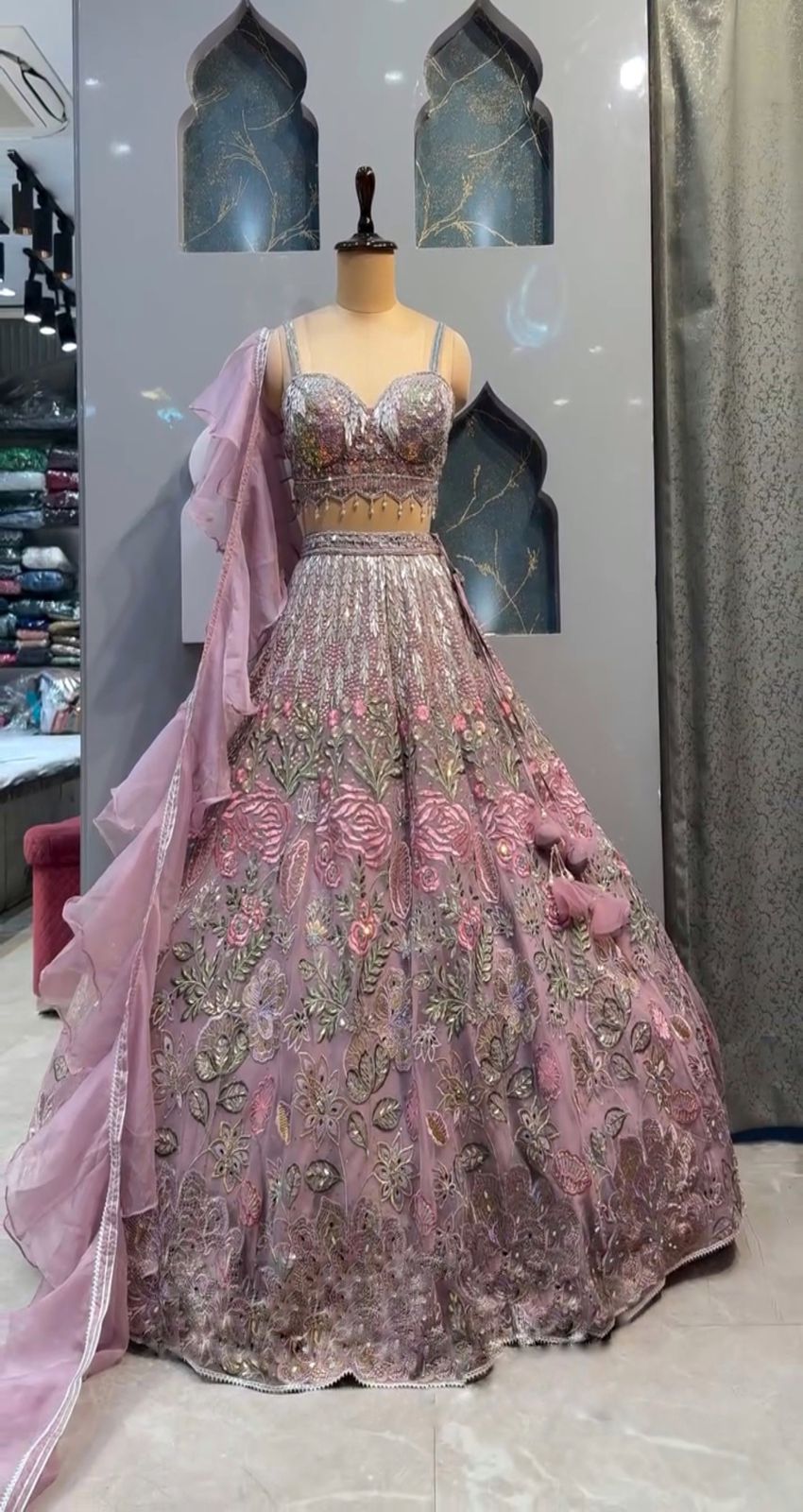
Pink, coral and blue lehengas suit heirloom gold best when the jewellery is medium-weight or contains pearls, coloured stones or delicate filigree. The Dusty Pink Satin Embroidered Lehenga Set Online can support a shorter necklace and time-honoured earrings because satin brings a gentle sheen without demanding dense metallic embroidery.
The Coral Bloom White Georgette Lehenga Set offers a different balance: coral adds warmth while white creates breathing space. Such a combination can make old gold feel celebratory without producing an all-over red-and-gold bridal effect. For a cooler contrast, the Blue Floral Georgette Lehenga Set with Heavy Flare can be paired with a gold choker, but keep the blouse embroidery finer than the jewellery's central motif.
Which blouse neckline leaves room for heirloom jewellery?
A sweetheart, shallow V, wide round or modest square neckline usually leaves the clearest visual space for a classic gold necklace. The neckline should reveal enough skin for the necklace to be read as a distinct piece while avoiding a gap so large that the jewellery looks disconnected from the blouse.
A broad choker sits naturally with a sweetheart or wide round neckline. A long rani haar benefits from a deeper V or square neckline because the vertical line of the necklace has somewhere to travel. A high neck can work with long earrings and bangles, but it may hide the lower edge of a short necklace and make a heavy blouse appear crowded.
Neckline depth should also consider movement. A necklace that rests exactly on the blouse border can catch on zari, sequins or textured embroidery when the wearer turns. Leave roughly 2 to 3 centimetres of visible fabric or skin between the necklace edge and the most raised embroidery whenever possible.
Blouse sleeves affect balance as much as the neckline. Broad heirloom bangles pair well with elbow-length or three-quarter sleeves because the arm remains visually grounded. If the jewellery includes large cuffs, avoid extremely ornate sleeve borders; a plain sleeve with a narrow embroidered edge creates a cleaner transition.
How much embroidery should a lehenga have?
A lehenga with medium-scale embroidery and one clear focal area is usually the safest choice for heirloom gold jewellery. Dense embroidery isn't automatically wrong, but the motifs should be smaller, flatter or more widely spaced where the jewellery sits.
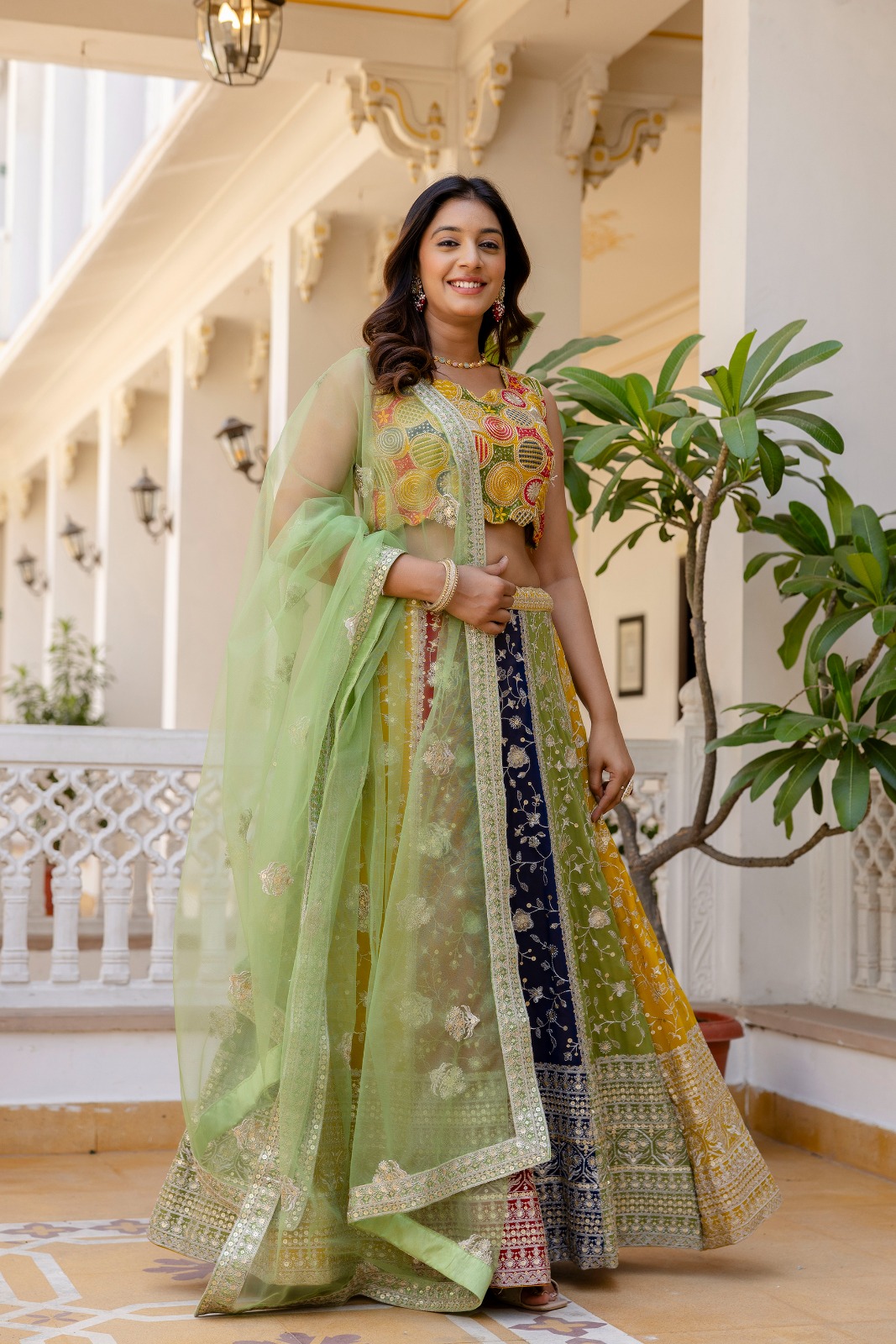
Time-honoured gold can disappear against a blouse covered in large metallic flowers, thick sequins or raised 3D work. A blouse with threadwork, tonal embroidery or a lightly embellished neckline lets an old necklace retain its texture. The Designer Threadwork Silk Lehenga Choli Set with Dupatta is an example of why threadwork can be useful: the surface can look detailed while remaining less reflective than all-over sequin work.
Use motif scale as a practical rule. A broad necklace needs either a plain or fine-textured blouse panel behind it. Smaller earrings and a delicate chain can tolerate bolder floral motifs on the choli. If the heirloom piece includes a recognisable peacock, paisley or temple design, avoid placing an identical oversized motif directly underneath it.
Zari requires special attention because zari and yellow gold can merge in photographs. Gold zari on a cream or olive ground can look elegant, but add contrast through thread colour, a darker blouse, or a non-metallic dupatta border. A lehenga with silver sequins and yellow gold jewellery can work when the silver is soft and sparse; bright silver mirror work beside strongly yellow antique gold often creates a disconnected finish.
Should you choose a readymade or semi-stitched lehenga?
A fully stitched choli is usually the easier choice when heirloom jewellery must be styled quickly, while a semi-stitched lehenga brings more control over neckline, bust fit and blouse length. The better option depends on how precisely the outfit must accommodate the jewellery.
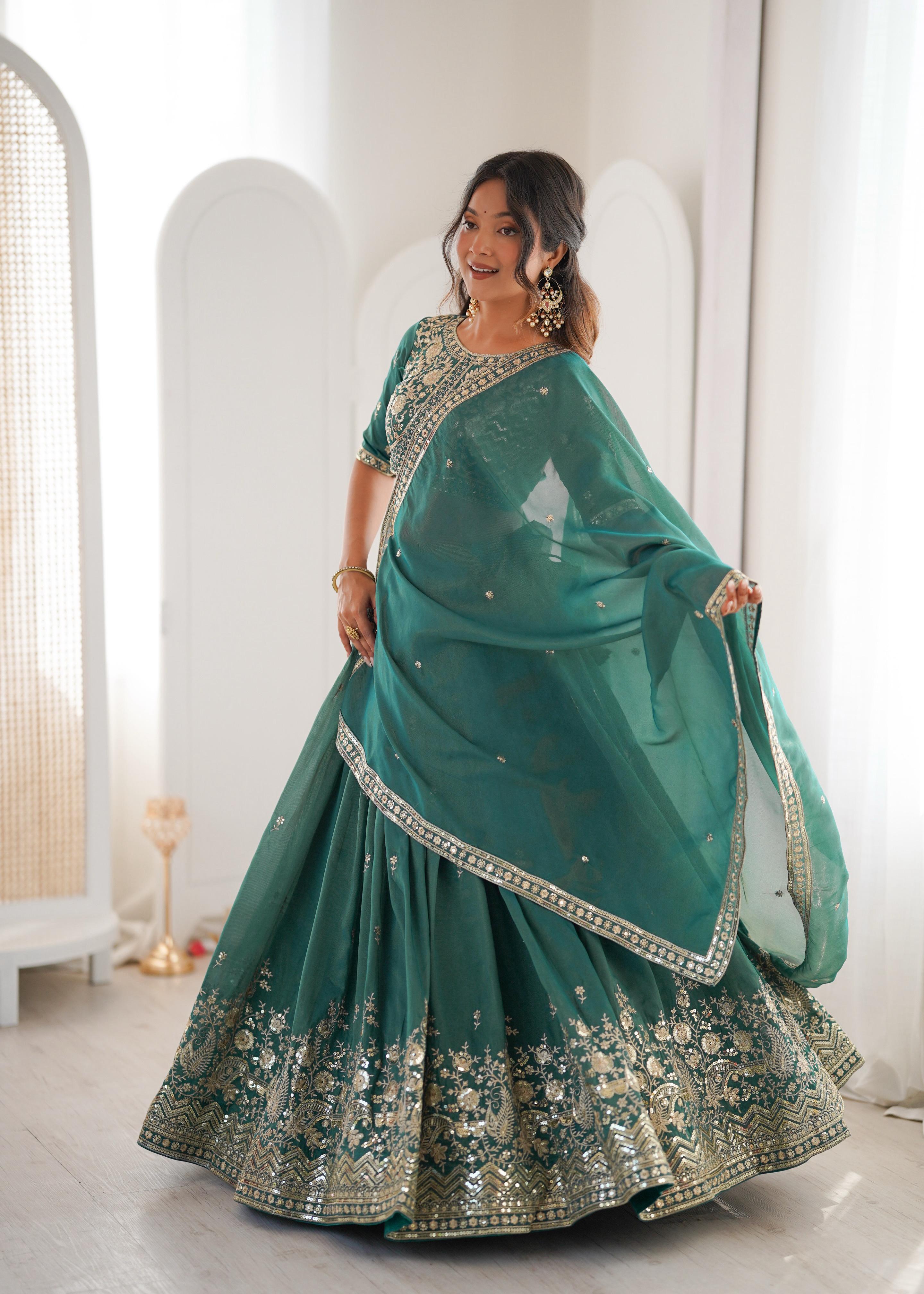
Readymade and fully stitched lehengas are useful for a short shopping timeline because the blouse shape is already established. Check the neckline, back depth, strap width and closure before purchase. A necklace may look perfect on the front but sit awkwardly if the blouse pulls at the shoulders or if the back tie presses against a long pendant.
Fully stitched choli shopping becomes more successful when measurements are compared with a garment rather than guessed from body size alone. Measure bust, underbust, shoulder width and preferred blouse length. For a heavy necklace, ask whether the neckline can be altered without disturbing embroidery or seam placement.
A semi-stitched design is valuable for bridal dressing, inherited jewellery with unusual proportions, or a wearer who wants a specific sleeve length. A tailor can raise a neckline, strengthen the shoulder seam, add modesty panels or create a slightly longer blouse so the necklace doesn't sit on bare skin throughout a long ceremony.
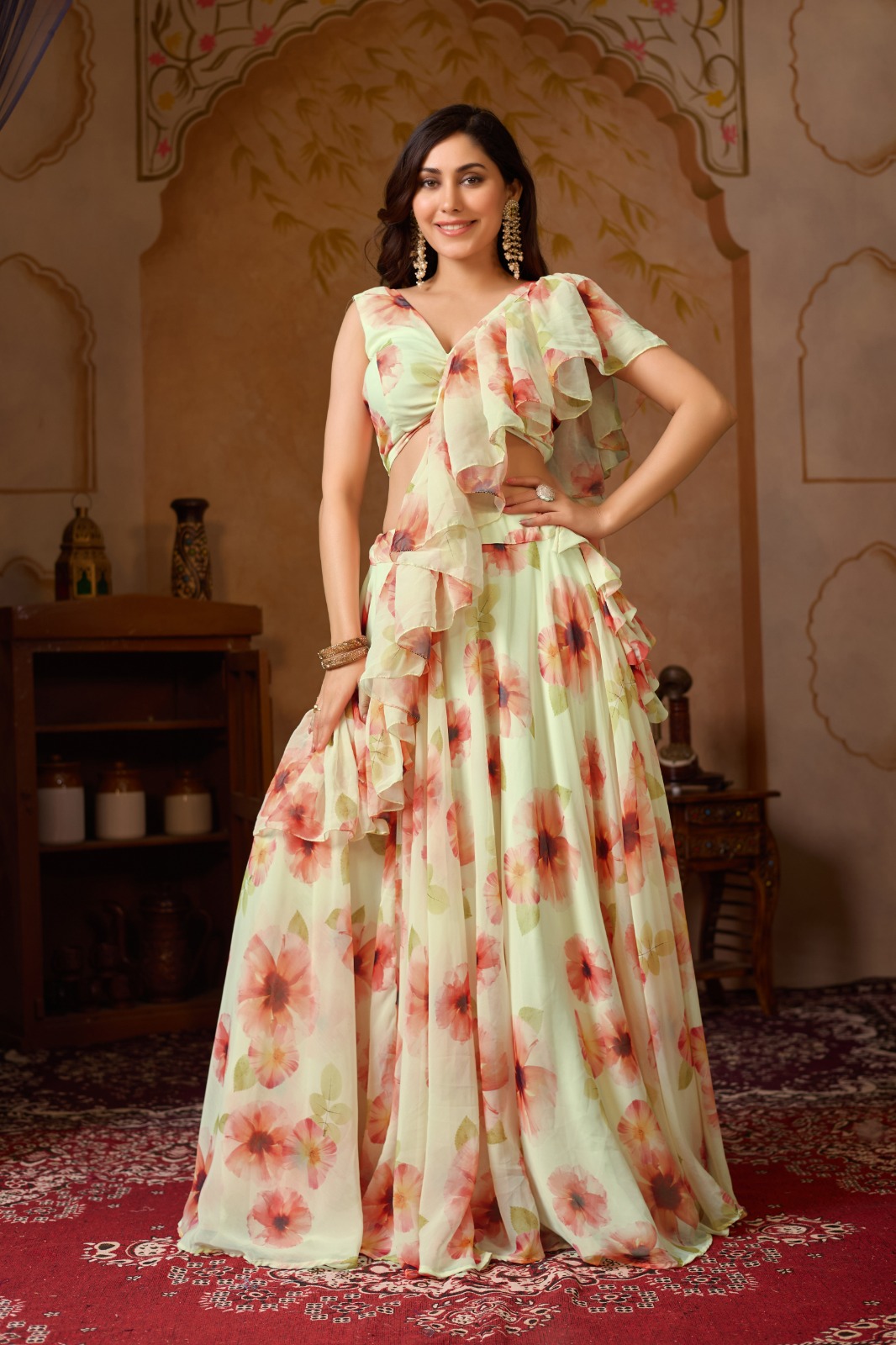
The Mint Embroidered Lehenga Set with Net Dupatta for Women can suit a lighter daytime styling direction, especially when the heirloom jewellery is delicate. The Pastel Floral Georgette Lehenga Set with Ruffle Blouse brings a softer, contemporary texture; pair it with one heirloom pendant rather than layering every heritage piece at once.
How do occasion and silhouette change the jewellery pairing?
The ceremony and silhouette should determine how much jewellery the lehenga can carry. A bridal lehenga can support a necklace, earrings, maang tikka, bangles and rings, while a guest outfit often looks more polished with one dominant heirloom piece and two supporting accessories.
Bridal and wedding ceremonies
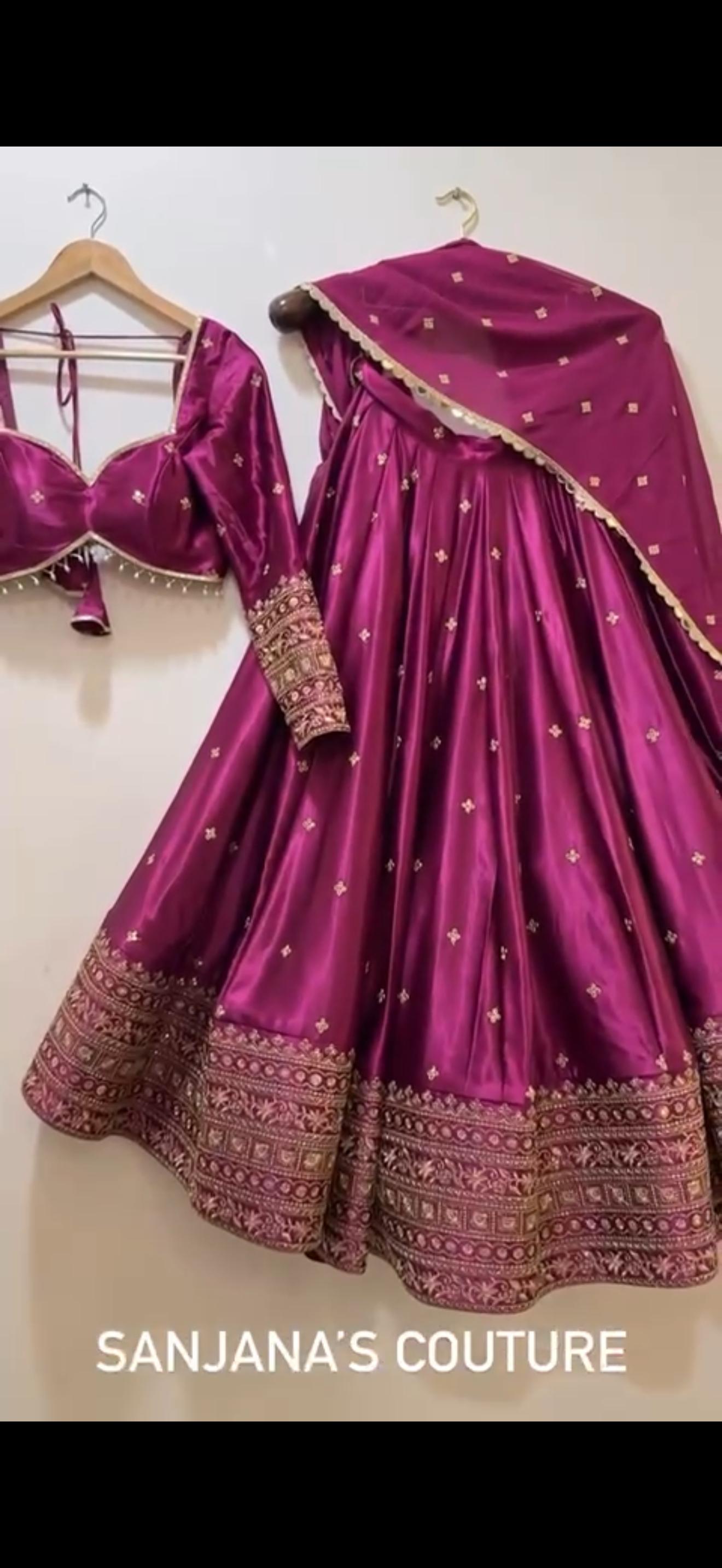
A bridal lehenga can carry substantial heirloom gold when the blouse neckline, dupatta placement and embroidery are planned around the jewellery. Deep green, wine, red, olive and warm cream offer enough depth for an antique necklace, but the exact shade should also coordinate with the family jewellery's stones.
For a wedding ceremony, place the heavier dupatta over one shoulder or across the head without covering the necklace's central pendant. A second lightweight dupatta can be used for coverage if the main drape would otherwise obscure the jewellery. A long skirt with moderate flare photographs well because movement reveals the outfit without adding more visual mass near the face.
Mehendi and Haldi ceremonies
A Mehendi or Haldi ceremony usually suits a lighter heirloom piece, such as jhumkas, a short chain, bangles or a vintage ring. Yellow Lehengas can echo the warmth of gold for Haldi, but choose tonal threadwork or floral embroidery instead of heavy metallic embellishment for a comfortable daytime look.
The Coral Bloom White Georgette Lehenga Set and the Mint Embroidered Lehenga Set with Net Dupatta for Women illustrate two useful daytime directions: warm coral with open brightness, and cool mint with gentle contrast. Both palettes can keep inherited jewellery visible without making a daytime outfit resemble a full bridal ensemble.
Reception and evening celebrations
An evening reception allows more shine, but reflective surfaces should be distributed rather than concentrated around the face. If a necklace is ornate, choose a skirt with thread embroidery or scattered sequins and let the dupatta carry a restrained border.
The Blue Floral Georgette Lehenga Set with Heavy Flare can create a dramatic evening silhouette, so keep the jewellery arrangement focused: a choker with earrings, or a long necklace with smaller studs. The Olive Gold Floral Embroidered Jimmy Chu Lehenga Set can take a stronger antique-gold direction because its colour family already supports a deeper metallic contrast.
What finishing details make the outfit look intentional?
Finishing details make the combination look deliberate when they repeat one small element from the heirloom jewellery without copying the complete design. A bindi, hair ornament, blouse piping or dupatta border can provide that connection.
Match the jewellery's metal finish before matching its colour. Polished yellow gold, matte antique gold and gold with oxidised recesses reflect light differently. A highly glossy blouse embellishment can make matte heirloom gold look dull, while tonal threadwork allows the metal's patina to remain visible.
Keep the hairstyle compatible with the necklace. A low bun or swept-back hair displays earrings and a broad necklace clearly. Loose hair can soften a long necklace, but hair should not cover the pendant or catch in textured chains. If the heirloom jewellery is a family statement piece, avoid a competing oversized hair accessory.
Use the dupatta to manage proportion. A narrow border works with a large necklace, while a broad zari border can support simpler jewellery. Ready Made Lehenga options are convenient for this reason, but inspect whether the dupatta border is positioned to fall over the necklace; a minor drape adjustment can prevent the most important detail from disappearing.
For a contemporary family-wedding look, the Dusty Pink Satin Embroidered Lehenga Set Online can be paired with antique gold earrings and bangles while leaving the necklace at home. For a more traditional arrangement, the Cream Peacock Embroidered Net Lehenga Set for Women can take a necklace and maang tikka if the remaining accessories are kept proportionate.
What should you check before buying the lehenga?
Check colour in daylight, blouse measurements, neckline depth, embroidery placement, lining, closure quality and alteration scope before buying a lehenga for heirloom jewellery. These practical checks matter more than the product photograph alone.
- Photograph the jewellery beside the fabric: Use natural light and include the necklace, earrings and bangles that will actually be worn.
- Measure the necklace: Record its length and pendant drop, then compare those measurements with the blouse neckline and visible front panel.
- Inspect the shoulder and waist structure: Heavy jewellery and a heavy dupatta need secure seams, comfortable straps and a waistband that doesn't twist.
- Check the lining: Smooth lining reduces snagging from antique chains, rough edges and older stone settings.
- Plan alterations early: Allow at least 10 to 14 days for significant blouse changes, especially for bridal wear or a semi-stitched garment.
- Consider the full event: A lehenga that looks impressive for photographs must also allow sitting, walking, dancing and repeated dupatta adjustments.
For shoppers comparing silhouettes, the Semi Stitched Lehengas Collection can be useful when a family necklace requires a customised blouse. A ready-made set may be more practical when the event is close, the standard neckline already suits the jewellery, and the wearer values predictable fitting over extensive tailoring.
The strongest pairing doesn't require every element to look traditionally heavy. Heirloom gold becomes more memorable when the lehenga supplies colour, movement and a considered frame rather than competing for attention. Choose the base colour first, place the necklace against the blouse, reduce embroidery where the jewellery sits, and then add only the accessories that improve proportion.
Practical Questions About Pairing Heirloom Gold With a Lehenga
Which lehenga colour looks best with antique gold jewellery?
Olive, deep green, cream, coral, warm pink, red and muted gold usually complement antique gold jewellery. Mint and blue can also work when the jewellery is medium-weight or includes pearls and coloured stones.
Can I wear heavy heirloom jewellery with a heavily embroidered lehenga?
Yes, but the embroidery should be controlled around the neckline and blouse front. Choose fine threadwork, tonal motifs or spaced embellishment behind a broad necklace so the jewellery remains visible.
Which blouse neckline is best for a traditional gold necklace?
A sweetheart, shallow V, wide round or modest square neckline generally frames a traditional gold necklace well. Match the neckline to the necklace length and leave enough space for the pendant to sit without catching on embroidery.
Is a ready-made lehenga suitable for inherited jewellery?
A ready-made lehenga is suitable when its neckline, blouse measurements and dupatta placement already accommodate the jewellery. A semi-stitched lehenga is more flexible when the necklace is unusually long, broad or heavy.
What jewellery should I wear with a lehenga for a Haldi ceremony?
Lightweight heirloom pieces such as jhumkas, bangles, a short chain or a vintage ring usually suit a Haldi ceremony. Yellow, coral, mint and floral lehengas keep the look festive without making it as heavy as bridal styling.
How early should a blouse be altered for heirloom jewellery?
Allow 10 to 14 days for ordinary neckline or sleeve adjustments and more time for complex bridal alterations. Try the blouse with the actual necklace before the final fitting so the tailor can correct the neckline and support points.