

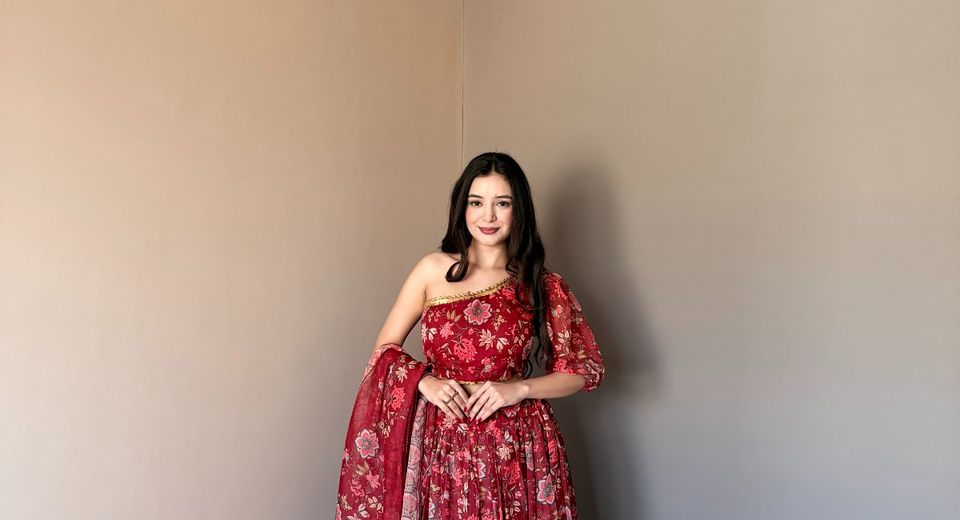
Which Lehenga Fabrics Need Less Volume Under the Skirt is an useful question when you want graceful movement, easier seating and a silhouette that doesn't occupy too much space. Georgette, chinon silk and lightweight crepe usually fall closer to the body than stiff organza, layered net or heavily supported bridal skirts. However, fabric alone doesn't decide volume: lining, panel construction, gathers, can-can and embroidery also change the final shape. Understanding those details makes shopping for a readymade, designer or bridal lehenga far more reliable.
Which lehenga fabrics need less volume under the skirt?
Georgette, chinon silk, crepe and soft satin generally need less added volume than organza, stiff net, tulle or heavily layered silk. These fluid fabrics follow the body's movement and create a softer flare when the underskirt has limited support. A fabric labelled "silk" should still be examined carefully because lightweight chinon silk can drape close to the legs, while a structured silk skirt with dense lining and broad panels can look considerably fuller.
Fabric weight and fabric stiffness are separate considerations. A heavy fabric can fall neatly if it's supple, while a lightweight fabric can stand away from the body if it has a crisp finish or several layers beneath it. The most useful shopping question is therefore not simply whether a lehenga is light or heavy, but how much structure has been built into the skirt.
- Georgette: Fluid, relatively soft and suitable for a controlled flare when the lining isn't bulky.
- Chinon silk: Smooth and graceful, with a fall that usually looks less architectural than stiff net.
- Crepe: Close to the body with a gentle drape, although thick embellishment can add weight.
- Organza: Crisp and semi-structured, so it can create visible volume even without many layers.
- Net and tulle: Naturally airy but capable of substantial width when layered or supported with can-can.
- Dense silk or brocade: More body and weight, particularly when paired with zari, lining or multiple panels.
How does fabric stiffness change a lehenga's flare?
Fabric stiffness increases the distance between the skirt and the legs, which makes a lehenga appear fuller even when the waist measurement is correct. A crisp organza skirt tends to hold an outward shape, while soft georgette collapses into folds closer to the body. The difference becomes especially noticeable when walking, sitting or turning because a stiffer fabric keeps its spread instead of falling inward.
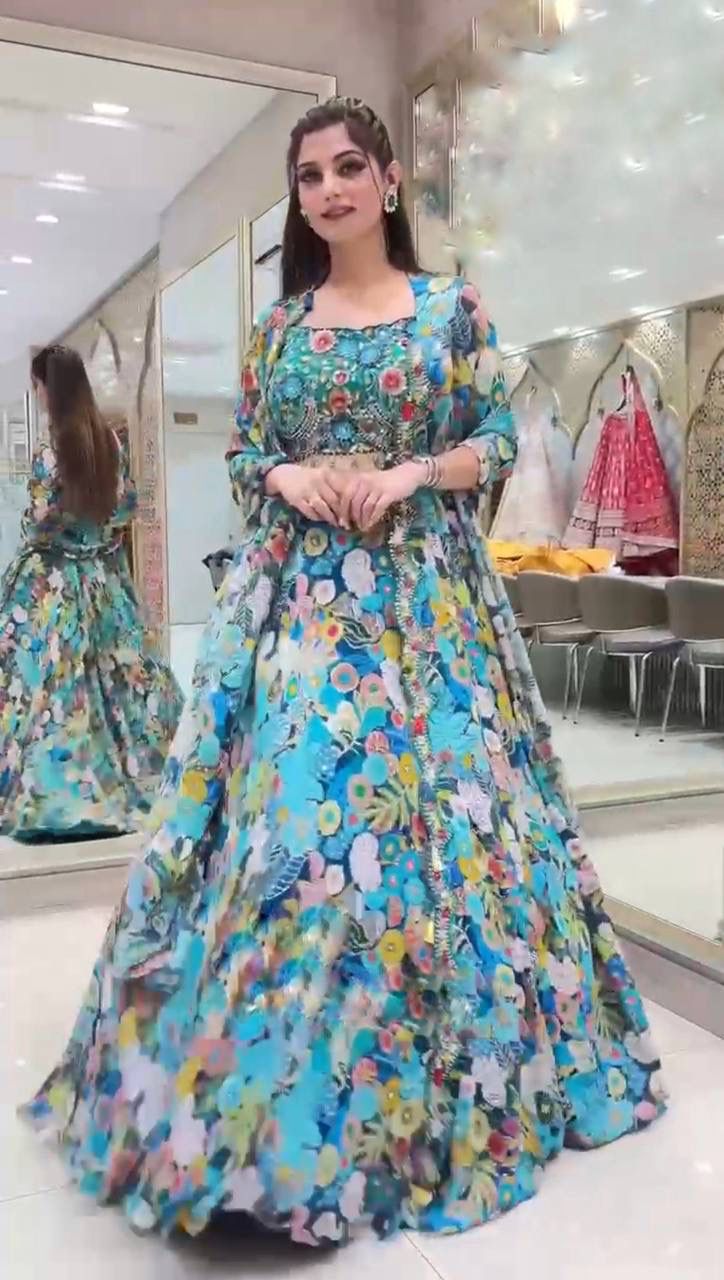
The Red Floral Organza Lehenga Set with One Shoulder Blouse demonstrates why organza requires careful volume planning. Organza gives floral surfaces definition and creates a polished silhouette, but a wearer seeking a narrow fall should avoid adding excessive can-can beneath it. A single modest support layer can preserve shape without turning the skirt into a wide circular silhouette.
Net behaves differently from organza. Unlined net can feel light, but several net layers create air pockets and increase circumference. The Pink Sequins Embroidered Butterfly Net Lehenga Set and the Pastel Grey Embroidered Butterfly Net Lehenga Set show how a lightweight-looking surface can still need a measured underskirt. Sequins add weight at selected areas, while the net determines how much the skirt springs away from the legs.
A practical test is to pinch the skirt fabric between two fingers and release it. Fabric that drops quickly usually produces a softer fall. Fabric that holds a lifted curve is likely to create more body. The test isn't a substitute for trying on the garment, but it helps compare fabrics while shopping online.
Which lehenga construction details add volume besides the fabric?
Can-can, lining, gathered waist panels, multiple underskirt layers and stiff borders add volume independently of the outer fabric. A soft georgette lehenga can therefore become very wide if it contains a firm can-can or a heavily gathered lining. Product photographs often show the outer surface clearly but don't reveal every internal layer, so construction details deserve direct attention before purchase.
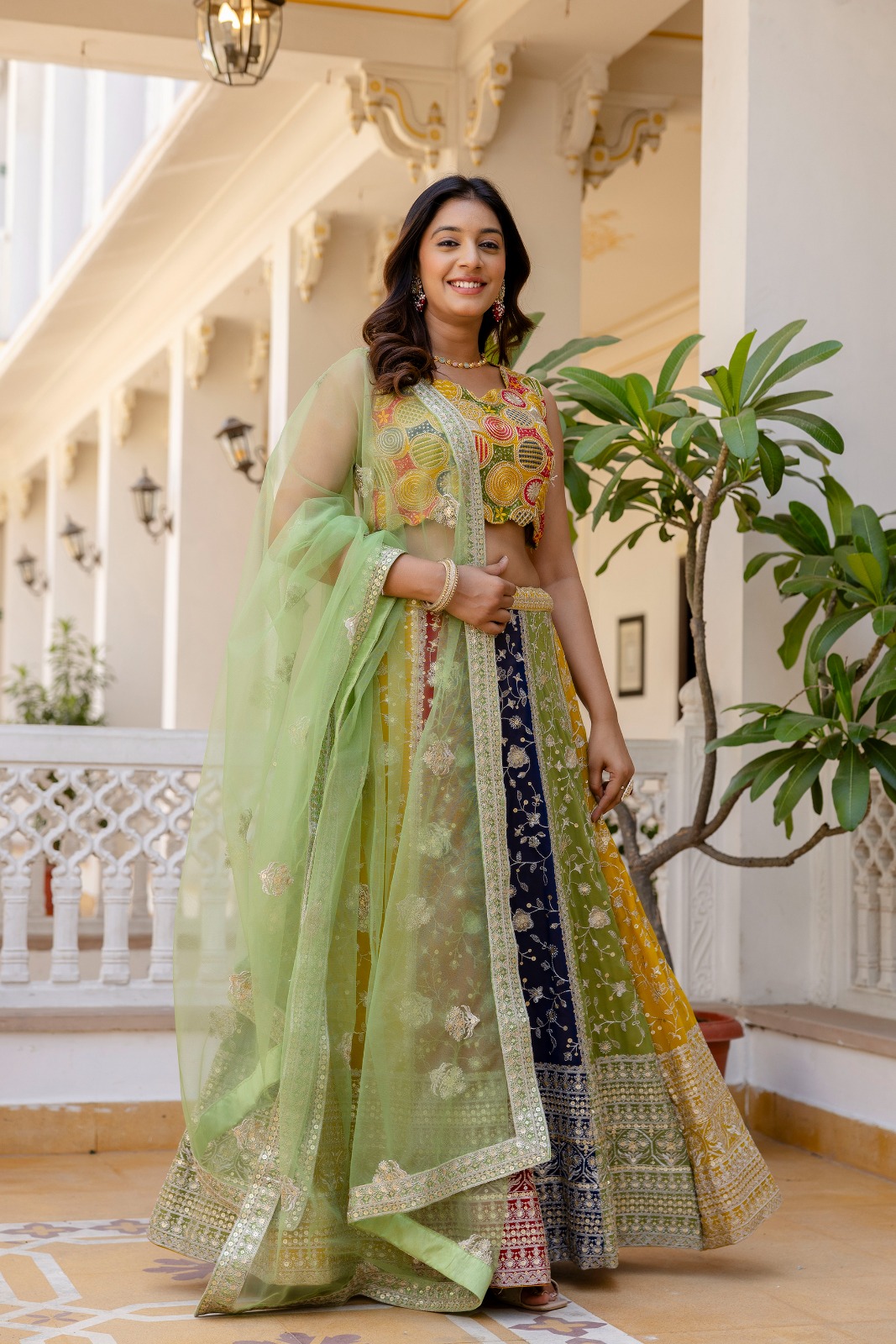
Can-can and crinoline
Can-can is a stiff net or layered support inserted into or beneath a lehenga to hold the hem away from the legs. A narrow can-can strip gives the hem definition, while support extending high into the skirt creates a much wider profile. Ask whether the can-can is removable or fixed when a less voluminous silhouette is important.
Panels and gathers
More panels and deeper gathers usually create more fabric at the hem. A panelled skirt can distribute fullness smoothly, while concentrated gathers at the waist can produce a dramatic flare below the hips. A semi-stitched skirt may allow some adjustment, but alteration can't always remove excess fabric without changing the intended design.
Embroidery and borders
Dense embroidery, sequins and zari increase the skirt's weight and may make the hem decide differently from the upper section. A heavily embellished border can pull the lower edge downward, creating a graceful fall, whereas a strong embroidered net may retain width. Embellishment must therefore be assessed together with the base fabric rather than treated as a separate visible detail.
How do georgette, chinon silk, net and organza compare?
Georgette and chinon silk are usually the easiest choices for a controlled, lower-volume lehenga, while organza and layered net need more attention to support. The best option depends on whether the desired result is a slim fall, gentle movement or defined festive flare.
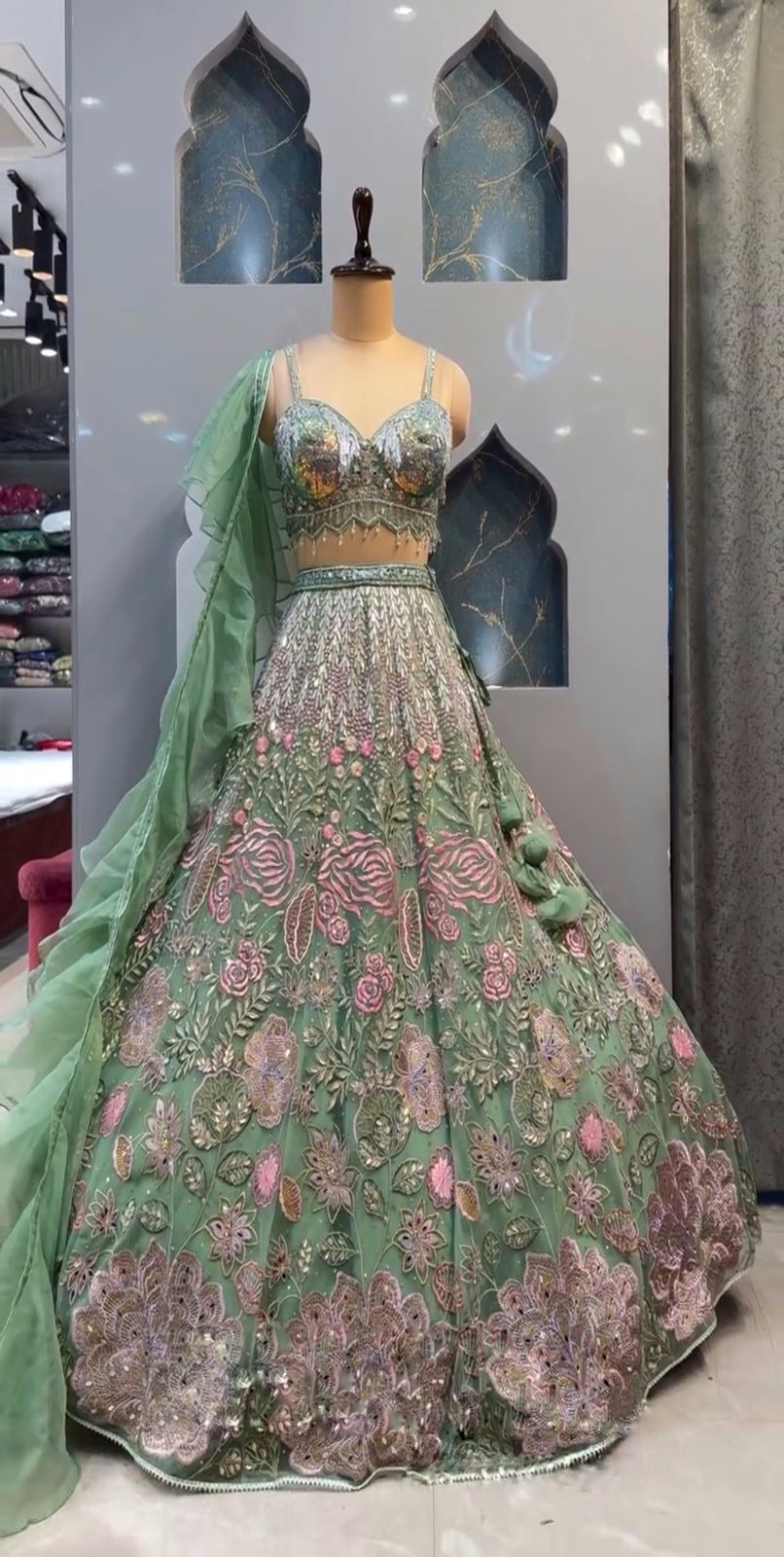
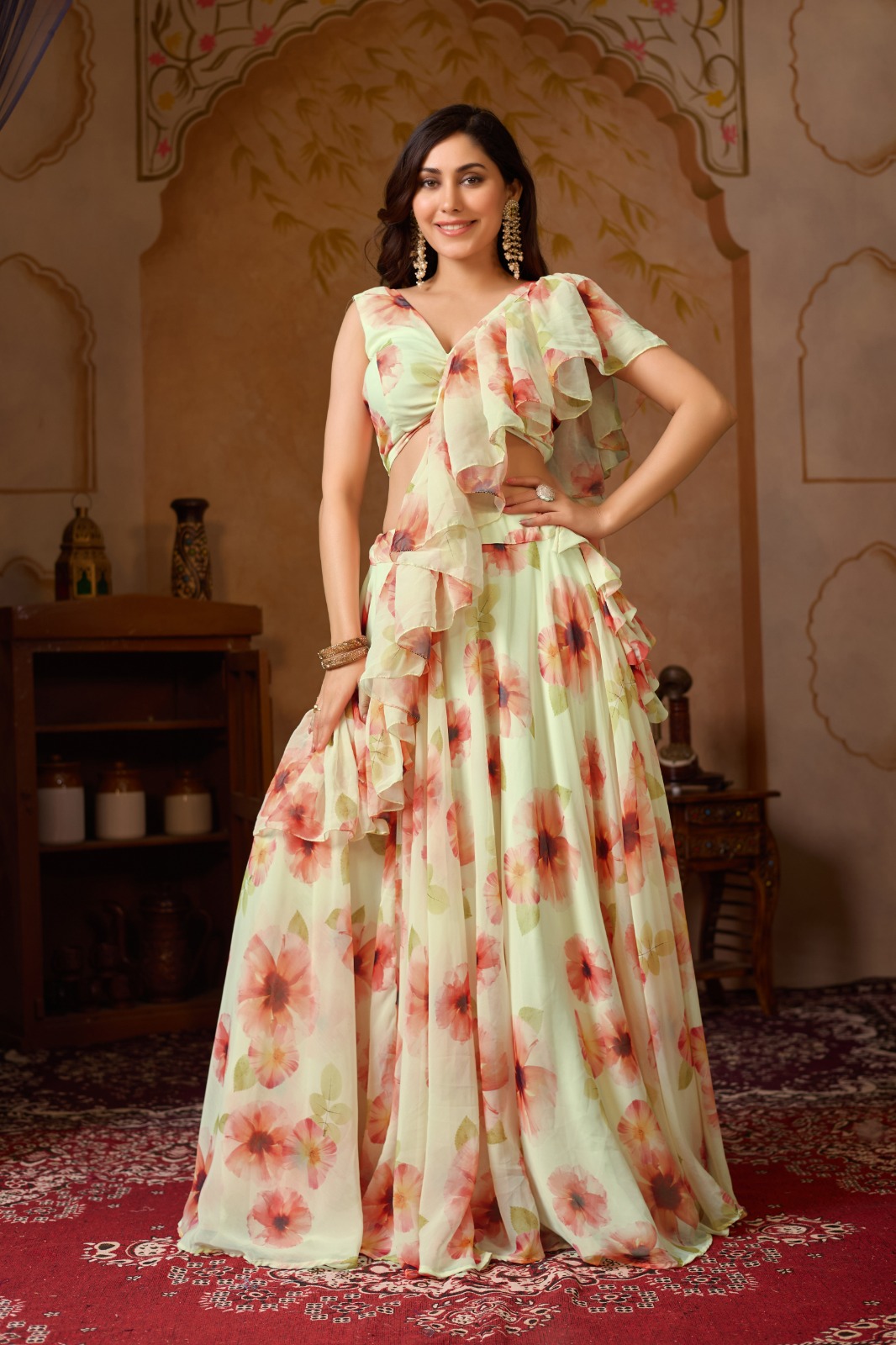
Georgette: Georgette has a soft, fluid fall and commonly forms vertical folds rather than rigid arcs. A Pastel Floral Georgette Lehenga Set with Ruffle Blouse can suit a wearer who wants movement without a very architectural skirt, provided the ruffle and lining don't add excessive width at the waist. Georgette is also practical for dancing because it usually doesn't resist leg movement as strongly as stiff net.
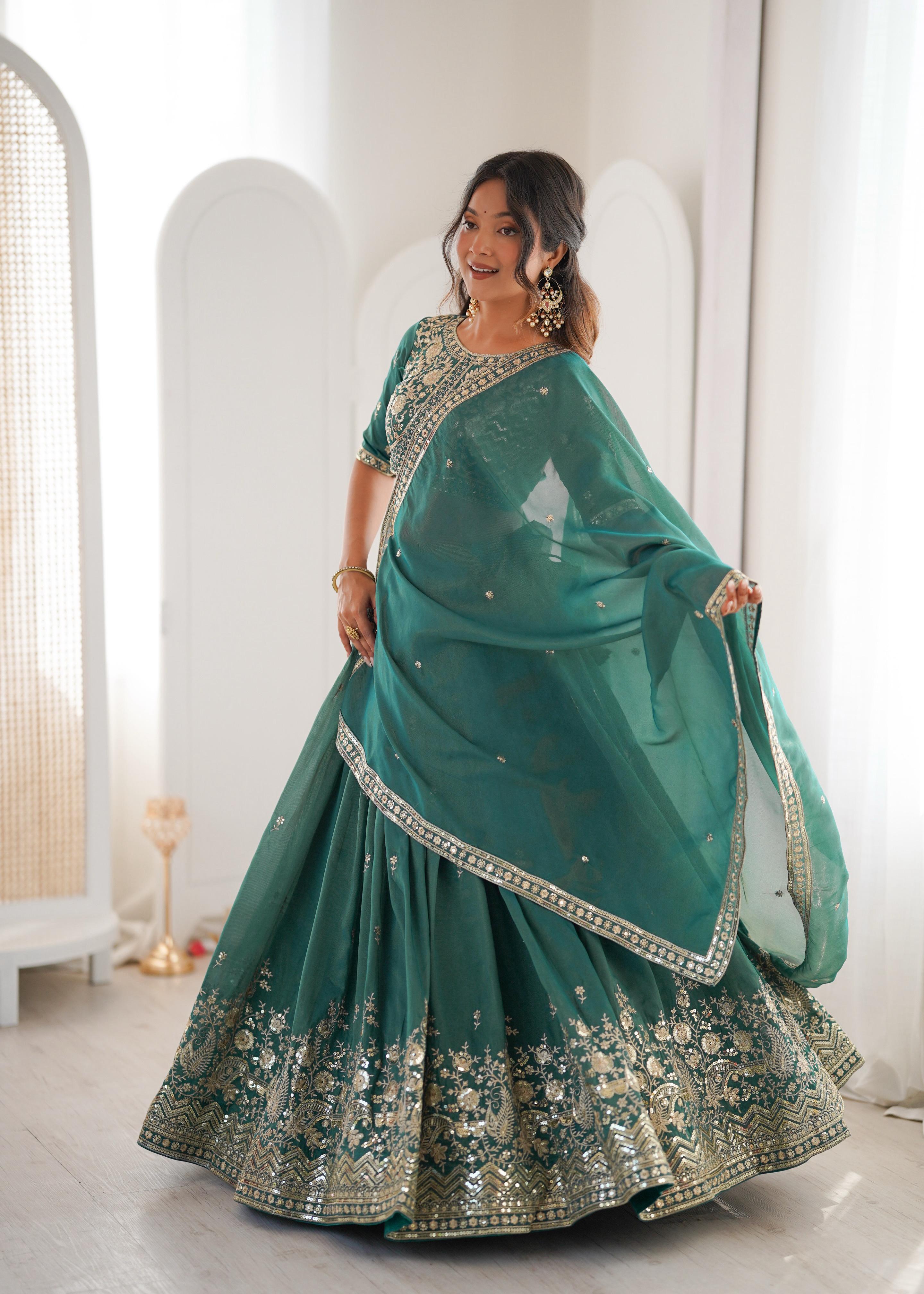
Chinon silk: Chinon silk offers a smooth, dressy surface with a flexible fall. The Green Chinon Silk Sequins Embroidered Lehenga Set can work for a festive or wedding guest wardrobe when the wearer wants shimmer without automatically choosing a broad bridal silhouette. Sequins may increase the garment's weight, so checking the lining and hem support remains important.
Organza: Organza supplies crispness, definition and a slightly lifted shape. Organza works well when a neat flare is desired, but it's rarely the first choice for the least possible volume. Reducing the underskirt support can make organza more manageable without removing its characteristic structure.
Net and butterfly net: Net can be either close-fitting or expansive. A single soft layer may fall gently, but layered butterfly net often creates a floating, fuller effect. The Mint Embroidered Lehenga Set with Net Dupatta may be visually light because of its colour and surface, yet the skirt's exact volume still depends on the number of net layers and the internal lining.
Silk: Silk ranges from supple to highly structured. The Designer Threadwork Silk Lehenga Choli Set with Dupatta may offer a richer, more substantial drape than georgette, especially where threadwork adds weight. Silk isn't automatically too voluminous, but its body should be judged by touch, skirt width and inner construction.
What volume works for different wedding and festive settings?
A moderate flare is usually the most versatile choice for ceremonies where the wearer must walk, sit and move through crowded spaces. A narrower skirt suits intimate dinners, engagement parties and travel, while a broad supported skirt can make sense for a stage-focused bridal entrance or a large reception venue.
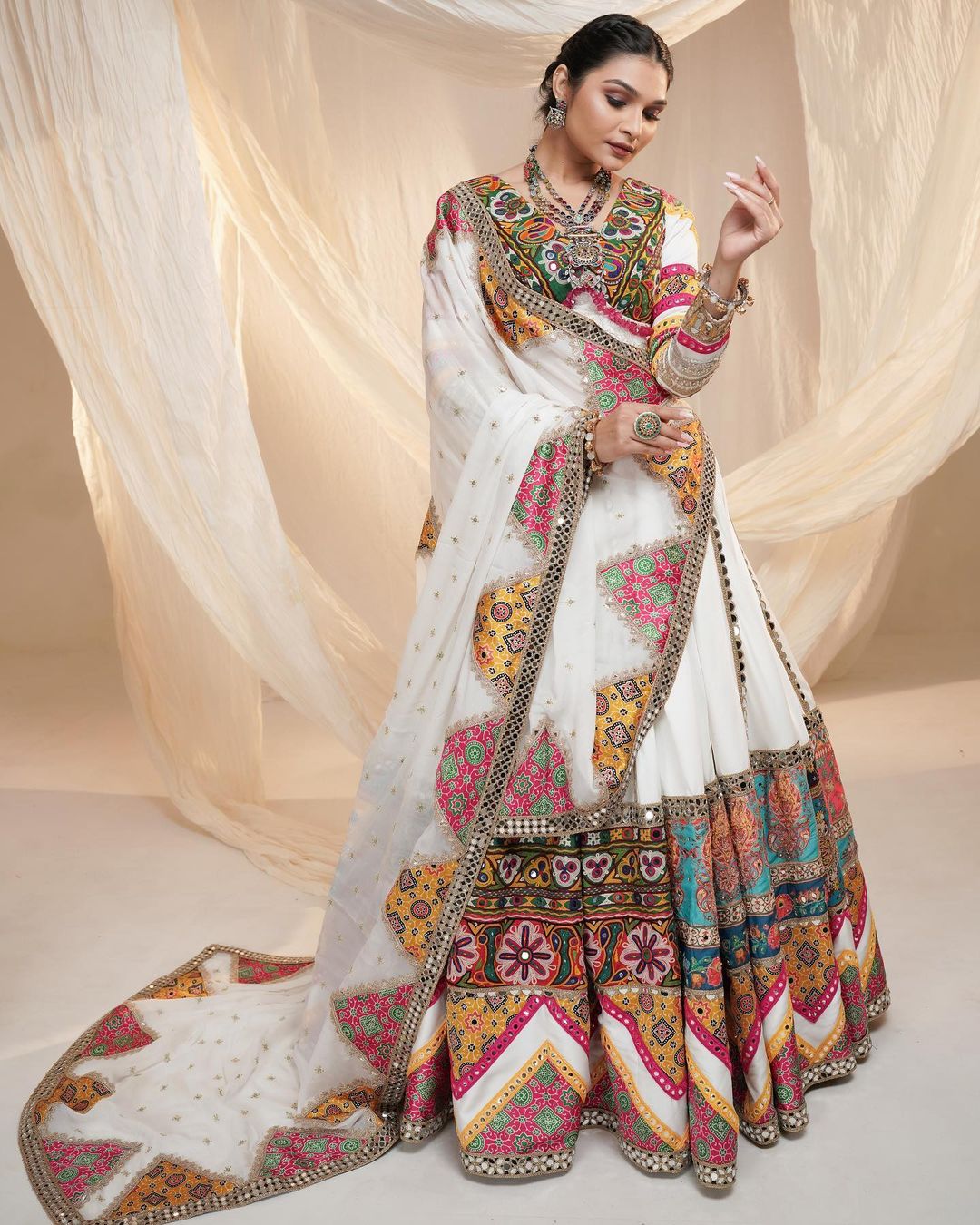
For a Haldi ceremony, lower-volume fabrics can make sitting on the floor, moving between rituals and managing turmeric stains easier. Georgette or chinon silk with controlled lining gives movement without a large hem that can brush against the ground. Yellow Lehengas can be an useful starting point for this setting, but colour should not distract from checking the skirt's support layers.
For a mehendi function, a moderate flare balances comfort and photographs. Mehendi Lehengas often need to remain manageable while the wearer sits for extended periods with hands and feet being decorated. A skirt that's too stiff can bunch around the knees, while a skirt that's too narrow may restrict leg movement. A fluid fabric with a defined border often brings the most practical middle ground.
For a wedding ceremony or reception, the right volume depends on venue size and styling priorities. A Pink Bridal Sequins Lehenga Set with Heavy Flare is intentionally suited to a dramatic silhouette, so a wearer choosing it should expect more skirt width and plan footwear, seating and changing-room space accordingly. A narrower silhouette may be more comfortable for guests or for events involving substantial walking.
Green Lehengas can move from mehendi functions to evening celebrations, while a controlled-fall skirt keeps a strong colour from becoming visually overwhelming. A Pastel Grey Embroidered Butterfly Net Lehenga Set gives a softer palette, but the net construction still deserves a volume check before selecting it for a compact venue.
How can shoppers check skirt volume when buying online?
Online shoppers can estimate skirt volume by checking measurements, asking about the underskirt and comparing garment photographs with the stated construction. A model's pose alone can't reveal whether a lehenga contains can-can, multiple lining layers or a wide stitched hem.
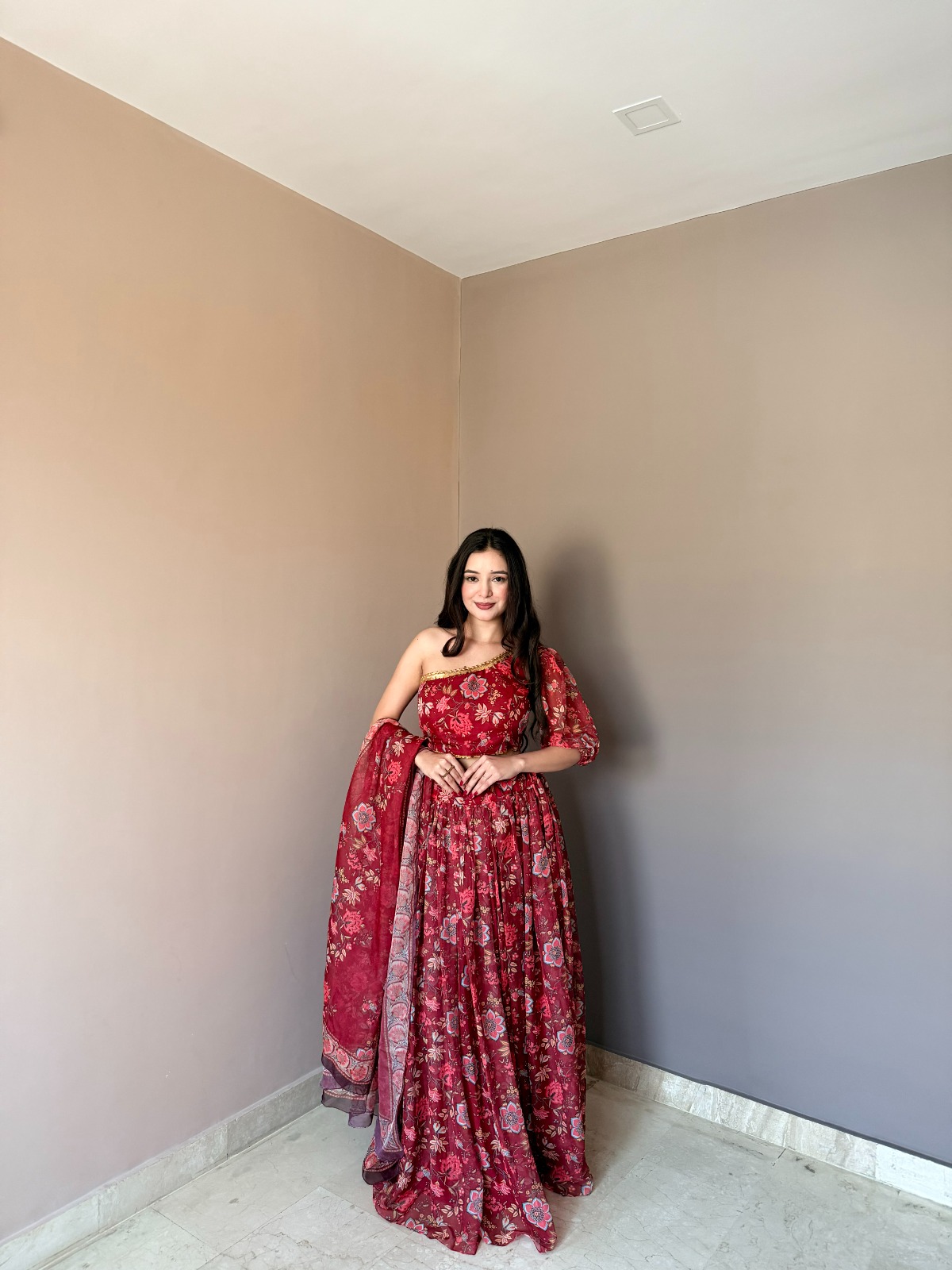
- Check the skirt length and waist measurement: A correct waist doesn't guarantee a comfortable hem circumference. Look for the skirt's flare, panel count or full-length measurement where available.
- Ask about inner layers: Confirm whether the skirt includes cotton lining, satin lining, net layers or can-can. Ask whether the support is removable before placing a fully stitched choli shopping order.
- Inspect the hem: A firm, wide border can make the lower edge stand away from the legs. A soft border usually gives a more relaxed finish.
- Read the product description carefully: Terms such as "heavy flare," "layered net," "structured" and "voluminous" indicate more body than "fluid," "soft fall" or "light flare."
- Plan alterations realistically: A tailor can sometimes reduce gathers or remove an extra support layer, but reducing a heavily embroidered skirt may disturb border placement and balance.
- Consider movement: Leave enough ease to take normal steps, sit in a chair and climb stairs. A narrow-looking waist can conceal a restrictive hip or knee area.
Ready Made Lehenga options are convenient because the construction is already assembled, but the finished flare can't always be changed substantially. Semi Stitched Lehengas Collection pieces may offer more flexibility at the waist and length, although the outer fabric and internal support still determine how much volume can be removed. Buyers who need a very specific fall should ask for a video showing the skirt while walking and turning.
How should a lower-volume lehenga be styled?
A lower-volume lehenga looks balanced when the blouse, dupatta and accessories add visual interest without forcing the skirt to carry all the drama. A fitted or lightly structured blouse can keep the outline clean, while a dupatta placed over one shoulder adds movement above the waist.
A ruffle blouse can introduce texture without adding circumference to the skirt, as seen in the Pastel Floral Georgette Lehenga Set with Ruffle Blouse. An one-shoulder blouse creates asymmetry and draws attention upward, which can make a controlled skirt look intentionally modern rather than under-designed.
For a fuller bust or broader shoulders, a dupatta worn in a long vertical line can create length. For petite wearers, excessive skirt width can overwhelm the frame, so a fluid fabric, a slightly higher waistline and a narrow border may produce better proportions. Heels should be selected before final hemming because the correct length prevents the hem from dragging and reduces the temptation to add unnecessary stiffness.
Jewellery can also change the perceived balance. A heavier necklace or embellished blouse supports a simpler skirt, while a highly decorated skirt usually needs cleaner accessories. The goal isn't to eliminate volume entirely, but to make the amount of volume work with the wearer's height, venue and movement needs.
How do care and packing affect a lehenga's shape?
Storage and pressing can change how much volume a lehenga appears to have, particularly when net, organza or can-can is involved. Store a fully embellished skirt on a broad hanger or fold it carefully with acid-free tissue between decorated surfaces. Avoid crushing stiff borders under heavy garments because permanent creases can make the hem stand unevenly.
Use a professional dry cleaner for sequins, zari, dense threadwork and layered bridal skirts unless the care label specifically permits another method. Direct high heat can flatten some synthetic net surfaces, weaken adhesive embellishment or create shine on silk-like fabrics. A garment steamer held at a safe distance is generally gentler than pressing directly over sequins, but the care label remains the final authority.
Transport a lower-volume lehenga in a breathable garment bag rather than compressing it tightly into a small suitcase. Remove detachable can-can or stiff inserts before packing if the garment design allows it. After unpacking, hang the skirt for several hours so the lining and outer fabric can relax before judging its final fall.
In practical terms, the answer to which lehenga fabrics need less volume under the skirt is usually georgette, chinon silk or crepe with restrained lining and little or no can-can. Organza, net, tulle and structured silk can still be comfortable, but they require closer attention to layers, gathers and support. Choosing by construction as well as fabric lets a bride, wedding guest or festive shopper find a lehenga that looks polished without becoming difficult to sit, walk or dance in.
Common Questions About Choosing a Lower-Volume Lehenga
Which lehenga fabric has the least flare?
Soft georgette, crepe and lightweight chinon silk usually have the least natural flare. A skirt with limited gathers, light lining and no broad can-can will remain closer to the body, regardless of the outer fabric.
Is organza suitable for a lehenga with less volume?
Organza can work with controlled volume, but it naturally has more stiffness than georgette or chinon silk. Choose a single or lightly layered organza skirt and avoid a high, rigid can-can if you want a narrower silhouette.
Does net fabric always make a lehenga look bulky?
Net does not always look bulky because a single soft layer can fall quite lightly. Multiple layers, dense embroidery and can-can create the wide silhouette commonly associated with net lehengas.
Can a tailor reduce the flare of a readymade lehenga?
A tailor may remove an extra support layer, reduce gathers or adjust the lining, depending on the construction. Altering a heavily embroidered or panelled skirt can affect the border and design balance, so inspect the inside before approving changes.
Which lehenga is comfortable for sitting during a mehendi or Haldi ceremony?
A georgette or chinon silk lehenga with moderate flare is usually comfortable for prolonged sitting and movement. Avoid very stiff can-can, tight hip measurements and excessive layers if the ceremony involves sitting on the floor.
Is a bridal lehenga with heavy flare practical for dancing?
A heavy-flare bridal lehenga can be practical when the wearer has enough space, secure footwear and adequate room around the knees. For frequent dancing or crowded venues, moderate flare and lighter support usually make movement easier.




