Which city is famous for Chikankari? Lucknow, the capital of Uttar Pradesh, is the city most closely associated with this fine hand embroidery. Lucknow's reputation comes from centuries of skilled needlework, distinctive white-on-white techniques, and a large artisan community that continues to adapt Chikankari for saris, kurtas, dupattas and contemporary separates.
The answer becomes more meaningful when you look beyond a city name. Chikankari isn't a single stitch or a single fabric. It is a design language built from many stitches, open spaces, raised textures and floral forms. Lucknow gave that language its strongest cultural identity, while nearby towns and artisan households also contribute to its production and trade.
Which city is famous for Chikankari, and why is Lucknow its home?
Lucknow is famous for Chikankari because the city developed a long-standing ecosystem of embroiderers, workshops, traders and customers around the craft. The embroidery became closely connected with Lucknow's courtly culture, architectural floral decoration and refined summer clothing.
Historical accounts commonly connect Chikankari's growth in North India with Mughal-era patronage. One popular tradition attributes its arrival to Mughal empress Nur Jahan, although the exact origin story is difficult to verify and has been retold in several forms. A more careful conclusion is that Persianate needlework influences, local textile skills and royal patronage helped shape the tradition over time.
Lucknow's climate also encouraged the use of lightweight cotton garments. Fine white embroidery on muslin, cotton voile and similar breathable textiles suited warm weather, while the understated surface appealed to people seeking elegance without heavy ornamentation. Over time, Chikankari moved from courtly and elite settings into everyday clothing and commercial production.
The craft received a Geographical Indication, or GI, registration for Lucknow Chikan Craft in 2008. A GI identifies a product whose reputation or characteristics are linked to a particular geographical area. The registration doesn't mean that every embroidered garment sold in Lucknow is handmade, but it recognises the cultural and commercial importance of the regional craft.
How is Lucknow Chikankari embroidery made?
Lucknow Chikankari is made by transferring a design onto fabric and filling, outlining or punctuating the design with a combination of hand stitches. The process can involve several people, from the designer who prepares the pattern to the artisan who embroiders it and the worker who washes and finishes the garment.
A traditional design begins with a block-printed outline. A wooden block is dipped in a washable dye and pressed onto the fabric, leaving a guide for the embroiderer. The artisan then selects stitches according to the required texture, density and visual weight. After embroidery, the fabric is washed to take the printed guide, pressed and inspected.
The most recognisable stitches include tепchi, a simple running stitch used for outlines; bakhiya, often called shadow work; phanda, a small knot-like stitch; and jaali, an open lattice effect that creates a net-like surface without cutting the fabric in the way lace-making does. Other named stitches include murri, keel kangan, hathkati and jali variations.
Bakhiya can appear on the reverse or front of a lightweight fabric, producing a soft shadow beneath the design. Jaali requires careful control because the artisan manipulates threads to form open spaces while preserving the fabric's structure. Dense floral filling takes more time than a sparse outline, so stitch count and surface coverage have a direct effect on price.
Machine embroidery can reproduce the general appearance of Chikankari at a lower cost, but machine-made work usually has more uniform repetition and less variation in stitch tension. Handwork may show small irregularities, changes in thread thickness and subtle differences between motifs. Those variations are not automatically proof of authenticity, but they're consistent with human-made embroidery.
What fabrics, colours and motifs are typical of Chikankari?
Traditional Chikankari frequently uses light, breathable fabrics such as cotton, muslin, voile and mulmul, while contemporary garments may use georgette, chiffon, silk blends, rayon, linen and organza. Fabric choice changes the appearance of the stitches: cotton supports a crisp, matte look, while georgette creates a softer and more fluid drape.

White thread on white fabric remains the signature combination, but modern Lucknow embroidery is available in pastel, jewel and neutral shades. White, ivory, powder blue, blush pink, sage green and soft yellow produce a gentle result. Deep colours such as black, navy, wine and emerald create stronger contrast and make the embroidery easier to see from a distance.
Common motifs include flowering plants, leaves, vines, paisleys, buds, stems and geometric jaali panels. The buti is a small isolated motif, while a larger repeated or connected design may be described as a jaal. Floral forms often appear in borders, necklines, sleeve panels, yokes and all-over fields.
Motif vocabulary can overlap with wider Indian textile design, so a flower alone doesn't establish that a garment is Chikankari. The stitch treatment, placement, fabric and construction must be considered together. Chikankari also differs from zari work, which uses metallic threads, and from mirror work, which attaches reflective pieces to the textile.
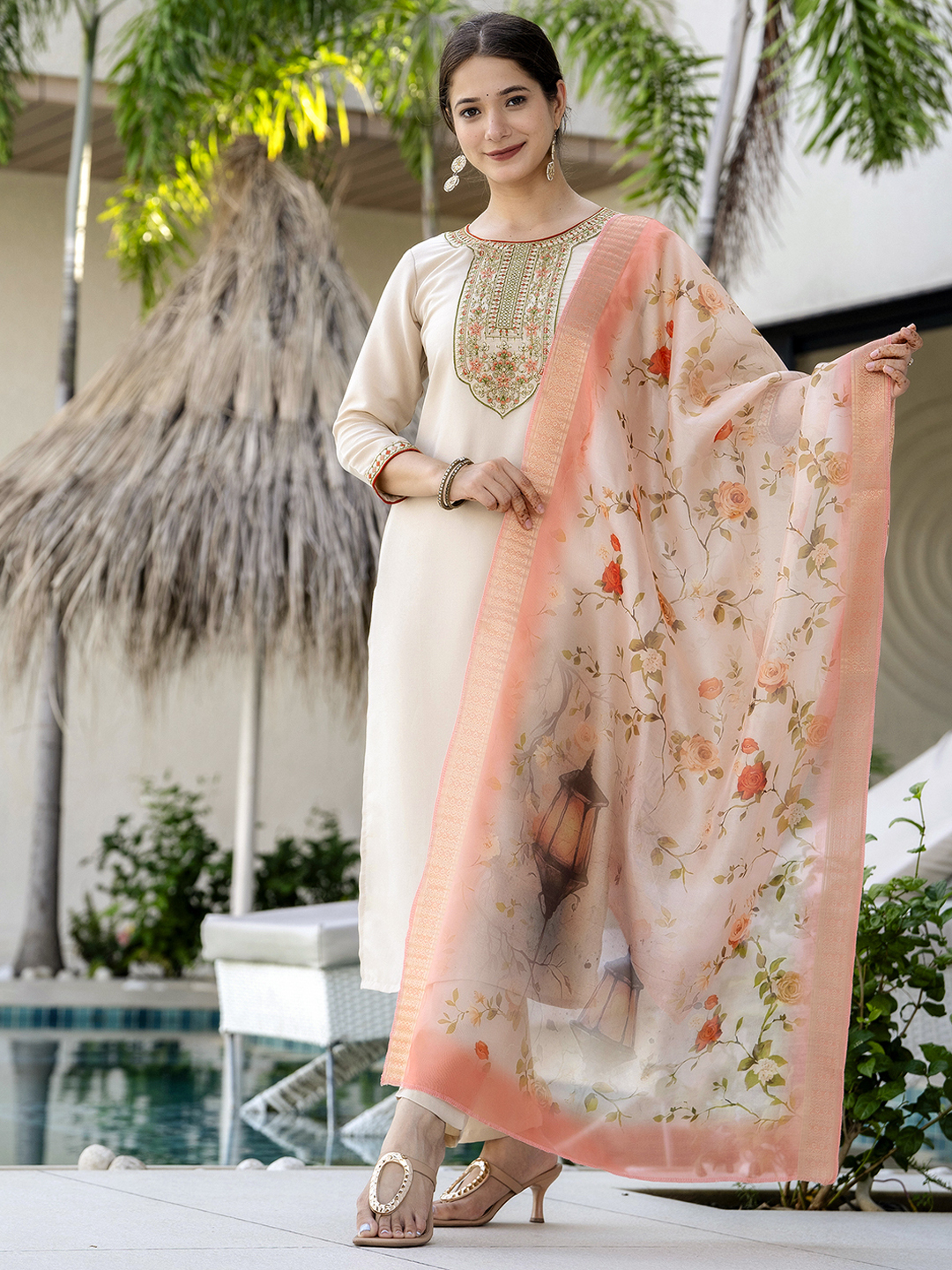
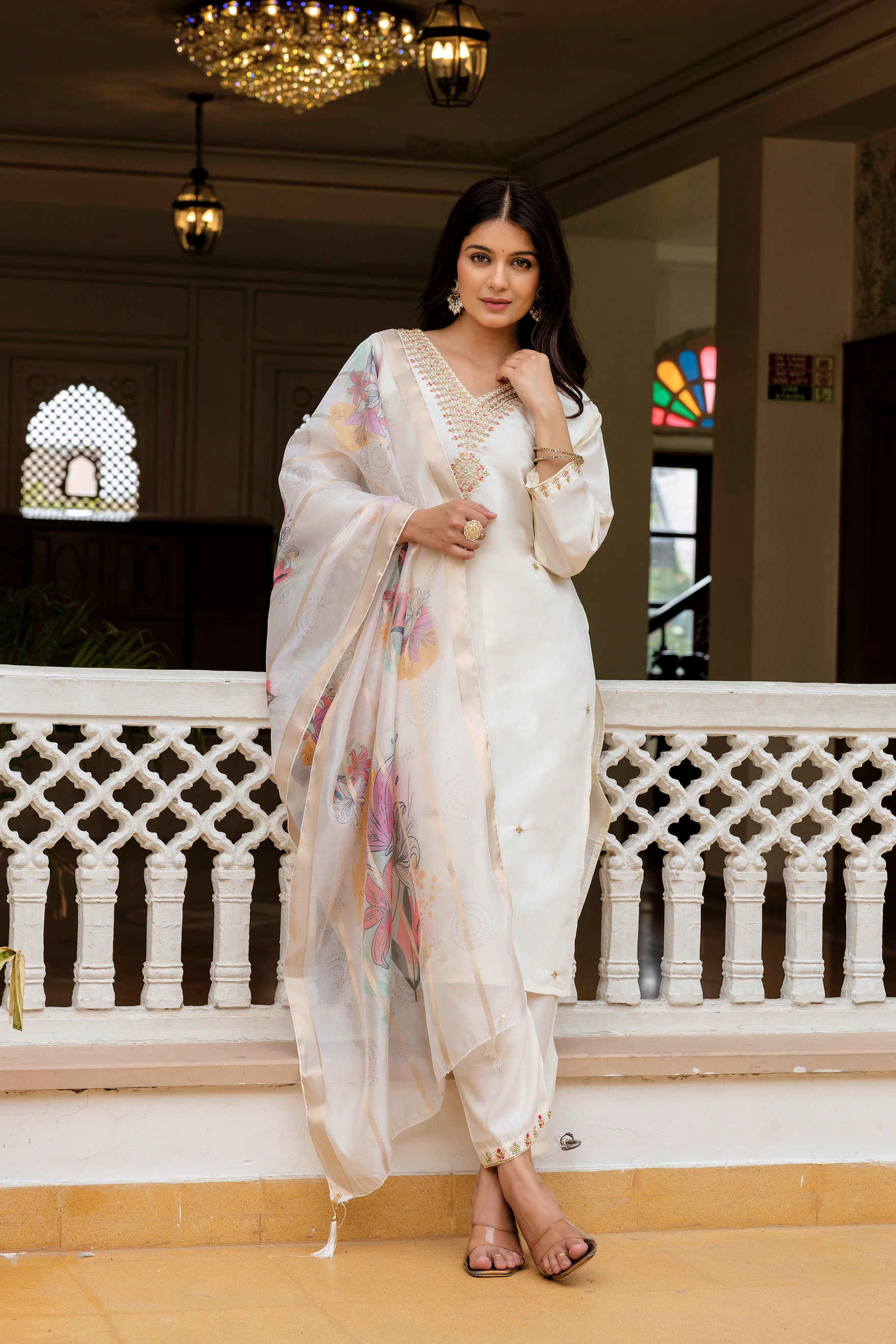
A Cream Chanderi Silk Kurti Pant Dupatta Set for Women, for example, belongs to a different textile and styling conversation from classic cotton Chikankari, but its light, graceful structure can be useful for someone building a summer ethnic wardrobe. A Cream Chanderi Embroidered Kurta Set with Dupatta offers a similarly polished alternative when the wearer wants woven sheen rather than the soft matte character of cotton embroidery.
How can you tell handmade Chikankari from machine embroidery?
Handmade Chikankari is more likely to show stitch-level variation, visible thread movement and carefully shaped details, while machine embroidery tends to show highly regular repetition and a flatter, more mechanical surface.
Begin by examining the reverse side of the garment. Hand stitches may not create a perfectly uniform back, and some threads may travel between nearby parts of a motif. The reverse should still be reasonably neat; loose threads, unfinished seams and excessive thread floats indicate poor finishing rather than desirable handmade character.
Next, inspect small motifs under bright natural light. A hand-worked phanda or murri may vary slightly in size. A jaali panel may have minute differences in its openings. Machine work often has identical spacing, consistent stitch direction and sharply repeated patterns. These clues are useful but not conclusive because skilled finishing can conceal some machine work.
Ask the seller specific questions: Is the embroidery handworked or machine-made? Which stitches are used? Where was the garment embroidered? How should the garment be washed? A transparent seller should be able to distinguish hand embroidery from an embroidered-looking print or a computerized design.
Price also provides context, although price alone can't authenticate craftsmanship. A densely embroidered handworked kurta requires many hours of labour, so an unusually low price deserves questions about construction, stitch density and labour conditions. A high price doesn't guarantee handwork either; brand positioning, fabric, tailoring and retail overhead can all increase the final cost.
How does Chikankari fit into a contemporary ethnic wardrobe?
Chikankari works particularly well in wardrobes that need breathable, detailed clothing for daytime celebrations, workwear, festive lunches and summer travel. The embroidery can remain the focal point when paired with quiet jewellery and uncomplicated footwear.
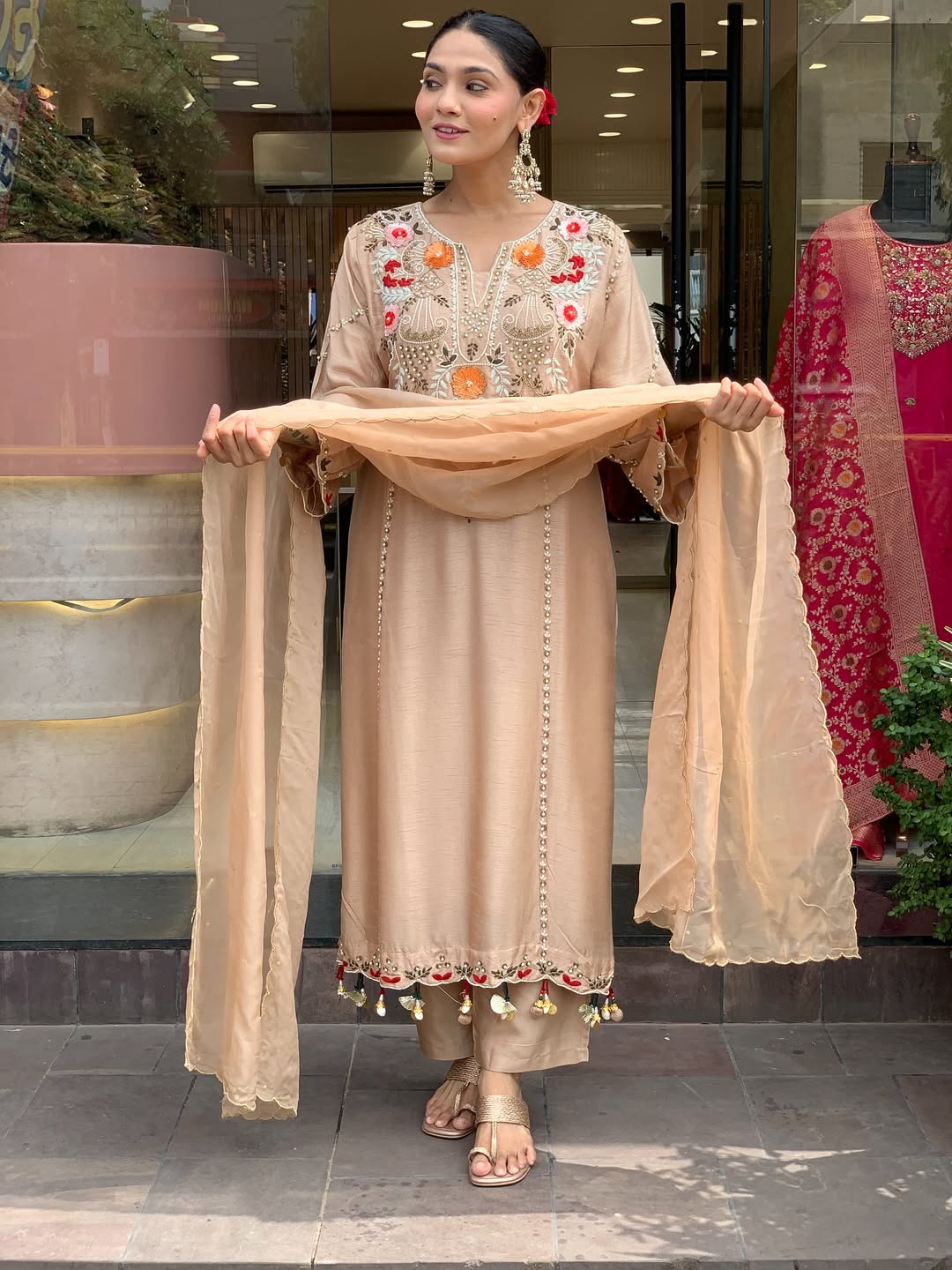
A lightly embroidered kurta with straight trousers suits office-friendly dressing when the fabric is opaque and the neckline is modest. A longer kurta with a matching dupatta can move into Eid gatherings, family lunches or small festive events. White or pastel Chikankari pairs easily with silver, pearls, oxidised metal and natural-dyed accessories.
For a stronger colour story, a Rani Pink Chanderi Embroidered Kurta Set Dupatta brings saturated colour and a silk-like surface into an occasion wardrobe. Chanderi isn't the same as Chikankari, but both can be styled with similar restraint: low-shine jewellery, a neat sandal and one carefully chosen accent.
A Chiku Embroidered Kurti Pant Dupatta Set Online can serve as a neutral base for contrasting earrings or a printed dupatta. When selecting a neutral embroidered set, check whether the embroidery is concentrated around the neckline and hem or spread across the entire garment. Concentrated embroidery usually creates a cleaner, more versatile appearance, while all-over work makes a stronger statement.
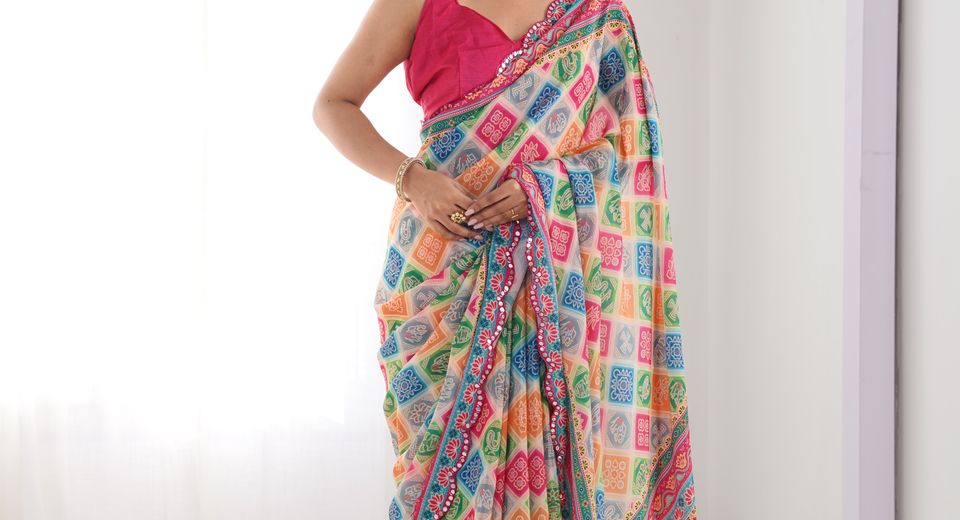
Saris provide another route into the same visual language. A Colorful Ethnic Chinon Saree for Women has a fluid, occasion-ready drape, while a Multicolor Floral Print Ready To Wear Chinnon Saree creates pattern through print rather than needlework. The distinction matters when describing the garment: floral decoration isn't automatically Chikankari embroidery.
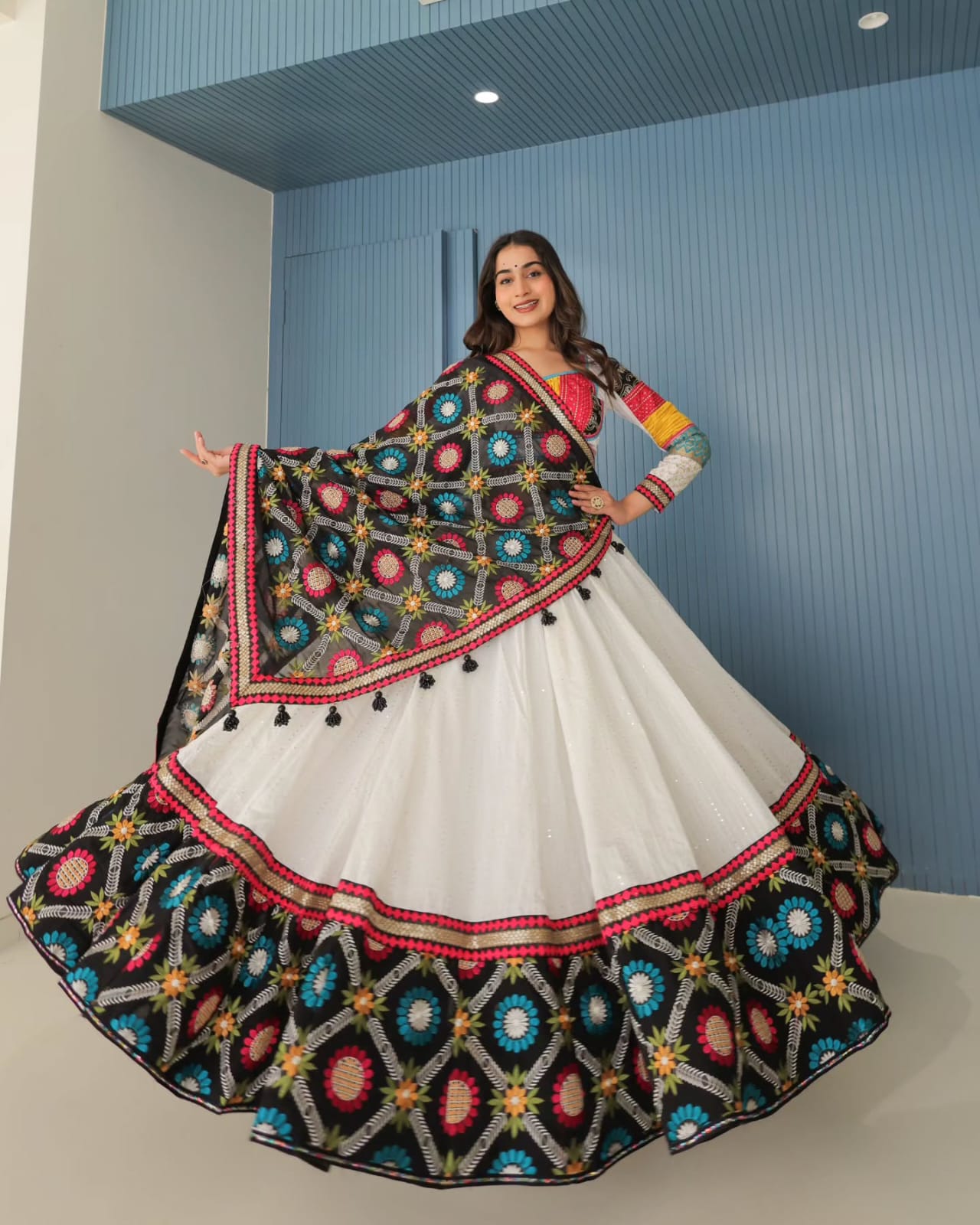
Mirror-trimmed garments create a different festive effect. A Designer Heavy Chinnon Saree with Kutchi Mirror Lace and an Ivory Bloom Heavy Chinnon Saree with Kutchi Mirror Lace rely on reflective embellishment and lace edging, not Lucknow's hand-stitched vocabulary. Comparing these techniques helps shoppers identify what they're actually buying instead of treating every embellished Indian garment as interchangeable.
What should you check before buying Chikankari?
A good Chikankari purchase depends on checking the embroidery, fabric, transparency, measurements and finishing rather than relying on the word "handwork" alone.

- Read the fibre composition: Cotton, mulmul, georgette, rayon and silk blends behave differently after washing and require different levels of lining.
- Check transparency: Lightweight white fabrics may need a slip, attached lining or layered styling, particularly around the bodice and hips.
- Study stitch density: Compare the product photographs for sparse outlines, medium filling or dense all-over work. More coverage generally requires more labour and changes the garment's weight.
- Inspect placement: Embroidery should align sensibly across seams, borders and matching pieces. Uneven placement may be intentional in handwork, but large breaks in a border can indicate weak cutting or finishing.
- Confirm measurements: Do not rely only on a small, medium or large label. Compare garment bust, waist, hip, sleeve and length measurements with a garment that fits you.
- Ask about colour bleeding: Strong dyes and printed guides can behave differently during the first wash. Clear care instructions are an important sign of responsible product information.
- Look at the neckline and armholes: These areas receive regular friction and should have secure seams, suitable facings and no loose embroidery threads.
Embroidery should not be judged only by how much fabric it covers. A well-placed border around a sleeve or hem can require careful planning and may create more visual impact than a crowded field of motifs. The right choice depends on whether the garment is intended for frequent wear, occasional celebrations or formal gifting.
How should Chikankari garments be washed and stored?
Most delicate Chikankari garments should be washed gently in cool water, dried away from direct sunlight and stored without compressing the embroidery.
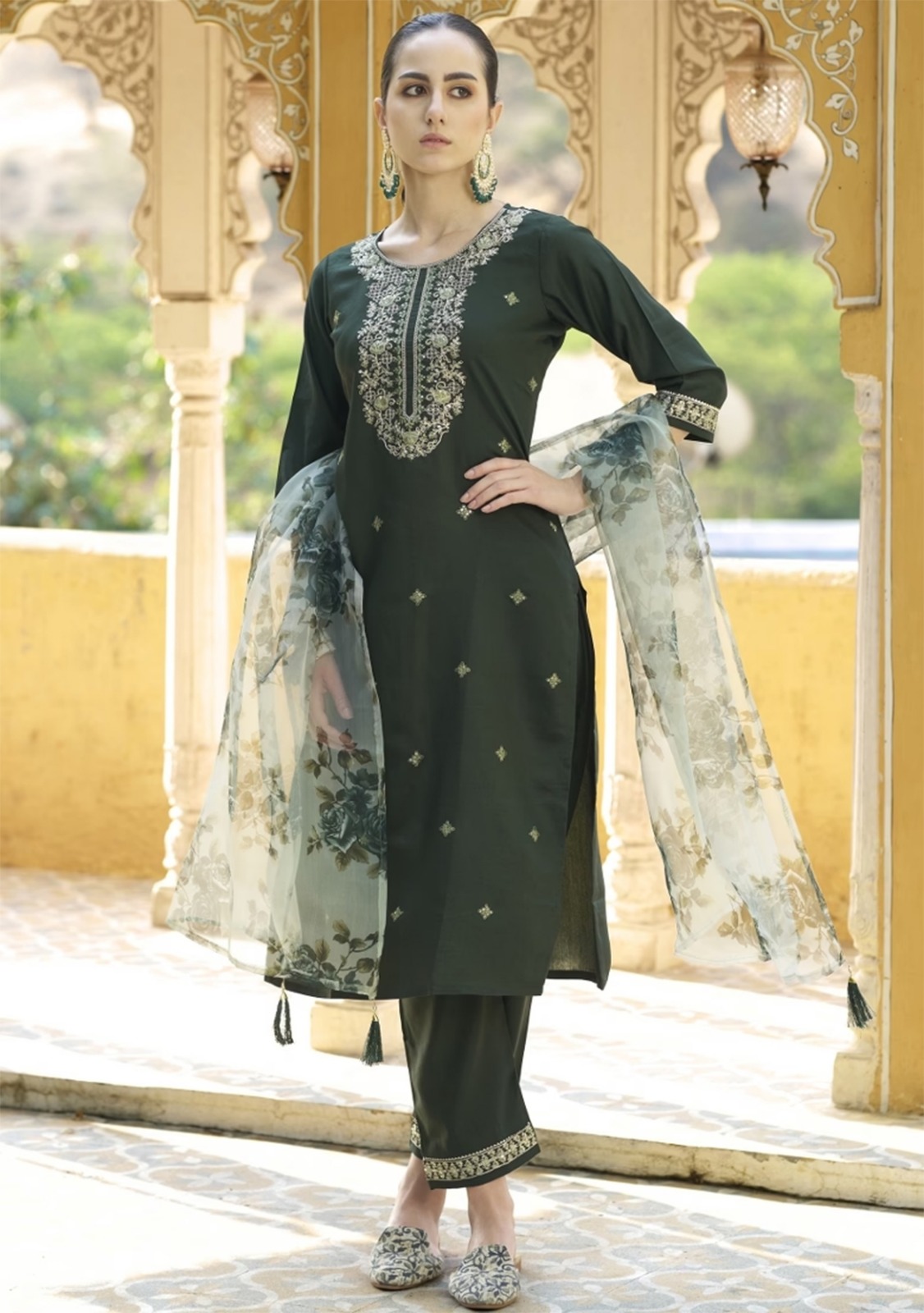
Always follow the garment's care label first because fabric blends and dyes vary. For washable cotton Chikankari, a short hand wash with a mild detergent is generally safer than vigorous machine agitation. Avoid twisting, wringing and soaking for long periods. Press excess water between clean towels and reshape the garment while damp.
Dry white and pastel garments in shade rather than harsh midday sun, which can yellow delicate fibres or alter colour over time. Dark or brightly dyed fabrics should be washed separately until the water runs clear. Dry-clean-only silk, embellished, lined or heavily worked garments should be handled by a cleaner experienced with Indian textiles.
Iron Chikankari from the reverse side on a low or medium setting appropriate to the fibre. Place a thin cotton cloth between the iron and raised embroidery when necessary. Direct high heat can flatten texture, scorch lightweight fabric or leave a shiny mark on synthetic fibres.
Store clean garments folded with tissue or a soft cotton layer around dense embroidery. Avoid hanging very heavy embroidered pieces for long periods because shoulder seams can stretch. Air stored clothing occasionally and never pack a damp garment, since moisture encourages mildew and unpleasant odours.
Why does Lucknow Chikankari still matter?
Lucknow Chikankari still matters because it connects regional history, skilled labour, adaptable design and everyday clothing. The craft has survived not by remaining frozen in one white cotton style, but by moving into new colours, fabrics, silhouettes and markets.
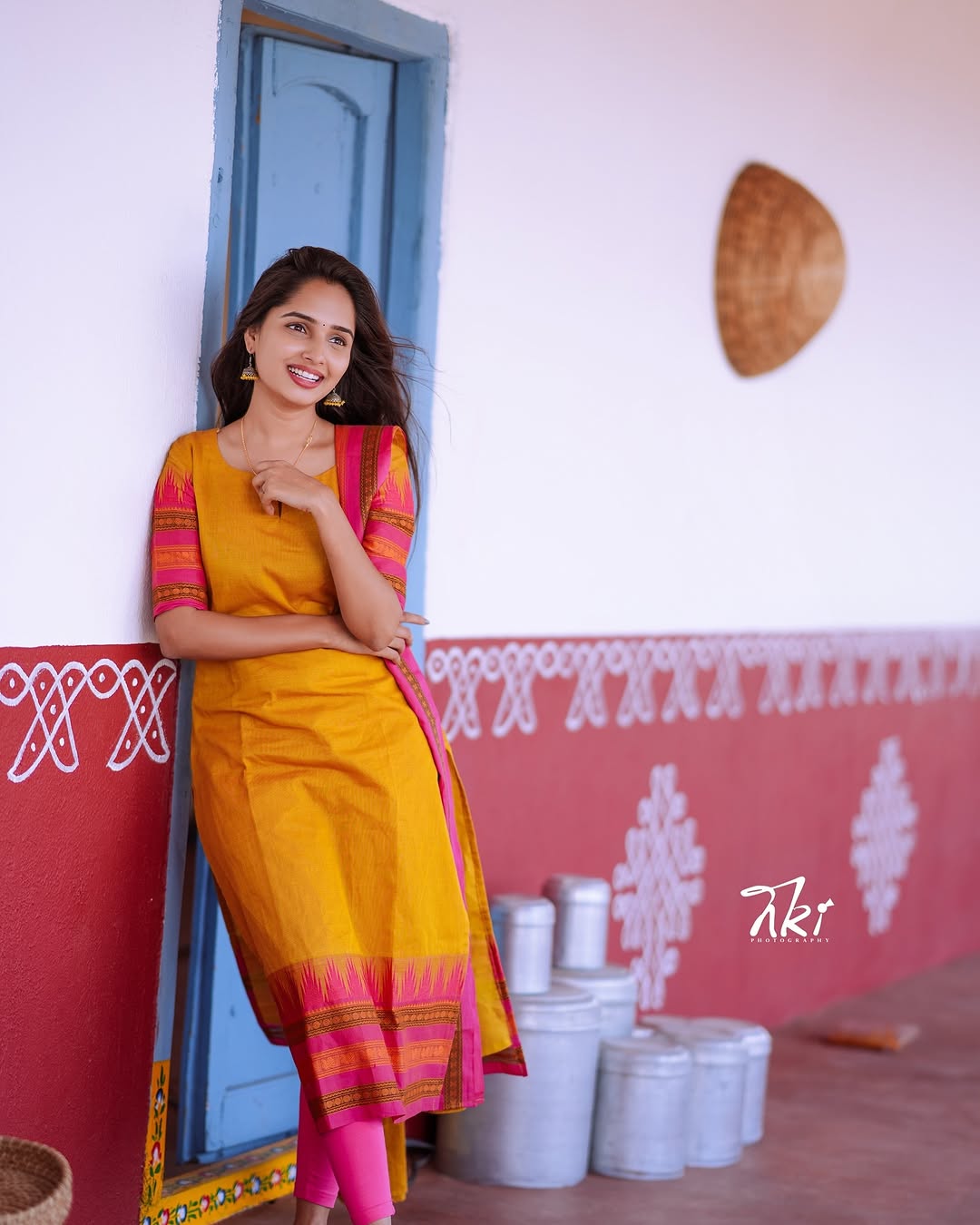
That adaptability creates a responsibility for shoppers and sellers. Clear descriptions should identify whether embroidery is handworked, machine-made, printed or mixed. Buyers can support better practice by valuing labour, asking informed questions and caring for garments long enough to keep them in use.
The next time someone asks which city is famous for Chikankari, "Lucknow" is the correct short answer. The fuller answer includes the artisan's needle, the block-printed design, the fabric's behaviour, the meaning of regional craft recognition and the many small decisions that turn thread into a wearable cultural tradition.
Questions Readers Ask About Lucknow Chikankari
Which city is famous for Chikankari?
Lucknow in Uttar Pradesh is famous for Chikankari. The city is recognised for its historic artisan community, distinctive hand stitches and long association with fine floral embroidery.
Is Chikankari always made with white thread?
Chikankari is not always made with white thread. White-on-white embroidery is the classic form, but contemporary garments also use pastel, dark and jewel-toned threads on cotton, georgette, silk blends and other fabrics.
How can I identify handwork in a Chikankari garment?
Handwork usually shows small variations in stitch size, thread tension and motif spacing, especially on the reverse side. Ask whether the garment is hand-embroidered and inspect the stitch detail, because visual clues alone cannot provide absolute proof.
What is the difference between Chikankari and zari work?
Chikankari is needle embroidery traditionally associated with Lucknow, while zari work uses metallic threads to create a shiny surface. A garment can contain both techniques, but floral decoration or metallic trim alone does not make it Chikankari.
Which fabric is best for a Chikankari kurta in summer?
Lightweight cotton, mulmul and voile are usually comfortable choices for summer because they allow airflow and absorb moisture. Georgette and synthetic blends may drape smoothly but can feel warmer and may require different care.
How should I wash a Chikankari kurta?
Wash a washable Chikankari kurta gently in cool water with mild detergent, without twisting or prolonged soaking. Dry it in shade and follow the care label, especially when the garment contains silk, synthetic fibres, lining or heavy embellishment.