

Which city is famous for block printing? Jaipur is the most widely recognised answer, although the craft's strongest traditions come from the nearby centres of Sanganer and Bagru. Sanganer is known for fine floral designs on lighter grounds, while Bagru is associated with earthy colours, bold motifs and resist-printing methods. Together, these places form one of India's most important textile-printing regions.
The distinction matters when a saree, dupatta, blouse or dress is described as printed. A hand block print is created by pressing a carved wooden block onto fabric one impression at a time. A digital print may show similar flowers, paisleys or geometric repeats, but it's produced with an inkjet process rather than carved blocks, hand pressure and repeated alignment.
Jaipur is the city most commonly named as famous for block printing in India. Jaipur's reputation represents the wider textile region of Rajasthan, where Sanganer and Bagru developed specialised traditions using carved wood, dyes, resist pastes and carefully repeated motifs.
Jaipur became a major textile centre because of royal patronage, commercial activity and access to skilled artisan communities. Printed cottons from Rajasthan travelled through domestic markets and became part of everyday clothing, household textiles and festive dress. The phrase "Jaipur print" is now often used broadly, even when a fabric has specifically been produced in Sanganer, Bagru or another nearby village.
A precise answer depends on the level of detail required. Jaipur is the strongest city-level answer; Sanganer is particularly associated with delicate floral hand printing; and Bagru is especially known for bold, earthy, resist-dyed textiles. These places are geographically close, but their colour palettes, motifs and processes are not identical.
Why are Sanganer and Bagru important to Jaipur's printing heritage?
Sanganer and Bagru are important because they preserve two different approaches to Rajasthan's hand block-printing tradition. Sanganer developed a reputation for refined, closely spaced designs, while Bagru retained a more rustic style built around mud resist, indigo and warm vegetable-dye shades.
What makes Sanganeri print distinctive?
Sanganeri print is distinctive for fine floral butis, delicate outlines, symmetrical layouts and clear colour combinations. Sanganer printers traditionally work on white or pale backgrounds, allowing flowers, vines, leaves and jaal patterns to remain crisp and visible.
Sanganeri designs may include minor bootas, rose-like flowers, running vines and repeated borders. Fine detail requires a well-carved block and precise placement because even a small shift becomes available across a regular pattern. Sanganeri textiles are therefore often chosen for graceful sarees, cotton suits, dupattas and blouses that need a light, orderly visible rhythm.
What makes Bagru print different?
Bagru print is different because it commonly uses earthy colour palettes, bold geometric forms and resist-dyeing processes that build colour in layers. Traditional Bagru textiles frequently feature black, red, indigo, mustard and brown against unbleached or naturally coloured fabric.
Bagru artisans may apply a mud resist called dabu to selected sections before dyeing the cloth. The resist prevents those areas from absorbing a particular colour. After washing and drying, another block or dye can be added, creating layered patterns with depth, slight irregularities and a distinctly handmade character.
Bagru printing shows why minor irregularity can be evidence of handcraft rather than poor quality. Small variations in alignment, dye saturation and edge definition occur when a wooden block is placed repeatedly by hand. A perfectly identical repeat may be attractive, but it doesn't demonstrate the same production process as a hand block-printed textile.
How does heritage Indian block printing work?
Time-honoured Indian block printing involves preparing the fabric, carving wooden blocks, mixing dyes or resist pastes, stamping the design repeatedly and finishing the cloth through washing and drying. Every stage affects the sharpness, colour and durability of the finished textile.
- Fabric preparation: Cotton, silk, linen or a blend is washed to remove starch, oils and finishing agents. Prepared fabric absorbs dye more evenly and reduces patchy results.
- Block carving: A design is transferred to seasoned wood, often teak or another workable hardwood. Separate blocks may be carved for the outline, main colour and secondary details.
- Colour preparation: Dyes, pigments or resist pastes are mixed to create the intended shade. Classic workshops may use plant-based or mineral-derived colours, while contemporary studios also use commercial pigment systems.
- Registration: The printer uses guide marks to position each impression. Accurate registration keeps borders, repeats and multiple colours aligned across the fabric.
- Printing: The block is pressed into dye or paste, placed on the cloth and struck or pressed firmly. The action is repeated thousands of times for a full saree length.
- Drying and fixing: The cloth is dried and may be steamed, washed or heated so the colour bonds more securely to the fibres.
- Finishing: The textile is washed, softened, inspected, folded and sometimes ironed. Washing can reveal the characteristic softness associated with many hand-printed cottons.
A six-yard saree can require extensive repetition even when the visible motif looks simple. A border, pallu and body may use different blocks, and the artisan must maintain direction and spacing throughout the length. The number of colours, size of the repeat and complexity of the border all affect the labour involved.
How can you tell hand block printing from digital printing?
Hand block printing usually shows slight variations in placement, ink density and edges, while digital printing produces highly consistent detail across the fabric. The most reliable identification comes from examining the reverse side, repeat structure, surface texture and product description together.
Hand block printing may leave a faint impression or a small amount of colour on the reverse, especially when pigment-heavy designs are used. The surface can show changes in pressure: one flower may be slightly darker, or one border segment may sit a few millimetres higher than the next. Such variation is normal in a manually printed textile.
Digital printing can reproduce photographic detail, gradients, shaded petals and complex artwork that would require many separate blocks by hand. Digital designs usually maintain identical registration from one repeat to the next. The fabric may feel smooth and flat because ink is applied without the physical pressure of a carved block.
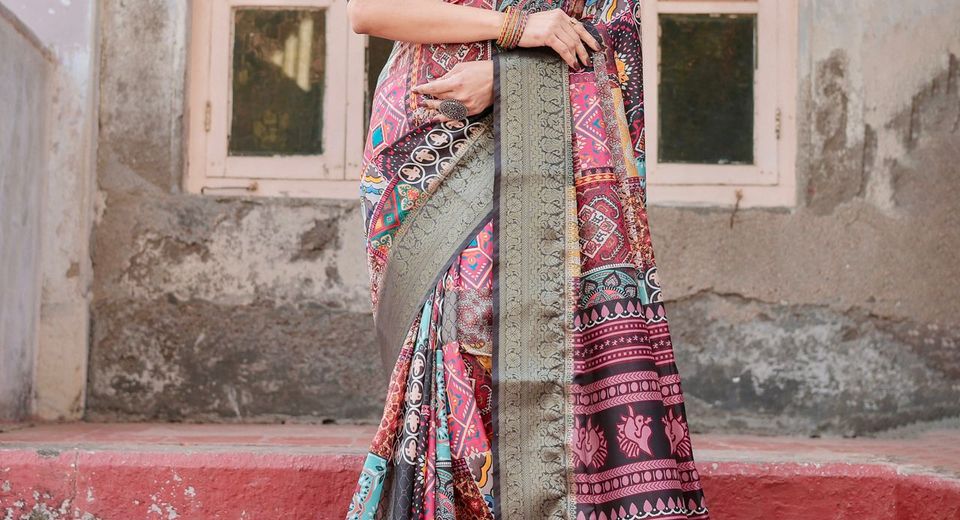
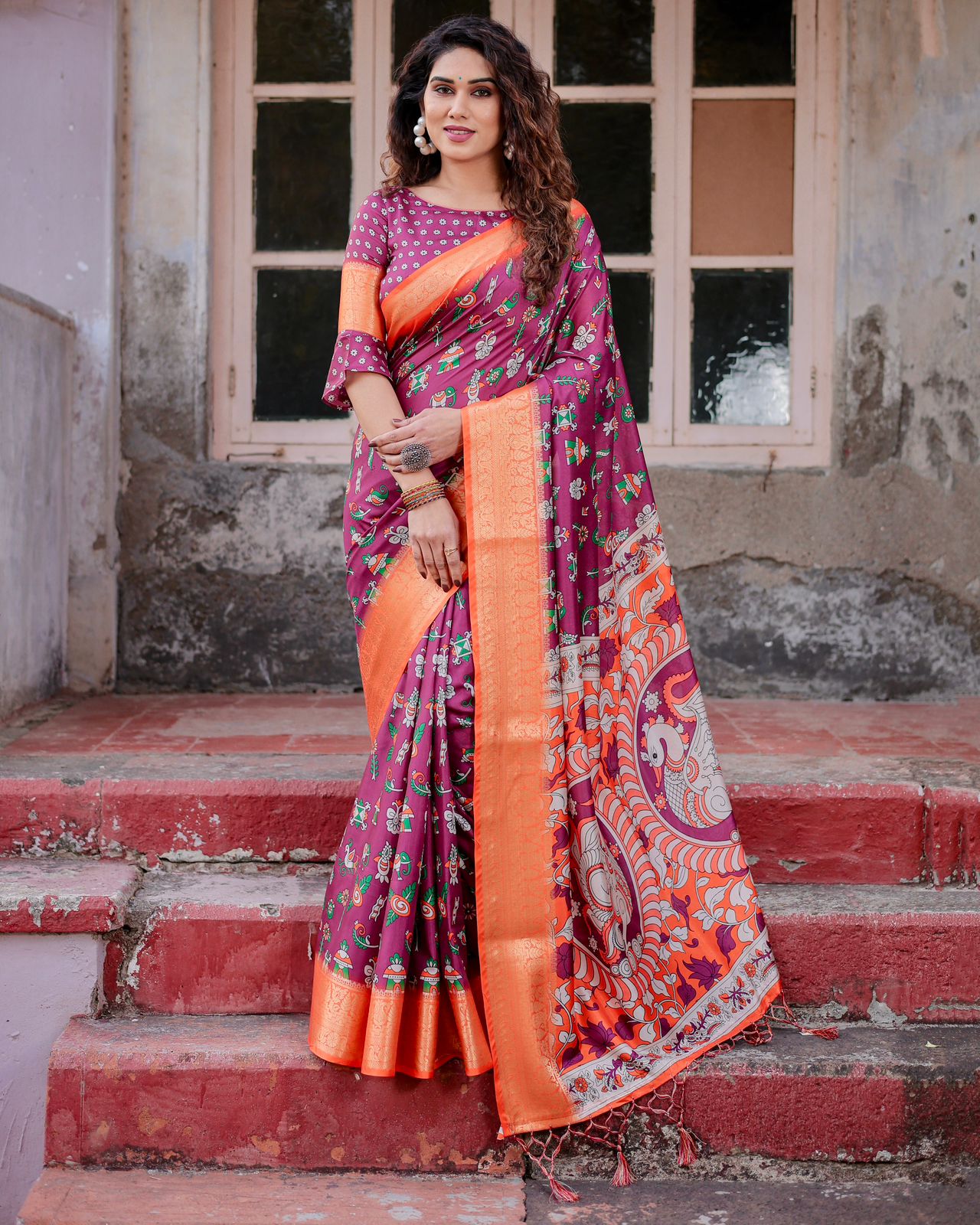
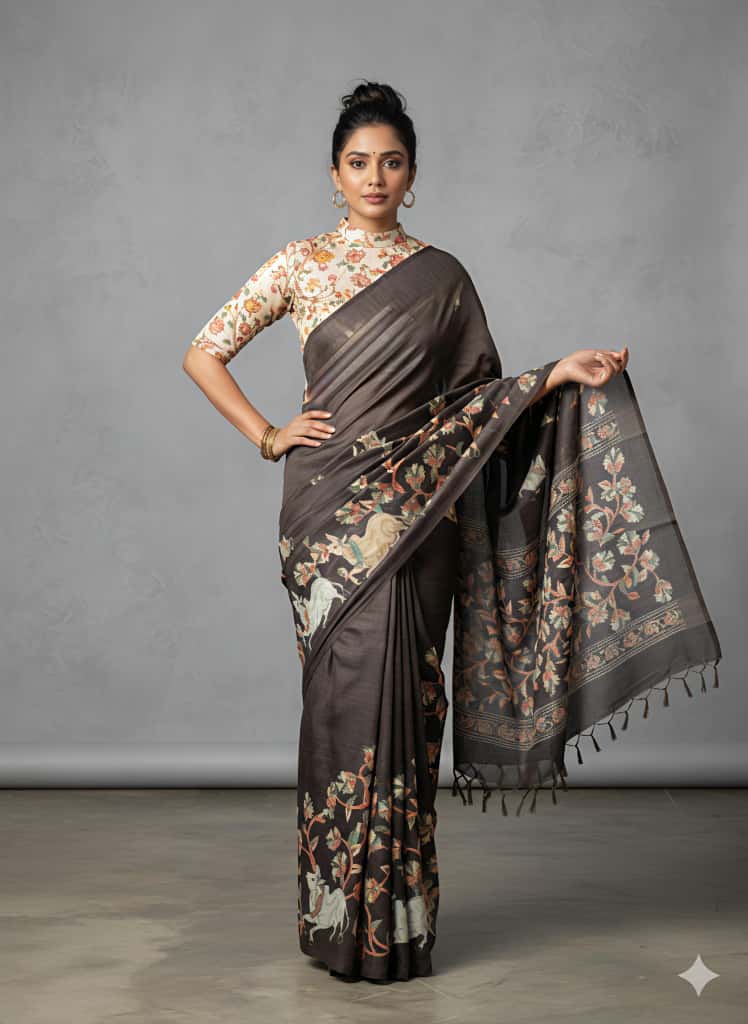
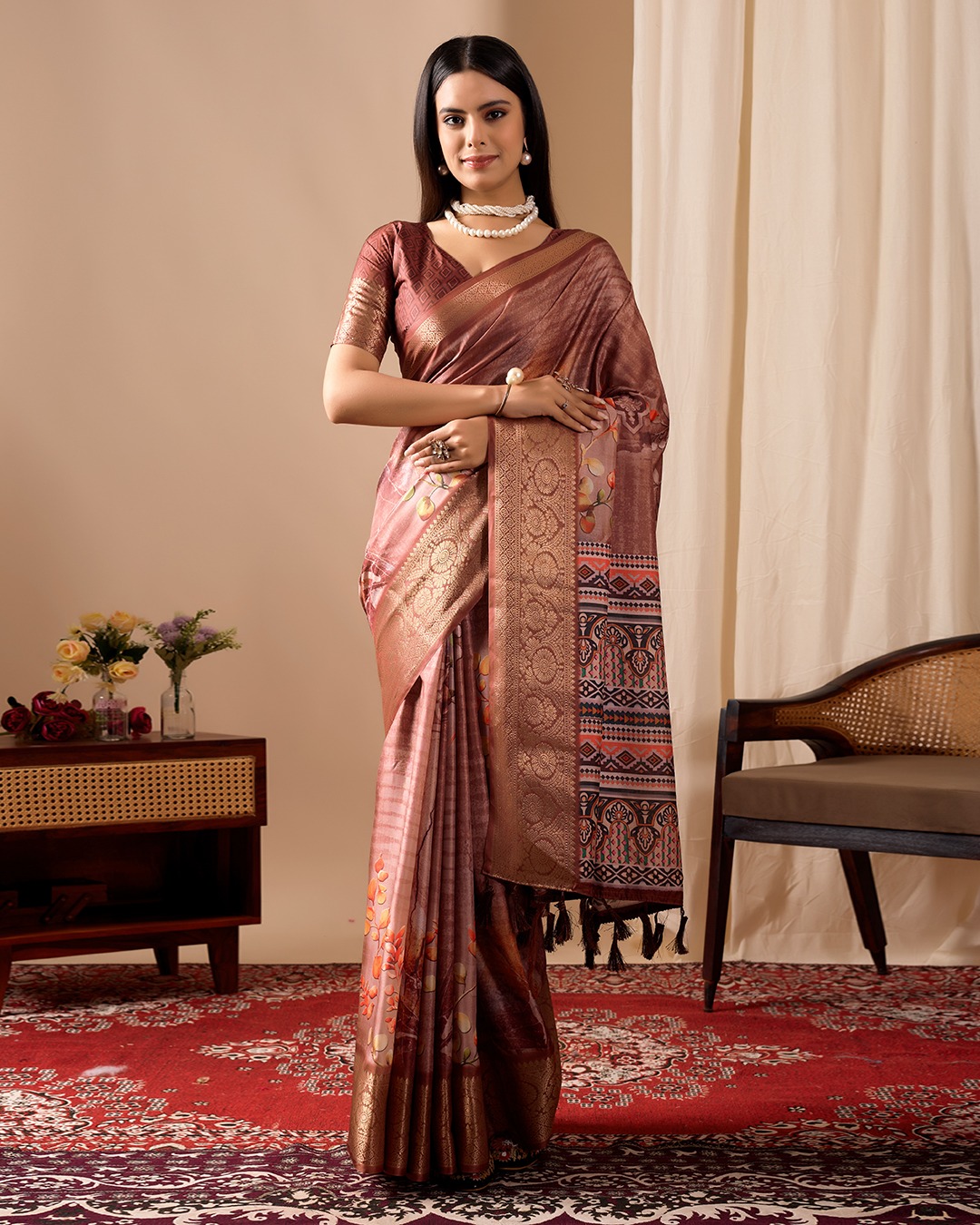
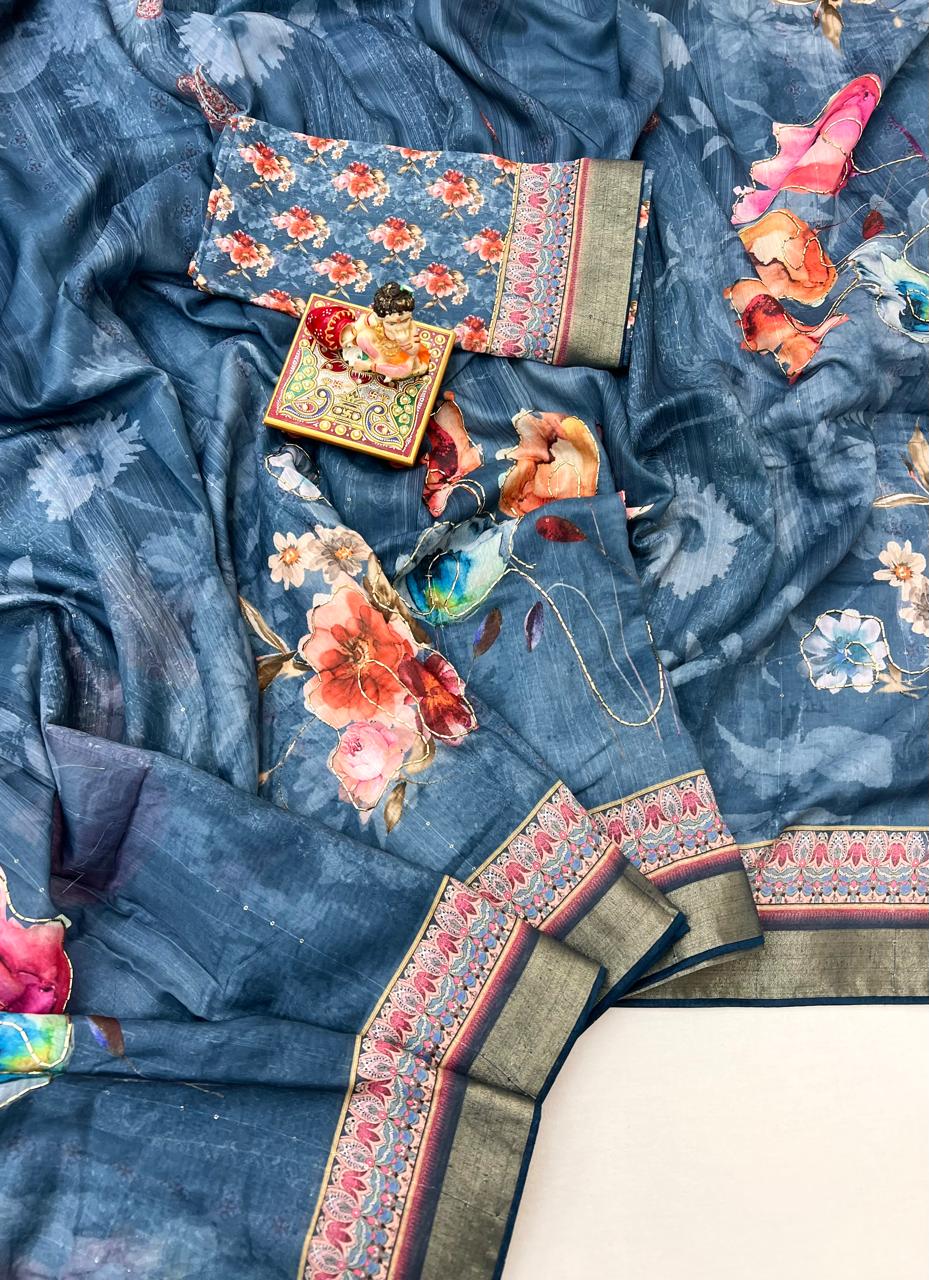
Product names can suggest a technique, but a product name should not be treated as proof of hand printing. Multi Color Banarasi Silk Saree with Artistic Prints and Black Floral Linen Saree with Artistic Prints describe printed aesthetics without explicitly claiming hand block printing. Royal Banarasi Silk Saree with Digital Floral Print explicitly identifies digital printing, so the design should not be classified as Sanganeri or Bagru hand print.
Red Blue Printed Banarasi Silk Saree Online India and Black Printed Lichi Silk Saree with Ethnic Digital Design show how silk garments can use printed decoration in different ways. A digital print can be highly detailed and visually classic while still being produced by a modern printing method.
Which fabrics work well with block-printed clothing?
Cotton is the most heritage base for block printing, while linen, silk and lightweight blends offer different levels of drape, sheen and formality. Fabric choice changes how sharply a motif appears and how comfortably a garment performs in warm weather.
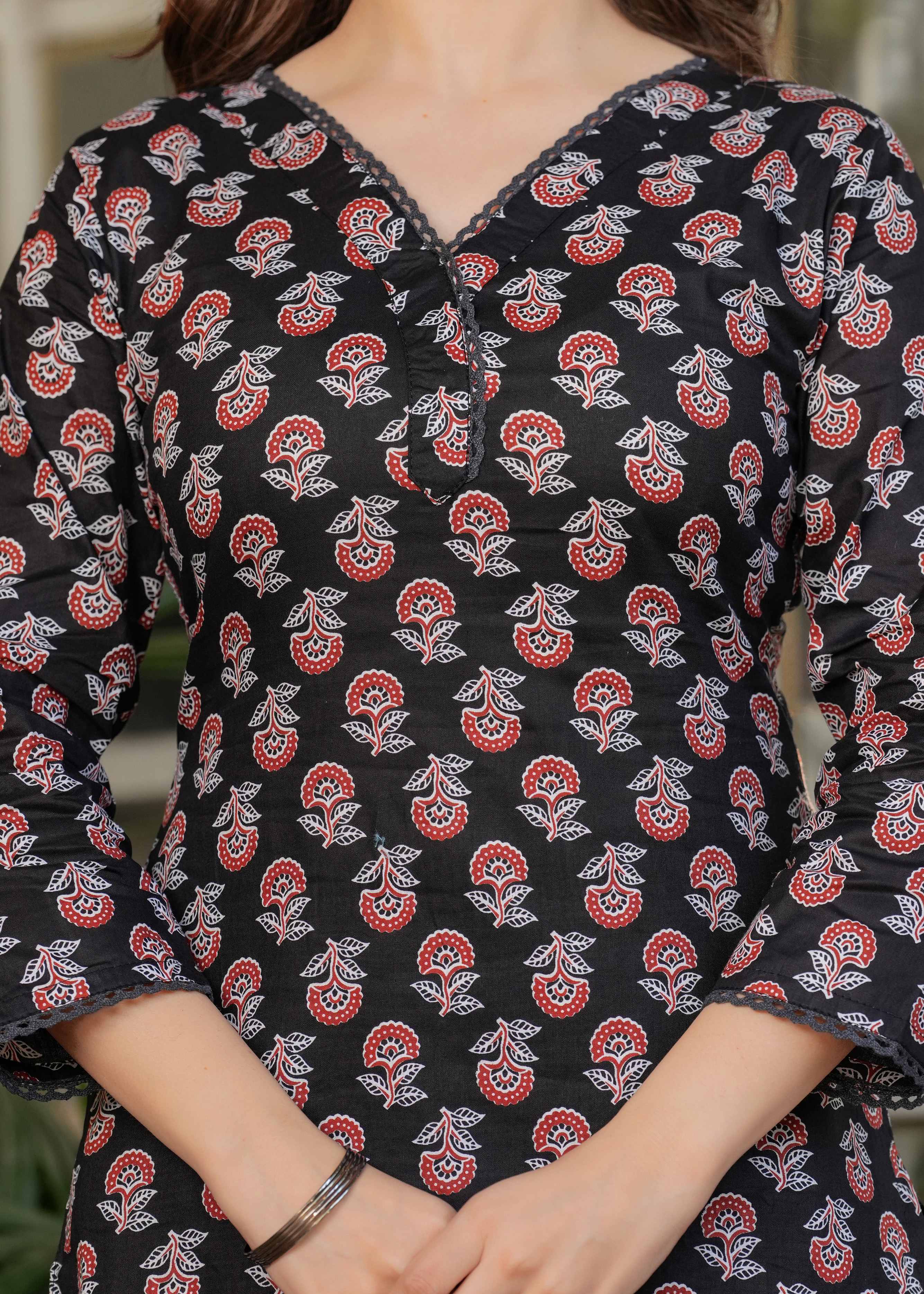
Hand block-printed cotton is breathable, absorbent and practical for everyday sarees, salwar suits and dupattas. Cotton accepts many dyes well, although dark colours may soften gradually with washing. A lightly irregular surface can make small motifs look more organic.
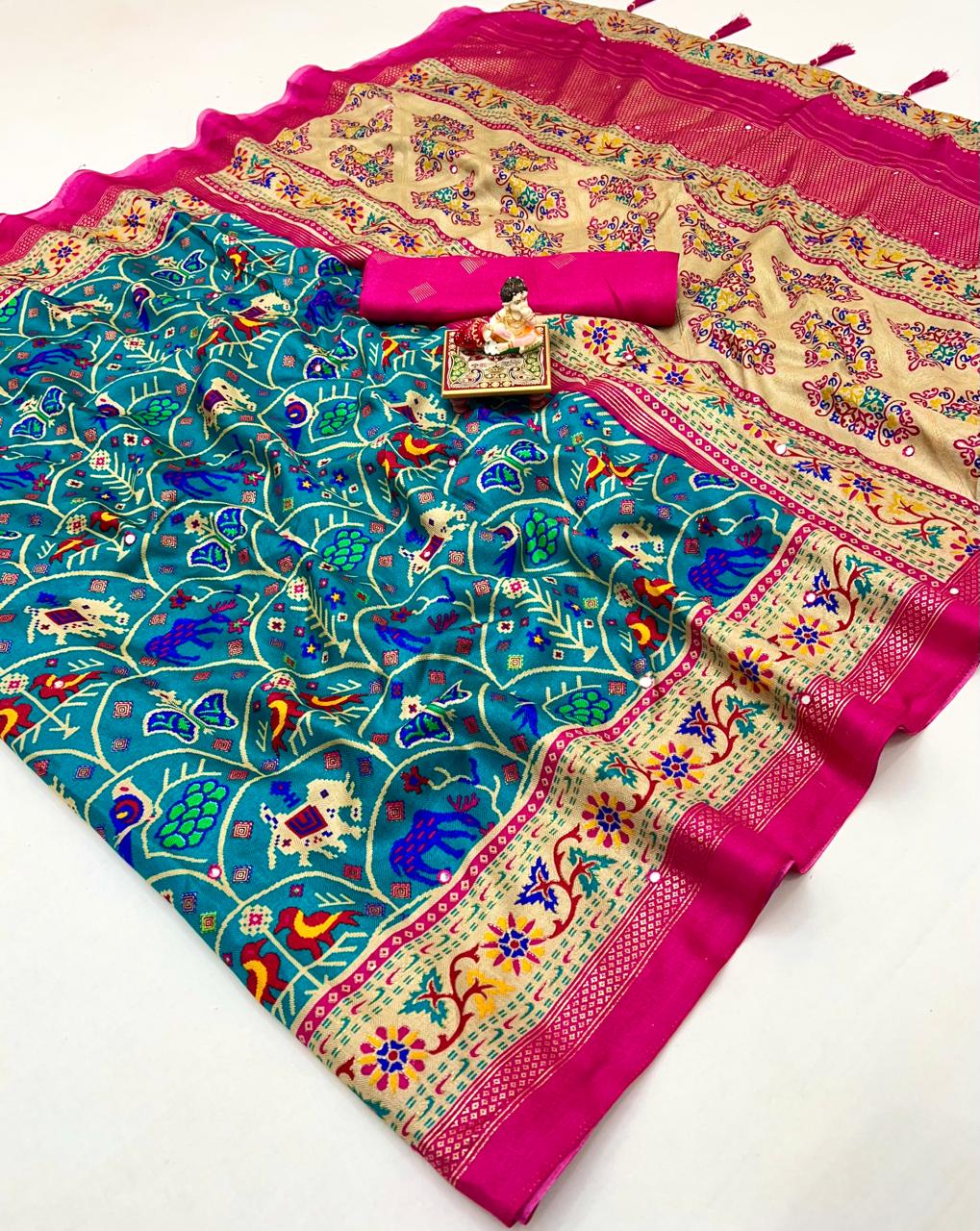
Linen and linen-cotton blends give printed sarees a crisp fall and relaxed texture. Brown Digital Printed Linen Cotton Patola Saree Online illustrates how a printed design can borrow the visual language of woven or traditional patterns without being a hand block-printed textile. Digital technology is useful when a designer wants intricate repeats across linen without carving several separate blocks.
Silk creates a dressier result because its natural sheen reflects light around the printed motif. Banarasi silk, however, is primarily associated with woven brocade and zari traditions. A Banarasi silk saree carrying a digital or artistic print should not automatically be classified as block printed.
Georgette and other fluid fabrics are suited to gowns and draped occasionwear, although slippery surfaces require controlled printing and careful finishing. Blue Printed Georgette Designer Gown for Women Festive uses a printed surface for a formal silhouette, while Royal Patola Printed Designer Gown with Elegant Dupatta shows how printed motifs can be adapted to coordinated festive dressing.
How should block-printed sarees and fabrics be cared for?
Block-printed garments last longer when they're washed gently in cool water, dried away from harsh direct sunlight and stored without prolonged dampness. Care should always follow the fibre and dye instructions supplied with the garment.
- Wash separately at first: Newly dyed cottons may release excess colour during the first one or two washes. Separate washing reduces the risk of colour transfer.
- Use cool water: Water below approximately 30 degrees Celsius is safer for many printed cottons than hot water, which can accelerate colour bleeding and fibre wear.
- Choose mild detergent: A small quantity of gentle detergent is preferable to bleach, optical brighteners or strong stain removers.
- don't scrub the print: Rubbing one motif repeatedly can create pale patches, especially on pigment-printed surfaces.
- Dry in shade: Direct midday sunlight can fade indigo, madder red, black and other strong colours over time. Turn the garment inside out while drying.
- Iron carefully: Use the temperature recommended for the fibre and place a thin cotton cloth between the iron and a raised or pigment-heavy print if necessary.
- Store dry: Fold the fabric only after it's completely dry. Air the garment periodically during humid weather.
Silk, georgette and embellished garments may need professional dry cleaning rather than a home wash. A digitally printed polyester or silk-blend garment may have different care requirements from a hand block-printed cotton saree, so the fibre label should guide the decision.
How can block prints be styled for contemporary Indian outfits?
Block prints work best in current Indian outfits when the print scale, fabric texture and accessories are balanced rather than matched too literally. A detailed saree can be paired with a plain blouse, while a small printed dupatta can add pattern to a solid salwar suit.
Sanganeri-style floral prints suit daytime sarees, cotton blouses and understated festive dressing. Silver earrings, woven bags and neutral sandals support the craft-led appearance without competing with a fine repeat. Bagru-inspired indigo, black and rust palettes work well with oxidised silver, leather sandals and textured cotton accessories.
A printed silk saree can move into evening wear when the border, blouse or jewellery introduces controlled shine. Zari should be used thoughtfully because heavy metallic work can obscure the character of a small hand-printed motif. A plain zari-edged blouse may provide enough occasion detail without covering the print.
Print scale should also suit the wearer's intended silhouette. Large motifs can create a strong focal point on a broad pallu or full skirt, while smaller butis are easier to distribute across a fitted blouse or narrow dupatta. The same visual principle applies to digital designs: Blue Printed Georgette Designer Gown for Women Festive and Royal Patola Printed Designer Gown with Elegant Dupatta use print as part of the garment's overall shape, not as a substitute for construction.
Understanding the difference between Jaipur, Sanganer and Bagru helps shoppers describe what they're actually buying. Jaipur remains the familiar city-level answer to the question of which city is famous for block printing, but Sanganer and Bagru provide the technical and cultural detail behind that answer. The next time a textile carries a floral repeat, earthy resist pattern or traditional-looking border, checking the printing method will reveal far more than the motif alone.
Common Questions About Jaipur, Sanganer and Bagru Block Prints
Which city is famous for block printing in India?
Jaipur is the city most commonly associated with block printing in India. Sanganer and Bagru, located near Jaipur, are the specialised craft centres most closely linked with Rajasthan's hand block-printing traditions.
Is Jaipur print the same as Sanganeri print?
Jaipur print is a broad commercial term, while Sanganeri print refers more specifically to the floral and fine-detail tradition associated with Sanganer. A fabric sold as Jaipur print may come from Sanganer, Bagru or another printing centre.
What is the difference between Sanganeri and Bagru print?
Sanganeri print commonly features delicate floral motifs, fine outlines and pale backgrounds. Bagru print is more often recognised by earthy colours, bolder forms and resist-dyeing techniques involving materials such as mud resist and indigo.
How can you identify a hand block print?
A hand block print may show small variations in alignment, colour density and motif edges because each impression is made manually. Digital prints usually have extremely consistent repeats and can reproduce gradients or photographic detail more easily.
Is every printed Banarasi silk saree hand block printed?
No, a printed Banarasi silk saree is not automatically hand block printed. Banarasi silk identifies the textile tradition and fibre or weave context, while terms such as digital print, screen print or hand block print identify the surface-decoration method.
How should a hand block-printed saree be washed?
Wash a hand block-printed saree gently in cool water with mild detergent, preferably separately during the first wash. Avoid bleach and vigorous rubbing, dry the saree in shade and follow the fibre-specific care label for silk or embellished garments.





