Which city is famous for Bandhani? Jamnagar in Gujarat is the most widely recognised answer, particularly for fine Bandhani work made with closely tied dots and vivid colour contrasts. Gujarat's Bandhani tradition also includes Kutch, Bhuj, Rajkot and other textile centres, so the craft belongs to a wider regional culture rather than to one street or workshop. Knowing that distinction makes it easier to understand why two Bandhani sarees can look very different while both remain authentically Gujarati.
Bandhani is a resist-dyeing technique in which small portions of fabric are pinched and tightly tied before dyeing. The tied sections resist the colour and form rings, dots, waves or figurative motifs when the threads are removed. The process demands patience, good eyesight and controlled tension, which is why handmade Bandhani carries cultural and technical value beyond its bright appearance.
Which city is famous for Bandhani in Gujarat?
Jamnagar is the city most commonly associated with Bandhani because it has a long history of production, skilled dyers and distinctive fine-dot work. Jamnagar Bandhani is especially known for detailed patterns, strong colour placement and sarees prepared for festive, bridal and ceremonial dressing.
Jamnagar's importance developed through Gujarat's trading networks and the continued patronage of textile-wearing communities. Local artisans traditionally worked with cotton, silk and later synthetic blends, adapting Bandhani to changing customer preferences without abandoning the central tying and dyeing method. The city's reputation therefore reflects both inherited skill and an active textile economy.
Bhuj and the wider Kutch region are equally important when discussing Gujarat's craft heritage. Kutch Bandhani may appear more closely connected to regional dress traditions, while Jamnagar is often named in retail and general-knowledge answers because of its established reputation for Bandhani sarees. The most accurate short answer is: Jamnagar is the city most famous for Bandhani, while Gujarat as a whole is the craft's principal home.
How does the Bandhani technique create its patterns?
Bandhani patterns are created by tying tiny pinched sections of fabric before each dye bath. The tied portions remain lighter than the surrounding cloth, producing the characteristic dotted or ringed effect after the fabric is opened and washed.
An artisan begins by selecting a lightweight, absorbent fabric and marking or following a planned motif. Small fabric peaks are lifted with the fingers or a tool, then wrapped tightly with thread. Hundreds or thousands of such ties may be needed for one saree, depending on the density of the design.
Bandhani often uses multiple dye stages. A yellow base may be dyed first, followed by red, green, blue or deeper shades. Areas tied during an earlier stage retain their previous colour while exposed areas accept the next dye. More complicated designs require repeated tying and dyeing, increasing both labour and cost.
The final visual result depends on several factors: the size of each tied dot, the spacing between dots, the firmness of the thread, the order of colours and the quality of the fabric. Tiny, evenly distributed dots usually indicate more laborious work than large, widely spaced spots. Unevenness isn't automatically a defect, because handmade tying naturally produces small variations; however, careless bleeding or loose, unfinished threads can signal poor finishing.
What motifs and colours are associated with Jamnagar Bandhani?
Jamnagar Bandhani commonly features dotted fields, circular clusters, floral forms, geometric repeats and festive motifs created through variations in tying density. Popular Bandhani vocabulary includes terms such as chandrokhani, gharchola, ekdali and trikoniya, although names and usage can vary across communities and sellers.
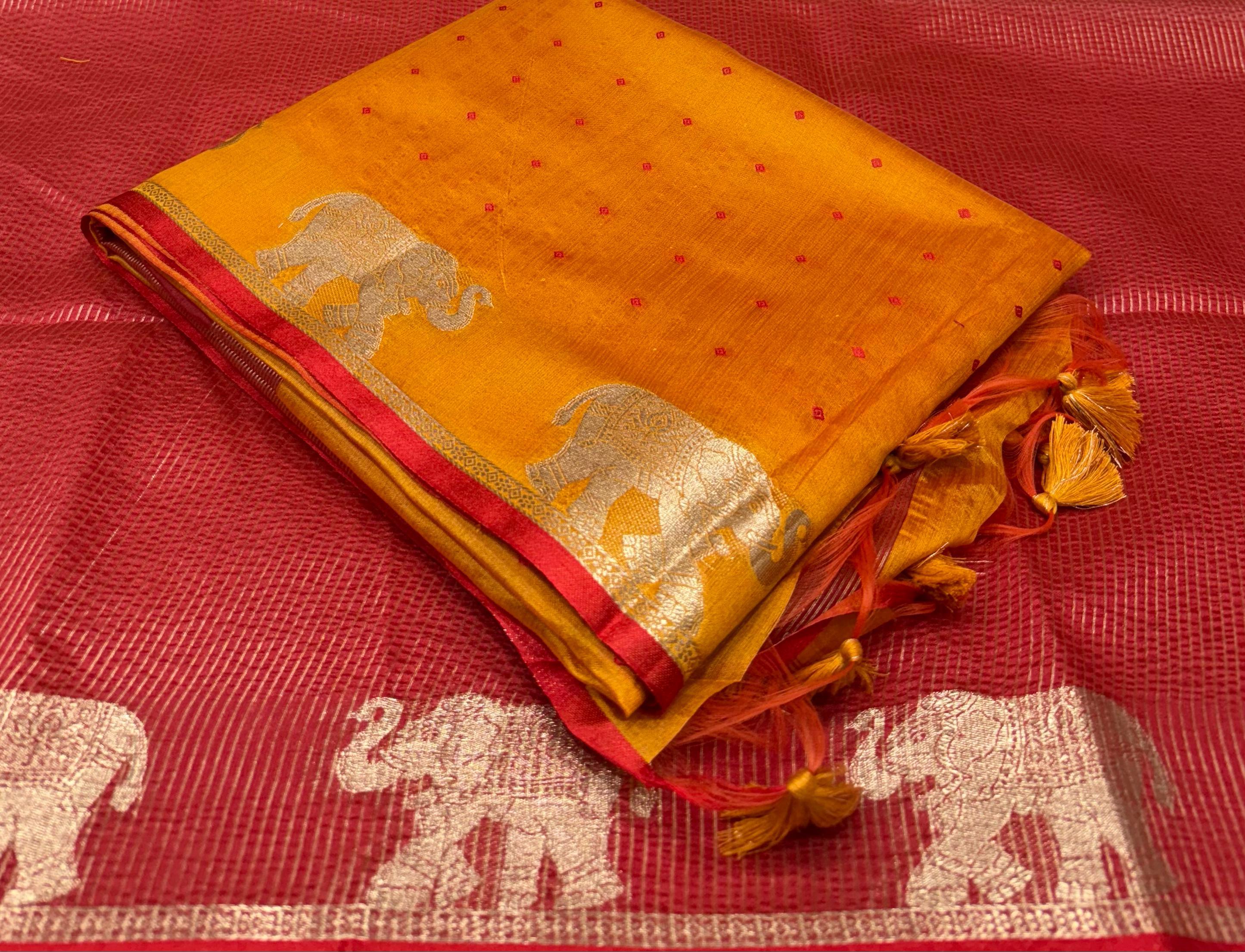
Red, yellow, green, blue, pink and orange are strongly associated with Gujarati festive dressing. Red Bandhani has particular importance in bridal and celebratory clothing, while yellow and green are frequently chosen for religious functions, pre-wedding events and daytime festivities. Black, navy and jewel tones offer a more contemporary direction without removing the visual identity of Bandhani.
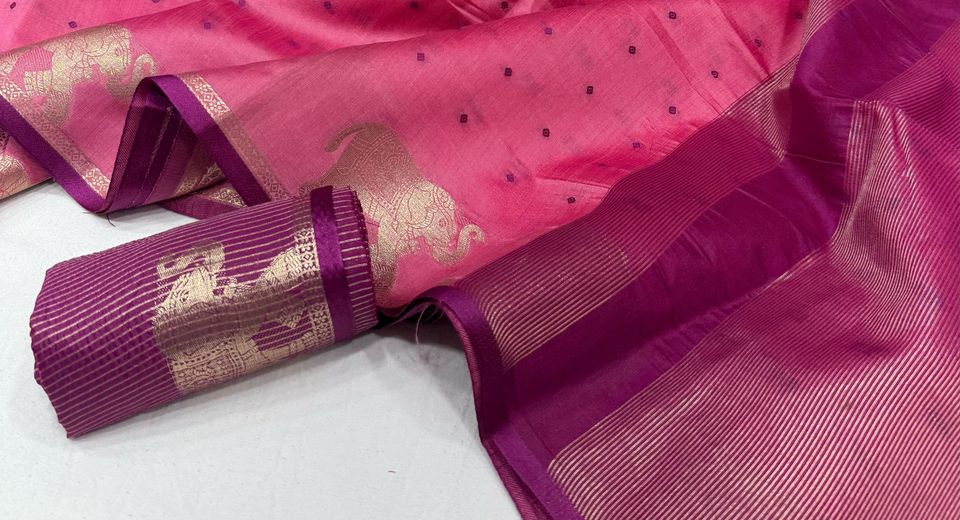
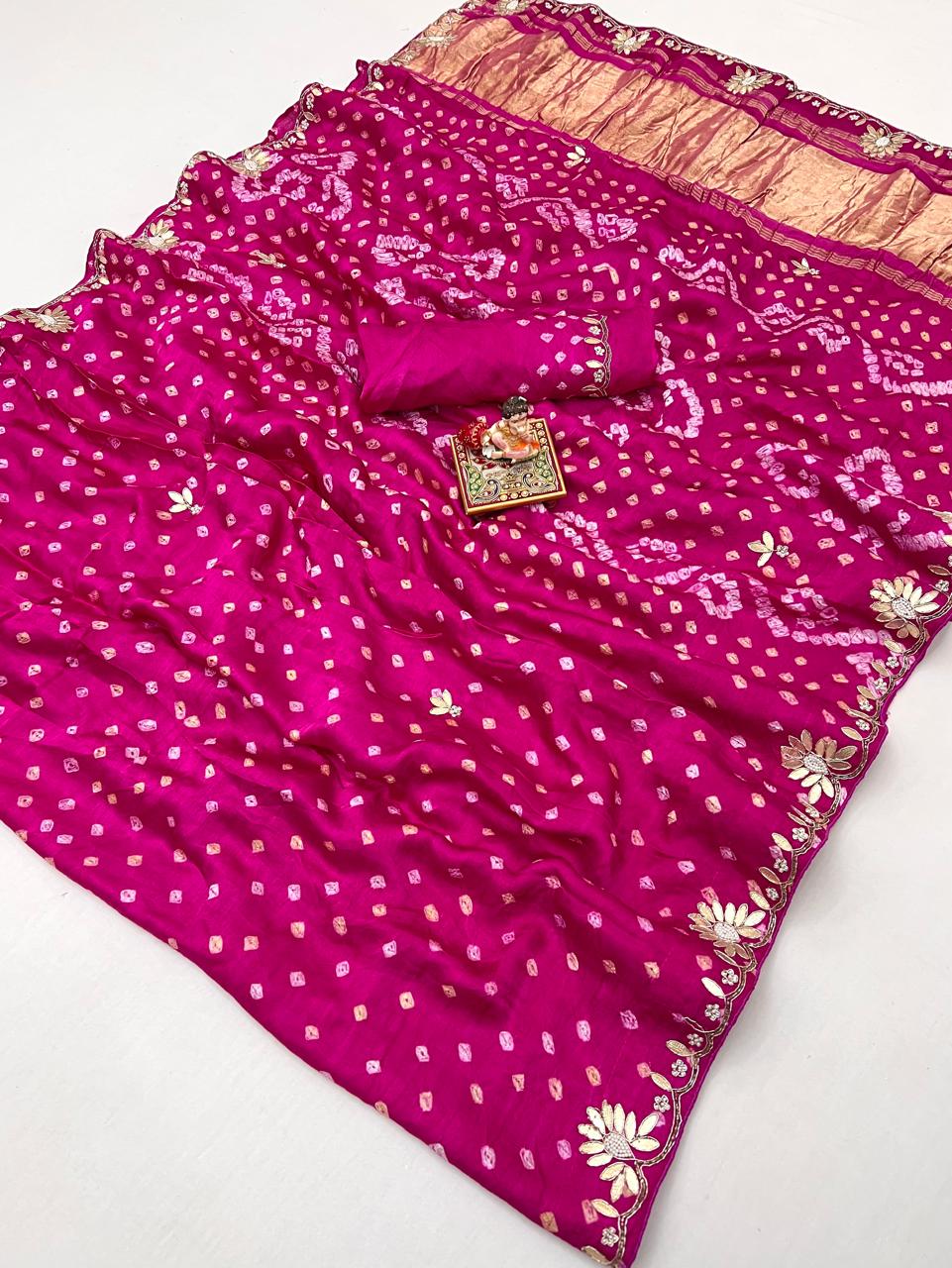
A Pink Bandhani Silk Saree with Zari Elephant Border demonstrates how a traditional resist-dyed ground can be paired with a formal metallic border. The contrast between dotted silk and zari makes the saree suitable for receptions, festive dinners and family celebrations where a lightweight drape still needs a ceremonial finish.
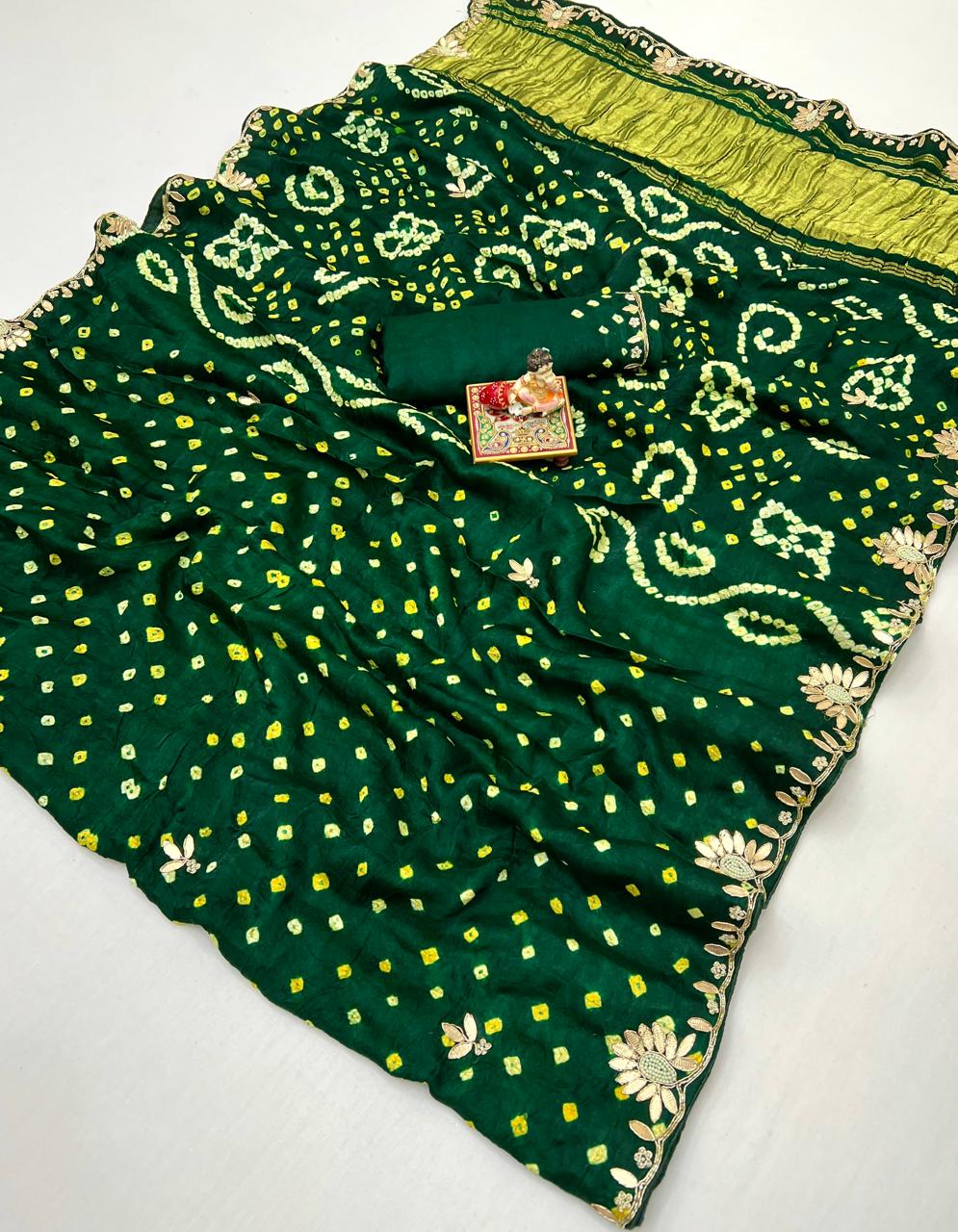
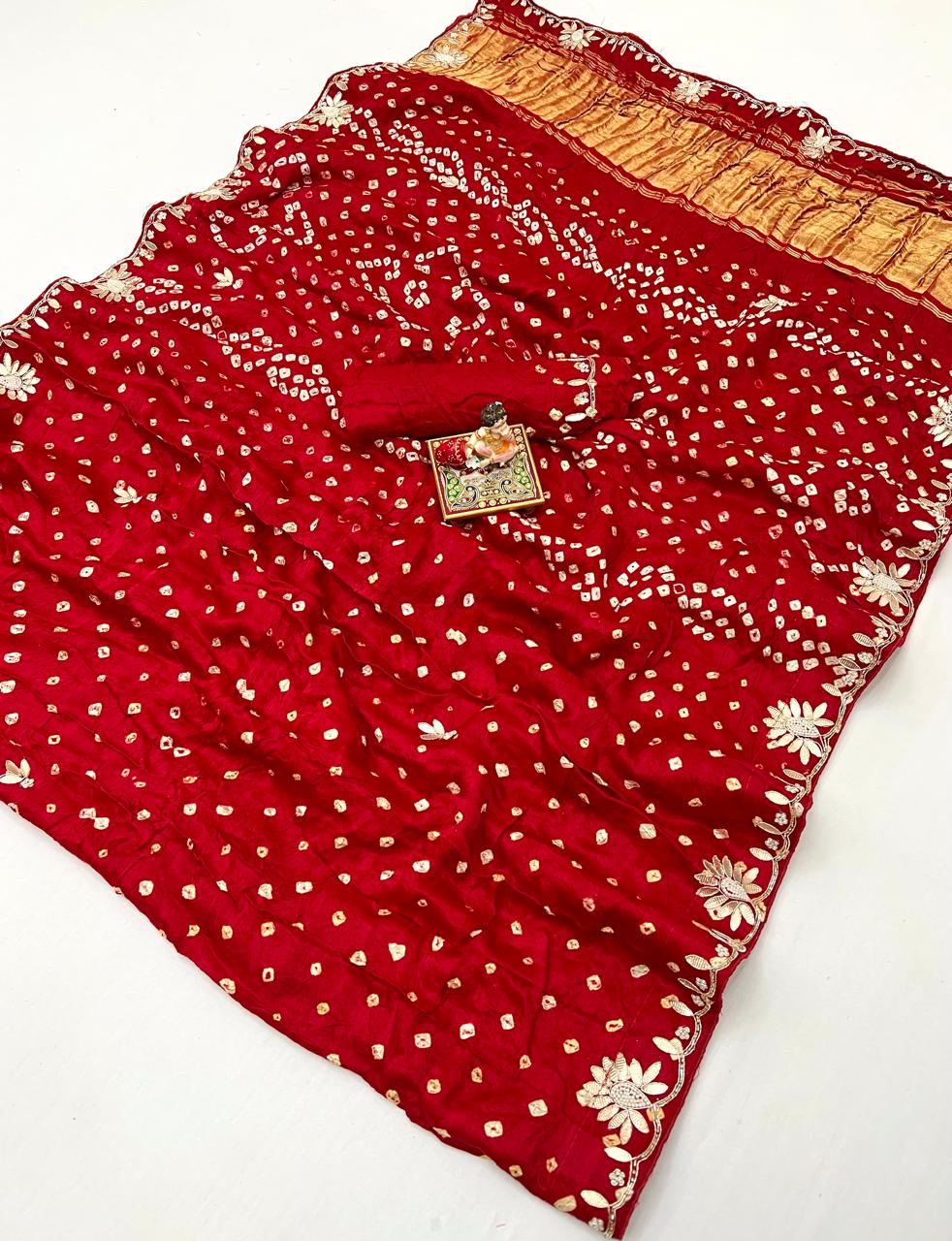
A Red Bandhani Gajji Silk Saree with Gota Patti Handworks combines the textured richness of Gajji silk with applied Gota Patti embellishment. Gajji silk is a smooth, lustrous fabric associated with western Indian festive textiles, and its surface allows Bandhani dots and metallic details to remain visually distinct.
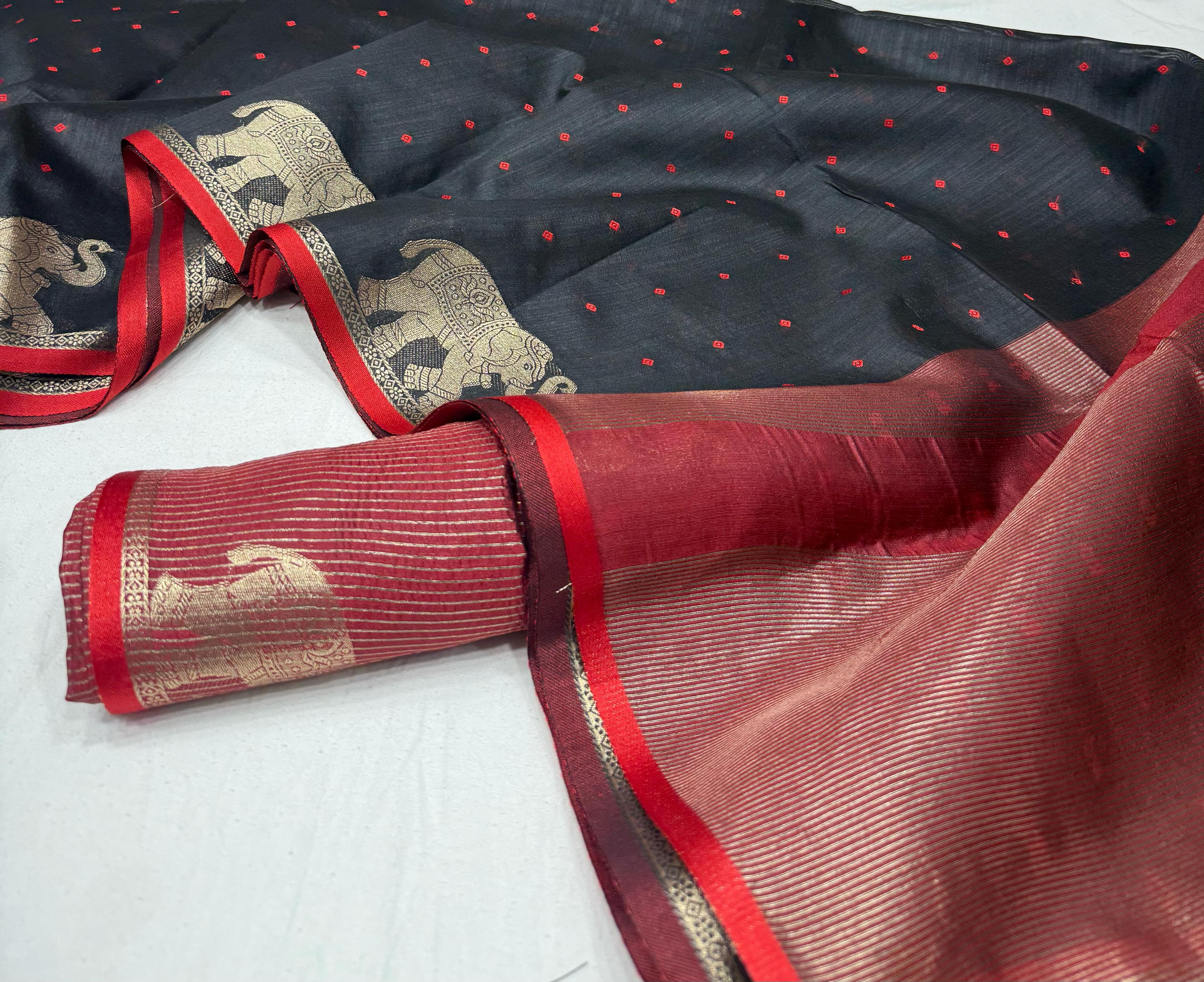
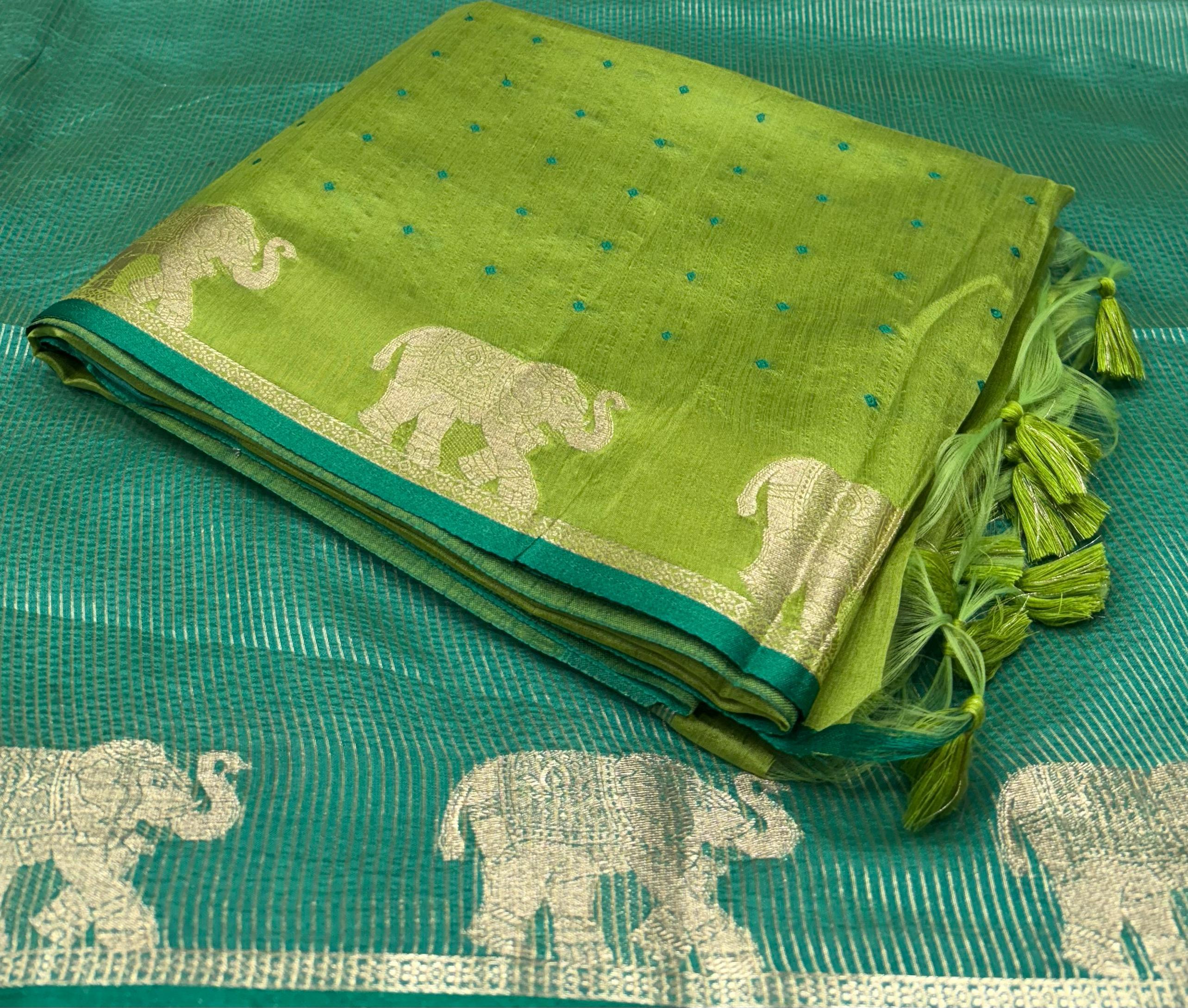
Contemporary colour choices can be equally expressive. A Black Bandhani Silk Saree with Elephant Zari Border uses a dark ground to make the resist-dyed pattern and gold border appear sharper, while a Coral Orange Bandhani Silk Saree with Zari Elephant Border brings warmth suited to haldi functions, mehendi gatherings and daytime wedding events.
How is Bandhani different from Leheriya and other Indian tie-dye?
Bandhani creates tied dots or small resist patterns, while Leheriya creates diagonal waves by rolling and tying fabric before dyeing. Both techniques are associated with western India, but their preparation methods and finished surfaces are visibly different.
In Bandhani, the artisan pinches many separate points, so the fabric displays repeated dots, rings or clustered motifs. In Leheriya, the fabric is usually rolled diagonally and tied at intervals, producing flowing stripes or wave-like lines. A saree may combine both techniques, but the two should not be treated as interchangeable names.
Bandhej is another commonly used name for Bandhani, especially in Hindi-speaking contexts. The terms generally refer to the same broad family of tied resist-dyeing, although regional naming can differ. Ajrakh, Kalamkari and block printing are separate textile traditions because they apply colour through printing, painting or resist blocks rather than by tying pinched sections of cloth.
Fabric also affects how a technique appears. Bandhani on cotton often looks crisp and breathable, while Bandhani on silk has greater lustre and a more fluid fall. Gajji silk can appear slightly structured and glossy. A viscose Gajji silk blend may offer a similar visual effect at a different price and care level, but the fibre content should be checked before purchase.
How can you choose a Bandhani saree for an occasion?
The best Bandhani saree depends on the occasion, fabric weight, amount of embellishment and the kind of drape you need. A lightweight cotton or viscose saree suits daytime functions, while silk or Gajji silk works better for evening celebrations and formal ceremonies.
For haldi and daytime celebrations
Yellow, green, coral orange and pink Bandhani are practical choices for a Haldi ceremony or daytime family event because these colours photograph well in natural light. A Mustard Yellow Bandhani Silk Saree with Zari Border offers a warm, festive palette, while a Coral Orange Bandhani Silk Saree with Zari Elephant Border gives a brighter, more contemporary appearance.
Choose a blouse with a clean neckline when the saree has a dense dotted field or a decorative border. Excessive surface embellishment on the blouse can compete with the Bandhani pattern, particularly in close-up photographs.
For weddings and formal evenings
Silk Bandhani with zari, Gota Patti or a substantial border is appropriate for wedding receptions, sangeet evenings and formal festive gatherings. A Time-honoured Pink Bandhani Gajji Silk Saree with Border gives a classic direction, while a Black Bandhani Silk Saree with Elephant Zari Border creates a more dramatic evening look.
For a heritage Gujarati-inspired drape, arrange the pallu toward the front over the right shoulder. The front-facing pallu displays the border and Bandhani pattern prominently, although the drape should be adjusted to the saree's width and the wearer's comfort.
For versatile festive dressing
A Blue Bandhani Viscose Gajji Silk Saree with Gota Patti can work for a puja, cultural event or smaller evening gathering because blue is dressy without being restricted to bridal styling. Viscose blends are often easier on the budget than pure silk, but they may respond differently to heat, moisture and ironing.
How can you tell whether a Bandhani saree is well made?
A well-made Bandhani saree has a coherent pattern, secure tying, even dye saturation and a finished selvedge. Buyers should inspect the reverse side, ask about fibre content and examine whether the dots remain clear rather than blurred into large patches.
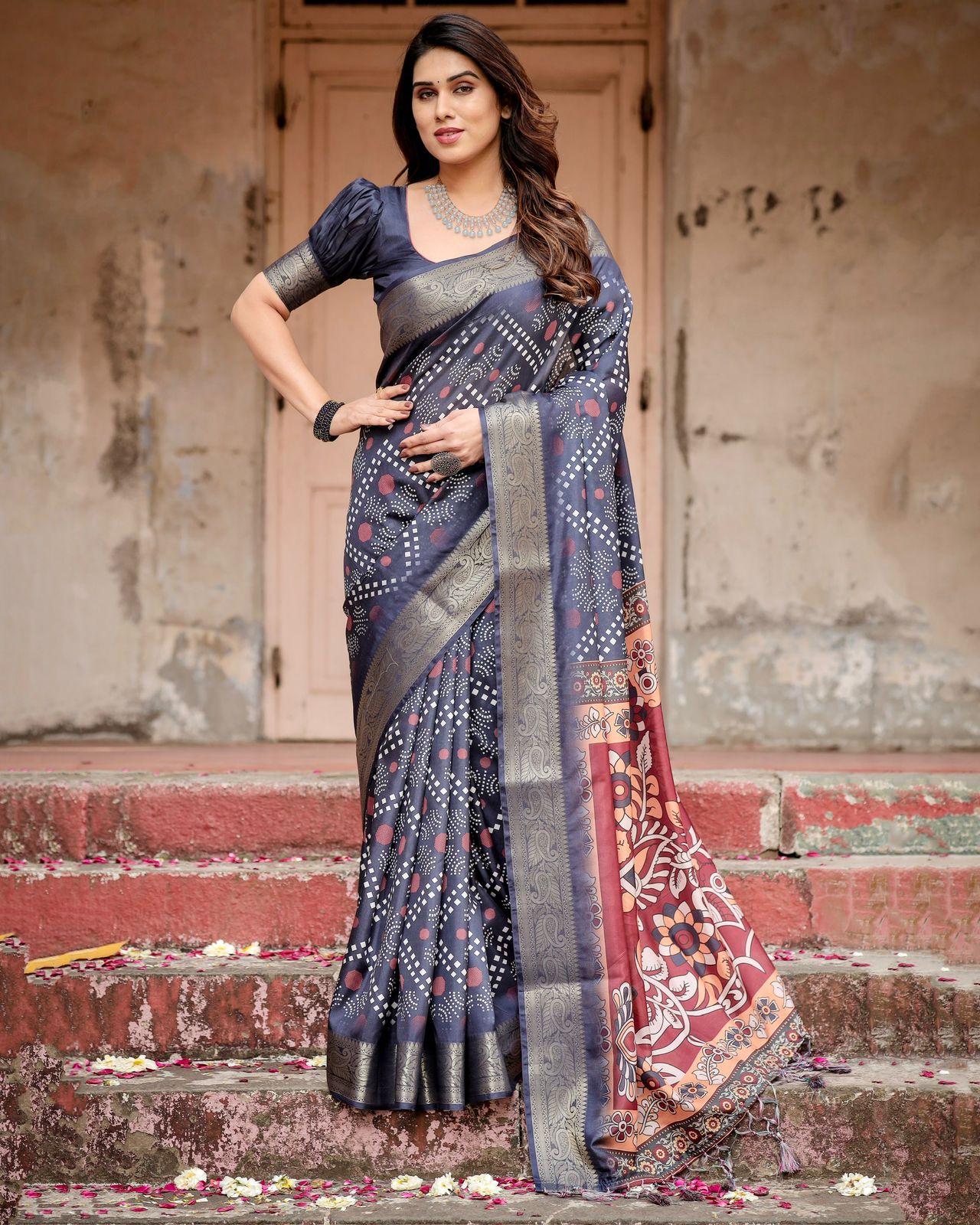
- Check the dot definition: Individual tied points should be recognisable, even when the design is dense. Slight handmade variation is normal, but widespread bleeding can indicate rushed dyeing or unsuitable colour treatment.
- Examine the fabric: Silk should have a natural lustre and fluid fall, while cotton should feel breathable and relatively matte. A viscose blend may feel smooth and drape well, but the label should state the composition clearly.
- Inspect the border and pallu: Zari, Gota Patti and woven borders should be attached or finished securely, without loose metallic threads likely to catch on jewellery.
- Look at the reverse: Dense handwork may show small irregularities, but the fabric should not have excessive knots, stains or unfinished edges.
- Ask about colour care: Some strong dyes may release a little colour during the first cleaning. A seller who provides specific washing instructions is more useful than one who makes broad claims about permanence.
Price should be assessed alongside labour, fibre, pattern density, dye complexity and embellishment. A silk saree with thousands of tightly tied dots and hand-applied Gota Patti will usually cost more than a printed imitation or a sparse design on a synthetic base. A low price doesn't prove poor quality, but a buyer should understand which comes with account for the difference.
How should a Bandhani saree be stored and washed?
Bandhani sarees should be dry-cleaned when the fabric includes silk, zari or delicate Gota Patti, and they should be stored folded in breathable cotton rather than sealed in plastic. Proper storage protects both the dye and the metallic work from moisture, friction and prolonged light exposure.
don't soak a silk Bandhani saree at home unless the care label specifically permits gentle washing. Avoid chlorine bleach, strong detergents, direct sunlight and high-temperature ironing. Zari borders should be ironed from the reverse side with a pressing cloth, using low heat appropriate to the fabric.
Refold a saree every few months so that a permanent crease doesn't form in the same place. Store dark and light sarees separately when possible, and keep neem leaves or commercially prepared textile-safe moisture protection nearby without allowing any material to touch the saree directly. A dry, ventilated cupboard is safer than a damp storage box.
When wearing Bandhani, take care around sharp bangles, rough handbag chains and jewellery clasps. Fine silk can snag even when the dyeing is excellent. These simple precautions help preserve the dots, border and drape for many years.
Why does Jamnagar remain central to Bandhani's identity?
Jamnagar remains central because its name connects a living artisan skill with a recognisable regional textile identity. The city's Bandhani tradition demonstrates how a technically demanding craft can move from community dress into contemporary sarees while retaining its method of tied resist-dyeing.
Bandhani also shows why geographical labels matter in Indian textiles. Gujarat isn't represented by one uniform style: Jamnagar, Kutch, Bhuj and other centres contribute different combinations of fabric, motifs, colour and finishing. Saying that Jamnagar is famous for Bandhani gives the direct answer, while acknowledging the wider Gujarat network gives the fuller history.
For a buyer, the most useful conclusion is practical. Look beyond the city name and examine the tying, dye clarity, fibre, border construction and care requirements. A thoughtfully made Bandhani saree can carry both the visual energy of Gujarat and the evidence of hours of skilled handwork.
Questions Readers Ask About Jamnagar Bandhani
Which city is famous for Bandhani?
Jamnagar in Gujarat is the city most commonly known for Bandhani. Bhuj, Kutch, Rajkot and other parts of Gujarat also have important Bandhani traditions, so the craft belongs to the wider region.
Is Bandhani from Rajasthan or Gujarat?
Bandhani is strongly associated with both Gujarat and Rajasthan. Gujarat, particularly Jamnagar and Kutch, is widely recognised for fine Bandhani sarees, while Rajasthan has its own important tie-dye and Leheriya traditions.
What is the difference between Bandhani and Leheriya?
Bandhani is made by tying many small pinched points in fabric before dyeing, which creates dots and clustered motifs. Leheriya is made by rolling and tying fabric diagonally to create wave-like stripes.
Is Bandhani saree suitable for a Haldi ceremony?
Yes, Bandhani sarees in yellow, green, pink and coral orange are well suited to a Haldi ceremony. Lightweight silk, cotton or viscose options are comfortable for daytime celebrations, while heavy zari can be reserved for more formal events.
How should a silk Bandhani saree be washed?
A silk Bandhani saree with zari or Gota Patti should generally be dry-cleaned according to its care label. Avoid soaking, bleach, direct sunlight and high-temperature ironing, and store the saree folded in breathable cotton.
How can I identify handmade Bandhani?
Handmade Bandhani usually shows individually tied dots, slight variations in spacing and a pattern formed through resist-dyeing rather than printing. Buyers should also inspect the reverse, check the fibre label and look for secure borders and clear dye work.