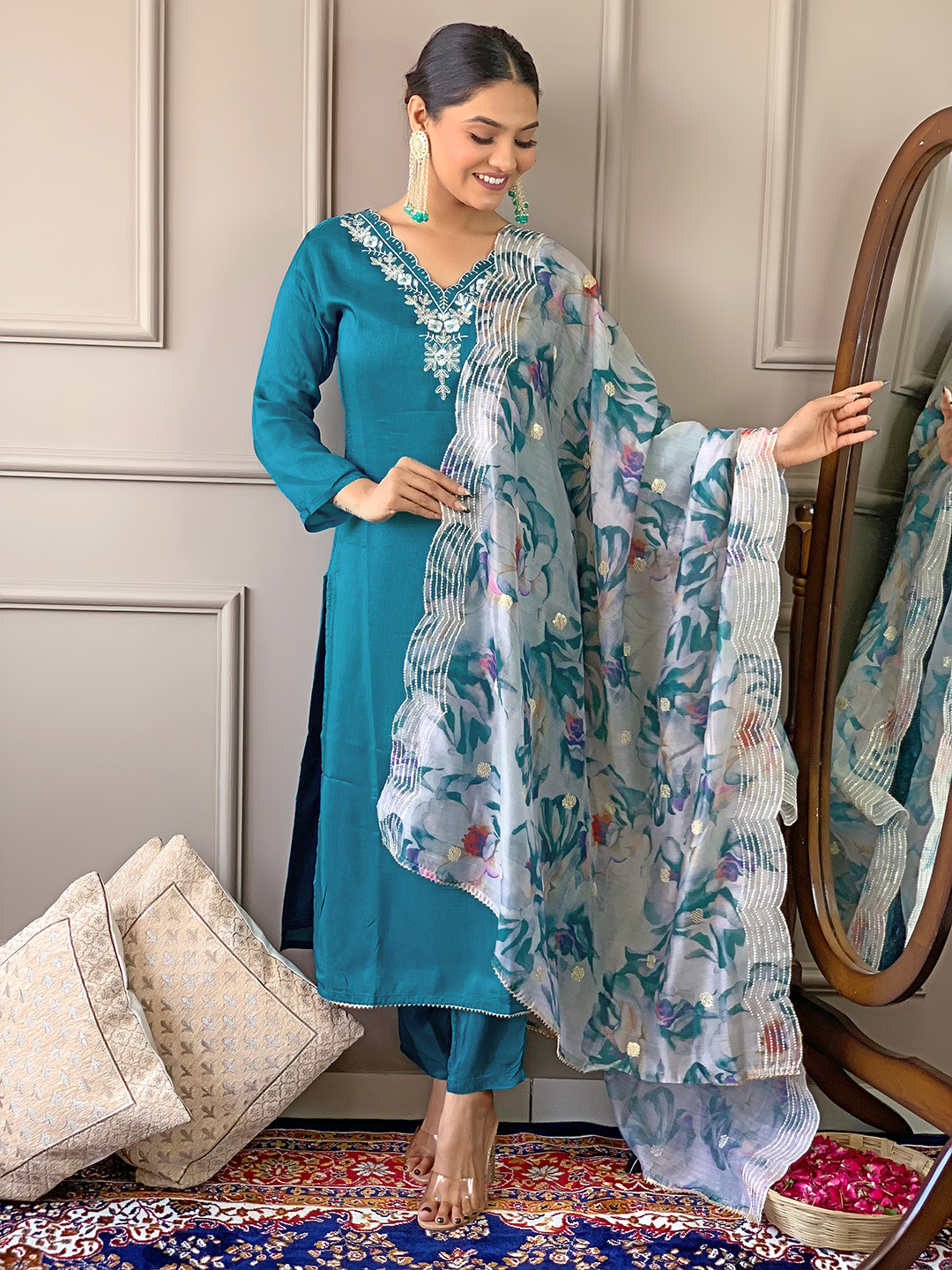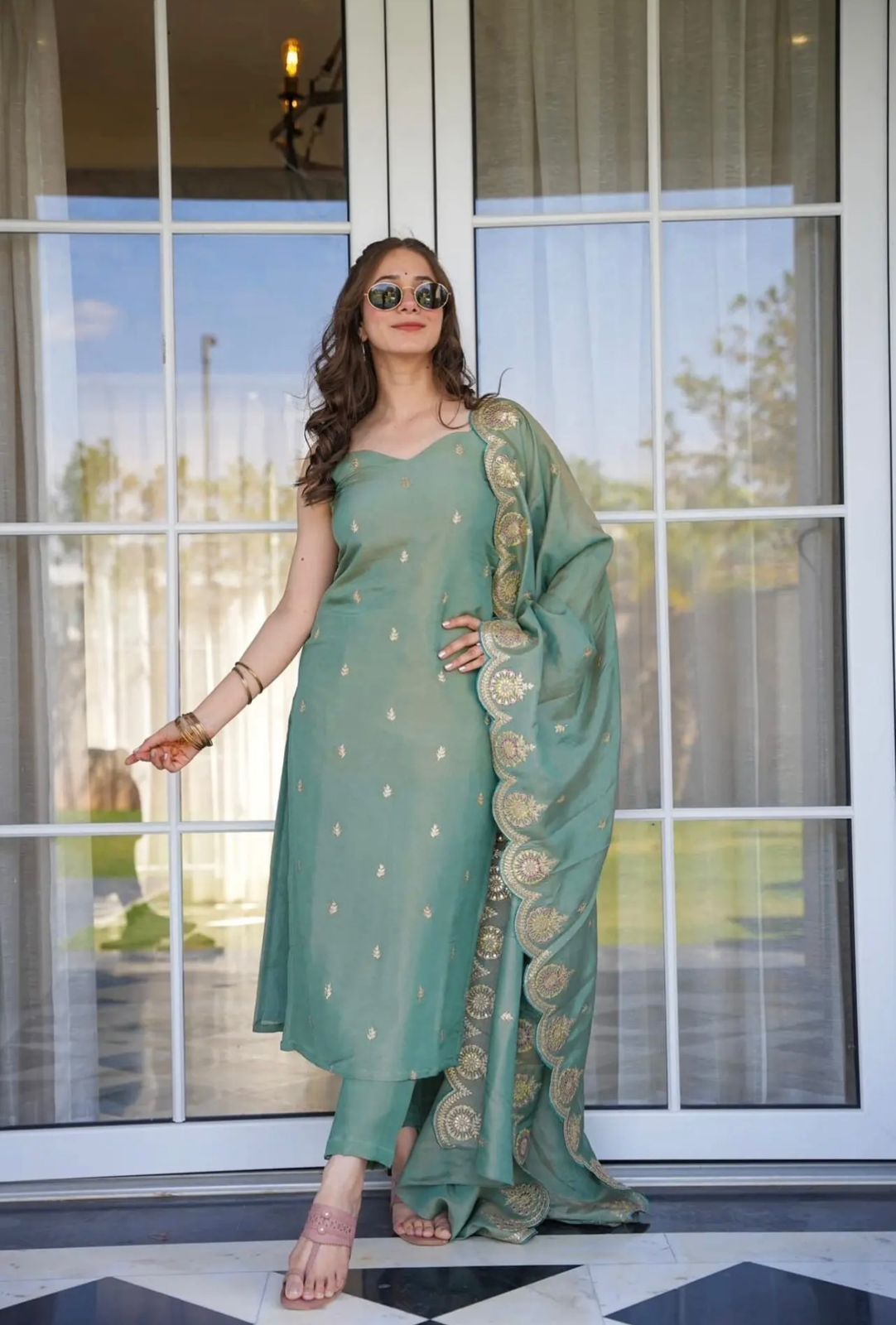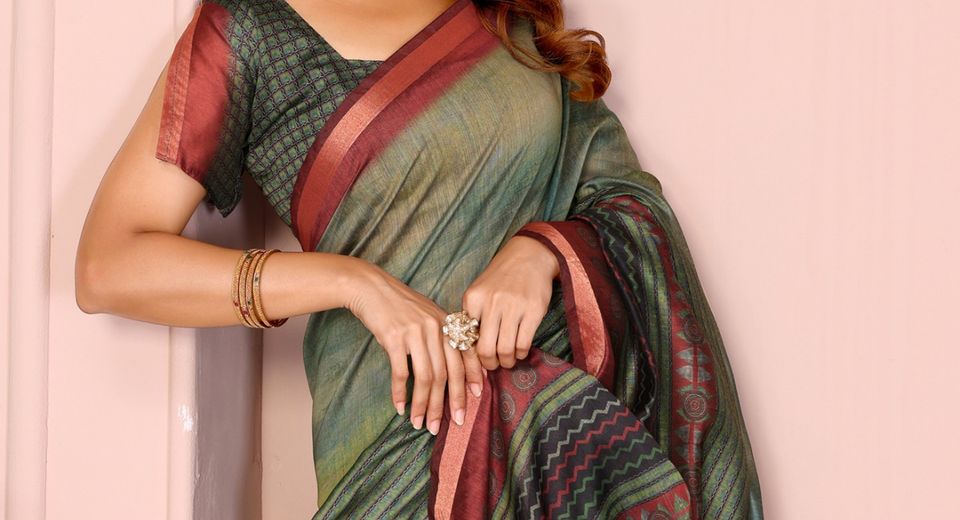
The question "where is saree manufacturers in india" has several answers because India's saree industry is organised around regional textile clusters rather than one manufacturing city. Varanasi is known for Banarasi silk, Kanchipuram for Kanjeevaram silk, Chanderi for lightweight silk-cotton and silk sarees, Surat for large-scale synthetic and embellished production, and Ahmedabad and Kolkata for major textile trading and processing networks.
Knowing these locations helps you understand what you're buying. A saree's manufacturing region can indicate its traditional technique, likely fabric, weaving method, embellishment style, price range and care requirements. The location doesn't automatically prove quality, however. A saree made in a famous cluster can still vary significantly in fibre content, finishing and craftsmanship.
Where Is Saree Manufacturers in India Located?
Saree manufacturers in India are concentrated in specialised clusters across Uttar Pradesh, Tamil Nadu, Madhya Pradesh, Gujarat, West Bengal, Maharashtra, Odisha, Andhra Pradesh, Telangana and Karnataka. Each cluster developed around local fibres, inherited skills, trading routes and access to markets.
Some centres primarily support handloom weaving, where individual looms and artisan households remain important. Other centres use power looms, digital printing, automated dyeing, embroidery units or large finishing facilities. Many contemporary sarees combine these systems: a machine-woven base may receive hand finishing, a classic motif may be digitally printed, or a mill-made yarn may be woven by an artisan.
- Varanasi, Uttar Pradesh: Banarasi silk, zari brocade, jangla motifs and richly patterned wedding sarees.
- Kanchipuram, Tamil Nadu: Kanjeevaram silk with contrasting borders, temple-inspired motifs and substantial silk construction.
- Chanderi, Madhya Pradesh: Fine, light sarees made from silk, cotton or silk-cotton yarns, often with delicate zari borders.
- Surat, Gujarat: High-volume production of synthetic sarees, printed textiles, sequinned designs and embellished occasion wear.
- Patan and other Gujarat clusters: Patola traditions and Patola-inspired patterns, including complex geometric designs.
- West Bengal: Tant cotton, Baluchari-inspired designs, Jamdani work and silk traditions associated with Murshidabad and Bishnupur.
- Odisha and Andhra Pradesh: Regional ikat traditions, cotton weaving and distinctive silk textiles such as Sambalpuri and Uppada styles.
The word "manufacturer" therefore covers several kinds of businesses: artisan weavers, cooperative societies, family workshops, dyeing and printing units, garment factories, wholesalers and brands that coordinate production across various suppliers.
Which Indian Cities Are Known for Specific Saree Fabrics?
Indian saree fabrics are strongly associated with particular regions, although modern production and online retail have made those boundaries less rigid.
Where are Banarasi sarees made?
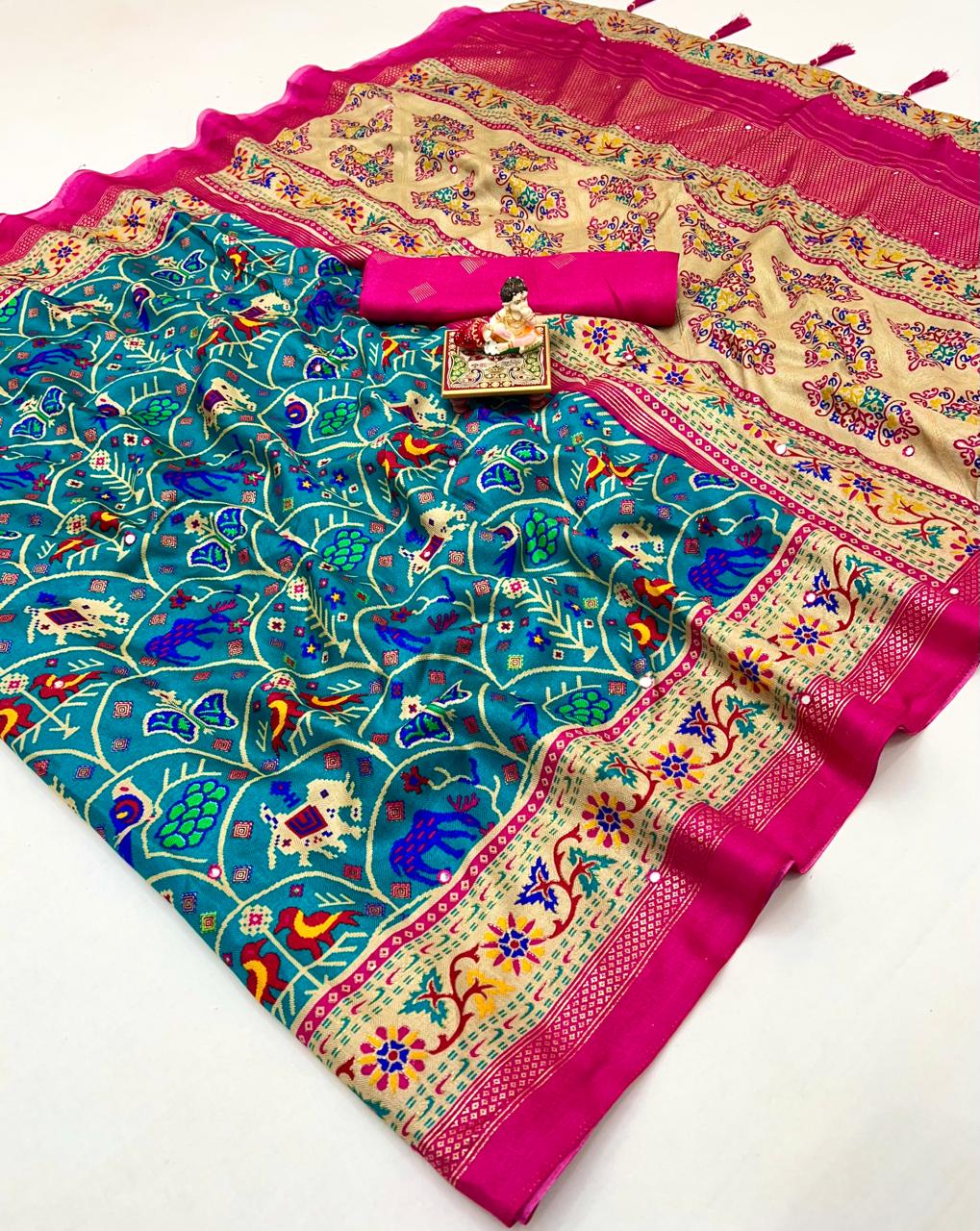
Banarasi sarees are traditionally made in and around Varanasi, Uttar Pradesh. Banarasi silk is recognised for luxurious silk grounds, metallic zari work and motifs such as buti, buta, floral jaal and kalga-bel patterns.
Varanasi's weaving ecosystem includes yarn suppliers, dyers, jacquard designers, loom operators, zari specialists and finishing workers. A single saree may pass through several skilled hands before it reaches a shop. Genuine Banarasi construction can be handloom or powerloom, so the word "Banarasi" alone doesn't identify the production method.
A Red Blue Printed Banarasi Silk Saree Online India illustrates how an up-to-date saree can use Banarasi silk as a design and material reference while presenting a more accessible printed aesthetic. A Wine Zari Banarasi Soft Silk Saree Online India points more directly to the region's association with zari and soft silk styling.
Where are Kanjeevaram sarees made?
Kanjeevaram sarees are traditionally woven in Kanchipuram, Tamil Nadu. Kanjeevaram silk is usually heavier than lightweight cotton or linen sarees and is valued for a lustrous body, strong borders and coordinated pallu designs.
Heritage Kanjeevaram weaving often involves joining the body, border and pallu with a secure technique associated with the region. Temple gopuram shapes, checks, stripes, peacocks and floral forms are common visual references. Buyers should check silk and zari descriptions carefully because silk-blend and imitation versions may share similar colours and motifs.
Where are Chanderi sarees made?
Chanderi sarees are made primarily in Chanderi, Madhya Pradesh. Chanderi is known for a light, airy feel, subtle transparency and a graceful fall created by fine yarns.
Chanderi can be woven in silk, cotton or silk-cotton combinations. The fibre blend matters because it affects sheen, breathability, crease behaviour and washing instructions. A Green Maroon Chanderi Printed Saree Online India demonstrates why Chanderi is popular for daytime events: the fabric can look refined without the weight of a dense brocade.
Where are Patola sarees produced?
Time-honoured double-ikat Patola is strongly associated with Patan, Gujarat, while Patola-inspired prints and simplified constructions are produced in several textile centres. Double ikat requires yarns to be resist-dyed before weaving so that the pattern aligns in both the warp and weft.
The technical complexity of authentic double-ikat Patola makes it expensive and time-intensive. A Red Patola Border Pashmina Silk Saree With Printed Pallu and a Designer Rani Pink Patola Print Pashmina Silk Festive Saree may use Patola-inspired visual language rather than claiming to be traditional double-ikat Patola. Reading the product description prevents confusion between a heritage weaving technique and a printed interpretation.
How Does a Manufacturing Region Affect Saree Quality and Price?
A manufacturing region affects price through fibre cost, labour time, weaving complexity, zari content, finishing, production scale and the number of intermediaries between maker and buyer. Geography is useful evidence, but it's not a standalone quality guarantee.
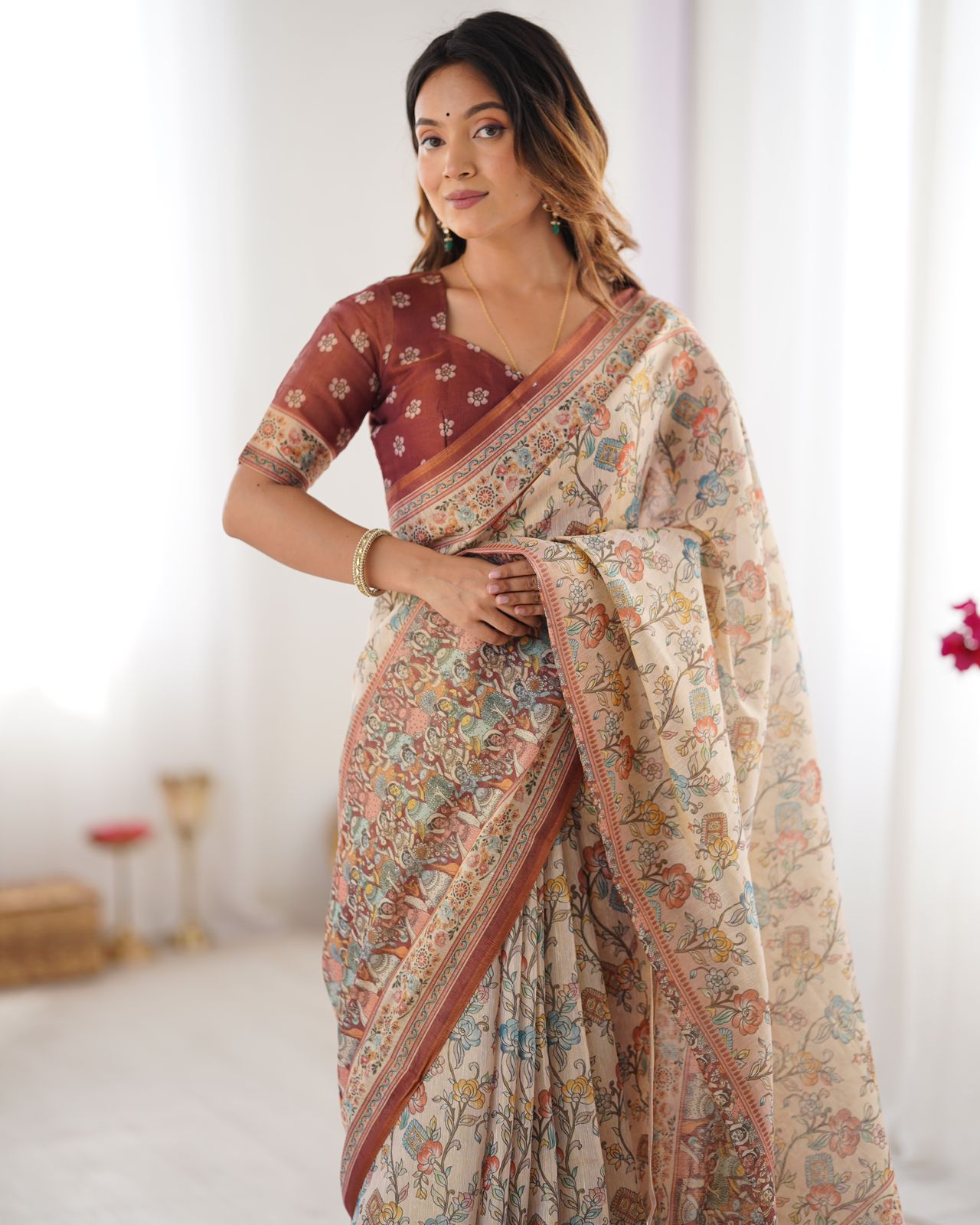
Handloom production generally involves slower weaving and greater variation between pieces. Powerloom production can deliver consistent patterns and lower prices at a higher volume. Digital printing reduces the time needed to create complex surface designs, while hand embroidery, appliqué or extensive zari can increase labour costs after weaving is complete.
Fibre content is one of the most practical price clues. Pure silk normally costs more than polyester or a low-silk blend, although a finely woven cotton saree can also command a meaningful price because of yarn quality and labour. Linen cotton, for example, may be comfortable and breathable without having the price profile of pure silk.
An Off White Striped Linen Cotton Saree Online India is an useful example of a fabric choice for warm weather and workwear. Linen cotton typically offers more structure and texture than very fine cotton, but it may crease more visibly. A Teal Green Cotton Saree for Women Online India and a Purple Floral Cotton Saree for Women Online India represent the practical side of cotton production: comfort, easier styling and suitability for repeated daytime wear.
Price should answer a specific question: are you paying for fibre, weaving skill, embellishment, design development, brand service, or a combination of these factors?
Online collections such as Sarees from Rs 1000 to Rs 1500 can be useful for comparing accessible fabrics and printed designs. Sale collections such as Sarees Under 20% Off, Sarees Under 10% Off and Sarees Flat 50% Off can lower the final price, but the original material description, measurements and care instructions should still be examined before purchase.
How Can You Tell Whether a Saree Description Is Trustworthy?
A trustworthy saree description states the fabric, construction, print or weave technique, blouse-piece details, measurements, transparency, lining if relevant and care method without relying only on words such as "premium" or "designer."
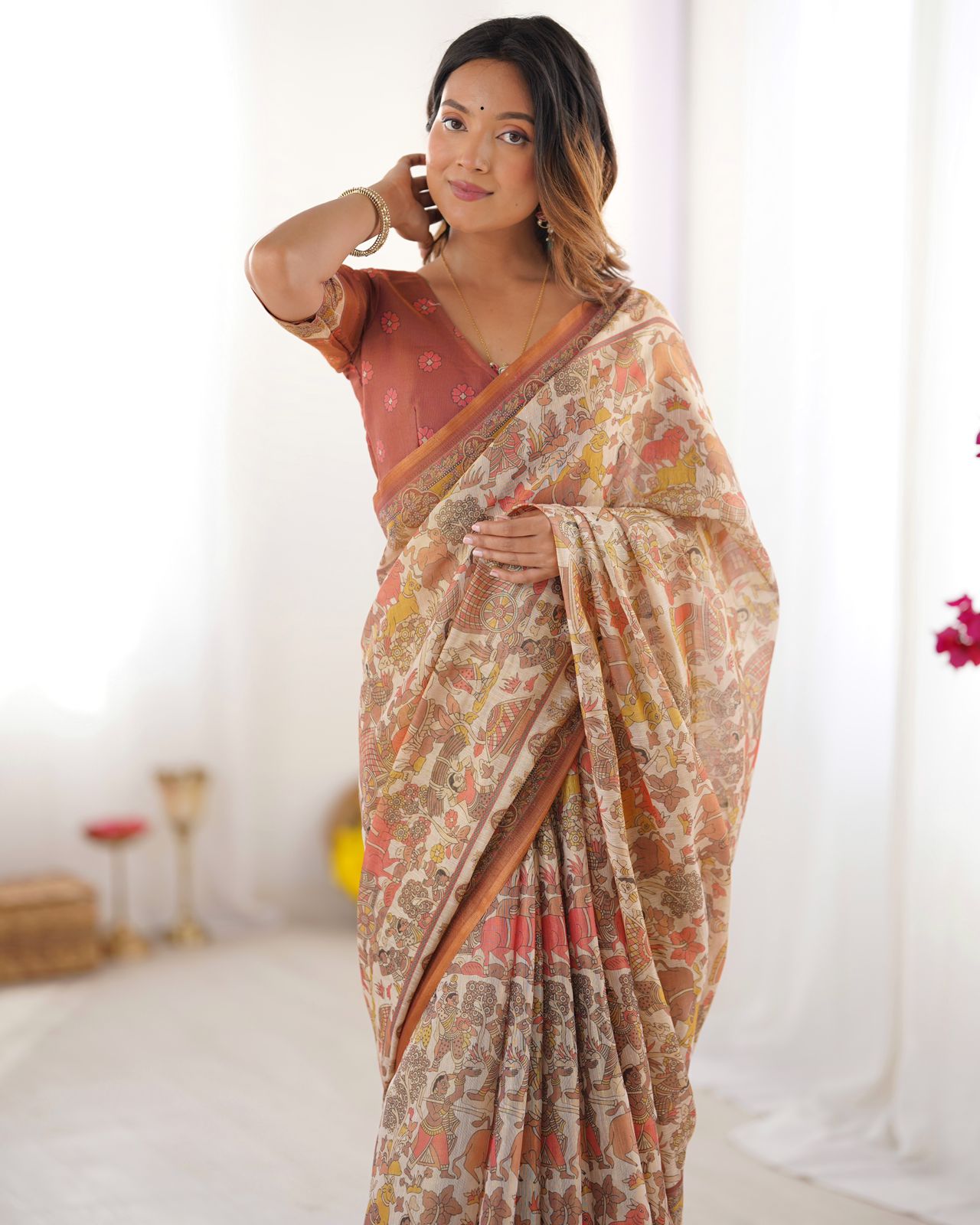
- Check the fibre name: Look for cotton, silk, Chanderi silk, linen cotton, viscose, polyester or a stated blend. "Silk finish" doesn't necessarily mean silk fibre.
- Separate weave from design: Banarasi silk describes a textile tradition and material association, while a printed Banarasi-style motif may be produced differently from a woven zari pattern.
- Read the border and pallu details: A Patola border, printed pallu or zari border should be identified separately because each feature affects the saree's appearance and care.
- Confirm the blouse piece: Check whether the blouse piece is attached, separate, unstitched, contrasting or absent. A blouse piece can affect the usable saree length and styling budget.
- Look for measurements: A saree is commonly around 5.5 metres with an additional blouse piece, but exact lengths differ. Confirm width if you prefer a fuller pallu or need more coverage.
- Match care to the material: Cotton may tolerate gentle home washing, while zari, silk, pashmina silk and dark dyes often need more cautious handling or dry cleaning.
Photographs can show colour and drape, but photographs can't reliably confirm fibre content or handloom status. A clear written specification is more useful than a close-up image alone.
Which Saree Manufacturing Region Suits Your Use?
The best manufacturing region depends on the climate, frequency of wear, formality, drape preference and care time available to you.
For everyday office and daytime wear
Cotton, linen cotton and lightweight Chanderi are practical choices for regular use because they're generally lighter than dense silk brocades. A Purple Floral Cotton Saree for Women Online India can suit casual styling with a simple blouse, while an Off White Striped Linen Cotton Saree Online India can create a structured workwear look.
For festive gatherings
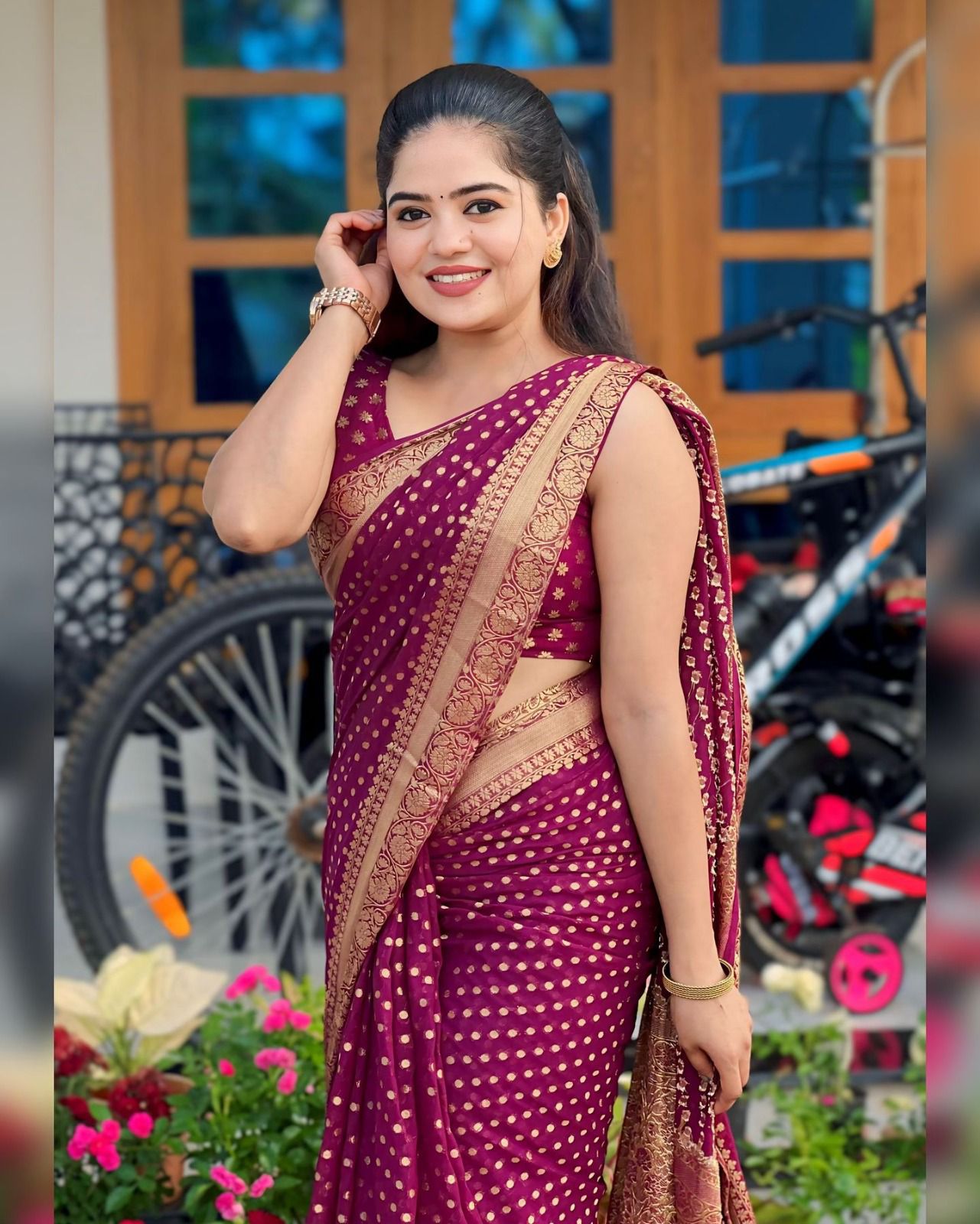
Banarasi silk, zari work, Patola-inspired patterns and silk blends are suitable for festive dressing when you want visual richness. A Wine Zari Banarasi Soft Silk Saree Online India brings a deeper evening palette, while a Designer Rani Pink Patola Print Pashmina Silk Festive Saree uses a brighter statement colour.
For warm and humid weather
Cotton and lightweight silk-cotton textiles usually feel more comfortable than heavy brocade, although breathability varies with yarn density and finishing. Dark colours, dense zari and synthetic surfaces may feel warmer in direct sunlight.
For weddings and formal ceremonies
Heavier silk, zari and richly finished sarees create a formal effect, but the wearer should consider sitting, travelling and storing the garment. A Red Blue Printed Banarasi Silk Saree Online India or a Red Patola Border Pashmina Silk Saree With Printed Pallu can provide occasion impact without assuming that every formal saree must be a heavily woven bridal silk.
Discount-led ranges such as Sarees Flat 60% Off may include suitable options for event dressing, but a discount percentage doesn't reveal the fabric or production method. Compare the material specification first and the discount second.
What Should You Ask Before Buying from an Indian Saree Manufacturer or Retailer?
Before buying, ask whether the saree is handloom or powerloom, what fibres it contains, where it was woven or finished, and which care method is recommended. These questions establish value more reliably than a regional name alone.
- Is the saree handwoven, powerloom-woven, printed, embroidered or a combination?
- Does "silk" mean pure silk, silk blend, art silk or a named silk-cotton construction?
- Is the zari real metal zari, tested zari, imitation zari or a metallic thread?
- Are the motifs woven into the fabric or applied through printing?
- What are the saree and blouse-piece lengths and widths?
- Will the colour or texture vary because the saree is handloom-made?
- Does the saree require dry cleaning, mild hand washing or storage in a breathable cotton cover?
Care after purchase also protects the value of regional textiles. Fold silk sarees along different lines every few months to reduce permanent creasing, keep zari away from direct moisture, avoid plastic storage for long periods and use low heat or professional pressing when the care label permits it. Cotton sarees should be dried away from harsh, prolonged sunlight if the dye is deep or natural-looking.
India's saree manufacturing map is best understood as a network of specialised regions rather than a single answer. Varanasi explains Banarasi silk, Kanchipuram explains Kanjeevaram, Chanderi explains light silk-cotton elegance, Gujarat explains Patola traditions and large-scale textile production, and other states add their own cotton, ikat and silk identities. Once you connect the place, fibre, technique and care requirement, online saree shopping becomes a more informed decision instead of a search based only on colour or discount.
Questions About India’s Saree-Making Regions and Fabrics
Where is saree manufacturers in India mainly located?
Saree manufacturers are concentrated in textile clusters such as Varanasi, Kanchipuram, Chanderi, Surat, Patan, West Bengal, Odisha and Andhra Pradesh. Each region is associated with particular fibres, weaving traditions or production methods.
Which city is famous for Banarasi silk sarees?
Varanasi in Uttar Pradesh is the principal centre associated with Banarasi silk sarees. The regional textile network includes silk yarn suppliers, dyers, jacquard designers, zari workers, weavers and finishing units.
Are all sarees from a famous manufacturing region handloom-made?
No. Famous textile regions often contain both handloom and powerloom production, along with printing, embroidery and finishing units. Buyers should check whether the specific saree is handwoven, powerloom-woven, printed or a combination.
How can I distinguish a Chanderi saree from an ordinary lightweight saree?
A Chanderi saree is associated with production in Chanderi, Madhya Pradesh, and commonly has a light, airy feel with a fine silk, cotton or silk-cotton construction. The product description should state the fibre composition and regional association rather than relying only on the word "Chanderi."
Are Patola print sarees the same as traditional Patola sarees?
No. Traditional double-ikat Patola involves resist-dyeing both warp and weft yarns before weaving, while Patola print sarees reproduce similar geometric or floral imagery through printing or a simpler construction. The technique and price can therefore be very different.
Which saree fabric is suitable for regular summer wear?
Cotton, linen cotton and lightweight cotton-silk or Chanderi constructions are generally suitable for warm-weather regular wear. Comfort also depends on yarn density, finishing, colour and the amount of zari or synthetic embellishment.