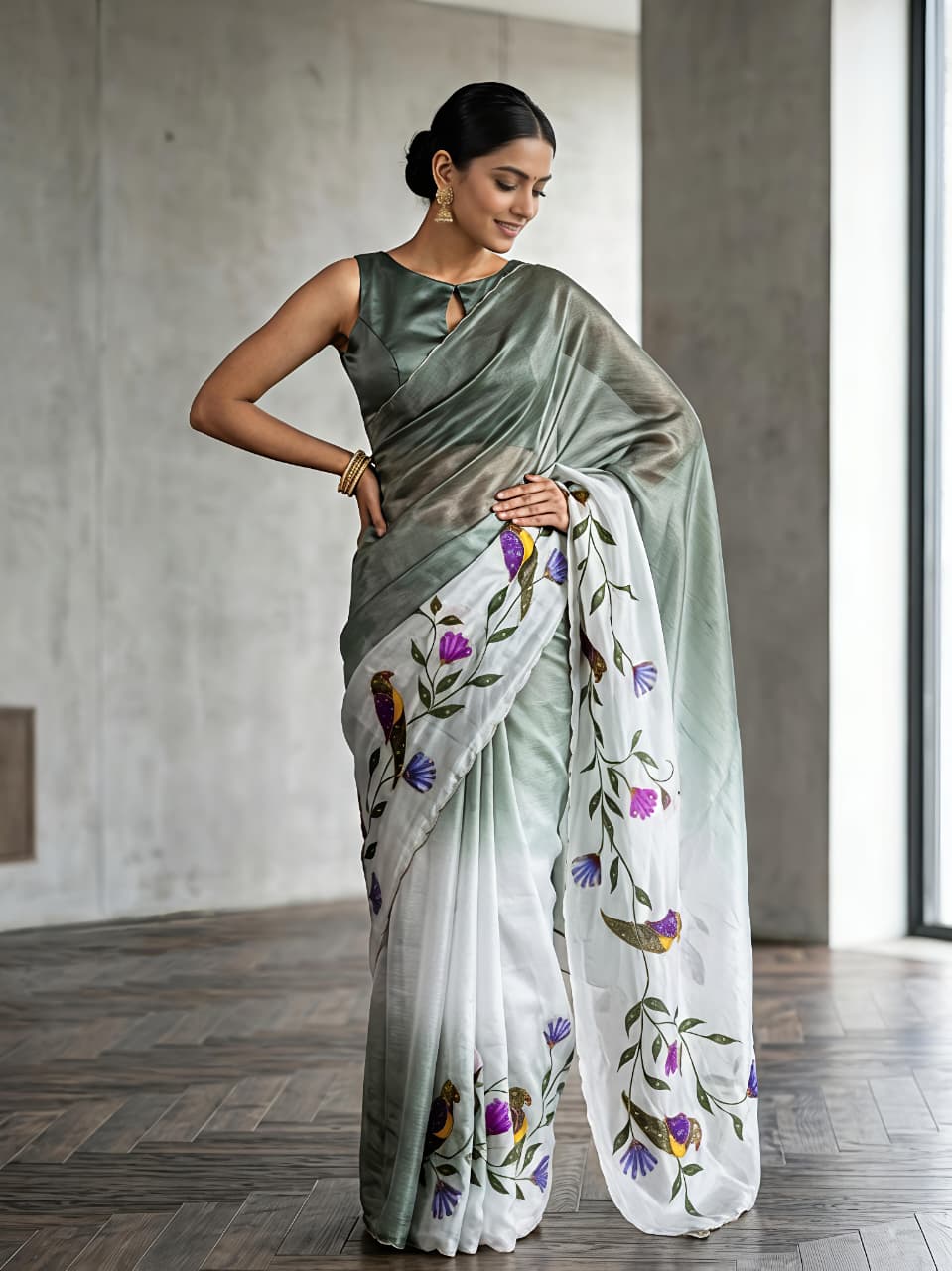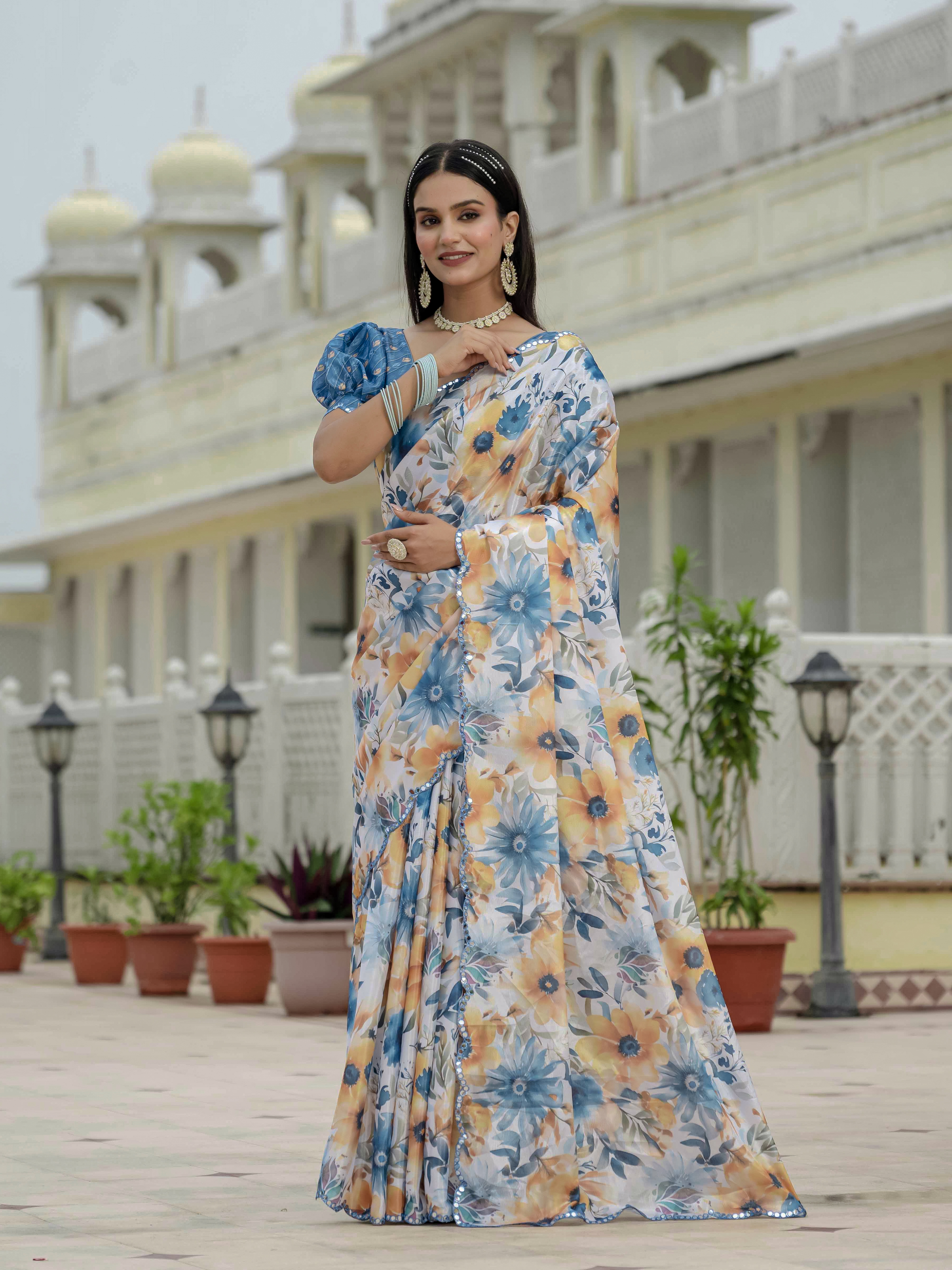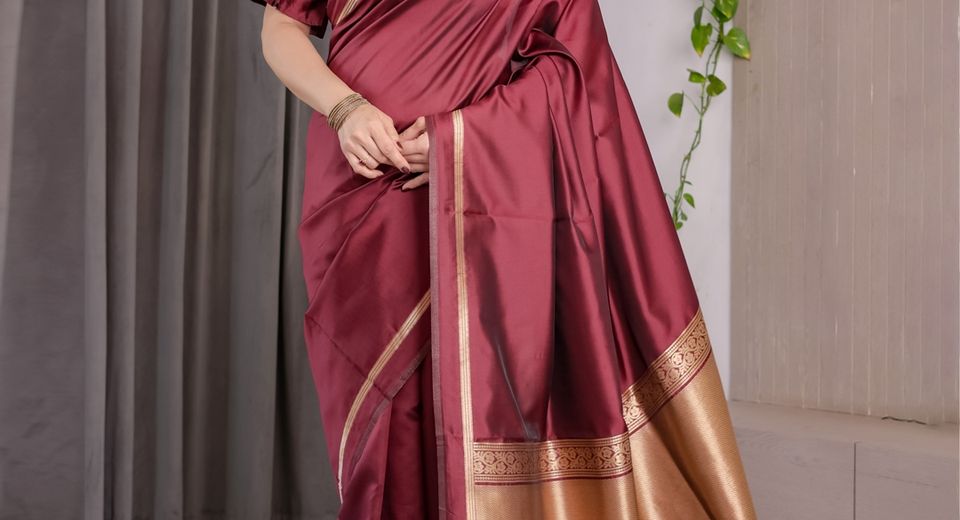
When Is Navratri in 2026? Complete Dates and Saree Styling Guide: Sharad Navratri is expected to begin on Sunday, 11 October 2026, and the nine-night celebration will lead into Vijayadashami on Tuesday, 20 October 2026. Regional observances can differ because festival dates follow the Hindu lunar calendar, so a city-specific panchang should confirm the exact Ghatasthapana and puja timings.
Navratri saree planning involves more than choosing a colour. Garba and dandiya require secure pleats and unrestricted movement, daytime puja calls for breathable fabric, and Dussehra gatherings often suit a more structured festive drape. The right saree depends on the event, weather, fabric weight, blouse fit, footwear and the amount of time you expect to spend standing or dancing.
When Is Navratri in 2026? Complete Dates and Saree Styling Guide: Key Festival Dates
Sharad Navratri 2026 is scheduled from 11 October through 19 October, followed by Vijayadashami on 20 October. The exact Ghatasthapana muhurat depends on the local pratipada tithi and the city where the ritual takes place.
- Sunday, 11 October: Pratipada and Ghatasthapana, marking the beginning of Navratri.
- Monday, 12 October: Dwitiya.
- Tuesday, 13 October: Tritiya.
- Wednesday, 14 October: Chaturthi.
- Thursday, 15 October: Panchami.
- Friday, 16 October: Shashti.
- Saturday, 17 October: Saptami.
- Sunday, 18 October: Ashtami.
- Monday, 19 October: Navami.
- Tuesday, 20 October: Vijayadashami or Dussehra.
Some regional calendars may label Ashtami, Navami or Dashami differently when a tithi begins or ends during the daytime. Gujarat places particular emphasis on evening garba and dandiya, Bengali communities follow the ritual sequence of Durga Puja, and many North Indian communities observe Ramleela and Ravan Dahan around Vijayadashami. The dates provide an useful planning framework, but local temple and family calendars should guide religious observance.
Shopping 10 to 14 days before 11 October allows time for blouse alterations, steaming, exchanges and a complete movement test. Early preparation is especially useful when a saree will be worn for multiple events or paired with a newly stitched blouse.
When Is Navratri in 2026? Complete Dates and Saree Styling Guide for Daytime Puja
A daytime Navratri puja saree should be breathable, easy to sit in and simple to manage around lamps, flowers and prasad. Cotton, linen cotton and lightweight silk cotton are practical choices for temple visits, floor seating and warm October afternoons.
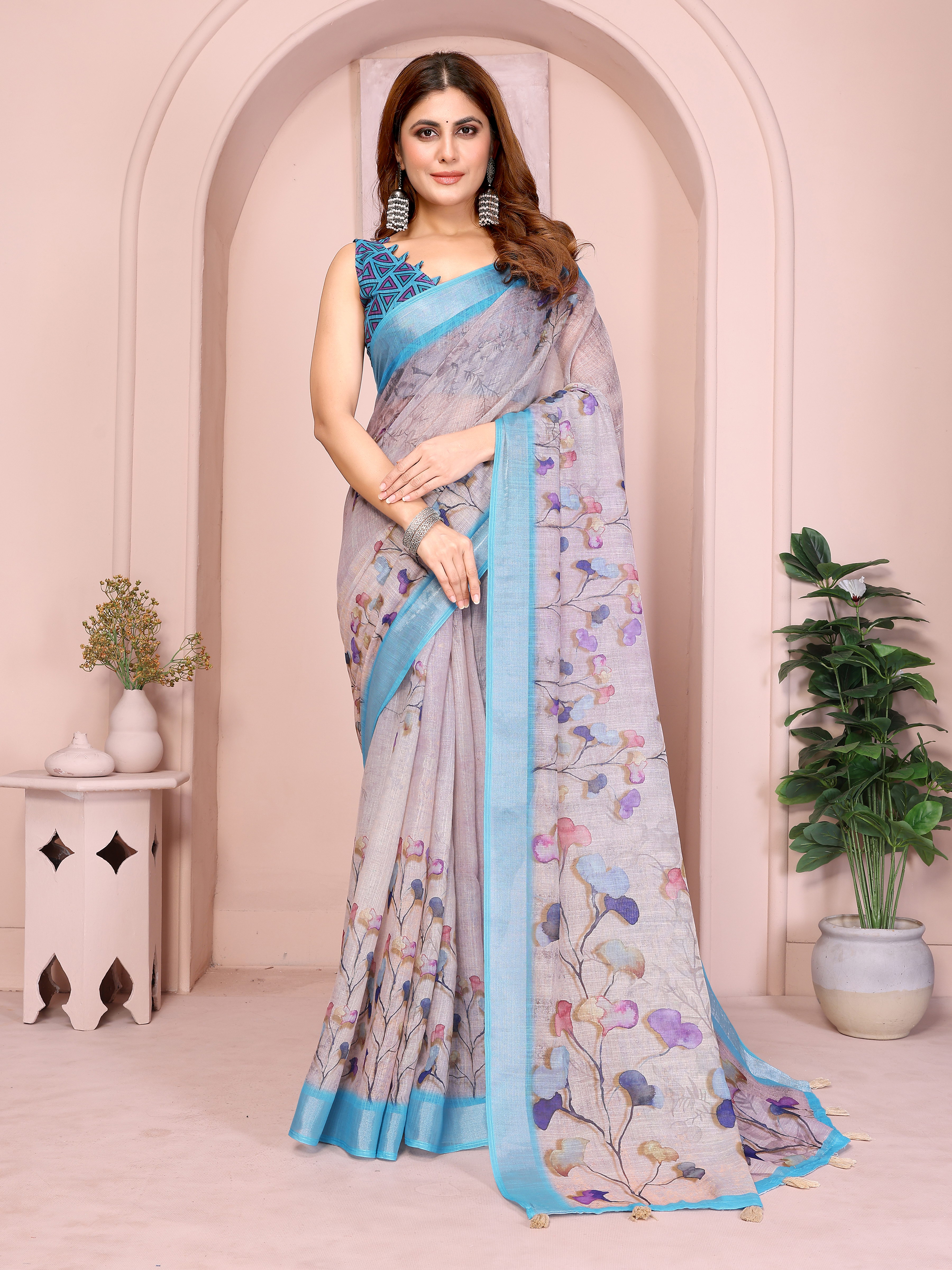
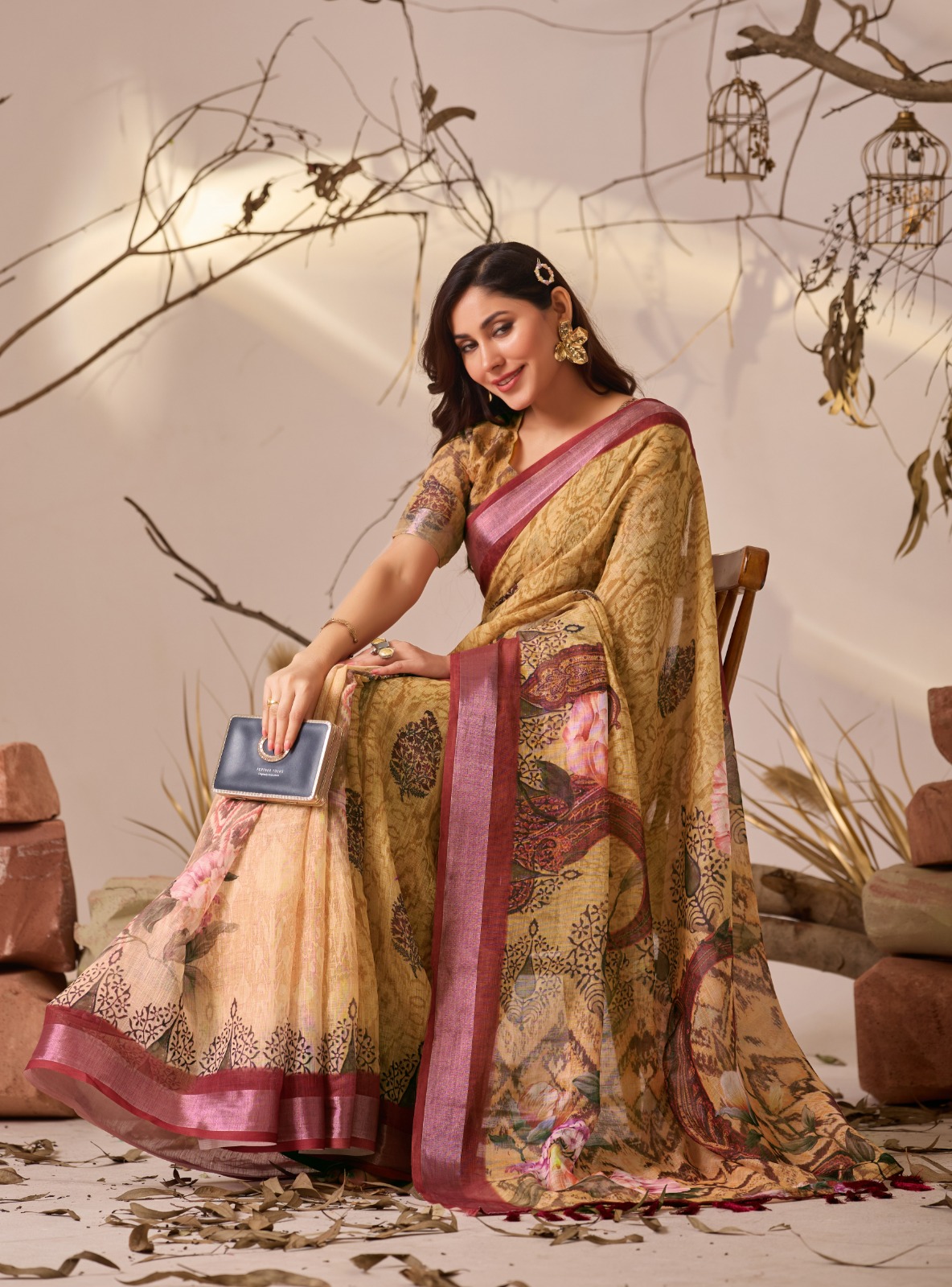
Pastel Linen Cotton Floral Print Saree with Designer Blouse offers a gentle daytime approach because linen cotton generally feels cooler than dense silk and a floral print doesn't depend on heavy ornamentation. Pair the saree with small gold-toned studs, a low bun and flat sandals when comfort matters more than maximum sparkle.
Tissue Cotton Saree with Zari Weave & Floral Digital Print adds festive texture while remaining more manageable than a densely woven zari saree. The saree can suit a family puja, a short temple visit or a daytime gathering where you want metallic detail without substantial weight.
A puja blouse should allow comfortable breathing and sitting. Sleeves ending between the upper arm and elbow provide coverage without restricting movement, while a moderate neckline reduces the need to adjust the blouse during prayer. A pallu should remain away from open flames, and loose tassels should be secured before entering a crowded temple.
When Is Navratri in 2026? Complete Dates and Saree Styling Guide for Garba
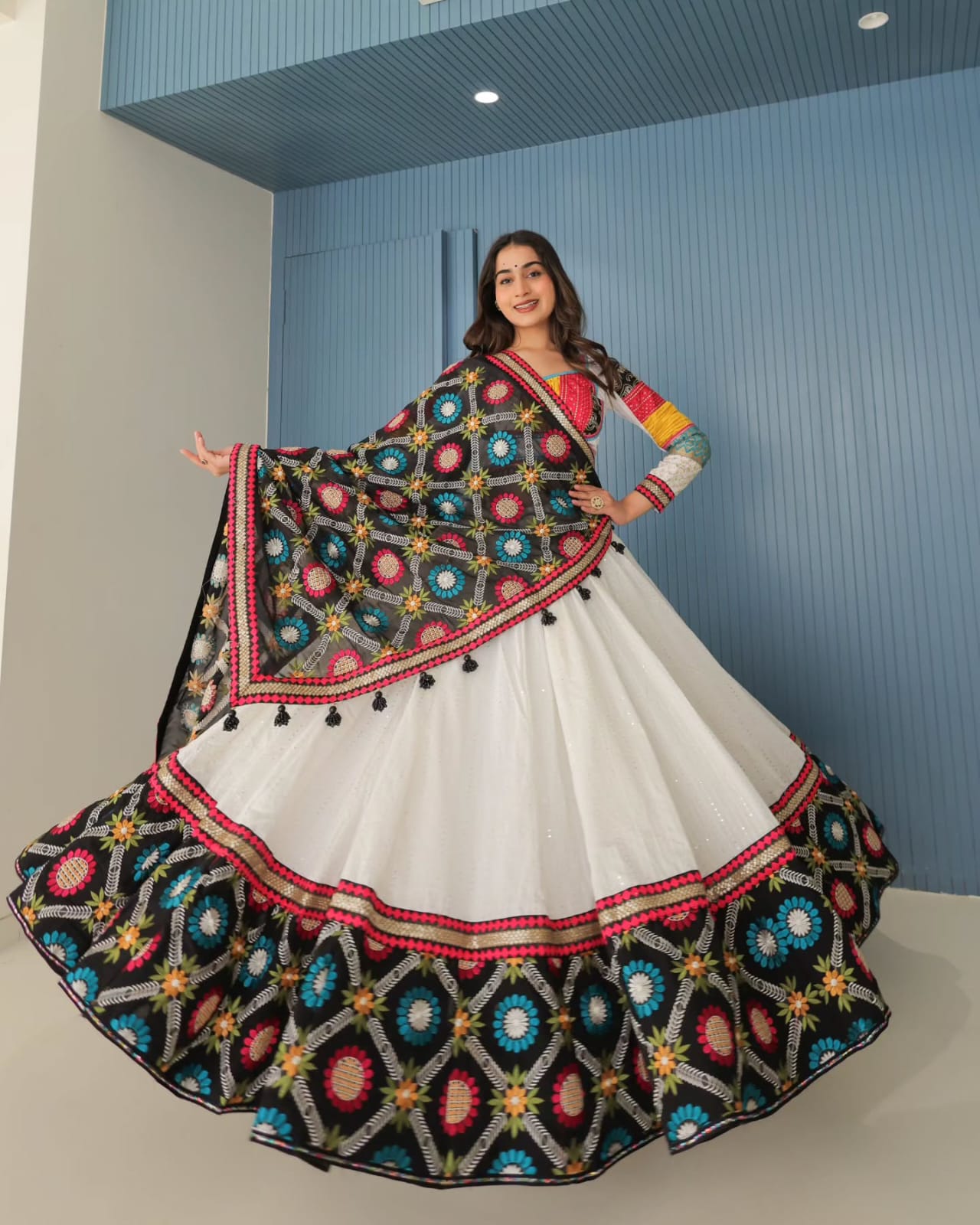
A garba saree should stay secure at the waist and shoulder while allowing a full range of movement. Fabric weight, petticoat grip, pleat width and footwear matter more for dancing than surface embellishment alone.
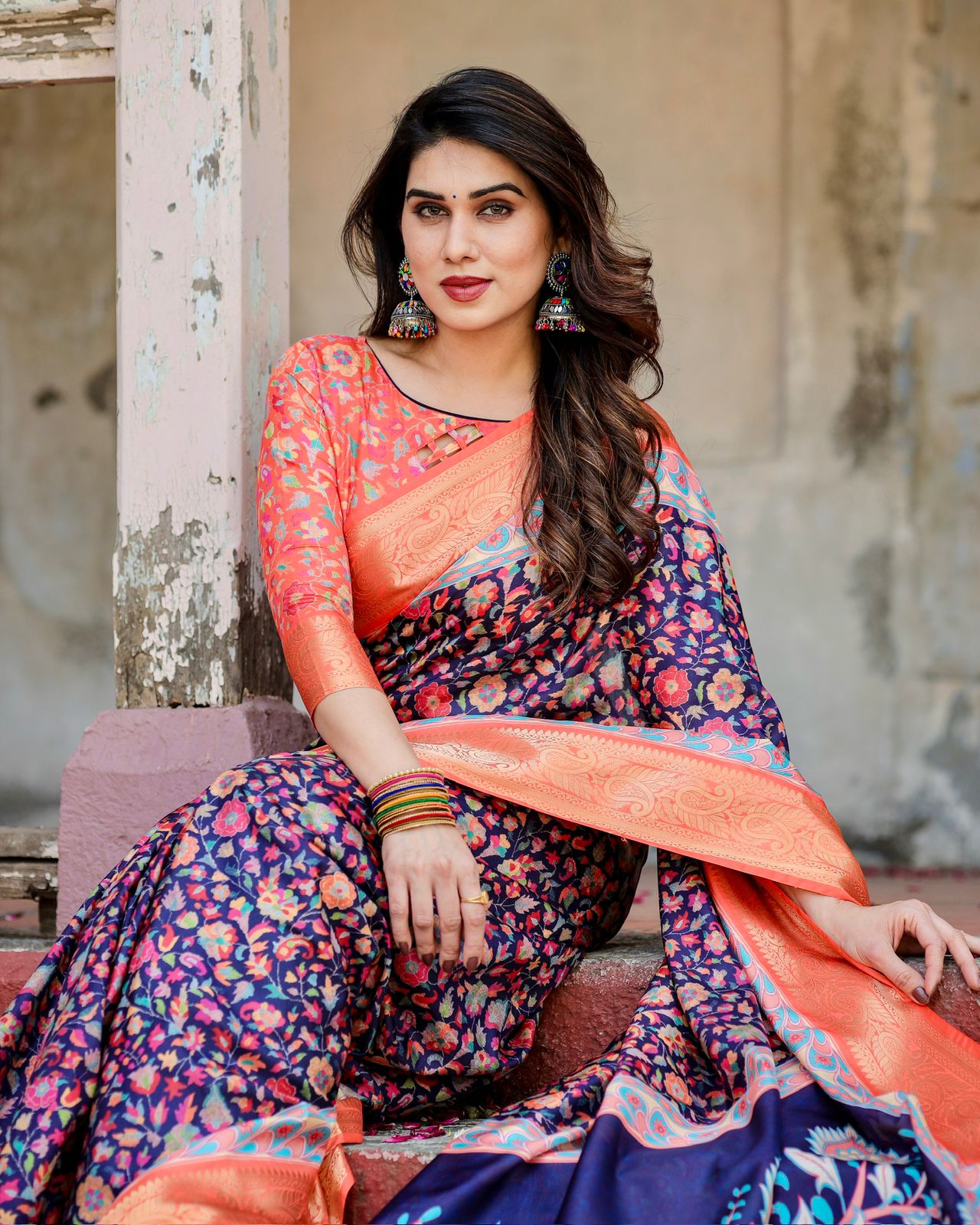
Pink Floral Georgette Saree with Designer Pallu can work for an energetic evening when the pallu is pinned at the shoulder and the lower hem stays clear of the floor. Georgette has useful fluidity, but its softness makes firm pinning important. Wear a supportive blouse, test the drape by turning and raising both arms, and check that the saree doesn't catch under your feet.
Make five to seven firm front pleats, align the pleat bottoms and pin them near the waist. Use two discreet shoulder pins instead of one if the pallu is slippery. A non-slippery underskirt prevents the saree from shifting, while low wedges, juttis or cushioned flats are safer than narrow high heels on a crowded dance floor.
Keep long necklaces, oversized tassels and very loose bangles away from dandiya sticks. A pair of secure earrings, a compact potli and a waist-length necklace usually provide enough ornamentation for an active evening. Hair tied in a braid or low bun is less distracting than an unsecured open hairstyle during repeated turns.
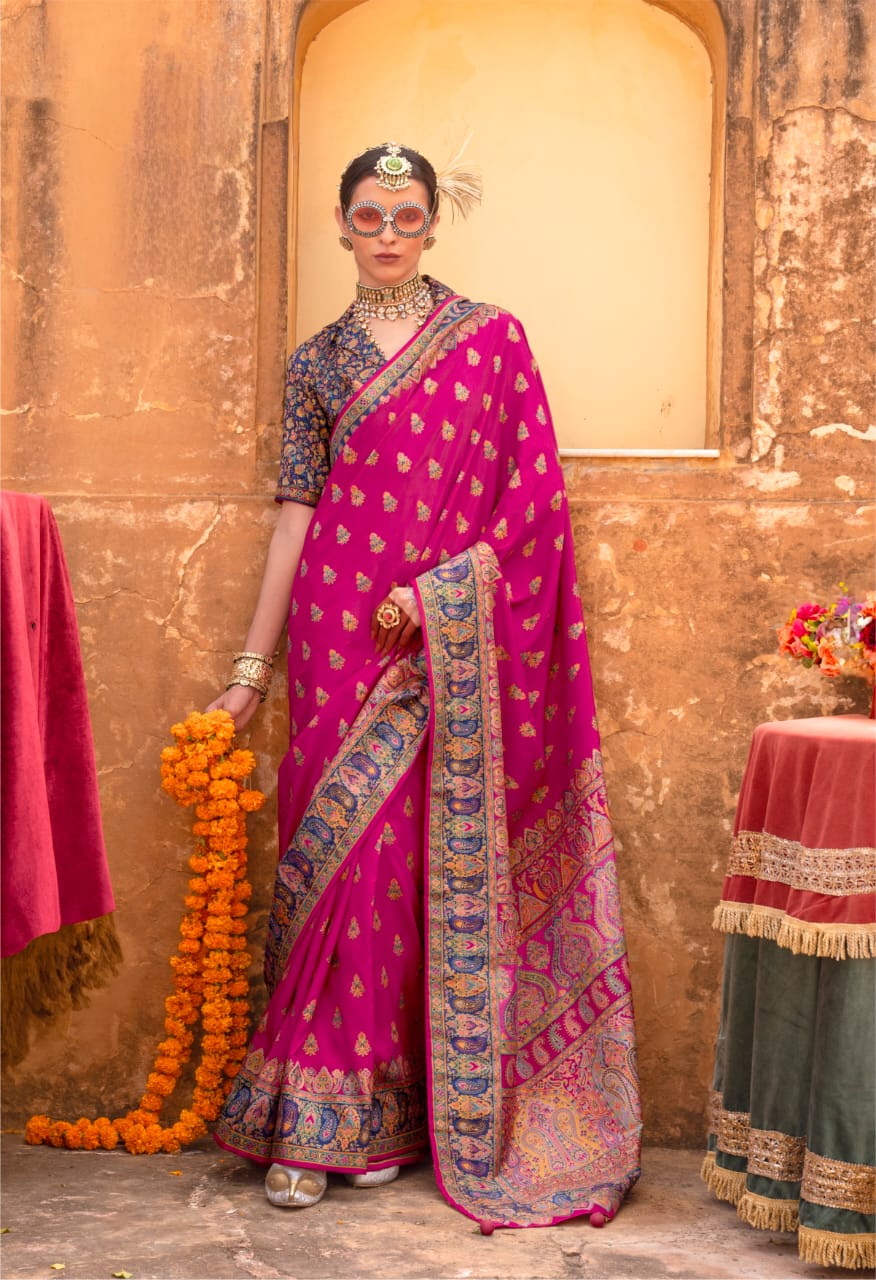
Bold Ajrakh Banarasi Saree for Elegant Festive Styling suits a cultural programme, dinner or seated festive gathering particularly well. The strong Ajrakh-inspired visual character and Banarasi structure create impact, but the saree may feel less practical for vigorous dancing if the weave or pallu is heavy.
When Is Navratri in 2026? Complete Dates and Saree Styling Guide for Fabric Choices
The most suitable Navratri saree fabric depends on the event, weather and movement level. Cotton is practical for daytime rituals, georgette gives fluidity for evening wear, and Banarasi silk or zari-rich sarees work best when the gathering is formal and relatively low movement.

Cotton and linen cotton
Cotton absorbs moisture and usually feels comfortable during daytime rituals or warm evening events. Cotton can crease more visibly than synthetic blends, so press the saree on the reverse side and hang it for several hours before wearing. Cotton is also easier to rewear for office celebrations, small family functions and other occasions after Navratri.
Maroon Cotton Saree with Zari Work for Wedding sits between everyday simplicity and ceremonial dressing. Add a bright blouse, glass bangles and a compact potli for a festive look, or use a plain blouse and minimal earrings when the saree is needed for a daytime puja.
Banarasi silk and zari
Banarasi silk provides a richer surface and a structured fall, while zari creates the metallic detail associated with formal festive dressing. Maroon Banarasi Soft Silk Saree with Golden Zari Border is suitable for a puja followed by dinner because the border defines the silhouette without requiring multiple layers of embellishment.
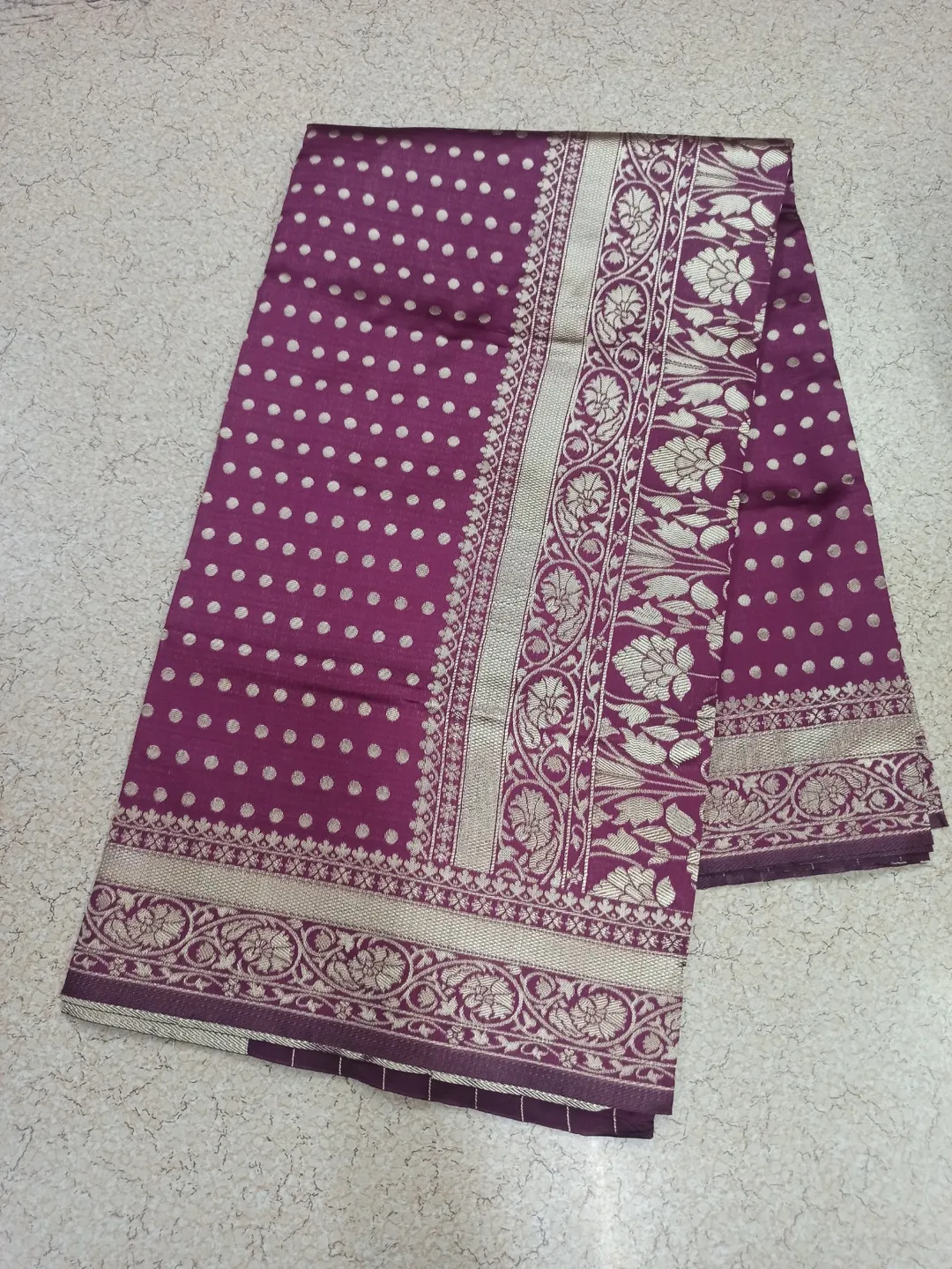
Purple Banarasi Soft Silk Saree With Golden Zari Border brings a jewel-toned alternative for Navami, a family celebration or a formal Dussehra visit. Purple pairs effectively with gold jewellery, pearls or a contrasting pink blouse, allowing one saree to create several distinct looks.
Banarasi silk can feel warmer and heavier when the weave contains extensive zari. Check the pallu weight before selecting a Banarasi saree for garba, and avoid oversized jewellery that competes with a prominent border. A blouse in the border colour often creates a more cohesive appearance than several unrelated metallic accents.
Georgette and printed sarees
Georgette drapes close to the body and can be easier to manage during an active evening, but a well-fitted underskirt is important because the fabric may shift. Printed sarees can provide visual interest without requiring heavy jewellery, making them useful for long celebrations.
When Is Navratri in 2026? Complete Dates and Saree Styling Guide for Colours
Navratri colour traditions vary by region and yearly calendar, so no single colour sequence is compulsory for every household. Many devotees follow a nine-colour list associated with each day, while others choose shades connected with family custom, temple tradition or personal preference.
White, yellow, green, grey, orange, red, royal blue, pink and purple commonly appear in different annual colour lists, but the order changes from year to year. Confirm the 2026 sequence with the calendar followed by your family before purchasing nine colour-specific outfits.
A single saree can express a colour theme through the blouse, border or accessories. A maroon saree with gold zari can be paired with a yellow blouse for one event and a green blouse for another. A purple Banarasi silk saree can take on a different mood with silver jewellery, pearl accents or a contrasting pink blouse.
Building a small rotation is often more useful than buying nine separate sarees. The collections Sarees from Rs 1000 to Rs 1500, Sarees Under 20% Off and Sarees Under 10% Off can help shoppers compare accessible options, while Sarees Flat 60% Off and Sarees Flat 50% Off may be useful for people planning several festive outfits. Check fabric composition, blouse details, length and care instructions before choosing a discounted garment.
When Is Navratri in 2026? Complete Dates and Saree Styling Guide for Dussehra
A Dussehra saree can be more formal than a garba outfit because family visits, photographs and meals usually involve less continuous movement. A structured Banarasi silk saree, a contrasting blouse and one statement accessory create a polished appearance without making the outfit difficult to wear.
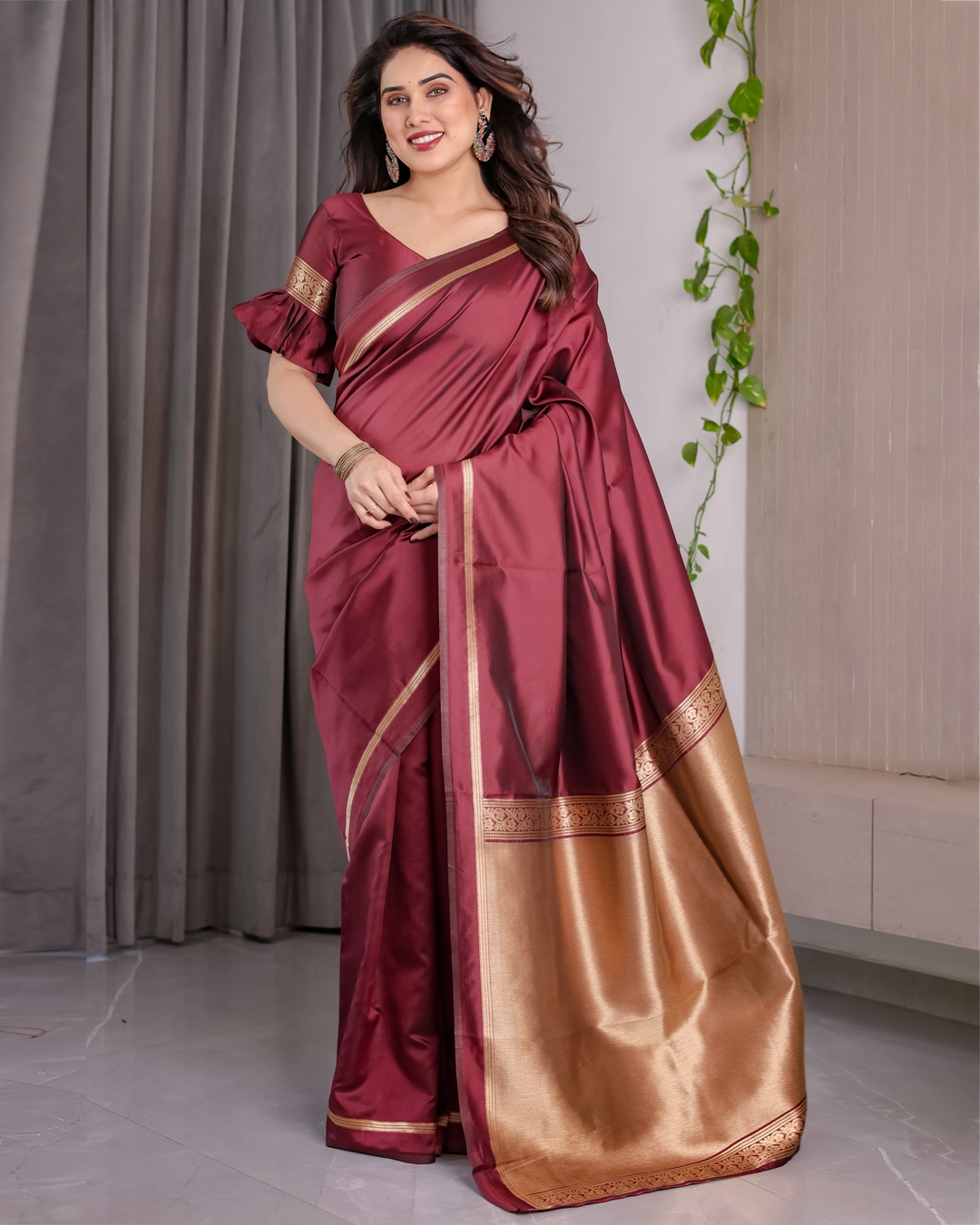
Maroon Banarasi Soft Silk Saree with Golden Zari Border works for a daytime family visit and an evening dinner when the styling changes. A simple blouse and small earrings keep the first look understated, while a brocade blouse and longer earrings provide more ceremony later.
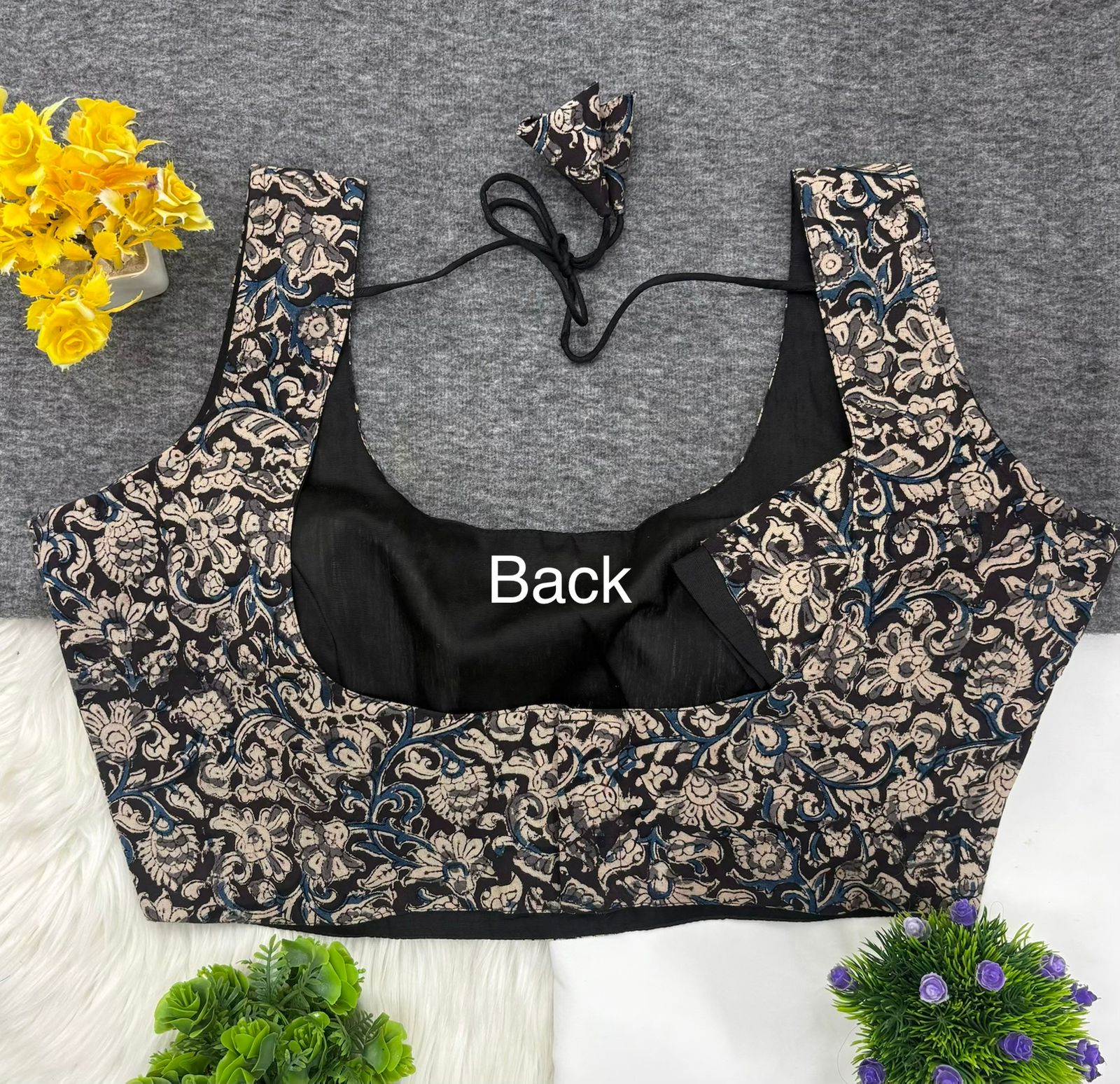
Blouse fit deserves particular attention. The armhole should allow the arm to rise without pulling, the shoulder seam should sit on the shoulder point, and the back closure should remain comfortable after several hours. Wear the blouse with the actual saree and intended bra before the event; a fitting that seems comfortable alone may feel restrictive under a tightly pinned drape.
Steam or press the saree according to its fibre content, and avoid applying direct heat to zari. Fold a zari saree with soft cotton or muslin between the layers, store it away from direct sunlight and refold it occasionally to reduce permanent creasing along the same fold line. Air the saree after wearing before returning it to storage.
For a practical Navratri wardrobe, choose one breathable daytime saree, one movement-friendly evening saree and one formal festive saree. That three-piece approach covers puja, garba, dandiya, family gatherings and Vijayadashami without forcing every outfit to perform the same job.
Common Questions About Navratri 2026 Dates and Saree Styling
When does Navratri begin in 2026?
Sharad Navratri is expected to begin on Sunday, 11 October 2026, with Pratipada and Ghatasthapana. The exact Ghatasthapana muhurat varies by location, so check a city-specific Hindu panchang before performing the ritual.
When is Dussehra in 2026?
Vijayadashami, commonly called Dussehra, is expected on Tuesday, 20 October 2026. Regional observances such as Ravan Dahan, Durga Puja immersion and family ceremonies may follow different local timings.
Which saree fabric is best for garba?
Lightweight georgette, soft cotton and other easy-to-manage fabrics are practical for garba because they support movement when pinned securely. Test the complete drape with your footwear, make firm pleats and avoid a pallu or hem that drags on the floor.
What saree is suitable for Navratri puja?
Cotton, linen cotton and lightweight silk cotton are suitable for Navratri puja because they are breathable and comfortable for sitting or standing. A moderate border, secure pallu and blouse with comfortable sleeves help maintain a neat appearance during longer rituals.
Do Navratri saree colours have to follow a fixed order?
Navratri saree colours do not follow one universal order because colour lists vary by region, calendar and family custom. Confirm the 2026 colour sequence used by your household or temple, and use a blouse or accessories to meet a colour theme when buying a new saree is unnecessary.
How early should I buy a saree for Navratri 2026?
Buying a saree 10 to 14 days before 11 October 2026 gives enough time for delivery, blouse alterations, steaming and a movement test. Earlier shopping is sensible when you need a custom blouse or plan to wear the saree for garba and puja.