

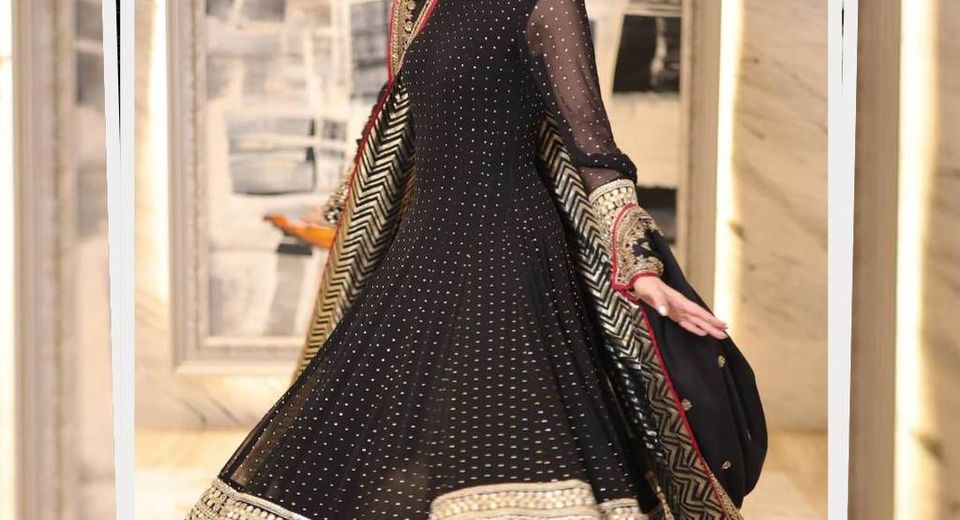
When does a floor length anarkali become hard to manage? The answer usually depends on four practical details: the hem sits too close to the ground, the fabric is heavier than expected, the flare catches under your feet, or the outfit doesn't suit the way you move through the event. A floor-length Anarkali can look graceful without being inconvenient, but length alone doesn't determine comfort.
A manageable Anarkali should clear the floor by about 1 to 2 centimetres when you're wearing the footwear planned for the event. The skirt should allow normal walking, sitting and climbing a few steps without repeated lifting. These simple checks are more useful than judging a garment only while standing in front of a mirror.
When Does a Floor Length Anarkali Become Hard to Manage?
A floor-length Anarkali becomes difficult when the hem drags, the flare restricts your stride, or the garment becomes tiring to carry after several hours. A dress that looks perfectly proportioned in a still photograph may become impractical on stairs, crowded floors or during repeated sitting and standing.
Four warning signs deserve attention before purchase. First, the hem touches the floor even with your intended shoes. Second, the inner layers bunch around the ankles when you walk. Third, embroidery, zari or multiple linings make the skirt noticeably heavy. Fourth, the dupatta and wide flare compete for space when you move through a busy venue.
- Dragging hem: Dust, moisture and accidental stepping can damage the lower edge and interrupt your movement.
- Very wide flare: A generous circumference looks dramatic but requires more room while turning, sitting and walking through a crowd.
- Dense surface work: Zari, sequins, moti lace and layered borders can add weight, especially around the lower skirt.
- Unplanned footwear: A hem fitted for high heels may become too long with flats or low sandals.
- Restricted stride: A narrow inner lining or closely placed panels can stop the legs from moving naturally.
The key distinction is between visual length and functional length. A floor-length Anarkali may appear to touch the floor in photographs, but the wearable hem should remain just above the ground with the correct shoes. A garment that pools visibly around the feet is more likely to need constant adjustment.
How Much Hem Clearance Does an Anarkali Need?
An Anarkali generally needs 1 to 2 centimetres of clearance from the floor with the footwear you'll actually wear. The small gap prevents the hem from dragging while preserving the long, continuous line associated with a floor-length silhouette.
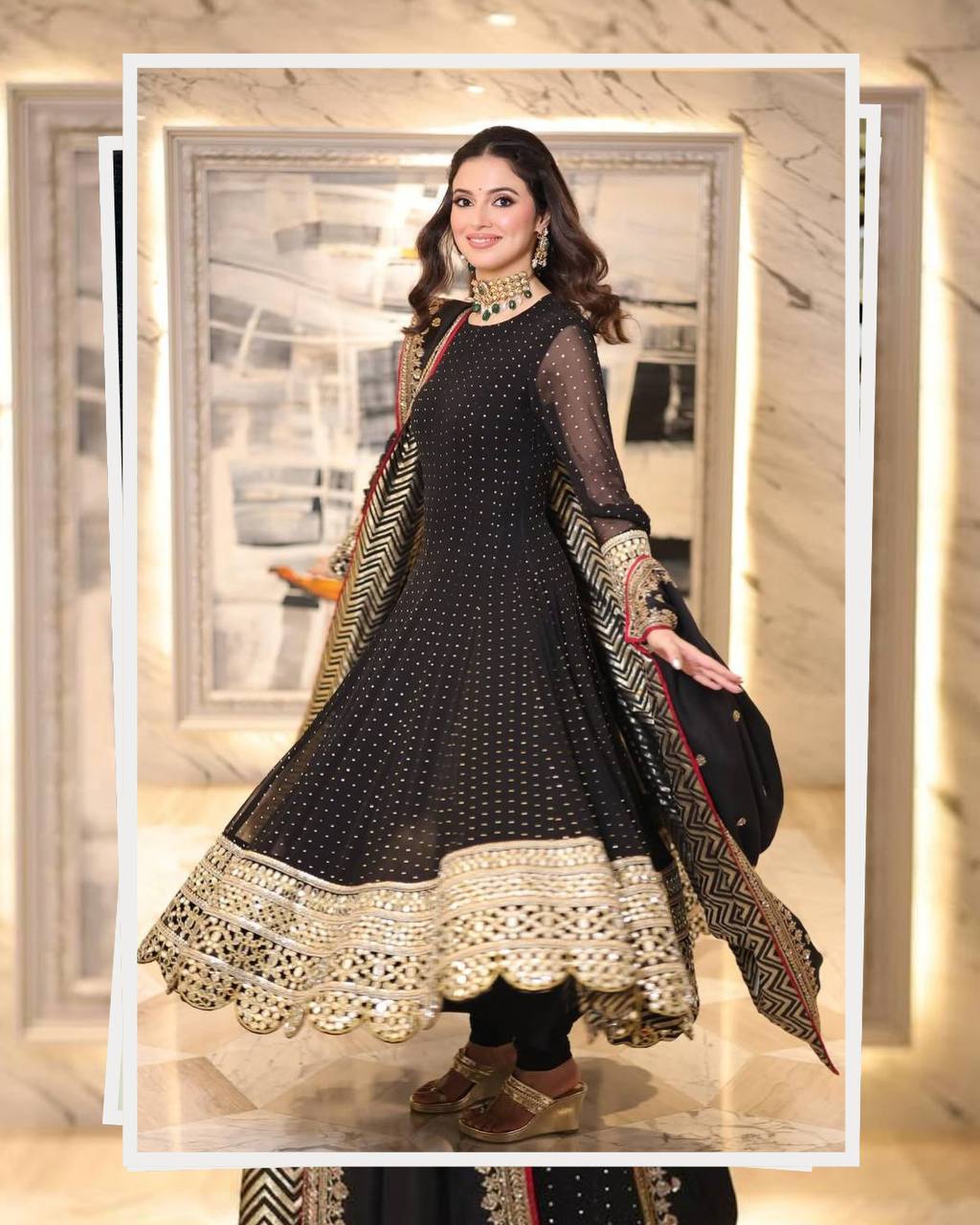
Measure the garment while wearing the shoes reserved for the function, not barefoot. Stand naturally rather than lifting your shoulders or pulling the dress upward. Ask someone to check the lowest point of the front hem, because a heavily flared skirt can appear even on one side while dipping on the other.
Use the same footwear during alterations
Heel height changes the final position of the hem, so an Anarkali altered with 7-centimetre heels can become too long when worn with juttis or flat sandals. Keep the planned shoes available during tailoring and repeat the fitting after any change in sole height.
A practical wardrobe solution is to choose a moderate heel or platform height that you can tolerate for the full event. A shoe that's comfortable for only 20 minutes can make a long Anarkali harder to manage over a four-hour wedding function.
Check the back and side hem
The back hem often sits lower than the front because the wearer shifts weight backward while standing or walking. Check the front, sides and back while taking several steps, turning around and sitting on a standard chair.
A slightly shorter front hem can reduce toe-catching without making the difference visible in photographs. Any adjustment should remain balanced with the flare and border so that the garment doesn't look uneven when you stand still.
Which Fabrics Make a Long Anarkali Easier or Harder to Wear?
Light to medium-weight fabrics with controlled drape are generally easier to manage than stiff, layered or densely embellished fabrics. Chanderi, lightweight georgette and some silk blends can maintain an elegant fall without placing excessive weight around the feet, while multiple stiff linings and heavy borders demand more care.
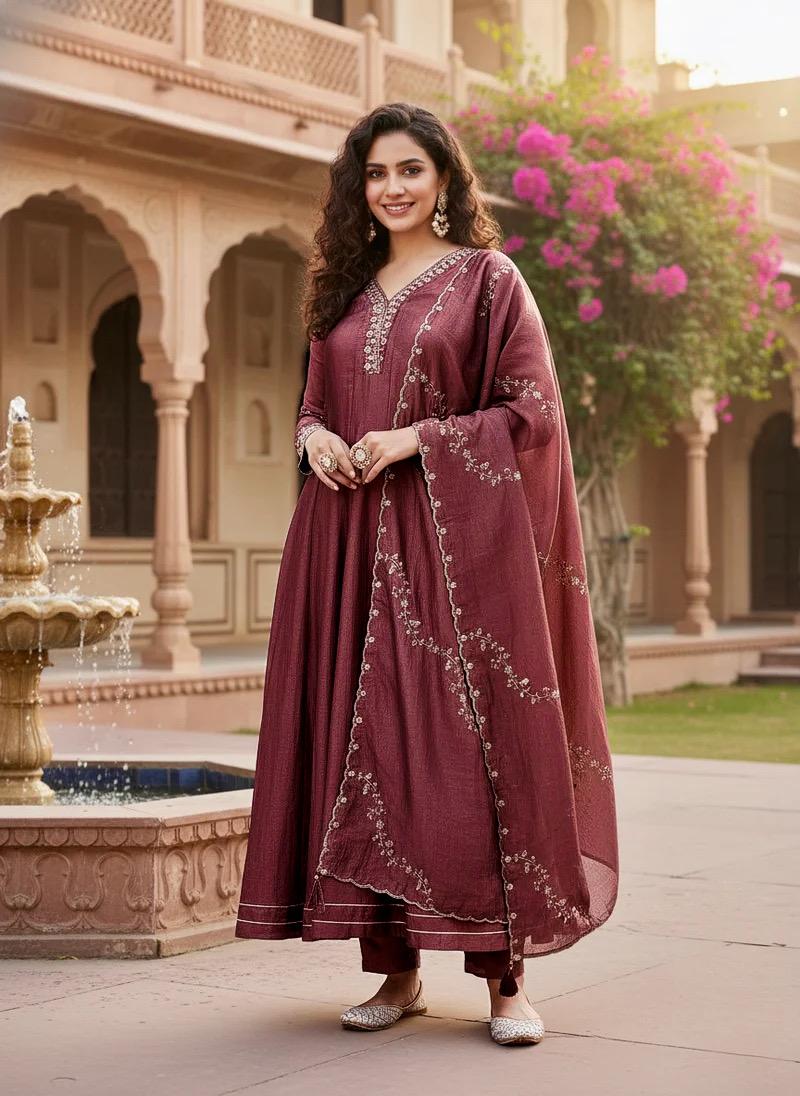
Fabric names alone don't reveal the complete wearing experience. A Banarasi silk Anarkali with a substantial lining may feel heavier than an unlined georgette design, while a soft Vichitra silk garment can behave differently depending on its flare and construction. Ask about lining, panel count and embellishment placement rather than choosing by fibre name alone.
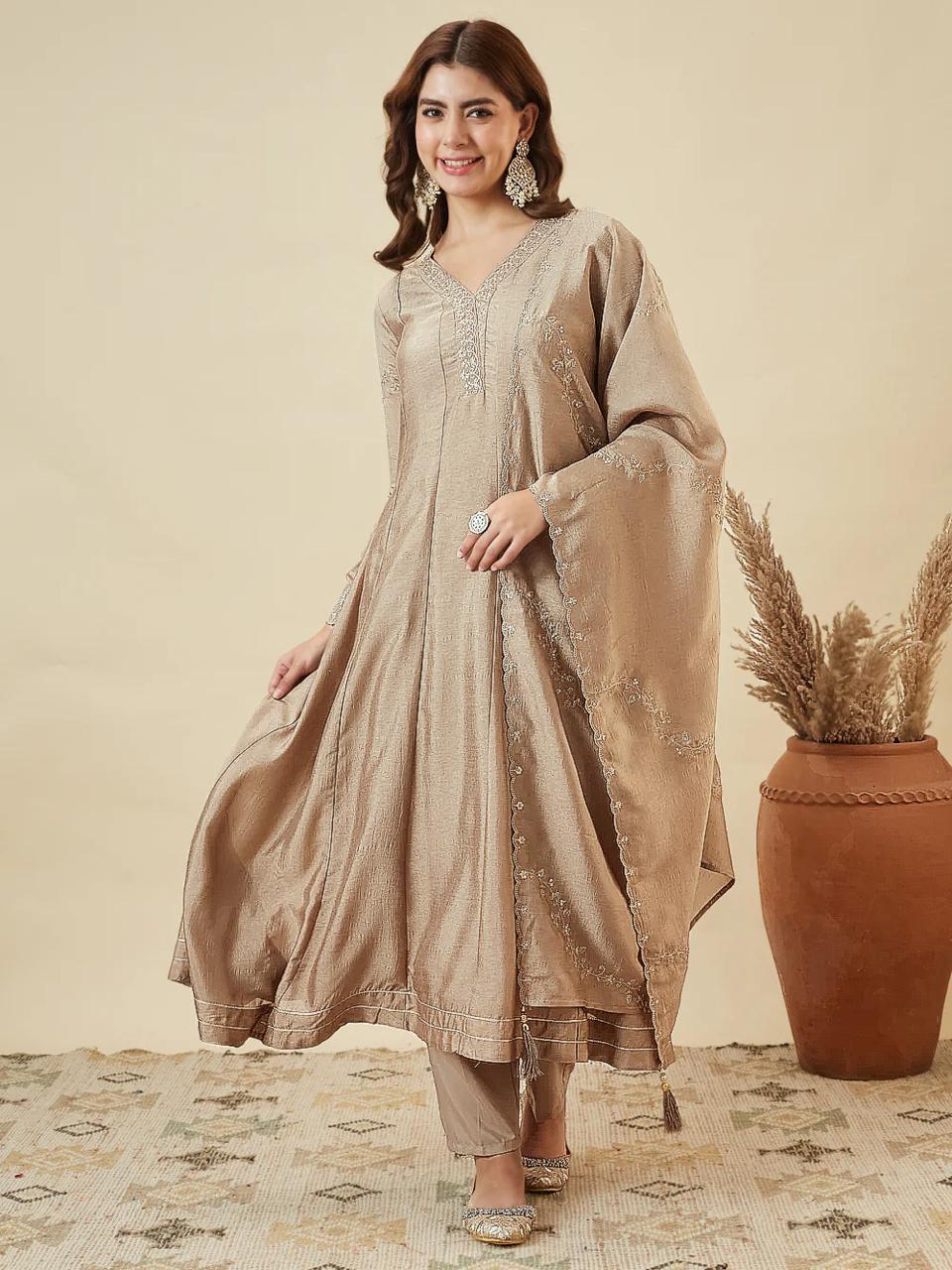
The White Floral Vichitra Silk Anarkali Suit Set | Varnavi illustrates why surface and structure should be considered together: a silk-based outfit may have a polished fall, but the wearer still needs to check its lining, flare and finished length before selecting footwear. In contrast, a lighter printed salwar suit may be simpler for daytime movement.
Embellishment concentrated at the bodice is usually easier to carry than embellishment spread across the entire skirt. Zari, sequins and moti lace placed along the hem can make the lower edge heavier and more likely to swing into the ankles. A narrow embellished border often gives a formal finish with less drag than several dense lower layers.
How the flare changes handling
A moderate flare is easier to control in narrow spaces than an extremely circular flare. More panels create movement and volume, but they also require more room when you turn or sit.
Stand with your arms relaxed and walk through a doorway, between two chairs and around a table. If the skirt repeatedly brushes furniture or forces you to gather a large amount of fabric, the silhouette may be better suited to an open venue than a compact indoor function.
What Movement Tests Should You Perform Before Buying?
Five movement tests reveal whether a long Anarkali is practical: walk ten steps, climb three stairs, sit and rise, turn in a full circle, and pick up a small object from the floor. The outfit should remain secure without requiring both hands to hold the skirt during ordinary movement.
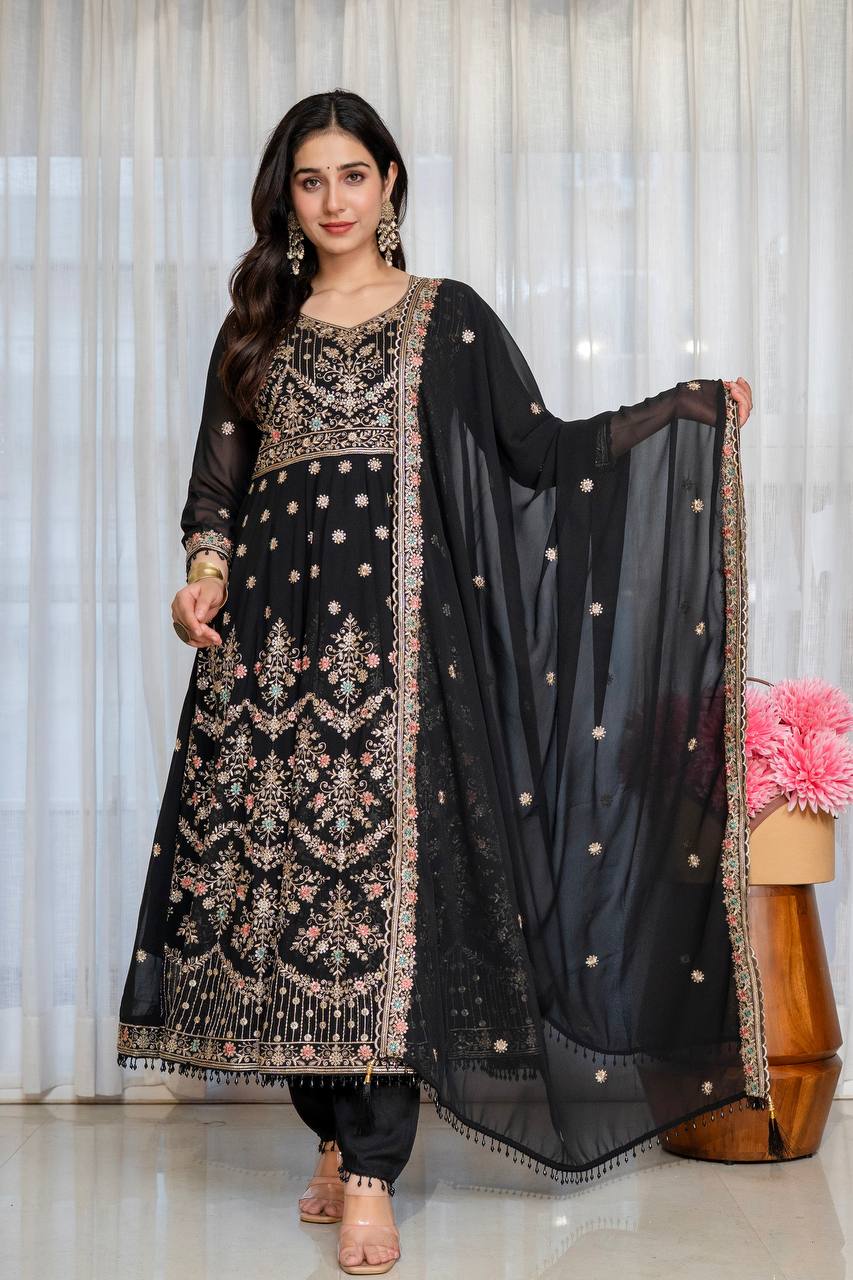
- Walking test: Take normal-length steps on a clean, flat surface. Watch for the toe catching the inner lining or front hem.
- Stair test: Climb three or four steps while lifting only the amount of fabric you would comfortably manage in public.
- Chair test: Sit without trapping a large section beneath your body, then stand without pulling the neckline or waistband.
- Turning test: Turn slowly in both directions. The flare should move around you without twisting the dupatta or exposing the lining.
- Reach test: Bend slightly or reach toward a handbag. Check that the bodice doesn't pull and the hem doesn't slide over the shoes.
Repeat the tests while wearing the dupatta. A long dupatta can alter balance, cover the hands needed to lift the skirt, or catch on zari and sequin work. A secure shoulder drape or carefully placed brooch can make the outfit much easier to handle during photographs and greetings.
How Do Embellishment and Dupatta Weight Affect Comfort?
Embellishment affects comfort through total garment weight, friction and snagging rather than appearance alone. Sequins can catch on other layers, zari borders can feel firm against the ankles, and heavy lace can pull the dupatta toward one side.
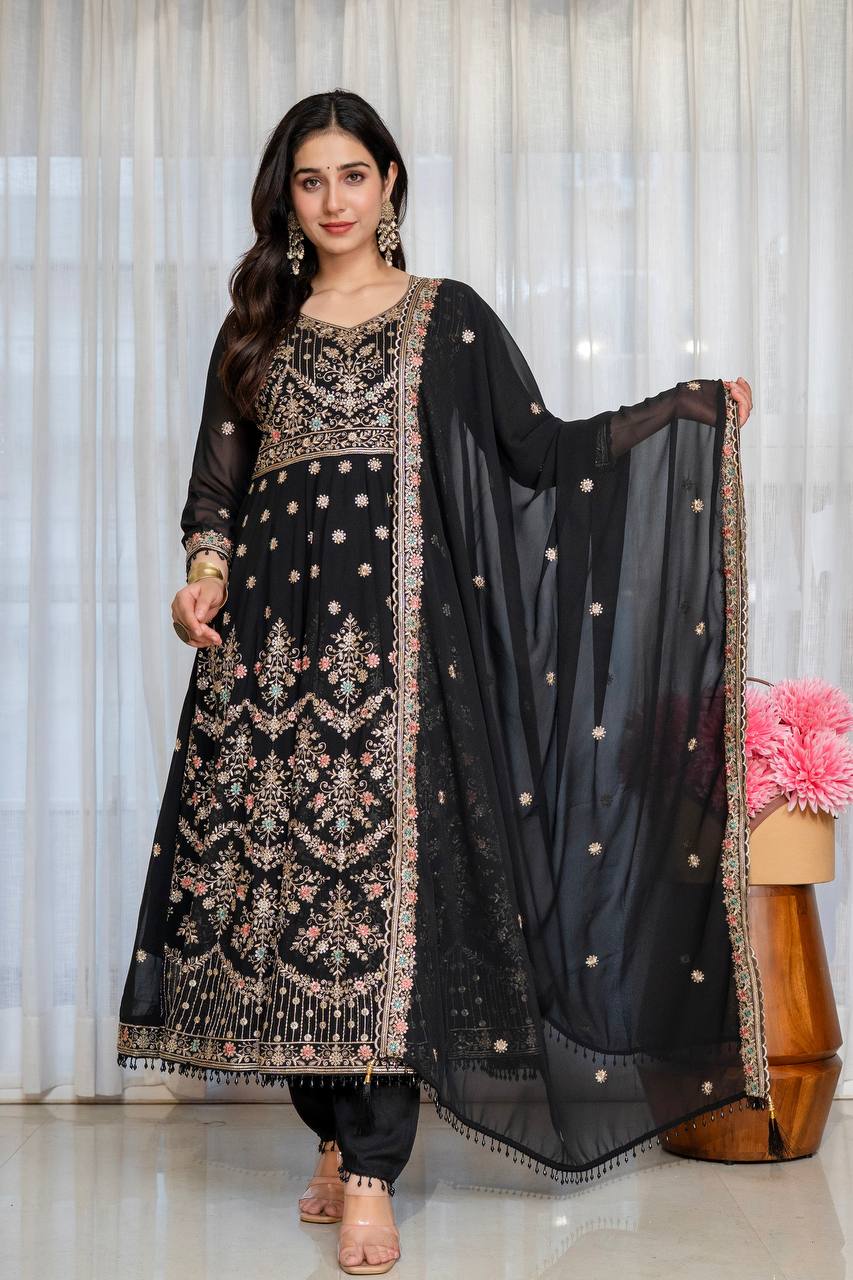
The Black Anarkali Suit with Zari, Sequins & Moti Lace Work and the Black Anarkali Suit Set with Sequin Zari and Moti Lace Work show why a formal finish should be assessed by placement as well as colour. Moti lace near the hem may require a smoother underskirt, while sequin work on the bodice is less likely to interfere with walking.
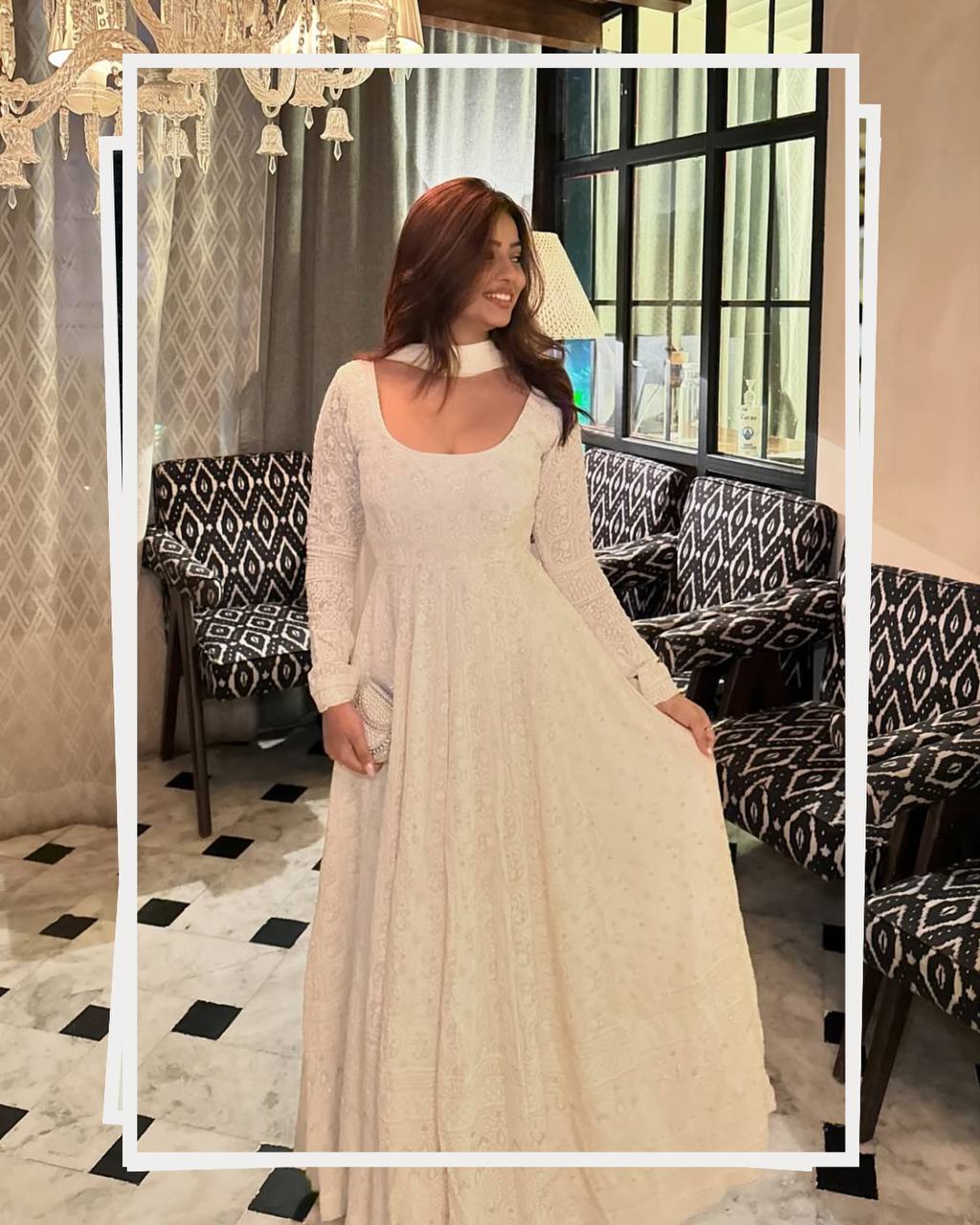
A dupatta with gota patti or a wide embroidered border can be beautiful but more demanding than a lighter, narrow-edged dupatta. The White Embroidered Anarkali Suit Set with Gota Patti Dupatta is the kind of outfit that benefits from a deliberate drape: secure one shoulder, keep the front fall clear of the feet and avoid allowing the border to pool beside the hem.
Before an event, wear the complete outfit indoors for 20 to 30 minutes. This trial reveals pressure at the shoulders, heat from lining, irritation from embellishment and fatigue from carrying the flare. A short fitting session isn't enough to expose problems that appear after an hour of standing.
Which Anarkali Details Suit Different Event Settings?
The most suitable Anarkali depends on venue, flooring, duration and the amount of walking required. A long, embellished silhouette works more easily at a seated reception or indoor wedding than at an outdoor ceremony with uneven ground.
For weddings and receptions
A floor-length Anarkali is usually manageable at a reception when the floor is even, seating is available and the hem has been fitted to the event footwear. The Black Embroidered Anarkali Suit Set with Zari Work can provide a formal effect, but check whether the zari work extends into a heavy lower border.
For long ceremonies, choose a secure dupatta arrangement and a shoe with a stable heel. Avoid selecting a new heel height on the same day, because even a small change can affect balance and hem clearance.
For Haldi ceremony and outdoor functions
A shorter Anarkali, high-low hem or lighter salwar suit is generally more practical for a Haldi ceremony and outdoor functions. Grass, wet ground, turmeric paste and crowded seating create more risk for a floor-skimming hem.
Collections such as Gujarat Bandhej Salwar Suits and Odisha Sambalpuri Salwar Suits offer useful styling direction for daytime celebrations because regional prints and lighter constructions can create visual interest without depending on a large, heavy flare. A printed suit also makes practical sense when the event involves frequent movement.
For cultural and festive dressing
A floor-length Anarkali can work beautifully for a formal cultural gathering when its silhouette reflects the venue and your movement needs. Maharashtra Paithani Inspired Salwar Suits can guide colour and border choices for a festive look, while Kalamkari Print Salwar Suits (Copy) can inspire a more breathable, print-led approach for daytime occasions.
Regional inspiration doesn't require reproducing every traditional detail in one outfit. One strong border, a considered dupatta and comfortable footwear often create a more coherent result than several heavy elements competing for attention.
How Can You Make a Long Anarkali Easier to Manage?
You can make a long Anarkali easier to manage by correcting the hem, securing the dupatta, choosing stable footwear and reducing unnecessary layers. Small construction and styling decisions often matter more than reducing the overall length.
- Set the hem for one shoe height: Keep the final footwear consistent from alteration to event.
- Use a smooth underskirt: A slippery, well-fitted lining can reduce bunching around the ankles.
- Secure the dupatta: Use discreet pins at the shoulder and waist, testing that the fabric still falls naturally.
- Carry a small safety kit: Include two safety pins, a stain-removal wipe, a spare hook and a few adhesive bandages.
- Choose a stable sole: Block heels, wedges or embellished flats are often easier to control than very narrow stilettos.
- Gather from one side: If you must lift the skirt, hold one controlled section rather than bunching the entire flare.
The Elegant Black Ethnic Gown with Floral Embroidery demonstrates another useful comparison: a gown-like silhouette may look similar to an Anarkali, but its handling depends on the same checks for hem, lining, weight and stride. Comparing construction rather than relying on the label helps you choose more intelligently.
Care also affects long-term manageability. Do not drag a decorated hem across rough flooring, and don't store a damp Anarkali folded tightly. Air the garment after wear, follow the care label, and use professional cleaning when zari, sequins or delicate silk-based fabric are involved.
What Should You Check Before Ordering a Floor-Length Anarkali?
Before ordering, check finished garment length, lining, fabric composition, flare, embellishment placement, dupatta dimensions and alteration options. Product photographs rarely show how a garment behaves while walking, so measurements and construction details deserve equal attention.
- Measure from the shoulder point to the floor while wearing the intended shoes.
- Compare that measurement with the stated garment length, allowing for a small clearance.
- Ask whether the length includes the waistband, yoke or shoulder seam.
- Check whether the garment has a separate lining and whether the lining is shorter than the outer layer.
- Look for the location of zari, sequins, lace and heavy borders.
- Confirm that the neckline, armhole and waist allow comfortable sitting and reaching.
- Plan the complete outfit, including dupatta, footwear, jewellery and handbag, before the final fitting.
The Black Zari Sequins Embroidered Anarkali Suit Set | Varnavi and the Ivory Zari Sequins Embroidered Anarkali Suit Set | Varnavi are examples of occasion-led designs where visual richness makes a full movement check especially worthwhile. The goal isn't to avoid floor-length dressing; the goal is to make the finished outfit work for the actual venue and duration.
A floor-length Anarkali remains practical when the hem clears the ground, the flare permits a natural stride, and the total weight feels comfortable after extended wear. If those three conditions are met, the silhouette can offer the drama of a gown while retaining the familiar ease of a salwar suit.
Practical Questions About Wearing a Floor-Length Anarkali
How long should a floor-length Anarkali be?
A floor-length Anarkali should usually sit about 1 to 2 centimetres above the floor when worn with the intended footwear. Measure the front, sides and back because a wide flare can create uneven hem points.
Can I wear a floor-length Anarkali with flats?
Yes, provided the garment is altered for the height of the flats and the hem does not drag. Do not use a length tailored for high heels with flat sandals, because the extra fabric can catch under your feet.
Why does my Anarkali feel heavy while walking?
An Anarkali may feel heavy because of layered lining, a wide flare, dense zari or sequin work, and embellished borders. Try the complete outfit for 20 to 30 minutes before the event to identify fatigue, shoulder pressure or ankle friction.
Is a very wide Anarkali flare difficult to manage?
A very wide flare can be difficult in narrow aisles, crowded venues and small seating areas, although it can work well in spacious indoor settings. Test the outfit through doorways, around chairs and on stairs before committing to the silhouette.
How can I stop a long Anarkali dupatta from getting in the way?
Secure the dupatta at the shoulder and, if needed, discreetly at the waist so the front fall stays clear of the feet. Test the pinned arrangement while sitting, walking and lifting the skirt on stairs.
Is a floor-length Anarkali suitable for a Haldi ceremony?
A floor-length Anarkali is usually less practical for an outdoor Haldi ceremony because grass, moisture, turmeric paste and crowded movement can soil or catch the hem. A lighter suit or slightly shorter silhouette is generally easier to manage for that setting.




