A sangeet outfit has to survive more than a few photographs. It needs to allow repeated movement, stay comfortable through several hours, look balanced under changing lights and work with the kind of dancing the evening demands. When a Sharara Makes More Sense Than a Lehenga for Sangeet depends less on which silhouette is more fashionable and more on your venue, choreography, footwear, body movement and tolerance for weight.
A lehenga gives a defined, dramatic shape through a fitted waistband and flared skirt. A sharara uses wide-legged trousers, often with gathered or tiered volume, so the garment opens and falls with each step. Both can look festive, but they behave differently when you sit on the floor, climb stairs, perform a group routine or remain dressed for five hours. The comparison below will help you choose based on practical conditions rather than photographs alone.
When a Sharara Makes More Sense Than a Lehenga for Sangeet
A sharara makes more sense for a sangeet when you expect substantial dancing, need easier walking or prefer a defined outfit that doesn't require constant skirt management. Wide sharara trousers separate the legs visually while preserving an ornate, traditional appearance, which can make side steps, turns and quick changes of direction easier.
A sharara is particularly useful for guests participating in family performances. Choreography often includes squats, hand movements, knee bends and formation changes that expose the limitations of a very full skirt. A well-cut sharara reduces the chance of stepping on the hem, although the trousers still need enough width and length for safe movement.
A sharara also suits people who feel restricted by a fitted waistband or who want more coverage around the legs. The silhouette can be paired with a short kurti, peplum blouse, long anarkali-style top or cropped jacket. That flexibility gives you more control over proportion than a lehenga choli, especially when you want to balance a shorter blouse with a longer, flowing layer.
How the Two Silhouettes Behave While Dancing
A sharara generally offers more practical leg movement, while a lehenga brings more visible flare and twirl. The better choice depends on whether your priority is performing comfortably or creating maximum circular volume in photographs.
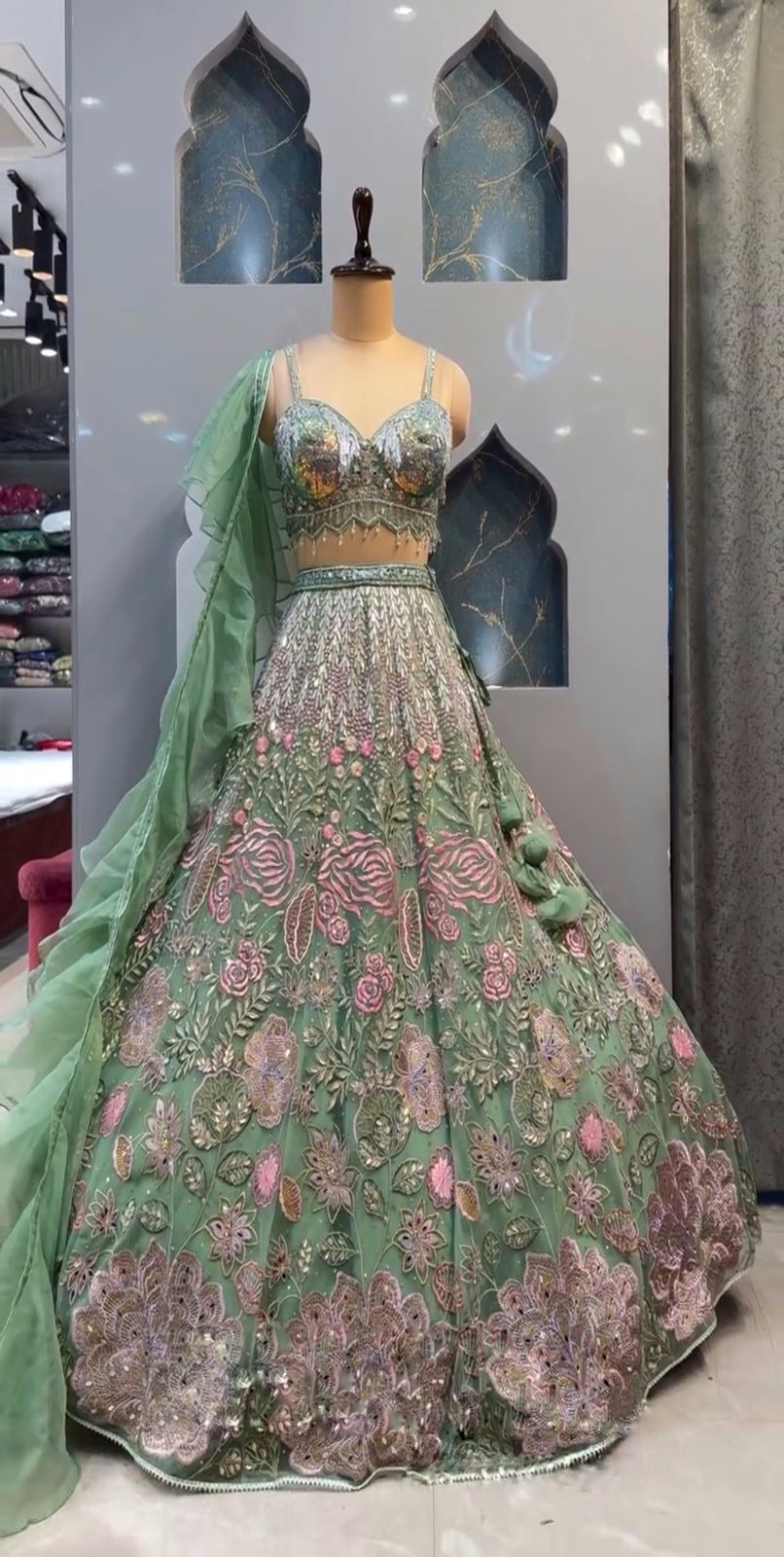
Movement and hem safety
Sharara trousers allow each leg to move independently, so walking between tables, stepping onto a stage and changing direction usually feels more straightforward. A lehenga skirt surrounds both legs with one continuous hem. A lehenga with excessive flare can catch under sandals or become difficult to control during fast footwork.
Neither silhouette is automatically safe for dancing. A sharara with a narrow thigh area can restrict movement, and a heavily layered sharara can become as cumbersome as a skirt. Check whether you can raise each knee, take a long step and sit comfortably before buying. For a lehenga, walk briskly, turn twice and step up and down one stair while wearing the intended footwear.
Twirl and visual drama
A lehenga creates a larger, more continuous twirl because the skirt spreads from the waist in a circular shape. The Pink Bridal Sequins Lehenga Set with Heavy Flare demonstrates the visual logic of a high-volume silhouette: the flare becomes a major part of the outfit's presence, especially in a group dance or entrance photograph.
A sharara creates movement in separate trouser panels, giving a softer, rhythmic effect rather than a single wide sweep. The lower layers can still look dramatic when they include gota, zari, sequins or contrasting borders. A sharara is often better for fast footwork, while a lehenga is often better for a slow spin or a staged pose.
Weight, Fabric and the Length of the Evening
For a long sangeet, lighter fabrics and controlled embellishment usually provide more comfort than dense embroidery across the entire outfit. Fabric weight affects heat, fatigue and how easily the garment settles after dancing.
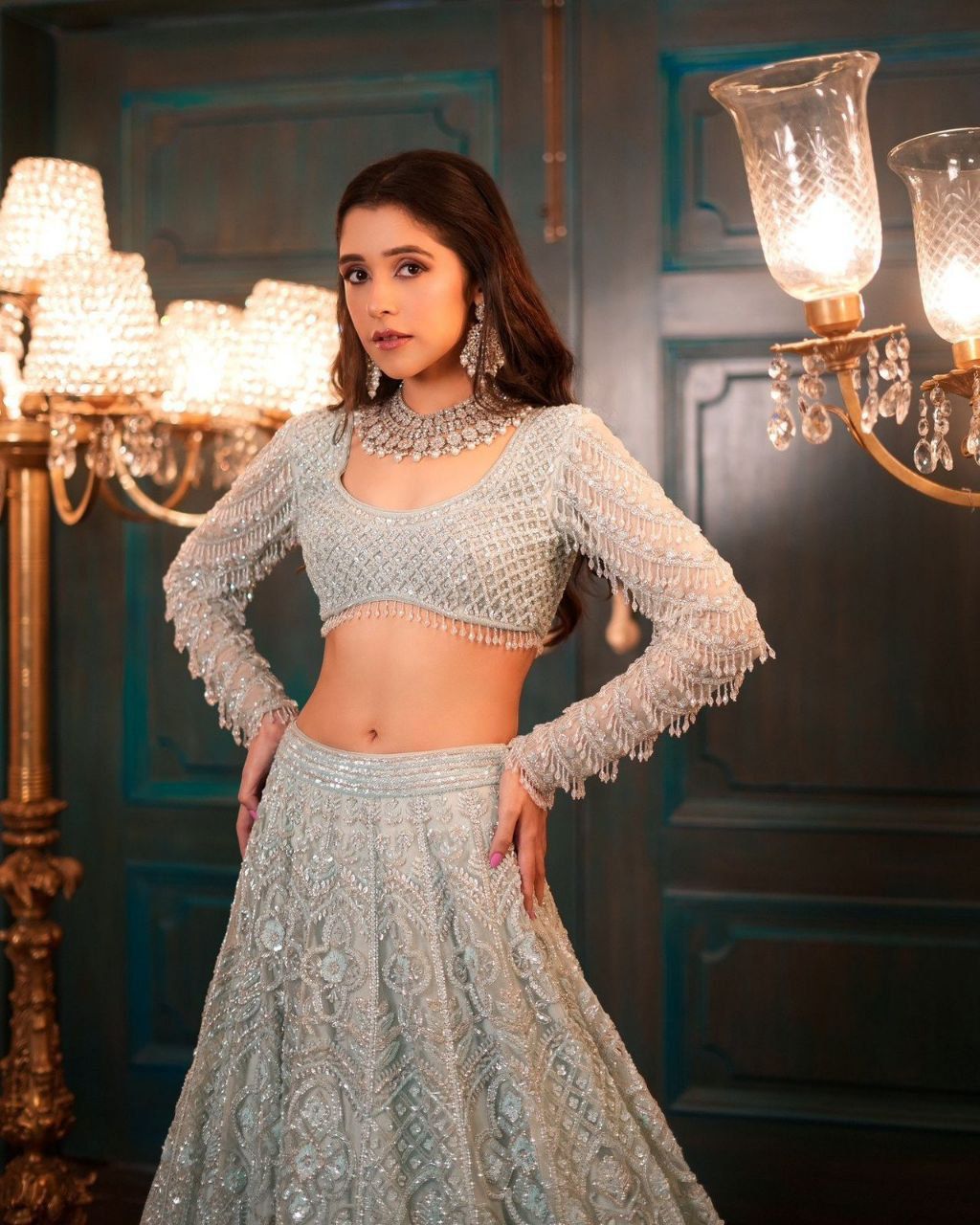
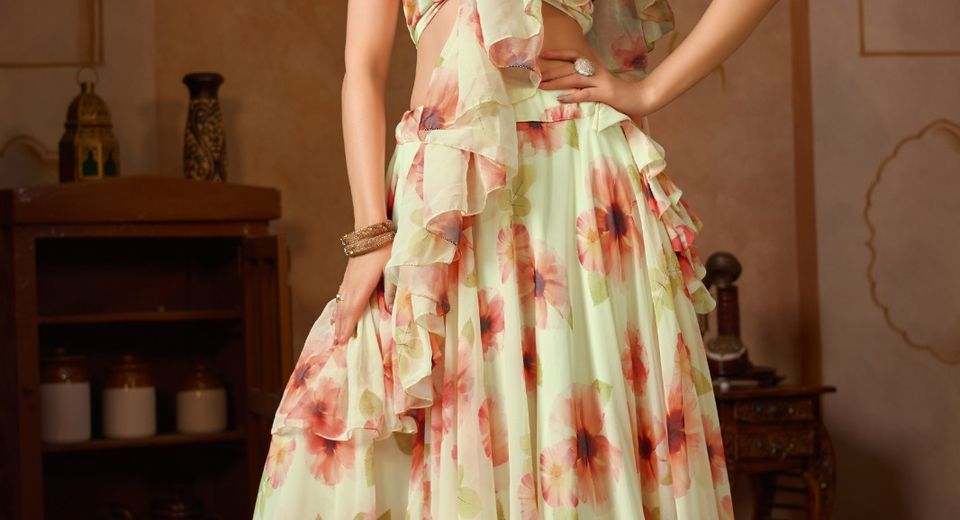
Georgette, chiffon and lightweight net generally create fluid movement without adding as much mass as multiple silk or velvet layers. The Pastel Floral Georgette Lehenga Set with Ruffle Blouse is an useful example of how a lighter base can support a festive look without relying only on heavy surface work. Organza has more body and can hold a crisp shape, but it may feel less forgiving when you sit or bend.
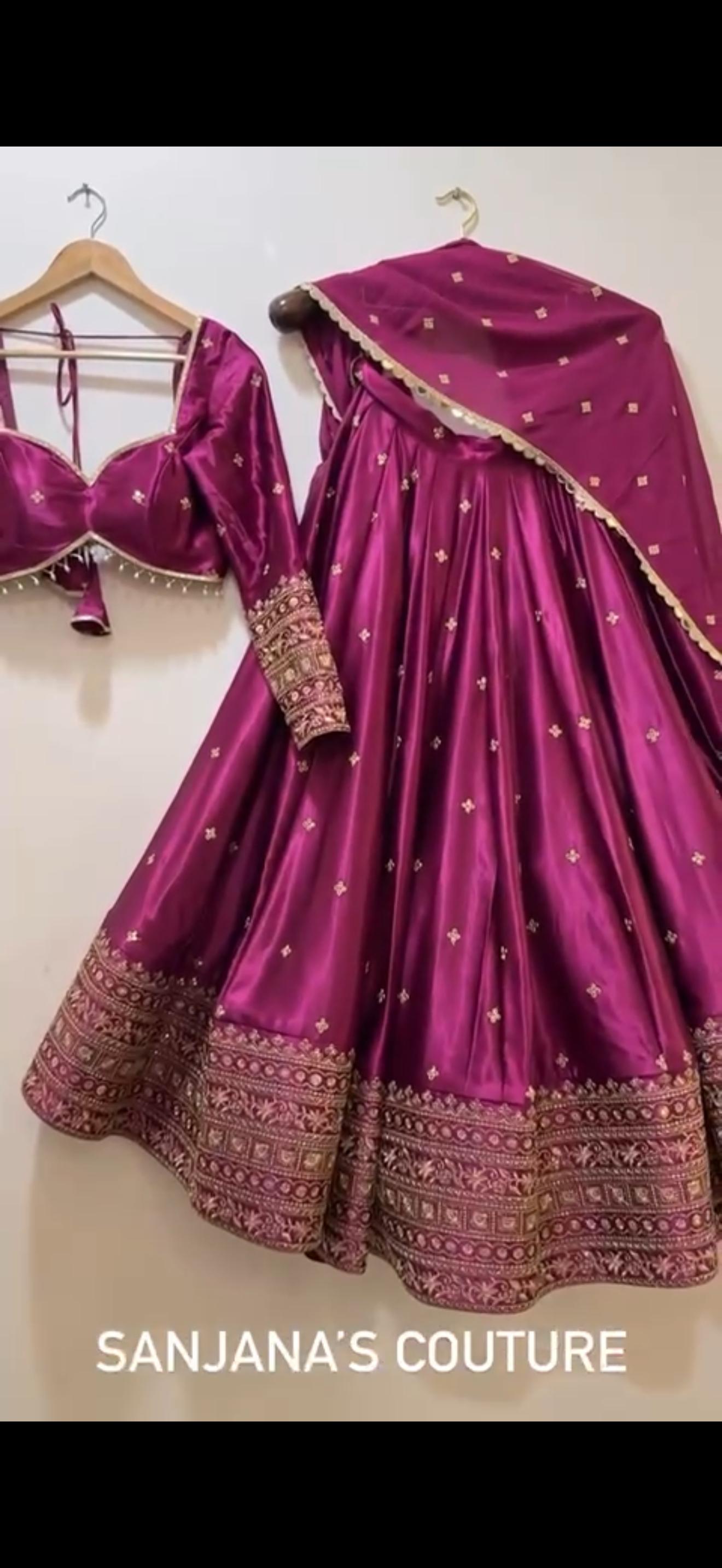
Sequins, metallic embroidery and layered linings add weight in ways that are easy to underestimate online. The Pink Sequins Embroidered Butterfly Net Lehenga Set and the Magenta Satin Embroidered Lehenga Set Online may work well for a polished evening look, but inspect the lining, waistband and embellishment placement before committing to a long performance. A garment that feels manageable for ten minutes can become tiring after two hours.
Silk lehengas can be beautiful for a winter or air-conditioned venue, but dense silk blends and zari borders may feel warm in a crowded banquet hall. The Silk Lehengas Under 3000 collection can help with budget planning, but price should not replace checking the fabric composition, lining and actual garment weight. A lower price doesn't automatically mean a lighter outfit.
Choosing the Right Silhouette for Your Venue
The venue should influence your choice because floor space, stairs, seating and temperature change how a sangeet outfit performs. A spacious lawn, hotel ballroom and compact home terrace create different clothing requirements.
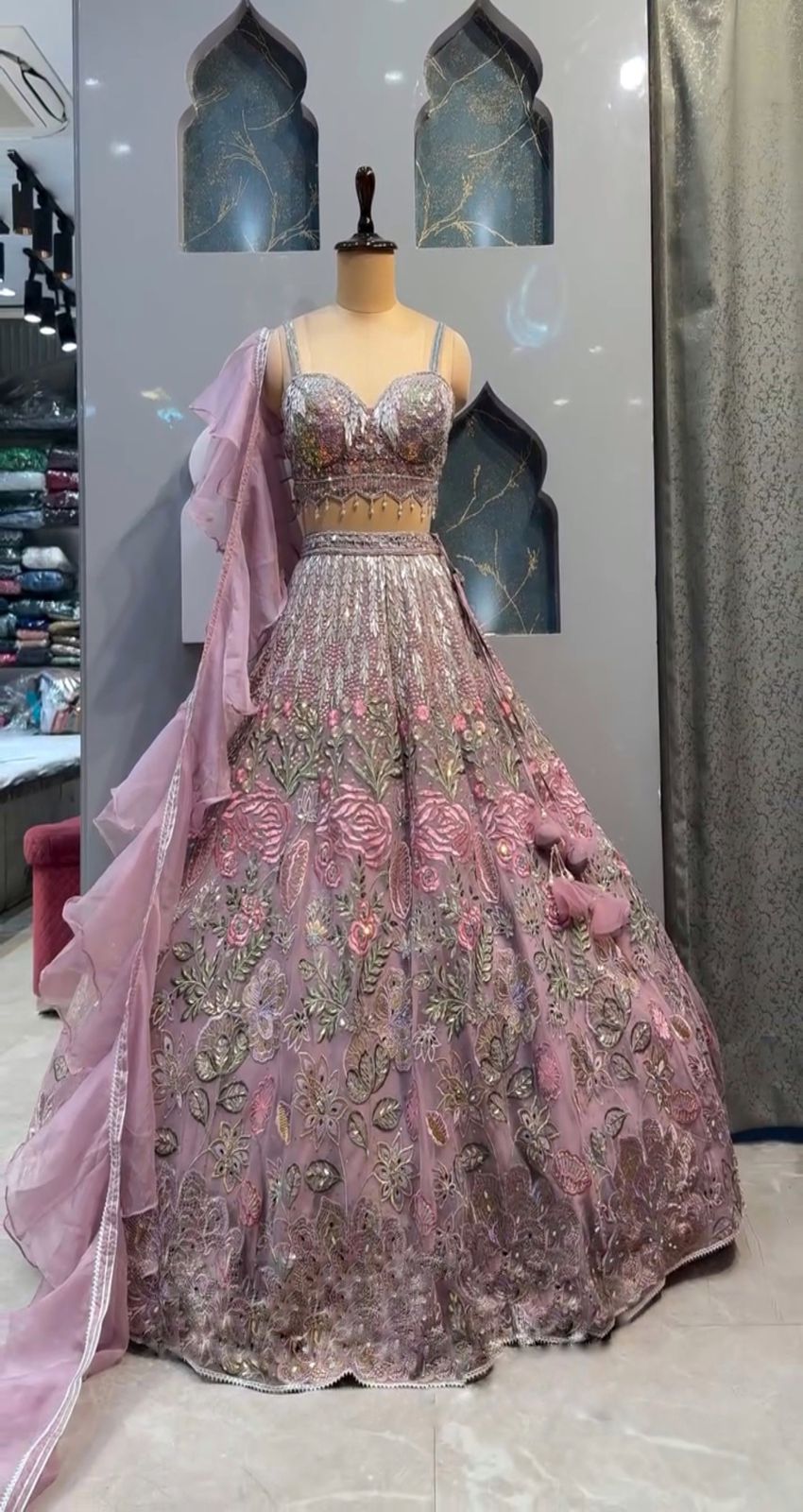
Ballroom or hotel sangeet
A lehenga works well in a ballroom when you want a pronounced entrance silhouette and have enough space to move without brushing against chairs. A moderate flare is usually easier to manage than an extremely wide skirt around dining tables. A detachable dupatta or shorter drape can prevent the pallu from catching on chair backs.
Outdoor lawn or uneven surface
A sharara is often more practical on grass, paving or uneven outdoor flooring because the legs remain visually separate and the outfit can be worn with stable block heels or embellished flats. A very long lehenga hem can collect moisture, dust and grass, particularly after sunset.
Home or intimate terrace event
A slim sharara or lightly flared lehenga is usually more comfortable in a compact venue where guests stand close together. The Coral Bloom White Georgette Lehenga Set gives a way to think about lighter construction and softer volume, while a densely layered skirt may occupy more space than the room allows.
Fit Details That Decide Whether You Can Dance
Accurate measurements and functional ease matter more than a nominal size for both shararas and lehengas. The waistband, rise, hem and sleeve opening should be checked before alterations begin.
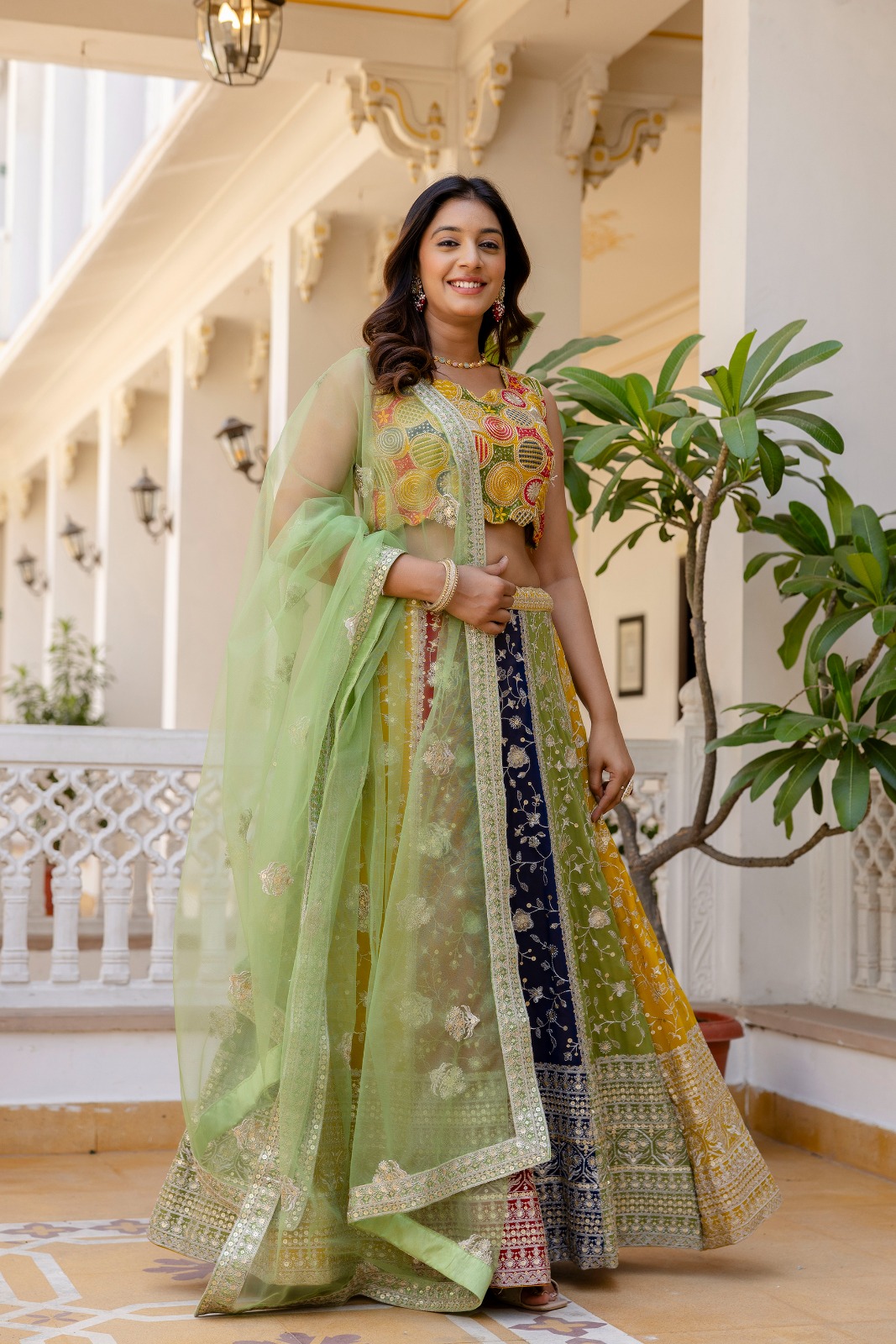
For a sharara, measure the natural waist, fullest hip, front rise and inseam while standing normally. Ask for enough ease at the hip and thigh to sit and lift a knee without pulling the fabric. The trouser hem should clear the floor by roughly 1 to 2 centimetres with the shoes you'll wear; a dragging hem is a tripping risk, while an excessively short hem can interrupt the intended silhouette.
For a lehenga, check the waistband while sitting, not only while standing. A snug standing fit can become uncomfortable when the waist bends. A drawstring or adjustable hook system can accommodate small changes, but an adjustment mechanism can't compensate for an undersized hip or a heavy skirt pulling downward.
Blouse construction matters during choreography. Sleeves that cut into the upper arm, a tight armhole or a very low back can limit movement. A supportive lining, properly placed cups and secure shoulder seams reduce the need to adjust the blouse during a performance. A blouse that looks elegant but requires repeated pulling isn't a practical sangeet choice.
How to Balance Embellishment and Styling
A sharara or lehenga looks intentional when one area carries the strongest visual detail and the remaining pieces support it. Heavy work on the skirt, blouse and dupatta together can create weight without improving the overall outfit.
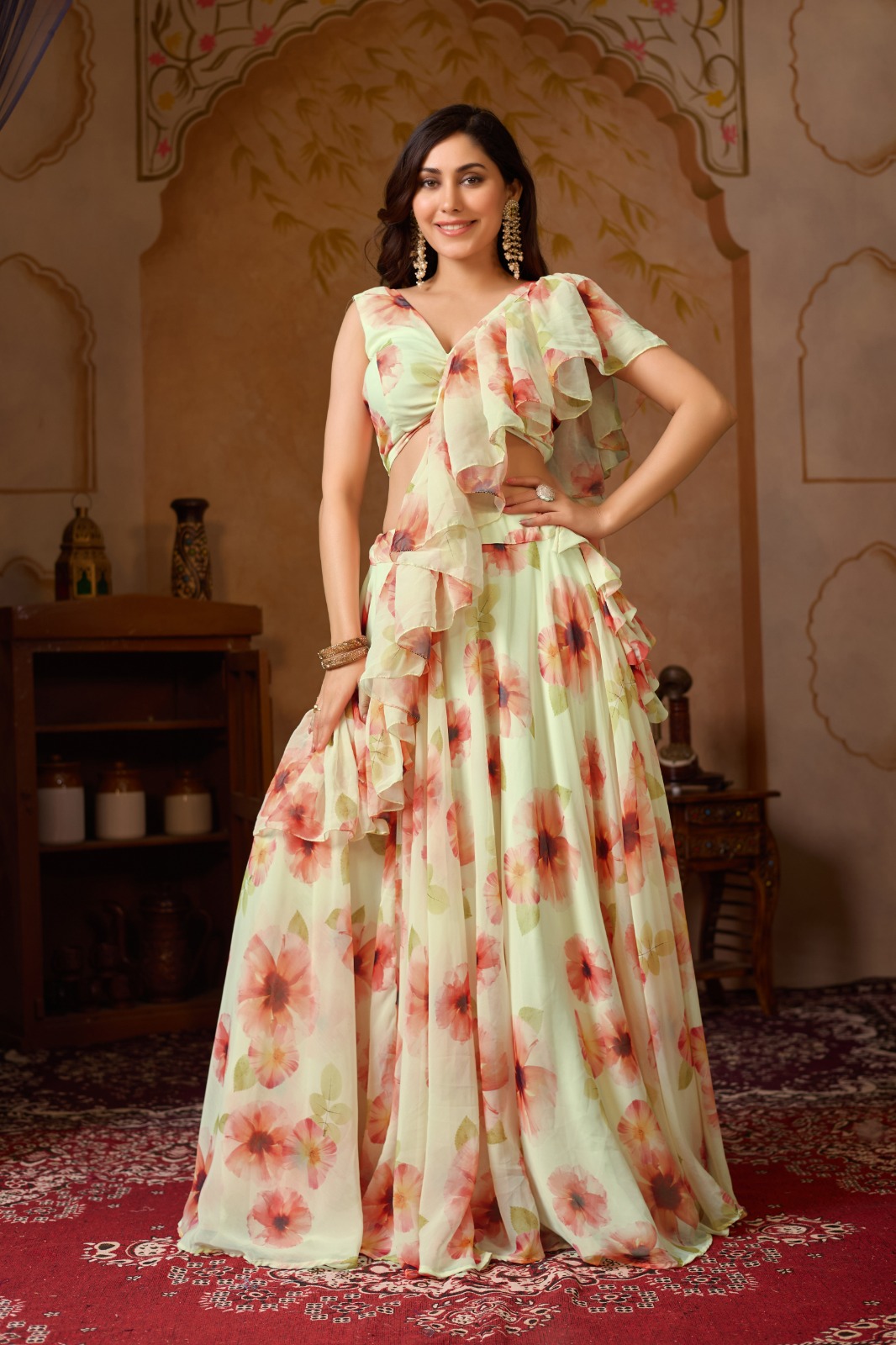
Use the blouse to create structure when the sharara has fluid trousers. A fitted embroidered blouse, short jacket or peplum top can define the waist while allowing the lower half to move. Use a lighter dupatta with a heavily worked outfit, and secure the dupatta at the shoulder and waist if you'll perform.
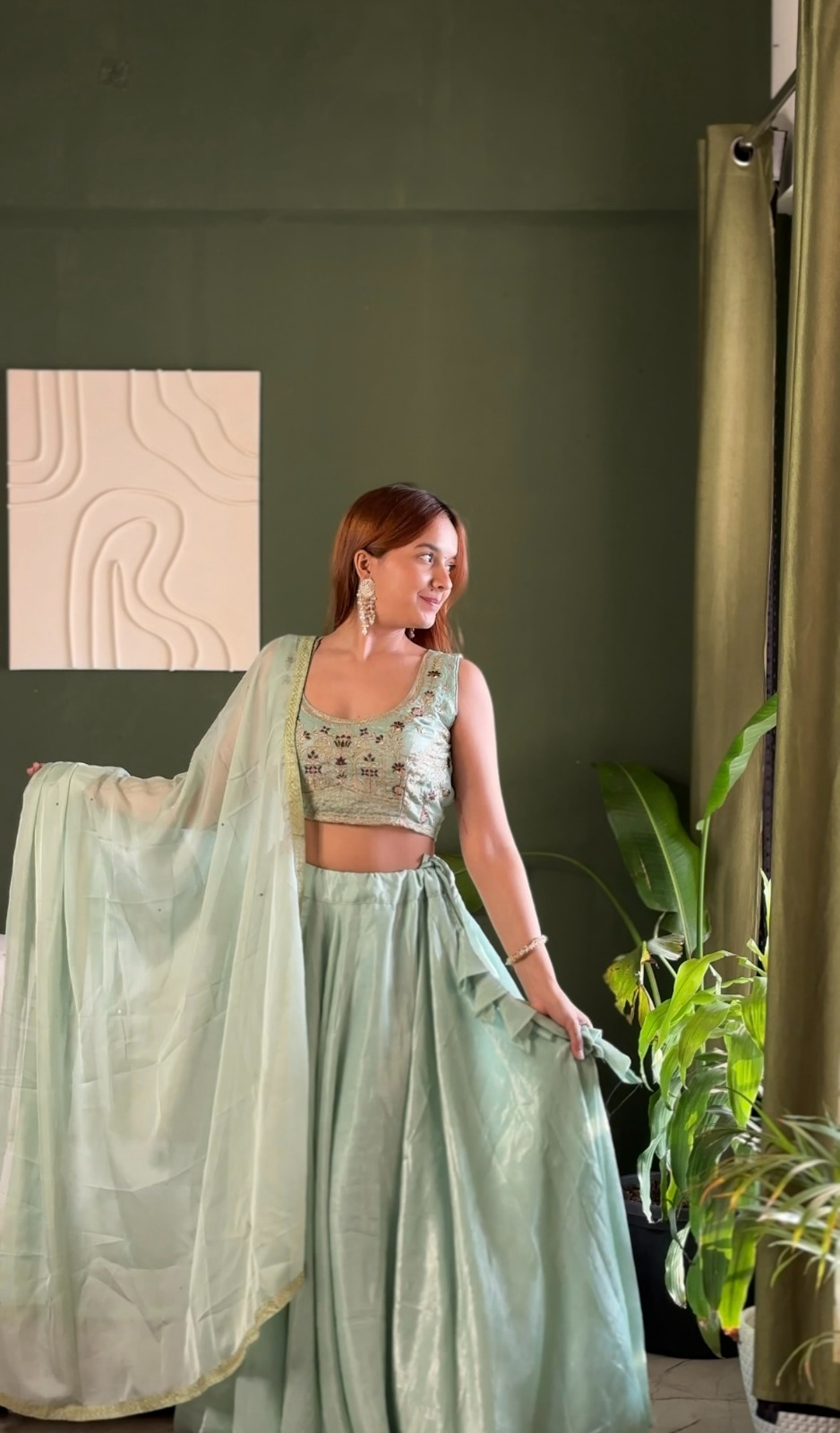
Use a statement skirt when the lehenga is the centrepiece. A plain or lightly embellished blouse can make a large flare look more refined, while a heavily decorated blouse and skirt can benefit from a simple net dupatta. The Mint Embroidered Lehenga Set with Net Dupatta for Women illustrates the value of a coordinated set: the dupatta is already designed to relate to the embroidery and colour balance.
Colour can also change how much volume an outfit appears to have. Darker magenta, red and coral shades often read as dense and saturated under warm lighting. Pale mint, blush and pastel tones can make layers appear lighter, although fabric shine and embroidery still affect perceived weight. The Lime Floral Embroidered Butterfly Net Lehenga Set shows how bright colour and floral decoration can create energy without requiring a dark, heavily metallic palette.
For family members performing together, coordinated colour families are more useful than identical outfits. A bride's sister might choose a sharara in rose pink while cousins wear coral, mint or magenta. The Bridesmaid Lehengas Under 5500 collection gives an useful starting point for comparing coordinated wedding-party dressing without making every person look exactly alike.
Dupatta, Footwear and Accessories for Active Wear
A secure dupatta and stable footwear are the two accessories most likely to improve a sangeet outfit's performance. Jewellery adds finish, but poor draping and unstable shoes can undermine comfort within minutes.
For a sharara, pin the dupatta at the shoulder and place a second discreet pin near the waist or opposite hip. An one-shoulder drape looks refined for photographs, but it needs firm anchoring before dancing. For a lehenga, a belt over the dupatta can define the waist and stop the fabric from sliding during turns.
Choose block heels, wedges or embellished flats according to the floor and choreography. A 2 to 3 inch block heel is generally easier to control than a narrow stiletto during group dancing. Practise in the actual shoes at least twice, because hem alterations made in flats may become dangerous when worn with heels.
Keep earrings proportional to the neckline and movement level. Large jhumkas can swing into the face during fast choreography, while a choker can feel restrictive with a high-neck blouse. A compact potli or phone pouch should have a secure strap; carrying a loose clutch is inconvenient when both hands are needed for dancing.
A Practical Decision Before You Buy
Choose a sharara when dancing, walking and sitting comfortably are more important than maximum skirt volume. Choose a lehenga when the event involves a formal entrance, spacious dance floor, slower choreography or photographs where a circular flare is central to your look.
- Estimate movement: choose a sharara if you'll perform for more than five minutes, move between tables or dance repeatedly through the evening.
- Check the venue: choose a shorter or lighter hem for lawns, stairs, crowded seating and outdoor paths.
- Assess garment weight: lift the outfit briefly and inspect the lining, especially when sequins, zari, beads or multiple net layers are present.
- Test the fit: sit, walk, raise one knee, turn and reach forward in the complete outfit before final alterations.
- Plan the dupatta: pin or belt the drape in advance so the styling doesn't depend on constant adjustment.
- Match the shoes: alter the hem only after selecting the footwear intended for the sangeet.
A lehenga remains an excellent choice when its flare, embroidery and formal shape match the event. A sharara earns the advantage when the wearer needs freedom of movement without giving up festive detail. The Red Floral Organza Lehenga Set with One Shoulder Blouse, for example, points toward a more structured and statement-led look, while lighter, less layered designs may be easier for an active performance.
The most reliable decision comes from imagining the full evening rather than the first photograph. If you'll spend the night dancing, climbing stairs, greeting relatives and standing for long periods, a sharara may reduce several small inconveniences at once. If your role is mainly a seated guest with a short entrance or a planned twirl, a lehenga can deliver the stronger visual effect. That is when a Sharara Makes More Sense Than a Lehenga for Sangeet: when practical movement is part of the celebration, not an afterthought.
Questions to Settle Your Sangeet Sharara or Lehenga Choice
Is a sharara more comfortable than a lehenga for dancing at a sangeet?
A sharara is often more comfortable for dancing because wide-legged trousers allow each leg to move independently. Comfort still depends on the trouser width, rise, waistband, lining and hem length, so test the complete outfit before the event.
Can I wear a lehenga if I am performing at a sangeet?
Yes, you can wear a lehenga for a sangeet performance if the skirt has manageable volume, a secure waistband and a hem adjusted to your performance shoes. Practise turns, steps and floor-level movements in the full outfit before finalising it.
What fabric is best for a dance-friendly sangeet outfit?
Lightweight georgette, chiffon and carefully lined net are usually easier for dancing than heavily layered or densely embellished fabrics. Organza holds its shape well but feels crisper, while silk and heavy zari can add warmth and weight during a long event.
How should I secure a dupatta for sangeet dancing?
Pin the dupatta firmly at the shoulder and add a second anchor at the waist or opposite hip. A belt can secure a lehenga dupatta, while a shorter or lighter drape reduces the chance of catching on chairs and jewellery.
Are shararas suitable for outdoor sangeet ceremonies?
Sharara trousers are often practical for outdoor sangeet ceremonies because they reduce the risk of dragging a full skirt across grass or uneven paving. Wear a hem that clears the ground and choose block heels or embellished flats with stable soles.
How much flare should a sangeet lehenga have?
A moderate flare is usually easier to manage for a sangeet with crowded seating or active dancing, while a heavy flare suits spacious venues and slower choreography. Measure the skirt with your shoes and practise walking around chairs before deciding on an extra-wide silhouette.