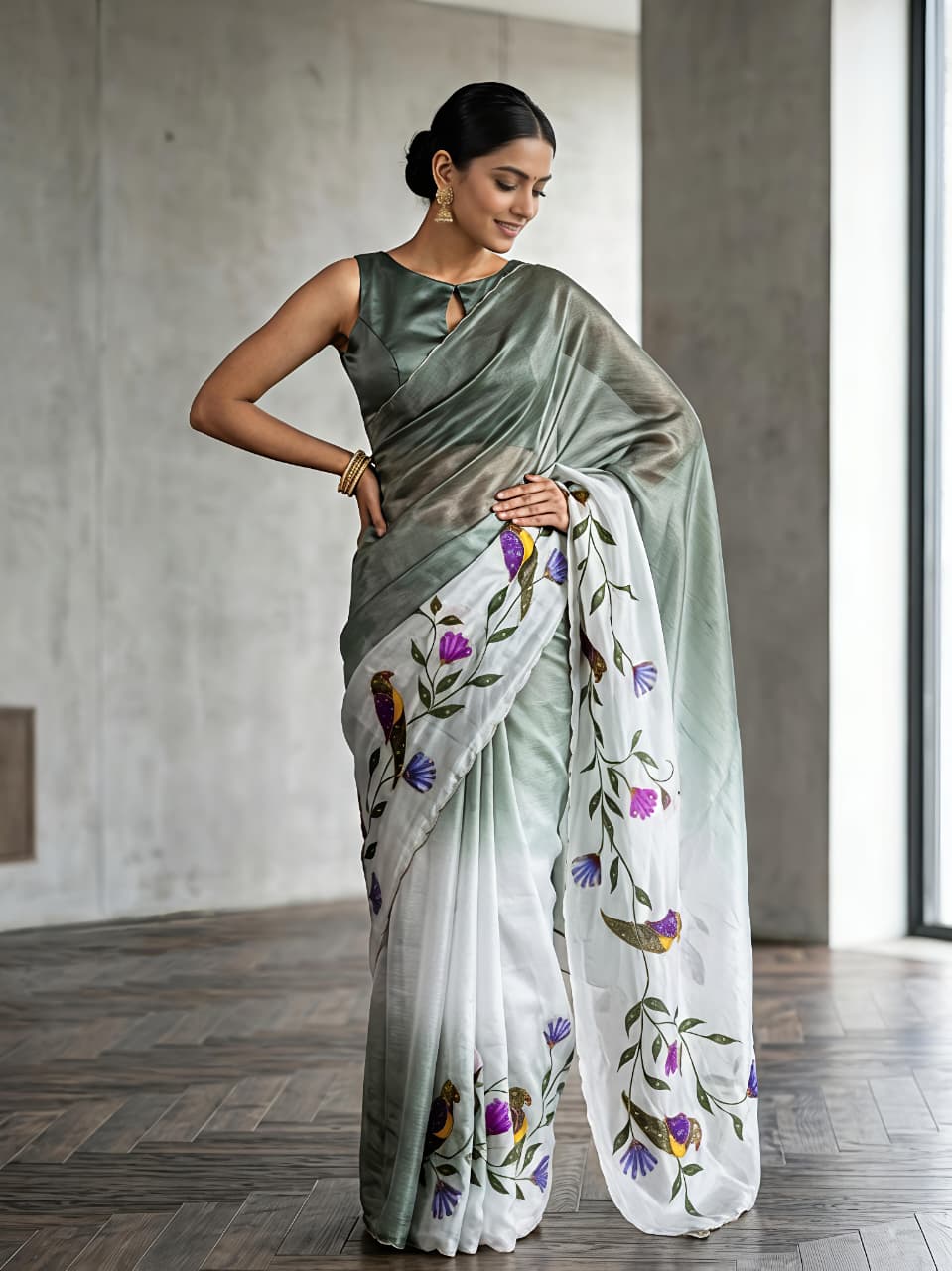
What to Wear for Vishu? Traditional Kerala Fashion Guide for Women begins with one useful principle: Vishu clothing should feel festive, graceful and comfortable enough for a day of kani viewing, family visits and temple prayers. Kerala's signature kasavu textiles provide the clearest starting point, but women can also choose a settu mundu, a cotton saree, a Kerala-inspired kurta set or a carefully styled blouse with a lighter drape.
Vishu falls in the Malayalam month of Medam and marks the traditional Malayali New Year. Clothing carries meaning during the celebration because the morning begins with Vishukkani, a carefully arranged auspicious display of rice, fruits, flowers, coins, a mirror, a lamp and the image of a deity. A clean, well-finished outfit in ivory, cream, gold or a fresh festive colour complements that sense of renewal without competing with the ritual.
What to Wear for Vishu? Begin with Kerala's Traditional Silhouettes
The most traditional Vishu choices for women are a kasavu saree, a settu mundu or a Kerala-style off-white saree with a gold zari border. These silhouettes reflect regional dressing while allowing personal choices in blouse colour, sleeve length, jewellery and draping.
A kasavu saree usually has an ivory, cream or white ground with a contrasting gold zari border. Traditional handloom versions are often woven in cotton, while silk-blend and lighter contemporary versions offer more sheen and structure. A settu mundu, also called mundum neriyathum, consists of two coordinated pieces: a lower mundu and an upper neriyathu draped over the blouse and shoulder.
Women who prefer a single-piece garment can select a Kerala saree with a narrow zari edge. The simpler the border, the more attention the outfit gives to the face, hair flowers and jewellery. A broader zari border creates a more ceremonial impression and works well for temple visits, family photographs and Vishu sadya gatherings.
How should a Kerala saree be draped for Vishu?
A Kerala saree should be draped in a neat Nivi style with the pallu placed securely over the left shoulder. The pleats should sit evenly at the waist, and the pallu should fall straight enough to display the kasavu border.
Use a well-fitted blouse with a firm shoulder seam so the pallu doesn't slide during movement. A small safety pin at the waist and another concealed pin at the shoulder can improve security without making the drape look stiff. A blouse in maroon, bottle green, mustard, rust, red or deep blue introduces colour while retaining the traditional ivory-and-gold balance.
What to Wear for Vishu? Match the Outfit to Your Plans
The right Vishu outfit depends on the setting, duration and amount of movement expected during the day. A saree suits ceremonial gatherings, while a kurta set or co-ord set can be more practical for cooking, travelling and visiting several homes.
What works for Vishukkani and temple visits?
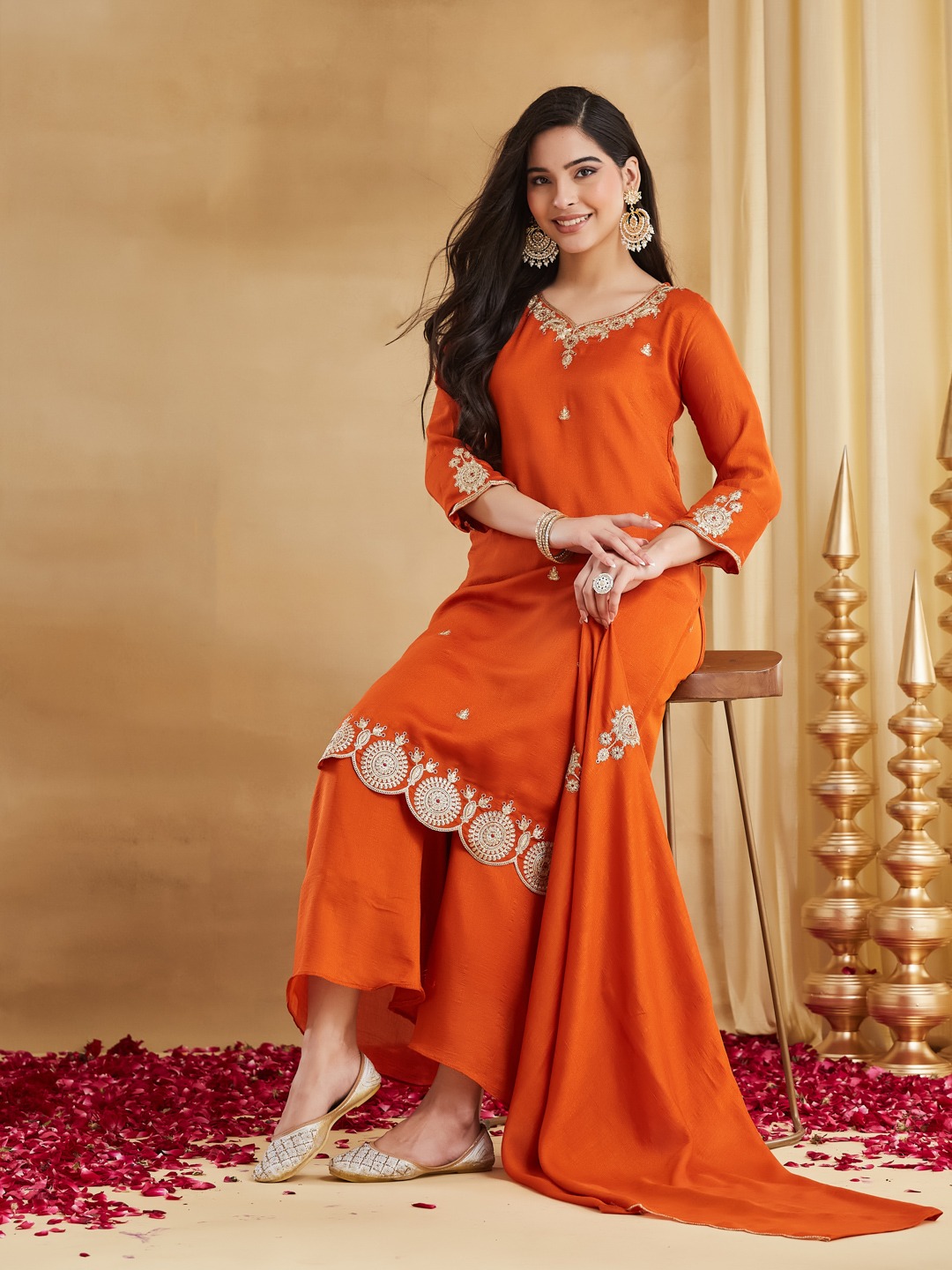
A cream kasavu saree, settu mundu or understated embroidered kurta set is appropriate for Vishukkani viewing and temple visits. Choose moderate jewellery, secure footwear and a blouse that provides comfortable coverage when sitting or bending.
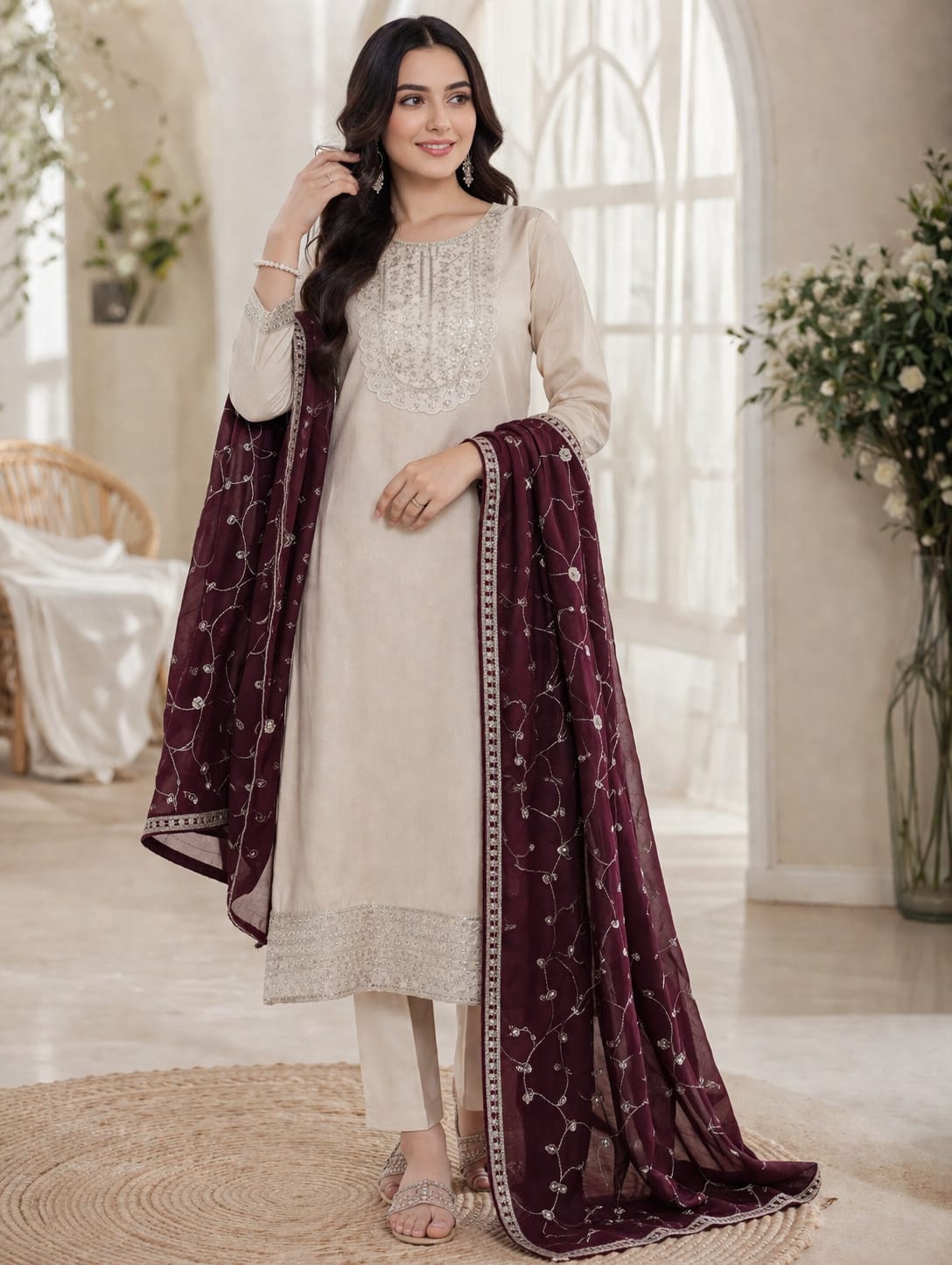
An ivory-and-gold saree keeps the focus on the ritual's lamp, mirror and kani arrangement. A muted kurta set can create a similarly composed look when a saree feels inconvenient. Elegant Beige Vichitra Silk Embroidered Kurta Set for Women offers a soft neutral base, and small gold earrings can connect the outfit to Kerala's traditional zari palette.
What works for a Vishu sadya or family gathering?
A Vishu sadya or family gathering allows a slightly richer border, brighter blouse or delicate embroidery while keeping the overall outfit breathable. Cotton, linen-cotton and lightweight Chanderi are particularly useful for warm weather and long meals.
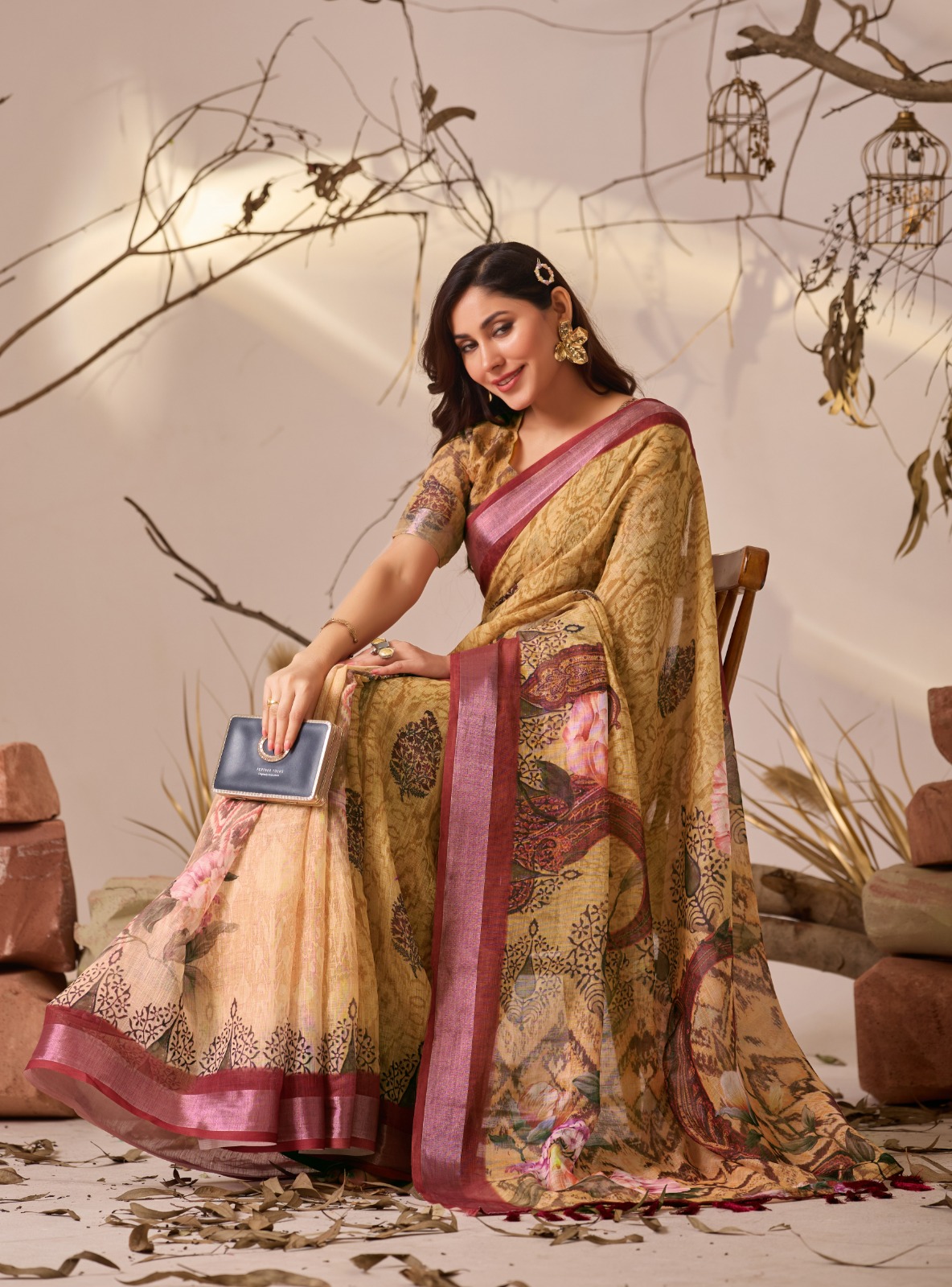
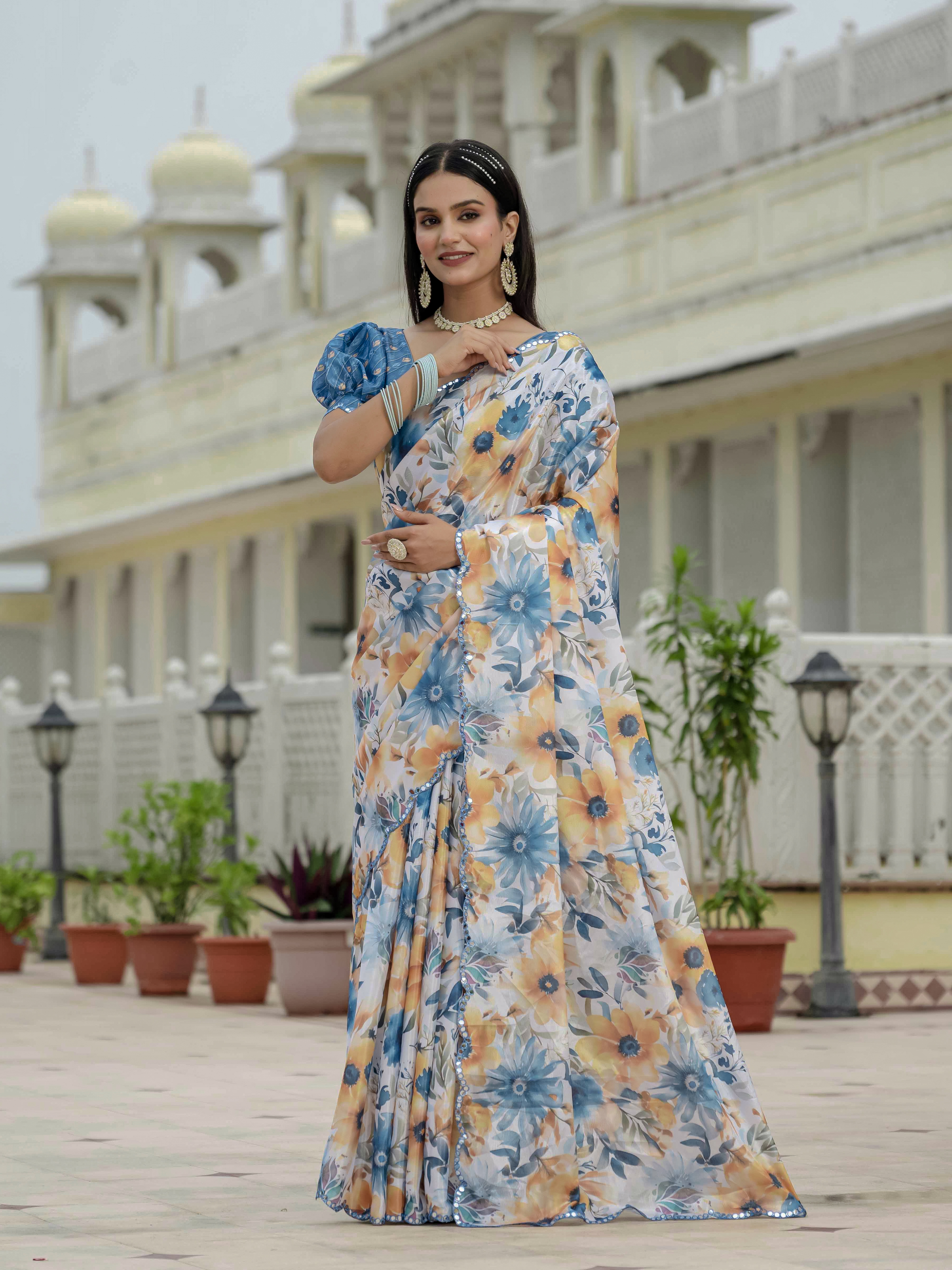
Pastel Linen Cotton Floral Print Saree with Designer Blouse gives a relaxed interpretation of festive dressing through its breathable blend and printed surface. The outfit can be made more Kerala-inspired with a low bun, jasmine flowers and a slim gold-toned chain rather than heavy layered jewellery.
Women who prefer separates can consider Pastel Blue Embroidered Chanderi Kurta Set with Dupatta. Pastel blue isn't a conventional kasavu shade, but Chanderi's light texture, delicate embroidery and dupatta create a polished outfit for daytime visits without excessive weight.
What is practical for travel, hosting and active days?
A kurta set, palazzo suit or co-ord set is the most practical Vishu choice for travel, hosting and active household work. Select a breathable fabric, a secure neckline and trousers or palazzos that don't drag on the floor.
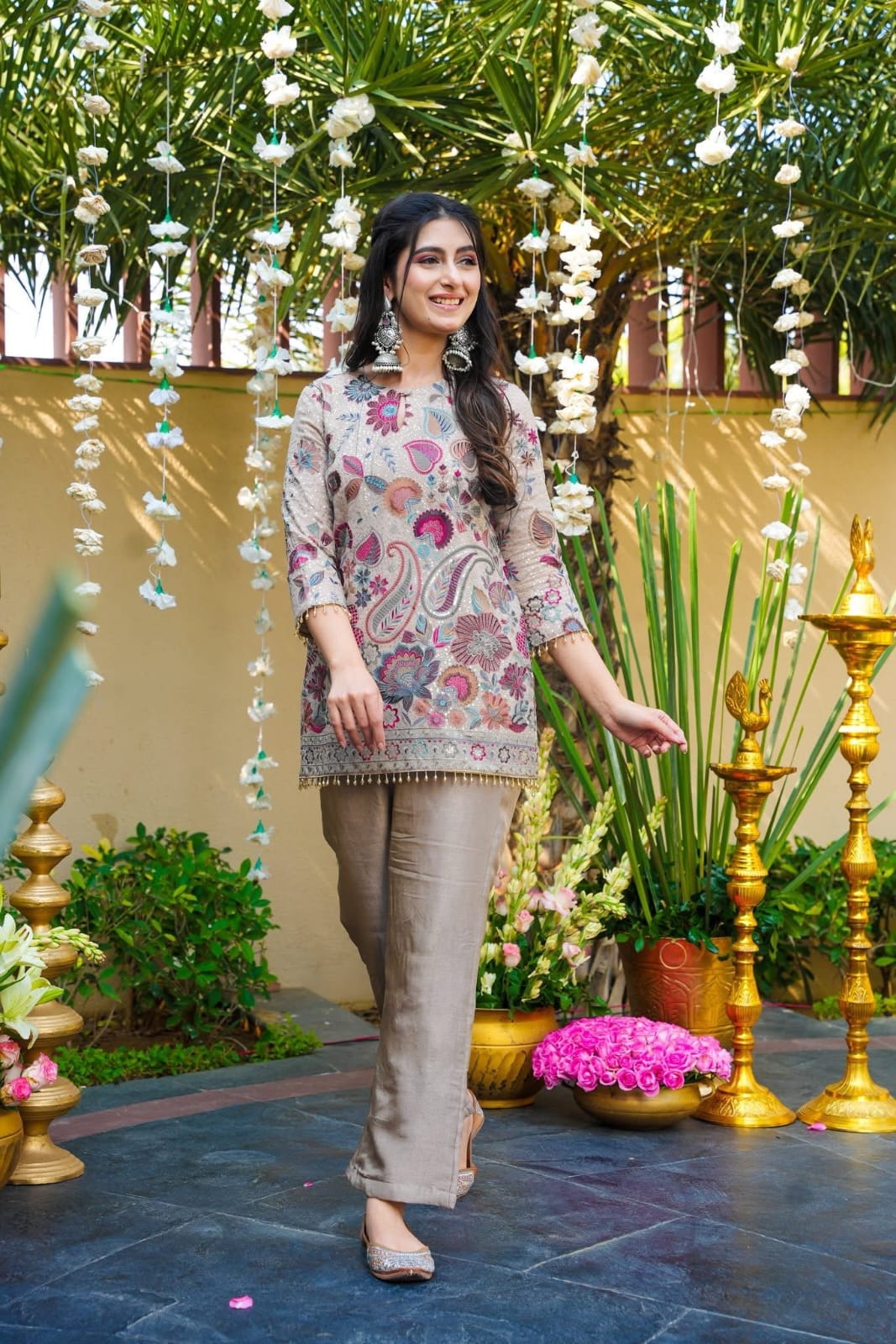
Modern Taupe Vichitra Silk Embroidered Co-Ord Set for Women can be styled with small jhumkas and a compact potli for a contemporary festive appearance. White Embroidered Viscose Jacquard Kurta Set for Women brings another light neutral option, especially when paired with a gold-bordered dupatta or a warm-toned stole.
What to Wear for Vishu? Select Suitable Colours and Fabrics
Ivory, cream, white, gold, yellow, green, red and warm pastels suit Vishu because they connect with Kerala's kasavu tradition, golden konna flowers and the season's emphasis on auspicious brightness. Colour selection can remain personal as long as the outfit feels fresh and intentional.
Konna, or Cassia fistula, is the yellow flower strongly associated with Vishu and Vishukkani. A mustard blouse, yellow dupatta or small yellow hair accessory can acknowledge that association without turning the entire outfit into a single bright shade. Green reflects foliage and works especially well with cream sarees, while red and maroon create a more formal contrast against zari.
Which fabric is comfortable for a warm Vishu day?
Cotton, linen-cotton, viscose and lightweight Chanderi are comfortable choices for a warm Vishu day because they allow easier movement and reduce heat retention. Silk and heavier jacquard are better suited to shorter ceremonies, air-conditioned venues or cooler evenings.
Cotton kasavu is valued for its crisp hand and regional character, but the fabric can crease more readily than a silk blend. Linen-cotton feels airy and develops a relaxed texture through wear. Chanderi brings a sheer, lightweight surface with a gentle festive shimmer, although a lining or inner slip may be necessary for coverage.
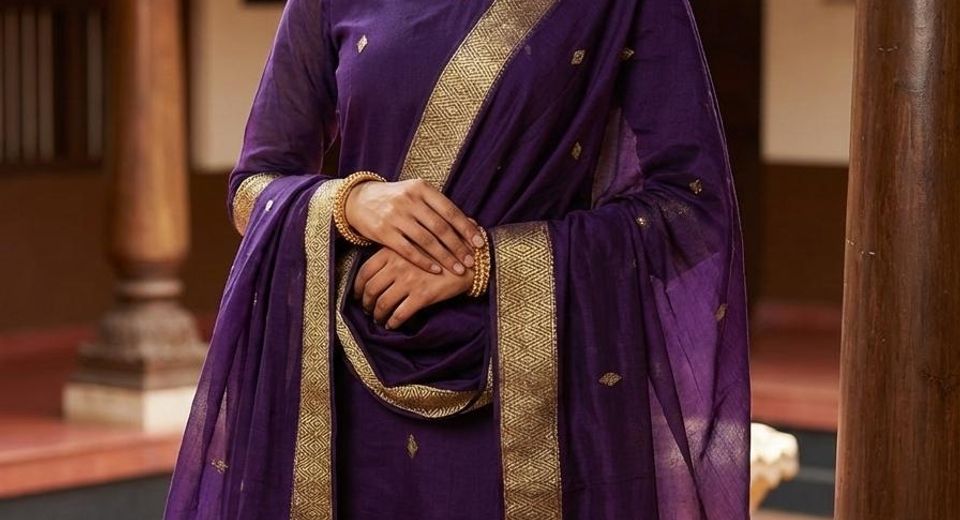
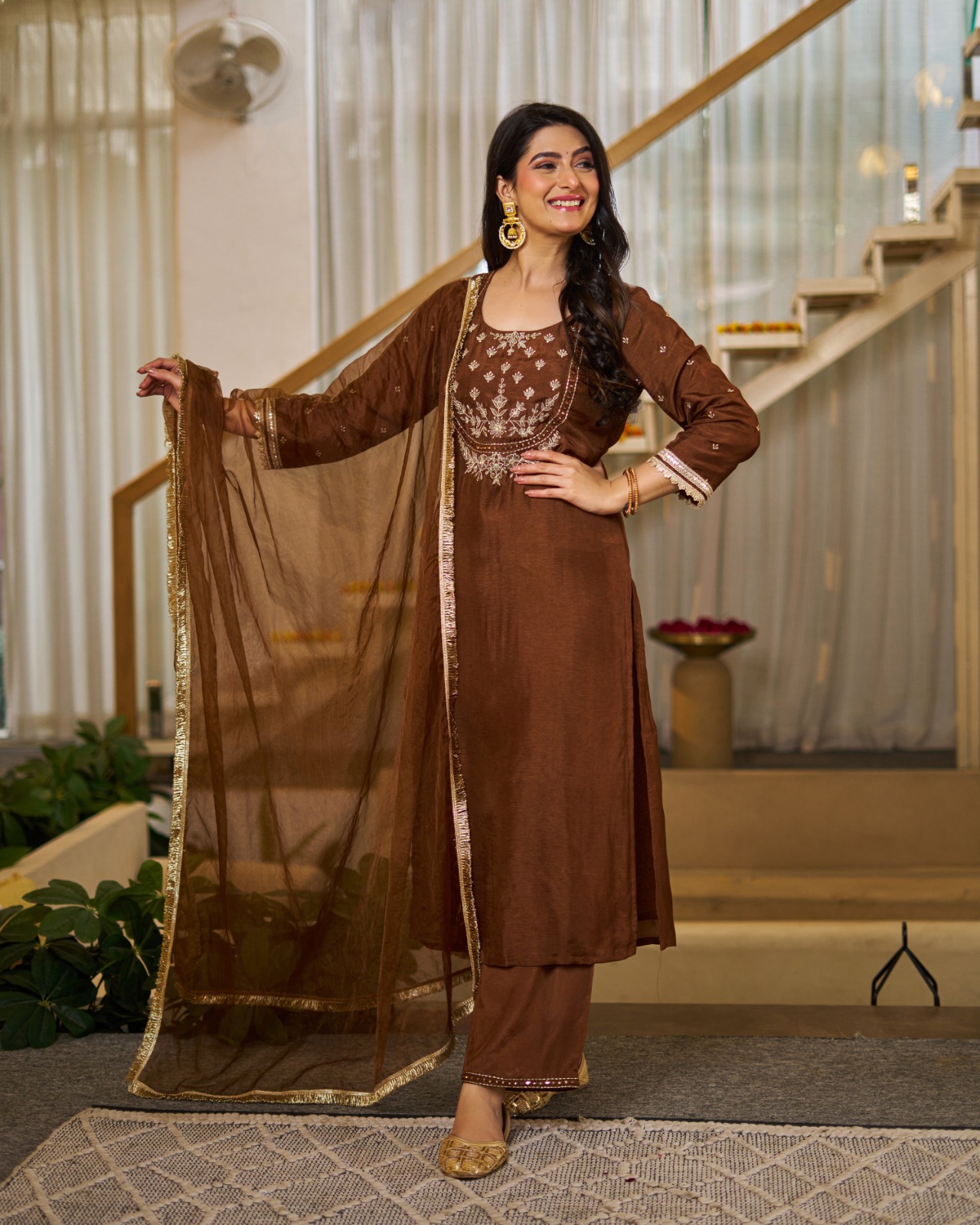
Kanchi Cotton Zari Woven Kurti Set with Traditional Dupatta brings cotton comfort and zari detail into a practical two-piece outfit. The traditional dupatta can be draped over one shoulder or folded neatly across the front when movement matters more than elaborate styling.
What to Wear for Vishu? Style a Saree Without Losing Kerala Character
A Vishu saree looks most authentic when the styling keeps the textile, border and drape visible. A fitted blouse, low bun, modest gold jewellery and restrained makeup usually create more regional coherence than adding every available festive accessory.
Which blouse colours and shapes work best?
A contrasting blouse is the simplest way to personalise an ivory saree. Maroon, emerald, mustard, rust and deep blue provide definition, while a matching cream blouse creates a quieter, more traditional result.
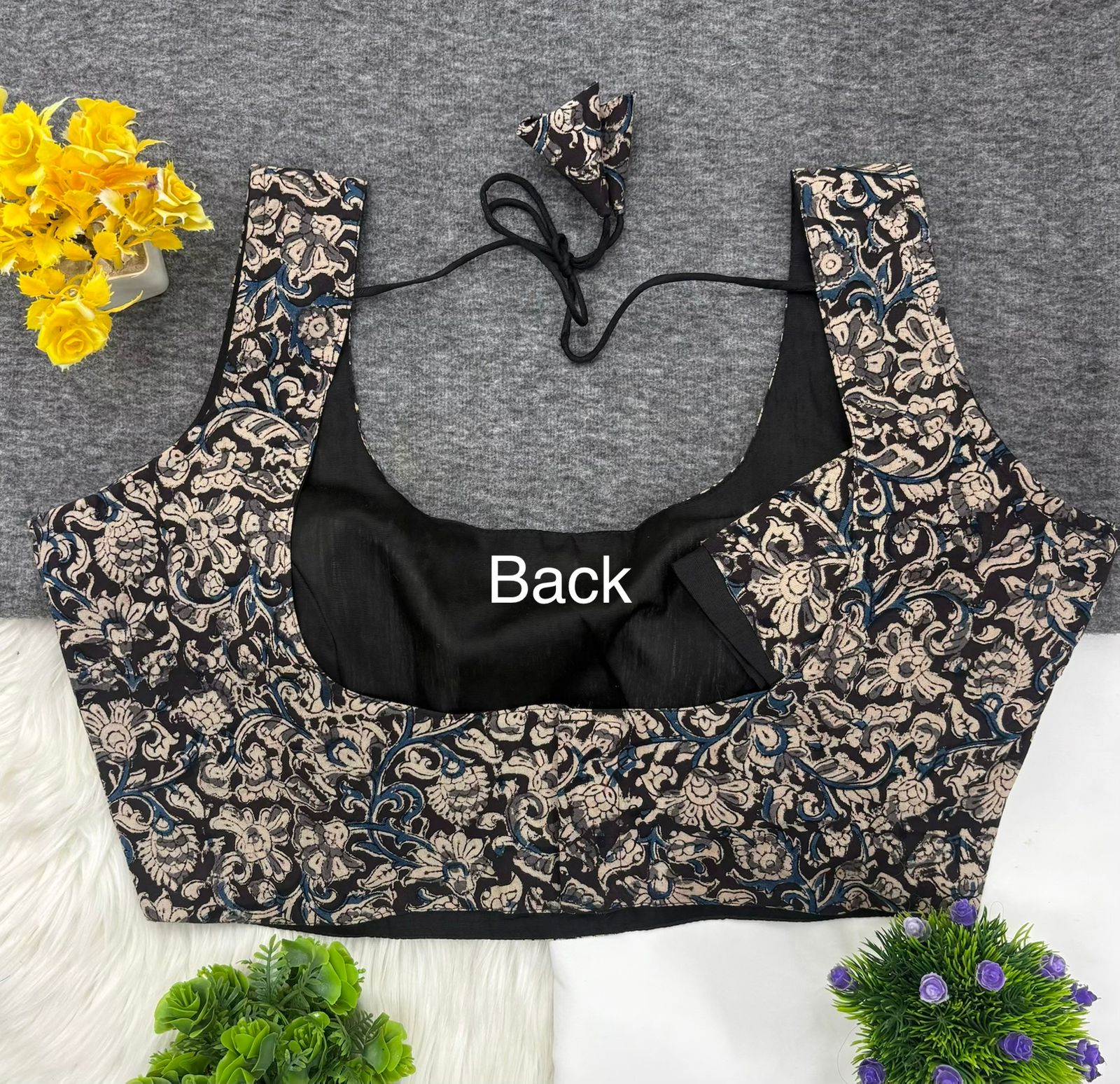
Necklines should suit the saree's formality and the wearer's comfort. A round neck, square neck or modest V-neck works across age groups. Kalamkari Cotton V Neck Collar Blouse for Women can add a handcrafted, printed element to a plain saree, but keep the remaining accessories simple so the blouse remains the focal point.
Elbow-length sleeves create a classic appearance and help the saree remain secure during temple visits or meals. Short sleeves can feel lighter in hot weather, while three-quarter sleeves offer additional coverage for formal family settings.
How should jewellery and hair be styled?
Gold-toned jewellery, including a chain, small jhumkas, bangles and a ring, complements zari without requiring a heavy bridal set. Temple jewellery suits a more elaborate gathering, while a single kasavu saree may need only earrings and a bracelet.
A low bun or braided hairstyle works especially well with Kerala dressing. Fresh jasmine, called mullappoo, can be pinned around a bun or braid, and a small string of flowers gives a recognisable festive detail. Hair should be secured before placing flowers so the arrangement remains intact through several hours of wear.
Makeup for a daytime Vishu event can remain breathable: moisturiser, sunscreen, a light base, kohl, a warm blush and a muted red or rose lip are usually sufficient. A small bindi completes the look and visually connects the blouse, saree border and jewellery.
What to Wear for Vishu? Consider Modern Kerala-Inspired Alternatives
A modern Kerala-inspired Vishu outfit can use traditional colours, zari accents, cotton textures or floral elements without reproducing a full kasavu saree. Contemporary dressing is appropriate when the outfit remains respectful, comfortable and suitable for the setting.
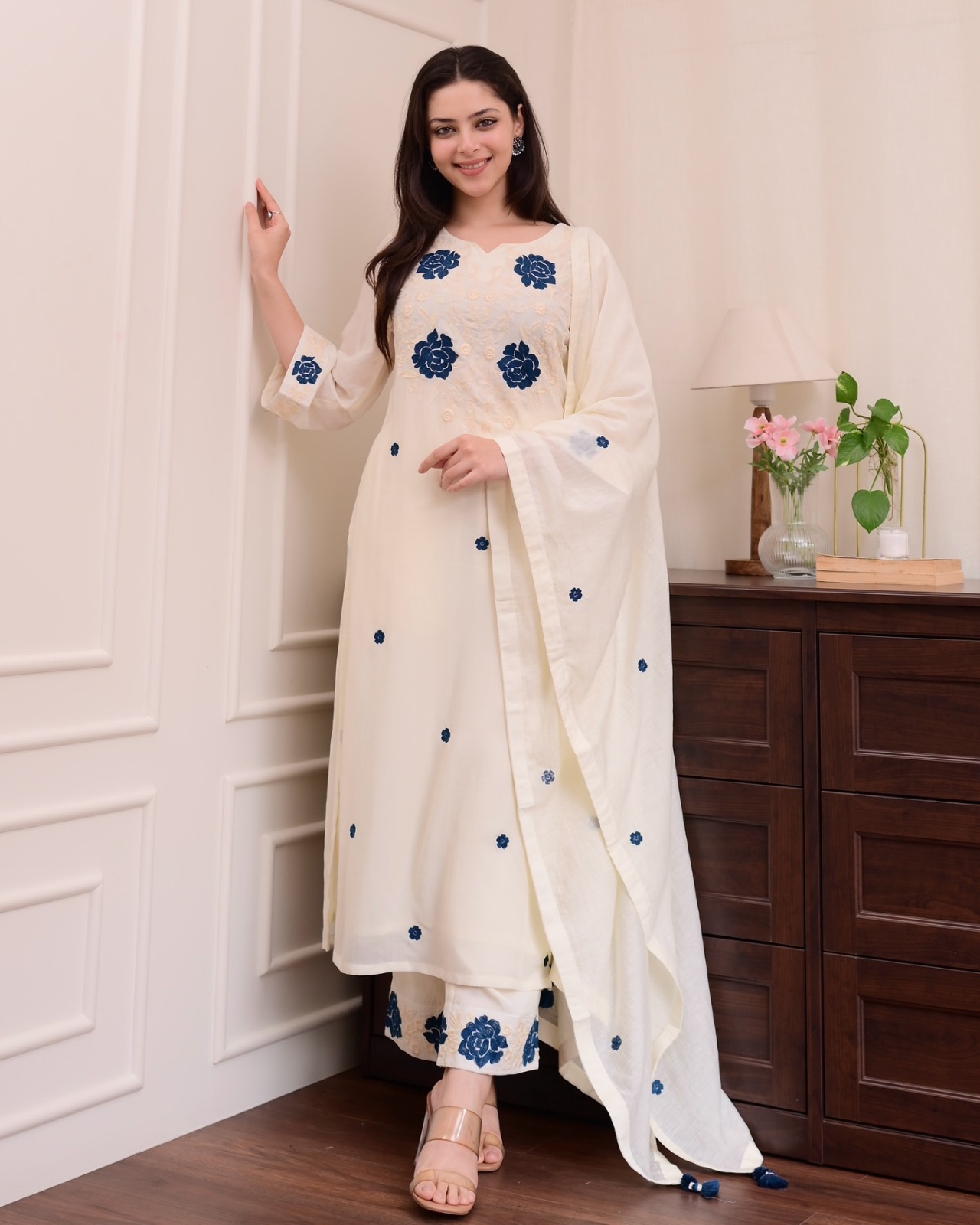
A kurta set in beige, ivory or pastel blue works well for women who don't regularly wear sarees. Add a zari-edged dupatta, gold earrings and a low bun to create a festive finish. White Embroidered Viscose Jacquard Kurta Set for Women is particularly adaptable because white embroidery can be paired with gold, yellow or green accessories.
A printed saree can also work when the print is balanced with traditional styling. Pastel Linen Cotton Floral Print Saree with Designer Blouse suits a daytime celebration, especially when paired with jasmine flowers and a warm gold blouse accessory.
A coordinated outfit can be made more traditional through accessories rather than excessive embellishment. A cream or taupe base, a gold-edged dupatta, small earrings and a yellow flower detail acknowledge Vishu's visual language while preserving a contemporary silhouette.
What to Wear for Vishu? Follow a Practical Fitting and Care Checklist
A Vishu outfit should be tried on at least one day before the celebration so the fit, drape and comfort can be checked. Early preparation also gives time for blouse adjustments, pressing, footwear changes and jewellery decisions.
- Check the length: A saree should allow the wearer to walk without stepping on the hem, and salwar trousers should not sweep the floor.
- Test the drape: Sit, bend and walk for five minutes before finalising pins and pleats.
- Inspect the blouse: Shoulder seams, armholes and closures should remain comfortable during movement.
- Coordinate footwear: Wear the footwear planned for Vishu while adjusting saree length or trouser hems.
- Pack essentials: Carry two safety pins, a small stain-removal cloth, tissues and a spare hairpin.
Kasavu cotton should be washed gently according to its care label and dried away from harsh direct sunlight to help protect the zari border. Silk, Vichitra silk, Chanderi and jacquard garments generally benefit from dry cleaning or careful professional handling, especially when embroidery or metallic thread is present.
Store zari-bordered sarees folded with soft, breathable cotton fabric rather than sealed in plastic for long periods. Refold stored sarees every few months to reduce permanent crease lines. Embroidered kurta sets should be kept clean and completely dry before storage because moisture can affect both fabric and decorative thread.
What to Wear for Vishu? Build a Complete Outfit in Five Steps
A complete Vishu outfit can be assembled by choosing the silhouette first, the colour balance second and the accessories last. This order prevents jewellery or embroidery from overpowering the garment.
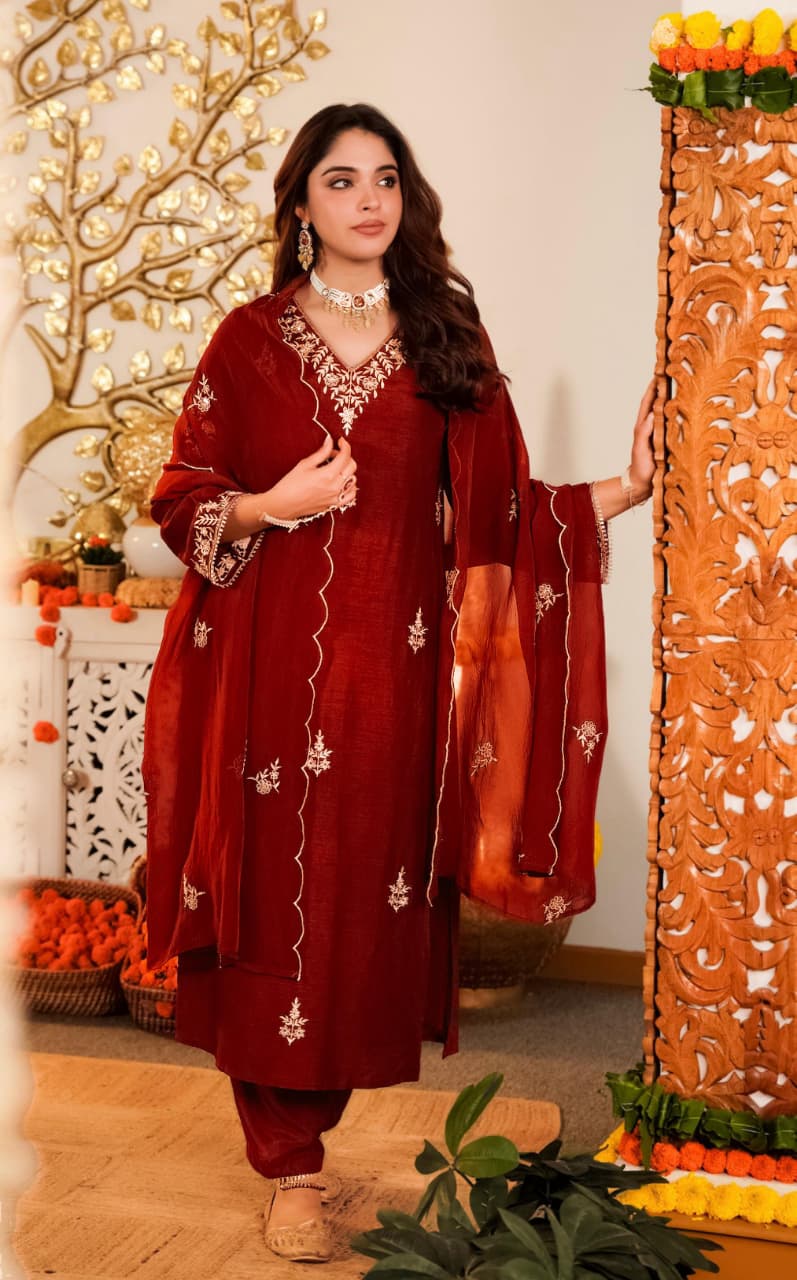
- Choose the base: Select a kasavu saree, settu mundu, cotton saree, kurta set or co-ord set according to the day's activities.
- Add one festive contrast: Use a maroon blouse, mustard dupatta, gold border or green accessory rather than combining several strong contrasts.
- Secure the fit: Check blouse comfort, saree pins, trouser length and footwear before adding jewellery.
- Use regional details: Add jasmine flowers, a small bindi, gold-toned earrings or a neatly folded dupatta.
- Keep the finish balanced: If the garment is embroidered, choose simpler jewellery; if the garment is plain, let the border, flowers or blouse provide interest.
The strongest Vishu outfits don't depend on heavy decoration. A clean ivory saree with a coloured blouse, a cotton kurta set with a zari dupatta or a lightweight Chanderi ensemble can look festive when the fit is precise and the styling respects Kerala's visual traditions.
Common Questions About Choosing a Vishu Outfit for Women
What is the most traditional outfit to wear for Vishu?
A kasavu saree or settu mundu is the most traditional outfit for women during Vishu. Ivory, cream or white fabric with a gold zari border reflects Kerala's festive dressing tradition and can be paired with a contrasting blouse and modest gold jewellery.
Can I wear a salwar suit instead of a saree for Vishu?
Yes, a salwar suit is suitable for Vishu when it uses a festive colour, refined embroidery, breathable fabric or zari detail. Beige, ivory, white, pastel blue and warm gold work particularly well with small earrings, a bindi and a neatly styled dupatta.
Which colour is considered best for a Vishu outfit?
Ivory, cream, white and gold are the most recognisable Vishu colours, while yellow, green, red and maroon make attractive accents. Yellow has a special visual connection with konna flowers, which are associated with Vishukkani.
Is a kasavu saree comfortable for a hot Vishu day?
A cotton kasavu saree is generally comfortable for a hot Vishu day because cotton is breathable, although its crisp texture can crease during long wear. Linen-cotton sarees, lightweight Chanderi and cotton kurta sets are practical alternatives when more movement or travel is expected.
How can I style a simple Kerala saree for Vishu?
Style a simple Kerala saree with a contrasting blouse, small gold-toned earrings, a low bun, jasmine flowers and a small bindi. Keep the drape neat and allow the gold zari border to remain visible instead of covering it with a large dupatta or excessive jewellery.
What should I wear for Vishu if I do not usually wear ethnic clothes?
A lightweight kurta set or co-ord set in beige, ivory, white, taupe or pastel blue is an easy choice for someone new to ethnic dressing. Add one Kerala-inspired detail, such as a gold-bordered dupatta, jasmine flowers or small jhumkas, for a festive finish.