

What to Wear for Mattu Pongal? Traditional Outfit Ideas for Women begins with one practical principle: choose an outfit that respects the festival's agricultural meaning and remains comfortable through several hours of rituals, cooking, walking and family visits. A breathable saree, secure blouse, flat footwear and a few classic details usually serve the day better than heavy embellishment. Mattu Pongal is the third day of the four-day Thai Pongal festival, when cattle are bathed, decorated, fed and honoured for their contribution to farming.
Women may dress differently for a temple visit, a village celebration, a family puja or an outdoor cattle ceremony. Cotton and linen cotton work well in bright daytime weather, while soft silk or Banarasi silk suits a formal gathering. The best choice depends on movement, venue, temperature and how long the outfit must remain comfortable.
Heritage Outfit Ideas for Women at a Family Celebration
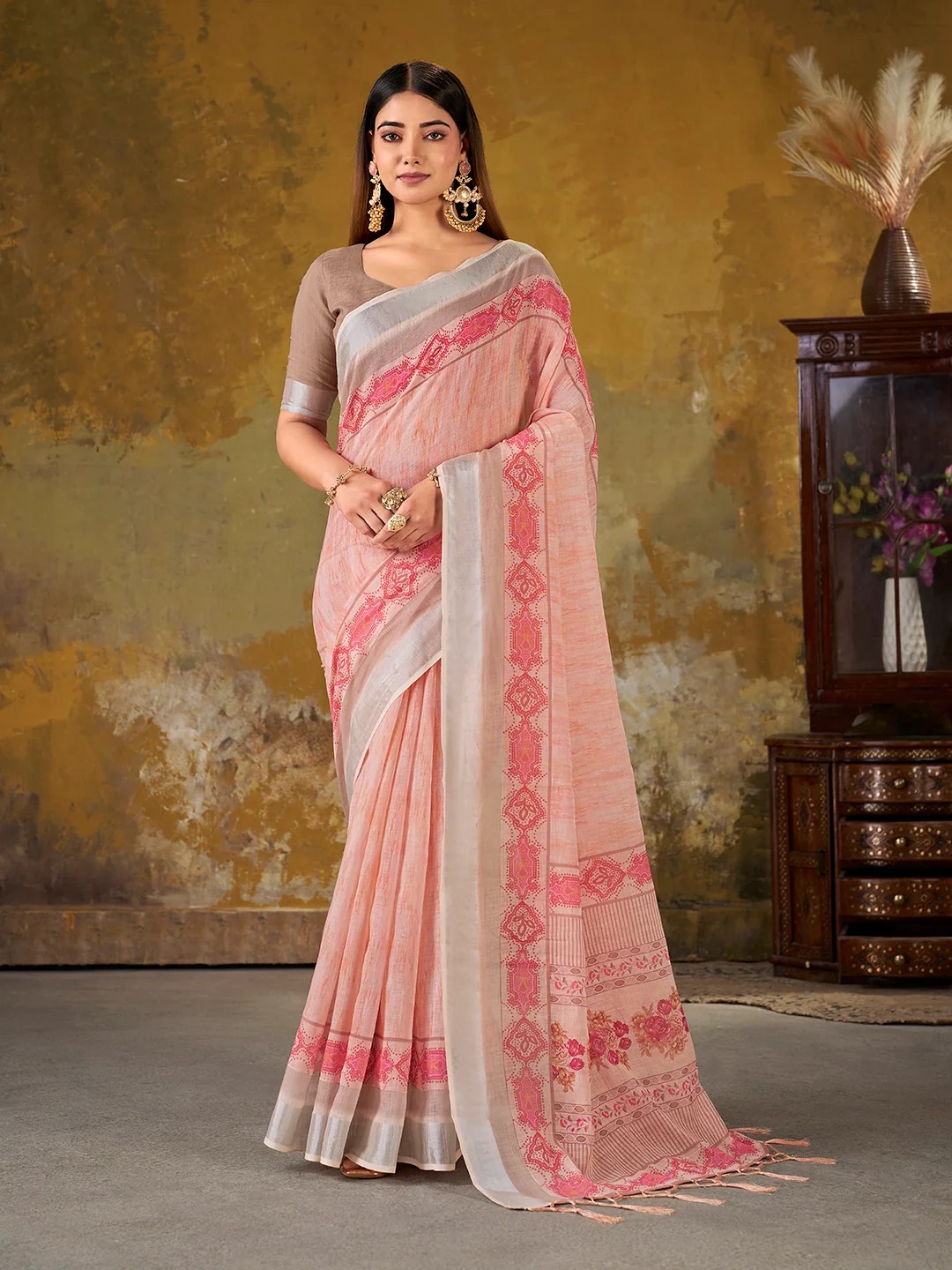
A time-honoured saree with a well-fitted blouse is the most adaptable choice for a family Mattu Pongal celebration. Cotton, linen cotton, Chettinad cotton and lightweight silk create a festive South Indian silhouette without restricting movement.
A saree is particularly useful when the day includes drawing kolam, preparing sugarcane, cooking sakkarai pongal, offering prayers and sitting on the floor for a meal. A medium-width border gives the outfit definition, while a securely pinned pallu reduces repeated adjustments. Five to seven discreet safety pins, a firm petticoat waistband and a blouse with comfortable armholes can improve the drape considerably.
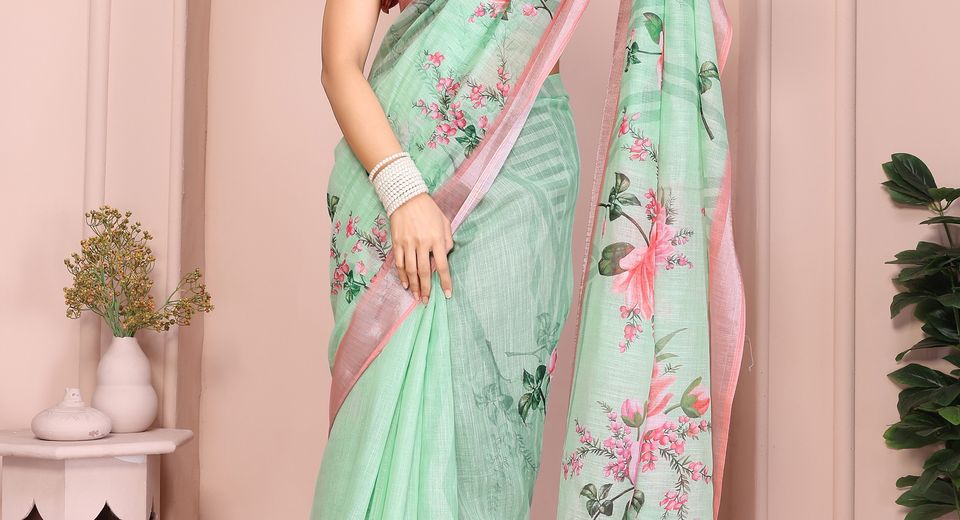
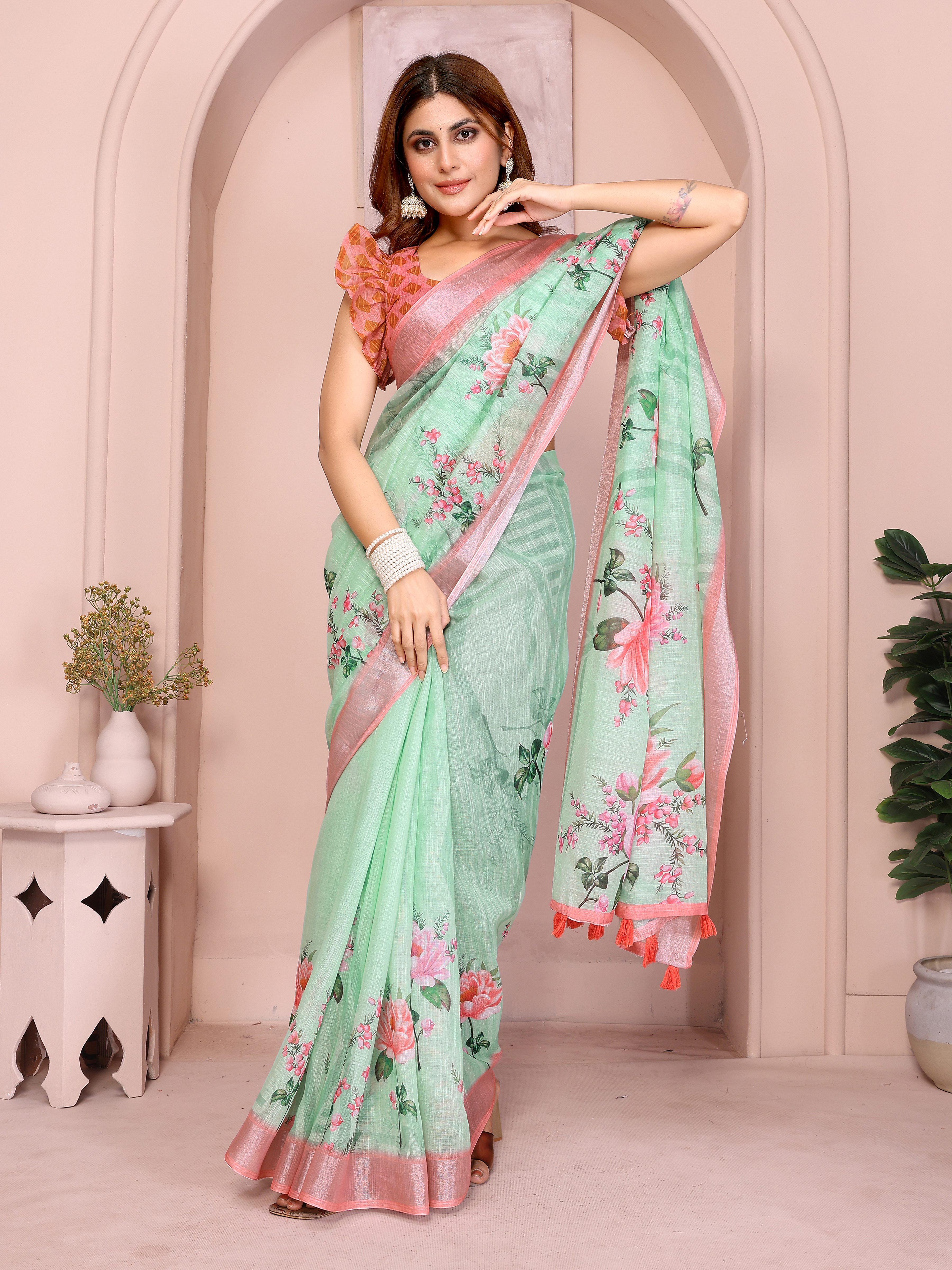
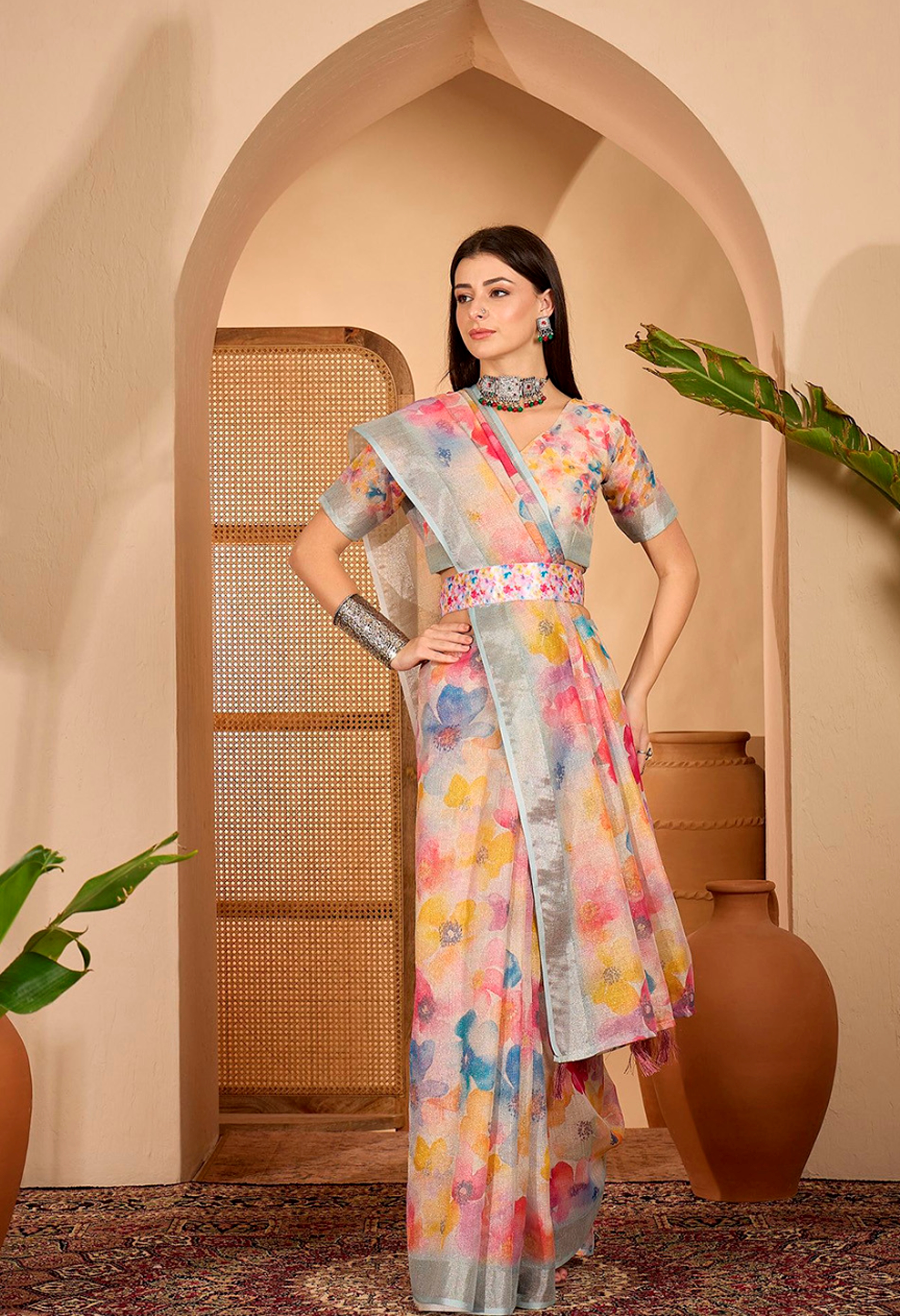
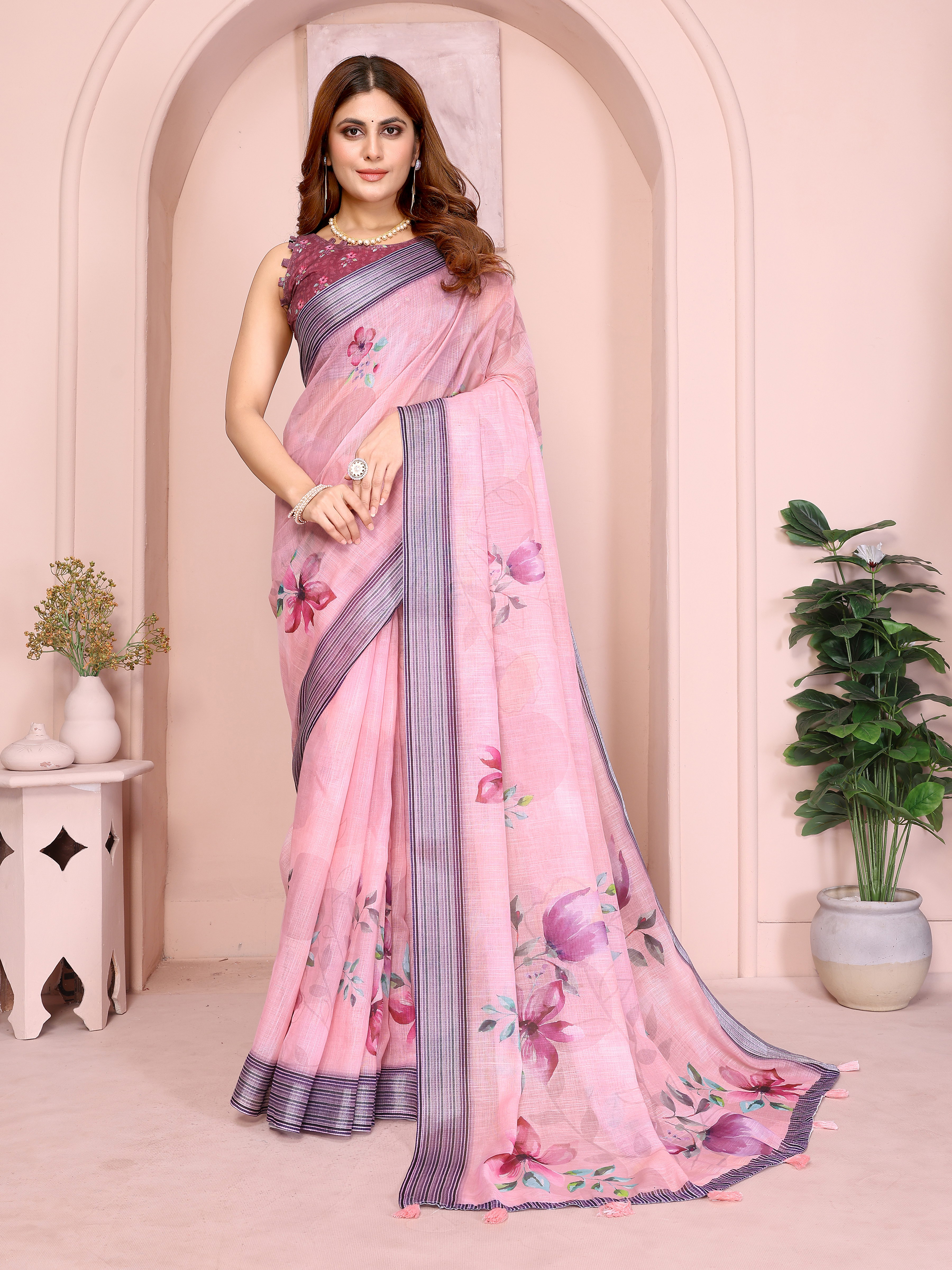
Floral prints and fresh colours suit relaxed daytime gatherings. Mint Green Floral Linen Cotton Saree with Pink Border Style combines a cool base with a warm border, creating a cheerful morning look. Pastel Floral Printed Linen Cotton Saree with Blouse is useful when you want a coordinated blouse rather than searching for a separate colour match.
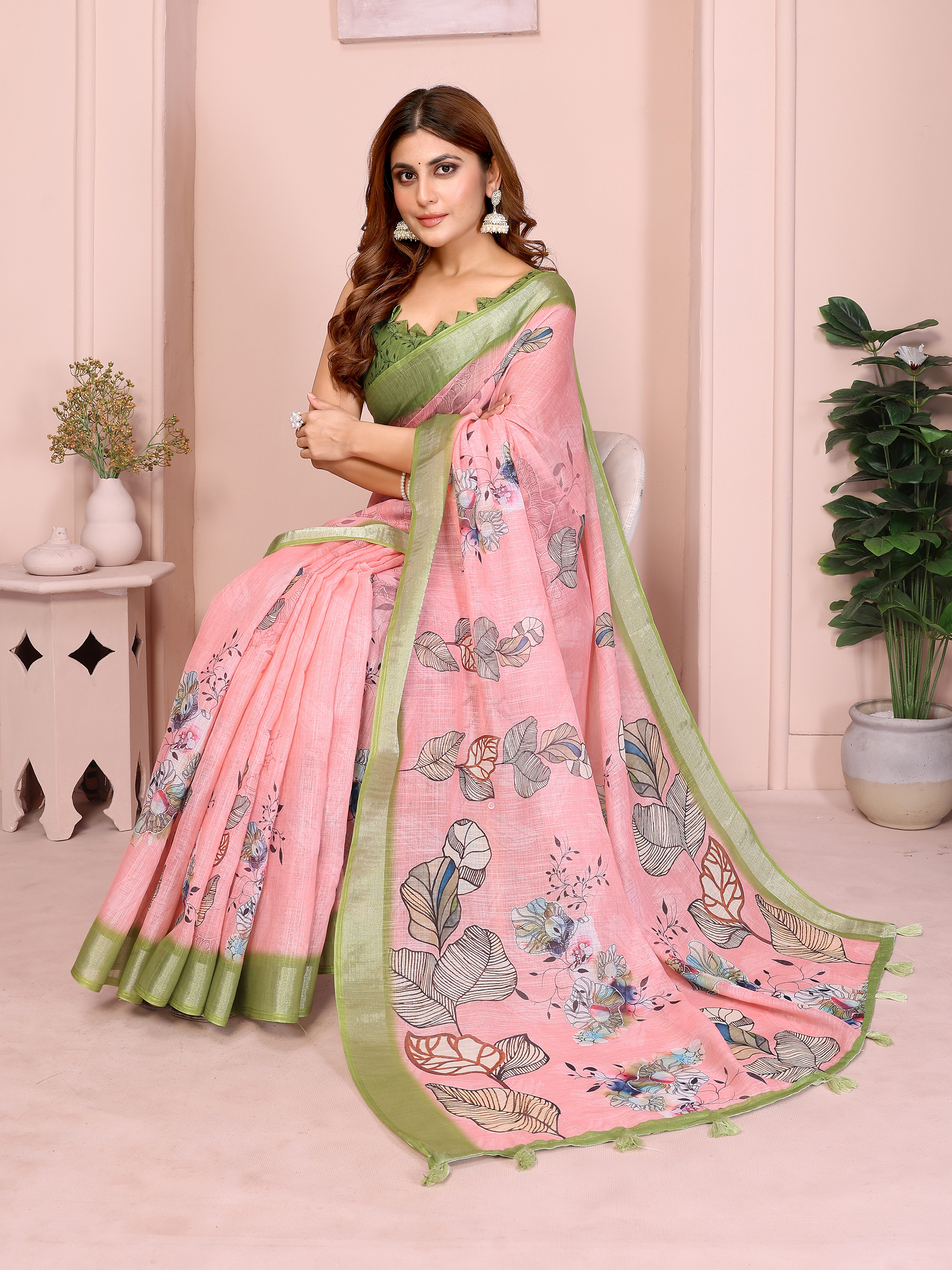
Contrast borders can make a lightweight saree feel more festive without adding weight. Pink Floral Linen Cotton Saree with Green Border for Ladies uses a lively pink-and-green combination that works well in outdoor photographs. Pink Floral Linen Cotton Saree with Elegant Contrast Border makes the border the main styling feature, so the look can remain polished with simple jewellery.
When should a woman choose a silk saree for Mattu Pongal?
A woman should choose a silk saree for Mattu Pongal when the event includes a formal puja, a large family gathering or an evening celebration where ceremonial dressing is expected. Maroon Banarasi Soft Silk Saree with Golden Zari Border offers a richer appearance through its deep maroon colour and zari border while remaining more flexible than some heavy heritage silks.
Banarasi silk, Kanjeevaram and soft silk have different visual and practical qualities. Banarasi silk is recognised for woven brocade and metallic patterning. Kanjeevaram is known for a structured body, time-honoured motifs and substantial zari. Soft silk generally provides a lighter, easier-to-drape option for women who want a formal appearance without a very heavy saree.
Classic Outfit Ideas for Women by Fabric
The most suitable Mattu Pongal fabric depends on heat, movement, ceremony length and the amount of outdoor activity planned. Cotton and linen cotton are dependable for daytime celebrations, while soft silk and Banarasi silk are better suited to formal or indoor events.
- Cotton: Cotton absorbs moisture, allows airflow and usually maintains a crisp time-honoured appearance. Handloom cotton and Chettinad cotton are practical for long daytime functions.
- Linen cotton: Linen cotton feels light and airy in warm weather. The fabric can crease more quickly than pure cotton, so pressing the saree before draping helps maintain a neat finish.
- Chanderi: Chanderi has a delicate, slightly sheer texture that creates an elegant festive look. An opaque blouse or suitable lining is important when the weave is translucent.
- Soft silk: Soft silk brings a ceremonial finish with less stiffness than heavier silk sarees. The fabric works well for indoor pujas and family photographs.
- Banarasi silk: Banarasi silk brings visible brocade and zari detail. The fabric is appropriate when the saree itself should carry most of the festive impact.
Fabric weight affects comfort as much as appearance. A very light saree may shift in wind, while a heavy silk saree can become tiring after several hours of standing. A cotton petticoat, a secure drawstring and pleats pinned just above the waist help prevent the saree from loosening during movement.
Printed sarees also benefit from a simple blouse in a border shade. A printed blouse can compete with a floral saree, whereas a solid blouse in green, pink, peach, cream or gold often creates a clearer visual balance. Zari doesn't need to cover the entire garment; a narrow zari border or zari blouse trim can provide enough festive detail for a daytime Mattu Pongal outfit.
Time-honoured Outfit Ideas for Women in Festive Colours
Yellow, turmeric, green, red, pink, orange, maroon and cream are strong colour choices for Mattu Pongal because they connect naturally with sunlight, crops, flowers, turmeric and harvest celebrations. No single colour is compulsory, so select a shade that suits the venue and the time of day.
Green works especially well for an agricultural festival because it recalls crops and new growth. Yellow and orange feel bright in morning sunlight and complement marigold decorations. Red and maroon create a more formal appearance when combined with gold or antique-gold jewellery. Cream with a red, green or maroon border gives a handloom-inspired result without dense embroidery.
Pastel shades are equally appropriate for a daytime celebration. Mint green, blush pink, peach, powder blue and ivory look fresh in direct sunlight. A pastel saree appears more time-honoured when paired with a contrasting blouse, jasmine flowers, a small bindi and gold-toned jewellery.
Colour contrast can make a simple saree look considered. Pink with green creates a lively harvest-inspired combination. Peach with gold feels soft and refined. Maroon with antique gold suits an evening puja. Cream with green or red gives the impression of a classic woven saree, even when the fabric is a lightweight printed textile.
Time-honoured Outfit Ideas for Women with the Right Drape
A comfortable fitted blouse, a secure Nivi drape and moderate jewellery create a dependable Mattu Pongal look. The blouse should allow the shoulders and arms to move freely if you'll prepare food, draw kolam, carry offerings or help with decorations.
Elbow-length sleeves provide a heritage appearance and useful coverage during outdoor activities. A round, square or modest V neckline can suit different saree styles. A plain blouse in a border colour is usually the most versatile choice for a floral linen cotton saree.
The Nivi drape is practical because the pleats fall centrally and the pallu can be placed over the left shoulder. Pin the top of the pleats just above the waist, secure the pallu at the shoulder and add a hidden waist pin if you expect to walk frequently. The pallu should be long enough to cover the torso comfortably but not so long that it brushes the ground.
Gold-toned jewellery, temple jewellery and oxidised silver all suit Mattu Pongal. A short necklace with jhumkas is sufficient for a printed saree. A silk saree can support layered necklaces, a long haram or a time-honoured pendant. Lightweight earrings are safer than large, swinging designs when the celebration involves outdoor movement or proximity to decorated cattle.
Jasmine gajra is a natural finishing detail for a Tamil festive outfit. Fresh jasmine works well with a low bun or braid, while a simple gold hair accessory can remain neat for a full-day celebration. Glass bangles, a small bindi and a discreet waist belt can complete the look without competing with the saree border.
Time-honoured Outfit Ideas for Women Outdoors
Women attending outdoor Mattu Pongal activities should choose breathable fabric, stable footwear and a drape that stays secure while walking. Outdoor celebrations may involve uneven ground, direct sunlight, cattle areas, temporary cooking spaces and long periods of standing.

Linen cotton and cotton are usually more practical than heavily embellished silk for this setting. Select a border that remains visible but doesn't drag on the ground. Pin the pallu at the shoulder and waist if you need both hands free for carrying offerings, serving food or helping with decorations.
Flat sandals with a broad strap provide better stability than narrow heels. Wedge sandals may work on a paved venue but are less suitable for wet soil, grass or crowded cattle areas. A small cloth bag can hold spare pins, tissues, a comb, lip balm and a compact safety kit.
Sun protection can remain compatible with time-honoured dressing. A breathable cotton shawl can cover the shoulders during an early morning ceremony, and a light stole can provide protection while travelling. Synthetic outer layers may trap heat, so cotton or linen layers are generally more comfortable in bright weather.
White or pale footwear can show dust quickly during outdoor celebrations. Tan, brown, gold or metallic sandals are easier to maintain and coordinate with most festive saree colours. Keep the footwear broken in before the festival; new sandals can cause discomfort when the event involves several hours of walking.
Heritage Outfit Ideas for Women Beyond Sarees
A salwar suit or sharara can work for Mattu Pongal when movement, modesty or personal comfort makes a saree less practical. A straight-cut cotton suit, breathable Anarkali or light sharara set retains a festive Indian appearance while allowing easier walking.
Choose cotton, linen blend or light rayon for a daytime celebration. Heavy velvet, dense sequins and thick synthetic layers are better reserved for short indoor events because they can feel warm during cooking and outdoor rituals. A kurta with a printed dupatta and small zari accents gives a classic result without requiring saree-draping experience.
Pink Mirror Work Zari Sharara Suit Set Online - Varnavi shows how a festive sharara can replace a saree for a more movement-friendly silhouette. Mirror work and zari create celebration-ready detail, while a coordinated kurta, sharara and dupatta reduce the need to match separate garments.
For a salwar suit, keep the dupatta secure with two small pins near the shoulders if you'll be active. A three-quarter sleeve kurta gives useful coverage, and straight or lightly flared trousers are easier to manage than very long palazzos near outdoor cooking spaces. Comfortable footwear remains important because a sharara doesn't eliminate the need to walk or stand.
A printed cotton suit can be styled with jhumkas, a bindi and braided hair. A more embellished sharara can use smaller earrings and fewer bangles so that the outfit doesn't become visually crowded. The same colour principles apply: green, yellow, pink, peach, maroon and cream all work well when balanced with gold or contrasting accents.
Heritage Outfit Ideas for Women Planned by Activity
The most reliable outfit decision comes from matching clothing to the actual schedule rather than choosing only by colour or trend. A morning temple visit, an outdoor cattle ceremony and an evening family dinner place different demands on fabric and footwear.
- For a temple visit: Choose a cotton, Chanderi or soft silk saree with a modest blouse, covered shoulders and secure pleats. Small jhumkas, a bindi and a simple necklace are enough.
- For cooking and household rituals: Choose cotton or linen cotton, pin the pallu securely and avoid very long sleeves or loose jewellery. Flat footwear is safer around hot vessels and wet floors.
- For an outdoor cattle ceremony: Choose a lightweight saree or salwar suit, stable sandals and minimal dangling accessories. Keep the hem away from soil and use a waist pin for extra security.
- For a formal family gathering: Choose soft silk, Banarasi silk or a saree with a defined zari border. Add a structured blouse, traditional jewellery and a neat bun or braid.
- For photographs: Select one strong visual feature, such as a contrast border, zari pallu, jasmine flowers or statement earrings. Too many competing details can hide the saree's pattern.
Planning the outfit one day in advance prevents common festival problems. Press the saree, check the blouse fit, test the petticoat, pair the jewellery and wear the chosen sandals indoors for a few minutes. These small steps make a traditional outfit more comfortable and reduce last-minute alterations.
Mattu Pongal dressing can be festive without being impractical. A breathable saree or coordinated salwar suit, a secure drape, suitable footwear and meaningful traditional details allow women to participate fully in the celebration while respecting its connection to farming, cattle and family gratitude.
Common Questions About Choosing a Mattu Pongal Outfit
What is the most traditional outfit for women on Mattu Pongal?
A saree with a fitted blouse is the most traditional and versatile choice for women on Mattu Pongal. Cotton suits daytime rituals, while Kanjeevaram, Banarasi silk or soft silk works well for a formal puja or family gathering.
Which saree fabric is comfortable for an outdoor Mattu Pongal celebration?
Cotton and linen cotton are usually the most comfortable fabrics for an outdoor Mattu Pongal celebration. Both allow airflow, although linen cotton may crease more quickly and should be pressed before wearing.
Which colours are suitable for Mattu Pongal?
Green, yellow, orange, pink, red, maroon, cream and gold are suitable colours for Mattu Pongal. Pastel shades such as mint green and peach are also appropriate for daytime celebrations when paired with a contrasting blouse or traditional jewellery.
Can I wear a salwar suit instead of a saree for Mattu Pongal?
Yes, a salwar suit or sharara is suitable when easier movement or personal comfort makes a saree impractical. Choose cotton, linen blend or light rayon for daytime events and secure the dupatta with small pins.
How should I style a saree for Mattu Pongal outdoor rituals?
Pin the pleats above the waist, secure the pallu at the shoulder and add a hidden waist pin for outdoor rituals. Flat sandals, lightweight jewellery and a low bun or braid make the outfit safer and easier to manage.
Is zari suitable for a daytime Mattu Pongal outfit?
A narrow zari border, zari blouse trim or lightly embellished pallu is suitable for daytime Mattu Pongal dressing. Dense zari and heavy embellishment are better reserved for shorter indoor events because they can add weight and warmth.





