A Kanchipuram temple visit often involves heat, walking, queues, stone floors and time spent sitting or standing near active shrines. What to Wear for a Kanchipuram Temple Visit Without Buying Bridal Silk therefore comes down to breathable fabric, a tight drape, covered shoulders and practical footwear rather than a heavily embellished wedding wardrobe. Cotton sarees, linen-cotton sarees, Kanchi cotton sets and lightweight Chanderi outfits can all look respectful without feeling formal or expensive.
Temple dressing in Tamil Nadu is guided more by neatness, modesty and suitability than by a requirement to wear a Kanjeevaram bridal saree. A clean outfit with a sensible hemline, comfortable movement and a properly covered torso is usually more useful than a heavy silk ensemble designed for a reception. The right clothing should also survive a long day of travel without constant adjustment.
What to Wear for a Kanchipuram Temple Visit Without Buying Bridal Silk
The most reliable choice is a breathable cotton or linen-cotton outfit with a modest silhouette, a secure drape and minimal loose embellishment. A saree, kurta set or salwar suit can work equally well when the clothing is comfortable, opaque and easy to manage.
Visitors don't need to purchase bridal silk merely because Kanchipuram is associated with Kanjeevaram weaving. Kanjeevaram silk remains culturally important for weddings, festivals and formal ceremonies, but a temple visit has different practical demands. Cotton absorbs perspiration, linen-cotton allows airflow. Lightweight Chanderi offers a dressier finish without the weight of zari-rich silk.
For a saree, choose a blouse with sleeves or broad shoulder coverage and pin the pallu near the shoulder. For a kurta or salwar suit, select a knee-length or longer kurta, full or three-quarter sleeves and a dupatta that stays in place. These details create a composed appearance while reducing the need to rearrange clothing in crowded spaces.
Which fabrics work best in Kanchipuram weather?
Cotton, linen-cotton and light Chanderi are the most practical fabrics for a warm Kanchipuram temple visit. These materials provide better ventilation and easier movement than heavily lined silk, velvet or dense synthetic brocade.
Cotton for heat, walking and repeated wear
Cotton is a strong first choice because the fibre absorbs moisture and feels less clingy in humid conditions. Handloom cotton may crease during travel. But those creases are generally preferable to the discomfort of a thick, heat-trapping garment. A medium-weight cotton saree also stays more manageable when tucked securely at the waist.
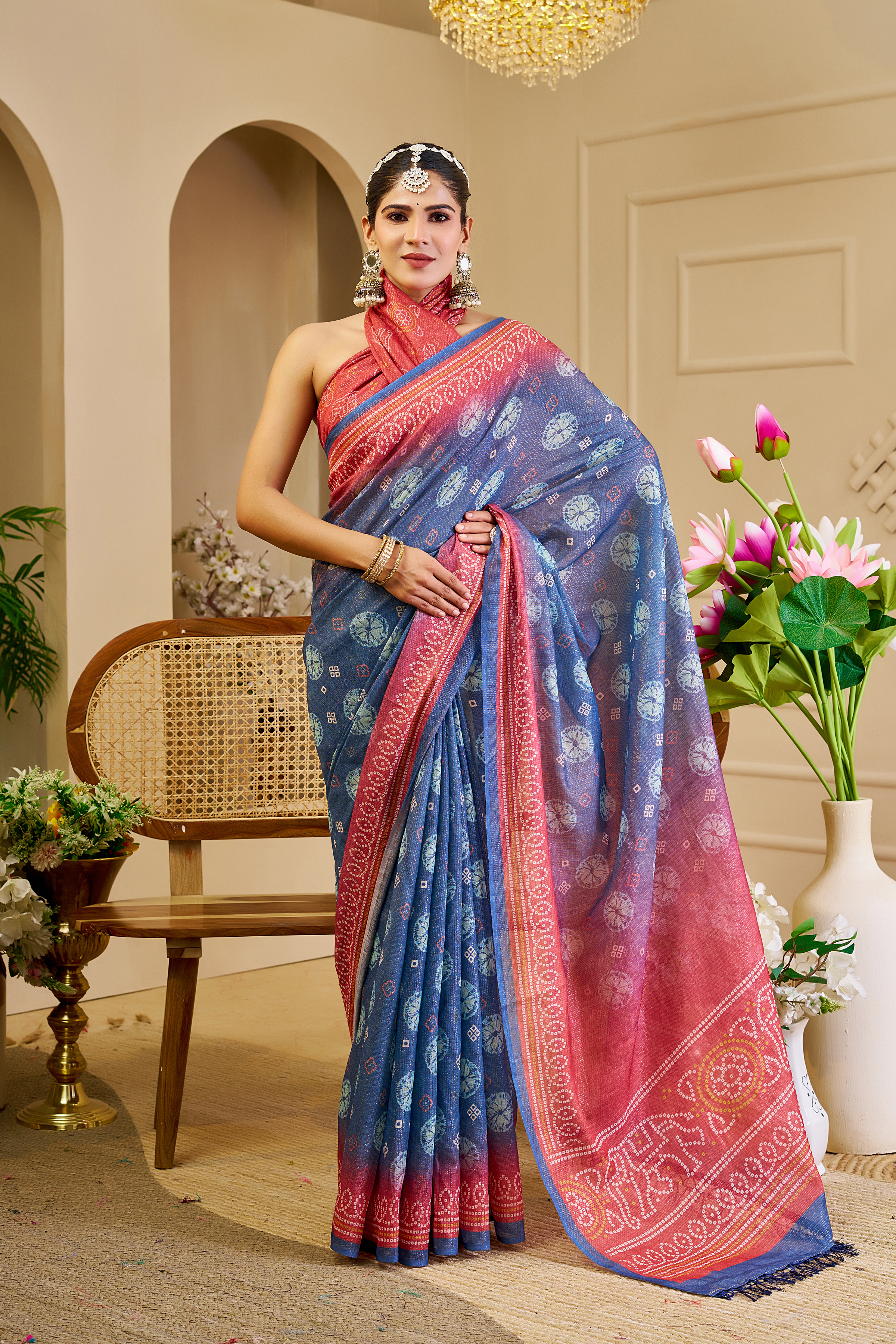
The Varnavi Vastra Green Heritage Cotton Saree demonstrates how a traditional saree can remain visually grounded without bridal-level ornamentation. A green cotton saree pairs naturally with temple surroundings, especially when the blouse is simple and the jewellery is restrained. A cotton saree with a woven border can provide enough definition for photographs without requiring a full zari-heavy look.
Linen-cotton for an airy, polished alternative
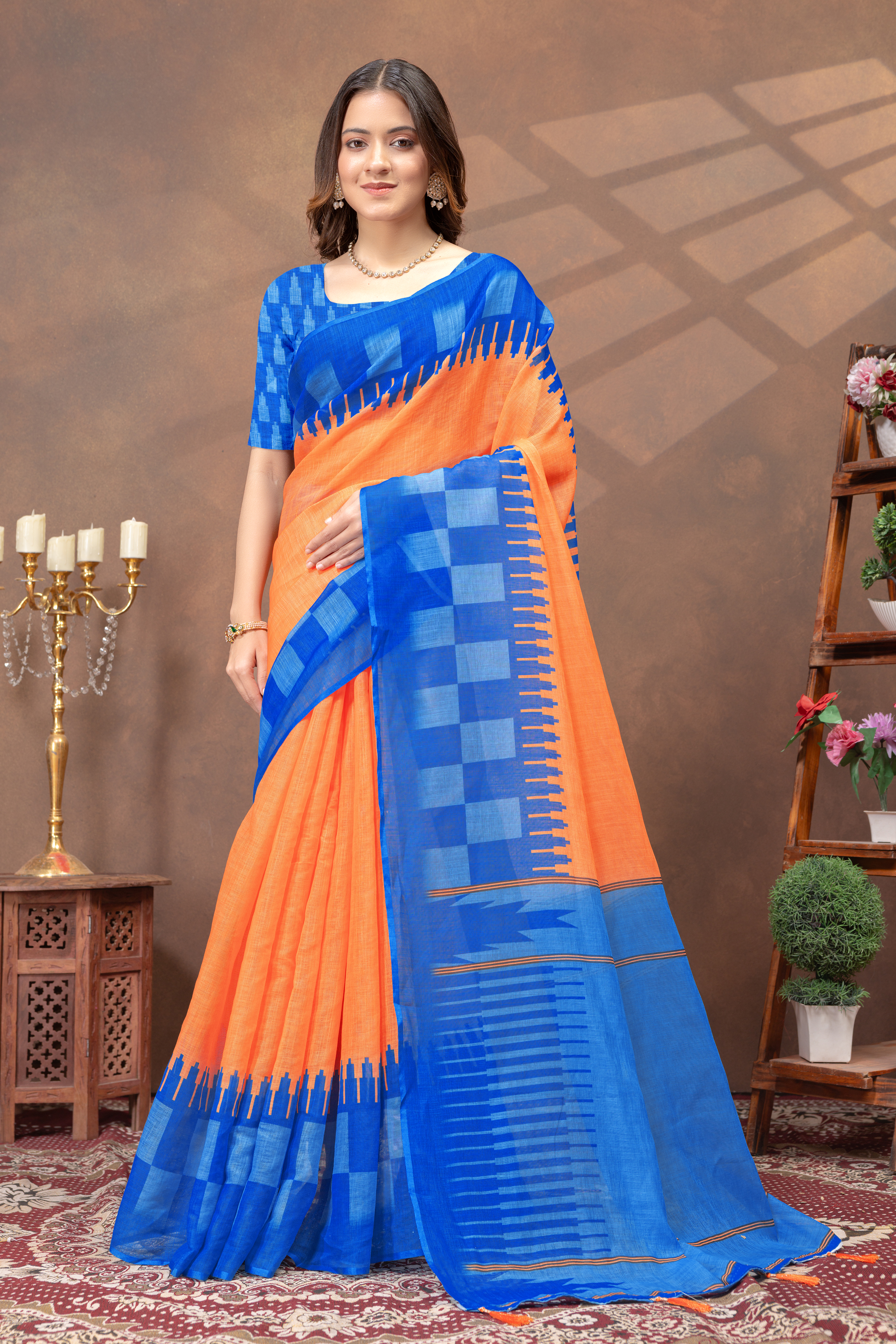
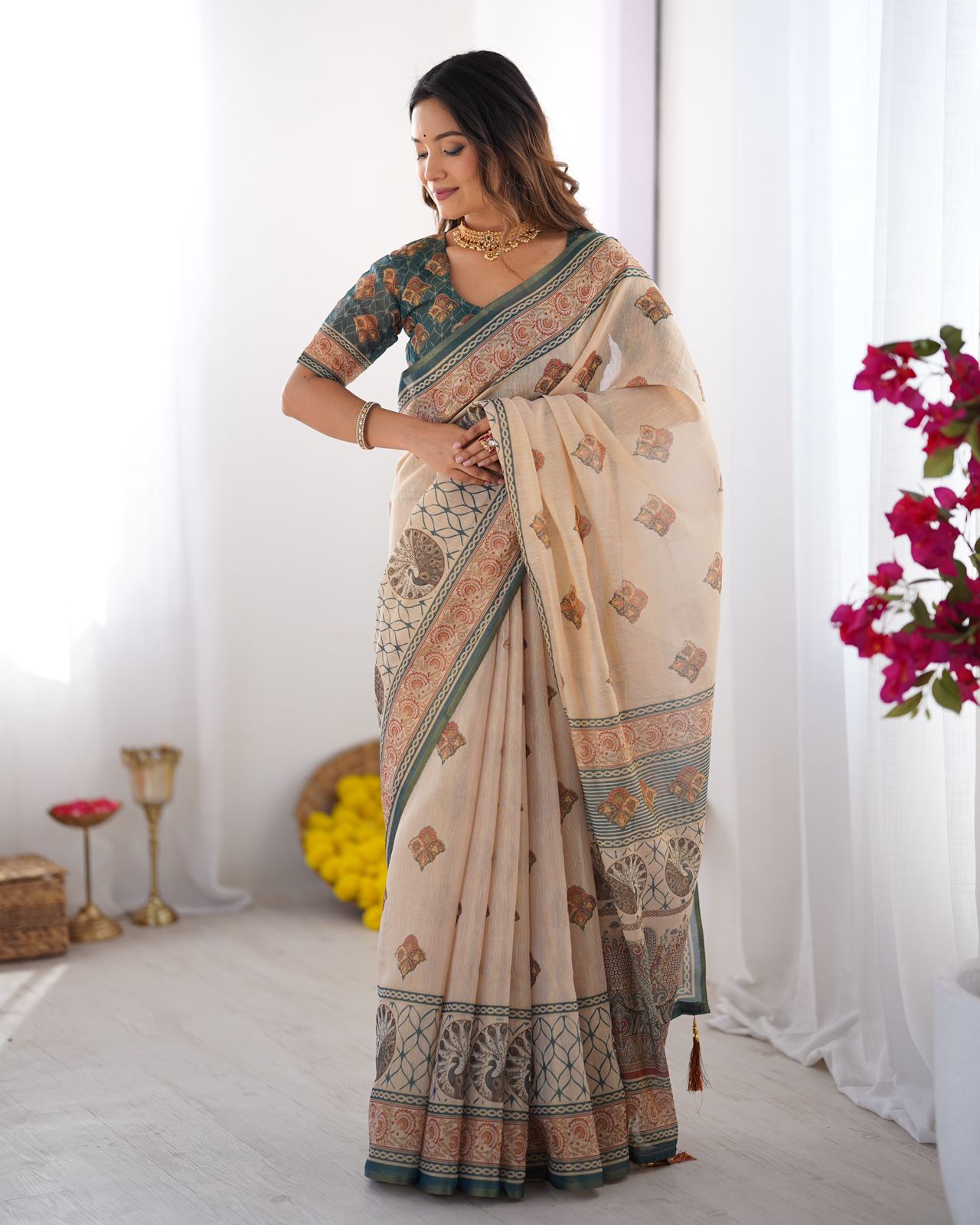
Linen-cotton works well when a visitor wants a crisp appearance with more airflow than many formal fabrics. The White Linen Cotton Saree with Bird Motifs and Orange Border brings visual interest through motifs and colour contrast instead of dense metallic work. A plain or lightly printed blouse keeps the outfit balanced.
Linen can crease more quickly than cotton, so folding the saree around tissue paper and carrying it in a breathable cloth bag helps reduce sharp compression lines. Light starch is optional, but excessive starch can make the fabric feel stiff during a long day. Press the saree on the reverse side using a low to medium setting appropriate for the fibre blend.
Chanderi for a slightly dressier visit
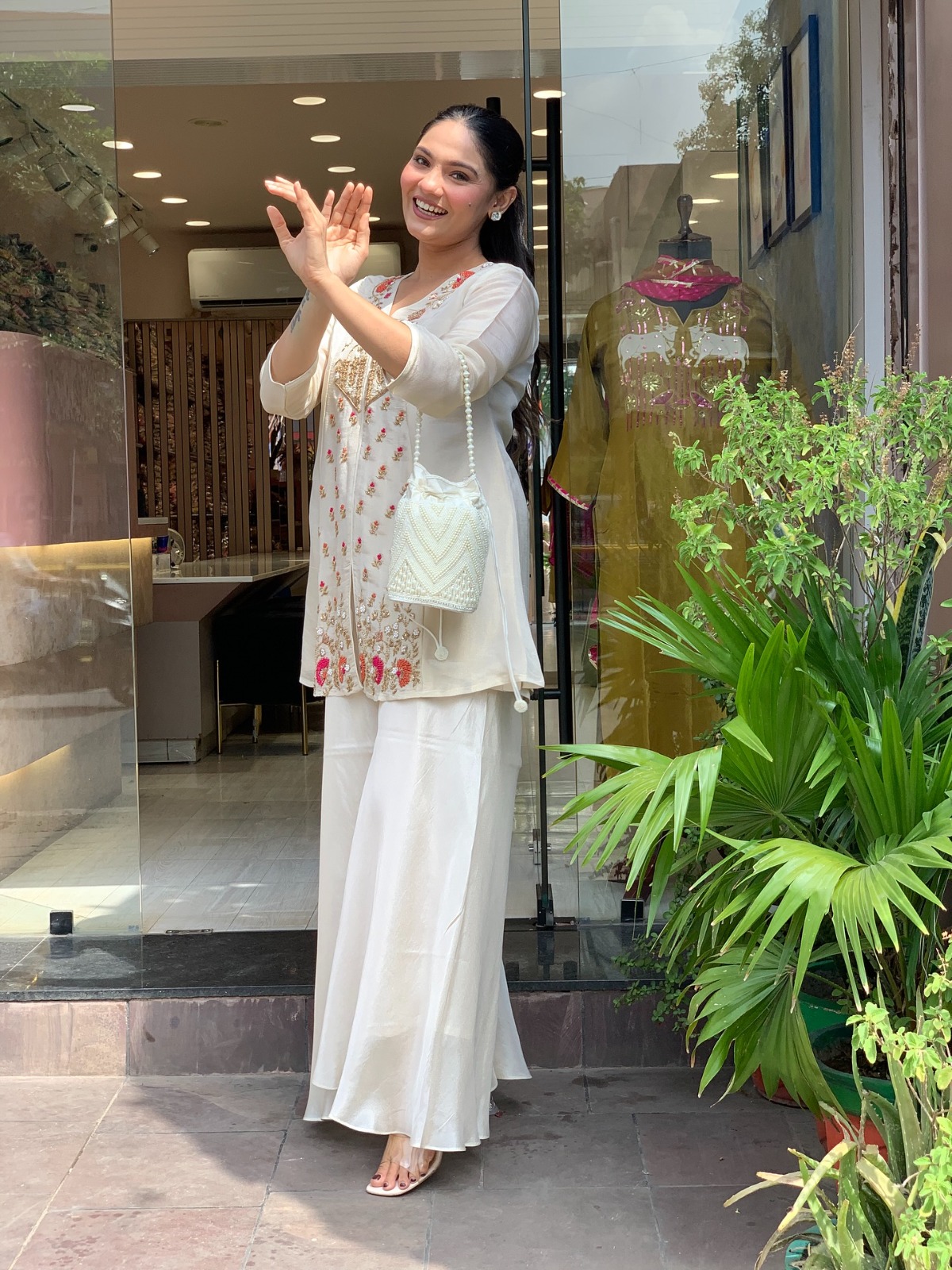
Chanderi gives a lightweight, refined option for visitors who want a more festive finish without choosing bridal silk. Chanderi silk can be sheer depending on the weave, so a lined kurta, opaque inner layer or suitable slip is important for temple-appropriate coverage.
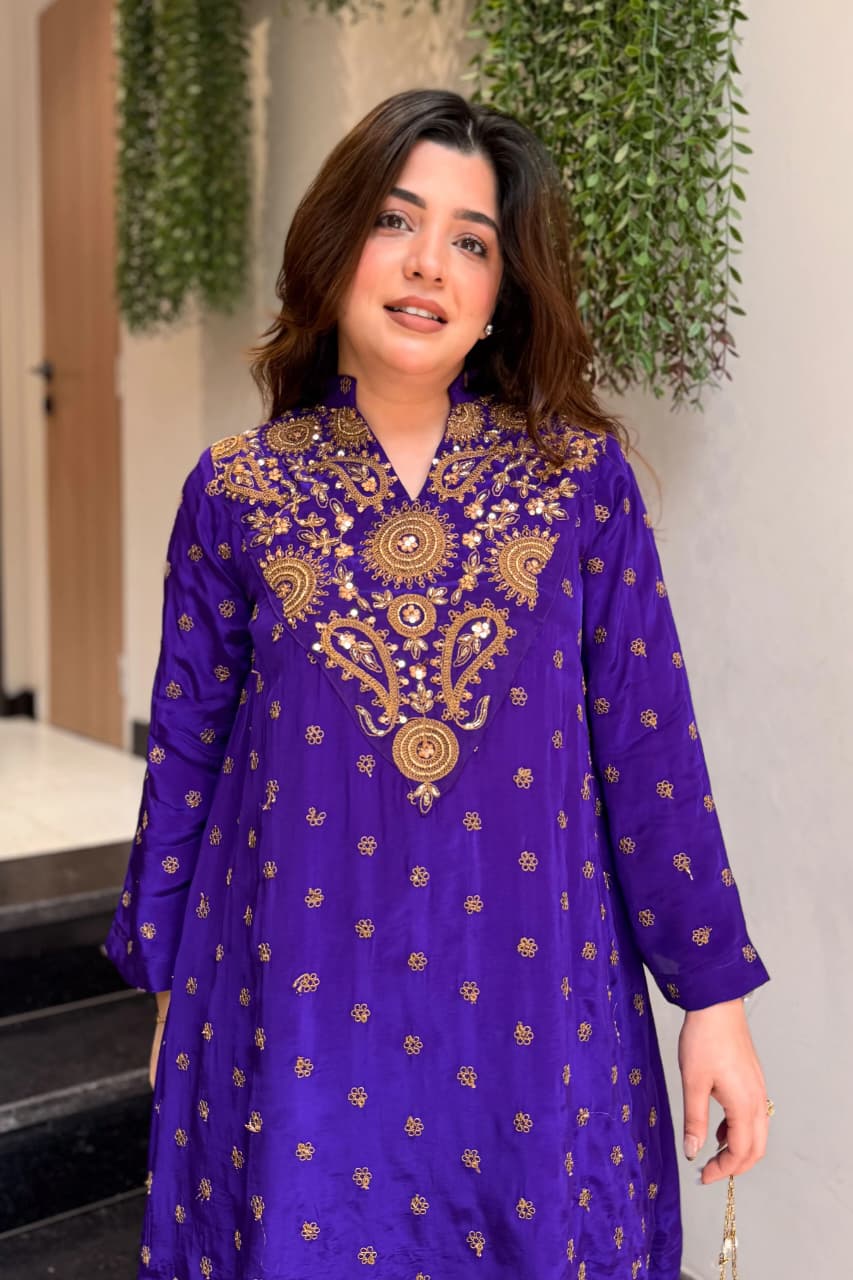
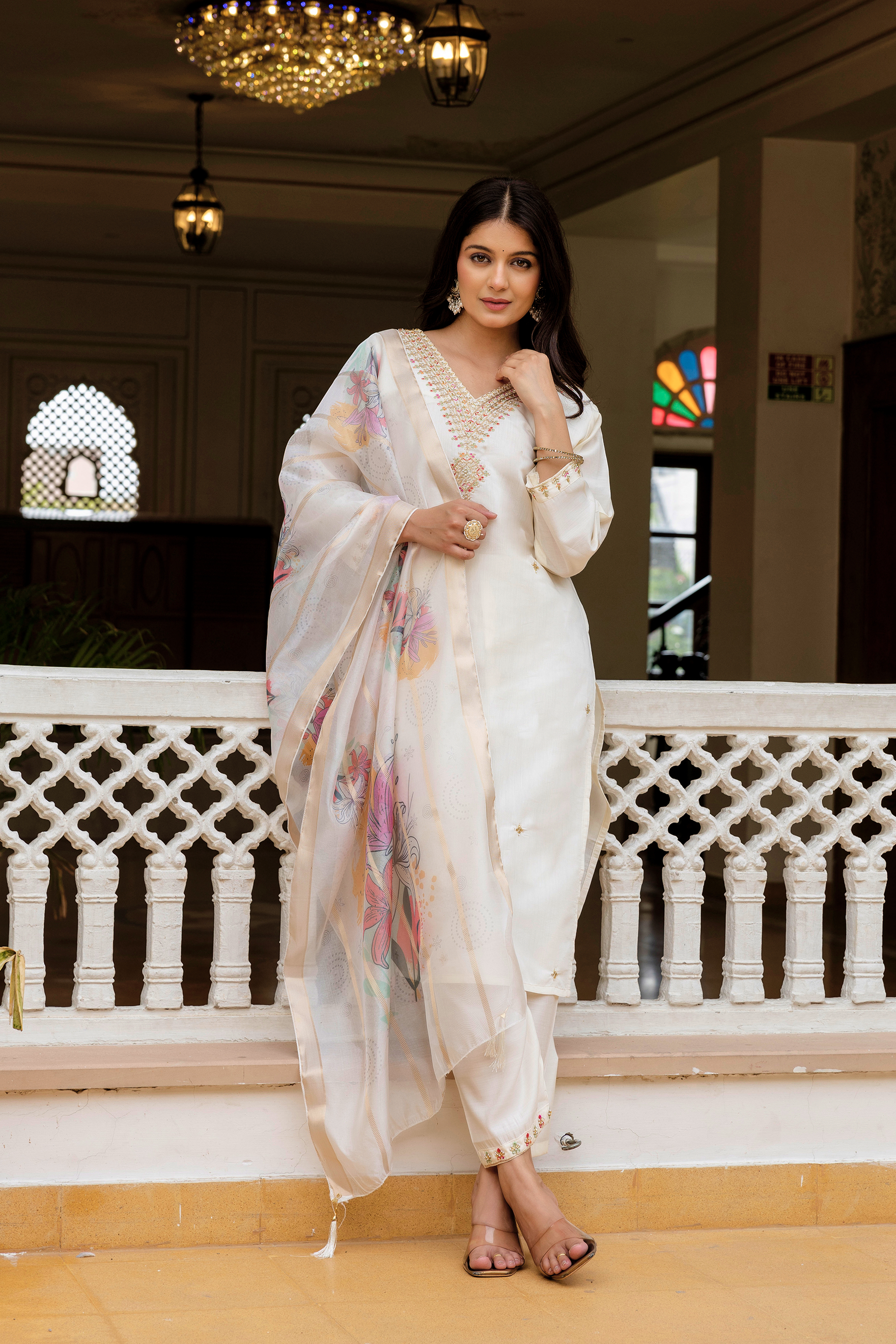
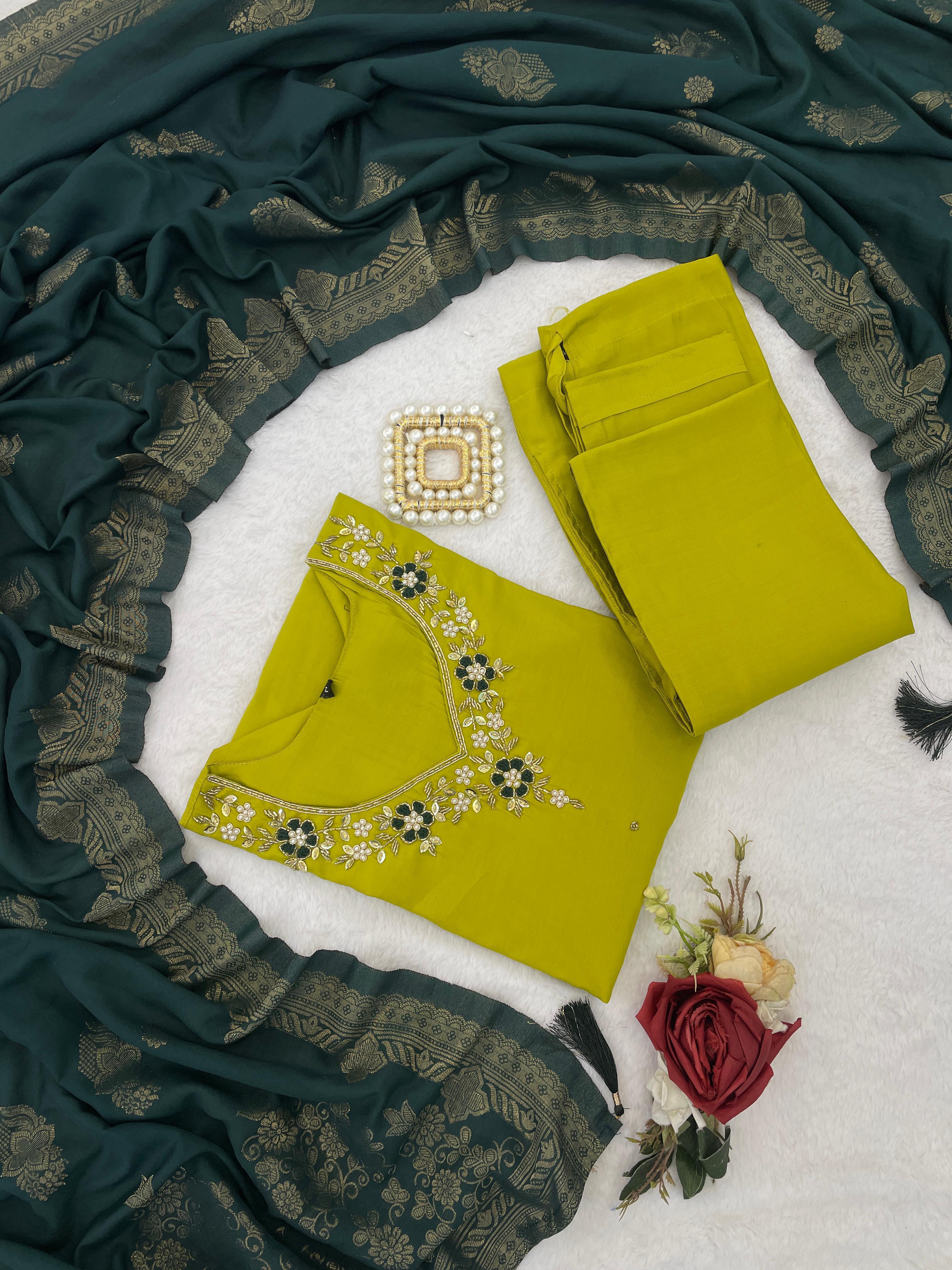
The Cream Chanderi Silk Kurti Pant Dupatta Set for Women creates a formal-looking outfit through texture and coordination rather than excessive embellishment. The Ivory Floral Embroidered Chanderi Silk Kurta Set Women brings another polished direction, although an opaque inner layer should be checked before travel. Chanderi is especially useful for a morning puja followed by lunch or a family gathering.
Should you choose a saree or a kurta set?
A kurta set is usually easier for extensive walking, while a saree gives a more classic silhouette when the drape is secured correctly. The better option depends on the length of the temple visit, your familiarity with the garment and how much sitting or climbing the itinerary includes.
When a saree makes sense
A saree is suitable when you already know how to drape it and can walk confidently in the pleats. Cotton sarees with a firm waist tuck are especially practical because they don't require the careful handling demanded by very slippery silk. Pinning the pallu at the shoulder and adding one discreet pleat pin at the waist can prevent the fabric from shifting in a queue.
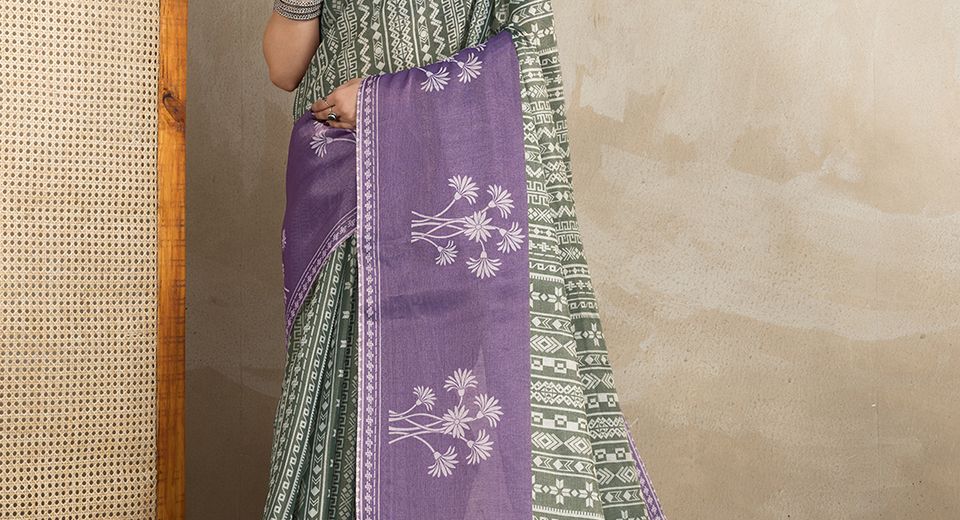
The Olive Green Erode Cotton Saree with Purple Floral Pallu Set shows how a regional cotton weave can look distinctive without resembling bridal attire. The contrasting pallu provides colour and structure, while the cotton base remains suited to a warm day. The Mauve Cotton Saree with Teal Floral Pallu and Ethnic Prints is another example of using printed detail to create interest without relying on heavy zari.
When a kurta set is more practical
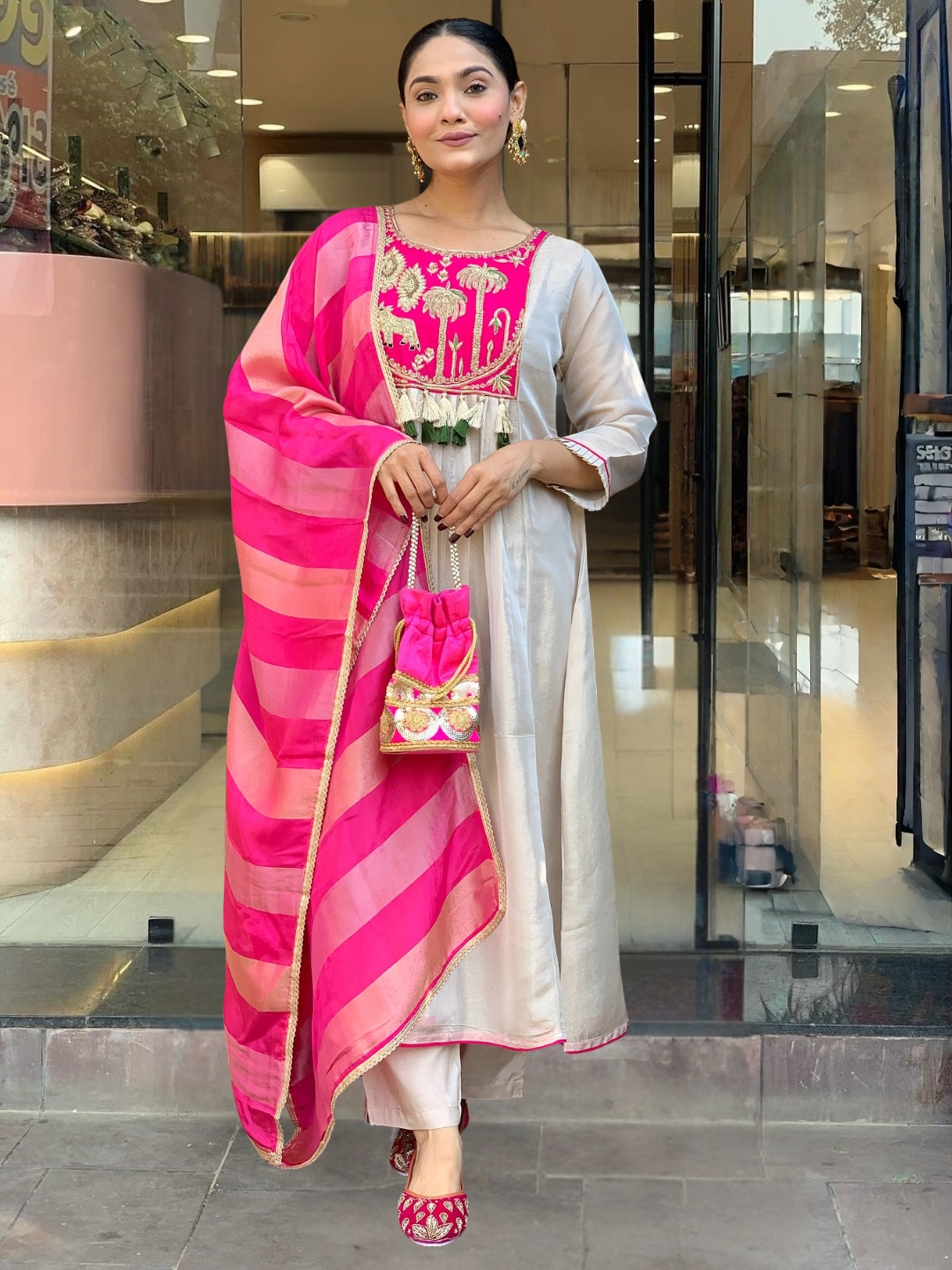
A kurta set is the easier choice for temple corridors, bus journeys, uneven paving and extended walking. Trousers remove the risk of catching a saree hem on steps, while a dupatta can provide additional shoulder and chest coverage.
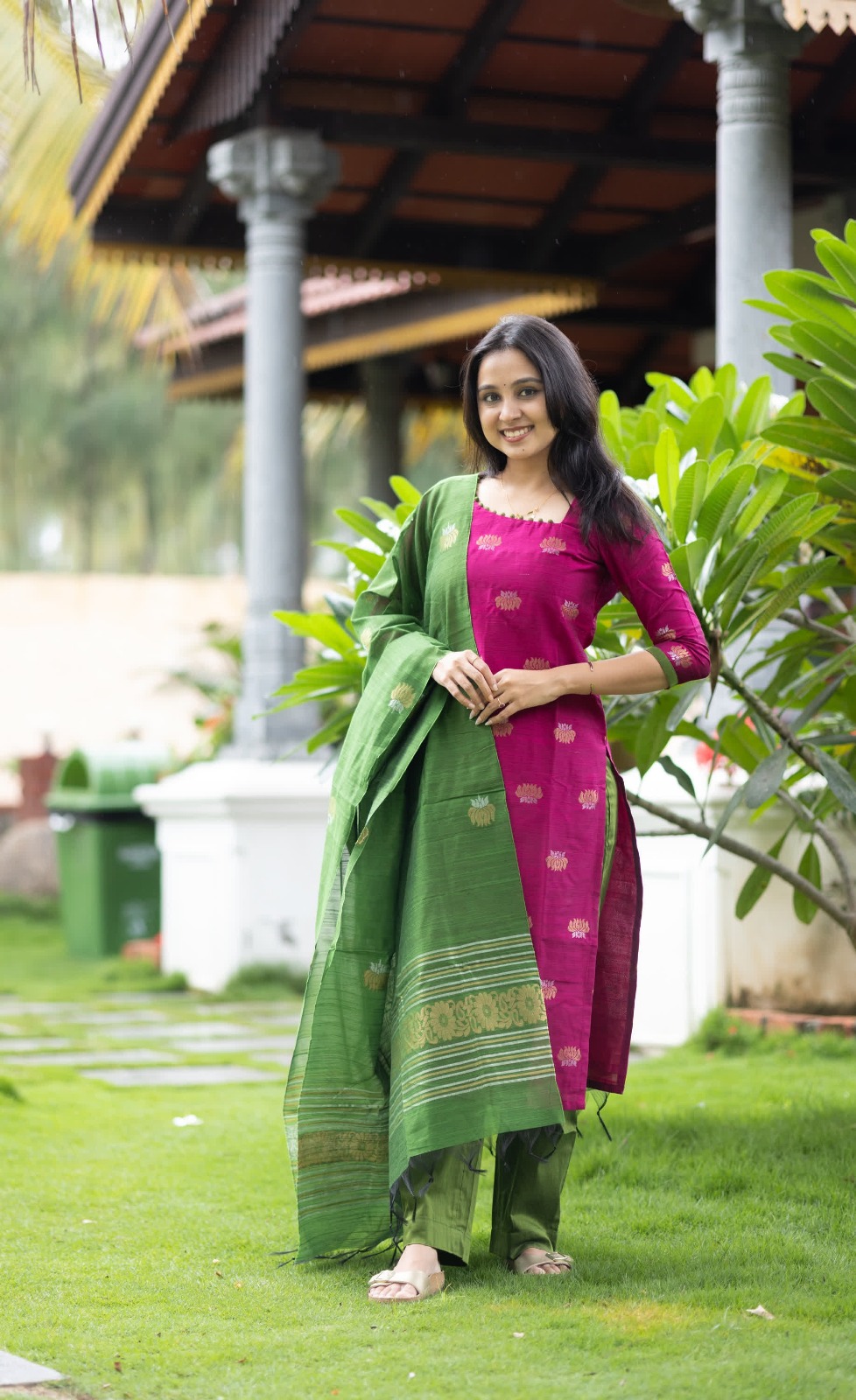
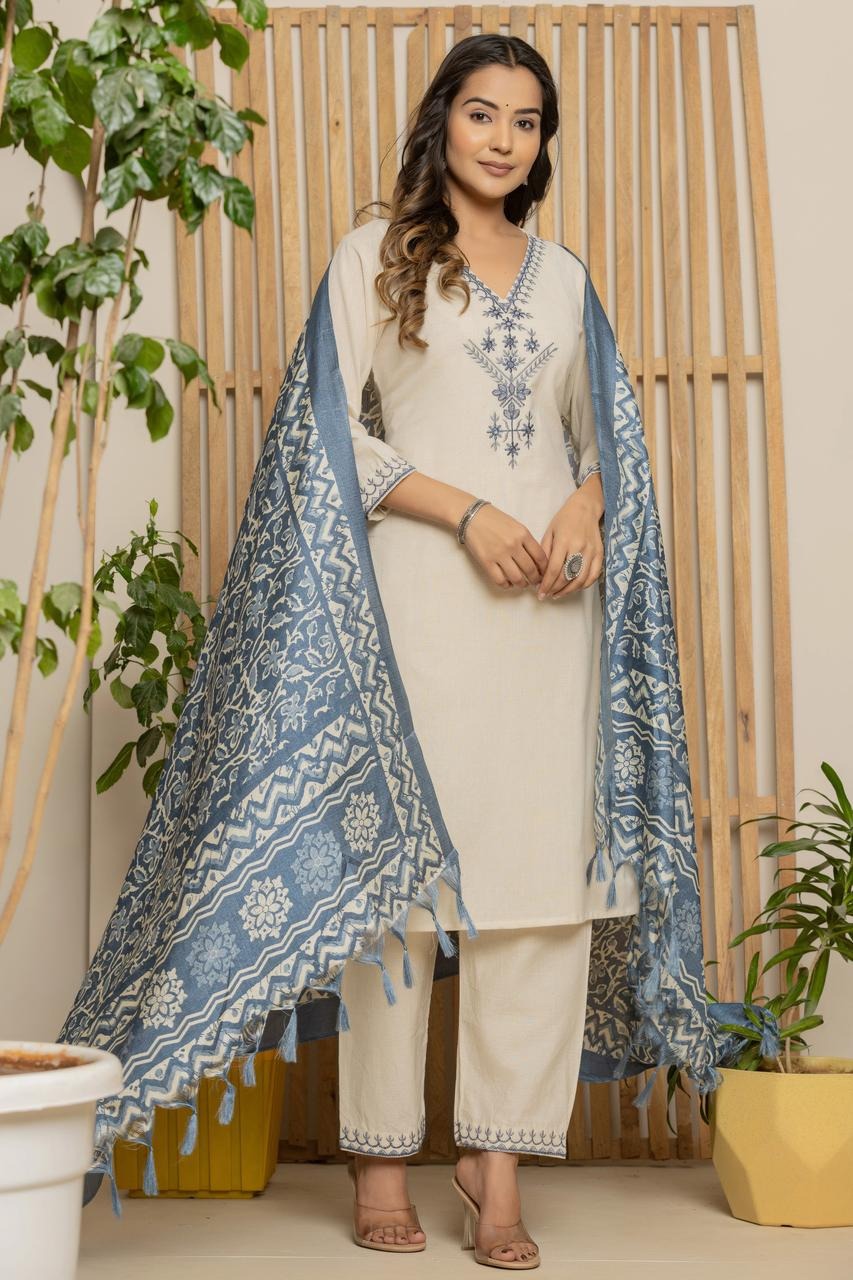
The Kanchi Cotton Woven Kurta Pant Dupatta Set combines the regional association of Kanchi cotton with the movement-friendly structure of separates. The Kanchi Cotton Zari Woven Kurti Set with Heritage Dupatta offers a little more decorative texture. But the zari remains controlled enough for a daytime temple visit. Wear either set with a well-fitted inner layer and secure the dupatta at one shoulder if you expect a crowded queue.
How should you choose colours and embellishment?
Choose colours that feel calm and wear embellishment in small, durable areas such as a border, woven motif or restrained zari line. Temple-appropriate dressing doesn't require white clothing, but very pale garments should be opaque and easy to keep clean.
Deep green, maroon, mustard, indigo, rust and muted purple work well for cotton because they provide visual depth without looking overly formal. Cream, ivory and white can be elegant in linen or Chanderi, but select fabrics with sufficient density and carry a lightweight cotton stole or dupatta if transparency changes in bright light.
Zari isn't automatically bridal. A narrow zari border on Kanchi cotton or a few woven metallic details can acknowledge the region's textile language without turning the outfit into wedding wear. Heavy brocade panels, sequins, crystals and very broad metallic borders are less practical because they add weight, catch on seating and can look disproportionate for a simple temple visit.
Prints are useful when you want personality without ornate accessories. Floral motifs, small geometric patterns and time-honoured buti designs can make a cotton saree or kurta set feel complete. Keep the blouse or dupatta quieter when the main garment already has a strong border or contrasting pallu.
What makes an outfit respectful inside a temple?
A respectful temple outfit covers the shoulders and upper chest, reaches at least below the knees and remains secure while walking, sitting and praying. Clothing should be clean, opaque and free from slogans or graphics that may be unsuitable for a sacred setting.
For women wearing a saree, a sleeved blouse or a blouse with broad straps under a firmly placed pallu gives dependable coverage. For a kurta set, a neckline close to the collarbone and a dupatta that doesn't repeatedly fall away are practical choices. Men and women should both avoid clothing that's excessively short, transparent or difficult to manage in a classic temple environment.
Some temples may request visitors to remove footwear before entering inner areas. Certain shrines may have local rules about head coverings or specific dress standards. Checking the temple's current visitor guidance before departure is sensible, particularly for a major festival, special puja or restricted sanctum. A lightweight shawl can be useful for covering the head or shoulders if local custom calls for it.
How can you make temple dressing comfortable for a full day?
Comfort improves when the outfit is tested at home for at least 20 minutes while walking, sitting cross-legged and climbing a few steps. A short trial reveals whether the blouse pulls, the waistband feels tight, the dupatta slips or the saree pleats open.
- Wear cotton or moisture-managing inner layers that don't show through the garment.
- Choose a petticoat with a secure waistband and enough volume for comfortable saree movement.
- Use safety pins discreetly at the shoulder and waist, keeping spare pins in a small pouch.
- Select flat sandals with a firm sole and an adjustable strap rather than delicate slip-ons.
- Carry a cloth bag for footwear, a handkerchief, water and any removable jewellery.
- Keep the handbag small enough to manage while joining a queue or leaving shoes outside.
Footwear deserves special attention because temple visits often involve bare feet on warm stone, rough paving and long periods of standing. A supportive flat sandal is usually more useful than a thin fashion slipper. Avoid wearing new footwear for the first time on the visit; blisters can turn a comfortable cotton outfit into a difficult experience.
Jewellery can remain simple: small earrings, a watch, a thin chain or a few bangles are enough for most daytime visits. Avoid long pieces that can catch on railings and avoid bringing valuables if footwear and bags must be left in a designated area. A small bindi, neatly tied hair and a clean, pressed garment often provide more polish than additional ornament.
How should you pack and care for the outfit?
Pack cotton and linen-cotton separately from jewellery, and fold Chanderi with soft tissue paper to reduce snagging and hard creases. Air the garments after returning home before folding them for storage.
Check the care label before washing because colour bleeding and zari damage vary by weave and finish. Cotton may be hand-washed in cool water with mild detergent after a colourfastness test on an inside seam. Linen-cotton should be dried away from harsh midday sunlight if the garment has strong dyes or printed sections.
Chanderi silk and garments with zari or embroidery are safer when professionally dry-cleaned according to the care label. Do not spray perfume directly onto zari, metallic borders or delicate embroidery. Store sarees and dupattas in breathable cotton covers rather than sealed plastic, and refold them every few months to prevent permanent fold lines.
A practical decision guide before you leave
Choose a cotton saree when you want a traditional silhouette and already feel confident managing pleats. Choose a Kanchi cotton kurta set when the itinerary includes extensive walking, public transport or several hours in queues. Choose linen-cotton when airflow and a crisp, relaxed appearance matter most. Choose Chanderi when the temple visit forms part of a slightly dressier family day.
What to Wear for a Kanchipuram Temple Visit Without Buying Bridal Silk doesn't require compromising on cultural sensitivity or personal style. The strongest outfit combines a breathable regional textile, secure coverage, practical footwear and ornament that supports rather than overwhelms the garment. A thoughtful cotton saree or well-cut kurta set can honour the setting while remaining useful long after the temple visit ends.
Common Questions About Dressing for a Kanchipuram Temple Visit
Do I need to wear a Kanjeevaram silk saree to a Kanchipuram temple?
No, a Kanjeevaram silk saree is not generally required for a temple visit. A clean cotton saree, Kanchi cotton kurta set, linen-cotton saree or modest Chanderi outfit can be respectful and far more comfortable in warm weather.
Can I wear a cotton saree to a Kanchipuram temple?
Yes, a cotton saree is one of the most practical choices for a Kanchipuram temple visit. Choose an opaque weave, secure the pleats and pallu, and pair the saree with a blouse that provides dependable shoulder coverage.
What should women wear to a South Indian temple?
Women can wear a saree, salwar suit, kurta set or another modest outfit with covered shoulders and adequate length. Breathable cotton, linen-cotton and lightweight Chanderi are useful choices for heat, walking and queues.
Is zari appropriate for a daytime temple visit?
Yes, a narrow zari border or restrained woven zari detail is appropriate for daytime temple dressing. Heavy metallic borders, dense sequins and bridal-level embellishment are less practical because they add weight and require more maintenance.
Are jeans and short tops suitable for a Kanchipuram temple?
Jeans and short tops may not meet the modesty expectations of every Kanchipuram temple, especially near inner shrine areas. A longer top with covered shoulders, or a kurta with trousers and a dupatta, is a safer and more comfortable choice.
What footwear is best for a Kanchipuram temple visit?
Flat footwear with a supportive sole and adjustable straps is best for walking and standing. Wear a pair that is already broken in, because visitors may need to remove footwear and walk across warm or uneven surfaces.