What saree is famous in Pune? The clearest answer is the Paithani saree, a richly woven Maharashtrian silk saree recognised for its peacock motifs, gold-toned zari borders and contrasting pallu. Paithani is traditionally associated with Yeola in Nashik district rather than Pune itself, yet Pune has long been an important market for wearing, gifting and preserving this style.
Banarasi silk, Patola, Chanderi and linen cotton sarees are also popular in Pune, but Paithani carries the strongest regional identity. The distinction matters because a saree can be famous in Pune without originating in Pune. Pune is a major cultural and commercial centre where Maharashtrian wedding traditions meet contemporary, practical dressing.
What saree is famous in Pune and why is Paithani the leading answer?
Paithani is the saree most strongly associated with Pune and Maharashtra because it combines regional identity, ceremonial use and distinctive woven motifs. Traditional Paithani sarees are made with silk and zari, and their pallu usually provides the most recognisable visual detail.
The name Paithani comes from Paithan, an ancient town in Maharashtra, while Yeola became a major production centre for Paithani weaving. Pune's connection is cultural and commercial: Paithani is worn for Maharashtrian weddings, Gudi Padwa, Diwali, religious ceremonies and important family celebrations.
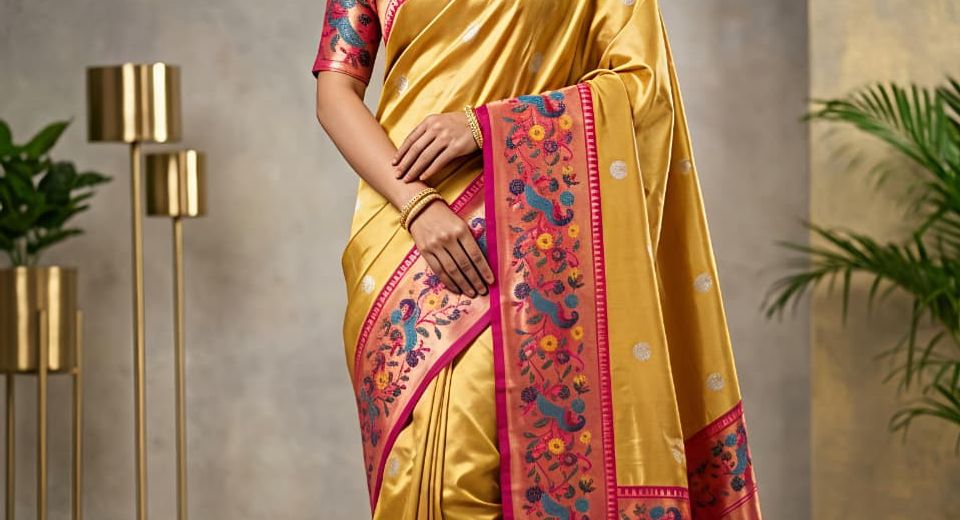
A Paithani saree may have a saturated body colour, a contrasting border and a decorative pallu containing peacocks, parrots, floral vines or geometric forms. The exact combination varies according to the weave, design, silk quality and zari used. The term Paithani should therefore be treated as a starting point for questions about construction, not as an automatic guarantee of handloom authenticity.
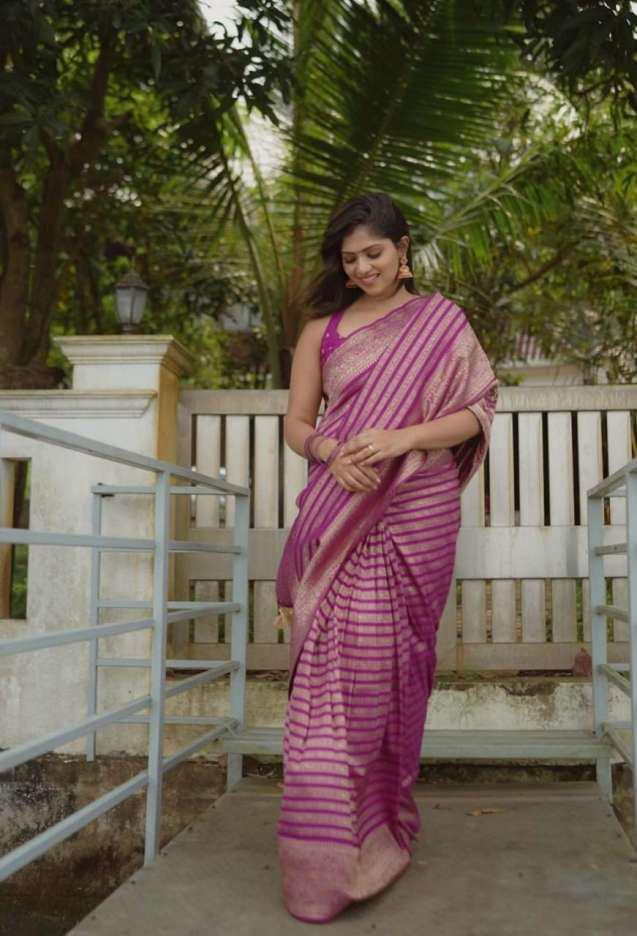
Banarasi Tissue Maharani Paithani Silk Saree with Pallu demonstrates how contemporary saree design can combine Paithani references with Banarasi silk aesthetics. Wine Banarasi Silk Saree with Zari & Paithani Pallu similarly shows why the full product description matters: a Paithani-style pallu and a heritage handwoven Paithani are not necessarily the same construction.
What saree is famous in Pune when motifs and zari matter?
Paithani is the strongest choice when peacock motifs, Maharashtrian symbolism and a zari-rich pallu are the main priorities. Motifs help identify the visual language of Paithani, but motifs alone can't authenticate the weave.
Which motifs are associated with Paithani?
Peacocks are among the most recognisable Paithani motifs, especially when they appear on the pallu. Munia parrots, asawali floral vines, bangdi mor designs and time-honoured geometric patterns are also associated with Paithani weaving.
Motif names can vary between weavers, retailers and regions, so the design should be considered alongside the fabric and weaving information. A printed peacock on a synthetic saree can resemble a woven Paithani motif in a small online photograph.
What does zari add to a saree?
Zari adds metallic brightness, structure and ceremonial formality to a saree's border and pallu. Zari may use a metal wrapping around a textile core, while imitation zari may use metallic polyester or another synthetic thread.
Buyers should check whether a product description identifies the zari composition. Words such as "royal," "heritage" and "premium" describe appearance or positioning, but they don't establish the metal content, fibre composition or weaving method.
What saree is famous in Pune compared with Banarasi, Patola and Chanderi?
Paithani is the most regionally symbolic choice, while Banarasi silk, Patola, Chanderi and cotton sarees serve different needs for weight, shine, drape and climate. Comparing construction and wearability is more useful than choosing by colour alone.
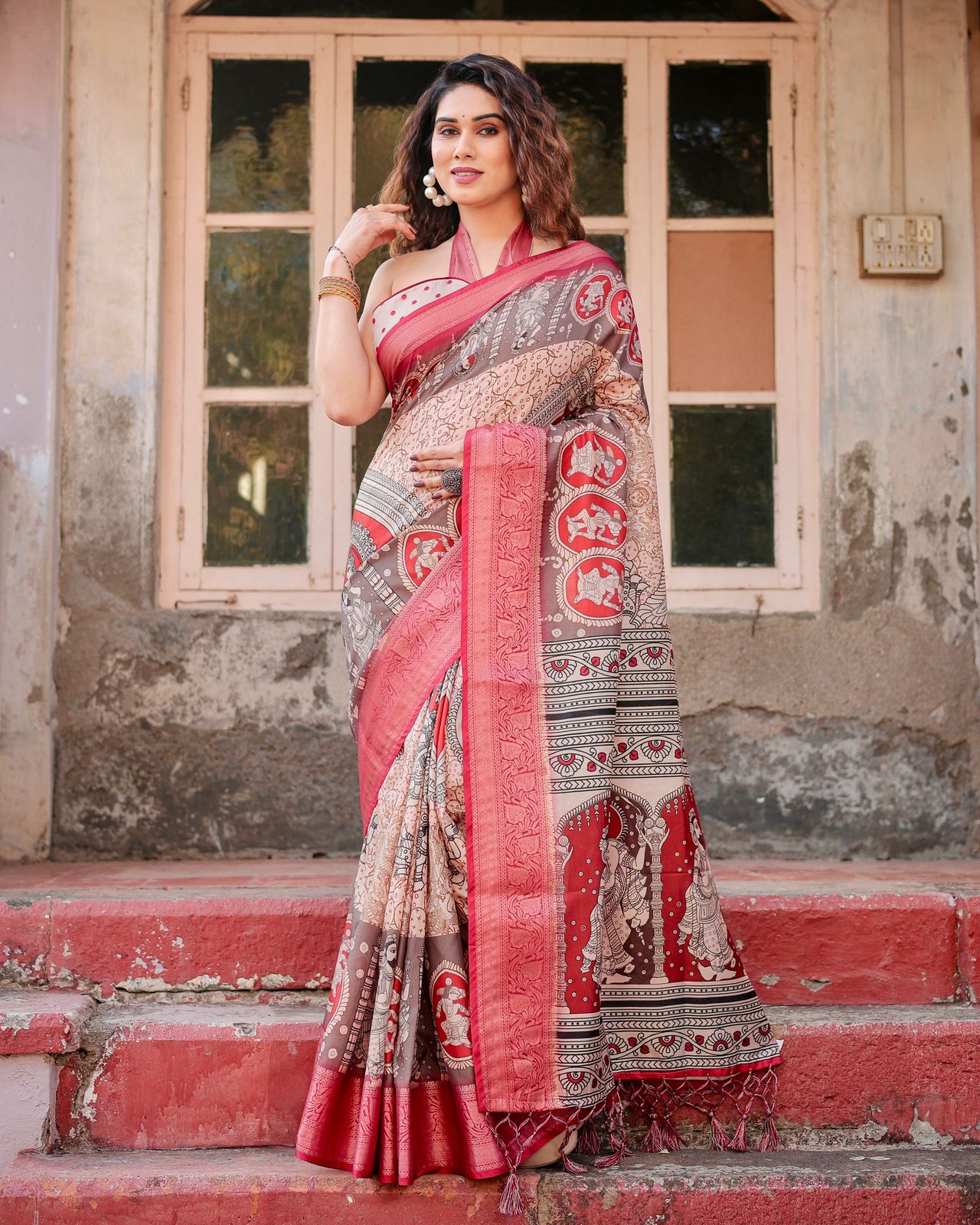
- Paithani: Choose Paithani for Maharashtrian weddings, Gudi Padwa, Diwali and milestone celebrations when a classic silk-and-zari appearance matters. The pallu and border usually create the strongest visual impact.
- Banarasi silk: Choose Banarasi silk for formal receptions, evening weddings and festive events when you want a dense drape and pronounced zari presence. Banarasi weaving is associated with Varanasi and is distinct from Paithani, even when both use silk and metallic thread.
- Patola: Choose Patola for geometric precision, jewel-like colour and a patterned surface. Double ikat Patola is associated with Gujarat, whereas a Patola print or Patola-inspired saree may use a different production method.
- Chanderi: Choose Chanderi when you want a light, translucent drape with a refined finish. Chanderi is useful for daytime celebrations and warm-weather events where a heavy silk saree may feel uncomfortable.
- Linen cotton: Choose linen cotton for breathable everyday dressing, office wear and informal gatherings. Linen cotton generally has less ceremonial weight than silk, but it's easier to repeat across seasons.
Heritage Peacock Patola Pashmina Silk Saree and Designer Red Patola Print Pashmina Silk Festive Saree illustrate how Patola geometry and festive colour can appeal to a Pune shopper without being Paithani. Luxury Pashmina Saree with Paisley Design & Shaw offers a different direction, with paisley detailing and a shawl suited to cooler evenings or formal indoor events.
What saree is famous in Pune for weddings and festivals?
A Paithani silk saree with a strong pallu and zari border is the most culturally aligned choice for a Maharashtrian wedding. Banarasi silk, Patola and dressy handloom cotton sarees can also work when the event is contemporary or when comfort is a priority.
Which saree suits a Maharashtrian wedding?
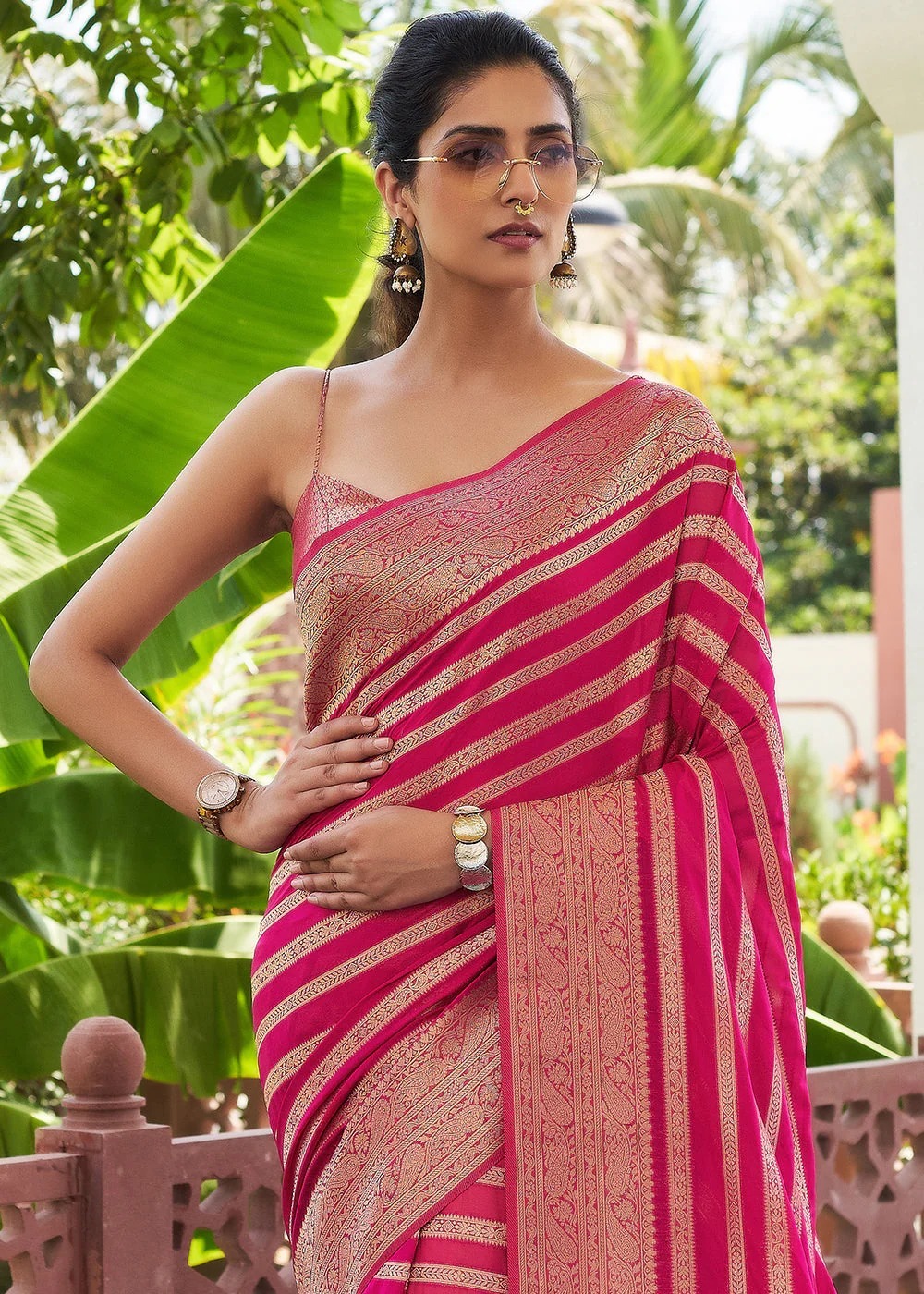
Paithani suits a Maharashtrian wedding because its motifs, silk body and zari pallu complement the region's ceremonial dressing traditions. Brides and close family members often choose saturated shades such as green, purple, magenta, red, mustard or deep blue.
A structured blouse with a close neckline, elbow-length sleeves or a contrasting border can balance a detailed Paithani pallu. Heavy embroidery on both the blouse and the saree may create visual competition, so one prominent feature is often enough.
Which saree suits Gudi Padwa and Diwali?
Paithani, Banarasi silk and silk-cotton sarees suit Gudi Padwa and Diwali because their colour and zari remain visible in family photographs and evening lighting. A Paithani-inspired pallu gives a regional cue without requiring a completely heritage styling approach.
Pastel Floral Tissue Handloom Cotton Saree with Zari Weaves brings a lighter festive option for daytime puja, cultural programmes and family visits. Handloom cotton with zari can look celebratory while remaining easier to carry than a dense silk saree.
What saree is famous in Pune for office and daytime wear?
Linen cotton, cotton and light Chanderi sarees are generally more practical for Pune's everyday routines than heavy zari silk. Breathability, manageable weight and ease of movement matter more than ceremonial prestige for office, college and daytime dressing.
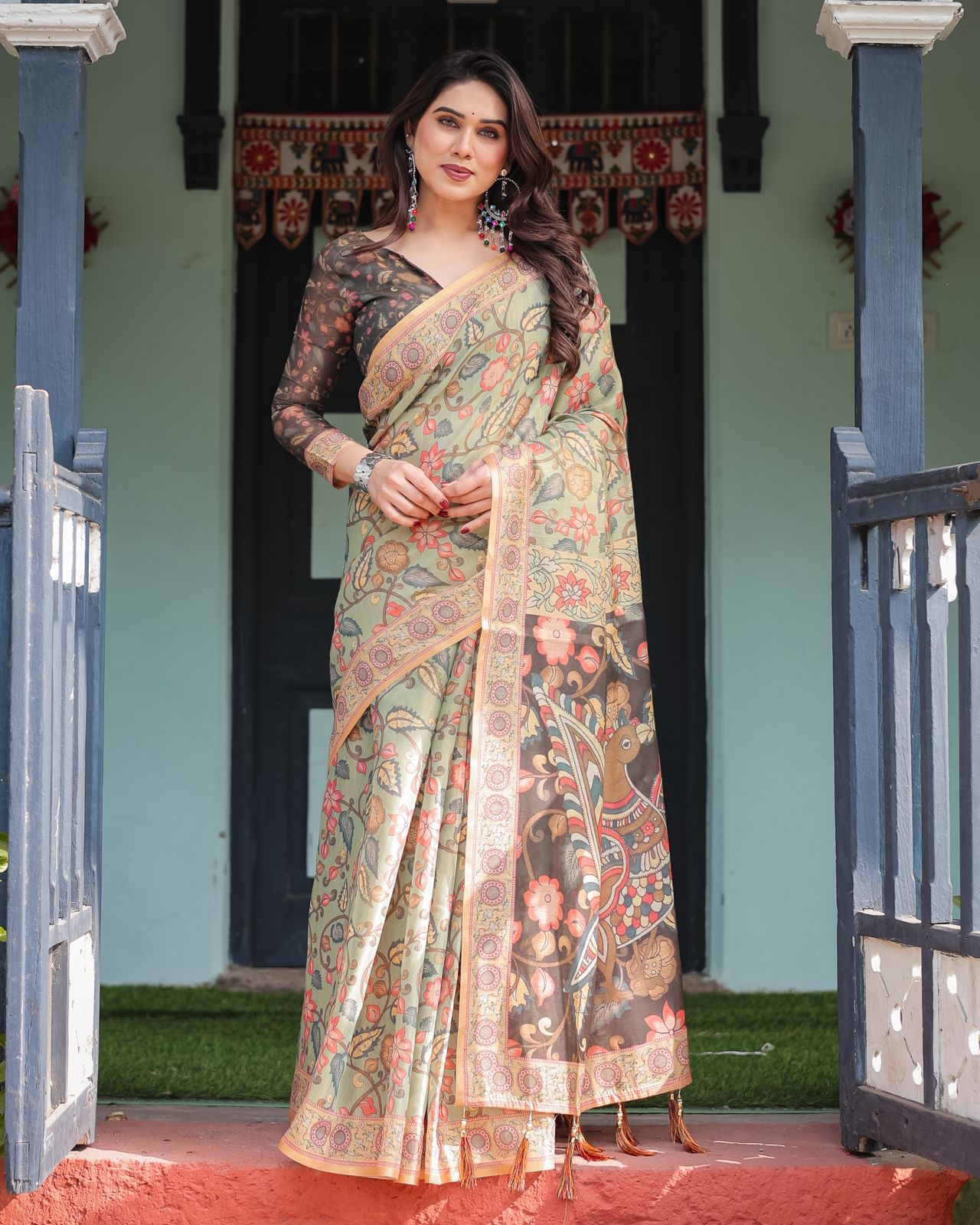
Pastel Linen Cotton Floral Print Saree with Designer Blouse shows how floral prints and a coordinated blouse can make a saree easier to style for work, lunch gatherings or informal celebrations. Peach Linen Cotton Floral Print Saree with Blouse for Women brings another soft-colour approach for daytime dressing.
Choose a firm but not bulky petticoat, keep the pleats narrow and pin the pallu at the shoulder if you'll travel or work in the saree. A cotton or linen blouse should have enough ease at the armhole because stiff tailoring can restrict movement during a long day.
Pastel colours suit bright daytime settings, while medium or dark shades can be more forgiving for frequent wear. Floral prints also reduce the need for heavy jewellery, making them practical for workplaces where a restrained appearance is preferred.
What saree is famous in Pune and how should you buy one?
Buy a Paithani or silk saree by checking fibre content, weave information, zari composition, pallu construction, measurements and care instructions before comparing colour or discount.
- Read the fibre description. Confirm whether the saree is pure silk, silk blend, cotton, linen cotton, tissue or synthetic. "Silk finish" doesn't necessarily mean silk fibre.
- Examine the pallu and border. Look at the relationship between the body, border and pallu. A woven pallu forms part of the textile structure, while a printed design sits on the surface.
- Ask about zari. Find out whether the saree uses metallic zari, tested zari, imitation zari or a blended thread. The answer affects price, shine and care requirements.
- Check the measurements. Confirm saree length, width, blouse-piece length and whether the blouse piece is attached or separate. Taller wearers and people who prefer wider pleats should pay particular attention to width.
- Match weight to the event. Dense silk and zari may be excellent for a short ceremony but tiring during a long day. Lightweight cotton, Chanderi and linen cotton are better when commuting, walking or sitting for several hours.
- Compare total value rather than discount alone. Sarees from Rs 1000 to Rs 1500 can help establish a budget for accessible styles. Sarees Under 20% Off, Sarees Under 10% Off and Sarees Flat 50% Off organise choices by discount, but a discount doesn't prove authenticity or fibre quality.
Online photography can hide differences in texture, especially in tissue, zari and printed sarees. Check close images of the border, pallu, blouse piece and reverse side when those details are available. A clear description of fibre, measurements and care is more useful than a large collection count.
What saree is famous in Pune and how can you care for it?
A silk, Paithani or zari saree should be stored dry, folded with the zari facing inward and refolded periodically to reduce permanent creases. Care begins with preventing moisture, friction and prolonged exposure to direct sunlight.
Air a saree after wearing it before storage, especially after a humid monsoon day or a long ceremony. Do not spray perfume directly on silk or zari because alcohol and fragrance oils may discolour fibres or metallic thread. Keep the saree in a breathable muslin cover rather than sealed plastic for long-term storage.
Dry cleaning is generally safer for silk, zari and heavily embellished sarees than home washing. A linen cotton or cotton saree may tolerate gentler care, but the label should determine the washing method. Avoid wringing, harsh detergent, high heat and direct ironing on zari.
Fold the saree along different lines every few months, refold it with soft tissue paper around the zari-heavy sections and store it away from damp walls. These simple steps are especially important for a Paithani or Banarasi silk saree because repeated creasing can weaken metallic areas over time.
What saree is famous in Pune: quick answers for shoppers
Paithani is the clearest answer, but the best purchase depends on whether the shopper values regional identity, formal shine, lightness, print, warmth or daily comfort. A saree's name should be assessed together with fibre, weave, zari, measurements and intended use.
For a classic Pune-linked wardrobe, begin with Paithani. For a formal evening, compare Paithani with Banarasi silk. For everyday use, consider linen cotton or Chanderi. For geometric colour, explore Patola while confirming whether the design is woven, printed or inspired by the traditional textile.
Common Questions About Pune’s Famous Sarees
What saree is famous in Pune?
Paithani is the saree most strongly associated with Pune and Maharashtra. Paithani is known for silk, zari borders, decorative pallus and motifs such as peacocks and parrots, although Banarasi, Patola, Chanderi and cotton sarees are also widely worn in Pune.
Is Paithani made in Pune?
Paithani is traditionally associated with Paithan and Yeola in Maharashtra rather than Pune itself. Pune is an important cultural and retail market where Paithani is worn for weddings, Gudi Padwa, Diwali and other celebrations.
How can I tell whether a Paithani saree is authentic?
Check the fibre, weaving method, pallu construction, zari details and seller's documentation instead of relying only on motifs or colour. A woven pallu forms part of the textile structure, while a printed or machine-made design may only imitate the Paithani appearance.
Is Paithani suitable for a Pune wedding?
Paithani is highly suitable for a Pune or Maharashtrian wedding because its silk body, zari and traditional motifs suit ceremonial dressing. Choose a lighter saree if the event involves long hours of travel, standing or dancing.
Which saree is best for everyday wear in Pune?
Linen cotton, cotton and lightweight Chanderi sarees are usually better for everyday Pune wear than heavy silk and zari. These fabrics are easier to carry in warm weather and work well for offices, college, errands and daytime gatherings.
What is the difference between Paithani and Banarasi silk?
Paithani is a Maharashtrian saree tradition recognised for its motifs and distinctive silk-and-zari pallu, while Banarasi silk is associated with Varanasi and is known for dense brocade and zari work. Both can be formal, but they differ in regional origin, weaving language and typical surface design.