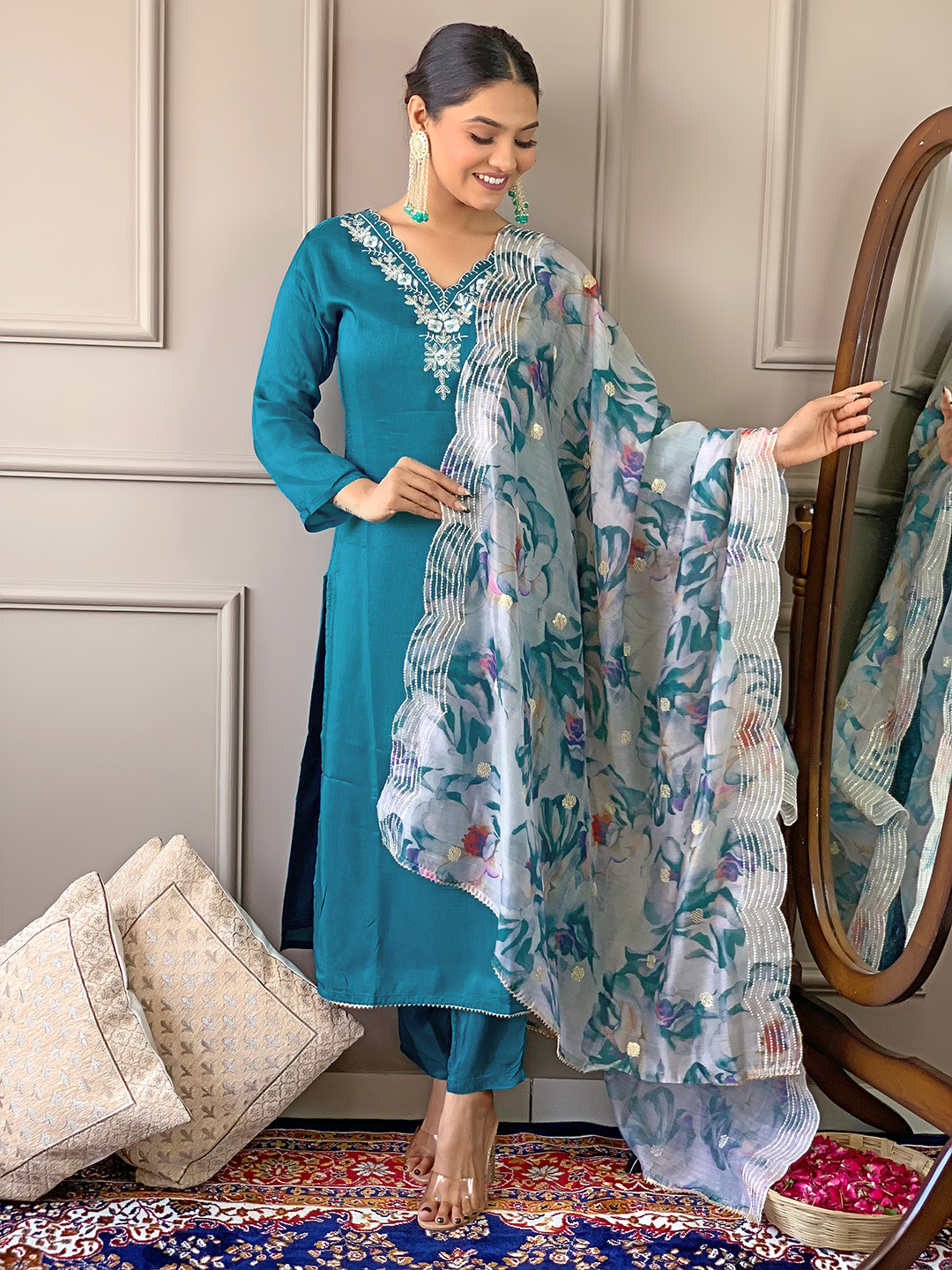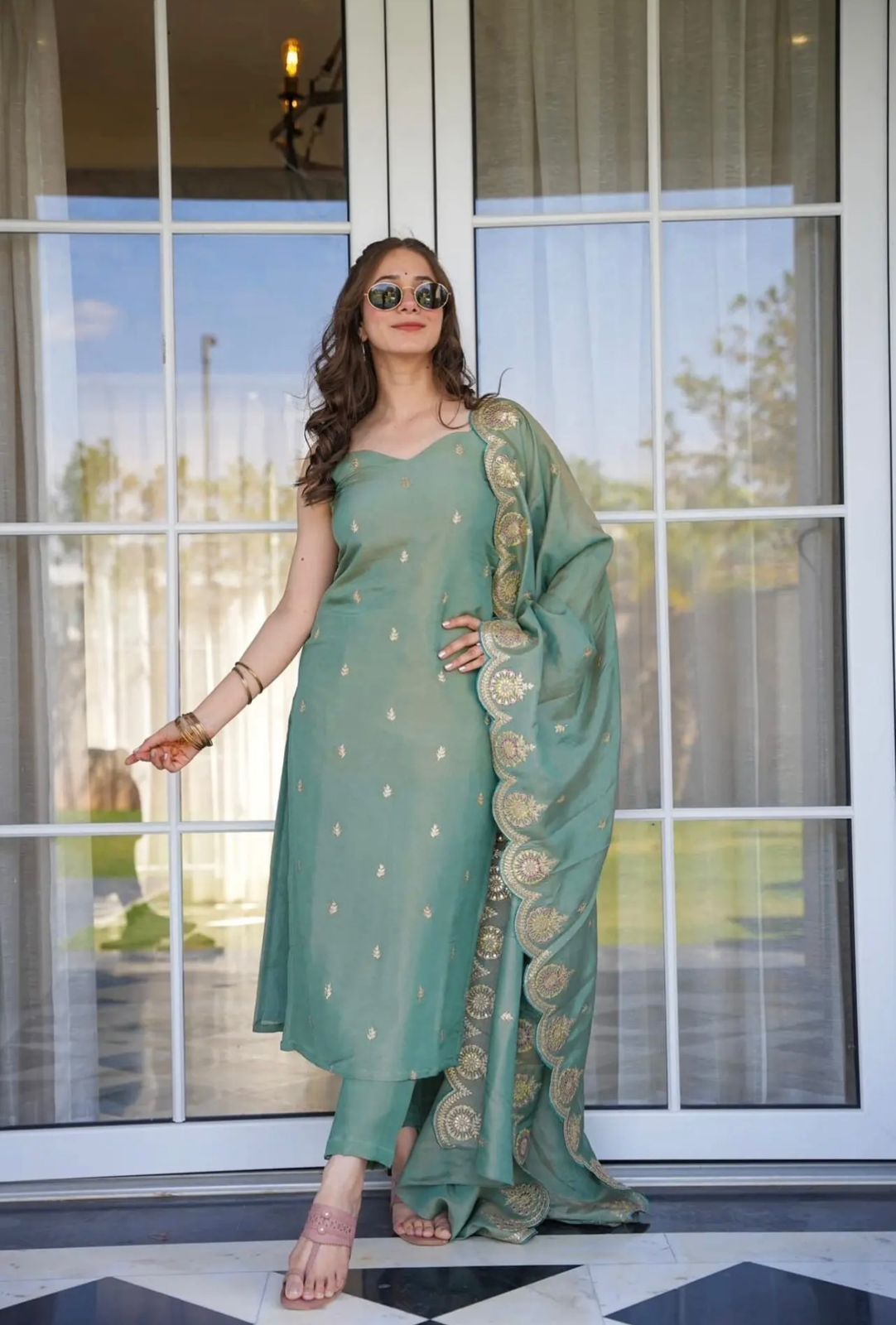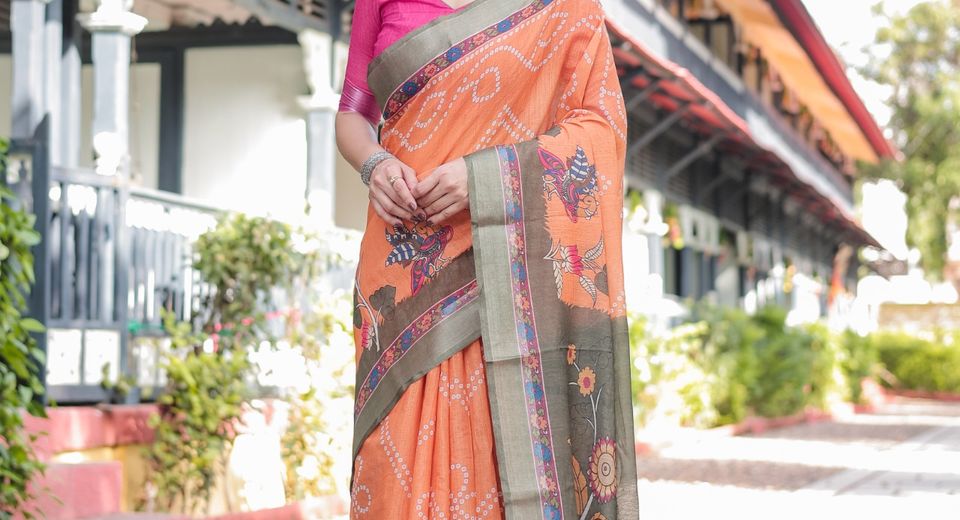
What saree is famous in Odisha? The Sambalpuri saree is the best-known answer, especially the handloom Sambalpuri ikat saree recognised for resist-dyed yarns, geometric borders and traditional motifs. Odisha, however, has several important saree traditions rather than one single style. Bomkai, Khandua and Berhampuri Patta sarees each have different weaving histories, patterns and uses. Knowing those differences makes it easier to choose a saree for a festival, wedding, office wardrobe or meaningful gift.
What saree is famous in Odisha and why is Sambalpuri the best-known?
The Sambalpuri saree is the saree most widely associated with Odisha because its ikat technique and regional motifs have become symbols of Odia handloom culture. Sambalpuri sarees are traditionally woven in western Odisha, particularly around Bargarh, Sonepur, Sambalpur and nearby weaving communities.
The defining feature is yarn resist-dyeing. Artisans tie or otherwise resist selected sections of the warp and weft yarns before dyeing, then align the coloured yarns carefully on the loom. The design appears as the fabric is woven, creating the slightly softened edges that distinguish ikat from a sharp printed pattern. A genuine handloom Sambalpuri saree can therefore show tiny variations in alignment, which are signs of human craftsmanship rather than defects.
Sambalpuri designs often include the shankha, or conch shell; chakra, or wheel; phula, or floral forms; and heritage animal or geometric patterns. The shankha and chakra carry strong cultural associations, while stylised flowers and temple-inspired borders make the saree recognisable from a distance. Cotton Sambalpuri sarees are practical for warm weather, whereas silk and silk-cotton versions offer more structure and festive sheen.
What saree is famous in Odisha besides Sambalpuri?
Bomkai, Khandua and Berhampuri Patta are the most important time-honoured Odisha sarees besides Sambalpuri, and each one is identified by a different combination of technique, motif and regional history.
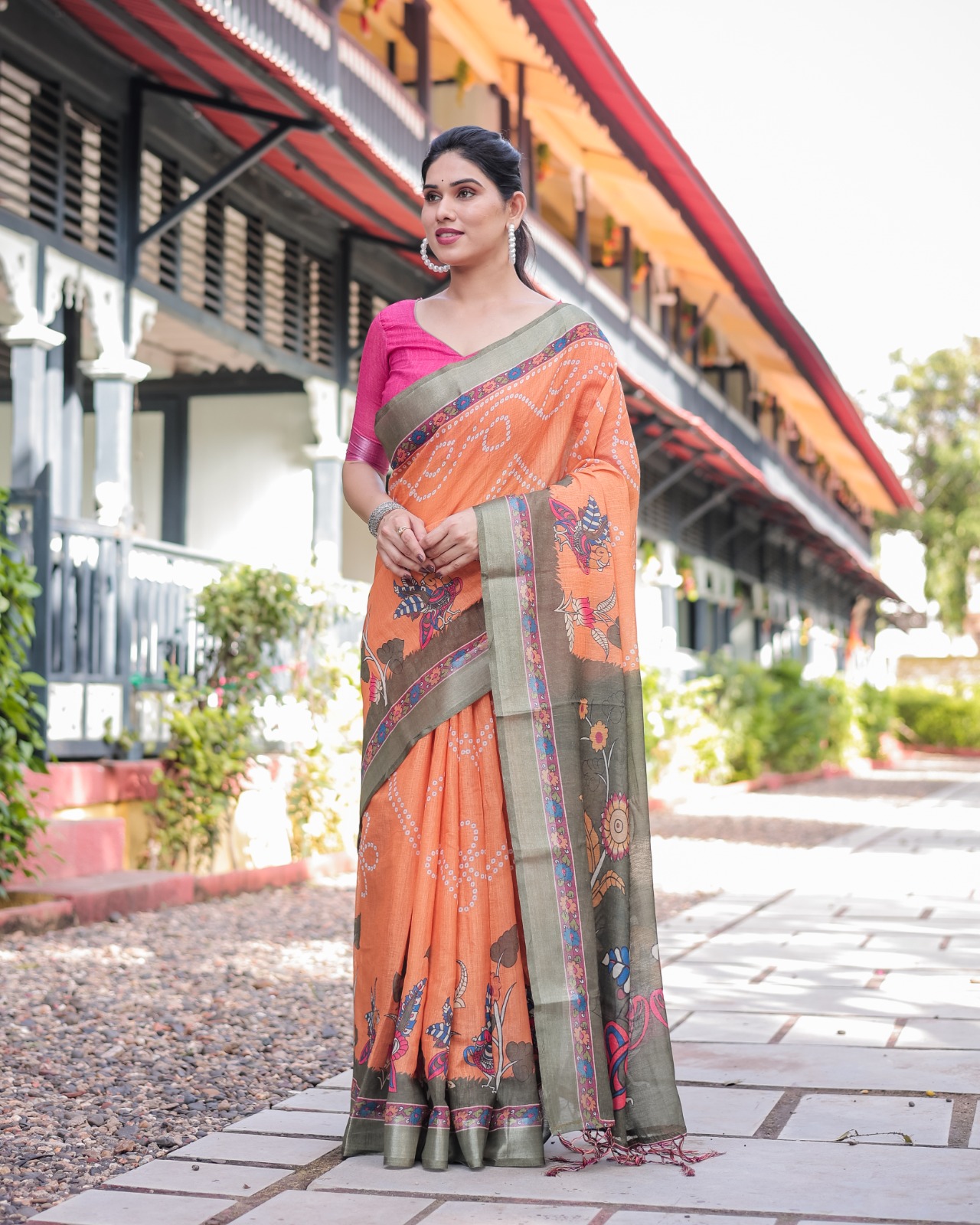
Bomkai saree
Bomkai sarees are known for contrasting borders, distinctive pallu designs and motifs inspired by nature and tribal visual traditions. Bomkai weaving originated in the Bomkai area of Odisha and is also associated with Sonepur weaving communities. Silk Bomkai sarees are popular for weddings and formal celebrations, while cotton Bomkai sarees work well for daytime gatherings.
Bomkai patterns can include fish, birds, flowers, rudraksha-like forms and temple-related geometry. The pallu often receives more visual attention than the body, so a Bomkai saree is a strong choice when the drape will be arranged to display the shoulder section prominently.
Khandua saree
Khandua sarees are associated with Odisha's religious and ceremonial textile heritage, particularly the handloom traditions around Nuapatna. Khandua silk is especially respected for woven verses, floral forms and devotional associations. The use of Sanskrit or Odia script in some heritage Khandua designs makes the saree more than decorative clothing; the textile can function as a carrier of poetry, prayer and regional identity.
Berhampuri Patta
Berhampuri Patta sarees are recognised for their strong borders and silk weaving tradition from Berhampur, also called Brahmapur. The pallu and border often provide the principal contrast, giving the saree a crisp appearance when pleated. Berhampuri Patta is an useful option for a wearer who wants an Odisha-origin silk saree with a structured visual rhythm.
What saree is famous in Odisha for ikat weaving?
The Sambalpuri saree is Odisha's signature ikat saree because the pattern is formed by resist-dyeing yarn before weaving rather than by printing a finished fabric.
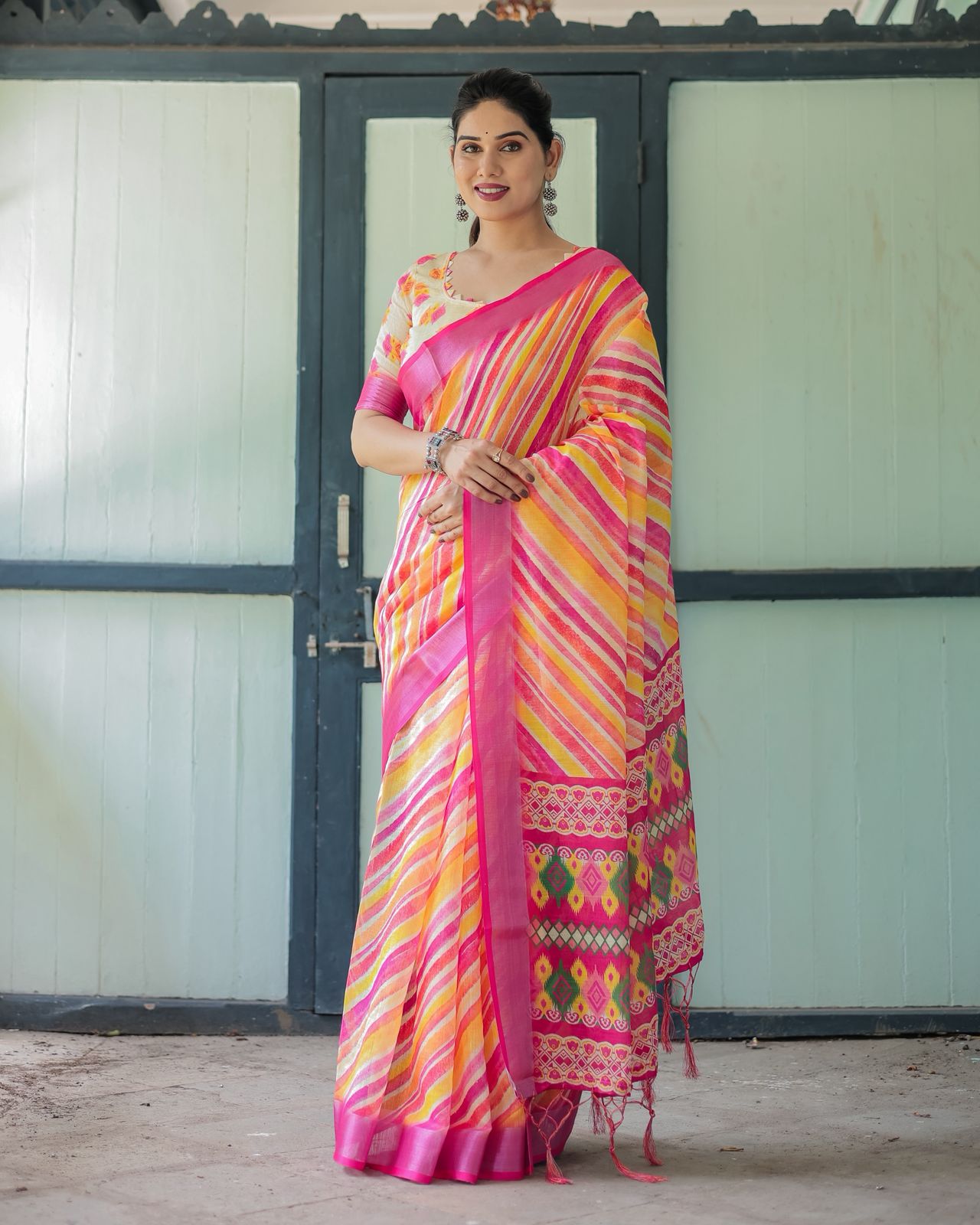
Ikat begins with planning. The weaver marks sections of yarn, binds selected areas to prevent dye penetration, applies colour, removes or shifts the bindings, and repeats the process when multiple colours are required. The dyed yarns are then placed on the loom so the warp and weft meet to create a pattern. This process requires careful calculation because even a small alignment change can alter a diamond, flower, wheel or border motif.
Warp ikat colours the lengthwise yarns, weft ikat colours the crosswise yarns, and double ikat involves both. Sambalpuri sarees are particularly valued for the precision of their yarn-dyed motifs. Small irregularities are normal in handwoven fabric, but large gaps, broken borders or poorly aligned repeats can indicate a lower-quality construction or a printed imitation.
Not every Odisha saree is an ikat saree. Khandua designs may use other woven approaches, and Bomkai is recognised more broadly through its motif-rich borders and pallu. Bandhani, Kalamkari and printed floral work also belong to different textile traditions. A saree can be Odisha-inspired in colour or styling without being a Sambalpuri ikat.
What saree is famous in Odisha for symbolic motifs?
The Sambalpuri saree is famous for motifs such as the shankha, chakra, flowers, fish, birds and geometric forms, while Khandua is especially associated with devotional text and ceremonial meaning.
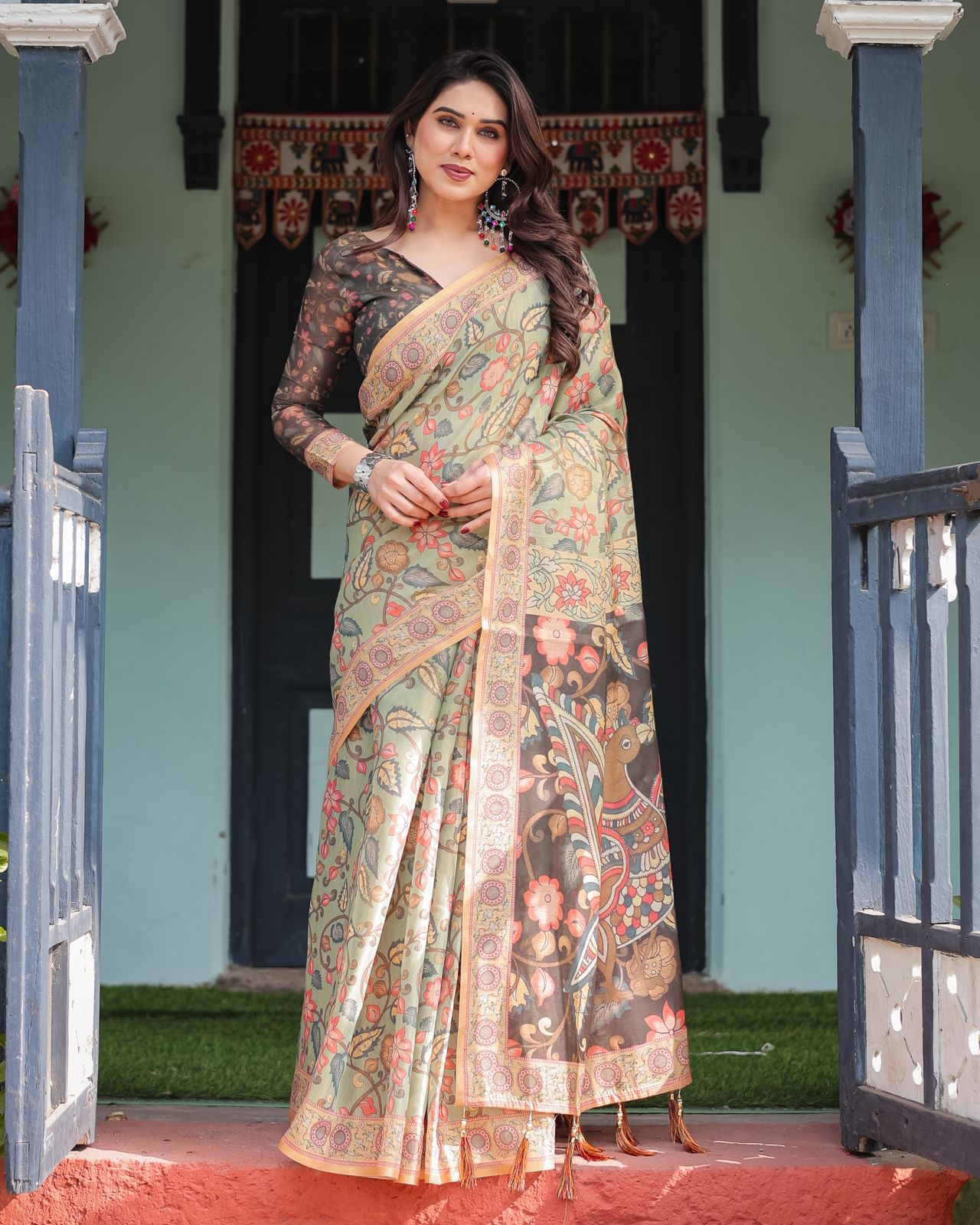
The shankha represents the conch and is connected with upcoming and auspiciousness. The chakra represents the wheel and carries associations with cosmic order and the symbolism of Lord Jagannath. Fish motifs can suggest prosperity and fertility, while flowers and creepers connect the textile with the unbleached world. The meaning of an individual motif can vary by region, weaver and design context, so a symbol should not be treated as have only one fixed interpretation.
Temple borders are also important in Odisha textiles. Repeated stepped shapes, pointed forms and geometric bands can echo architectural details without reproducing one building literally. Odisha's textile language is therefore a combination of technique and symbolism: the same motif has a different visual effect depending on whether it's created through ikat, supplementary work, contrasting borders or woven script.
An useful distinction is simple: Sambalpuri identifies most strongly with ikat, Bomkai with richly varied motifs and a prominent pallu, Khandua with ceremonial and devotional weaving, and Berhampuri Patta with structured silk borders.
How can you identify a famous Odisha saree before buying?
You can identify a genuine-looking Odisha handloom saree by checking the fibre, reverse side, motif construction, border alignment, dimensions and available handloom information.
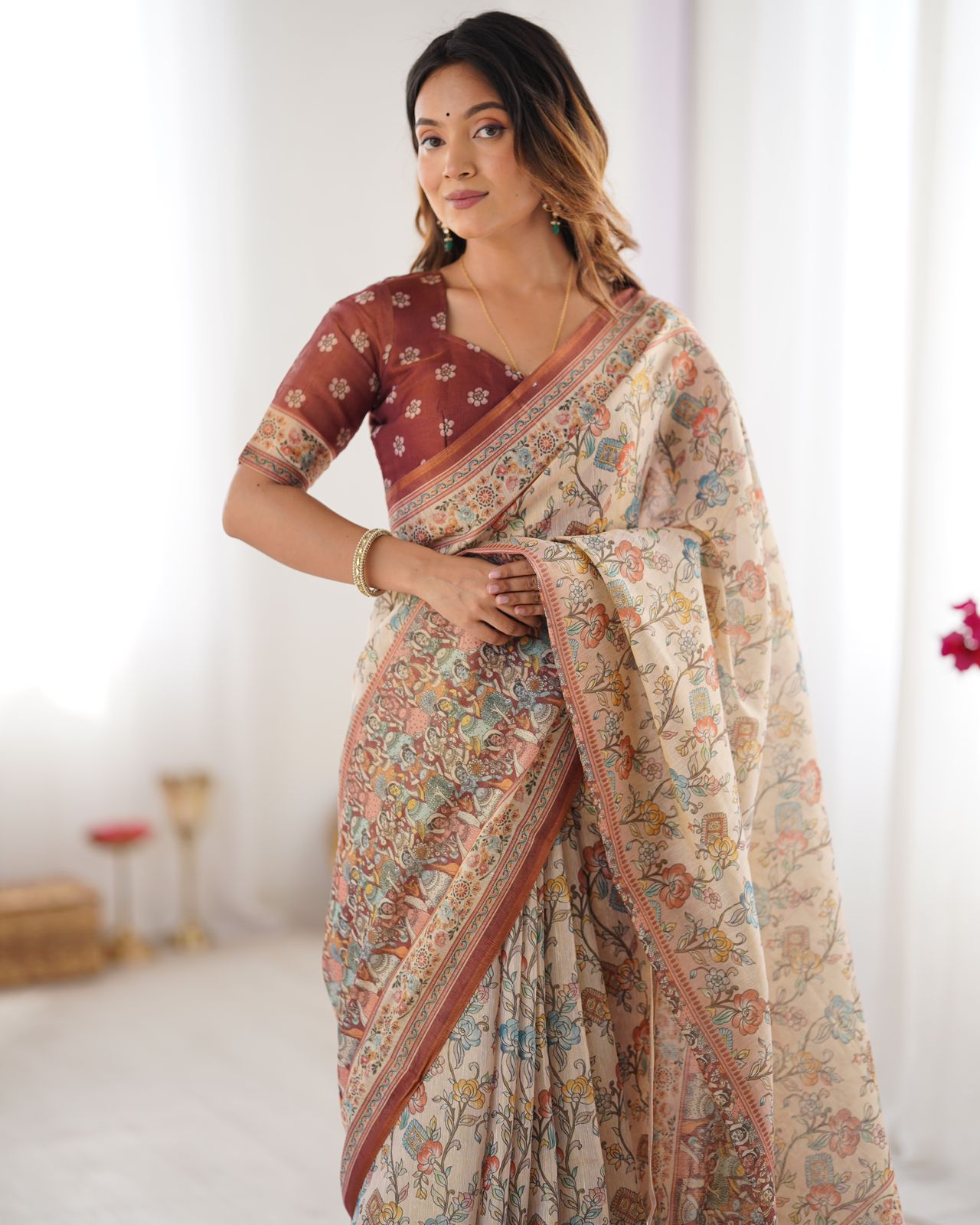
- Check the reverse side. In a yarn-dyed ikat, colour and pattern generally continue through the fabric rather than sitting only on the surface. A printed saree may show a noticeably duller or less complete design on the reverse.
- Inspect motif edges. Ikat edges can look softly feathered or slightly irregular because separately dyed yarns are aligned by hand. Perfectly mechanical edges don't automatically prove that a saree is printed, but they deserve closer inspection.
- Look at the border and pallu. Sambalpuri designs usually repeat with deliberate symmetry, although minor shifts can occur in handloom production. A border that looks randomly placed may indicate a generic print rather than a carefully planned weave.
- Read the fibre information. Cotton, silk, tussar silk and silk-cotton have different weights, textures and care requirements. Ask whether "silk" means pure silk, silk cotton or a silk-look synthetic blend before comparing prices.
- Confirm measurements. Saree length, width and blouse-piece length affect draping and tailoring. A six-yard saree with a separate blouse piece isn't equivalent to a ready-to-wear pre-stitched saree.
- Request handloom details. A credible seller should be able to state the fibre, weaving technique, dimensions and care instructions. A handloom mark or other official authenticity information can add confidence, but a label should support, not replace, attention to the textile itself.
Colour alone can't establish authenticity. Deep red, black, white, yellow, green and blue appear in classic Sambalpuri interpretations, while contemporary weavers also use pastels and restrained neutrals. Construction and motif treatment matter more than whether a saree uses a particular colour.
How should you style a famous Odisha saree for different occasions?
Choose an Odisha saree according to fabric weight, motif scale, drape requirements and event formality instead of choosing only by colour.
For daily wear and office dressing
Light cotton, linen-cotton and soft handloom sarees are comfortable for long hours and easier to pleat. Small floral patterns, narrow borders and medium-contrast colours look polished without becoming visually heavy. A breathable cotton saree usually needs less jewellery and can be paired with a simple blouse in a solid shade taken from the border.
Pastel Floral Tissue Handloom Cotton Saree with Zari Weaves and Pastel Linen Cotton Floral Print Saree with Designer Blouse illustrate two different approaches to a lighter wardrobe. The first combines a handloom cotton base with zari accents, while the second uses linen-cotton texture and a floral print. Neither should be described as a Sambalpuri saree unless the product specification confirms Odisha ikat weaving.
For puja, a Haldi ceremony or a daytime celebration
Choose cotton, cotton-silk or linen-cotton in yellow, orange, pink, green or ivory when comfort and movement matter. A saree with a manageable pallu is practical for sitting on the floor, participating in rituals and moving between indoor and outdoor spaces.
Orange Bandhani Kalamkari Linen Cotton Saree can work for a lively daytime palette because bandhani and Kalamkari refer to different surface-design traditions from the Odisha ikat technique. The distinction is useful: a saree may be culturally suitable for a heritage celebration without belonging to Odisha's handloom family.
For weddings and formal evening events
Silk, tussar silk, silk-cotton and zari details create more body and reflect evening light. A bold pallu can replace heavy jewellery, while a plain blouse allows an intricate border to remain the focal point.
Orange Tussar Silk Saree Online with Zari | Varnavi demonstrates how tussar texture and zari can create a formal effect, although tussar and Sambalpuri ikat are separate textile categories. Cream Pink Tissue Handloom Cotton Saree with Zari offers a lighter colour story and a dressy surface. Peach Linen Cotton Floral Print Saree with Blouse for Women is better suited to a daytime function or a less formal family gathering because linen-cotton generally reads more relaxed than silk.
Royal Varnavi Olive Bloom Handloom Saree and Mustard Olive Handloom Floral Heritage Saree with Pallu show how an olive and mustard palette can create a heritage-inspired look without requiring a time-honoured Odisha motif. A solid blouse, antique-finish earrings and a neatly pinned pallu allow the saree's colour and border to remain visible.
Where should you look when comparing a famous Odisha saree?
Compare sarees by verified material, weave description, measurements, care instructions and final price rather than relying on the phrase "traditional" alone.
Budget-conscious shoppers can begin with Sarees from Rs 1000 to Rs 1500, while discount-led browsing may include Sarees Under 20% Off, Sarees Under 10% Off, Sarees Flat 60% Off and Sarees Flat 50% Off. A reduced price doesn't by itself establish handloom authenticity, so the product description should still identify the fabric and construction clearly.
Check whether the saree is handwoven, handloom-inspired, digitally printed, block printed or powerloom-made. These descriptions refer to different production methods and should not be treated as interchangeable. Also check whether zari is metallic, tested, imitation or simply a zari-look thread, especially when the saree is intended for repeated wear.
How should you care for a famous Odisha saree?
You should care for an Odisha handloom saree according to its fibre, with gentle washing, shade drying and careful storage as the safest general approach.
- Cotton: Follow the label, use a mild detergent and avoid prolonged soaking because strong dyes can bleed during early washes.
- Silk and tussar silk: Prefer professional dry cleaning unless the care label specifically permits another method. Avoid wringing, friction and direct sunlight.
- Zari: Keep zari away from chlorine, perfume and abrasive surfaces. Fold the saree with the zari sections protected from repeated sharp creases.
- Storage: Refold handloom sarees every few months, use a breathable cotton cover and keep them away from damp walls. Do not store silk in sealed plastic for long periods.
- Ironing: Iron on the reverse at a low or medium setting appropriate to the fibre, placing a thin cotton cloth between the iron and delicate zari or raised work.
Correct storage matters because handloom fabrics can develop permanent fold marks when left compressed for months. A clean, dry cupboard and periodic refolding protect the yarn, colour and zari more effectively than frequent washing.
Common Questions About Odisha’s Famous Sarees
What saree is famous in Odisha?
The Sambalpuri saree is the most famous saree of Odisha, particularly the handloom Sambalpuri ikat saree. Bomkai, Khandua and Berhampuri Patta are also important Odisha saree traditions.
Is a Sambalpuri saree the same as an ikat saree?
A Sambalpuri saree is a regional Odisha textile that commonly uses the ikat technique. Ikat is the yarn resist-dyeing method, while Sambalpuri identifies the regional weaving tradition, motifs and cultural context.
What is the difference between Sambalpuri and Bomkai sarees?
Sambalpuri sarees are most strongly identified with yarn-dyed ikat patterns and motifs such as shankha and chakra. Bomkai sarees are known for richly varied borders, prominent pallus and motifs including flowers, fish, birds and geometric forms.
Which Odisha saree is suitable for a wedding?
Silk Bomkai, Khandua silk, silk Sambalpuri and Berhampuri Patta sarees are suitable for weddings because they have structure, visual depth and a formal finish. Choose the fabric according to the season and select a pallu that will remain visible in the planned drape.
How can I tell whether a Sambalpuri saree is handloom?
Check whether the pattern continues through the reverse side, whether the ikat edges show slight hand-alignment variation, and whether the seller provides fibre, dimensions and weaving details. A handloom mark or official certification can provide additional support, but no single label replaces careful inspection.
How should I wash and store an Odisha handloom saree?
Use the care label as the primary instruction, wash cotton gently when permitted, and dry handloom sarees away from harsh sunlight. Dry-clean silk and tussar when recommended, store every saree in a breathable cotton cover, and refold it periodically to prevent permanent creases.