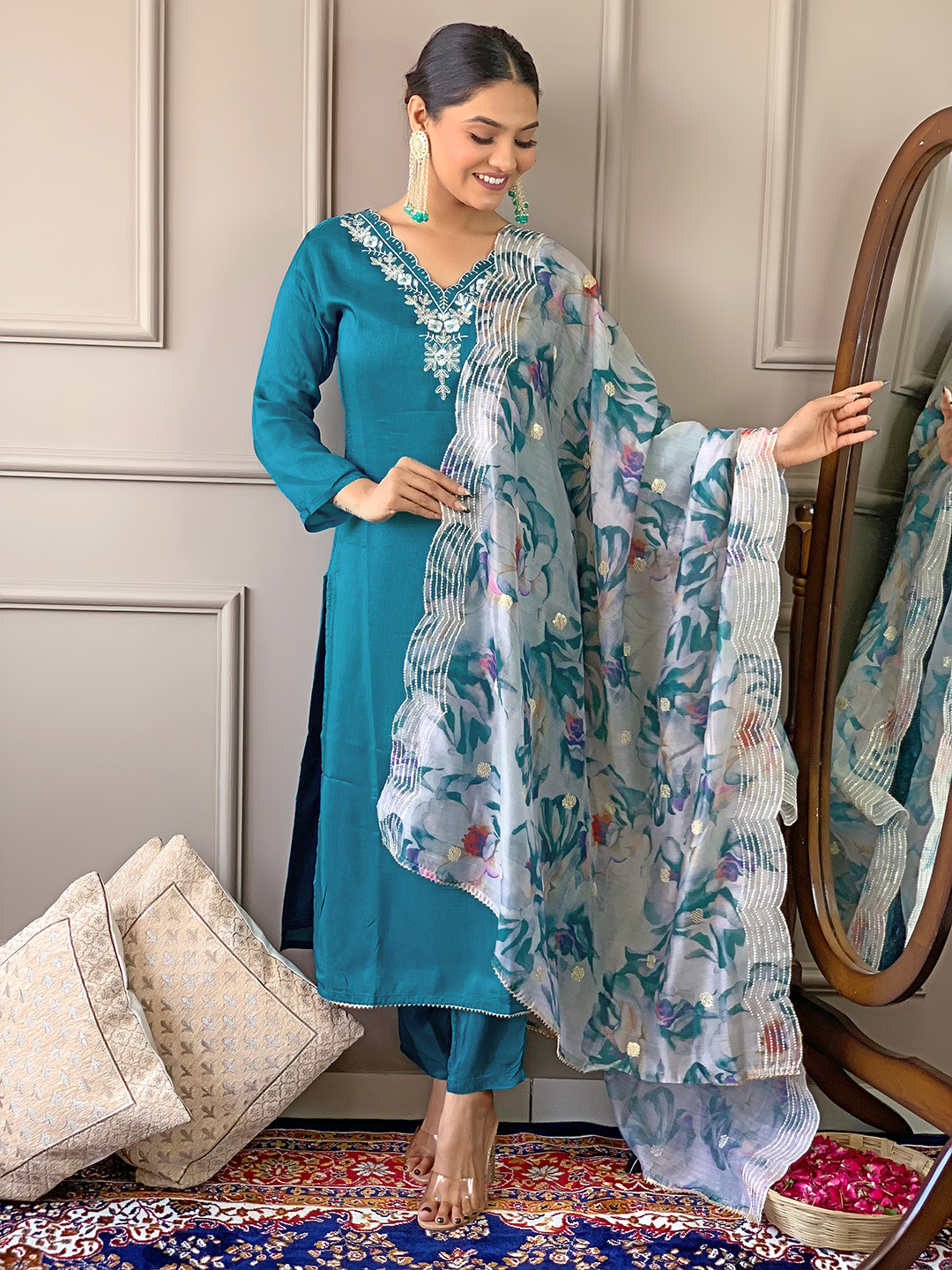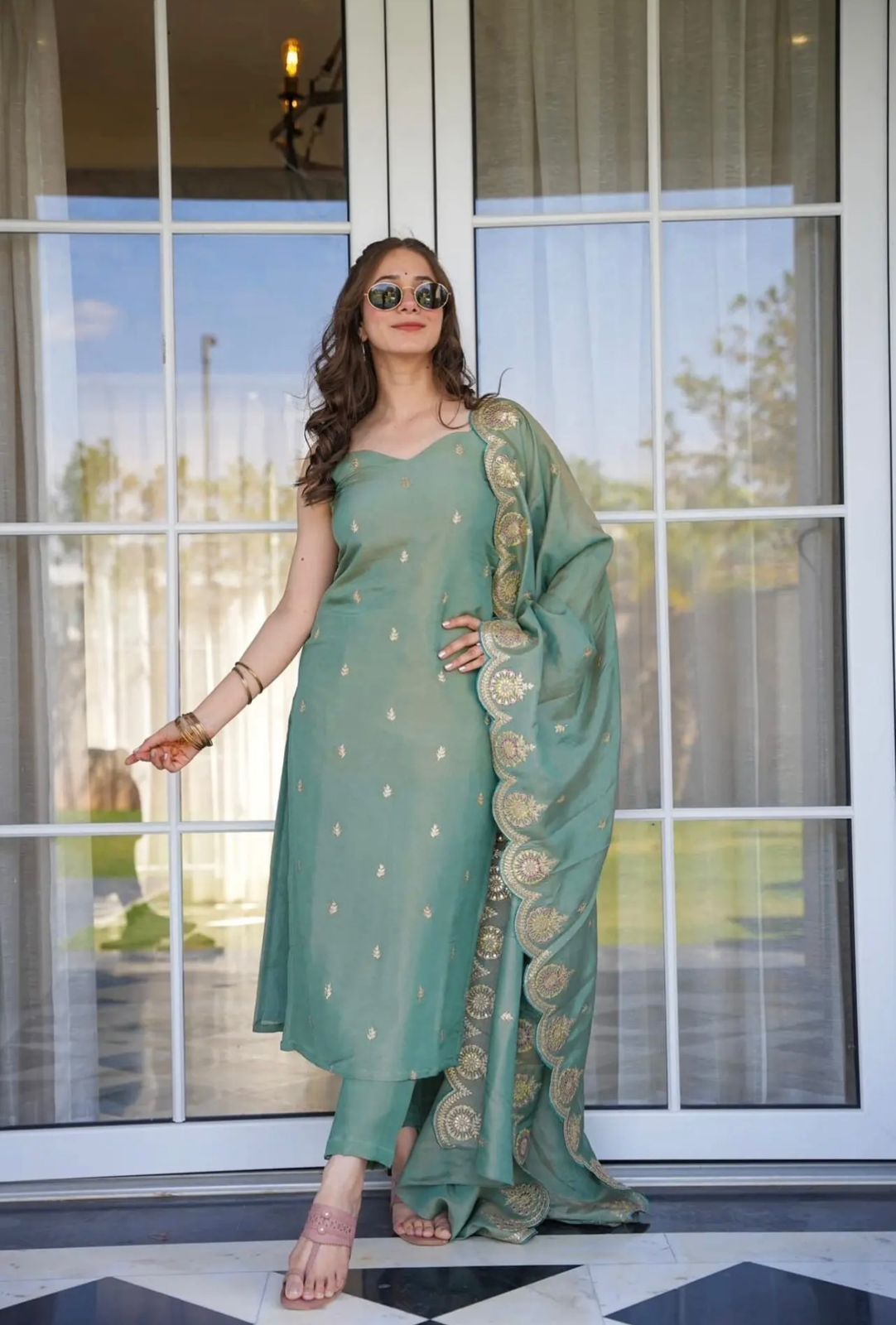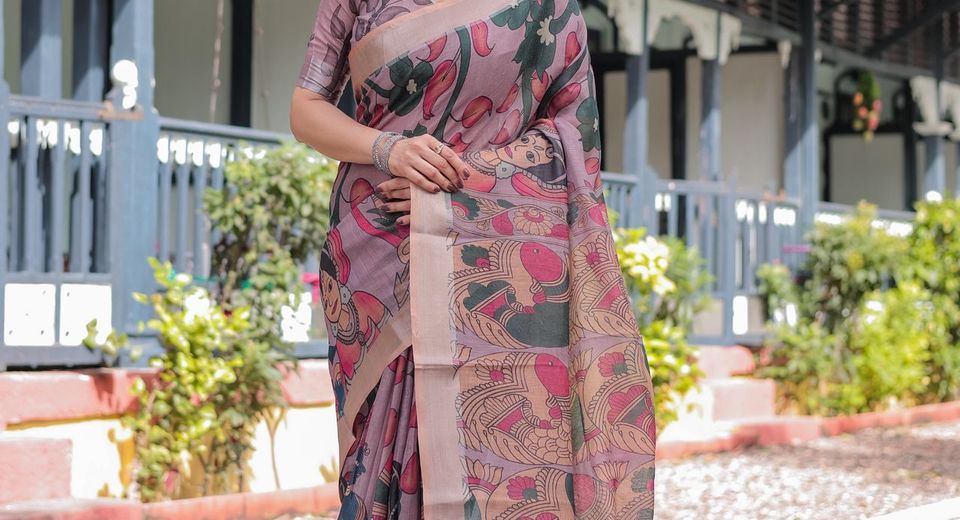
What saree is famous in Madurai? The best-known answer is the Madurai Sungudi saree, a cotton saree recognised for small dotted patterns, lively colours and traditional tie-dye workmanship. Sungudi isn't simply a cotton saree with dots printed on its surface. The characteristic dots are created through a resist-dyeing process in which selected portions of the fabric are protected before colour is applied.
Madurai Sungudi sarees are valued for their lightness, breathable cotton construction and connection with the city's textile history. A Sungudi saree suits hot weather, regular festive dressing and travel better than many hefty silk styles. However, not every saree with dots is genuine Sungudi, and not every Madurai saree follows just the same production method. Understanding the craft makes it easy to identify a suitable saree, choose the right styling and care for it properly.
What saree is famous in Madurai, and what makes Sungudi distinctive?
Madurai Sungudi is the saree most closely associated with Madurai's traditional textile identity. Sungudi sarees are generally made from cotton and are known for repeated dots, tie-dye effects, bold colour combinations and contrasting pallu or borders.
The name "Sungudi" is often associated with small knots or tied sections used during dyeing. The exact appearance can vary considerably. Some sarees show evenly spaced white dots, while others use multicoloured dots, geometric arrangements, floral borders or larger motifs alongside the tie-dye work.
A traditional Sungudi saree may have a relatively simple body with a contrasting border and pallu. Contemporary versions may combine the dotted field with screen prints, block prints or decorative borders. The regional identity remains strongest when the saree retains a breathable cotton base and the characteristic resist-dyed appearance.
Madurai's connection with Sungudi is also linked to Saurashtrian weaving communities that settled in southern India and developed a strong textile presence in the region. Over time, Sungudi became associated with local markets, everyday cotton dressing and festive clothing in Tamil Nadu. The craft therefore represents both a material technique and a regional history.
How is the saree famous in Madurai made?
A Madurai Sungudi saree is made by preparing cotton, tying or resisting selected portions, dyeing the fabric and removing the ties to reveal the characteristic pattern.
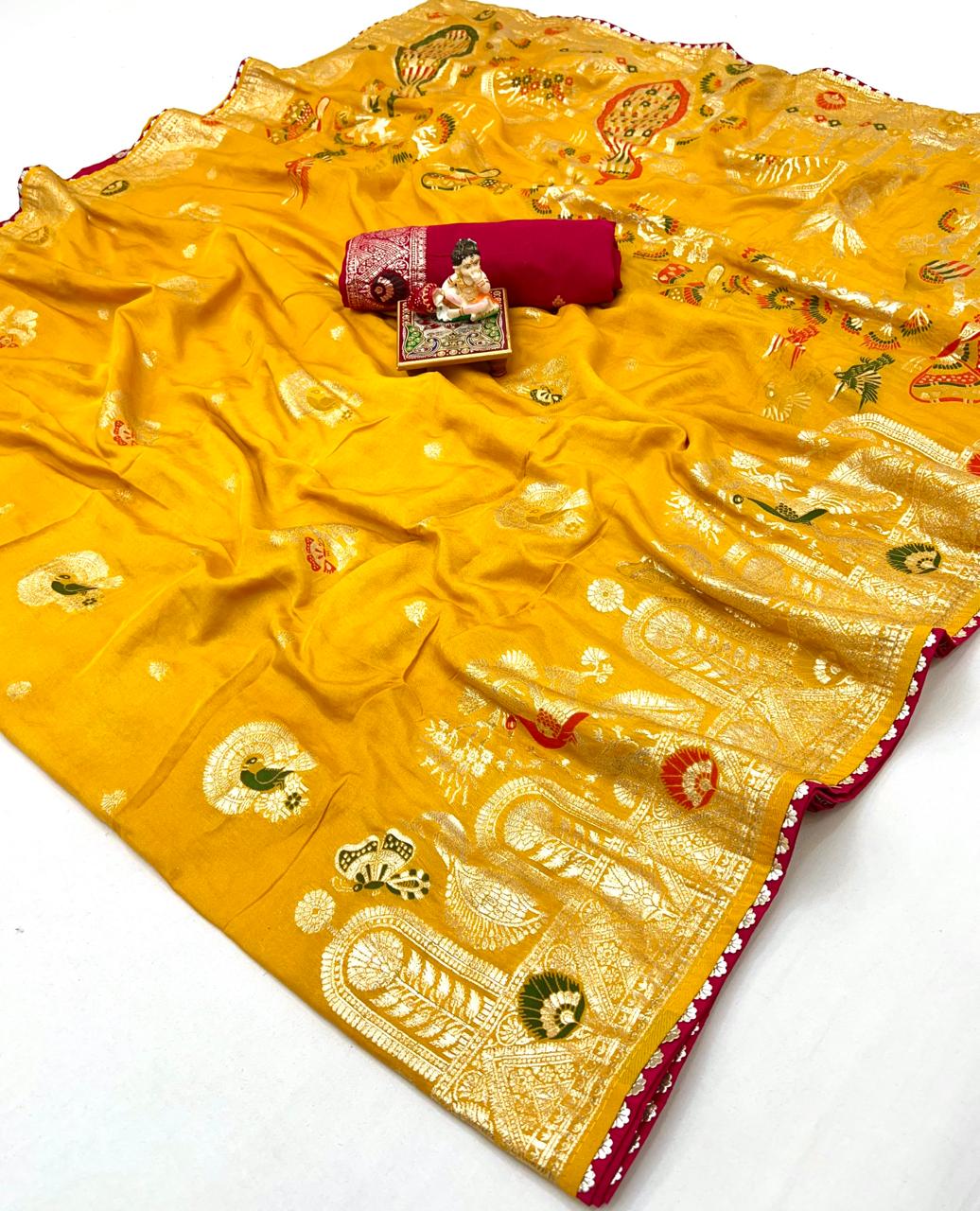
The process begins with cotton fabric that's washed and prepared so dye can penetrate evenly. Artisans then create small resist points, traditionally by tying portions of the cloth or protecting them through a related resist method. When the fabric enters the dye bath, the protected points remain lighter than the surrounding area. Repeated tying and dyeing can produce more than one colour and create layered patterns.
After dyeing, the ties or resist material are removed. The fabric is washed, dried and finished before the saree is checked for colour balance, border alignment and usable width. The number of steps depends on the design and the degree of handwork involved. A simple dotted saree may have a cleaner, more regular layout, while a complex design may show variation in dot size and spacing.
Small irregularities are not automatically defects in a handcrafted tie-dye saree. Slight differences in dot shape, spacing and colour penetration can indicate manual work. However, large blank patches, severe colour bleeding, broken selvedges or inconsistent fabric width should be treated as quality concerns rather than celebrated as craft variation.
Why is the saree famous in Madurai suitable for warm weather?
Sungudi cotton is suitable for Madurai's warm climate because cotton absorbs moisture, allows air movement and usually feels lighter than dense silk or heavily embellished fabric.
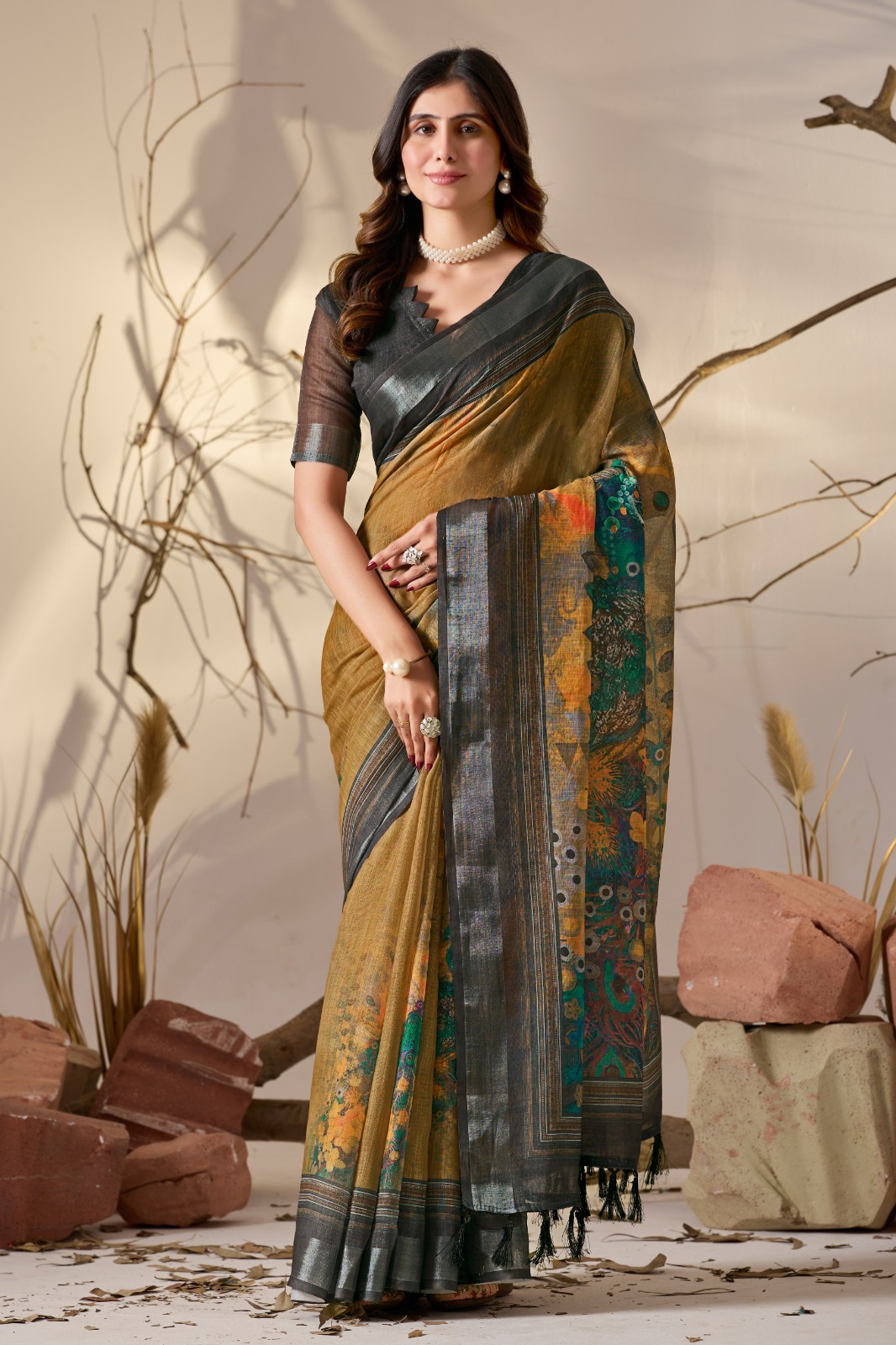
Madurai experiences long periods of heat, so a saree that doesn't trap excessive warmth is practical for daytime wear. A lightweight cotton Sungudi saree can be worn for shopping, temple visits, family gatherings and office settings when styled with a structured blouse. The fabric may also dry more quickly than heavier textiles after careful washing.
Comfort depends on more than fibre content. Yarn thickness, weave density, starch finish, dyeing treatment and blouse construction all affect how a saree feels. A very crisp cotton saree may hold pleats well but feel firm at first. A softer saree may drape closer to the body but require more careful pleat setting.
For a humid or hot day, choose a saree with a breathable blouse lining, a non-heavy petticoat and a fall that doesn't make the lower edge stiff. Cotton or cotton-blend petticoats generally feel more comfortable than thick synthetic layers. A thin cotton saree can also benefit from a modest amount of starch if sharper pleats are preferred.
How is the saree famous in Madurai different from Kanjeevaram and Banarasi silk?
Sungudi differs from Kanjeevaram because Sungudi is primarily associated with lightweight cotton tie-dye, while Kanjeevaram is known for lustrous silk and substantial zari borders.
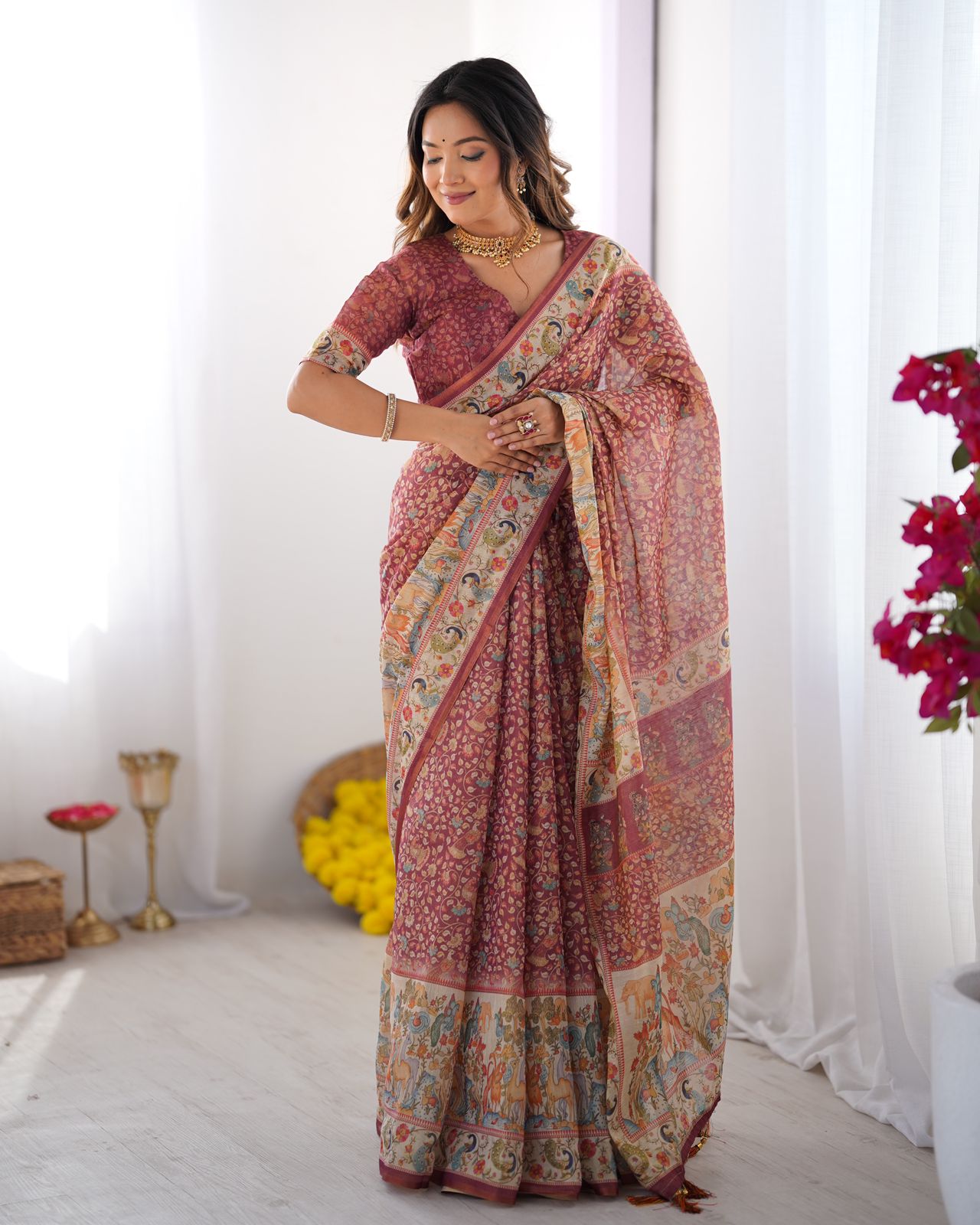
Kanjeevaram sarees are commonly selected for weddings, bridal trousseaus and formal religious ceremonies because silk and zari create a richer, more structured appearance. Sungudi is usually more relaxed, breathable and practical for daytime occasions. The two traditions serve different clothing needs rather than competing for exactly the same purpose.
Chettinad cotton sarees are another useful comparison. Chettinad textiles are known for checks, stripes, contrasting colours and a firm cotton hand, whereas Sungudi is identified more strongly by its dotted resist-dye effect. Chanderi sarees are lightweight and translucent, often made with silk or cotton yarns and recognised for their delicate sheen. A Chanderi saree may feel airy, but its surface and weaving identity are different from Madurai Sungudi.
Banarasi silk is distinguished by woven brocade and zari motifs, not by the tied dots associated with Sungudi. Red Banarasi Silk Saree With Rich Golden Zari Floral Border and Wine Banarasi Soft Silk Saree With Golden Zari Border illustrate the heavier, more formal visual language of Banarasi-inspired dressing. These sarees are useful choices when a wedding or evening event calls for shine, but they don't represent Madurai's signature cotton craft.
How should you choose the saree famous in Madurai?
Choose a Madurai Sungudi saree by checking the fibre, dye consistency, fabric weight, weave quality, colourfastness information and the occasion for which you'll wear it.
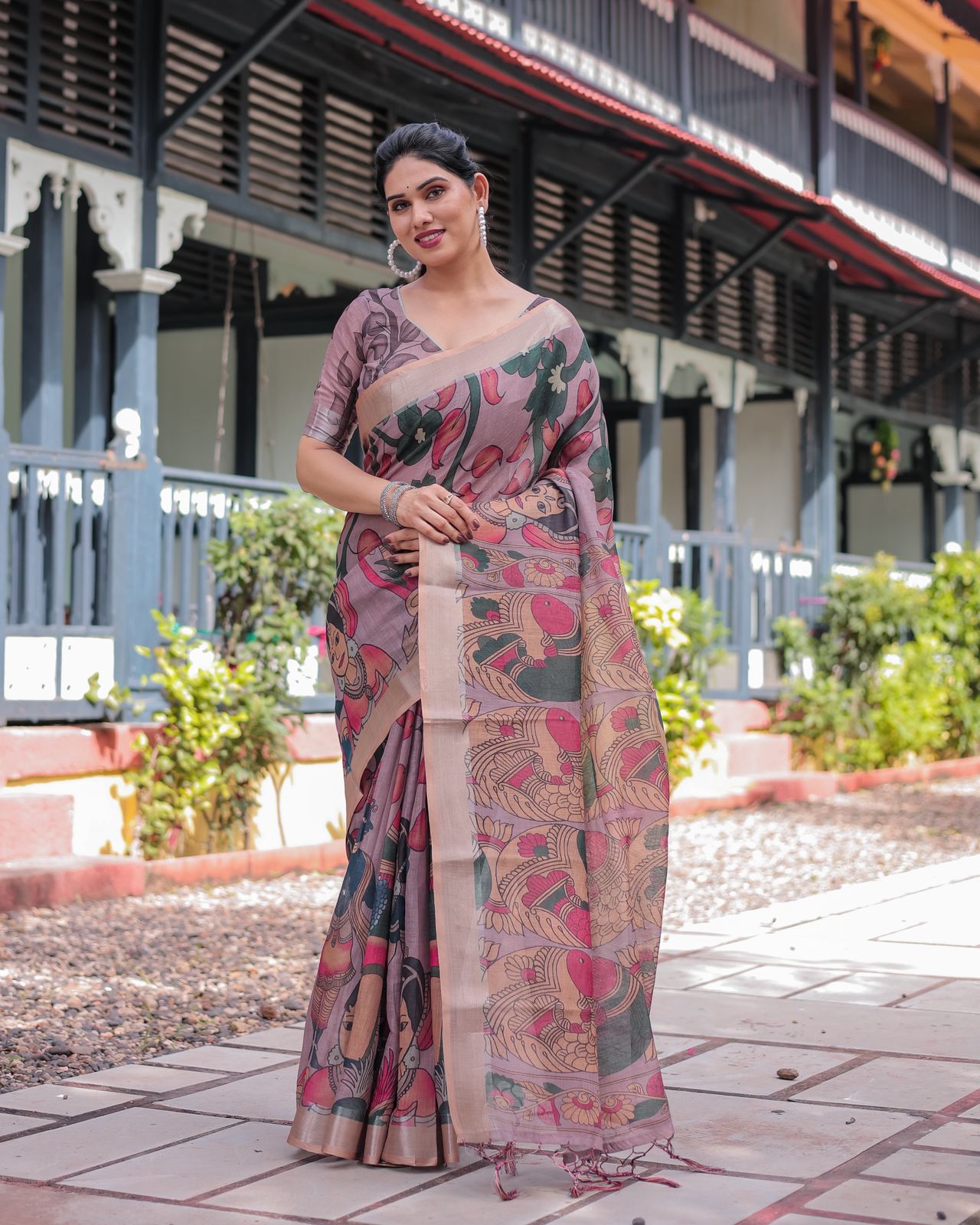
What should you check in the fabric and weave?
Hold the saree against light to inspect whether the weave looks reasonably even. A few handmade variations are acceptable, but long thin patches, pulled threads and an unstable selvedge can shorten the saree's life. Check whether the fabric width appears consistent from one end to the other.
Rub a small hidden area with a dry white cloth if the seller permits it. Noticeable loose colour transfer deserves caution, especially when the saree has a dark red, maroon, purple or navy base. A colourfastness test at home should be gentle and limited because vigorous rubbing can damage delicate cotton fibres.
What should you study in the dots and dyeing?
Traditional-looking Sungudi dots don't have to be perfectly machine-uniform. Look for a deliberate overall arrangement and a clear relationship between the body, border and pallu. If the dots look like a flat repeated digital print on top of the cloth, ask whether the saree is printed Sungudi-inspired cotton rather than tie-dyed Sungudi.
How should you match weight to use?
For daily wear, choose a light or medium-weight cotton that can be washed and dried without demanding specialist maintenance. For a festive event, a saree with a stronger border, richer pallu or small zari details can look more dressed up while remaining cooler than heavy silk.
Wine Tissue Handloom Cotton Saree with Zari & Floral Prints demonstrates how a cotton saree can gain occasion appeal through texture, zari and floral surface detail. The saree isn't the same textile tradition as Sungudi, but it's a useful comparison when deciding how much decoration you want in a breathable saree.
Budget also affects construction and finishing. The Sarees from Rs 1000 to Rs 1500 collection can be useful for comparing accessible everyday options, but price alone doesn't prove that a saree is hand-tied or traditionally made. Sarees Under 20% Off and Sarees Under 10% Off can also help with price comparison, while Sarees Flat 60% Off and Sarees Flat 50% Off require careful checking of fabric details, measurements and care instructions before purchase.
How can you style the saree famous in Madurai for different occasions?
A Sungudi saree can be styled for daily wear, a Haldi ceremony or a small festive gathering by changing the blouse, jewellery, drape and level of contrast.
For an everyday Madurai-inspired look, pair a bright dotted cotton saree with a plain cotton blouse in one of the border colours. Small silver earrings, a practical shoulder bag and a low bun keep the outfit comfortable. A narrow belt can help control the pallu when commuting, although a belt should not be so tight that it pulls the saree or distorts the pleats.
For a Haldi ceremony, yellow, turmeric, pink, orange or green accents work naturally with the lively colour vocabulary of Sungudi. Choose a blouse with elbow-length sleeves if you expect turmeric, water or outdoor activity, and avoid delicate embellishments that are difficult to clean. A simple floral gajra, glass bangles and flat sandals create a festive appearance without making the cotton saree feel overdressed.
For an evening family event, use a more polished blouse with a defined neckline, a firm front pleat and a carefully pinned pallu. Traditional Mustard Maslin Silk Saree With Rich Pallu or Wedding Wear Wine Purple Maslin Silk Saree may be more suitable when the event requires silk-like richness rather than a casual cotton mood. A silk saree should be evaluated separately from Sungudi because its drape, care needs and formality are different.
Linen and printed cotton offer other warm-weather alternatives. Elegant Mauve Linen Saree with Artistic Madhubani Print brings an art-print focus, while Pastel Linen Cotton Floral Print Saree with Designer Blouse offers a softer, contemporary direction. These examples show why "comfortable saree" isn't a single category: fibre, print, finishing and blouse design all change the final effect.
Wine Purple Maslin Silk Zari Woven Saree with Rich Pallu is another example of a more formal drape with a decorative pallu and zari surface. The contrast with Sungudi is useful when planning a wardrobe: cotton tie-dye serves practical daytime dressing, while silk and zari generally suit ceremonies and evening celebrations.
How should you wash and store the saree famous in Madurai?
Wash a Sungudi saree gently in cold or cool water, dry it in shade and store it folded in a clean breathable fabric cover.
For the first wash, follow the seller's care label because dyeing methods and finishing treatments vary. If hand washing is recommended, use a mild liquid detergent, avoid prolonged soaking and don't twist the saree. Dark colours should be washed separately until you're confident that excess dye has been removed.
Dry the saree inside out in shade rather than exposing strong direct sunlight to the dyed surface for several hours. Excessive sun can fade deep colours over time. Avoid wringing because twisting can weaken cotton yarns and create permanent crease marks.
Iron Sungudi cotton on the reverse side using a low or medium setting appropriate for cotton. Keep the iron moving over areas with dots, prints or zari details. If the saree contains zari, place a thin cotton cloth between the iron and the decorative surface.
For storage, fold the saree along different lines every few months instead of leaving one sharp crease in the same position. Store the saree away from damp walls, perfume sprays and rough jewellery. Refold heirloom or rarely worn sarees periodically and inspect them for moisture, insect damage or colour transfer.
What saree is famous in Madurai worth choosing for your wardrobe?
Madurai Sungudi is worth choosing when you want a breathable cotton saree with regional history, lively colour and a distinctive dotted resist-dye appearance.
Sungudi is especially practical for warm-weather wardrobes, daytime functions, temple visits, travel and relaxed festive dressing. The right choice depends on whether you prefer a soft everyday drape, a crisp pleated finish, a contrasting border or a more decorative pallu. Checking the fabric, dyeing, selvedge and care instructions will help you distinguish a thoughtfully made saree from a merely dotted imitation.
Choosing Sungudi doesn't mean excluding other Indian saree traditions. Banarasi silk, Kanjeevaram, Chanderi, linen, maslin silk and handloom cotton each answer different needs. A well-planned wardrobe can include a lightweight Madurai textile for hot days, a richer silk for weddings and a versatile printed saree for contemporary occasions.
Common Questions About Madurai Sungudi Sarees
What saree is famous in Madurai?
Madurai Sungudi is the saree most closely associated with Madurai. Sungudi sarees are generally made from cotton and are recognised by small dotted patterns created through tie-dye or resist-dye techniques.
Is Sungudi saree pure cotton?
Traditional Sungudi sarees are commonly made from cotton, but contemporary products may use blends or printed fabric inspired by the traditional appearance. Check the fibre description and care label instead of assuming that every dotted saree is pure cotton.
How can you identify a genuine Sungudi saree?
A genuine-looking Sungudi saree usually has a breathable cotton base and characteristic dotted resist-dye work rather than only a flat surface print. Slight differences in dot size can occur in handcrafted work, but severe colour bleeding, broken selvedges and pulled threads indicate quality concerns.
Is Sungudi saree suitable for summer?
Sungudi cotton is suitable for summer because cotton is breathable, absorbs moisture and usually feels lighter than dense silk. A lightweight blouse, cotton petticoat and shade drying can make the outfit more comfortable in hot weather.
Can you wear a Sungudi saree to a Haldi ceremony?
You can wear a Sungudi saree to a Haldi ceremony, particularly in yellow, pink, orange, green or other bright shades. Choose a washable blouse, practical jewellery and footwear, and avoid embellishments that may be difficult to clean after turmeric or water exposure.
How should a Sungudi saree be washed?
Wash a Sungudi saree gently in cool water with mild detergent, avoid twisting or prolonged soaking, and dry it inside out in shade. Follow the garment label because dark dyes, prints, zari and special finishes may require different care.