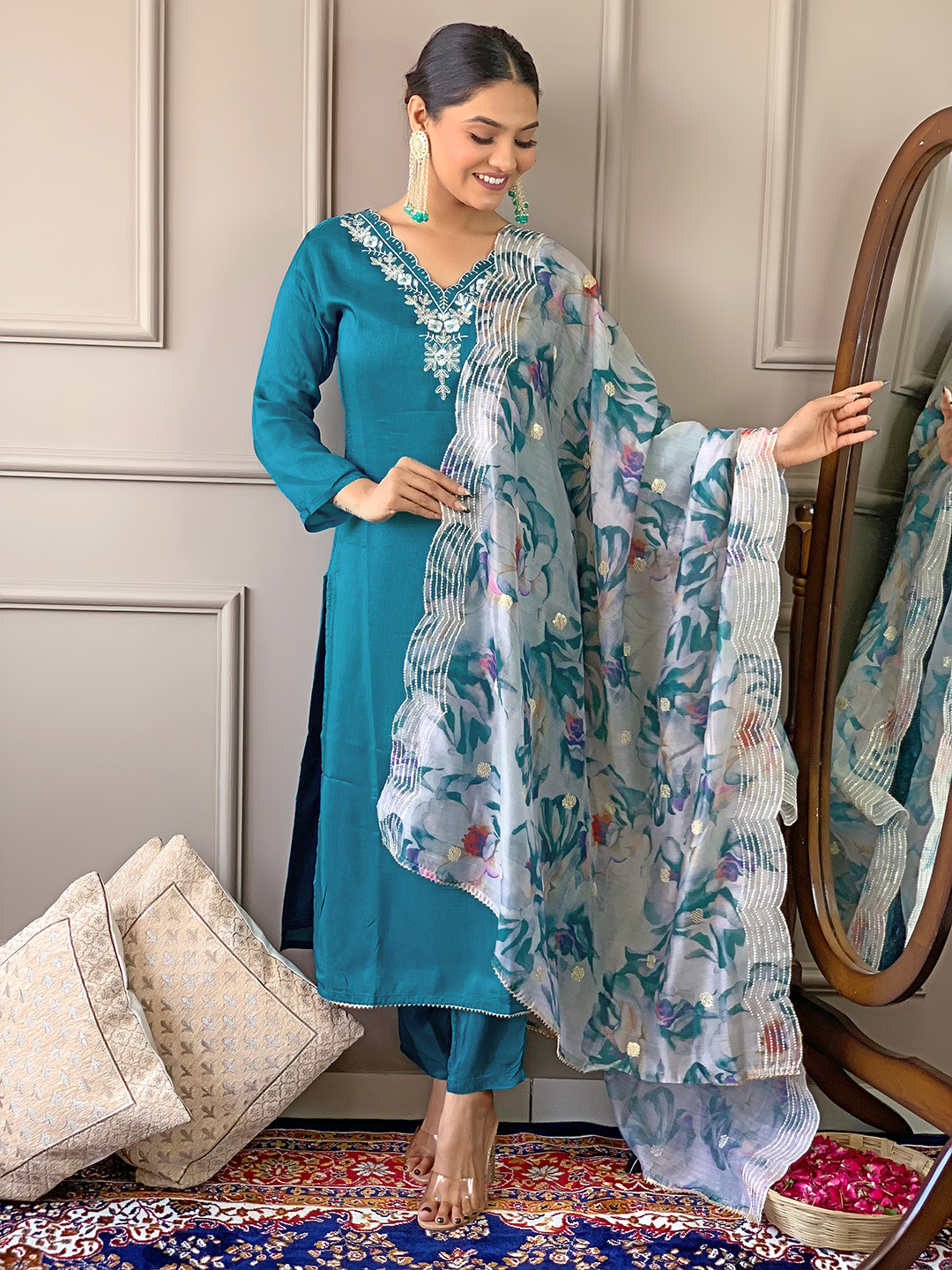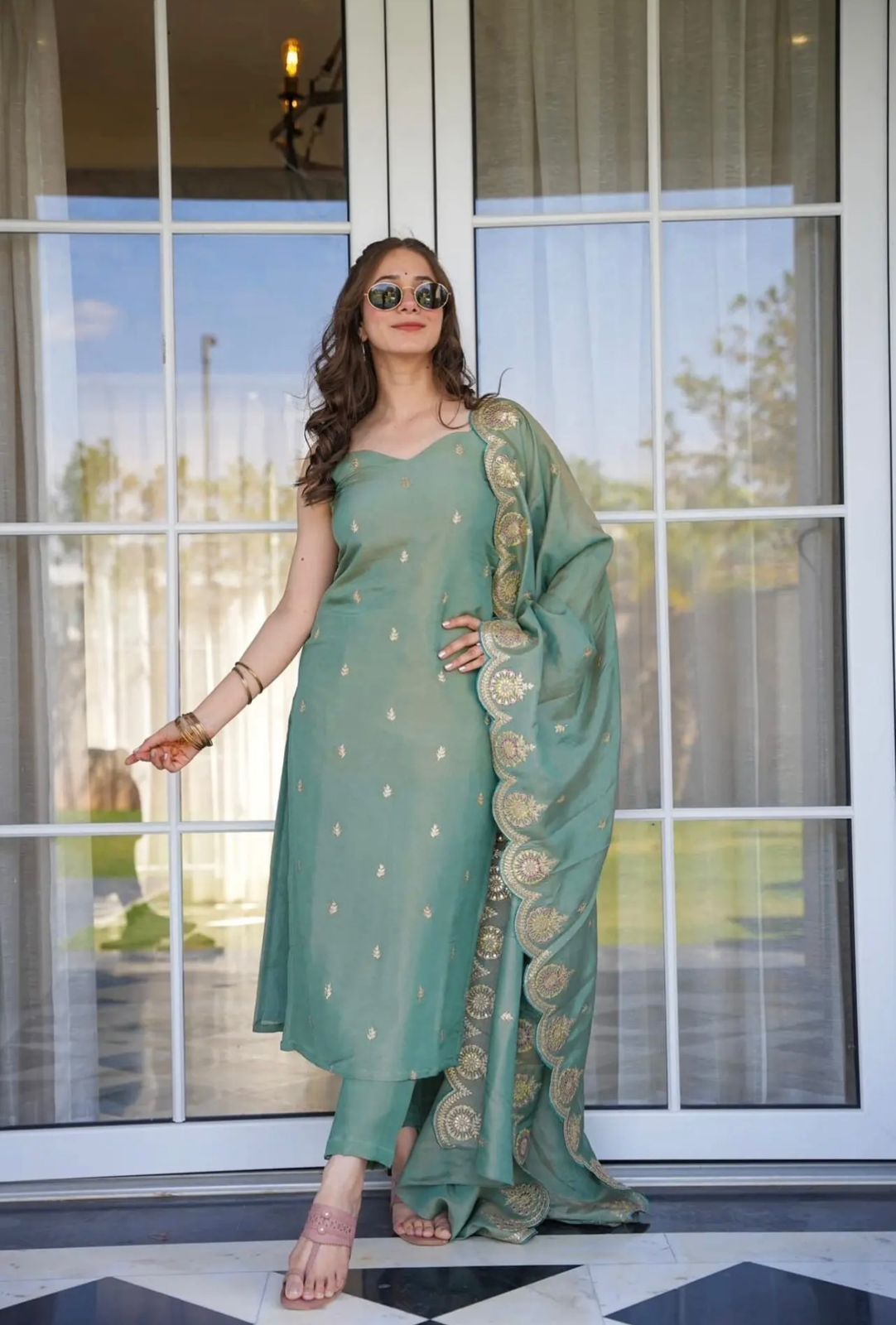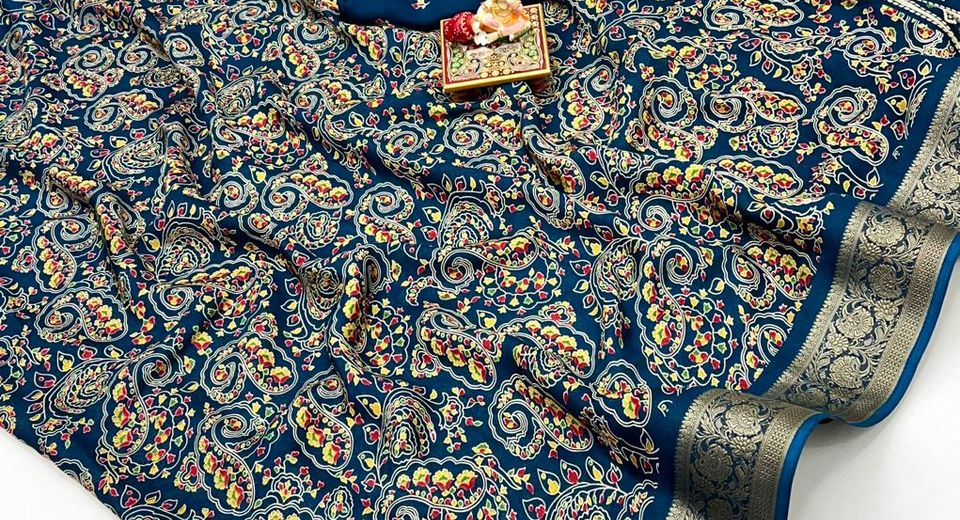
If you're searching for what saree is famous in kolkata, the shortest answer is the Tant saree. Tant is a lightweight Bengali handloom cotton saree recognised for its crisp texture, breathable weave and broad decorative border. Kolkata is also closely associated with Baluchari silk, Garad and Korial sarees, Bengal Jamdani and Kantha-work sarees. The right choice depends on whether you need everyday comfort, a festive drape, a wedding look or a textile with narrative motifs.
Kolkata's saree culture is shaped by Bengal's humid climate, riverine geography, weaving communities and long history of trade. A saree sold in Kolkata may be woven in Nadia, Murshidabad, Bishnupur, Fulia, Shantipur or Dhaka-inspired workshops rather than inside the city itself. Understanding that distinction helps you identify the weave instead of treating "Kolkata saree" as one single fabric.
What saree is famous in kolkata?
Tant cotton is the saree most widely recognised as Kolkata's everyday and summer classic. Tant means handloom cotton in Bengali usage, and the saree is valued for a firm, airy structure created by a relatively open weave. Traditional Tant sarees commonly feature a coloured body, a contrasting border and a pallu with stripes, checks, floral forms or small geometric details.
Shantipur and Fulia in Nadia district are important centres associated with Bengali handloom weaving. Their sarees range from simple white-and-red designs to bright contemporary combinations. A white Tant saree with a red border is strongly associated with Bengali cultural dressing, particularly during Durga Puja, sindoor khela and other festive gatherings.
Tant isn't automatically the same as every cotton saree sold in West Bengal. Check the fabric description, weave, finishing and source before buying. Handloom cotton can have small variations in slubs, selvedge and motif alignment, while a powerloom imitation may look more uniform and feel denser. Neither choice is inherently wrong, but the construction affects breathability, texture and price.
Which Bengali sarees are famous besides Tant?
Baluchari, Garad, Korial, Jamdani and Kantha-work sarees are the other major Bengali saree traditions associated with Kolkata. Each one has a different visual language, fibre preference and level of formality.
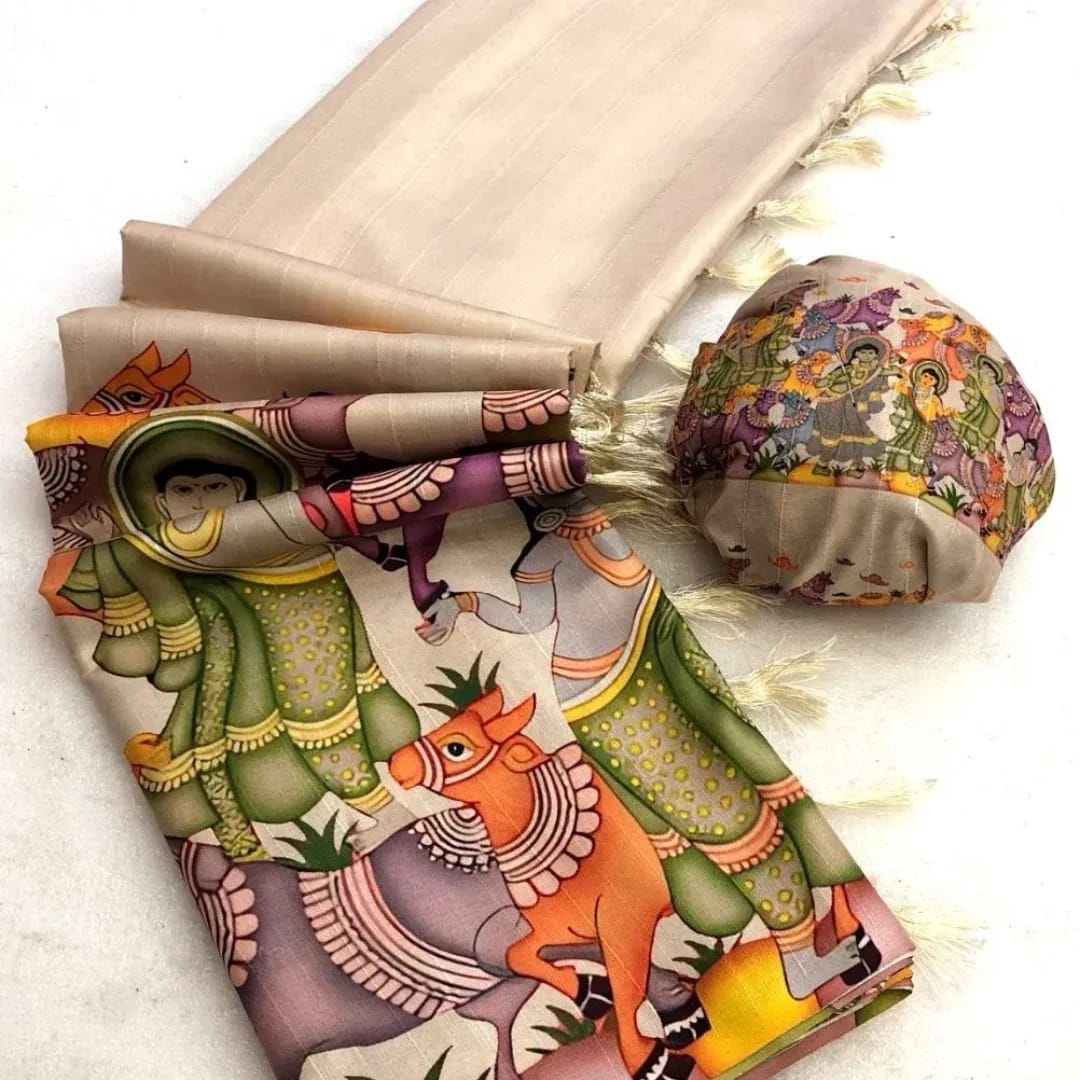
Baluchari silk
Baluchari silk is famous for narrative pallu and border designs showing scenes from Indian epics, court life, mythology or everyday Bengali culture. Bishnupur in Bankura district is the best-known centre for Baluchari weaving. Silk Baluchari sarees are structured, ornate and suited to weddings, receptions and important festive events.
A genuine-looking Baluchari design isn't defined only by a large motif. Examine whether the pallu has a coherent woven composition, whether the reverse shows a considered jacquard construction and whether the silk has a substantial but comfortable fall. Printed versions can reproduce a similar appearance at a lower price, but printed imagery is different from motifs woven into the fabric.
Garad and Korial
Garad sarees are traditionally associated with an off-white or unbleached body, a red border and a relatively restrained finish. Korial sarees offer a related white-and-red Bengali aesthetic, often with a smoother or more polished appearance. These sarees are especially visible during Durga Puja, Bengali weddings and religious ceremonies.
Garad and Korial sarees can be woven in silk or silk-blend constructions depending on the product. Ask whether the saree is pure silk, silk cotton or a synthetic blend, because the fibre changes drape, sheen, maintenance and cost. A red border alone doesn't prove that a saree is Garad or Korial.
Jamdani and Kantha
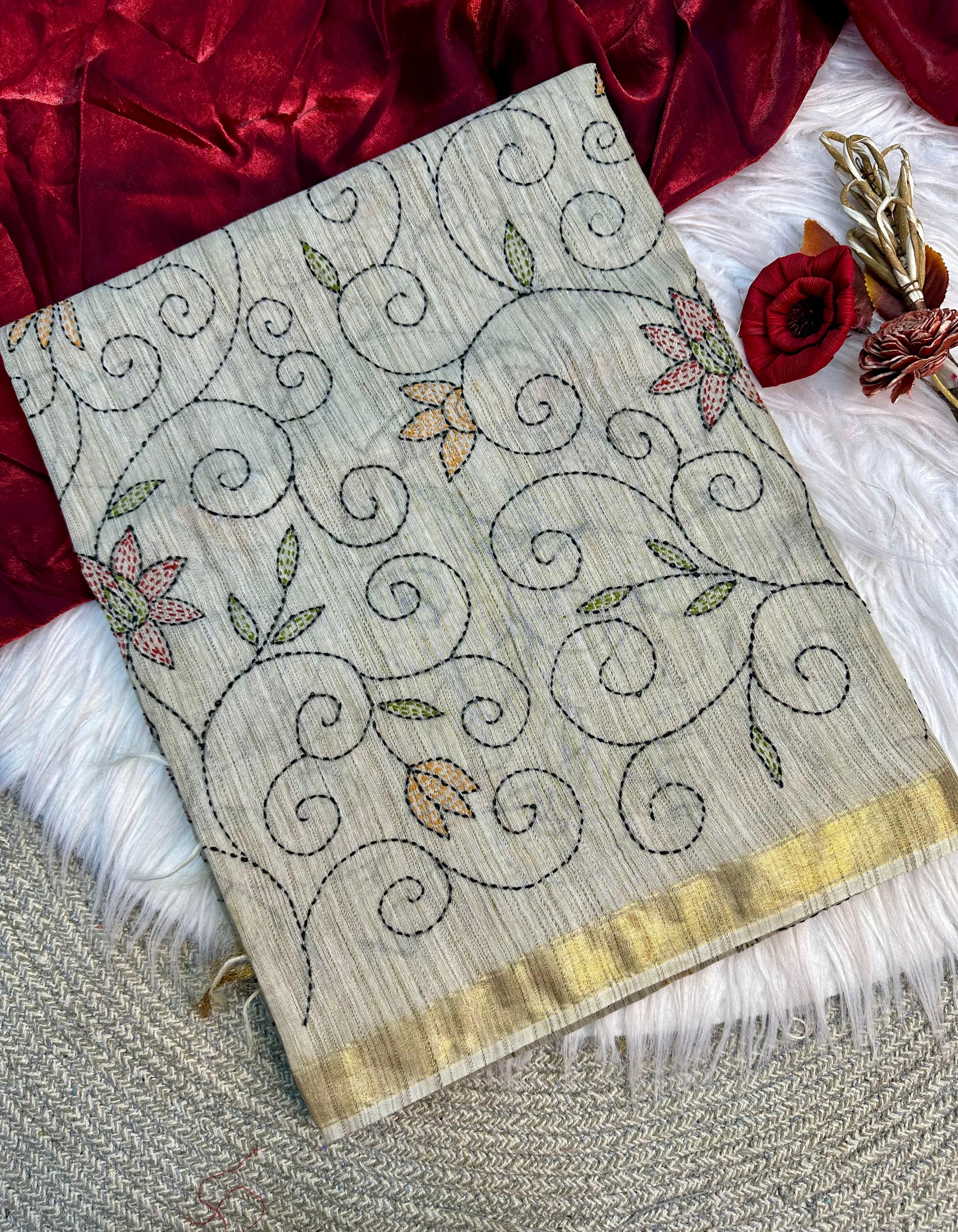
Bengal Jamdani is recognised for delicate supplementary-weft motifs, while Kantha sarees are recognised for decorative running-stitch embroidery or quilt-inspired surface work. Jamdani motifs often appear to float across a light ground, whereas Kantha gives the saree a visibly stitched, handcrafted character.
Dhakai Jamdani has roots in the Dhaka weaving tradition, while Bengal Jamdani is also produced and worn in West Bengal. Buyers should therefore read the stated origin carefully. A saree with Jamdani-inspired printed motifs isn't equivalent to a handwoven Jamdani with supplementary-weft work.
How do Kolkata sarees differ in fabric and weave?
Kolkata sarees differ mainly through fibre, yarn preparation, weaving technique, motif construction and finishing. Tant usually prioritises ventilation and lightness; Baluchari prioritises woven storytelling and silk richness; Garad prioritises a ceremonial Bengali colour language; Jamdani prioritises fine motifs created through supplementary threads; Kantha prioritises surface embroidery.
Use the following practical comparison when evaluating a saree:
- Tant cotton: breathable, crisp and comparatively easy to wear in warm weather; ideal for daily use, office dressing and daytime festivals.
- Baluchari silk: heavier and more formal, with elaborate woven motifs; suitable for weddings, receptions and cultural events.
- Garad or Korial: traditionally white or off-white with red accents; appropriate for Durga Puja, Bengali ceremonies and understated festive dressing.
- Jamdani: lightweight to medium-weight depending on yarn and construction, with fine motifs; suitable for elegant daytime or evening occasions.
- Kantha-work saree: identifiable through stitched decoration; a good choice when embroidery and craft texture matter more than a smooth surface.
Terminology can overlap in online catalogues. "Silk saree" describes fibre, "handloom" describes a production method, and "Baluchari" describes a regional design and weaving tradition. One saree can therefore be a handloom silk saree with Baluchari-style motifs, while another can be a printed polyester saree inspired by the same visual tradition.
Which Kolkata saree should you wear for each occasion?
Choose Tant for heat and long hours, Baluchari for formal celebrations, Garad or Korial for Bengali rituals, and Jamdani or Kantha for a lighter artisanal statement. Occasion, weather and the amount of movement required are more useful decision factors than the word "designer" alone.
For summer, travel and daily wear
A handloom Tant cotton saree is the most practical option for Kolkata's humid months. Choose a medium-light body, a manageable six-yard length and a border that won't feel stiff at the waist. Cotton petticoats or a well-fitted underskirt help the pleats stay stable without adding unnecessary weight.
Calcutta Moss fabrics can also offer a fluid alternative when you want a softer fall than crisp cotton. A design such as Classic Calcutta Moss Designer Saree or Calcutta Moss Mellow Georgette Printed Saree illustrates how Kolkata-inspired naming may refer to a fabric or aesthetic rather than a traditional Bengali handloom category. Read the fibre details instead of assuming that "Calcutta" means Tant.
For Durga Puja and Bengali festivities
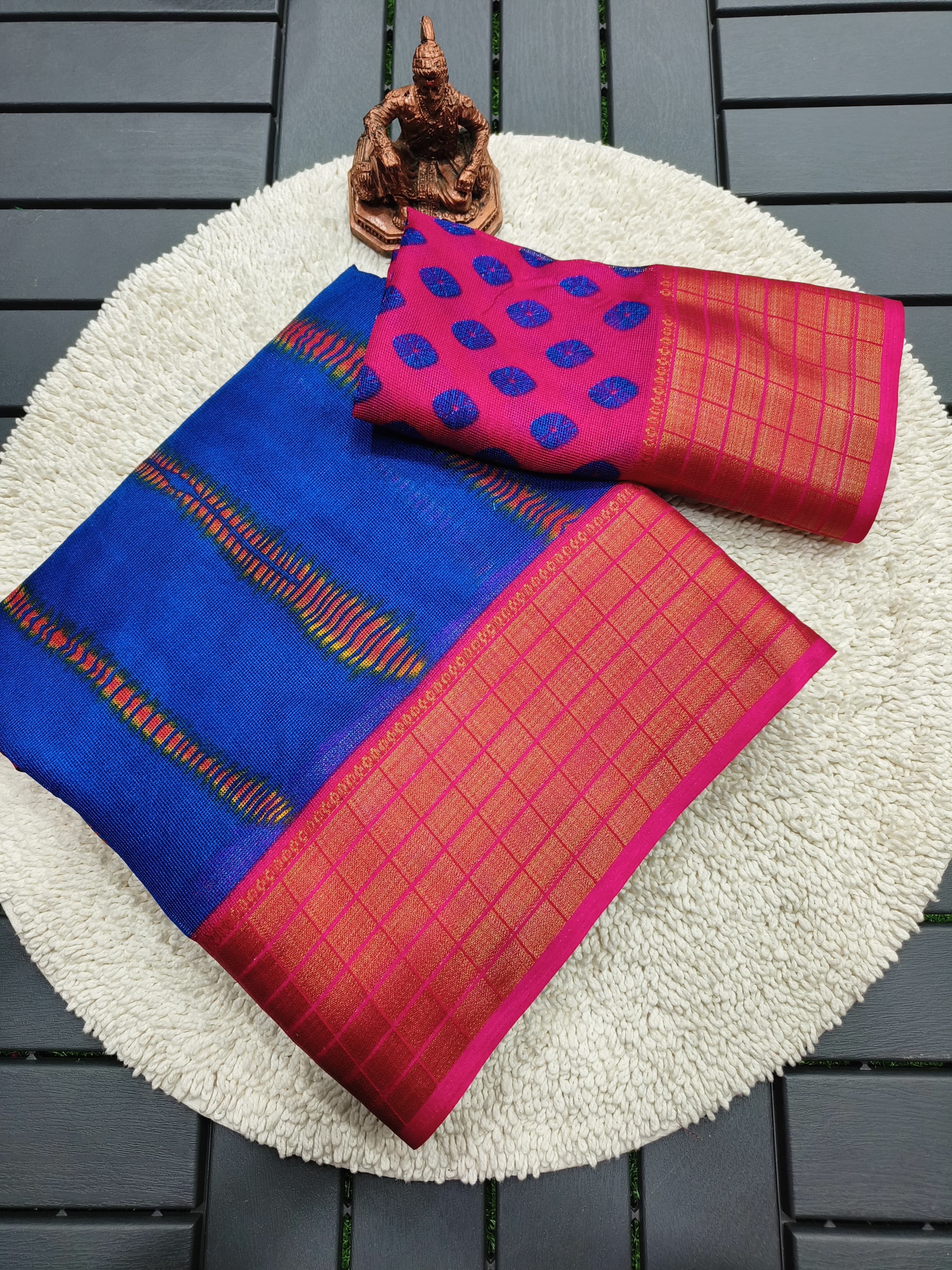
White-and-red Garad, Korial or Tant sarees are classic choices for Durga Puja, while bright silk and detailed borders work well for evening pandals and family gatherings. A saree such as Festive Wear Blue Silk Saree for Women can create a festive mood without copying the traditional white-and-red palette.
Keep accessories balanced with the saree's visual weight. Gold-toned earrings, a low bun, a red or deep-coloured bindi and comfortable sandals work with a Bengali cotton drape. A crisp red border usually needs less additional embellishment than a plain saree paired with a heavily decorated blouse.
For weddings and formal events
Baluchari silk, rich handloom silk and substantial zari borders are strong choices for weddings and receptions. Premium Handloom Silk Saree with Handkatha demonstrates why surface craftsmanship affects styling: a textured or embroidered saree is best paired with a blouse whose neckline and sleeve finish don't compete with the pallu.
Heavier silk isn't always the best choice for a daytime Kolkata wedding. A lighter Tussar Silk Kalamkari Printed Saree with Blouse can offer texture and visual interest with less weight, while Black Traditional Kalamkari Print Silk Saree brings a dramatic evening direction. Kalamkari print is a design technique or surface treatment and should not be confused with Baluchari weaving.
How can you identify a good Kolkata saree when buying online?
A good online purchase starts with checking fibre, construction, measurements, motif technique, blouse-piece details and return-safe handling instructions. Product photographs are useful for colour and scale, but they can't independently prove handloom origin or silk content.
- Read the fibre composition. Look for specific wording such as cotton, pure silk, tussar silk, georgette, pashmina silk or a stated blend. "Silk look" and "silk finish" don't necessarily mean silk fibre.
- Check the saree length and width. A standard saree may be close to 5.5 to 6.3 metres before the blouse piece, but dimensions vary. Taller wearers and elaborate pleats may require extra length.
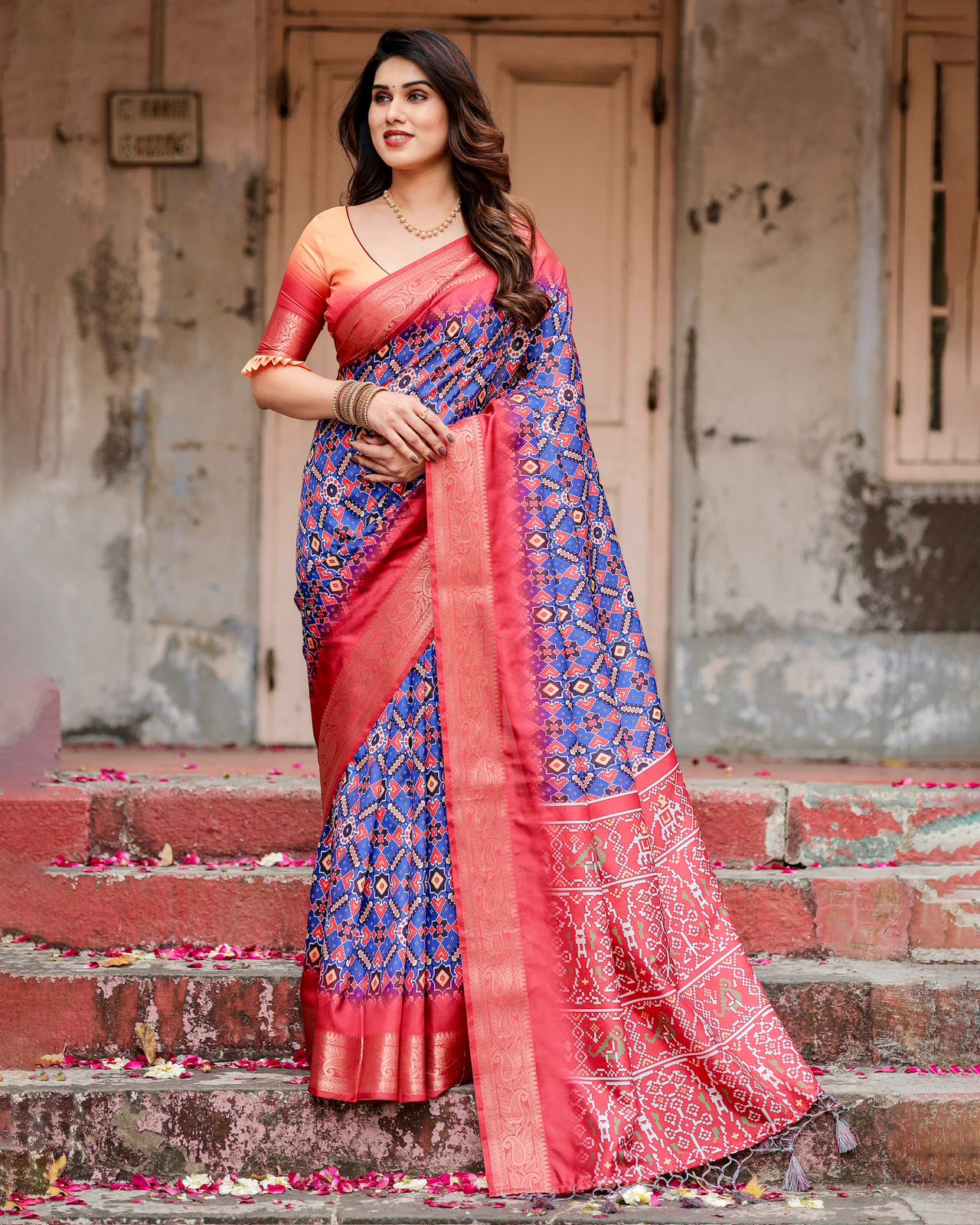
- Inspect the pallu and border. A woven pallu generally has a different reverse appearance from a printed pallu. Zari may be metallic-coated polyester, tested silver zari or another material, so check the product specification.
- Confirm whether the blouse piece is attached. Names such as Tussar Silk Kalamkari Printed Saree with Blouse indicate inclusion, but the blouse fabric, length and print placement still deserve inspection.
- Compare price with construction. A price band such as Sarees from Rs 1000 to Rs 1500 may contain printed georgette, blended silk, cotton and entry-level handloom options. Price alone can't authenticate a regional weave.
- Look for care instructions. Dry cleaning is generally safer for silk, zari, Kantha embroidery and unstable dyes. Cotton may tolerate gentle washing, but colour bleeding should be tested and bright borders should not be soaked casually.
Sale filters can be useful for narrowing a large catalogue, but a discount label isn't a textile specification. Collections such as Sarees Under 20% Off, Sarees Under 10% Off and Sarees Flat 50% Off can help with budget planning, while Sarees Flat 60% Off requires particularly careful attention to fibre, measurements and final-sale terms.
How should you drape and care for a Bengali saree?
Wear a Bengali saree with a secure waist fit, evenly measured pleats and enough pallu support for the fabric's weight. A crisp Tant saree benefits from sharper pleats, while soft georgette and silk usually need fewer, broader pleats to preserve their fall.
The traditional Bengali drape is known for a broad pallu worn over the shoulder, sometimes with the pallu brought back across the front and secured over the opposite shoulder. The drape creates a generous frame for a patterned pallu and can work particularly well with Baluchari, Garad and red-bordered Tant sarees. Pin only where necessary, because excessive pinning can stress fine silk, Jamdani motifs or Kantha stitches.
Store cotton sarees clean and completely dry, folded with the fold direction changed every few months. Store silk sarees in breathable cotton or muslin rather than sealed plastic, keep zari away from moisture and avoid direct sunlight for long periods. Air sarees briefly before refolding, and don't press embroidered or zari areas at a high temperature without a protective cloth.
For stain treatment, blot rather than rub and send silk, Jamdani, Baluchari and Kantha sarees to a specialist cleaner. Rubbing can pull supplementary threads, flatten embroidery or spread dye. A careful storage routine often extends a saree's useful life more effectively than frequent washing.
What is the simplest answer for a first-time buyer?
Buy a Tant cotton saree if you want the most recognisable Kolkata-associated option for comfort and regular wear. Choose Baluchari silk when woven storytelling and formal Bengali craft are your priority, and select Garad, Korial, Jamdani or Kantha according to colour tradition, motif technique and texture.
Start by deciding where you'll wear the saree, how long you'll be dressed, whether you can manage dry cleaning and what fibre feels comfortable in your climate. A Navy Blue Kora Silk Saree with Leheriya Print and Brasso Border or a Designer Yellow Patola Border Pashmina Silk Saree For Women may suit a contemporary festive wardrobe. But neither should be labelled a traditional Kolkata Tant saree simply because it's sold to Kolkata shoppers.
The most reliable answer to what saree is famous in kolkata is therefore "Tant," with an important qualification: Kolkata's saree identity is plural. Tant expresses everyday Bengal, Baluchari expresses narrative silk weaving, Garad and Korial express ceremonial colour, and Jamdani and Kantha express fine surface craft. Knowing those distinctions helps you buy for the actual textile rather than for a broad regional label.
Common Questions About Kolkata’s Famous Sarees
what saree is famous in kolkata?
Tant cotton is the saree most commonly associated with Kolkata and Bengal for everyday and summer wear. Baluchari silk, Garad, Korial, Jamdani and Kantha-work sarees are also important Bengali textile traditions.
Is Tant saree the same as a Bengali saree?
Tant is one important type of Bengali saree, not a name for every saree from Bengal. Tant usually refers to lightweight handloom cotton, while Baluchari, Garad and Jamdani describe different regional styles or weaving traditions.
Which saree is best for Durga Puja in Kolkata?
White-and-red Tant, Garad or Korial sarees are traditional choices for Durga Puja. Bright silk, Jamdani and printed sarees are also suitable when you want a more contemporary festive look.
What is the difference between Baluchari and Tant sarees?
Baluchari sarees are generally silk and are known for narrative woven motifs on the pallu and border. Tant sarees are usually lightweight cotton sarees designed for breathability, crisp pleats and regular or warm-weather wear.
Are Kolkata sarees always handloom?
No, a saree sold in Kolkata or described as Kolkata-inspired may be handloom, powerloom or digitally printed. Check the product's fibre, handloom information, motif technique and place of manufacture before buying.
How should a silk Bengali saree be stored?
Store a silk Bengali saree clean and dry in breathable cotton or muslin, away from direct sunlight and moisture. Refold it periodically, avoid sealed plastic for long-term storage and use specialist dry cleaning for silk, zari, Jamdani or Kantha work.