What saree is famous in Kerala? The best-known answer is the Kasavu saree, a white or natural ivory saree distinguished by a golden border. Kasavu is closely associated with Kerala festivals, weddings, temple visits and celebrations such as Onam and Vishu. The classic version is restrained rather than heavily embellished: an airy cotton body, a contrasting kasavu or zari border, and a blouse that may be plain, coloured or richly embroidered.
Knowing the name is only the beginning. Kerala's traditional drape has a two-piece predecessor called the Mundum Neriyathum, while the modern single-length Kerala saree makes the look easier to wear. The difference between cotton Kasavu, silk-cotton versions and sarees that merely borrow a gold-border aesthetic matters when you're choosing comfort, formality and care requirements.
What Saree Is Famous in Kerala? Understanding the Kasavu Identity
The Kasavu saree is the saree most famously associated with Kerala. Kasavu traditionally refers to the metallic gold border or decorative thread used on an off-white textile, although contemporary usage often applies the word to the entire Kerala saree style.
A classic Kerala saree usually has a plain cream, ivory or white ground and a gold border running along the pallu and lower edge. The border may be narrow enough for everyday wear or broad and ornate enough for a wedding or stage performance. A red, green, maroon or black blouse creates the strongest traditional contrast, while a white or ivory blouse produces a quieter monochrome effect.
The word "Kasavu" doesn't mean that every saree with a gold border is a traditional Kerala handloom. A genuine handloom piece may use cotton, silk-cotton or another documented textile, and its border construction, texture and finish can vary. Buyers should therefore read the fibre and weave details instead of judging authenticity from colour alone.
The History Behind the Drape
The Kerala saree developed from regional draped garments, especially the Mundum Neriyathum, rather than appearing suddenly as a contemporary single-piece saree. The Mundum Neriyathum uses two lengths: a lower cloth wrapped around the body and an upper cloth worn across the torso or shoulder.

In older representations, women in Kerala wore the lower mundu and upper neriyathu in ways that varied by community, period and social setting. The contemporary Kerala saree combines the visual effect of those two pieces into one six-yard or similar-length garment. The change makes dressing faster while preserving the signature ivory-and-gold palette.
Kasavu became particularly visible during public celebrations because its light base reflects Kerala's warm climate and its gold border photographs clearly in daylight. Onam celebrations, Vishu observances, Kerala-style weddings and cultural programmes continue to make the saree instantly recognisable. The style is regional, but the uncluttered palette has made it popular well beyond Kerala.
Comparing Kasavu with Other Sarees
A Kasavu saree is defined primarily by its Kerala identity, ivory or white ground and gold border, while Banarasi silk, Kanjeevaram and Chanderi sarees are identified by different regional weaving traditions and surface structures.
How does Kasavu compare with Banarasi silk?
Banarasi silk is usually recognised by rich silk, brocade patterning and zari motifs distributed through the body or pallu. A Kasavu saree is generally visually calmer, with the border doing most of the decorative work. Red Banarasi Silk Saree With Rich Golden Zari Floral Border can provide a festive alternative when you want dense zari and a more dramatic drape rather than Kerala's minimal ivory-and-gold balance.
How does Kasavu compare with Kanjeevaram?
Kanjeevaram sarees are known for substantial silk, strong contrast borders and traditional motifs such as temple forms, checks and florals. Kanjeevaram usually feels heavier and more structured than cotton Kasavu. The distinction is useful when planning a long ceremony: cotton is often more breathable, while silk creates greater formality and volume.
How does Kasavu compare with Chanderi?
Chanderi is prized for its lightweight, translucent character and delicate woven motifs. Chanderi can share Kasavu's elegance, but a Chanderi saree isn't automatically a Kerala saree. Pastel Floral Tissue Handloom Cotton Saree with Zari Weaves offers a similarly light, luminous direction through tissue texture and zari, but its floral surface makes it a contemporary styling choice rather than a strict Kasavu interpretation.
Choosing the Right Fabric
Cotton is the most practical fabric for a traditional Kerala saree in humid weather, while silk or silk-cotton is better suited to a formal wedding or evening reception. Fabric choice should follow the duration of wear, weather, ceremony and desired silhouette.

Handloom cotton tends to feel breathable and holds the characteristic crisp fall associated with Kerala sarees. Cotton also suits daytime Onam gatherings, office cultural events and temple visits because it's less visually heavy. Blue Tissue Handloom Cotton Saree with Zari Floral Print shows how a lightweight cotton base can be made festive without relying on dense embroidery.
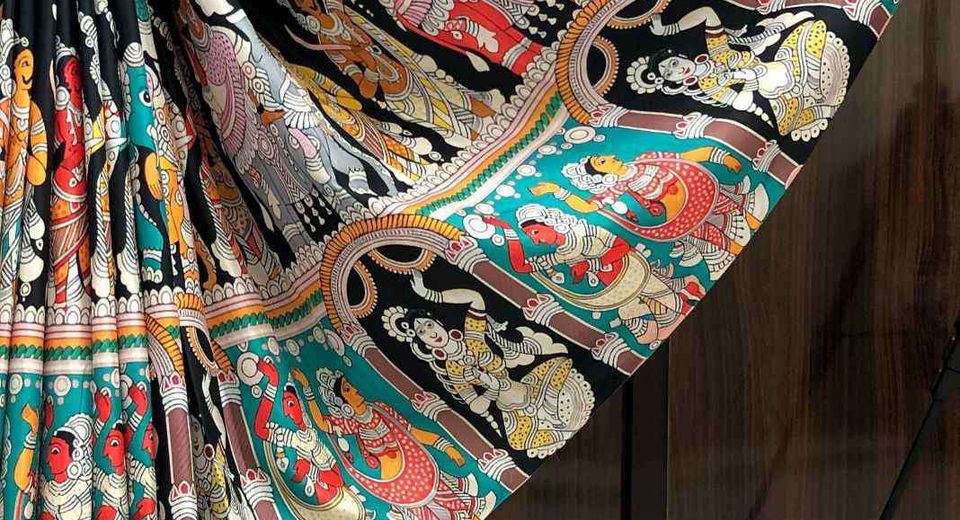
Silk creates a smoother surface and a more pronounced pallu. A silk or silk-blend Kerala-inspired saree may be comfortable for a shorter ceremony, but it can feel warmer than cotton in coastal weather. Tussar Silk Kalamkari Printed Saree with Blouse and Black Traditional Kalamkari Print Silk Saree demonstrate how silk can carry a stronger print language when an event calls for more visual depth.
Linen-cotton is another useful option for daytime dressing. Coral Floral Linen Cotton Saree with Designer Border combines a breathable fibre direction with a decorative border, making it suitable for someone who likes the ease of cotton but doesn't need a strictly traditional plain body.
Styling the Kasavu Look
Style a Kerala Kasavu saree with a contrasting blouse, restrained gold jewellery and a neat pleated drape so that the border remains visible. The most effective styling usually adds colour through the blouse rather than covering the saree with many accessories.
Which blouse colours suit a Kerala saree?
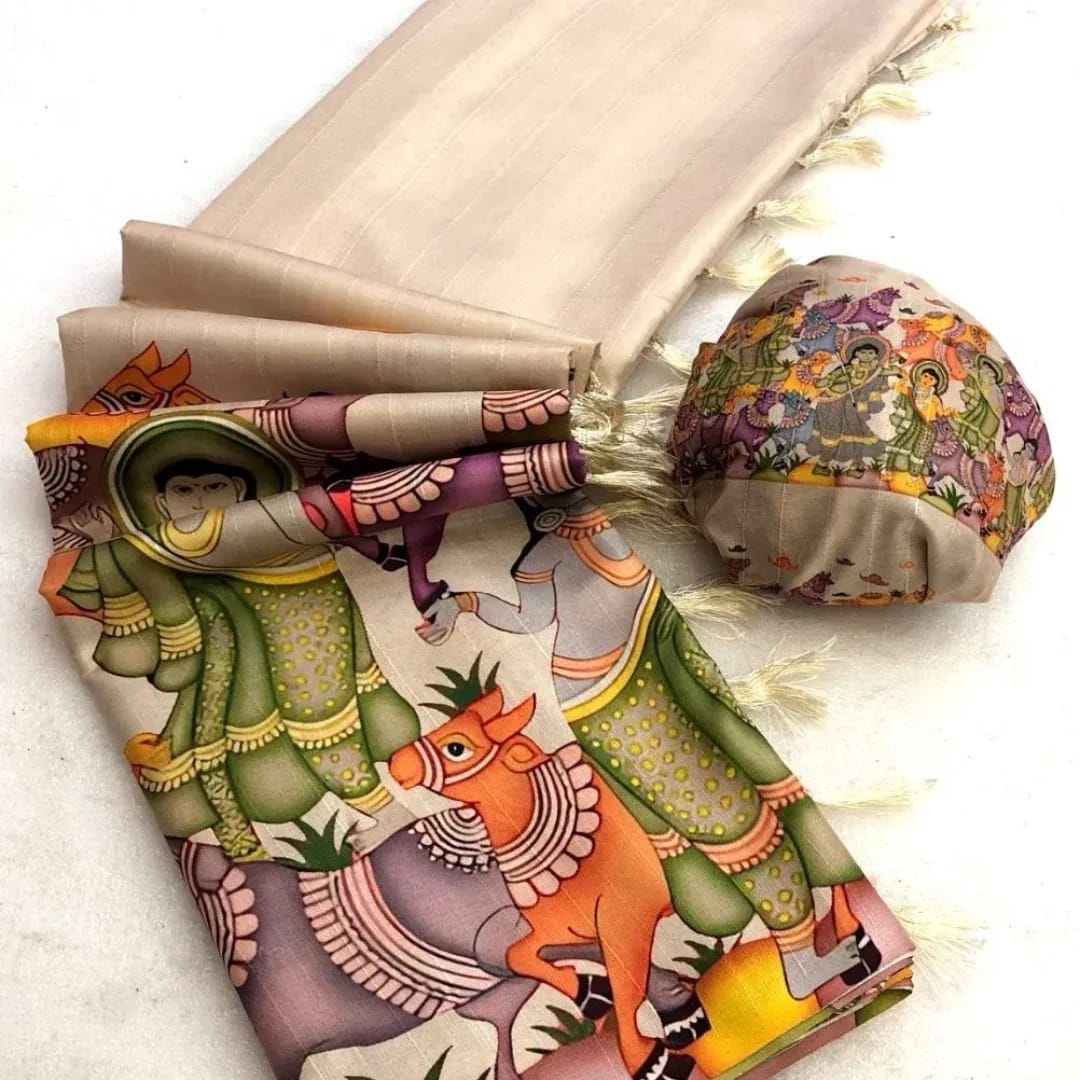
Maroon, red, emerald green, mustard, royal blue and black are dependable blouse colours for ivory-and-gold sarees. A red blouse creates a festive Onam or wedding appearance, while black gives the gold border a sharper contemporary frame. Magenta Traditional Kalamkari Art Saree with Blouse illustrates how a strong jewel-toned palette can work when you want the blouse and textile print to lead the outfit.
For a traditional look, choose a blouse with a modest round, boat or elbow-length sleeve. For a current reception, a square neckline, structured sleeve or subtle back detail can update the outfit without competing with the border. Keep heavy embroidery concentrated at the neckline or sleeve if the saree already has a broad zari edge.
Which jewellery works with a Kasavu saree?
Gold-toned jewellery is the natural partner for Kasavu because it repeats the border's warmth. A medium-length kasu mala, jhumkas, bangles and a small pair of studs are sufficient for daytime. For a wedding, layer a longer necklace with a shorter chain, but leave enough plain space around the pallu for the saree to remain visible.
Fresh jasmine flowers, a low bun and a small bindi reinforce the Kerala-inspired mood. A sleek ponytail or a simple low braid works better than an elaborate hairstyle when the saree is being worn for several hours in warm weather.
How should the pallu be arranged?
Make the pallu the focal point by pleating it evenly and setting the gold edge so that it faces outward. Pinning the shoulder pleats at two points reduces slipping without creating a visible cluster of safety pins. Wear a well-fitted petticoat in a matching ivory or neutral shade, because a dark or loose underskirt can disturb the clean line of a light saree.
Buying One Online
Choose a Kerala saree online by checking the fibre, border material, saree length, blouse inclusion, transparency and care instructions before comparing price. Product photographs alone can't tell you whether a border is woven, printed, embroidered or applied.
- Read the fibre composition: Confirm whether the saree is cotton, silk, silk-cotton, linen-cotton or a synthetic blend. Fibre content predicts breathability, fall and washing requirements.
- Inspect the border description: Look for terms such as zari, woven border, metallic thread or printed border. Zari may be real metallic thread, a blended thread or a visual finish, so the listing's wording matters.
- Check the measurements: A six-yard saree is common, but length and width can vary. Taller wearers or people who prefer generous pleats should check both measurements before ordering.
- Confirm blouse details: "With blouse" may mean a matching unstitched blouse piece rather than a ready-made blouse. Verify the description before planning a fitted blouse.
- Study close-up images: Zoom into the pallu, selvedge, border joins and print registration. Close-up images reveal texture more reliably than a full-length studio photograph.
Budget can guide the search, but price alone doesn't establish handloom quality. Sarees from Rs 1000 to Rs 1500 can help set an entry-level budget, while Sarees Under 20% Off and Sarees Under 10% Off provide narrower discount-led routes for comparison. A discount should never replace checking fibre, measurements and border construction.
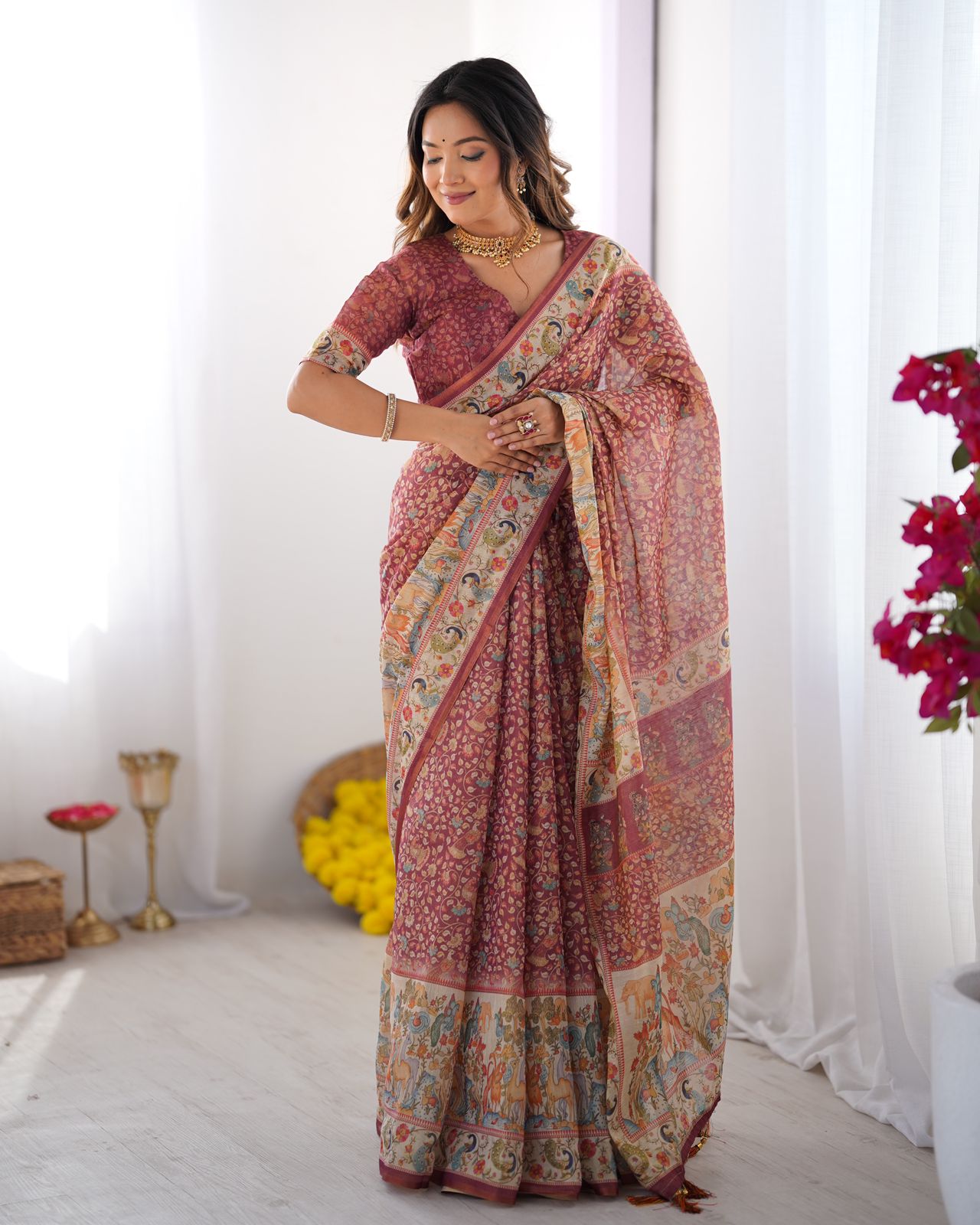
Varnavi Royal Kalamkari Maroon Handloom Saree is another example of how a handloom foundation and regional art influence can create a festive saree, even though a maroon Kalamkari design is different from a traditional ivory Kasavu palette. Sarees Flat 60% Off and Sarees Flat 50% Off may be useful for price comparison, but the same quality checks remain necessary during a larger sale.
Caring for Cotton and Zari
Protect a Kasavu saree by keeping zari away from moisture, perfume, direct sunlight and rough surfaces, and by following the fibre-specific wash instructions. Cotton and silk should not automatically receive the same cleaning treatment.
For cotton sarees, gentle hand washing in cool water may be suitable when the care label permits it. Use a mild detergent, avoid prolonged soaking and never wring the saree aggressively. Dry the saree in shade rather than strong sunlight, because direct heat can weaken fibres and dull metallic thread over time.
For silk, Tussar silk or sarees with substantial zari, professional dry cleaning is usually the safer choice. Fold the saree with the zari facing inward, refold it every few months to prevent permanent crease stress and store it in a clean cotton or muslin cover. Avoid plastic covers for long-term storage because trapped humidity can encourage odour or tarnishing.
Apply perfume and hair products before draping rather than after wearing the saree. Perspiration and cosmetic residue can mark a pale body, while chemicals in fragrance may affect zari. Keep neem leaves or another fabric-safe storage method only if it doesn't touch the saree directly, and inspect the garment every few months for moisture or insect damage.
A Quick Decision Guide
The Kasavu saree is the clearest choice for a recognisably Kerala-inspired outfit, but the best version depends on weather, formality and maintenance preferences. Cotton Kasavu suits daytime festivals and warm climates, silk works for shorter formal functions, and a current printed or coloured saree suits buyers who want a regional reference rather than strict traditional dress.
- For Onam or Vishu: Choose ivory or cream cotton with a gold border, a red or green blouse and light gold jewellery.
- For a Kerala wedding: Choose a broader border, silk or silk-cotton if appropriate, and a blouse with controlled embroidery.
- For office or daytime wear: Choose lightweight cotton, a narrow border and minimal jewellery.
- For a contemporary celebration: Choose a bold blouse, a structured drape or a regional print while keeping the accessories edited.
- For frequent use: Prioritise washable cotton, a secure border and a colour combination that works with existing blouses.
In short, the famous Kerala saree is the Kasavu saree, recognised by its ivory or white base and gold border. Its appeal comes from the balance between climate-friendly fabric, regional history and styling versatility rather than from heavy ornamentation.
Common Questions About Kerala’s Famous Kasavu Saree
What saree is famous in Kerala?
The Kasavu saree is the saree most famously associated with Kerala. It generally has an ivory, cream or white body with a gold kasavu or zari border and is widely worn for Onam, Vishu, weddings and cultural celebrations.
What is the difference between a Kasavu saree and Mundum Neriyathum?
A Kasavu saree is usually a single-piece saree with a Kerala-style ivory-and-gold appearance. Mundum Neriyathum is the older two-piece draped form consisting of a lower mundu and an upper neriyathu.
Can a Kasavu saree be worn for a wedding?
Yes, a Kasavu saree can be worn for a Kerala wedding, especially in cotton, silk-cotton or silk with a broad gold border. A contrasting red, maroon or green blouse and traditional gold jewellery make the outfit more formal.
Which blouse colour looks best with a Kerala saree?
Red, maroon, emerald green, mustard, royal blue and black are reliable blouse colours for an ivory-and-gold Kerala saree. Choose the colour according to the formality of the event and keep heavy embroidery limited if the border is broad.
Is every white saree with a gold border a genuine Kasavu saree?
No, a white saree with a gold border is not automatically a traditional Kerala handloom Kasavu saree. Check the fibre, weave, border construction and product description because some sarees use printed, synthetic or applied borders.
How should a Kasavu saree with zari be stored?
Store a Kasavu saree clean and completely dry in a breathable cotton or muslin cover, with the zari folded inward. Keep it away from direct sunlight, perfume, moisture and plastic storage, and consider professional dry cleaning for silk or heavy-zari versions.