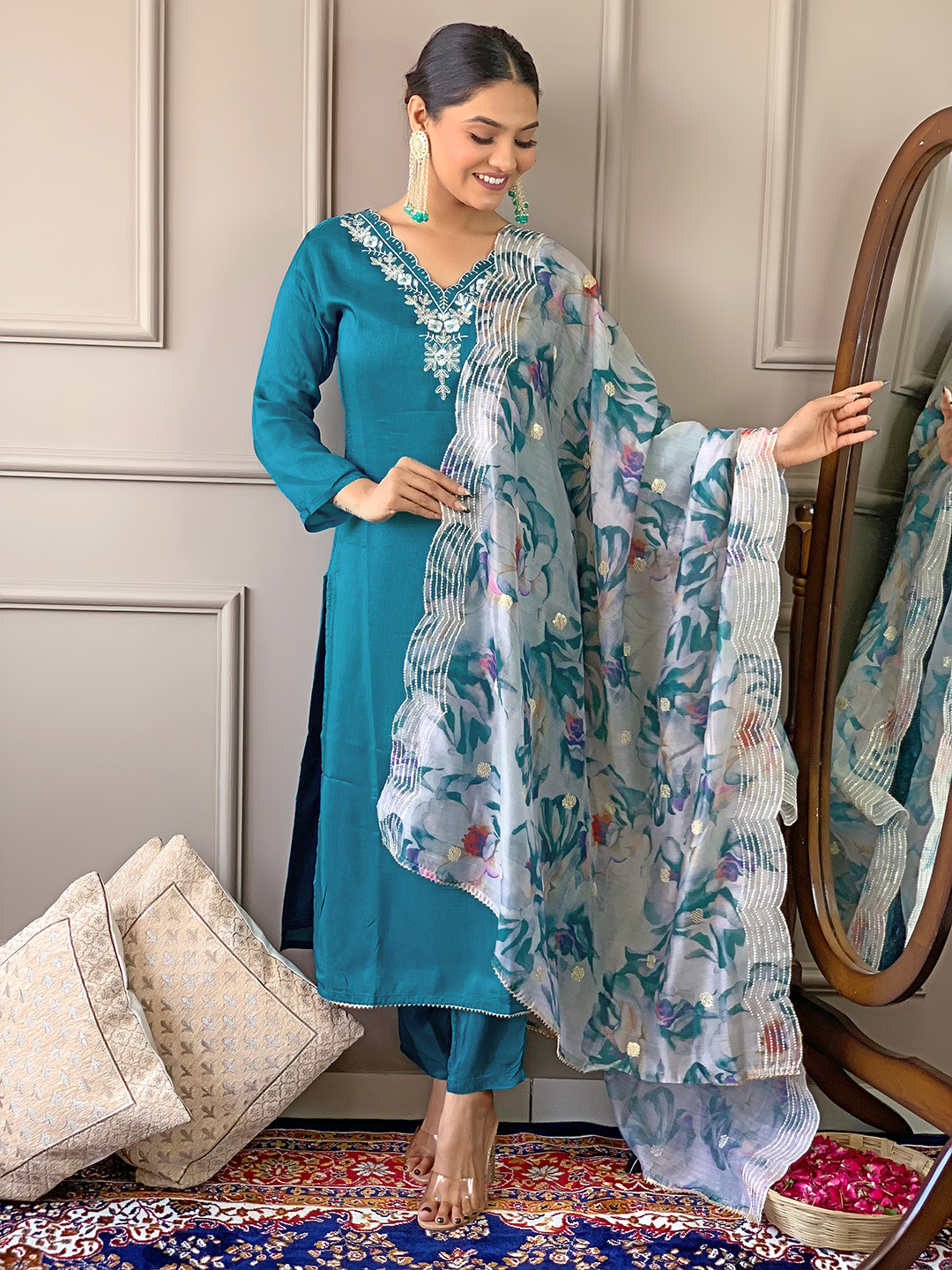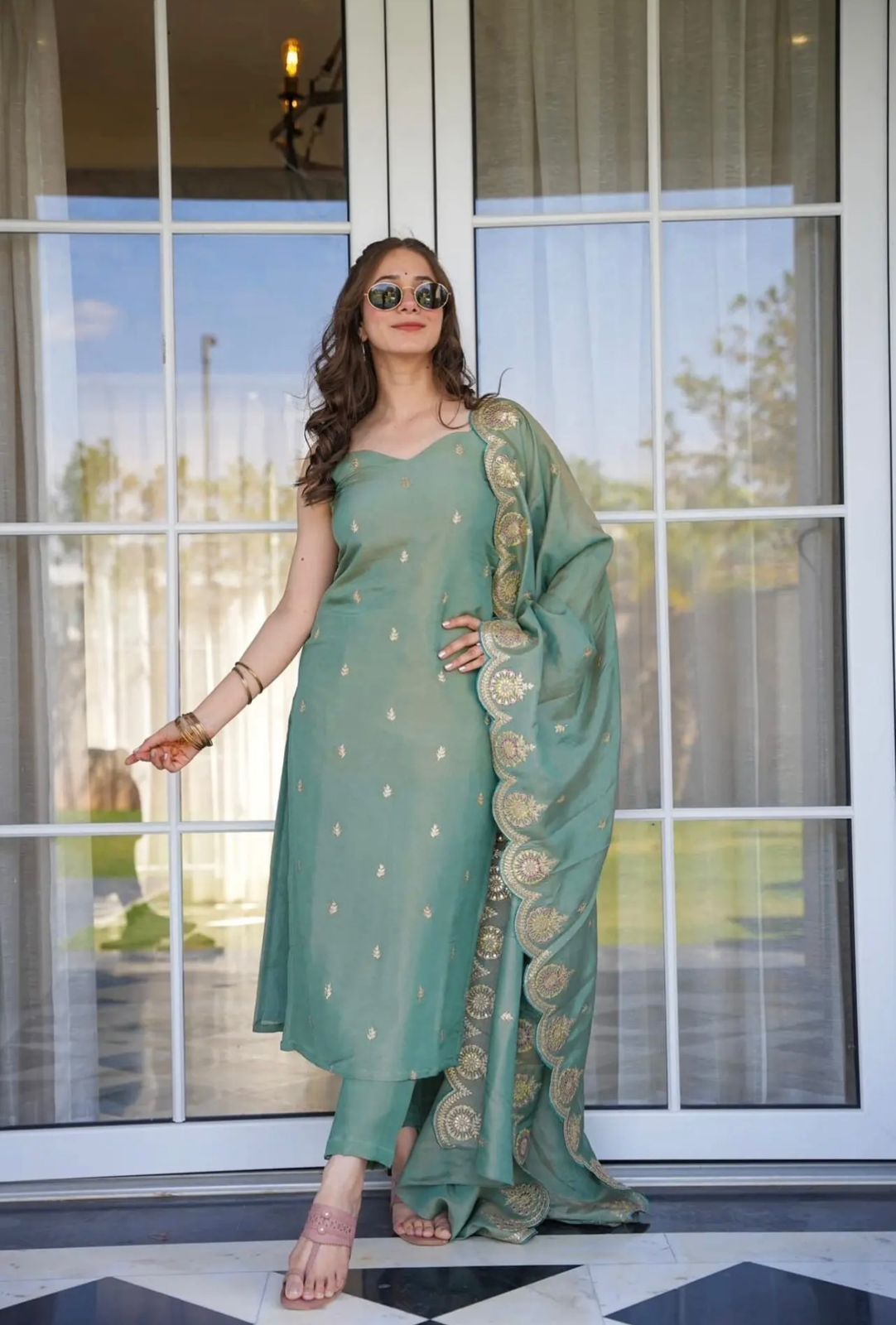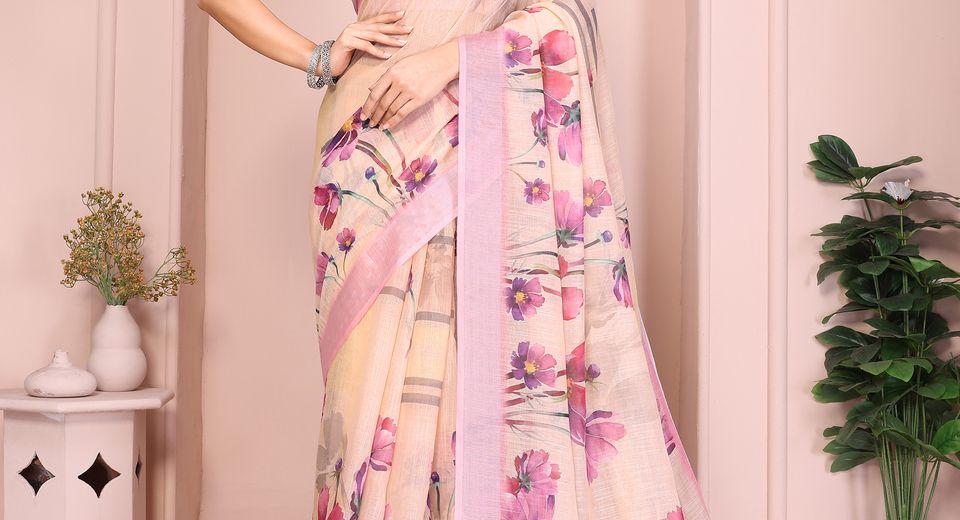
What saree is famous in Gujarat? Bandhani is the best-known answer, although Gujarat is also celebrated for Patola and Gharchola sarees. Bandhani is recognised by its tiny resist-dyed dots, Patola by its complex double-ikat geometry, and Gharchola by its checked layout and auspicious wedding symbolism. Knowing these differences helps you choose a Gujarati saree for a festival, wedding, family ceremony or everyday celebration without confusing a tie-dyed textile with a woven one.
Gujarati sarees are not defined by one colour or one silhouette. The state's textile traditions include techniques that require tying, dyeing, resist printing and precise weaving. A red Bandhani saree may be festive and accessible, while a handwoven Patola can be a major heirloom purchase. The right choice depends on the craft, the weight, the degree of handwork and the event rather than on the word "traditional" alone.
What saree is famous in Gujarat and why is Bandhani the usual answer?
Bandhani is the saree most widely associated with Gujarat because its dotted tie-dye pattern is a visible symbol of Gujarati dress and celebration. Bandhani is made by tightly tying small sections of fabric before dyeing, leaving clusters of undyed dots when the knots are opened. The finished pattern may form waves, circles, flowers, elephants, vines or more elaborate arrangements.
The name Bandhani comes from the Gujarati and Hindi word family associated with tying or binding. Traditionally, artisans pinch the fabric into small points and secure each point with thread before colour is applied. Multiple rounds of tying and dyeing create layered colours, but each additional colour requires careful planning because earlier tied areas must remain protected.
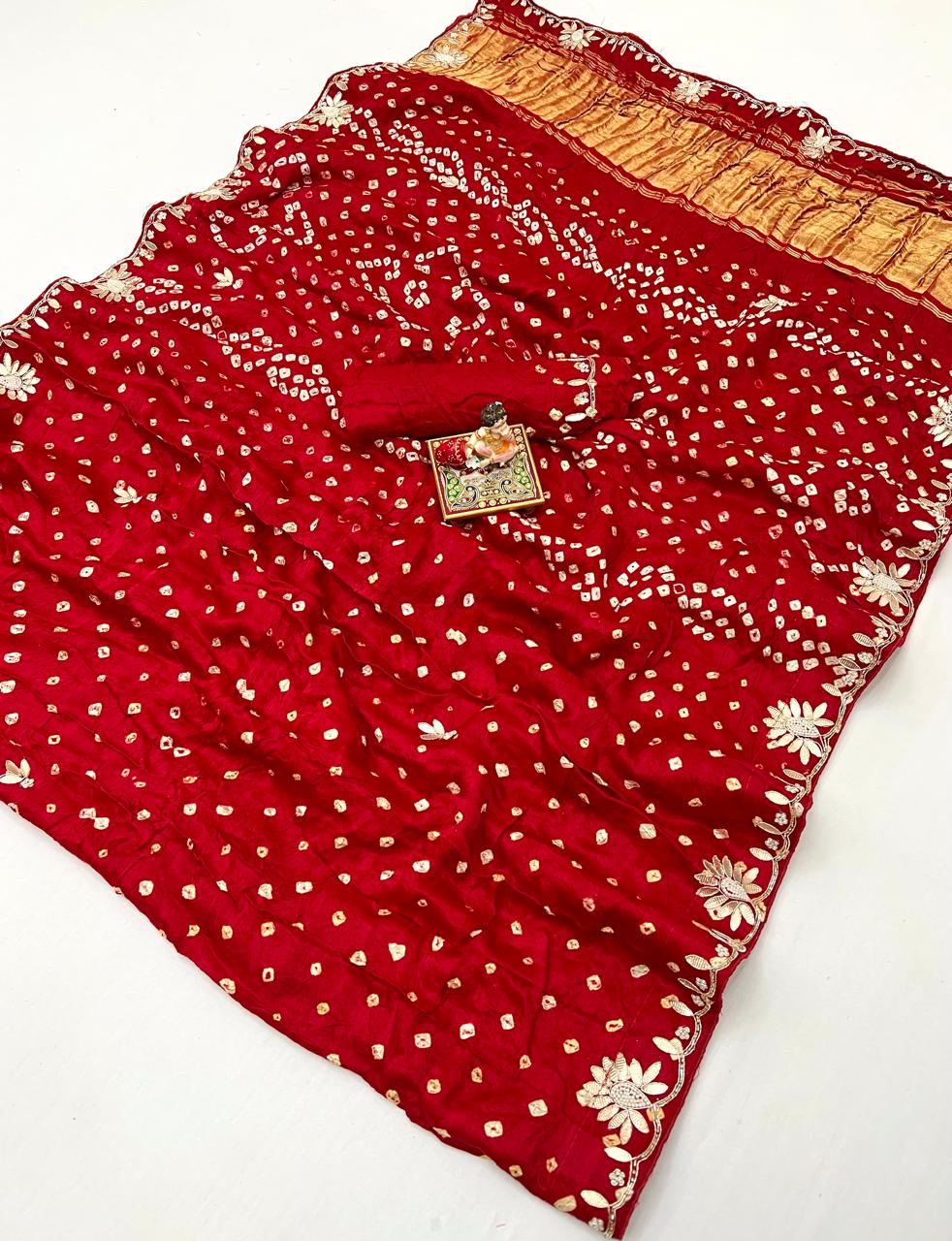
Traditional Bandhani commonly uses vivid red, fuchsia, yellow, green, orange and deep blue. Red Bandhani is particularly connected with bridal and festive dressing, while yellow and green are frequently selected for pre-wedding functions and religious celebrations. A Bandhani saree can be made from several base fabrics, including cotton, silk, georgette and viscose blends, so the name describes the surface technique more than a single fibre.
What saree is famous in Gujarat when comparing Bandhani, Patola and Gharchola?
Bandhani is a tied-and-dyed textile, Patola is a woven double-ikat textile, and Gharchola is a ceremonial checked saree traditionally associated with Gujarati weddings. These three names describe different craft identities, even though all may appear in Gujarati wardrobes and festive trousseaus.
Bandhani uses resist tying
Bandhani is identified by repeated dotted units and a soft, slightly irregular organic quality created by hand tying. A genuine handmade pattern may show small variations in dot size or spacing because every tied point is handled individually. Bandhani is usually the easiest Gujarati textile to recognise at a glance.
Patola uses double ikat weaving
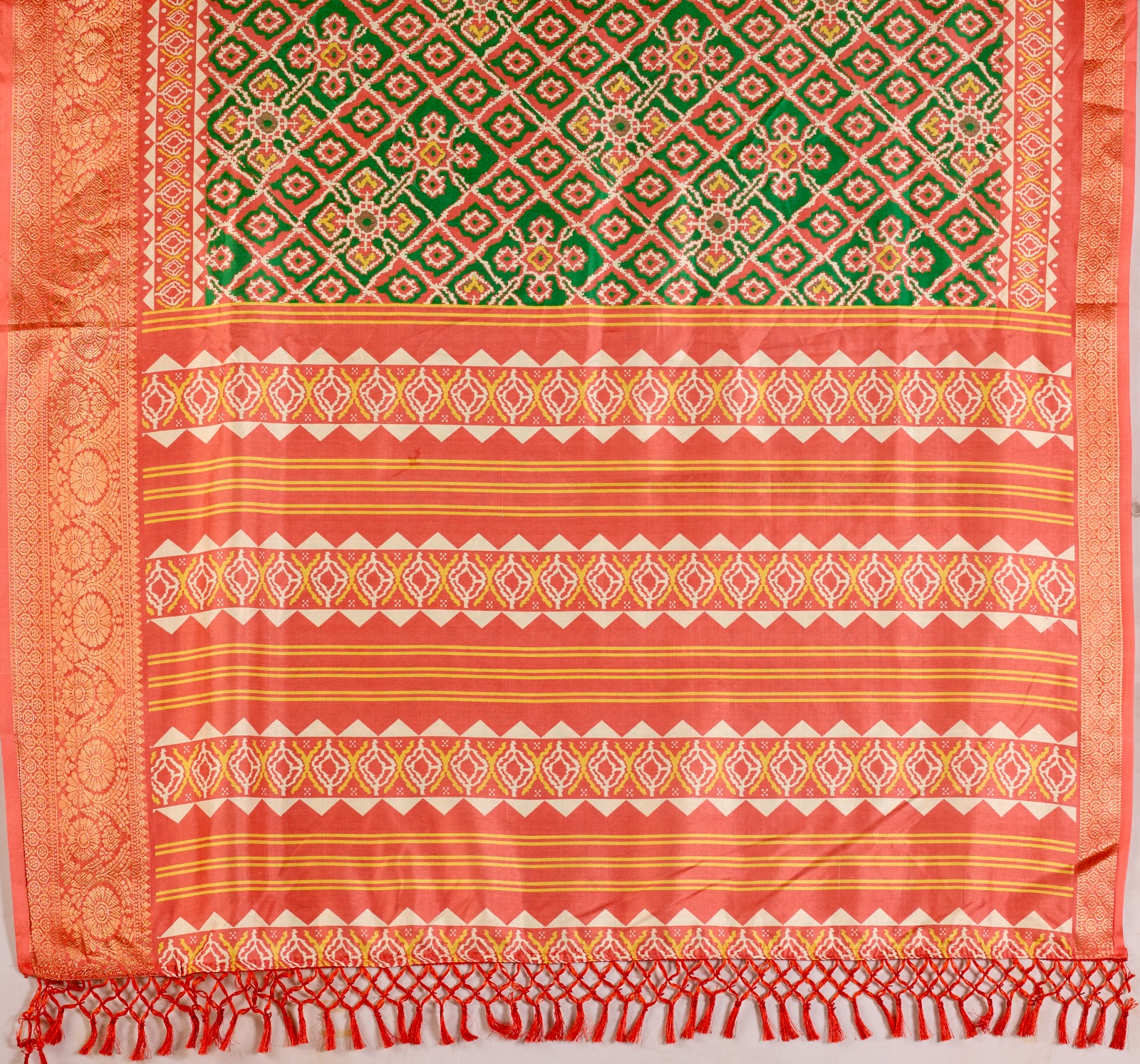
Patola is identified by motifs that align across both the warp and weft, a result of double-ikat weaving. Threads are resist-dyed in planned sections before they're woven, so the colours meet to form precise diamonds, parrots, flowers and geometric forms. Patola generally has a firmer, more structured hand than a soft draped Bandhani saree, and traditional handwoven examples require considerable time and skill.
Gharchola uses a ceremonial checked layout
Gharchola is identified by a checked grid, often filled with small motifs and zari details, and is strongly linked with Gujarati Hindu wedding rituals. The grid can represent auspicious order and prosperity, while red commonly signals marital celebration. Contemporary Gharchola-inspired sarees may interpret the format in lighter fabrics or simplified prints, so a buyer should check whether the design is woven, printed or embellished.
What saree is famous in Gujarat for weddings and festivals?
Bandhani is the most recognisable choice for Gujarati festivals, while Gharchola and richly woven Patola are especially suitable for wedding-focused dressing. The best selection depends on the ceremony, expected movement, family customs and the level of formality.
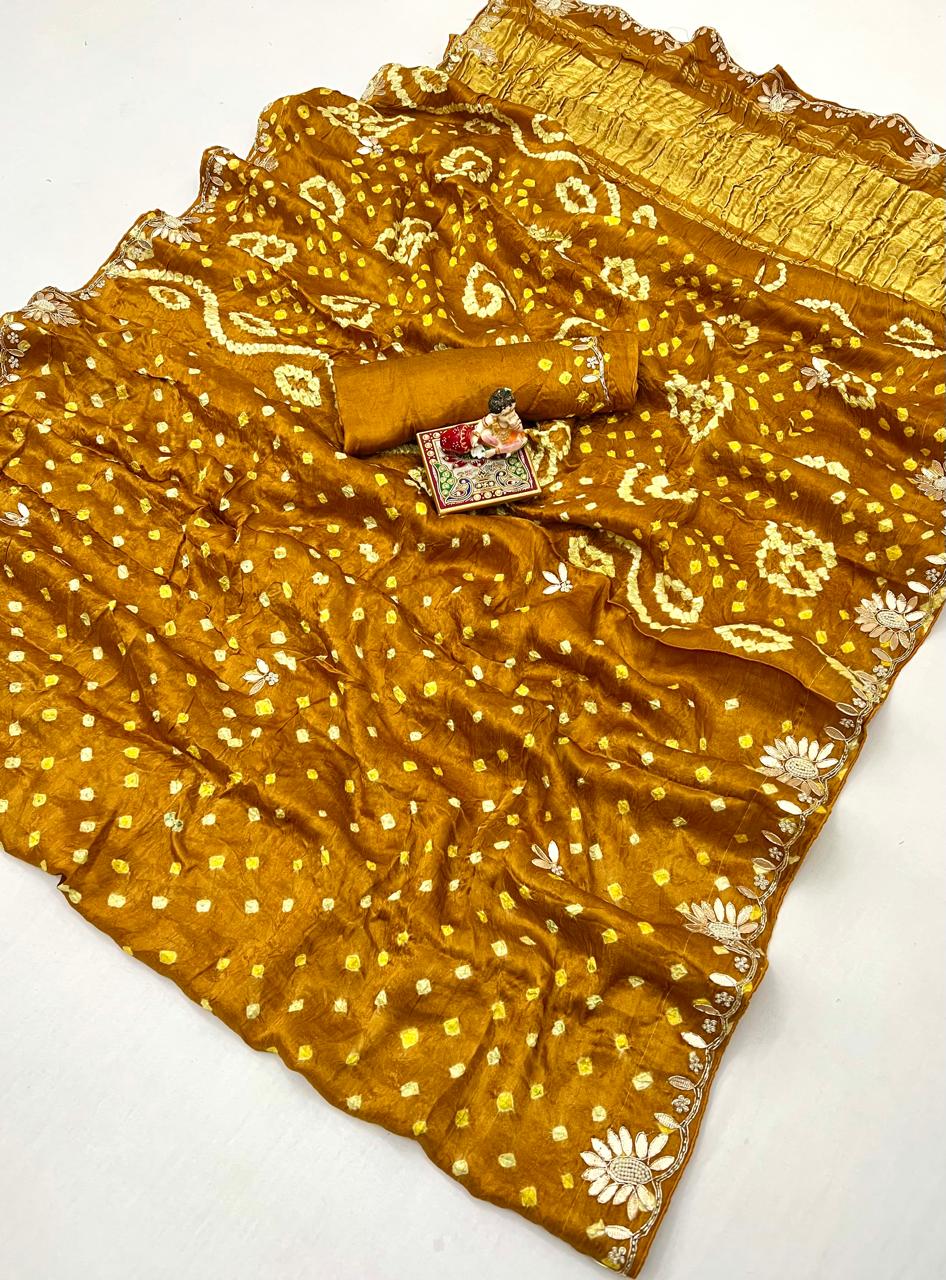
Bandhani is important in Gujarati culture because colour, dot arrangement and draping can communicate celebration, region and life-stage symbolism. Red Bandhani is widely worn by brides and newly married women, while yellow Bandhani is associated with auspicious festive dressing and Haldi ceremony wardrobes. These meanings are cultural associations rather than rigid rules, and families may follow their own regional customs.
Gujarati saree styling also has a recognisable seedha pallu drape. In the seedha pallu style, the pallu is brought from the back over the right shoulder and spread across the front of the torso. The arrangement displays the pallu's motifs prominently, which is especially useful when a saree has a heavily decorated end, Bandhani patterning or an ornate border.
A Gujarati drape is practical as well as decorative. The pleats are secured at the waist, the pallu is arranged across the front and the shoulder section can be pinned carefully for movement during garba, family ceremonies or temple visits. A medium-weight saree with a stable border usually holds the front-facing pallu better than a very slippery fabric.
What saree is famous in Gujarat for each type of occasion?
The most suitable Gujarati saree depends on the event, the amount of movement and the visual detail you want. Choose Bandhani for a recognisably Gujarati festive look, Patola for a heritage-focused investment piece and Gharchola for a wedding-related ceremony where symbolism matters.
- For Navratri or garba: Choose a lighter Bandhani or a cotton-based saree that allows comfortable movement. Secure the pallu and avoid excessive trailing embellishment if you expect to dance.
- For a Haldi ceremony: Yellow, mustard or green Bandhani creates a culturally familiar palette. A saree with manageable handwork is easier to wear around turmeric, flowers and outdoor seating.
- For a Gujarati wedding: Select red Bandhani, Gharchola or a richly woven silk saree. Check whether the family expects a particular colour or ceremonial style before purchasing.
- For a formal reception: Patola-inspired geometry, silk, zari or a polished jacquard gives greater structure and evening presence. A statement blouse can modernise the traditional textile without hiding its defining pattern.
- For a daytime family gathering: Cotton, linen-cotton or tissue cotton offers a lighter feel than dense silk. Floral prints and restrained borders create a less ceremonial interpretation of Gujarati dressing.
Mustard Bandhani Viscose Gajji Silk Saree with Handwork illustrates how the Bandhani vocabulary can be paired with a lustrous base and additional surface detail. Red Bandhani Gajji Silk Saree with Gota Patti Handworks takes the festive route, combining a recognisable Bandhani identity with gota patti ornamentation. These examples are useful reminders that the technique, base fabric and embellishment should be assessed separately.
What saree is famous in Gujarat and how can you identify genuine craft?
You can assess a Gujarati saree by examining the dots, colour transitions, reverse side, fibre description and finishing rather than relying only on a "Bandhani" or "Patola" label. Authenticity isn't determined by price alone, because handmade, digitally printed and machine-produced versions coexist in the market.
- Inspect the pattern formation. Hand-tied Bandhani dots often have minute variations and tactile puckering around resist points. Perfectly uniform dots may indicate a print, although neat work can still be hand-produced.
- Look at the reverse side. In a resist-dyed textile, colour should generally pass into the fibre rather than sitting only as a flat printed layer. Loose threads or visible tying marks can provide clues, but they're not conclusive proof on their own.
- Read the fibre content. Silk, cotton, viscose, georgette and blends drape differently and need different care. "Bandhani" identifies the pattern-making technique, not necessarily pure silk.
- Study the colour boundaries. Hand-dyeing may produce subtle bleeding or tonal variation. Sharp, digitally repeated motifs are more likely to be printed, but a printed saree can still be attractive and appropriate when its price reflects the process.
- Check Patola alignment. A double-ikat Patola should show coordinated motifs across the warp and weft. A saree advertised as "Patola print" isn't the same as a handwoven Patola, so the word "print" is a significant technical distinction.
- Ask about care and origin. A responsible seller should be able to state whether the saree is hand-tied, printed, handwoven or embellished, and should provide washing guidance suited to the actual fabric.
A handwoven Patola can command a higher price because the resist-dyeing and weaving stages require exceptional precision. A printed Patola-inspired saree can offer the same broad visual language at a lower price, but the two should never be described as the same craft.
What saree is famous in Gujarat when choosing fabric, colour and price?
Cotton works best for breathable daytime wear, silk and Gajji silk create a richer festive drape, linen-cotton brings a relaxed texture, and tissue cotton adds a light reflective effect. Colour should be selected according to the event, the wearer's comfort and the amount of pattern already present in the saree.
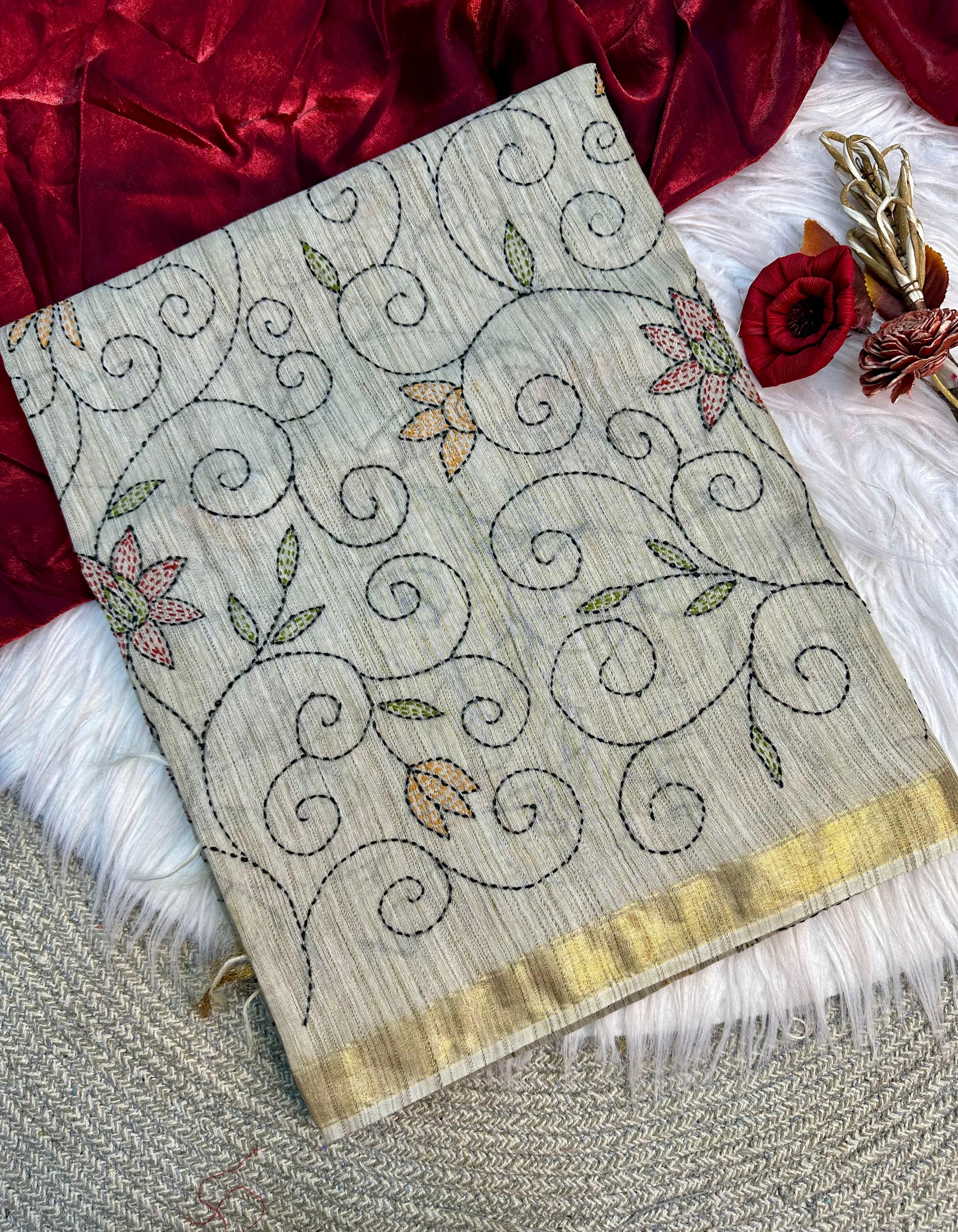
Pastel Floral Tissue Handloom Cotton Saree with Zari Weaves demonstrates a quieter interpretation of festive dressing, where a delicate surface and zari provide interest without the intensity of traditional red Bandhani. Cream Pink Tissue Handloom Cotton Saree with Zari gives another soft palette for daytime functions and intimate celebrations. Tissue fabrics can catch light beautifully, but they may need careful folding to prevent sharp permanent creases.
Linen-cotton is useful when you want an easier, less formal drape with visible texture. Peach Linen Cotton Floral Print Saree with Blouse for Women and Pastel Linen Cotton Floral Print Saree with Designer Blouse suit daytime gatherings, work celebrations and relaxed festive dressing. Linen-cotton may soften with wear, but the fabric can crease more readily than silk or synthetic blends.
Heritage Mustard Jacquard Silk Saree gives a structured alternative when you want woven texture and a deeper colour story without choosing a dotted Bandhani design. Marigold Handloom Floral Bird Print Saree with Tassel Pallu brings a craft-inspired, lighter mood through botanical imagery and a decorative pallu. Price collections such as Sarees from Rs 1000 to Rs 1500 can be useful for comparing accessible fabrics, while Sarees Under 20% Off, Sarees Under 10% Off, Sarees Flat 60% Off and Sarees Flat 50% Off should be evaluated by fabric, construction and care requirements rather than discount percentage alone.
How should a Gujarati saree be stored and cared for?
A Gujarati saree should be cleaned according to its fibre and embellishment, dried away from direct sunlight and stored folded with periodic refolding. Hand-dyed Bandhani, silk, zari and gota patti need more careful handling than a simple machine-washable cotton saree.
For silk, Gajji silk, zari and heavily embellished sarees, professional dry cleaning is generally the safer choice unless the care label states otherwise. Do not soak Bandhani or brightly dyed sarees for long periods, because prolonged water exposure can encourage colour migration. Test for colourfastness only on an inconspicuous area and follow the seller's written instructions.
Store sarees in breathable cotton or muslin covers rather than airtight plastic for long-term storage. Refold silk, zari and tissue sarees every few months so permanent fold lines don't develop in the same place. Keep zari away from perfume, deodorant, damp walls and direct heat, and place tissue paper between heavily embellished sections if the decoration may rub.
Iron Gujarati sarees on the reverse side at a temperature suited to the fibre. Use a pressing cloth for zari, tissue and delicate handwork. Hang a saree briefly after wearing so body moisture can evaporate before folding it away.
What saree is famous in Gujarat: a practical final choice
Bandhani is the clearest answer to what saree is famous in Gujarat, but Patola and Gharchola complete the state's best-known saree tradition. Choose Bandhani when you want dots, colour and a festive Gujarati identity; choose Patola when precise double-ikat weaving and heirloom value matter; choose Gharchola when a wedding-linked checked design carries the right symbolism.
Before buying, confirm the fibre, the production technique, the kind of embellishment, the intended occasion and the washing method. A saree becomes a better purchase when its beauty is matched by an accurate understanding of how it was made and how it should be worn.
Common Questions About Gujarat’s Famous Sarees
What saree is famous in Gujarat?
Bandhani is the saree most famously associated with Gujarat because of its dotted tie-dye technique and strong connection with festivals, weddings and Gujarati draping. Patola and Gharchola are also important Gujarati sarees, but they use different techniques and carry different cultural associations.
Is Bandhani the same as Patola?
Bandhani and Patola are not the same. Bandhani is created by tying sections of fabric before dyeing, while Patola is traditionally made through double-ikat weaving, in which warp and weft threads are resist-dyed before being woven together.
Which Gujarati saree is best for a wedding?
Red Bandhani, Gharchola or a richly woven Patola-inspired saree can suit a Gujarati wedding. The best choice depends on family customs, the ceremony, the expected movement and whether the saree is intended as a traditional heirloom or a more affordable festive outfit.
What is the Gujarati seedha pallu style?
The Gujarati seedha pallu style brings the pallu from the back over the right shoulder and spreads it across the front of the body. The arrangement displays the pallu's motifs and border prominently, making it especially effective for Bandhani, Gharchola and heavily decorated sarees.
How can you tell whether a Bandhani saree is hand-tied?
Hand-tied Bandhani often shows tiny variations in dot size, spacing and puckering around the resist points. Buyers should also check the fibre description, reverse side, care information and whether the seller clearly distinguishes hand-tied work from printed Bandhani.
How should a Bandhani silk saree be washed?
A Bandhani silk saree should generally be dry-cleaned unless its care label specifically permits another method. Avoid long soaking, direct sunlight and harsh detergents because bright dyes, silk fibres and handwork can be damaged by aggressive washing.