What Makes an Engagement Lehenga Different From a Reception Lehenga depends on the event's mood, timing, venue and level of formality. An engagement usually suits a lighter, more conversational outfit, while a reception can support richer embroidery, deeper colour and a more dramatic silhouette. Neither choice is a fixed rule: comfort, décor and photography plans matter just as much.
An useful way to decide is to separate the two outfits by visual weight. An engagement lehenga should allow easy movement, sitting and greeting guests at close range. A reception lehenga should maintain its presence under evening lights, from a distance and in full-length photographs. Fabric, blouse construction, dupatta placement and jewellery should all support that difference.
What Makes an Engagement Lehenga Different From a Reception Lehenga in overall style?
An engagement lehenga is generally lighter, fresher and easier to wear for a daytime or intimate celebration, whereas a reception lehenga is usually more polished, ornate and evening-oriented.
Engagement ceremonies often include introductions, ring-exchange photographs, family conversations and movement between smaller groups. A comfortable waistband, manageable dupatta and moderate embellishment become practical advantages. Pastel colours, floral embroidery, printed silk and restrained mirror work can look celebratory without making the outfit feel heavily bridal.
Reception celebrations typically have a larger guest list, a decorated stage, stronger artificial lighting and a more formal dress expectation. A reception lehenga can therefore carry dense embroidery, sequins, metallic zari accents, satin sheen or a wider flare. A darker jewel tone may photograph with greater definition, although a soft ivory, silver or pastel reception outfit can be equally striking in a modern venue.
The bride's role can also change the decision. An engagement outfit may introduce her personal style through colour and cut, while a reception outfit often completes the wedding wardrobe with a more commanding finish. Brides who prefer understated dressing can reverse that order and choose a richly worked engagement lehenga with a simpler reception look.
What Makes an Engagement Lehenga Different From a Reception Lehenga in colour selection?
Choose colour according to venue lighting and personal style: lighter or playful shades often suit engagements, while saturated jewel tones, metallic neutrals and deep reds often suit receptions.
For an engagement held in daylight, pastel grey, blush, lilac, powder blue, mint, yellow and soft green reveal embroidery clearly without relying on flash photography. Pastel Grey Embroidered Butterfly Net Lehenga Set can create a refined look when paired with pearl jewellery, silver-toned accessories or a blouse in a closely related shade.
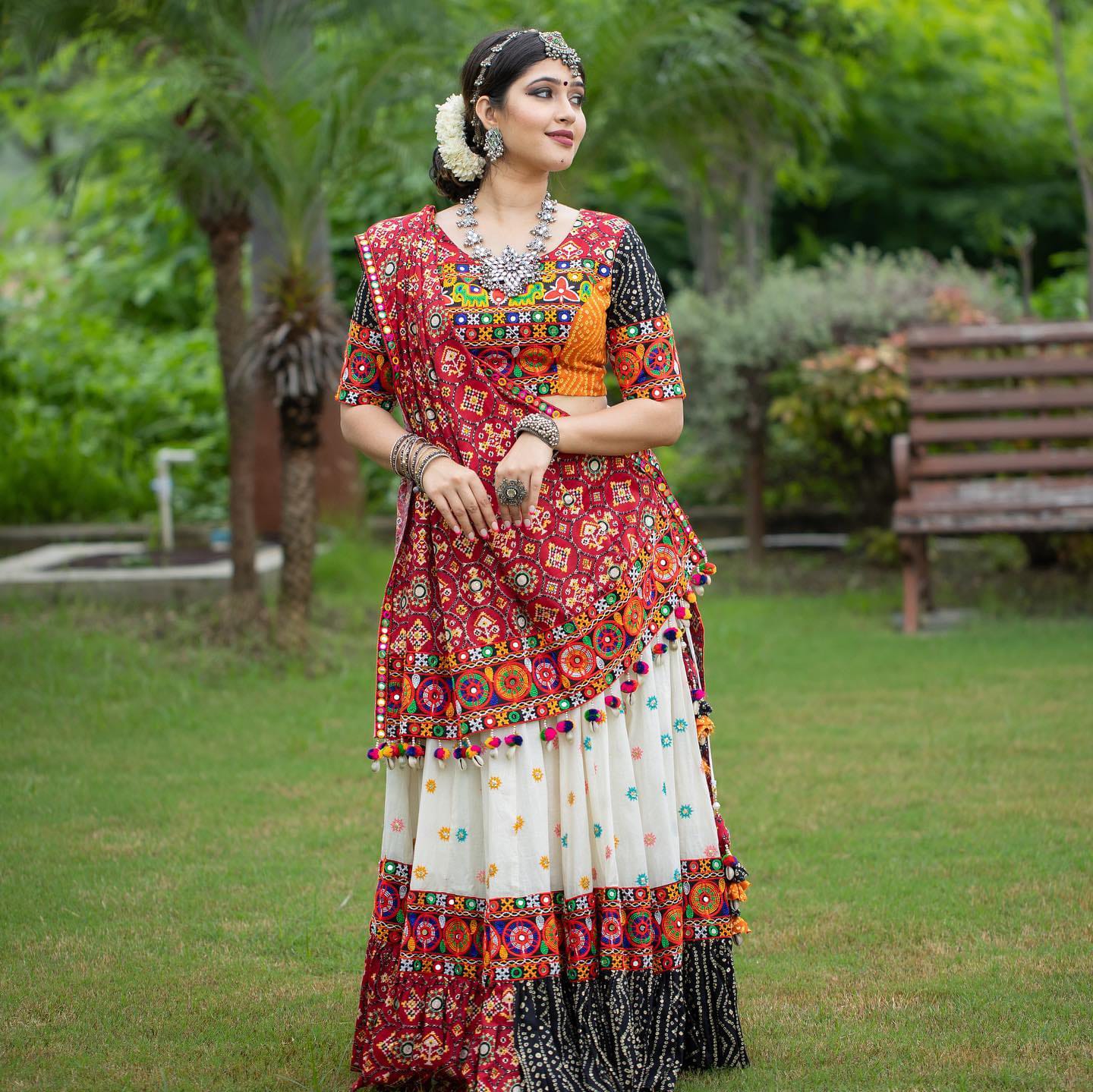
Bright colours also work well for a lively ring ceremony. Red, fuchsia, coral and multicolour combinations feel festive in photographs and complement floral stage décor. Red Multicolor Butter Silk Mirror Work Lehenga Set demonstrates how a vivid base can be balanced by reflective detail, while Stylish Multicolor Butter Silk Lehenga Choli Set offers a more playful direction for a bride who doesn't want a single-colour outfit.
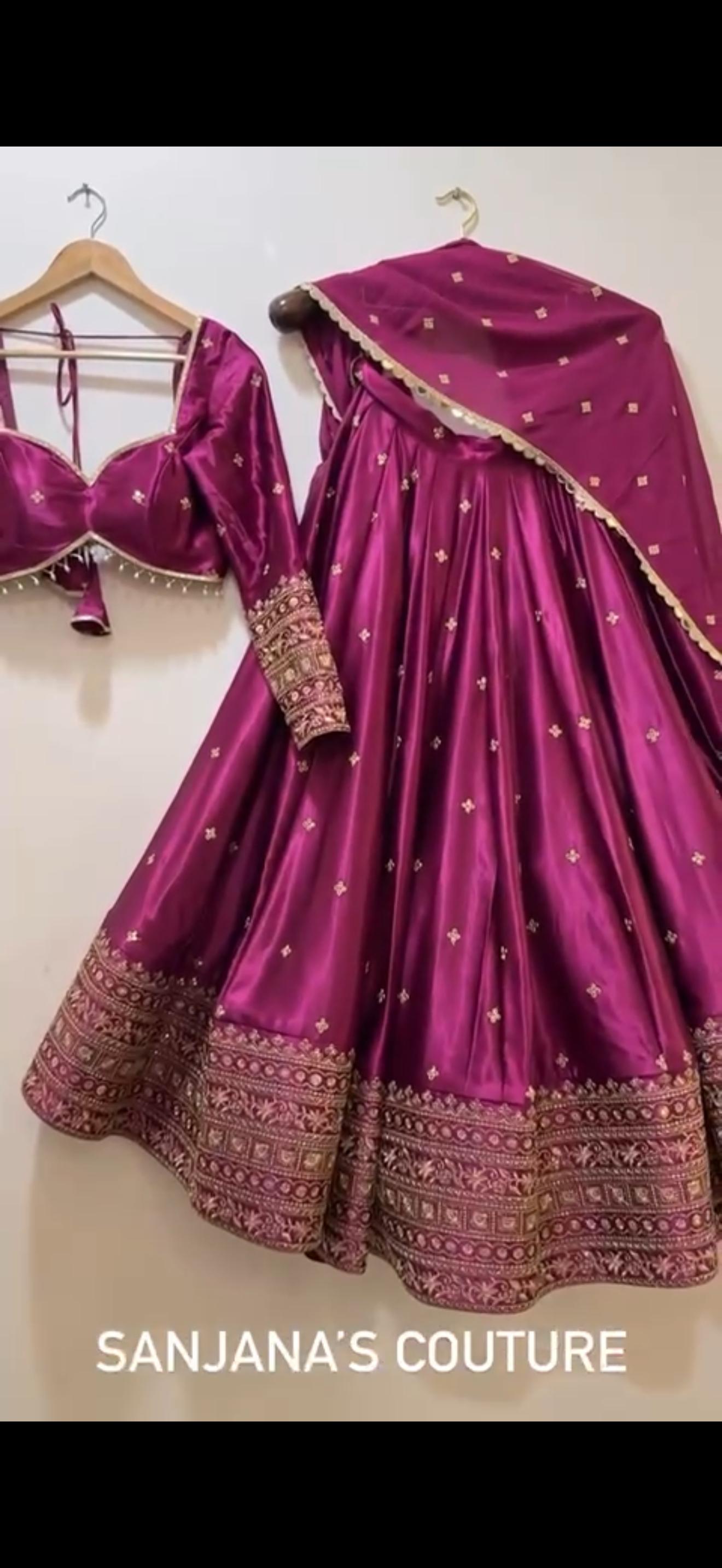
Reception lighting changes how colours behave. Warm spotlights can make red, wine, magenta, emerald and navy appear especially rich. Magenta Satin Embroidered Lehenga Set Online gains impact from satin's reflective surface, particularly when the blouse and skirt are photographed under evening illumination. Cream, champagne and silver can also work beautifully, but the outfit needs enough contrast against a pale stage backdrop.
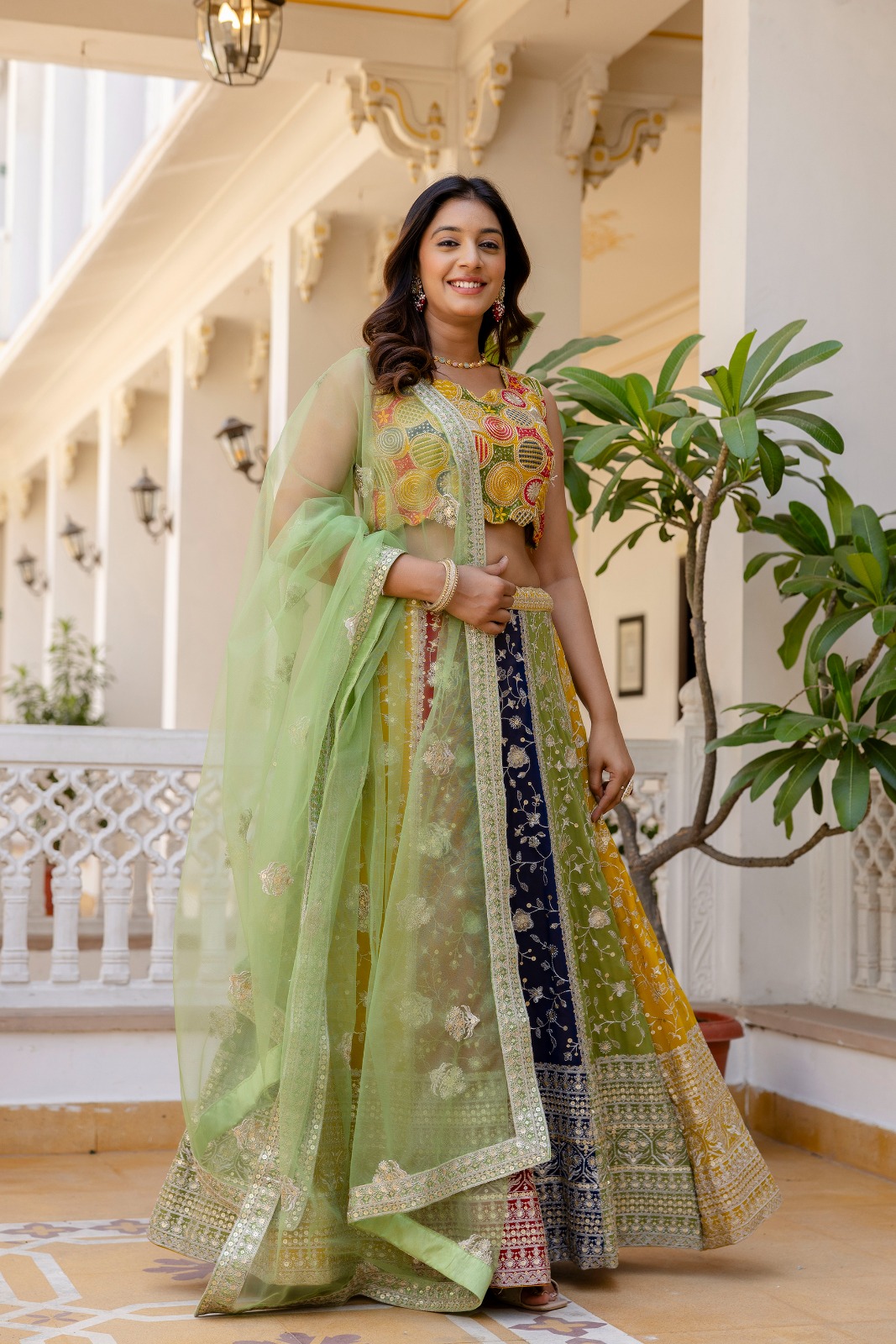
Colour should not be selected from a screen alone. Compare the garment against the intended jewellery, stage décor and makeup. A yellow lehenga can look soft in daylight but intensely warm beneath amber lights. Green Lehengas and Yellow Lehengas are useful starting points for daytime wedding events, while a reception palette may benefit from deeper accents in the blouse border, dupatta or jewellery.
What Makes an Engagement Lehenga Different From a Reception Lehenga in fabric and embellishment?
Lightweight net, organza, butter silk and moderate embroidery usually suit engagements, while satin, heavily worked net, layered tulle and denser sequin or zari decoration often suit receptions.
Fabric choices for an engagement lehenga
An engagement lehenga needs enough structure to look polished without making sitting and greeting guests tiring. Butterfly net can provide volume with relatively little visual heaviness, while butter silk gives a smooth surface that works well with prints, mirror work and colourful motifs. Organza creates a crisp, airy outline and photographs neatly in daytime settings.
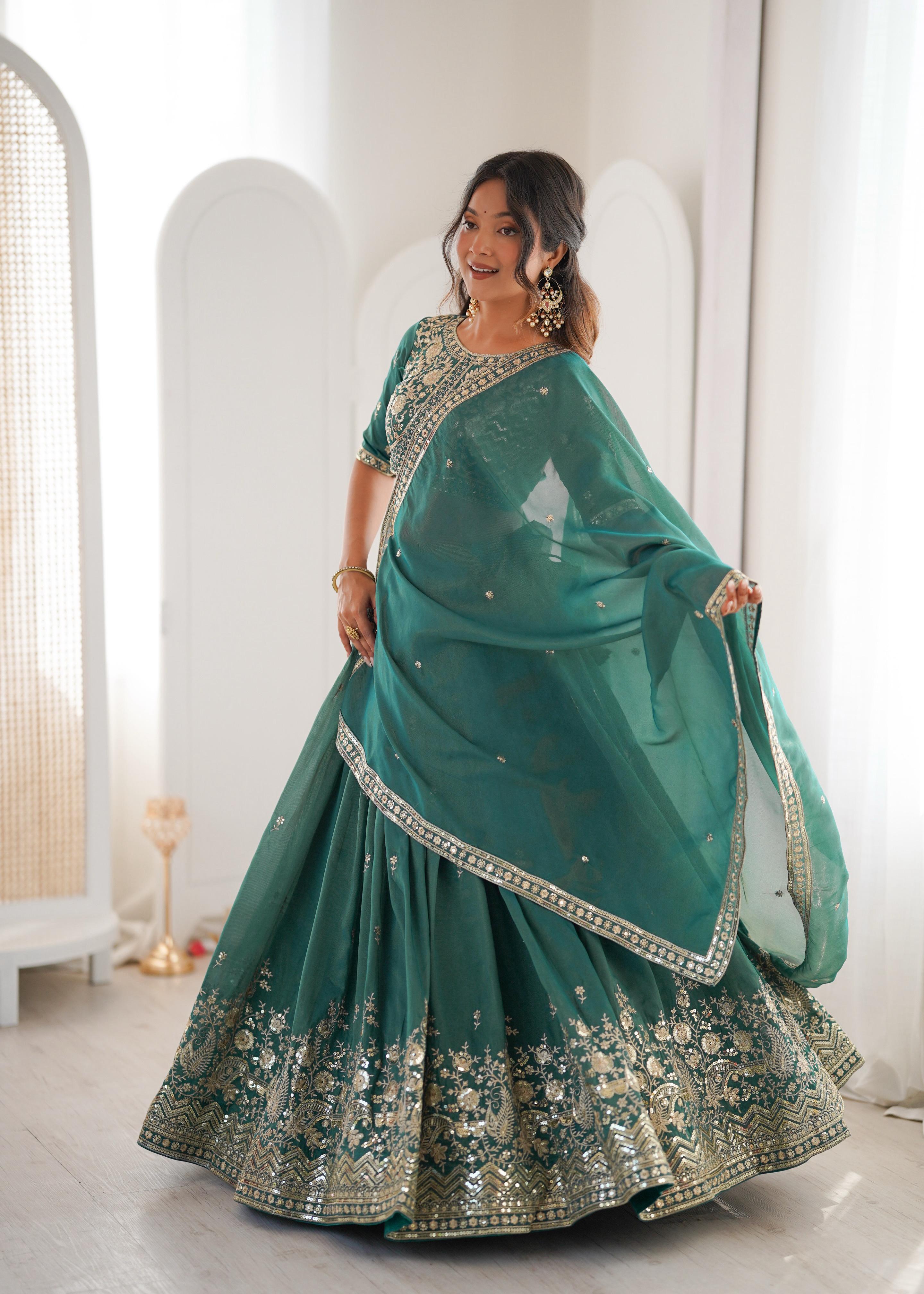
Red Floral Organza Lehenga Set with One Shoulder Blouse shows how a floral surface and structured organza can create occasion appeal without the density of a fully bridal ensemble. An one-shoulder blouse adds a contemporary line, although arm movement should be tested before finalising the look for a ceremony involving ring exchange or frequent photographs.
Embroidery placement matters as much as the fabric. Scattered motifs, floral borders and small mirror-work clusters keep the skirt visually interesting without creating a heavy panel around the legs. A lighter dupatta with a defined border is easier to manage than two heavily embellished layers.
Fabric choices for a reception lehenga
A reception lehenga benefits from fabric and embellishment that remain visible in evening photographs. Satin reflects points of light, sequins create sparkle when the wearer moves, and embroidered net can support a fuller skirt and layered effect.
Red Butterfly Net Sequins Lehenga Set Wedding Wear illustrates the higher-shine direction often associated with reception styling. Sequins look most effective when the rest of the outfit has breathing space, so jewellery and makeup should frame the garment instead of competing with every reflective detail.
Cream Peacock Embroidered Net Lehenga Set for Women takes a softer route to reception glamour. Peacock motifs can supply visual richness without requiring a dark base, making cream appropriate for brides who want an elegant evening outfit rather than a traditional red bridal appearance.
Ask for the garment's approximate weight before buying. A lehenga that feels manageable for five minutes in a fitting room may feel uncomfortable after four hours of photographs, dinner and standing. The skirt, can-can, lining, blouse padding and dupatta together determine the real wearing weight.
What Makes an Engagement Lehenga Different From a Reception Lehenga in blouse and dupatta styling?
Blouse comfort and dupatta control are more important for an engagement, while a reception allows more elaborate necklines, sleeves, layering and draping if the construction remains secure.
Engagement ceremonies usually involve close-up photographs, so neckline finish, sleeve fit and back detailing receive considerable attention. A fully stitched choli can reduce last-minute tailoring risk, especially when the event is close. During fully stitched choli shopping, check the bust fit, armhole depth, hook strength and whether the lining sits flat under embroidery.
A modest sweetheart, square, boat or high neckline can work for an engagement depending on jewellery and personal comfort. A detachable sleeve, adjustable dori or modesty panel adds flexibility when family photographs require a more covered look. The blouse should allow the wearer to raise both arms comfortably and sit without the neckline shifting.
Reception styling can accommodate a longer blouse, sculpted neckline, embellished sleeves, an off-shoulder structure or a dramatic back. An one-shoulder design can look particularly effective with a clean hairdo and a single statement earring, but secure adhesive support and careful arm testing are essential before an all-evening event.
For an engagement, drape the dupatta over one shoulder with a light front pleat or pin it neatly at the waist. That arrangement keeps the ring hand visible and reduces interference during greetings. For a reception, a second dupatta can create a bridal effect: one layer may cover the head or shoulder, while another defines the skirt line. Two dupattas should be used only when the wearer can move comfortably.
Ready Made Lehenga can be practical when a fixed event date leaves limited time for multiple fittings. Semi Stitched Lehengas Collection may offer more adjustment at the waist and length, but semi-stitched construction still requires a reliable tailor and a realistic alteration timeline.
What Makes an Engagement Lehenga Different From a Reception Lehenga in embroidery level?
Moderate embroidery is usually the safer engagement choice, while concentrated shimmer, broad borders and more elaborate surface work can make a reception lehenga feel appropriately formal.
For an engagement, examine where the embroidery sits when you're seated. Heavy motifs directly across the hips can create stiffness, while a dense hem with lighter upper-skirt decoration preserves movement. Floral threadwork, tonal embroidery, small mirrors and limited sequins can provide detail for close photographs without overwhelming the face.
Reception embroidery should be planned around distance. A motif that appears delicate in a product photograph may disappear under stage lighting, so wider borders, larger floral elements and controlled reflective work often perform better. Dense embroidery doesn't need to cover every centimetre of the skirt; a balanced arrangement can create a more expensive-looking result than random surface excess.
Check the reverse side of the embroidery where possible. Rough sequins, exposed threads and stiff backing can catch on hosiery or irritate the skin during a long reception. A lining that extends fully through the skirt and blouse improves comfort, especially when the outfit includes metallic thread or hard embellishments.
Print can be a strong engagement choice because it provides colour and movement without the weight of heavy work. Multicolor Printed Butter Silk Lehenga Choli Set demonstrates how a printed surface can feel festive for a family celebration, pre-wedding gathering or daytime engagement. The same look can be elevated with chandelier earrings, a defined dupatta border and metallic footwear.
What Makes an Engagement Lehenga Different From a Reception Lehenga when shopping online?
The safest online purchase matches the lehenga's construction, measurements and delivery timeline to the event rather than relying only on colour or model photography.
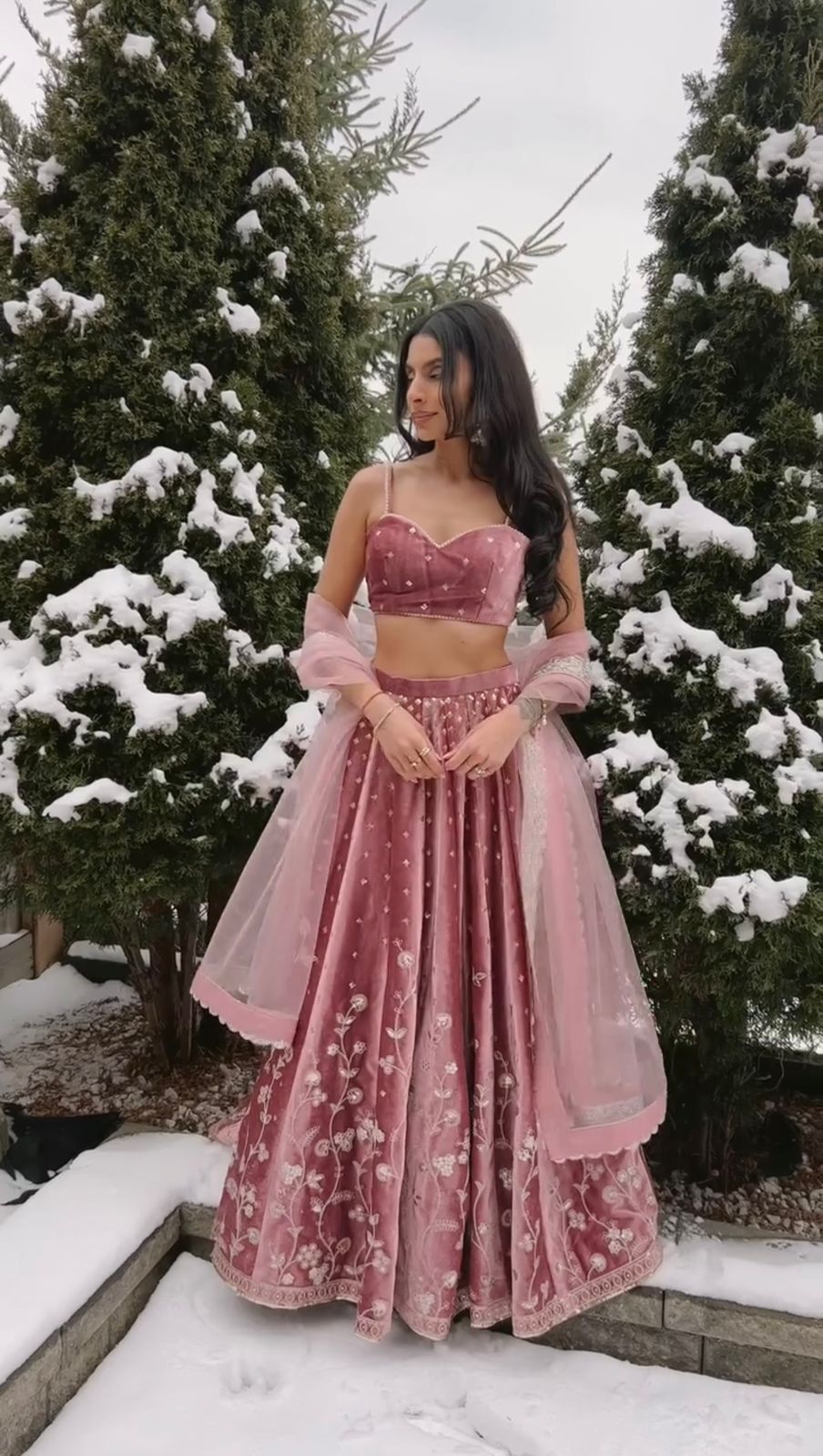
Start by identifying whether the set is ready-made, fully stitched or semi-stitched. A ready-made lehenga gives speed but gives less room for structural alteration. A semi-stitched lehenga permits adjustment at selected seams, although a tailor must still finish the garment. A fully stitched choli is convenient when the bust and shoulder measurements closely match the size chart.
Measure the bust, underbust, waist, high hip, full hip and preferred skirt length with a flexible tape. Keep the tape level and measure over the undergarments planned for the event. Do not choose a blouse size from the skirt waist alone because a comfortable waistband can't correct a restrictive armhole or incorrect bust fit.
Allow at least seven to fourteen days for tailoring when possible. A tailor may need extra time for shortening the skirt, adjusting the blouse, replacing hooks, securing a dori or reshaping the neckline. Brides shopping for a wedding or reception should also schedule a complete trial with jewellery, footwear and the intended undergarments.
Consider event timing before choosing a colour family. Mehendi Lehengas often include lively green, yellow or multicolour directions that suit daytime celebrations and pre-wedding photographs. A reception outfit usually needs stronger contrast if the stage, lighting and guest crowd are visually busy.
Check the product description for lining, closure type, dupatta fabric, blouse construction and washing instructions. Product photography can make a skirt appear fuller than it's because of layers, posing or a temporary underskirt. Ask about the actual flare, garment weight and embellishment technique when those details are not stated.
For a bride shopping across several wedding functions, one practical wardrobe plan is a lighter engagement lehenga, a comfortable Haldi ceremony outfit, a more colourful Mehendi Lehengas look and a formal reception lehenga. Repeating jewellery or footwear across events can create continuity without making the outfits appear identical.
How can one lehenga be styled differently for an engagement and reception?
The same lehenga can move from engagement to reception styling through changes in jewellery, dupatta drape, blouse layering, makeup, hair and footwear.
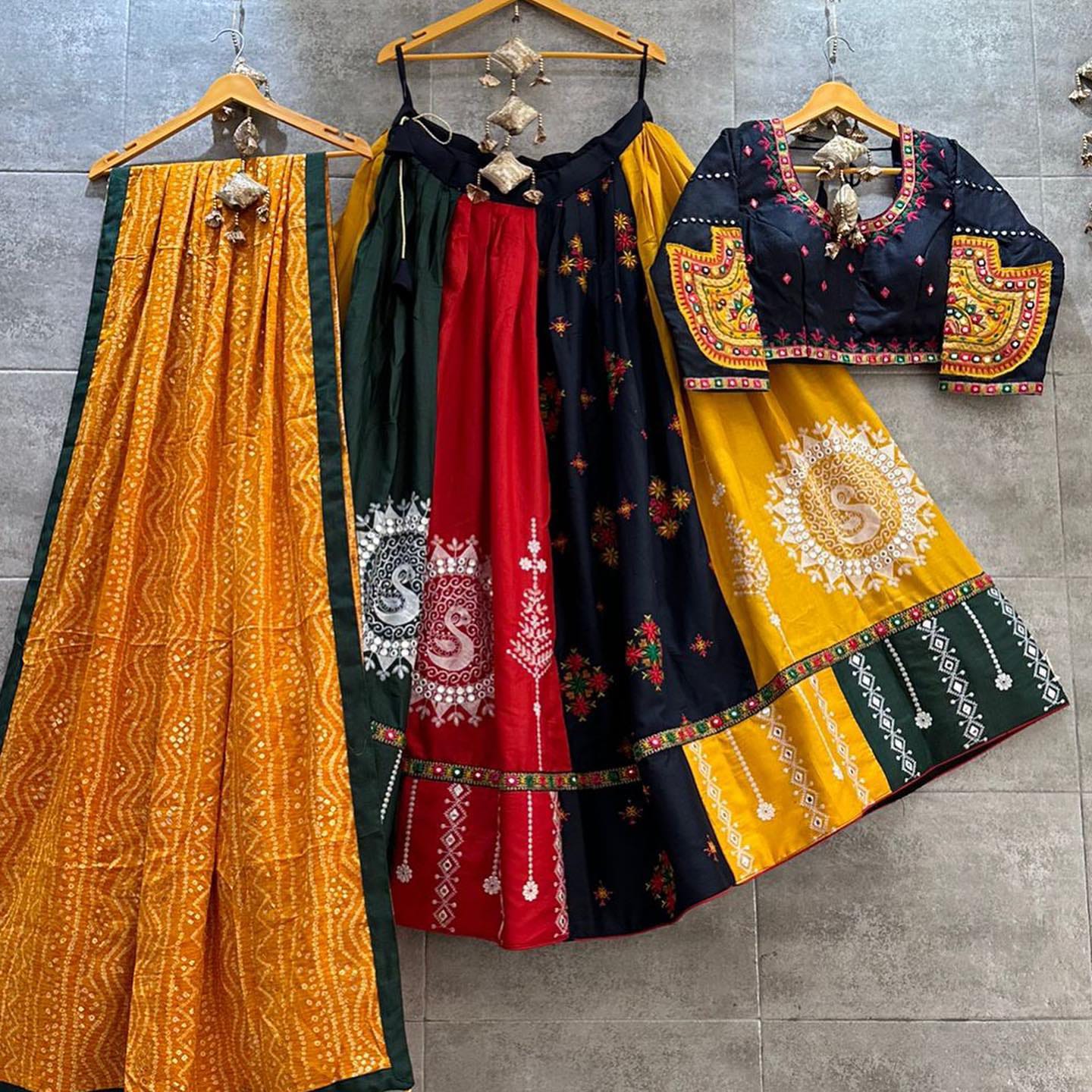
For an engagement, pair a lighter lehenga with pearl drops, delicate jhumkas, a compact clutch and soft makeup. A low bun, half-up hairstyle or loose waves keep the face visible during close family photographs. A single dupatta pinned securely at the shoulder creates a neat outline without limiting movement.
For a reception, replace delicate jewellery with a choker, layered necklace, larger earrings or a statement maang tikka, depending on the neckline. A sleek bun or controlled waves can balance a heavily embroidered outfit. Metallic heels, a structured potli and a second dupatta can add formality, provided the additional layers don't create tangling or excess weight.
Footwear should be chosen before the final skirt length is altered. A bride wearing three-inch heels needs a different hem length from a bride wearing flats. Walk on stairs, sit on a low chair and take several steps during the final fitting. These simple tests reveal whether the can-can, hem or dupatta will interfere with movement.
The final choice should reflect the bride's actual priorities. A bride who values dancing may prefer a lighter reception outfit, while a bride whose reception centres on stage photographs may prioritise a wider flare and stronger embellishment. The most successful lehenga is the one that suits the event and remains comfortable after the first hour.
Common Questions About Choosing Engagement and Reception Lehengas
Can I wear the same lehenga for my engagement and reception?
Yes, one lehenga can work for both events when the venue, dress code and styling are compatible. Change the jewellery, dupatta arrangement, blouse layer and makeup to make the outfit feel more formal for the reception.
Which colour is best for an engagement lehenga?
Pastel grey, blush, mint, yellow, powder blue, green, coral and bright multicolour shades are popular engagement choices. The best colour also depends on daylight, stage décor, jewellery and the bride's complexion preferences.
Which fabric is most suitable for a reception lehenga?
Satin, embroidered net, silk-blend fabric and sequined net are suitable for many receptions because they hold shape and remain visible under evening lighting. The final choice should account for garment weight, lining, venue temperature and how long the outfit will be worn.
Is a ready-made or semi-stitched lehenga better for wedding shopping?
A ready-made lehenga is convenient when the size chart closely matches the wearer and the event date is near. A semi-stitched lehenga offers more adjustment, but it requires a capable tailor and enough time for fitting, alterations and a complete trial.
How much embroidery should an engagement lehenga have?
Moderate embroidery, floral motifs, a defined border or limited mirror work usually provides enough detail for an engagement. Heavy embroidery is also possible, but the lining, surface texture and garment weight should remain comfortable for sitting and greeting guests.
What should I check during fully stitched choli shopping?
Check the bust, shoulder, armhole, sleeve opening, hook strength, lining and neckline position. Raise both arms, sit down and turn your shoulders during the fitting to confirm that the fully stitched choli remains secure and comfortable.