

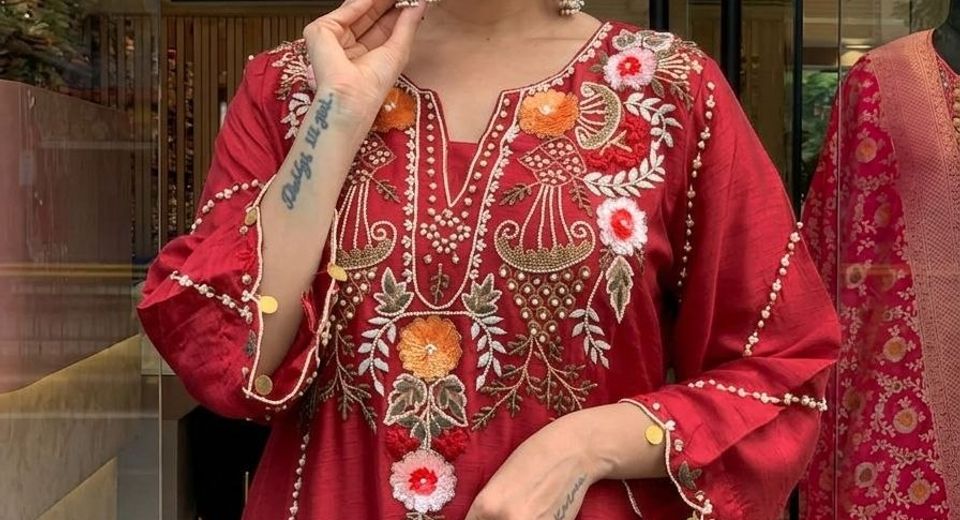
What makes a Pakistani style suit different in its overall proportions is the deliberate relationship between a longer kameez, a relaxed body, a generous lower half and a dupatta with enough length to balance the silhouette. The difference isn't simply a particular print, neckline or embroidery technique. A Pakistani-inspired salwar suit usually creates more vertical coverage than a short Punjabi kameez while allowing noticeable width through the trousers or shalwar.
Proportion matters when choosing a ready-made suit, ordering unstitched material or explaining requirements to a tailor. A beautiful fabric can look unbalanced if the kameez is too short for wide trousers, the sleeves are too narrow for the body, or the dupatta is too small to sit comfortably over a long silhouette. The measurements below explain how the recognisable shape is built.
What makes a Pakistani style suit different in its overall proportions?
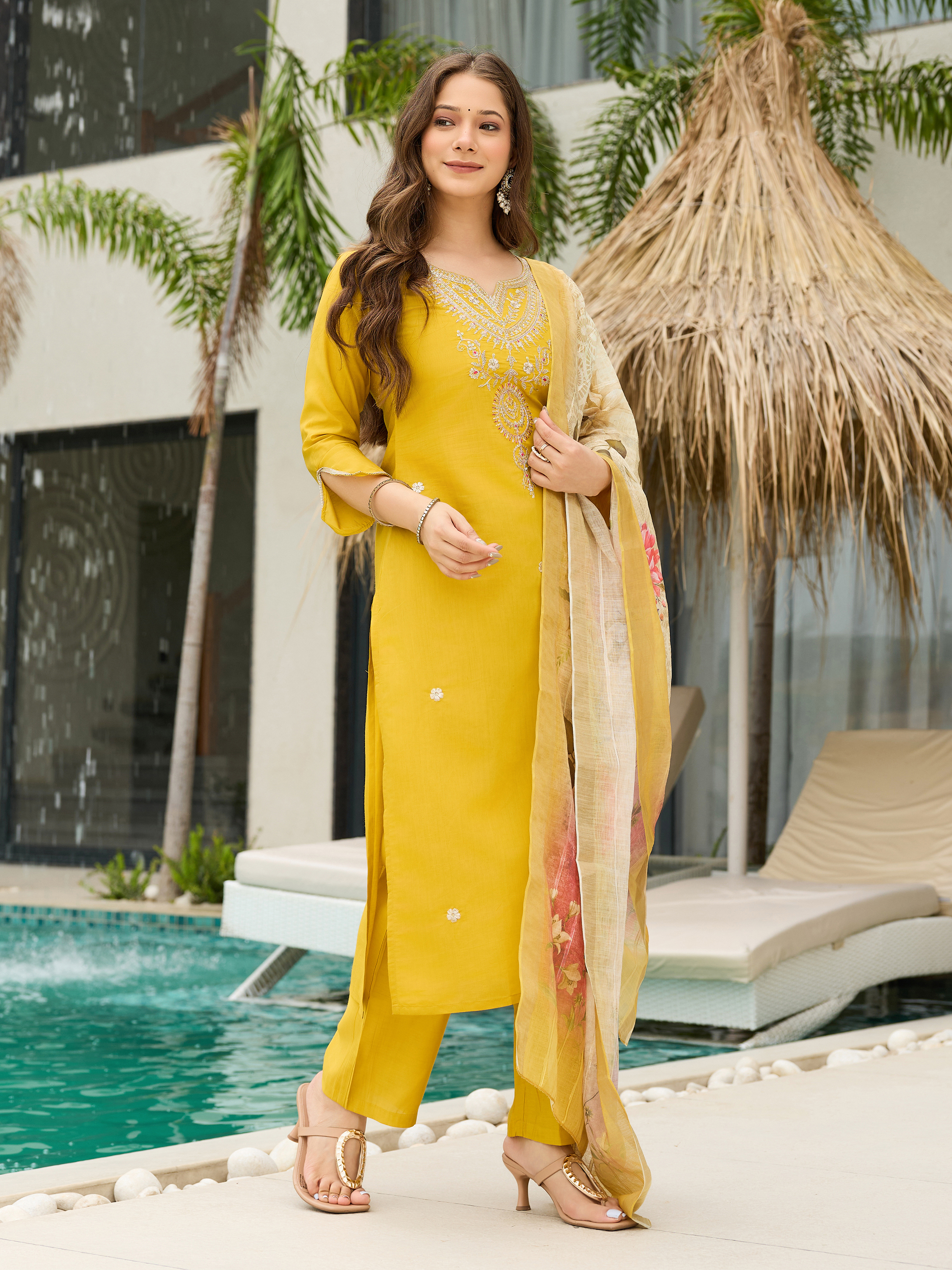
A Pakistani style suit generally combines a longer kameez, a more relaxed body, fuller or straighter trousers and a relatively substantial dupatta. The eye travels downward in one continuous line instead of stopping at a short kurta hem, giving the outfit an elongated appearance.
Many Pakistani-style designs place the kameez hem around the knee, mid-calf or lower, depending on the wearer's height and the intended formality. A shorter kameez may measure about 38 to 42 inches from shoulder to hem, while a longer version may reach 44 to 50 inches. These figures are starting points rather than fixed rules because height, torso length and trouser shape alter the correct balance.
The lower garment also carries visual weight. Straight trousers create a clean column below a long kameez, while wide-leg trousers, palazzos or a traditional shalwar create movement at the hem. A long kameez with cigarette pants can look sleek, but it doesn't produce the same relaxed silhouette as a fuller lower half.
The dupatta completes the scale of the outfit. A length of approximately 2.4 to 2.7 metres is practical for many three-piece suits, although a larger dupatta may be preferable with a very long kameez or a formal drape. Width matters as well: a narrow scarf can appear visually lost beside a broad kameez and voluminous trousers.
How does kameez length change the silhouette?
The kameez length determines whether a Pakistani style suit reads as elongated, balanced or visually shortened. A longer hem creates vertical continuity, whereas a short hem gives more emphasis to the legs and makes the outfit resemble a contemporary kurta set or Punjabi suit.
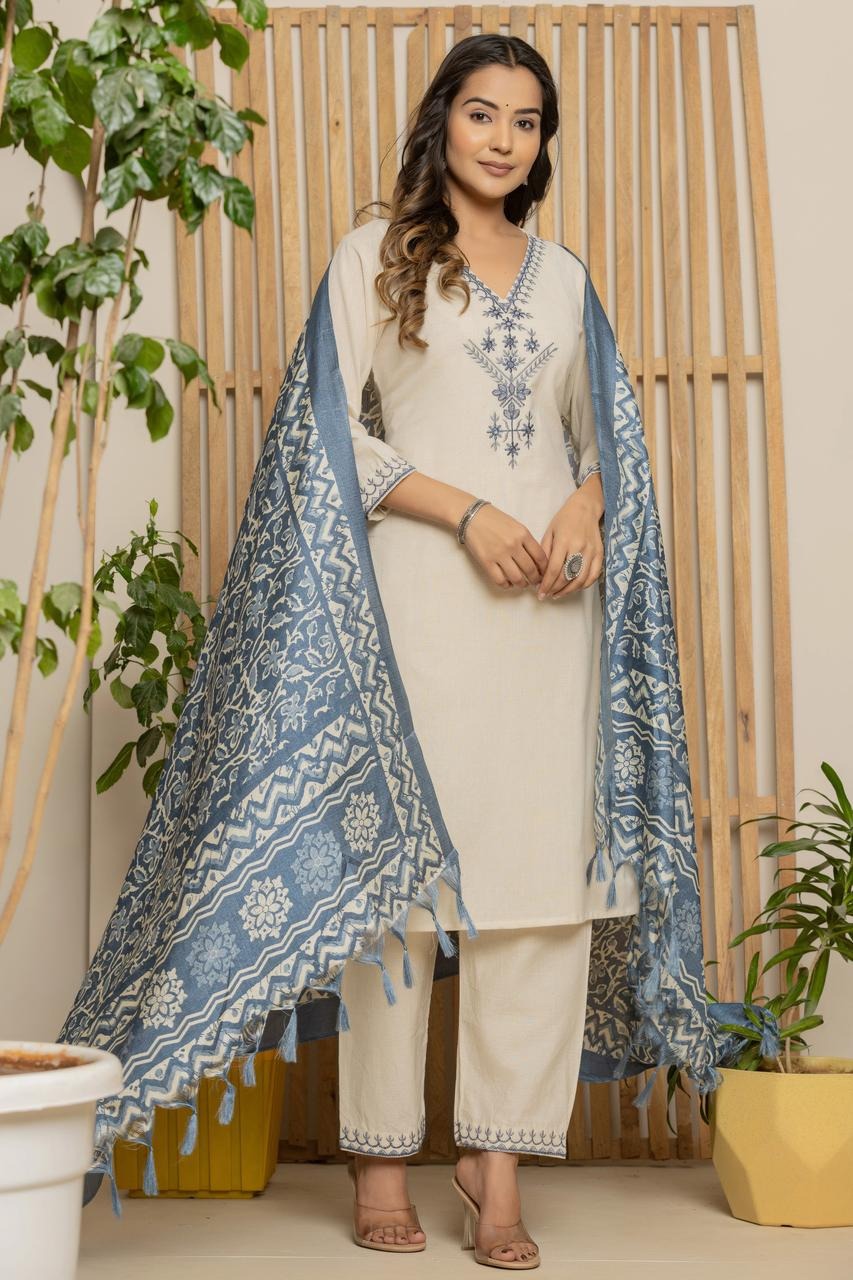
Longer hems and vertical balance
A kameez reaching the knee or below usually works well with wide-leg trousers because the upper and lower halves share visual volume. Side slits may begin at the knee or slightly above it, allowing movement without removing length from the front. A straight hem can look formal, while a curved hem or layered panel can soften a heavily embellished design.
Very long kameez styles need careful attention to walking ease. A hem near the ankle can look graceful with narrow trousers, but the same length may become cumbersome over a full shalwar. For a person around 160 centimetres tall, a 44-inch kameez already creates a strong long-line effect; a taller person may need additional length to achieve the same visual result.
Body width and ease
A Pakistani-inspired kameez normally benefits from comfortable ease rather than close tailoring across the bust and waist. Around 4 to 8 inches of total ease is commonly used for a relaxed fit, with the final amount depending on the fabric, lining and preferred silhouette. Chinon silk drapes differently from crisp cotton or structured silk, so identical measurements won't produce identical results.
Purple Pink Chinon Silk Embroidered Suit Set demonstrates why drape and proportion should be considered together. Fluid fabric can support a longer kameez without appearing stiff, while dense embroidery may require additional allowance so that the garment doesn't pull across the motif placement.
Which trousers create the Pakistani-style proportion?
Wide-leg trousers, straight pants and heritage shalwar all create Pakistani-style proportions, but each produces a different amount of volume beneath the kameez. The right choice depends on kameez length, fabric weight and the level of embellishment.
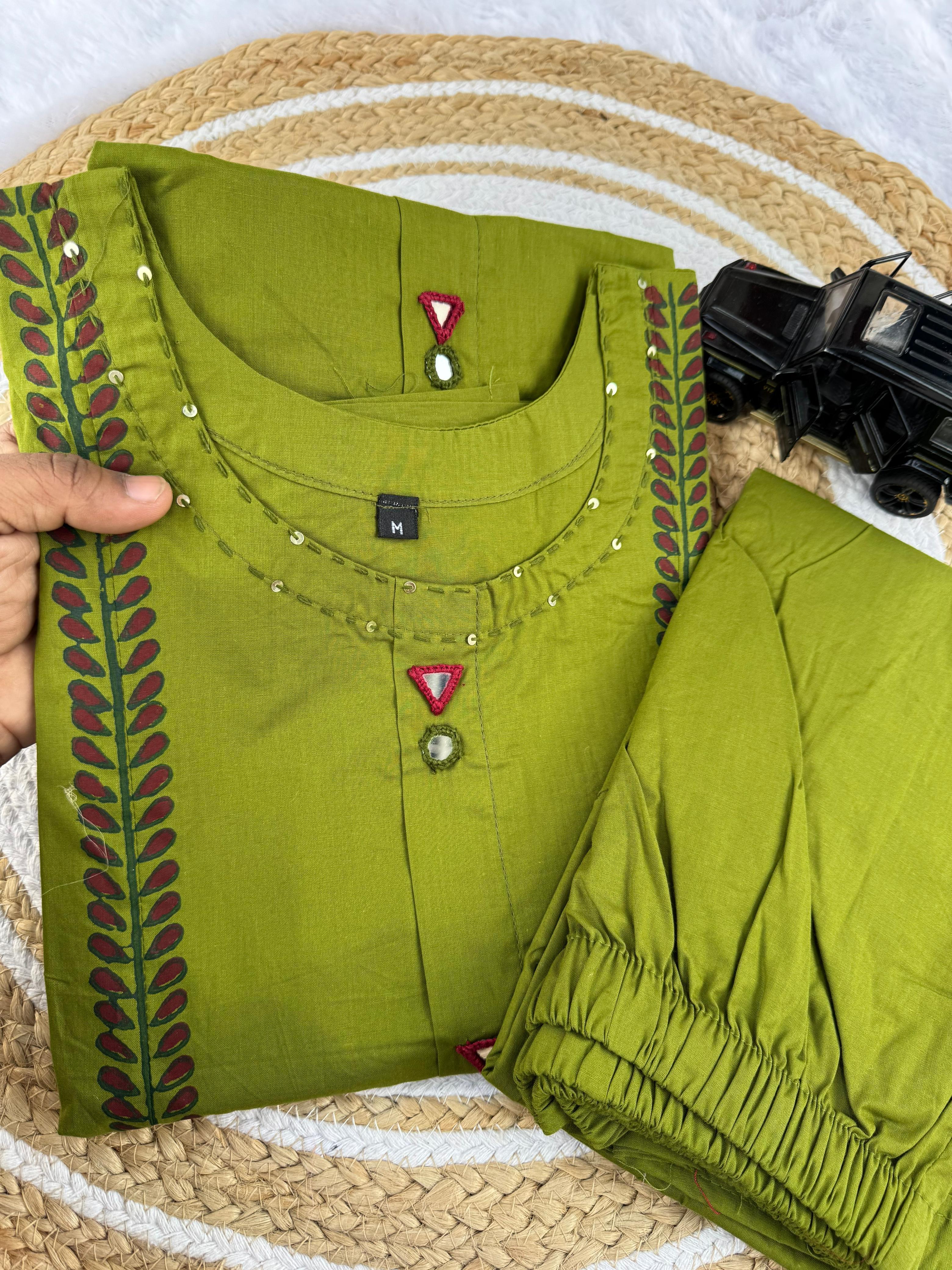
- Wide-leg trousers: A palazzo-like cut gives a broad, fluid line from the hip to the hem. The width is often most flattering when the kameez reaches at least the knee.
- Straight trousers: A straight leg provides a quieter lower half and works well with embroidered or printed kameez designs that already contain visual detail.
- Time-honoured shalwar: A shalwar gathers substantial fabric at the waist and ankle, creating the fullest lower half. The kameez needs enough length and ease to prevent the lower garment from overwhelming the outfit.
- Palazzo trousers: A palazzo has wide, usually pressed or softly falling legs and can look contemporary while retaining the long-line balance associated with Pakistani suits.
The waistband and rise affect comfort as much as leg width. A higher rise can keep the kameez smooth at the waist, while a lower rise may create bunching beneath a long side slit. A tailor should check the finished trouser length with the intended footwear because a wide hem can drag more easily than a narrow one.
Maharashtra Paithani Inspired Salwar Suits offers an useful styling reference for balancing decorative fabric with a composed lower silhouette. A zari-woven material may already have a strong border, so a straight or moderately wide trouser can preserve the border's importance without competing with it.
Why do sleeves, shoulders and necklines matter?
Sleeves, shoulders and necklines control the upper-body proportion of a Pakistani style suit, especially when the kameez is long and relaxed. Balanced shoulder width and sleeve volume prevent the garment from looking top-heavy or narrow beside a full lower half.
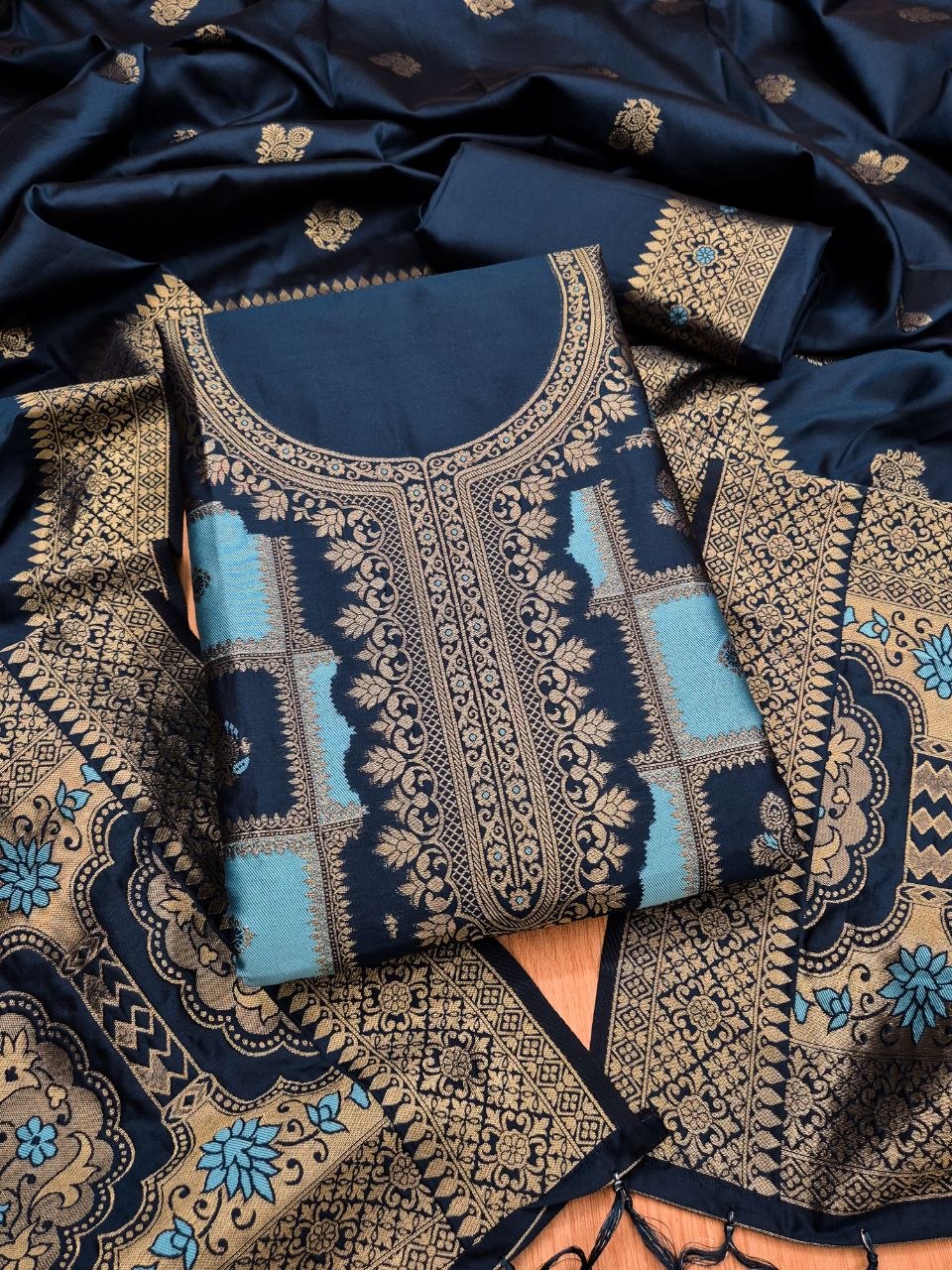
Three-quarter sleeves are common because they keep the wrist visible and reduce bulk when the dupatta is draped over one arm. Full-length sleeves create a more covered, formal appearance and can be effective with sheer or richly embroidered fabrics. A sleeve circumference that's too narrow can make a relaxed kameez look tight, while an excessively wide sleeve may interfere with the dupatta.
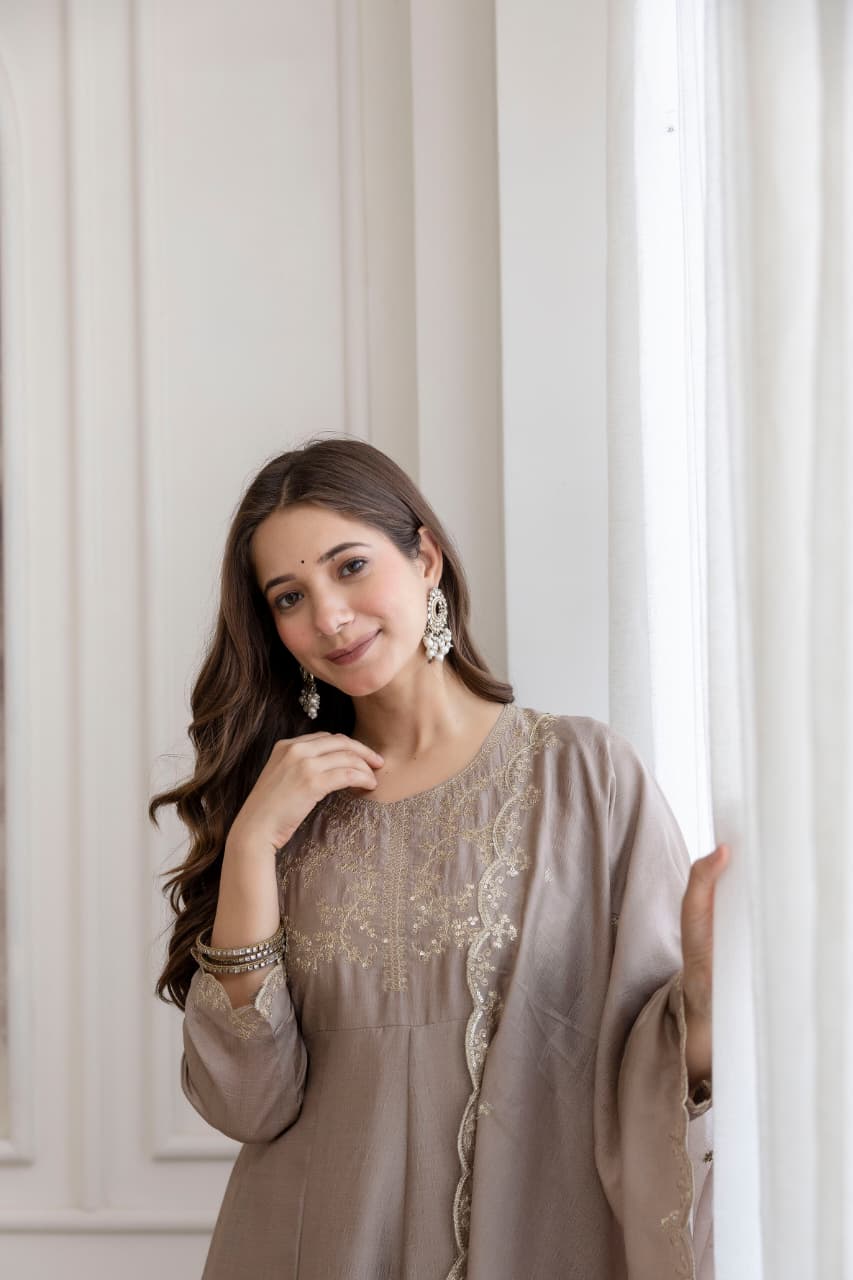
Necklines are often controlled when the kameez includes a long front panel, embroidery or a prominent dupatta. A round, shallow V or modest boat neckline lets the length and surface design lead the outfit. A deeper neckline can work, but the neckline must be considered with the front placket, embroidery placement and the planned dupatta drape.
Shoulder seams should remain close to the natural shoulder even in an oversized design. Extra ease belongs mainly through the bust, waist and sleeve rather than at the shoulder point. This adjustment makes a long kameez look intentional rather than merely oversized.
How should the dupatta be scaled and draped?
A Pakistani-style dupatta should be long and wide enough to echo the coverage of the kameez without hiding all of its front design. A practical starting size is approximately 2.4 to 2.7 metres long and 1 metre or more wide, subject to the fabric and desired drape.
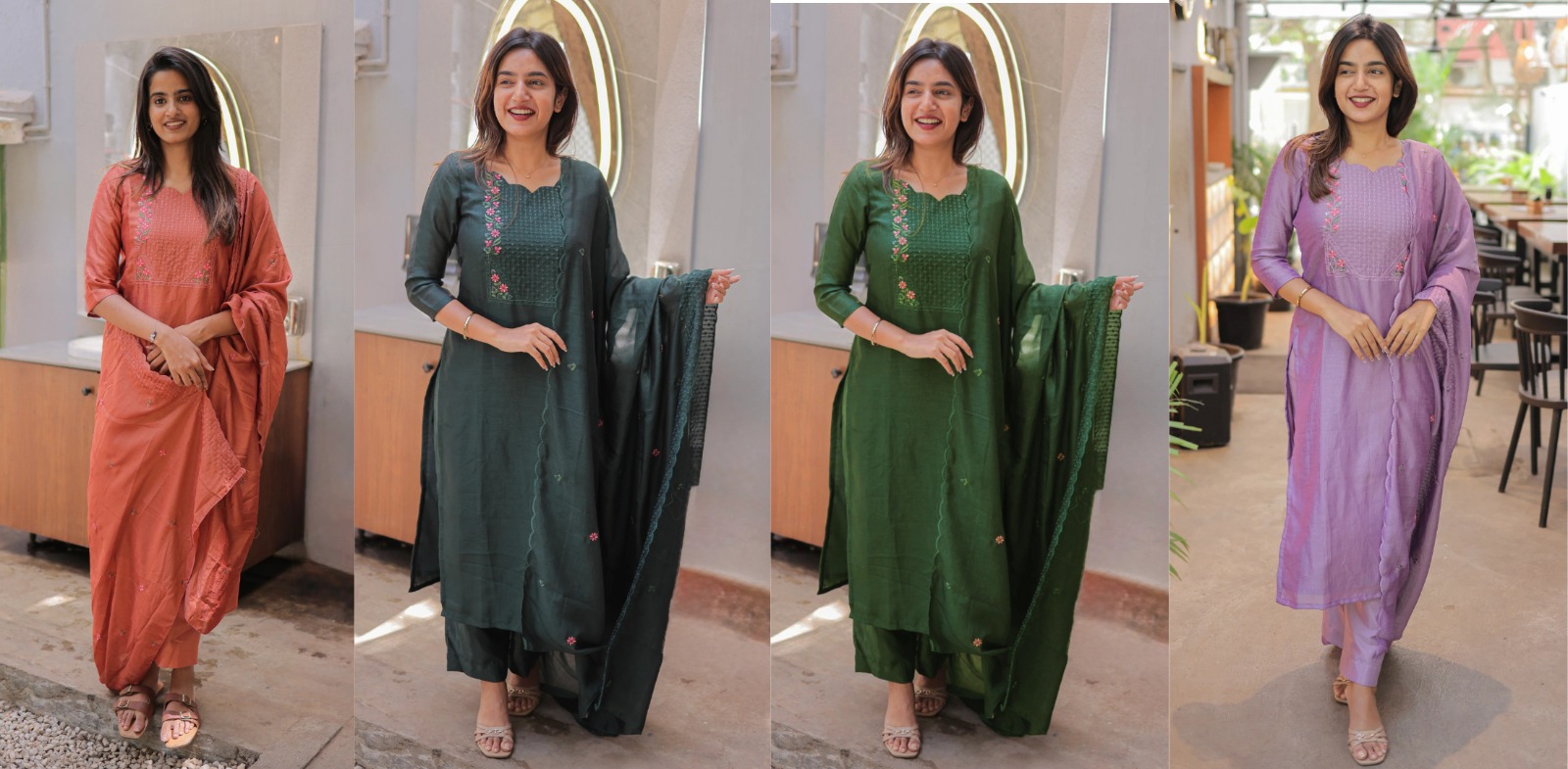
A classic drape places one end over the shoulder and allows the other end to fall across the opposite arm or front body. With a long kameez, a full front drape can make the outfit look cohesive, while a single-shoulder fall shows more of the neckline and embroidery. A narrow dupatta may suit a minimalist straight suit, but a heavily bordered or wide-leg design generally benefits from greater width.
Border direction changes perceived proportion. A border running along the long edges reinforces length, while a broad border across the short ends adds a horizontal finish to the drape. Zari borders can also add weight, so the dupatta should not be so heavy that it pulls the neckline backward or collapses delicate fabric.
Navy Blue Paithani Style Zari Woven Unstitched Suit and Royal Purple Paithani Style Zari Woven Unstitched Suit Material show how a strong woven surface can make the dupatta a structural part of the outfit rather than a minor accessory. When fabric already contains zari, the tailor should align the border placement with the kameez hem and trouser finish.
How do fabric and surface design affect proportions?
Fabric weight, drape and motif scale can make the same measurements look dramatically different. Fluid fabric falls closer to the body, while crisp fabric projects outward and may require less added width to achieve a full silhouette.
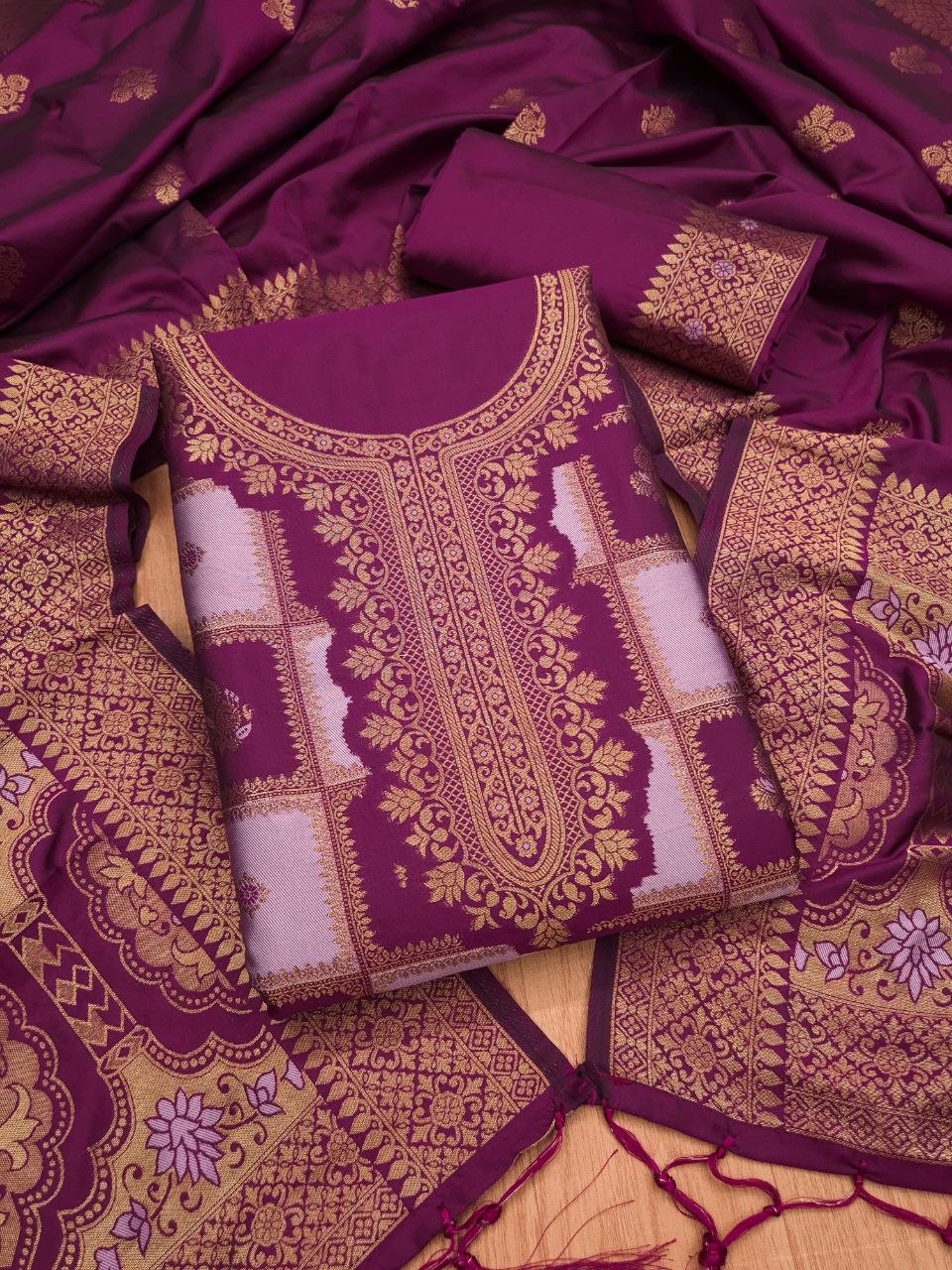
Banarasi silk, zari-woven textiles and other firm decorative fabrics can support a structured kameez, but excessive volume may feel heavy. Chinon silk and chiffon create movement in a long kameez and dupatta, although lining and seam finishing become important. Chanderi has a lighter hand and subtle crispness that can preserve shape without the density of heavy brocade.
Motif scale should correspond with garment area. A large motif can look crowded on a short front panel but become balanced on a long kameez. Small repeated motifs can support a broader silhouette without making the outfit appear visually heavy. Pink Paithani Style Zari Motif Unstitched Suit Material illustrates why motif spacing should be considered before cutting the front, sleeves and dupatta.
Colour placement also affects proportion. A dark lower half can visually ground a long, bright kameez, while a continuous colour family from kameez to trouser creates a taller appearance. Black Paithani Style Zari Woven Unstitched Suit Material can therefore support a more substantial kameez or wider trouser without appearing visually scattered. Maroon Paithani Style Zari Woven Unstitched Suit Material creates a similarly rich base for festive styling, especially when the dupatta carries a contrasting border.
How should an unstitched Pakistani-style suit be measured?
An unstitched Pakistani-style suit should be measured by mapping the finished kameez, sleeve, trouser and dupatta requirements before cutting any border or motif. Planning the finished dimensions first prevents valuable decorative fabric from being used in the wrong sections.
- Measure the kameez: Record shoulder-to-hem length, bust, waist, hip, shoulder width, armhole and sleeve length. Add wearing ease according to the preferred fit.
- Mark the front: Place the most important border or motif on the front panel before cutting the back and sleeves. Check whether the pattern needs matching at the side seams.
- Choose the lower garment: Confirm whether the design requires straight trousers, palazzos or a fuller shalwar. Record rise, waist, hip, thigh, hem and finished length.
- Reserve the dupatta: Keep the required length and width aside before using the remaining cloth for sleeves or panels. A short dupatta can't be corrected easily after cutting.
- Check movement: Test the planned side slit, armhole and trouser width against sitting, walking and stair movement. Formal proportions still need practical ease.
Green Paithani Style Zari Woven Unstitched Suit Material can be planned with particular attention to border continuity because woven zari may have a clear directional design. The same principle applies to Black Paithani Style Zari Woven Unstitched Suit Material and Maroon Paithani Style Zari Woven Unstitched Suit Material: cutting order matters when the fabric has a prominent border or repeated motif.
Colour and regional references can guide styling without changing the core proportions. Kalamkari Print Salwar Suits may suggest a more relaxed printed treatment, Gujarat Bandhej Salwar Suits can bring a lively surface contrast, and Odisha Sambalpuri Salwar Suits can highlight a strong woven or patterned border. Punjab Patiala Salwar Suits, by comparison, usually place more visual emphasis on the gathered lower garment and shorter kameez relationship.
How can the proportions be adjusted for different body heights?
Proportions can be adjusted by changing the kameez length, trouser width and dupatta placement together rather than altering one measurement in isolation. A shorter wearer may prefer a knee-length kameez with moderate-width trousers, while a taller wearer can carry a longer hem and more generous lower volume.
For a petite frame, excessive contrast between a very long kameez and extremely wide trousers can compress the visual line. A near-monochromatic colour combination, a controlled side slit and a trouser width that falls softly rather than standing away from the body can preserve height. For a taller frame, a longer dupatta, wider border or stronger horizontal hem detail can prevent the outfit from looking visually sparse.
A fuller body doesn't require an oversized garment in every area. Comfortable ease through the bust and hip, a stable shoulder seam and a long uninterrupted front line usually create a more polished result than simply adding width everywhere. A curvier wearer may also find a straight trouser easier to balance than a highly gathered shalwar.
The final test is visual and practical: the shoulder should sit correctly, the kameez should allow movement, the lower garment should not pull at the hips, and the dupatta should stay secure without constant adjustment. When those elements work together, the defining proportions remain graceful whether the suit is embroidered, printed, zari-woven or minimally embellished.
Common Questions About Pakistani Suit Proportions
How long should a Pakistani style kameez be?
A Pakistani style kameez commonly falls around the knee, mid-calf or lower, with a finished length of roughly 44 to 50 inches for many adult wearers. The correct length depends on height, torso length, trouser volume and the intended level of formality.
Can I wear wide-leg trousers with a short kameez?
You can wear wide-leg trousers with a short kameez, but the result will look more like a contemporary kurta or palazzo set than a traditional Pakistani-style silhouette. A knee-length or longer kameez usually balances wide trousers more effectively.
What is the ideal Pakistani suit dupatta size?
A dupatta around 2.4 to 2.7 metres long and at least 1 metre wide works for many three-piece Pakistani-style suits. A longer or wider dupatta is useful with a very long kameez, a full front drape or a prominent border.
Which trousers are traditionally worn with Pakistani suits?
Pakistani suits may be worn with straight trousers, wide-leg pants, palazzos or a gathered shalwar. Straight trousers create a streamlined silhouette, while palazzos and shalwars add more volume beneath a long kameez.
How much ease should a Pakistani kameez have?
A relaxed Pakistani kameez commonly uses about 4 to 8 inches of total ease through the body, although the amount depends on fabric, lining and personal preference. The shoulder should remain correctly placed even when the bust, waist and hip fit is loose.
How do I cut an unstitched Pakistani suit without wasting the border?
Plan the finished kameez, trouser and dupatta dimensions before cutting, then reserve the dupatta and place the most important border or motif on the front panel. Directional zari, woven borders and large motifs require especially careful layout.




