

What Bengali Shankha Pola Jewellery Means Alongside a Saree becomes clearer when the white conch-shell bangle and red pola bangle are read as part of a married woman's visual language, not merely as colourful accessories. In Bengali Hindu tradition, shankha and pola commonly signify marriage, commitment, household well-being and continuity. Worn with a saree, the bangles connect the drape, blouse, vermilion and other jewellery into one culturally recognisable ensemble.
The tradition is especially associated with Bengal, including West Bengal and Bengali communities elsewhere in India and Bangladesh, although customs differ between families, districts, castes and generations. Some women wear shankha, pola and a loha iron bangle together; others wear updated versions made from alternative materials or reserve the set for weddings and festivals. Understanding that variation helps a wearer style the jewellery respectfully rather than treating a meaningful custom as a costume detail.
What Bengali Shankha Pola Jewellery Means Alongside a Saree in Bengali Tradition
Shankha and pola traditionally represent a Bengali Hindu woman's married status, with white conch shell associated with purity and red pola associated with marital vitality, affection and auspiciousness. The symbolism is strongest when the bangles are worn as a set, because the two colours are intended to work together rather than function as unrelated wristwear.
Shankha refers to bangles carved from conch shell, traditionally sourced from the shell of a sacred conch. The naturally pale surface is shaped, polished and sometimes engraved. Shankha can be plain, ridged or decorated with gold-toned details. Traditional artisans may make the bangle to fit the wearer's wrist, since a rigid shell bangle can't stretch like glass or metal.
Pola refers to the red bangle paired with shankha. Historical pola was associated with red coral, but contemporary pola may be made from lac, resin, shell, glass, acrylic or other materials. A red bangle should not automatically be described as coral because material and craftsmanship vary widely by maker and price.
Many Bengali families also include loha, an iron bangle often worn with shankha and pola. Loha is usually connected with protection, strength and the stability of married life. The exact order, wrist placement and number of bangles are not adaptable rules. Family practice may find whether loha sits between shankha and pola, is covered with gold, or is worn separately.
What Bengali Shankha Pola Jewellery Means Alongside a Saree During Marriage Rituals
Shankha pola are worn with a saree because the white-red combination makes marital identity visible while harmonising with the saree's classic drape and Bengali festive styling. The bangles add meaning at the wrists, where hand movements naturally draw attention during greetings, rituals, serving food and ceremonial gestures.
A Bengali wedding may include a ritual in which the bride receives or wears shankha and pola, although the timing and details change by family and community. The bangles can therefore mark a transition into married life, while the saree establishes the formal setting. A red-and-white bangle set may rest part of regular married dress, or it may be reserved for religious occasions depending on personal preference.
The combination is particularly visible during Bengali weddings, Durga Puja, Lakshmi Puja, family ceremonies and post-wedding visits. A bride may wear a new shankha pola set as part of a wedding ritual, while a married guest may wear her own bangles with a festive saree. A Bengali bride's jewellery should not be assumed to follow one fixed checklist, because regional and family customs differ.
A saree also provides the right visual setting for the bangles' colour balance. White shankha echoes an ivory blouse, pearl jewellery, jasmine flowers or pale zari thread. Red pola connects with a red bindi, sindoor, alta, a red border or the warm tones of gold jewellery. The result is coordinated without requiring every element to match exactly.
The cultural meaning doesn't depend on buying an expensive saree. A cotton saree, silk saree or printed saree can all be worn with shankha pola when the overall styling is appropriate. Pink Banarasi Soft Silk Saree with Golden Zari Border naturally supports red pola because the pink ground, gold zari and time-honoured silk surface create a warm festive palette.
What Bengali Shankha Pola Jewellery Means Alongside a Saree in Fabric Styling
Shankha pola should be styled according to the saree's weight, surface and level of formality, while keeping the bangles visible enough to remain part of the look. The most successful pairings balance the rigid, glossy bangles against the movement and texture of the saree.
Silk and zari sarees
Silk and zari sarees pair well with classic shankha pola, a restrained gold chain and small gold earrings. Banarasi silk, Kanjeevaram and other structured silks can carry the visual weight of shell, red bangles and gold without looking crowded. Pink Banarasi Soft Silk Saree with Golden Zari Border works especially well for weddings, puja and reception-style gatherings because its zari border gives the bangles a formal frame.
Gold accents should support, not cover, the white and red bangles. A slim gold kada may sit beside the heritage set, but stacking many metallic bracelets can hide the shankha and pola. A blouse with a three-quarter sleeve or a clean short sleeve usually leaves enough wrist visible for the set to be recognised.
Cotton and handloom sarees
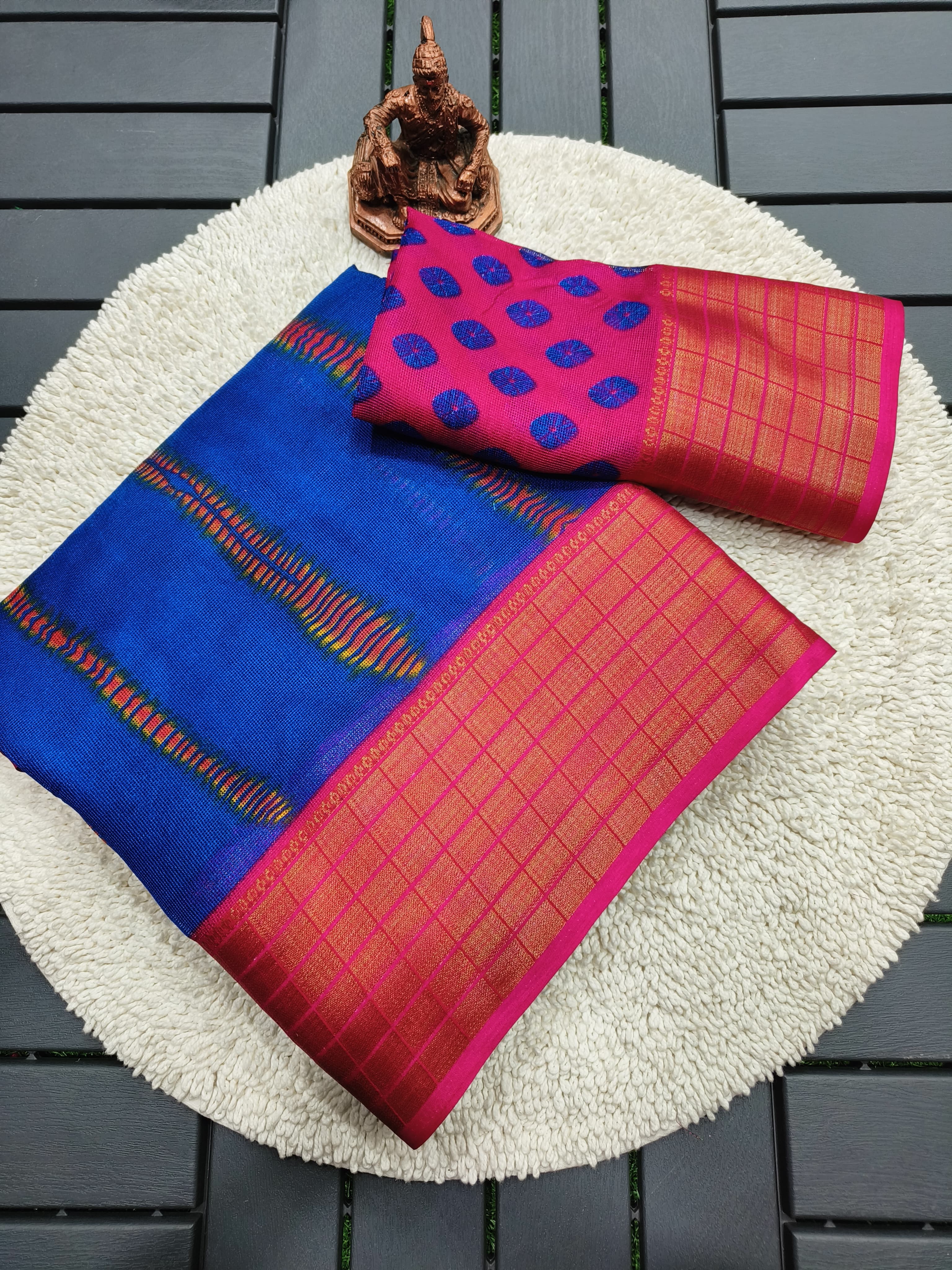
Cotton and handloom sarees call for lighter jewellery around the neck and ears so the shankha pola remain the main wrist detail. Teal Tissue Handloom Cotton Saree with Zari Weave | Varnavi illustrates how a cool teal saree can take classic red and white bangles without becoming overly bridal. Gold zari gives a small bridge between the cool body colour and the warm pola.
For a more everyday Bengali-inspired look, wear the bangles with a simple cotton blouse, a red or white bindi and small gold studs. Keep the pallu neatly pleated if the setting involves prayer, cooking or movement. A handloom saree doesn't need heavy bridal jewellery to look culturally grounded.
Printed, satin and fluid sarees
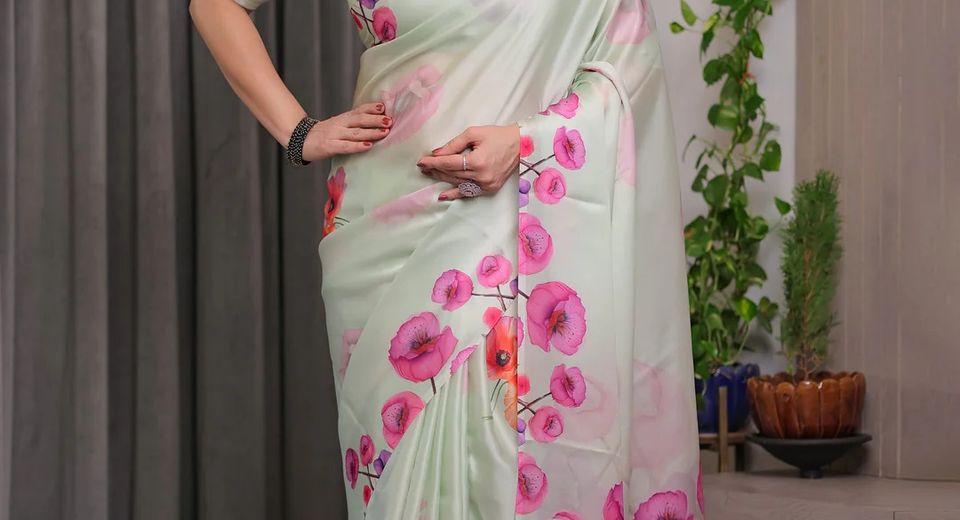
Printed and fluid sarees look balanced with a clean shankha pola set and fewer competing accessories. Mint Green Floral Satin Saree with Unstitched Blouse Fabric can be styled with a red blouse or red bindi to repeat the pola colour, while white shell bangles prevent the floral print from feeling too busy.
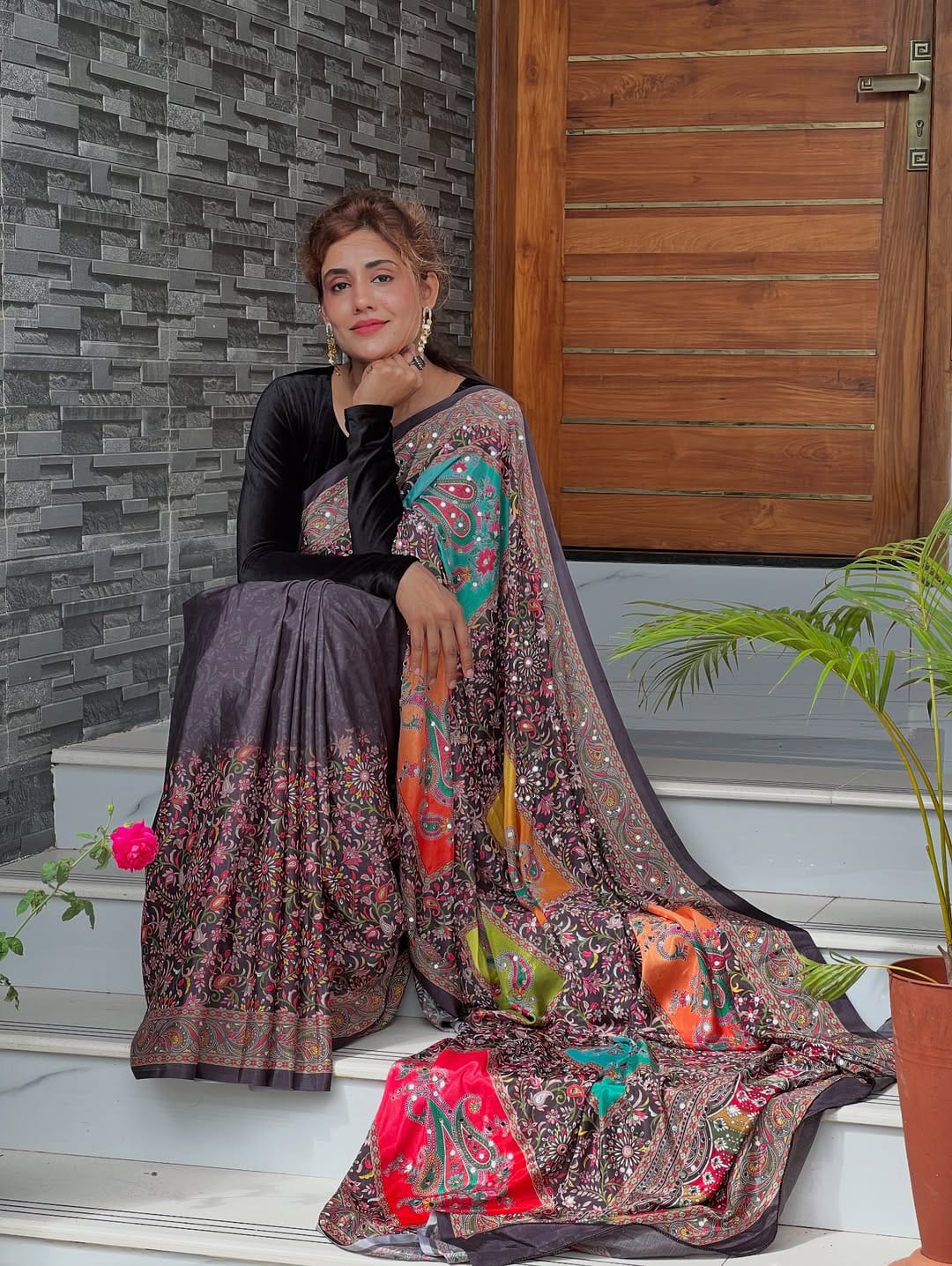
A darker printed saree can make the bangles stand out sharply. Black Pink Banarasi Silk Saree with Mandala Print already contains a strong pink-red family of colour, so classic shankha pola can reinforce its festive character. Choose one dominant statement piece, such as jhumka earrings or a necklace, instead of adding several layers to an already patterned drape.
What Bengali Shankha Pola Jewellery Means Alongside a Saree in Colour Choices
White, red, ivory, pink, black, teal and deep jewel tones all work with Bengali shankha pola when one colour is repeated elsewhere in the outfit. The strongest styling principle is colour connection, not strict colour matching.
- White and ivory: These colours make the red pola vivid and create a ceremonial, high-contrast appearance. Gold zari, red borders and red blouses add warmth.
- Red and vermilion: Red sarees create a heritage bridal effect, but the shade should be separated from the pola through white shankha, gold jewellery or an ivory blouse.
- Pink and magenta: Pink harmonises with red pola while remaining softer than a full red ensemble. Banarasi silk and zari borders make this palette suitable for festive events.
- Black: Black gives white shankha a crisp outline and makes red pola immediately visible. Use a red bindi, gold earrings or a red blouse detail to keep the look intentional.
- Teal and green: Cool greens contrast with red pola and make the white bangles appear brighter. Gold zari helps connect the colour story.
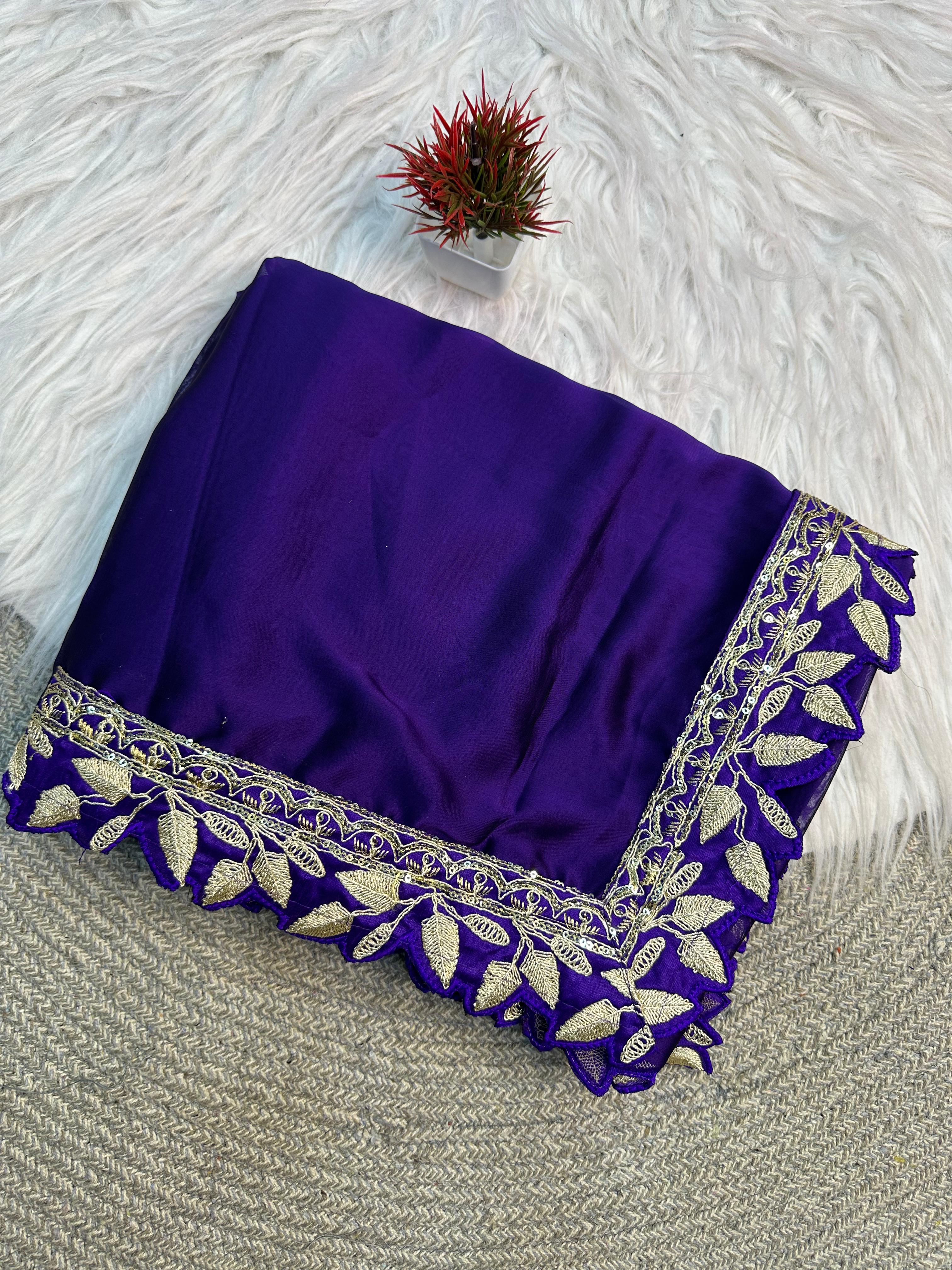
- Blue and wine: Deep blue or wine sarees create an evening-appropriate contrast. Limit additional red accessories if the pola already brings the warm accent.
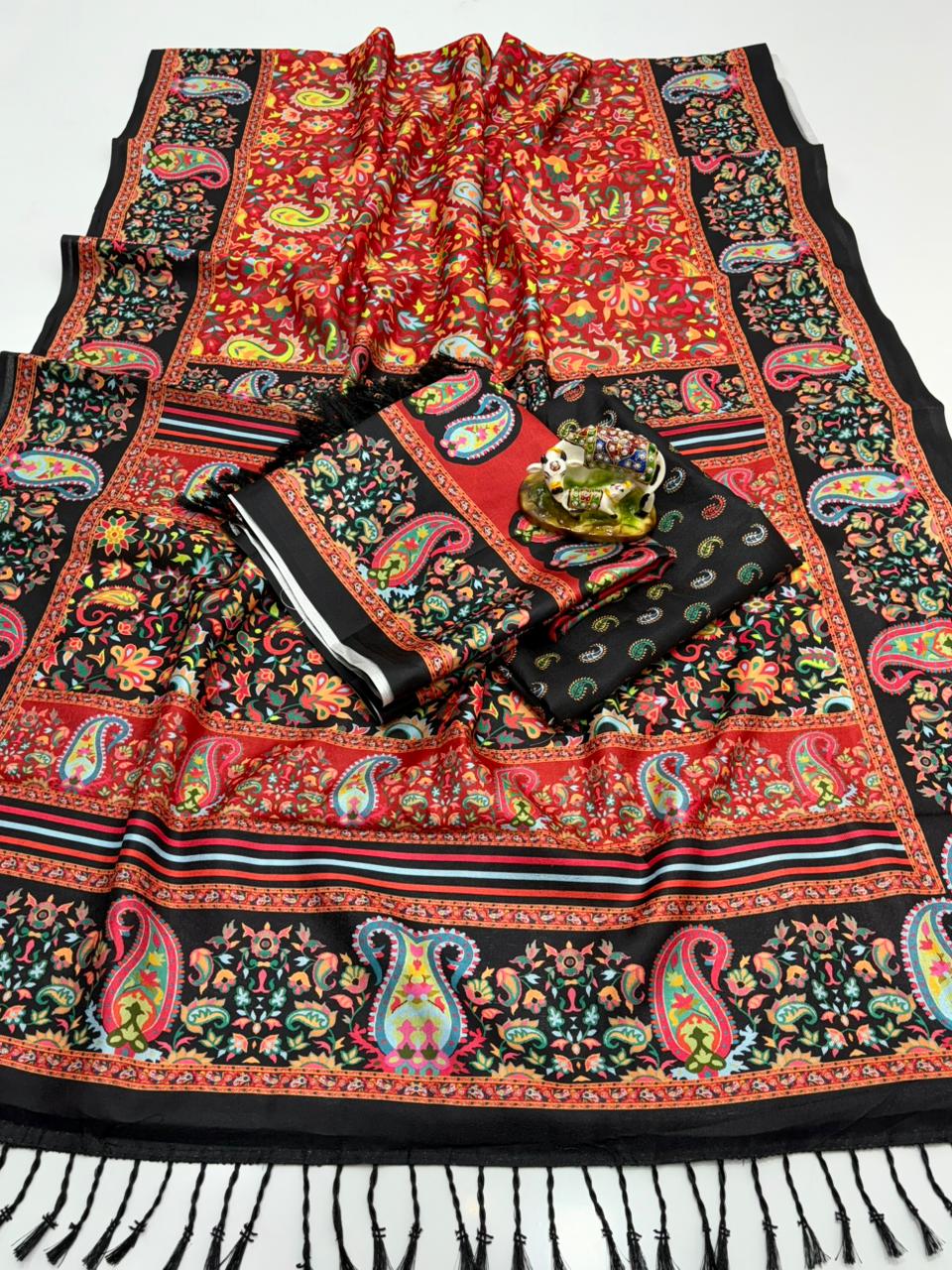
Black Red Floral Pashmina Saree with Shawl Set demonstrates why a saree doesn't need a plain body to support shankha pola. Repeating the red floral detail through a bindi or blouse creates cohesion, while the white bangles add a classic counterpoint to the darker base.
Blue Floral Pashmina Saree With Shawl Ethnic Wear offers another useful contrast. Blue and red sit apart on the colour wheel, so the white shankha softens the transition. Gold earrings or a narrow gold border can connect the cool blue fabric to the warmer pola without adding excessive jewellery.
What Bengali Shankha Pola Jewellery Means Alongside a Saree in Modern Dress
Shankha pola can be worn with a Bengali-style blouse, a modest festive salwar suit or another heritage outfit, but a saree remains the clearest cultural pairing. The bangles communicate most naturally when the rest of the outfit respects the same level of occasion and restraint.
For a wedding or puja, combine the bangles with gold jhumkas, a short gold necklace, a red bindi and sindoor where applicable. A white flower arrangement in the hair can echo shankha without adding another bright colour. For a less formal family gathering, small earrings and a single chain are sufficient.
A shawl can change the balance of the outfit in cooler weather. Blue Floral Pashmina Saree With Shawl Ethnic Wear can be worn with the shawl draped over one shoulder while the wrists remain uncovered. Avoid wrapping the shawl tightly over the bangles because friction can scratch polished shell and the red surface of some pola materials.
Print scale also matters. A large floral or mandala print benefits from a simple bindi and compact jewellery set. A plain saree can support more detailed earrings or a carved shankha. Digital Premium Pashmina Saree with Shawl & Blouse gives a softer, layered winter look, so keeping the wrist stack narrow prevents the outfit from appearing heavy.
Winter fabrics can also change the practical choice of accessories. Pashmina and shawl sets may catch on sharp edges, engraved shell or loose bangles. Wear the jewellery after arranging the drape, and check that the sleeve seam doesn't press tightly against the shell. Premium Wine Printed Chinon Saree with Blouse has a fluid surface that suits a compact bangle stack and a single gold-toned accent.
What Bengali Shankha Pola Jewellery Means Alongside a Saree for Respectful Wear and Care
Shankha pola can be worn respectfully today by acknowledging its marital and Bengali cultural context, avoiding claims that every Bengali woman follows one identical custom, and choosing materials and styling honestly. A wearer doesn't need to imitate a wedding ritual to appreciate the design, but cultural symbols should not be presented as generic red-and-white accessories.
Ask a Bengali family member, artisan or knowledgeable seller about local customs when wearing shankha pola for a ceremony outside your own tradition. Avoid treating the bangles as a novelty costume or making assumptions about a woman's marital status from jewellery alone. Many Bengali women adapt, remove or reinterpret classic ornaments according to work, comfort, personal belief and family practice.
Care for conch-shell shankha
Conch-shell shankha should be protected from hard impacts, prolonged soaking, perfume, hair spray and harsh cleaning chemicals. Wipe the surface with a soft, dry or barely damp cloth, then dry it immediately. Store each bangle in a padded box or soft cotton pouch so the shell doesn't knock against metal jewellery.
Care for red pola
Red pola should be kept away from direct heat, strong solvents and rough surfaces because lac, resin, glass and acrylic versions respond differently to moisture and friction. Check the material before using any polish. A jeweller should assess cracks or a loose fit because forcing a rigid bangle over the hand can cause injury and breakage.
Fit matters more than a precise number of bangles. Measure the widest part of the hand, not only the wrist, and allow enough clearance for comfortable removal. A set that pinches, spins excessively or leaves pressure marks should be replaced or professionally resized. Comfortable jewellery is more likely to remain part of a meaningful wardrobe for years.
What Bengali Shankha Pola Jewellery Means Alongside a Saree: Common Questions
Who traditionally wears shankha pola?
Married Bengali Hindu women traditionally wear shankha pola, although practice varies by family, region, community and generation. Some women wear the set daily, while others choose it for weddings, puja or other significant occasions.
Can unmarried women wear shankha pola with a saree?
Unmarried women can wear red and white bangles as fashion jewellery, but heritage shankha pola may carry a specific married-status meaning. Anyone wearing the set should avoid presenting a fashion version as evidence of a marital ritual or personal status.
What is the difference between shankha, pola and loha?
Shankha is traditionally a white conch-shell bangle, pola is the red bangle paired with it, and loha is an iron bangle often worn alongside both. The symbolism and arrangement of the three pieces vary among Bengali families.
Can shankha pola be worn with a non-Bengali saree?
Shankha pola can be paired with any saree if the wearer understands its cultural association and styles it respectfully. Banarasi silk, cotton handloom, Chanderi, Kanjeevaram and printed sarees can all work, provided the jewellery suits the fabric and occasion.
How should shankha pola be cleaned?
Clean shankha and pola with a soft cloth and avoid soaking, abrasive powders, perfume and harsh chemicals. Because pola may be made from coral, lac, resin, shell, glass or acrylic, material-specific care is safer than using one universal polish.
Can shankha pola be worn with a saree every day?
Shankha pola can be worn every day when family custom, personal preference and comfort support it. Choose a simpler saree, fewer additional bangles and a secure fit for work or regular household activities.
Questions About Bengali Shankha Pola Jewellery and Saree Traditions
What do shankha and pola mean in Bengali culture?
Shankha and pola traditionally signify a Bengali Hindu woman's married status. White shankha is associated with purity, while red pola is associated with marital vitality, affection and auspiciousness; family interpretations can differ.
Can unmarried women wear shankha pola with a saree?
Unmarried women can wear red and white bangles as fashion jewellery, but traditional shankha pola may carry a married-status meaning. Anyone wearing the set should avoid presenting a fashion version as evidence of a marital ritual or personal status.
What is the difference between shankha, pola and loha?
Shankha is traditionally a white conch-shell bangle, pola is the red bangle paired with it, and loha is an iron bangle often worn alongside both. The arrangement and symbolism vary among Bengali families.
Which saree colours pair well with shankha pola?
White, ivory, red, pink, black, teal, blue and wine sarees can all pair well with shankha pola. Repeating red, white or gold in the blouse, bindi, border or jewellery creates a more cohesive outfit.
How should shankha pola bangles be cared for?
Keep shankha and pola away from hard impacts, prolonged soaking, perfume and harsh chemicals. Wipe them with a soft cloth, dry them immediately and store them separately in a padded pouch.
Can shankha pola be worn with sarees from other Indian traditions?
Yes, shankha pola can be paired with Banarasi silk, cotton handloom, Chanderi, Kanjeevaram and other sarees when the wearer understands its Bengali cultural association. Respectful styling matters more than choosing a specifically Bengali weave.




