

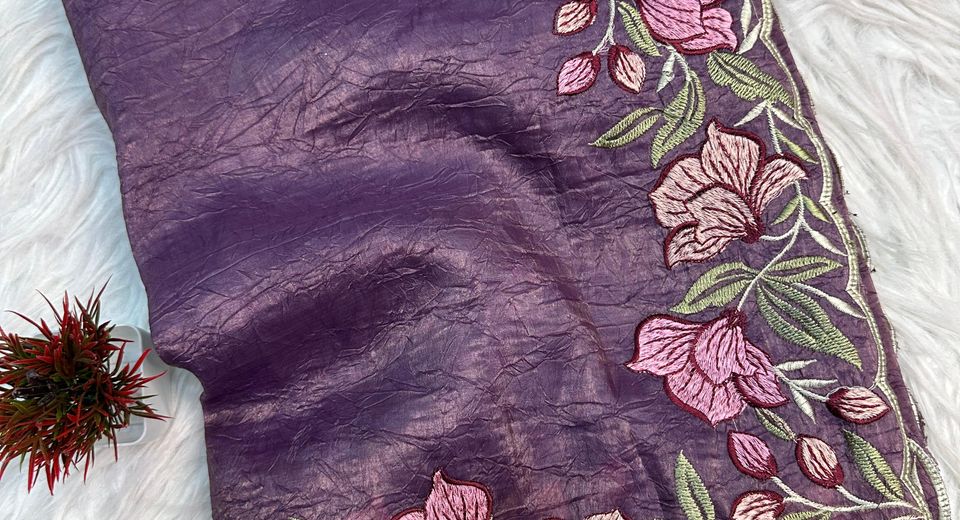
A Phulkari Bagh carries a Punjabi idea of abundance in every closely placed stitch. The word bagh means "garden," while Phulkari translates to "flower work," yet a Bagh is more than a cloth decorated with scattered flowers. The embroidery covers almost the entire ground so thoroughly that the base fabric can become hard to see. What a Phulkari Bagh means in Punjabi embroidery language is therefore a textile garden built through colour, labour, memory and formal meaning.
The distinction matters because many embroidered dupattas are casually called Phulkari, even when they use only a few floral motifs or machine-made stitches. A traditional Bagh has a particular visual density, a recognizable stitch logic and a connection to Punjabi domestic and wedding culture. Understanding those details helps a buyer, collector or wearer appreciate the textile without reducing it to a bright floral pattern.
What a Phulkari Bagh means in Punjabi embroidery language
A Phulkari Bagh means a densely embroidered Punjabi textile whose surface resembles a flourishing garden. The embroidery is generally worked from the reverse of a handwoven ground, traditionally with untwisted silk floss called pat, and the design is built mainly through long and short darning stitches.
The front of the textile reveals the finished image, but the embroiderer works by counting the threads on the back of the fabric. A single stitch can change direction, length and sheen, allowing geometric flowers, stylised leaves, birds, wheat forms and repeating borders to emerge. Silk floss catches light differently according to the direction of each stitch, giving a Bagh its characteristic shifting surface.
The "garden" in a Bagh isn't necessarily a realistic botanical scene. Punjabi embroidery often translates plants into diamonds, chevrons, stepped forms and abstract petals. The result can look geometric from a distance and floral at close range. This combination of structure and liveliness is one reason a well-made Bagh feels animated rather than flat.
Historically, women in Punjabi households often embroidered Phulkari textiles during periods of family life that included girlhood, marriage preparation and motherhood. The work could be intimate and cultural at once: a personal skill, a family inheritance and a contribution to a daughter's trousseau. A Bagh consequently records more than decorative taste; it can also carry the time, patience and hopes invested by the maker.
How a Bagh differs from ordinary Phulkari
A Bagh differs from ordinary Phulkari mainly through the extent of surface coverage. Phulkari is the broader tradition of flower embroidery, while Bagh describes a highly filled style in which stitches create an almost continuous embroidered field.
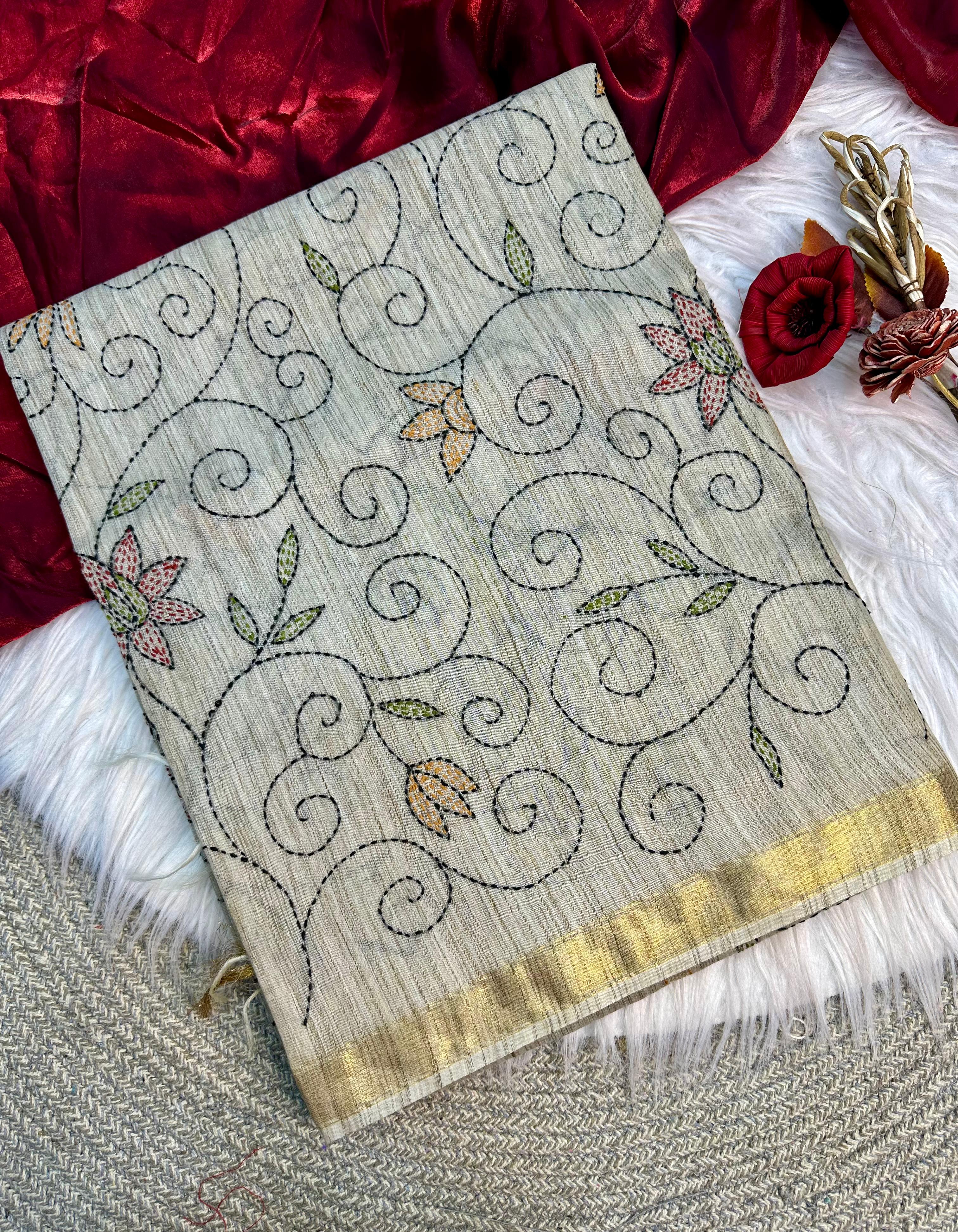
In a lighter Phulkari piece, the ground may remain visible between individual flowers, vines or borders. A Bagh uses closely packed motifs and colour blocks that visually occupy most of the fabric. The terminology isn't always applied with strict consistency today, especially in commercial descriptions, but surface coverage remains the most useful practical distinction.
- Phulkari: a broad Punjabi embroidery tradition that can include sparse, medium-density or dense designs.
- Bagh: a heavily covered Phulkari textile with a garden-like embroidered surface.
- Chope: a ceremonial textile, often associated with wedding customs, that may use a more restrained, often reversible embroidery arrangement and distinctive borders.
- Vari-da-bagh: a style traditionally associated with the bride's maternal family and designs linked with harvest, fertility or auspicious abundance.
- Darshan-dwar: a devotional or ceremonial form featuring architectural imagery, such as a gateway or shrine-like composition.
These names draw related categories rather than a single universal classification system. Regional vocabulary, family practice and modern retail usage can overlap. A textile labelled "Phulkari Bagh" should therefore be assessed by its genuine embroidery coverage, stitch quality, ground fabric and provenance rather than by the label alone.
Which materials and stitches give a Bagh its identity?
Traditional Baghs are identified by a woven ground, silk floss embroidery and counted darning stitches worked from the reverse side. The combination creates the reflective, directional surface that distinguishes hand-worked Phulkari from printed floral fabric.
The ground fabric
Handspun or handwoven cotton khaddar was the classic foundation for many older Phulkari textiles. Khaddar supplied a visible, countable weave and enough firmness to support repeated embroidery. The ground could appear in rust, red, brown, white or other shades, although deep red and reddish-brown foundations became especially associated with festive and bridal pieces.
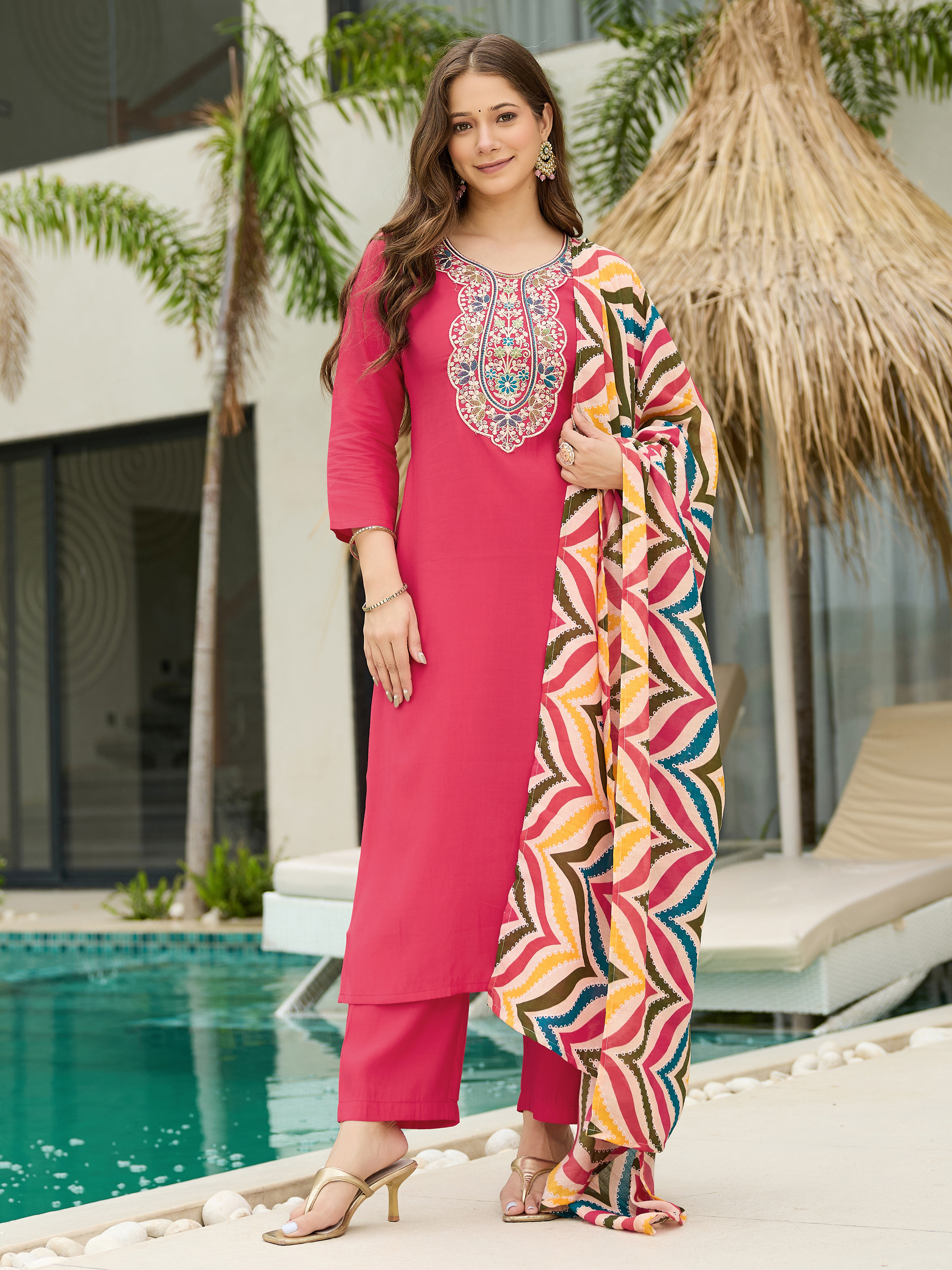
Modern Phulkari-inspired textiles may use cotton blends, georgette, chiffon, silk, Chanderi or synthetic fabric. A contemporary ground can be attractive and practical, but it should not automatically be described as equivalent to an antique khaddar Bagh. Fabric composition affects weight, drape, breathability, stitch definition and care requirements.
The floss and stitch direction
Untwisted silk floss, known as pat, creates the glowing surface traditionally associated with Phulkari. The embroiderer divides the floss into suitable strands and lays stitches across the weave in counted sequences. Stitch direction changes the way light falls on a motif, so a flower may appear to shift from copper to gold, pink to red or blue to violet as the textile moves.
The main darning stitch isn't simply a line drawn onto cloth. It is a carefully counted passage across warp and weft threads. Irregular thread counts can produce uneven motifs, while overly tight stitches may pucker the ground. Handwork naturally includes small variations, but good craftsmanship usually maintains balanced tension and a deliberate rhythm across the design.
What do Phulkari Bagh motifs and colours communicate?
Phulkari Bagh motifs communicate ideas of fertility, prosperity, protection, devotion and celebration, although meanings vary by region, maker and family tradition. No single flower or colour has one fixed interpretation across every Punjabi textile.
Flowers are often stylised rather than botanically exact. The sunflower-like form can suggest radiance and fullness, while wheat and grain references connect embroidery with Punjab's agricultural landscape. Peacocks, parrots and other birds may evoke beauty, companionship or auspiciousness. The frequent use of repeated diamonds and stepped forms creates visual order and can suggest continuity or an abundant, well-arranged world.
Red and red grounds are strongly connected with marriage, vitality and celebration in many South Asian textile traditions. Gold, orange and pink embroidery can intensify associations with light, harvest and prosperity. Green may recall foliage and renewal, while white, ivory, blue and purple can alter the mood from formal warmth to quiet elegance. Colour should be read as part of a composition rather than decoded through a rigid dictionary.
A Bagh made for a daughter's wedding might carry more emotional significance than an otherwise similar textile made for everyday use. The same motif could be selected because it was easy to count, because it belonged to a family vocabulary or because a particular colour was favoured by the recipient. Oral history is therefore valuable: the maker's account may explain meaning that the surface alone can't prove.
When was a Phulkari Bagh traditionally used?
A Phulkari Bagh was traditionally used as a special textile for ceremonies, gifting, dress and household display, with wedding customs giving many forms their strongest association. A Bagh could become part of a bride's trousseau, a gift from maternal relatives or a covering used during a significant family ritual.
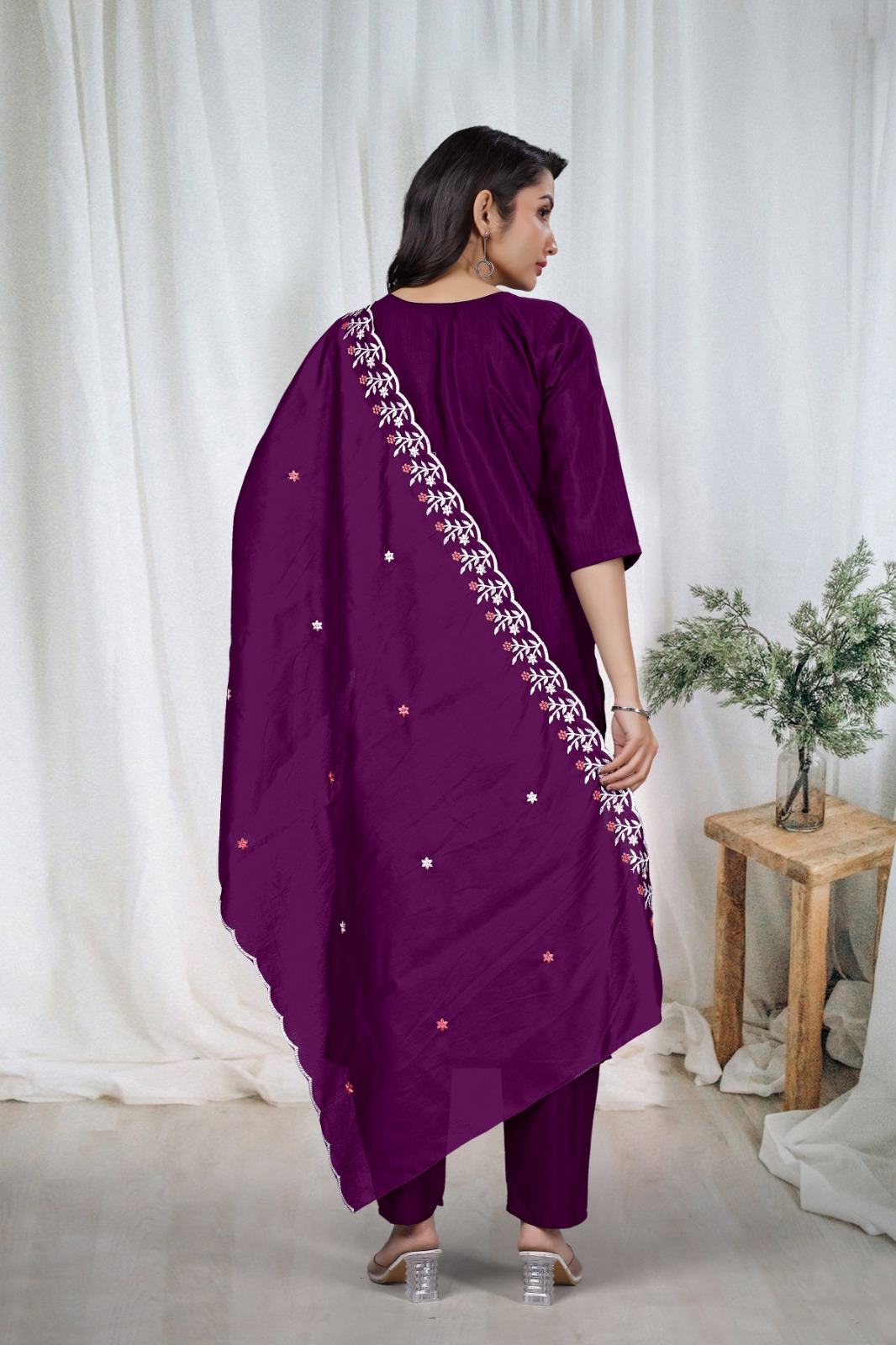
Phulkari textiles were also used as shawls, head coverings, dupattas and wrappers. Their function depended on size, fabric weight, embroidery density and local practice. A heavily covered Bagh can be comparatively weighty, so it may be draped with care rather than treated like a light daily scarf.
Chope has a particularly important relationship with Punjabi wedding tradition. In many accounts, a maternal grandmother or another senior female relative prepared or commissioned the textile for the bride. Traditional customs differ between communities, and present-day weddings often adapt them, but the connection between embroidery, kinship and blessing remains central to the textile's cultural memory.
Religious and devotional forms also demonstrate that Phulkari was not limited to bridal decoration. Darshan-dwar compositions may include temple-like gateways, lamps or sacred architectural references. Such examples show how Punjabi embroidery language could express reverence as well as personal adornment.
How can a contemporary wardrobe honour the tradition?
A contemporary wardrobe honours Phulkari tradition by treating the embroidery as a cultural textile language rather than using floral imagery as a generic surface decoration. A Phulkari-inspired dupatta can be paired with a plain kurta, allowing the stitch density and colour story to remain visible.
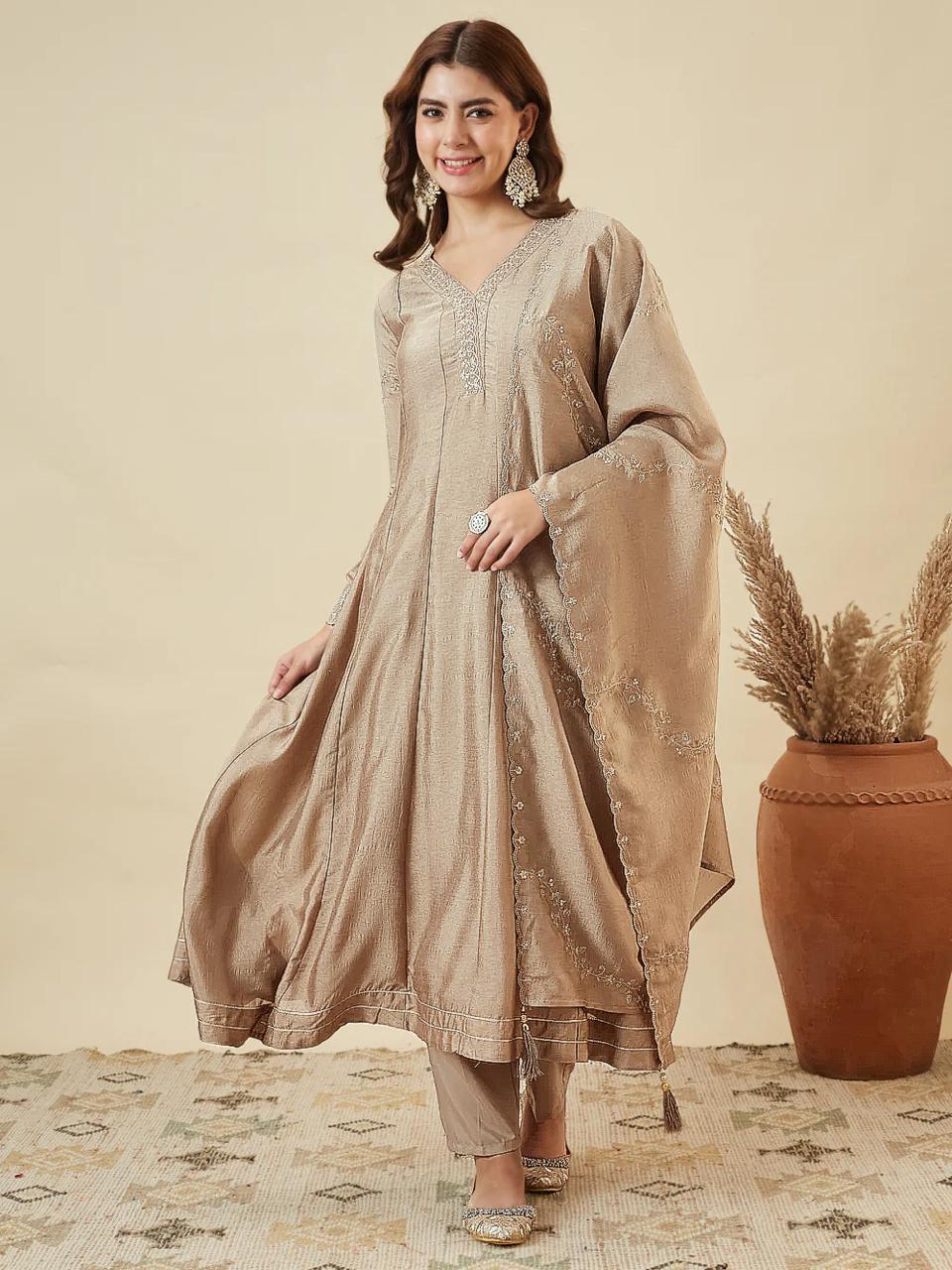
For a quieter interpretation, combine an embroidered layer with a solid base in ivory, deep red, bottle green or muted pink. The Pink Embroidered Chanderi Kurta Set with Dupatta demonstrates how a lighter, translucent Indian textile can create a refined foundation for surface detail. Chanderi doesn't become khaddar simply because it carries embroidery, so accurate fabric language makes the styling more respectful and useful.
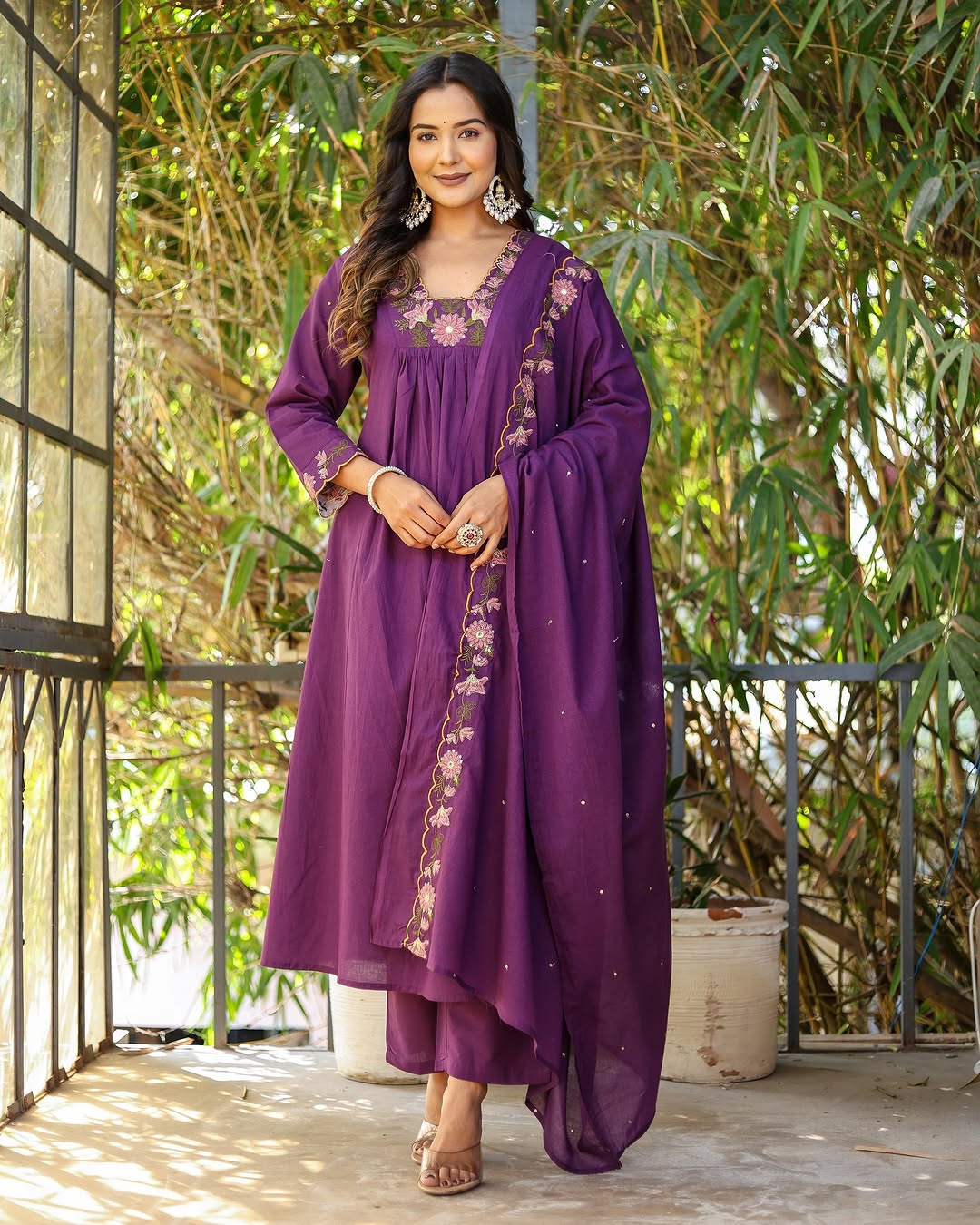
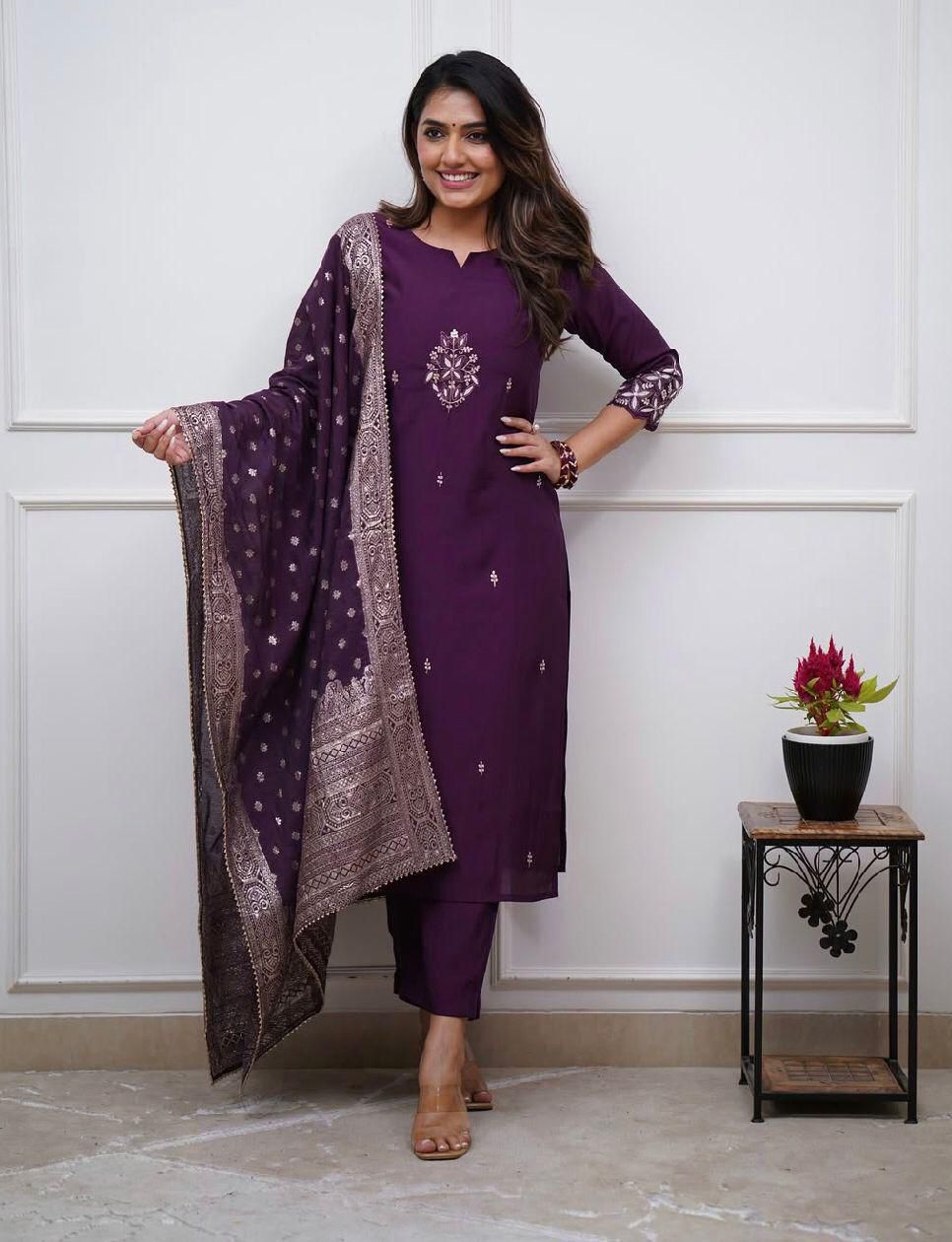
Purple offers a modern route into the palette without copying the strongest bridal reds. The Purple Embroidered Kurta Pant Dupatta Set Online and Purple Embroidered Kurta Pant Dupatta Set Women can be styled with minimal jewellery when the dupatta carries concentrated embroidery. The Royal Purple Embroidered Kurta Pant Dupatta Set creates a deeper, evening-focused interpretation, especially with antique-gold earrings and a restrained metallic sandal.
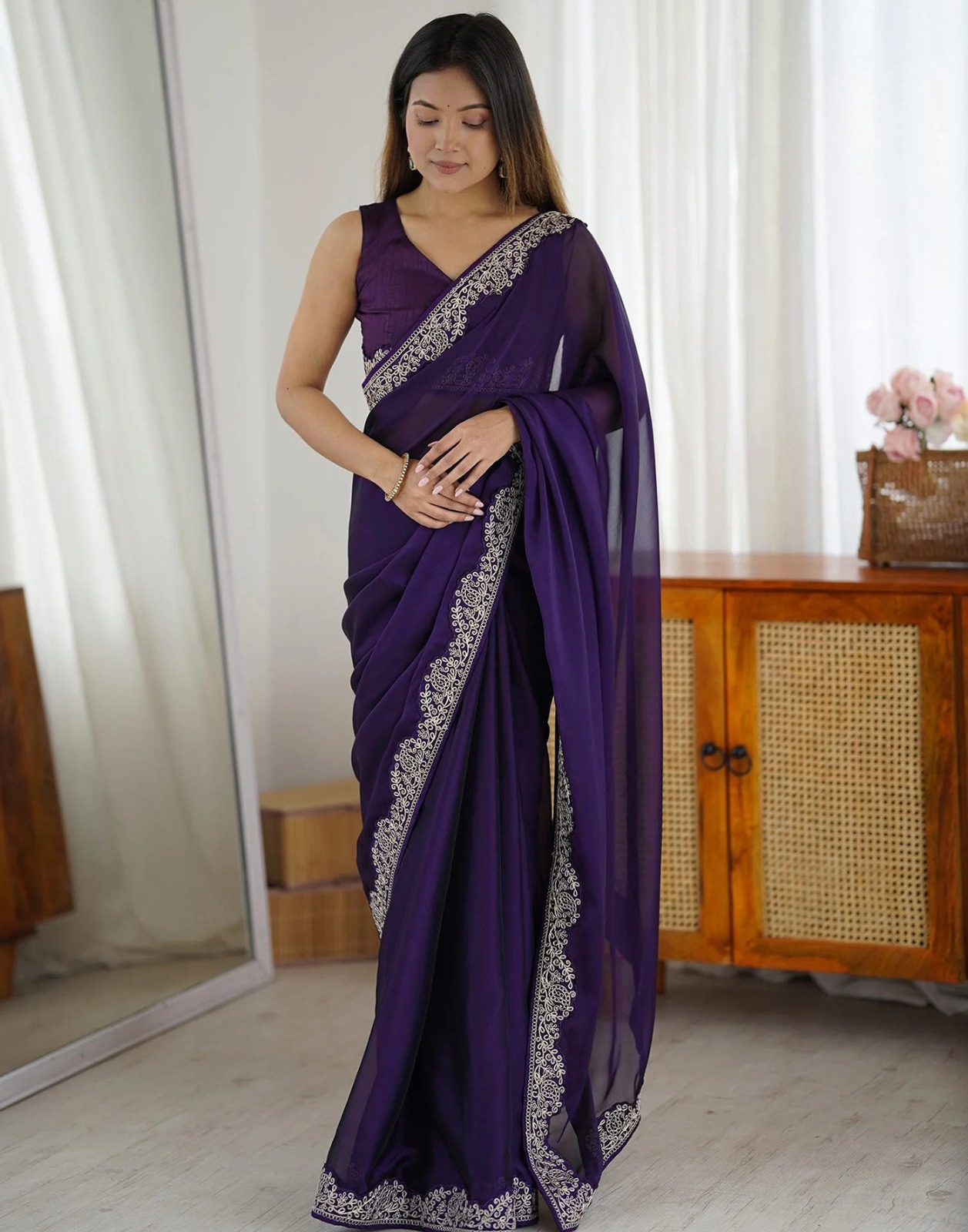
A silk-based outfit can echo the light-catching quality of pat while remaining a contemporary garment. The Purple Silk Anarkali Suit Set with Embroidery & Sequin Work suits festive evenings, although sequin work should be identified as a modern embellishment rather than confused with traditional counted Phulkari stitches. The Purple Rangoli Silk Saree with Lace Border gives another way to use a jewel-toned surface while keeping the styling distinct from a Punjabi Bagh.
For a more textile-focused appearance, the Purple Chanderi Silk Embroidered Kurta Set with Dupatta and Ivory Floral Embroidered Chanderi Silk Kurta Set Women can be balanced with plain footwear and a single embroidered accessory. The goal isn't to make every element look historical. The goal is to let one textile carry the visual conversation while the rest of the outfit provides space.
How should a Phulkari Bagh be stored and cared for?
A Phulkari Bagh should be stored flat or loosely rolled in breathable cotton, away from direct sunlight, moisture, perfume and rough jewellery. Correct storage prevents colour fading, stitch abrasion, permanent creases and insect damage.
- Check the care label first. Contemporary pieces may use silk, Chanderi, blended fabric, sequins or colour treatments that require professional dry cleaning.
- Avoid routine machine washing. Agitation can pull counted stitches, distort the ground and create snags around dense embroidery.
- Use a clean cotton cover. Plastic traps humidity, while unbleached cotton allows airflow and reduces contact with dust.
- Refold periodically. Change the fold every few months so a sharp crease doesn't weaken one line of embroidery.
- Keep weight off the textile. Heavy boxes placed on a folded Bagh can flatten raised stitches and make creases harder to remove.
- Test colour before any spot treatment. Silk floss and dyed grounds can bleed or transfer when exposed to water, detergent or solvents.
For an older or valuable Bagh, conservation cleaning is safer than home treatment. A textile conservator can examine loose threads, fragile khaddar, previous repairs and unstable dyes before recommending cleaning or mounting. Never iron directly over raised embroidery; if pressing is essential, use professional advice and a protective cloth with the lowest suitable heat.
Why the Bagh still matters beyond decoration
The Phulkari Bagh still matters because it preserves a Punjabi way of turning domestic skill into visual language. Every filled field reflects decisions about colour, counting, rhythm, family memory and intended use.
Modern manufacturing has made floral embroidery more accessible, but accessibility can blur important differences between hand-counted work, machine embroidery, printed motifs and sequin embellishment. Naming those differences doesn't diminish contemporary fashion. It gives wearers a clearer basis for choosing, styling and caring for garments.
When a Bagh is understood as a textile garden rather than a vague synonym for any embroidered fabric, its history becomes easier to see. The cloth carries Punjab's agricultural imagination, women's creative labour, wedding exchange, devotional expression and the changing relationship between heritage and dress. That is the enduring meaning held inside its dense, luminous surface.
Questions Readers Ask About the Punjabi Phulkari Bagh
What does Bagh mean in Phulkari embroidery?
Bagh means "garden" in Punjabi and refers to a Phulkari textile with dense, near-total embroidery coverage. The filled surface creates the impression of a garden made from silk-floss stitches rather than scattered floral decoration.
What is the difference between Phulkari and a Phulkari Bagh?
Phulkari is the wider Punjabi tradition of flower embroidery, while a Bagh is a heavily embroidered form within that tradition. A Bagh usually leaves very little of the ground fabric visible because its motifs and colour fields are closely packed.
Which fabric is traditionally used for a Phulkari Bagh?
Traditional Baghs commonly use cotton khaddar as the ground fabric and untwisted silk floss called pat for embroidery. Contemporary pieces may use Chanderi, silk, chiffon, blends or synthetic fabrics, so the textile label should be checked rather than assumed.
What motifs are common in a Punjabi Bagh?
Common motifs include stylised flowers, leaves, wheat forms, diamonds, birds and repeating geometric borders. Their meanings vary, but many are associated with fertility, prosperity, agricultural abundance, beauty or auspicious celebration.
Can a Phulkari Bagh be worn with a modern outfit?
A Phulkari Bagh can be worn with a modern outfit by pairing its dense embroidery with a plain kurta, sari, lehenga or salwar suit. Keeping the remaining accessories simple allows the textile's colour, stitch direction and surface coverage to remain visible.
How should an embroidered Bagh dupatta be washed?
An embroidered Bagh dupatta should not be machine washed unless its care label specifically permits it. Store it in breathable cotton, avoid direct sunlight and consult a professional cleaner or textile conservator before treating stains or antique handwork.




