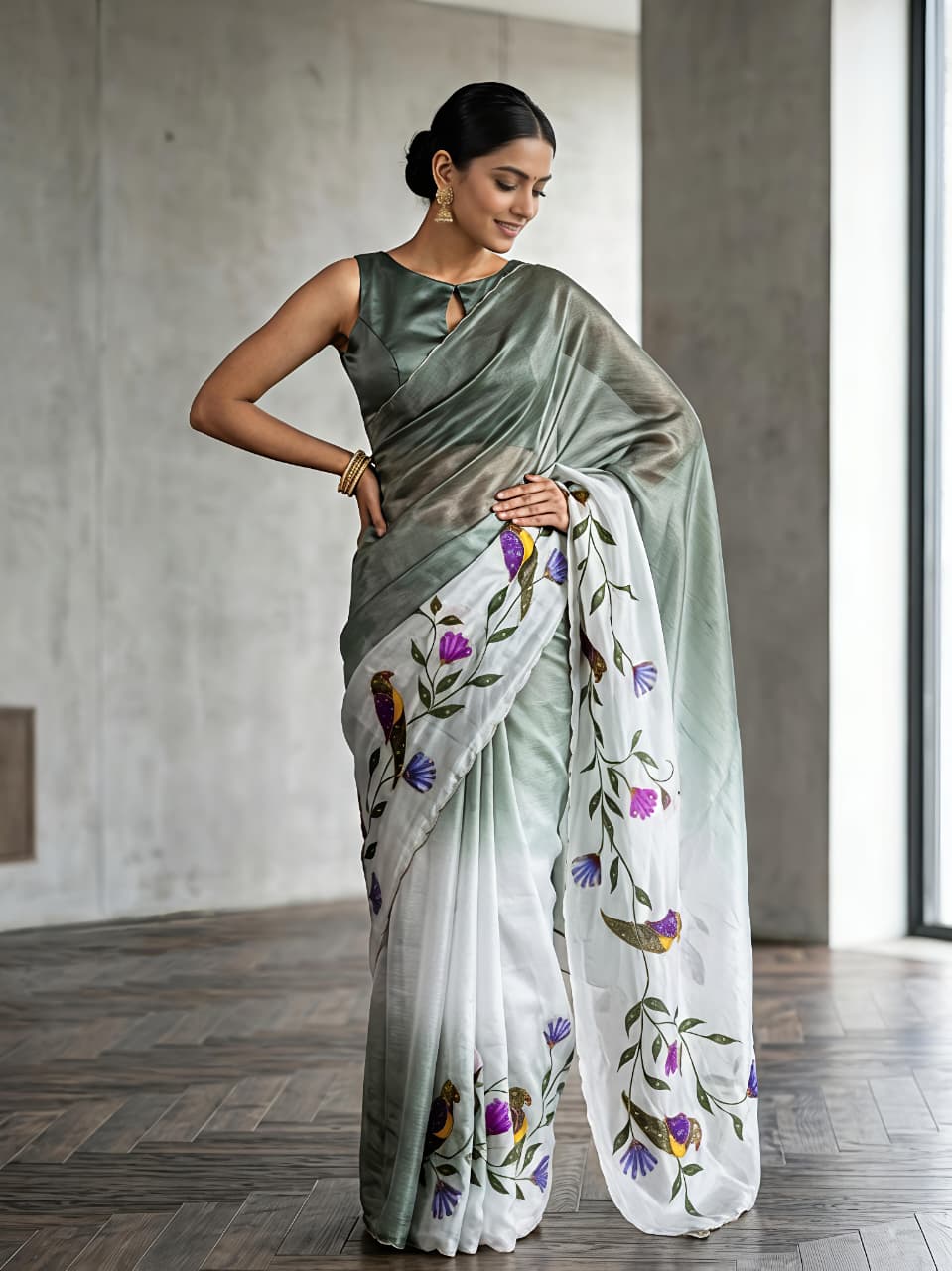
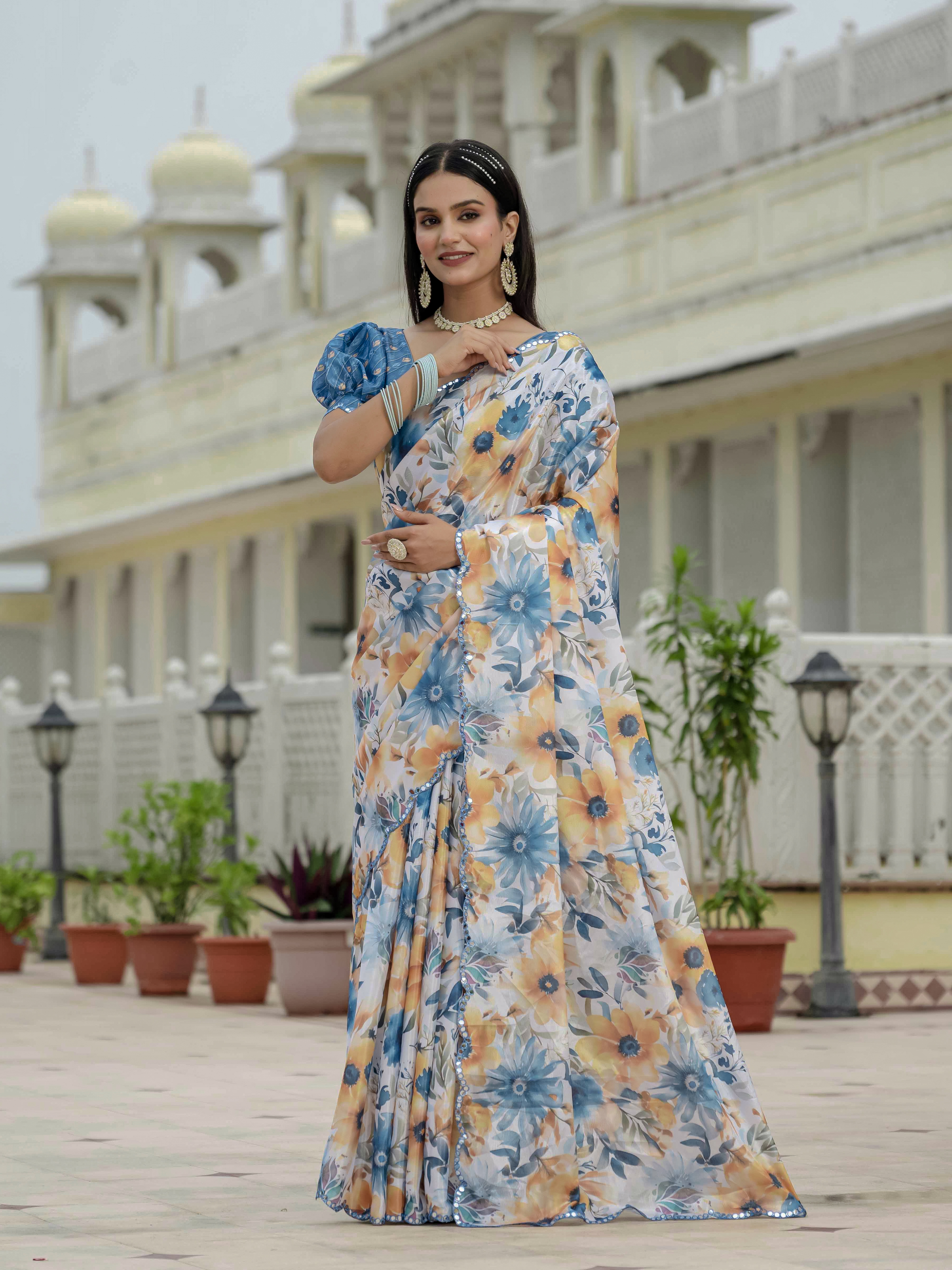
Varanasi Wedding Guest Fashion becomes much easier when you treat Banarasi silk as a design decision rather than simply a festive fabric. A Banarasi saree, suit or lehenga can suit a daytime Haldi ceremony, formal wedding pheras or an evening reception, but the right choice depends on weave weight, colour, silhouette, embellishment and movement.
Banarasi silk is associated with Varanasi, also called Banaras, and is recognised for figured designs woven with silk and often zari. Traditional motifs include butis, jaal patterns, flowers, kalga and bel. Modern Banarasi outfits may use pure silk, silk blends, lighter woven fabrics or Banarasi-inspired jacquards, so checking the fabric description matters before buying.
Varanasi Wedding Guest Fashion for Every Wedding Ceremony
Choose lighter colours and breathable fabrics for daytime ceremonies, richer colours and more zari for the wedding ceremony, and a structured or shimmer-led outfit for an evening reception.
Indian weddings often involve several dress codes within two or three days. A single heavy lehenga may look beautiful but become impractical when you need to sit on the floor, walk between venues or attend events in warm weather. Planning by ceremony prevents overdressing at a Haldi function and underdressing at a formal reception.
Varanasi Wedding Guest Fashion for Haldi and mehendi
Yellow, ivory, lime, peach, coral and fresh pink work especially well for Haldi and mehendi celebrations. A lightweight Banarasi silk suit, short kurta with a sharara, or simple lehenga allows easier movement than a densely embellished skirt. Woven motifs, thread embroidery and restrained zari are more practical than heavy sequins that can catch on seating and jewellery.
A yellow or green base can be paired with a contrasting dupatta in pink, orange or magenta. For a daytime garden venue, keep the blouse or kurta neckline comfortable and choose sandals with a secure strap. Haldi Lehengas Under 5500 is an useful collection reference for comparing cheerful colours and lighter festive silhouettes without treating every Haldi outfit as a bridal look.
Varanasi Wedding Guest Fashion for pheras and the reception
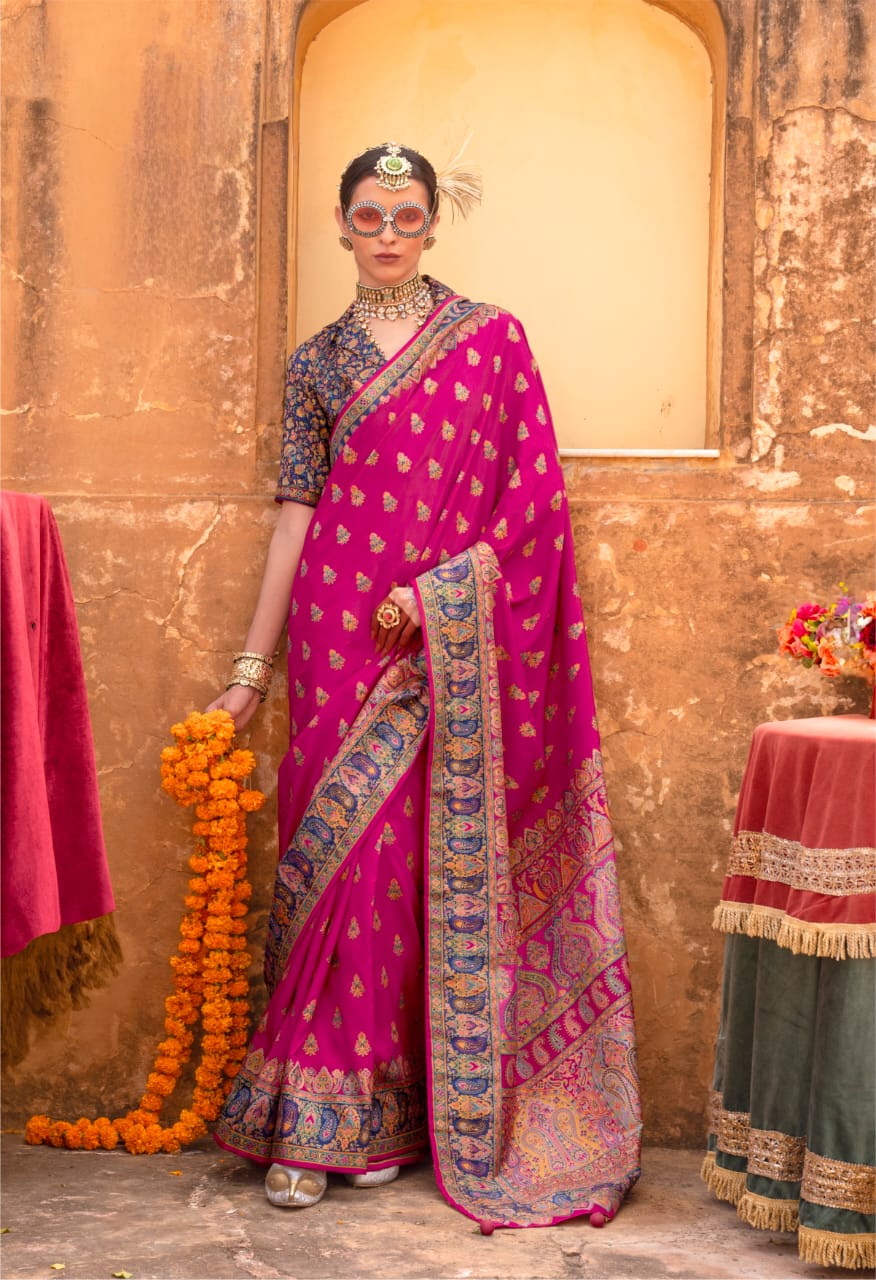
Deep red, rani pink, wine, emerald, royal blue and purple provide enough visual richness for wedding pheras without requiring bridal-level embellishment. A Banarasi saree with a defined zari border, a silk suit with a dupatta, or a full lehenga with controlled embroidery suits a time-honoured mandap setting.
Guests should avoid copying the bride's exact colour, especially if the family has announced a bridal palette. A warm rose, plum, teal or antique-gold alternative can retain the festive feeling while keeping the bride visually distinct. Ask about colour customs when attending a regional wedding because red, yellow, white and green may carry different significance across communities.
Evening receptions and sangeet events suit jewel tones, metallic accents, reflective zari and sculpted silhouettes. A Banarasi lehenga with a streamlined blouse, a pre-draped saree or an embellished suit provides movement for photographs and dancing. A lighter dupatta pinned at one shoulder is generally easier to manage than a heavily layered drape.
Varanasi Wedding Guest Fashion and the Banarasi Silk Weave
Banarasi silk stands out because decorative motifs are woven into the textile, while many comparable festive fabrics receive their surface design mainly through printing or later embroidery.
Weaving technique changes how a garment catches light, how its motifs sit on the body and how it behaves after folding. Zari may be real metallic yarn, tested imitation zari or synthetic metallic thread. A fabric description should clarify the fibre content and the type of zari rather than relying on the word "Banarasi" alone.
Varanasi Wedding Guest Fashion compared with Kanjeevaram and Chanderi
Banarasi silk commonly has ornate floral, geometric or jaal motifs and a pronounced festive sheen. Kanjeevaram is traditionally associated with South Indian silk weaving, strong contrast borders and a heavier body, while Chanderi is known for a lighter, more translucent hand and an airy appearance. All three can suit wedding guests, but they create different levels of structure and warmth.
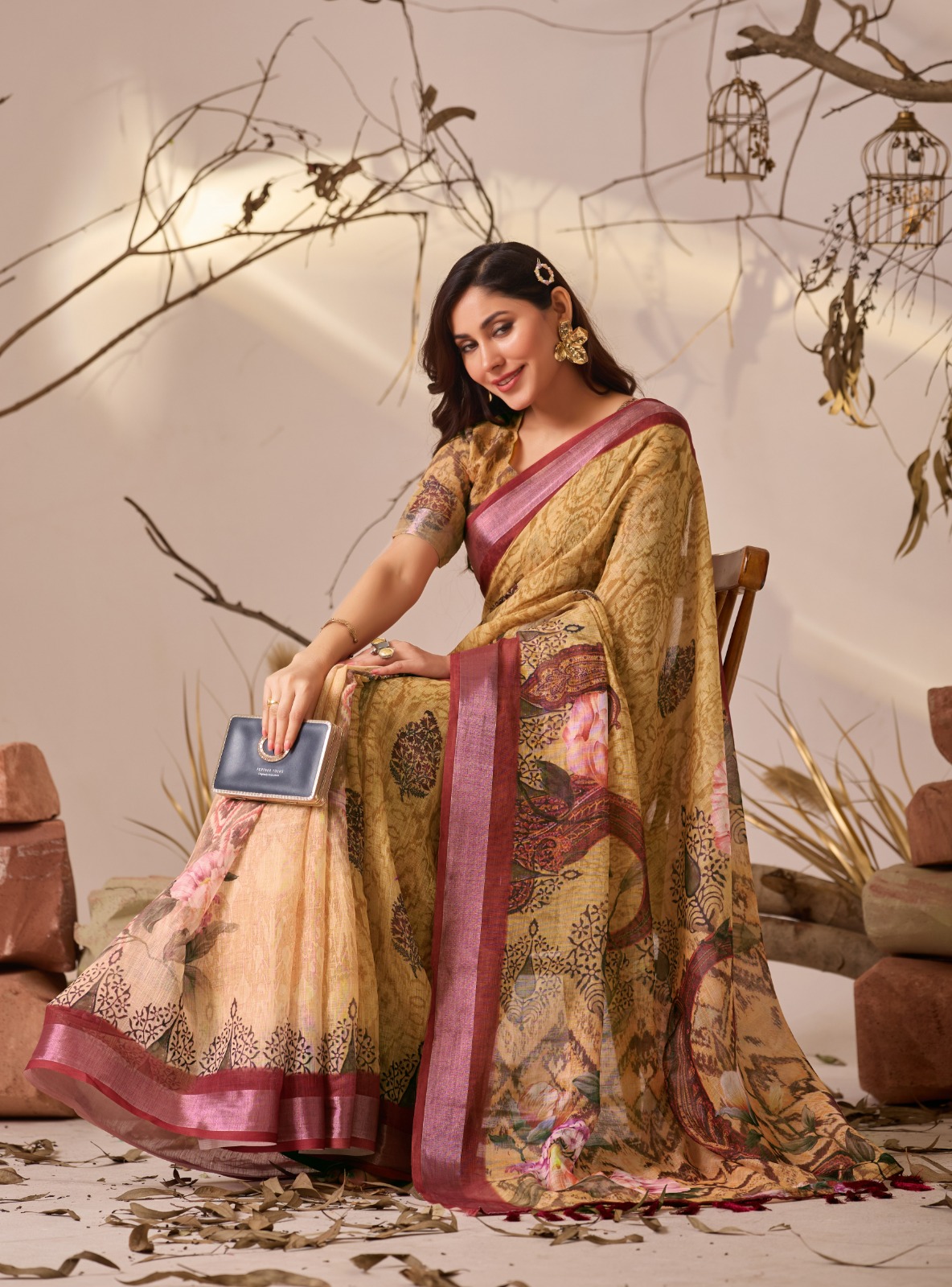
A Banarasi silk lehenga usually holds its flare more firmly than a soft georgette skirt. A Chanderi suit may feel more comfortable at a daytime ceremony. A Kanjeevaram saree can make a powerful statement at a formal wedding, but its weight and pleat structure deserve consideration if you'll travel or stand for long periods.
Varanasi Wedding Guest Fashion and fabric quality checks
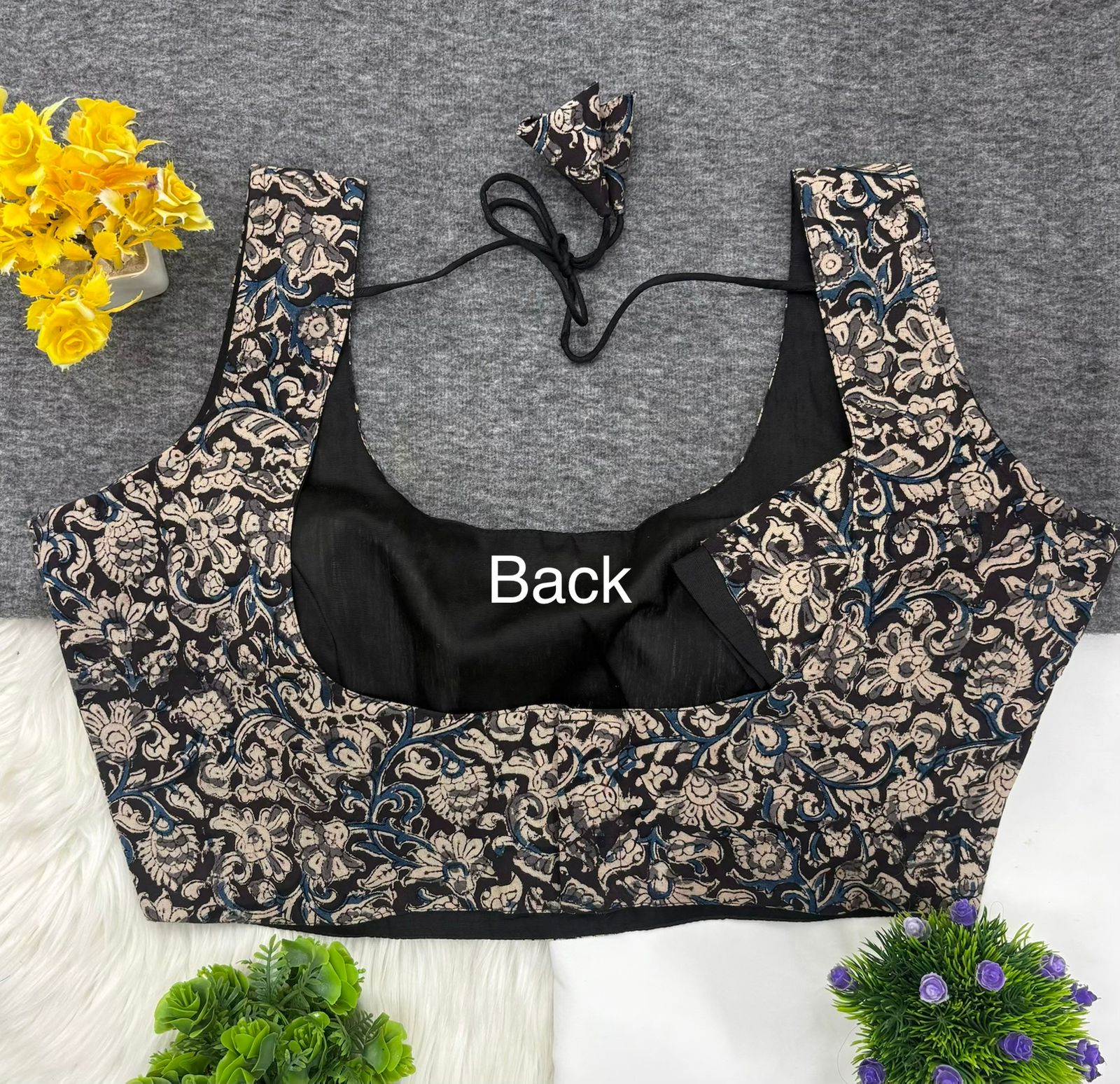
Check the fibre composition, lining, inner waistband, hem finishing and return measurements before ordering a Banarasi outfit online. Look for close photographs of the weave, not only styled images, and compare the stated garment weight when the information is available.
- Motif clarity: Woven motifs should appear integrated into the surface rather than sitting like a flat print.
- Zari security: Loose metallic threads, rough edges and excessive snagging suggest weak finishing.
- Skirt construction: A lehenga should have a stable waistband, secure hooks or ties and enough flare for comfortable walking.
- Lining: A breathable lining reduces friction and helps the garment hang evenly.
- Colour accuracy: Screens can shift magenta, red and blue, so read the written colour description and review return conditions.
Varanasi Wedding Guest Fashion by Silhouette and Fit
The best silhouette is the one that matches the ceremony's formality while allowing you to sit, walk, eat and move comfortably for several hours.
Lehengas suit guests who want a defined waist, a full skirt and a coordinated blouse-and-dupatta look. Sarees offer more flexibility because the drape can be adjusted and the blouse can be reused with other sarees. Suits and sharara sets are practical for guests who prefer coverage, easy movement and a less structured waistline.
Varanasi Wedding Guest Fashion with a Banarasi lehenga
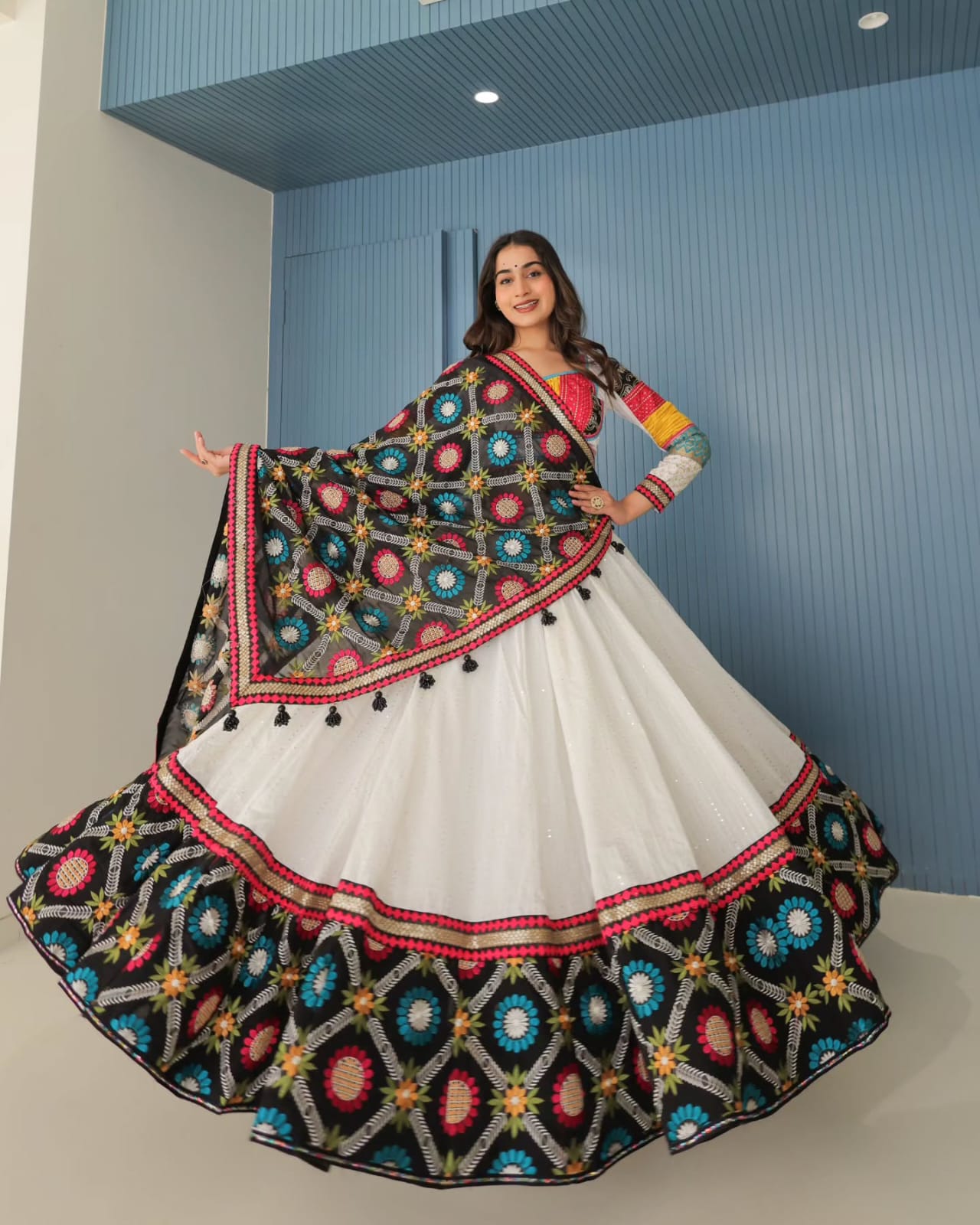
Select a Banarasi lehenga with enough flare for walking but not so much volume that the skirt becomes difficult in crowded spaces. A four- to six-metre skirt flare is often visually full without becoming unwieldy, although the ideal measurement depends on height, fabric stiffness and personal preference.
For petite frames, a shorter blouse length, vertical motif placement and a dupatta worn in a clean line can prevent the outfit from looking overwhelming. Taller guests can carry wider borders and longer dupattas, but the hem should remain clear of the floor by roughly one to two centimetres when worn with the intended footwear.
Silk Lehengas Under 3000 can help with comparing simpler festive constructions, while Pink Lehengas Under 4000 with 50% Discount offers a focused way to assess pink palettes. Bridesmaid Lehengas Under 5500 is another useful reference when looking for coordinated colour families without choosing an outfit that resembles a bridal lehenga too closely.
Varanasi Wedding Guest Fashion with a saree or suit
A Banarasi saree works well when the wedding is formal, the venue has a heritage setting or you already know how to manage pleats. A pre-stitched or pre-draped saree may be more practical for travel, dancing and quick changes, but check whether the waist fastening fits securely when seated.
A Banarasi suit is often the safest option for a long daytime event because the kameez and trousers or palazzo provide coverage and easy mobility. A straight suit looks polished with a defined dupatta border, while a sharara suit adds volume below the knee without requiring a full circular skirt.
Varanasi Wedding Guest Fashion with Jewellery and Accessories
Balance one highly decorative element with simpler accessories, makeup and footwear.
A zari-heavy lehenga already brings visual shine, so a small clutch, medium-sized earrings and a clean hairstyle may create a more elegant result than adding a necklace, maang tikka, bangles and a large embellished bag together. A quieter Banarasi saree can support stronger jewellery, such as jhumkas with a layered necklace or a classic waist belt.
Varanasi Wedding Guest Fashion and colour coordination
Use intentional contrast instead of matching every accessory exactly. Pink and green, blue and gold, purple and yellow, or coral and teal can look festive without appearing over-coordinated. Metallic gold usually complements warm reds, oranges and pinks, while silver or polished kundan-style accents can sharpen blues, lilacs and cool greens.
A tonal dupatta creates a refined look, while a contrasting dupatta can separate the blouse from the skirt and make the outfit appear more layered. Choose one repeated colour in the earrings, footwear or clutch so the contrast feels connected.
Varanasi Wedding Guest Fashion and practical footwear
Choose jewellery according to the neckline and sleeve shape. A high-neck blouse may need earrings rather than a short necklace, while a deep or square neckline can support a pendant or collar necklace. Bangles should not snag delicate zari, and oversized rings can catch in dupatta embroidery.
Block heels, embellished juttis and cushioned sandals are more practical than narrow stilettos for ceremonies involving stairs, grass or extended standing. Break in footwear at least two days before the wedding and carry blister plasters in the clutch. A secure shoe improves posture and prevents a carefully draped outfit from being stepped on.
Varanasi Wedding Guest Fashion for Different Body Shapes and Comfort Needs
Fit the garment to natural movement first, then use borders, motif scale and drape direction to shape the visual line.
Guests who prefer waist definition can choose a lehenga with a structured waistband and a blouse that ends near the natural waist. Guests who prefer a longer line may choose a straight suit, an open-front jacket or a saree with a narrow vertical border. A high-waisted skirt can lengthen the legs visually, while a broader border draws attention to the hem.
Fabric weight also affects comfort. Banarasi silk with dense zari can feel warm and substantial, especially under indoor lighting. Lighter silk blends, Chanderi and lined georgette can be more comfortable for daytime events. Net Lehengas Under 4500 with 51% Discount can be considered when a guest wants volume without the full weight of a densely woven silk skirt, although the lining should be checked carefully because rough net can irritate the skin.
Try sitting, walking up stairs, raising both arms and turning once before finalising alterations. A blouse that looks fitted while standing may feel restrictive during a meal. A dupatta that slips repeatedly can be secured with small fabric-covered pins placed beneath the shoulder seam.
Varanasi Wedding Guest Fashion Care, Packing and Rewearing
Store Banarasi garments folded in clean muslin, away from direct sunlight, moisture and unprotected metal.
Dry-clean silk garments when the care label requires it, and don't apply perfume, deodorant or hair spray directly to zari. Air the outfit after wearing it before folding it away. Refold a stored lehenga or saree every few months to prevent permanent crease lines, and keep heavy jewellery separate from the fabric to avoid snags.
For travel, place tissue or soft muslin between folded layers and pack the outfit in a breathable garment bag rather than sealed plastic for several days. Remove pins before storage, empty the blouse pockets and check the hem for dampness after an outdoor function. Steam from a distance or use a low-temperature iron on the reverse side only when the care instructions permit it.
Rewearing becomes easier when the main garment and accessories are not purchased as one inseparable set. A Banarasi blouse can work with a plain silk saree, a lehenga dupatta can refresh a simple suit, and a statement belt can change the shape of a familiar drape. Buying for at least two possible ceremonies usually gives better wardrobe value than choosing a highly specific one-time look.
Varanasi Wedding Guest Fashion Questions Worth Asking Before Buying
Before placing an order, confirm the fabric, lining, size chart, delivery timeframe, alteration allowance and return conditions.
Wedding shopping requires more than checking a colour photograph. Allow at least seven to ten days for minor alterations when possible, and allow additional time during peak wedding months. Measure the bust, waist, hips and preferred blouse length with a flexible tape, then compare those measurements with the garment's finished dimensions rather than relying only on a small, medium or large label.
Price also needs context. A lower-priced outfit may use a silk blend, lighter zari, simpler lining or less embroidery, while a higher-priced outfit may reflect pure silk, hand weaving or detailed finishing. Price alone doesn't prove authenticity, so fibre details, construction photographs and clear care information remain more useful checks.
Common Questions About Varanasi Wedding Guest Fashion
What should I wear as a guest to a Varanasi wedding?
A Banarasi saree, silk suit or Banarasi lehenga works well for a Varanasi wedding guest, depending on the ceremony and venue. Choose lighter colours and fabrics for Haldi or mehendi, richer zari details for pheras and jewel tones for an evening reception.
Is Banarasi silk suitable for a wedding guest lehenga?
Banarasi silk is suitable for a wedding guest lehenga when the skirt weight, lining and flare allow comfortable movement. Choose a lighter construction for daytime functions and reserve dense zari or heavier fabric for shorter evening events.
What is the difference between Banarasi silk and Kanjeevaram?
Banarasi silk is known for woven floral, geometric and jaal motifs with a distinctive zari-led sheen. Kanjeevaram is associated with South Indian silk weaving, heavier structure and strong contrast borders, so Kanjeevaram often feels more substantial than a lighter Banarasi garment.
Can I wear a Banarasi saree to a Haldi ceremony?
You can wear a Banarasi saree to a Haldi ceremony, but a lightweight saree in yellow, peach, green or pink is more practical than a heavy zari design. Choose washable or clearly care-labelled fabrics because turmeric and flower stains can be difficult to remove.
How do I choose a comfortable lehenga for a long wedding day?
Choose a breathable lining, secure waistband, manageable flare and hem that clears the floor with your footwear. Sit, walk and raise your arms during a fitting because comfort problems often appear only when the lehenga is in motion.
How should I store a Banarasi silk wedding outfit?
Store a Banarasi silk outfit clean and completely dry, folded in breathable muslin and away from direct sunlight. Refold the garment every few months, keep jewellery separate and follow the care label before steaming or dry-cleaning.