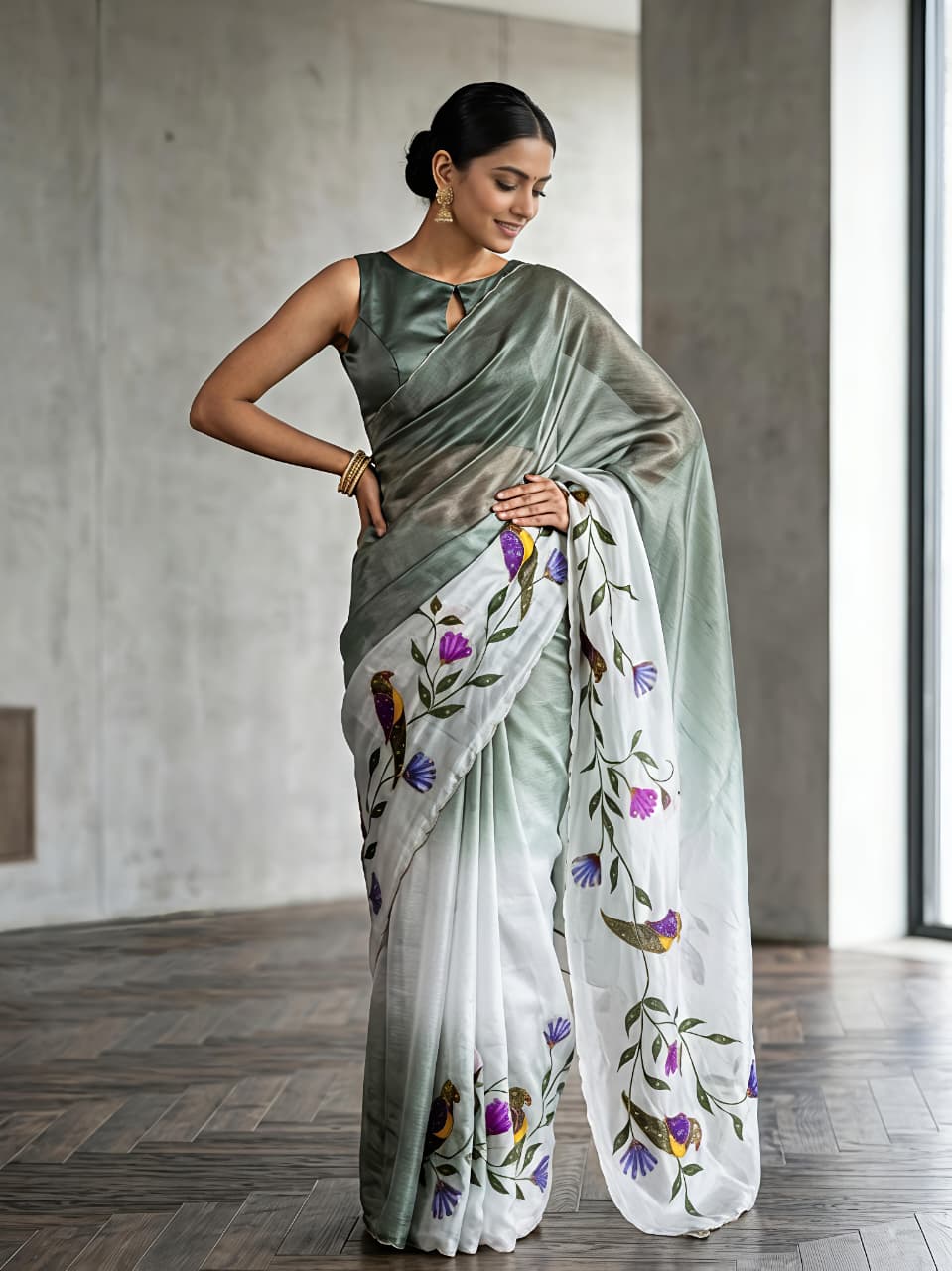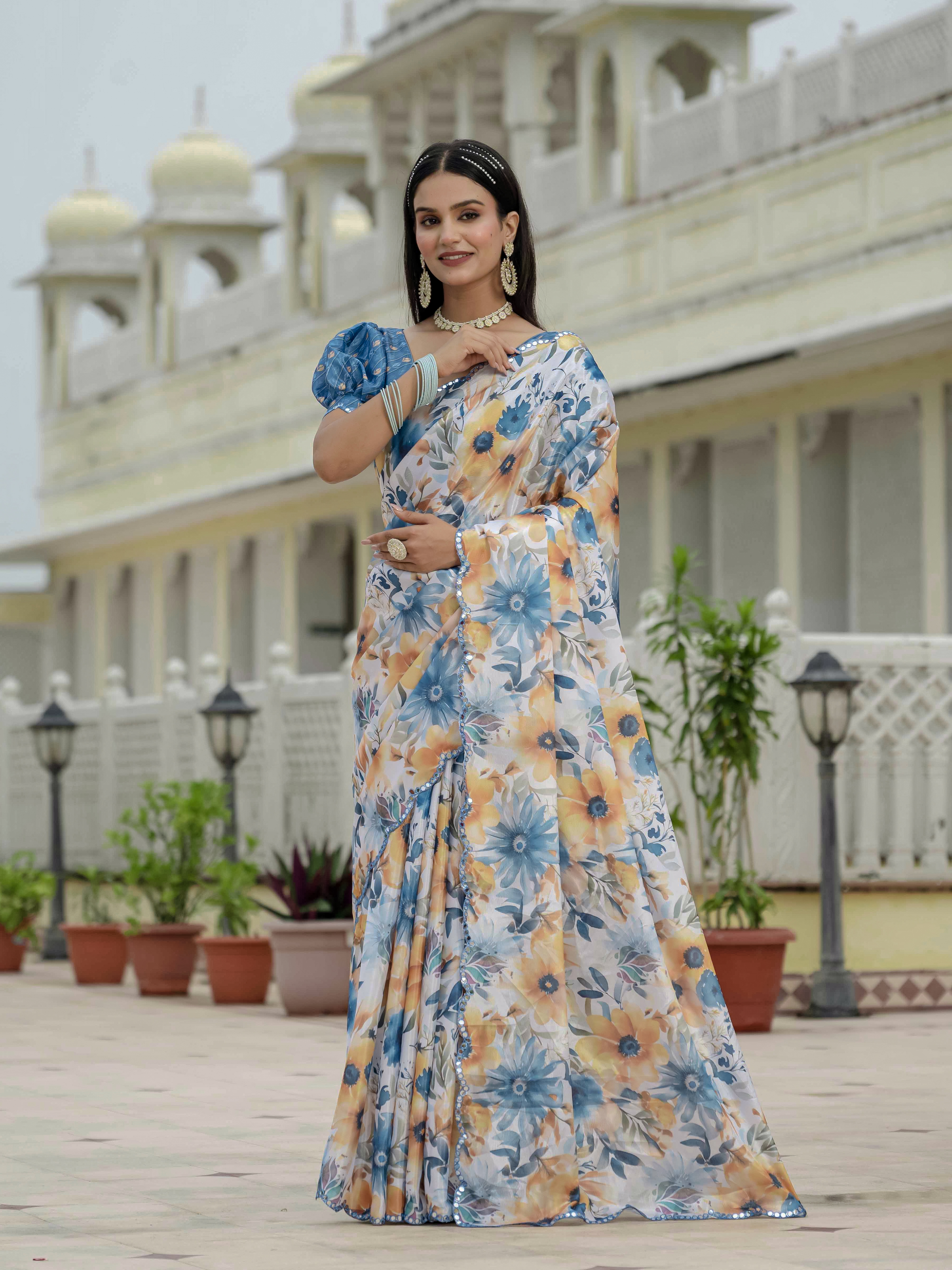
A Varamahalakshmi Vrata Saree Guide should help you choose more than a festive colour. The right saree must respect the devotional setting, remain secure through puja rituals, work with traditional jewellery and stay comfortable for several hours. Banarasi silk, soft silk, Kanjeevaram-inspired weaves, Chanderi and linen-cotton sarees can all create an appropriate look when their weight, border and blouse are chosen carefully.
Varamahalakshmi Vrata is a sacred festival observed by many Hindu women, especially in Karnataka, Andhra Pradesh, Telangana, Tamil Nadu and parts of Maharashtra. Women worship Goddess Lakshmi in the form of Varalakshmi and commonly wear a new or especially selected saree for the puja. Regional customs differ, so family instructions and a priest's guidance should take priority over general styling advice.
What should you look for in a Varamahalakshmi Vrata Saree Guide?
An useful Varamahalakshmi Vrata Saree Guide should evaluate fabric, colour, border, blouse fit, drape security and care requirements together. A saree that looks ceremonial but slips at the shoulder or feels too heavy during seated worship isn't a practical choice.
Silk traditional sarees remain popular because silk holds pleats well and gives the pallu enough structure to stay arranged during puja. Banarasi silk is especially suitable when you want visible zari, a polished fall and a formal appearance without adding a separate dupatta or overlay. Soft silk is often easier to wear for long periods than very stiff, heavily woven silk.
A gold zari border, floral weave, temple-inspired motif or rich jewel tone can provide festive significance without making the outfit difficult to manage. A border between 2 and 5 inches usually looks balanced for a traditional puja saree. A wider zari border creates a more ceremonial appearance, while a narrow border feels lighter and can suit a simple traditional outfit.
Modesty and movement matter as much as colour. A saree with a secure pallu, a blouse with comfortable sleeve coverage and a fall that doesn't drag across the floor will serve you better than an elaborate outfit that needs constant adjustment.
Which fabrics suit a Varamahalakshmi Vrata Saree Guide?
Banarasi silk, soft silk, Kanjeevaram, Chanderi and linen-cotton are practical choices for Varamahalakshmi Vrata, with each fabric offering a different balance of structure, shine, weight and breathability.
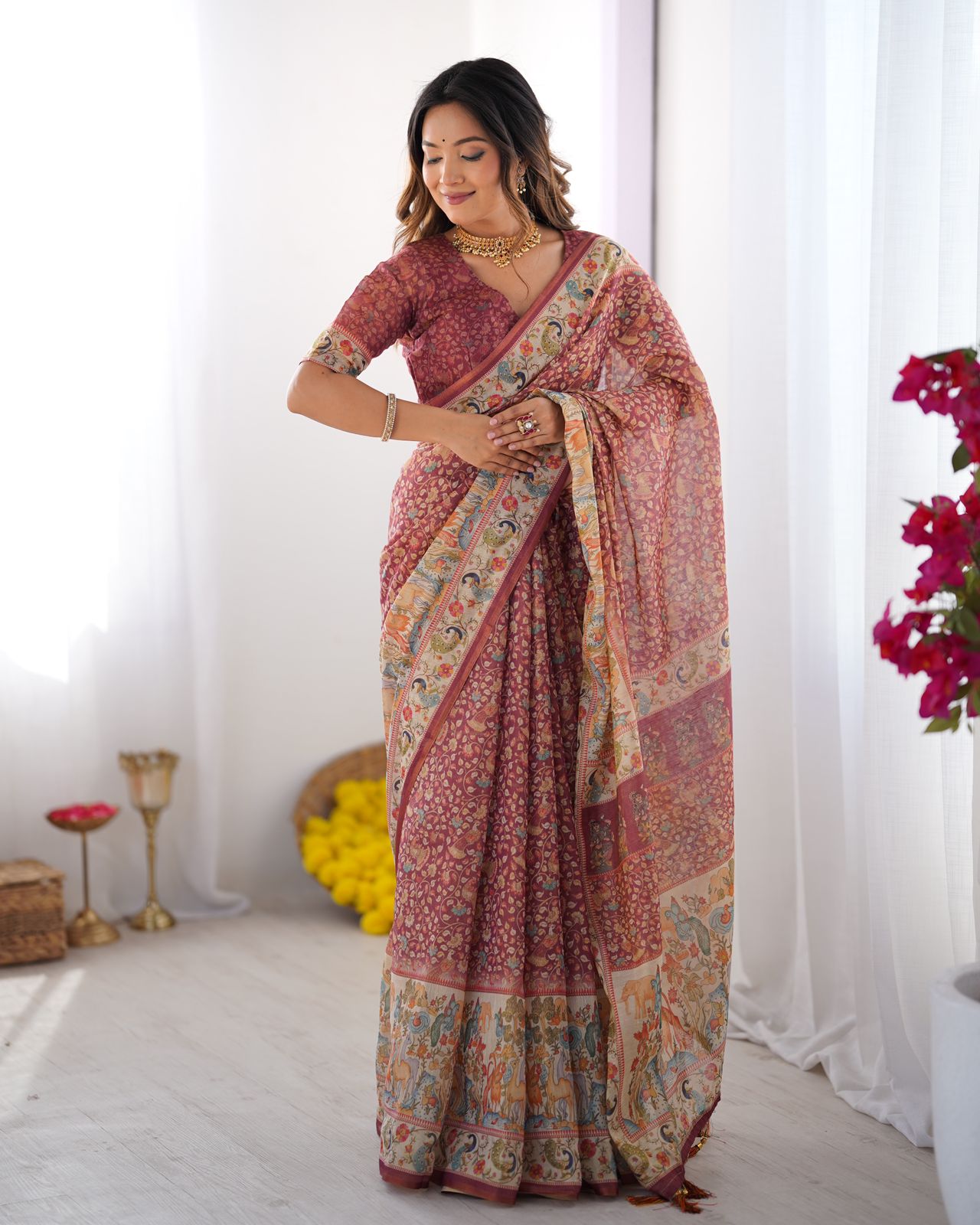
Banarasi silk and soft silk
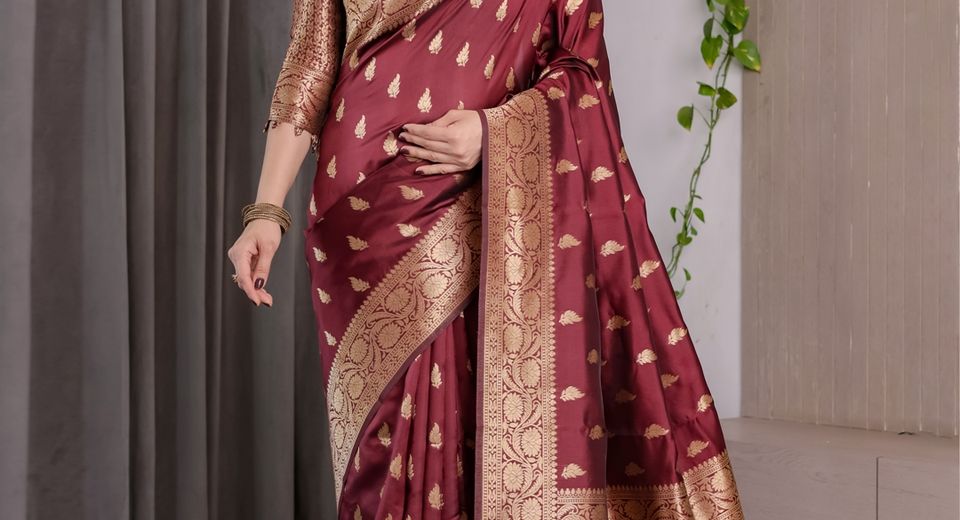
Banarasi silk works well when you want zari visibility, a formal finish and strong pleat definition. The Maroon Banarasi Soft Silk Saree with Golden Zari Border illustrates a classic combination: deep maroon provides visual richness, while the golden zari border frames the lower edge and pallu.
A floral border adds a softer interpretation of festive silk. The Red Banarasi Soft Silk Saree With Golden Zari Floral Border suits women who want a traditional red base with a decorative edge rather than a plain metallic border. Red and maroon coordinate naturally with gold-toned jewellery, temple necklaces and traditional bangles.
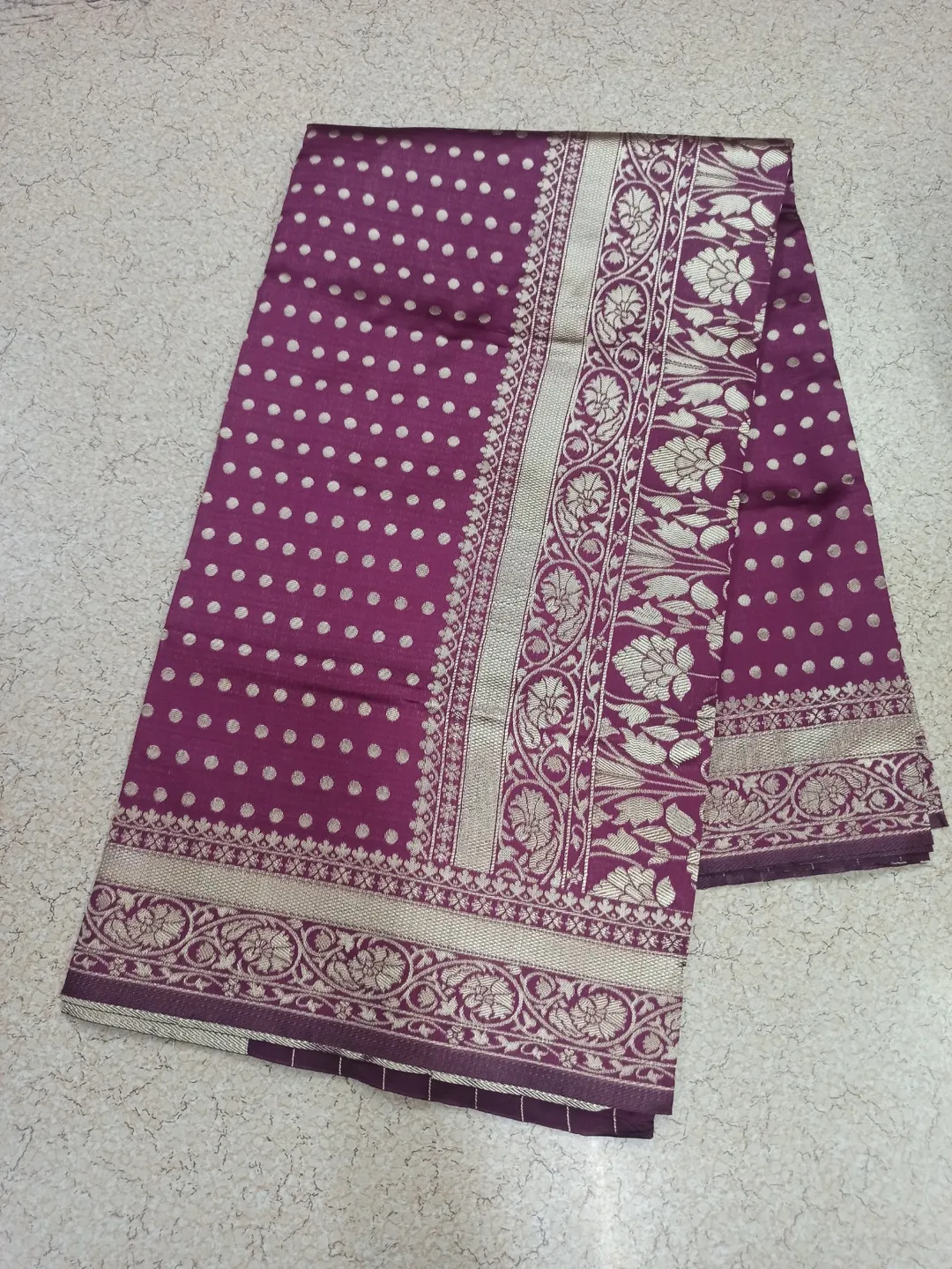
The Maroon Banarasi Silk Saree With Floral Jacquard Zari Border offers another option for women who prefer woven floral detail. Jacquard work creates surface interest without requiring a separate printed layer, making the saree appropriate for a formal family puja.
Chanderi and lightweight sarees
Chanderi is useful for warm-weather puja because the fabric is generally light and has a subtle sheen. Chanderi can look ceremonial with zari detailing, but it may require careful pinning because lightweight fabrics can shift more easily than soft silk.
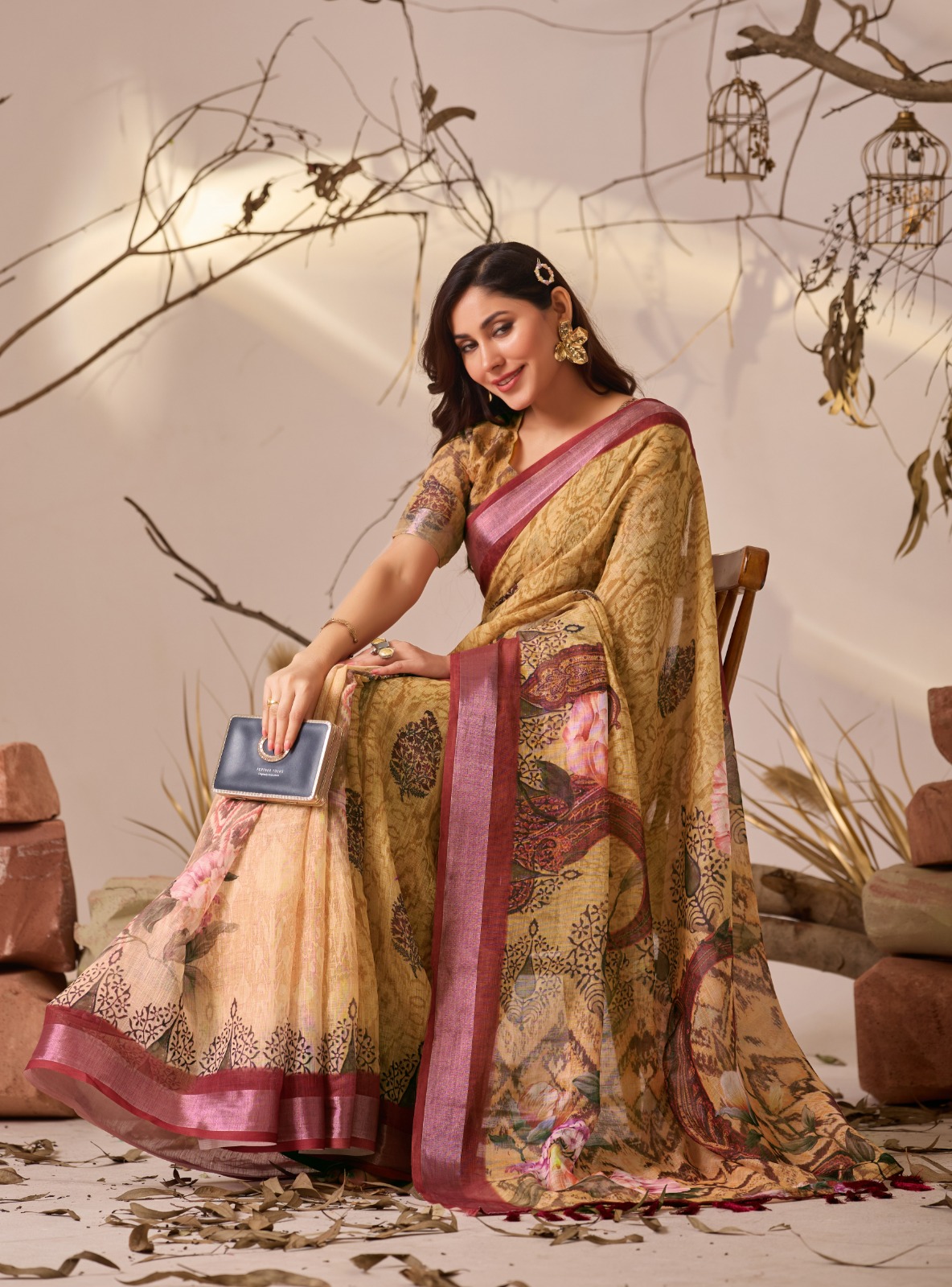
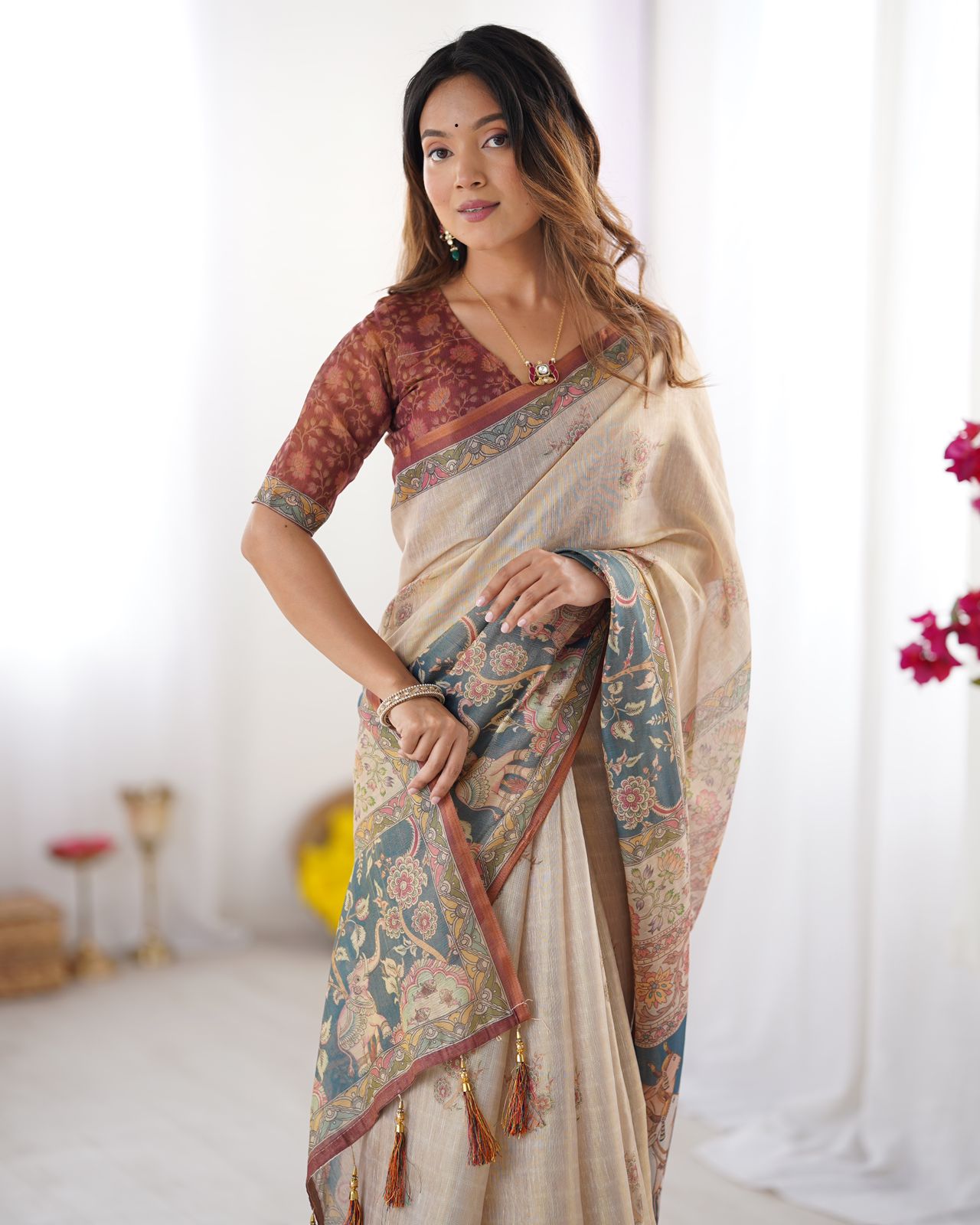
Linen-cotton gives another breathable option for women who prefer a simple traditional look. The Pastel Linen Cotton Floral Print Saree with Designer Blouse shows how floral detail and a coordinated blouse can create a festive appearance without the weight of a full silk saree.
How can you judge saree weight before buying?
A saree that feels manageable over one shoulder for at least 20 minutes is more likely to remain comfortable through a longer puja. Check the approximate fabric weight, border stiffness and blouse length before buying online. Zari-heavy pallu sections can pull backward, so a concealed shoulder pin and a well-fitted blouse are useful safeguards.
Which colours does a Varamahalakshmi Vrata Saree Guide recommend?
Red, maroon, magenta, pink, green, yellow and gold are commonly chosen for Varamahalakshmi Vrata because they create a festive and auspicious visual palette, but no single colour is universally mandatory. Family tradition, regional custom and personal comfort should guide the final choice.
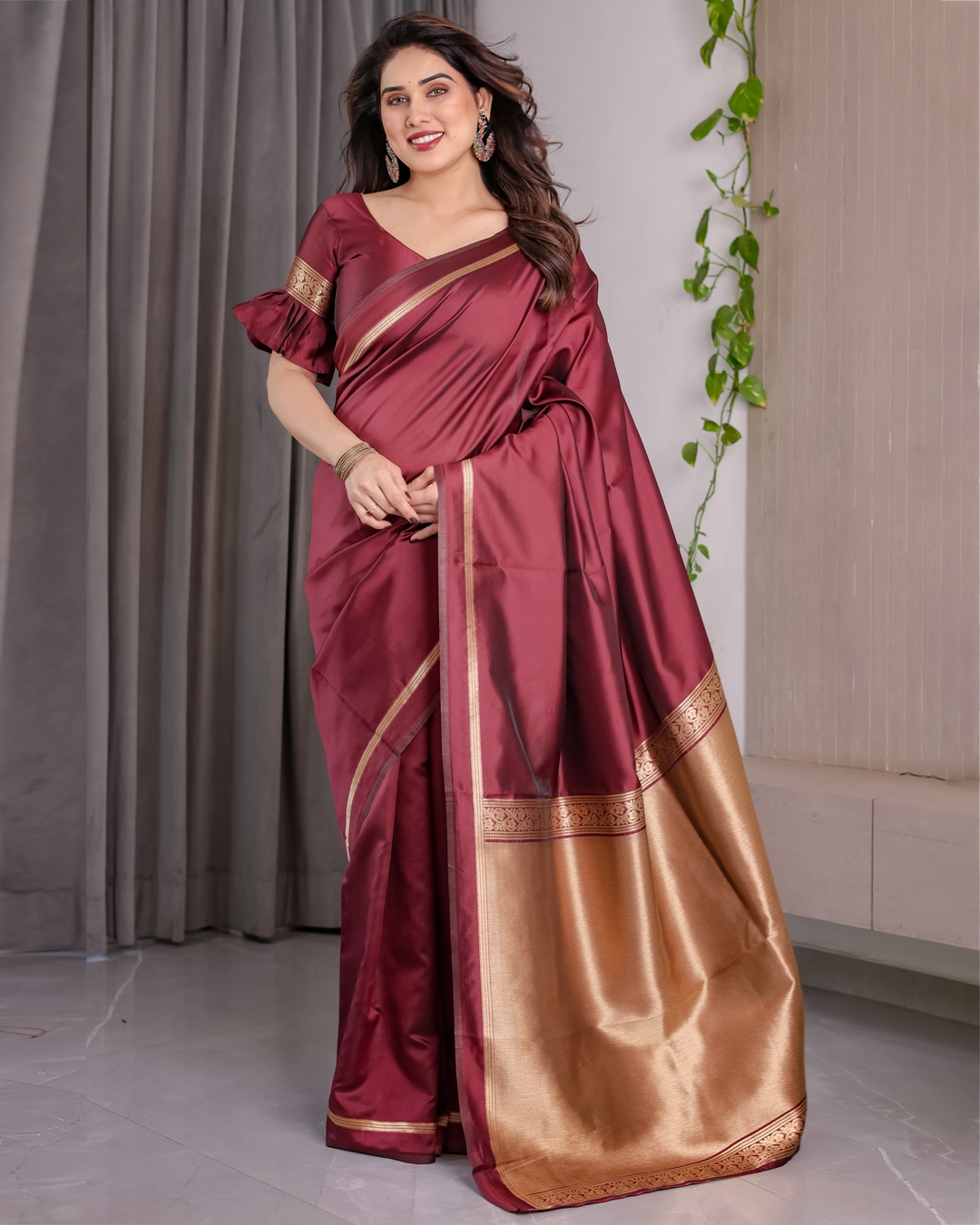
Red communicates ceremony and pairs naturally with antique gold jewellery. The Red Banarasi Soft Silk Saree With Golden Zari Floral Border is an example of a high-contrast festive combination. Maroon feels deeper and more understated while retaining the richness expected from a traditional puja outfit.
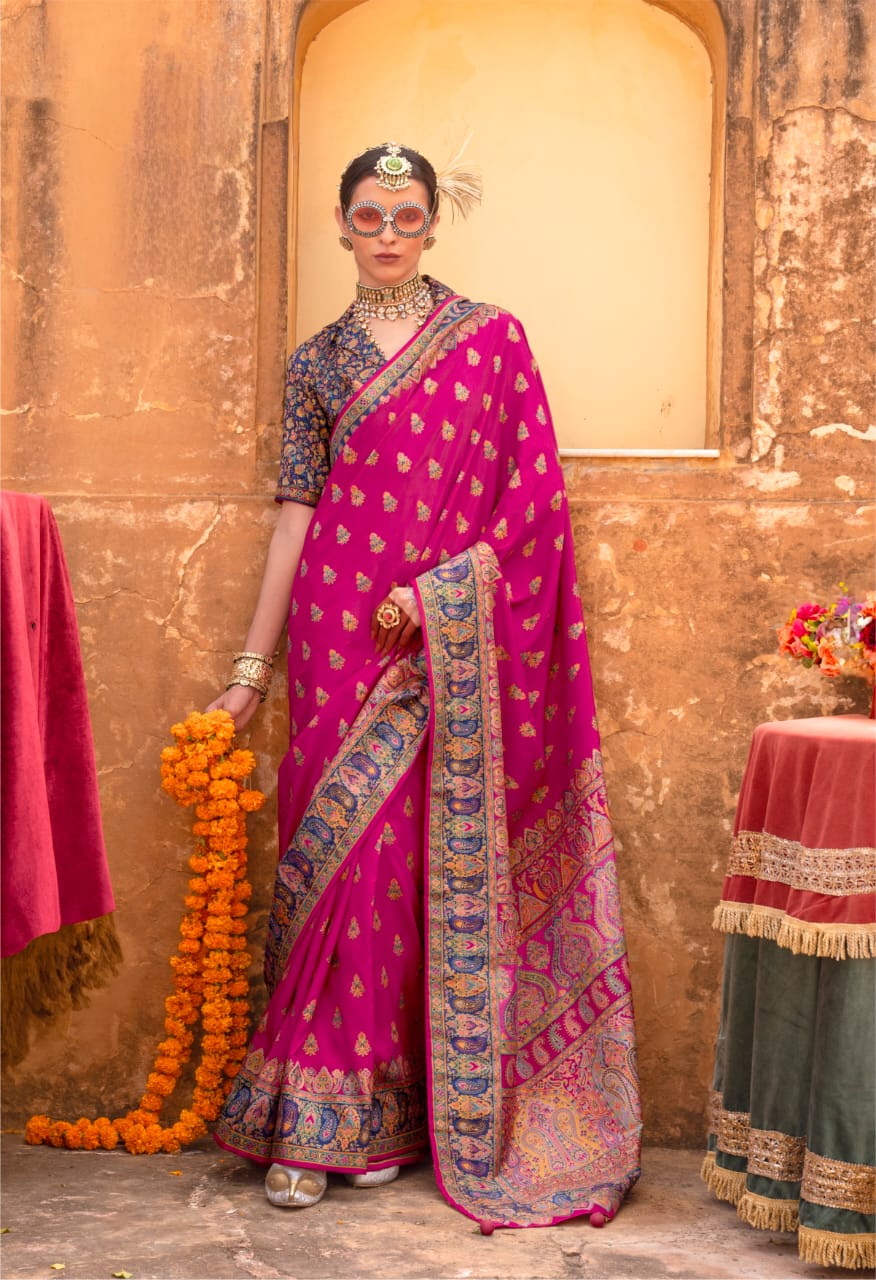
Magenta and pink create a brighter look without moving away from a traditional palette. The Magenta Banarasi Soft Silk Zari Saree | Varnavi Online can be styled with a gold blouse, a contrasting green blouse or a blouse matching the saree for a more composed appearance.
Green and yellow are often associated with prosperity, freshness and festive symbolism, although their meaning varies between families. Pastel shades can also work when the saree includes a defined border, zari detail or traditional floral print that gives the outfit enough visual structure.
Women comparing options online may find useful colour groupings in Pink Georgette Sarees and Red Banarasi Silk Sarees for Weddings Under 1100. A wedding-focused collection can still provide ideas for a traditional festival, but check the weave, lining and embellishment before assuming that a saree marketed for weddings will be comfortable for puja.
Very dark colours, plain black outfits or heavily distressed fashion finishes may not match every family's puja convention. The issue isn't a universal fashion rule; it's a question of household practice. Ask whether your family follows a preferred colour before purchasing a saree specifically for the vrata.
How does a Varamahalakshmi Vrata Saree Guide help with blouse selection?
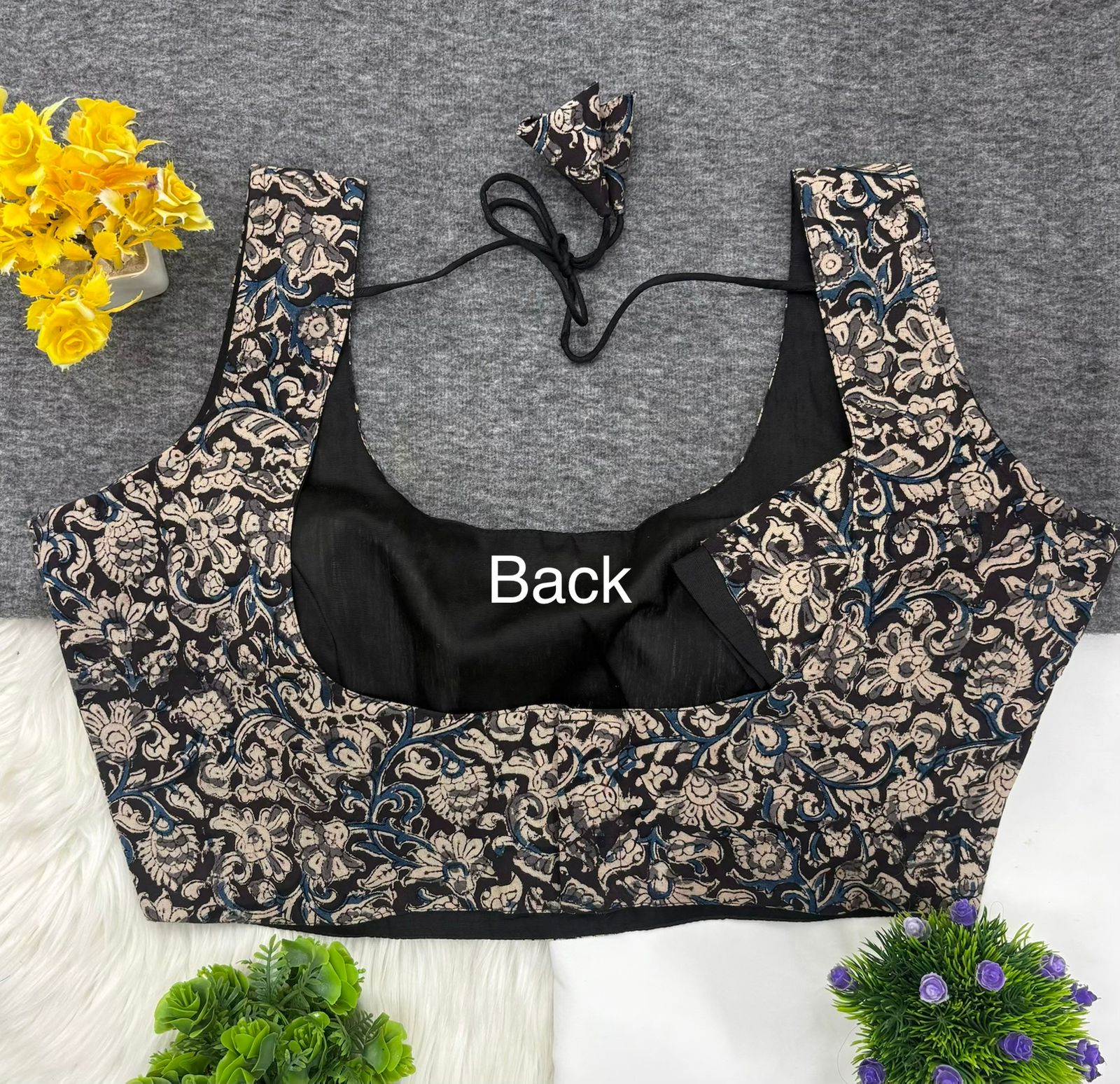
The best blouse for Varamahalakshmi Vrata brings a secure fit, comfortable sleeve coverage and enough support for the saree pleats and pallu. A blouse that's too loose can cause the saree to slip, while a blouse that's too tight becomes uncomfortable during long rituals.

Gold, red, maroon, green and saree-matched blouses are reliable choices. A gold blouse coordinates with zari, but a matching blouse often creates a more elegant silhouette when the saree already has a prominent border. A contrast blouse works best when one of its colours appears in the saree's floral motif or woven detail.
- Neckline: A round, square or modest boat neckline works well with temple jewellery and remains suitable for a devotional setting.
- Sleeves: Elbow-length or short sleeves provide coverage and make it easier to pin the saree securely.
- Back design: A medium or closed back is practical for a family puja and supports a necklace without competing with it.
- Fastening: Hooks, a firm lining and properly placed darts reduce movement during repeated standing and sitting.
- Blouse length: The lower edge should meet the saree waist comfortably without exposing gaps when you bend.
A designer blouse isn't automatically more suitable than a simple blouse. Embroidery, sequins and deep backs can look attractive for receptions but may feel excessive or uncomfortable during worship. A clean sleeve, neat piping and a well-matched fabric often create a more intentional traditional result.
What draping advice belongs in a Varamahalakshmi Vrata Saree Guide?
The safest Varamahalakshmi Vrata drape has firm waist pleats, a pinned shoulder pallu and enough ease to sit cross-legged or on a low seat. Comfort comes from correct measurements and pin placement rather than from adding more accessories.

- Wear a supportive petticoat or saree shapewear in a colour close to the saree.
- Place the waist fastening firmly at the natural waist without tightening it enough to restrict breathing.
- Create five to seven front pleats of similar width and secure them just above the waistline.
- Arrange the pallu with enough length to cover the blouse and shoulder comfortably.
- Use one concealed pin at the shoulder and one small pin near the waist if the fabric is slippery.
- Walk, sit and raise both arms before leaving home to check whether the pleats or pallu shift.
Traditional Nivi draping is practical for many women because the pleats face forward and the pallu rests over the left shoulder. A Gujarati-style pallu can display zari or floral details in front, but the extra arrangement may need more pinning. The best drape is the one your family uses confidently and that allows you to perform each ritual without repeated adjustment.
Footwear should be stable rather than merely decorative. A low block heel, padded flat or traditional jutti with a secure sole is safer than a high heel when moving between rooms or standing near lamps. Keep the saree hem approximately 1 to 2 centimetres above the floor when worn with your chosen footwear.
Women looking for a simple traditional option can use a lightweight saree, a modest blouse and fewer accessories without losing the festive character of the outfit. A traditional saree doesn't need maximum zari or a heavily embellished pallu to look appropriate.
Which jewellery completes a Varamahalakshmi Vrata Saree Guide?
Gold-toned jewellery, temple jewellery and flowers complete a Varamahalakshmi Vrata saree while keeping the styling connected to the devotional setting. The most balanced approach is to choose one prominent necklace or haaram and support it with coordinated earrings, bangles and a modest waist belt.
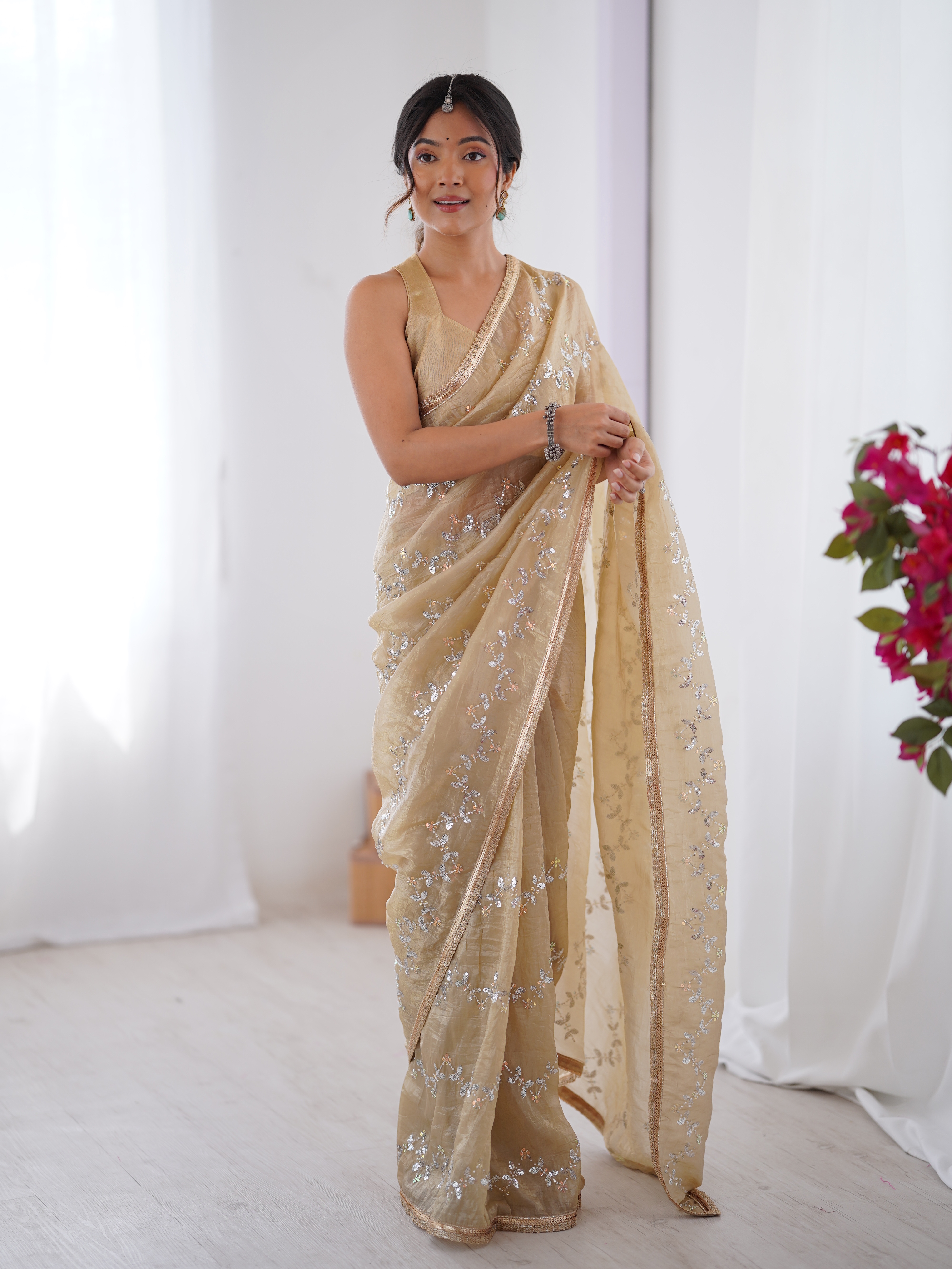
A traditional jewellery arrangement may include jhumkas, a short necklace, a longer haram, glass or metal bangles, a bindi and jasmine flowers. Temple jewellery with motifs such as Lakshmi, peacocks, coins or mango leaves complements silk and zari especially well. A waist belt can help define the drape, but it should sit comfortably and should not press into the waist during seated worship.
Flowers add colour and fragrance but require practical planning. Fresh jasmine may wilt in heat, so carry a small replacement strand if the puja continues for several hours. Secure the flowers with hairpins rather than relying only on a loose hair tie.
Accessories should also work with the blouse neckline. A long haram looks balanced against a higher neckline, while a shorter necklace may suit a wide square neckline. Avoid wearing multiple pieces that catch on the zari border, because frequent snags can damage delicate threads.
How should you buy and care for a Varamahalakshmi Vrata Saree?
Buy a Varamahalakshmi Vrata saree at least 7 to 14 days before the festival so that the blouse can be stitched, the saree can be checked and the drape can be practised. Online saree websites should clearly state fabric, blouse-piece availability, measurements, wash instructions and dispatch timing.
Silk Sarees Under 3000 With Discount can help set a practical budget, but price alone doesn't establish authenticity or quality. Check whether the description says Banarasi silk, soft silk, silk blend, linen-cotton or another specific construction. Confirm whether zari is woven, printed or described only as a decorative finish.
Party Wear Sarees may provide useful ideas for colour and embellishment, while Gray Color Sarees Under 1000 can be relevant for everyday or secondary options. A collection label isn't a substitute for checking fabric composition and return conditions.
Some women search for traditional sarees without a blouse because they already have a tailored piece or want to customise the neckline and sleeves. That option can work well when the saree includes sufficient blouse fabric and the tailoring deadline is realistic. Order extra time if the blouse requires lining, piping, embroidery or a non-standard sleeve.
Dry-clean Banarasi silk and zari sarees when the care label recommends professional cleaning. Store a clean, fully dry saree folded with soft cotton or muslin between folds, and refold it every few months to reduce permanent crease lines. Avoid spraying perfume directly onto zari, and keep the saree away from direct sunlight for long periods because strong light can affect dye and metallic thread.
Authentic South Indian sarees are available through specialist stores, established ethnic-wear websites and regional weavers, but online buyers should compare fabric descriptions, close-up photographs, blouse details and customer service information. No website can guarantee authenticity merely by using the words South Indian, Kanjeevaram or silk in a product title.
How can a Varamahalakshmi Vrata Saree Guide support a complete outfit?
A complete outfit plan should be finalised around the saree's fabric and border, then matched with a blouse, jewellery, flowers, footwear and practical pins. A maroon or red Banarasi saree supports gold jewellery and a structured blouse, while a pastel linen-cotton saree may suit lighter jewellery, fresh flowers and a simpler drape.
Traditional wedding styling can inspire the outfit without requiring bridal-level ornamentation. Use one statement element, such as a zari border, Lakshmi pendant or flower arrangement, and keep the remaining pieces comfortable for worship. This approach creates visual balance and prevents the saree from competing with the sacred rituals.
Prepare the complete outfit once before the festival. Wear the blouse, petticoat, saree and footwear together; sit on the floor or a low seat; lift your arms; and walk through the rooms where the puja will take place. A ten-minute rehearsal can reveal a slipping pallu, a tight waistband or an inconvenient hem before the important morning.
The most successful Varamahalakshmi Vrata outfit reflects family tradition while allowing the wearer to move, pray and welcome guests with ease. A well-chosen saree doesn't need to be the heaviest or most expensive option; it needs to be respectful, secure, comfortable and suited to the woman wearing it.
Common Questions About Choosing a Varamahalakshmi Vrata Saree
What is the best website to buy a saree online in India for Varamahalakshmi Vrata?
The best website is one that gives clear fabric details, blouse-piece measurements, dispatch timelines, care instructions and a transparent exchange policy. Compare close-up images and product specifications instead of relying only on labels such as silk, traditional or South Indian.
Where can I buy ready-to-wear sarees online in India?
Ready-to-wear or pre-stitched sarees are available from several Indian ethnic-wear websites and marketplaces. Check the waist measurement, finished length, pleat construction and pallu fastening before ordering, because pre-stitched sizing varies between sellers.
What are some trending traditional sarees for Varamahalakshmi Vrata?
Banarasi silk, soft silk, Kanjeevaram, Chanderi and linen-cotton sarees remain strong traditional choices. Red, maroon, magenta, green, pink and gold-toned combinations are popular, but family custom and comfort should guide the final selection.
Where can I buy authentic South Indian sarees online?
You can compare specialist ethnic-wear stores, regional weavers and established online saree sellers. Look for precise fabric names, weave descriptions, border photographs, blouse information and care instructions rather than treating the phrase authentic South Indian saree as proof by itself.
Can I wear a simple traditional saree for Varamahalakshmi Vrata?
Yes, a simple traditional saree is suitable when the fabric, drape and styling respect your family's customs. A plain or lightly printed saree can look festive with a defined border, a well-fitted blouse, flowers and coordinated jewellery.
Can I wear a traditional saree without a blouse for Varamahalakshmi Vrata?
A saree without a blouse is practical only when you already have a suitable blouse or enough blouse fabric for timely tailoring. Confirm the fabric length and arrange stitching at least 7 to 14 days before the festival so the fit can be tested before puja day.