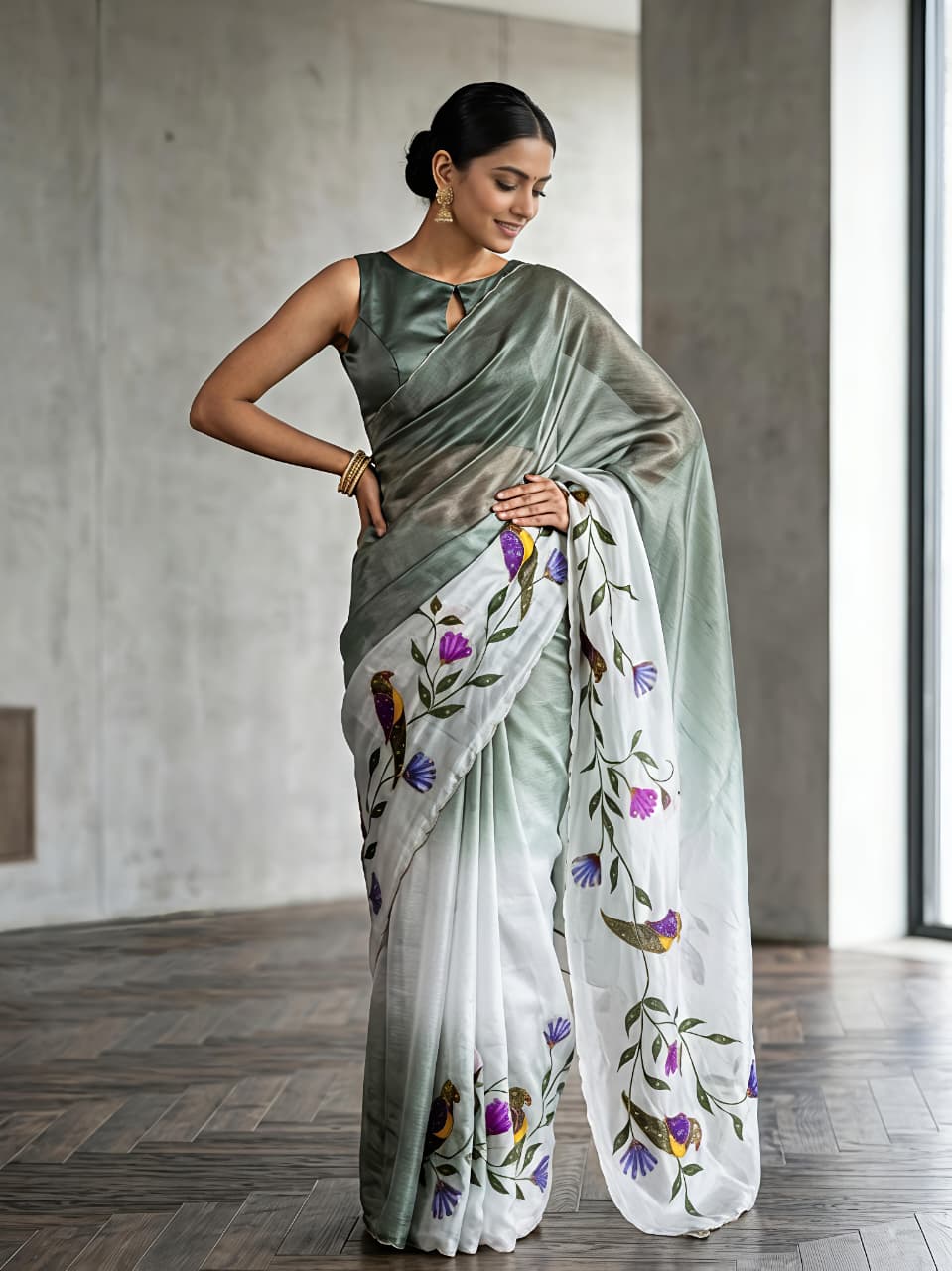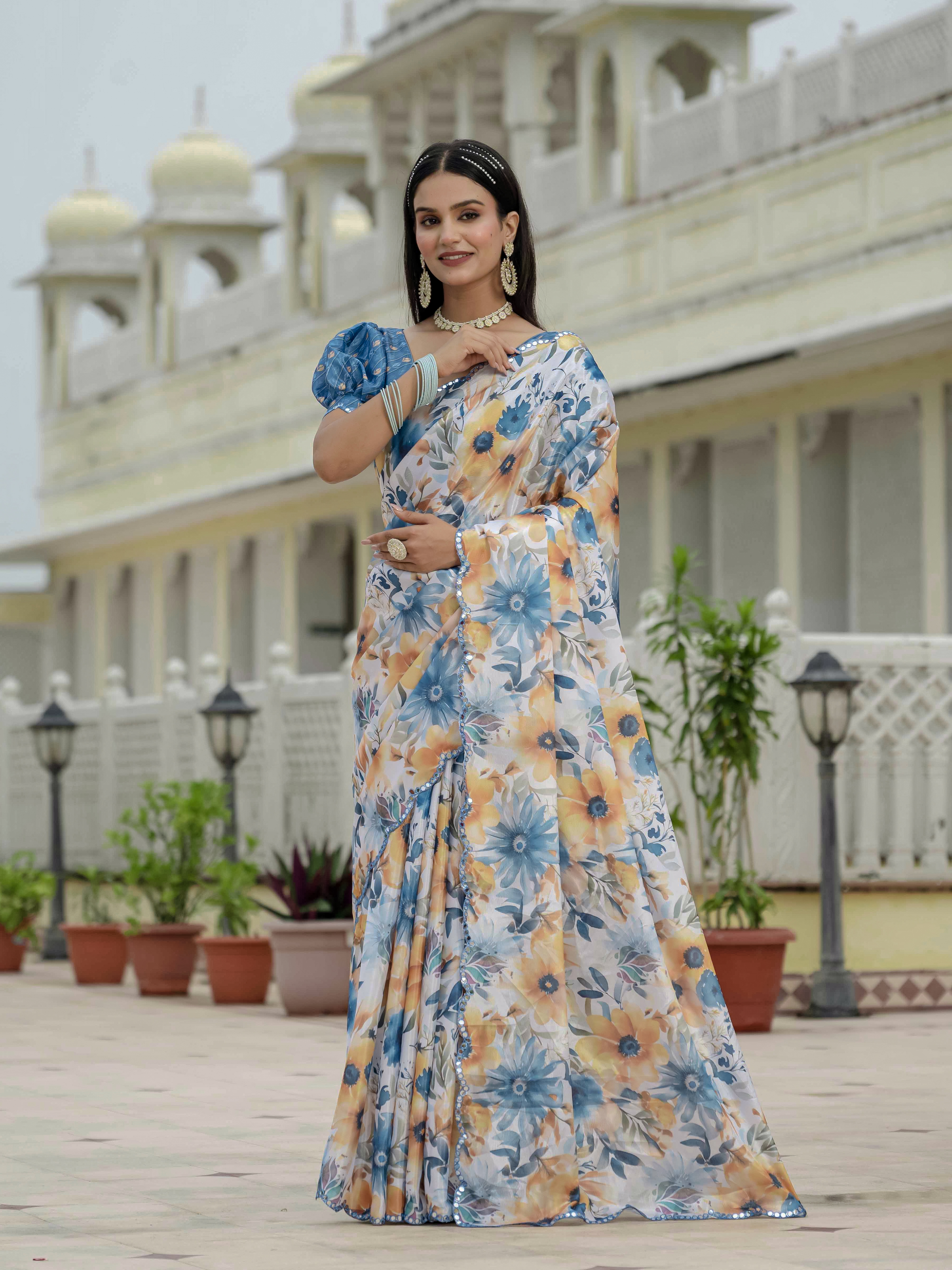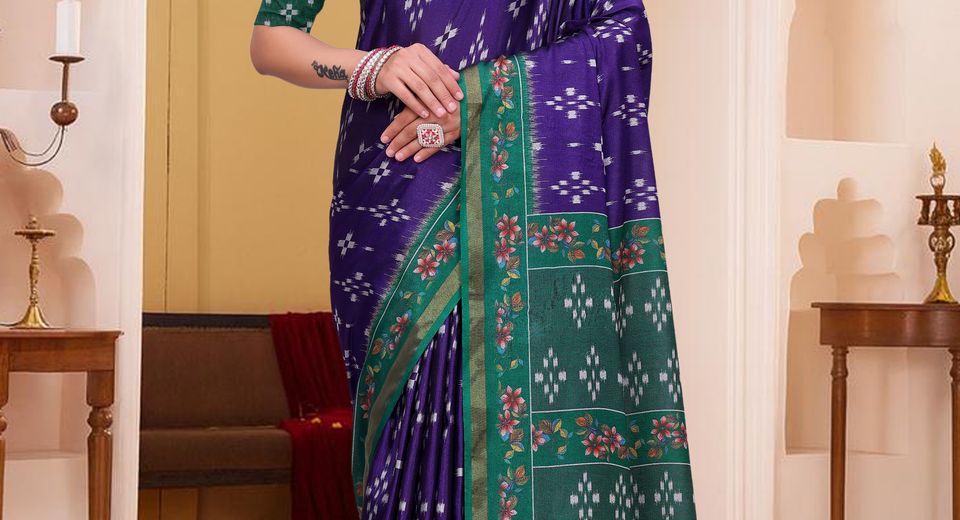
Uttarakhand Festival Fashion brings together the visual richness of Garhwali dressing and the practical elegance needed for mountain celebrations. Garhwali sarees, Pichora-inspired colours, woollen layers, silver jewellery and handloom textures can create a festive outfit that feels connected to Uttarakhand without treating every regional garment as interchangeable. The most useful starting point is to understand which elements are traditional, which are modern adaptations and which fabrics suit the venue.
Traditional Pahadi wear varies across Garhwal and Kumaon, so a saree-based outfit should be described as Uttarakhand-inspired unless it follows a specific local form. A wedding in Dehradun, a temple visit in Almora and a winter celebration in a high-altitude village may all call for different combinations of drape, warmth and ornament.
How does Uttarakhand Festival Fashion reflect Garhwali and Kumaoni traditions?
Uttarakhand Festival Fashion reflects Garhwali and Kumaoni traditions through regional colour symbolism, practical layering and hand-crafted details rather than one fixed silhouette. Garhwali and Kumaoni clothing traditions include the Pichora or Rangwali Pichora, ghagra, choli, angdi, woollen wraps and regional jewellery alongside sarees adapted for contemporary wardrobes.
Rangwali Pichora is especially associated with Kumaoni women and is usually recognised by a yellow or saffron ground, red borders and bright red motifs, including circular or floral forms. A Pichora is traditionally an odhani-like garment rather than a saree. Wearing a golden-red dupatta over a saree can therefore suggest Pichora styling without claiming that the saree itself is a traditional Pichora.
Garhwali clothing has its own regional vocabulary, and local dress can differ from Kumaoni dress in cut, ornament and usage. A culturally careful festive look names the inspiration clearly: Garhwali-inspired saree, Pichora-inspired drape or Uttarakhand wedding styling. That wording respects the fact that Uttarakhand contains multiple communities and textile practices.
How should Uttarakhand Festival Fashion guide saree selection?
Choose a saree by considering the season, walking surface, ceremony length and amount of layering required. A lightweight cotton, linen-cotton or tissue handloom saree usually works better than a very slippery fabric when a celebration includes outdoor movement, uneven paths or several hours of standing.
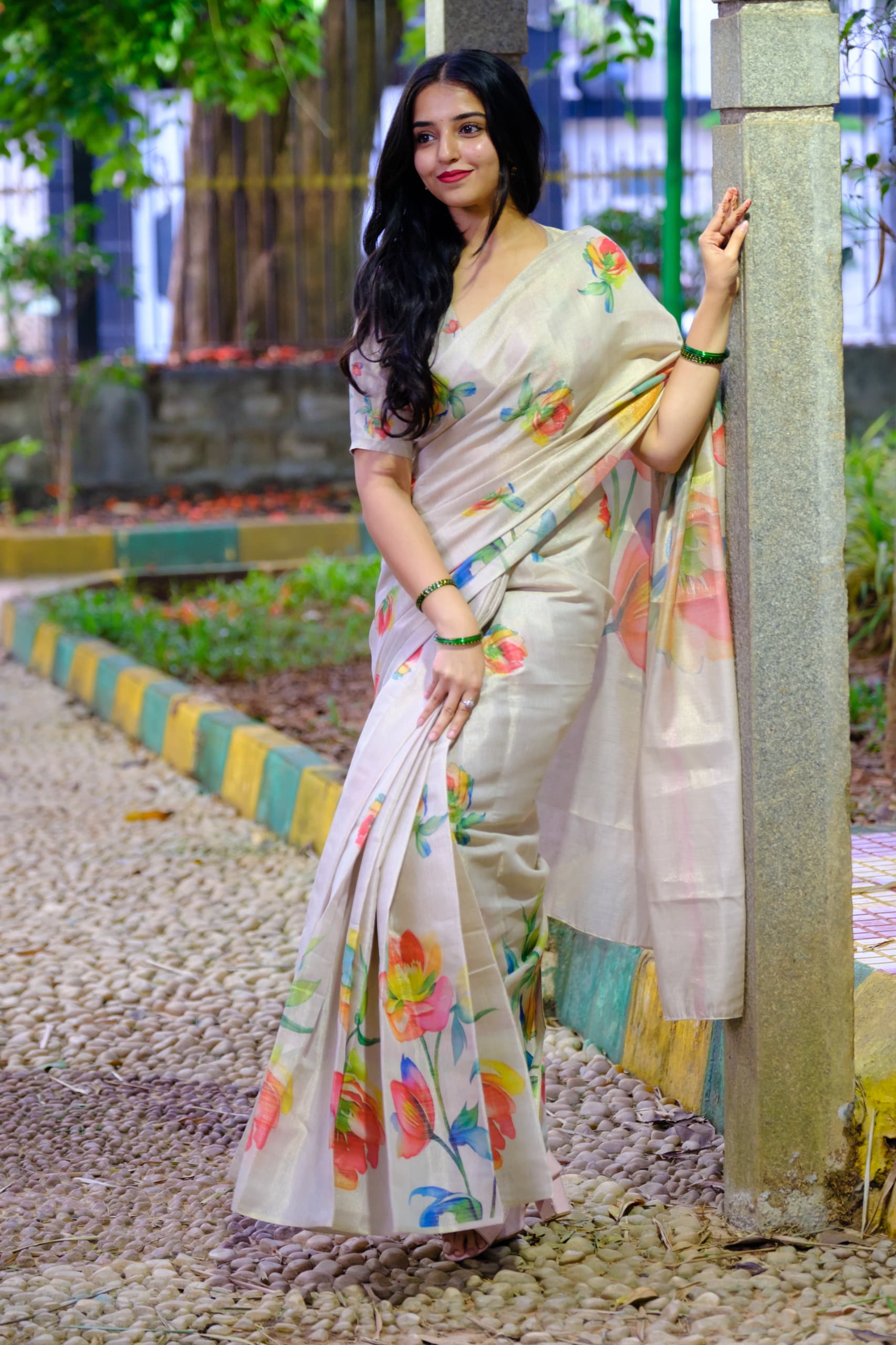
For spring and summer festivals
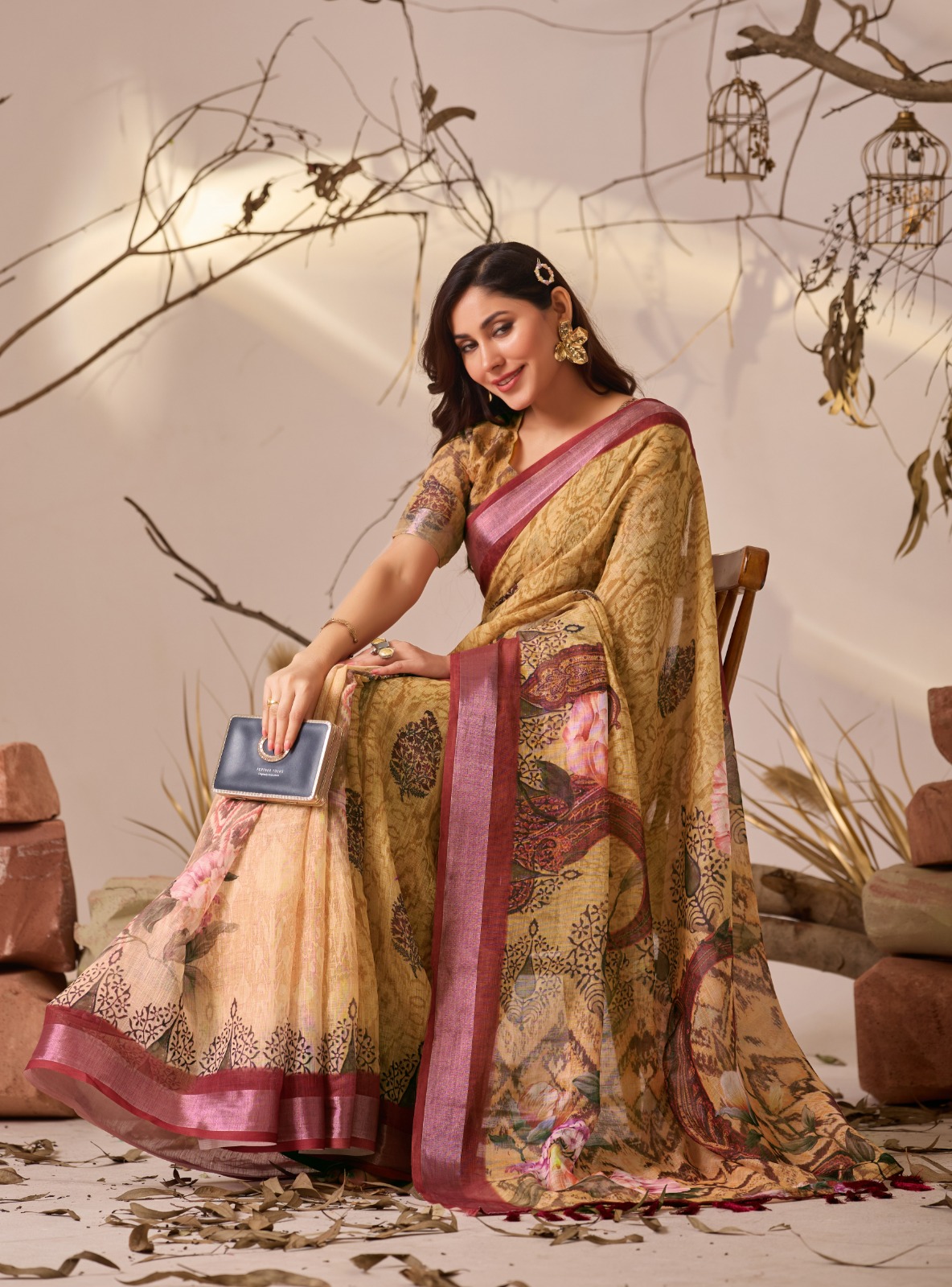
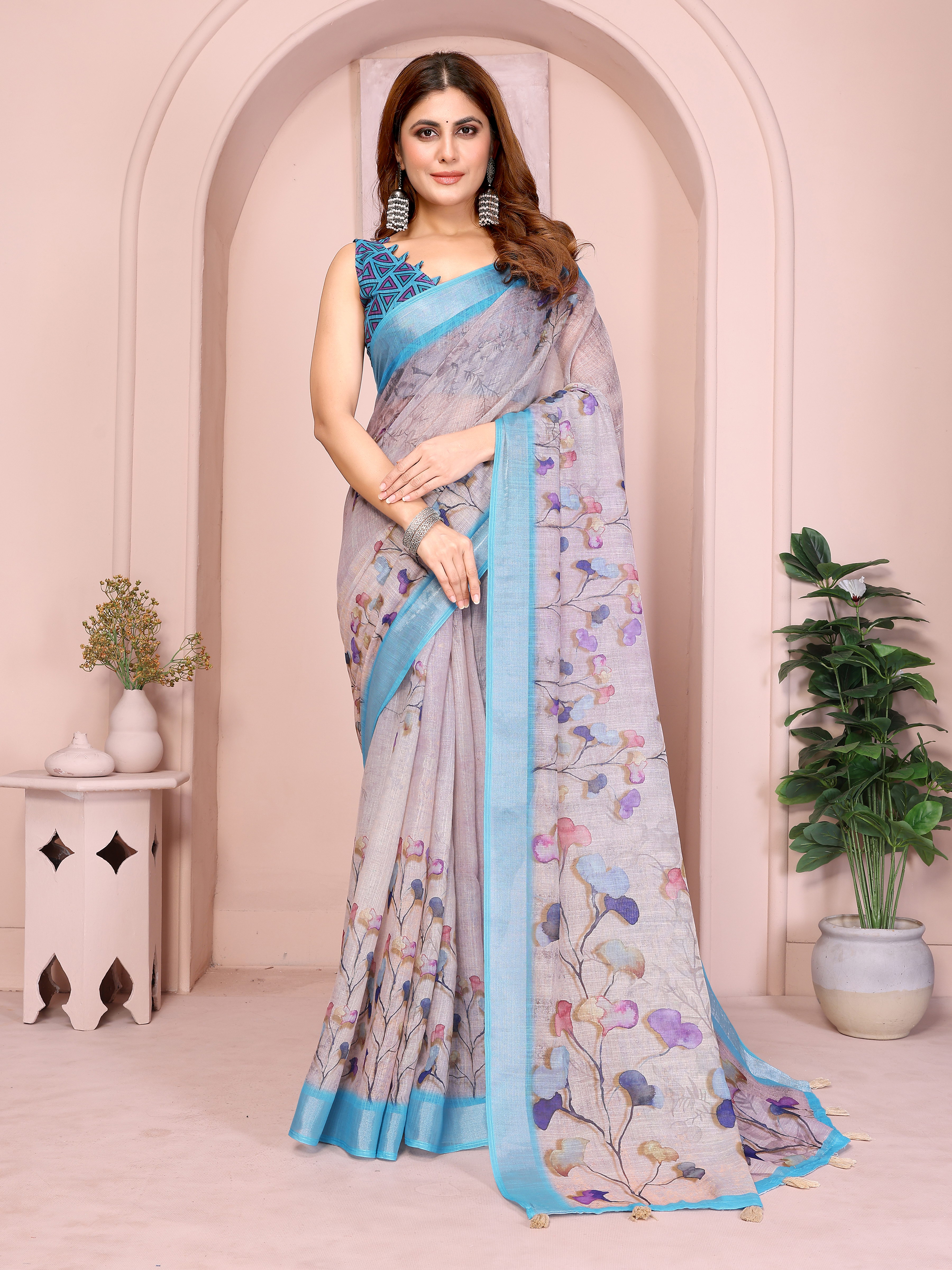
Linen-cotton and breathable handloom cotton are practical choices for daytime puja, local fairs and warm indoor gatherings. Pastel Linen Cotton Floral Print Saree with Designer Blouse offers a soft floral direction that can be paired with red or saffron accessories for a Pichora-inspired accent. Peach Linen Cotton Floral Print Saree with Blouse for Women creates a similar warm, gentle palette without requiring heavy jewellery.
Floral prints are not substitutes for regional motifs, but they work well when the aim is a contemporary Uttarakhand-inspired wardrobe. A handloom cotton saree with a narrow zari border can add ceremonial definition while remaining comfortable in sunlight. Pastel Floral Tissue Handloom Cotton Saree with Zari Weaves is an useful example of that balance, particularly for a daytime family function.
For autumn and winter celebrations
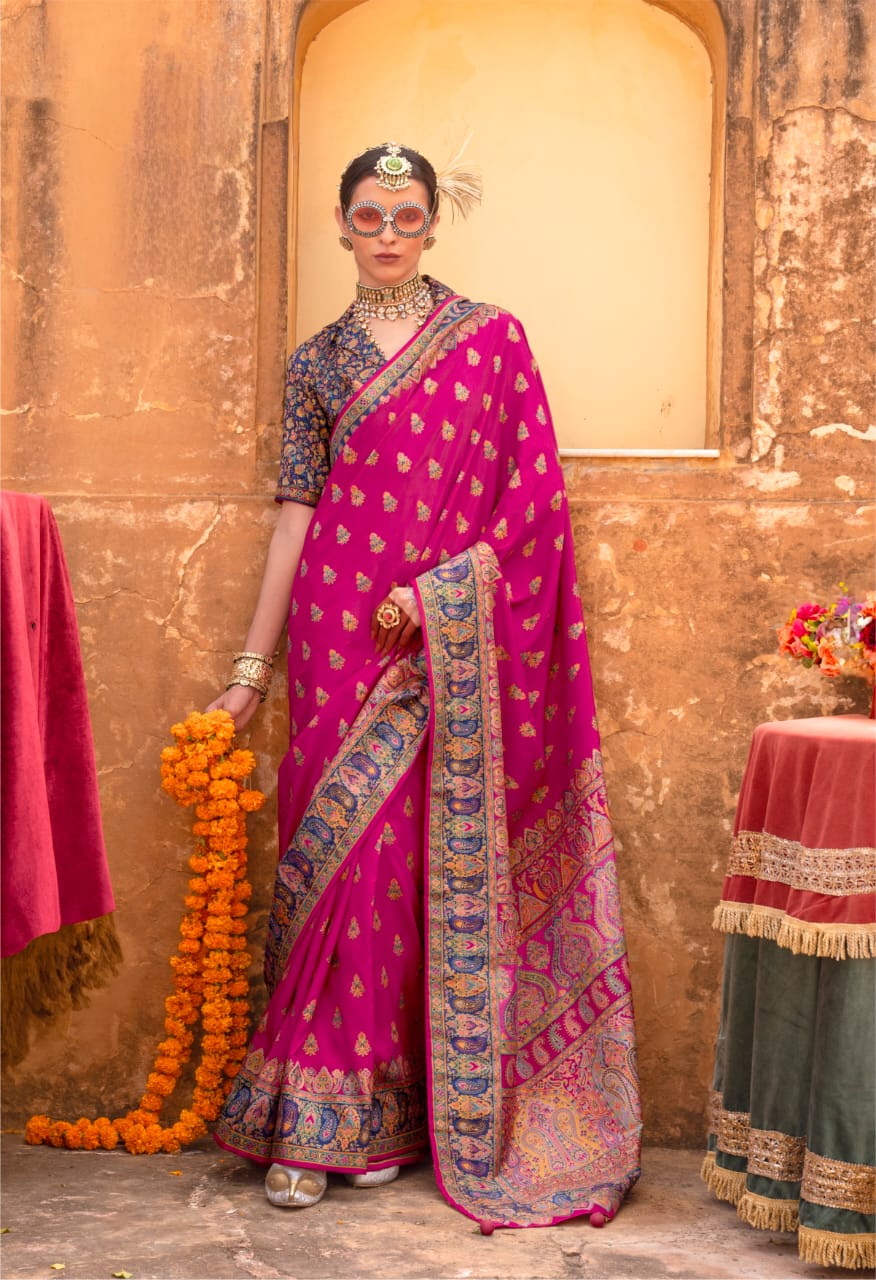
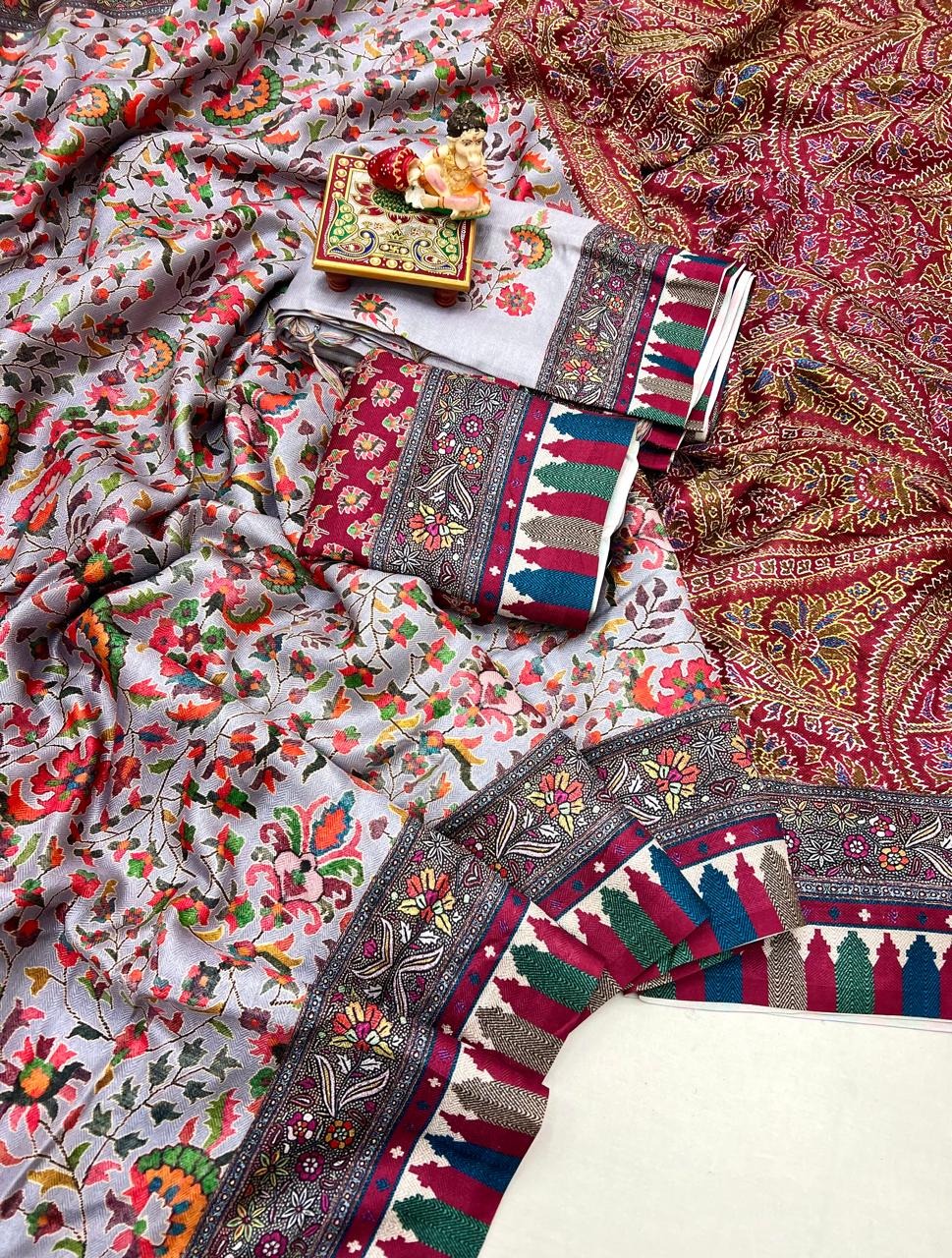
Winter celebrations require a saree that can accommodate a blouse, thermal layer, shawl and closed footwear without creating bulky folds at the waist. A pashmina or wool-blend shawl provides more usable warmth than relying on a thin decorative stole. Kashmiri Style Pashmina Saree With Shawl Set suits this kind of layered styling because the coordinated shawl can frame the shoulders while preserving the saree's formal appearance.
Mountain evenings can feel substantially colder than afternoons, especially after sunset. Carry a full-length shawl, choose a blouse with sleeves and pin the pallu at the shoulder and forearm when walking outdoors. A warm layer should remain easy to remove indoors so that the outfit works across changing temperatures.
How can Uttarakhand Festival Fashion use Pichora-inspired colours?
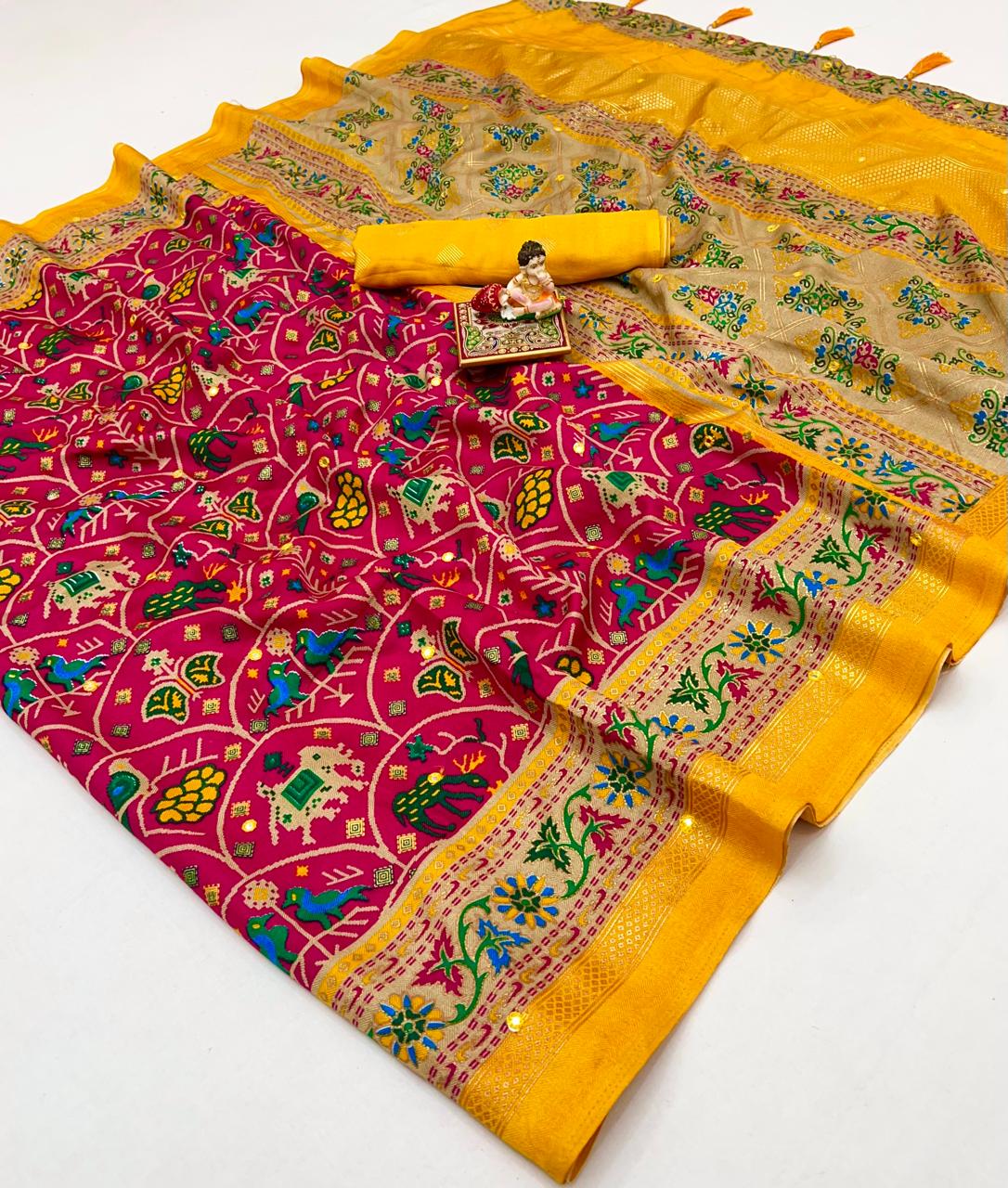
A saree can reflect Garhwali and Kumaoni colour traditions through deliberate use of saffron, marigold yellow, vermilion red, green and deep pink, balanced with a neutral base. Colour association is more respectful than adding random "tribal" motifs that may not belong to Uttarakhand.
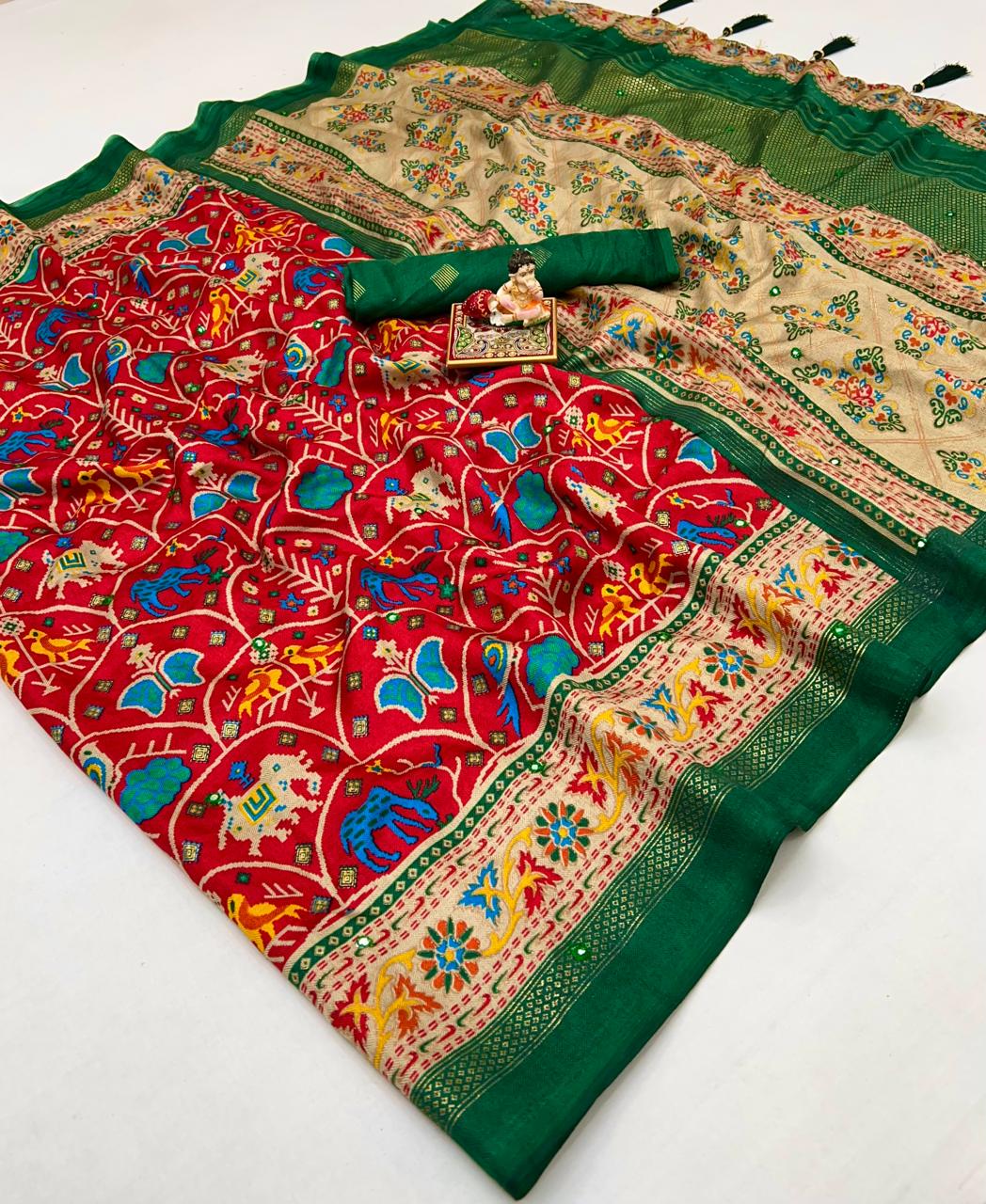
Yellow and red together create the clearest Pichora-inspired reference. Cream Pink Tissue Handloom Cotton Saree with Zari gives that palette a softer interpretation, while a red border, red glass bangles or a small red bindi can strengthen the festive connection. Designer Red Patola Print Pashmina Silk Festive Saree makes a more dramatic choice for an evening reception, especially when styled with muted gold rather than excessive contrast.
Pink can work particularly well for a spring wedding or family celebration. Pink Georgette Sarees provide a broad colour direction for guests who want movement and a lighter visual finish, although georgette should be secured carefully because a slippery pallu can shift during outdoor ceremonies. Red Banarasi Silk Sarees for Weddings Under 1100 may suit a more conventional wedding palette, but Banarasi silk should be distinguished from Uttarakhand-specific textile traditions rather than presented as local Pahadi clothing.
Colour is only one part of regional styling. A saree becomes more thoughtfully Uttarakhand-inspired when the colour story is paired with a handloom texture, a restrained floral or geometric detail, a Pichora-inspired odhani and jewellery that reflects the wearer's family or region.
Which accessories complete Uttarakhand Festival Fashion?
The most adaptable traditional Pahadi additions are an odhani or shawl, regional jewellery, a high-neck blouse and practical footwear. These elements can signal a connection to Uttarakhand while allowing the saree to remain the primary garment.

Pichora-inspired odhani
A yellow or saffron odhani with red edging and auspicious motifs is the clearest Pichora-inspired layer for an up-to-date saree outfit. Drape the odhani over the head and shoulders for a puja, or fold it across one shoulder for a reception where a full head covering would be impractical. Avoid labelling a machine-printed yellow-red scarf as an heirloom Pichora unless its provenance and construction support that claim.
Jewellery and hair
Silver-toned jewellery, a nose ring, glass bangles, a simple necklace and jhumkas can complement Pahadi-inspired dressing. Uttarakhand jewellery traditions include distinctive forms such as the nath and guloband, but these pieces should be worn with awareness of their cultural significance rather than as costume props. A small red bindi, a low bun or a braid decorated with fresh flowers can keep the styling grounded.
Gold zari on a saree doesn't require equally heavy gold jewellery. Pastel Floral Tissue Handloom Cotton Saree with Zari Weaves can be balanced with silver earrings and a single bangle stack, while a richly coloured silk saree may need only one prominent necklace. A balanced outfit usually has one focal point: the border, the odhani, the jewellery or the blouse neckline.
Blouse and footwear
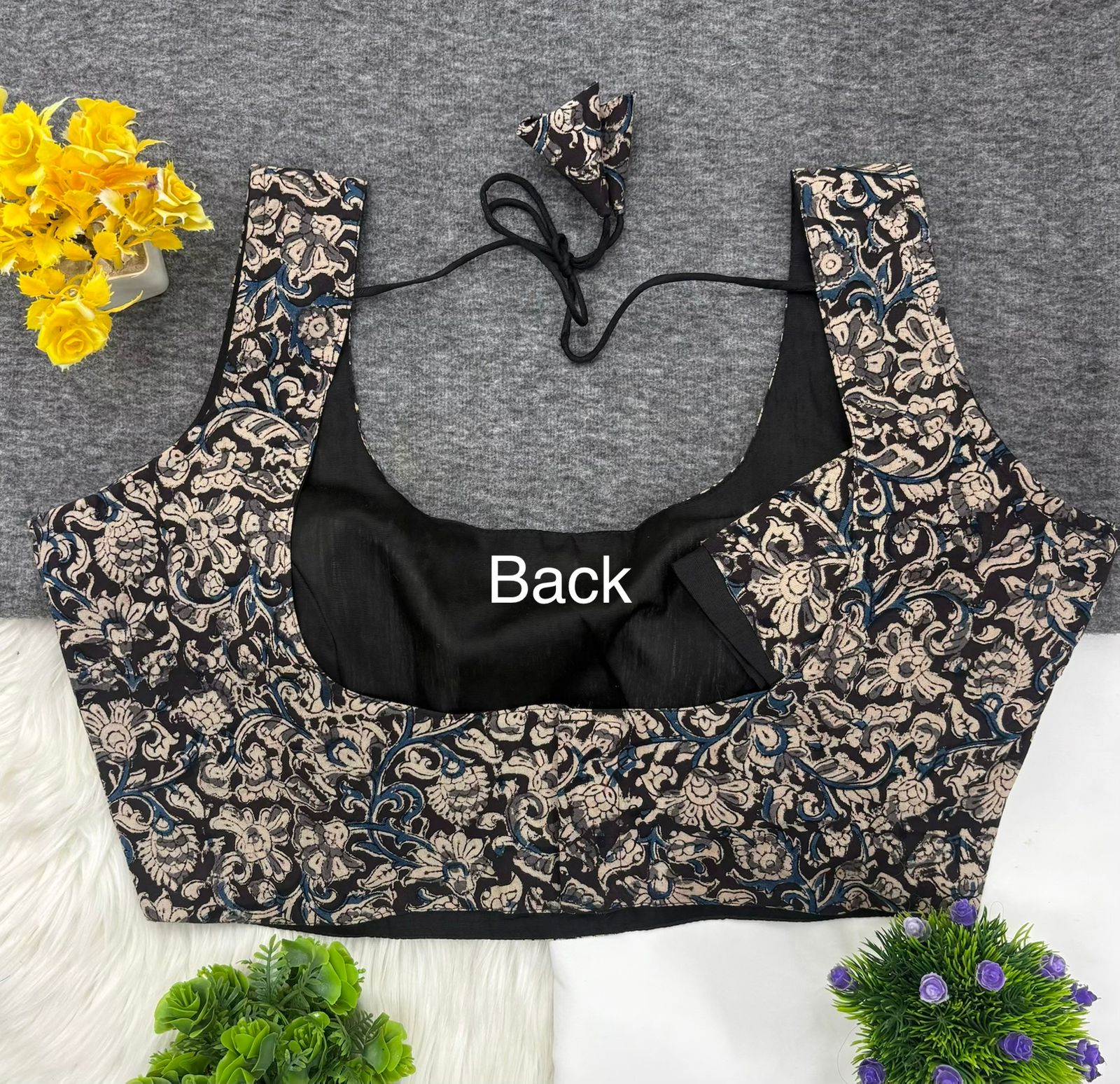
A three-quarter-sleeve blouse is useful for cool weather and works with a shawl, while a cotton blouse is more comfortable for daytime rituals. Choose footwear with a secure strap and a low, stable heel when the venue includes stone courtyards, grass or sloped paths. Peach Linen Cotton Floral Print Saree with Blouse for Women demonstrates why a coordinated blouse can simplify movement and reduce last-minute styling decisions.
How should Uttarakhand Festival Fashion change for different celebrations?
Match the amount of ornament and layering to the ceremony rather than wearing the same outfit for every festival. A temple ritual, Haldi ceremony, wedding reception and community fair each place different demands on a saree.
- For a puja or temple visit: Choose a breathable cotton or linen-cotton saree, cover the shoulders, keep the blouse modest and wear low-profile jewellery. Yellow, saffron, cream and red details connect naturally with Pichora-inspired styling.
- For a Haldi ceremony: Select a washable or easy-care saree in yellow, peach or pink, and avoid delicate embellishment near the lower hem. Multicolor Linen Cotton Floral Saree with Blouse Online gives a cheerful base for floral jewellery and comfortable flat footwear.
- For a wedding reception: Choose zari, silk or a polished tissue weave, then add a shawl if the celebration extends into a cold evening. Designer Red Patola Print Pashmina Silk Festive Saree can carry the outfit with minimal additional ornament.
- For a local fair or outdoor festival: Prefer a secure pleat, a pinned pallu, low heels and a light layer. Red Satin Floral Print Saree with Unstitched Blouse Textile gives a vivid festive direction, but satin benefits from careful pinning because its smooth surface can move.
- For a winter family gathering: Wear a long-sleeved blouse, thermal camisole and coordinated shawl under or over the saree without allowing the added layers to distort the waist pleats.
What should Uttarakhand Festival Fashion shoppers check before buying online?
Online saree shoppers should check fabric composition, blouse status, measurements, border details, transparency, care instructions and delivery time before placing an order. Product photographs can show colour and surface texture, but they can't always reveal the weight of a saree or how easily a fabric will hold pleats.
Read whether the blouse is stitched, unstitched or absent. A coordinated blouse can save tailoring time, while an unstitched blouse gives more control over sleeve length and neckline. Red Satin Floral Print Saree with Unstitched Blouse Textile requires a separate tailoring decision, whereas a product described as being with blouse may offer a more immediate outfit solution.
Check the saree length and width if the wearer is tall or prefers a generous pallu. A standard six-yard saree may require different petticoat positioning depending on height, footwear and the desired pleat count. Confirm whether zari is woven, printed or embellished, because the construction affects both appearance and care.
Price comparison also needs context. Silk Sarees Under 3000 With Discount may be useful for a budget search, while Party Wear Sarees covers a broader styling category rather than a regional textile tradition. Gray Color Sarees Under 1000 can provide a neutral base for a saffron odhani and red jewellery, but a lower price should not be treated as proof of handloom production or local provenance.
For online purchases, order at least 10 to 14 days before a fixed celebration when tailoring, exchange or colour adjustment may be necessary. Unpack the saree promptly, inspect the hem and blouse piece, and avoid washing a new silk, pashmina or zari saree before checking its care label.
How can Uttarakhand Festival Fashion remain comfortable and respectful?
Comfort and cultural respect improve when the outfit uses authentic references selectively and allows the wearer to move naturally. A saree should not imitate every regional element at once, particularly when the wearer is unfamiliar with the community or ceremony.

Use a Pichora-inspired colour combination if a traditional Pichora is unavailable, but call the garment an inspired styling layer rather than an original ceremonial Pichora. Choose a shawl for warmth because it's useful in mountain weather, not merely because it photographs well. Select regional jewellery from a trusted artisan or wear simpler silver pieces when the provenance of a replica is unclear.
Practical preparation makes a greater difference than extra ornament. Stitch blouse hooks securely, carry safety pins and a small brooch, test walking in the chosen footwear and keep a breathable underskirt that doesn't restrict the ankles. Pinning the pallu at two points is helpful for outdoor venues, while a waist belt can provide structure if it doesn't flatten the saree border.
Uttarakhand-inspired festive dressing works best when the saree, colour palette, odhani and accessories tell one coherent story. A pastel handloom saree with a red-yellow accent suits a daytime puja; a pashmina saree with a shawl suits a cold evening; and a vivid silk saree suits a formal reception. The result can feel contemporary, useful and attentive to the living traditions behind Pahadi clothing.
Common Questions About Uttarakhand Festival Fashion and Pahadi Sarees
Is a Pichora the same as a Garhwali saree?
No, a Pichora is traditionally an odhani-like garment associated especially with Kumaoni women, while a Garhwali saree is a contemporary saree styling reference rather than one universally fixed garment. A yellow-red odhani over a saree can create a Pichora-inspired look without calling the saree itself a Pichora.
What colours are associated with traditional Uttarakhand festive wear?
Yellow, saffron, red, green and pink are commonly useful references for Uttarakhand-inspired festive dressing, particularly when creating a Pichora-inspired palette. Colour alone doesn't establish regional authenticity, so the fabric, accessory choices and description should also be considered.
Which saree fabric is best for a wedding in the hills?
Linen-cotton, handloom cotton and tissue cotton work well for daytime hill weddings because they're comparatively breathable and easier to manage while walking. Pashmina, silk and other warmer or richer fabrics are more suitable for cold evening receptions when paired with a shawl.
How can I style a saree for a Haldi ceremony in Uttarakhand?
Choose a washable or easy-care saree in yellow, peach, pink or another bright shade, and secure the pallu with pins. Linen-cotton with a coordinated blouse gives movement and comfort, while delicate zari or very pale fabrics may be harder to maintain around turmeric and outdoor activity.
Can Banarasi silk be called traditional Pahadi wear?
Banarasi silk is a respected Indian textile, but Banarasi silk isn't the same as an Uttarakhand-specific Pahadi garment. A Banarasi silk saree can be styled with Pichora-inspired colours or a regional shawl while being described honestly as an Uttarakhand-inspired festive outfit.
What should I wear to a winter festival in Uttarakhand?
Wear a saree with a long-sleeved blouse, a warm undershirt, secure pleats and a full shawl or pashmina layer. Closed shoes with a stable sole are safer than high heels for cold outdoor venues, stone pathways and uneven ground.
Common Questions About Uttarakhand Festival Fashion and Pahadi Sarees
Is a Pichora the same as a Garhwali saree?
No, a Pichora is traditionally an odhani-like garment associated especially with Kumaoni women, while a Garhwali saree is a modern saree styling reference rather than one universally fixed garment. A yellow-red odhani over a saree can create a Pichora-inspired look without calling the saree itself a Pichora.
What colours are associated with traditional Uttarakhand festive wear?
Yellow, saffron, red, green and pink are commonly useful references for Uttarakhand-inspired festive dressing, particularly when creating a Pichora-inspired palette. Colour alone does not establish regional authenticity, so the fabric, accessory choices and description should also be considered.
Which saree fabric is best for a wedding in the hills?
Linen-cotton, handloom cotton and tissue cotton work well for daytime hill weddings because they are comparatively breathable and easier to manage while walking. Pashmina, silk and other warmer or richer fabrics are more suitable for cold evening receptions when paired with a shawl.
How can I style a saree for a Haldi ceremony in Uttarakhand?
Choose a washable or easy-care saree in yellow, peach, pink or another bright shade, and secure the pallu with pins. Linen-cotton with a coordinated blouse offers movement and comfort, while delicate zari or very pale fabrics may be harder to maintain around turmeric and outdoor activity.
Can Banarasi silk be called traditional Pahadi wear?
Banarasi silk is a respected Indian textile, but Banarasi silk is not the same as a Uttarakhand-specific Pahadi garment. A Banarasi silk saree can be styled with Pichora-inspired colours or a regional shawl while being described honestly as an Uttarakhand-inspired festive outfit.
What should I wear to a winter festival in Uttarakhand?
Wear a saree with a long-sleeved blouse, a warm undershirt, secure pleats and a full shawl or pashmina layer. Closed shoes with a stable sole are safer than high heels for cold outdoor venues, stone pathways and uneven ground.