

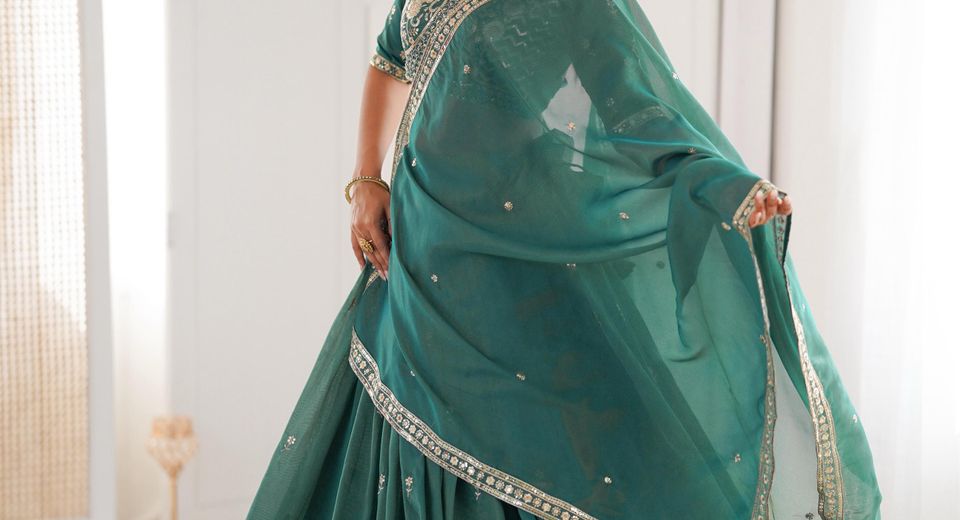
A two piece lehenga for women who prefer no dupatta solves a practical dressing problem: you get the movement and visual impact of a lehenga without managing a third layer. The two pieces are usually a skirt and choli, so the fit, neckline, waist construction and surface detail carry the entire outfit. Careful selection matters more than choosing the heaviest embroidery or brightest colour.
A dupatta-free lehenga can work for a mehendi, sangeet, engagement, reception or festive dinner when the outfit has enough structure to look complete on its own. The right choice depends on how the blouse balances the skirt, whether the waistband stays secure, how much movement you need and how formal the event will be.
Why choose a two piece lehenga for women who prefer no dupatta?
A two piece lehenga for women who prefer no dupatta is easier to move in, less likely to need constant adjustment and often cooler during long celebrations. Removing the dupatta also gives the blouse and skirt a clearer silhouette, which suits contemporary styling and photographs well from the waist up.
Dupattas can be beautiful, but they introduce practical concerns. A pinned dupatta may pull at the blouse, slip during dancing, catch on jewellery or hide embroidery placed near the waist. A two-piece set avoids those problems while leaving both hands free for greetings, food and movement.
The look is especially useful for women who prefer defined shoulders, a clean neckline or a streamlined outfit. A well-fitted choli becomes the focal point instead of functioning as a base for a drape. A shaped waistband, finished hem and coordinated embroidery make the absence of a dupatta appear deliberate rather than incomplete.
When is a two piece lehenga for women who prefer no dupatta suitable?
A two piece lehenga for women who prefer no dupatta is most suitable for mehendi functions, sangeet evenings, cocktail-style receptions, festive parties and semi-formal wedding events. For a traditional bridal pheras ceremony or a family function with a formal dress expectation, check the invitation before choosing a two-piece silhouette.
Colour and embellishment also change the formality. Lime, mint and pastel floral designs feel lighter for daytime events, while maroon, red, mustard and dense threadwork create more visual weight for evening celebrations. A simple blouse with a heavily worked skirt can look elegant, while a heavily embellished blouse and skirt may be better suited to a grand reception.
How should a two piece lehenga for women who prefer no dupatta fit?
A well-fitting two piece lehenga for women who prefer no dupatta has a stable waistband, a choli that lies smoothly across the bust and armholes that allow movement without gaping. The skirt should fall from the natural waist or intended high-waist point rather than sliding towards the hips during walking.
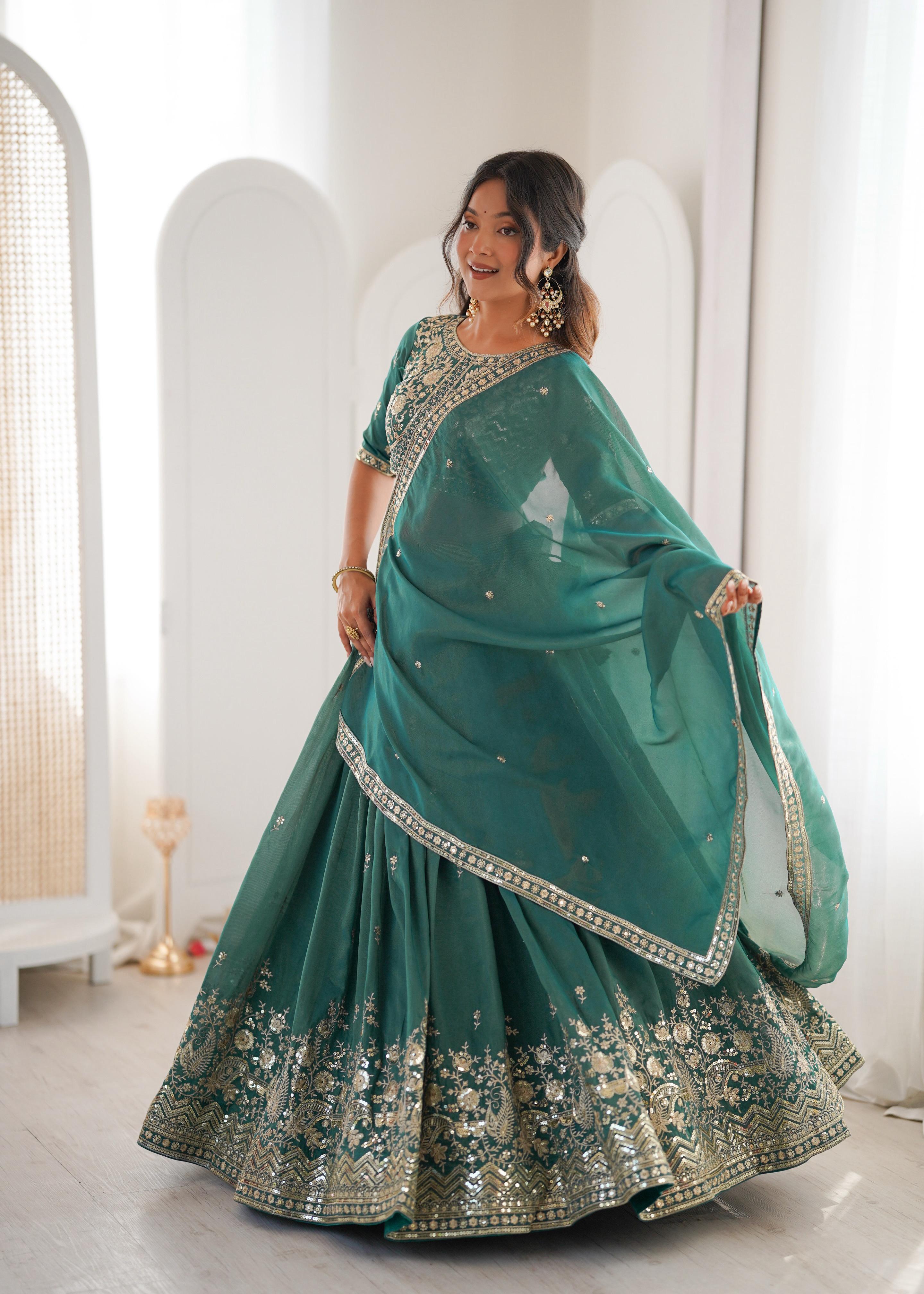
Check the choli before checking the embellishment
A choli should lie flat at the bust without horizontal pulling lines, excess fabric under the arms or a neckline that shifts when you raise your arms. A side zip, back zip, tie-up closure or hook-and-eye fastening affects adjustability, so inspect the construction details before buying. A fitted choli with a structured shoulder can replace the framing effect that a dupatta provides.
Women with a fuller bust may find a sweetheart, square or softly curved neckline more supportive than an extremely deep V-neck. Women who prefer more coverage can choose a high round neck, boat neck or elbow-length sleeve. A longer choli creates a smoother line at the waist, while a cropped choli highlights a high-waisted skirt and works well with a broad waistband.
Check the skirt length and flare
A lehenga skirt should have enough flare for walking and sitting, but excessive volume can become uncomfortable when there's no dupatta to balance the proportions. For most events, a flare between approximately 3 and 5 metres offers visible movement without making the skirt difficult to navigate.
Measure the waist over the type of innerwear you plan to wear with the outfit. Measure the full length from the waistline to the point where the hem should fall, then account for footwear. A skirt that's 1 to 2 centimetres too long can drag on a crowded dance floor, while a skirt that's too short may expose the lining or reduce the graceful fall of the flare.
Online shoppers should distinguish between ready-made, fully stitched and semi-stitched construction. A ready-made lehenga generally arrives in a defined size range. A fully stitched choli is convenient when you need to wear the outfit quickly, but alterations may be limited. The Semi Stitched Lehengas Collection can offer more flexibility if the blouse or waist needs custom finishing, although tailoring time must be included.
Which fabrics suit a two piece lehenga for women who prefer no dupatta?
Georgette, organza, chinon, jacquard, silk blends and embroidered fabrics can all suit a two piece lehenga for women who prefer no dupatta, but each fabric changes the way the outfit moves and photographs. A fabric with body helps the blouse and skirt retain a finished shape when there's no additional layer over them.
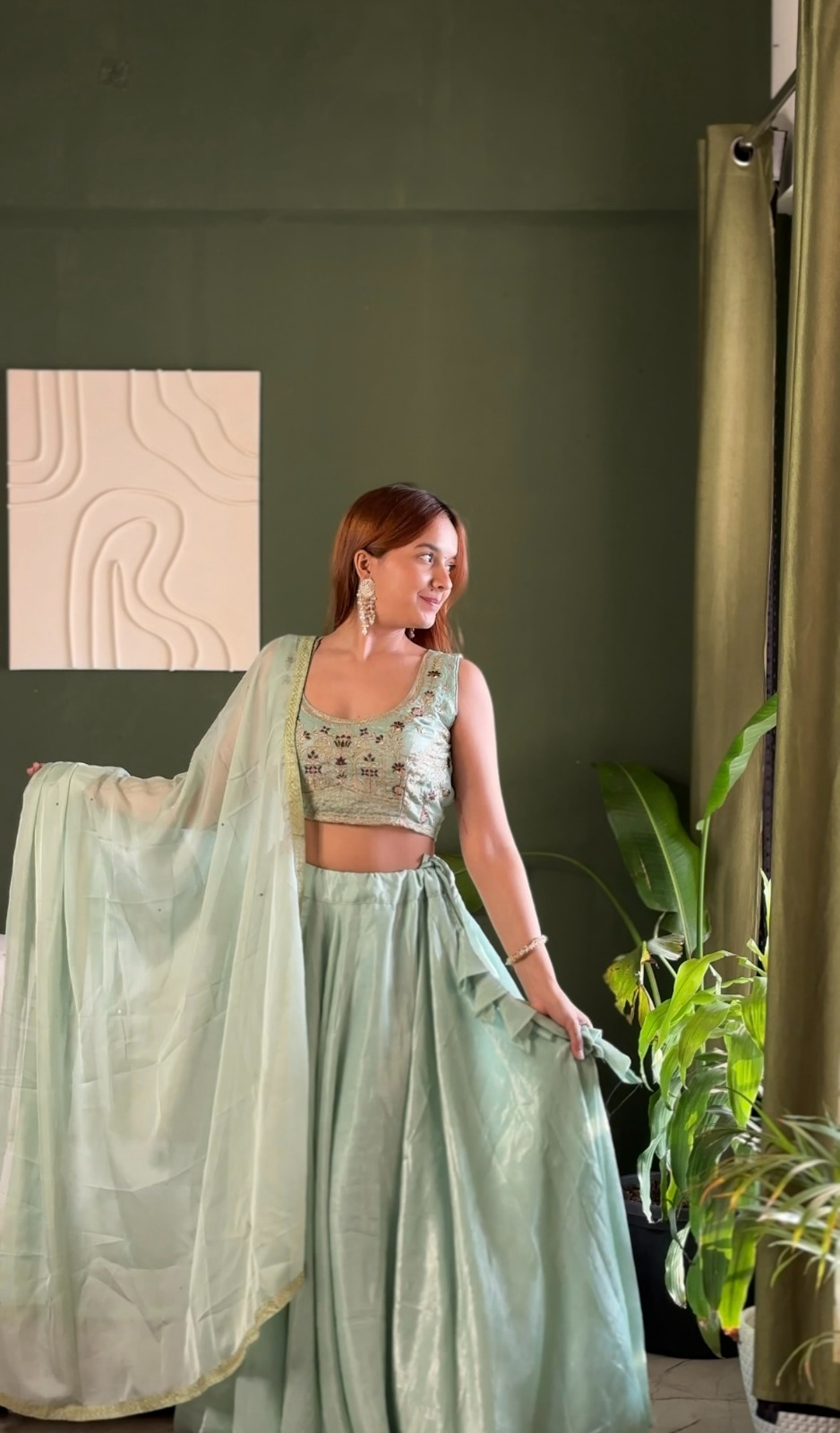
Georgette creates fluid movement and is useful for a dance-friendly outfit. Pastel Floral Georgette Lehenga Set with Ruffle Blouse demonstrates how a lighter fabric and a defined blouse detail can provide interest without relying on a drape. Ruffles, a shaped sleeve or a neat neckline can supply the softness that a dupatta might otherwise add.
Organza has a crisp, airy appearance and photographs well in floral designs, but organza can feel less forgiving around the waist if the lining or waistband is poorly finished. Red Floral Organza Lehenga Set with One Shoulder Blouse uses an asymmetrical blouse detail to make the upper half visually complete. A one-shoulder cut is best for events where you're comfortable with a fashion-led silhouette.
Chinon gives a soft fall with a fluid finish, making it suitable when you want movement without a very stiff skirt. Mustard Floral Threadwork Chinon Lehenga Choli for Women brings colour and threadwork into the outfit so that the two-piece format still feels festive.
Jacquard and silk-based fabrics generally look more substantial and can suit evening functions. Cream & Maroon Jacquard Lehenga Choli with Dupatta Set is designed as a three-piece set. But its colour pairing illustrates an important styling principle: a cream base and deeper accent can create enough contrast for a blouse-and-skirt combination to stand alone when the extra layer is left aside.
How can a two piece lehenga for women who prefer no dupatta look complete?
A two piece lehenga for women who prefer no dupatta looks complete when the blouse has a clear design feature and the skirt has a finished waistband, border or coordinated surface detail. The upper half needs intentional styling so the outfit doesn't resemble an unfinished three-piece set.
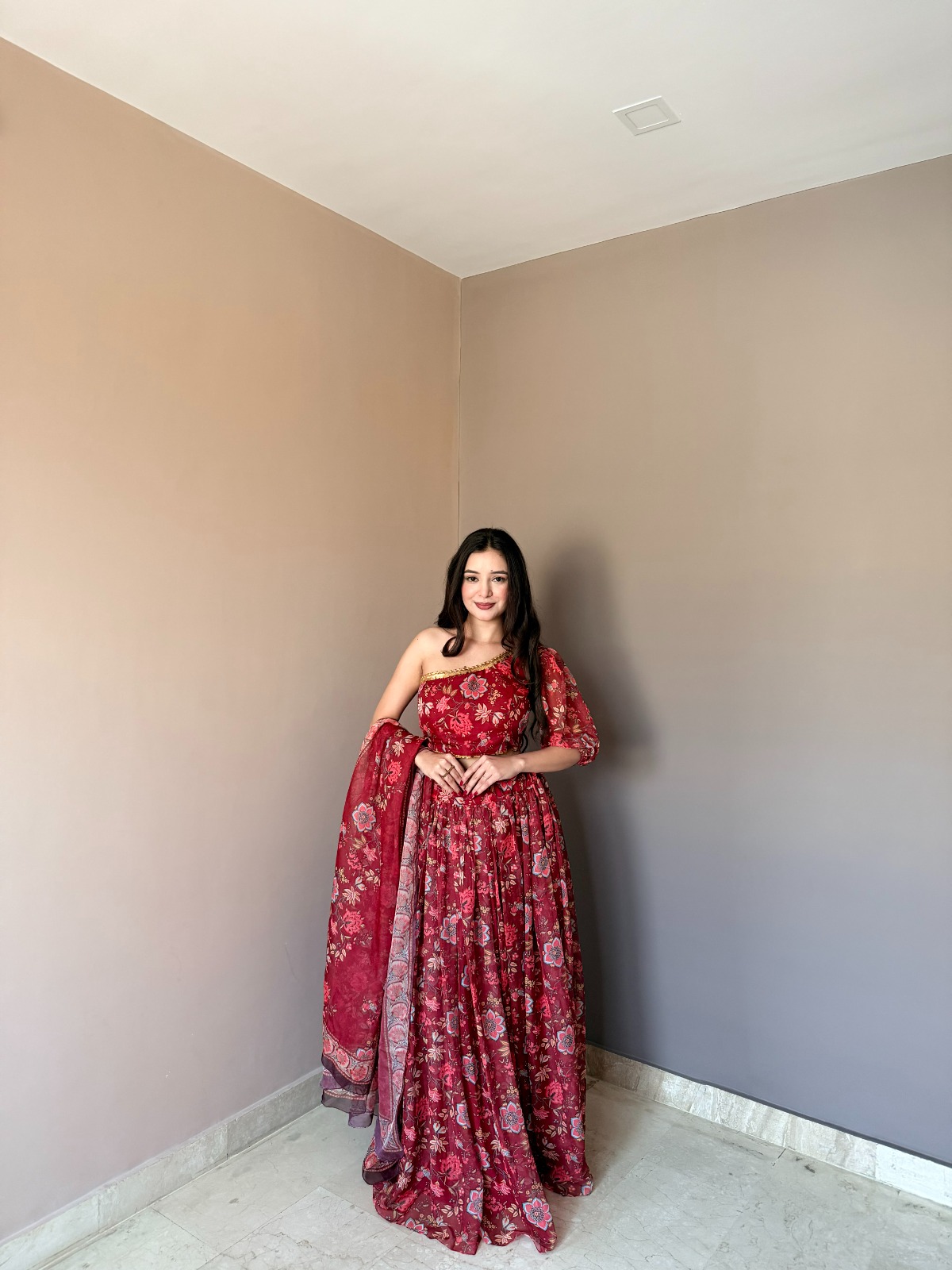
For a balanced silhouette, pair a voluminous skirt with a relatively clean choli, or pair a simple skirt with a blouse that has embroidery, a sculpted sleeve or a distinctive neckline. A very busy blouse and heavily embellished skirt can work for bridal dressing, but the outfit should be fitted carefully because every detail remains visible.
Ruffle sleeves soften a formal lehenga and suit daytime celebrations. One-shoulder blouses create a modern, asymmetrical line. Elbow-length sleeves offer coverage and make a richly worked skirt easier to wear for a family wedding. A sleeveless choli can look refined when the neckline and shoulder fit are secure, but consider a cropped jacket or light shrug if the venue is air-conditioned.
Embellishment placement matters. Zari, sequins, threadwork, mirror work and floral embroidery near the neckline or sleeves draw attention upward. A broad waistband or border draws attention to the waist. If the skirt already has a dense border, avoid adding a competing belt unless the belt is deliberately designed to coordinate with the embroidery.
Which colours work for a two piece lehenga for women who prefer no dupatta?
The safest colour for a two piece lehenga for women who prefer no dupatta depends on the time of day, venue and level of ceremony. Pastels and fresh greens are effective for daytime functions, while deeper reds, maroons, mustard and jewel tones carry more presence in evening lighting.
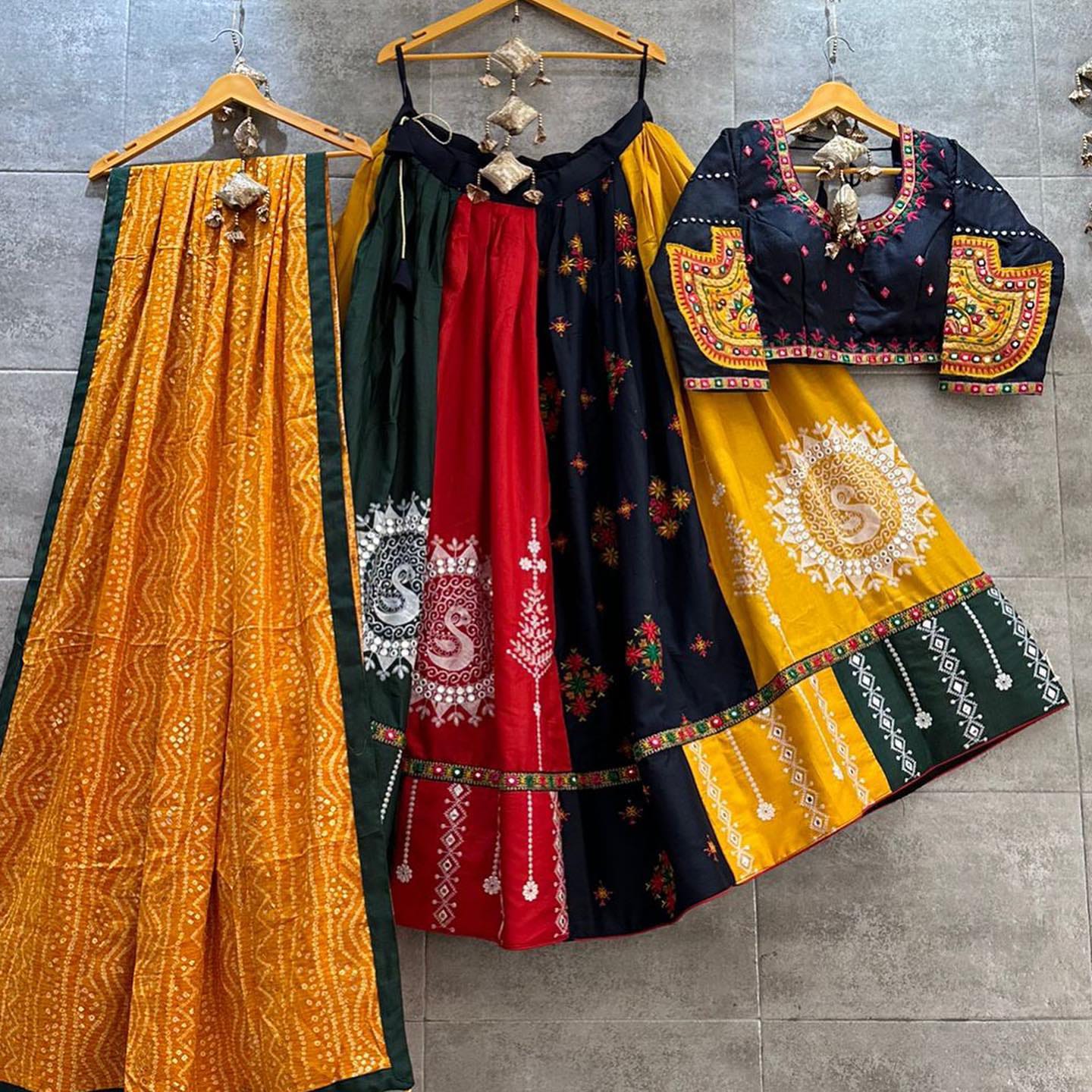
Green Lehengas and Mehendi Lehengas are natural starting points for daytime pre-wedding celebrations because green connects easily with floral embroidery, gold accents and fresh jewellery. A lime or mint outfit can be styled with gold for warmth, pearls for softness or kundan-inspired accessories for stronger contrast.
Yellow Lehengas work especially well for Haldi ceremony dressing, but the shade should be chosen with the setting in mind. Bright turmeric yellow feels festive in daylight, while mustard has greater depth for an evening event. Lime Floral Embroidered Butterfly Net Lehenga Set can be styled with a fitted blouse and no dupatta when the aim is playful movement rather than time-honoured bridal formality.
For a formal result, look for a strong colour relationship between the blouse and skirt instead of depending on a contrasting dupatta. Designer Threadwork Silk Lehenga Choli Set with Dupatta has the kind of silk and threadwork direction that can inspire a richer two-piece styling approach: keep the jewellery controlled and let the fabric carry the formality.
Red is naturally prominent, so red floral embroidery needs careful accessory selection. Gold earrings and a restrained bracelet are often enough. Cream, peach and pastel combinations allow more freedom with jewellery because the base colours don't compete as strongly with metallic accents.
How should you buy a two piece lehenga for women who prefer no dupatta online?
Buying a two piece lehenga for women who prefer no dupatta online is safest when you verify measurements, construction, lining, closure details, alteration scope and delivery time before placing the order. Product photographs alone can't confirm whether a choli will support movement or whether a skirt will sit securely.
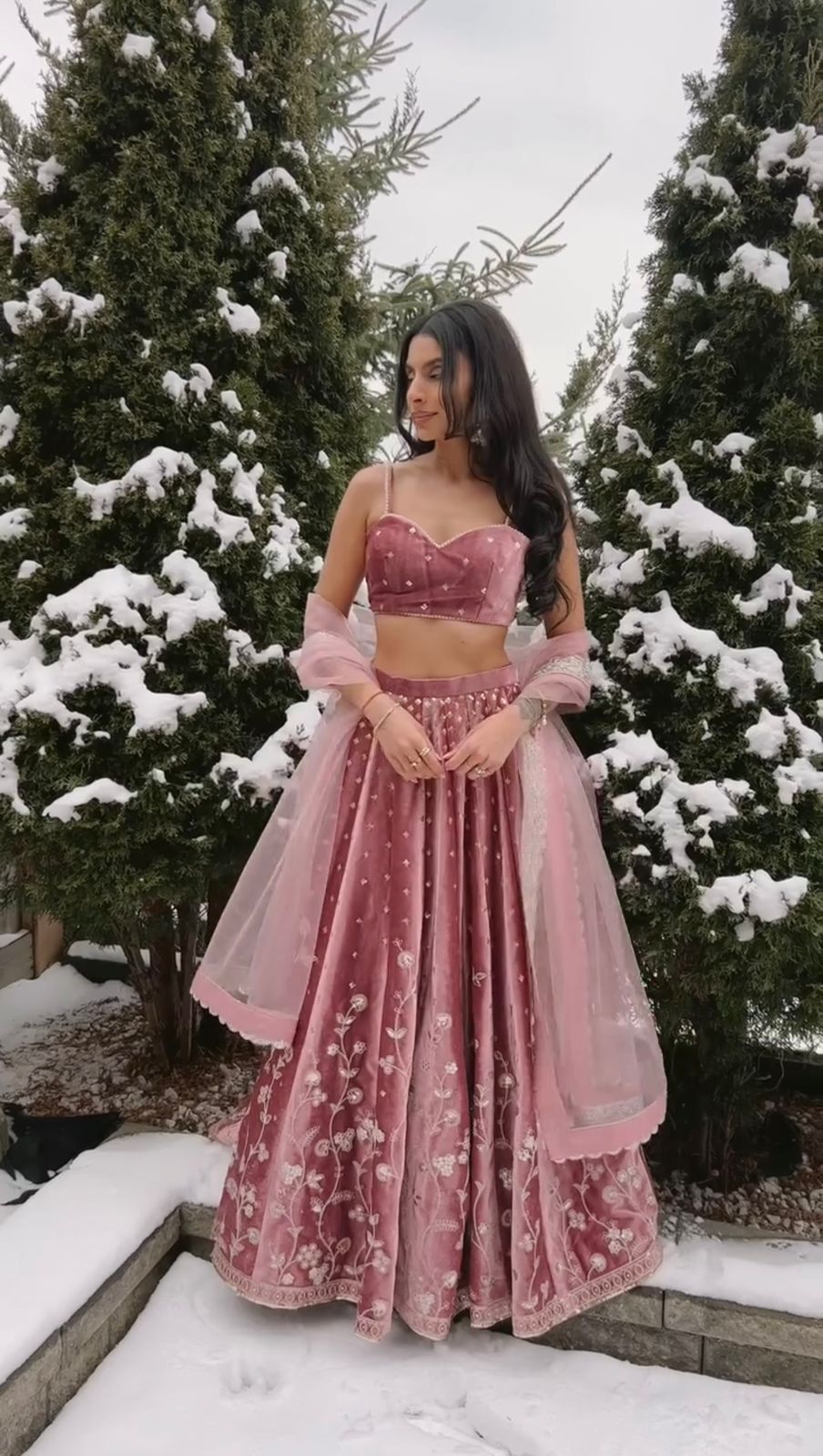
Start with the size chart rather than your usual clothing size. Compare bust, waist, hip and garment length measurements with a well-fitting lehenga or skirt you already own. Check whether the listed waist measurement refers to the body or garment measurement. A difference of 2 to 4 centimetres can determine whether the waistband feels comfortable after several hours.
Fully stitched choli shopping is useful when the event is close and you want a predictable silhouette. Ask whether the choli has seam allowance for minor alteration, whether padding is included and whether the straps or sleeves can be adjusted. A semi-stitched option is more adaptable but requires a reliable tailor and usually needs several days for fitting.
Check the lining whenever the skirt uses organza, net or a light-coloured fabric. A separate lining reduces transparency and can improve comfort against the skin. Check the hem weight as well, because a very light skirt may twist while walking and a very heavy border may pull the waist downward.
Wedding shoppers should allow at least 10 to 14 days for alterations, trial wear and any required exchange. A ready-made lehenga can be convenient for a last-minute function, but convenience doesn't remove the need for a short indoor movement test. Sit, walk, raise both arms and turn once in the outfit before removing the tags.
Ready Made Lehenga options are practical when you need a complete silhouette without coordinating separate pieces. Designer styles can suit receptions and evening celebrations, while lighter floral sets may be more comfortable for daytime events. Bridal buying requires additional attention to blouse support, skirt weight, jewellery compatibility and how long the outfit will be worn.
How can you accessorise a two piece lehenga for women who prefer no dupatta?
A two piece lehenga for women who prefer no dupatta is best accessorised with one strong focal piece and a clean neckline or shoulder area. Statement earrings, a choker, a maang tikka or a structured clutch can provide polish without recreating the visual bulk of a dupatta.
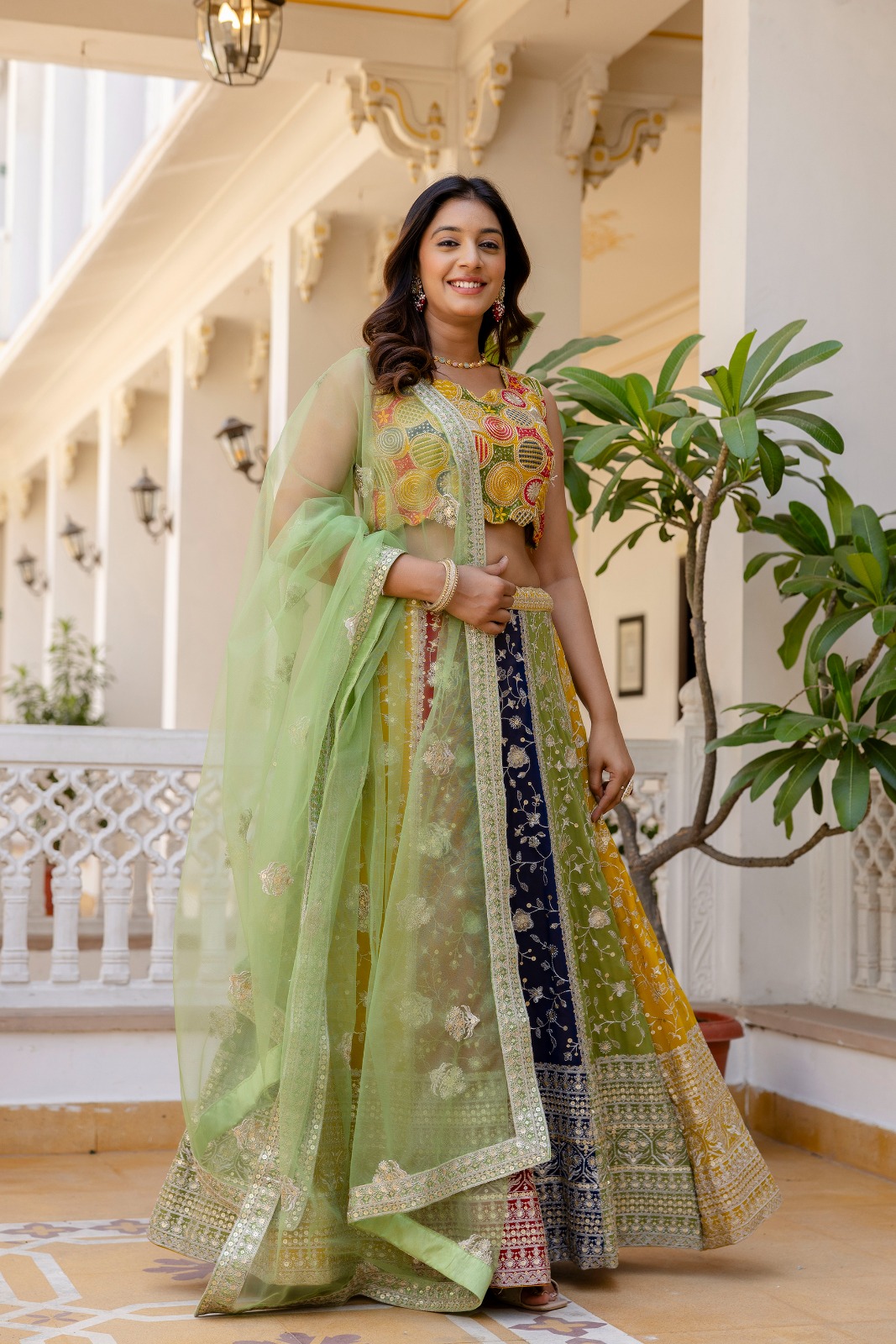
Choose earrings according to the blouse neckline. Chandbali or jhumka earrings complement round and square necklines, while long drops can echo the vertical line of a one-shoulder blouse. A choker works well with an open neckline, but it may compete with dense embroidery near the collarbone.
Footwear should be selected before finalising skirt length. Block heels offer more stability on grass, uneven floors and crowded venues. Metallic sandals coordinate easily with gold zari, while neutral heels allow a colourful lehenga to remain the focus. Keep a small pair of foldable flats available if dancing or extended standing is expected.
Hair styling also affects the balance of a dupatta-free look. A sleek bun exposes statement earrings and a high neckline. Soft waves suit floral embroidery and ruffles. A low ponytail or side braid keeps the shoulders visible without making the outfit feel overly formal.
The most convincing dupatta-free lehengas don't look as though a garment has been left behind. They look intentionally edited: the blouse fits securely, the skirt moves comfortably, the colour suits the event and the accessories support rather than overwhelm the design.
Common Questions About Wearing a Lehenga Without a Dupatta
Can I wear a lehenga without a dupatta to a wedding?
Yes, a lehenga can be worn without a dupatta to a mehendi, sangeet, reception or semi-formal wedding event. For a bridal pheras ceremony or a particularly traditional function, confirm the expected dress code before choosing a two-piece style.
What is the difference between a two-piece and three-piece lehenga set?
A two-piece lehenga set contains a skirt and choli, while a three-piece set adds a dupatta. A two-piece design is usually easier to move in, but the blouse fit, waistband and accessory choices become more important because there is no draped layer.
Is a fully stitched choli better for online lehenga shopping?
A fully stitched choli is convenient when the event is soon and the standard measurements closely match your body measurements. A semi-stitched choli offers more room for tailoring, but it requires a capable tailor and additional time for fitting.
Which fabric is most comfortable for a lehenga without a dupatta?
Georgette and chinon are comfortable choices when you want soft movement, while organza offers a crisper appearance and silk or jacquard gives a more substantial evening finish. Comfort depends on the lining, waistband and garment weight as much as on the outer fabric.
How do I stop a dupatta-free lehenga blouse from looking too plain?
Choose a blouse with one clear feature, such as threadwork, a ruffle sleeve, a one-shoulder cut, a structured neckline or coordinated zari. Statement earrings or a defined waistband can add further focus without making the outfit look crowded.
Can I wear a ready-made lehenga if my measurements fall between sizes?
Yes, but check the seam allowance, closure type and alteration options before buying. A skirt with a flexible waistband or a choli with adjustable ties is easier to modify than a tightly finished garment with little extra fabric.




