

Tripuri Risa and Rignai as Distinct Traditional Garments carry different functions within Tripuri dress, even though both are woven textiles associated with identity, community and ceremony. Risa is generally worn as an upper-body cloth, shoulder wrap or ceremonial textile, while Rignai is the lower garment wrapped around the waist. The difference isn't merely a matter of size or styling: each garment has its own place in everyday life, ritual practice, visual language and family knowledge.
Tripura's textile traditions are connected to Indigenous communities including the Tripuri, Reang, Jamatia, Noatia and others, with variations in dress, motifs and technique. Names, patterns and methods may handled between communities and households. A careful account therefore avoids presenting every woven cloth from Tripura as identical.
How do Tripuri Risa and Rignai as Distinct Traditional Garments differ?
Risa is an upper-body or shoulder cloth, whereas Rignai is a wrapped lower garment worn around the waist and legs. Risa can function as clothing, a ceremonial textile, a scarf-like wrap or a symbolically important gift. Rignai is structured primarily as the lower half of a traditional outfit.
A traditional Rignai is commonly woven as a rectangular length that can be secured around the waist and allowed to fall toward the ankles or calves. The fabric needs enough flexibility for wrapping and enough body to remain secure during movement. A Risa is also rectangular, but its dimensions and finishing make it adaptable as a shoulder covering, breast cloth, head covering or ceremonial presentation textile.
Traditional dress may be completed with another upper garment, commonly described in broader accounts as Risa or a related upper cloth depending on community and context. The terms are not always used identically across Tripura, so a museum label, artisan account or community source deserves more trust than a simplified retail description.
The two garments also create different visual emphases. Rignai forms the foundation of the silhouette and is often the most immediately recognisable lower textile. Risa frames the upper body and may draw attention to contrasting bands, borders or symbolic motifs. Together, the garments create a coordinated outfit without requiring a stitched blouse-and-skirt construction.
How did Tripuri Risa and Rignai as Distinct Traditional Garments develop?
Tripuri Risa and Rignai developed through handloom practices in which clothing, household skill and social identity were closely connected. Women's weaving traditions historically transmitted knowledge about yarn preparation, loom work, colour arrangement, motifs and garment finishing from one generation to the next.
Backstrap and pit-loom traditions have both been associated with weaving in the wider Northeast, although the specific loom, process and terminology can differ. Cotton has traditionally been important for practical garments because cotton is breathable and manageable in a humid climate. Contemporary weavers may also work with mill-spun cotton, synthetic yarns or blended materials to meet changing budgets and customer preferences.
Rignai and Risa are more than examples of attractive patterned cloth. A handwoven garment records decisions about width, tension, repeat, border placement and colour sequencing. Small irregularities can reflect human production rather than poor quality, although uneven weaving, weak selvedges or loose threads should still be assessed before purchase.
Textile history in Tripura has been shaped by changing access to commercial yarns, ready-made clothing, urban employment and institutional craft programmes. These changes don't make contemporary Risa or Rignai inauthentic by default. Useful questions include who made the garment, which community tradition it represents, how the materials were used and whether the description explains those facts honestly.
What motifs and colours distinguish Tripuri Risa and Rignai as Distinct Traditional Garments?
Motifs and colours vary by community, region, weaver and intended use, but geometric bands, contrasting borders and repeated symbolic forms are frequent visual features. Red, black, white, yellow, green and deep blue are often seen in Tripuri textile palettes, although modern pieces may introduce pink, teal, rust or other fashion-led shades.
Geometric patterning works especially well on a narrow loom because repeated stripes, stepped forms and small bands can be built into the weave with careful counting. The visual effect may look simple from a distance, but a repeated motif requires consistent tension and an exact sequence of colours. Border design can distinguish one textile from another without relying on surface embroidery or printed decoration.
Some discussions of Tripura textiles refer to motifs and terms such as Chamathwi bar and Mwtai, but motif names and interpretations should not be detached from their community context. A retailer should not automatically label every diamond, cross or zigzag design as a specific Indigenous symbol. Symbolic meaning is strongest when supported by a weaver, community institution or reliable ethnographic source.
Colour has practical and social dimensions. Darker grounds can tolerate frequent handling, while bright contrasting bands make ceremonial textiles visually prominent. A Risa intended for a festival, wedding or ritual exchange may receive more elaborate borders than a daily-use cloth. Colour preferences also evolve, which explains why a contemporary handloom Rignai may retain a traditional structure while using a palette chosen for present-day wardrobes.
When are Tripuri Risa and Rignai as Distinct Traditional Garments worn?
Risa and Rignai are worn in everyday, festive and ceremonial settings, but the exact combination depends on community, age, family practice and event. Rignai serves as the traditional lower wrap, while Risa can function as an upper garment, shoulder covering, ceremonial gift or textile with ritual significance.
Festivals, weddings and community gatherings often create occasions for wearing carefully selected handwoven textiles. A Risa may be folded over the shoulder, wrapped across the upper body or presented during a formal exchange. In some contexts, a Risa has significance beyond personal clothing because it can represent welcome, respect, kinship or participation in a community ceremony.
The Haldi ceremony provides an useful comparison with wider Indian clothing customs because colour, movement and practicality matter during pre-wedding celebrations. A Rignai or Risa may be chosen for a bright festive palette, but the garment should not be treated as a generic tribal-print costume. The wearer's relationship to Tripuri culture and the setting of the gathering should guide the choice.
Risa is also known in discussions of Tripura as a textile that may be given to guests or used in ceremonial hospitality. Practices differ, and no single description covers every community. Asking a host, elder or cultural practitioner how a textile should be worn is more respectful than assuming that a familiar drape from another Indian tradition can be transferred unchanged.
How are Tripuri Risa and Rignai as Distinct Traditional Garments woven?
Risa and Rignai are commonly created by arranging yarns on a handloom and building colour and pattern into the cloth, although contemporary production includes varied materials and techniques. The structure of a woven motif comes from the interaction of warp threads running lengthwise and weft threads inserted across the width.
A weaver must prepare the warp at the correct length, establish the intended width and maintain consistent tension. Borders and pattern bands demand additional concentration because a small counting error can interrupt a repeat across the textile. Finishing includes securing the ends, checking the selvedges and trimming or knotting loose threads.
Handwoven Risa and Rignai should not be judged by the same standard as a factory-printed fashion fabric. The front and reverse may show slight differences in colour density, and the edges may have minor variation. Strong craftsmanship still matters: the cloth should not have large holes, severe slubs, unstable dyes or a border that pulls the fabric out of shape.
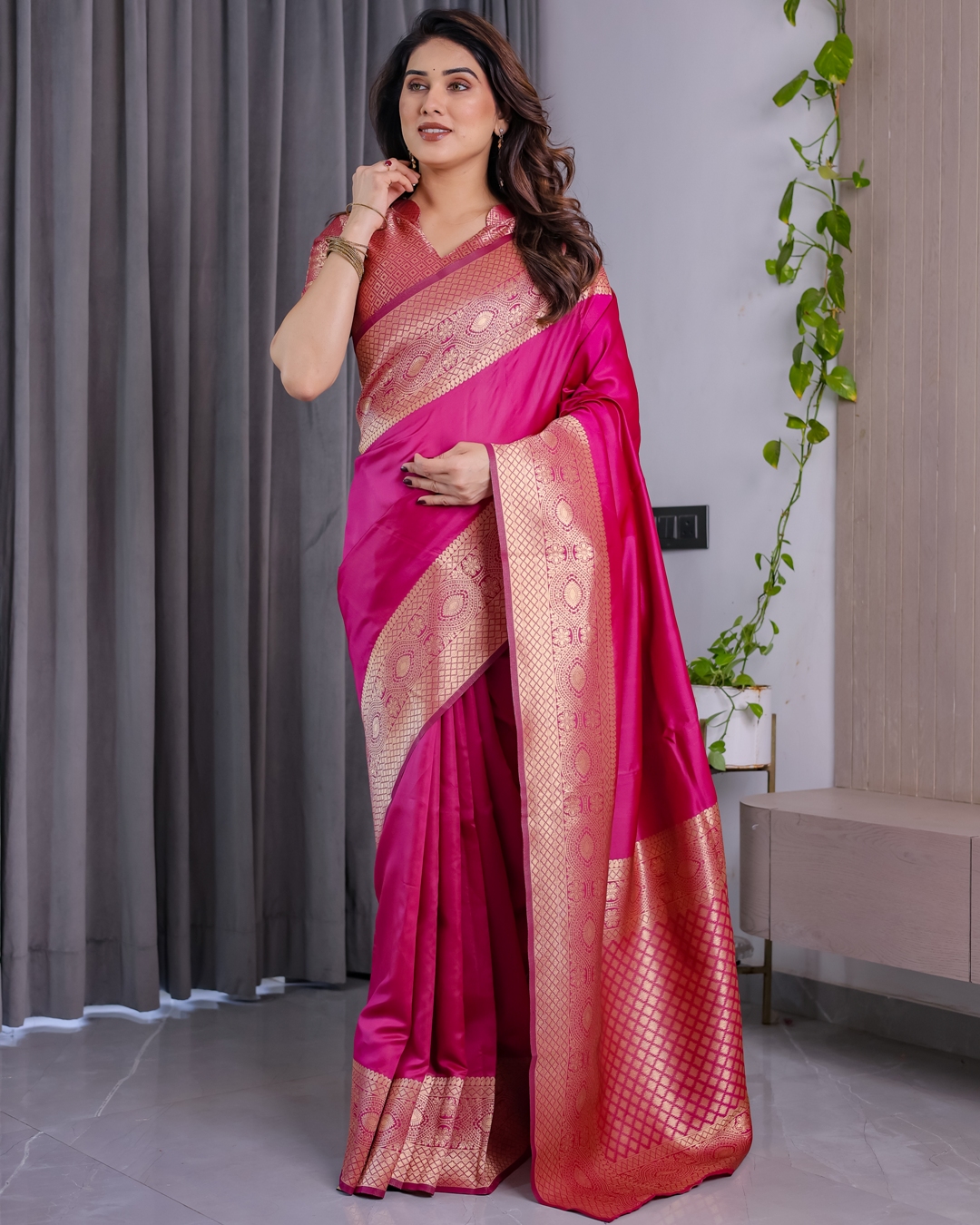
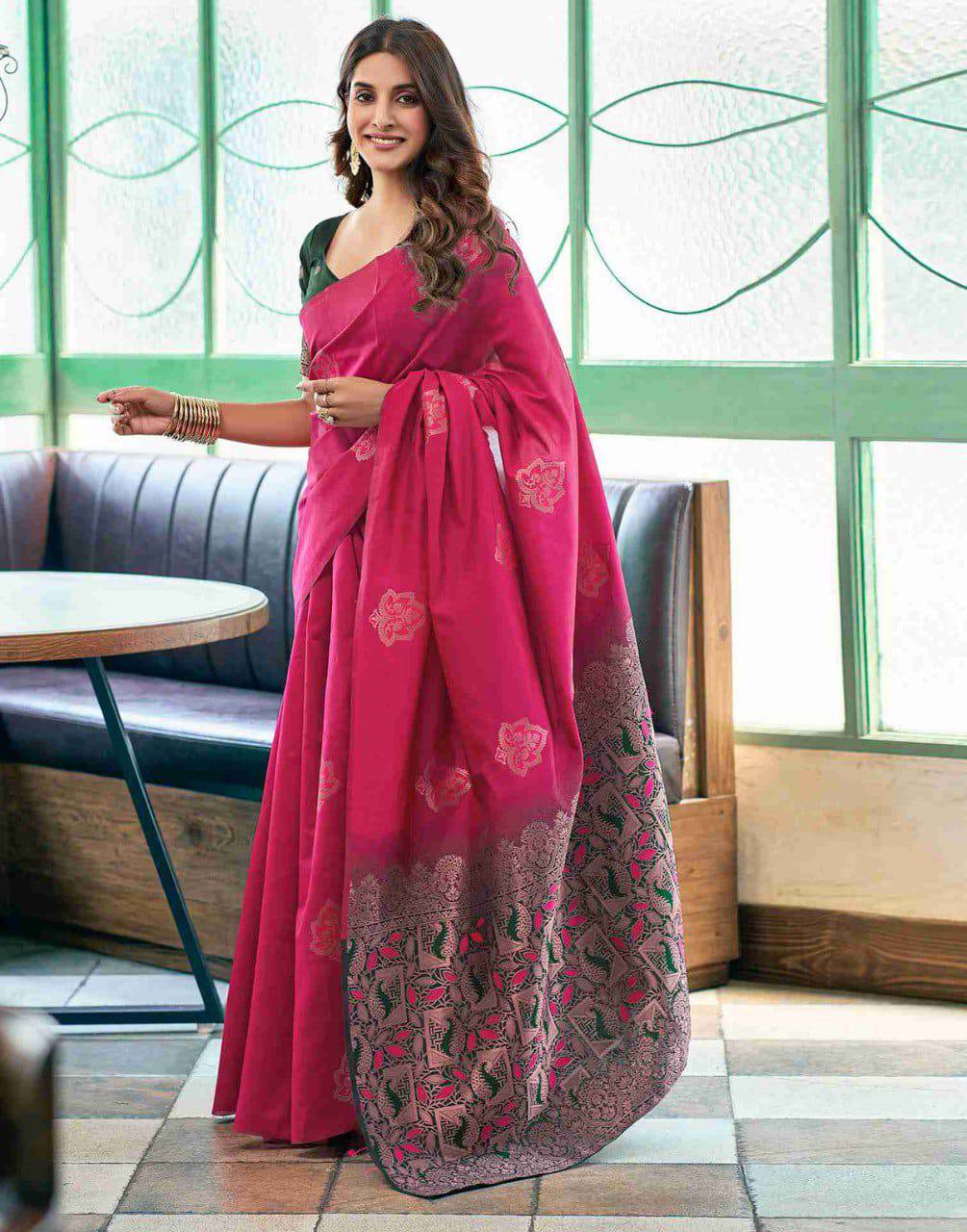
Buyers comparing textiles should ask whether the motif is woven, embroidered, printed or jacquard-produced. A woven pattern is part of the fabric structure, while a print sits on the surface. A jacquard border, such as the border on Buy Rani Pink Banarasi Silk Saree with Jacquard Zari Border, belongs to a different silk-saree tradition and should not be described as a Tripuri Rignai merely because the garment has a geometric design.
How can Tripuri Risa and Rignai as Distinct Traditional Garments be styled today?
Current styling works best when Risa and Rignai remain recognisable as culturally specific garments rather than being reduced to decorative fabric. Pairing a Rignai with a simple, well-fitted upper garment can preserve the wrapped silhouette, while wearing Risa as a shoulder cloth can keep its visual role clear.
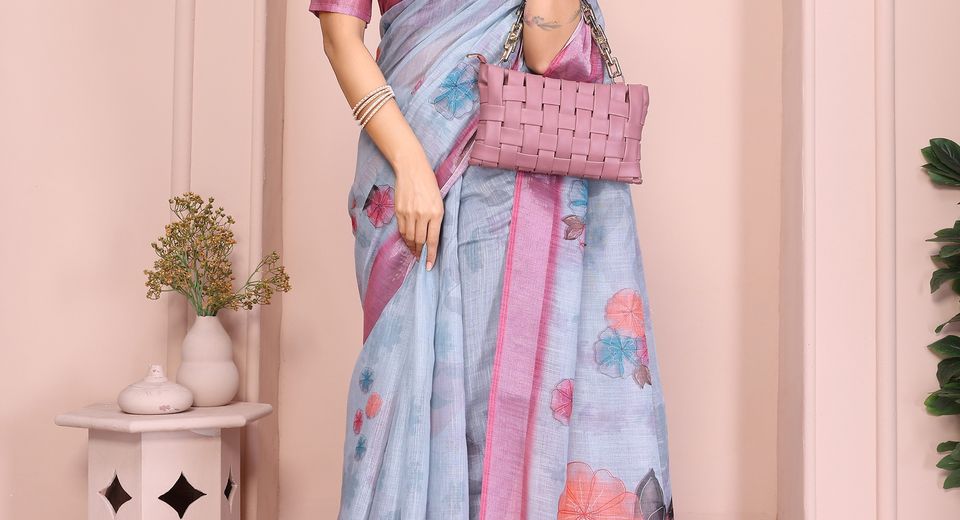
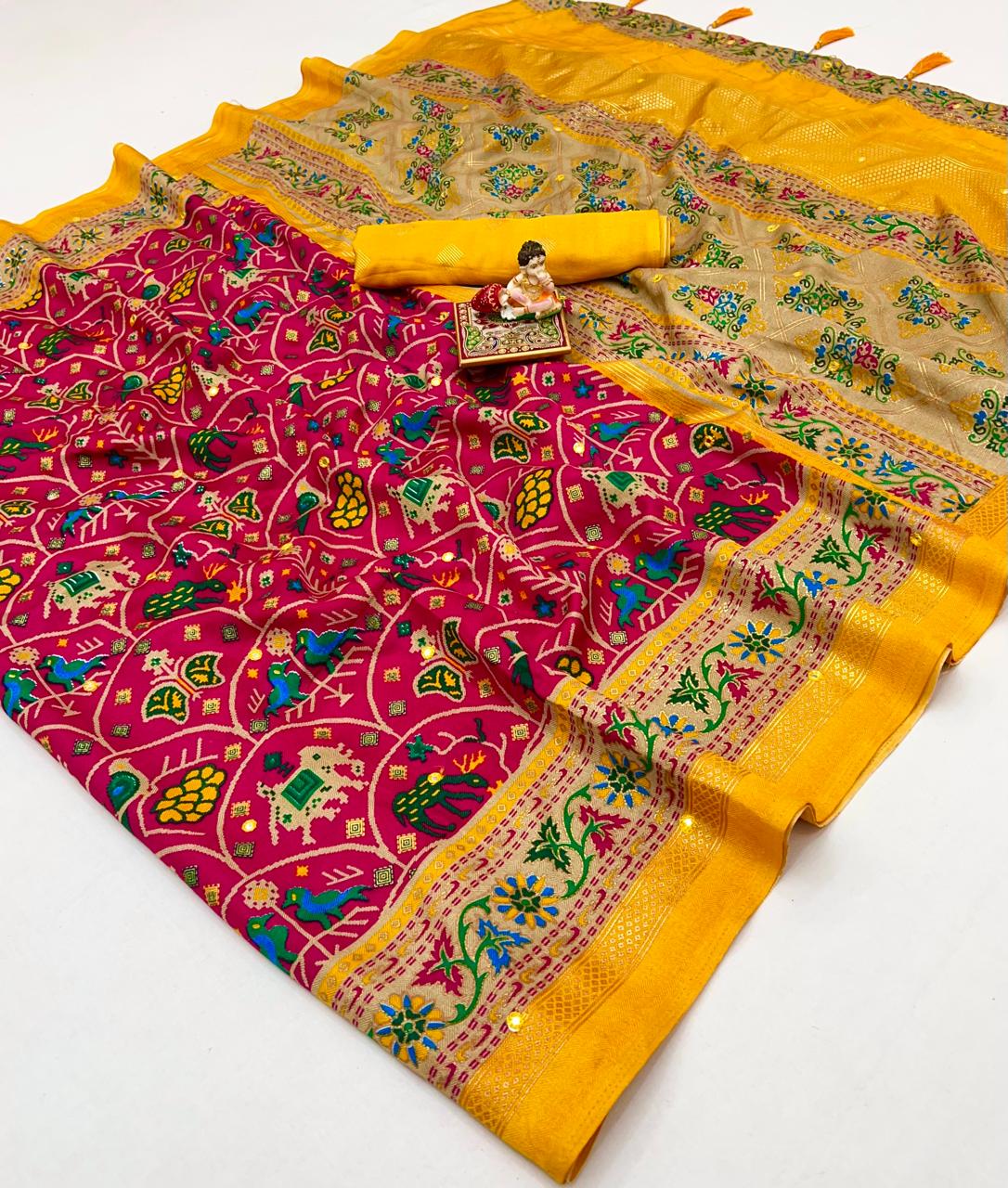
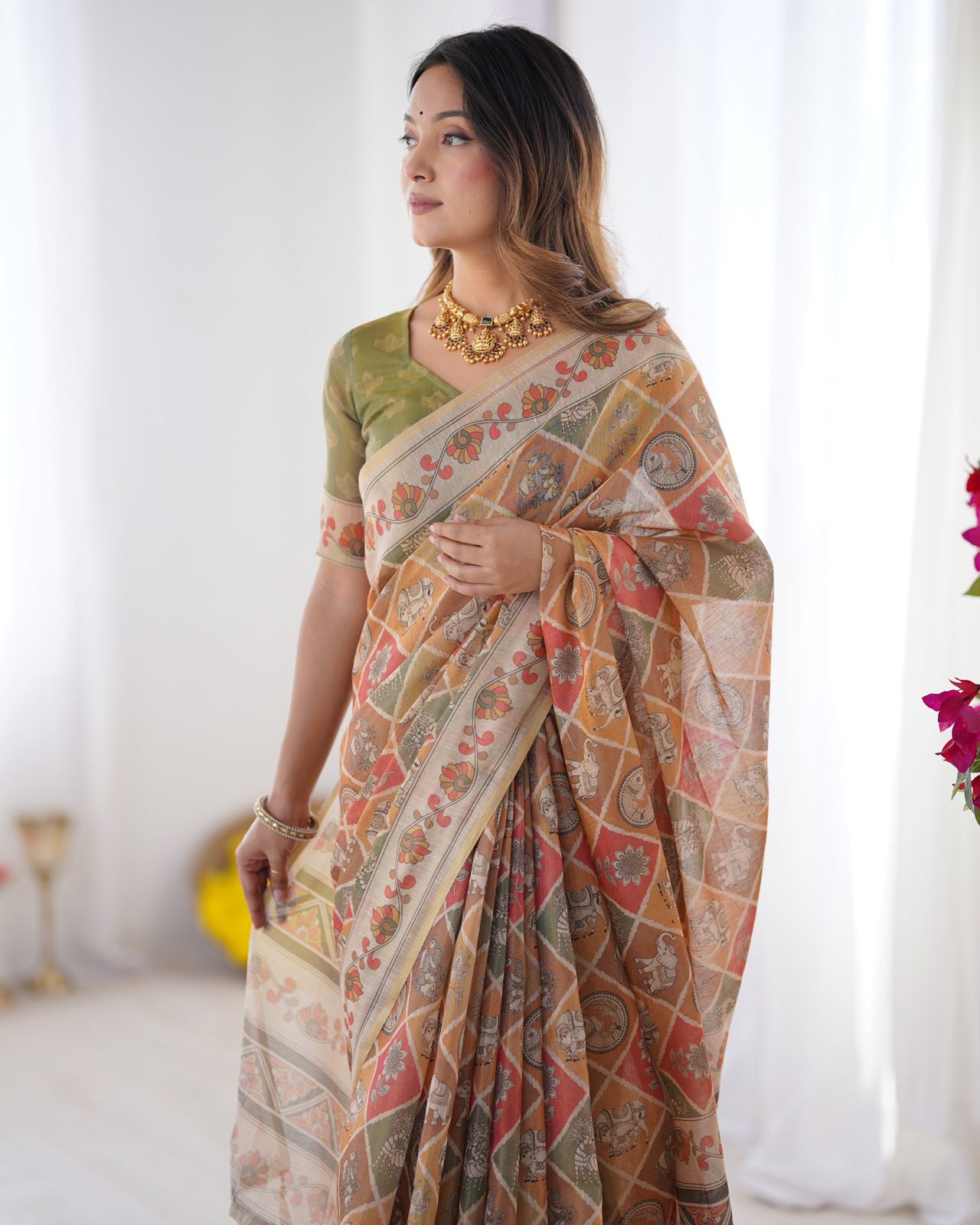
A contemporary wardrobe can use colour relationships without pretending that unrelated textiles are Tripuri. Rani Pink Lichi Silk Saree With Jacquard Border Pallu and Rani Pink Banarasi Soft Silk Saree With Golden Zari Borders may suggest ways to coordinate pink, gold and deep contrast, but Banarasi silk and zari belong to different weaving histories. Designer Rani Pink Patola Print Pashmina Silk Festive Saree similarly demonstrates how patterned luxury textiles can be styled, not how to reproduce a Tripuri garment.
For a formal event, a plain blouse or understated kurta can prevent a patterned Rignai from competing with excessive jewellery. Flat footwear is practical when a wrapped lower garment needs room for movement. A Risa can be folded with the patterned section visible, but repeated pinning through delicate handwoven areas can damage the yarns.
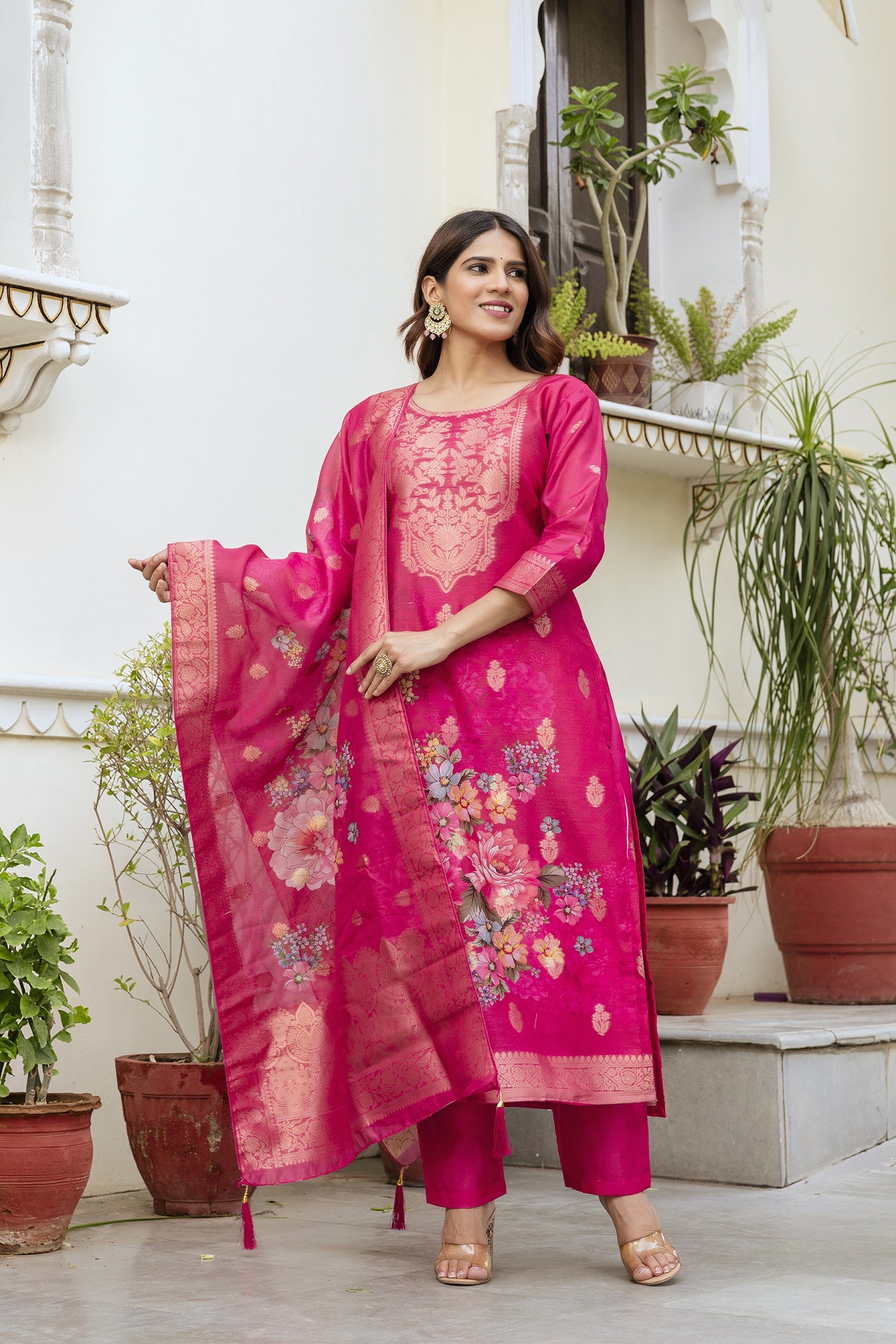
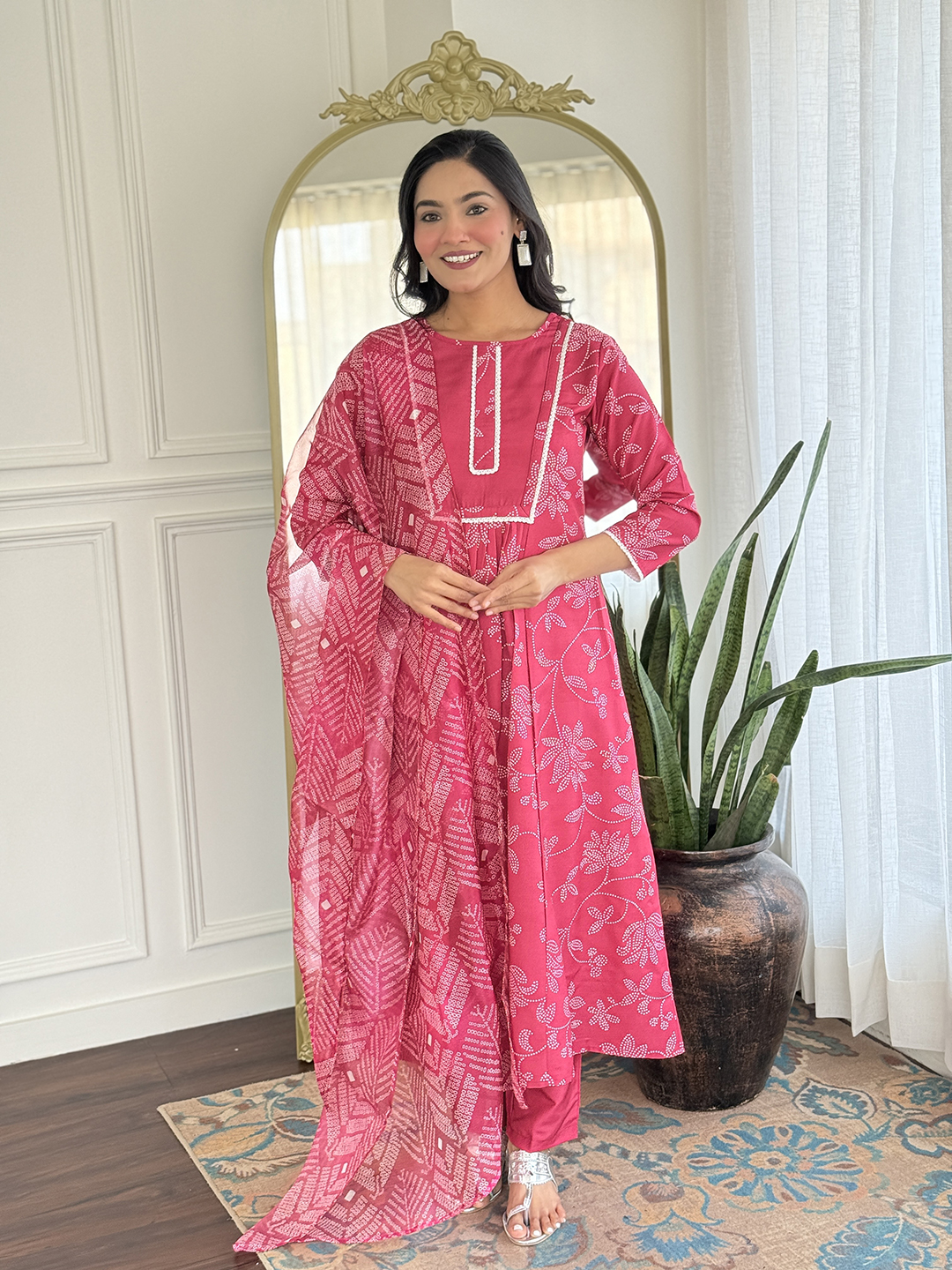
Other garments can help illustrate colour coordination without being mistaken for cultural equivalents. Rani Pink Floral Woven Chanderi Kurti Set Women offers an useful example of balancing a bright ground with woven floral detail. Teal Rust Floral Satin Saree with Printed Pallu and Borders shows how teal and rust can work together in festive dressing. Rani Pink Crepe Embroidered Kurta Pant Dupatta Set demonstrates a stitched three-piece silhouette that differs structurally from a wrapped Rignai and shoulder-worn Risa.
Rani Pink Banarasi Soft Silk Saree With Golden Zari Borders is another example of why textile naming matters: Banarasi soft silk, zari borders and Tripuri handloom garments should be credited to their own traditions. Respectful styling includes accurate descriptions, acknowledgement of cultural origin and avoidance of costume language when wearing a community-specific textile.
How should Tripuri Risa and Rignai as Distinct Traditional Garments be cared for?
Care depends on fibre, dye and finishing, but gentle hand washing or professional dry cleaning is safer than routine machine washing for a handwoven Risa or Rignai. Always check the maker's instructions before exposing the textile to water.
Test colourfastness on a concealed edge with a white cotton cloth dampened with cool water. If colour transfers noticeably, keep the garment dry-cleaned or wash it separately under specialist guidance. Avoid bleach, optical brighteners, hot water and prolonged soaking because those treatments can weaken yarns and cause contrasting bands to bleed.
Dry the textile flat or over a broad, padded line away from direct harsh sunlight. Folding a fully dry garment along different lines every few months helps prevent a permanent crease. Store Risa and Rignai in breathable cotton rather than airtight plastic, and keep them away from damp walls, perfumes and jewellery with sharp hooks.
Inspect selvedges, borders and wrapped areas before each important use. Small loose ends can be secured by an experienced textile repairer, but pulling a thread can enlarge a damaged section. Proper care preserves not only the cloth's appearance but also the labour, technique and cultural knowledge represented in the weave.
Why do Tripuri Risa and Rignai as Distinct Traditional Garments matter today?
Risa and Rignai matter because they connect clothing with community identity, embodied knowledge, ceremony and living craft rather than treating dress as a static museum object. Their continued relevance depends on fair recognition of weavers and accurate explanations of how the garments are made and worn.

For buyers, the most useful practice is to ask precise questions. Ask whether the textile is handwoven, which fibre was used, which community tradition it represents, whether the motifs have a documented meaning and how the garment should be cared for. A transparent answer is more valuable than an unsupported claim of authenticity.
For wearers, respect can be practical. Learn the correct name, avoid mixing a sacred or ceremonial use with novelty styling, credit the cultural source and follow local guidance about draping. These steps allow contemporary wardrobes to engage with Tripuri textile heritage without flattening distinct garments into one fashionable category.
Common Questions About Tripuri Risa and Rignai
What is the main difference between Risa and Rignai?
Risa is primarily an upper-body, shoulder or ceremonial cloth, while Rignai is a wrapped lower garment worn around the waist and legs. Both are woven textiles, but they serve different structural and cultural roles in Tripuri dress.
Can Risa be worn as a scarf?
Risa can be worn over the shoulder or used as a scarf-like wrap in some contemporary settings. The appropriate drape depends on the community, occasion and specific textile, so local guidance is preferable for ceremonial use.
Is every colourful woven cloth from Tripura a Rignai?
No. Rignai refers to a traditional lower wrap, not simply any colourful textile made in Tripura. Fibre, construction, community terminology, garment dimensions and intended use should all be considered before applying the name.
What motifs are found on Tripuri Risa and Rignai?
Geometric bands, repeated borders and contrasting colour blocks are common visual features, while particular motifs and names vary by community and weaver. A design should not be assigned a specific symbolic meaning without reliable cultural or artisan evidence.
How should a handwoven Risa or Rignai be washed?
Gentle hand washing in cool water or professional dry cleaning is generally safer than machine washing, but the maker's instructions should take priority. Avoid bleach, hot water, long soaking and harsh sunlight, and test for colour bleeding first.
Can Risa and Rignai be worn with modern clothing?
Yes, contemporary styling can pair a Rignai with a simple upper garment or place a Risa over a modern outfit. Accurate naming, respect for community guidance and avoiding costume-like treatment are essential when styling culturally specific textiles.




