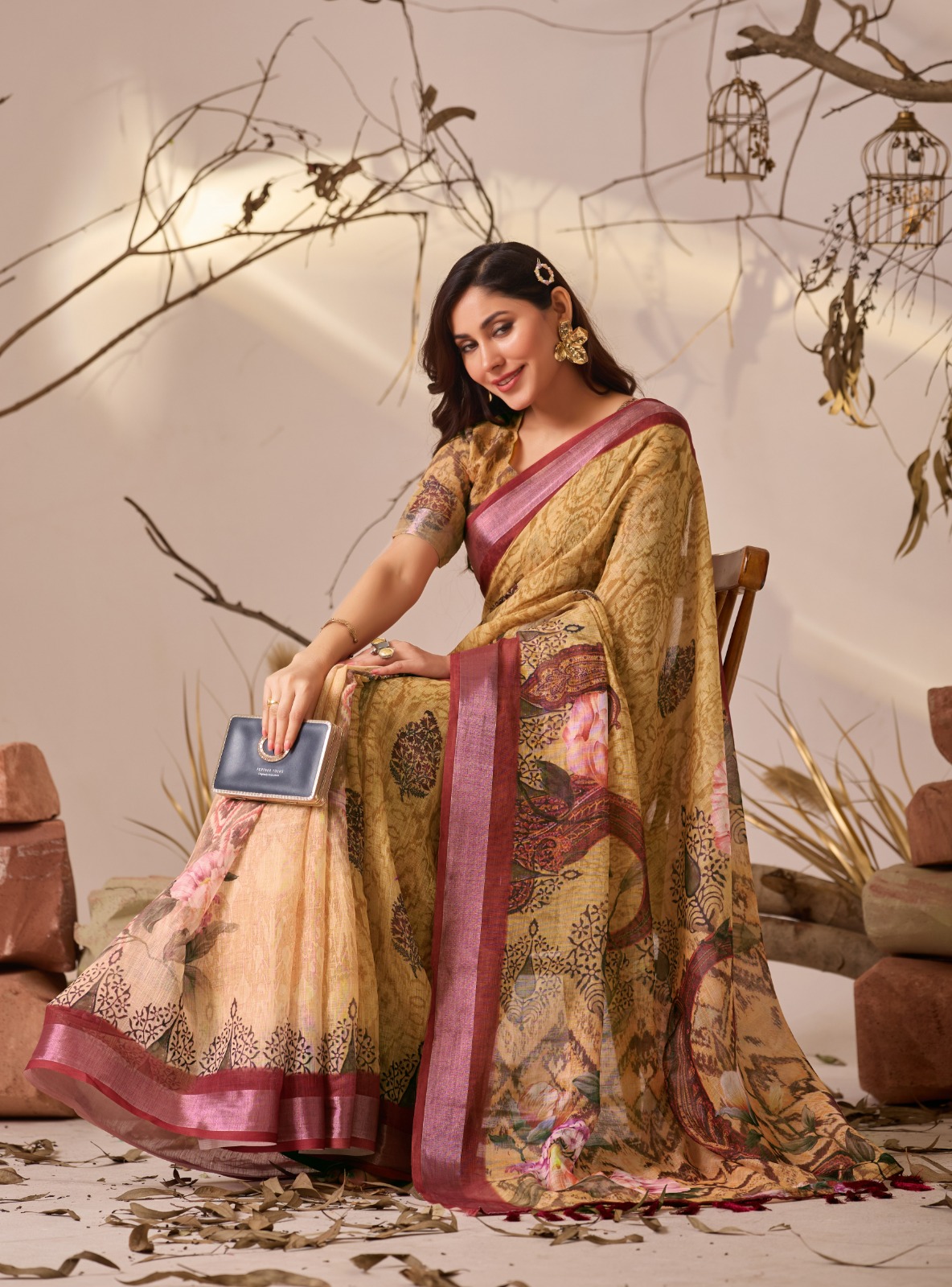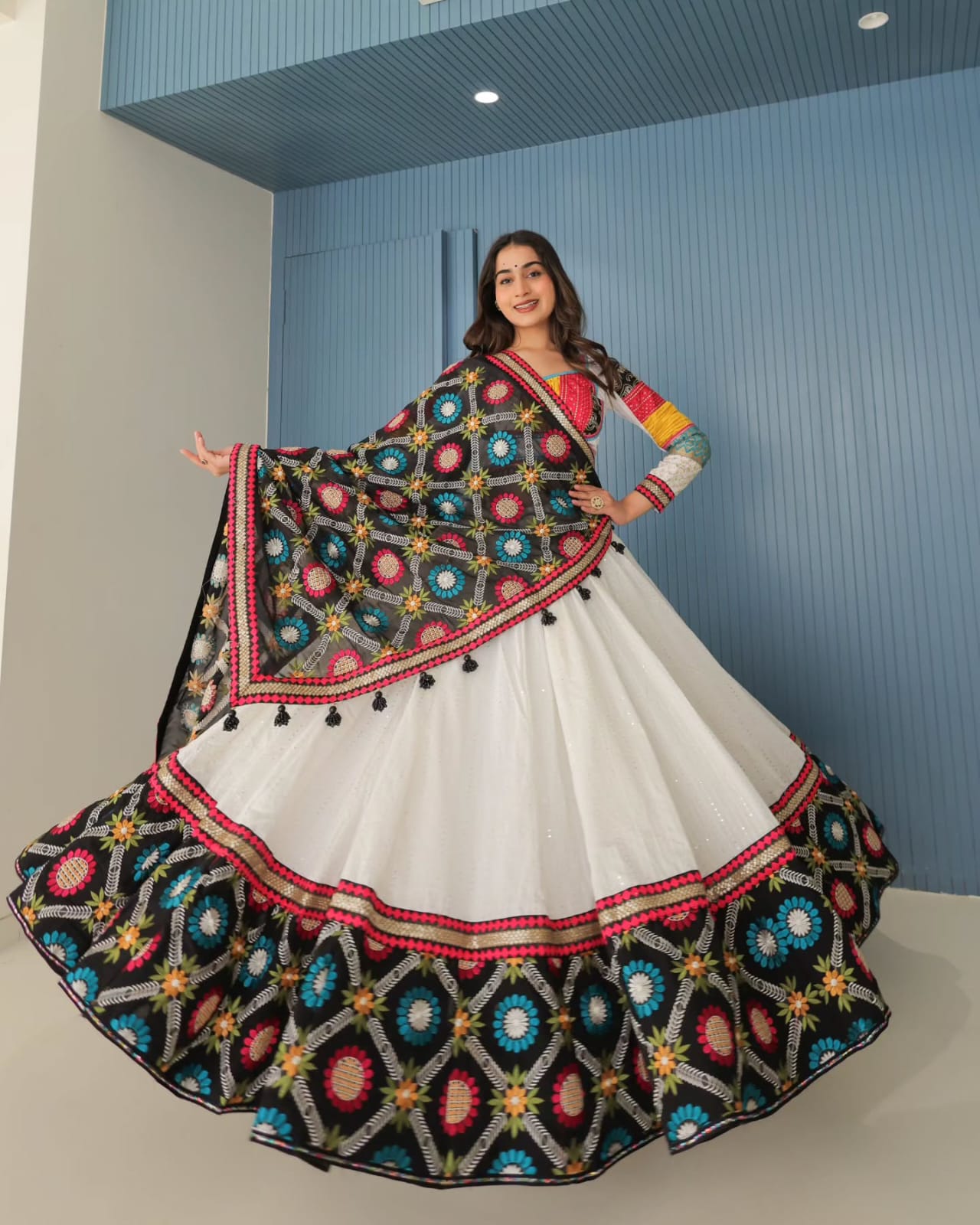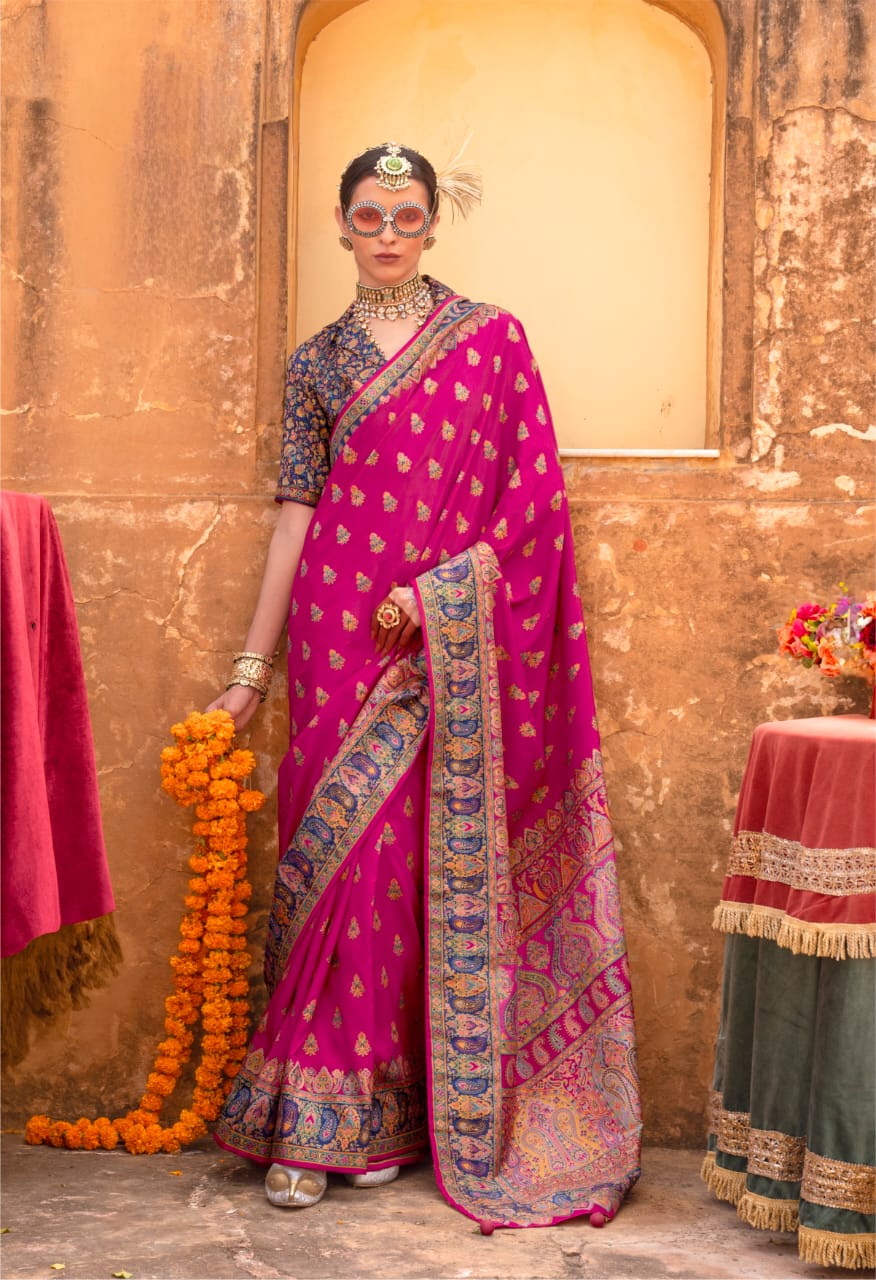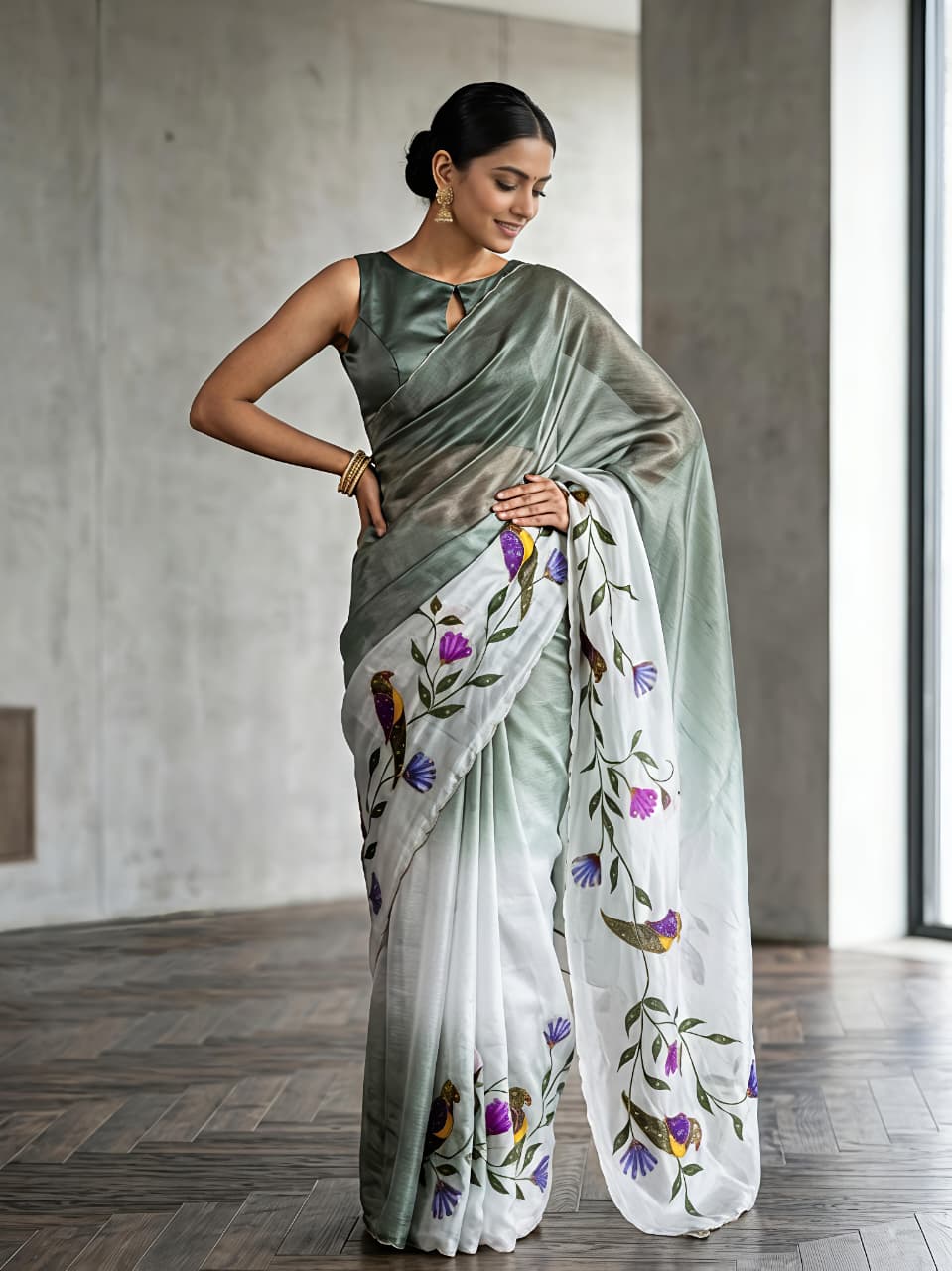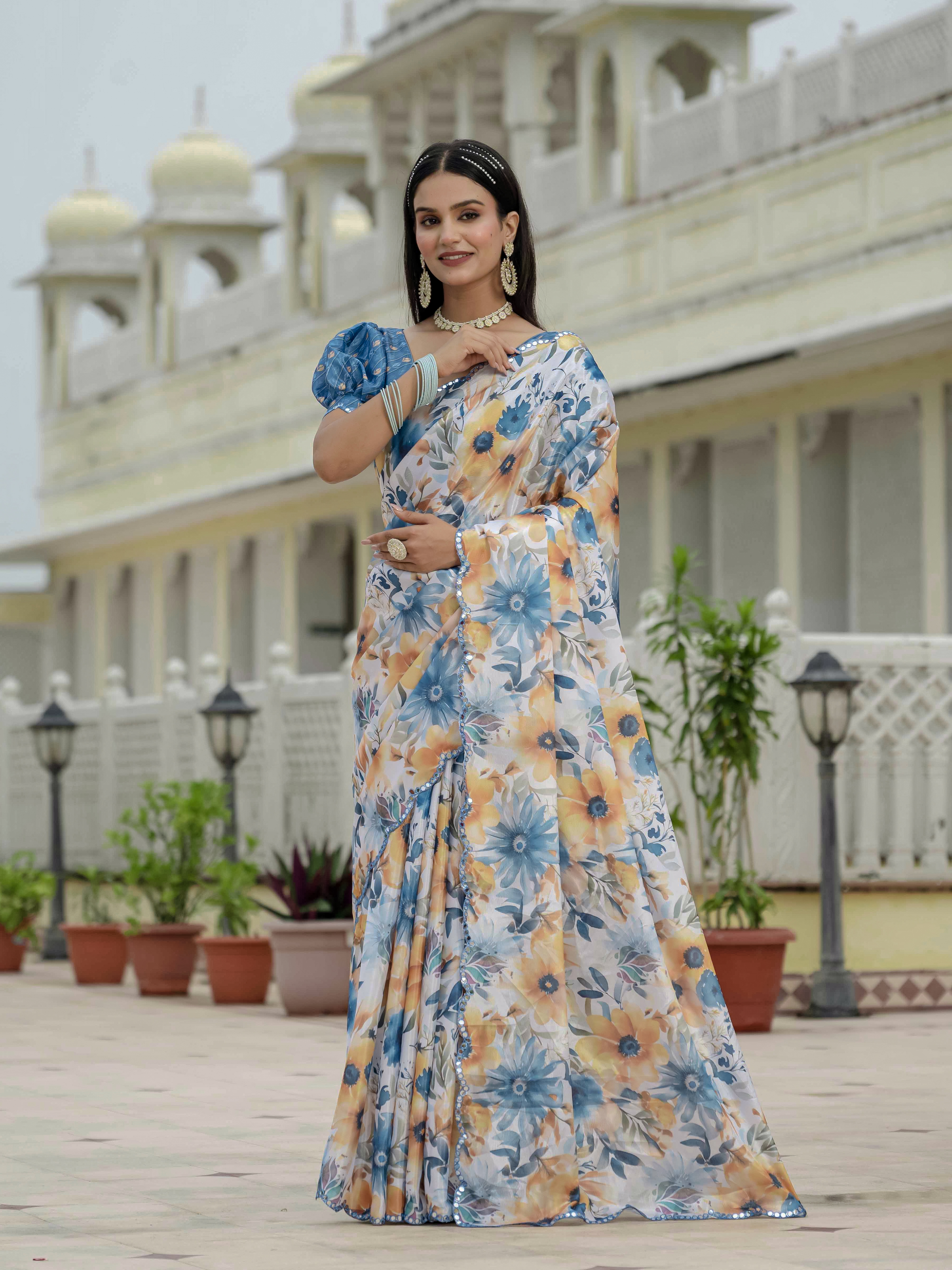
A blouse can change the cultural mood of a saree more dramatically than a new drape or a heavier border. Tribal-Inspired Blouse Designs for Traditional Sarees use earthy colour, repeated geometry, visible texture and craft references to create that change without making a heritage saree look costume-like. The most successful pairing depends on proportion: a busy blouse needs a calmer saree, while a plain handloom saree can support stronger pattern, jewellery and sleeve detail.
The word "tribal" covers many distinct communities, textiles and visual languages across India, so styling should avoid treating every geometric print as interchangeable. Warli painting, Gond art, Bhil dot work, Toda embroidery, Kutch mirror work and Odisha ikat each have different histories. A blouse can take inspiration from colour, rhythm or texture while still allowing the saree and its regional identity to remain visible.
What defines Tribal-Inspired Blouse Designs for Traditional Sarees?
Tribal-Inspired Blouse Designs for Traditional Sarees usually combine natural-looking colour, rhythmic motifs, tactile fabric and simple structural cuts. Common visual cues include diamonds, stripes, dots, chevrons, stylised leaves, animal forms, contrast piping, mirror-like accents and hand-drawn patterns.
These details work because they create a clear visual vocabulary. Rust, indigo, mustard, black, off-white, madder red and deep green feel grounded beside cotton, silk-cotton or textured handloom sarees. A repeated border on the blouse can echo a saree pallu, while an unprinted sleeve can prevent a patterned bodice from overwhelming the drape.
Authenticity doesn't require wearing a head-to-toe folk-art print. A small reference can be more effective: a narrow contrast band at the sleeve edge, a geometric back tie, a textured yoke or a blouse in naturally uneven cotton. The aim is a considered relationship between motifs and materials, not a collection of unrelated "ethnic" details.
Which saree fabrics pair well with tribal-inspired blouse details?
Cotton, linen, Chanderi, silk-cotton, tussar and relatively matte silk sarees pair especially well with tribal-inspired blouse details because their texture supports earthy motifs without excessive shine.
Cotton and handloom sarees
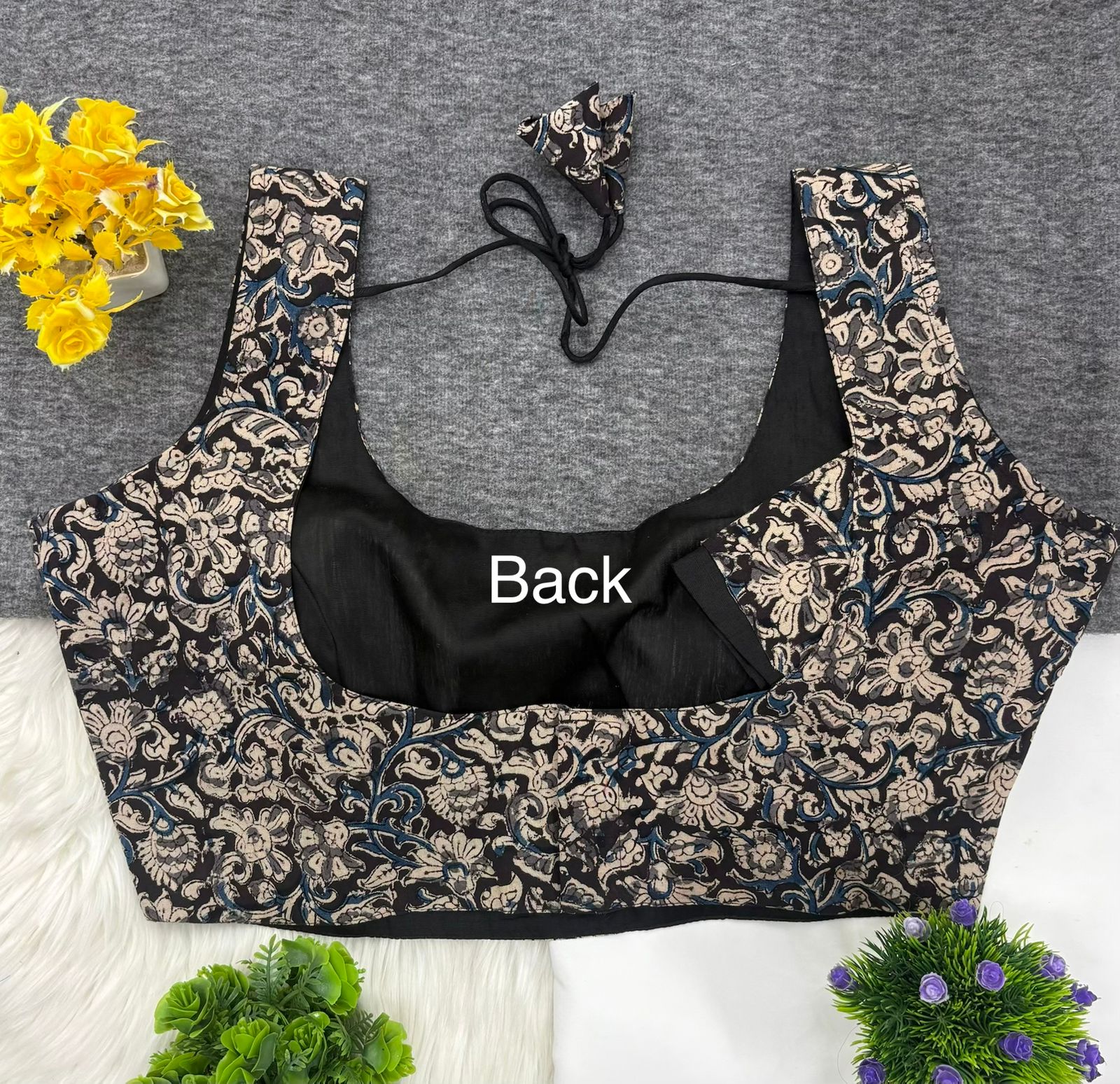
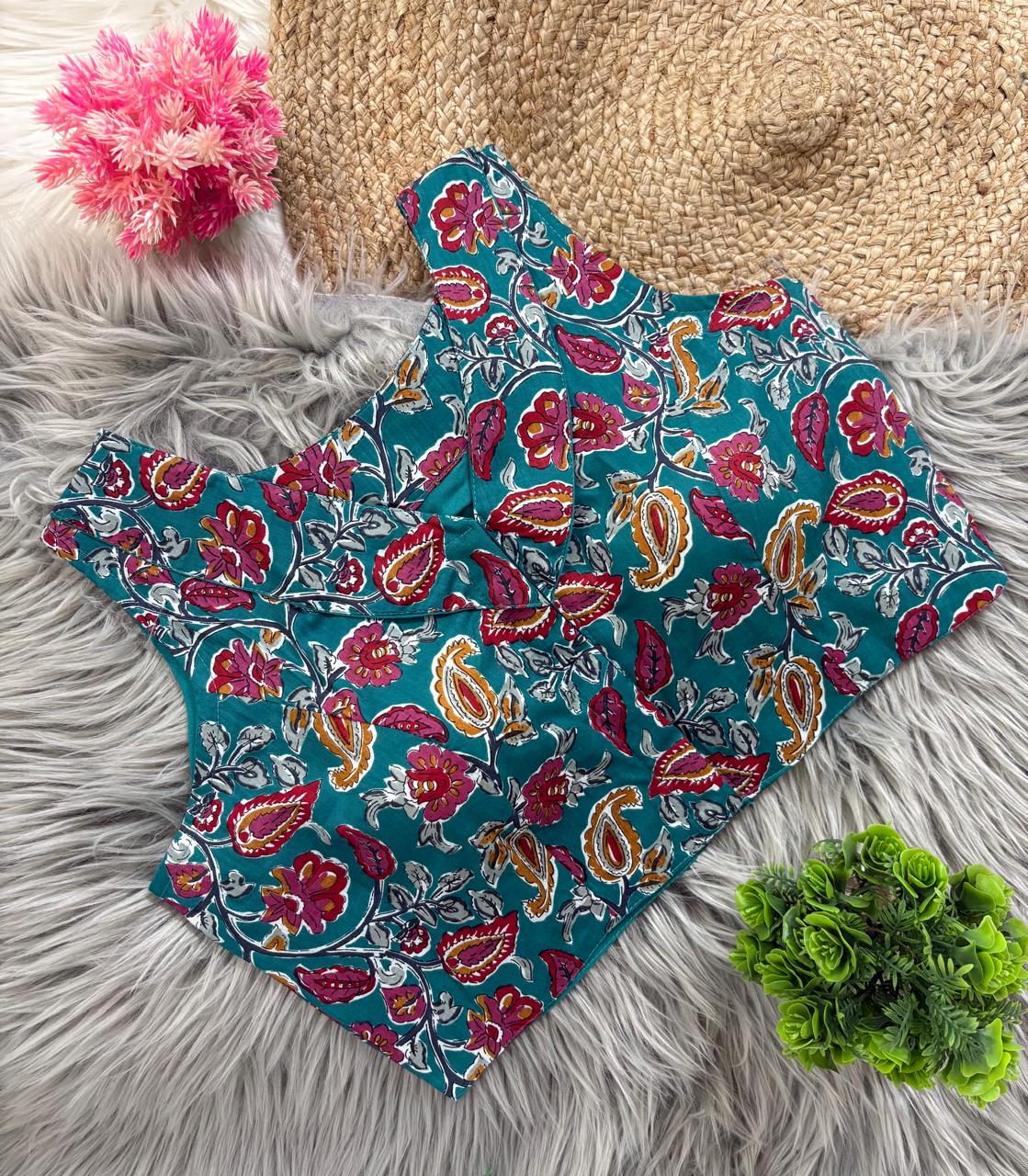
Handloom cotton sarees are the easiest starting point for this style. A black-and-white cotton saree can take a rust or indigo blouse, while a striped red cotton saree can be balanced with a plain blouse that repeats one stripe colour. Kalamkari cotton brings painted botanical and narrative forms, making it suitable for a blouse that needs visual character without metallic embellishment.
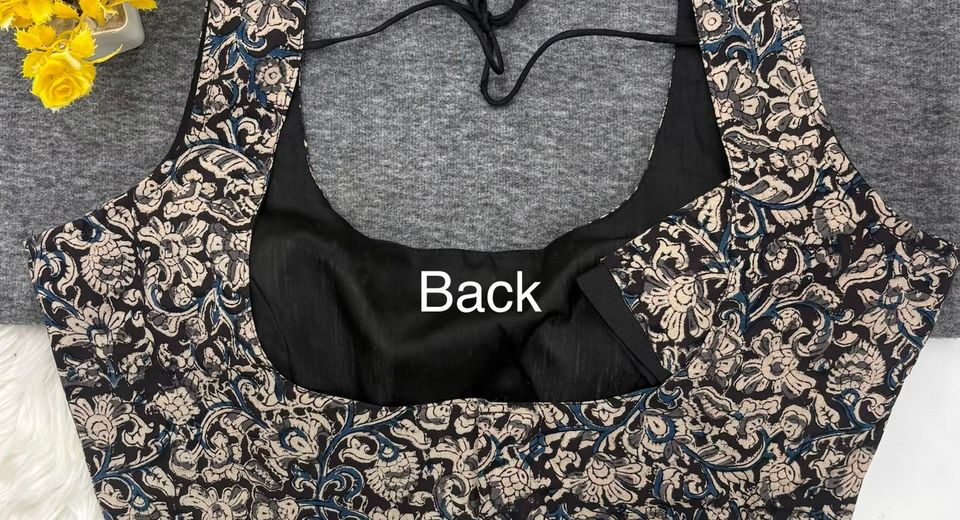
Pure Kalamkari Cotton Padded Blouse for Women illustrates how a printed cotton blouse can add structure to a traditional drape. Pair the blouse with a plain off-white, rust, olive or deep brown saree so the Kalamkari pattern remains readable. A small oxidised silver earring and a fabric potli can complete the look without competing with the print.
Chanderi, tussar and silk blends
Chanderi and tussar need a slightly lighter interpretation because their surfaces already have sheen or slub texture. A blouse with a matte weave, small geometric print or narrow contrast border keeps the combination elegant. Avoid placing dense mirror work, a glossy satin blouse and a heavily zari-edged saree together unless the event specifically calls for maximal festive dressing.
Banarasi silk can also work with tribal-inspired styling when the blouse is restrained. Choose a solid blouse in rust, charcoal, forest green or muted gold, and let the Banarasi silk zari carry the formal richness. Strong folk print on both a Banarasi silk saree and blouse can blur the details of the weave, especially in photographs.
How should colour and motif scale be balanced?
Balance colour and motif scale by allowing one garment to lead and the other to support it. A large blouse motif usually needs a plain saree, while a small blouse motif can sit beside a narrow-striped or lightly bordered saree.
A useful three-colour method is to select one base, one echo and one accent. For example, an indigo saree can meet an off-white blouse with rust motifs; the indigo becomes the base, off-white connects the garments, and rust supplies contrast. A mustard saree can work with a brown blouse and a small black geometric pattern. More than four strong colours may make the outfit look visually fragmented unless the saree itself is very simple.
Motif scale should also relate to the wearer's frame and the saree's border. A wide blouse print can be flattering when the saree has a narrow edge because it creates a clear focal area. A densely patterned saree benefits from a blouse with motifs under 2 to 3 centimetres in repeat, or from a solid blouse with textured finishing.
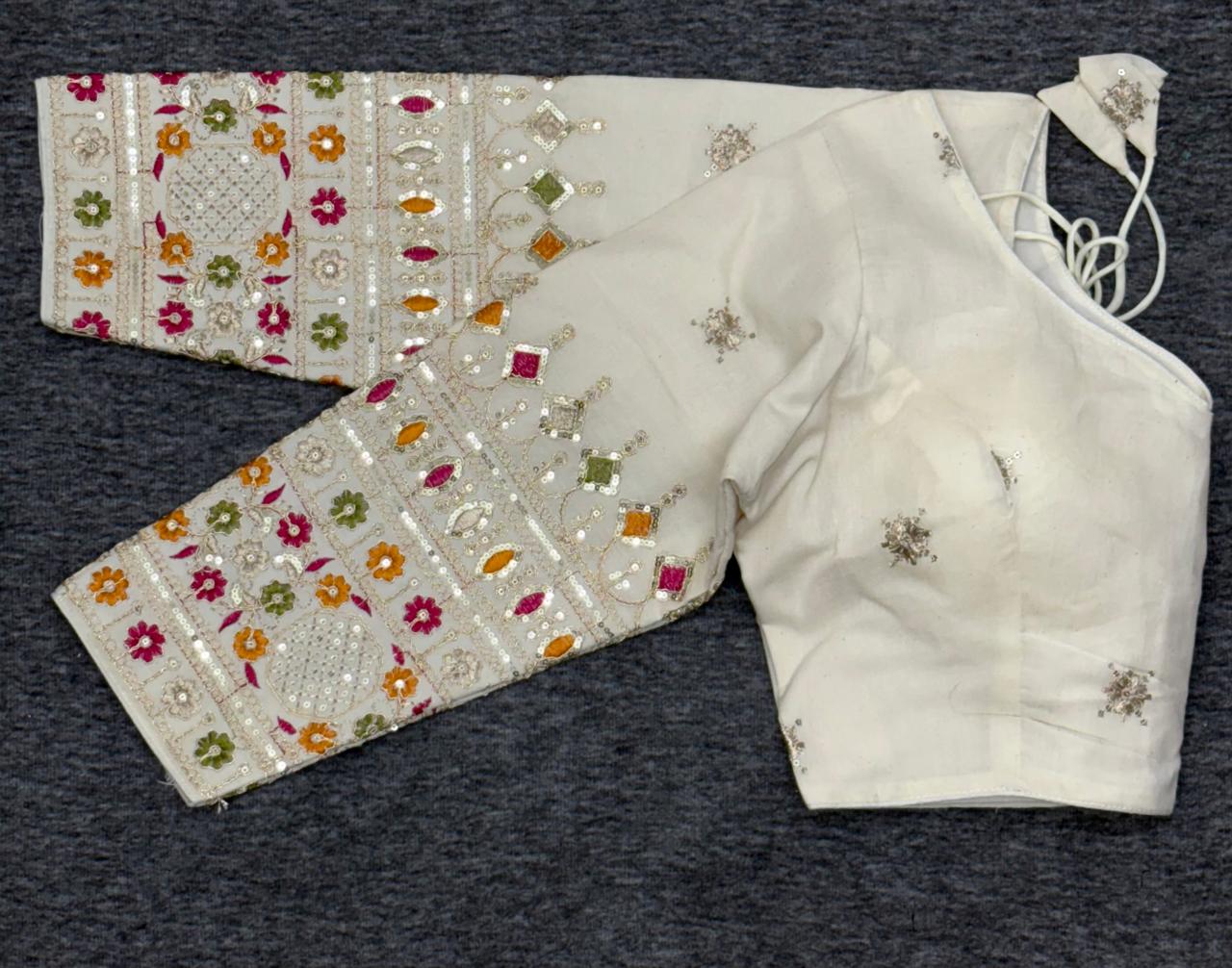
Classic Festive Wear Blouse for Stylish Saree Look is useful when a saree already contains a strong woven border or zari pallu. Its role can be that of a clean anchor rather than another competing artwork. Add tribal character through oxidised jewellery, a woven belt or a patterned clutch instead of forcing every element into the same print language.
Which necklines and sleeves suit a traditional saree?
Round, square, V-neck, collar and modest boat necklines suit a traditional saree; the best choice depends on the saree's formality, the jewellery and the amount of pattern on the blouse.
Necklines that clarify the look
A V-neckline lengthens the upper body and leaves space for a short necklace or a layered bead strand. A square neck gives a stronger architectural frame to geometric motifs. A high round neck works well with statement earrings, while a collar creates a sharper contemporary contrast against a soft cotton drape.
Kalamkari Cotton V Neck Collar Blouse for Women demonstrates how a collar and V-neck can coexist without making a traditional saree look overly formal. A collar is particularly effective with a simple handloom saree, a narrow waist belt or a neat front tuck. Keep the necklace short or omit it when the collar has contrast piping.
Sleeves and proportion
Elbow-length sleeves are versatile for family ceremonies, cultural events and daytime celebrations. Short sleeves keep cotton sarees light and practical, while sleeveless cuts create a more contemporary silhouette when the saree has a full pallu and substantial border. Three-quarter sleeves can visually balance a broad pallu and are useful when the blouse has a deeper neckline.
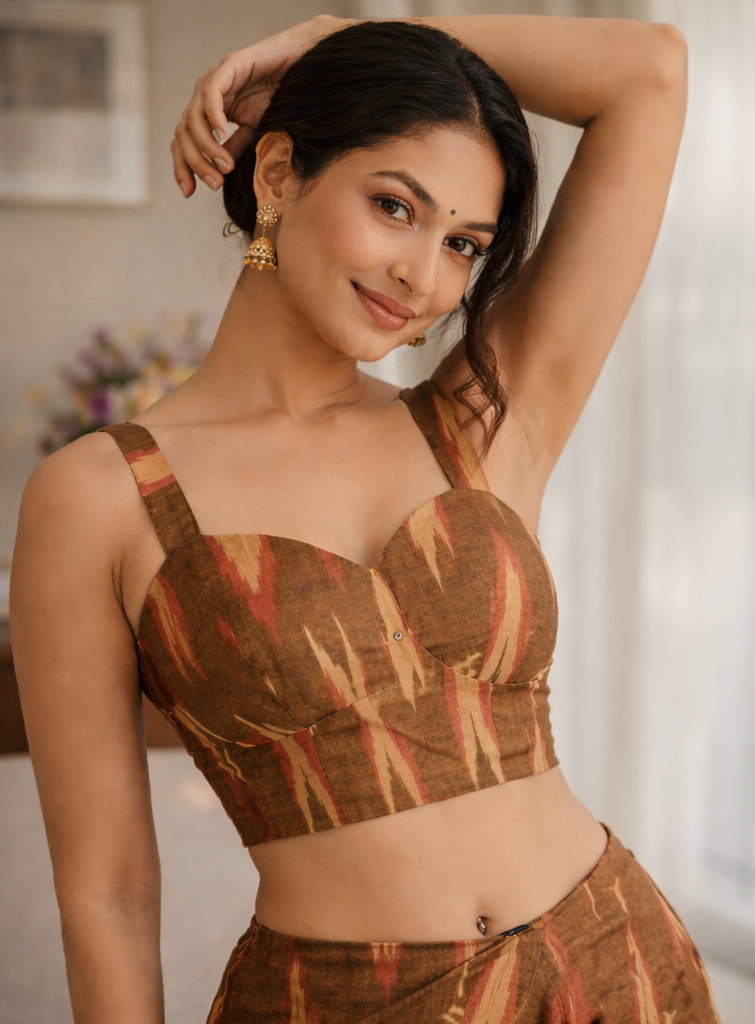
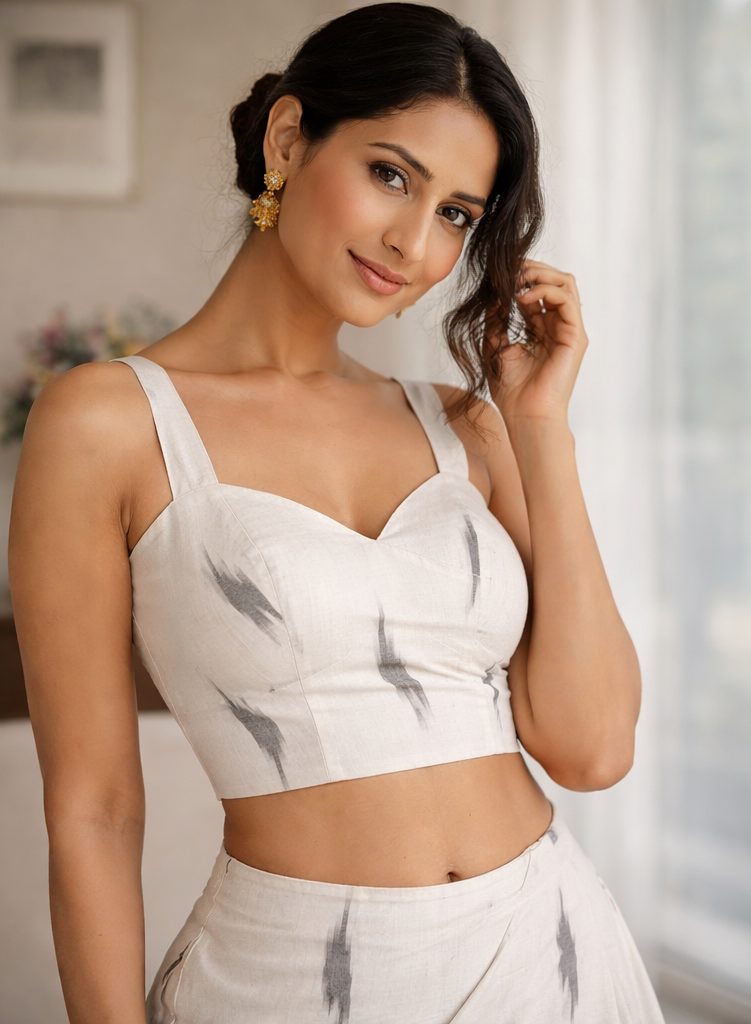
Brown Ikat Cotton Padded Blouse Sleeveless Stylish and Cream Ikat Cotton Padded Blouse Sleeveless Trendy show how an ikat surface can provide tribal-inspired rhythm without additional embroidery. Brown works with rust, mustard, maroon and indigo sarees. Cream works with darker sarees and allows jewellery or a contrasting pallu to become the strongest accent.
Padding should support the garment rather than create unnecessary volume. Light padding can improve opacity and shape, but very thick padding may distort a close-fitting blouse or feel uncomfortable in hot weather. Check that the armhole doesn't pull when the arm is raised, because saree pleating and pallu adjustment require regular movement.
How can jewellery and accessories support the blouse?
Jewellery supports a tribal-inspired blouse best when it repeats one material or colour from the blouse instead of copying every motif. Oxidised silver, terracotta, wood, brass, woven fibre and fabric beads are strong choices for earthy cotton-based outfits.
Choose one principal jewellery area. Large silver earrings can replace a necklace; a broad metal collar can work with bare ears; or a stack of brass bangles can provide the needed craft reference when the neckline is already detailed. A nose pin, simple bindi and low braided bun often add more coherence than several unrelated accessories.
Footwear should be practical enough for the drape. Leather or textile juttis, flat kolhapuris and low block heels suit daytime cotton sarees. A woven clutch, embroidered potli or handloom sling can connect the blouse to the saree without repeating its exact print.
Makeup can remain warm and defined rather than theatrical. Terracotta blush, a brown or brick lip and kohl complement rust, indigo, cream and black. For a Haldi ceremony, avoid long dangling jewellery that can catch on the saree or transfer colour onto a light blouse; small hoops and secure bangles are more functional.
How do you adapt the look for different traditional occasions?
Adapt the blouse to the event's movement, time of day and level of ceremony rather than using one tribal-inspired formula for every gathering.
Daytime cultural events
Daytime events suit breathable cotton, short or elbow-length sleeves and low-shine accessories. A Kalamkari cotton blouse with a plain saree works for a craft fair, community celebration or informal puja. Choose a saree that allows easy walking and pin the pallu securely near the shoulder.
Festive family gatherings
Festive family gatherings can support richer contrast, silk-cotton sarees, a woven border and more substantial jewellery. Classic Festive Wear Blouse for Stylish Saree Look can provide a polished base when the saree has zari or a dramatic pallu. Add one tribal-inspired element, such as a broad oxidised necklace or geometric earrings, to keep the styling intentional.
Haldi ceremony and pre-wedding functions
A Haldi ceremony calls for washable or easily maintained fabrics, secure sleeves and accessories that don't obstruct movement. Yellow, turmeric, rust, green and cream create a natural palette, while a sleeveless ikat blouse can keep the outfit comfortable in warm weather. Use a detachable or washable fabric belt only if it doesn't interfere with sitting, dancing or ritual activities.
Evening receptions
Evening receptions need a stronger finish, but tribal influence can remain subtle. A dark silk saree with a matte rust blouse, sculptural silver earrings and a neat bun looks more refined than combining several bright prints. Zari should be treated as the main reflective element, with other accessories chosen in matte metal or textile.
What should you check before buying a blouse?
Check fabric, measurements, lining, closure, padding, sleeve mobility and colourfastness before buying a blouse. These practical details determine whether a visually appealing blouse will remain wearable through a full ceremony.
- Measure the bust and underbust: Use a soft tape without pulling tightly, and compare the measurements with the garment's size chart rather than relying only on a familiar size.
- Check the blouse length: A length of about 13 to 15 inches suits many saree drapes, but a high-waisted style or a broad belt may need a longer blouse.
- Inspect the lining: Cotton lining improves comfort in warm weather and reduces irritation from rough printed surfaces or metallic trims.
- Test arm movement: Raise both arms, sit down and bring one arm across the body. Tight armholes become uncomfortable during pallu adjustment and rituals.
- Match the finish to the saree: Matte cotton works with handloom and printed sarees, while a silk or zari saree may need a smoother, more polished blouse finish.
- Ask about care: Printed cotton, ikat and embellished fabrics may require cold hand-washing, shade drying or dry cleaning. Follow the garment label because colour bleeding can affect a light saree.
Careful selection also reduces unnecessary alteration. Brown Ikat Cotton Padded Blouse Sleeveless Stylish and Cream Ikat Cotton Padded Blouse Sleeveless Trendy offer distinct colour directions, so compare the saree under daylight rather than judging from warm indoor lighting. A cream blouse can look yellow beside a cool white saree, while brown can appear nearly black beside deep indigo.
How can you keep tribal inspiration respectful and wearable?
Respectful styling names and acknowledges specific textile or art traditions instead of presenting all indigenous visual culture as a generic decorative trend. A blouse inspired by Kalamkari should be described as Kalamkari, an ikat blouse as ikat, and a mirror-work detail as mirror work rather than assigning every craft reference the same label.
Wearability improves when the saree, blouse and accessories have different levels of intensity. A printed blouse, plain saree and metal jewellery make hierarchy. A woven saree, dry blouse and patterned accessories create another. The result feels considered because each element has a defined job.
The strongest Tribal-Inspired Blouse Designs for Traditional Sarees leave room for the saree's own history. Kanjeevaram, Banarasi silk, Chanderi and regional cotton weaves should not disappear under excessive styling. Let the blouse introduce texture, colour or motif while the drape continues to show why the saree was chosen.
Common Questions About Tribal-Inspired Saree Blouse Styling
What saree goes best with a tribal-inspired blouse?
Plain cotton, handloom cotton, linen, Chanderi, tussar and silk-cotton sarees pair well with tribal-inspired blouses because their texture supports geometric or earthy motifs. Use a simpler blouse when the saree has a large zari border or a dense print.
Can I wear a tribal-inspired blouse with a Banarasi silk saree?
Yes, but keep the blouse restrained so the Banarasi silk zari remains visible. A solid rust, charcoal, forest green or muted gold blouse with oxidised silver jewellery creates contrast without making the outfit visually crowded.
Which blouse neckline looks best with tribal prints?
A V-neck, square neck or simple round neck usually works best because each gives the print a clean frame. A collar can add a contemporary edge, but avoid a heavily detailed necklace when the blouse already has a collar or strong neckline finish.
Are ikat blouses suitable for traditional sarees?
Ikat blouses suit traditional sarees particularly well because the repeated warp-and-weft pattern adds texture without heavy embellishment. Brown, cream, indigo and rust ikat coordinate easily with cotton, handloom and muted silk sarees.
How do I style a Kalamkari blouse without looking overdressed?
Pair a Kalamkari blouse with a plain saree in off-white, rust, olive, brown or deep indigo. Keep jewellery to one strong piece, such as oxidised silver earrings or a short necklace, and avoid adding another large print to the pallu or accessories.
What jewellery matches tribal-inspired saree blouse designs?
Oxidised silver, brass, terracotta, wood, fabric beads and woven accessories complement tribal-inspired blouse designs. Select one dominant material and repeat one blouse colour so the jewellery supports the outfit rather than competing with the motifs.