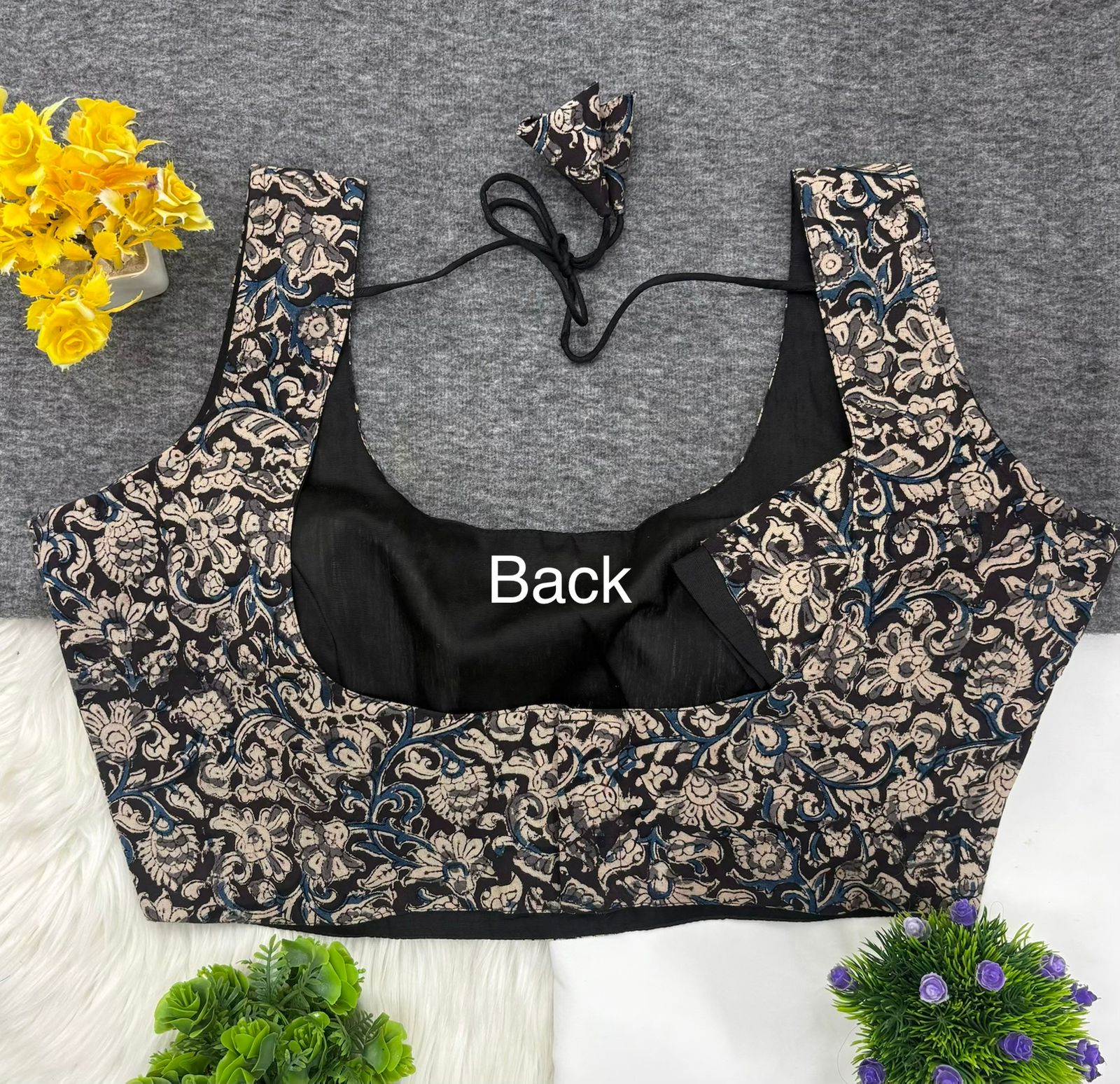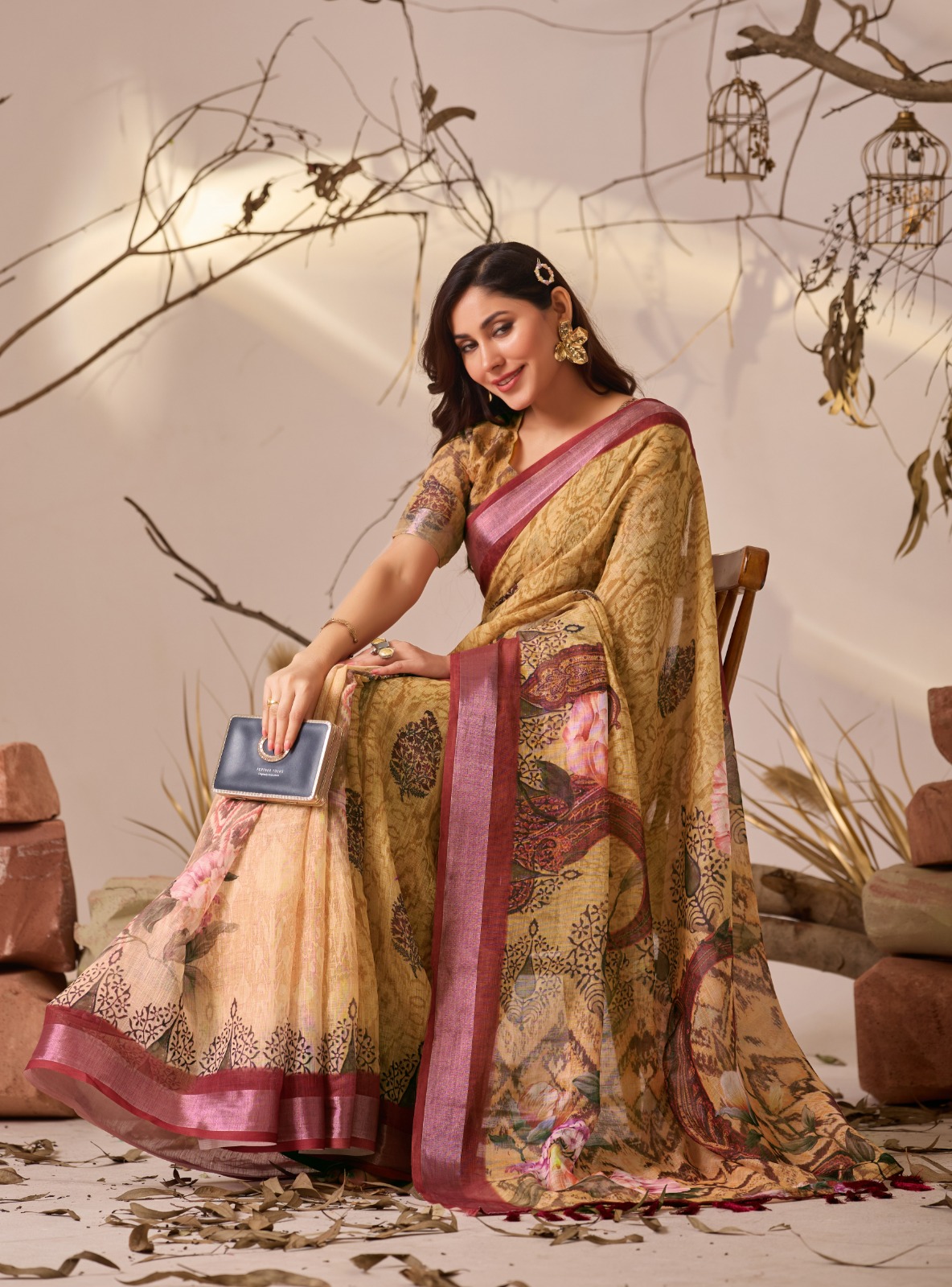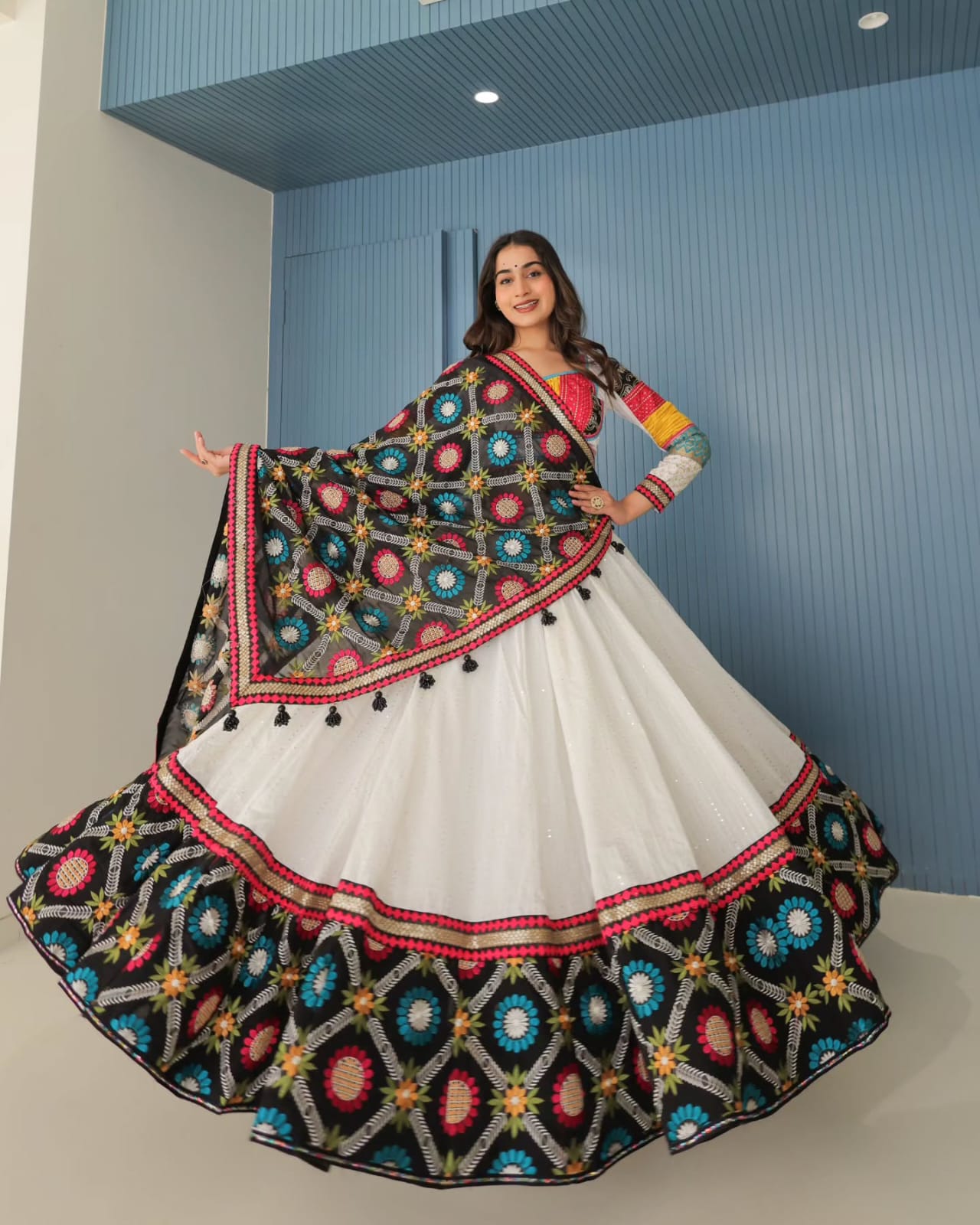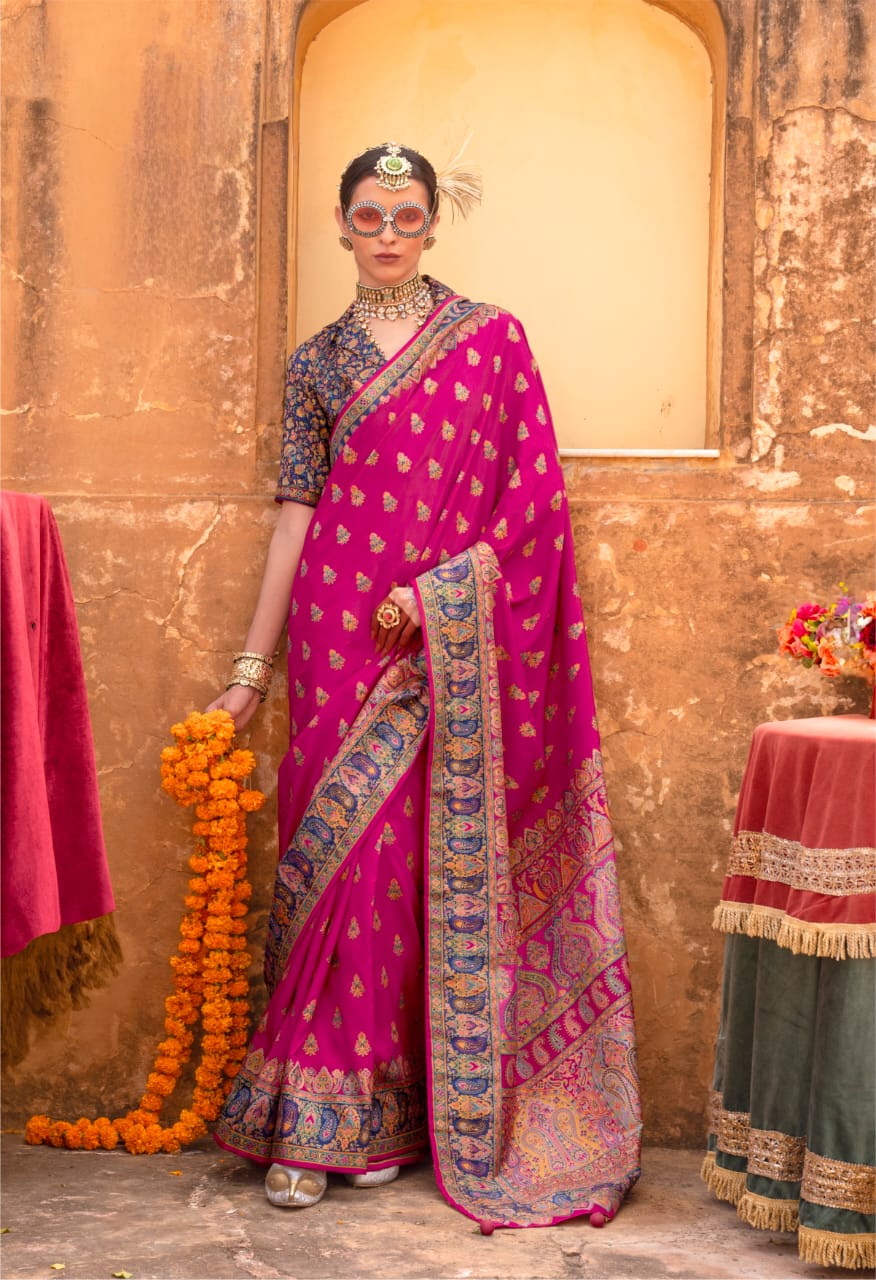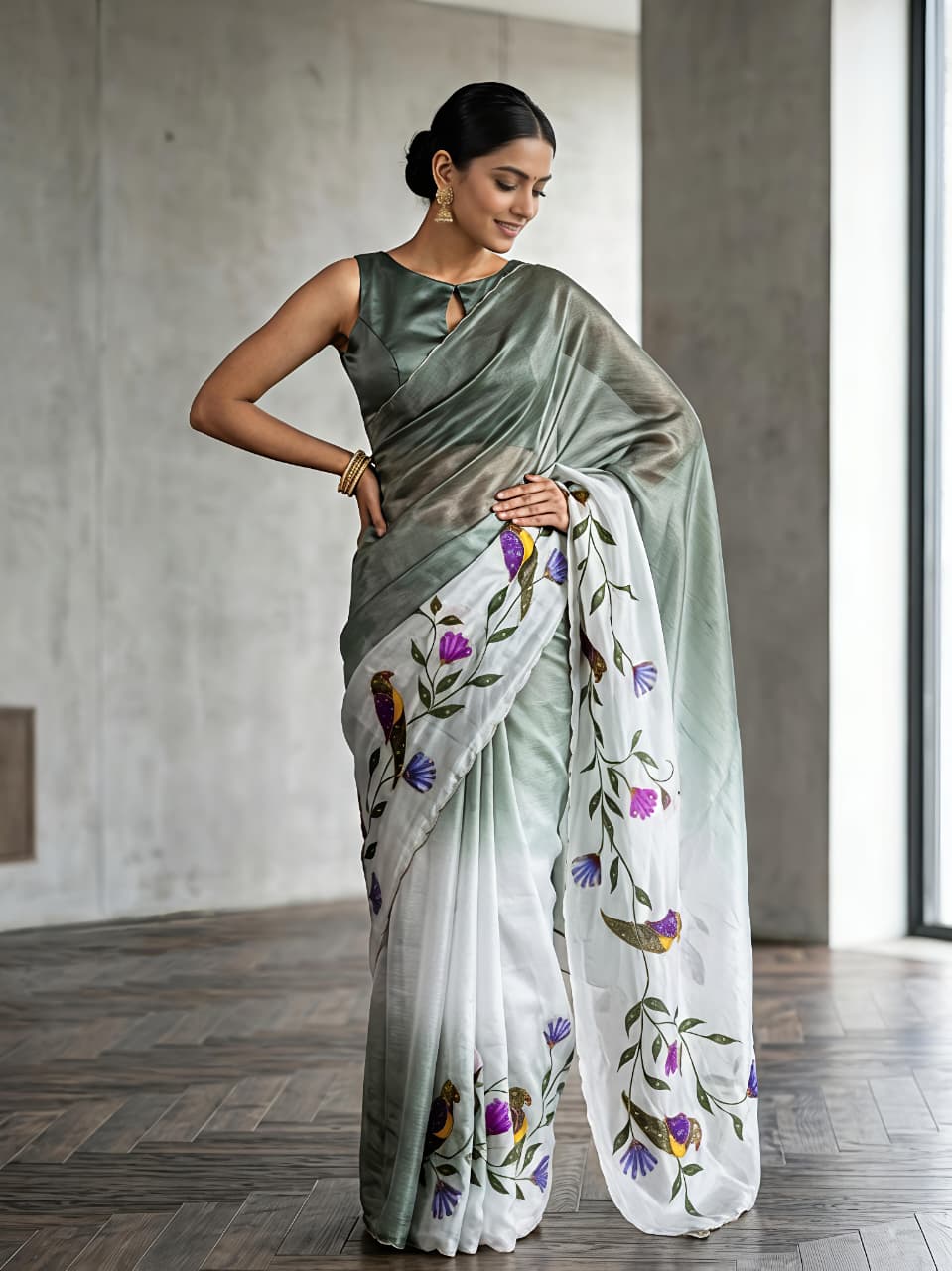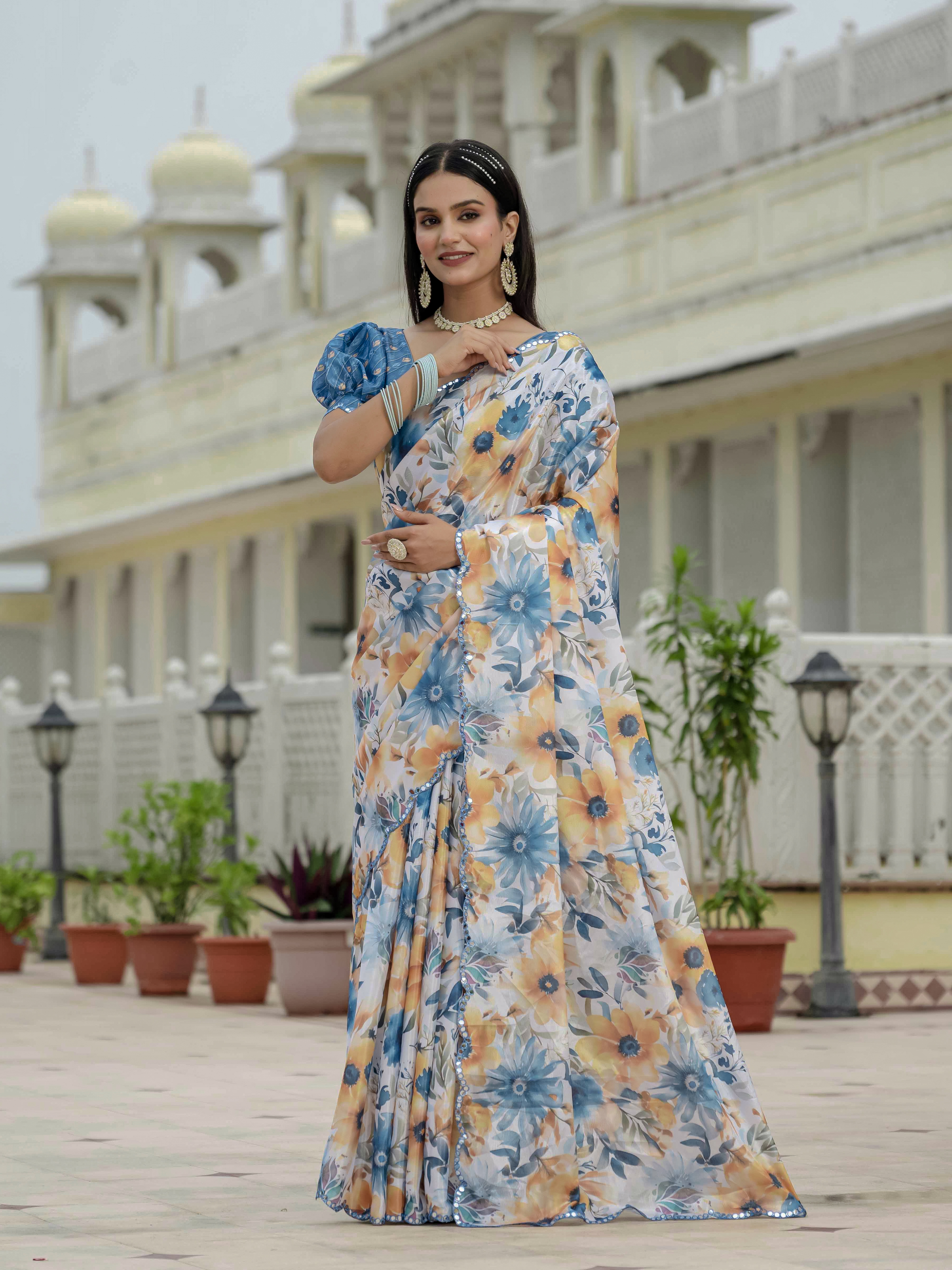
A well-choose print can make a salwar suit feel polished without requiring heavy embroidery or elaborate jewellery. Trendy Printed Salwar Suit Designs now range from delicate florals and hand-pull botanicals to Bandhani-inspired dots, geometric repeats and prints placed against woven silk blends. The best choice depends on more than colour: fabric weight, motif scale, neckline, trouser shape and the setting all affect how the outfit looks and feels. This guide extends how to read a print, match it to an occasion and style it so the suit remains wearable beyond one event.
Why printed salwar suits remain relevant
Printed salwar suits remain relevant because they combine visual detail with easier repeat wear than heavily embellished outfits. A print can create interest across the kameez while keeping the garment comparatively light, comfortable and simple to accessorise.
Prints also make traditional silhouettes adaptable. A straight suit with a small floral repeat can suit a workday, while the same basic shape in a rich red floral design can move into a family celebration with the addition of jhumkas and a dressier dupatta. Printed fabrics often provide more styling flexibility because the garment already has a clear colour story.
Modern Indian wardrobes benefit from that flexibility. A printed salwar suit can be worn with flat sandals for daytime errands, block heels for a gathering or a short embroidered jacket for a more formal appearance. The practical advantage is cost per wear: a versatile suit can serve several settings instead of remaining reserved for one festival.
Trendy Printed Salwar Suit Designs by print style
Trendy Printed Salwar Suit Designs can be grouped by motif language, and each print family creates a different visual effect. Identifying the print style before choosing accessories prevents the outfit from looking visually crowded.
Floral prints for softness and everyday wear
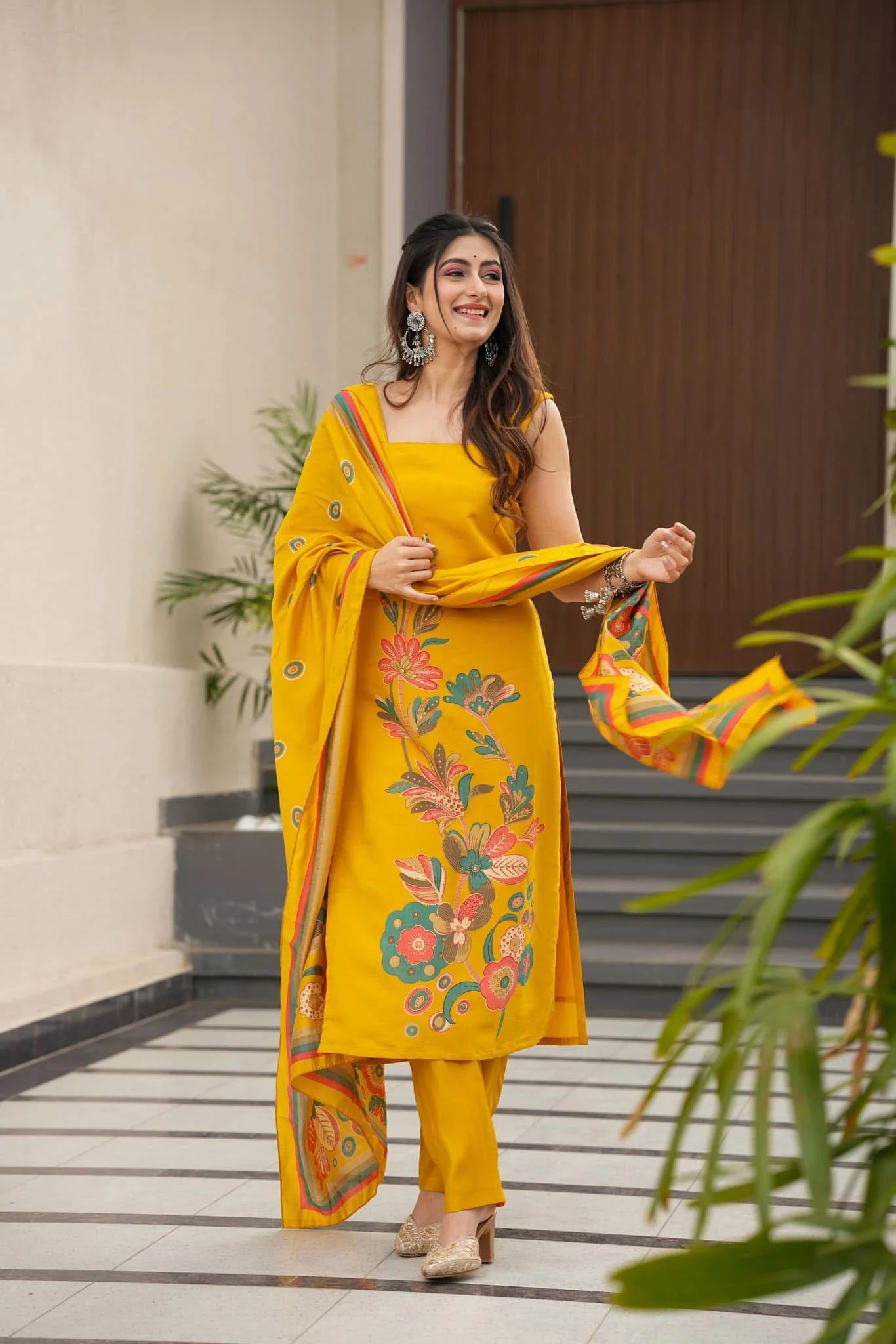
Floral prints are the easiest option for creating a feminine, approachable appearance. Small scattered flowers usually look lighter and more understated, while large blooms create a stronger statement and work well when the rest of the styling is restrained.
The Black Floral Printed Silk Blend Salwar Suit illustrates how a dark ground can make floral motifs look sharper and more evening-ready. A black, wine or navy base also helps brighter flowers stand out without requiring additional embellishment. Keep jewellery in one metal family and choose a dupatta with a quiet border when the kameez has large blooms.
Bandhani-inspired and dotted patterns
Bandhani-inspired dots create rhythm and movement through repetition. Small dots can look heritage without appearing heavy, especially when paired with a solid dupatta or a simple straight-cut silhouette.
The Wine RomanSilk Bandhani Charm Embroidered Salwar suite shows how a Bandhani-style surface can be combined with embroidery for a richer festive result. Because dots already repeat across the garment, select earrings or bangles with clean shapes rather than competing motifs.
Geometric and woven-look patterns
Geometric prints suit readers who prefer structure over floral softness. Checks, diamonds, stripes and angular repeats can make a straight suit appear more tailored, particularly in medium or deeper colours.
Jacquard-look patterns occupy an interesting middle ground because the design may come from the weave, the print or both. The Royal Pink JacquardSilk Classic Printed Suit Set demonstrates how a classic pattern can feel formal without relying on dense surface work. Pair structured prints with pointed flats, a box clutch or neat pearl jewellery for a composed finish.
How fabric changes the appearance of a print
Fabric changes the sharpness, fall and formality of a printed salwar suit. The same floral motif will look crisp on a smooth silk blend, relaxed on rayon and more understated on a textured slub fabric.
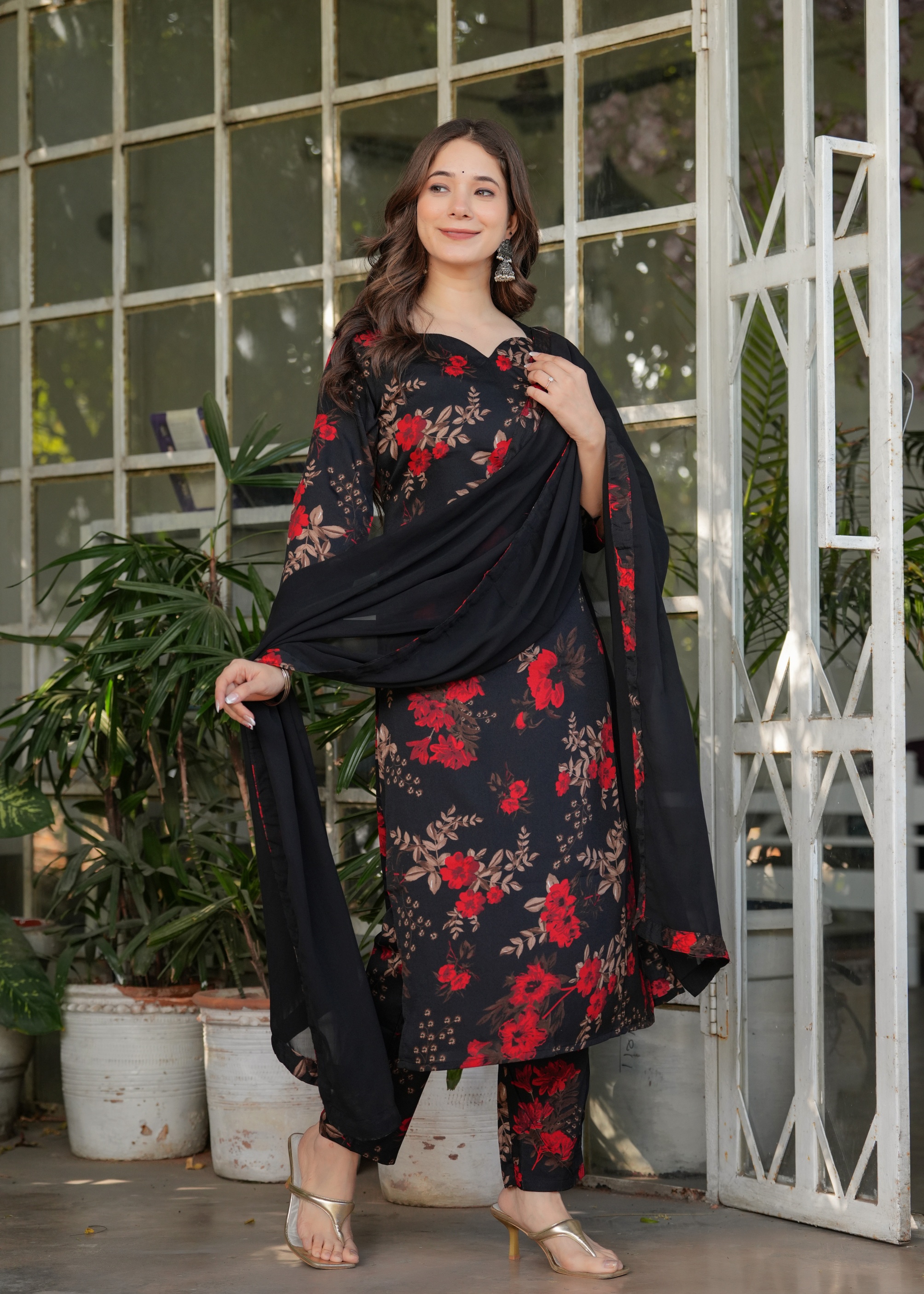
Silk blends: Silk blends usually reflect light, so printed colours appear more saturated and occasion-ready. The Black Floral Printed Silk Blend Salwar Suit and Red Silk Blend Floral Straight Suit with Dupatta are useful examples of how a floral design can look more polished when the base has gentle sheen. Silk blends are particularly suitable for evening gatherings, festive lunches and indoor celebrations.
Rayon: Rayon has a soft drape and tends to fall close to the body without feeling as crisp as cotton. The Cream Pink Printed Rayon Readymade Salwar Suit demonstrates why rayon works well for travel, casual celebrations and long daytime wear. Rayon should be washed carefully because heat and rough handling can affect its shape.
Slub fabrics: Slub textures contain intentional irregularities that give the surface a slightly grainy appearance. The Pink SlubBloom Embroidered Suit Set benefits from that texture because the fabric adds depth even when the print or embroidery remains relatively controlled. Slub suits pair well with handcrafted accessories, jute bags and flat sandals.
Jacquard silk: Jacquard silk has a woven pattern with a more substantial hand feel than many printed fabrics. The Royal Pink JacquardSilk Classic Printed Suit Set is better suited to occasions where the outfit needs structure, such as a festive dinner or a formal family gathering.
Choosing prints for work, festivals and family events
The right printed salwar suit for an occasion depends on motif scale, colour contrast and the amount of visible surface detail. Matching all three elements to the setting produces a more intentional outfit than choosing only by colour.
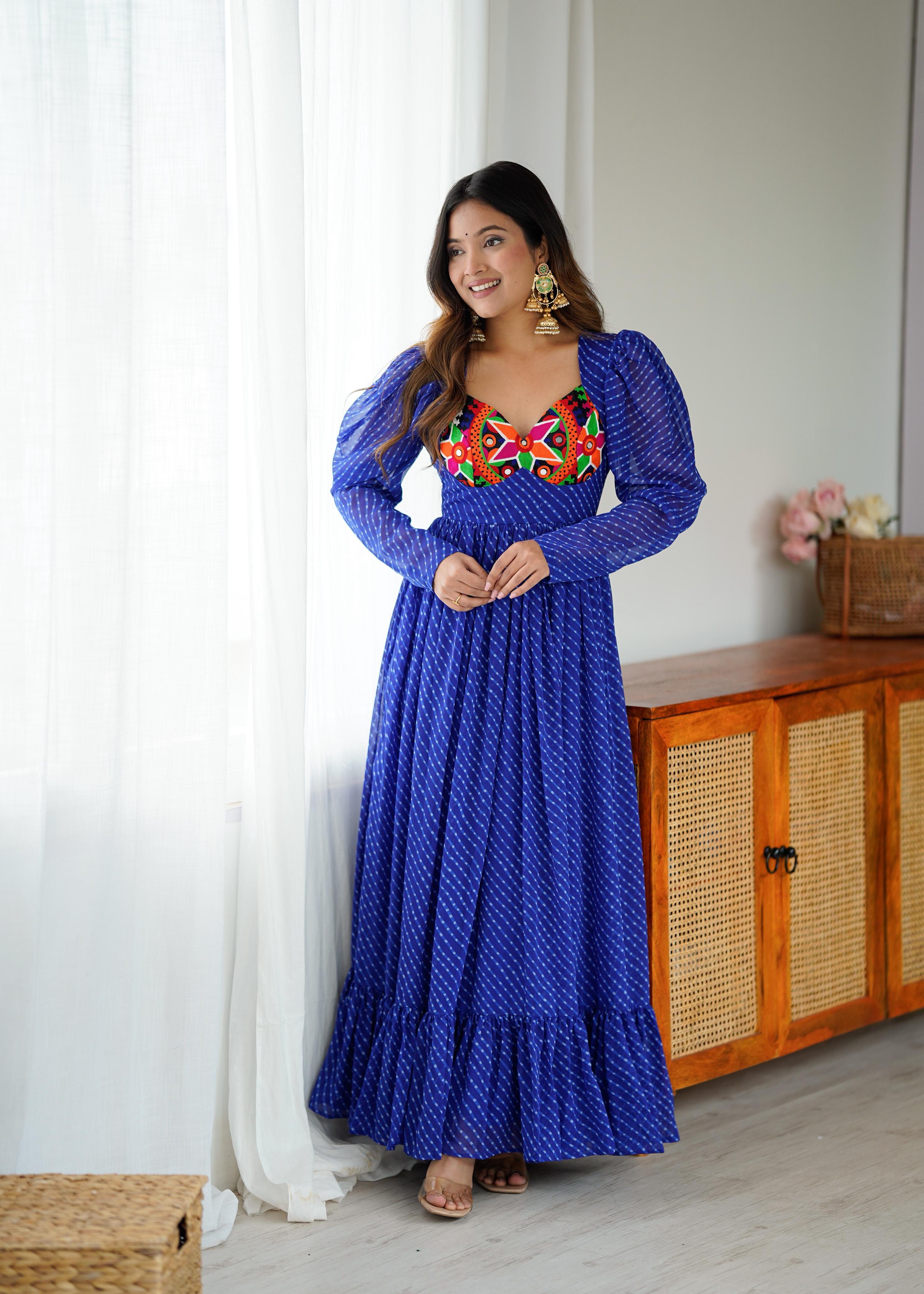
For office and daytime appointments
Small or medium prints in two or three related colours are the safest choice for office wear. Cream, dusty pink, muted blue, olive, charcoal and burgundy create a professional base without making the outfit look severe.
The Cream Threadwork Printed Readymade Salwar Suit combines print with threadwork, so it can look finished without bold jewellery. Choose a structured tote, low block heels and a lightweight dupatta worn neatly over one shoulder. Avoid very long tassels or noisy bangles if the suit will be worn in a formal workplace.
For Haldi ceremony and daytime festivities
Bright yellow, pink, coral, green and orange prints suit a Haldi ceremony because they photograph well in natural light and complement the celebratory setting. Lightweight rayon, cotton blends and breathable fabrics are more practical than heavy silk when the event involves movement or outdoor heat.
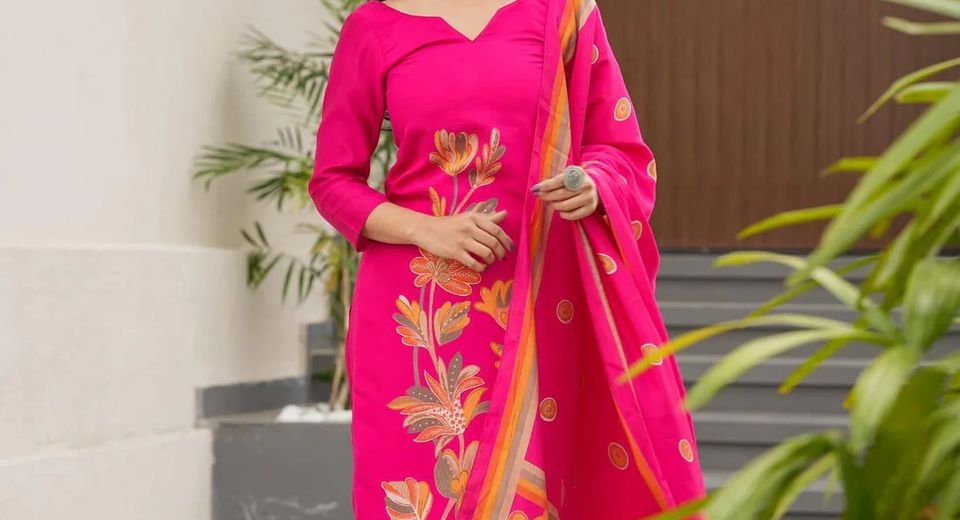
The Pink Flower Printed Salwar Suit can work for a daytime celebration when paired with colourful glass bangles and comfortable embroidered juttis. A contrasting dupatta in yellow or green adds energy, but keep the footwear and jewellery uncomplicated if the flower print is large.
For evening gatherings
Deep wine, black, emerald, navy and ruby bases make printed suits more suitable for evening events. Metallic borders, silk-blend sheen or controlled embroidery can raise the formality without turning the look into a heavily embellished ensemble.
The Red Silk Blend Floral Straight Suit with Dupatta is a strong example of an evening-friendly floral direction. Gold earrings, a compact potli and heeled sandals can complete the outfit. When the dupatta contains a border, wear it in a clean front drape so the border remains visible.
Matching print scale to body proportions and silhouette
Print scale should relate to the wearer's frame and the cut of the suit, although personal preference remains more important than rigid fashion rules. Small prints create a quieter effect, while large motifs draw attention to the areas where they're placed.
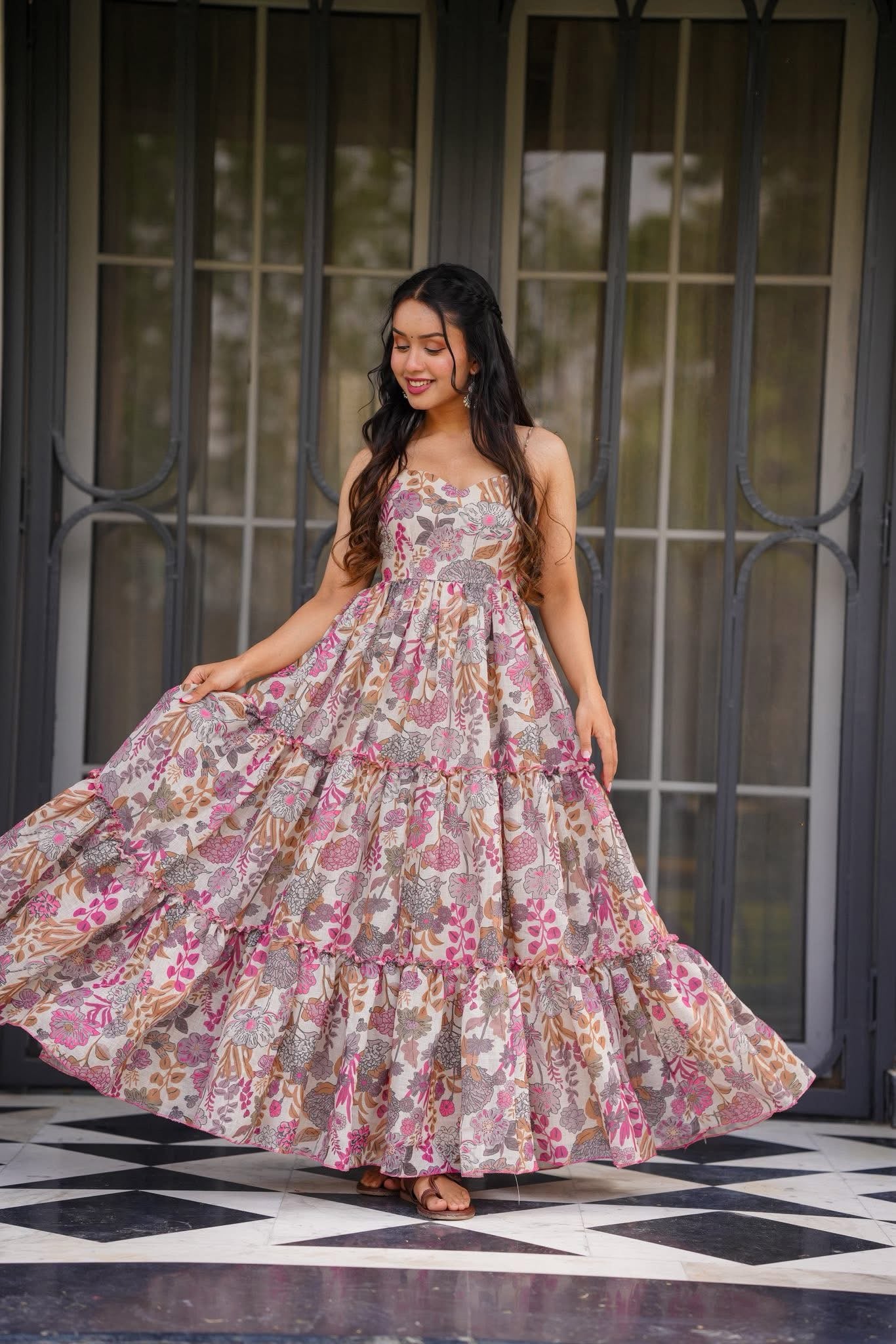
Small scattered motifs work well on long straight kameez styles because they create continuity without interrupting the vertical line. Medium prints are adaptable and suit most body proportions. Large flowers or bold geometric shapes are most effective when placed selectively, such as across the yoke, hem or one side panel.
Vertical stripes and elongated motifs can visually lengthen a straight silhouette. Horizontal borders add emphasis at the hem and can make an Anarkali look more decorative. A high-contrast print attracts attention more strongly than a low-contrast print, even when both contain motifs of the same size.
Readymade suits should be checked at the shoulder, bust and sleeve before judging the print. A well-positioned motif can shift after alterations, especially near side seams or the neckline. If tailoring is needed, ask whether the border and main motifs can remain balanced after the hem or sleeve is shortened.
Building a complete outfit around a printed suit
A printed salwar suit usually needs one visual anchor, and that anchor can be the fabric, the dupatta, the jewellery or the footwear. Choosing one dominant element keeps the styling coordinated.
When the kameez has a dense print, use a solid dupatta in one of the quieter colours from the motif. When the kameez has a small repeat, a lightly bordered or subtly textured dupatta can add depth. Avoid combining a dense floral kameez with a heavily printed dupatta unless the colours and motif scale are deliberately matched.
Jewellery should echo the mood of the print. Gold jhumkas suit warm floral and Bandhani-inspired patterns, silver earrings suit cool geometric designs, and pearls soften cream or pastel suits. Statement earrings are often enough; adding a large necklace, stacked bangles and a decorated hair accessory can overwhelm a busy print.
Footwear changes the perceived formality of the same suit. Kolhapuri sandals and embroidered juttis support daytime styling, while metallic heels or embellished mules suit evening wear. A neutral shoe is useful when the suit contains several colours, whereas a coloured shoe can highlight one minor shade in the print.
Collections such as Ladies Dress Anarkali Salwar Suits are useful when a flowing silhouette is preferred, while Dress Materials provide an option for shoppers who want more control over neckline, sleeve and trouser proportions. Ready-to-wear and custom-stitched approaches can both produce a polished result when the print placement is considered early.
Shopping checks that prevent common mistakes
Checking fabric, measurements, print placement and care instructions before purchase reduces disappointment with printed salwar suits. Product photographs alone can't reveal every practical detail.
- Read the fabric composition: A silk blend, rayon, cotton blend and jacquard silk will differ in breathability, drape, shine and maintenance.
- Check the measurement chart: Compare bust, waist, hip, shoulder and sleeve measurements with a garment that already fits well. Do not rely only on a familiar size label.
- Inspect the dupatta: Confirm whether the dupatta is included, whether it's printed or solid, and whether its length is sufficient for the intended drape.
- Look at lining details: Light-coloured suits may need lining, particularly when the fabric is thin or the print has pale areas.
- Assess colour contrast: High-contrast prints look bolder, while tonal prints appear more restrained and may be easier to repeat.
- Plan the care routine: Some silk blends and rayon garments require gentle washing or dry cleaning rather than regular machine washing.
Sale collections such as Salwar Suits with 30% Off and Salwar Suits Flat 40% Off can be useful for comparing silhouettes at a lower cost, but a discount should not replace a fit and fabric check. Red Dress Materials Under 2000 may also suit shoppers who want a budget-conscious way to commission a printed set, provided tailoring charges and fabric length are included in the total budget.
Care practices that preserve printed colour
Printed salwar suits retain their colour longer when they're washed gently, dried away from harsh sunlight and stored without prolonged dampness. Care instructions on the garment should always take priority over general advice.
For rayon and delicate blends, use cold water, mild detergent and a short hand wash when the care label permits washing. Do not twist the garment because twisting can distort the drape and stress seams. Press excess water out with a towel and dry the suit inside out in shade.
Silk blends and jacquard silk may require dry cleaning, especially when embroidery, zari-like accents or structured finishing are present. If ironing is permitted, use a low to medium temperature and place a thin cotton cloth between the iron and the garment. Direct high heat can flatten texture, create shine or affect printed surfaces.
Fold printed suits along clean lines and avoid storing them tightly against damp walls or in unventilated plastic. Air the garment fully after wear before folding it. A breathable cotton garment bag is preferable for longer storage, particularly during humid monsoon months.
How to make one printed suit work harder
One printed suit can create several distinct outfits when the styling changes by occasion. The easiest method is to keep the base suit consistent and rotate the dupatta, jewellery, footwear and bag.
For a weekday look, wear a printed straight suit with simple studs, a watch, a structured tote and flat sandals. For a family lunch, replace the studs with medium jhumkas, add a brighter dupatta and choose embroidered flats. For an evening gathering, use metallic earrings, a small clutch and heeled sandals while keeping the rest of the accessories minimal.
A cream and pink suit can also move between seasons more easily than a highly seasonal colour combination. In warmer months, pair it with light sandals and a soft cotton dupatta. In cooler weather, add a short solid jacket or a fine shawl in a colour taken from the print.
The most wearable printed salwar suit isn't necessarily the most elaborate design. A balanced print, comfortable fabric, reliable fit and adaptable colour palette usually provide more value over time than a dramatic garment that works for only one photograph or celebration.
Questions Shoppers Ask About Printed Salwar Suit Styling
Which printed salwar suit is best for office wear?
A small or medium print in two or three muted colours is usually best for office wear. Choose a breathable fabric such as rayon or a cotton blend, a neat straight silhouette and restrained accessories.
Can a floral printed salwar suit be worn to a wedding?
A floral printed salwar suit can suit a wedding when it uses a richer fabric, deeper colours, sheen or controlled embroidery. Add dressy earrings, a bordered dupatta and heeled footwear, while avoiding accessories that compete with large floral motifs.
Are printed salwar suits suitable for a Haldi ceremony?
Printed salwar suits are suitable for a Haldi ceremony because bright florals and cheerful colours photograph well in daylight. Rayon, cotton blends and other breathable fabrics are practical choices for outdoor movement and warm weather.
How should a printed salwar suit fit?
A printed salwar suit should fit comfortably at the shoulders, bust, waist and hips without pulling across the main motifs. Check sleeve comfort, kameez length and trouser ease, and confirm that alterations will not cut through an important border or design.
How do you style a printed salwar suit without looking overdressed?
Use one visual anchor and keep the other accessories simple. A busy printed kameez usually needs a solid or lightly bordered dupatta, uncomplicated earrings and footwear that supports the colours without introducing another competing pattern.
How should printed rayon and silk-blend salwar suits be washed?
Printed rayon generally benefits from cold-water hand washing with mild detergent when the care label allows it, while silk blends may require dry cleaning. Avoid twisting, harsh sunlight and high-heat ironing because those practices can affect colour, shape and surface texture.