Trendy Afghani Salwar Suit Designs bring together a generously gathered salwar, an easy kameez and a dupatta that can be styled with either drama or restraint. The silhouette feels relaxed because the lower garment has more volume than a straight pant, while the upper half can remain short, long, embroidered or printed. The result is a practical Indian outfit with a distinctive proportion rather than another variation of a narrow suit set.
Choosing one well requires more than selecting a pretty colour. Rise, fabric weight, calf width, kameez length, sleeve shape and dupatta size all change how an Afghani suit looks and feels. The guide below explains those decisions, shows where the silhouette works best and offers concrete styling combinations for everyday wear, festive gatherings and family celebrations.
What defines an Afghani salwar suit?
An Afghani salwar suit is defined by a roomy, gathered lower garment that tapers towards the ankle and is paired with a kameez and dupatta. The salwar generally has a deeper, more relaxed crotch area than a churidar and more fabric around the hips and thighs than a straight salwar.
That construction creates the signature drape. Fabric gathers may fall from the waistband, collect around the knees or form soft folds above the ankle. A narrow cuff, elasticated hem or fitted ankle opening keeps the volume controlled. The kameez may be cropped near the hip, end at the knee or extend lower for fuller coverage.
Afghani styling is sometimes confused with a Patiala suit, but the two silhouettes are not identical. A Patiala salwar is known for pronounced horizontal pleats and a strongly pleated, voluminous seat. An Afghani salwar usually gives a softer, more fluid fall, although contemporary designs can borrow details from both styles.
Embroidery around the neckline, yoke, cuffs and hem helps balance the generous lower half. Prints can create the same effect when they're concentrated around the kameez rather than spread heavily across every panel. A long dupatta adds vertical movement, while a shorter dupatta keeps the outfit visually lighter.
How do Trendy Afghani Salwar Suit Designs fit different body shapes?
Trendy Afghani Salwar Suit Designs suit many body shapes when the amount of volume is balanced against kameez length and neckline placement. A petite wearer often benefits from a shorter kameez, a higher waist seam and a lighter dupatta, while a taller wearer can carry a longer kameez and broader border with ease.
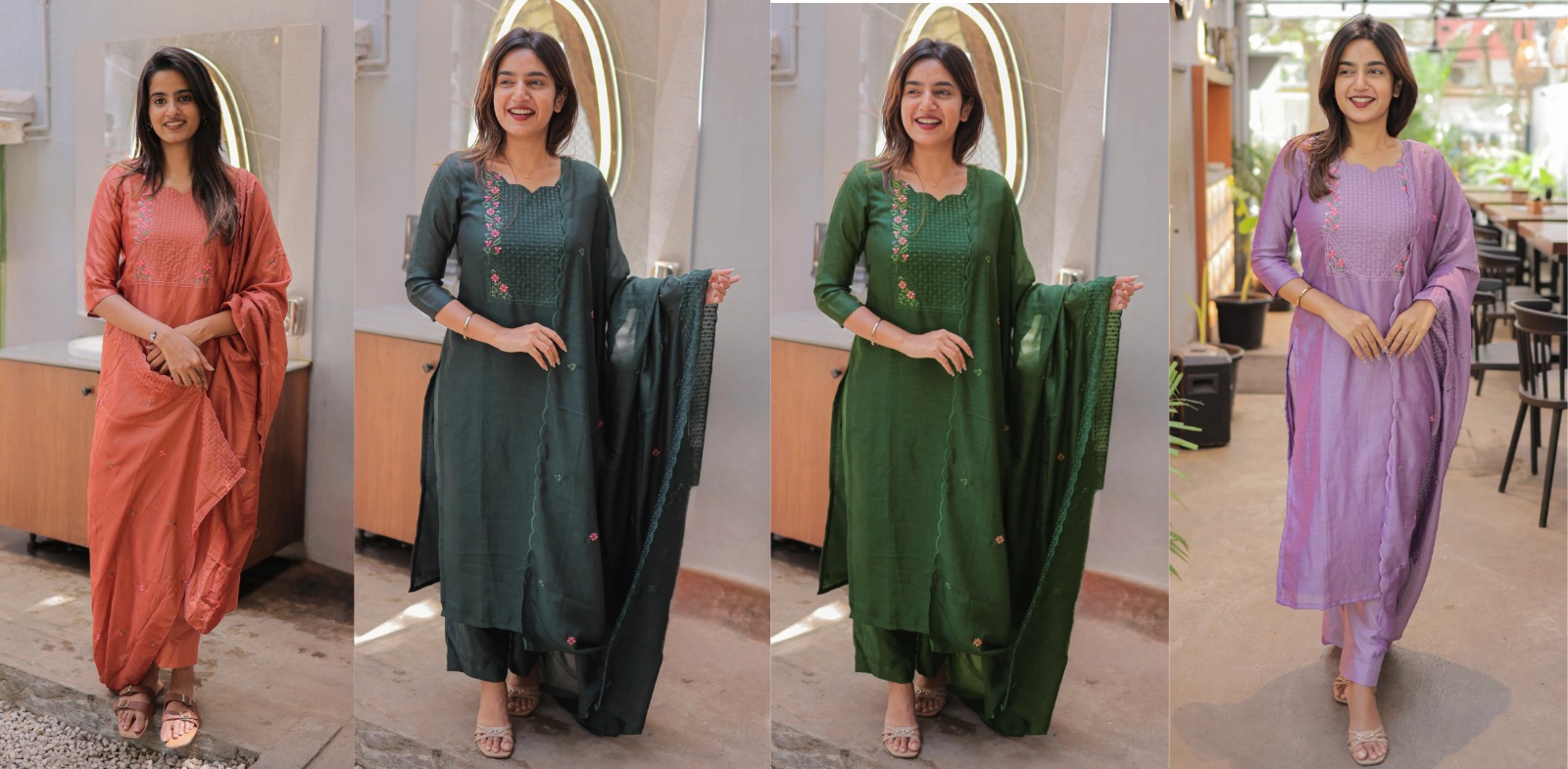
For petite frames
A kameez ending around the upper thigh or just above the knee prevents the outfit from visually shortening the legs. A V-neck, narrow vertical embroidery panel or a dupatta worn over one shoulder creates a longer line. Avoid pairing an extremely oversized kameez with a heavily gathered salwar because two large volumes can overwhelm a smaller frame.
For fuller hips and thighs
A moderately gathered salwar with a smooth waistband brings comfort without adding unnecessary bulk at the widest point. A kameez that skims rather than clings, side slits and a structured neckline keep attention on the upper body. Medium-weight viscose, crepe-like blends or soft silk blends can fall more neatly than very stiff fabrics.
For straighter frames
Extra gathers, a pleated yoke, embroidered sleeves or a layered dupatta can add dimension. A shorter kameez makes the salwar volume more visible, while a contrast dupatta brings colour around the shoulders. Waist definition can come from a shaped seam, a narrow belt or a kameez with controlled gathers rather than from tight tailoring.
Measurements matter more than the label attached to a size. Check the waist circumference, hip room, salwar rise, ankle opening, kameez length and sleeve length before ordering. A salwar that fits at the waist but has insufficient hip room will pull across the gathers and lose its intended drape.
Which fabrics work best for an Afghani salwar suit?
Medium-weight fabrics with fluid movement usually work best for an Afghani salwar suit because they hold gathers without becoming rigid or excessively bulky. Fabric choice should match the season, amount of embroidery and number of hours you expect to wear the outfit.
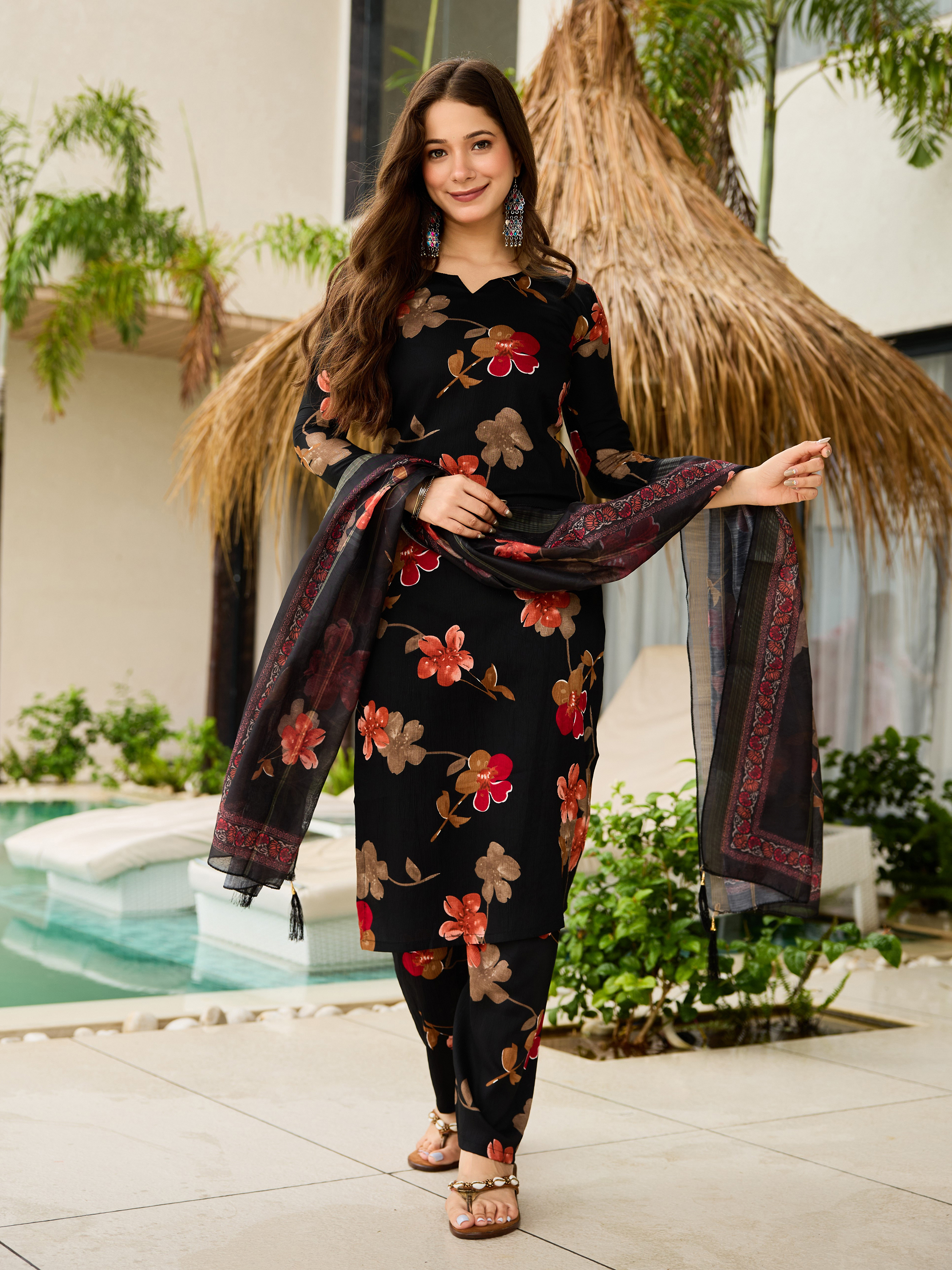
- Viscose Chanderi: Viscose Chanderi can provide a light, slightly dressy handle and works well for daytime celebrations. The Cream Threadwork Viscose Chanderi Readymade Salwar Suit illustrates how a pale base and threadwork can keep a voluminous silhouette refined.
- Silk blends: Silk blend fabric gives prints or zari details more visual richness and is suitable for dinners, festive visits and evening gatherings. The Black Floral Printed Silk Blend Salwar Suit gives an useful example of how a dark base can make floral detail look more defined.
- Cotton and cotton blends: Cotton is practical for hot weather and daily use, especially when the salwar has controlled gathers and the dupatta isn't too heavy. Cotton can crease more visibly, so a quick press before leaving improves the finish.
- Lightweight synthetic blends: These fabrics often dry quickly and resist deep creasing, which helps for travel or long events. Check whether the fabric feels breathable before choosing it for humid weather.
- Silk with zari: Silk and zari are better suited to evening or ceremonial styling when the construction remains comfortable. The Royal Navy Silk Kurti Pant Set with Zari Dupatta is an useful styling reference for combining a rich dark colour with a detailed dupatta, even when the bottom silhouette is more streamlined than a traditional Afghani salwar.
Very stiff brocade can make a gathered salwar stand away from the body, while very thin fabric may cling at the knees and show every fold. A simple hand test helps: squeeze a small section, release it, and observe whether the fabric falls softly or remains sharply crushed. The best choice depends on the finish you want, but the fabric should never restrict walking or sitting.
Which colours and patterns make the silhouette look current?
Current Afghani suit styling relies on deliberate colour contrast, controlled placement of print and one clear focal detail. Deep neutrals, softened pastels, earthy shades and jewel tones all work when the kameez, salwar and dupatta have a readable relationship.
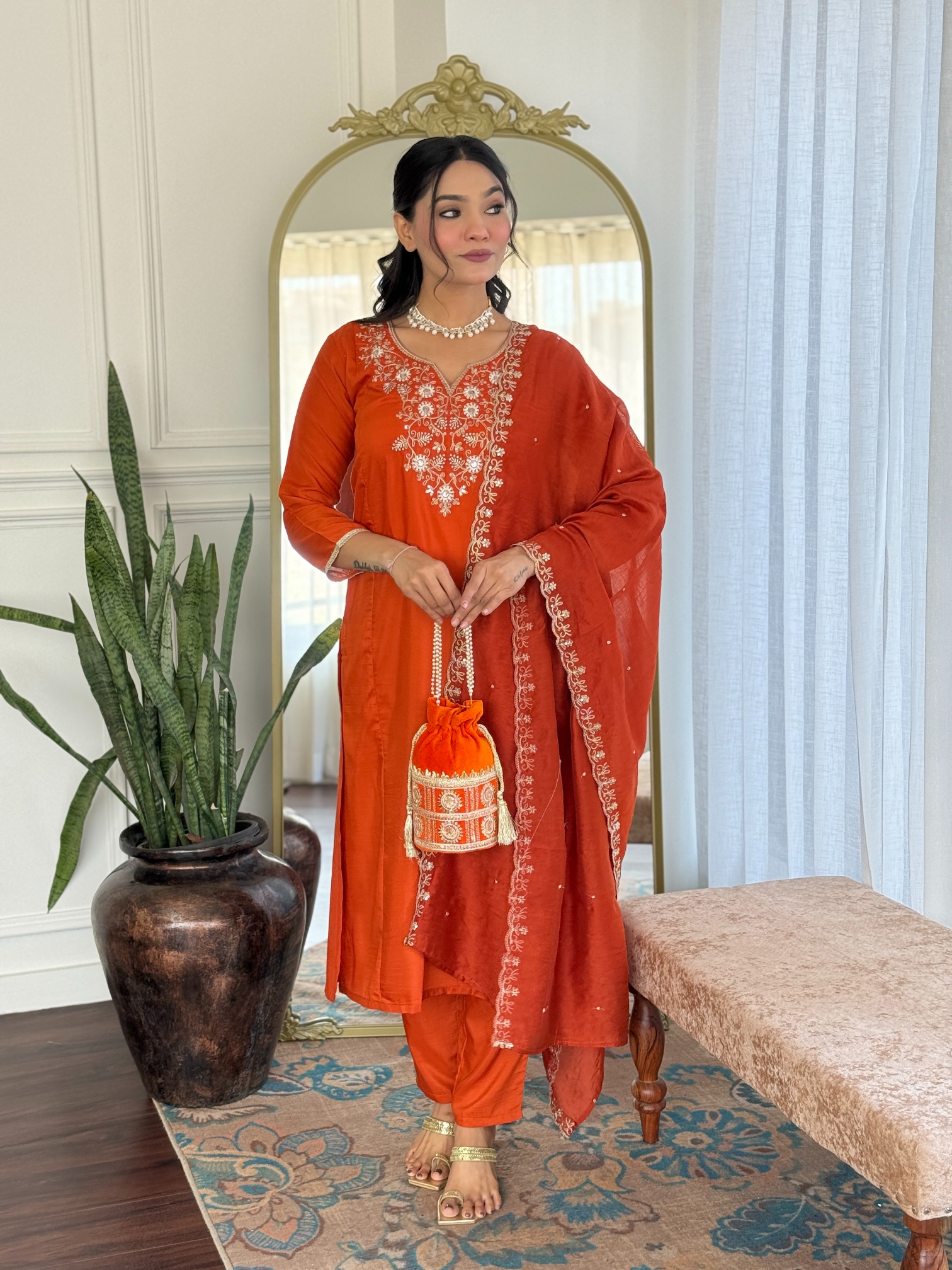
Black, navy and charcoal create a strong base for floral prints, metallic accents and bright dupattas. The Black Floral Printed Silk Blend Salwar Suit demonstrates why a dark foundation can support a noticeable print without making the overall outfit look chaotic. Navy performs a similar role for zari or mirror-like embellishment.
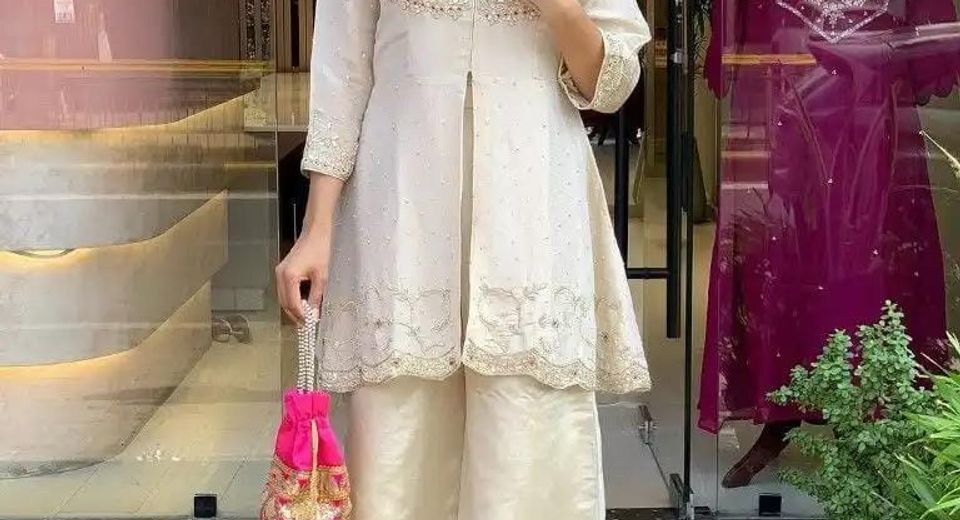
Cream, ivory and blush shades make threadwork more visible and suit daytime functions. The Elegant White Cording Threadwork Salwar Suit shows how raised white detailing can provide texture without depending on a high-contrast colour scheme. The Cream Threadwork Viscose Chanderi Readymade Salwar Suit gives another route, using a warm neutral base for a softer festive appearance.
Camel, rose and pink shades bring warmth to the silhouette. The Elegant Camel Shade Salwar Suit Set can be styled with tan footwear and antique-gold jewellery, while the Pink Flower Printed Salwar Suit works with pearl, silver or muted gold accents depending on the print colours.
For a polished outfit, repeat one colour from the dupatta in the earrings, footwear or handbag. Keep the rest of the accessories quieter when the kameez already has a large floral print, dense threadwork or a strongly contrasting border.
How should an Afghani salwar suit be styled for each occasion?
An Afghani salwar suit should be styled according to the event's formality, with fabric, jewellery and dupatta control doing most of the work.
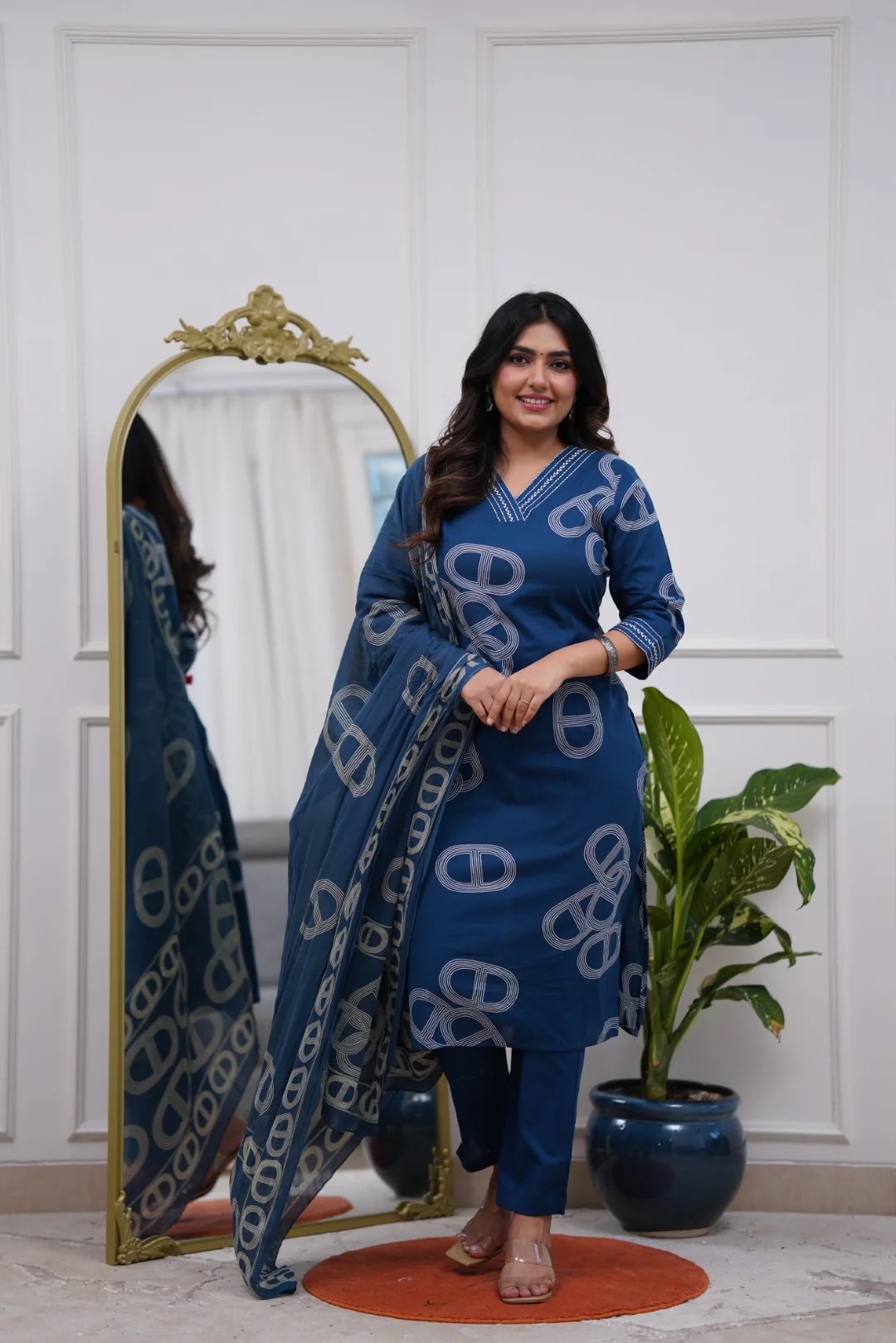
For everyday errands and casual lunches
Choose a breathable fabric, a restrained print and a dupatta that can stay securely on one shoulder. Flat juttis, small hoops and a crossbody bag keep the outfit functional. The RoseGlow Designer Salwar Suit can inspire a colour-led casual look when paired with minimal jewellery and an uncomplicated hairstyle.
For a Haldi ceremony
A yellow, marigold, pink, green or warm cream Afghani suit suits a Haldi ceremony when the fabric allows easy movement and doesn't require delicate handling. Select washable or easy-care materials where possible, because turmeric paste, flower petals and outdoor seating can create practical care challenges. Keep the dupatta pinned at the shoulder and choose jewellery that won't snag on embroidery.
For festive dinners
Silk blends, darker colours, zari accents and a more deliberate dupatta drape make the outfit evening-ready. The Royal Navy Silk Kurti Pant Set with Zari Dupatta shows how a rich navy-and-zari palette can look sophisticated with metallic earrings and low heels. A sleek bun or side-parted waves prevent the upper half from becoming visually crowded.
For family celebrations
Embroidered details, a fuller dupatta and heritage jewellery can add ceremony without requiring a heavily flared anarkali. The Embroidered Salwar Suit Set for Women is a natural reference for building a detailed look with jhumkas, embellished sandals and a neatly folded dupatta. Let one embroidered area lead; matching heavy work on every component can make a loose silhouette look weighed down.
Collections such as Ladies Dress Anarkali Salwar Suits are useful when comparing the more fitted, flared anarkali proportion with the relaxed Afghani shape. Dress Materials can be considered when custom tailoring is important, particularly for adjusting the salwar rise, ankle opening or kameez length.
How can you drape and accessorise the dupatta?
The most flattering dupatta drape depends on the amount of salwar volume and the level of work on the kameez. A simple one-shoulder fall creates a vertical line, while a front drape gives more coverage and makes embroidery visible.
- Single-shoulder drape: Place the dupatta over one shoulder and let it fall close to the side seam. This is effective for prints and lighter fabrics because the outfit retains movement.
- Neck loop: Loop the dupatta once around the neck and let both ends fall in front. This works best with a lighter dupatta and a relatively simple neckline.
- Front-open drape: Place the dupatta over both shoulders with the centre falling down the front. This adds symmetry and coverage for family functions.
- Pinned shoulder drape: Secure one shoulder with a small hidden pin and allow the other end to fall behind. This is practical for dancing, serving food or moving through a crowded venue.
Choose jewellery in proportion to the neckline. Jhumkas complement round or boat necks, long earrings suit V-necks and a short necklace works when the neckline is open but not heavily embroidered. A narrow potli or compact shoulder bag preserves the outfit's classic character without competing with the gathered salwar.
What should you check before buying a readymade suit?
Before buying a readymade Afghani suit, check garment measurements, fabric composition, lining, closure type, care instructions and whether the dupatta is included. Product photographs can show colour and styling, but only measurements reveal whether the salwar will sit comfortably.
- Waist and rise: Confirm the maximum waist measurement and ask whether the waistband is elastic, drawstring or fixed.
- Hip and thigh ease: Ensure enough room remains after sitting, climbing stairs and walking at a normal pace.
- Kameez length: Compare the listed length with your own body measurements rather than relying on the model's proportions.
- Transparency: Pale fabrics such as cream and white may need a lining or a suitable inner layer, particularly under bright indoor lighting.
- Embellishment: Check whether threadwork, zari or sequins are concentrated at areas that may rub against the arm or snag on bags.
- Care: Follow the stated wash method. Zari and embellished fabrics generally benefit from gentle handling, low moisture exposure and storage away from direct sunlight.
Price should be considered alongside fabric, construction and included pieces. Sale collections such as Salwar Suits with 30% Off, Salwar Suits Flat 40% Off and Salwar Suits On Sale can make comparison easier, but a discount doesn't replace checking fit and care requirements. A less expensive suit that needs extensive alteration may cost more than a correctly proportioned option.
How can an Afghani suit stay wearable beyond one season?
An Afghani suit stays relevant when its base colour, fabric and silhouette are versatile enough to accept different accessories. A printed kameez can be paired with a plain dupatta, while a solid suit can take on a new character through a printed or embroidered dupatta.
Rotate styling details instead of repeating the complete look. Wear the kameez with slim trousers if its length and side slits allow it, pair the dupatta with another coordinated suit, or replace ornate earrings with small studs for daytime use. A neutral suit such as camel, cream, navy or black offers more combinations than a highly specific seasonal shade.
Store a clean, completely dry suit folded with lightweight cotton between embellished sections. Avoid hanging heavy zari or wet garments for long periods because the weight can distort shoulders and seams. Air the outfit after wear, empty pockets, remove temporary pins and fold the salwar without compressing its gathers.
The strongest Trendy Afghani Salwar Suit Designs don't depend on excessive decoration. They succeed because the gathered salwar is comfortable, the kameez creates proportion, the fabric moves well and the dupatta completes the outfit. Once those four elements are right, colour and accessories can be changed for workdays, festivals, Haldi ceremony invitations and evening celebrations without losing the silhouette's identity.
Practical Questions About Choosing an Afghani Salwar Suit
What is an Afghani salwar suit?
An Afghani salwar suit has a roomy, gathered salwar that tapers towards the ankle, paired with a kameez and dupatta. The salwar usually offers more hip and thigh ease than a straight salwar and has a deeper, more relaxed rise than a churidar.
Are Afghani salwar suits suitable for short women?
Yes, Afghani salwar suits can suit short women when the kameez is not excessively long or oversized. A shorter kameez, a lighter dupatta and vertical neckline or embroidery help preserve a longer-looking proportion.
What fabric is best for an Afghani salwar suit?
Medium-weight fabrics with fluid movement are generally the easiest to wear because they hold gathers without becoming stiff. Viscose Chanderi, soft silk blends, cotton blends and lightweight synthetic blends can work, depending on the weather and level of embellishment.
How is an Afghani salwar different from a Patiala salwar?
An Afghani salwar usually has a softer, more fluid fall with controlled gathers and a tapered ankle. A Patiala salwar is typically recognised by stronger horizontal pleats and a more pronounced gathered seat, although modern designs may combine features of both.
Can I wear an Afghani salwar suit to a Haldi ceremony?
Yes, an Afghani salwar suit works well for a Haldi ceremony because its roomy fit allows easy movement. Choose a comfortable, reasonably easy-care fabric in yellow, pink, green, cream or another festive shade, and pin the dupatta securely.
What should I check when buying a readymade Afghani salwar suit online?
Check the waist, rise, hip room, ankle opening, kameez length, sleeve length, fabric composition and lining before ordering. Confirm whether the dupatta is included and read the care instructions, especially when the suit includes zari, threadwork or other embellishment.