Trending Salwar Suit Designs for 2026 are moving beyond a single definition of festive dressing. The strongest looks combine comfortable movement, considered proportions and surface detail that photographs well without becoming difficult to wear. Anarkali suits, straight-cut sets, embroidered styles and softer Chanderi fabrics all have a place, but the right choice depends on the event, climate, body proportions and amount of styling you want to do.
An useful salwar suit wardrobe now includes more than one silhouette. A fluid Anarkali can handle a wedding ceremony, a clean straight suit can work for office festivities, and a lightly embellished three-piece set can transition from a family lunch to an evening gathering. Understanding the difference between these options makes online buying more reliable than choosing only by colour or model photography.
What defines Trending Salwar Suit Designs for 2026?
Trending Salwar Suit Designs for 2026 are defined by wearable silhouettes, breathable or fluid fabrics, selective embroidery and colours that work across more than one occasion. Designers are giving familiar salwar kameez shapes a cleaner finish through narrower borders, tonal threadwork, measured flare and versatile dupattas.
The shift matters because a fashionable suit doesn't need an exaggerated cut. A straight kurta with a well-placed motif can look current when the trouser volume and neckline are balanced. A traditional Anarkali can also feel modern when the flare begins at the waist, the hem isn't overloaded with contrast trim and the dupatta is styled with less stiffness.
Three practical details are especially relevant in 2026. First, readymade suit sets are being designed for easier, faster dressing. Second, embroidery is becoming more focused around necklines, cuffs and yokes rather than covering every inch of fabric. Third, neutral shades such as cream, white and camel are appearing beside brighter yellow, green and rose tones, allowing shoppers to build a varied wardrobe.
Which salwar suit silhouettes are gaining attention?
Anarkali, straight-cut, relaxed palazzo and lightly flared suit silhouettes are the most useful directions for 2026. Each silhouette creates a different visual line, so choosing by body proportion and movement is more dependable than choosing by trend name alone.
Anarkali suits for graceful volume
Anarkali suits create length through a fitted upper section and a flare that opens below the waist. The silhouette suits festive dinners, engagement functions and wedding events because the fabric moves visibly while walking and sitting.
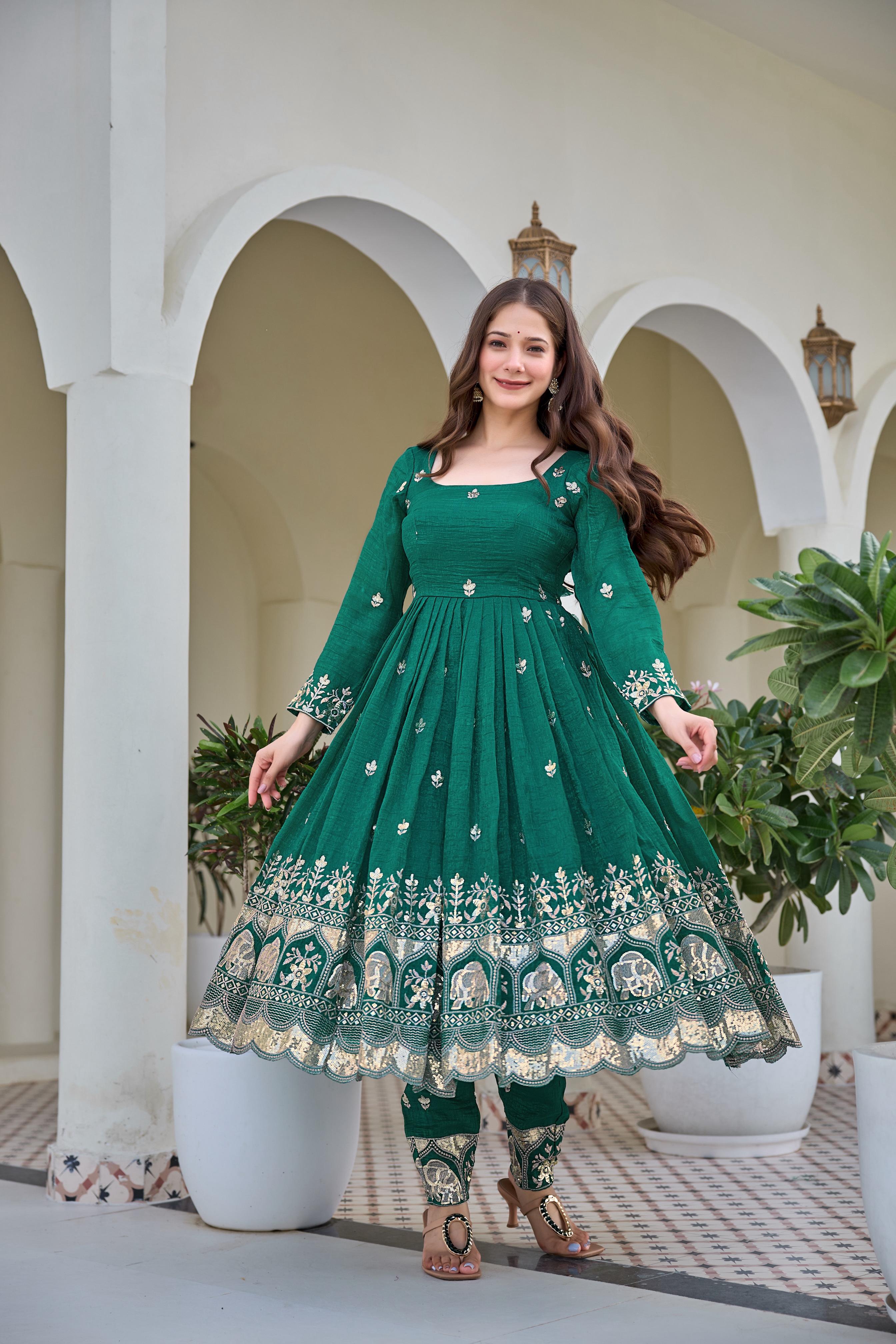
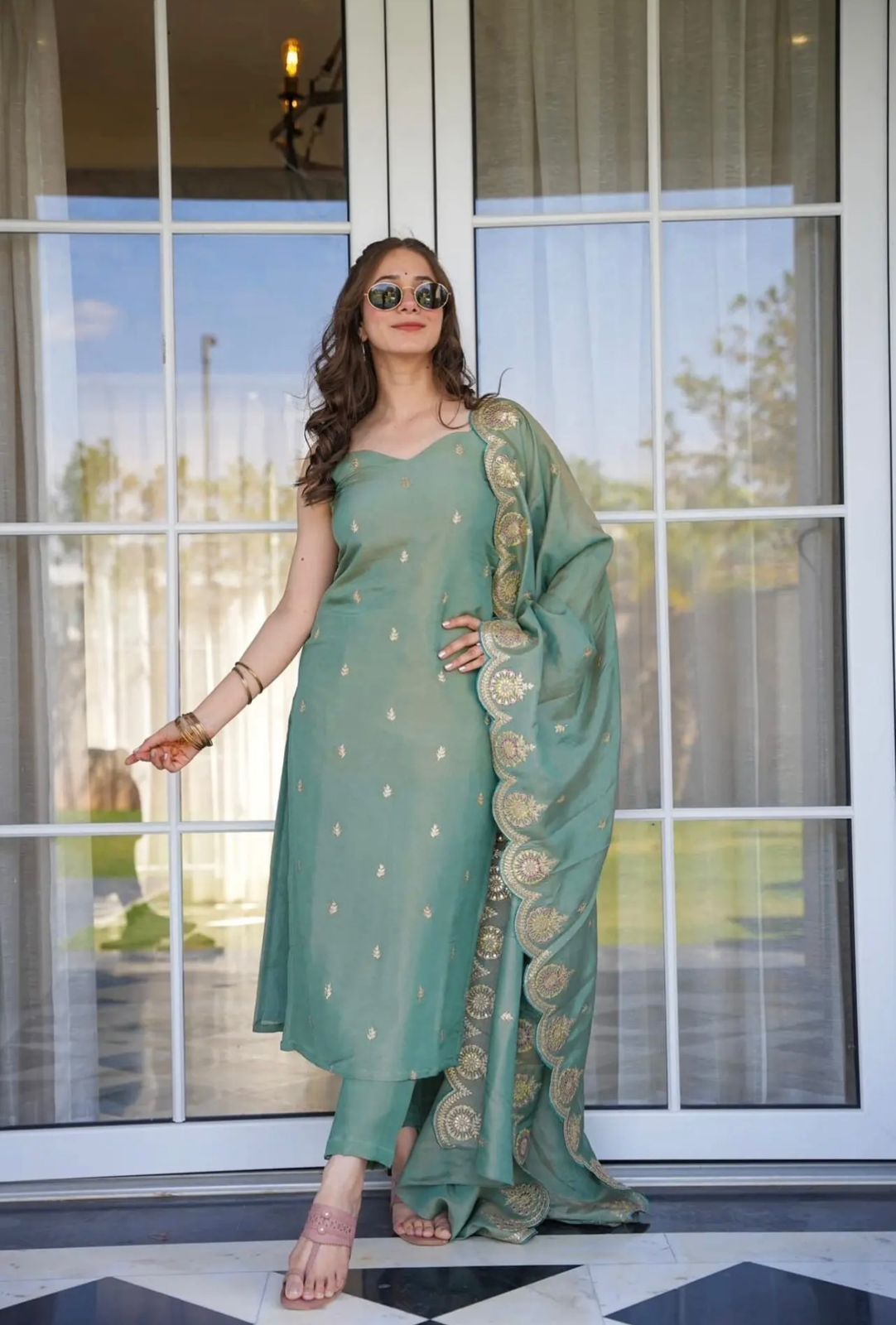
The Green Embroidered Anarkali Suit Set for Women illustrates why embroidery placement matters. A decorated bodice and controlled flare can draw attention upward while preserving a long, uninterrupted line through the skirt portion. Pairing an Anarkali with low-profile earrings and a neat dupatta fold keeps the silhouette from looking crowded.
Shorter wearers generally benefit from a moderate flare and a hem that falls close to the ankle rather than pooling on the floor. Taller wearers can carry more volume, a wider hem border or a longer dupatta without losing proportion.
Straight suits for polished versatility
Straight suits create a clean vertical line and are among the easiest styles to repeat for work, daytime celebrations and travel. Cigarette pants or slim trousers sharpen the shape, while palazzos make the same kurta feel more relaxed.
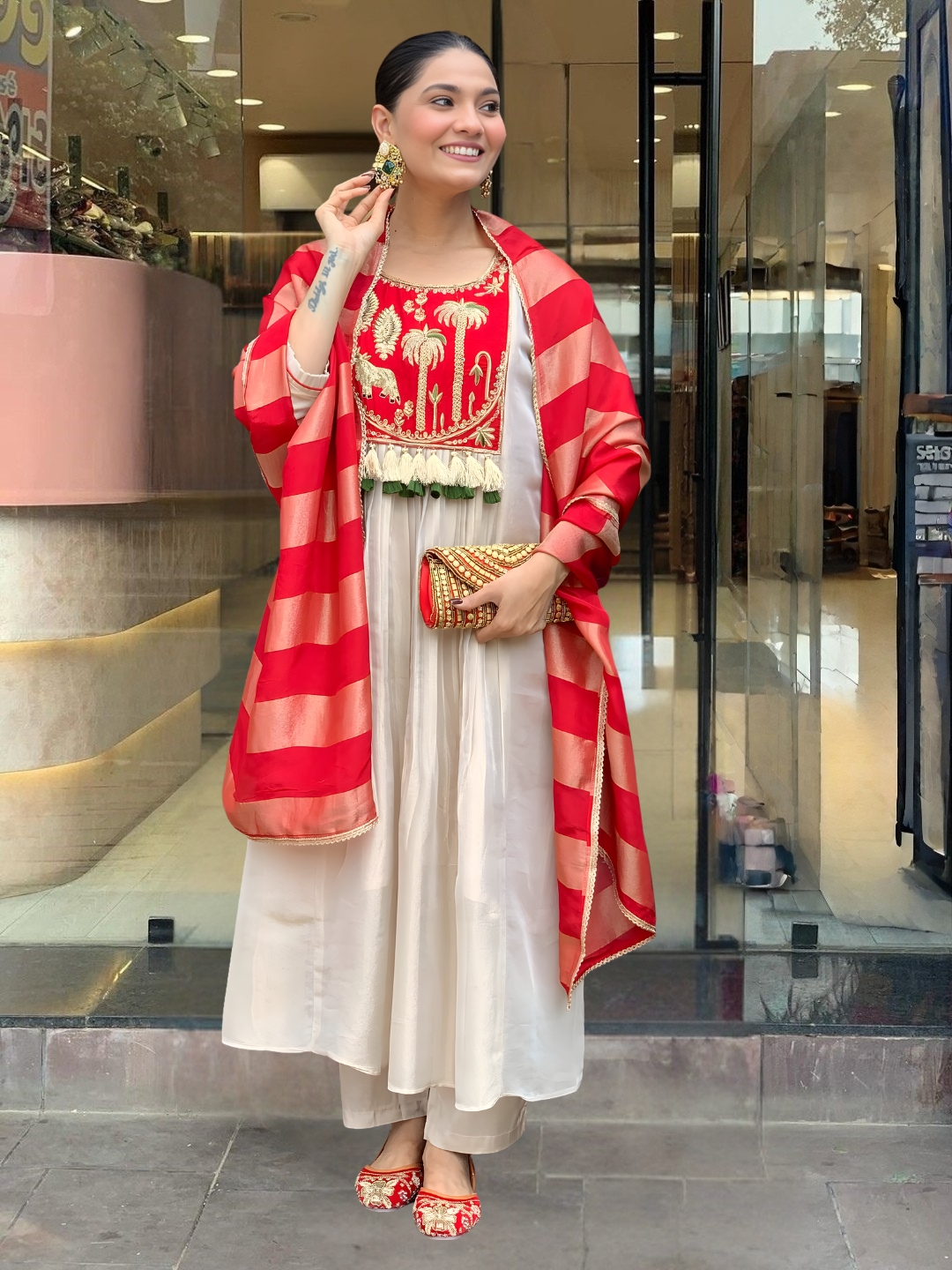
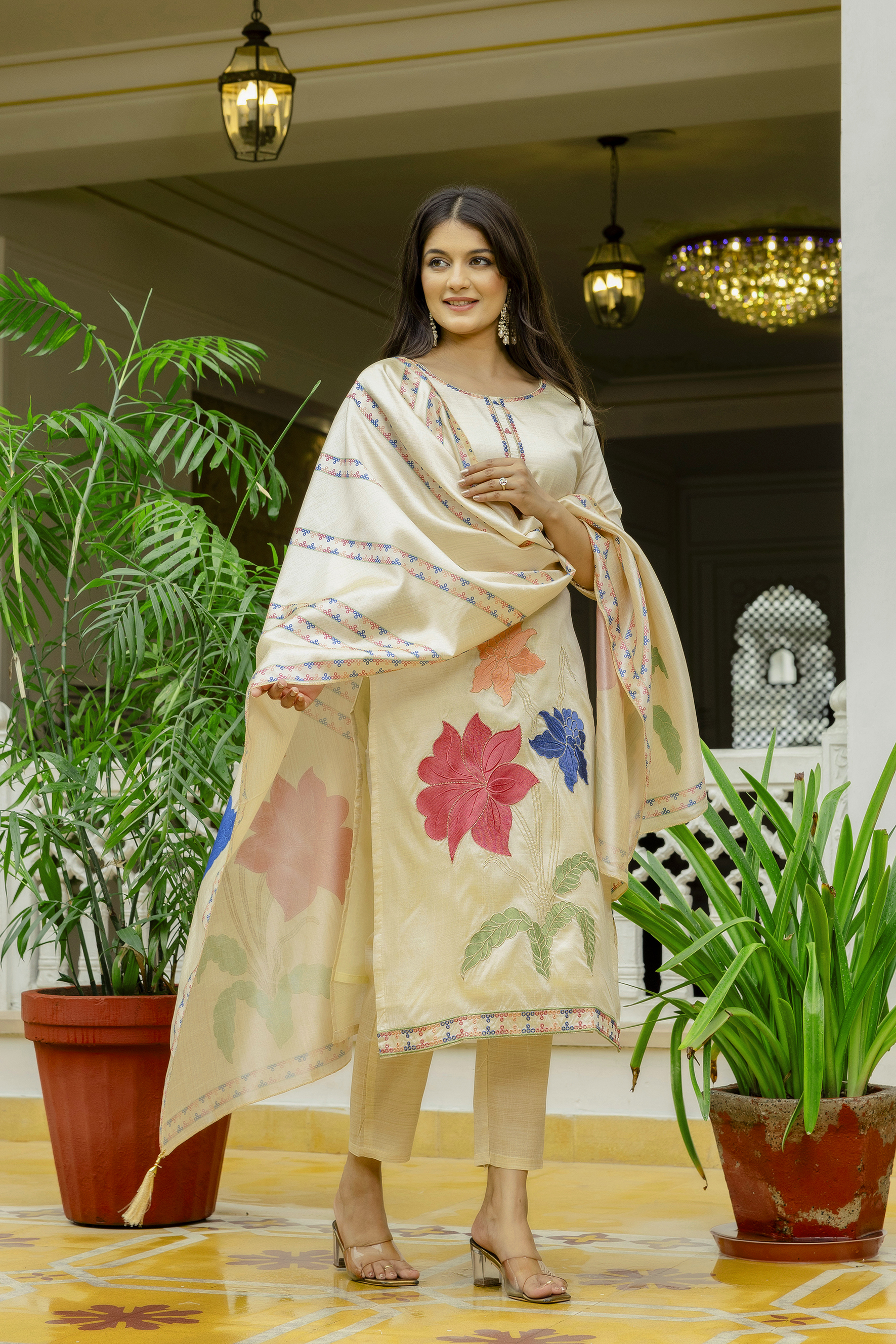
The Cream Threadwork Viscose Chanderi Readymade Salwar Suit shows how a subtle fabric texture can supply interest without heavy ornamentation. Cream threadwork works well with pearl, gold or antique-finish accessories, and a lighter base can be restyled with a coloured dupatta.
The Elegant White Cording Threadwork Salwar Suit offers another version of the minimal embroidered look. White cording creates raised texture, so the outfit can remain visually distinctive even when the jewellery and footwear are restrained.
Relaxed trousers and contemporary proportions
Palazzo trousers and softly tapered bottoms make salwar suits more comfortable for long events. Wider trousers balance a fitted or lightly flared kurta, while a shorter straight kurta can prevent excessive fabric around the ankle.
A current proportion usually has one dominant element. A voluminous palazzo works best with a cleaner kurta, and a highly embroidered kurta looks more balanced with a simpler bottom. Mixing large flare, dense border and a heavily printed dupatta can make the outfit appear shorter and busier.
Which fabrics suit the 2026 salwar suit trend?
Viscose Chanderi, silk blends and lighter woven fabrics are strong choices when movement, sheen and occasion-appropriate texture matter. Fabric selection should account for weather, lining, embroidery weight and how long the wearer expects to remain dressed.
Chanderi has a fine, light hand and a delicate surface character that suits daytime festivities and warm-weather ceremonies. Viscose Chanderi can offer fluid drape alongside a slightly luminous appearance, making it a practical choice for a readymade suit that needs to look dressed without feeling rigid.
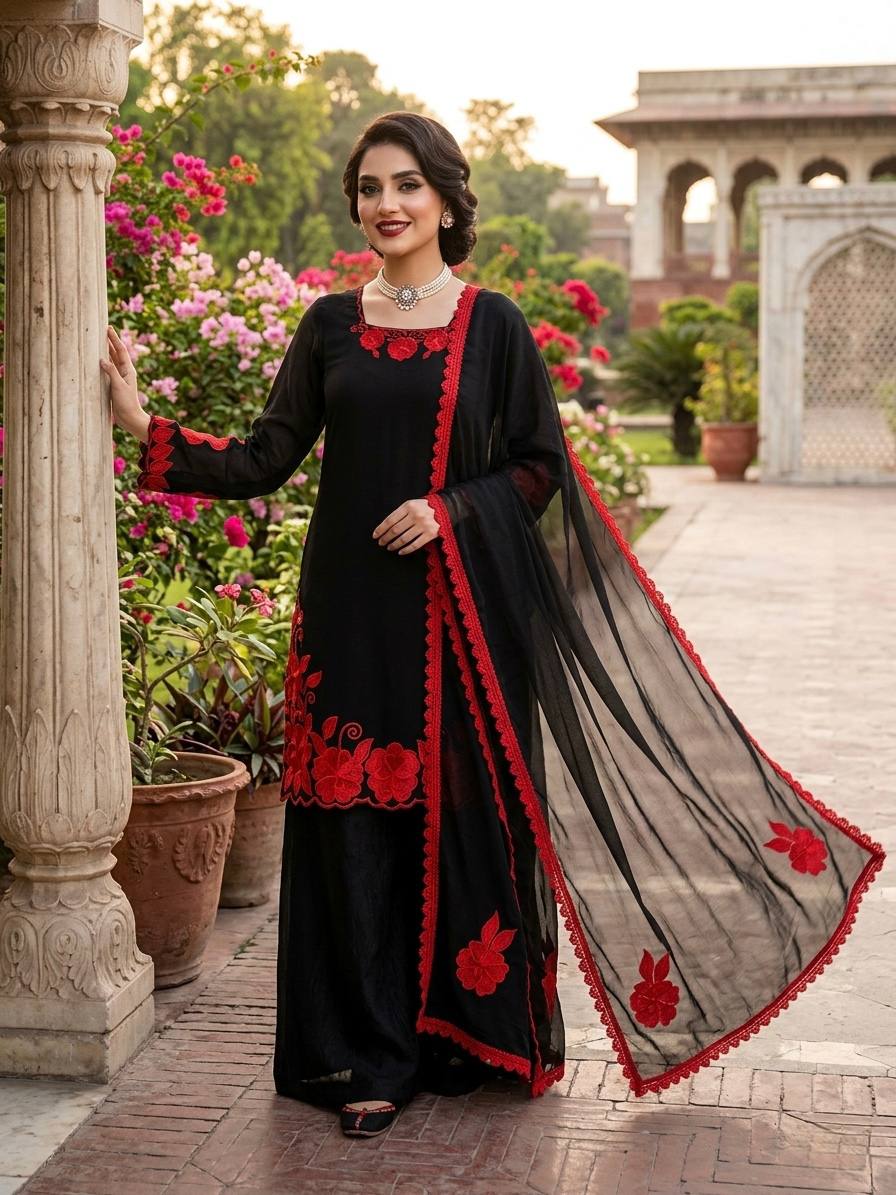
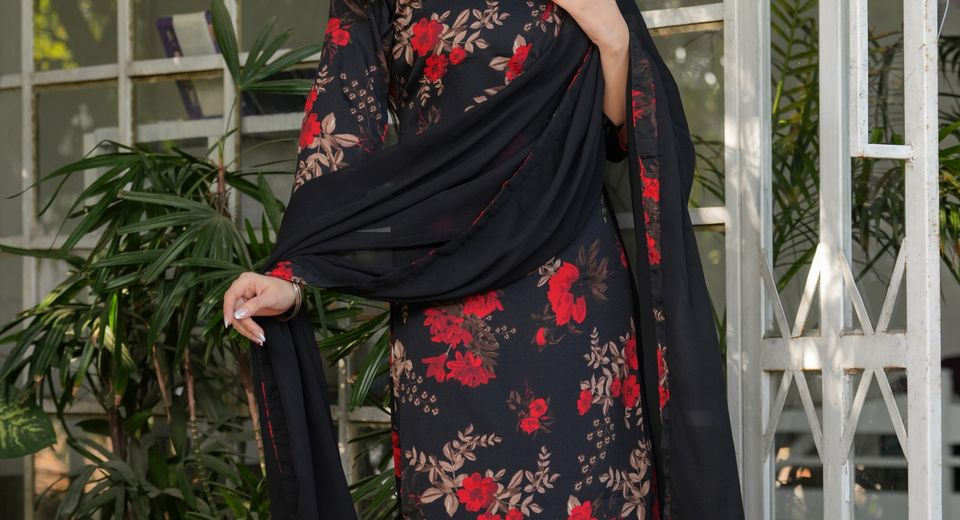
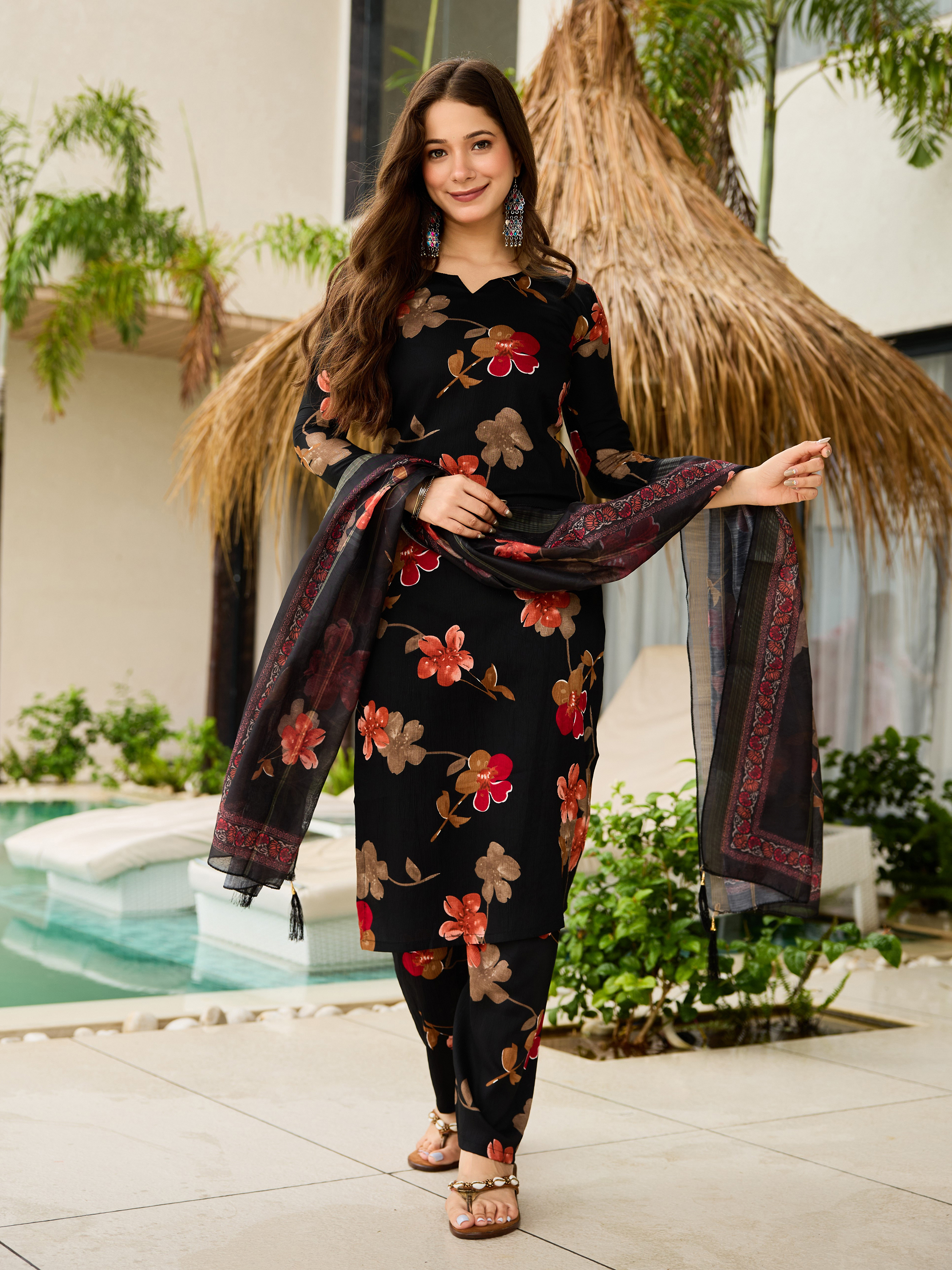
Silk blends bring more body and a noticeable sheen to printed or embellished styles. The Black Floral Printed Silk Blend Salwar Suit demonstrates how a dark ground can make floral motifs appear sharper. Black suits can be especially flexible, but the print scale should be considered: large florals create a statement, while smaller motifs feel easier for daytime use.
Threadwork and cording also change how fabric behaves. Raised embroidery can add weight around the chest, sleeves or hem, so the garment may need a little extra ease. A heavily decorated neckline should not be paired with a tight collar if comfortable movement is a priority.
Purely decorative fabric decisions can become inconvenient in Indian weather. For summer ceremonies, lighter Chanderi or fluid viscose is generally more comfortable than a dense, lined construction. For winter evening functions, a silk blend or more structured weave can provide useful visual richness and warmth.
How should colour and embroidery be chosen?
Colour and embroidery should be chosen according to event timing, lighting and the number of accessories the outfit must accommodate. A bright base can carry simpler jewellery, while a neutral base gives more freedom to add a colourful dupatta or statement earrings.
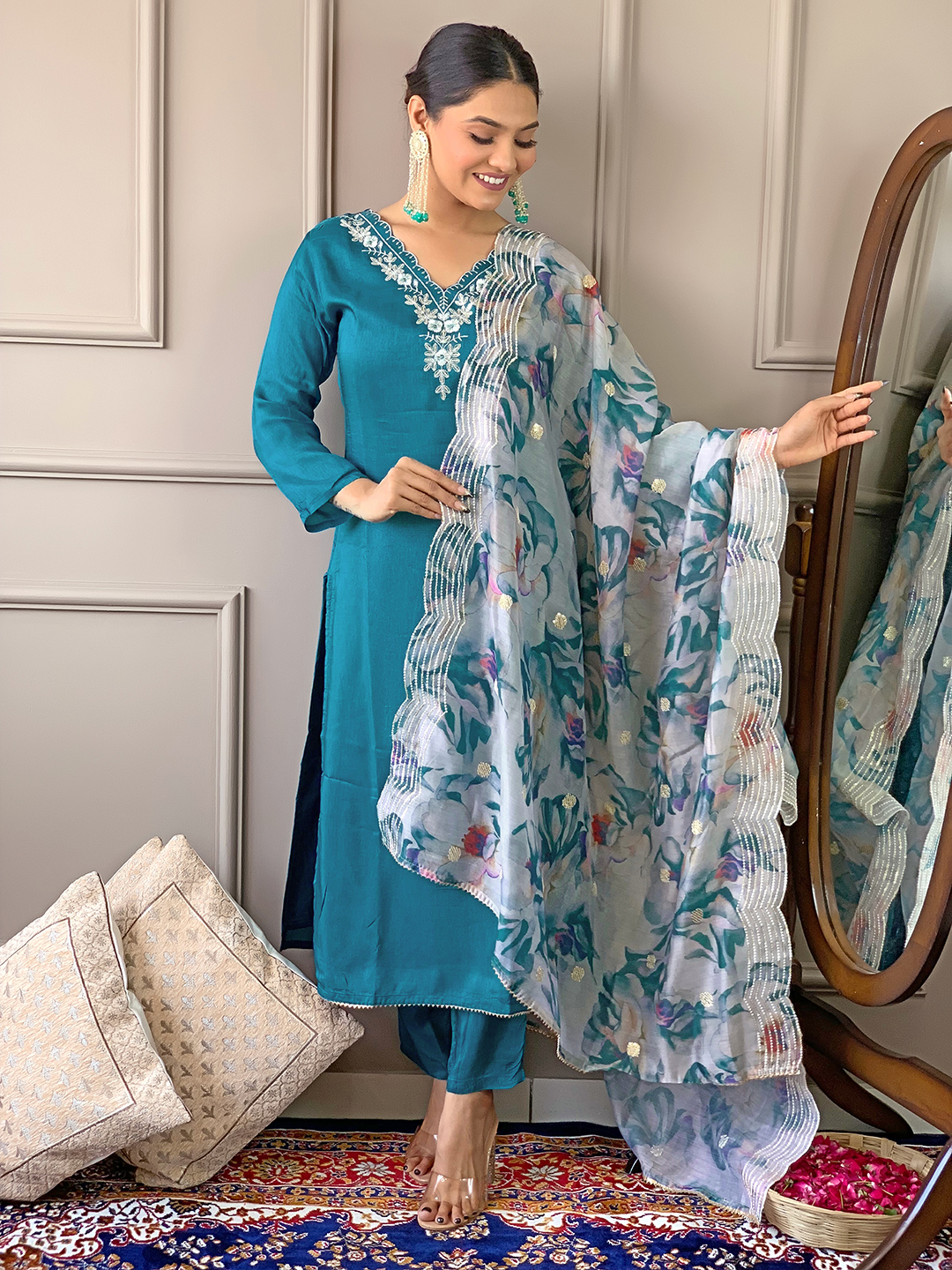
Yellow remains effective for Haldi ceremony dressing because the colour photographs well in daylight and feels connected to the celebratory palette. The Yellow Chanderi Radiance Embroidered Suit combines a festive colour direction with a light fabric idea, making it suitable for daytime family functions and pre-wedding gatherings.
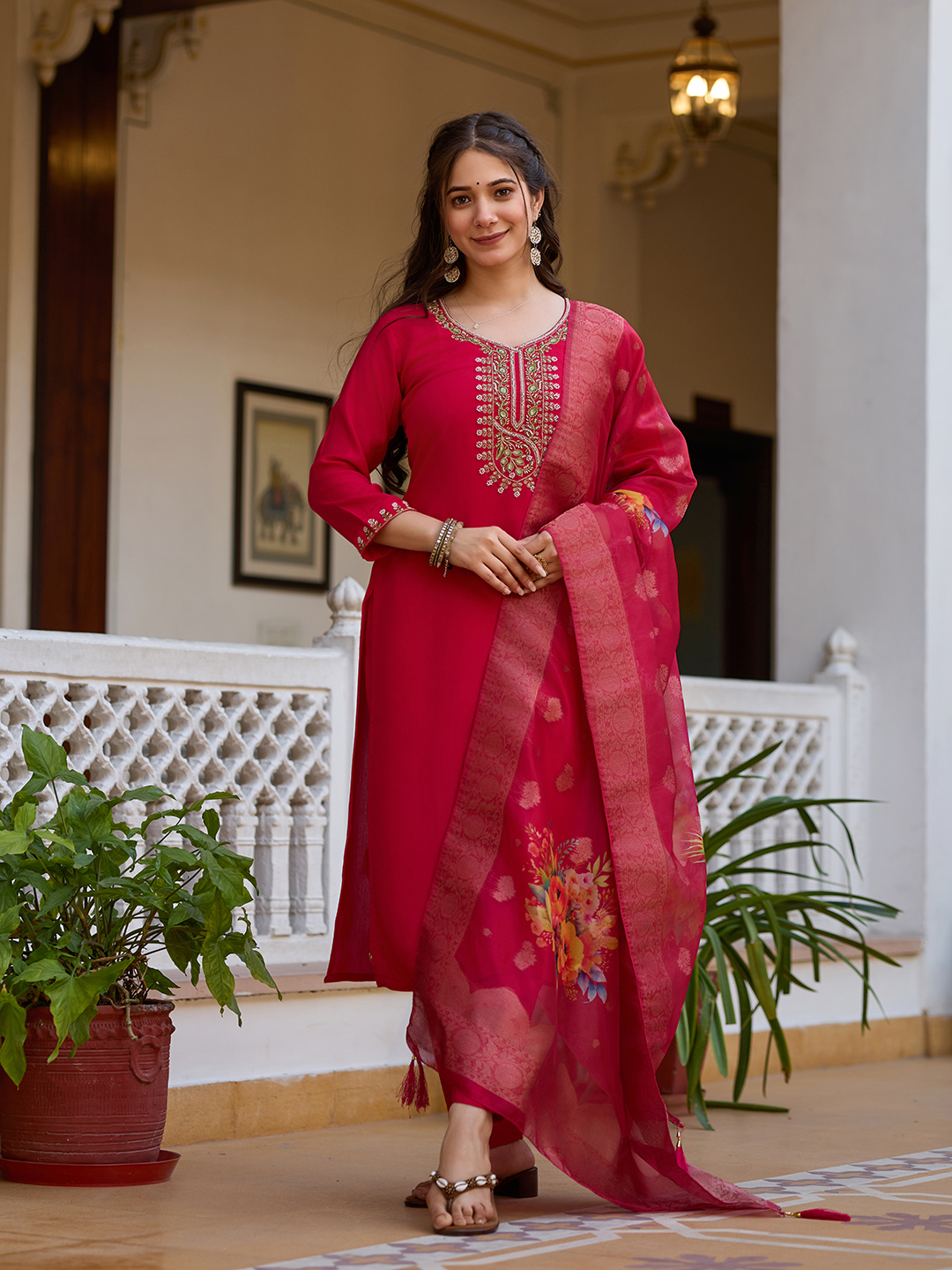
Rose and camel shades provide softer alternatives to saturated festive colours. The RoseGlow Designer Salwar Suit can work for a romantic evening palette, while the Elegant Camel Shade Salwar Suit Set gives a grounded neutral that pairs naturally with ivory, bronze, rust or deep green accessories.
Green has a particularly broad range, from pale sage to jewel-toned emerald. Green embroidery can look daytime-friendly when paired with restrained threadwork, while deeper green with metallic accents can move into evening dressing. Colour temperature also matters: warm undertones harmonise with gold jewellery, and cooler undertones often suit silver or white-metal finishes.
Embroidery placement is more important than embroidery quantity. A decorated yoke lengthens the upper body visually, sleeve detail brings attention to the arms, and a hem border emphasises the movement of an Anarkali or palazzo. The Embroidered Salwar Suit Set for Women represents the broad category, but shoppers should still inspect where the motifs sit and whether the dupatta repeats the same density.
How can one salwar suit work for different occasions?
One salwar suit can serve different occasions when the styling changes through accessories, dupatta arrangement, footwear and makeup rather than through excessive garment additions. The same base outfit can look daytime, formal or festive with controlled adjustments.
For work and daytime gatherings
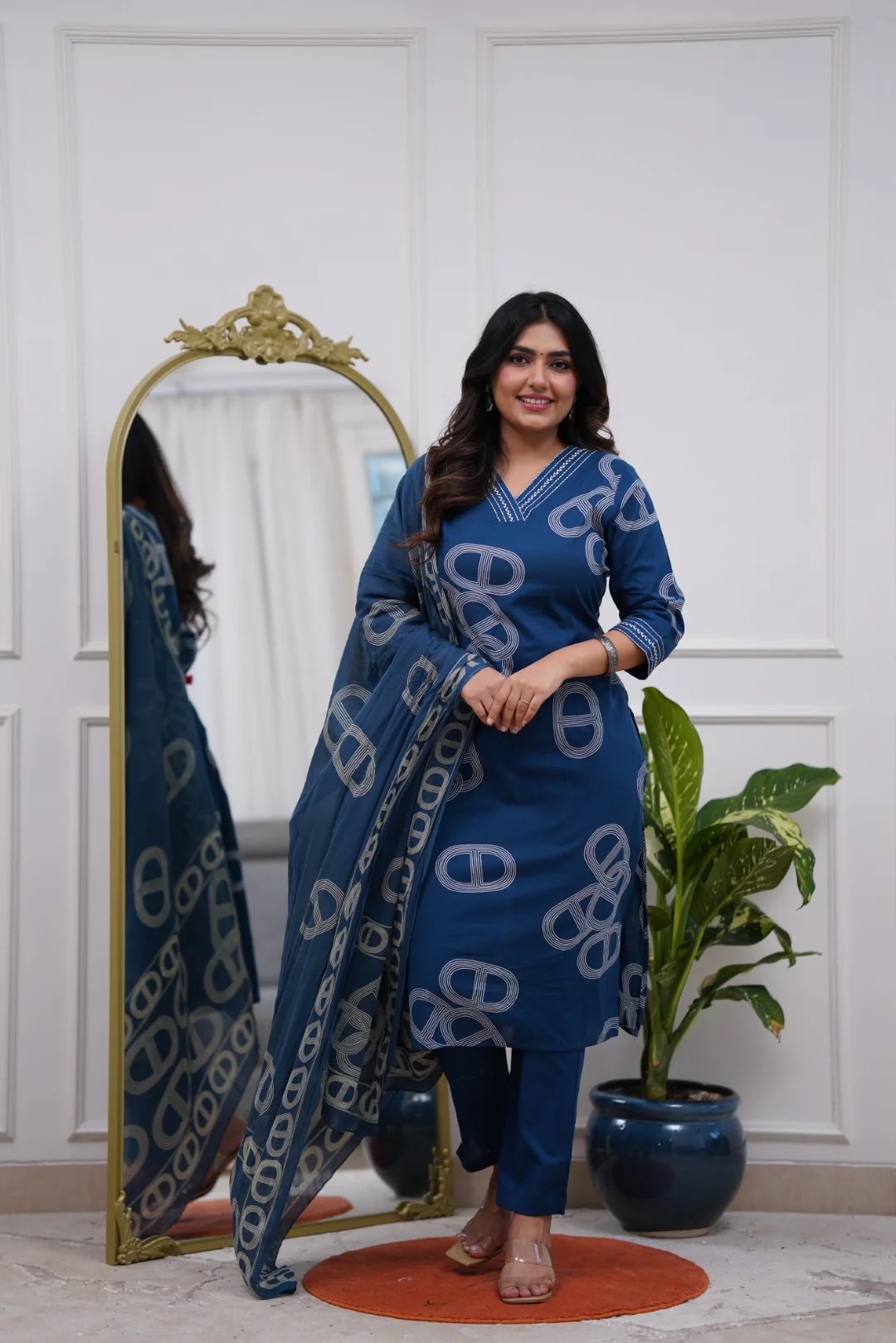
Workwear and daytime gatherings call for moderate embroidery, comfortable sleeves and a dupatta that stays secure. A cream, white, camel or muted green suit paired with small studs, a structured tote and low block heels creates polish without unnecessary sparkle.
The Elegant Camel Shade Salwar Suit Set is an useful example of a neutral base. Add a printed scarf for a relaxed daytime appearance, or use a tonal dupatta and metal watch when the setting is more formal.
For Haldi ceremonies and intimate festivities
Haldi ceremony dressing benefits from breathable fabric, cheerful colour and freedom of movement. Yellow, marigold, green and rose shades feel appropriate, while shorter or securely pinned dupattas make it easier to participate in rituals.
A Chanderi suit with moderate embroidery can look celebratory without the weight of bridal embellishment. Flat embellished sandals or juttis are usually more practical than narrow high heels on outdoor or uneven surfaces.
For weddings and evening celebrations
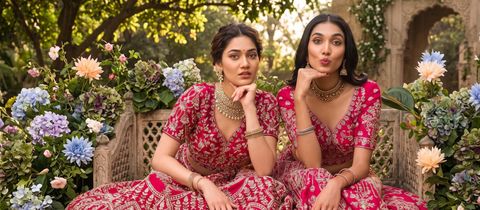
Wedding and evening dressing can support deeper colours, silk-blend texture, denser threadwork and more deliberate jewellery. A black floral suit becomes more formal with metallic earrings and a sleek clutch, while an emerald or rose Anarkali can take on a richer appearance through embroidered footwear and a structured drape.
The Black Floral Printed Silk Blend Salwar Suit is particularly adaptable because the black base creates contrast against gold, silver, ruby or pearl accessories. Keeping one accessory category quiet prevents printed fabric and jewellery from competing.
How should a salwar suit be selected online?
A salwar suit should be selected online by checking measurements, fabric description, garment components, lining and care requirements before judging the image. Product photographs show styling, but written specifications reveal whether the suit will work for the intended use.
- Check the garment measurements. Compare bust, waist, hip, shoulder and garment length with a well-fitting kurta already owned. Do not rely on small, medium or large labels because sizing changes between cuts.
- Identify the silhouette. Confirm whether the product is straight, flared, Anarkali, palazzo or another cut. A generous bust measurement doesn't guarantee the same ease at the hip or upper arm.
- Read the fabric composition. Viscose Chanderi, silk blend and other materials have different drape, breathability and care needs. Fabric names should not be treated as interchangeable.
- Inspect included pieces. Confirm whether the set includes the kurta, bottom and dupatta, and check whether the bottom is stitched or adjustable. A readymade set may still require minor alterations at the sleeve or trouser length.
- Assess embroidery placement. Look for threadwork on the yoke, sleeves, hem and dupatta. Dense work in high-friction areas may require gentler handling and can affect comfort.
- Plan footwear before buying. An Anarkali hem, palazzo width and trouser length should work with the intended footwear. A two-inch heel can change the fall of the garment significantly.
Collection browsing can also be organised by purpose. Ladies Dress Anarkali Salwar Suits is relevant when flare and occasion volume are priorities. Dress Materials suits shoppers who want to select or customise fabric and stitching. Salwar Suits with 30% Off, Salwar Suits Flat 40% Off and Salwar Suits On Sale can help compare value, but discount percentage should never replace checking fabric, measurements and included components.
How can salwar suits be cared for in 2026?
Salwar suits last longer when washing, drying and storage match the fabric and embroidery. Care labels should take priority, but several precautions are broadly useful for Chanderi, silk blends and threadworked garments.
Use a mild detergent and cool water only when hand washing is permitted. Avoid soaking embroidered salwar suits for long periods because colour transfer, thread swelling or adhesive damage can occur. A mesh laundry bag and a gentle cycle may be suitable for some viscose blends, but delicate cording and embellished dupattas are safer with professional cleaning.
Dry Chanderi and silk-blend garments away from harsh direct sunlight. Strong sun can fade black, rose and yellow dyes over time, especially when garments are repeatedly dried in the same position. Press garments inside out on a low or moderate setting, placing a thin cotton cloth between the iron and raised embroidery.
Store salwar suits clean and completely dry. Fold heavy embroidered pieces rather than hanging them for months, since hanger pressure can distort shoulders and stretch delicate fabric. Keep dupattas folded separately when metallic or raised details could catch against the kurta.
Good styling in 2026 depends less on collecting every new shape and more on understanding proportion, fabric and repeat wear. A carefully chosen Anarkali, an adaptable straight suit and one expressive embroidered or printed set can cover a surprisingly wide range of Indian celebrations and everyday plans.
Questions Shoppers Ask About 2026 Salwar Suit Trends
Which salwar suit designs are trending in 2026?
Anarkali suits, clean straight-cut sets, relaxed palazzo combinations and lightly embroidered three-piece suits are prominent in 2026. Chanderi textures, silk blends, tonal threadwork and balanced neutral or jewel-toned colours make these silhouettes feel current without sacrificing wearability.
Which salwar suit is best for a wedding function?
An embroidered Anarkali or a silk-blend salwar suit is usually well suited to a wedding function. Choose stronger colour, controlled shine and a dupatta with enough structure, then balance the outfit with jewellery that does not compete with dense embroidery.
Are Chanderi salwar suits suitable for summer?
Chanderi salwar suits are generally suitable for summer because Chanderi has a light hand and an airy drape. Lining, embroidery density and the fit around the armhole still affect comfort, so those details should be checked before purchase.
What colour salwar suit works for a Haldi ceremony?
Yellow is a natural choice for a Haldi ceremony because it suits the daylight setting and celebratory palette. Green, rose and warm ivory also work when the fabric allows movement and the dupatta is pinned securely.
How do I choose a salwar suit online for my body shape?
Choose the silhouette according to the line you want to create and compare garment measurements with a well-fitting kurta. Straight suits create a clean vertical effect, while Anarkalis add movement below the waist and palazzos provide volume through the lower half.
How should an embroidered salwar suit be washed?
An embroidered salwar suit should be washed according to its care label, using cool water and mild detergent when hand washing is allowed. Avoid long soaking, harsh wringing and direct strong sunlight; delicate cording, metallic work or heavy embellishment may require professional cleaning.