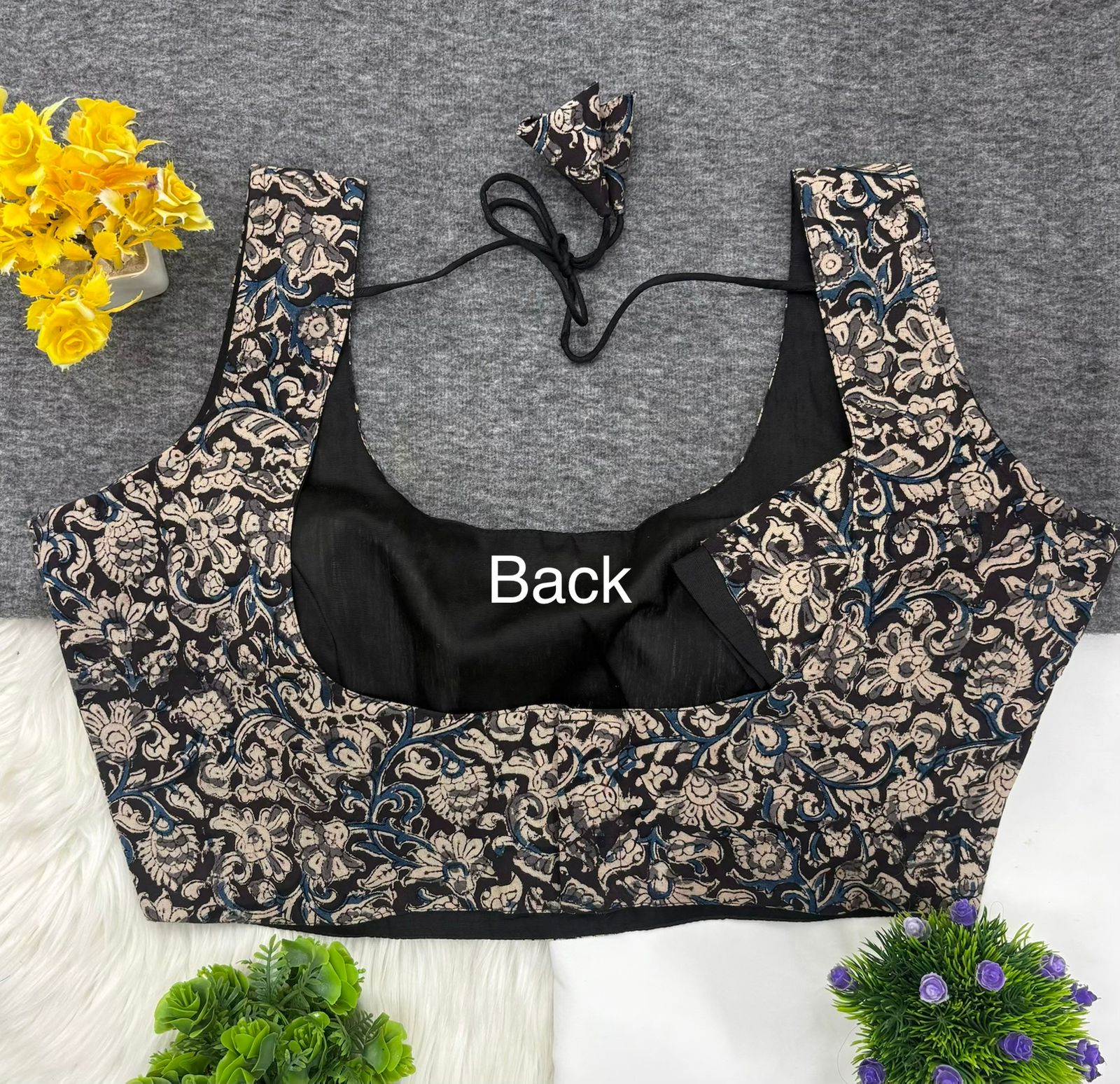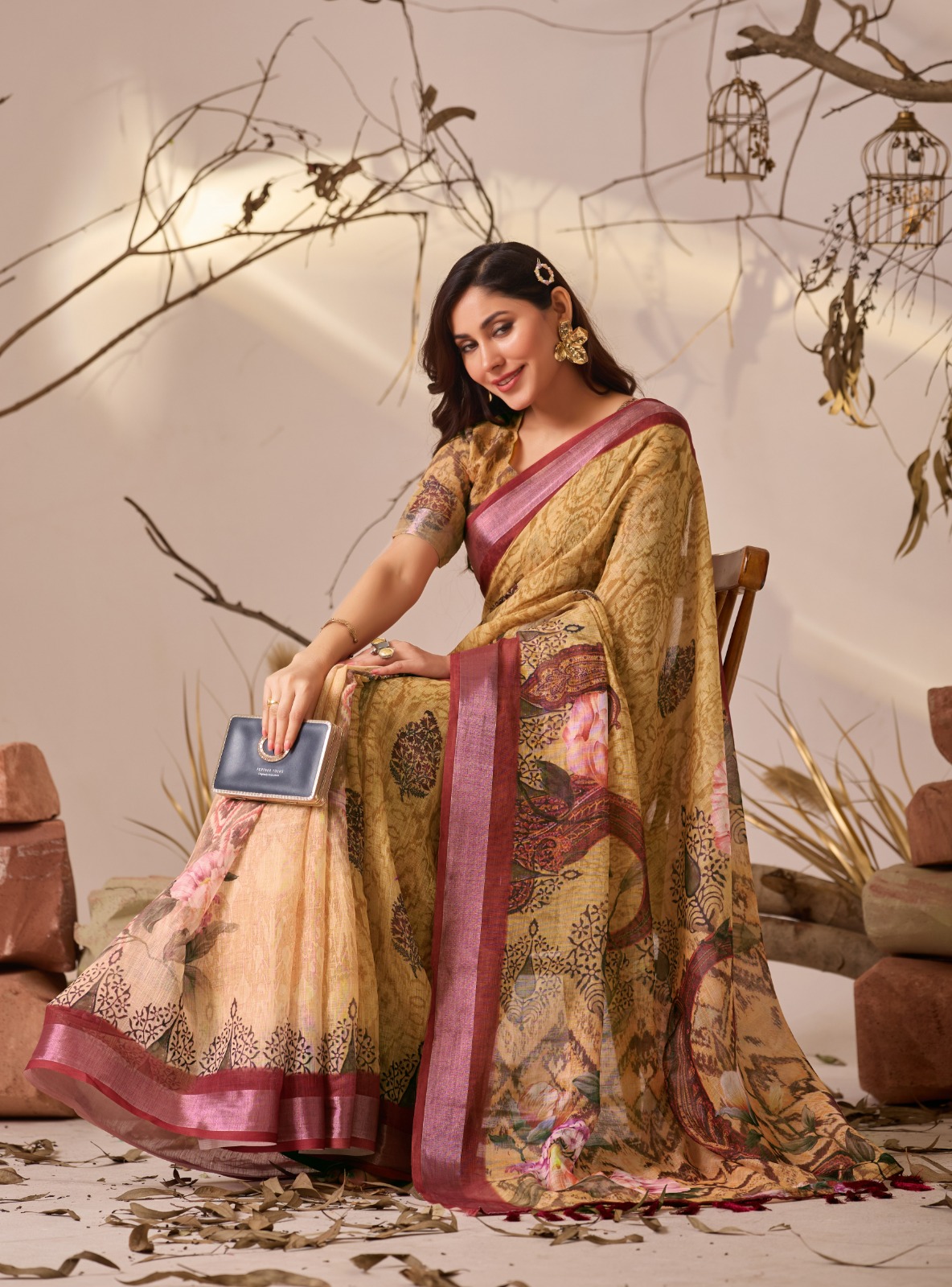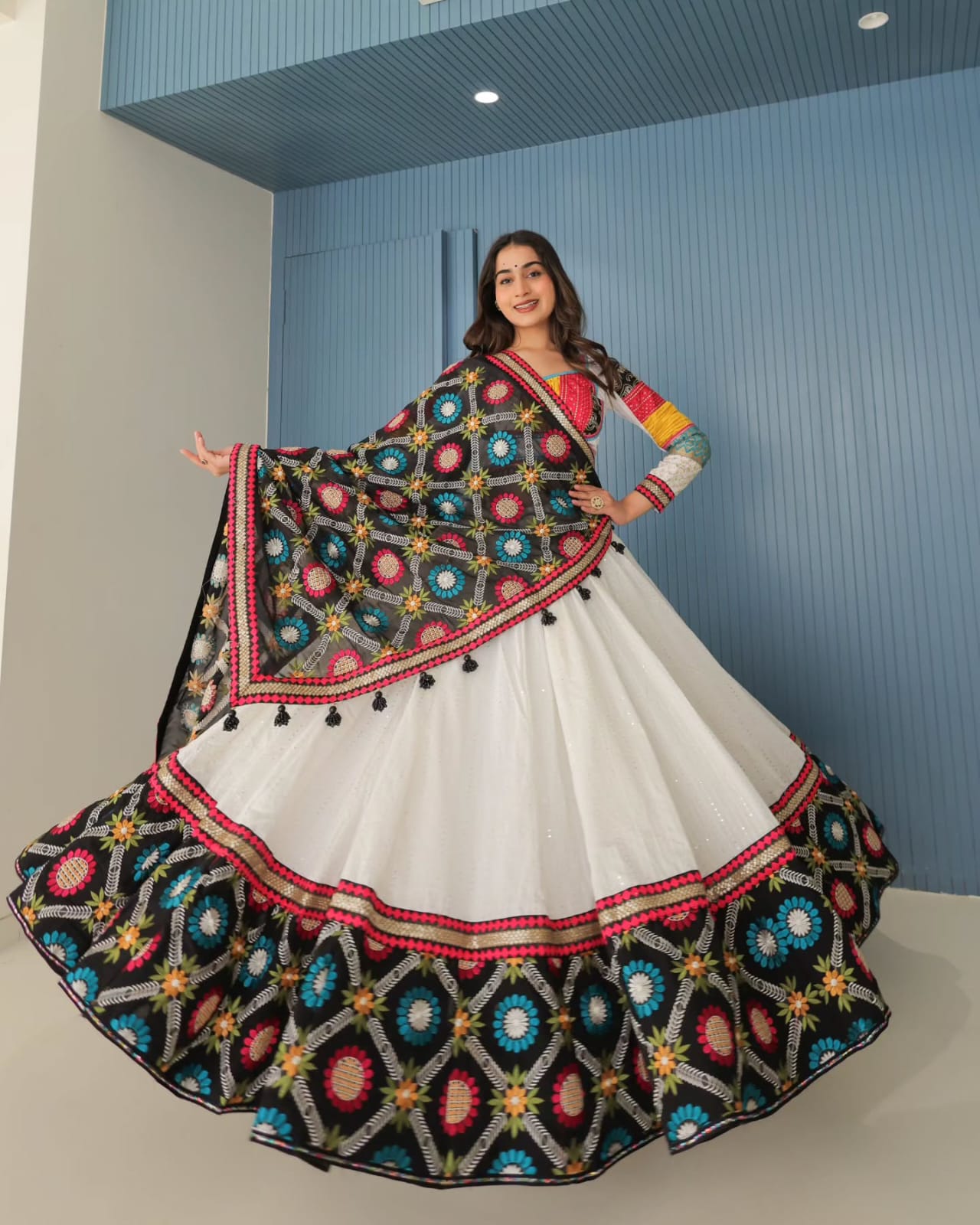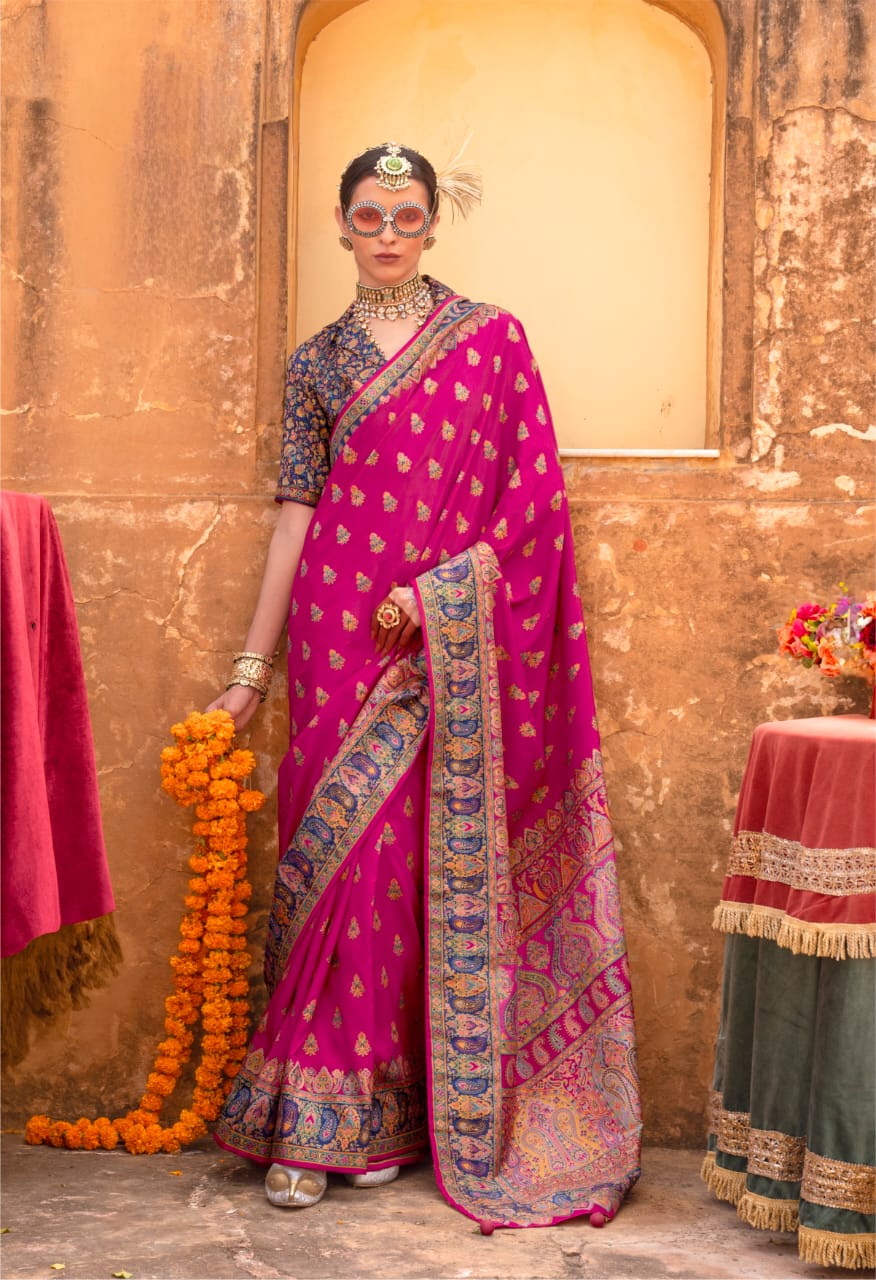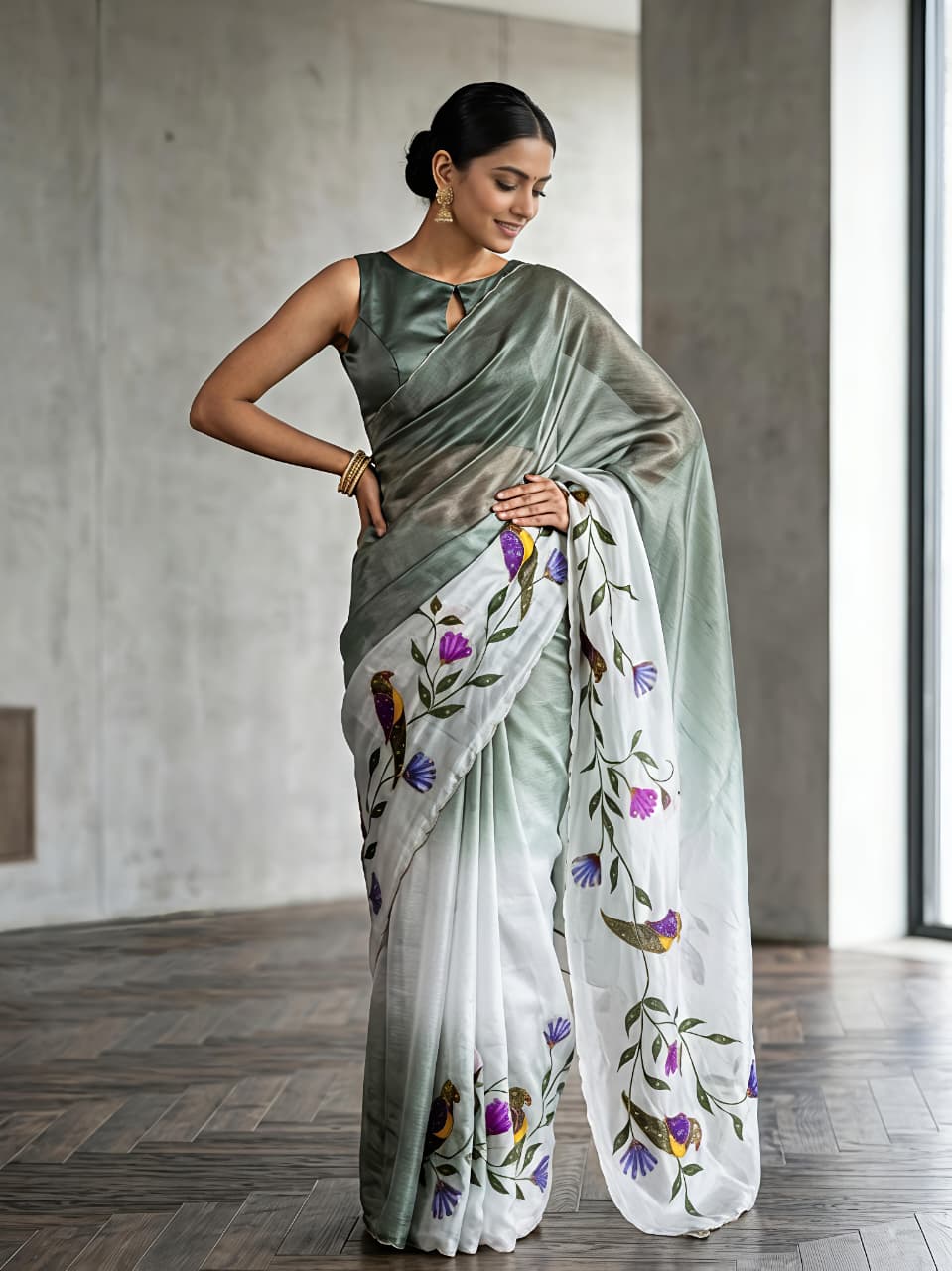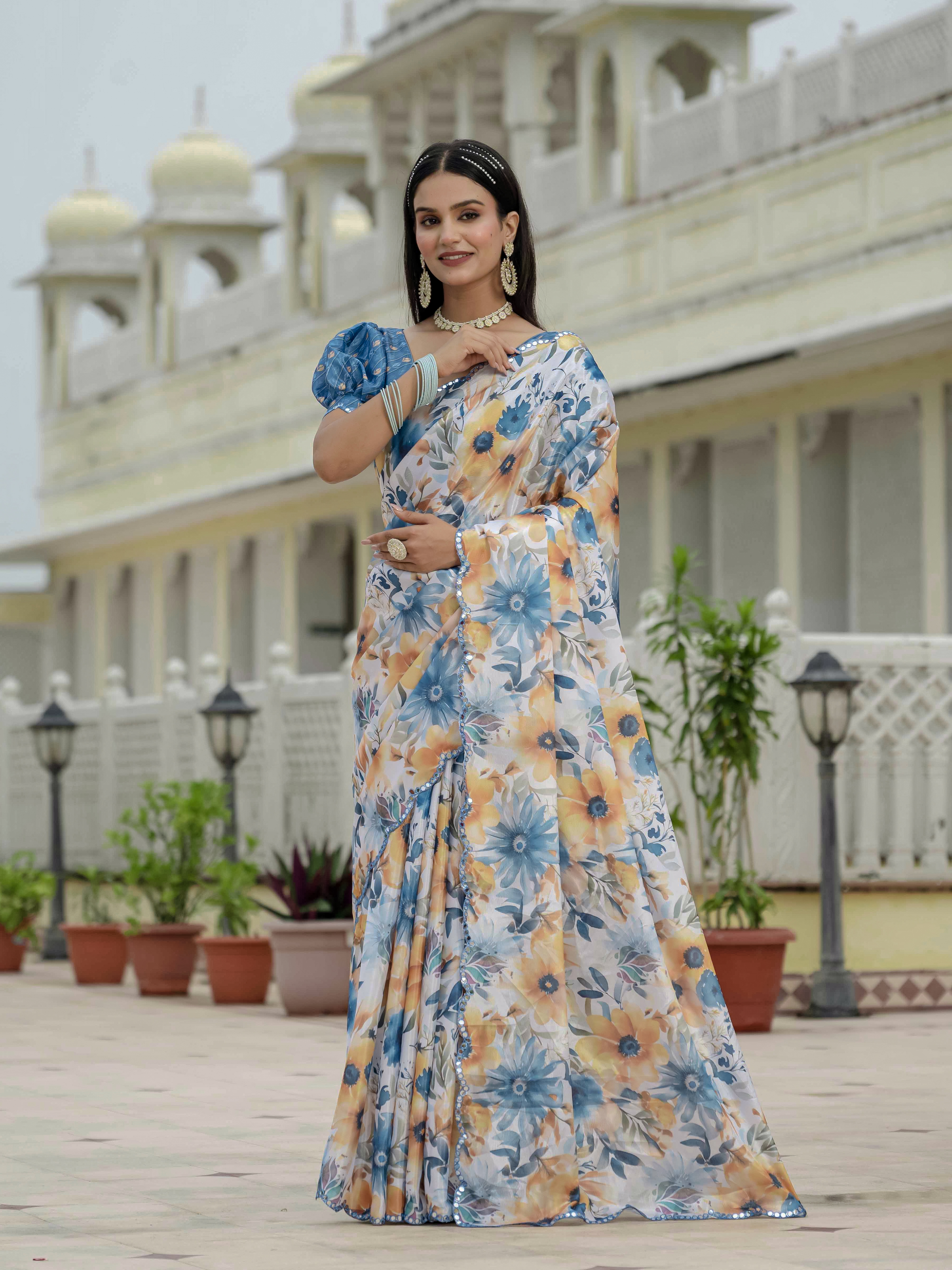
Traditional Textile Patterns of Arunachal Pradesh: Fashion Inspiration begins with a simple observation: a woven design can carry geography, community memory and visual identity in every repeated line. Arunachal Pradesh has more than 20 major tribes and numerous sub-tribes, so its textiles don't follow one single pattern language. Adi, Apatani, Monpa, Nyishi, Galo, Mishmi and Wancho traditions each use distinctive combinations of stripes, diamonds, bands and colour.
For contemporary ethnic dressing, the value of these textiles lies in understanding the design logic rather than copying sacred or community-specific motifs casually. A saree with a narrow geometric border, a blouse with disciplined stripe placement or a muted palette inspired by mountain landscapes can acknowledge the visual spirit of Arunachal Pradesh while remaining practical for modern wardrobes.
Traditional Textile Patterns of Arunachal Pradesh and their visual character
Traditional Textile Patterns of Arunachal Pradesh have strong visual character because woven clothing communicates community, region, status and ceremonial context at the same time. The state's mountainous terrain has historically kept many communities culturally distinct, and weaving developed within household and village traditions rather than one central design system.
Backstrap looms and other traditional loom practices allow weavers to create firm, narrow-width fabric with clearly controlled pattern bands. The resulting textiles often look graphic from a distance because the design depends on rhythm: a dark stripe may repeat after a red band, or a row of small diamonds may sit between broader colour fields. Handwoven irregularities are part of the textile's identity, not defects to be removed.
Wool, cotton and locally available fibres have been used according to climate, community practice and garment purpose. Woollen textiles are especially relevant in colder highland areas, while cotton garments and accessories are common in many lower and warmer regions. Natural dyes and commercially available dyes may both appear in contemporary practice, so colour alone can't prove that a textile is traditionally dyed.
An important design principle from Arunachal Pradesh weaving is controlled repetition: a small number of colours becomes powerful when proportion, spacing and contrast are carefully managed.
Traditional Textile Patterns of Arunachal Pradesh: stripes, bands and geometry
Traditional Textile Patterns of Arunachal Pradesh commonly draw their visual strength from geometric structure, horizontal banding and high-contrast colour placement. These features can be studied as a design vocabulary, although individual motifs should not be assigned a universal meaning without community-specific evidence.
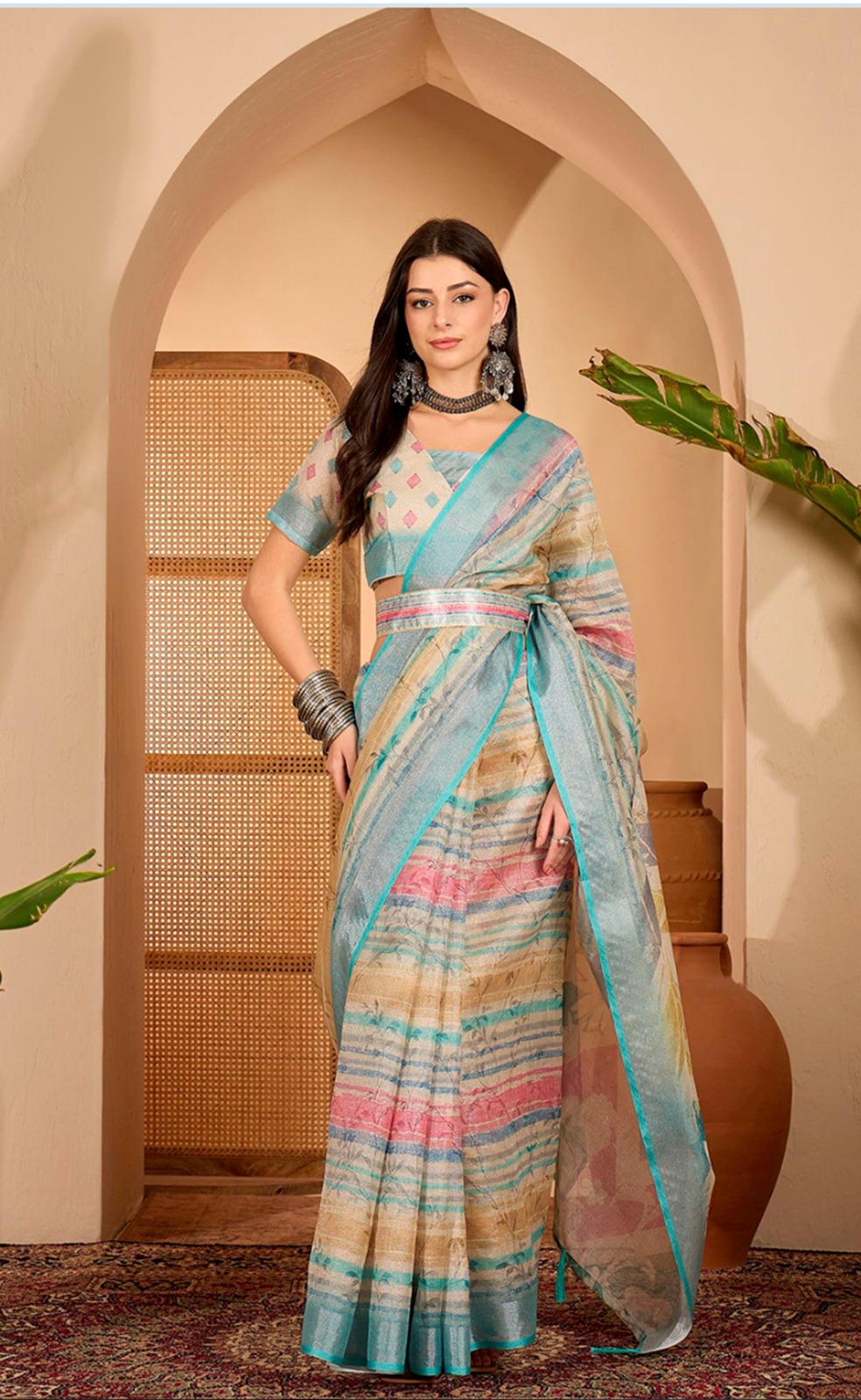
Stripes and border architecture
Stripes and horizontal bands are among the most adaptable elements for contemporary clothing. A broad band can anchor the hem of a saree, while two or three fine stripes can define a blouse sleeve, dupatta edge or palazzo waistband.
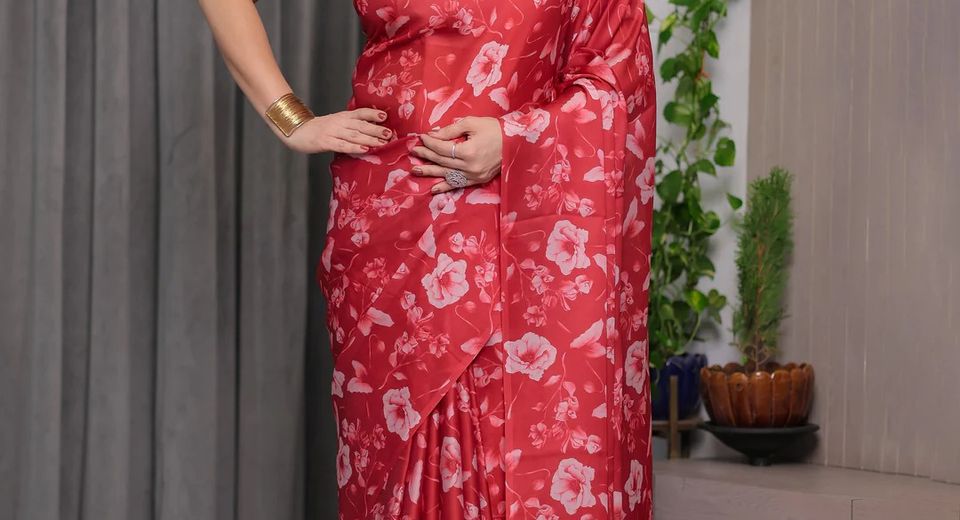
Band placement matters as much as colour. A border positioned at the saree pallu creates a strong focal point, whereas a repeated stripe running across the body produces a quieter, everyday effect. Red Satin Floral Print Saree with Unstitched Blouse Textile demonstrates how a strong red ground can become the dominant field, while a more restrained border would keep the final look from becoming visually heavy.
Diamonds and stepped forms
Diamonds and stepped geometric forms create visual movement because the eye follows their points, corners and changes in scale. These motifs work particularly well as woven inserts on sleeves, blouse yokes, potli bags and narrow saree borders.
Contemporary designers should avoid treating every diamond as an interchangeable tribal symbol. A responsible adaptation can use the broader idea of repeated geometry, change the scale and develop an original arrangement instead of reproducing a community textile without context or permission.
Contrast and visual rhythm
Contrast makes small woven motifs legible, especially when a dark colour is placed beside vermilion, orange, cream, green or blue. The strongest results usually come from limiting the palette to three or four principal colours rather than adding every available shade.
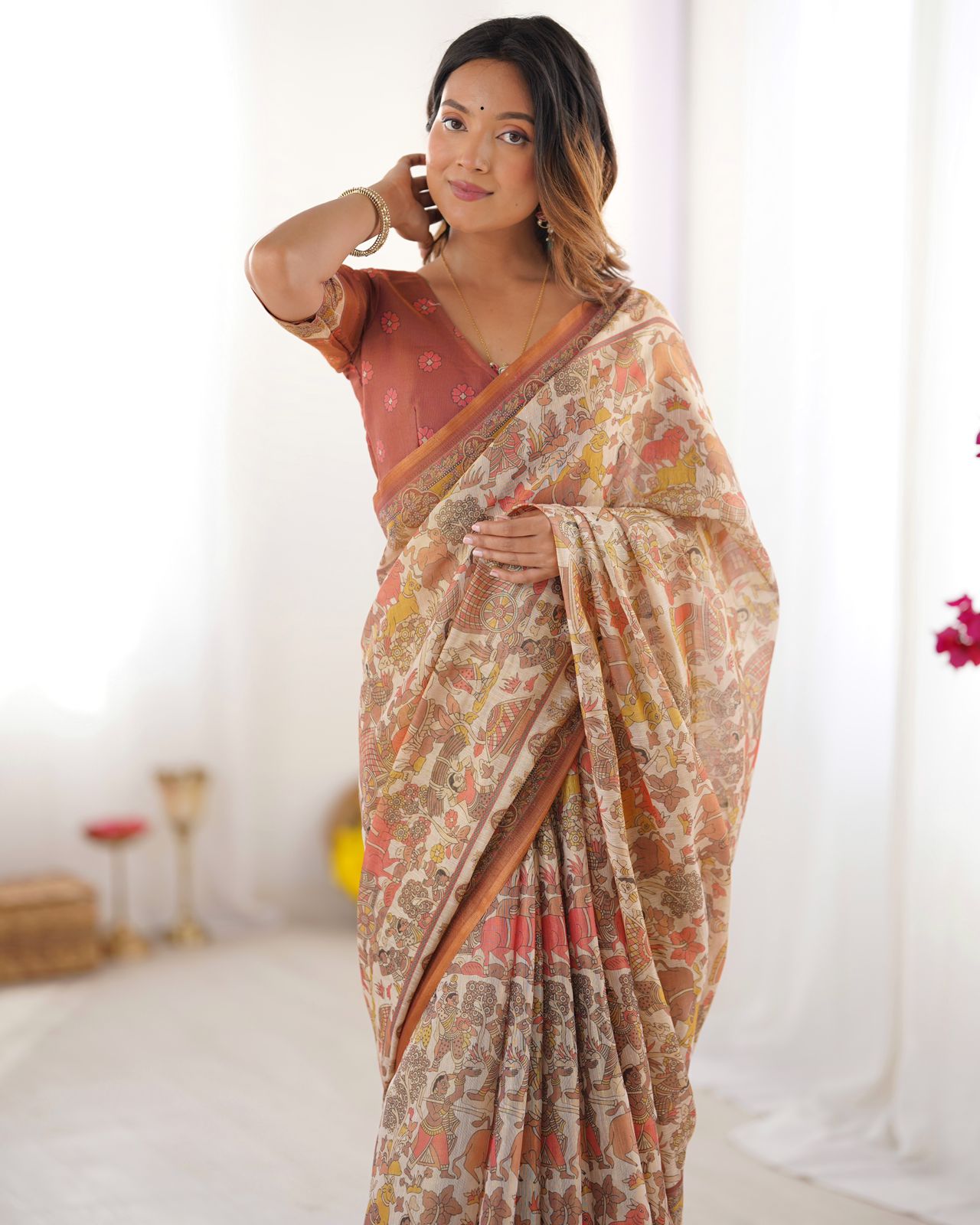
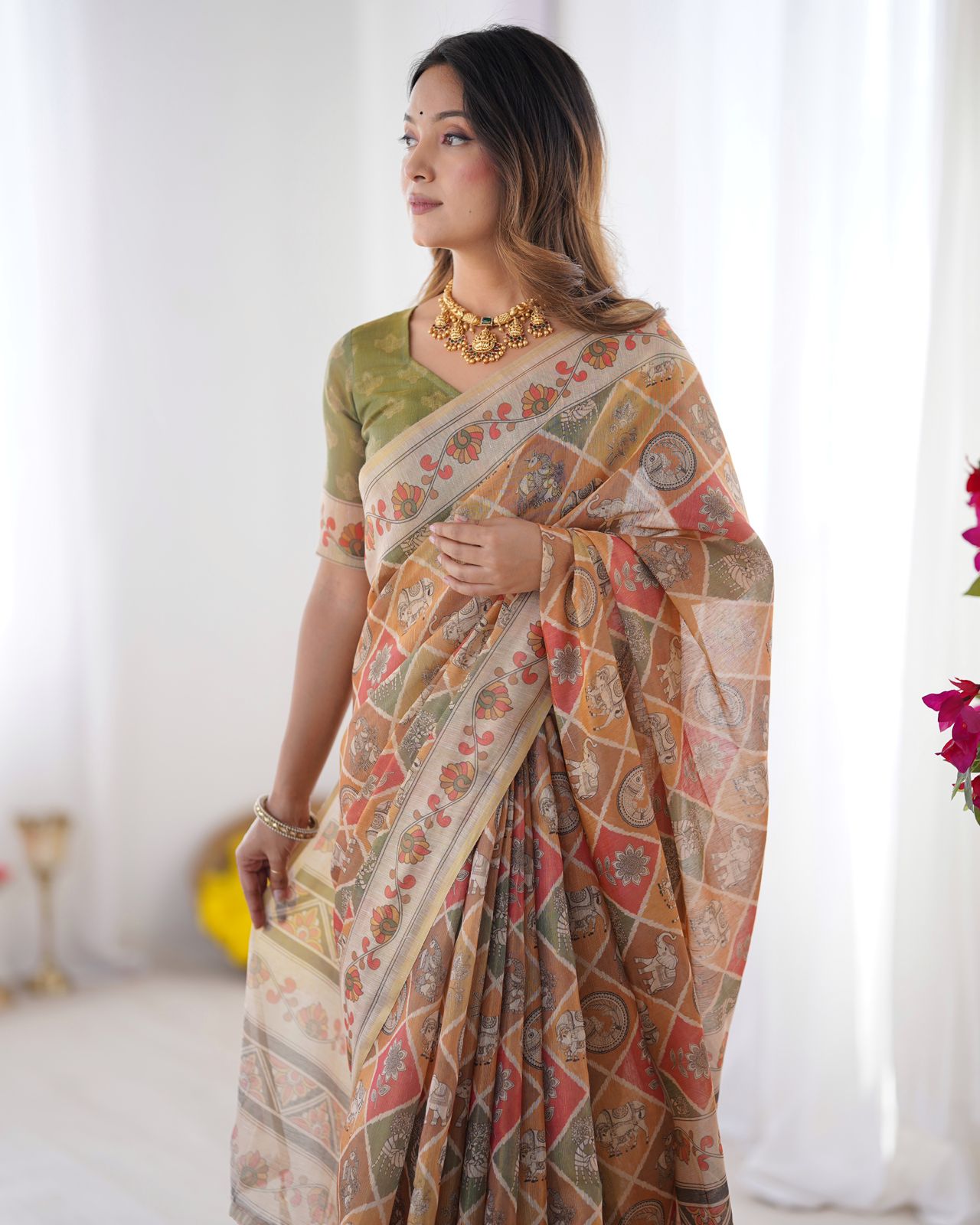
Ethnic Beige Cotton Linen Saree with Village Art Design offers an useful styling direction because a neutral base can support illustrative or folk-inspired detail without competing with it. A plain blouse in rust, deep green or charcoal would allow the printed design to remain the focus.
Traditional Textile Patterns of Arunachal Pradesh as a colour guide
Traditional Textile Patterns of Arunachal Pradesh translate successfully into contemporary sarees when colour proportion is planned before accessories are added. Use one dominant ground colour, one strong contrasting colour and one smaller accent instead of distributing five or six bright shades equally.
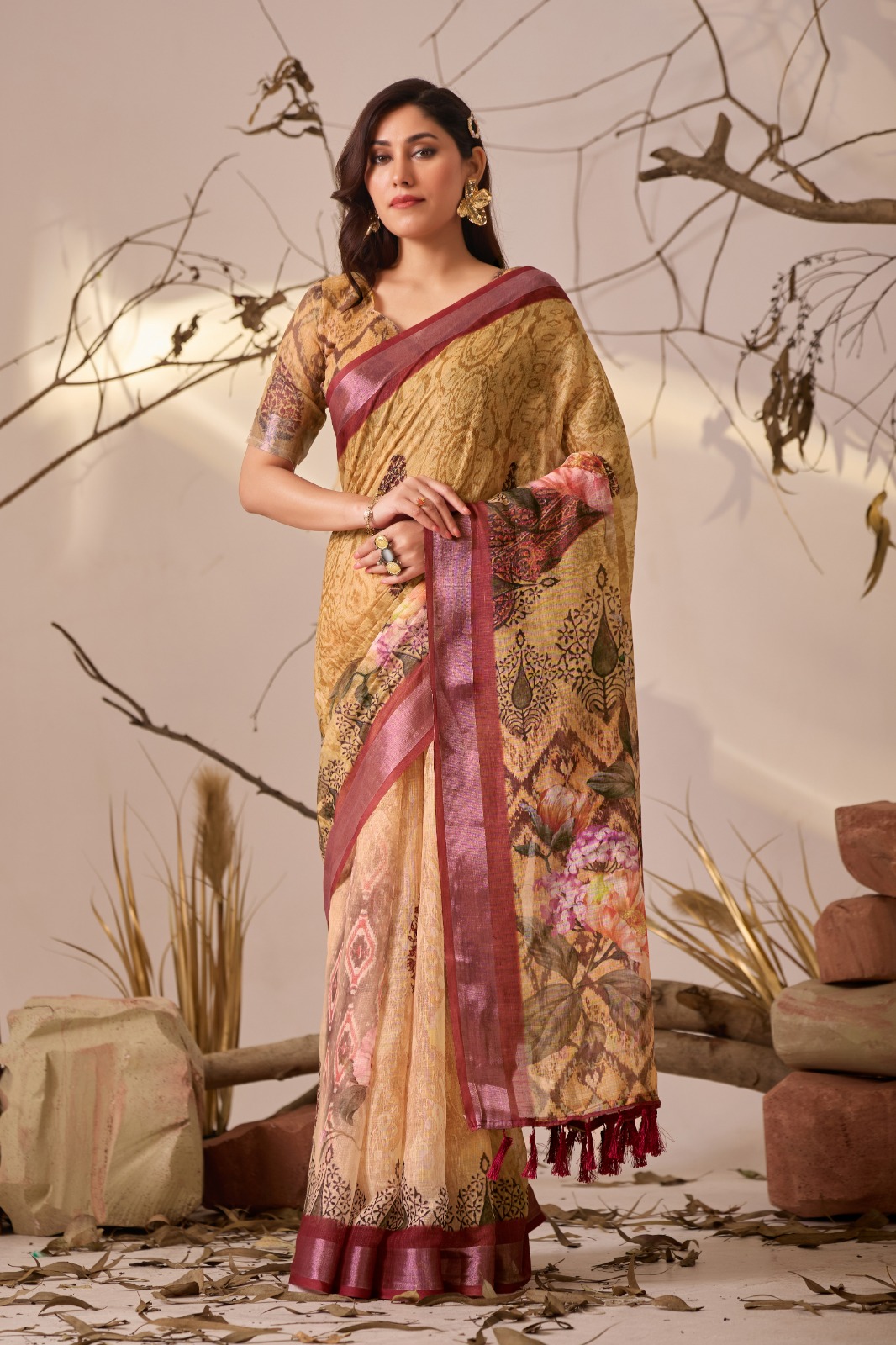
Deep red with black or cream creates a ceremonial, high-contrast effect. Indigo, teal and off-white feel cooler and more versatile for daytime wear. Rust, mustard and earthy brown echo natural landscapes and work well with antique-finish jewellery. Pale coral, sage and powder blue create a softer interpretation, but the textile structure or border should remain visible so the look doesn't become generically floral.
Multicolour Floral Linen Cotton Saree with Blue Border Look shows how a blue border can organise a multicolour field. Pairing the saree with a solid blue or midnight blouse repeats the border's visual anchor and prevents the floral body from appearing disconnected from the rest of the outfit.
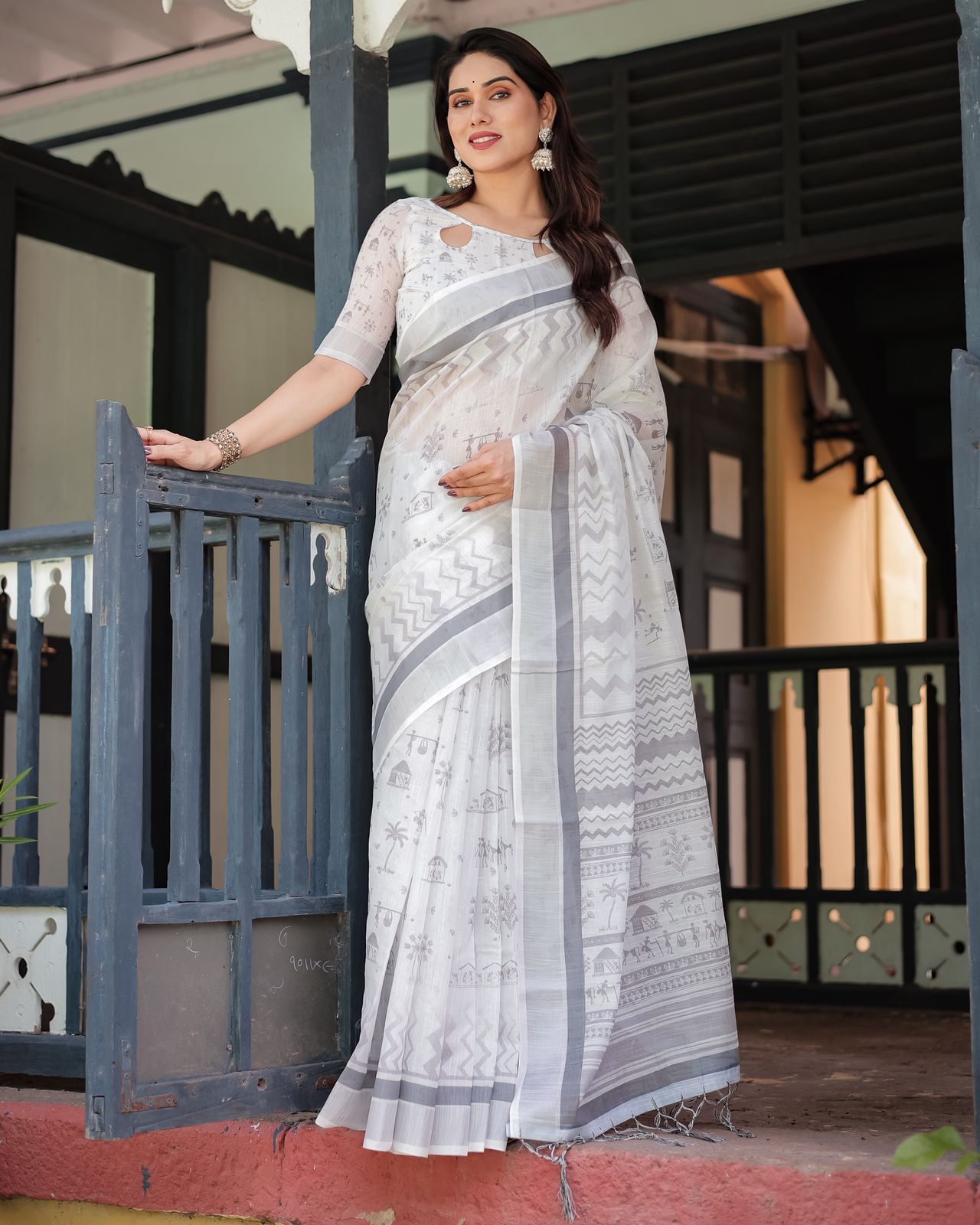
A quieter palette can be equally effective. Soft White Linen Saree with Grey Tribal Design uses a light ground and subdued contrast, making it suitable for office festivities, gallery visits and intimate cultural gatherings. Silver jewellery, a grey blouse or a muted black blouse would reinforce the graphic quality without introducing a competing colour story.
Traditional Textile Patterns of Arunachal Pradesh in responsible fashion
Arunachal-inspired motifs should be used as informed design references, with a clear separation between documented community patterns and newly created interpretations. Designers and buyers can appreciate the source tradition without claiming that a commercial print is an authentic handwoven tribal textile.
One practical approach is to borrow a formal feature rather than a named motif. Use alternating bands, stepped edges, a limited colour sequence or a repeated diamond framework, then create a new arrangement for the garment. This method respects the design intelligence of the source while avoiding an uncredited copy.
A second approach is to preserve the textile's visual restraint. Many contemporary outfits become less convincing when a geometric border is combined with heavy sequins, oversized jewellery, a loud blouse and a busy bag. One patterned element, one supporting solid and one metal accent often communicate the idea more clearly.
A third approach is to research the maker and material. Ask whether the textile is handwoven or powerloom, whether the pattern is printed or woven, which fibre is used and whether the seller identifies a specific community or region. These questions matter because a printed cotton saree inspired by Arunachal Pradesh isn't equivalent to a community-woven ceremonial textile.
Traditional Textile Patterns of Arunachal Pradesh in saree and blouse styling
A geometric textile usually looks strongest when the silhouette remains clean and the drape allows the border or pallu to be seen. Pleat width, blouse shape and accessory scale should support the pattern instead of hiding it.
Styling a graphic border
A fitted blouse in one border colour and an uncomplicated neckline work well with a graphic border. A three-quarter sleeve can display a narrow woven or printed band, while a plain blouse allows the saree edge to remain the main architectural detail.
Teal Floral Printed Linen Cotton Saree With Matching Blouse brings an easy example of coordinated colour dressing because the matching blouse establishes continuity between the saree body and the upper silhouette. Add oxidised silver earrings or a matte metal cuff rather than several competing necklaces.
Styling a neutral ground
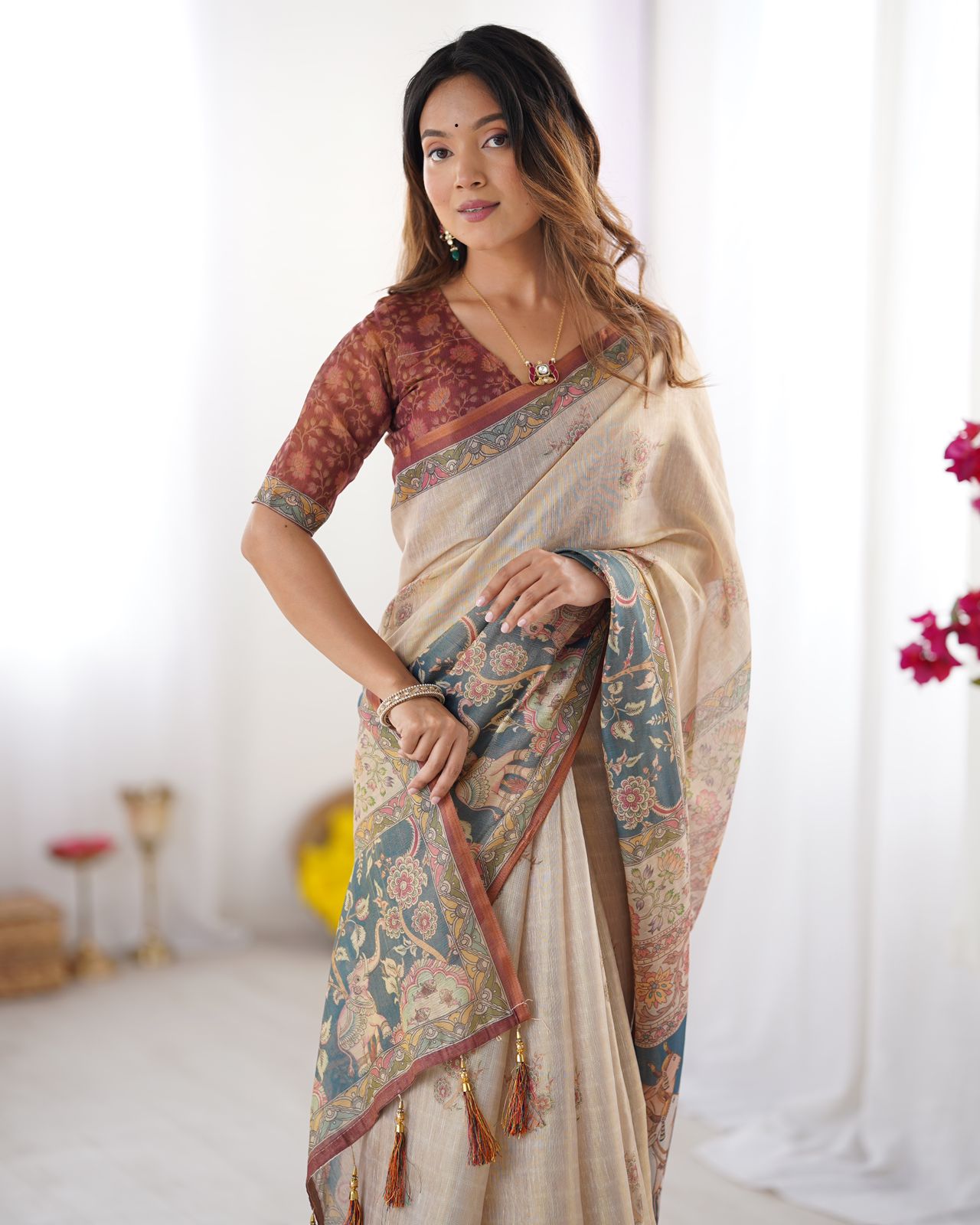
A darker blouse and a single bright accessory suit a saree with a beige, ivory or soft white base. Varnavi Beige Teal Heritage Art Handloom Linen Saree can be styled with a teal blouse, a narrow belt or a structured teal potli to make the cooler accent deliberate.
Traditional Beige Multicolor Printed Saree suits a warmer interpretation. Terracotta bangles, a maroon blouse or a mustard fabric accessory can pull out selected colours from the print while preserving the beige ground as visual breathing space.
Styling floral and folk-influenced surfaces
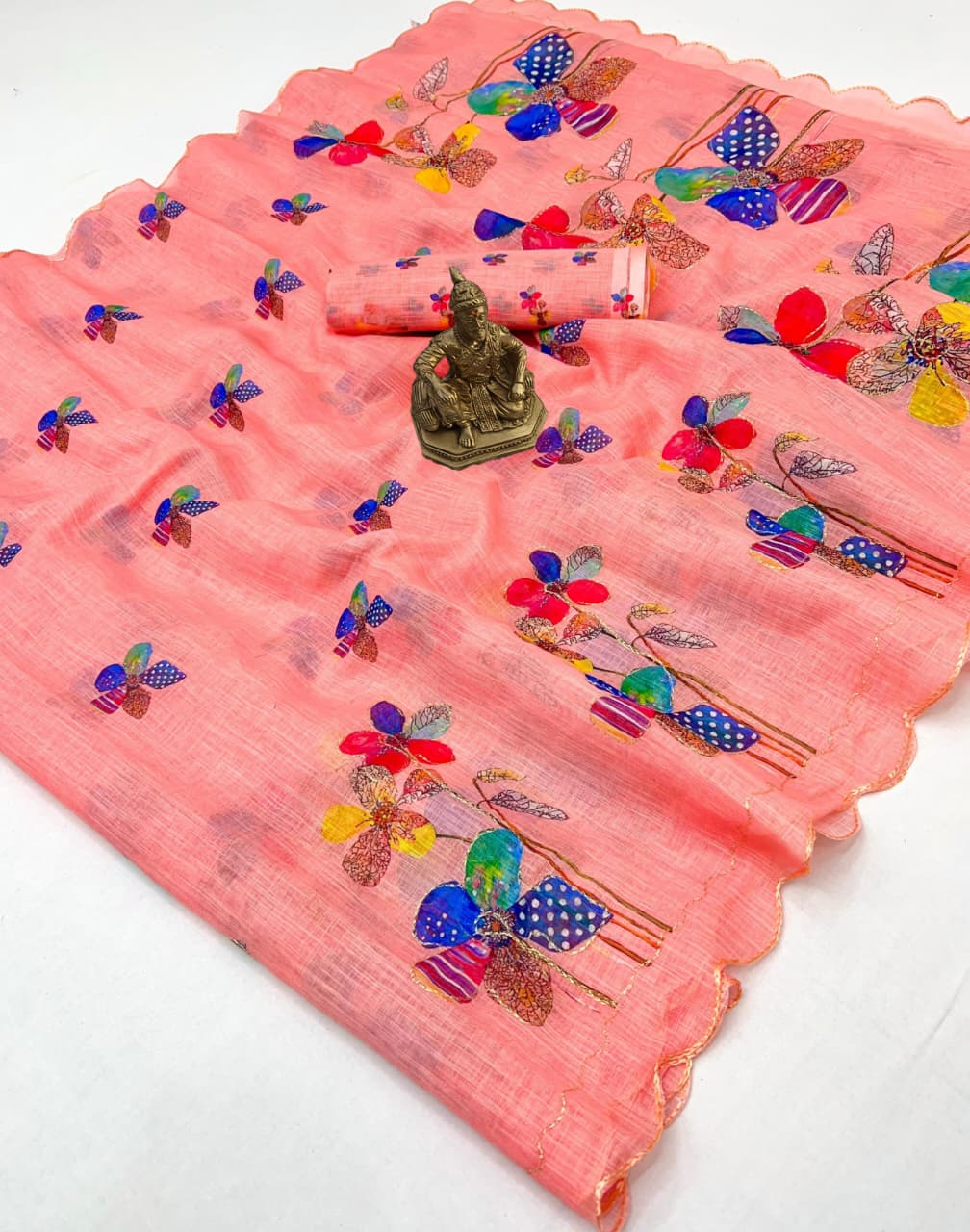
Floral designs can sit comfortably beside tribal-inspired geometry when one pattern remains small and the other remains clearly dominant. Pastel Floral Tissue Handloom Cotton Saree with Zari Weaves would benefit from a plain blouse with a simple sleeve edge, because zari already supplies shine and the pastel floral surface supplies softness.
Metallic detail needs special control when the inspiration comes from a visually bold woven tradition. Choose either a zari border, a statement necklace or a metallic clutch as the principal reflective element. Mixing all three can obscure the disciplined rhythm that makes geometric textiles attractive.
Traditional Textile Patterns of Arunachal Pradesh for different occasions
Traditional Textile Patterns of Arunachal Pradesh can inspire different levels of dressing by changing the fabric finish, colour contrast and accessory weight. The same motif language can feel relaxed at a daytime gathering or formal at a cultural celebration.
For a Haldi ceremony, choose a breathable cotton or linen saree in turmeric yellow, cream, green or coral, and keep the blouse easy to move in. A narrow patterned border, fabric earrings and flat sandals provide colour without creating a fragile outfit for an event involving movement and turmeric paste.
For a daytime cultural programme, handloom cotton, linen cotton or matte silk allows the pattern to remain readable. A low bun, a small shoulder bag and silver jewellery are practical choices because they keep the outfit comfortable for several hours.
For an evening reception, satin, tissue or a saree with controlled zari can add formality. Red Satin Floral Print Saree with Unstitched Blouse Textile can be balanced with a plain black, wine or deep green blouse and restrained jewellery so the surface pattern remains visible under artificial light.
For a work-adjacent festive event, Soft White Linen Saree with Grey Tribal Design brings a lower-contrast option. A structured blouse, closed-toe footwear and a small metallic watch can make the look polished without turning a graphic textile into costume dressing.
Traditional Textile Patterns of Arunachal Pradesh: care and buying checks
A textile inspired by Arunachal Pradesh should be checked for fibre, construction, pattern method and care requirements before purchase. A careful inspection helps distinguish handloom texture from a printed imitation and prevents avoidable damage during washing.
- Check the fibre: Read whether the saree contains cotton, linen, silk, wool, viscose or a blend. Fibre content affects drape, breathability, shrinkage and ironing temperature.
- Check the pattern method: A woven motif is formed within the structure of the cloth, while a print sits on the surface. A printed design can be attractive and useful, but it should not be described as a woven textile.
- Check the reverse side: Woven colour changes and floats may be visible on the reverse, while printing often appears flatter. The reverse side alone isn't conclusive, but it provides useful evidence.
- Check the selvedge and edges: Uneven selvedges, slight width variation and minor irregularities may occur in handloom fabric. Severe loose threads, damaged zari or open seams require a different response from normal handmade variation.
- Check the care label: Linen cotton often benefits from gentle washing or dry cleaning, while zari and tissue surfaces may need specialist care. Avoid soaking zari-heavy garments for long periods and dry coloured textiles away from harsh sunlight.
Store patterned sarees folded with clean, breathable fabric between layers when possible. Refold heavy zari or embellished textiles every few months to reduce permanent crease lines. Keep all sarees dry before storage, because dampness can encourage mildew and weaken natural fibres.
Traditional Textile Patterns of Arunachal Pradesh as a lasting design lesson
Traditional Textile Patterns of Arunachal Pradesh offer more than a collection of attractive motifs; they demonstrate how repetition, proportion and community knowledge can produce a memorable visual language. Contemporary fashion gains depth when it studies those principles instead of borrowing surface symbols without context.
The most useful takeaway is practical: select one structural feature, limit the palette, give the pattern room to breathe and identify the textile accurately. A saree border, blouse panel or accessory can then carry a thoughtful reference to Arunachal Pradesh while remaining original, wearable and respectful.
Common Questions About Arunachal Pradesh Textile-Inspired Fashion
What are the main design features of Arunachal Pradesh textiles?
The main design features include horizontal bands, stripes, diamonds, stepped geometry and strong colour contrast. Patterns vary by community, so Adi, Apatani, Monpa, Nyishi, Galo, Mishmi and Wancho textiles should not be treated as one uniform tradition.
What colours are commonly associated with Arunachal Pradesh textile inspiration?
Deep red, black, cream, orange, green, blue, indigo, rust and mustard are useful reference colours, although palettes differ by community and textile. Contemporary styling works best when one dominant colour is combined with one contrasting shade and one small accent.
How can I style an Arunachal-inspired saree without making the outfit look overdone?
Use one patterned garment, one solid supporting piece and a limited number of accessories. A plain blouse in a border colour, oxidised silver jewellery and a clean drape usually allow geometric or folk-inspired surfaces to remain the focus.
How can I tell whether a textile is handwoven or printed?
Check the product description, reverse side, selvedge and pattern construction. Woven motifs are integrated into the cloth structure, while printed motifs sit on the surface; however, a seller's fibre and construction details provide the most reliable confirmation.
Can tribal motifs from Arunachal Pradesh be copied onto commercial clothing?
Commercial clothing should not reproduce community-specific or ceremonial motifs casually or without credit. A more responsible approach is to study general principles such as stripes, banding, colour proportion and repeated geometry, then create an original arrangement and describe it accurately as inspired rather than traditional.
How should I care for a saree with zari or handloom texture?
Follow the garment's care label and choose gentle washing or dry cleaning when recommended. Keep zari away from prolonged soaking, dry coloured textiles out of harsh sunlight and store clean, completely dry sarees in breathable folds.