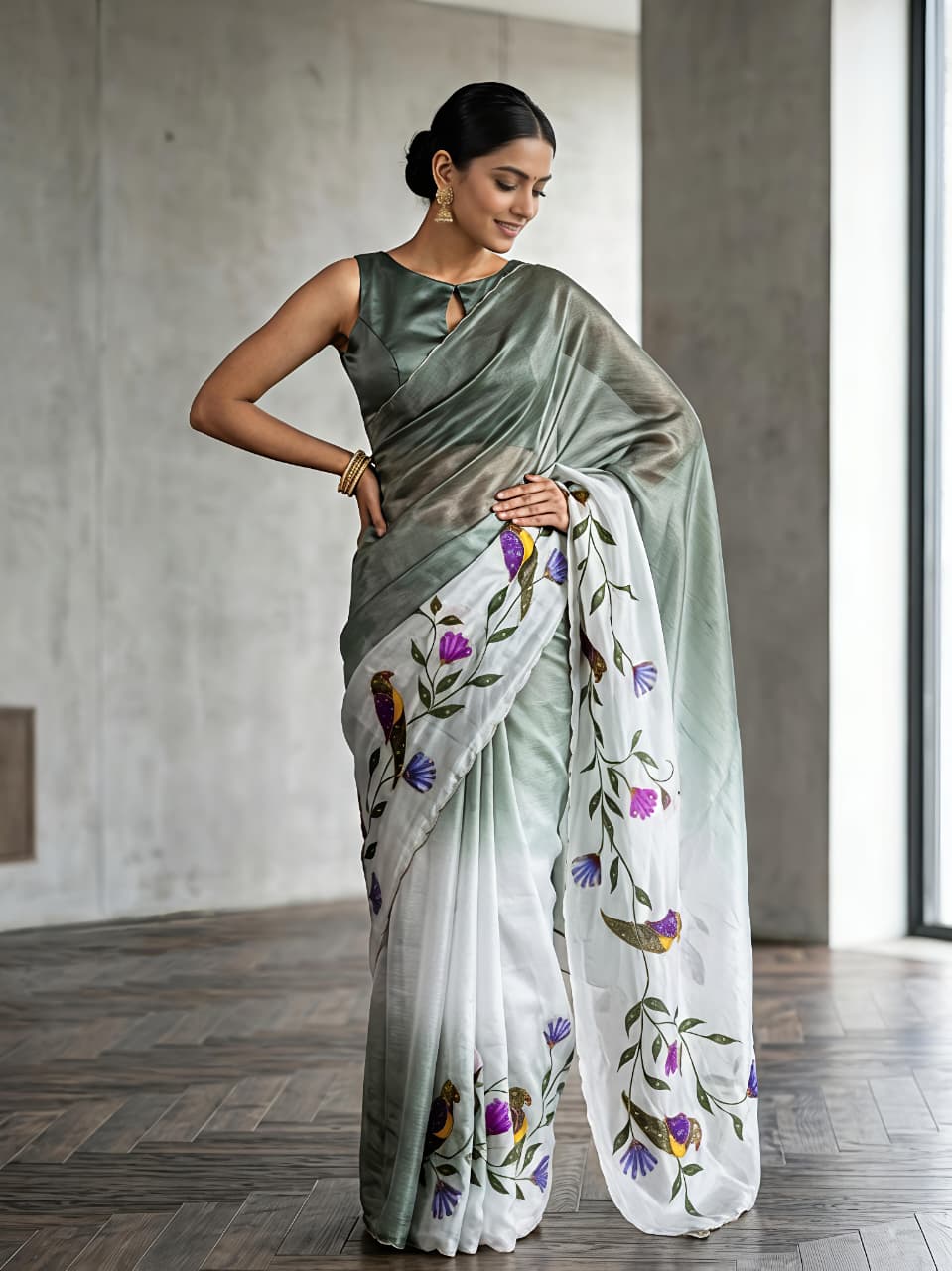
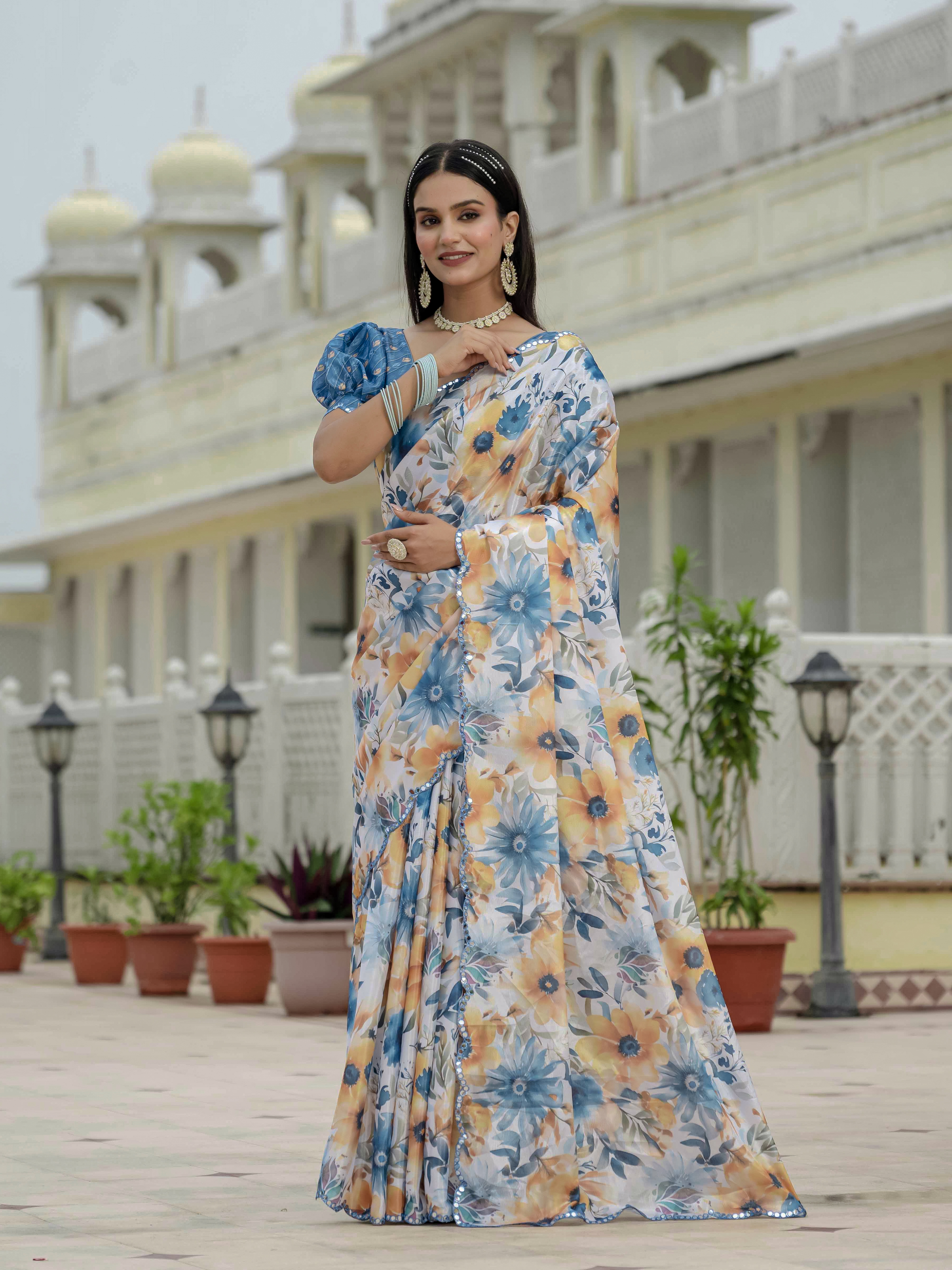
Traditional Tamil Sarees: A Guide to Styles, Fabrics and Occasions begins with an important distinction: Tamil sarees are not one fabric, weave or silhouette. Kanjeevaram silk, Chettinad cotton, Sungudi cotton, silk cotton and handloom blends each have different levels of formality, weight, texture and regional identity. Choosing well means matching the fabric and border to the setting, season and length of wear rather than selecting only by colour.
Tamil saree dressing also depends on pleat width, pallu placement, blouse construction, jewellery and flowers. A six-yard saree can look ceremonial with zari and temple jewellery, restrained with a narrow border and small earrings, or practical with a breathable cotton blouse. The sections below connect textile knowledge with specific decisions about weddings, pujas, receptions, workdays and summer celebrations.
Traditional Tamil Sarees: What makes a saree distinctly Tamil?
A saree becomes recognisably Tamil through a combination of regional weaving traditions, border vocabulary, draping customs and ceremonial styling. Kanjeevaram silk from Kanchipuram, Chettinad cotton from the Sivaganga region, Madurai Sungudi and the nine-yard Madisar drape are among the best-known references.
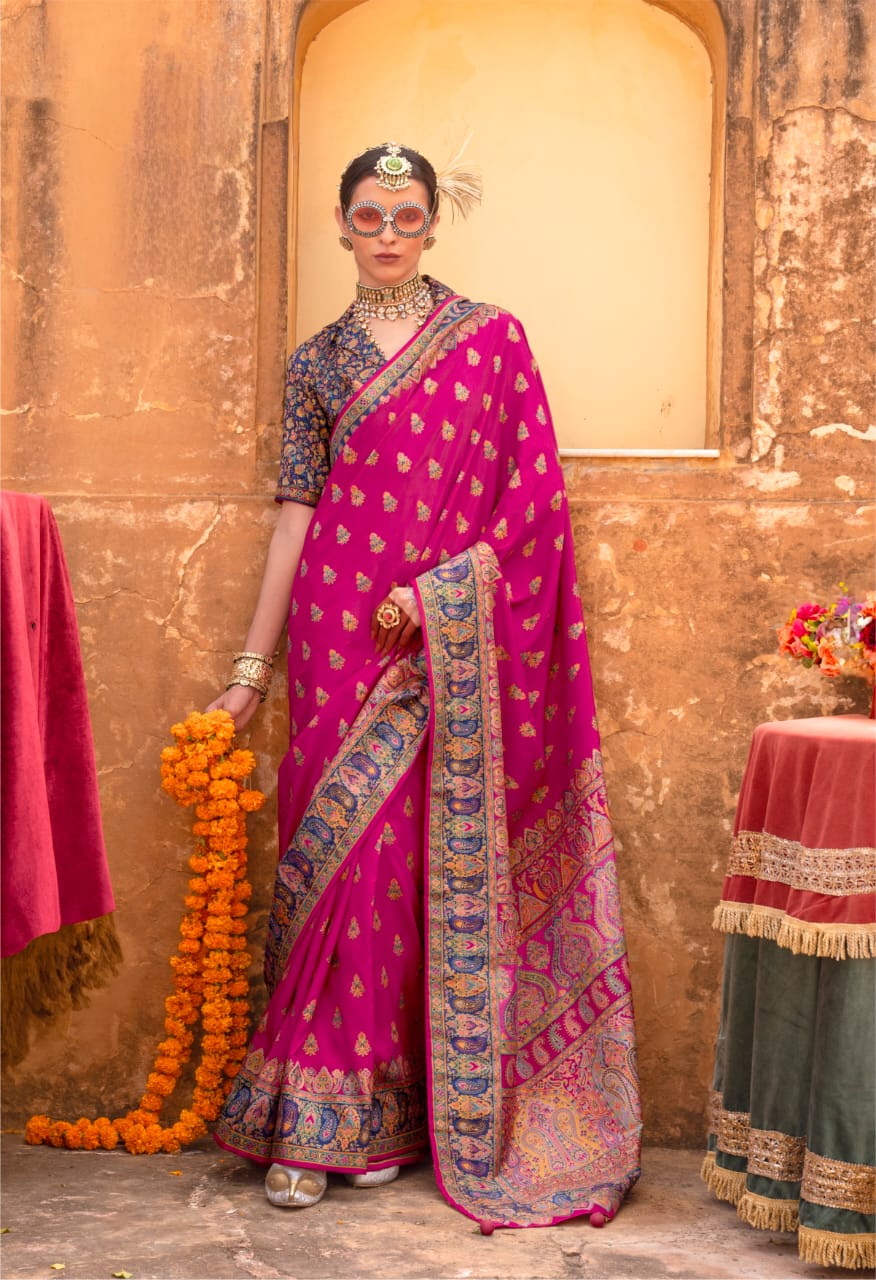
Kanjeevaram, also spelled Kanchipuram, is associated with lustrous silk, contrast borders, pallu panels and zari motifs. Traditional Kanjeevaram designs often include temple-inspired edges, rudraksha-style dots, checks, stripes, peacocks, paisleys and floral forms. Heavy silk and metallic zari make Kanjeevaram a natural choice for a Tamil wedding, although lighter silk-cotton versions suit smaller ceremonies.
Chettinad cotton is valued for practical handloom character, checks, stripes and strong colour combinations. Chettinad sarees work particularly well for hot weather because cotton absorbs moisture and generally feels less cumbersome than dense silk. Sungudi sarees, associated with tie-dye resist work and dotted patterns, offer another distinctly South Indian route to a lightweight festive or everyday look.
The nine-yard Madisar is a traditional Brahmin drape that requires more fabric, specific pleating and practice. Madisar isn't simply a longer version of a standard six-yard saree, so first-time wearers should arrange a knowledgeable draper or practise with a cotton training saree before a wedding or religious ceremony.
Traditional Tamil Sarees: Which fabrics suit each occasion?
The most suitable fabric depends on the ceremony's formality, the weather, the amount of walking and whether the saree must remain comfortable for several hours. Silk and zari communicate ceremony, while cotton and linen-cotton offer easier movement and ventilation.
Kanjeevaram silk for weddings and milestone ceremonies
Kanjeevaram silk is the strongest choice for a formal Tamil wedding, bridal trousseau, milestone birthday or reception where a grand traditional appearance is expected. Substantial silk holds pleats sharply, and a woven zari border gives the pallu enough structure to sit neatly over the shoulder.
For a morning muhurtham, consider deep maroon, mustard, green, purple or red with a contrasting border. For an evening reception, jewel tones, black accents or a muted body with bright zari can feel more contemporary. Check the blouse sleeve length and neckline before purchase because a highly ornate saree usually benefits from a clean blouse rather than competing embellishment.
Silk cotton for lighter festive dressing
Silk cotton suits pujas, engagement ceremonies, Navaratri gatherings and family functions when the wearer wants silk-like sheen without the full weight of heavy Kanjeevaram. Silk-cotton composition can vary considerably, so examine the product description, border construction and care instructions rather than assuming that every silk cotton saree feels identical.
A Teal Traditional Silk Saree with Copper Jacquard Border illustrates how a strong border can provide occasion presence without requiring dense all-over ornamentation. Teal pairs effectively with copper, antique gold, mustard or rust blouse details, making the saree adaptable across daytime and evening events.
Cotton, linen-cotton and handloom textures for heat
Cotton, linen-cotton and light handloom sarees are preferable for Tamil Nadu's warm climate, temple visits, daytime functions and long family gatherings. These fabrics crease more readily than silk, but the relaxed texture is part of their appeal and can be managed with careful pressing and firm pleating.
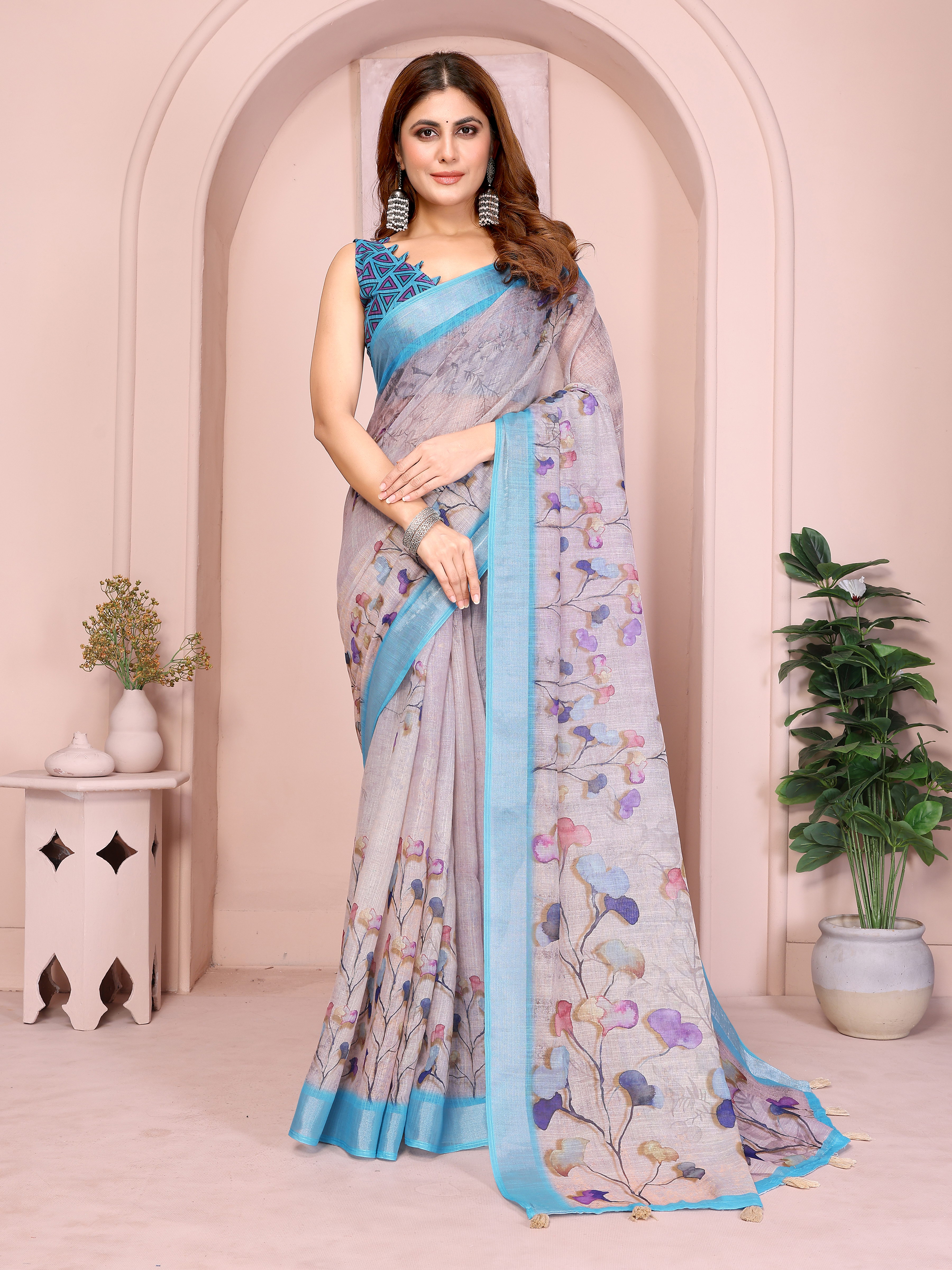
A Pastel Linen Cotton Floral Print Saree with Designer Blouse offers a soft, low-weight direction for a daytime celebration. A Teal Floral Linen Cotton Saree with Elegant Contrast Border uses colour contrast instead of heavy metallic work to create definition. A Pastel Floral Tissue Handloom Cotton Saree with Zari Weaves adds a festive glint while retaining a more breathable cotton-led feel.
Traditional Tamil Sarees: How do regional styles and techniques differ?
Traditional Tamil saree styles differ primarily through yarn, surface treatment, motif language, border construction and regional history. A printed Kalamkari saree, a woven Kanjeevaram and a dotted Sungudi saree may all look traditional, but they express tradition through different textile techniques.

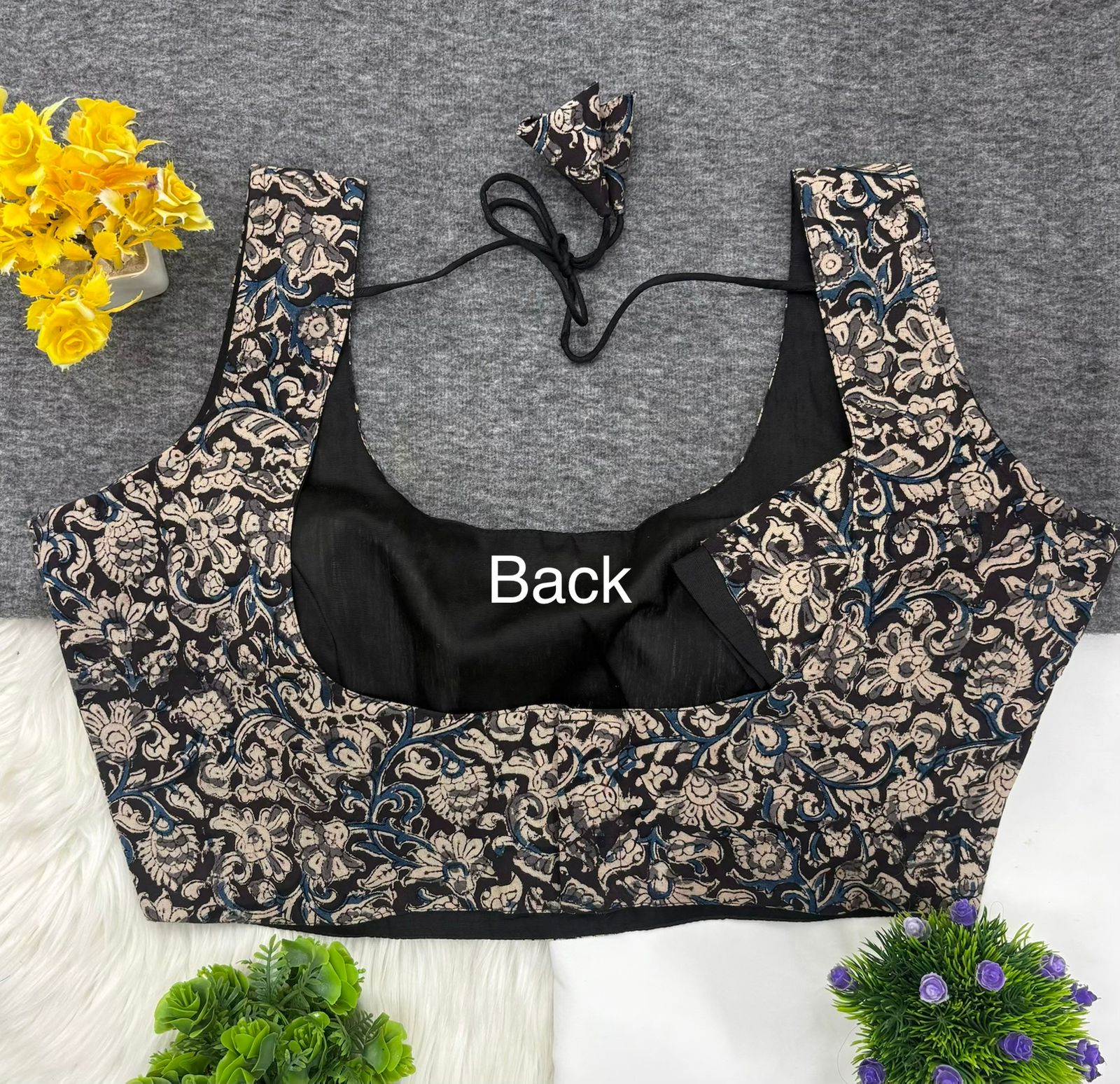
Kalamkari uses hand-drawn or block-printed storytelling motifs, commonly including florals, vines, birds and mythological imagery. A Black Traditional Kalamkari Print Silk Saree demonstrates how a dark ground can make printed motifs appear more graphic and dramatic. Kalamkari styling usually benefits from a blouse in a solid colour drawn from one small motif rather than a second large print.
Woven designs are created within the structure of the cloth, while prints are applied to the surface after or during fabric preparation. Woven zari borders generally have a more integrated reverse and can add body to the pallu; printed designs tend to feel lighter and allow more detailed pictorial patterning. This difference matters when choosing a saree for frequent wear because surface prints and metallic threads require different care.
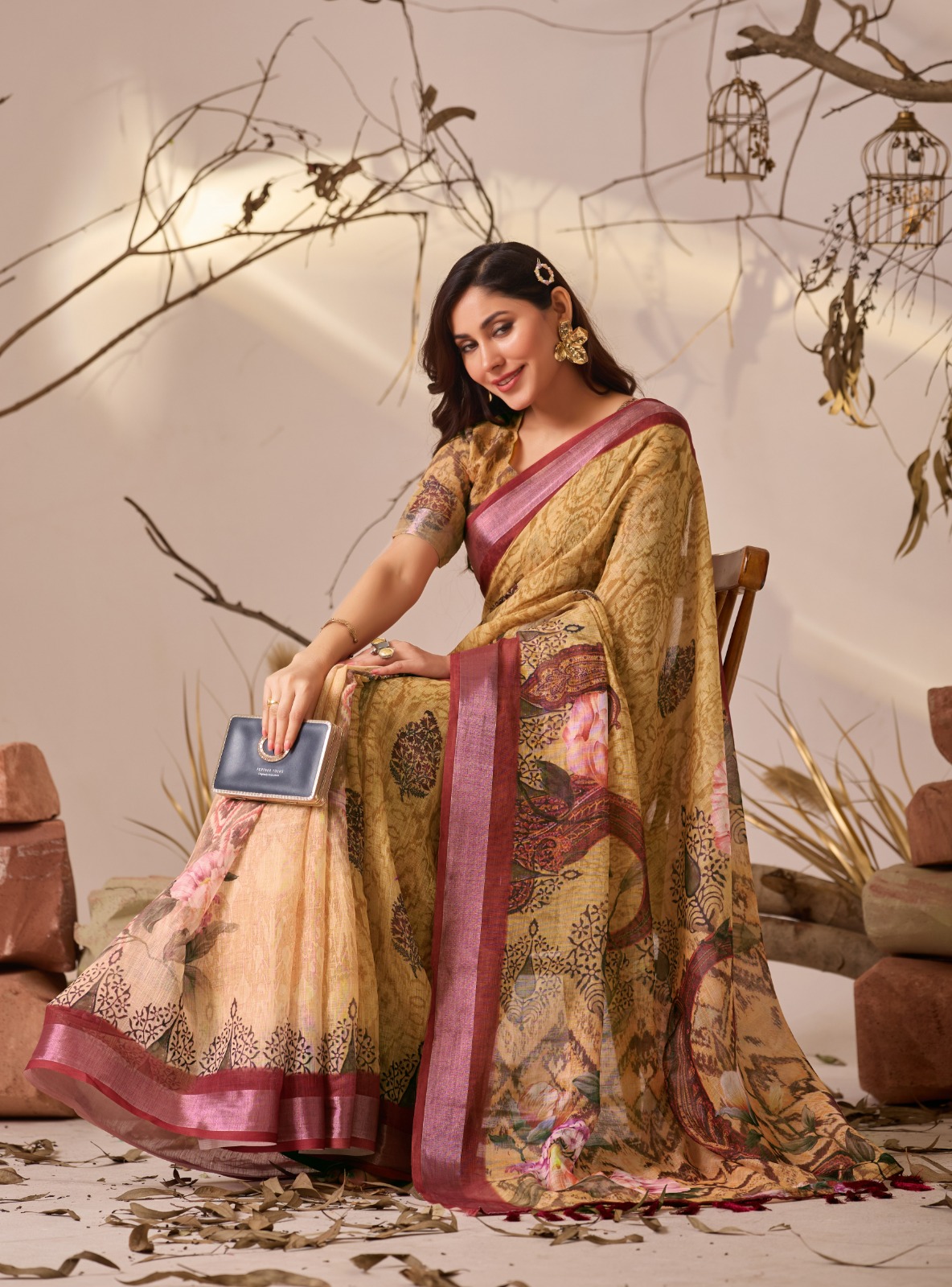
Mal cotton occupies a useful middle ground for warm-weather dressing. A Teal Mal Cotton Woven Print Saree With Blouse - VARNAVI shows how a woven print and a coordinated blouse can create a complete daytime look without the visual weight of a wedding silk. Pairing such a saree with silver-toned earrings, a low bun and flat sandals keeps the styling proportionate.
Traditional Tamil Sarees: Which saree should you choose for a wedding?
A Tamil wedding usually calls for silk, silk cotton or a richly bordered saree, selected according to whether the wearer is the bride, a close family member or a guest. The bride may choose a heavier Kanjeevaram for the muhurtham, while guests can choose lighter silk, silk cotton or zari-accented cotton to avoid excessive weight.
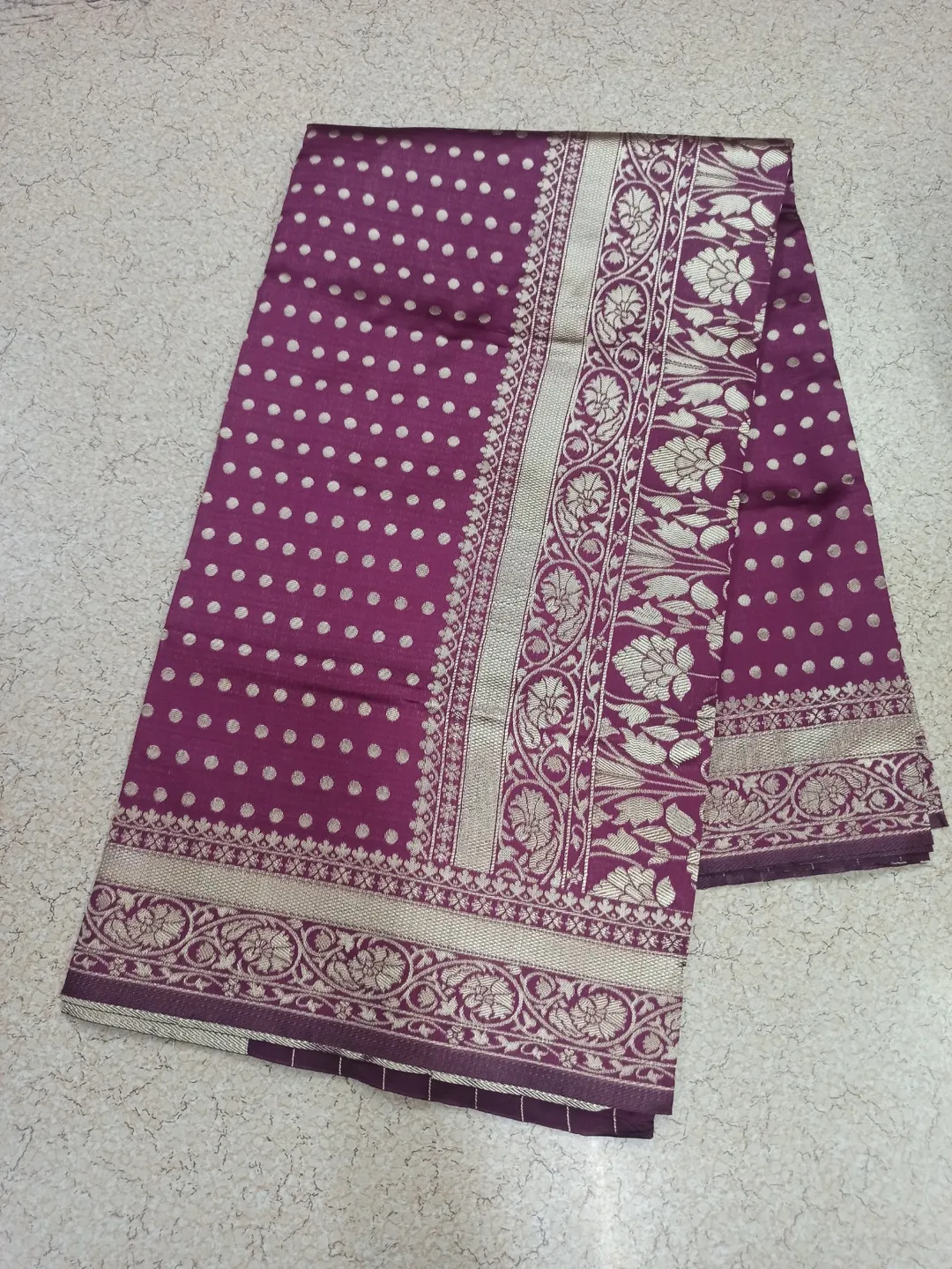
For a wedding ceremony, prioritise a stable pallu, comfortable blouse fit and a border that remains visible after pleating. A Maroon Cotton Saree with Zari Work for Wedding can suit a guest or family function when the dress code is festive but not necessarily bridal. Cotton with zari is especially useful for daytime weddings in warm months because it gives ceremony-appropriate shine without the density of heavy silk.
For a reception, experiment with a darker base, metallic border or sculpted blouse. Copper, antique gold and silver can each change the mood of the same colour family. Keep the jewellery metal reasonably consistent: antique gold with copper-toned zari looks cohesive, while bright silver works better when the saree's border and blouse details support cooler highlights.
For a Haldi ceremony, choose a washable or easier-care cotton, linen-cotton or lightweight silk-cotton saree in yellow, green, pink or teal. Avoid delicate loose zari and very long trailing pallu ends if turmeric paste, water and movement are likely. A secure waist tuck and safety pins hidden beneath the pleats are practical safeguards for pre-wedding events.
Traditional Tamil Sarees: How should you style a saree without losing its character?
A Tamil saree looks most balanced when the blouse, jewellery, hairstyle and drape support the textile rather than compete with it. Match one visible colour from the border or motif, then allow the remaining accessories to stay quieter.
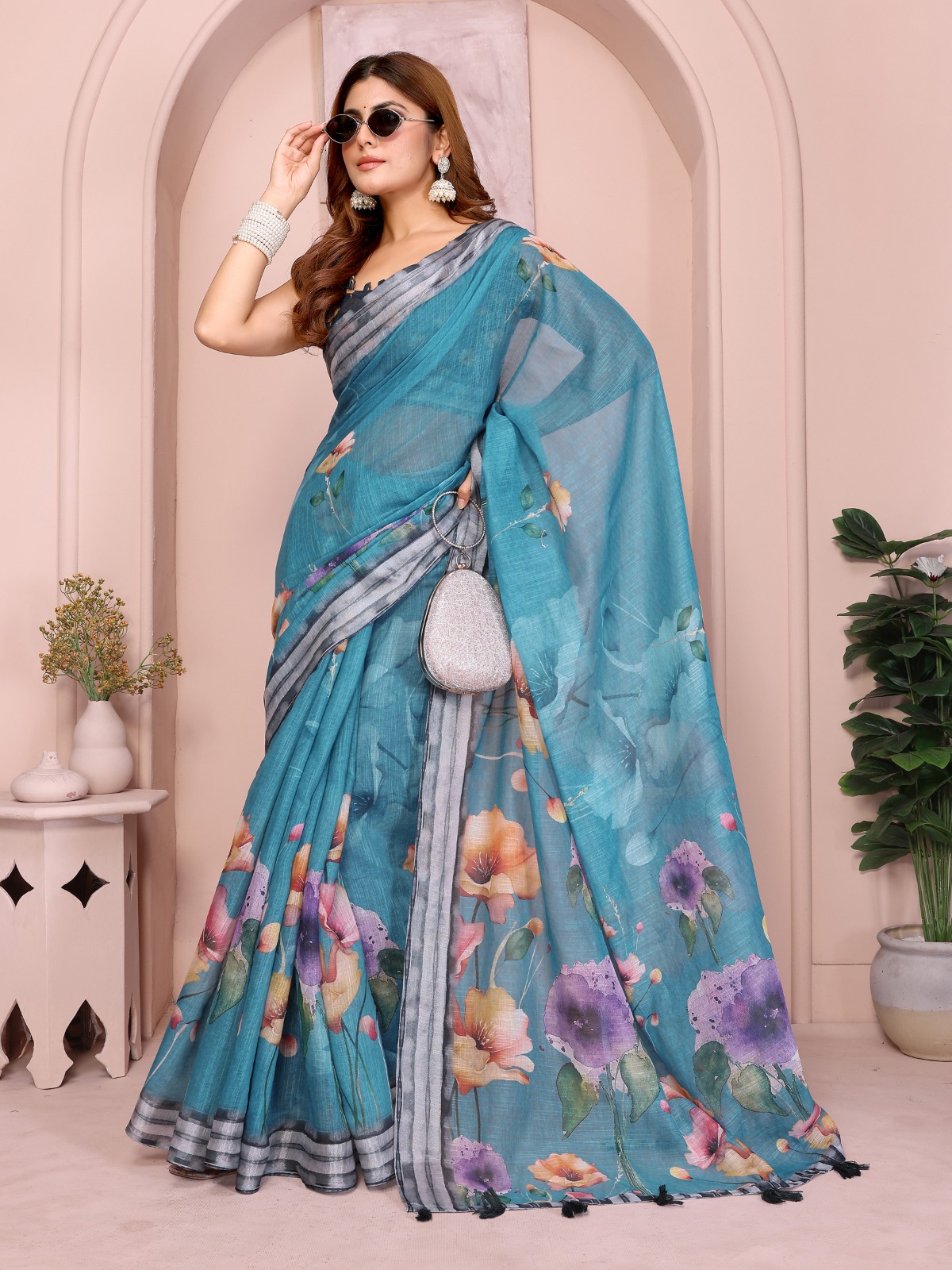
Traditional styling can include a fitted blouse with elbow-length sleeves, jasmine gajra, a centre-parted bun, gold jhumkas, bangles and a small bindi. This combination is especially effective with Kanjeevaram silk, temple borders and zari-heavy pallus. A neatly pinned pallu matters more than adding multiple statement accessories because the pallu is one of the saree's principal visual anchors.
Contemporary styling works well with a plain sleeveless or short-sleeve blouse, sculptural earrings, a belt at the waist or a low braided ponytail. Use contemporary details selectively. A printed saree with a printed blouse can become visually crowded, while a richly woven border generally needs a simpler neckline and fewer competing textures.
For office or daytime wear, keep the pleats narrow and secure, choose a modest blouse, and limit jewellery to a watch, small earrings or one chain. Sarees from Rs 1000 to Rs 1500 may be a practical starting point for building a rotation of lighter work and casual styles, provided the fabric and finishing match the intended frequency of wear.
Traditional Tamil Sarees: What should you check before buying online?
Check the fabric composition, saree length, blouse-piece details, border type, transparency, washing instructions and return measurements before placing an online order. A product photograph can show colour and motif placement, but it can't by itself confirm weight, hand feel or opacity.
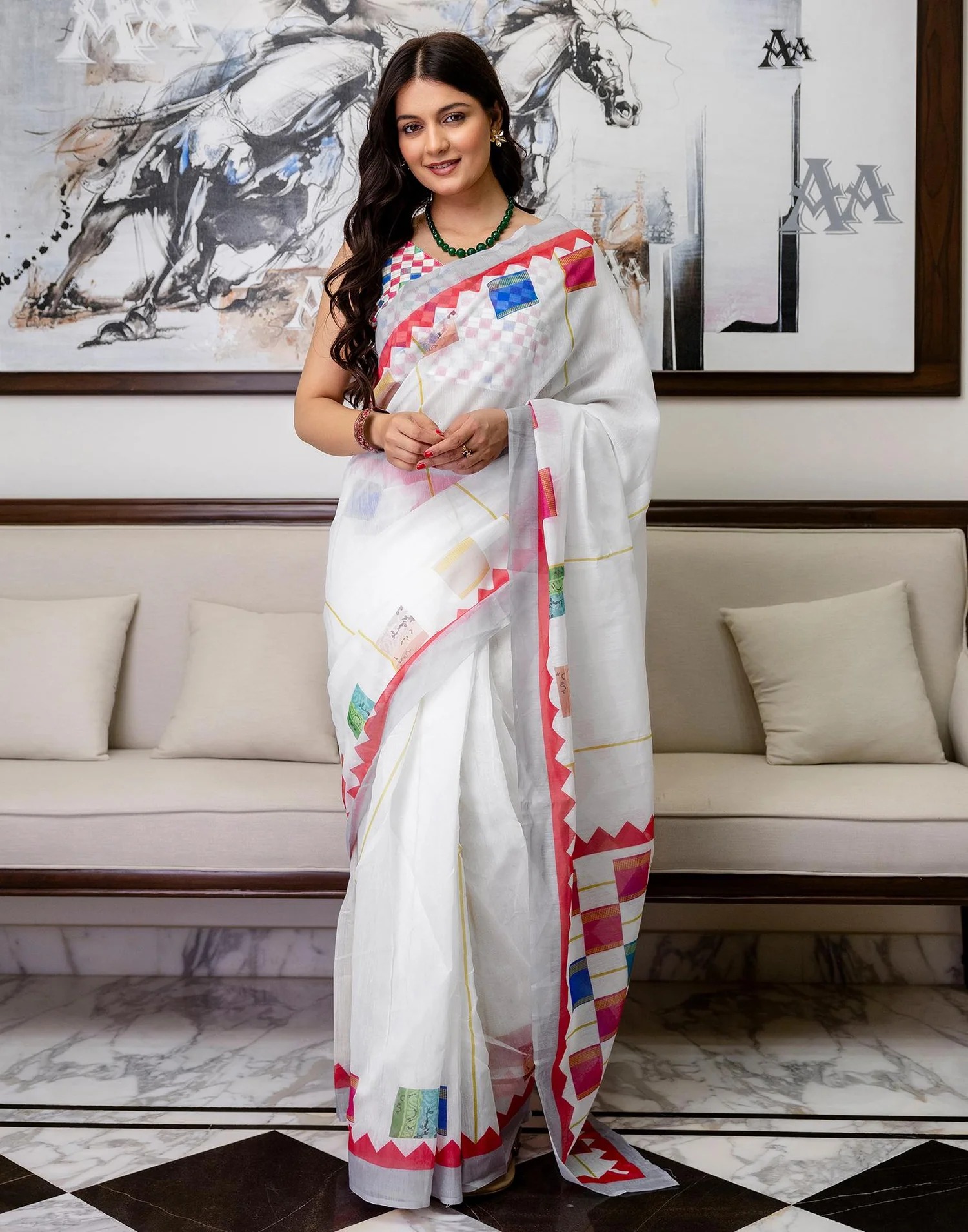
Read whether the description says pure silk, silk blend, cotton, linen-cotton, tissue or synthetic fibre. Fabric composition affects breathability, crease behaviour, drape, ironing temperature and long-term storage. Ask for a close image of zari or jacquard work when the border is central to the purchase, because metallic-looking prints and woven metallic threads don't perform identically.
Measure the blouse piece before booking tailoring. Many blouse pieces provide approximately 0.8 metres, but the usable amount depends on sleeve length, neckline, seam allowance and body measurements. A wearer who wants elbow-length sleeves, a high back or a larger cup fit may need to confirm that the attached blouse fabric is sufficient.
Check the pallu length and saree width when a particular drape matters. A broader saree can create fuller pleats and more coverage, while a lighter, narrower fabric may be easier for travel. Confirm whether the saree is pre-washed, starched or finished with a softening treatment, because initial stiffness can reduce after the first careful wash.
Budget collections can be useful for experimenting with fabric and colour. Sarees Under 20% Off and Sarees Under 10% Off can help compare lighter festive pieces at reduced prices, while Sarees Flat 60% Off and Sarees Flat 50% Off may suit shoppers who are comfortable checking available sizes, blouse details and care requirements carefully before purchase.
Traditional Tamil Sarees: How should silk, cotton and zari be cared for?
Silk, cotton and zari require different care, so always follow the garment-specific instructions first. In general, dry-clean heavy silk and zari, hand-wash colourfast cotton separately in cool water, and avoid prolonged direct sunlight for every fabric.

Store Kanjeevaram silk in a clean cotton or muslin cover rather than plastic for long periods. Refold a stored silk saree every two or three months so that the same fold doesn't weaken the zari line. Keep perfumes, deodorant and moisture away from zari because chemical residue can tarnish metallic surfaces.
Wash printed cotton and linen-cotton sarees in cool water with a mild detergent after testing colourfastness on a hidden section. Do not wring the saree or expose strong prints to harsh midday sun. Roll the saree in a towel to remove excess water, reshape the border and dry it in shade with the reverse side facing outward.
Iron cotton on a medium-to-high setting according to its care label, while linen-cotton often benefits from ironing when slightly damp. Use a pressing cloth over zari, jacquard and delicate tissue areas. Never iron directly over metallic work at high heat because the surface can flatten, discolour or separate from the fabric.
Traditional Tamil sarees become more versatile when their textile identity guides the styling decision. Kanjeevaram silk belongs to grand ceremony, Chettinad cotton and Sungudi suit heat and movement, Kalamkari brings narrative print, and silk cotton bridges everyday comfort with festive polish. Understanding those differences makes online buying more deliberate and helps each saree serve the occasion for which it was chosen.
Common Questions About Traditional Tamil Sarees
Which saree is traditionally worn for a Tamil wedding?
Kanjeevaram silk is the most traditional choice for a formal Tamil wedding, especially for the bride and close family. Lighter silk cotton or cotton sarees with zari are suitable for guests, daytime ceremonies and warm weather.
What is the difference between Kanjeevaram and Chettinad sarees?
Kanjeevaram sarees are generally associated with silk, contrast borders and zari motifs, while Chettinad sarees are commonly cotton handlooms featuring checks, stripes and bold colour combinations. Kanjeevaram is more formal; Chettinad cotton is usually lighter and more breathable.
Are cotton sarees suitable for a Tamil wedding?
Cotton sarees are suitable for daytime weddings, guest dressing and warm-weather ceremonies when they include festive details such as zari, a decorative border or a refined blouse. Heavy bridal styling usually calls for silk or silk cotton instead.
What saree is best for a Haldi ceremony?
A lightweight cotton, linen-cotton or silk-cotton saree is generally best for a Haldi ceremony because it allows movement and is easier to manage around turmeric paste and water. Secure the pleats and avoid delicate loose zari or a trailing pallu.
How should a Kanjeevaram saree be stored?
Store a Kanjeevaram saree folded in a clean cotton or muslin cover, away from direct sunlight, perfumes and moisture. Refold the saree every two or three months and use professional dry cleaning for heavy silk and zari unless the care label says otherwise.
What should I check when buying a Tamil saree online?
Check the exact fabric composition, saree length, blouse-piece measurements, transparency, border construction, care instructions and return terms. Product photographs alone cannot confirm the weight, hand feel or colourfastness of a saree.